Ascects of the evolution of the algae

The first living organisms on Earth were bacteria (and archaea, a now rather rare and still little-researched bacteria-like group that differs significantly from both bacteria and eukaryotes (i.e. plants, animals, fungi)). These organisms lived in the sea and obtained their energy from chemical reactions with hydrogen sulphide or hydrogen (the Earth’s atmosphere was still oxygen-free at that time). Relatives of these bacteria still exist today in the ‘black smokers’...

Continue reading

Algae

Algae do not generally have a particularly good reputation. When it comes to algae, most people think of killer algae, toxic algal blooms or simply slippery, bone-breaking, ugly coatings on wet rocks. Yes, algae can be annoying or even dangerous, especially where the natural balance of an ecosystem is disturbed for example by excessive nutrient input. ‘Ugly’, slippery algae coatings of this kind, which are completely natural, form on rocks in shallow water that are not...

Continue reading

Fish

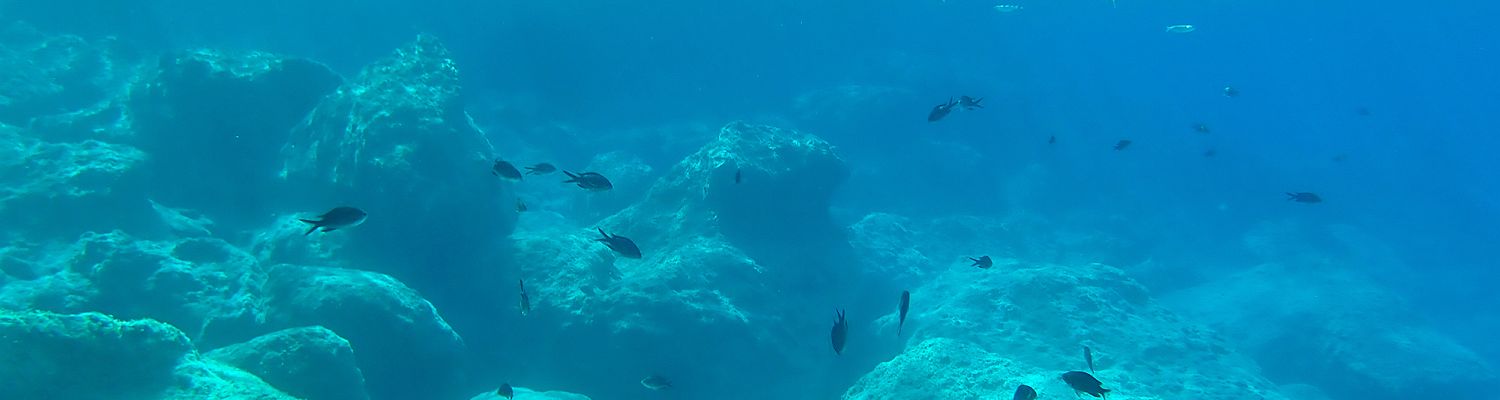
When it comes to marine animals, most people naturally first think of fish: these are known to everybody and of the greatest importance to us as a source of food. Due to its low content in nutrients and plankton, the Mediterranean Sea is relatively poor in fish. In addition, fish populations have been severely depleted in recent decades through overfishing. Here you can skip the introduction and go directly to the species. fish in their natural environment Naxos is not an...

Continue reading

Sponges

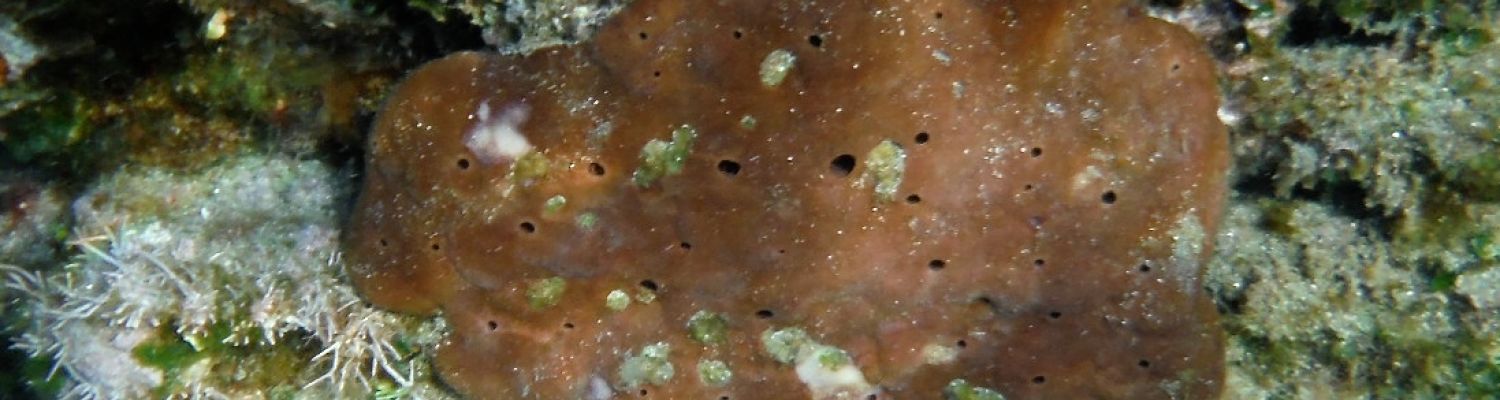
Sponges are very unusual organisms. They belong to the animal kingdom, but in some respects they are more like plants, for example they are sessile (attached to the substrate), their shape is not symmetrical and they grow irregularly like a plant. Furthermore, they do not (or hardly) react to external stimuli and do not (or hardly) move. Sponges are multicellular animals. Each sponge is a single organism (not a colony as for example in the sometimes similar corals). Like...

Continue reading

Sea cucumbers

Sea cucumbers do not look particularly attractive; they are in fact rather ugly and appear boring and uninteresting. Nevertheless, these animals play a very important role in the marine ecosystem and should not be underestimated or neglected. Here you can skip the introduction and go directly to the species. Sea cucumbers (class Holothuroidea) are related to the sea urchins and the starfish, with which they form the phylum Echinodermata. At first glance they do not look at...

Continue reading

Sea anemones

On the rocks in shallow water in the small bays near Azalás, it is easy to find some particularly beautiful and interesting representatives of marine fauna: the sea anemones. The order of sea anemones (Actiniaria), with around 1200 species, belongs with the corals to the anthozoans (class Anthozoa), which together with the hydrozoans and the jellyfish form the phylum Cnidaria. Here you can skip the introduction and go directly to the species. The cnidarians have a rather...

Continue reading

Gastropoda 6: Worm snails

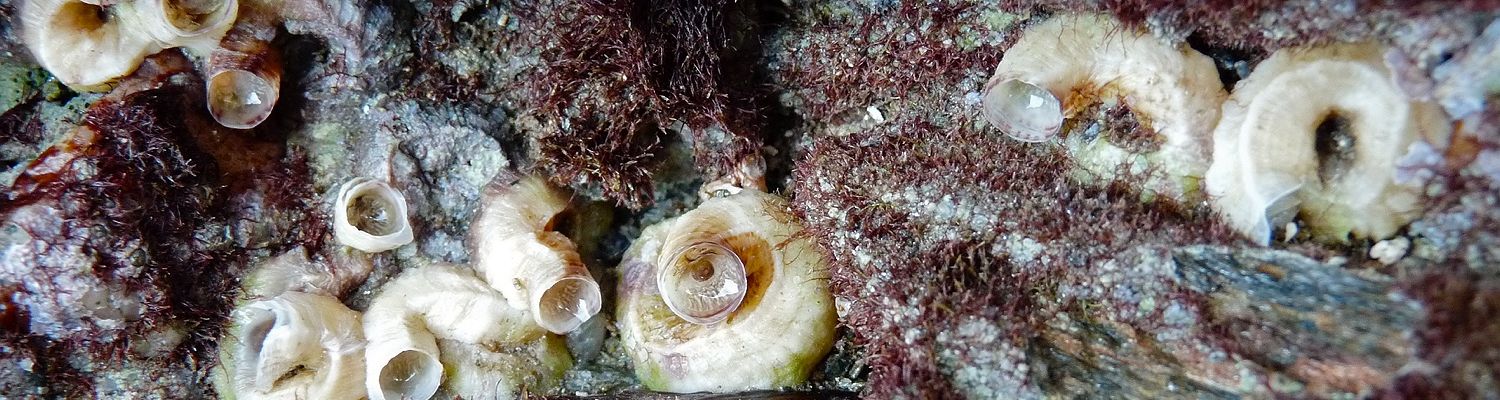
Among the many strange creatures of the intertidal zone are the worm snails. These snails only crawl around freely while they are young, then they attach themselves to the substrate and adopt a sessile lifestyle. Several species are found on Naxos. Worm snails or tube snails form their own family (Vermetidae) within the Littorinimorpha, a large suborder within the Gastropoda, to which many of our marine snails belong. The Photo gallery of the marine snails gives an...

Continue reading

Barnacles

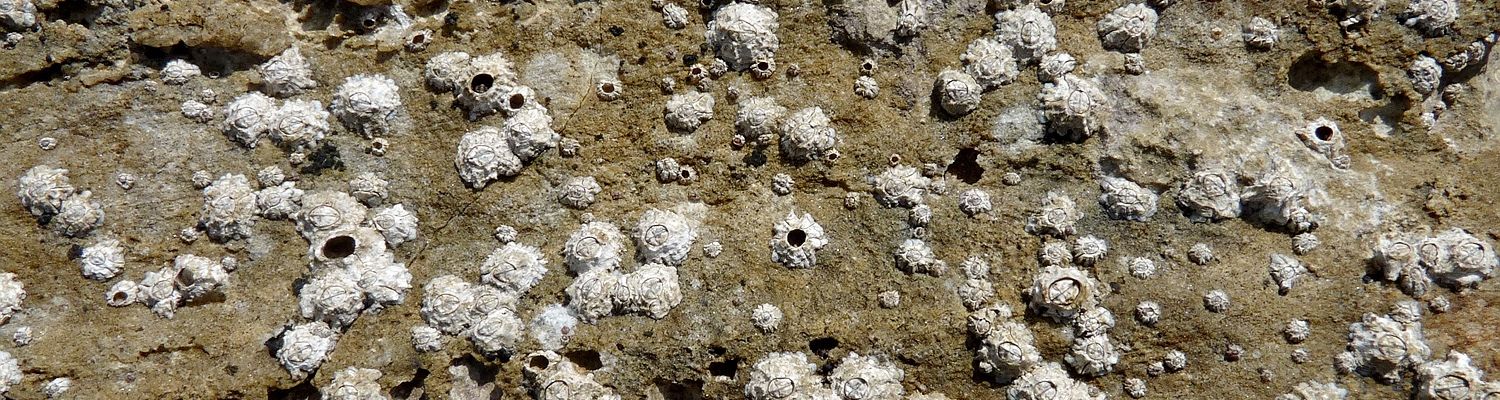
Seeing barnacles on a rocky coastline one would hardly think that they are close relatives of crabs and lobsters. However, they belong to the Crustacea, and together with the Goose barnacles and some parasitic forms, they make up the subclass Cirripedia. Here you can skip the introduction and go directly to the species. Barnacles are sessile animals. Their carapace takes the form of a cone-shaped shell made of calcareous plates, the open tip of which is closed with...

Continue reading

The Zones of the Mediterranean Sea

The marine ecosystem is divided into a number of zones with different environmental conditions. To begin with one must distinguish the seabed, known as the benthal, and the water column, known as the pelagial. Within both, the euphotic (light-rich) areas offer significantly different living conditions from the aphotic (lightless) areas. The coastal, shallower areas above the continental shelf are referred to as the neritic region, while the deep oceanic areas are referred...

Continue reading

The demands of the sea on its inhabitants

Life in the sea places significantly different demands on organisms than life on land. First of all, of course, there is an unlimited supply of water. All organisms need water – they consist largely of water. Terrestrial organisms must therefore protect themselves against evaporation more or less effectively depending on the dryness of their habitat. Aquatic organisms can do without that protection, apart from those that live in the coastal strip, which temporarily falls...

Continue reading

The environmental factors in the Mediterranean Sea

With 3.9 per cent by volume, the eastern Mediterranean Sea has a fairly high salt content. The water temperature ranges from 25°C in August and September to 14°C in December and January. In summer, the upper layers of water warm up to a depth of sometimes up to 30 meters, where the temperature suddenly drops (thermokline). In the depth, the water of the Mediterranean Sea has a temperature of no less than 13°C. When the upper layers of the water cool down in winter, this...

Continue reading

The emergence of the Mediterranean flora and fauna

The precursor oceans of the Mediterranean, the Paleo- and Neotethys, were tropical oceans located near the equator. Accordingly, as fossils show, they were inhabited by a tropical flora and fauna similar to the species found today for example in the Indian Ocean. During the Jurassic and Cretaceous, huge coral reefs existed in the then extensive shelf areas of Africa and in the relatively shallow ocean arms, as well as on the flooded terranes that were later stacked up to...

Continue reading

The geological history of the Mediterranean Sea

In the Palaeozoic era The first precursor to the Mediterranean Sea was the Palaeozoic ocean known as Palaeotethys. This existed as a huge bay at the end of the first (and longest) of the three geological eras documented by fossils, the Palaeozoic (540 to 250 million years ago). During the last epochs of the Palaeozoic, the Carboniferous (345 to 295 million years ago) and the Permian (295 to 250 million years ago), all the continents were clustered together (Pangaea) and...

Continue reading

The Mediterranean sea

Das Mittelmeer Das Mittelmeer ist ein vergleichsweise kleines Meer. Die Ägäis ist kein echter Ozean, sondern ein versunkenes Stück Kontinent, weswegen die Meerestiefen im Allgemeinen eher gering sind. Die Artikel auf dieser Webseite beschäftigen sich hauptsächlich mit den Organismen, die man der Küste und im flachen Wasser antreffen kann. Schon direkt an der Küste kann man einen faszinierenden Einblick in die Meereswelt erhalten. Fast alle in den folgenden Artikeln...

Continue reading

Crustaceans

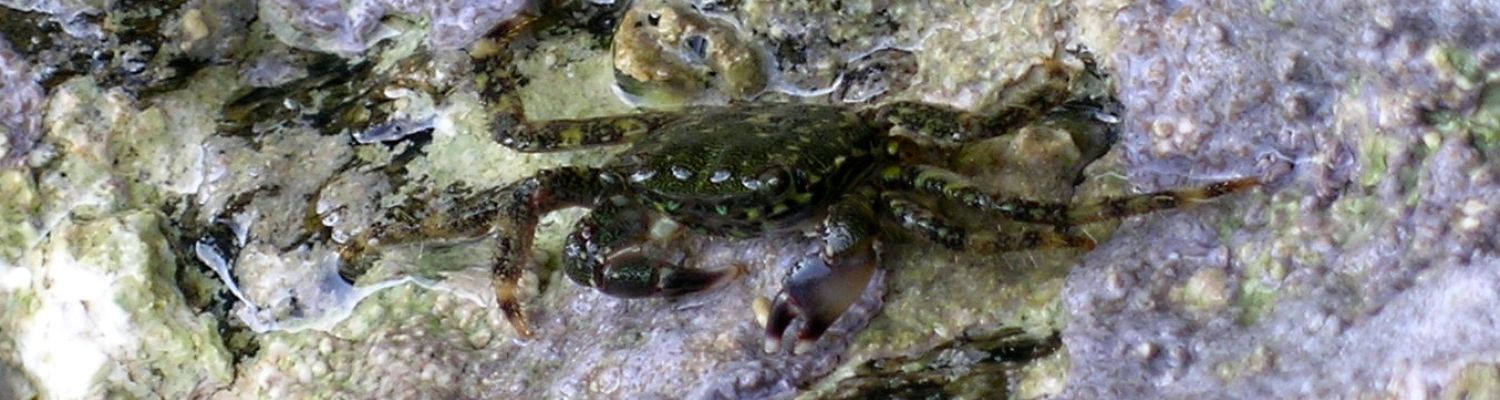
The crustaceans belong to the large phylum Arthropoda which also includes the chelicerates (Chelicerata) with the horseshoe crabs and arachnids (spiders, scorpions and mites), and the millipedes and hexapods (insects, springtails, etc.). The crustaceans form a subphylum, whose more important and well-known classes are the higher crustaceans (malacostraca), the branchiopods, the copepods, the ostracods and the Thecostraca, which include the goose barnacles and the...

Continue reading

Starfish

The starfish (class Asteroidea) belong together with the sea cucumbers and the sea urchins to the phylum Echinodermata. Here you can skip the introduction and go directly to the species. The echinoderms are exclusively marine, that is they are living only in the sea. Their bodies are – rather unusually in the animal kingdom – five-rayed radially symmetrical with an exoskeleton, either in the form of a shell (sea urchins) or as calcified plates in the epidermis...

Continue reading

Marine animals (overview)

Meerestiere Überblick Die Meeresfauna ist bei uns in Azalas noch recht artenreich. Das Mittelmeer ist zwar überall überfischt, aber es ist hier – mitten in der Ägäis – vergleichsweise noch recht sauber und die verschiedenen Pflanzen- und Tiergesellschaften der unterschiedlichen Biotope sind relativ intakt. Interessant und artenreich ist vor allem die Zone um die Wasserlinie, das Eulitoral, wo an der Felsküste oft ein schönes “Kalkalgentrottoir”...

Continue reading

Gastropoda 9: Slugs

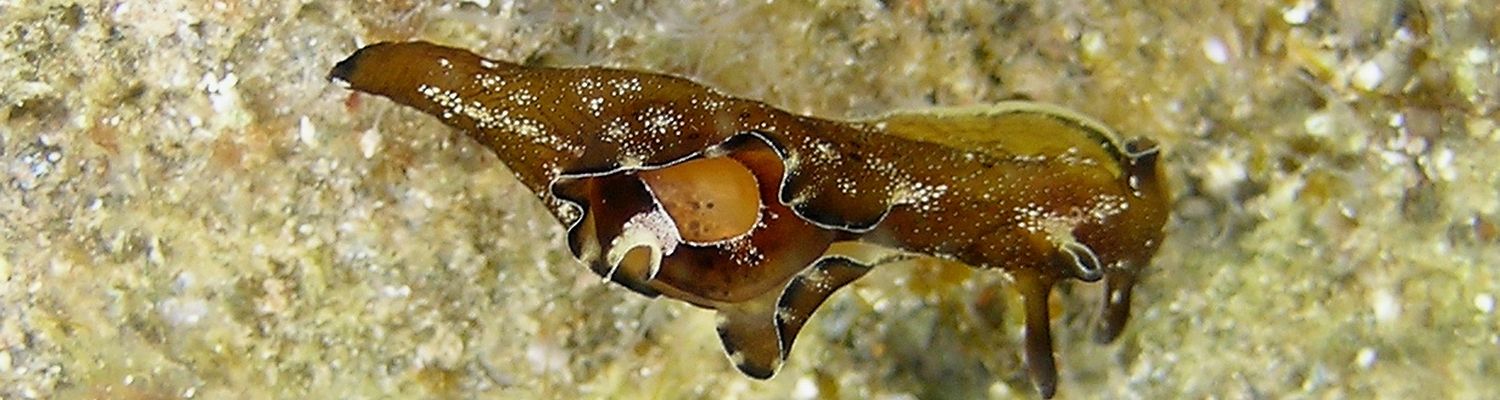
Marine slugs belong to the gastropods (Gastropoda) and, more specifically, to the opisthobranchs, though this group is no longer recognized. Today the marine slugs mentioned here are placed in the superorder Nudipleura and the three orders Pleurobranchida, Nudibranchia and Aplysiida (sea hares). There are around 3,000 species of marine slugs, of which some are herbivorous while others feed on sessile marine animals such as sponges, corals, polyps and tunicates. They...

Continue reading

Sea urchins

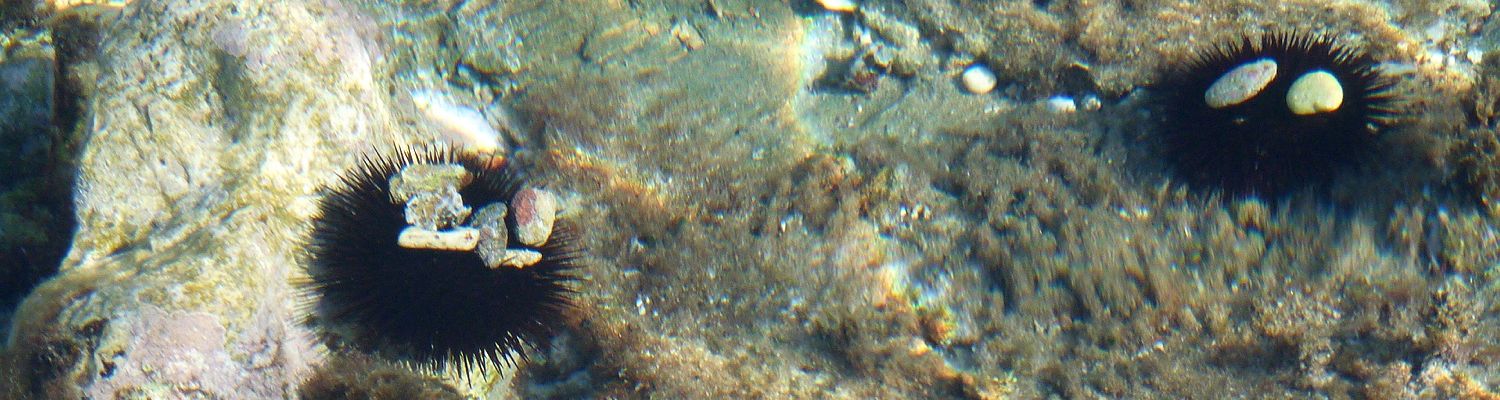
Sea urchins are not the most popular sea animals. However, in moderate numbers, they are an important part of a healthy ecosystem. Here you can skip the introduction and go directly to the species. Black sea urchins in shallow water Despite their simple body anatomy, sea urchins stand quite “high” in the “phylogenetic tree”, close to the vertebrates. With almost 1,000 species, they form their own class (Echinoidea) and form the phylum Echinodermata...

Continue reading

Gastropods 1: Limpets

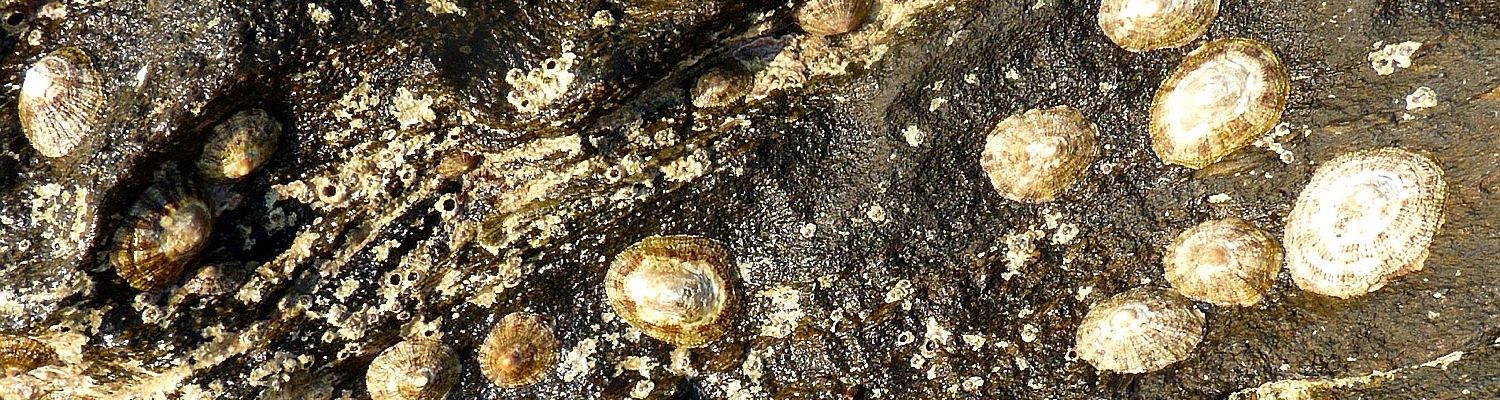
The limpets (genus Patella) belong to the snails and not to the mussels, even though their shells are not coiled. Unlike snails, mussels always have two shells. Within the snails, the limpets and their relatives form the more primitive subclass Eogastropoda, while all the other snails belong to the subclass Orthogastropoda. Here you can skip the introduction and go directly to the species. At least two species of limpets are common in the intertidal zone of Naxos....

Continue reading