Mehr Meerestiere

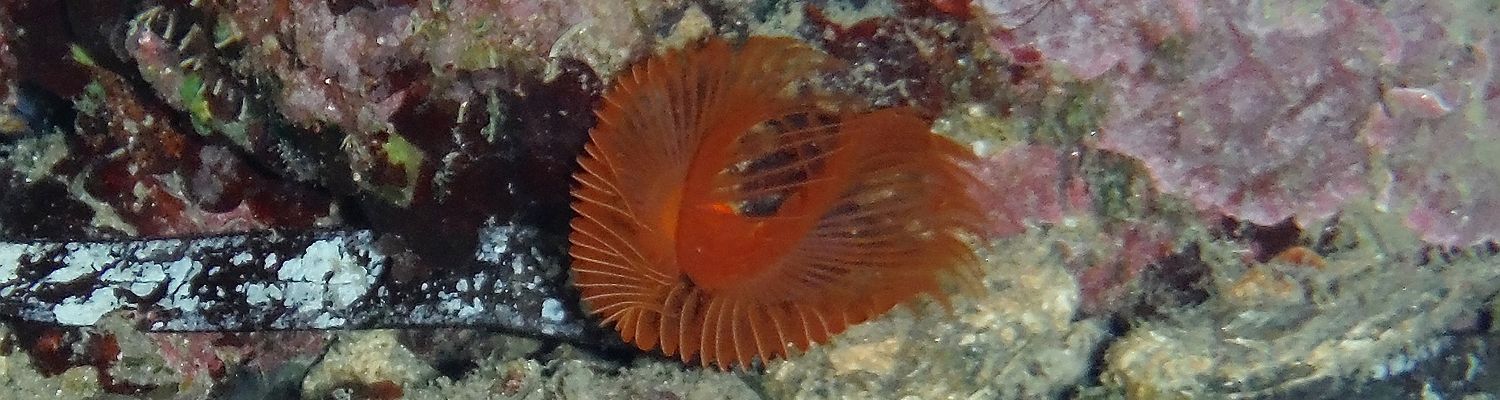
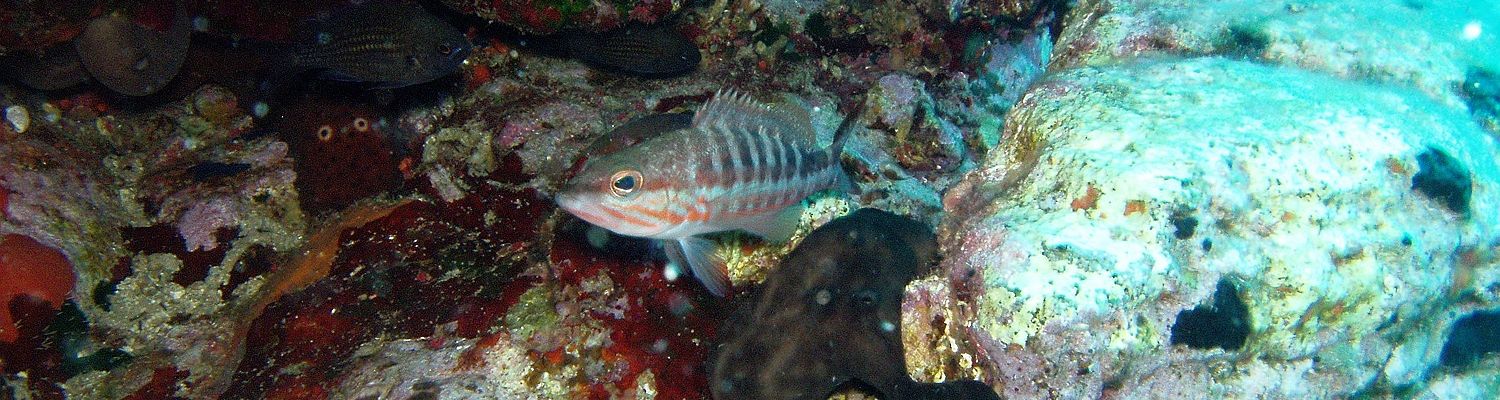
Die Meerestier-Seiten haben sich bei unseren letzten Küstenspaziergängen und Fischzügen um einige Arten erweitert, vor allem um Fische wie den interessanten Pfeifenfisch, einen hübschen Schleimfisch, die Felsengrundel, den Drückerfisch und die Zahnbrasse … und um Krebse wie den Hummer, den Großen Bärenkrebs, die Süßwasserkrabbe, die in den Flüssen von Naxos lebt, und den phantastischen Gespensterkrebs. Außerdem gab es eine Ergänzung bei den Röhrenwürmern:...

Continue reading

A stroll through the phrygana

If you love hiking and are interested in flowers, then the best time to come to Naxos is spring, from the end of March to the beginning of May (depending on the weather conditions). This is the peak flowering time for most plants: There are chrysanthema and daisies, poppies and bindweed, numerous varieties of clover and vetch and many more. If you come to Naxos in April, you should not miss a walk through the phrygana, the dwarf shrub community that occurs in Azalás on...

Continue reading

Cape Stavros near Moutsouna

Cape Stavrós near Moutsoúna is the only major cape of the island of Naxos. It extends about one and a half kilometers into the sea. Our Holiday homes lie approximately two kilometers north of the cape. We have a magnificent view of its tip, which turns slightly northwards, across the bay of Azalas. View of Agios Dimitris and the cape; in the background to the right lies Moutsouna. The word “Azalas”, which is used for the beach next to the cape and the area...

Continue reading

Hikes and tours

Wanderungen und Spaziergänge Die richtige Art, die Insel Naxos zu erkunden, ist ohne Zweifel zu Fuß: Nur so kommt man tatsächlich in den Genuss der landschaftlichen Eigenheiten, der Schönheit im Detail, der Vielfalt der Formen und Farben, der Stille und Friedlichkeit. Die besten Zeiten um auf Naxos zu wandern sind natürlich das Frühjahr und der Herbst, aber auch im Sommer kann man kürzere Wanderungen durchführen, wenn man sich an die Abend- und Morgenstunden hält, oder...

Continue reading

Marine worms

Many species of marine worms populate the seas, most of which are rarely seen due to their small size or hidden lifestyle. Nematodes, acorn worms, priapids, horseshoe worms, annelids, squirt worms, cord worms, chalcidians, flatworms and ragworms each represent their own phylum and, despite their superficial similarities, differ greatly in their body anatomy. On this page, we introduce some representatives of the large phylum of annelids. Annelids have a characteristically...

Continue reading

The Circalittoral

The circalittoral zone begins where the light becomes too weak for light-loving organisms (such as seagrass) to thrive, i.e. at depths of around 30 to 50 meters, or even 100 meters in very clear waters. On northern slopes and especially in caves, however, species of the circalittoral can also be found much closer to the surface. I do not dive myself and only snorkel very rarely. All photos on this page were taken by Themos Bogiatsoglou, whom I would like to thank for...

Continue reading

The Infralittoral

The infralittoral zone begins at the lower waterline, which means that it encompasses the permanently submerged area of the coastal benthal. It extends down to the depth at which light-loving species such as seagrass and many types of algae can no longer thrive. Due to its large extent and the fact that its organisms are not exposed to drying out, the infralittoral is much richer in species than the zones above it. In terms of environmental conditions, the infralittoral...

Continue reading

The Eulittoral

The eulittoral is the tidal zone; it is defined as the area between the upper and lower waterlines (mean high and low waterlines). In areas with strong tides, especially in mudflats, the eulittoral is extremely extensive, teeming with life and playing an important role in the ecosystem. In the Mediterranean, on the other hand, the intertidal zone is limited to a narrow zone of often only a few centimeters due to the low tidal range. Here, the eulittoral is the zone that is...

Continue reading

Bivalvia

The Bivalvia belong to the phylum Mollusca, together with the snails and cephalopods (octopuses, squids) and some smaller groups such as the chitons and the tusk shells. Around 8,000 species have been described worldwide, which live mainly in the sea, but also in fresh water. Here you can skip the introduction and go directly to the species. There are comparatively few bivalvia in the seas around Naxos. Bivalvia shells can only be found on sandy or fine gravel beaches, but...

Continue reading

10. April 2009: Der Frühling ist da!

Der Frühling ist da: Der Wein treibt aus… …im Weinfeld blüht der Mohn… …Schmetterlinge flattern umher… …Bienen besuchen die Birnbaumblüten… …und überall blüht es. Und die Vögel zwitschern (leider nicht so einfach zu dokumentieren!): Kappenammern, durchziehende Dorngrasmücken, Grauortolane, Samtkopfgrasmücken; diese Tage singt auch oft eine Nachtigall bei uns im Garten. Der Vogelzug ist in vollem Gange: Graureiher sitzen...

Continue reading

Marine snails - Introduction

The snails, or gastropods, belong to the same phylum as bivalvia (e.g. mussels), cephalopods (e.g. octopus and squid) and some smaller groups such as chitons and tusk shells, i.e. the phylum Mollusca. With around 100,000 species, the snails are its largest class. Snails are found in all habitats on earth. Most species live in or near the sea. However, numerous species also occur in fresh water, and snails are the only molluscs to have conquered the land. Here you can skip...

Continue reading

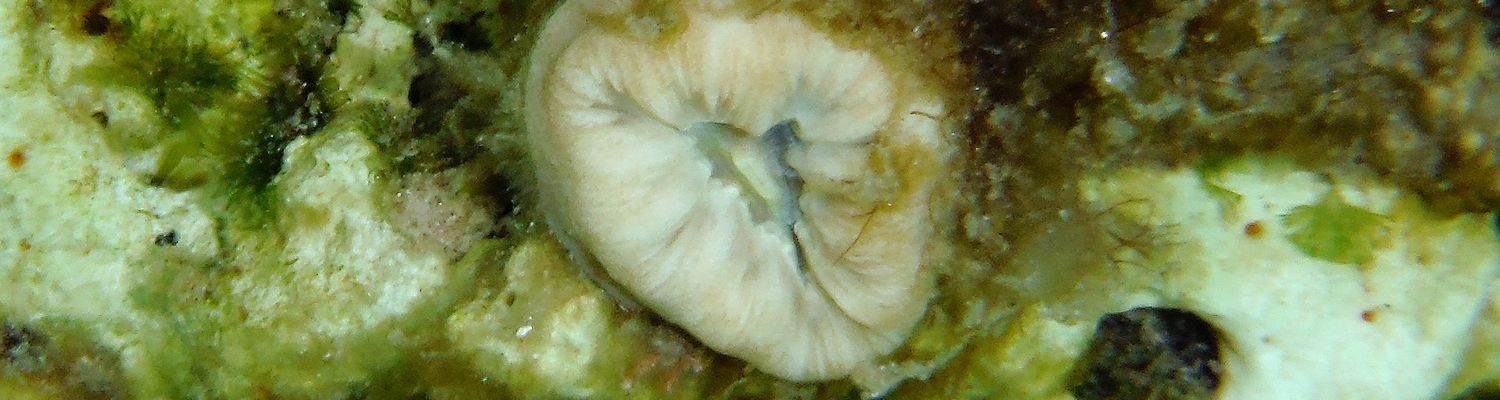
Corals

Corals belong to the class of anthozoans (Anthozoa), together with the sea anemones. These form the phylum Cnidaria together with the hydrozoans and the jellyfish. Cnidarians are a ‘lower’ group of animals that, at first glance, resemble plants. Their members are usually small, simply structured and mostly radially symmetrical; a characteristic feature are the cnidocytes, special stinging cells, which they use to capture and kill their prey. Unlike sea anemones, which...

Continue reading

Chitons

The phylum of molluscs comprises several classes, among which the bivalvia (mussels), the snails and the cephalopods (octopuses, squids) are the most important and best known. However, to the molluscs belong also a number of other, smaller classes, such as the chitons (Polyplacophora). Chitons are a very ancient group of animals, which are also known in many fossil forms. Today, there exist about 900 species that live exclusively in the sea. Here you can skip the...

Continue reading

Life between the algae

Benthic algae, i.e. algae that are attached to the substrate, provide a habitat for countless animals. Since most of these species are quite small, you have to make an effort to spot them. Many can only be found by picking off the algae and examining them with a magnifying glass. The best living space is provided by various species of Cystoseira, whose dense branches offer an ideal hiding place for numerous animals. However, most of these animals are so small that they are...

Continue reading

Ascects of the evolution of the algae

The first living organisms on Earth were bacteria (and archaea, a now rather rare and still little-researched bacteria-like group that differs significantly from both bacteria and eukaryotes (i.e. plants, animals, fungi)). These organisms lived in the sea and obtained their energy from chemical reactions with hydrogen sulphide or hydrogen (the Earth’s atmosphere was still oxygen-free at that time). Relatives of these bacteria still exist today in the ‘black smokers’...

Continue reading

Algae

Algae do not generally have a particularly good reputation. When it comes to algae, most people think of killer algae, toxic algal blooms or simply slippery, bone-breaking, ugly coatings on wet rocks. Yes, algae can be annoying or even dangerous, especially where the natural balance of an ecosystem is disturbed for example by excessive nutrient input. ‘Ugly’, slippery algae coatings of this kind, which are completely natural, form on rocks in shallow water that are not...

Continue reading

Fish

When it comes to marine animals, most people naturally first think of fish: these are known to everybody and of the greatest importance to us as a source of food. Due to its low content in nutrients and plankton, the Mediterranean Sea is relatively poor in fish. In addition, fish populations have been severely depleted in recent decades through overfishing. Here you can skip the introduction and go directly to the species. fish in their natural environment Naxos is not an...

Continue reading

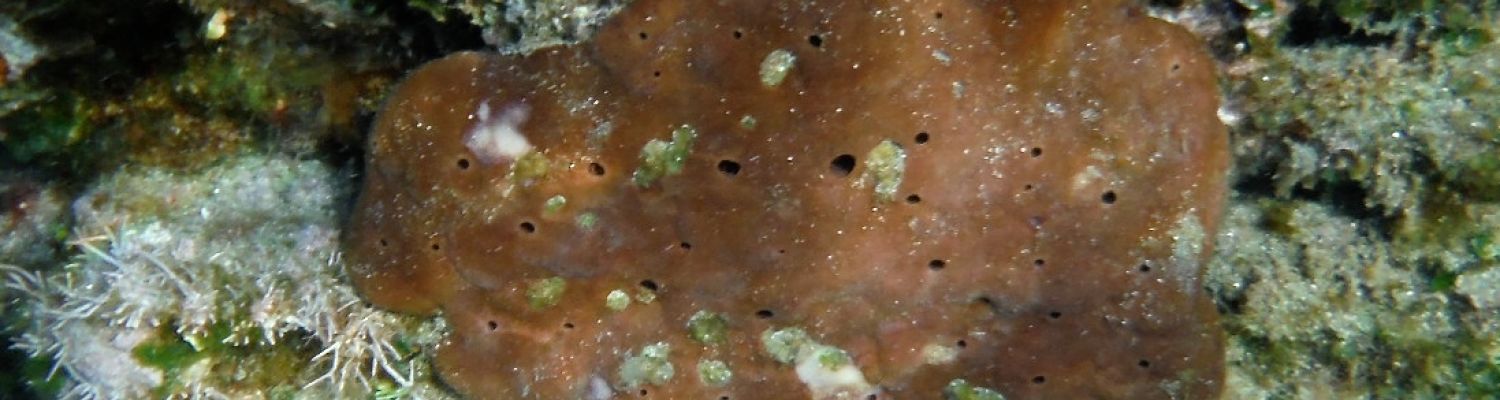
Sponges

Sponges are very unusual organisms. They belong to the animal kingdom, but in some respects they are more like plants, for example they are sessile (attached to the substrate), their shape is not symmetrical and they grow irregularly like a plant. Furthermore, they do not (or hardly) react to external stimuli and do not (or hardly) move. Sponges are multicellular animals. Each sponge is a single organism (not a colony as for example in the sometimes similar corals). Like...

Continue reading

Sea cucumbers

Sea cucumbers do not look particularly attractive; they are in fact rather ugly and appear boring and uninteresting. Nevertheless, these animals play a very important role in the marine ecosystem and should not be underestimated or neglected. Here you can skip the introduction and go directly to the species. Sea cucumbers (class Holothuroidea) are related to the sea urchins and the starfish, with which they form the phylum Echinodermata. At first glance they do not look at...

Continue reading

Sea anemones

On the rocks in shallow water in the small bays near Azalás, it is easy to find some particularly beautiful and interesting representatives of marine fauna: the sea anemones. The order of sea anemones (Actiniaria), with around 1200 species, belongs with the corals to the anthozoans (class Anthozoa), which together with the hydrozoans and the jellyfish form the phylum Cnidaria. Here you can skip the introduction and go directly to the species. The cnidarians have a rather...

Continue reading