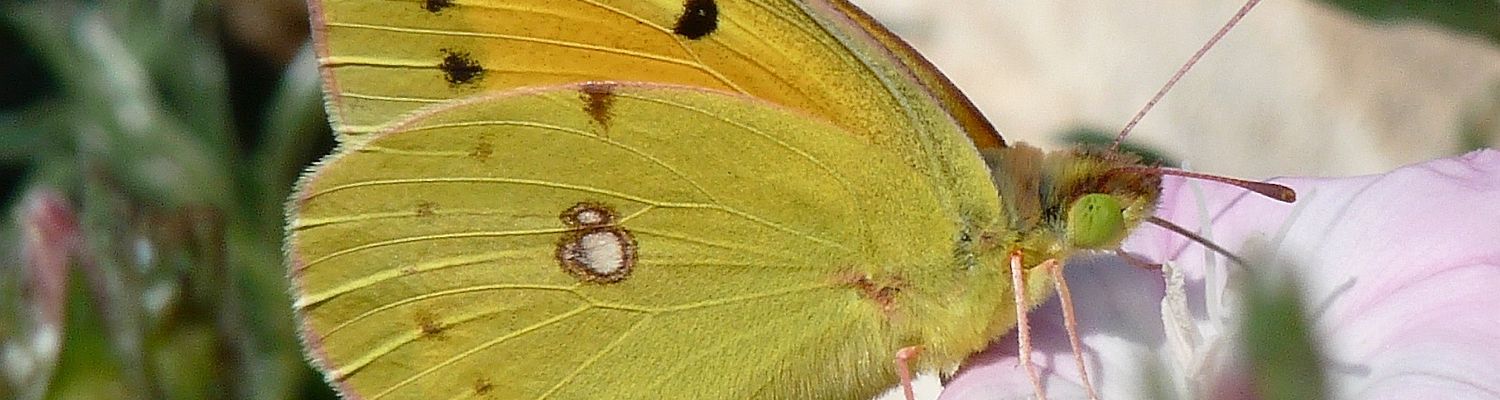
Insects - Introduction
Insects are undoubtedly the most successful animals class. Still most people don’t know much about insects and consider them mostly to be a nuisance. Given the alarming decline in insect populations in Europe, it is time we paid more attention to our small neighbours. This page provides a general introduction to insects plus a list of my articles about the different insect groups.
Here you can jump directly to the articles
Distribution
Insects are the animal class with not only the largest number of species, but also – in some cases – exceptionally high numbers of individuals, for example in ants. They are found in all habitats on Earth except for the oceans and have adapted to an almost infinite variety of environmental conditions and lifestyles. Numerous species live only on one plant species; in tropical rainforests, one estimates that up to 600 specialised insect species exist per tree species. Other insects show an extraordinary adaptability and can thrive under very a great variety of conditions. In addition to ecological specialisation, i.e. adaptation to a particular way of life or habitat, many insect species have also evolved through geographical isolation, such as the cave crickets, whose populations have split into different species as they were isolated over thousands of years in different caves. Almost a million insect species have been described to date, but the actual number of species lies probably many times higher.
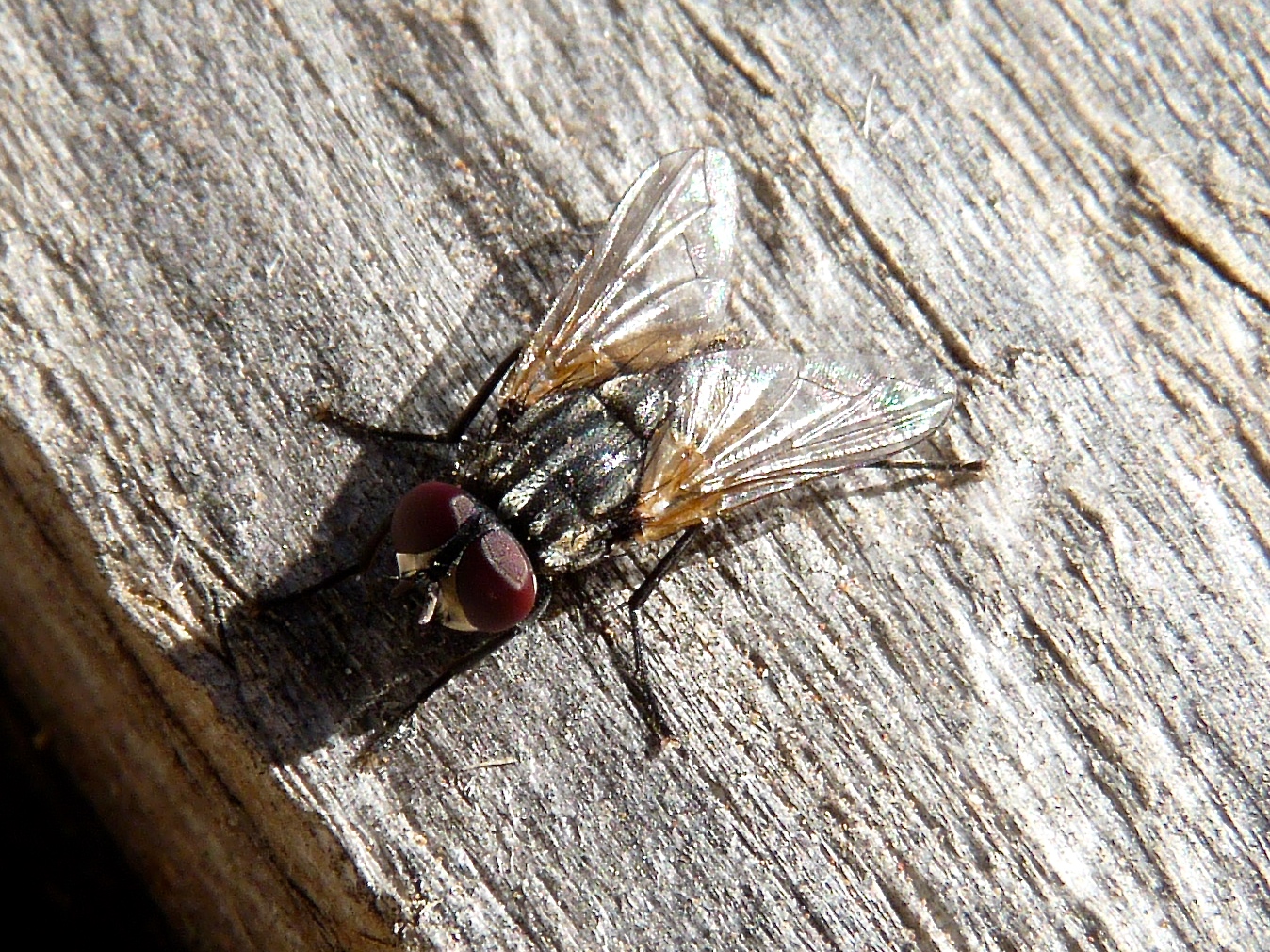
The housefly is one of the most widespread and common animals on earth. It can cope with a wide range of environmental conditions and has also adapted to human habitats.
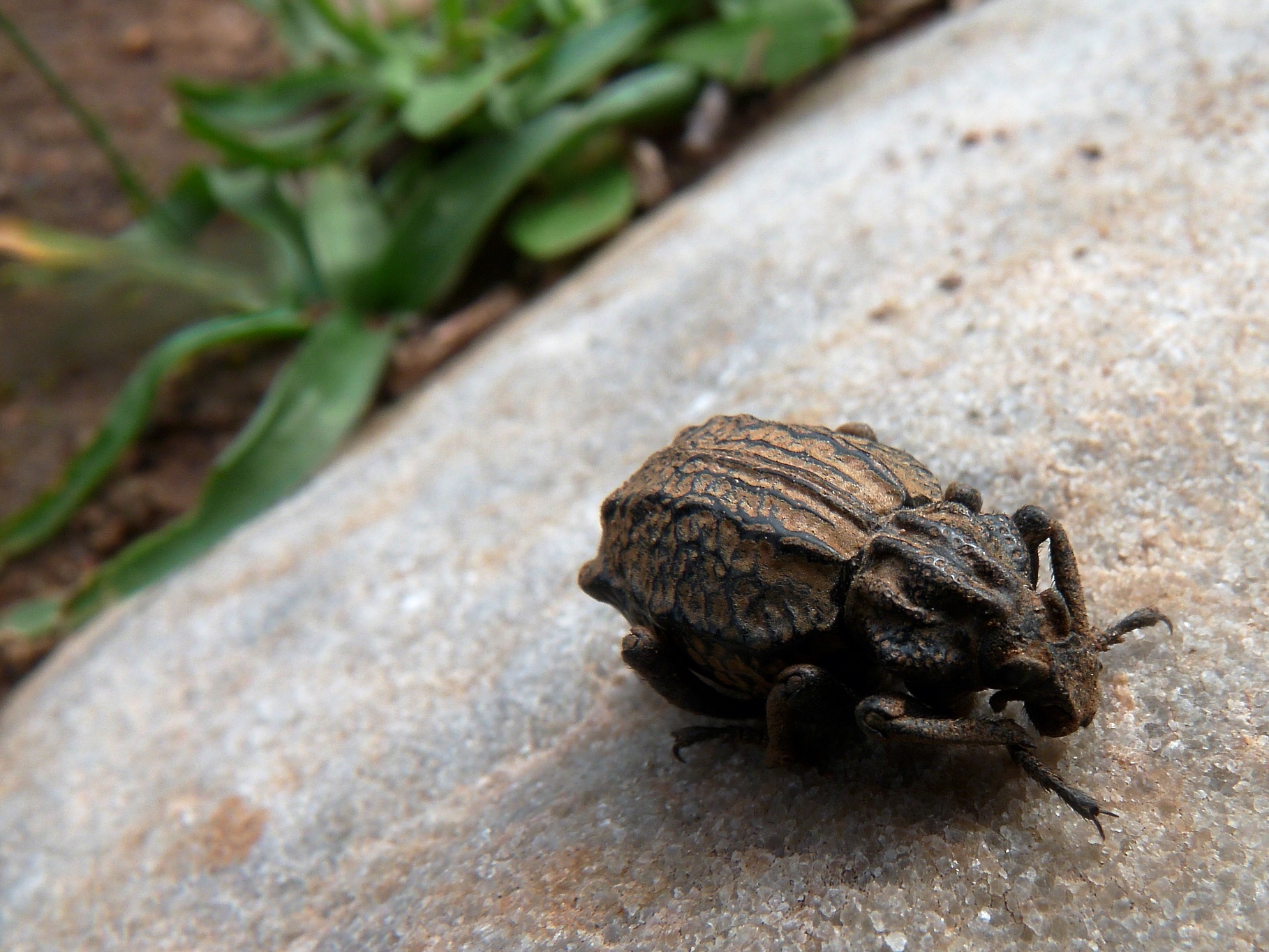
Weevils are probably the animal family with the most species. Many weevil species have adapted to a single plant species, such as the Brachycerus barbarus pictured here, which lives exclusively on the sea squill (Drimia maritima, visible in the background).
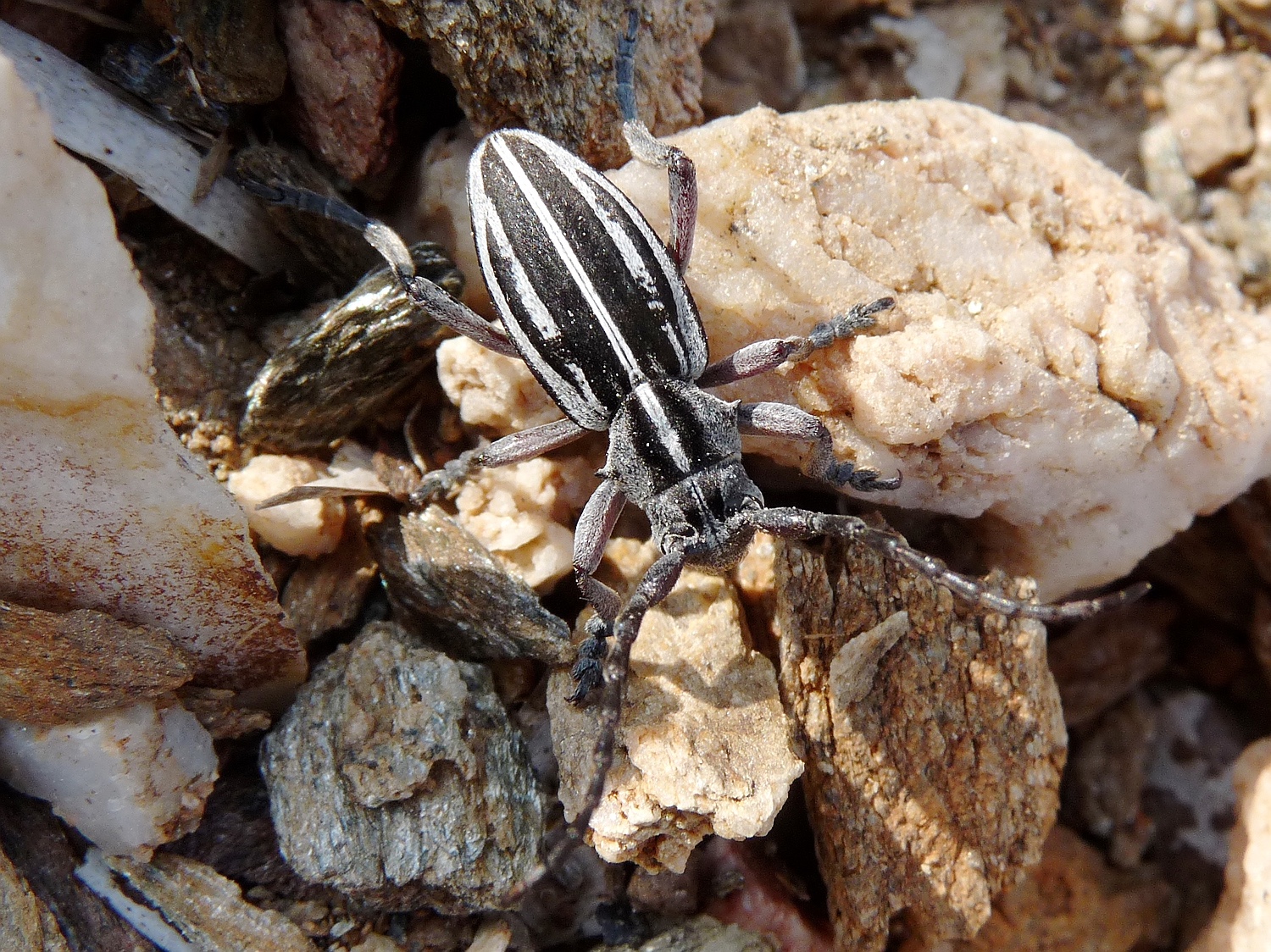
One of the insects with a limited distribution is the flightless longhorn beetle Dorcadion insulare, which is endemic to the Cyclades.
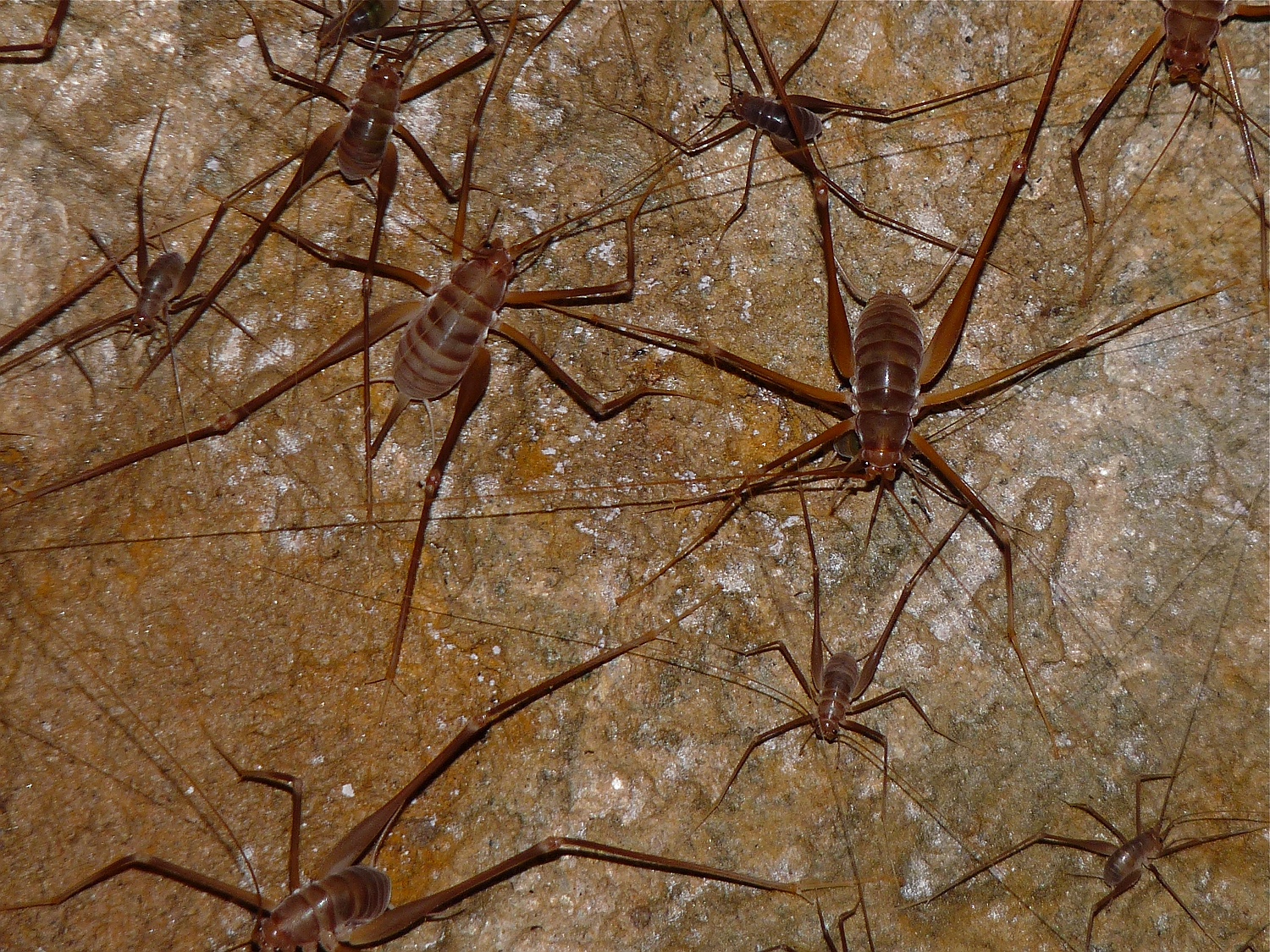
The cave cricket Dolichopoda naxia is endemic to Naxos.
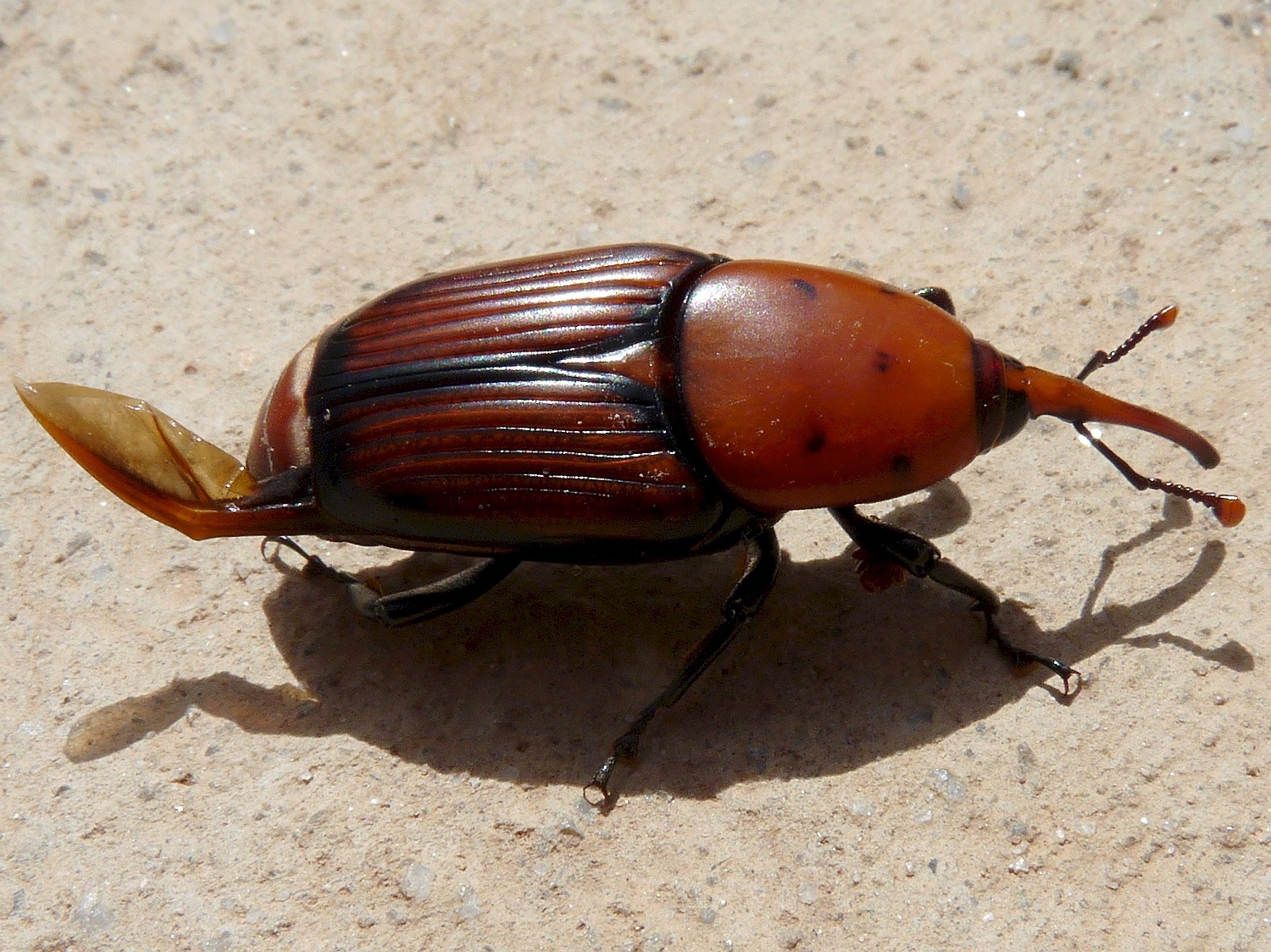
Insect species can cause major damage when they spread from their original area into other parts of the world. The Red palm weevil, which originates from Southeast Asia, has destroyed countless palm trees in the Mediterranean region since its arrival a few decades ago.
Anatomy
Insects, together with spiders, crustaceans, millipedes and (the extinct) trilobites, form the phylum of the arthropods, who are characterised by their jointed appendages (legs, antennae, feelers, mouthparts, etc.), as the name suggests. Their body is made up of numerous segments, which were originally all identical in structure – as is still the case with millipedes – but which in most members of this group are now differentiated into different body parts.
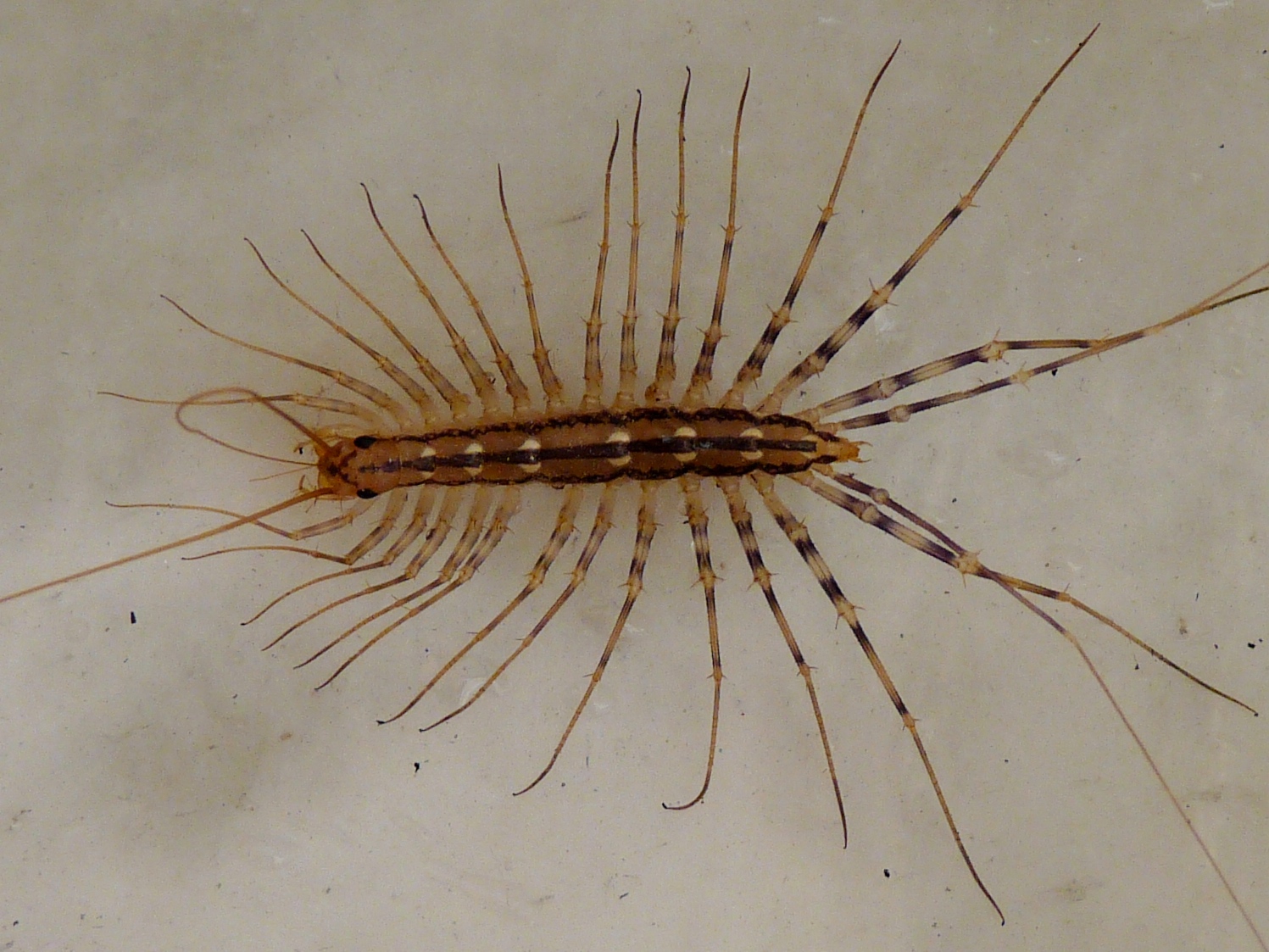
The house centipede, a harmless centipede that often lives in houses, shows the segmented body of the arthropods, which in insects is so deeply modified that the original segmentation is hardly visible any more.
In insects, the body is made up of three clearly separated sections: the head, the thorax and the abdomen. The name ‘insect’ derives from the Latin word insectum = incised, which in turn is a translation of the Greek word for insect, entomon.
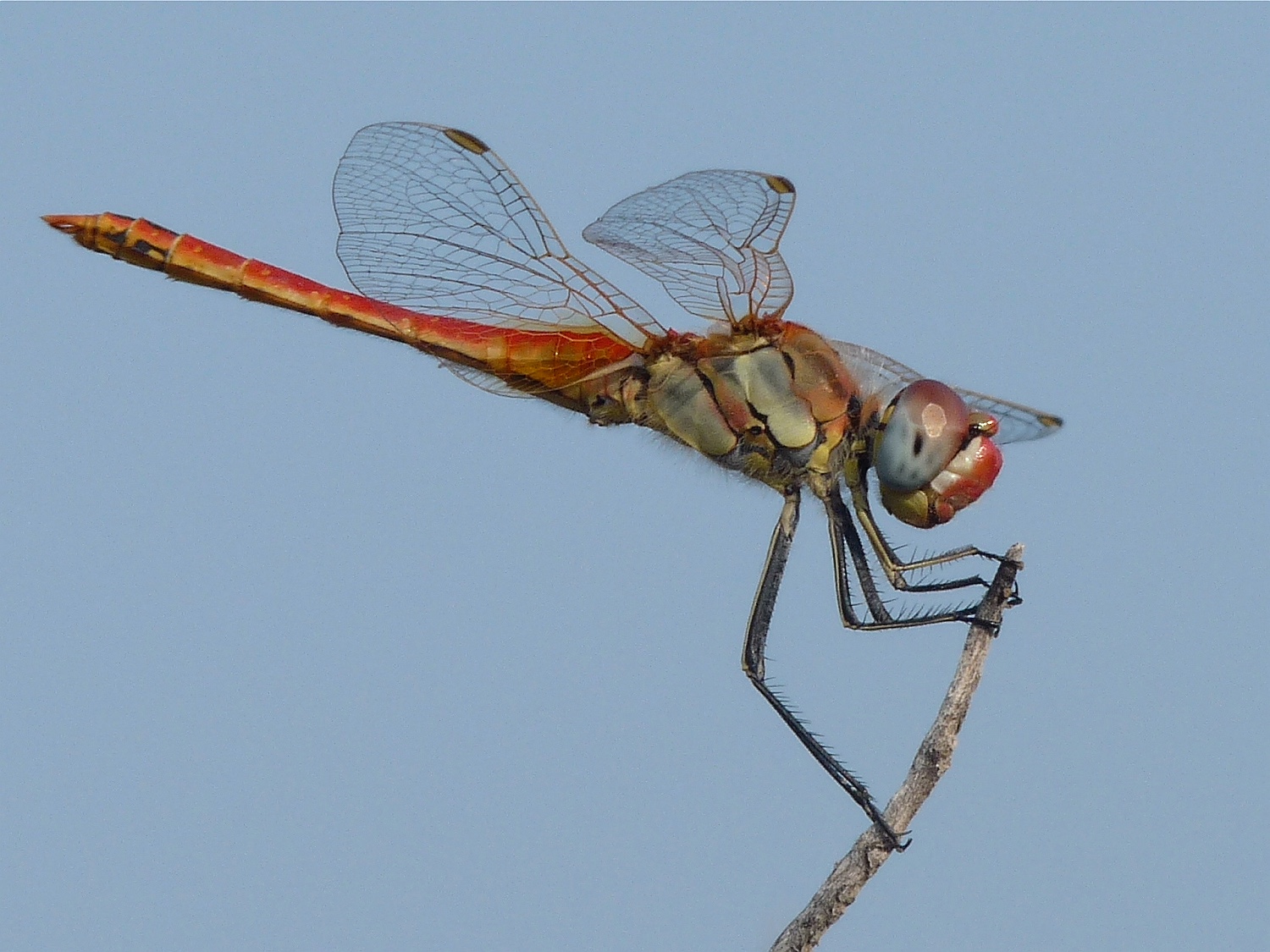
This dragonfly clearly shows the three parts of the insect body: the head with large compound eyes, the thorax with three pairs of legs and two pairs of wings, and the slender, elongated abdomen typical of dragonflies.
The head
The head of the insects consists of six fused segments. It bears a pair of antennae and compound eyes composed of numerous small ommatidia, often also several ocelli (simple eyes), which serve to perceive light intensity and help with the orientation in relation to the horizon and the sun.
The mouthparts
The mouthparts are modified appendages (“legs”). The mouth has in all insects the same basic structure with an upper lip, paired mandibles, paired maxillae and a lower lip. In their original form, the mouthparts are designed for chewing and biting; in many species however they have evolved into a proboscis, which can be used either only for sucking, or for piercing and sucking, or for sucking and licking. Sensory organs, which enable insects to smell and taste, are located on the mouthparts, the antennae and the legs.
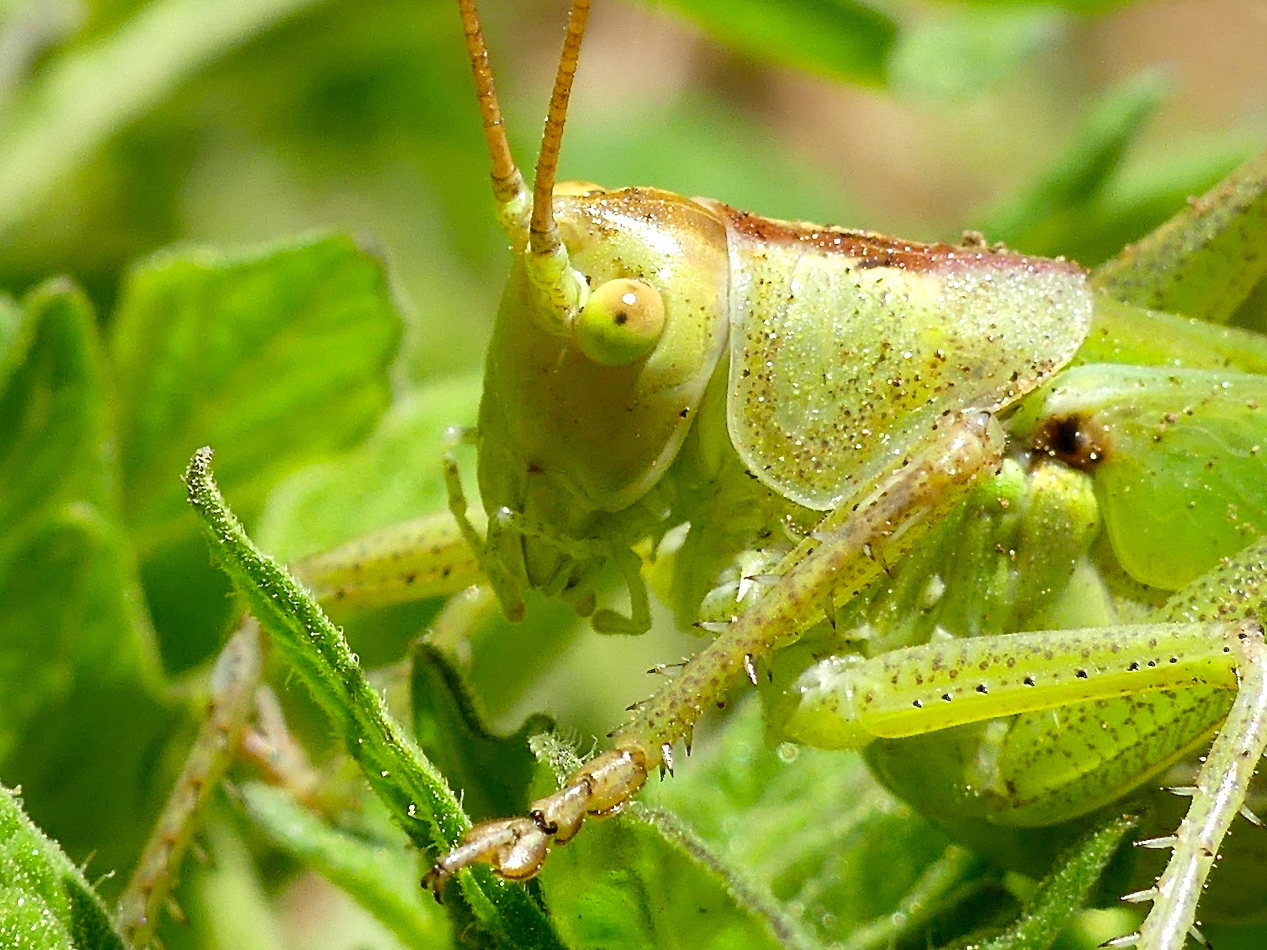
Here you can see the mouthparts of grasshoppers, which have a fairly primitive form (for chewing and biting). From top to bottom they include the upper lip (labrum), formed like a single plate, the pincer-like mandibles (for biting), the front maxillae (palps – you can clearly see that these are modified limbs) and the lower lip (labium) with the rear maxillae and the terminal plate.
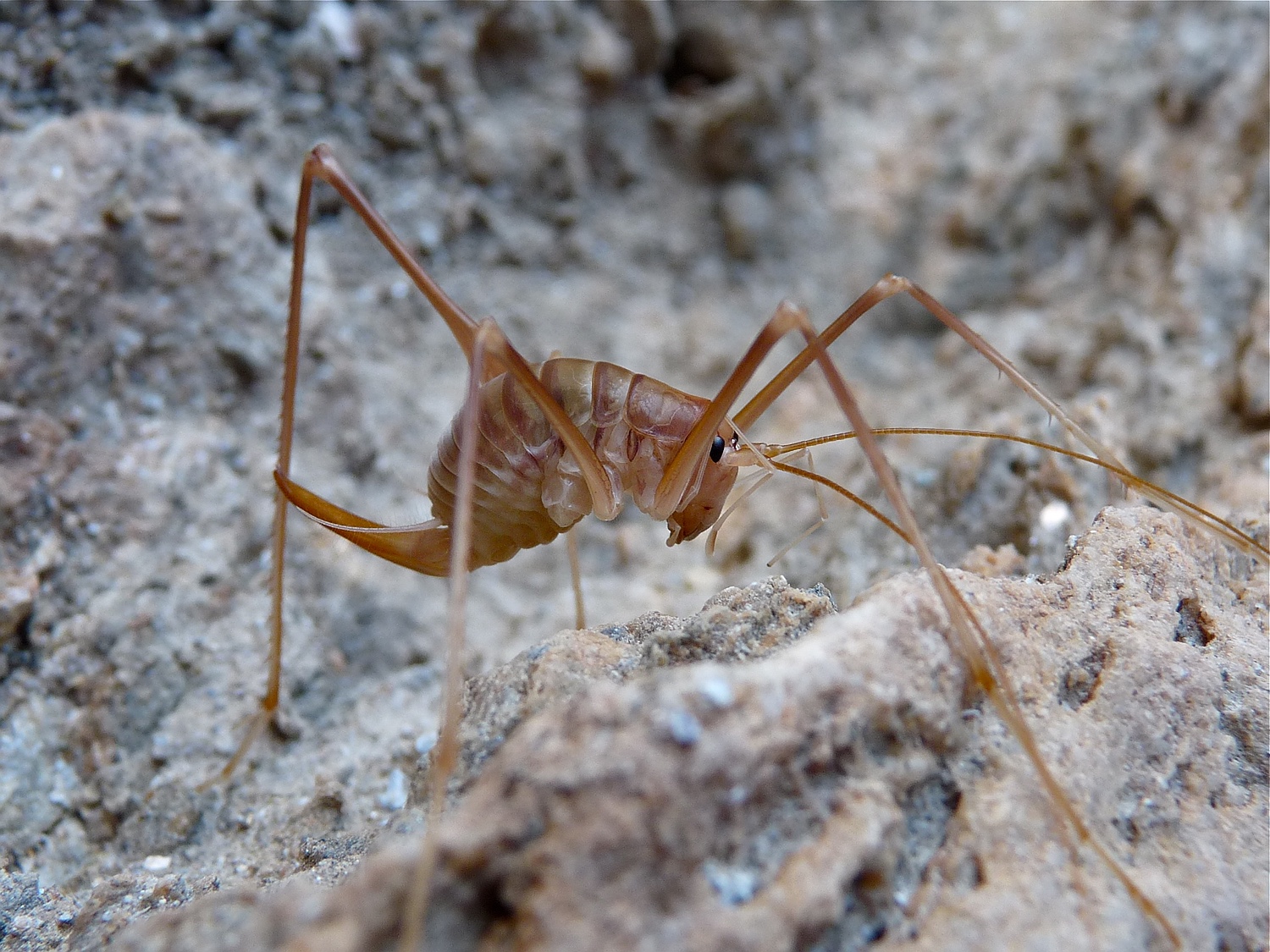
In this cave cricket one can see the very long front maxillae and the much shorter rear maxillae.
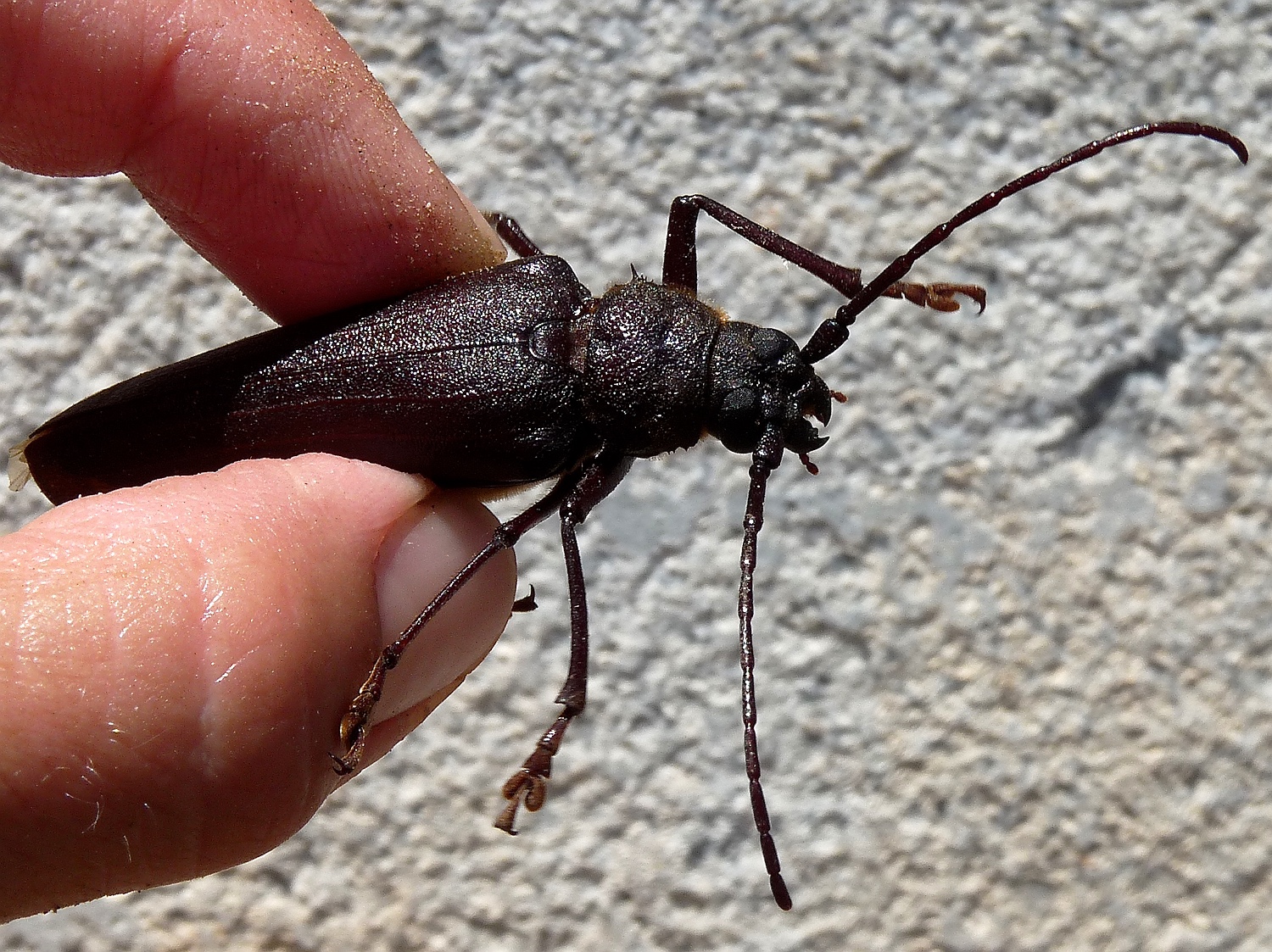
This longhorn beetle shows the pincer-like mandibles of its mouthparts of the chewing and biting type.
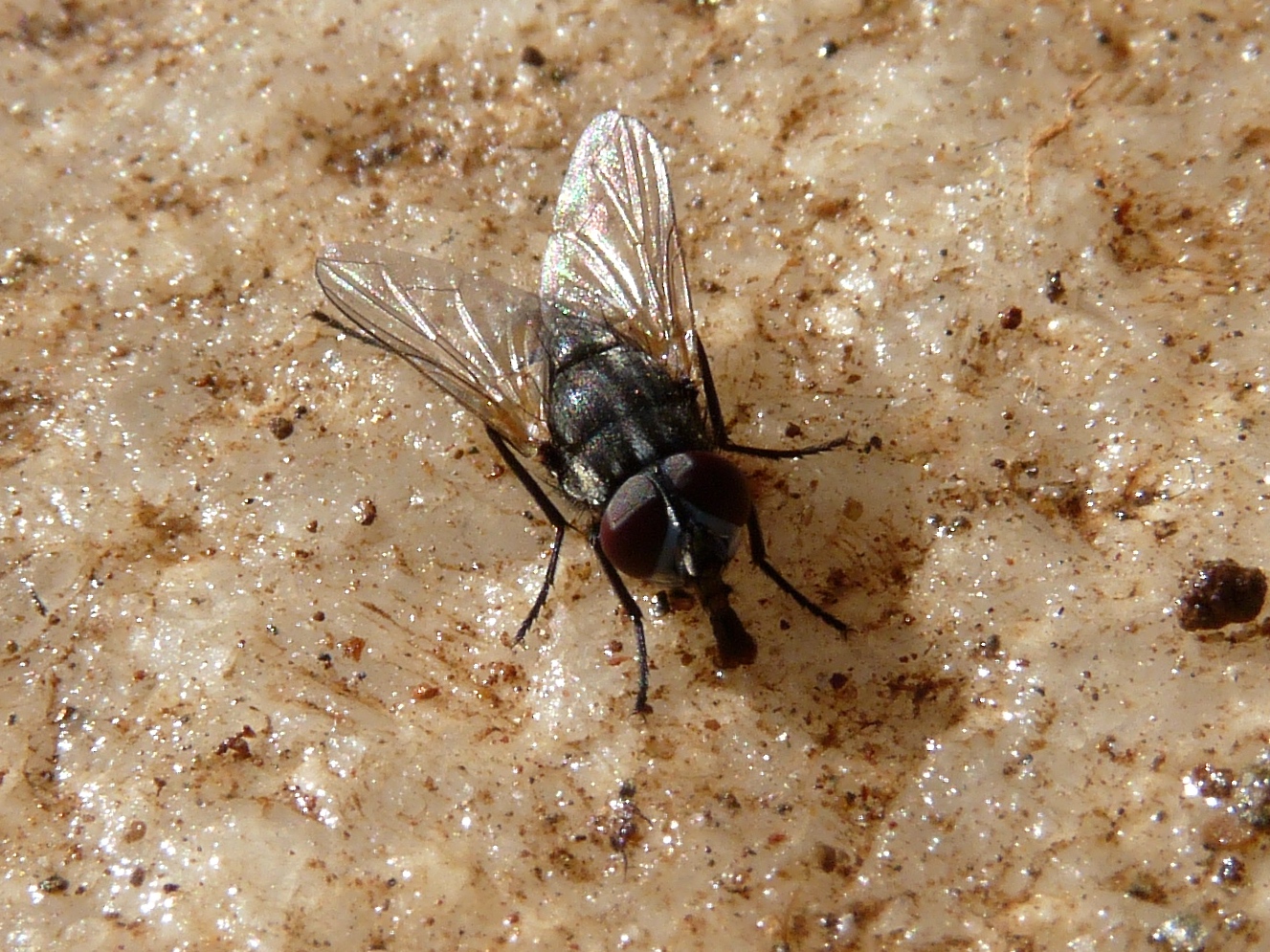
Most flies have sucking and licking mouthparts, which they use to “dab” liquids and food particles of all kinds.
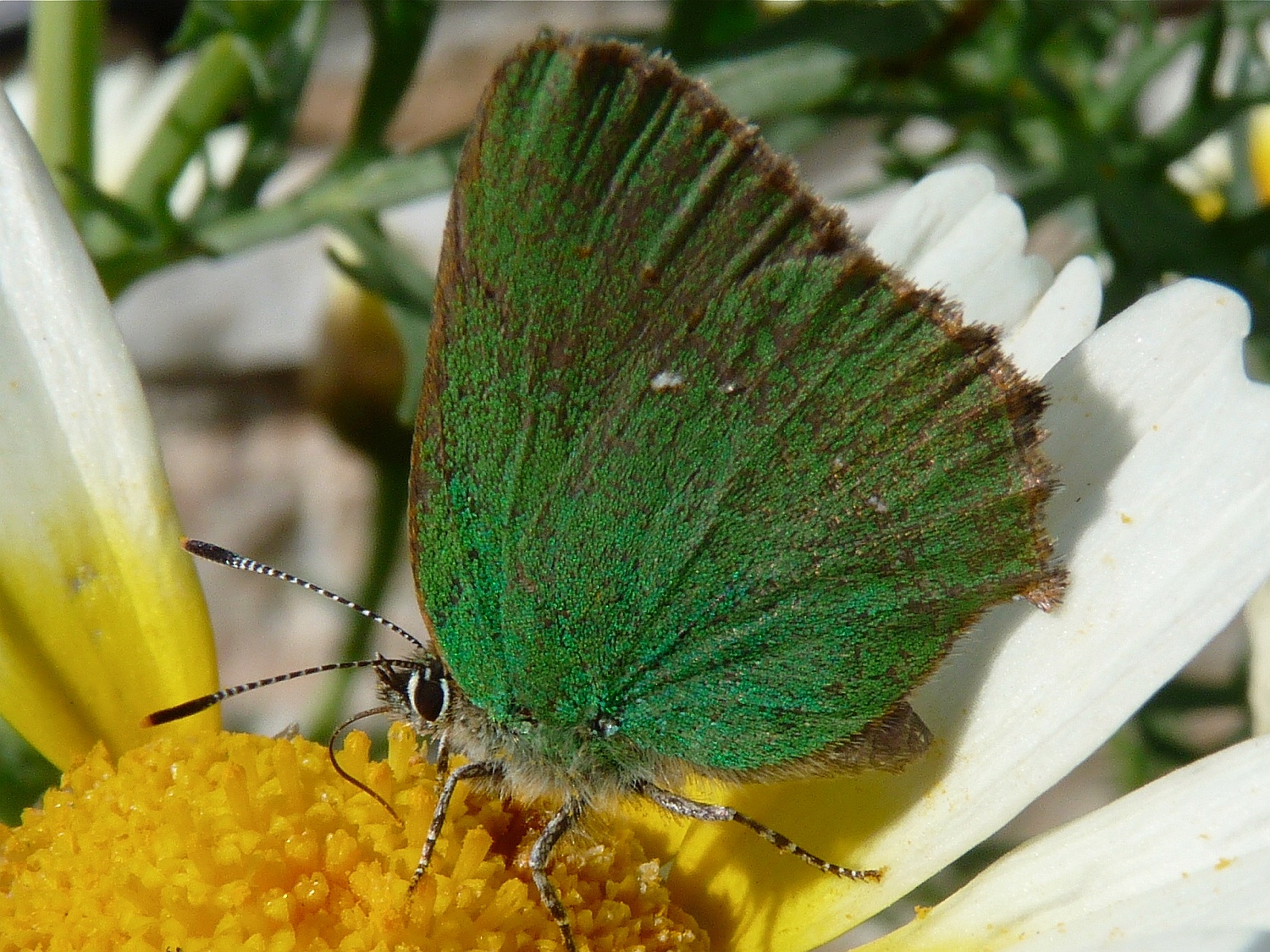
The long proboscis of butterflies has developed from the maxillae. The characteristic long antennae of butterflies are also visible.
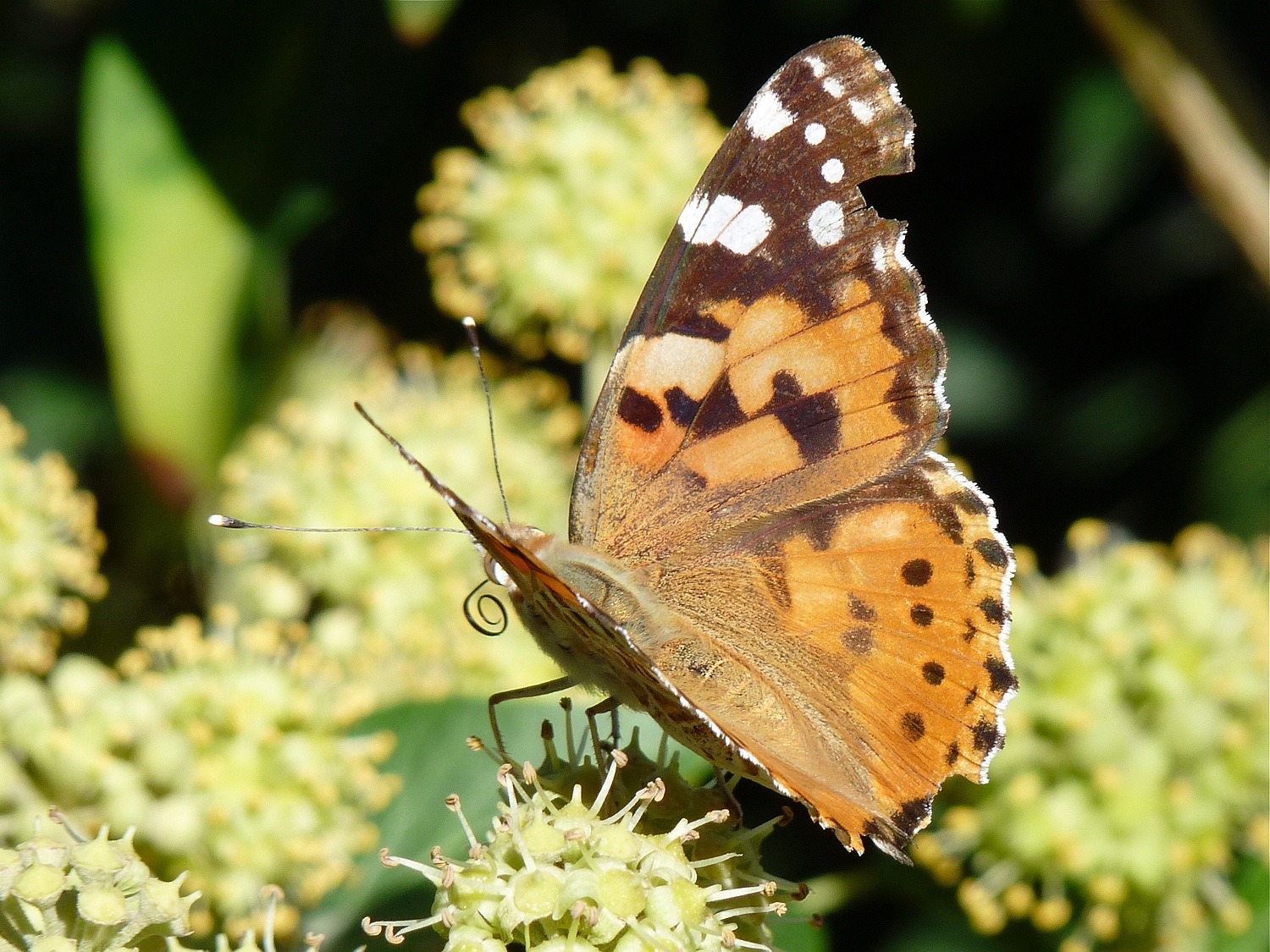
In butterflies, the proboscis is only used for sucking and has only one canal. When not in use, it is rolled up under the head.
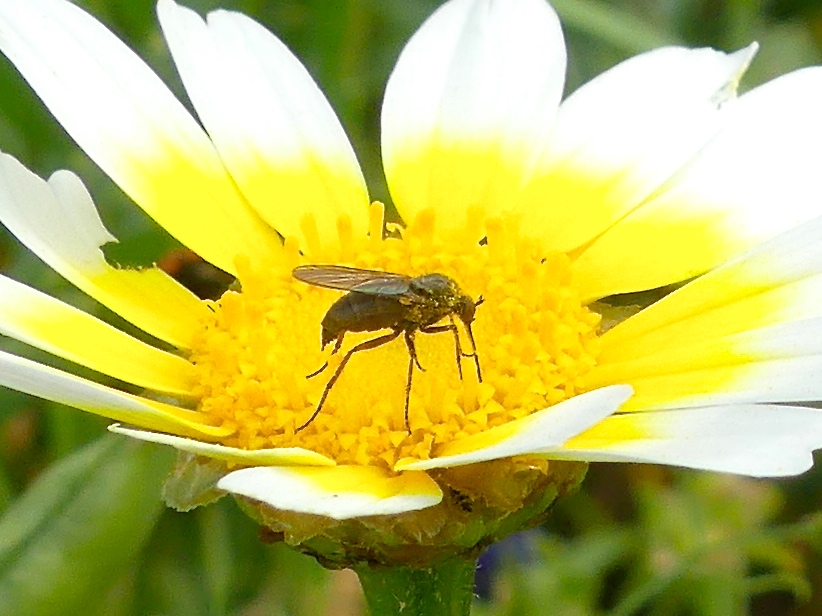
The piercing and sucking mouthparts of the dance fly include two canals: one for sucking and one for injecting venom or digestive fluid: although now vegetarian, the dance fly is descended from predatory ancestors.
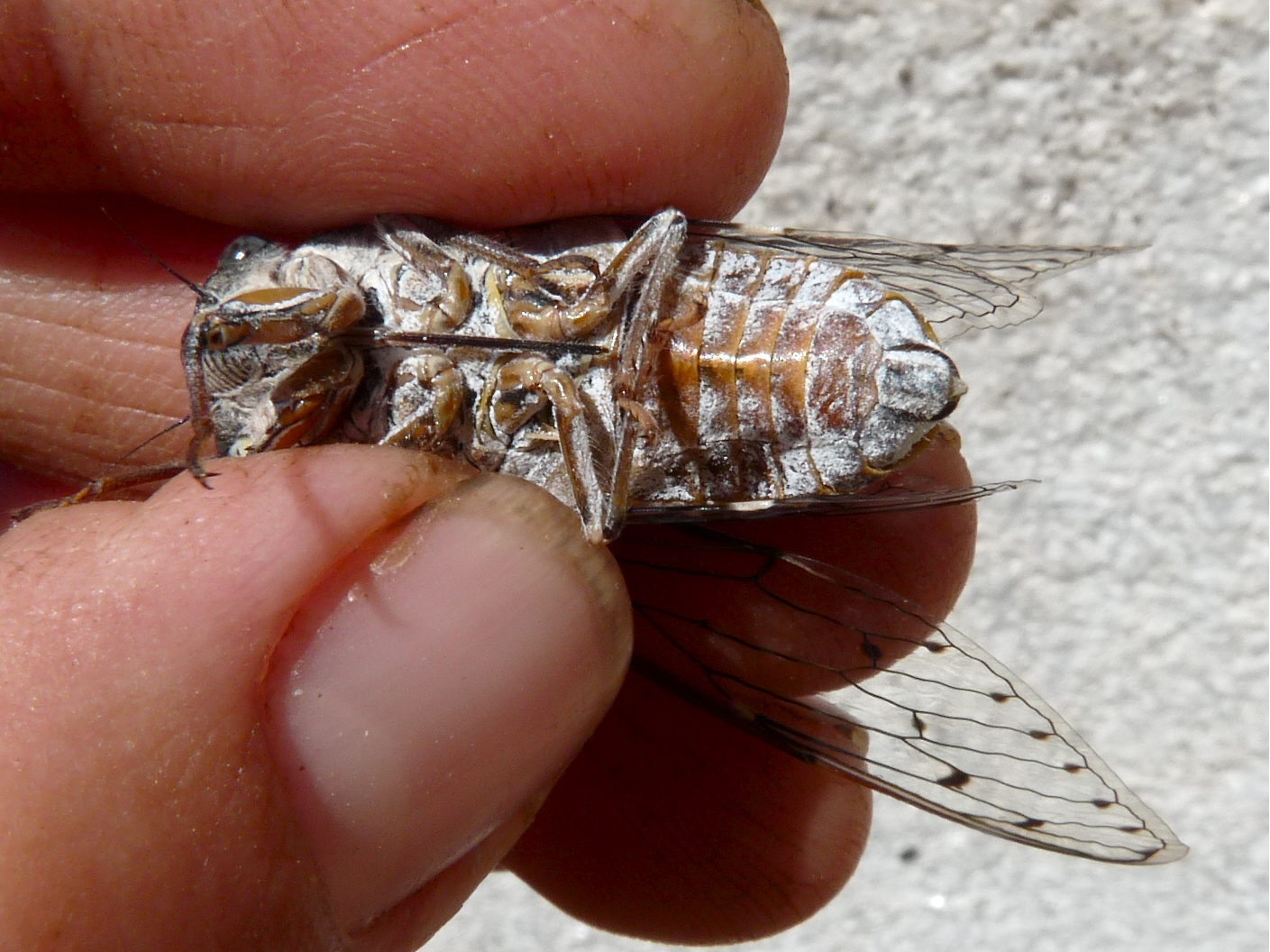
Cicadas also have sucking and piercing mouthparts. From below, you can see the long, thin proboscis placed against the abdomen, which the Common cicada uses to drill into tree branches and suck the sap.
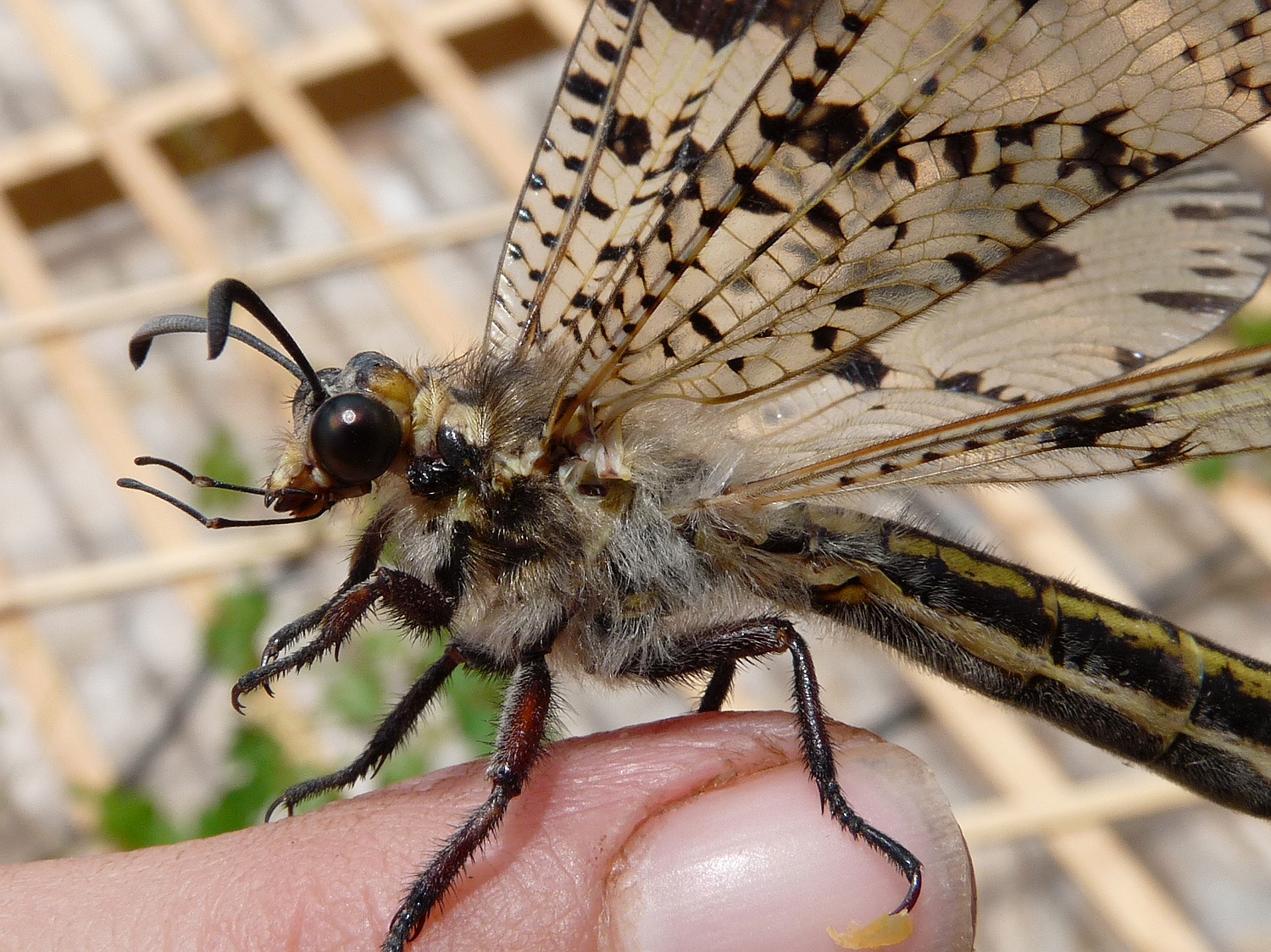
The large hymenopteran Palpares libelloides has especially long maxillae.
The antennae
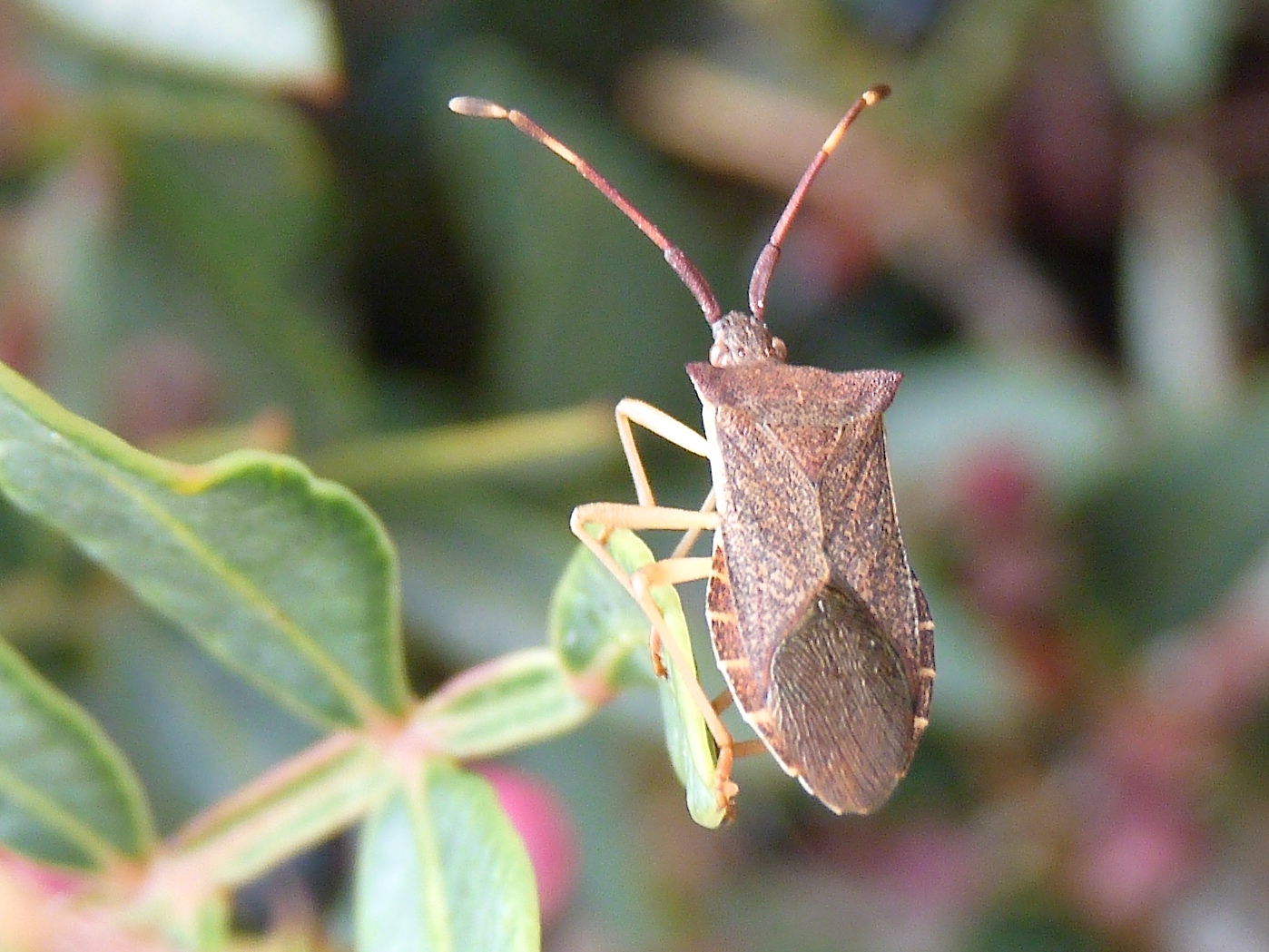
Bugs have antennae of medium length consisting of several segments.
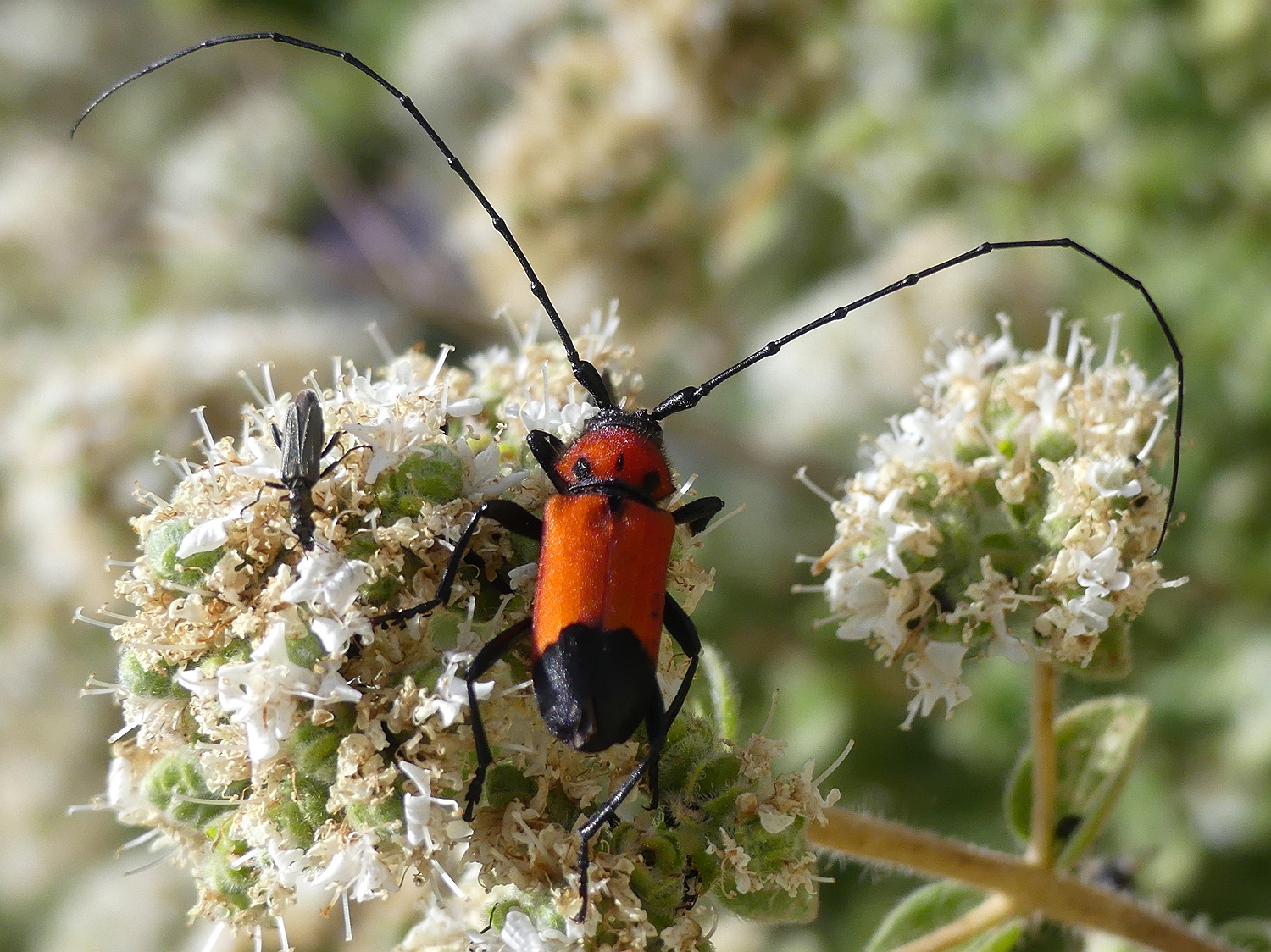
The longhorn beetle Purpuricenus desfontainii has particularly long antennae.
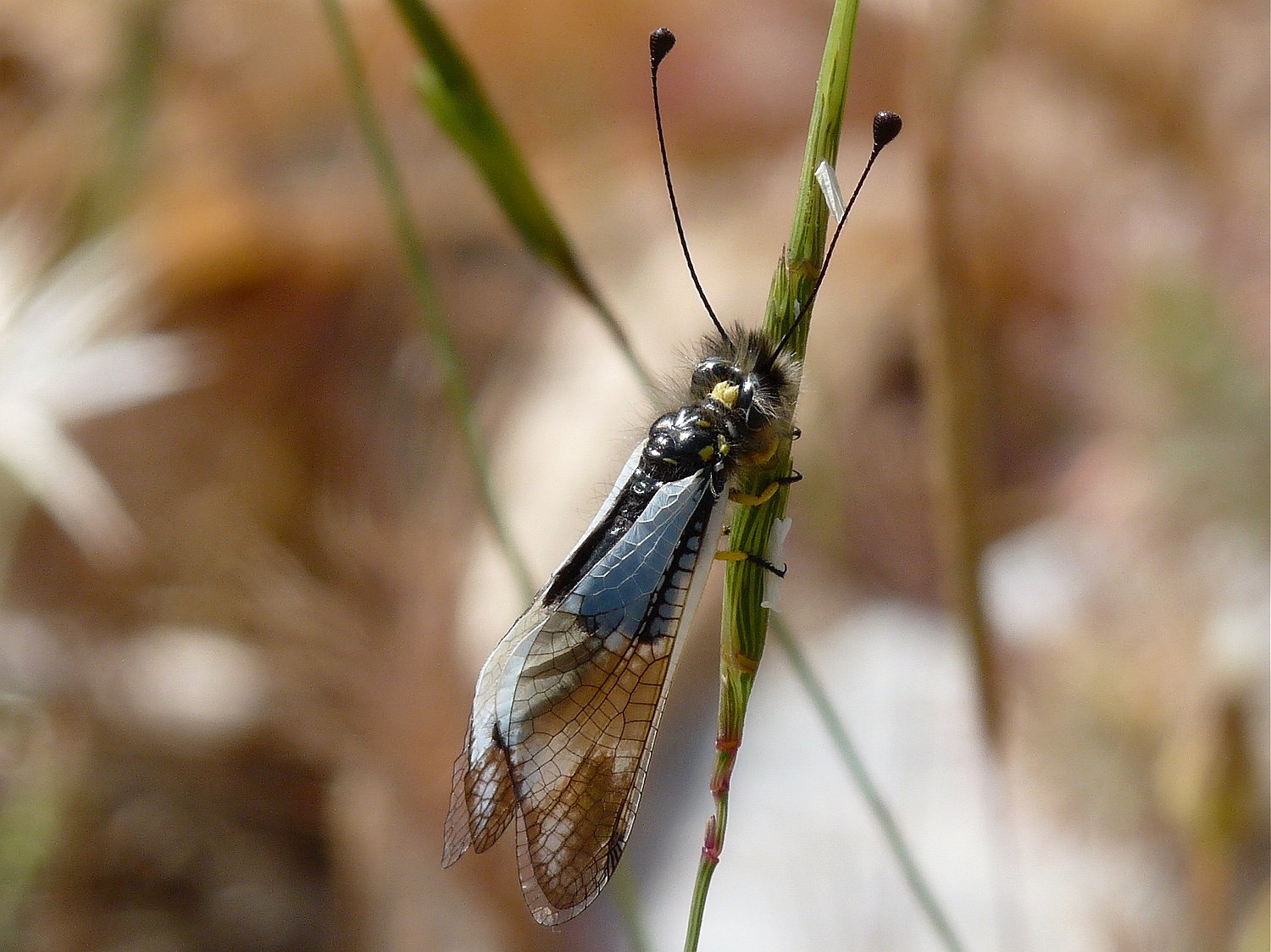
The neuropteran Libelloides lacteus has club-shaped antennae.
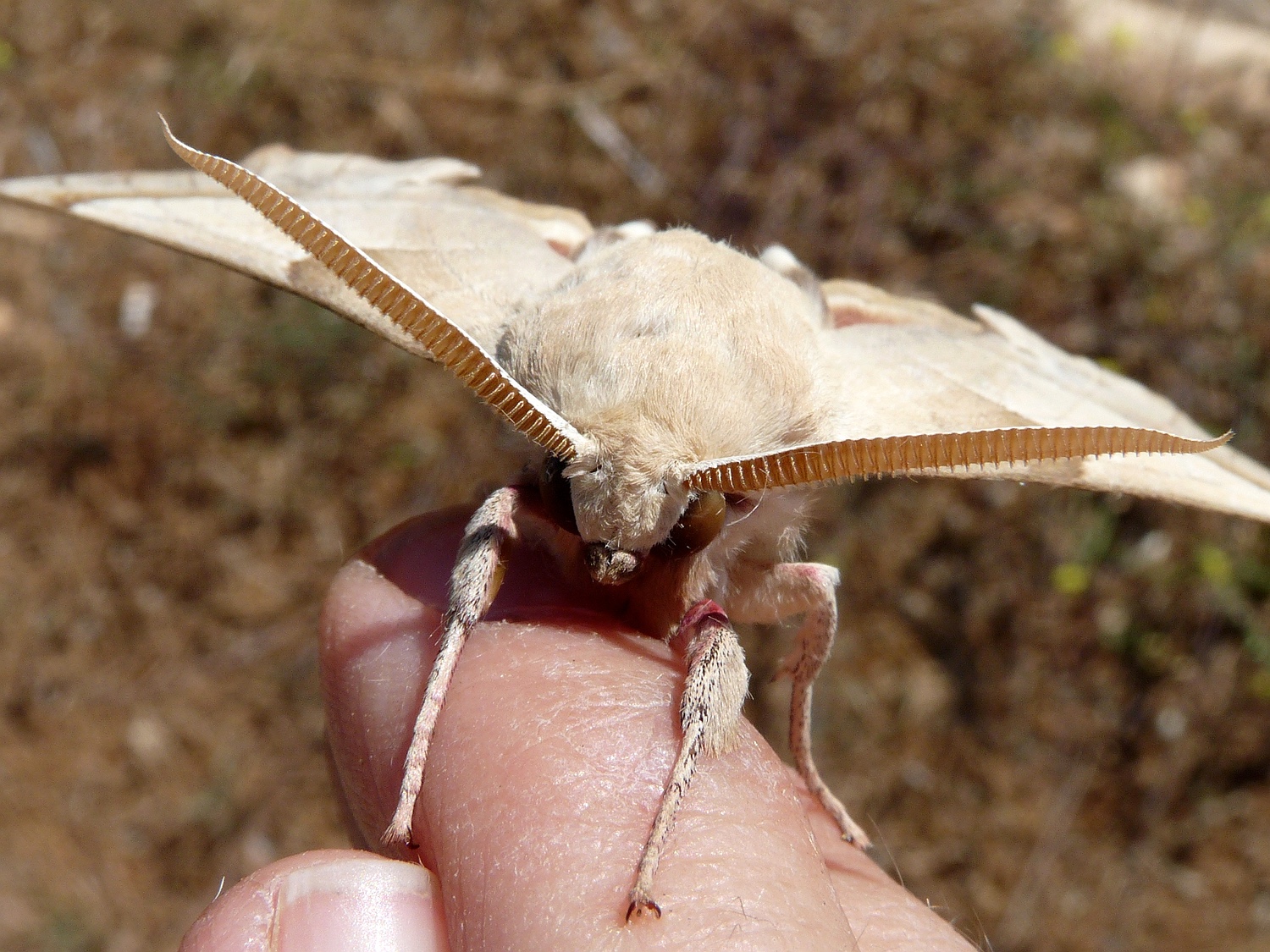
In many species of hawk moths, the males have very large antennae which are comb-like in shape to increase the surface. The hawk moths have an astonishing sense of smell, which enables the males to locate females over long distances, especially in species such as the oak hawk moth (in the picture), which occur in very low population densities.
The eyes
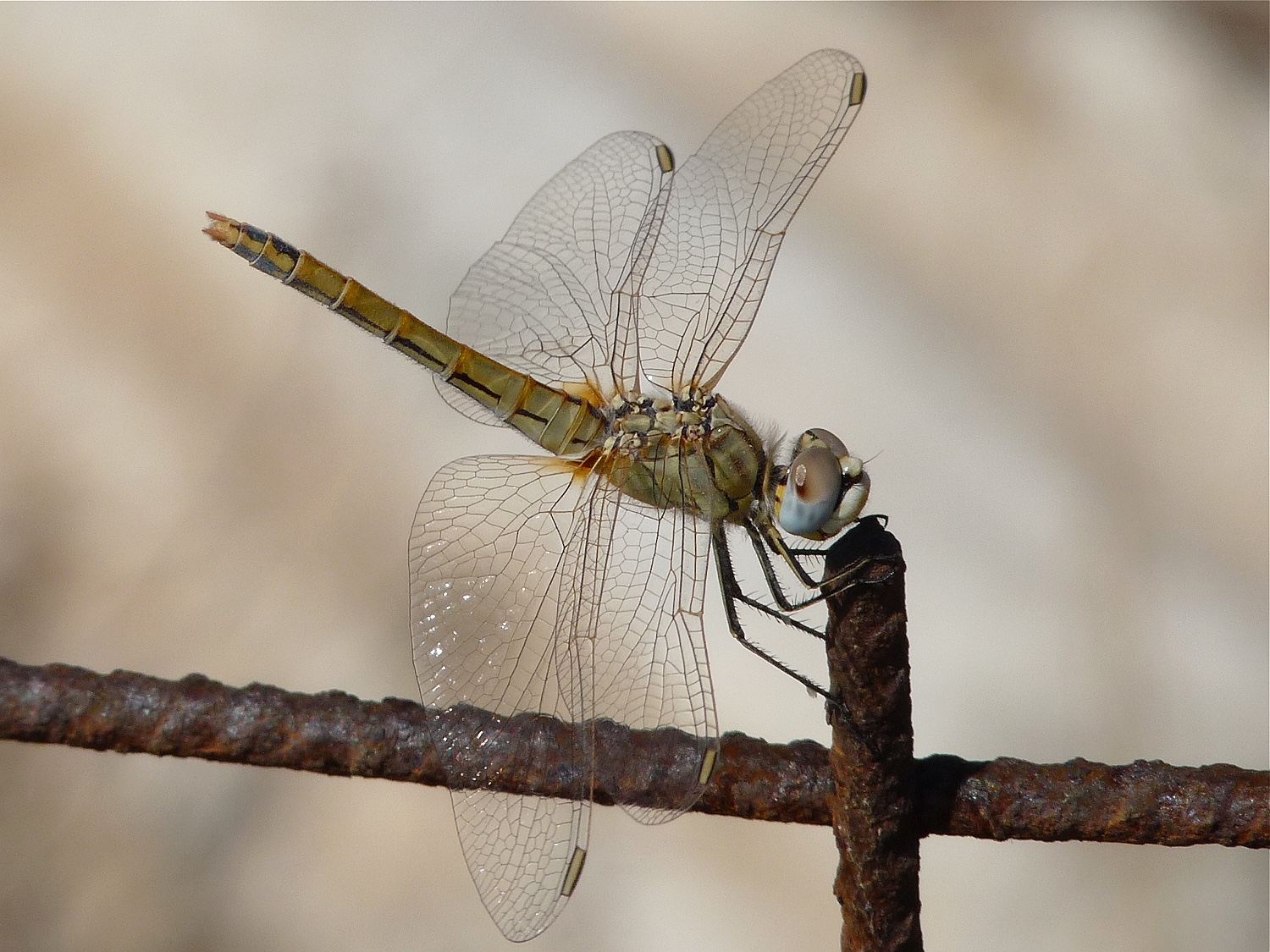
Dragonflies have only very small antennae. They orient themselves mainly visually and have correspondingly large, highly functional eyes. As with all insects, these are compound eyes consisting of up to 30,000 small ommatidia.
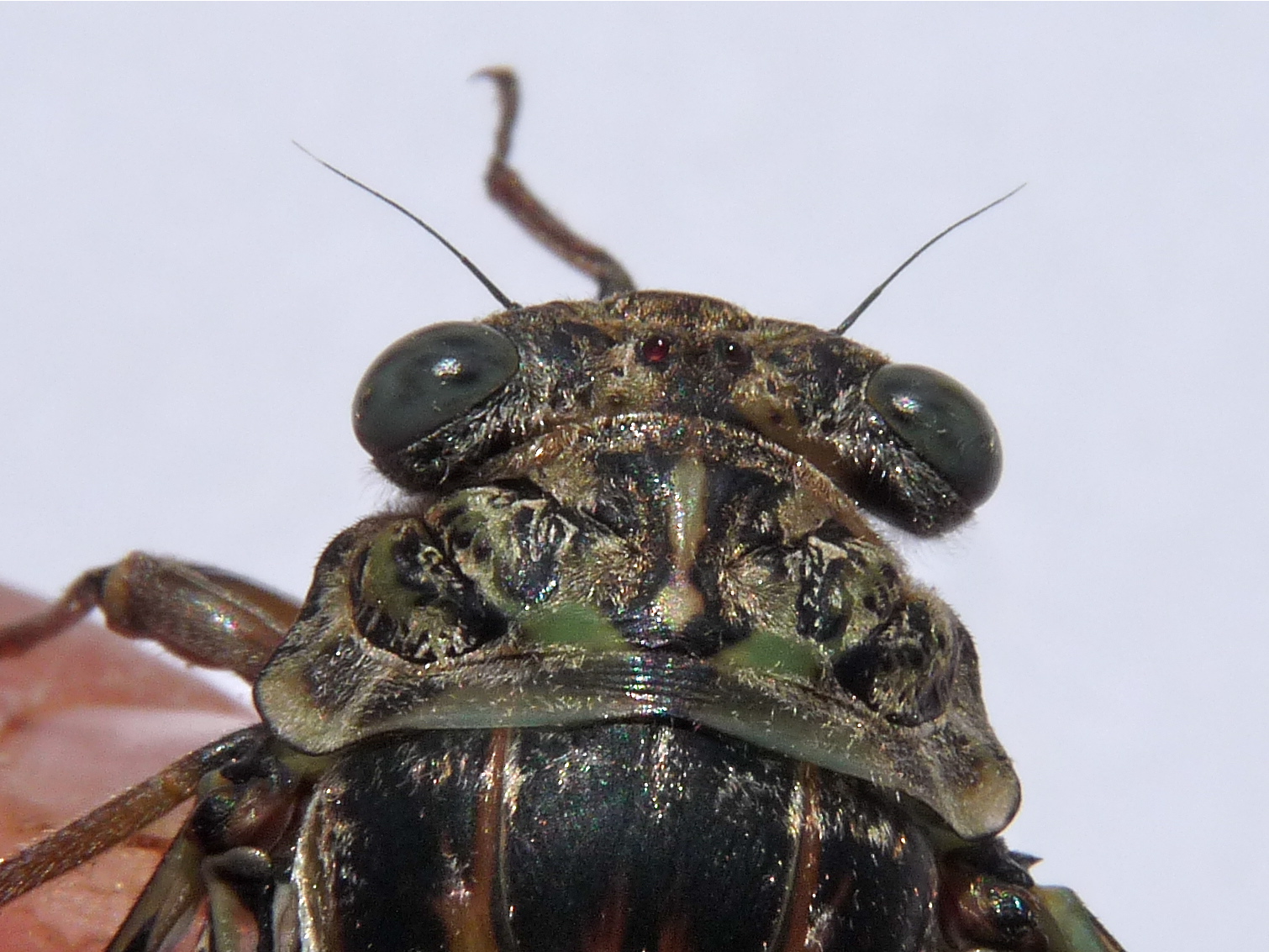
The head of a Common cicada from above. You can see the short, thin antennae, the compound eyes at the sides of the head and the upper two of the three ocelli (simple eyes) in the middle, which are used for horizon perception and general orientation.
The thorax
The thorax of the insects consists of three segments that carry three pairs of legs and (on the two rear segments) two pairs of wings. The jointed legs consist of the coxa, which is close to the body, the small trochanter, the femur, the tibia, the tarsus and the articulated foot with claws or other structures for gripping at its end. The wings are no extremities, but outgrowths of the epidermis. Some insect groups have only one pair of wings (e.g. flies) or the wings are completely reduced. In beetles, only the hindwings are used for flying, while the forewings are transformed into rigid, protective wing covers.
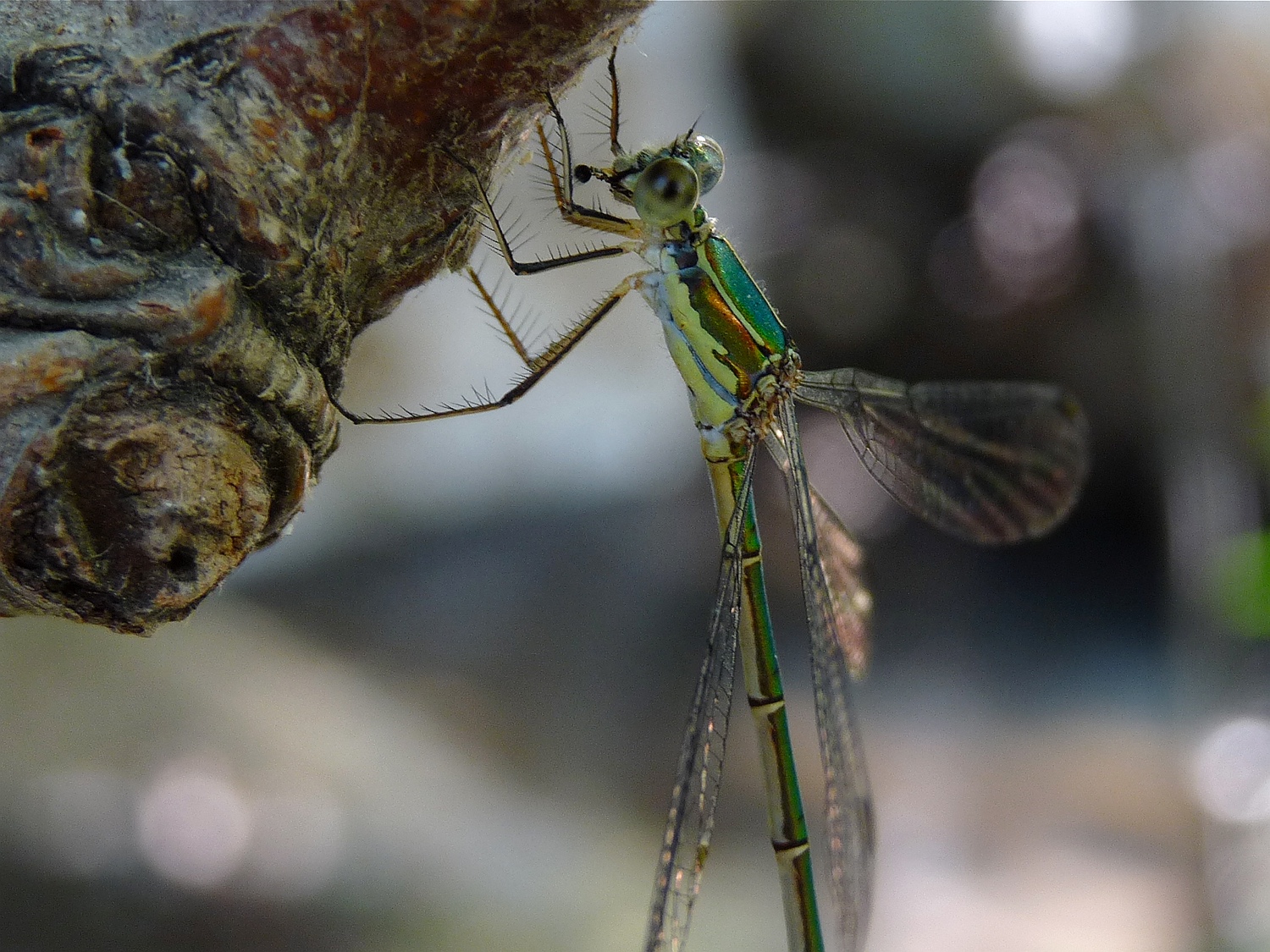
The thorax with its three pairs of legs and two pairs of wings is visible in this damselfly.
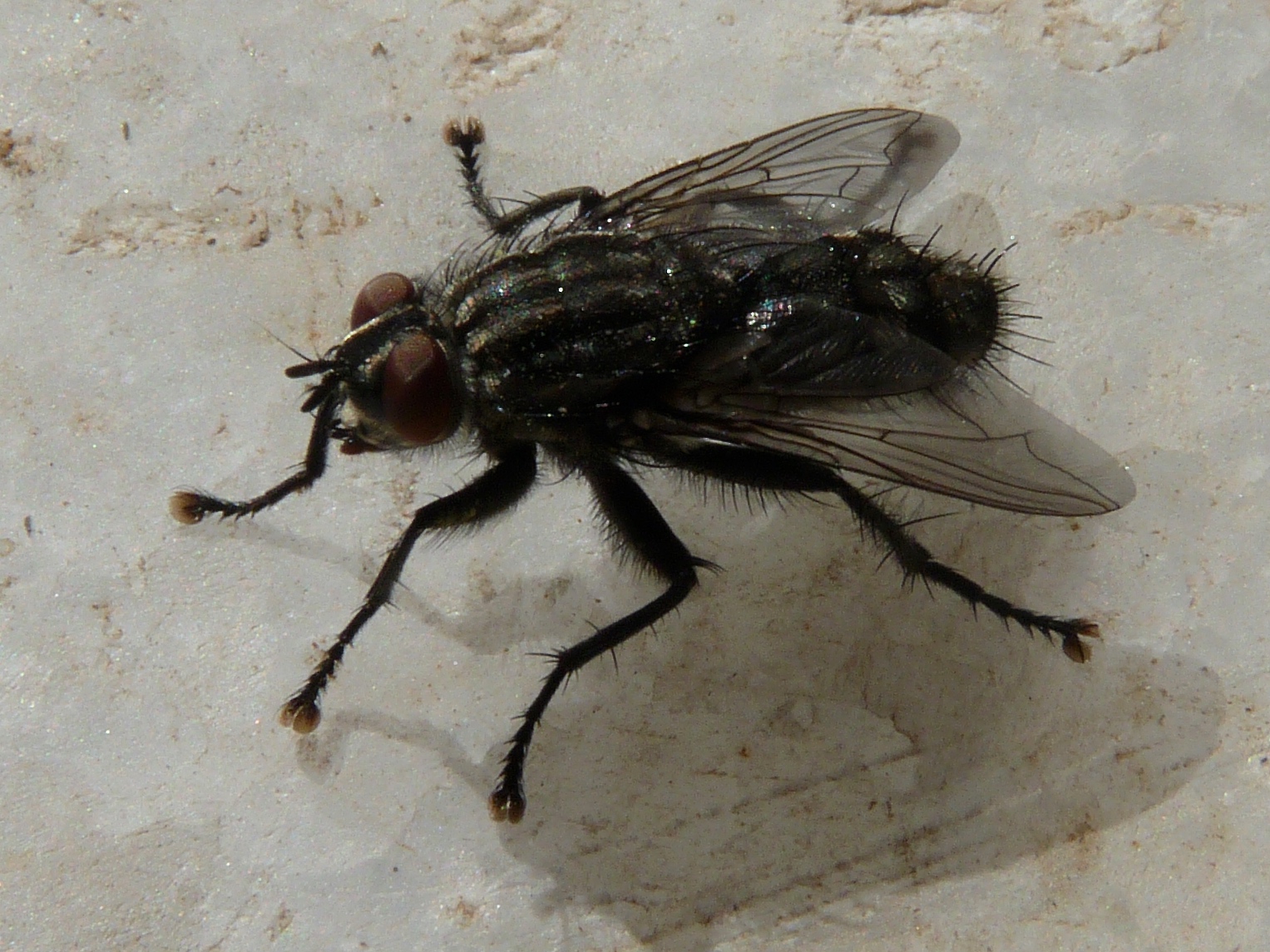
Flies have only one pair of wings; the rear pair is reduced to a tiny appendage. This fly also shows its jointed legs, which consist of coxa (“hip”), femur, tibia and the articulated foot. Below the claws at the end of the foot, this species carries small adhesive pads that enable the fly to cling to very smooth surfaces or under the ceiling. The lower three segments of the fly’s antennae are club-shaped; the small, very fine antennas are attached to them.
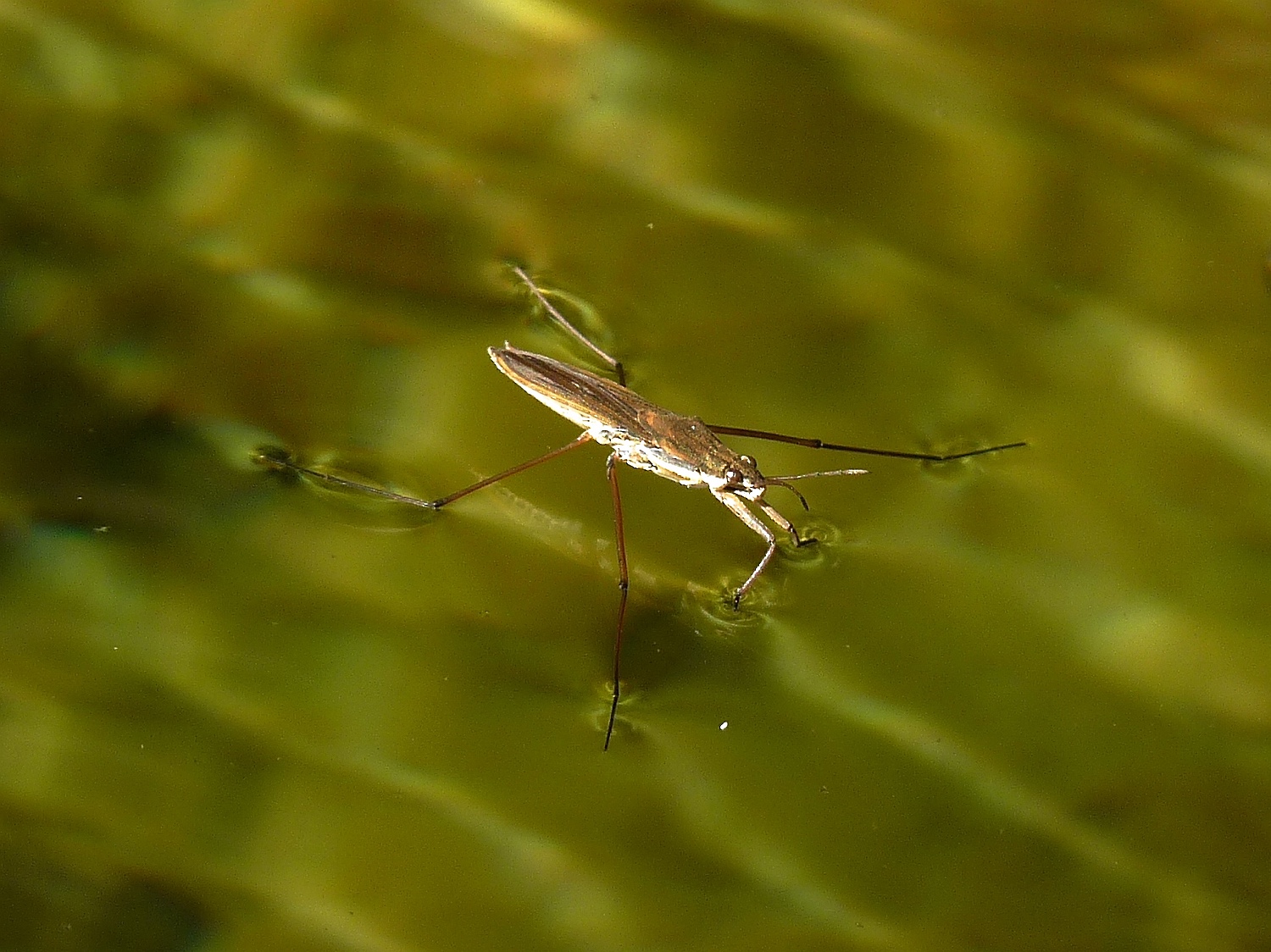
In water striders, the long middle and rear legs are held crosswise. The feet are covered with very dense short hairs that make them water-repellent, enabling the animals to run and jump on the water being carried by the surface tension. The shorter front legs are used to locate prey (small animals that have fallen into the water) by detecting vibrations in the water, and to catch them.
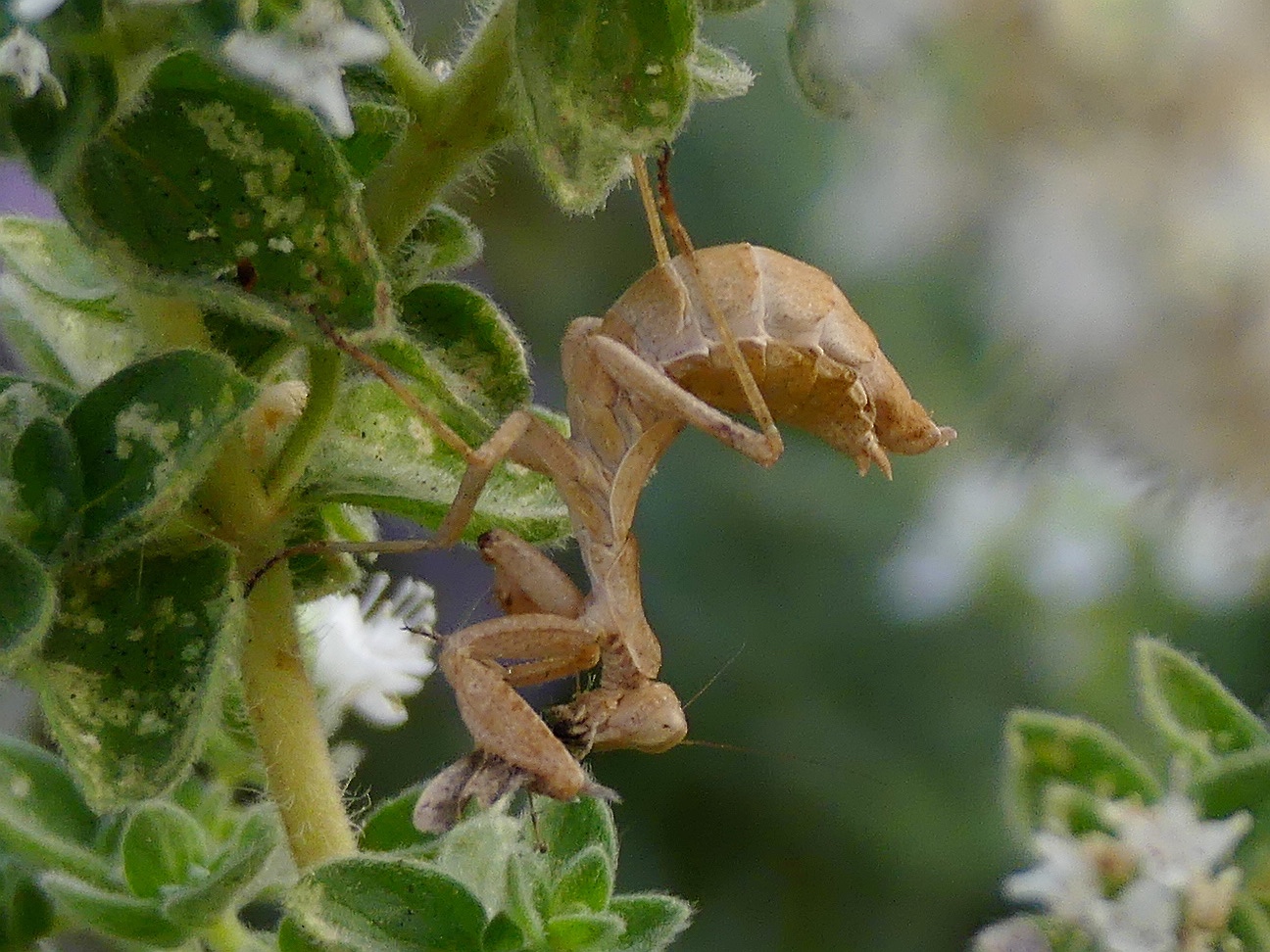
In mantises, the front legs are modified into “raptorial” legs carrying spikes, which are folded together in front of the body when at rest, but can be extended at lightning speed to catch prey.
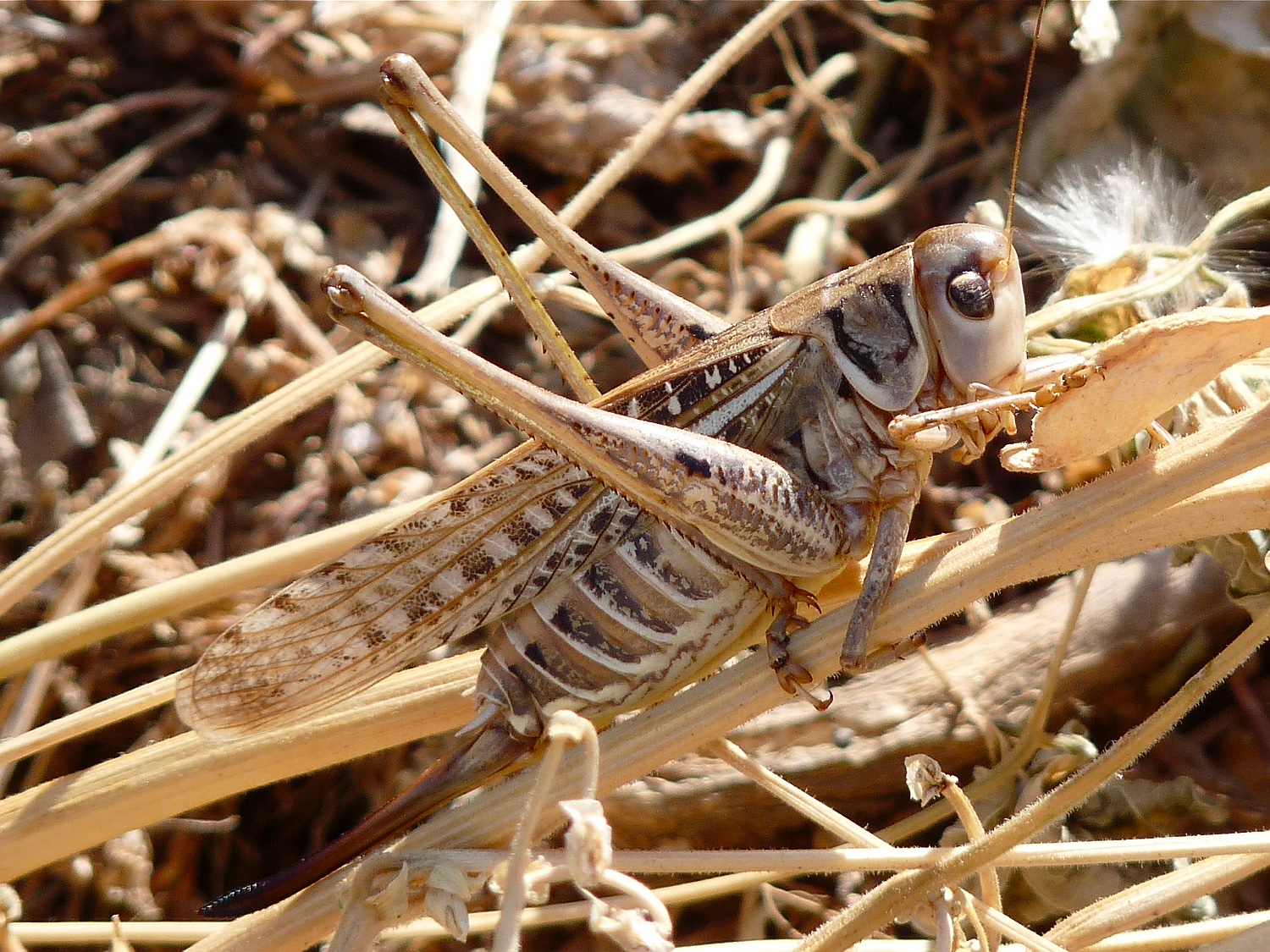
In crickets and grasshoppers, the hind legs are modified into powerful jumping legs.
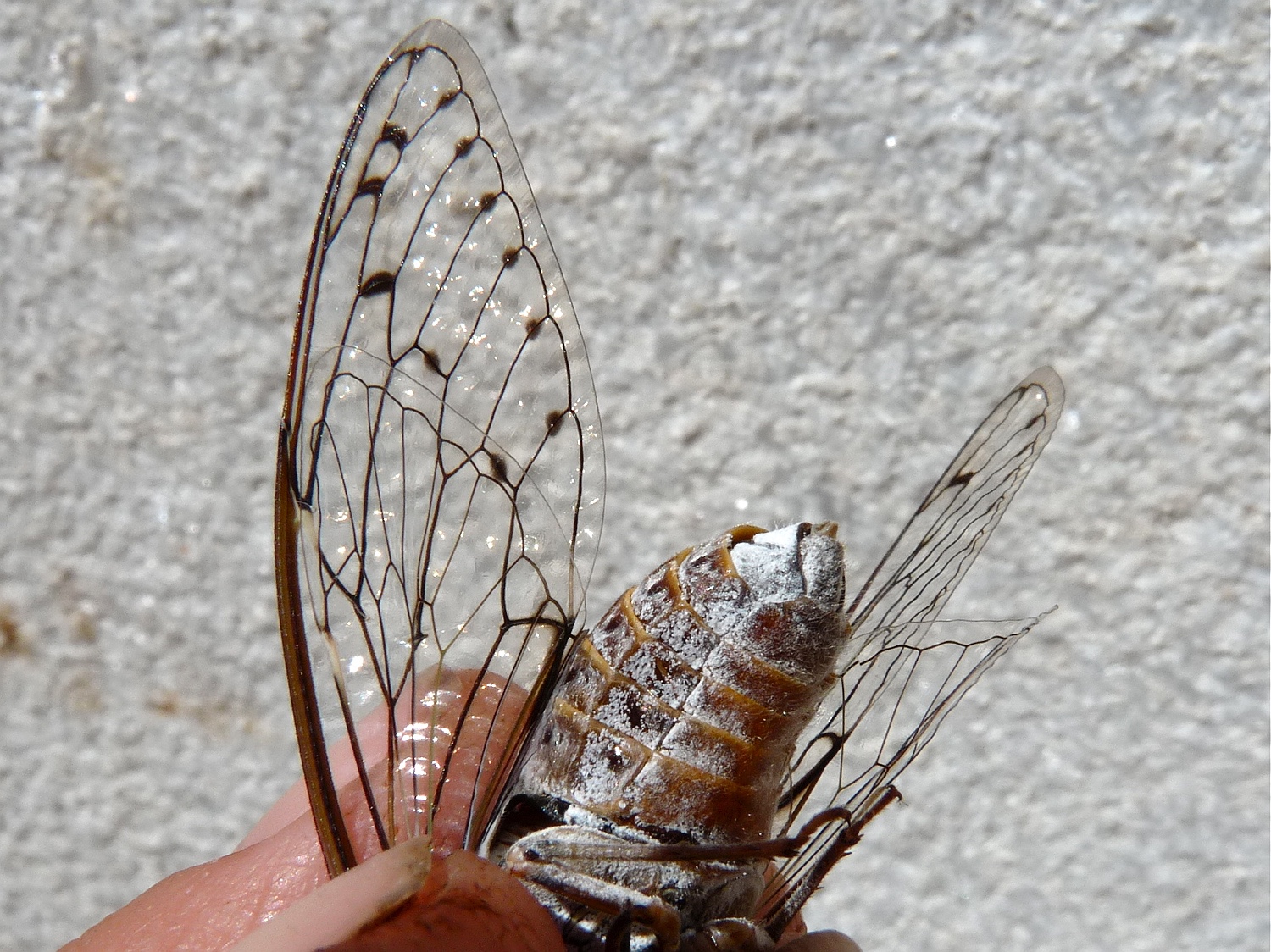
The wings of cicadas are completely transparent except for the veins. Cicadas use their front and rear wings to fly; the latter are significantly smaller and are attached to the front wings with small hooks durimg flight.
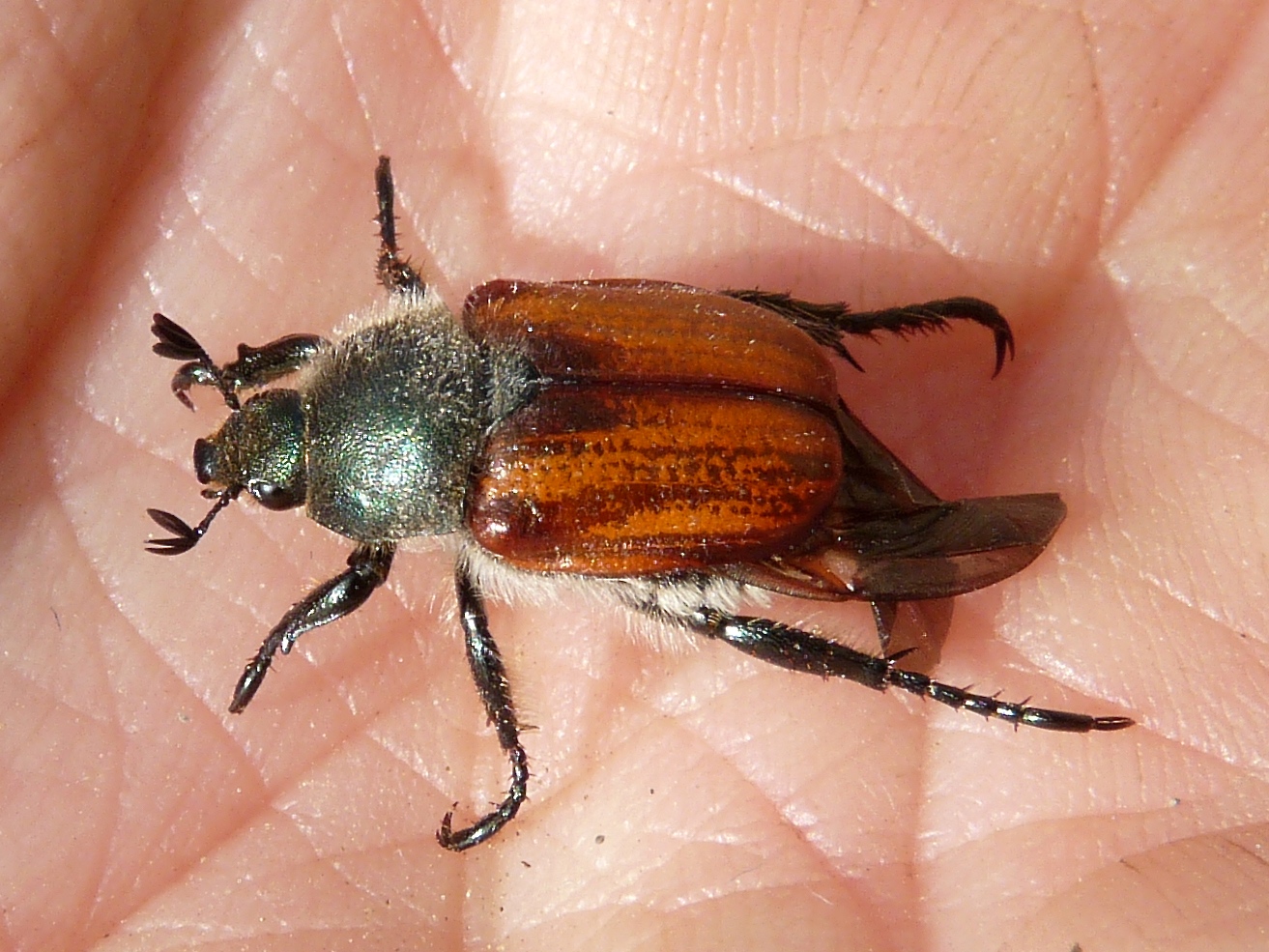
This beetle of the genus Anisoplia shows the membranous, folded hindwings protruding from under the stiff forewings (wingcovers, elytra). When the beetles fly, the elytra are held up and outward and thus generate the lift, while the membranous hindwings generate the propulsion.
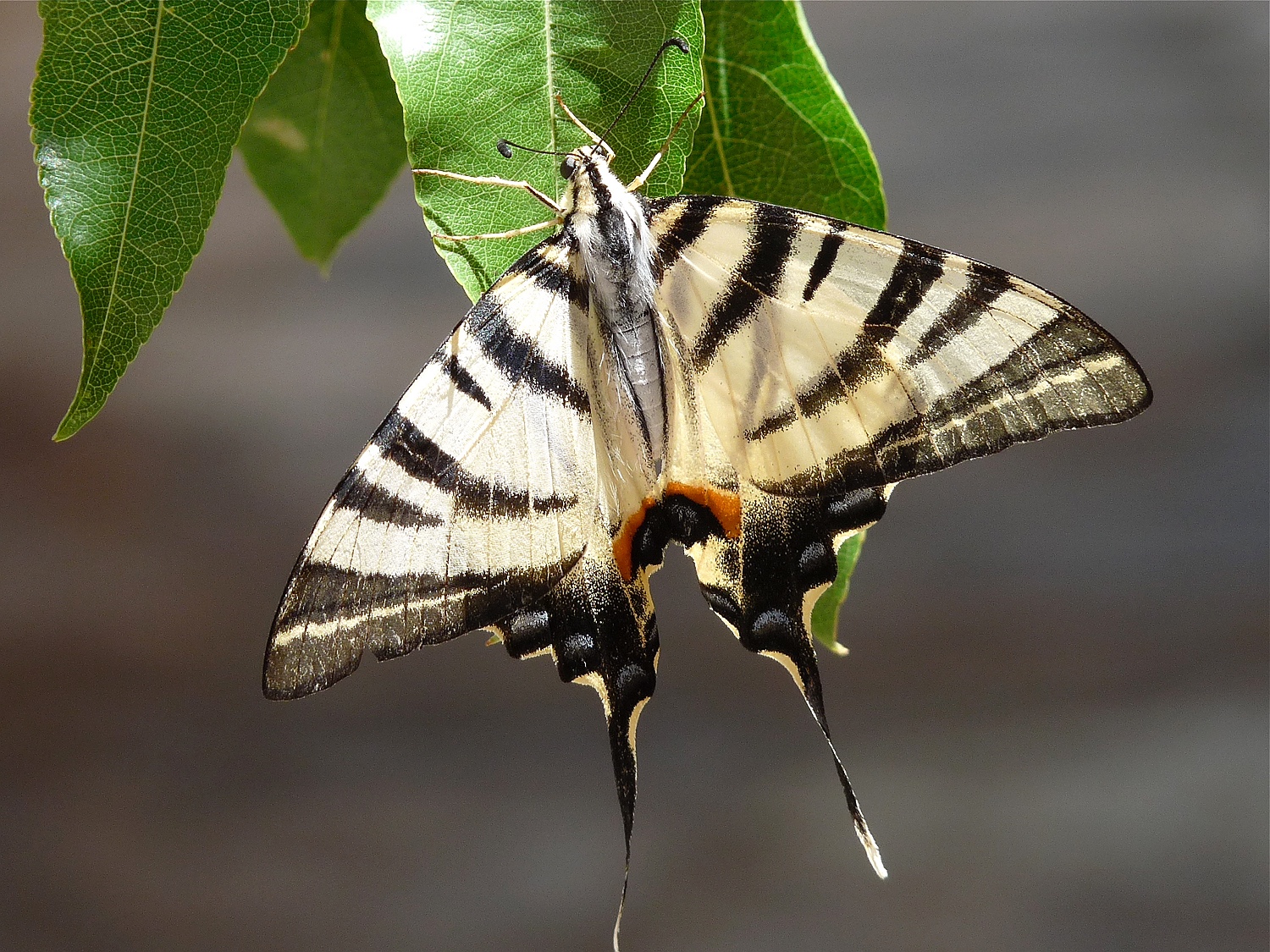
The wings of butterflies are covered with tiny coloured scales.
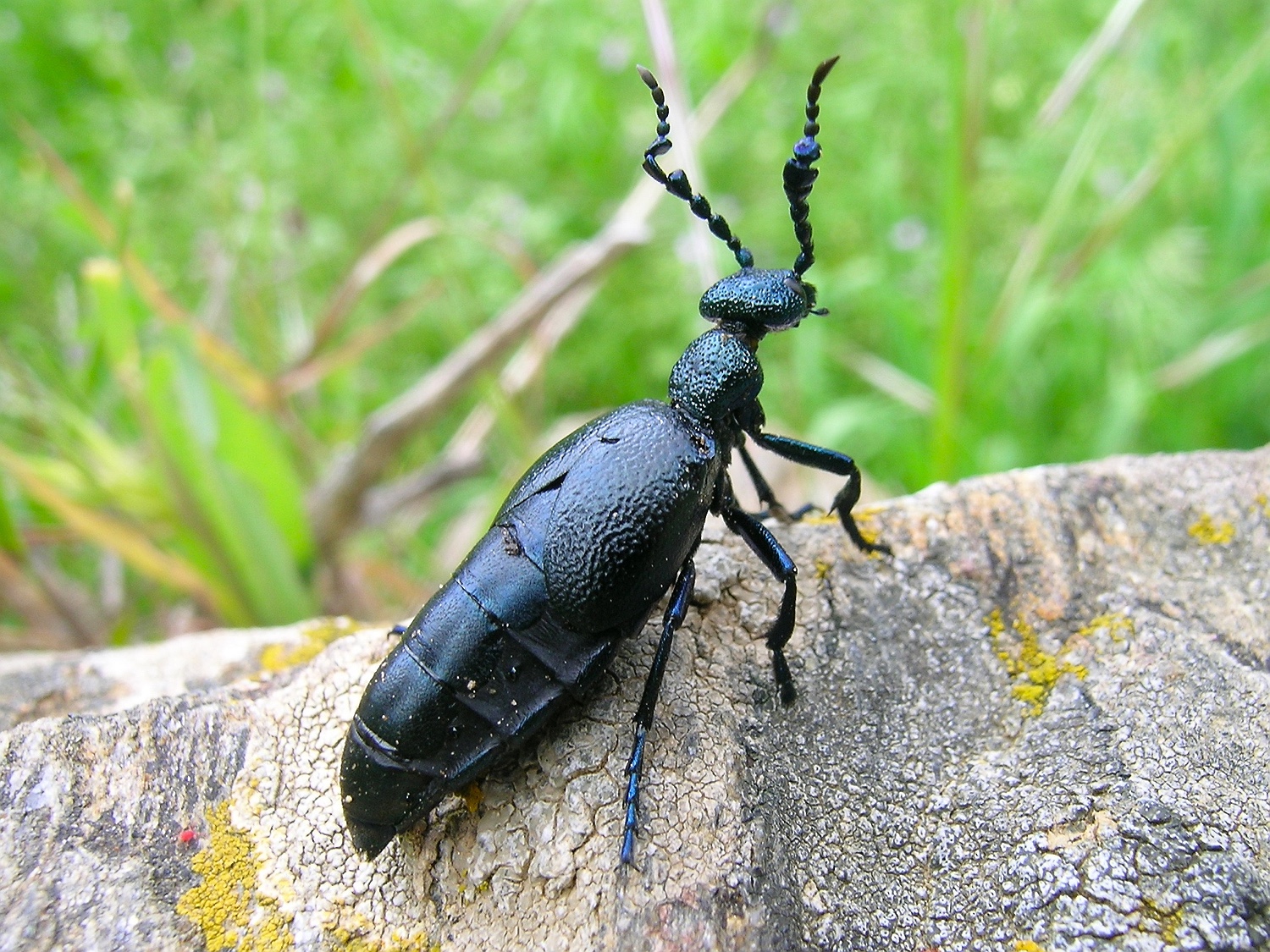
While most insects can fly and their wings are an essential feature of insects, some species and groups have lost their wings. The Violet oil beetle is one of the flightless insects with reduced wing covers and rudimentary hindwings.
The abdomen
The abdomen of insects in its original form consists of eleven segments, but these are often partially fused or reduced. The segments of the abdomen, carry no legs but organs required for mating and an ovipositor, as well as appendages (cerci) of varying shapes on the last segment.
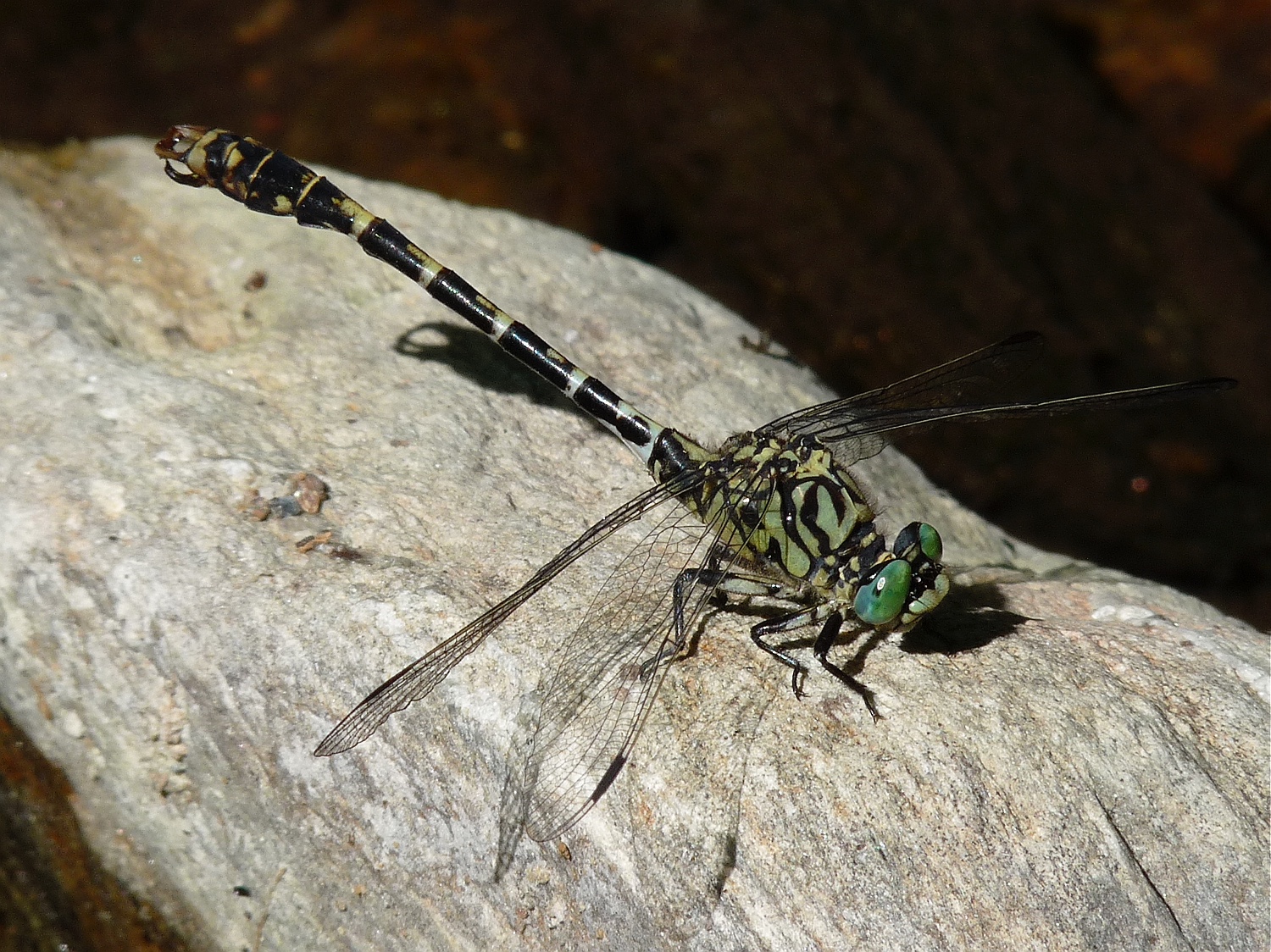
In dragonflies the segmented abdomen is especially long. The male clings to the female during mating with the pincer-like cerci at the end of its abdomen.
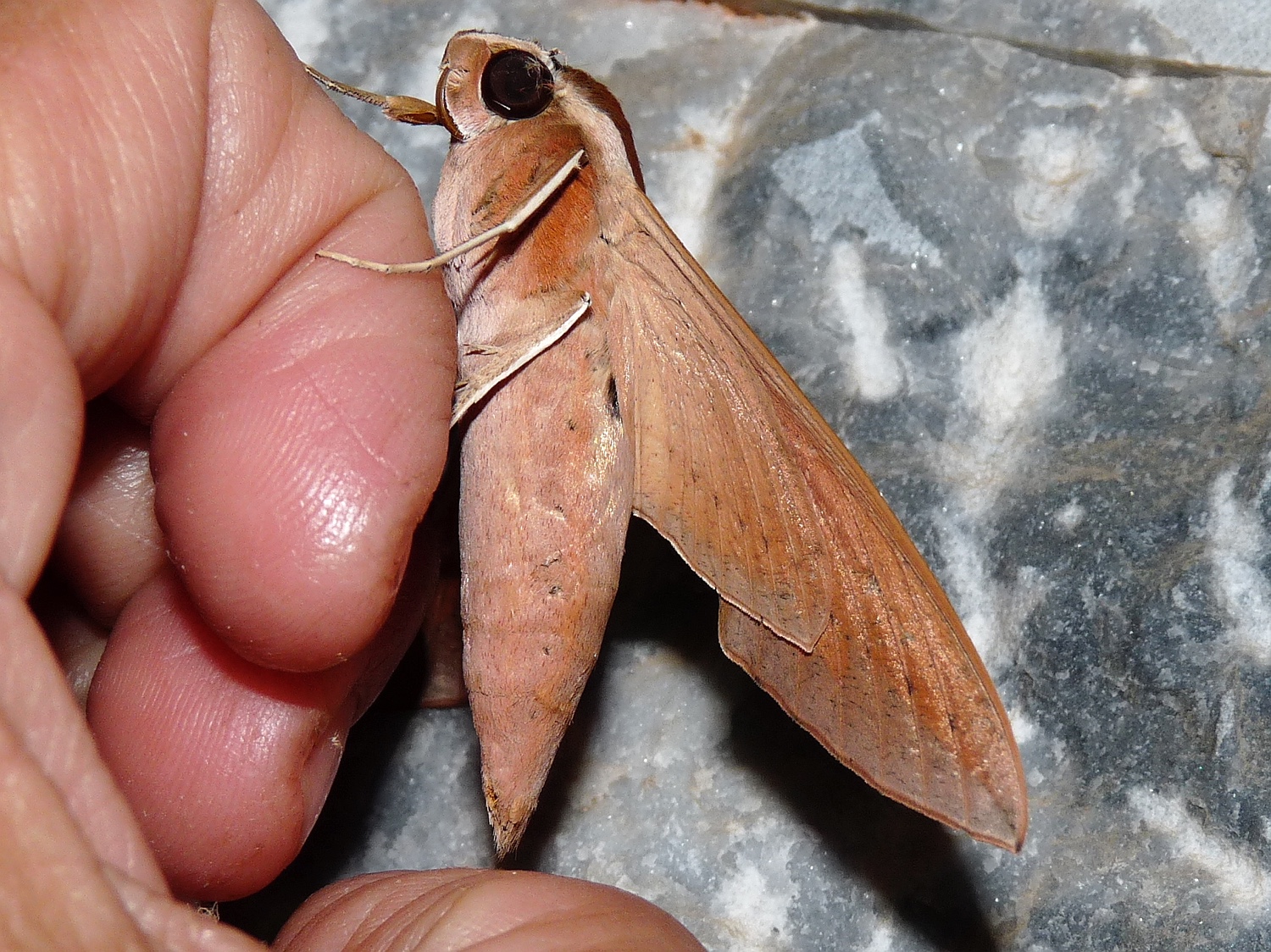
In butterflies, the division of the body in its three parts is not very visible. The Levant hawk moth has a particularly thick body; the segmentation of the hairy abdomen is barely visible from the outside.
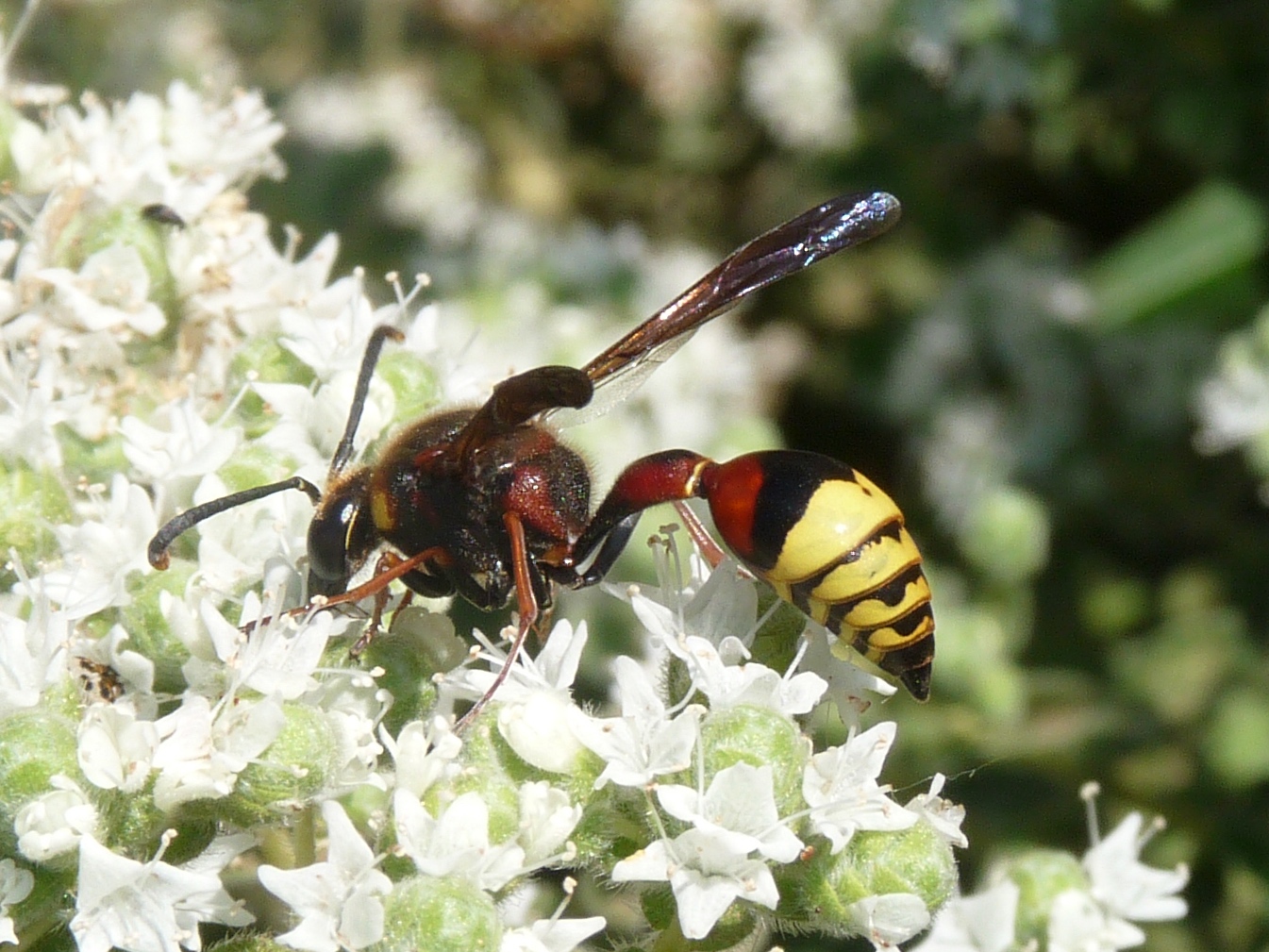
Wasps often have a thin, stalk-like second abdominal segment (petiole).
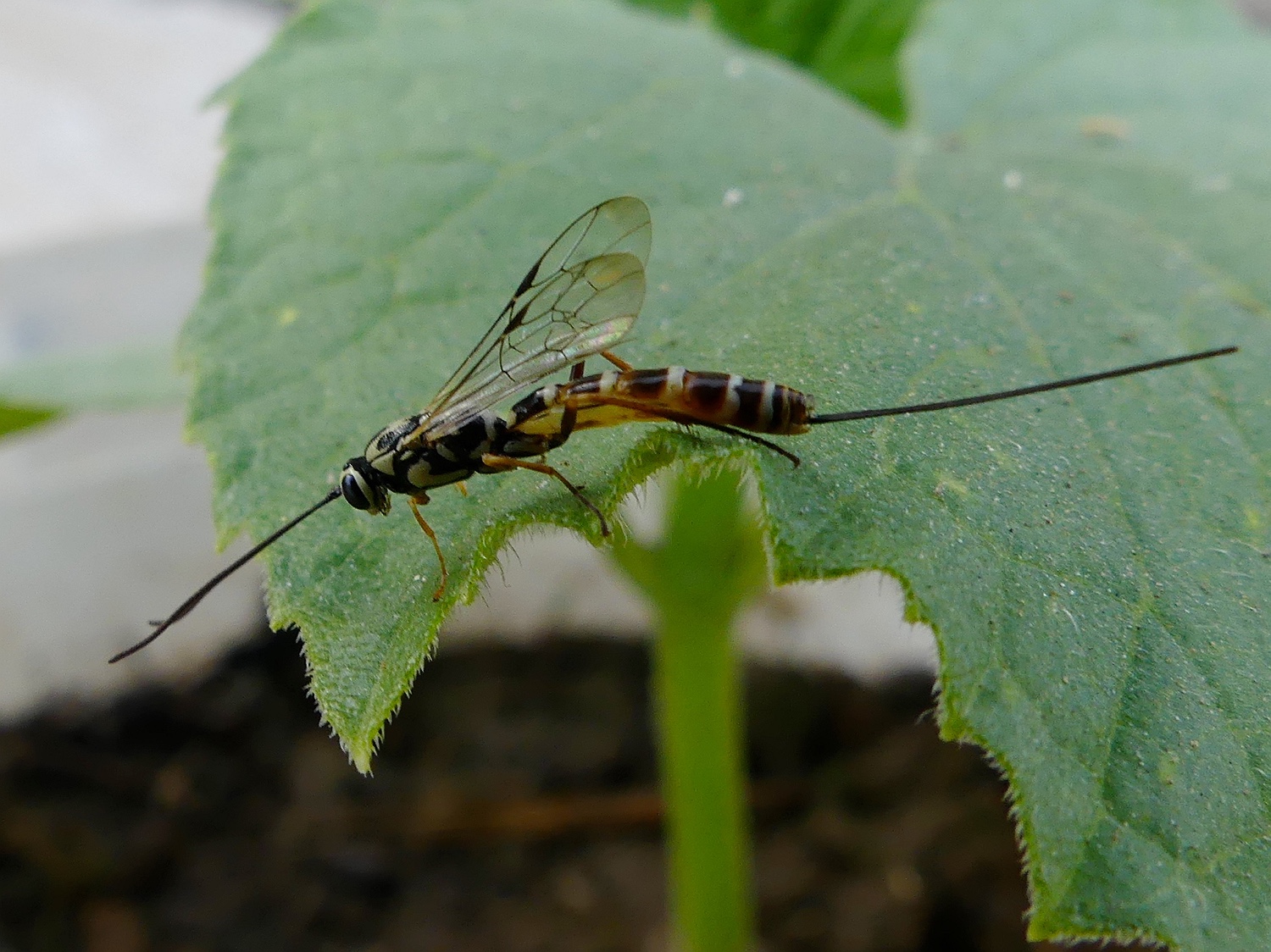
In most insects, the sting at the end of the abdomen is not used for defence, but is an ovipositor. This parasitic wasp of the genus Brachycyrtus has a particularly long ovipositor which it uses to lays its egg directly on or in the host (usually an insect larva) and which is able to drill deep into the earth or wood in which the host lives.
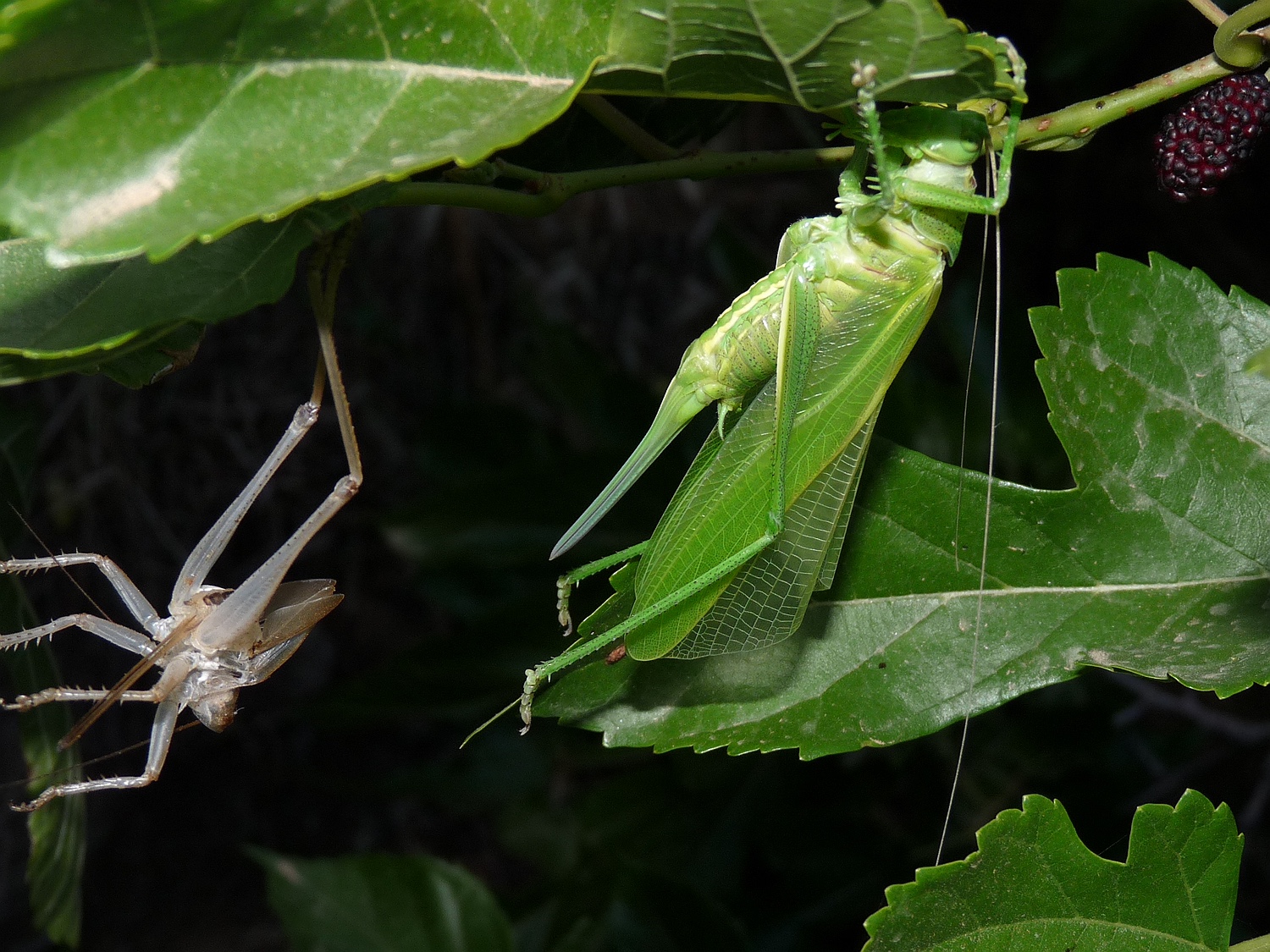
This newly hatched Great green bush cricket shows its long jointed legs, the membranous, finely veined wings, the long antennae, the huge ovipositor and the small cerci.
The exoskeleton
The body of insects has a protective exoskeleton made of chitin. Each segment has a dorsal shield, a ventral shield and two smaller lateral shields. The rigid chitinous plates are connected to each other and to the body by flexibles strip of skin, which allows the body to move. In segments that are fused together, such as those of the head, the originally separate chitin plates have grown together to form a single plate. Because of their chitinous exoskeleton, insects can only grow as larvae by moulting from time to time – the adult insect does not grow any more.
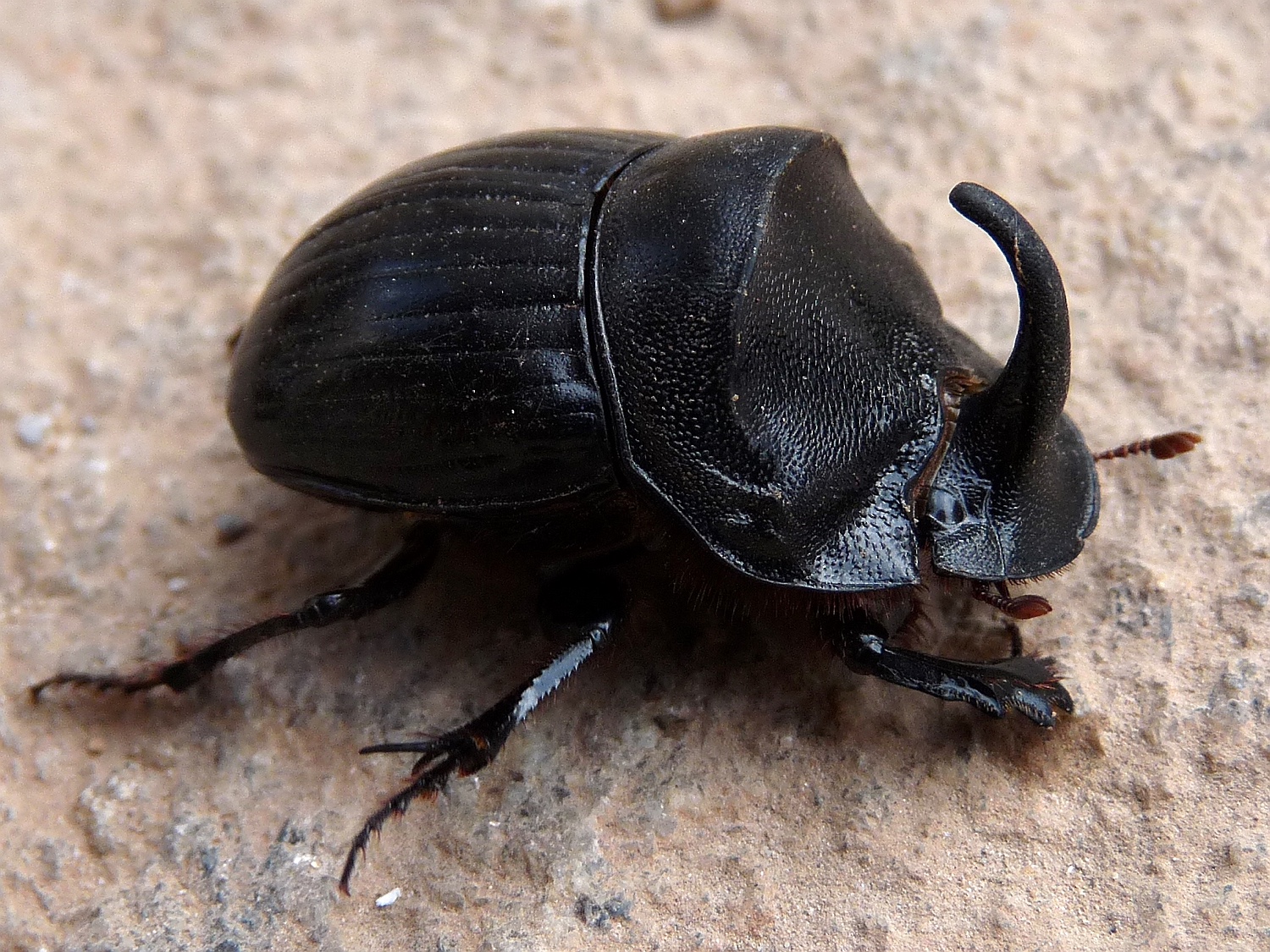
The rhinoceros beetle Copris hispanus has particularly strong, hard chitin plates on its head and neck. On the back of its head it carries a large horn, which, like the exoskeleton, is made of chitin.
In many insects the exoskeleton is equipped with special protuberances such as hairs, scales, bristles, warts or spikes. It is often coloured by pigments, with some insects displaying intense warning colours, other becoming nearly invisible by a sophisticated camouflage. Some insects show metallic colours, which are created by the refraction of light on the specially structured surface of the exoskeleton.
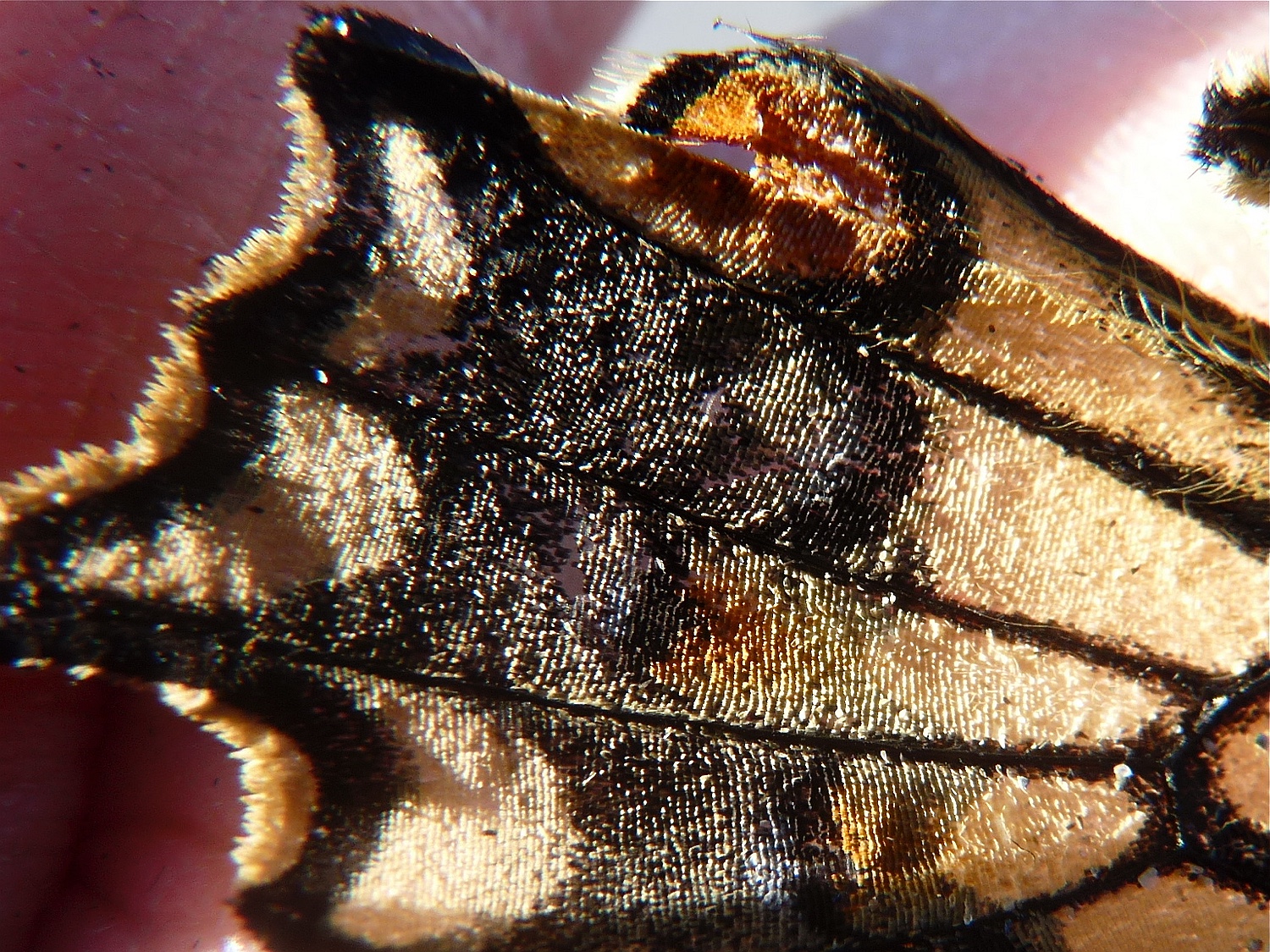
The wings of butterflies are covered with tiny, coloured scales.
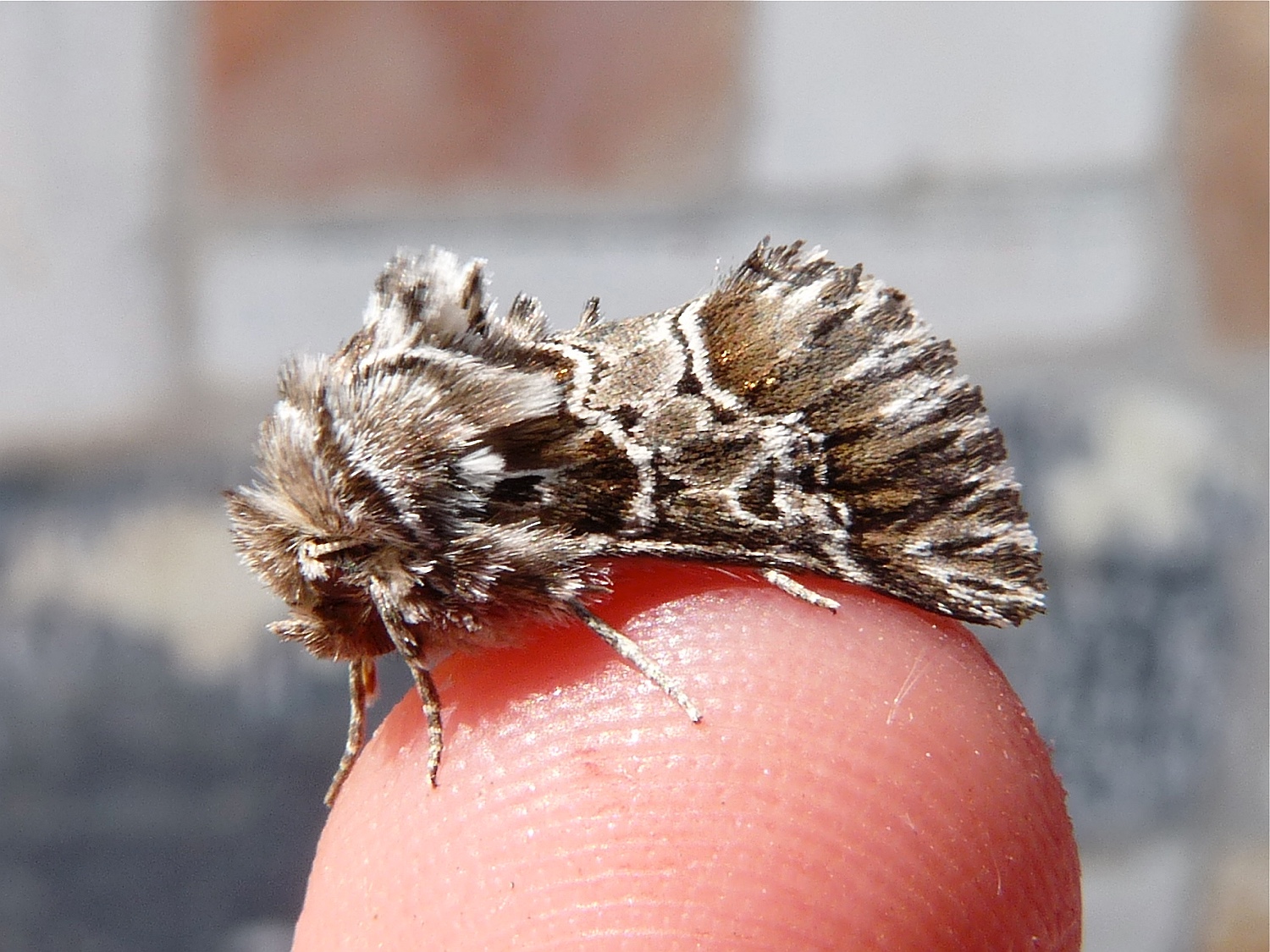
Many insects, such as this small moth called Amephana dalmatica, are densely covered with hair.
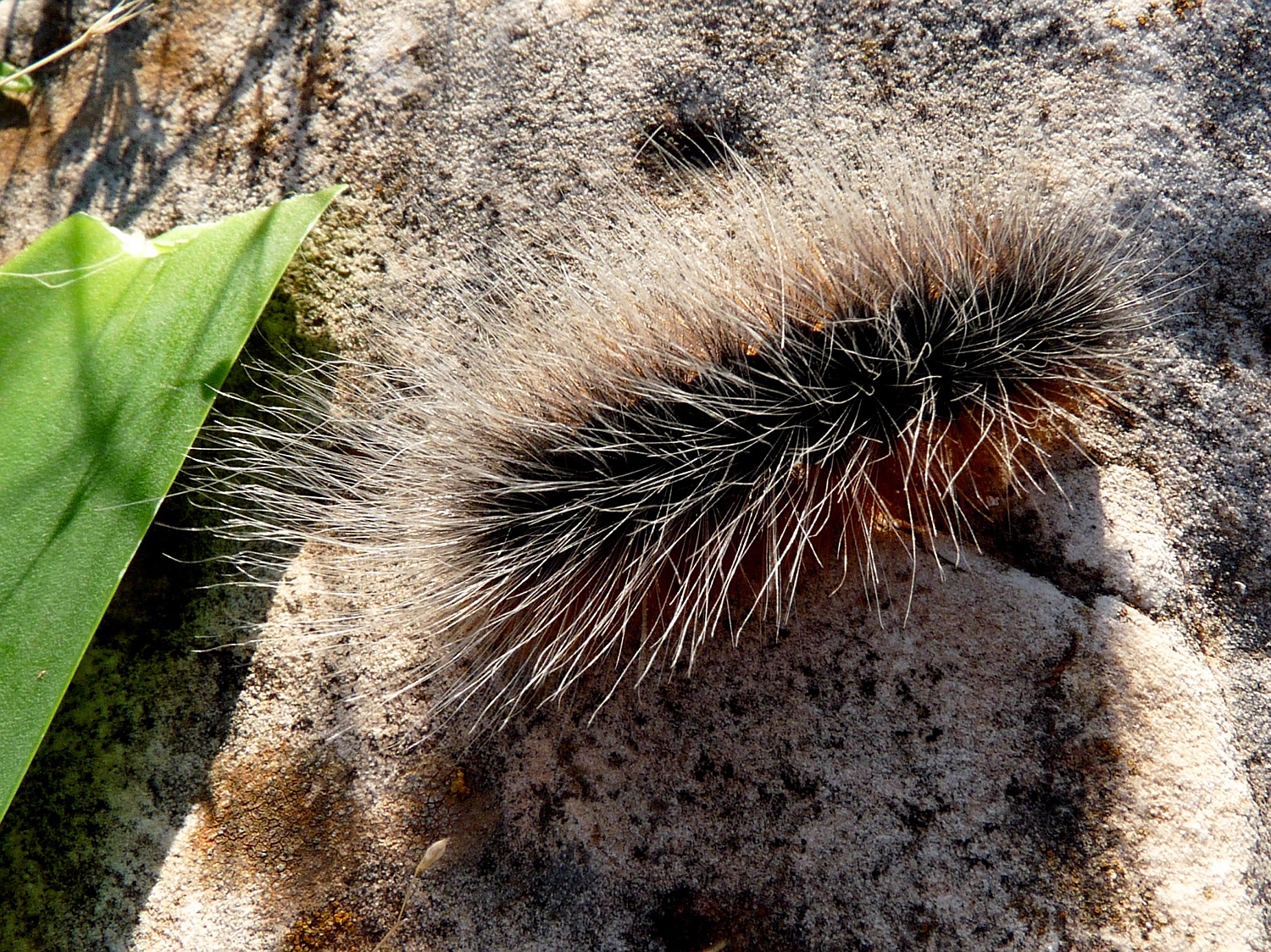
hairy caterpillar of a tiger moth
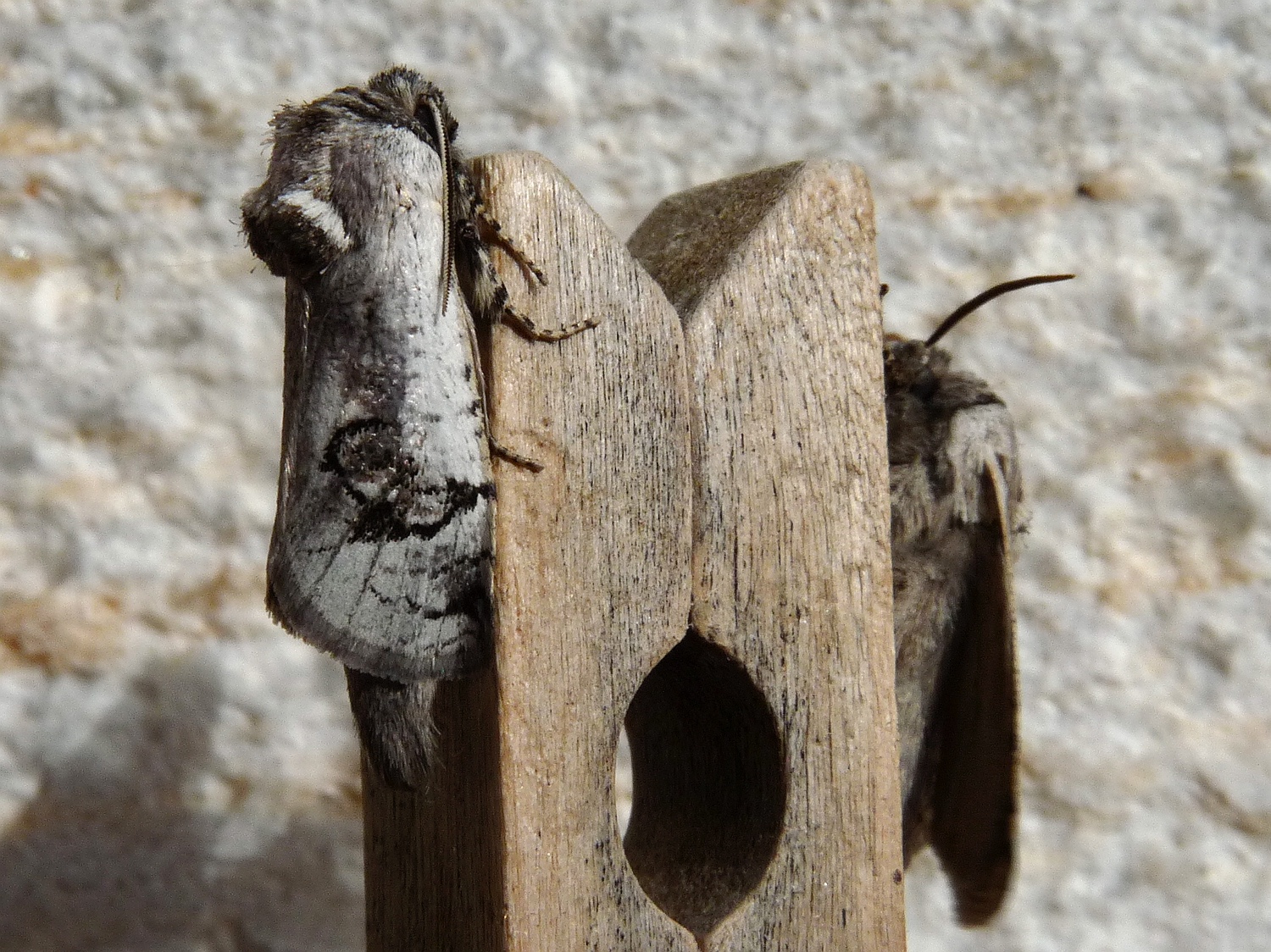
Insects are often very well camouflaged due to their colouring, such as this moth (Parahypopta caestrum), which resembles a branch stub.
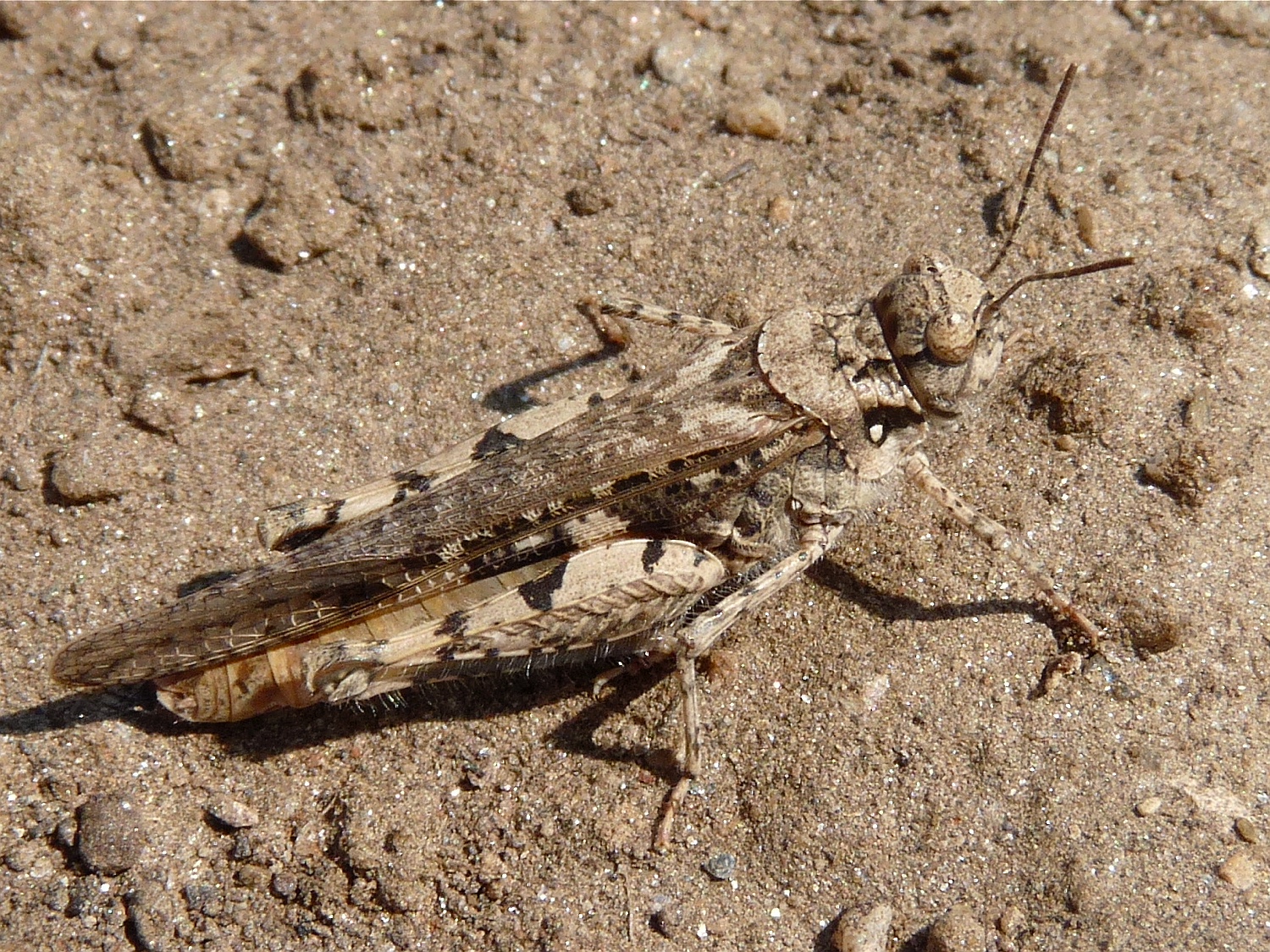
Many grasshoppers are also difficult to spot. Here a specimen of Acrotylus insubricus coloured exactly like the ground.
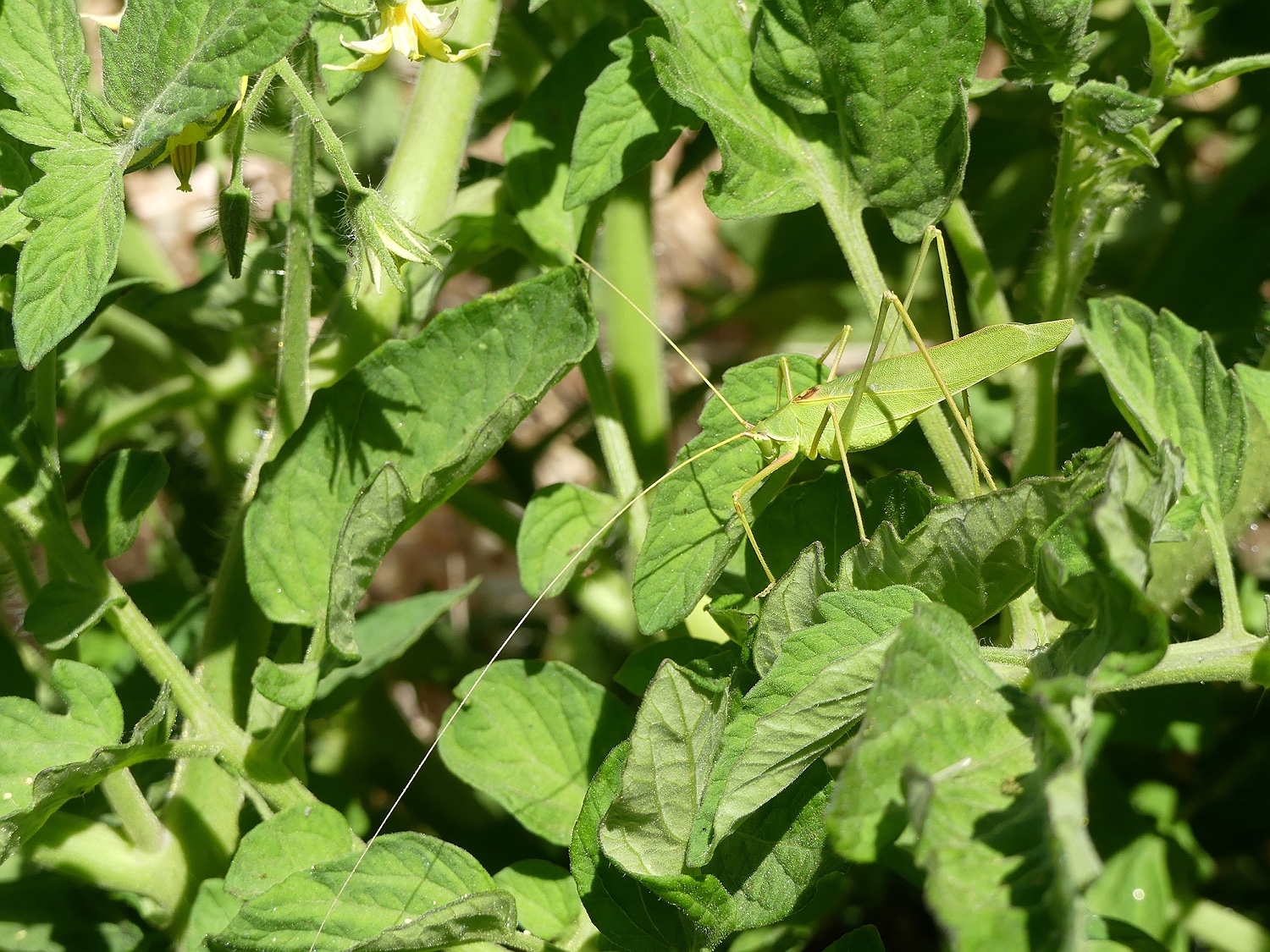
The cricket species Acrometopa syriaca, which lives among leaves, hides by its green colour.
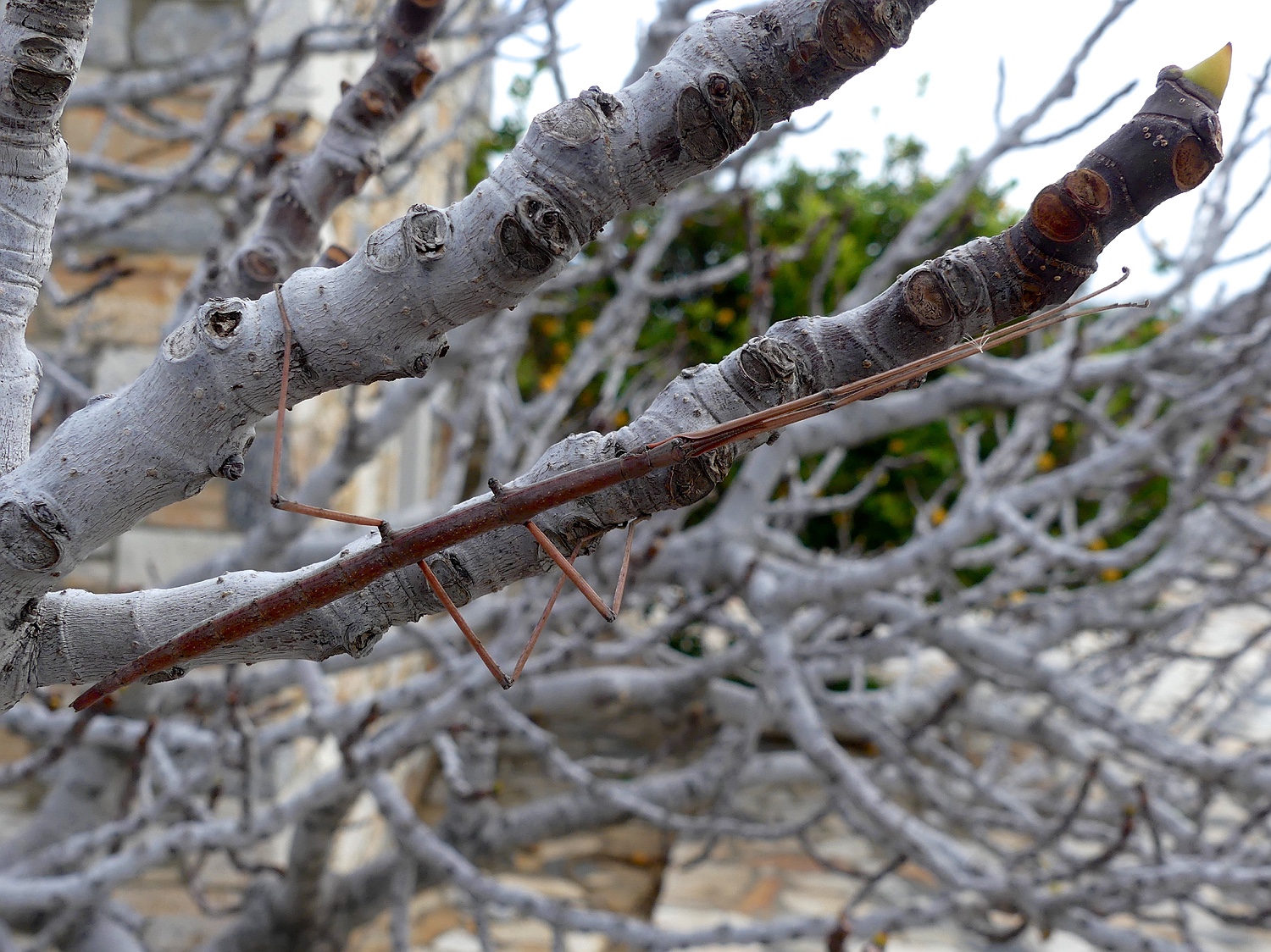
The Attic stick insect looks remarkably like a twig.
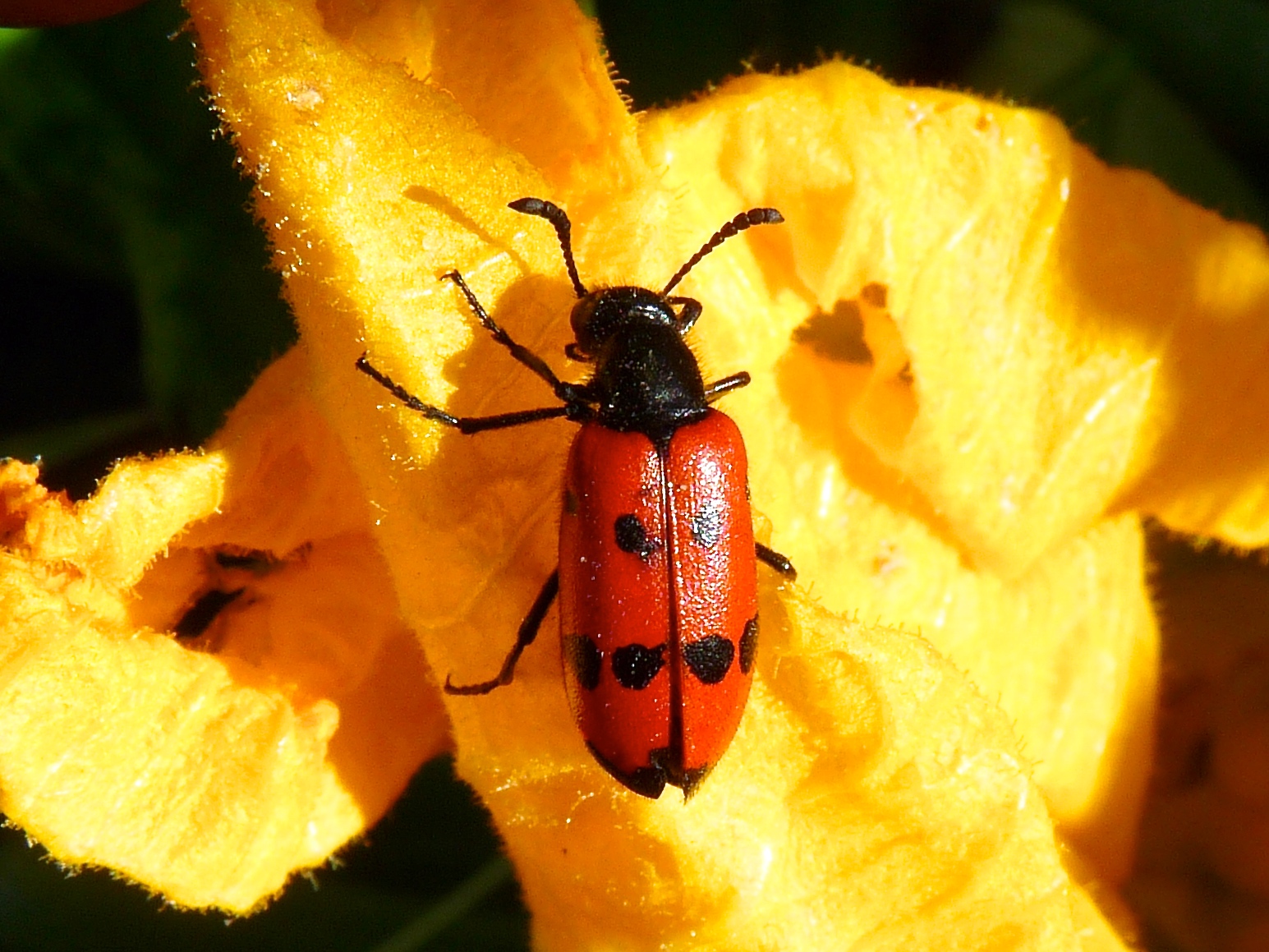
Other insects, especially poisonous species such as this beetle (Mylabris quadripunctata), warn off potential predators by their intense red or yellow colours.
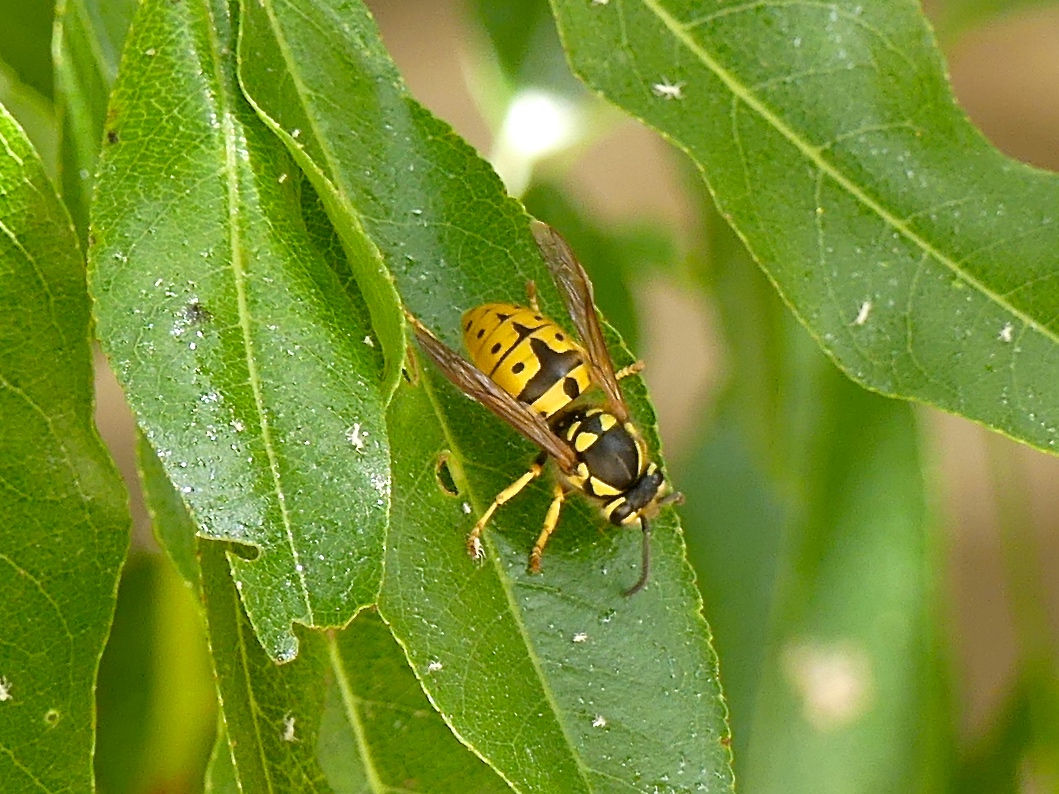
The black and yellow warning colouration displayed here by a German wasp is particularly common.
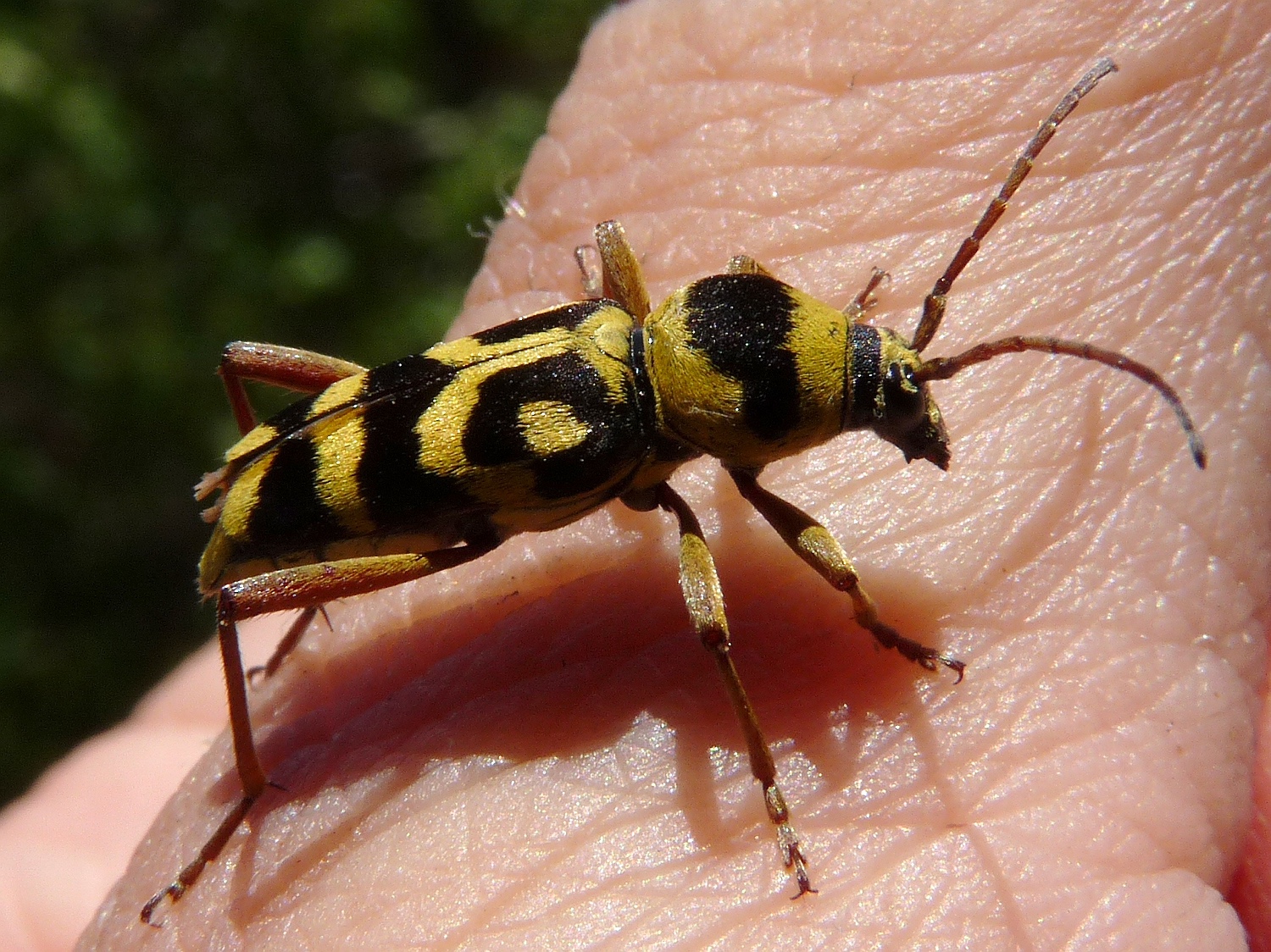
Some species, such as this Grape wood borer, are not poisonous themselves, but mimic the colouring of defensive and poisonous insects, such as wasps, misleading their predators.
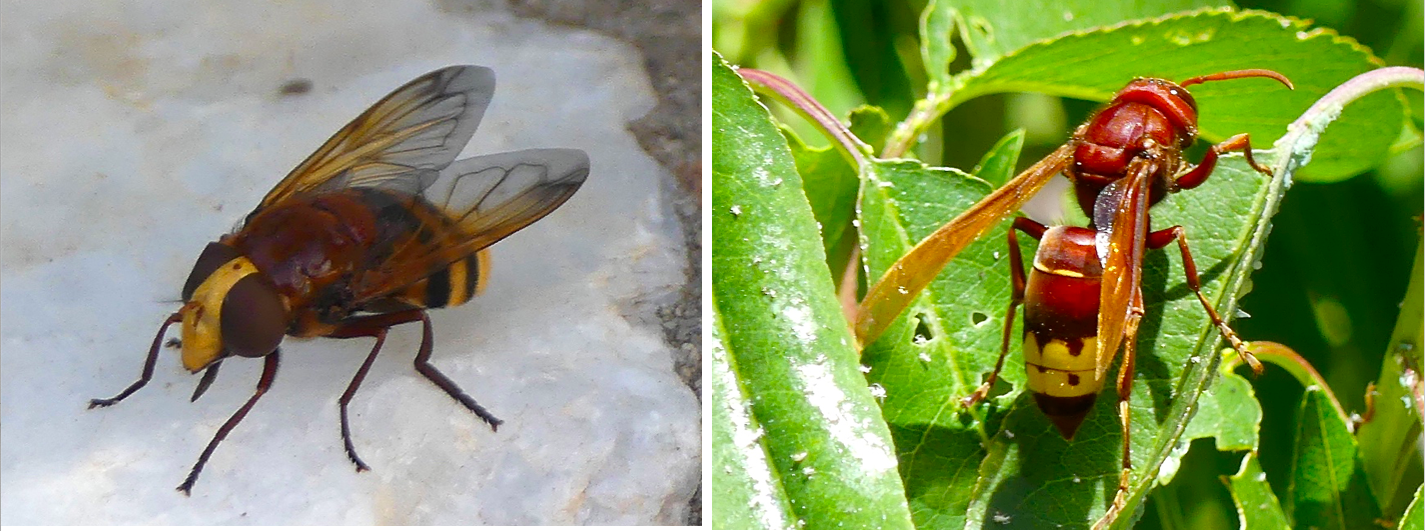
The completely harmless hornet hoverfly (Volucella zonaria, left) mimics a hornet (right) in size and colouring, although it differs significantly in shape.
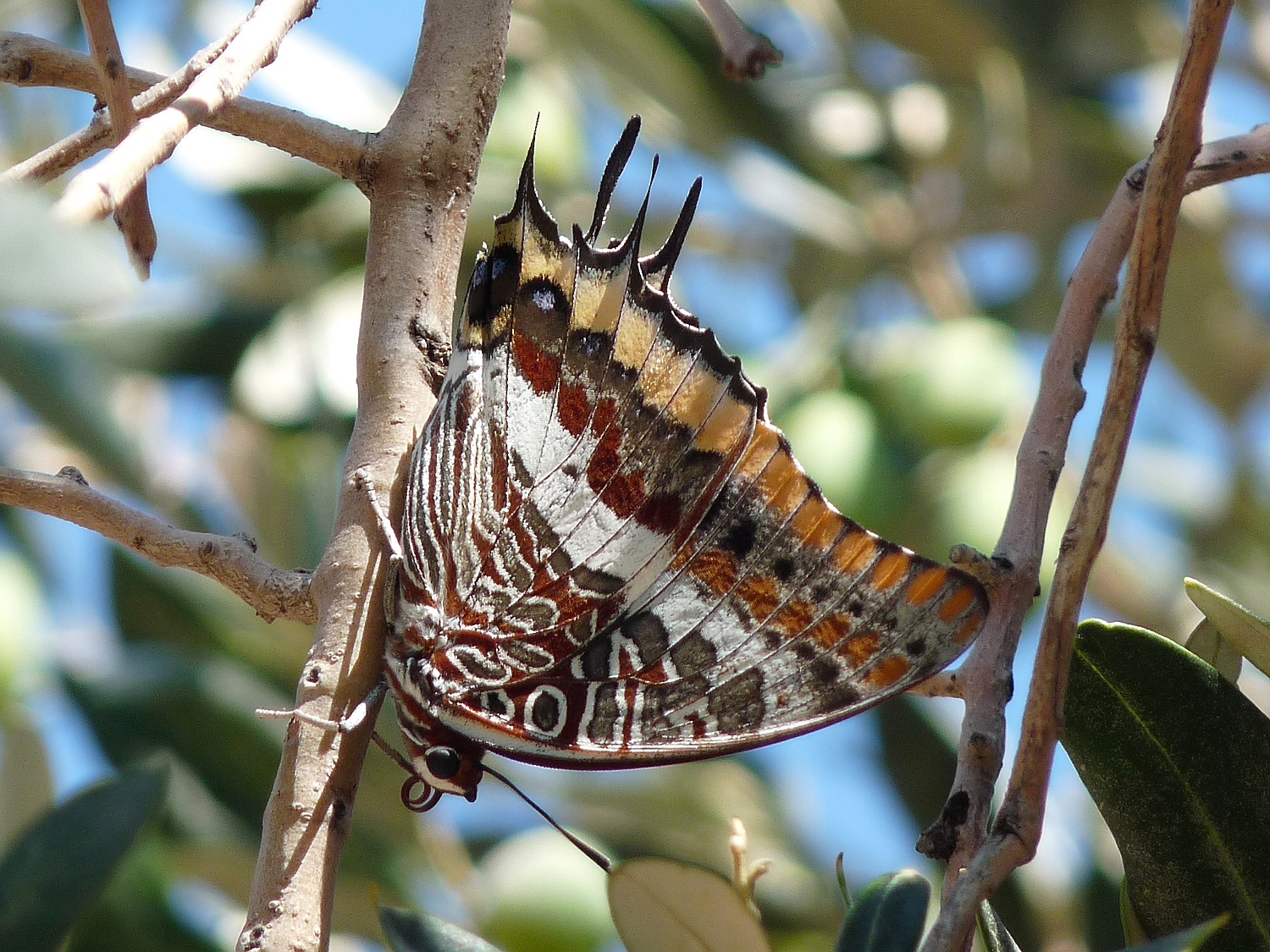
The colouring of the Two-tailed pasha seems very conspicuous, but when it sits immobile on a tree branch, it becomes almost invisible as its contours dissolve in the play of light and shadow.
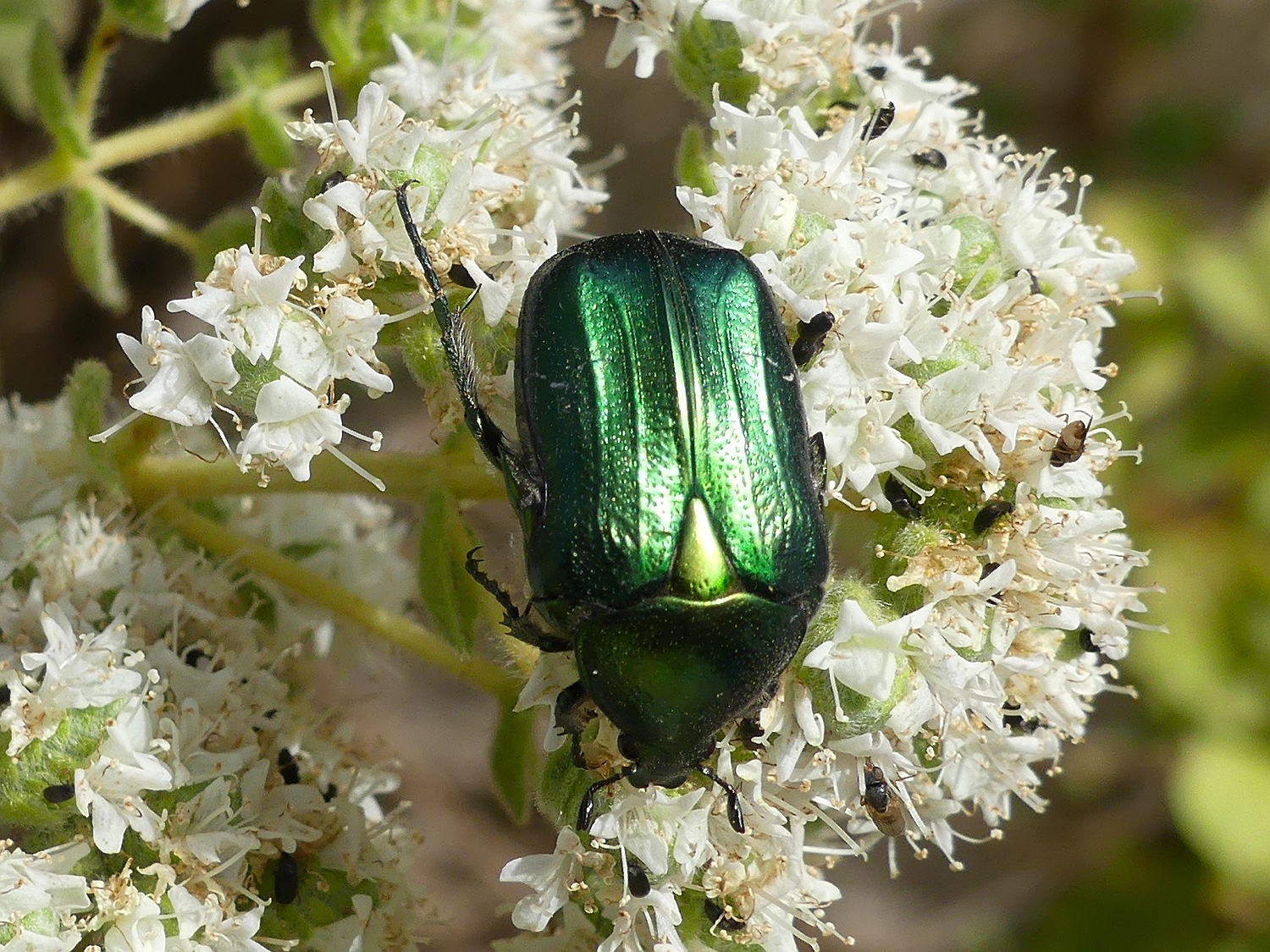
The metallic, iridescent colouring of many insects, such as the Green rose chafer shown here, is caused by the special light-refracting surface structure of the chitinous shell and wing covers.
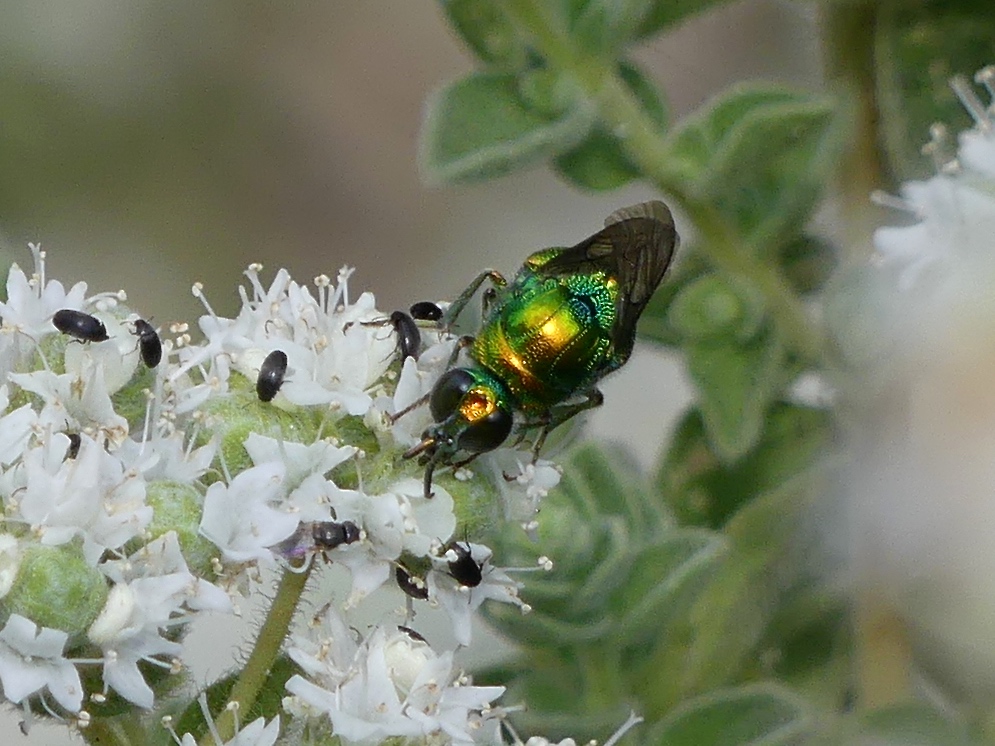
Many cuckoo wasps also display iridescent interference colours.
Internal anatomy
The insects are equipped with nerves and ganglia in all the body segments and brain-like nerve complexes in the head area. The digestive system is not unlike that of higher animals, with organs corresponding to the mouth, oesophagus, stomach, intestines and kidneys (Malpighian vessels). The circulatory system is open and consists of a heart and a central aorta, which leads from the heart towards the head. The “blood”, the haemolymph, flows freely in cavities around the organs. Small heart-like pumps ensure that the haemolymph is also transported into the antennae, legs and wings.
Particularly noteworthy are the flight muscles of small insects, which are remarkably powerful. Except in a few primitive groups such as dragonflies, the muscles do not attach directly to the wings; but the movement of the chitin plates of the thorax is transferred to the wings by a complex system of finely tuned levers. In line with their enormous energy requirements, the flight muscles of insects contain large numbers of mitochondria. Flight is also made possible by the astonishing stability of the delicate wings: they provide the insects with a large wing surface without increasing their weight too much.
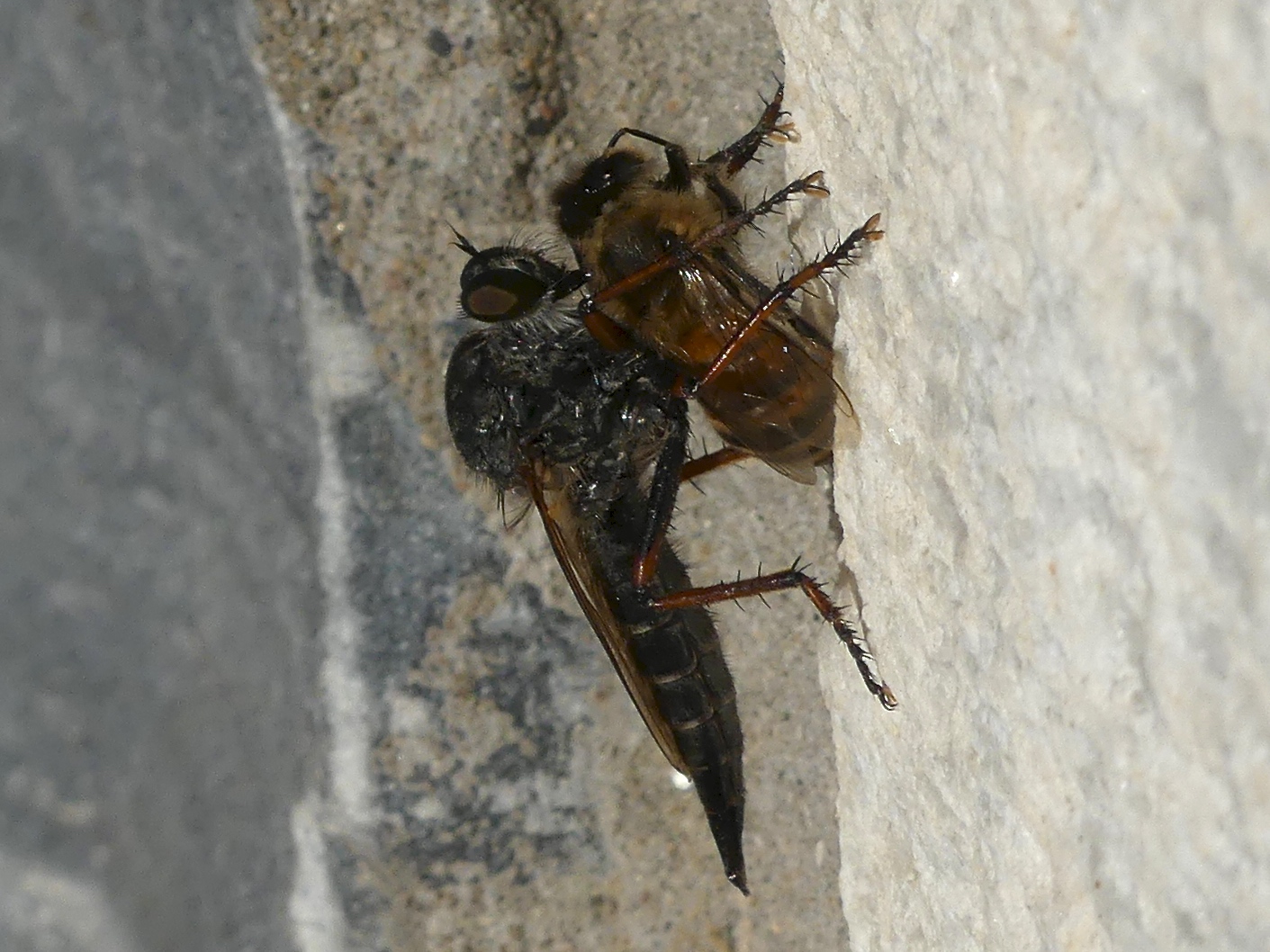
Robber flies catch their prey in flight and are correspondingly fast and agile flyers. Their thorax is particularly thick: this is where their powerful flight muscles are located.
In insects the gas exchange is facilitated by a system of fine tubes, the tracheae, which extend from small openings in the epidermis to every part of the body and organ, ensuring the oxygen supply to the entire body through passive diffusion. This rather inefficient system is (along with the exoskeleton) the main reason why insects, especially in the cooler regions of the world, can only reach a certain size.
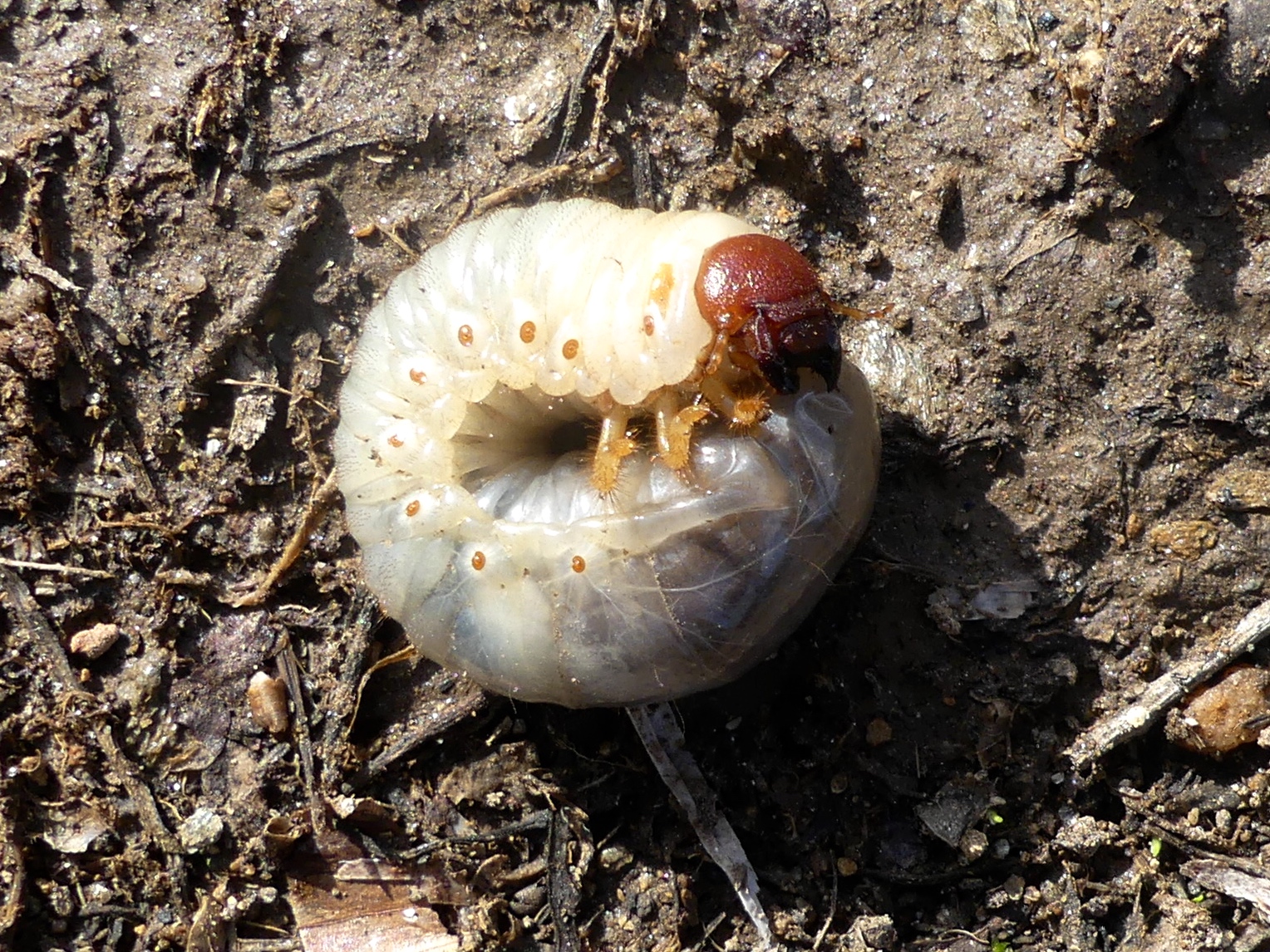
The tracheal openings can be seen as brown dots on this beetle larva; the branching tracheae extending from them are also visible as fine lines.
Nutrition
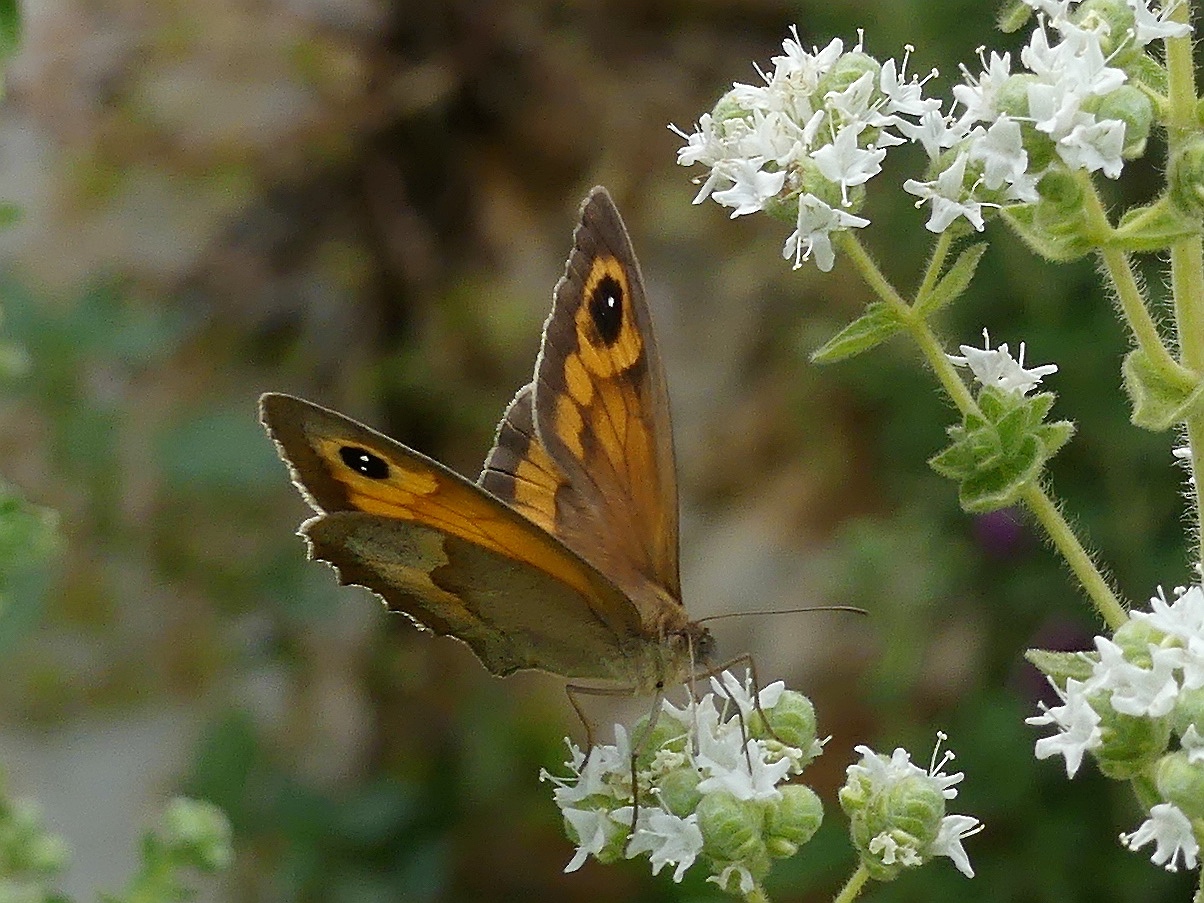
Many insects are vegetarians, feeding mainly on nectar and pollen, such as this Meadow brown.
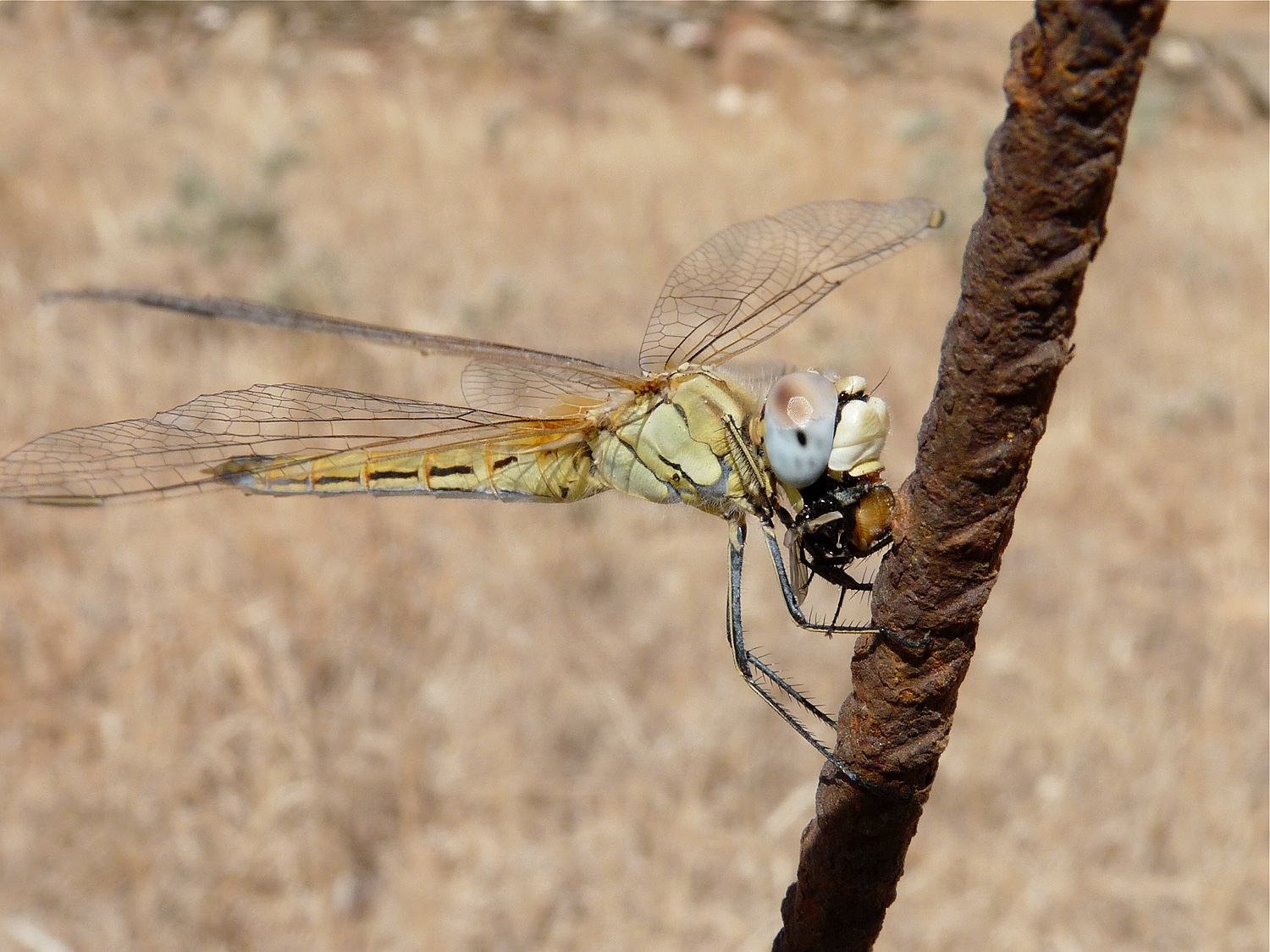
Others are predators, such as dragonflies, which catch insects in flight.
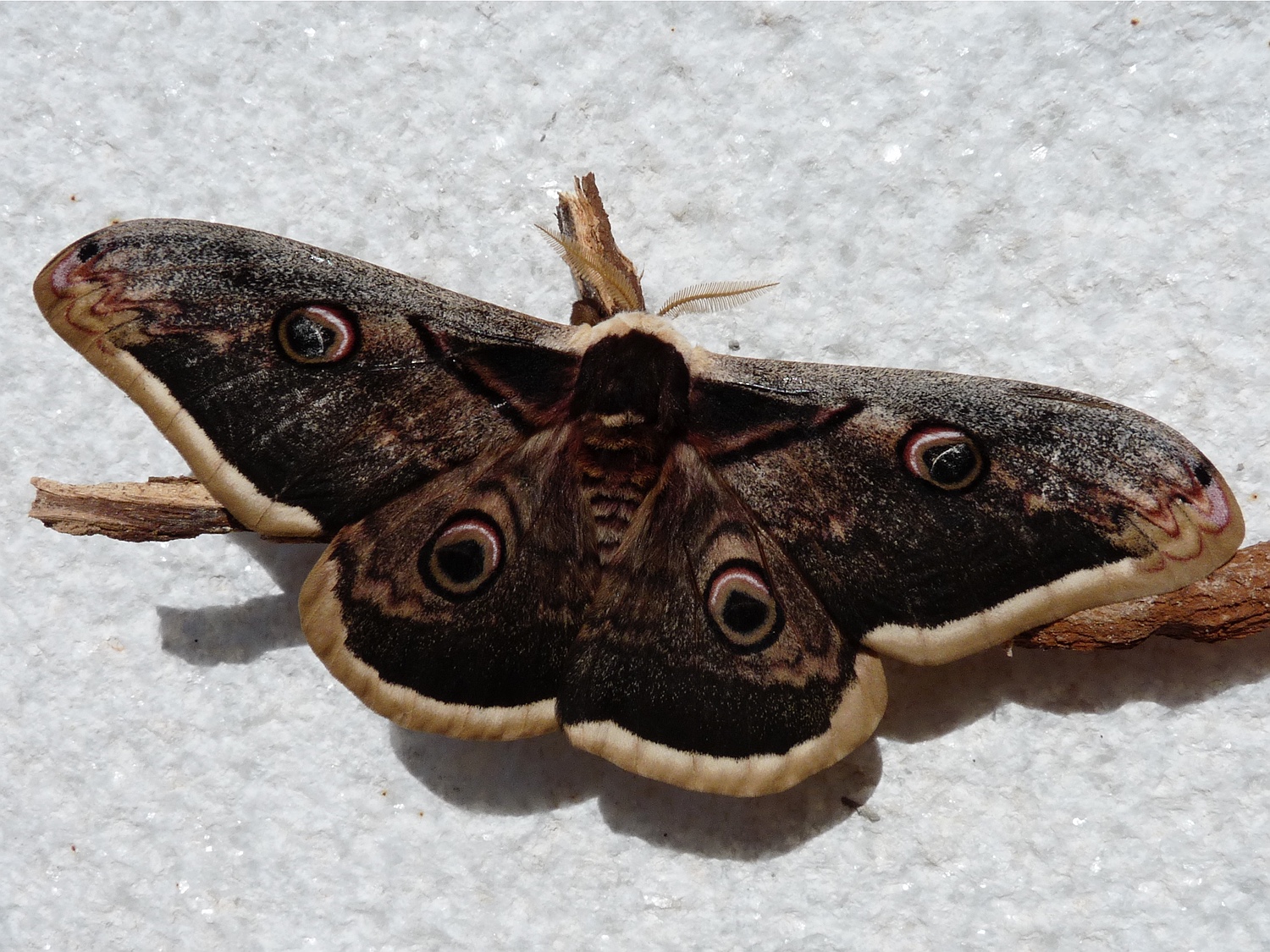
Other species, including many moths, do not feed at all as adults and die a few days after the metamorphosis to the imago, once they have mated and laid their eggs.
Reproduction and development
Insects exhibit different types of development: In species with hemimetabolous (incomplete) development, the larva gradually becomes more similar to the adult insect with each moult. In some insects, the larva (then called a nymph) does not show characteristics of its own but is similar to the adult from the beginning (e.g. grasshoppers and bugs); other larval forms (larvae in the narrower sense) differ significantly in appearance and lifestyle from the adult animals (e.g. dragonflies).
In species with holometabolous (complete) development, the larvae differ radically from the adult animals and transform into the imago (adult, mature animal) during a resting stage, the pupa, in which the body is completely rebuilt. This form of development is found, for example, in bees, butterflies and beetles.
In all insects, the larvae eat significantly more than the adults. The diet of the larvae often differs significantly from that of the adult insects. In many species, the adults consume little or no food. In most cases, the larval stage lasts much longer than the life of the imago; for example, some beetles that live in dry wood spend 15 years in the larval stage.
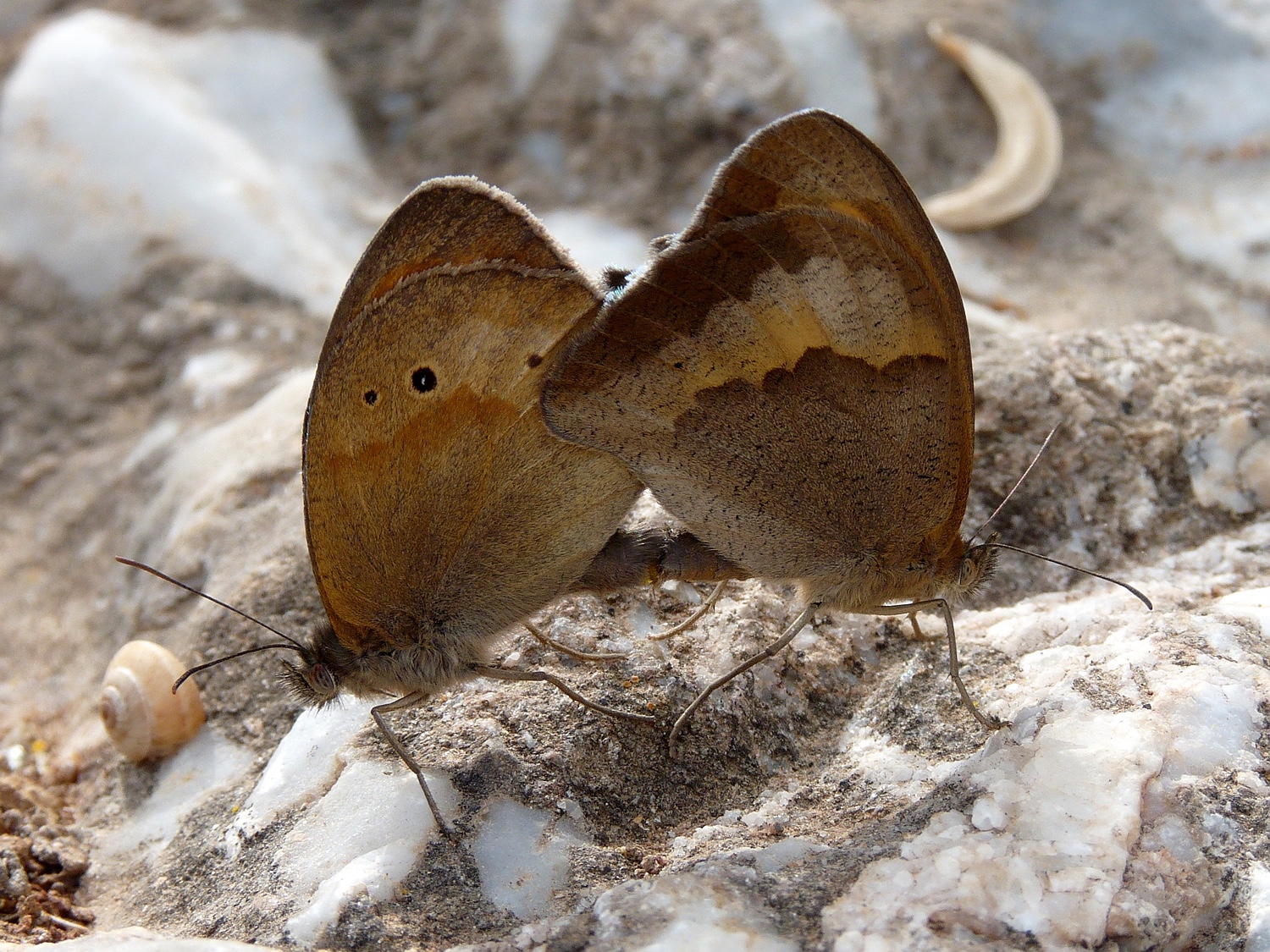
Almost all insects are dioecious (that is the individuals are either male or female). In the Meadow browns, the males (left) look significantly different from the females (right).
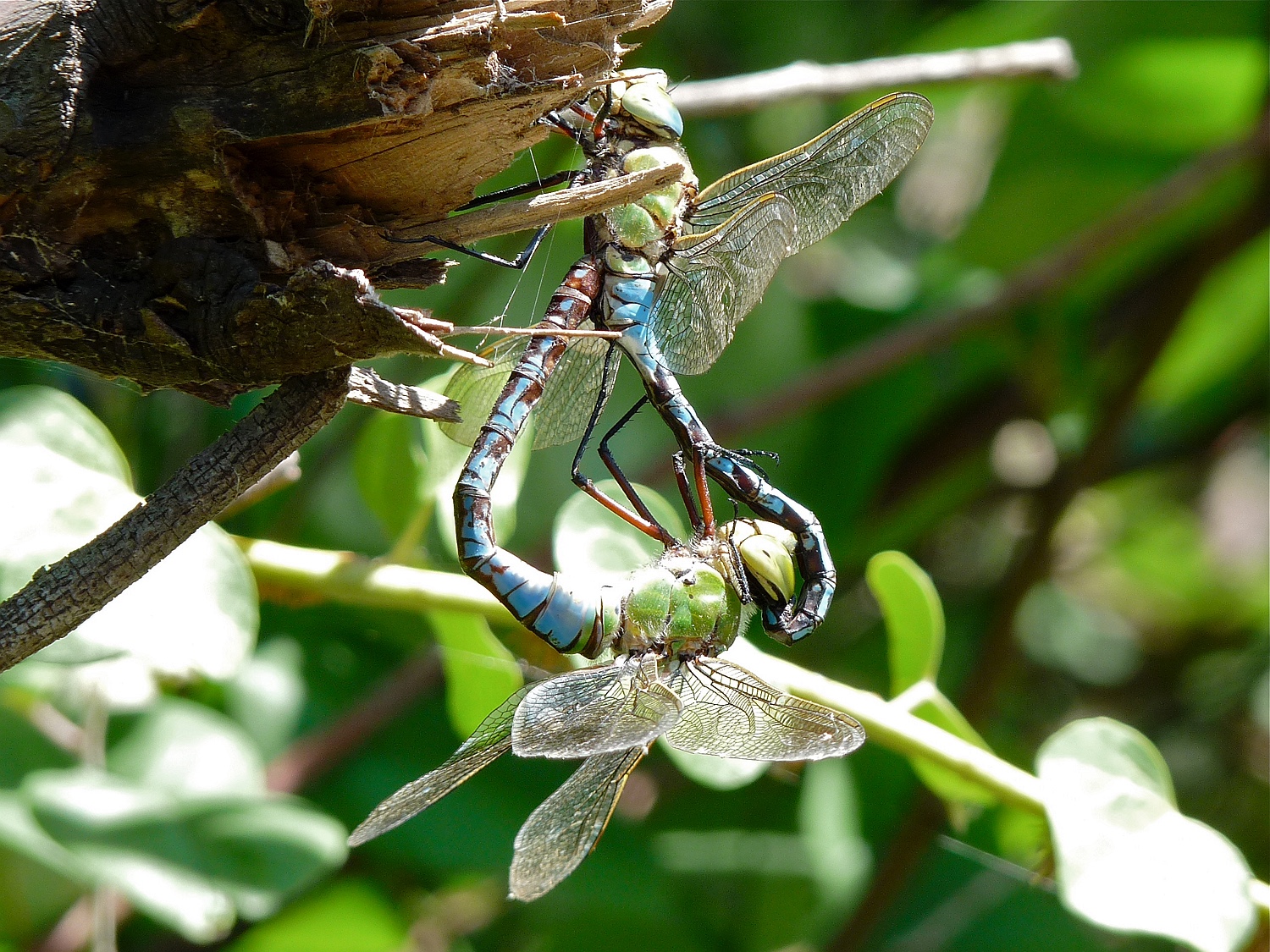
Mating Emperor dragonflies: the female bends hits abdomen with the genital opening towards the male’s spermatheca on the 2nd or 3rd abdominal segment. The male holds the female behind the head with its cerci.
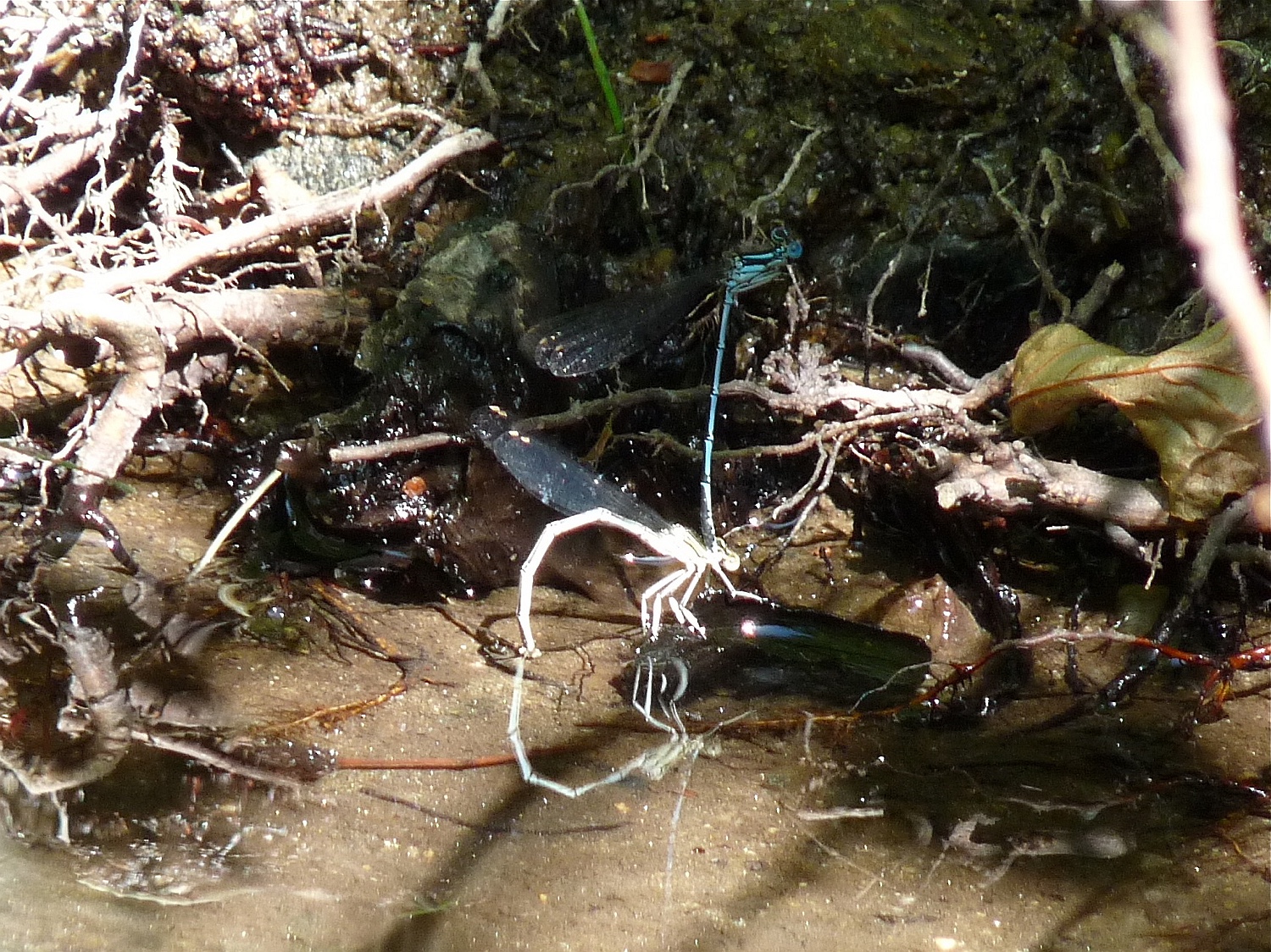
White-legged damselflies laying eggs with the male still attached to the female.
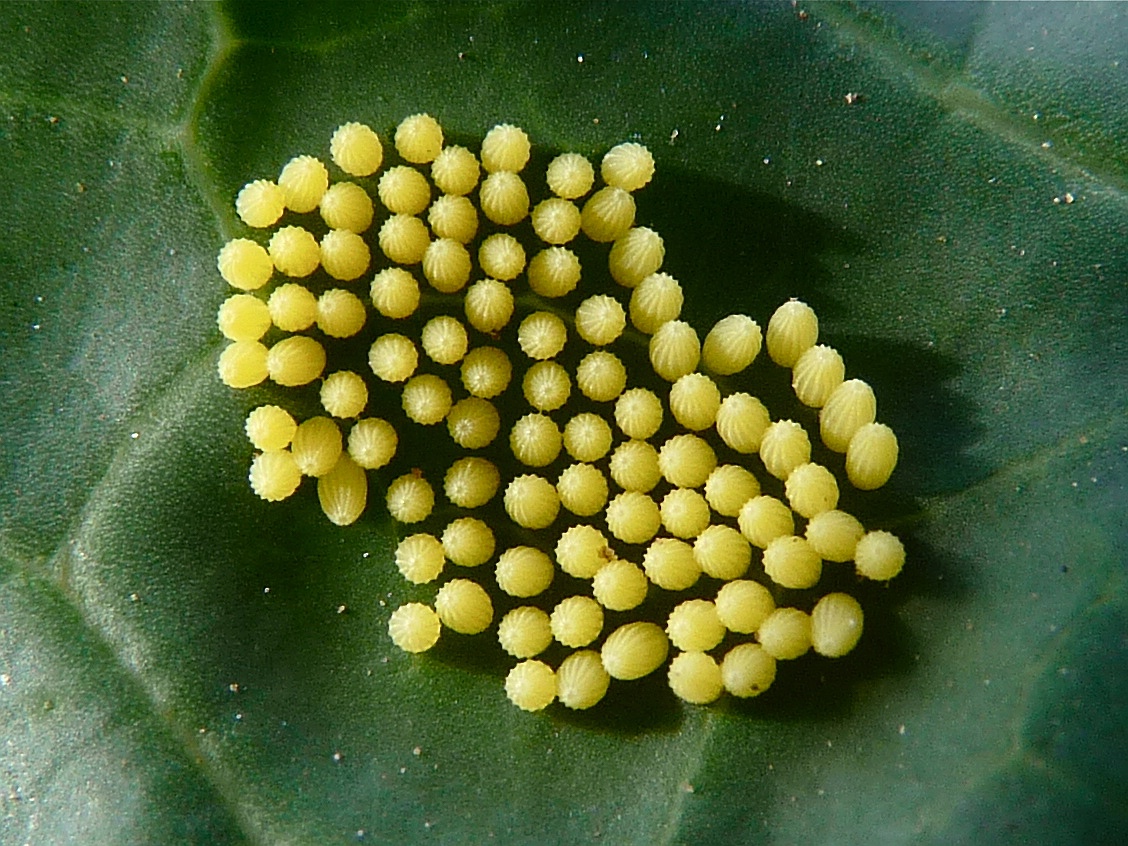
All insects lay eggs. Here the eggs of the Large cabbage white butterfly.
Hemimetabolous insects
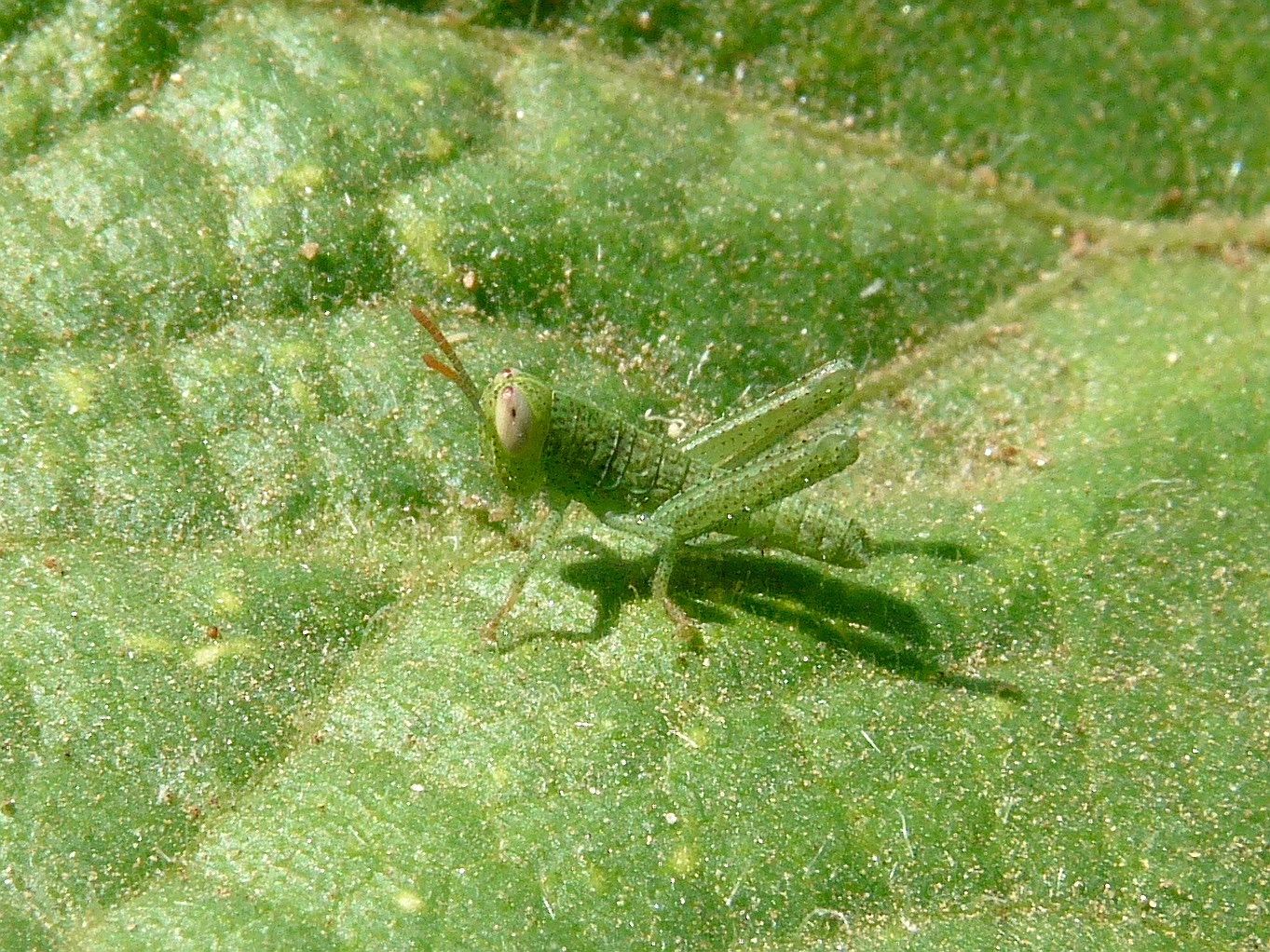
Grasshoppers belong to the hemimetabolous insects with nymphs, i.e. the larva resembles the adult and has no distinctive features of its own. This tiny larva that already looks like a miniature version of the adult grasshopper!
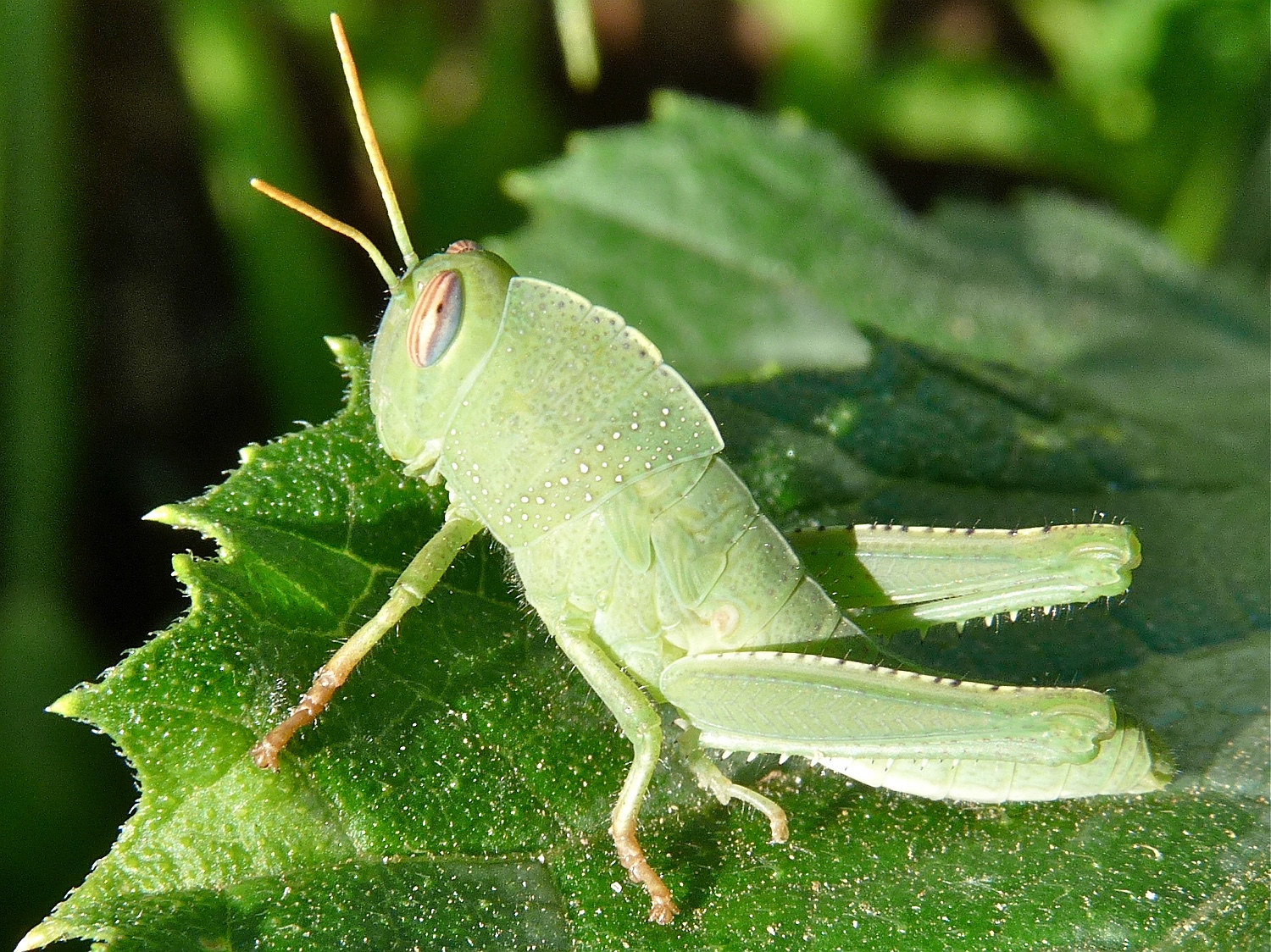
Egyptian locusts go through several larval stages, during which the animals gradually become more similar to the adult. The final larval stages can be distinguished from the adults mainly by the fact that their wings are not yet fully developed. In this middle larval stage of the Egyptian locust, tiny wing “buds” can be seen on the thoracic segments.
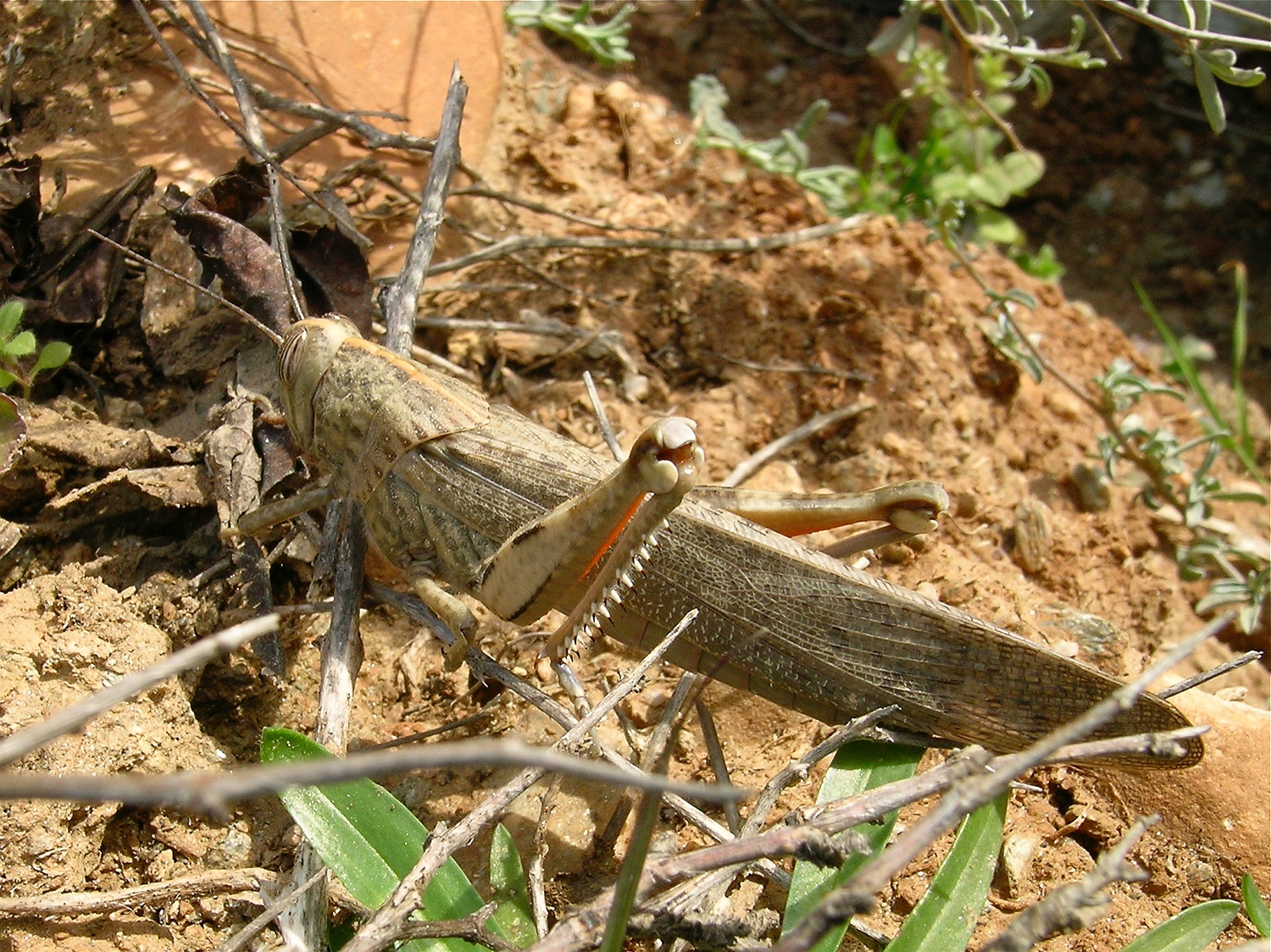
adult Egyptian locust
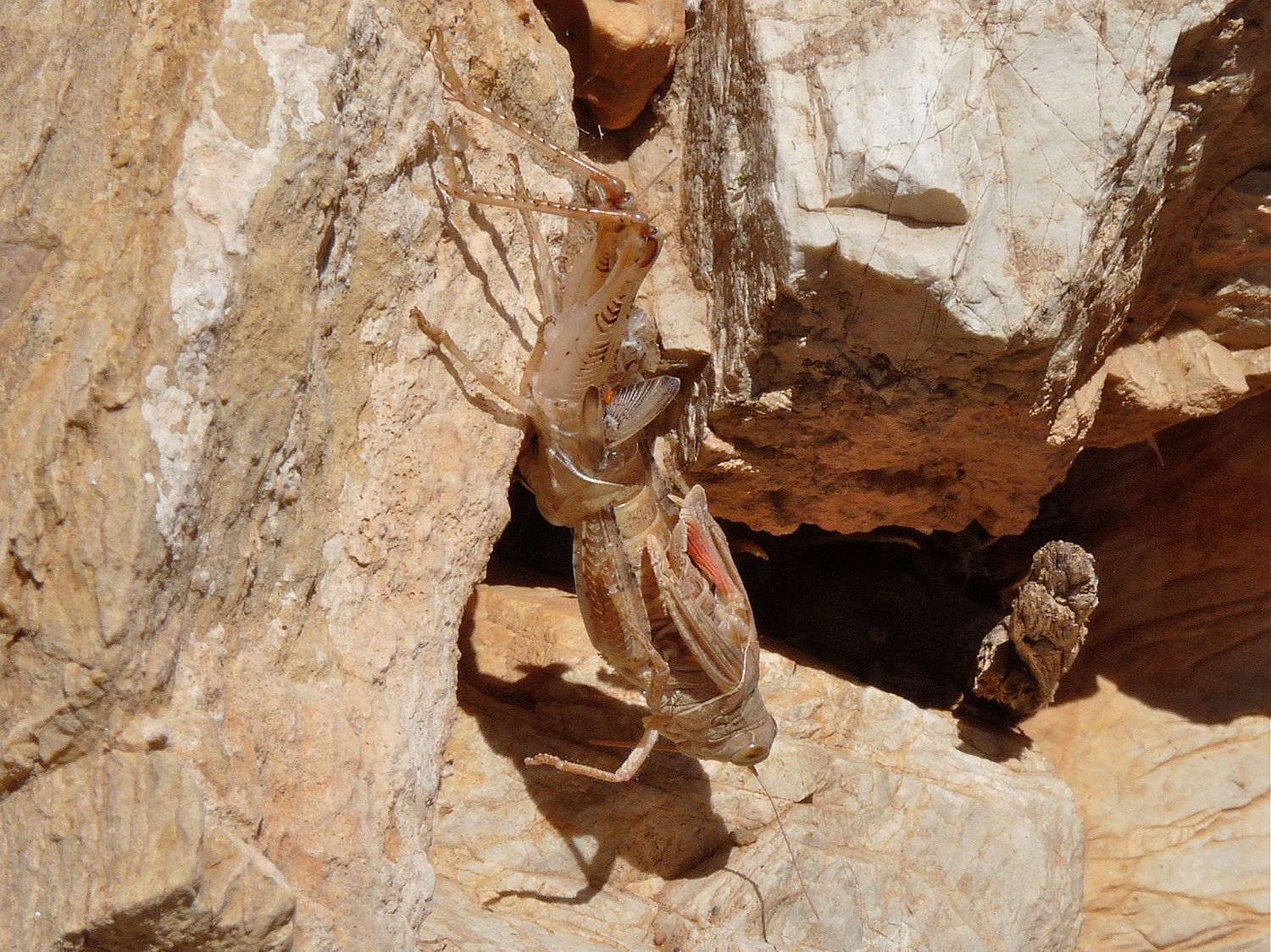
Moulting grashopper. Before their chitinous exoskeleton hardens, grashoppers are particularly vulnerable and at risk from predators.
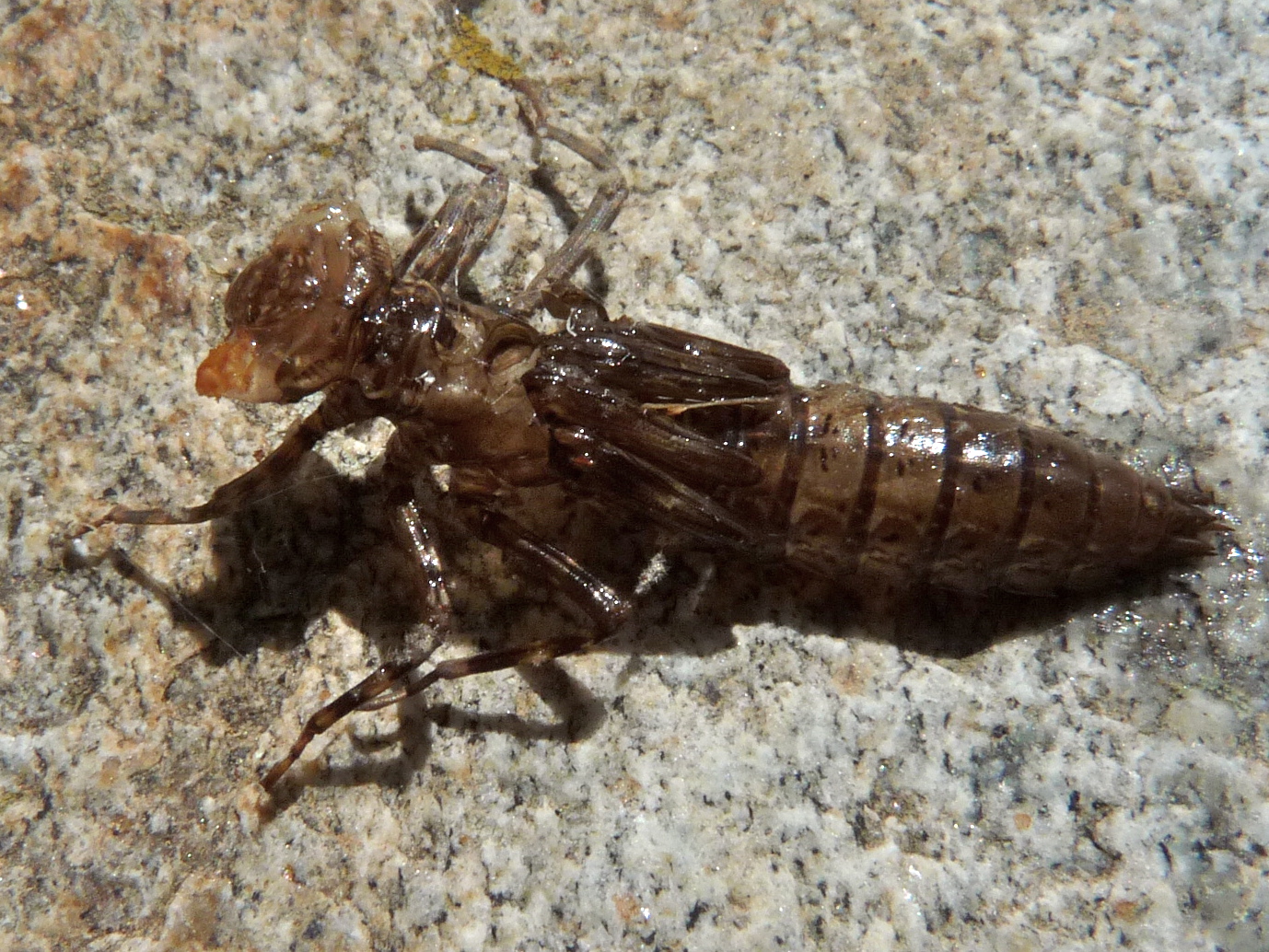
Dragonflies also are hemimetabolous insects, i.e. the transition to adulthood takes place gradually over several moults without a pupal stage. However, the larva differs greatly from the adult in appearance and in lifestyle: the dragonfly larva lives as a predator in the water of rivers and ponds. For the final moult, the larva crawls out of the water and the adult dragonfly emerges. Here you see the empty exoskeleton (exuvium) left behind.
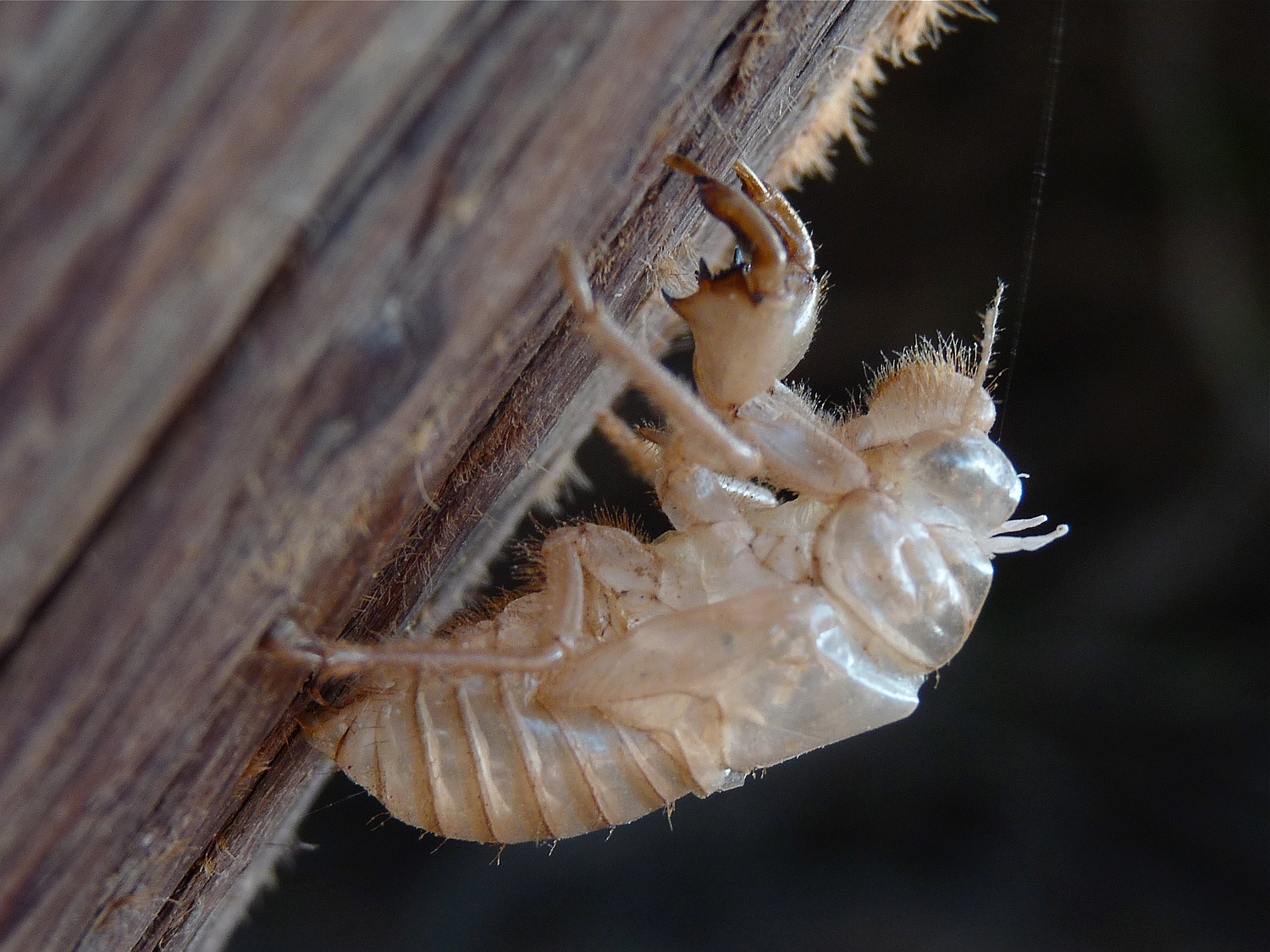
Cicadas also undergo a hemimetabolous development with a larva. The larvae of the cicadas live underground. All the details of the larval body can be seen on this empty exuvium: the digging legs formed like spades, the wing buds, the antennae, the eyes, etc. The exuvium bursts open on the back to allow the adult insect to emerge.
Holometabolous insects
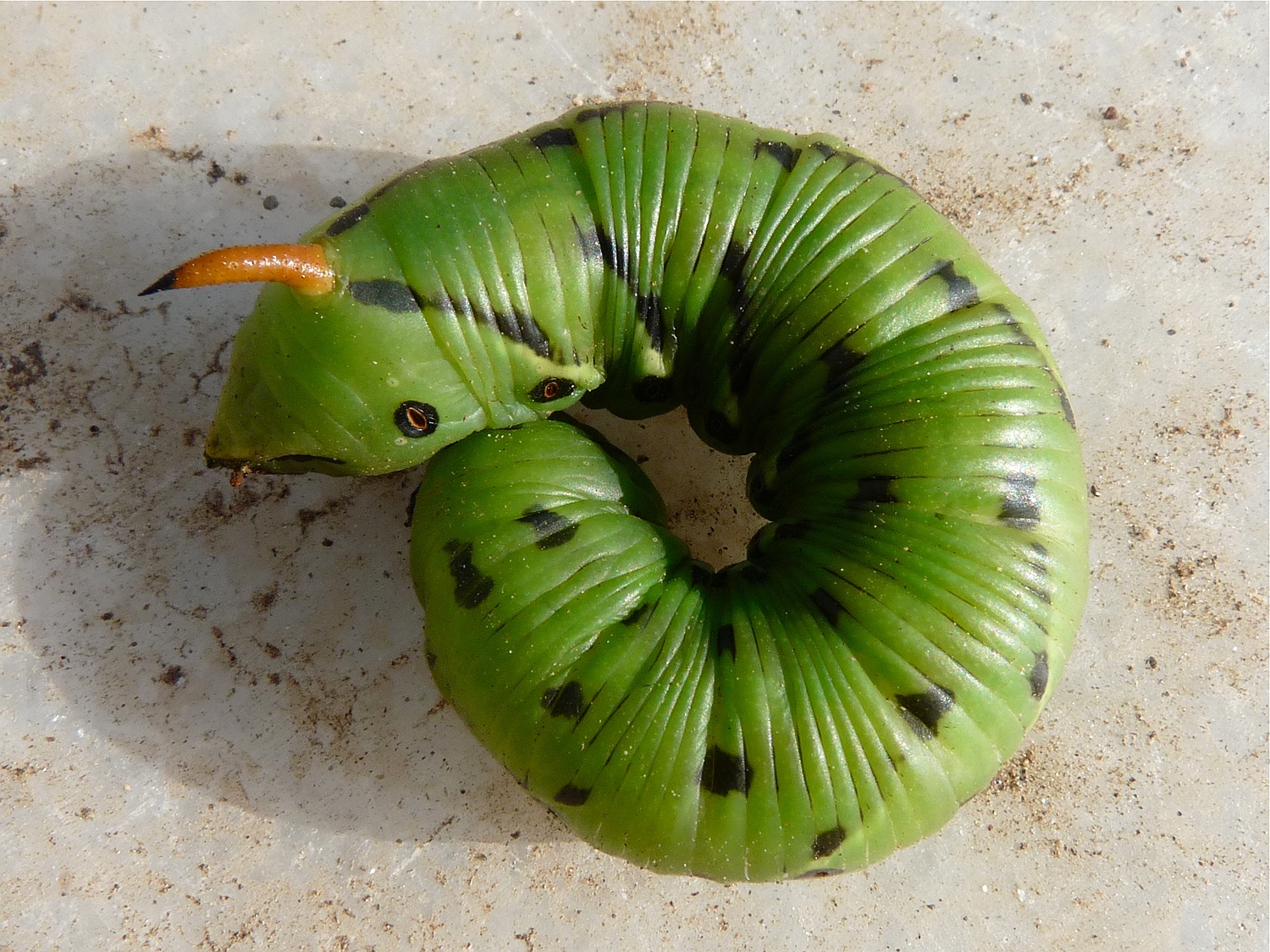
Butterflies belong to the holometabolous insects, i.e. the larvae (caterpillars) look completely different from the adult butterflies, and the transformation takes place in a chrysalis (pupa). Here the final caterpillar stage of the Convolvulus hawk moth.
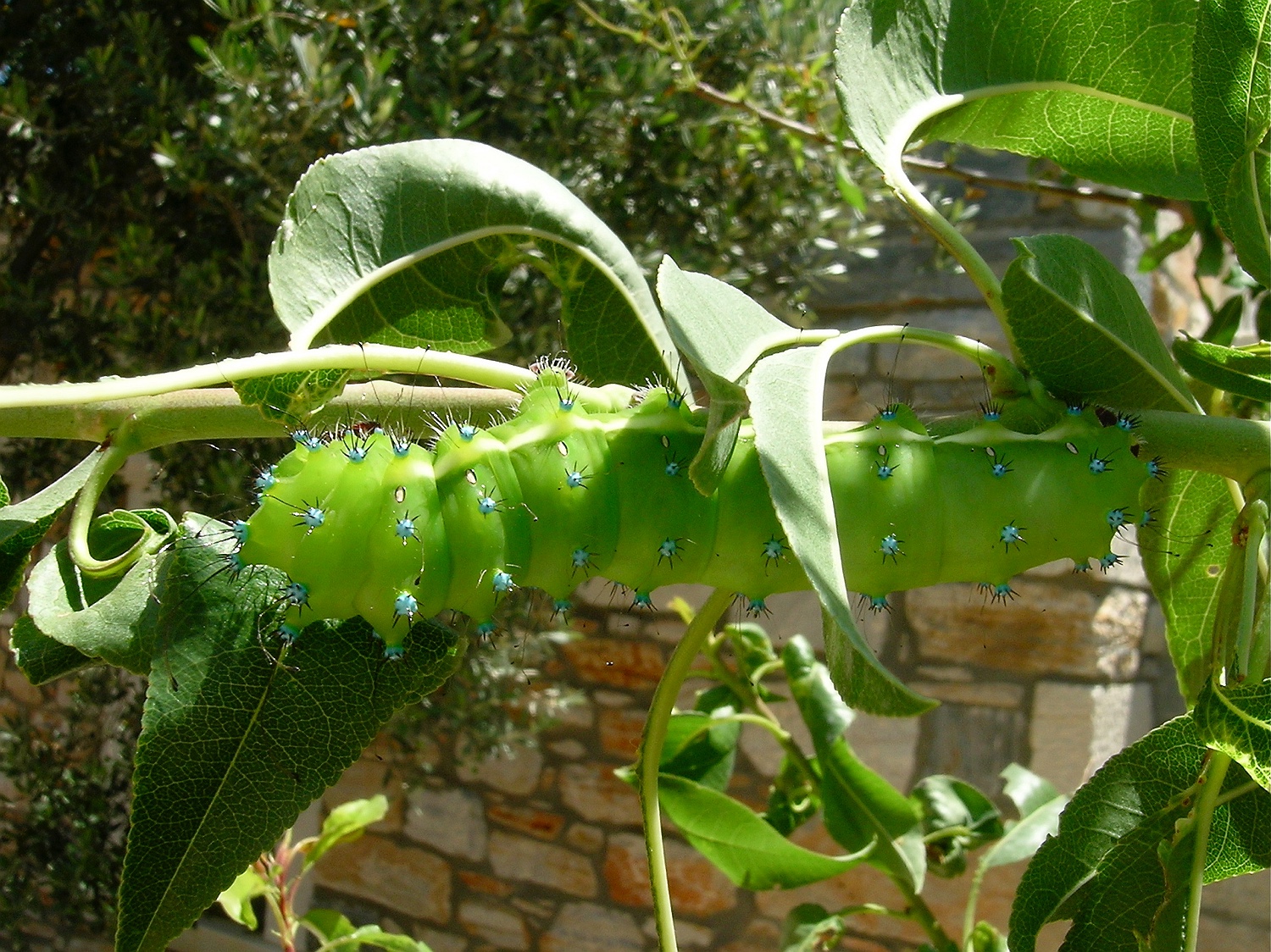
The large caterpillars of the Giant peacock moth eat the leaves of fruit trees with great appetite and can cause some damage.
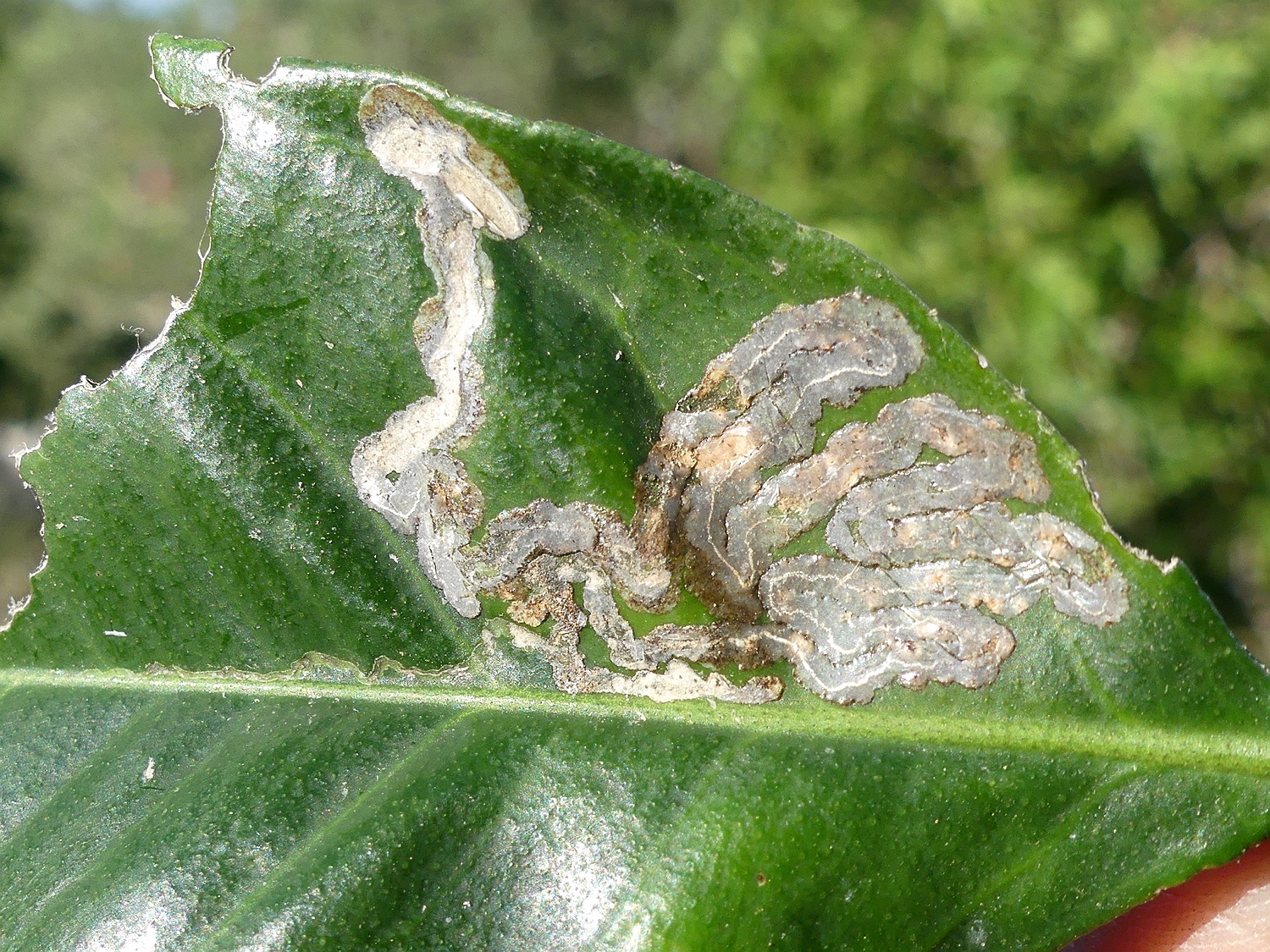
Other caterpillars live by “mining” in leaves.
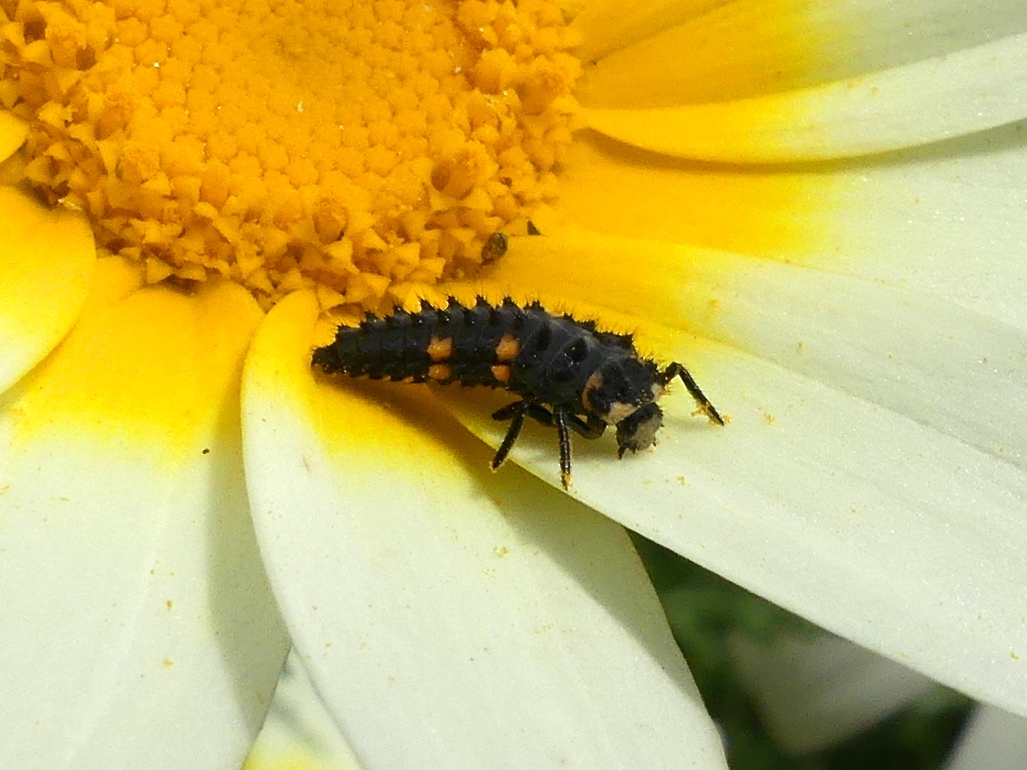
Many insect larvae are predators, such as ladybird larvae, which eat aphids.
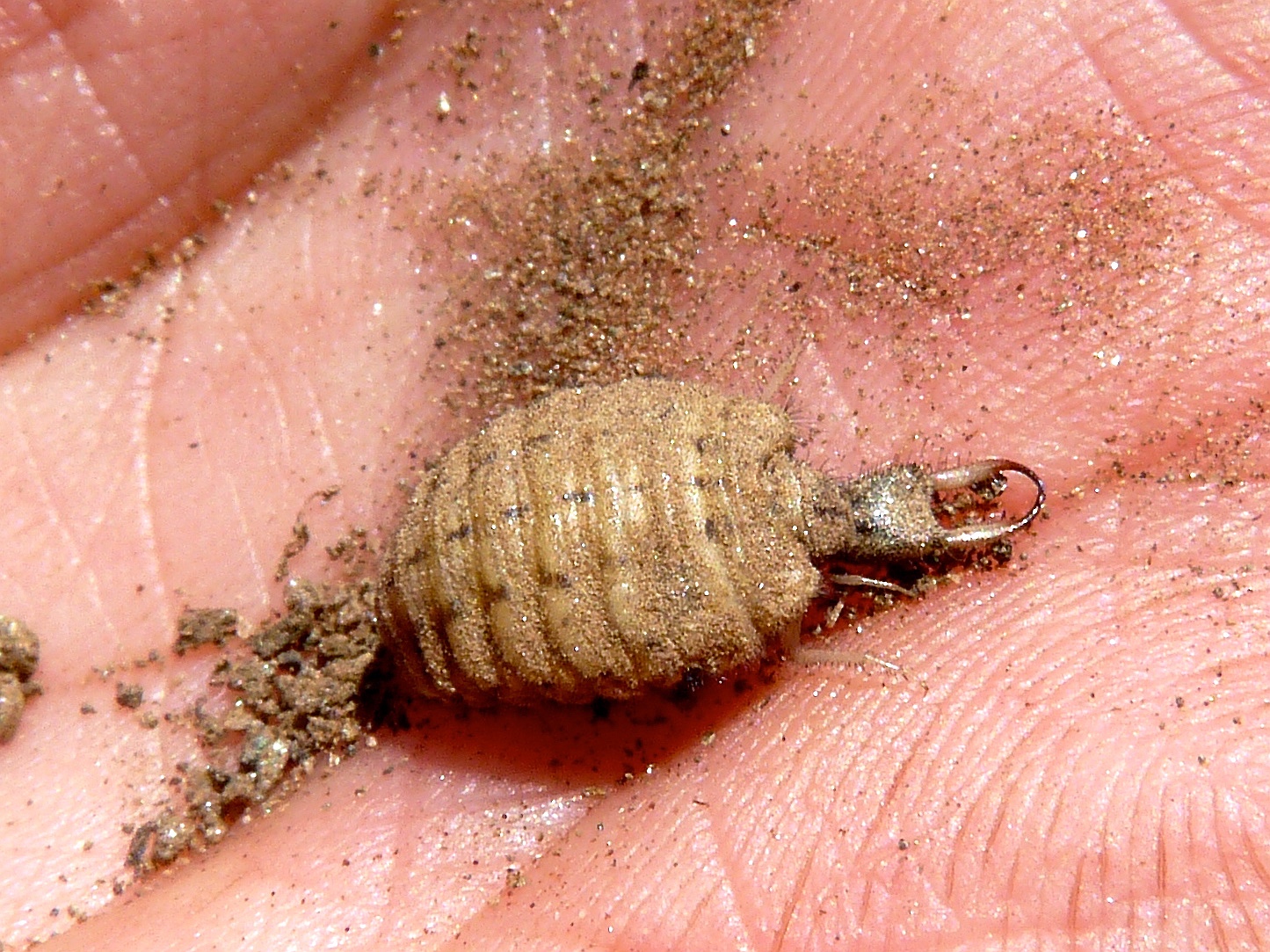
The antlion, the larva of the antlion lacewing, lies in wait for prey at the bottom of a funnel that it has dug in the ground. It has a thick, round abdomen, a narrow, extendable thorax and a small head with very large mandibles, which it uses to seize its prey. The antlion pumps a strong poison into its prey through its mandibles, quickly paralysing or killing it. It then injects digestive secretions into the prey and sucks it dry, which can take several hours with large prey.
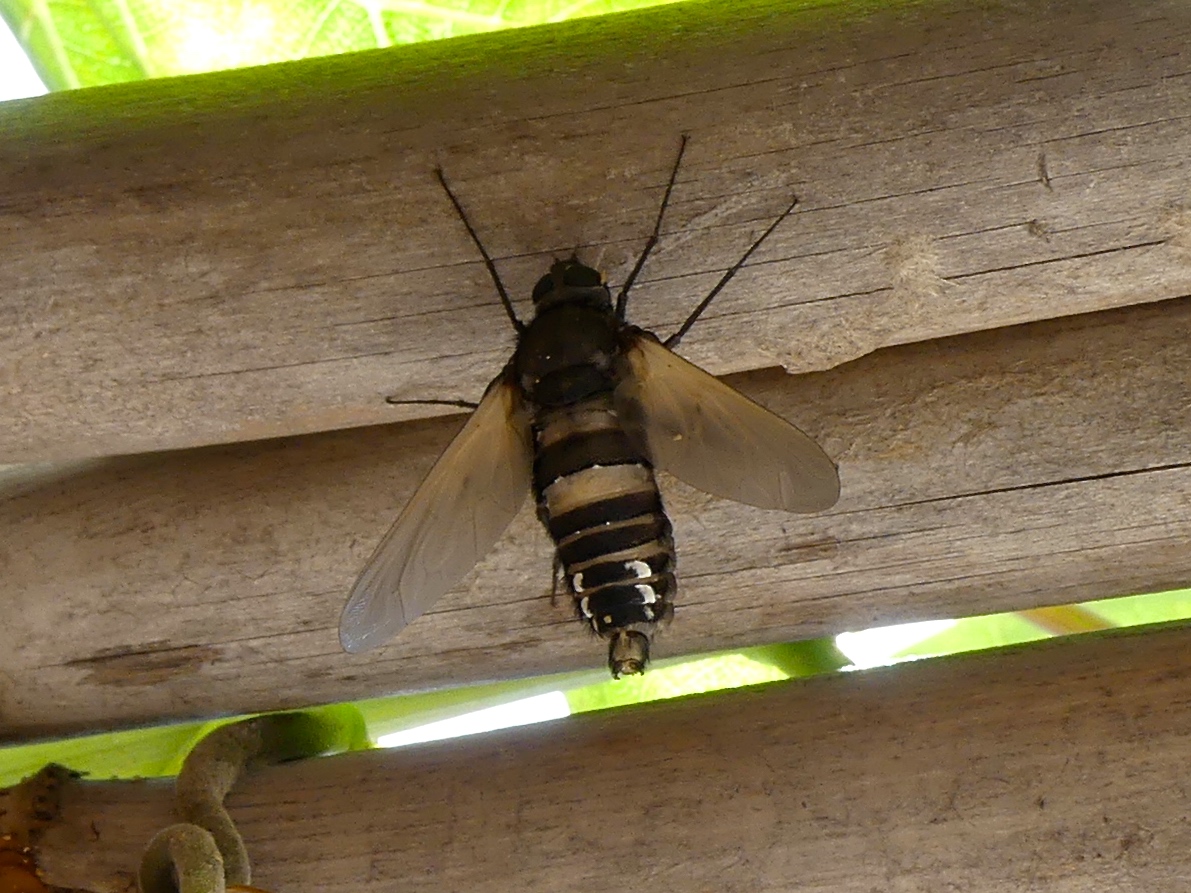
Many insect larvae live as parasites, such as those of the hoverfly Satyramoeba hetrusca, which live in the nests and eat the larvae of the large carpenter bee. Here, a newly emerged adult hoverfly hangs from the bamboo tubes in which the carpenter bees build their nests.
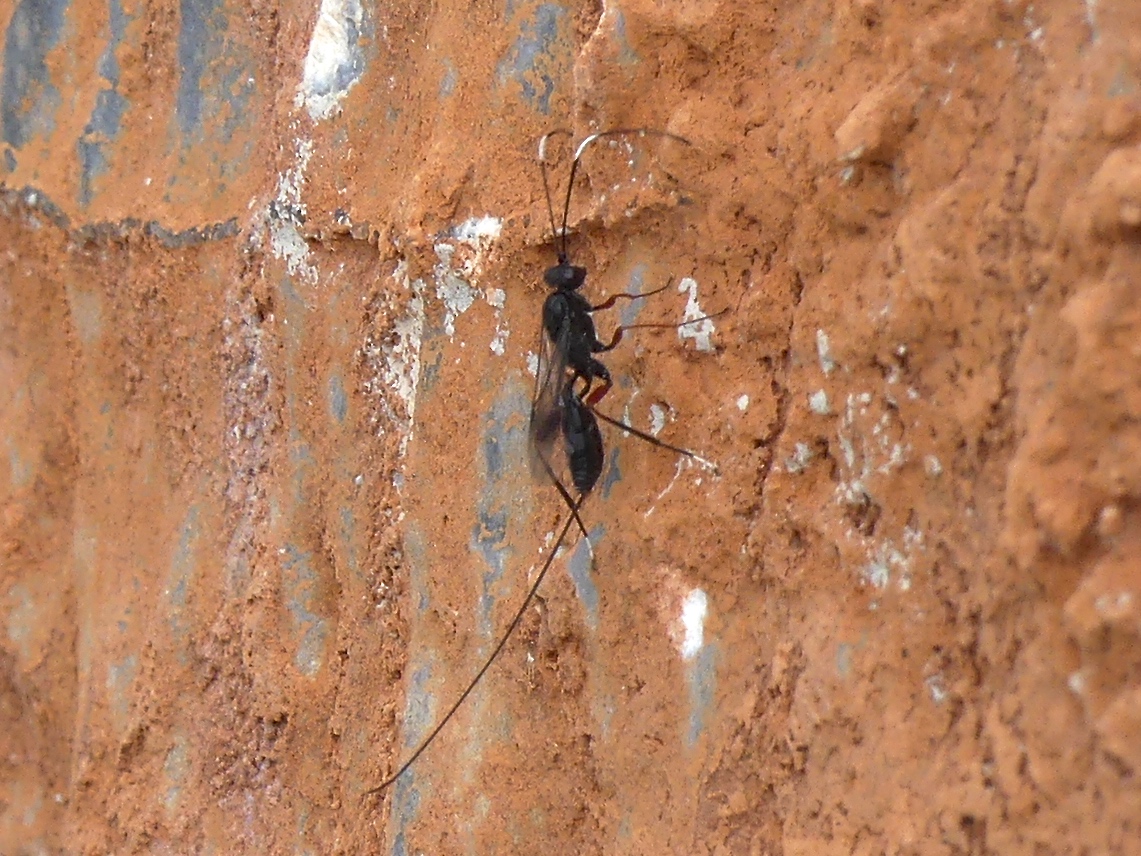
Stenarella domator is a hyperparasite, i.e. it parasitises the nests of solitary wasps that build mud nests and provide butterfly caterpillars as food for their larvae. Stenarella domator uses its long ovipositor to bore into the mud nests and lay an egg inside; its larva feeds on the host larva, which in turn fed on the butterfly caterpillars.
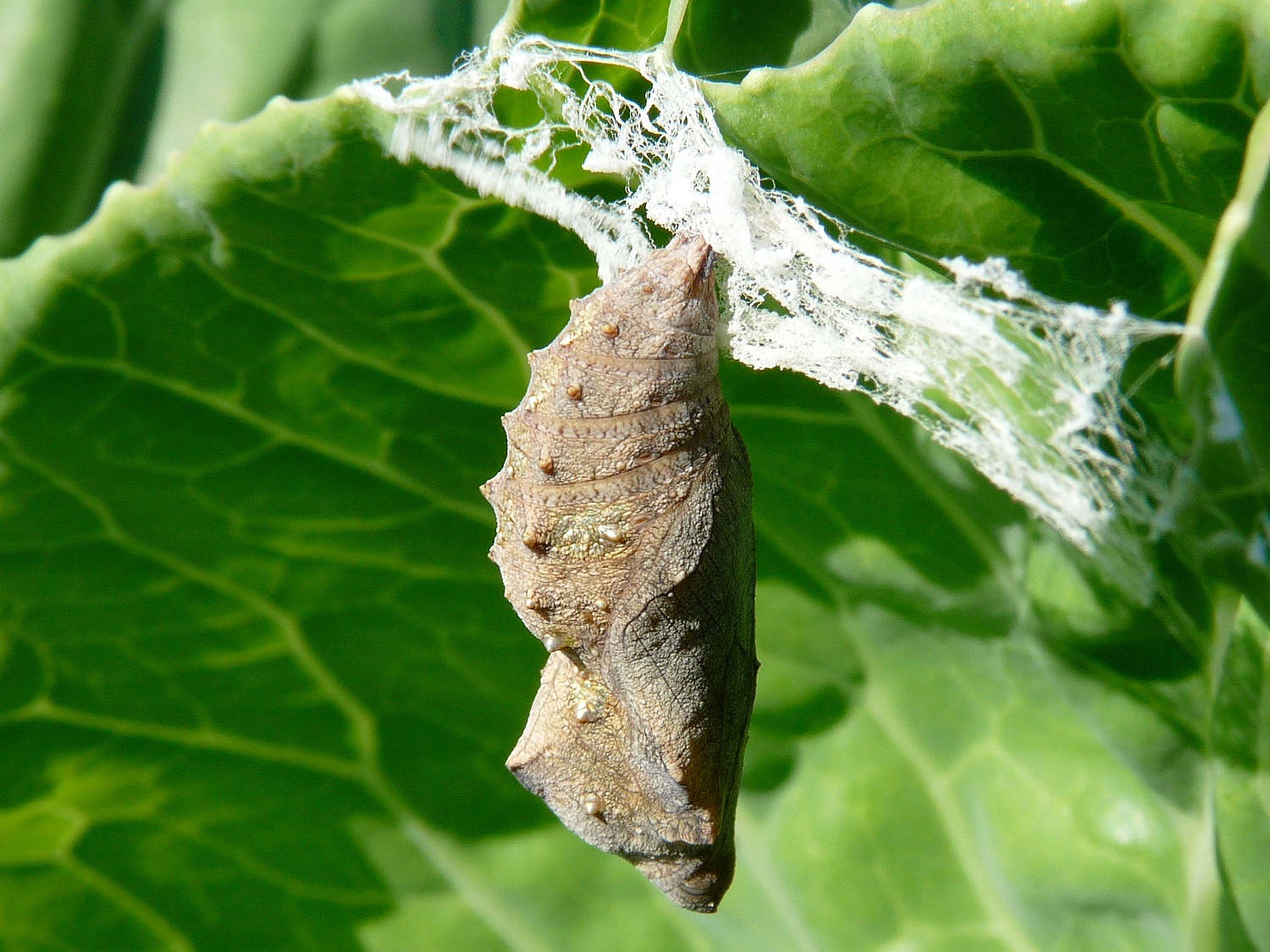
In holometabolous development, the larva transforms into the adult via a pupal stage, during which the larva’s body dissolves and is reconstructed. The red admiral’s chrysalis hangs from a small web.
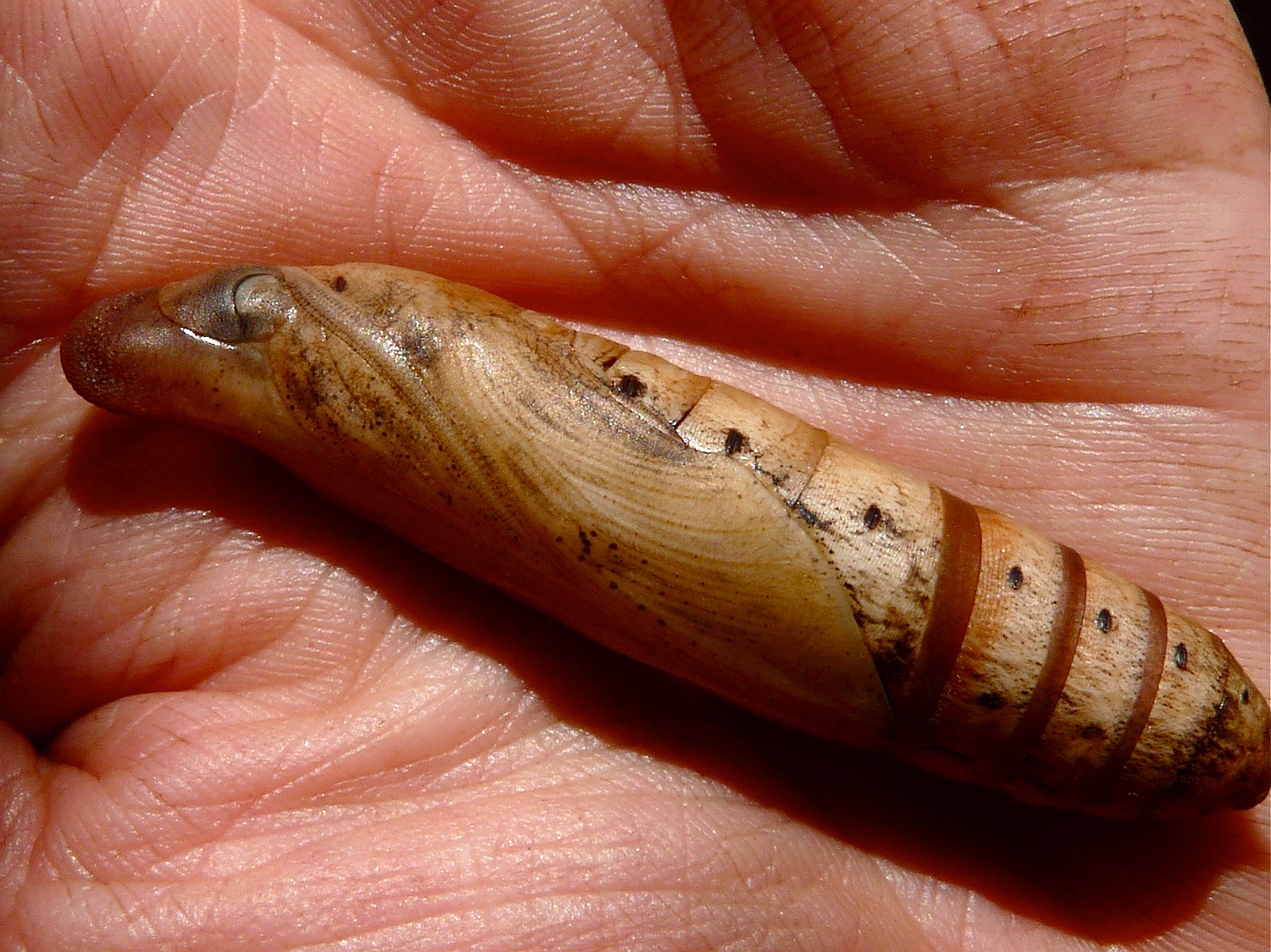
The head and wings of the moth can be seen on the outside of this large pupa.
Some holometabolous insects engage in elaborate care for their larvae.

The dung beetle species Scarabaeus variolosus lays its eggs in holes in the ground, where the beetle deposits dung balls as a food supply for the larvae. Here you can see the beetle rolling a dung ball.
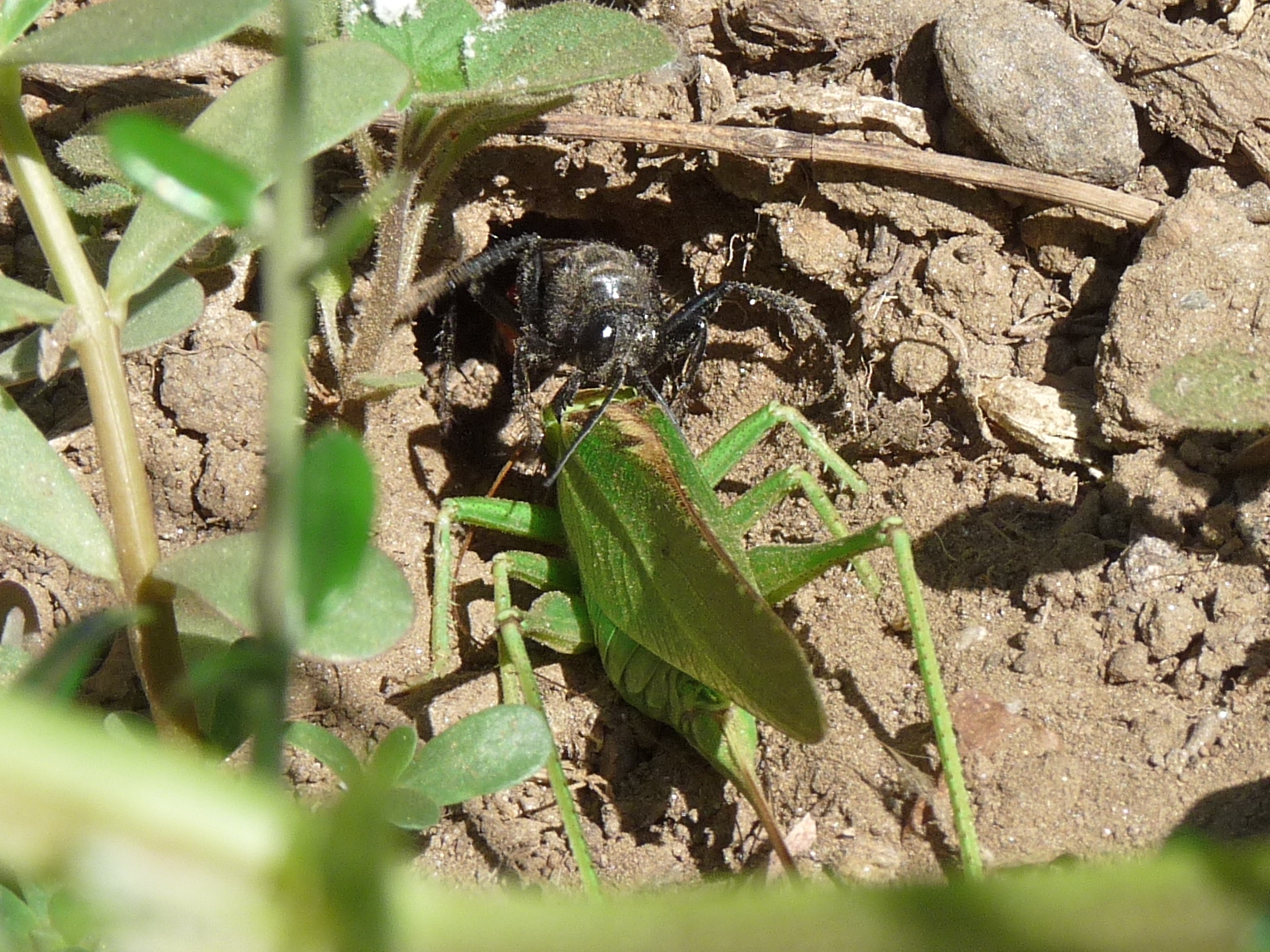
Many species of wasps build underground nest chambers for their larvae. Here, a Golden digger wasp pulls a grasshopper backwards into its nest in the ground. The wasp deposits its prey in one of several nest chambers and lays an egg on each grasshopper. After a few days, the larva hatches and feeds on the living but stunned prey.

Leafcutter bees use pieces of leaves to build their nests.
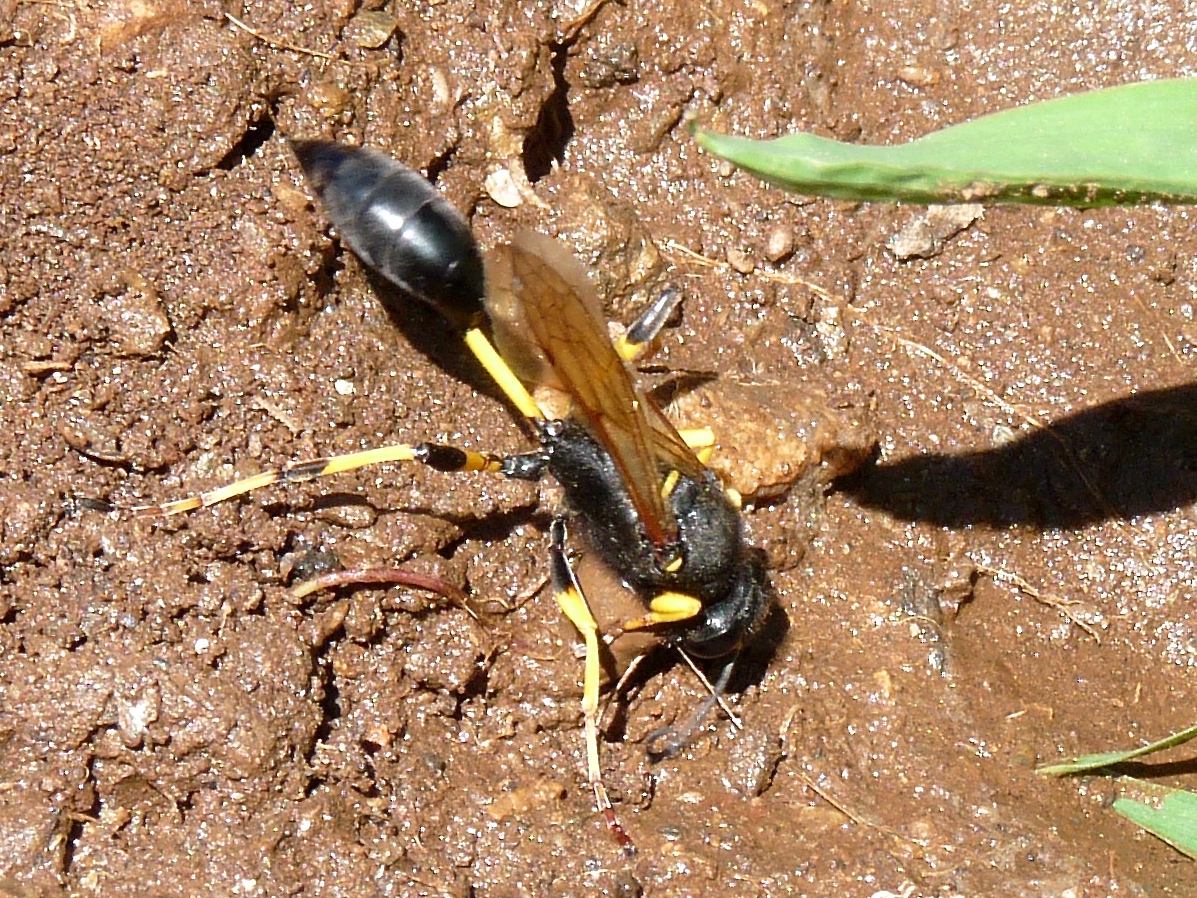
Sceliphron destillatorium, a black mud dauber wasp, builds a clay nest for its larvae. It collects the clay for its nest in the garden from freshly watered vegetable beds. With its front legs, the wasp scrapes together some moist soil, which it shapes into a round ball and then carries it to its nest. If you look closely, you can see the clay ball in the photo, which the wasp is turning and shaping with its front legs.
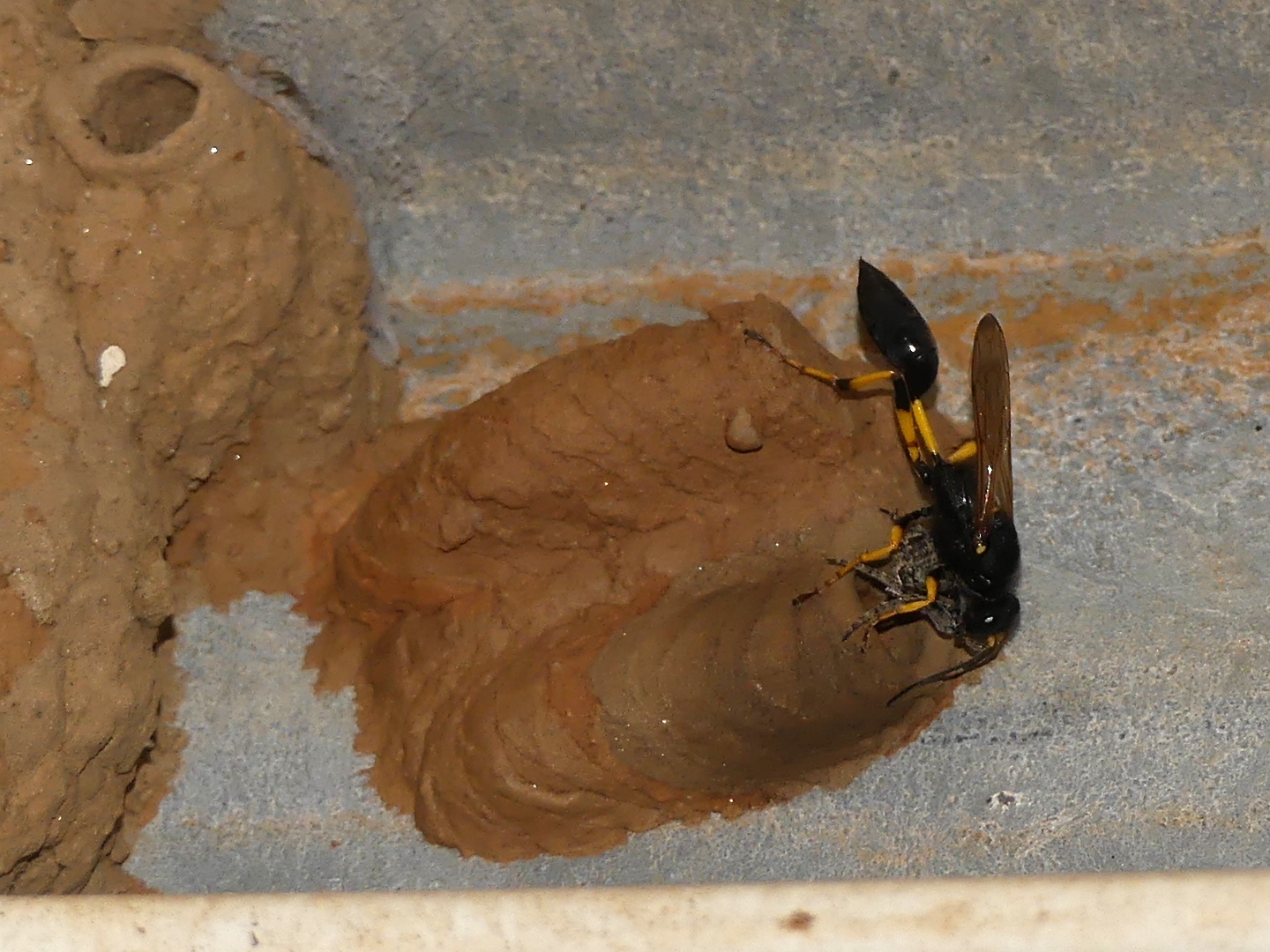
Here you can see Sceliphron destillatorium on its newly constructed nest tube with a paralysed spider that it deposits in the tube as food for its larvae.
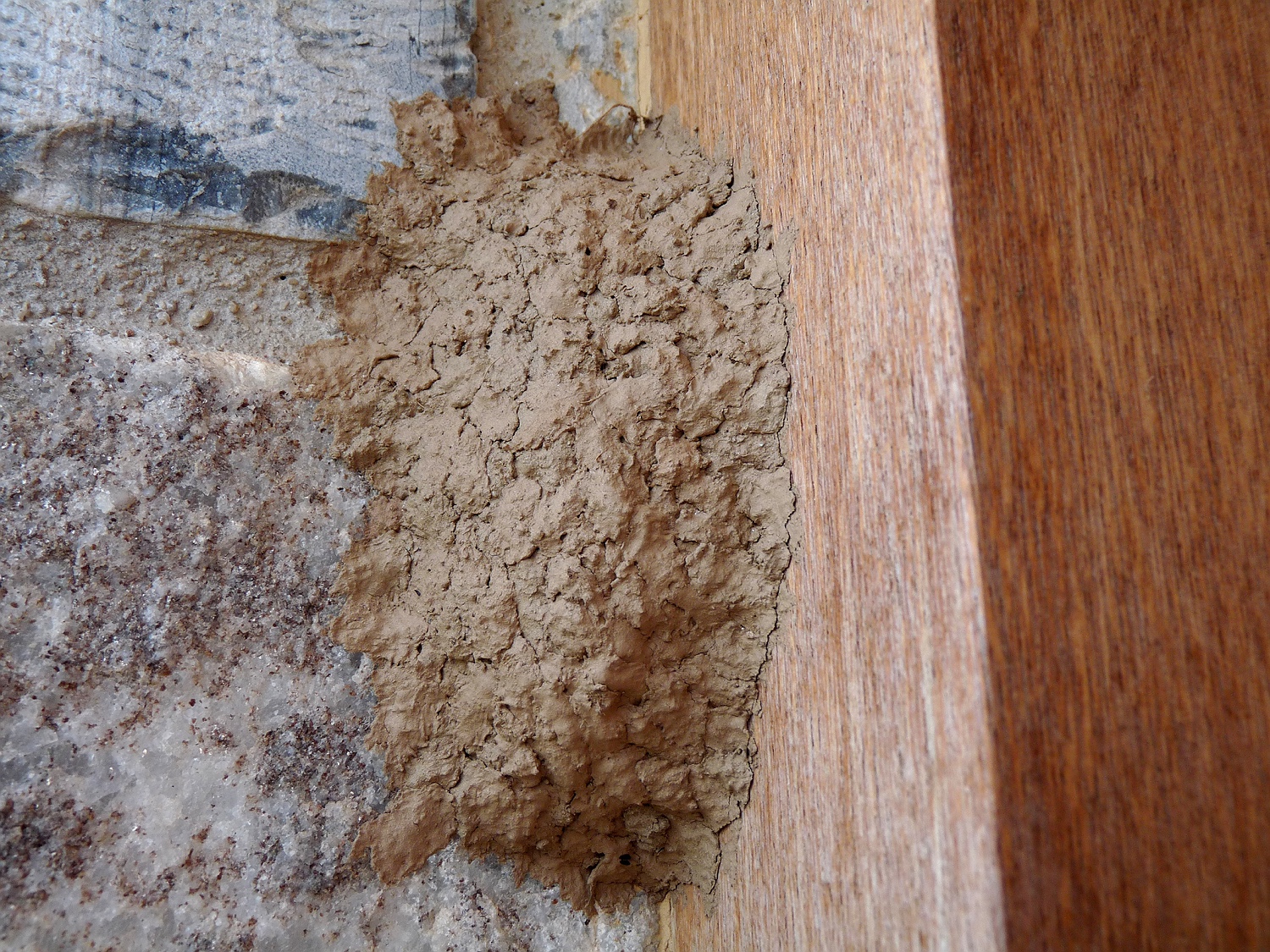
This is what the finished nest looks like; you can see that it is made of small portions of clay.
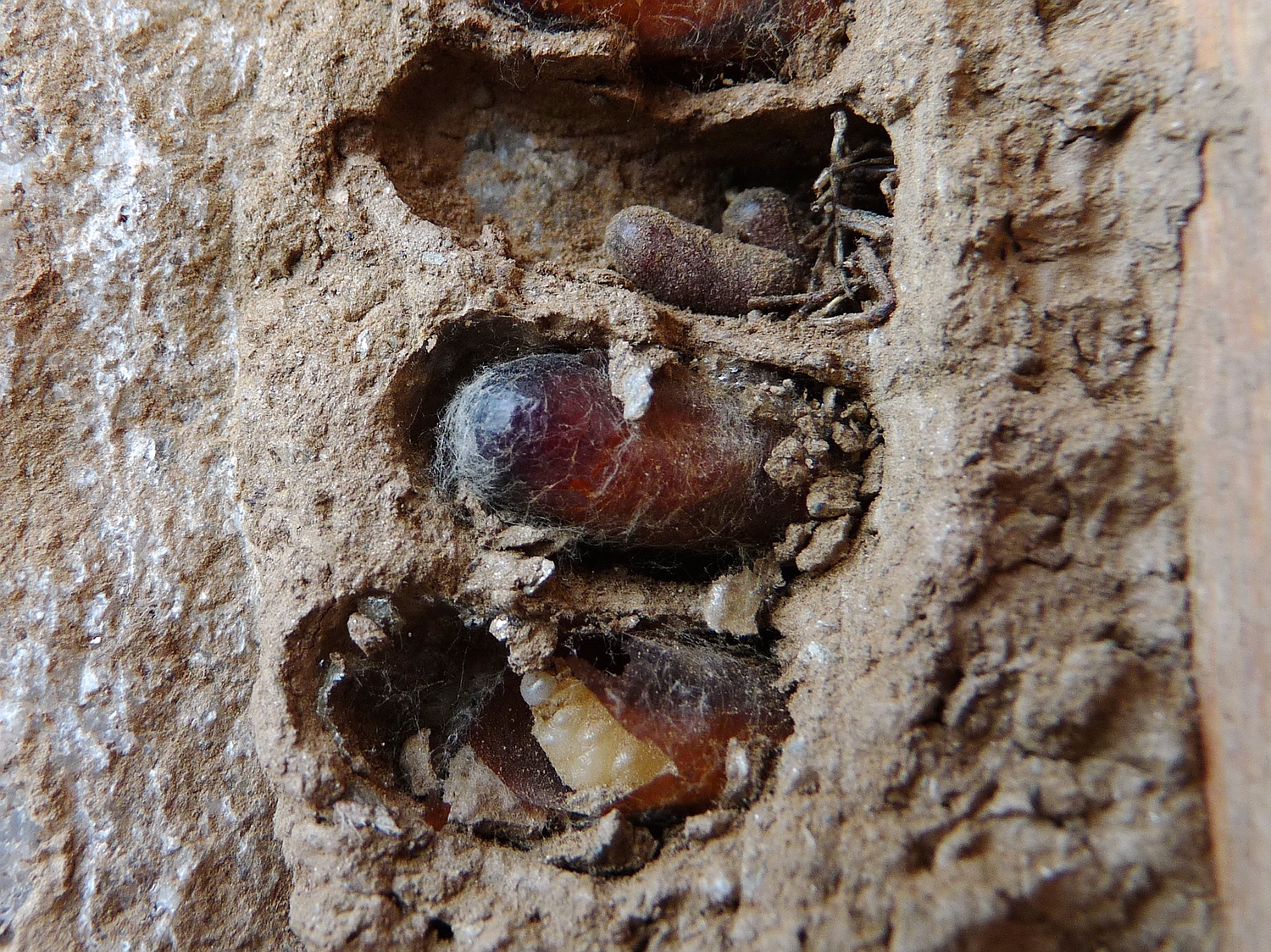
Here you can see the pupae inside the opened nest with the wasps that have not yet fully developed. In the top chamber, where no wasp has developed, you can see the spider that was placed there as food for the larva.
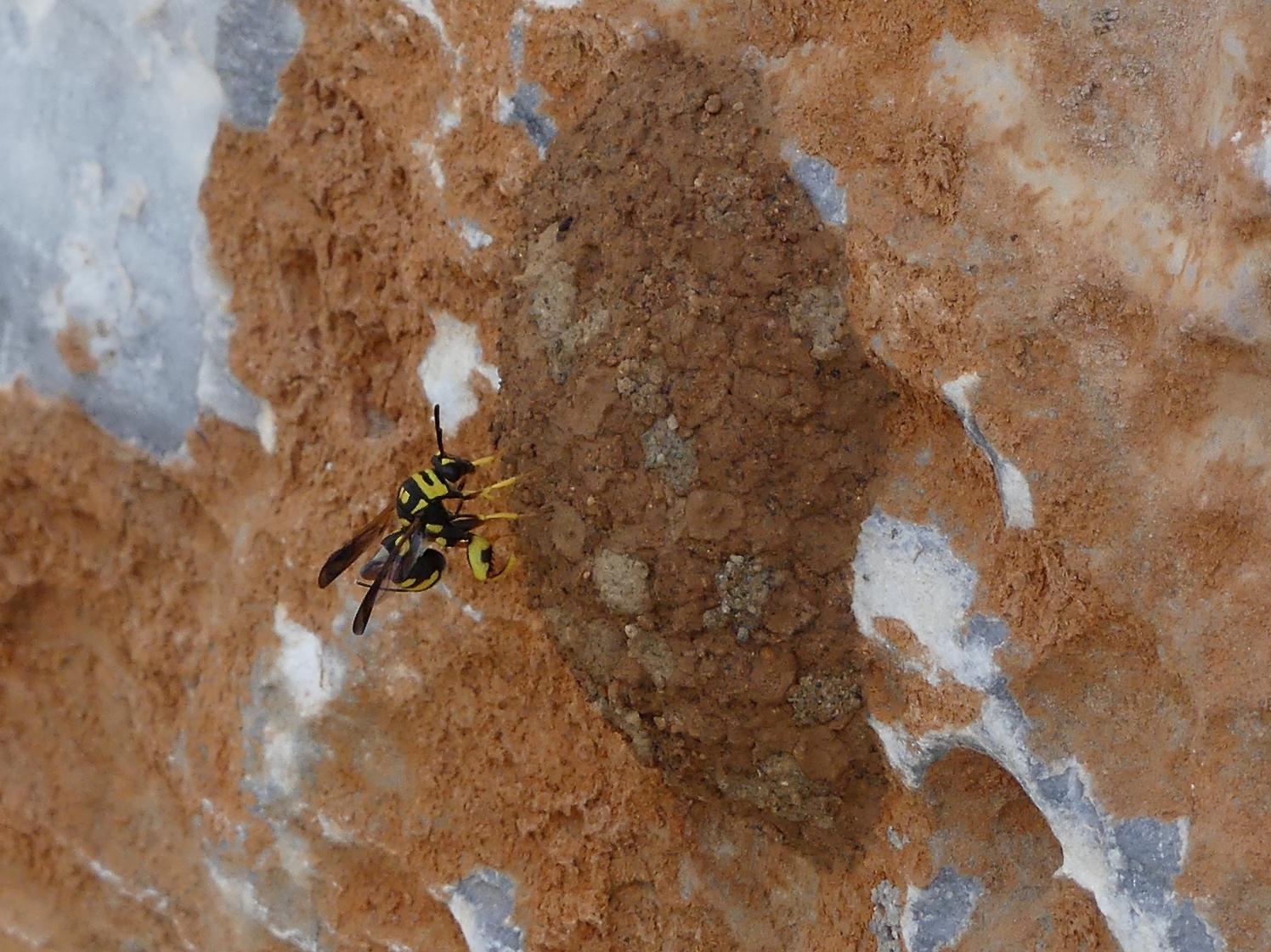
The parasitic wasp Leucospis gigas lays its eggs in the mud nests of the bee Megachile parietina; it can pierce through the hard outer wall of the nest with its ovipositor.
The importance of insects for humans
As pests in forestry and agriculture, many insects have a major impact on humans. Some examples are species such as bark beetles, Colorado potato beetles, mealworms and countless others. Some insects live parasitically on humans or their domestic animals (lice, ticks, fleas…); however, even more significant throughout human history has been the transmission of diseases by insects, such as the transmission of the plague by fleas and malaria by mosquitoes. Plant diseases are also often transmitted by insects.
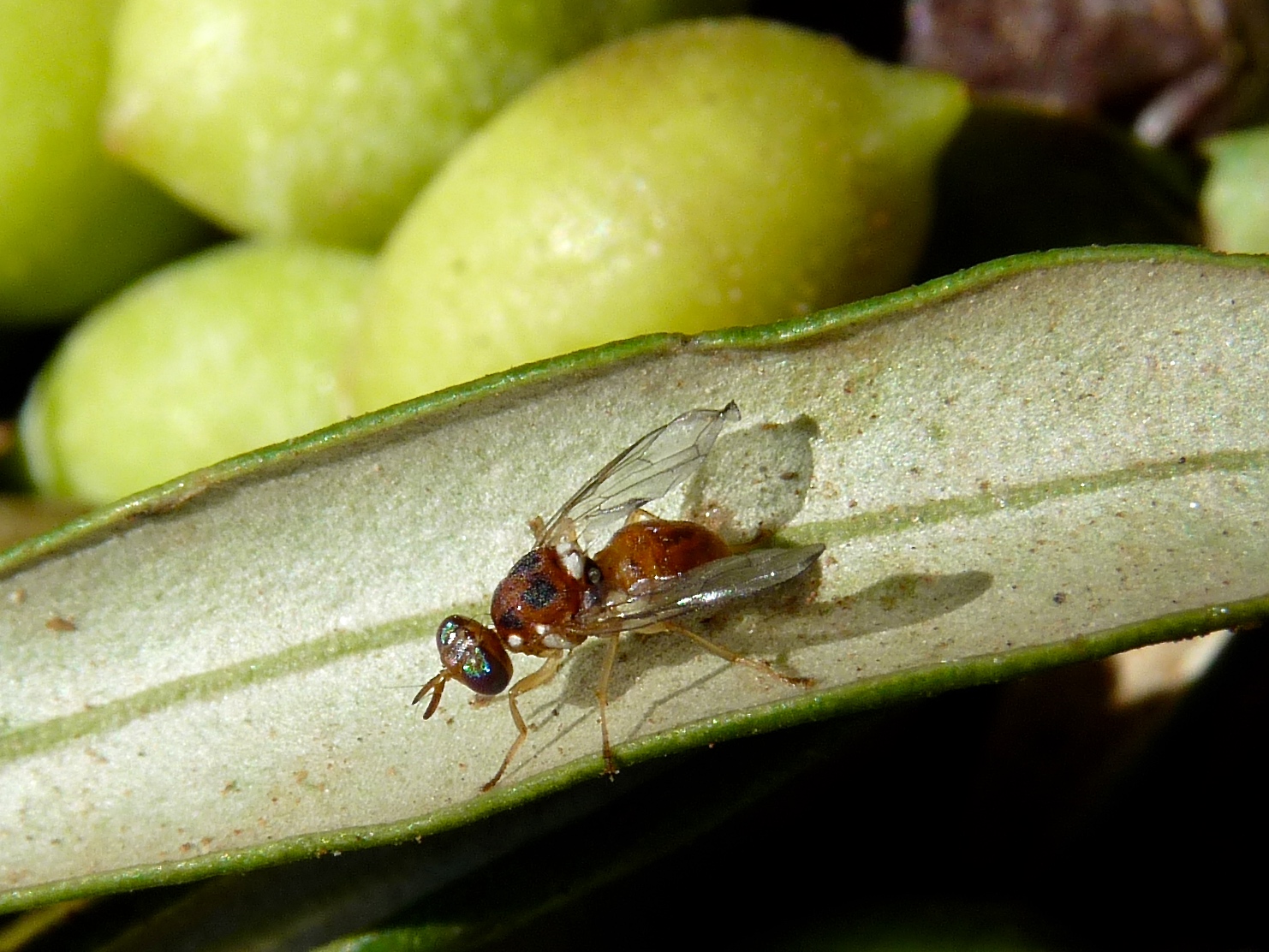
One of the most significant pests in the Mediterranean region is the Olive fruit fly, which lays its eggs in olives. Severe infestation greatly reduces the yield and quality of the oil. After years of large-scale spraying in many olive-growing areas, attempts are now being made to control the problem using pheromone traps and other less harmful methods.
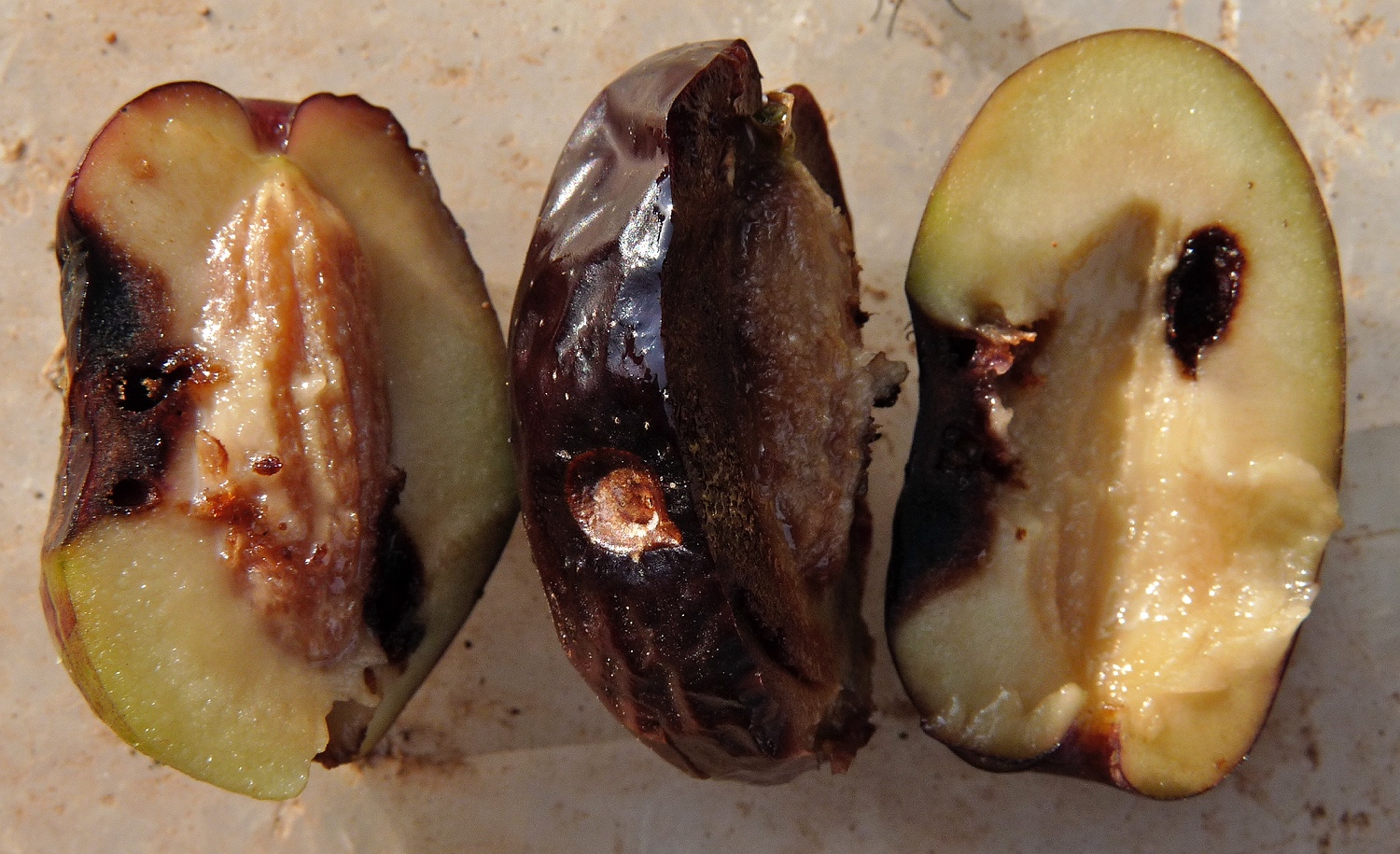
olives with Olive fruit fly larvae
On the other hand, the importance of insects as waste disposers in all ecosystems can hardly be overestimated. All dead organic material is decomposed by insects of various species and used as a food source. Equally important is the significance of countless insect species as pollinators of plants. Of great importance are also the species that feed on other insects or live on them as parasites, thus keeping their numbers under control; many species for example of parasitic wasps and ladybirds are used in biological pest control.
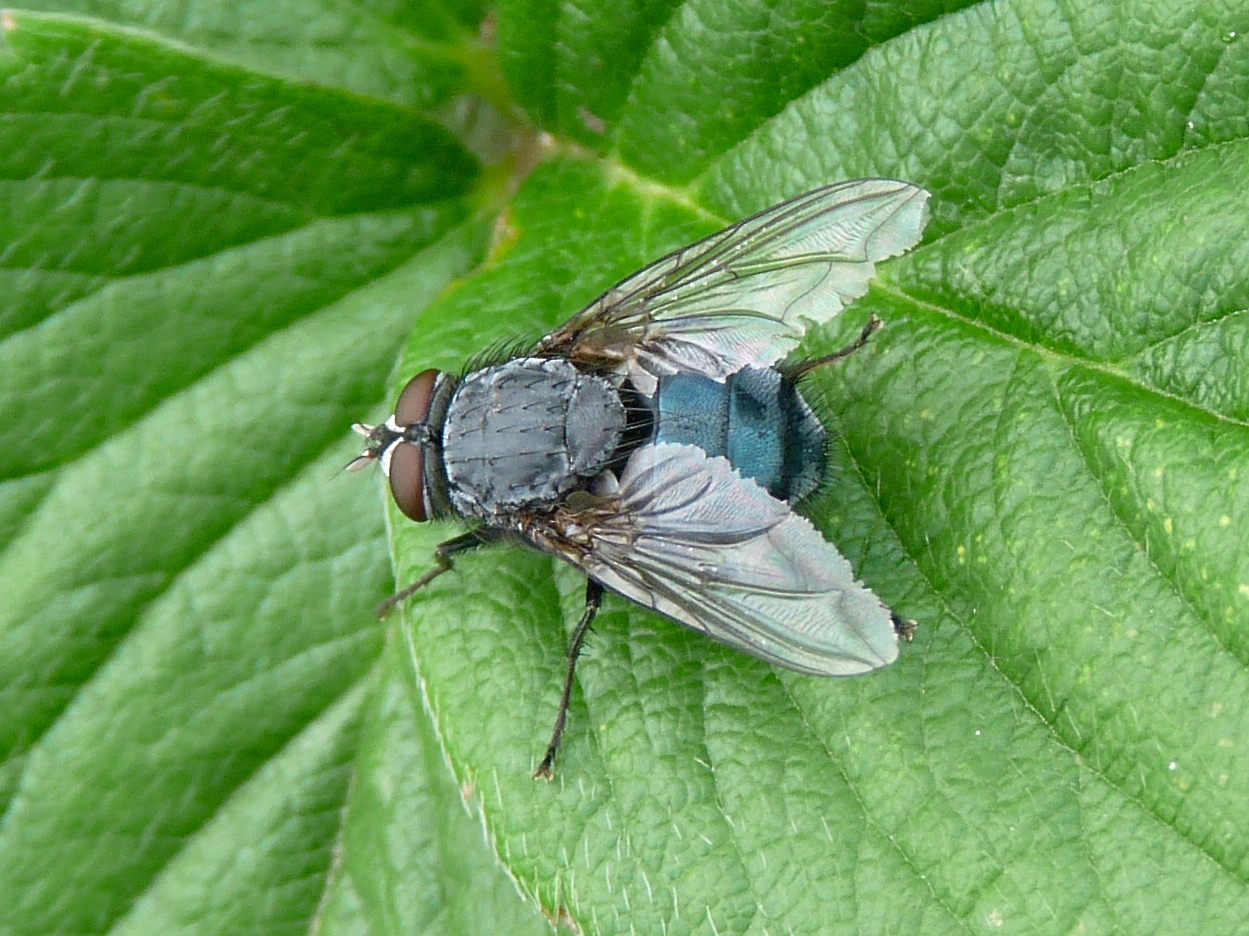
The larvae of the blowflies (here Calliphora vicina) feed on carrion and faeces and are therefore indispensable decomposers in our ecosystems.

Almost all flowers are pollinated by insects. The Hummingbird hawk moth has a particularly long proboscis for sucking the nectar with which the flowers attract insects.
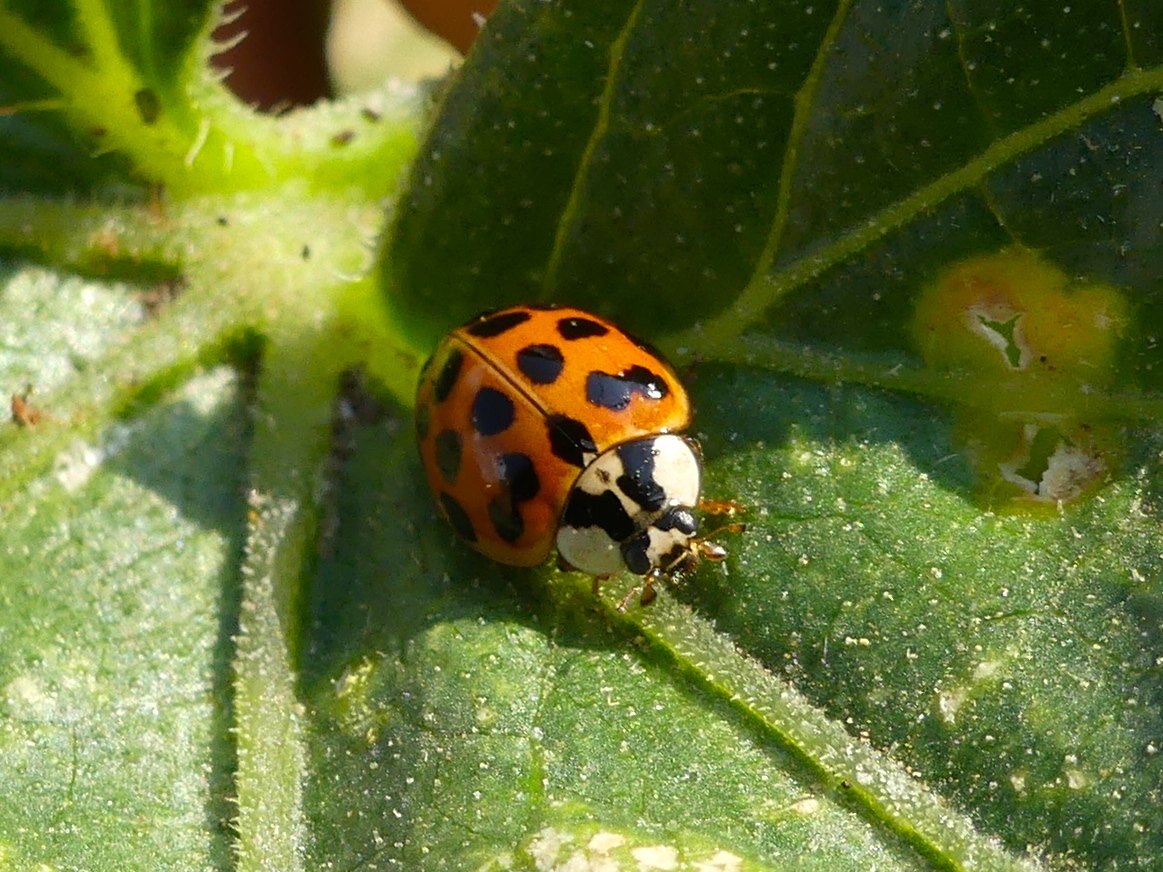
The Asian ladybird is an invasive species that has been introduced in many places for biological pest control. I found the Asian ladybird in our area for the first time in 2022.
And, of course, insects are an indispensable element of the food chain in all ecosystems, as countless other animal species feed on them. In many parts of the world, insects, and especially insect larvae, also play an important role as food for humans. When it comes to beneficial insects, species such as honeybees and silkworms should not be forgotten.

Many birds feed mainly or exclusively on insects, and even those that eat seeds or other plant parts as adults, feed their young with insects. This redstart has collected several caterpillars for its hatchlings (photo by Winfried Scharlau).
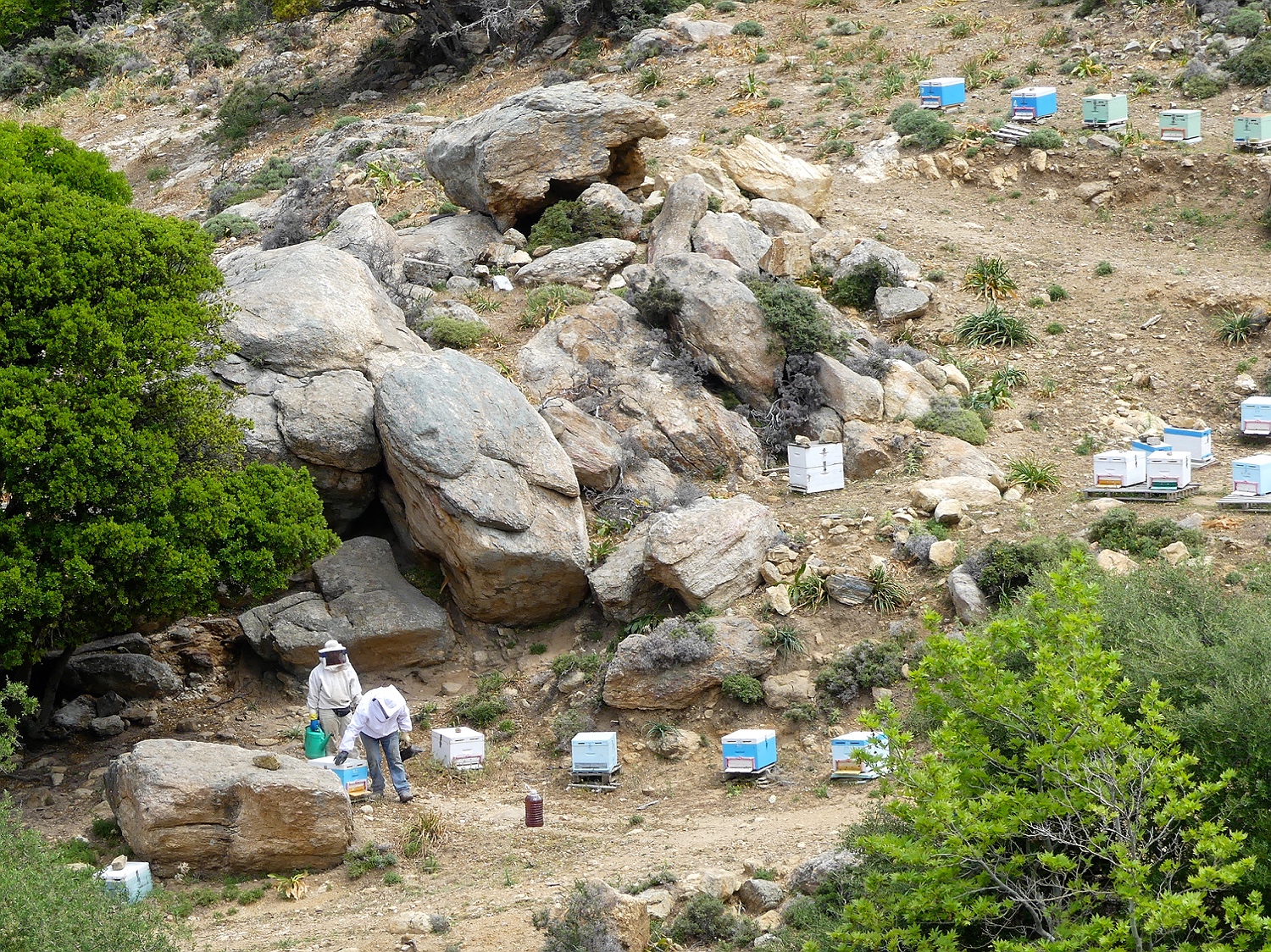
Naxos produces a lot of good honey, both heather honey and the particularly beloved thyme honey.
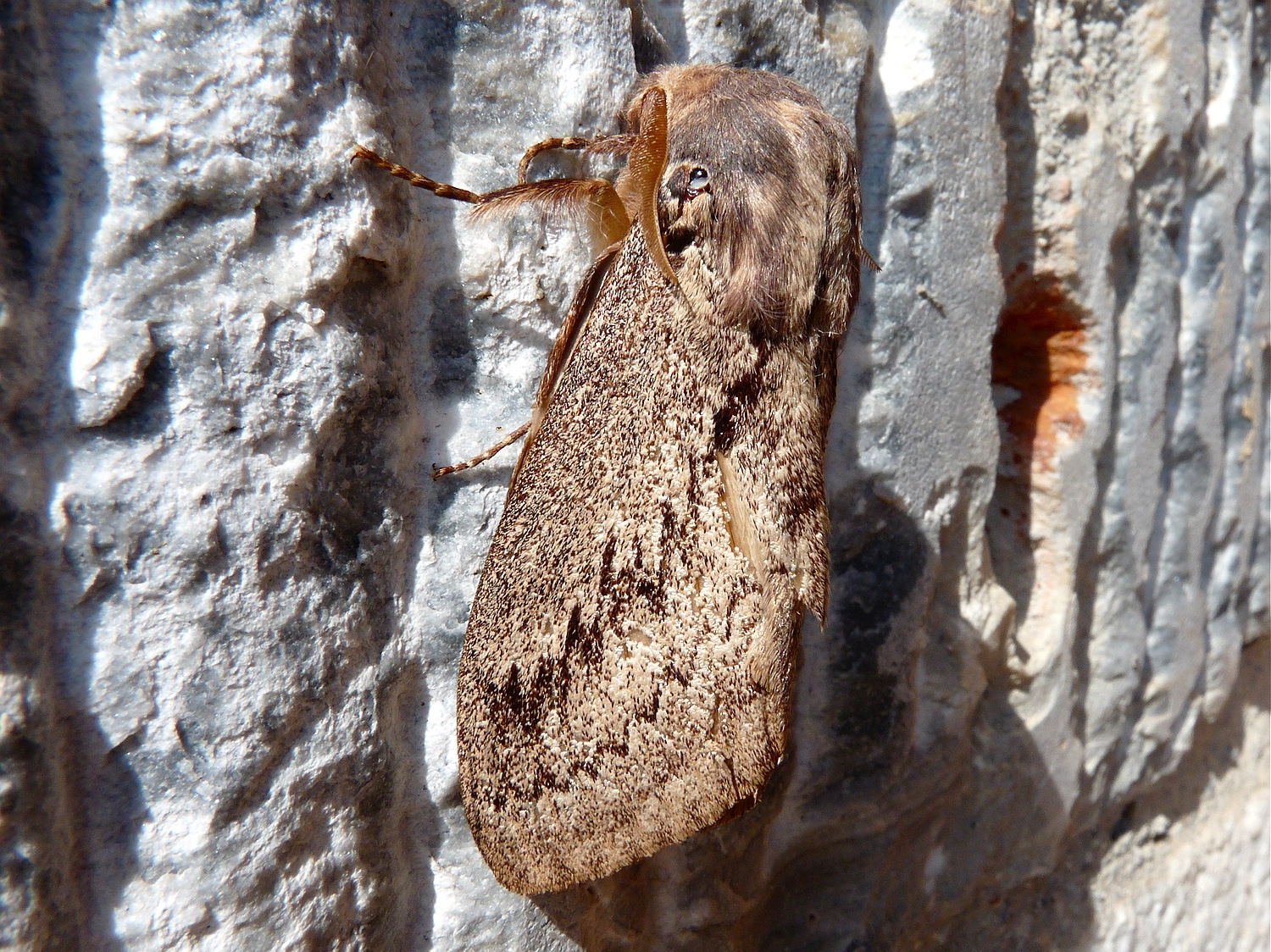
Silk produced from the cocoon of Pachypasa otus has been used since ancient times, especially on the island of Kos.
I present the different insect groups that occur on Naxos in the following articles:
- Beetles
- Dragonflies
- Neuroptera
- Snakeflies
- Butterflies
- Moths
- Bugs
- Cicadas
- Orthoptera
- The endemic Cave cricket of Naxos
- The Walking stick
- Praying mantisses
- Wasps
- The Golden digger wasp
- A spider wasp
- A black mud dauber wasp
- Bees
- Flies
- Hoverflies
- Bee flies
Photo galleries:
- Beetles
- Dragonflies and neuroptera
- Butterflies and moths
- Bugs
- Orthoptera, walking sticks, mantisses and cicadas
- Snakeflies, diptera (flies) and hymenoptera (wasps and bees)
See also: