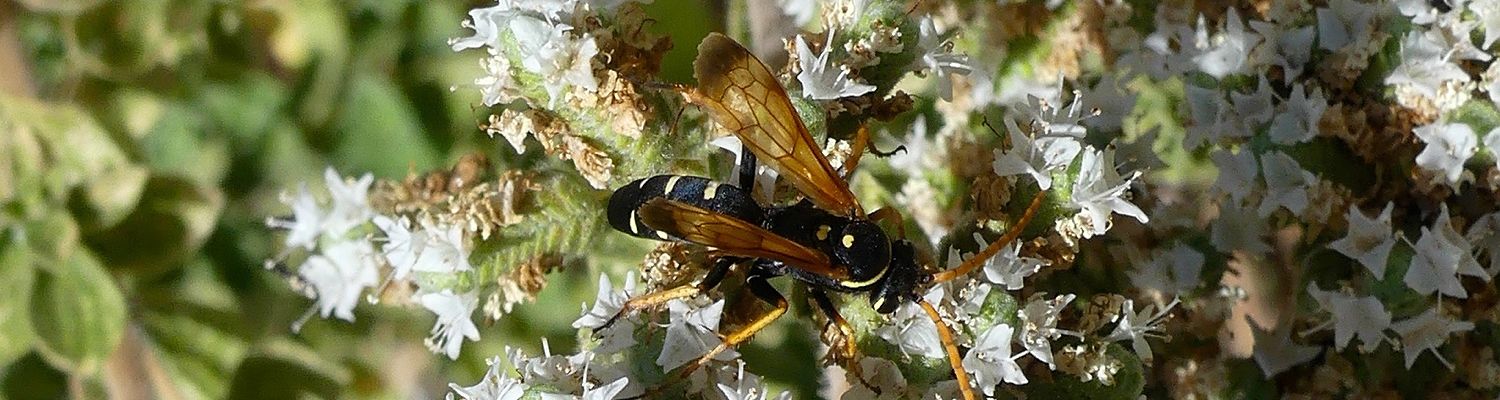
A Spider-wasp
In our garden, we can frequently observe an interesting species of spider wasp: Batozonellus lacerticida (or Parabatozonus lacerticida). All spider wasp species gather spiders as food for their larvae. Our spider wasp catches and stuns large orb-building spiders and places them in its underground nests, dug into the soil, as a food supply for its offspring.
The reason we had so many spider wasps in the garden this year was probably because there were also a great many large spiders that had spun their webs between the trees. Hard to believe but true: within a few weeks, if not days, the spider wasps had caught all the large spiders from our garden. I hadn’t expected them to be so effective! Once there were no more spiders, the wasps disappeared too. It took some effort for me to still find one to take a few pictures.
Batozonellus lacerticida, Pallas
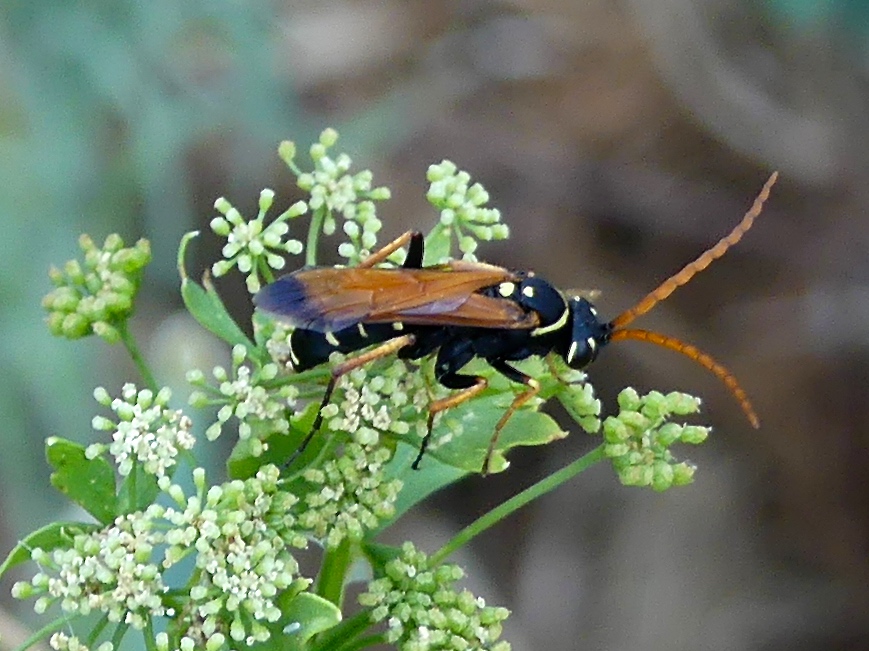
The spider wasp species Batozonellus lacerticida, which grows to about 2 cm in length, can be observed quite regularly on Naxos in early summer. It catches large orb-weaving spiders as food for its larvae, in our area primarily Araneus angulatus.
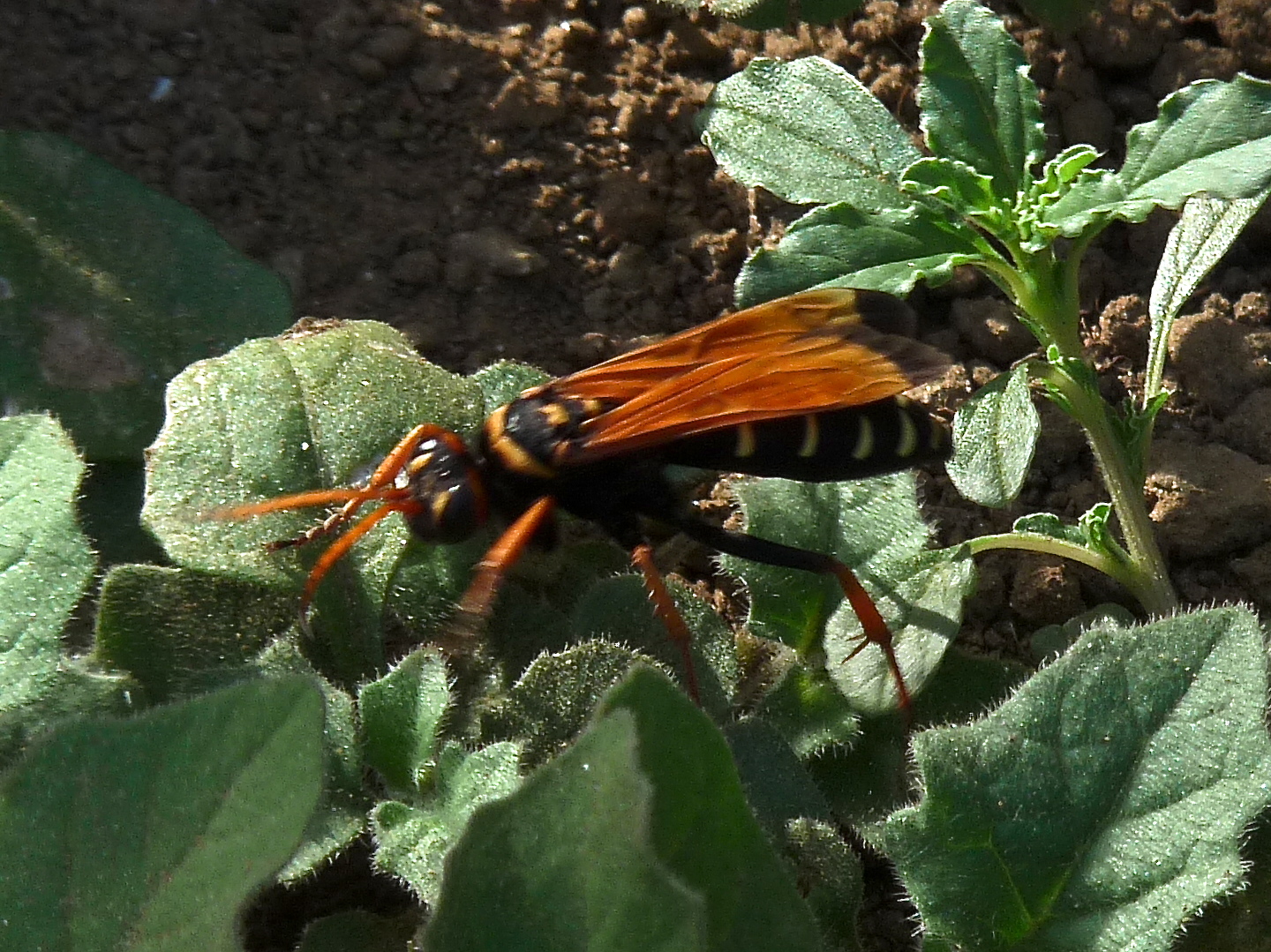
One of the difficulties in photographing spider wasps is that they are very quick and restless, and rarely sit still.
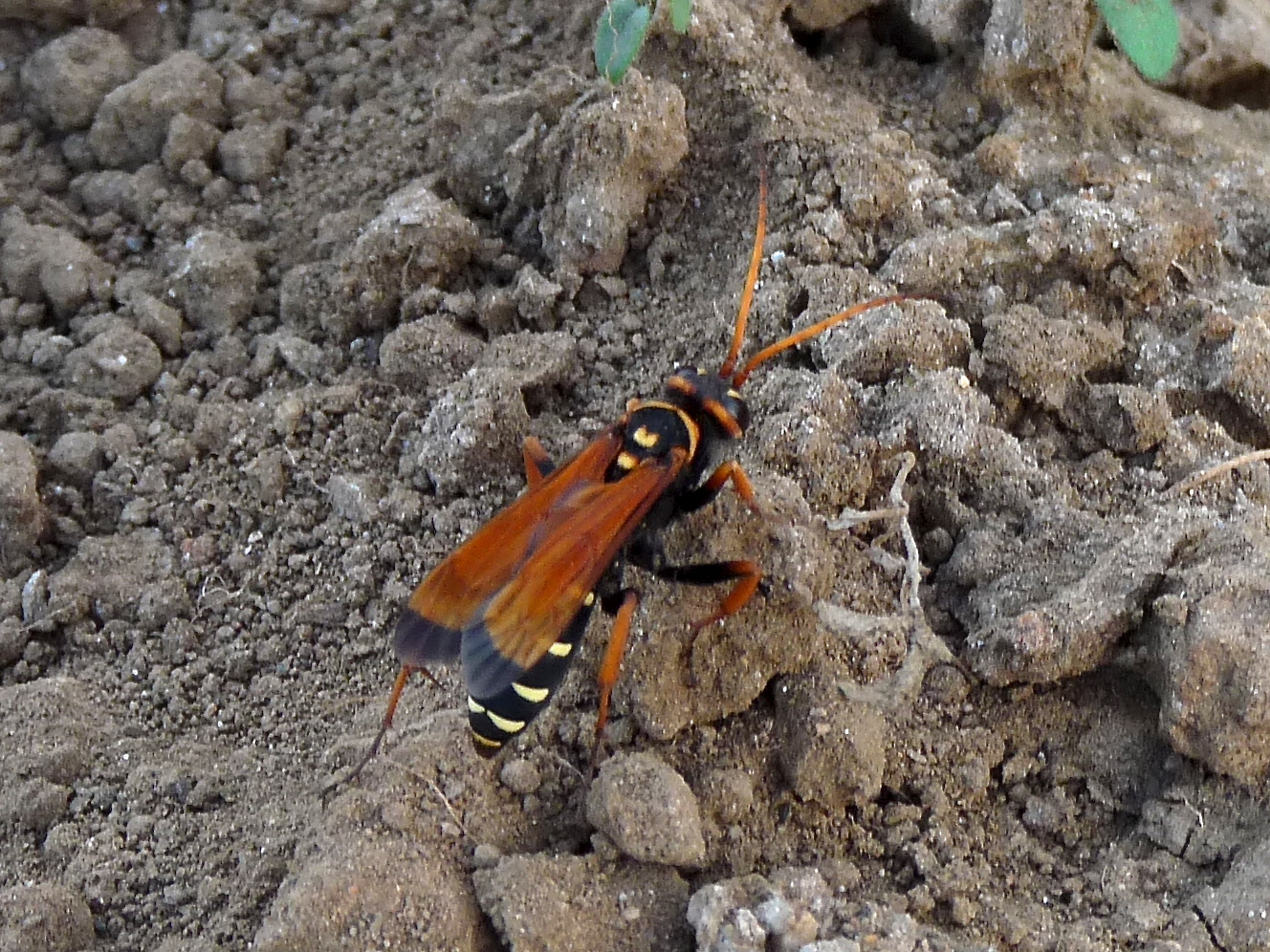
The species with the complicated name Batozonellus lacerticida can be recognised by its colouring: it has orange-red wings with brown tips and antennae and legs of the same colour, whilst the body is black with narrow yellow stripes on the segments.
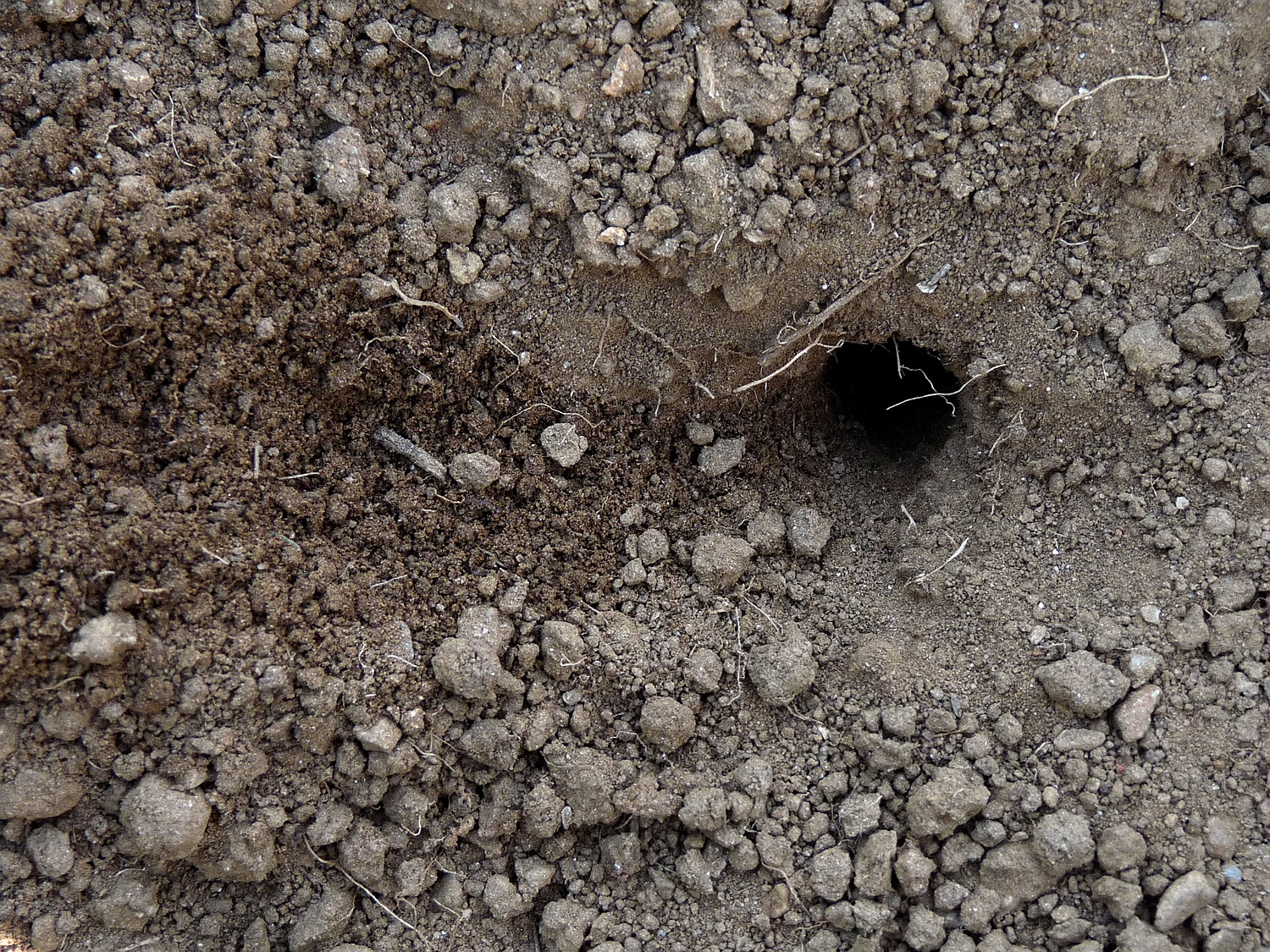
Batozonellus lacerticida builds underground nests in which it stores its prey as food for the larvae.
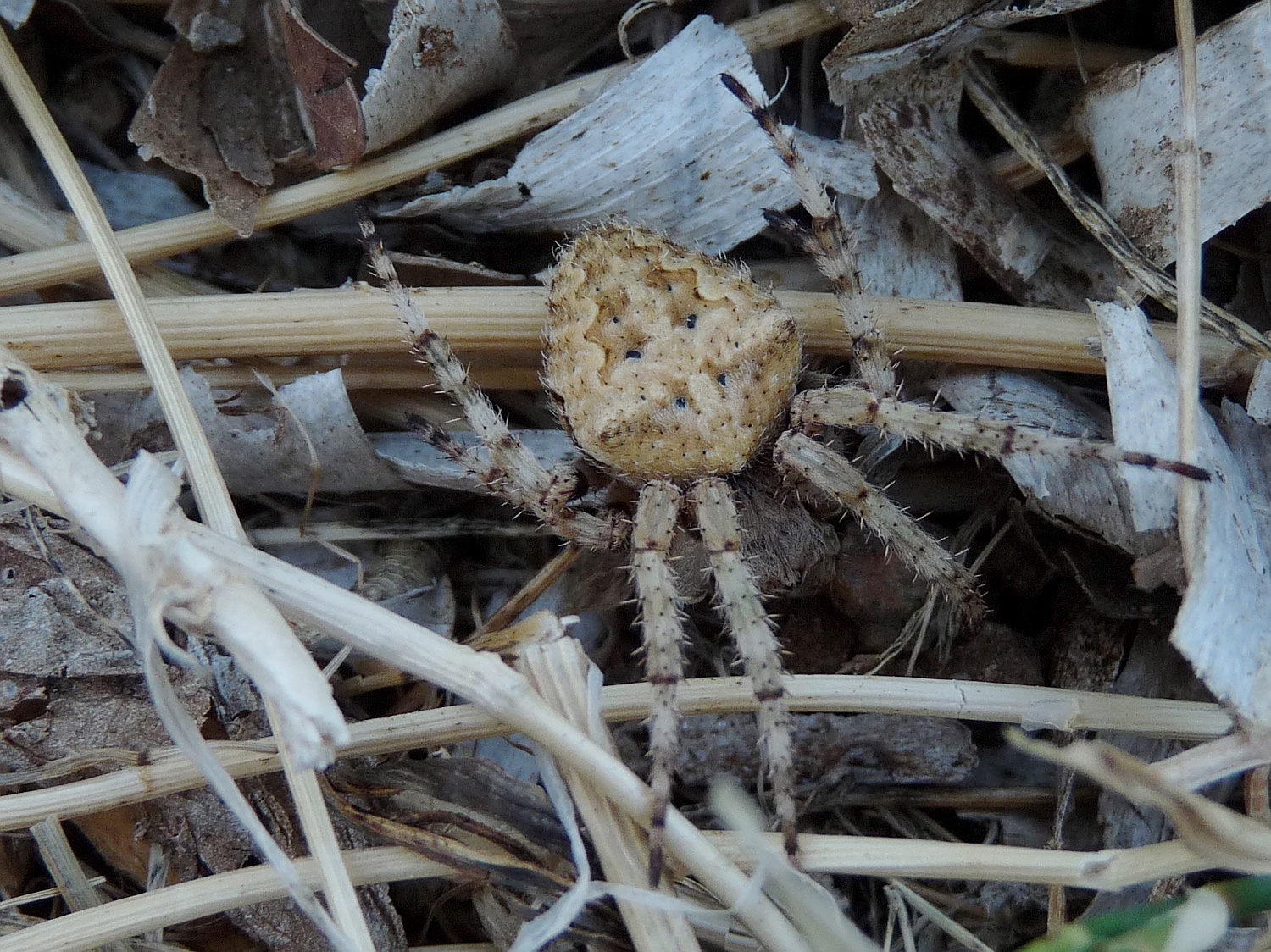
And here the prey: a large orb-building spider, Araneus angulatus.
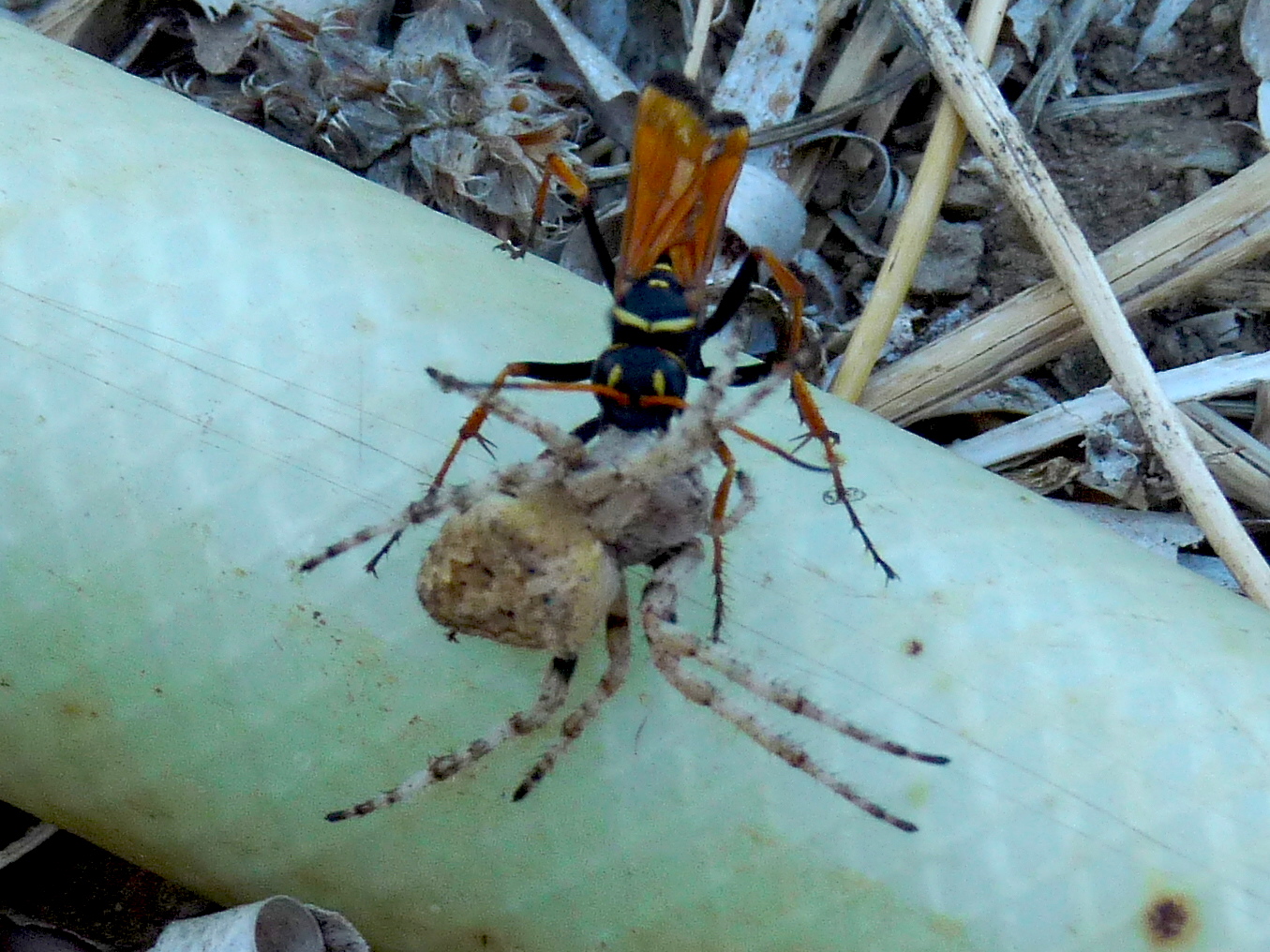
The spider wasp drags the spider on foot to the nest, as the spider is too large to carry in flight. In spite of its burden, the spider wasp runs so fast that it was almost impossible to take a picture. Only when it had to climb over the garden hose did it slow down enough that I managed a shot.
back:
see also: