
The Black-and-yellow mud dauber wasp
Many species of wasps go to great lengths in taking care of their larvae by building elaborate nests which they provide with food, usually live but stunned animals, primarily other insects or spiders. Quite a few wasp species build their nests from clay. The dauber wasps of the genus Sceliphron construct clay nests, which they attach to walls in places sheltered from the rain, often inside houses or garages.
Black-and-yellow mud dauber wasp, Sceliphron destillatorium, Illiger
On Naxos, a black-and-yellow mud dauber wasp species called Sceliphron destillatorium is quite common. It builds its large nests in places sheltered from the rain, such as door frames, garages, etc.; it also likes to enter houses that are usually left open, where it attaches its nest to the walls behind a piece of furniture or a picture, or hangs it under the roof.
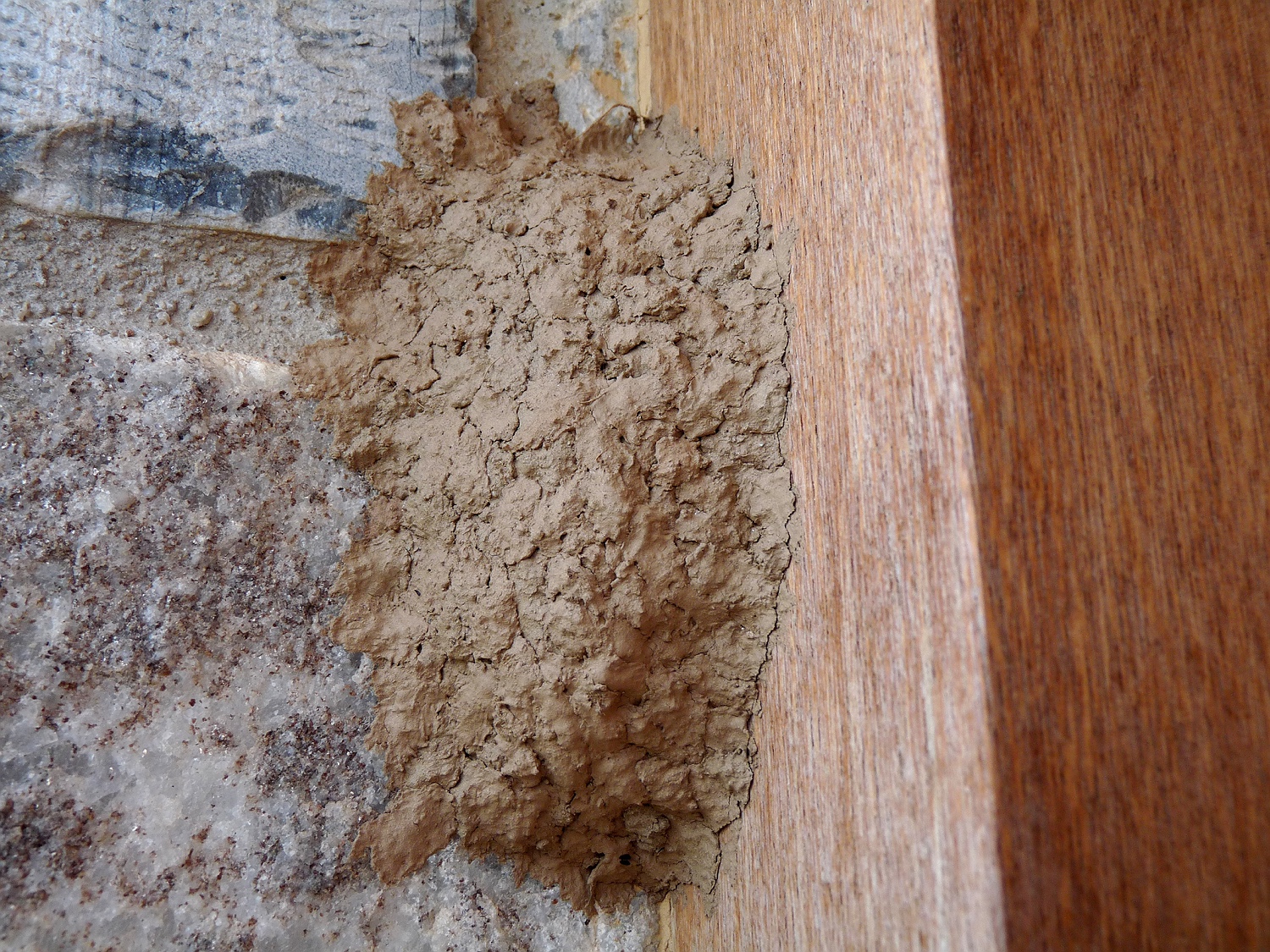
Black-and-yellow mud dauber wasps like to attach their clay nests to door frames or the ceilings of open buildings. Here you can see the finished nest, which is covered with a layer of clay.
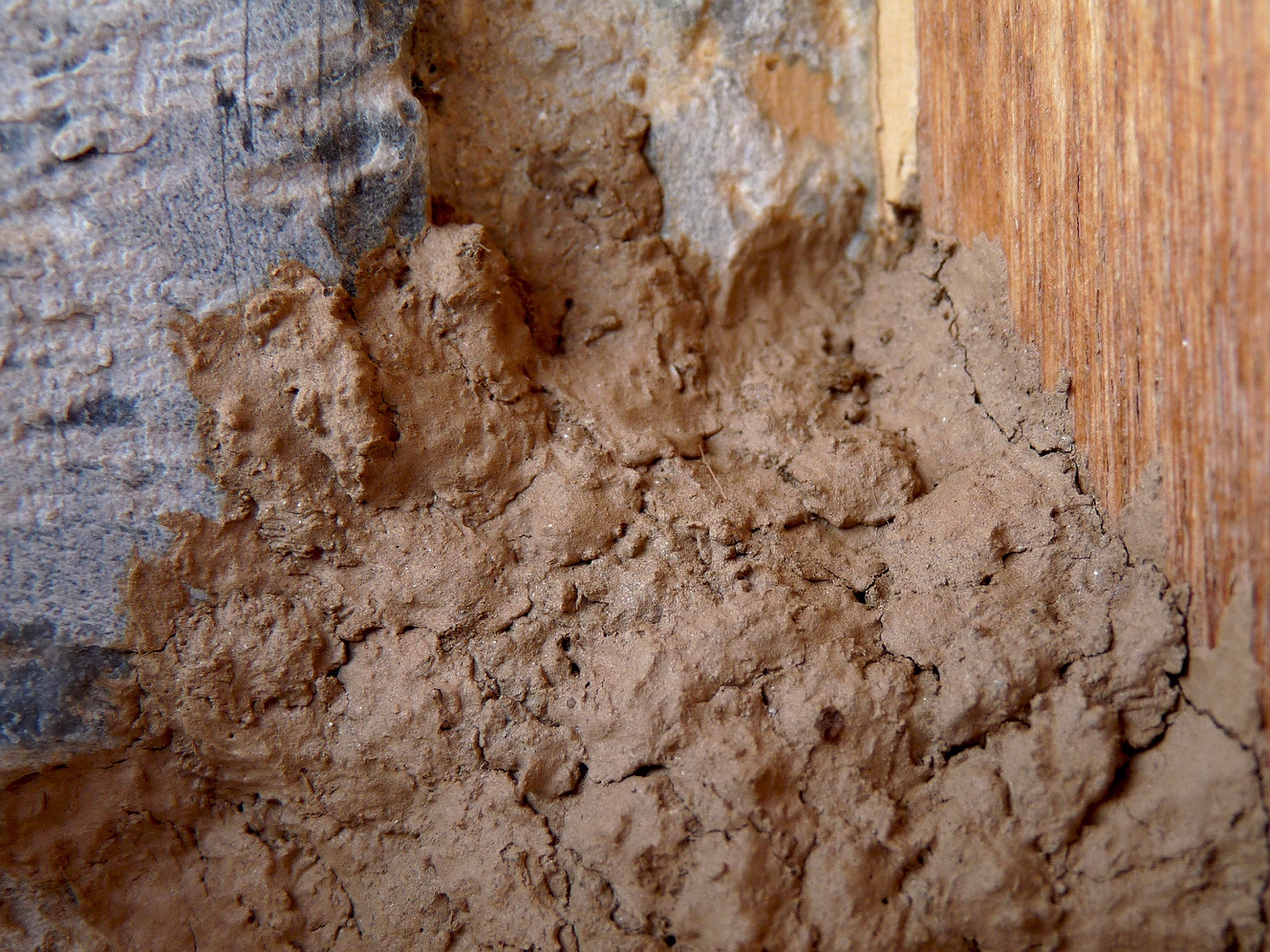
You can see that this outer layer is made up of small portions of clay, each of the size that the wasp can carry.
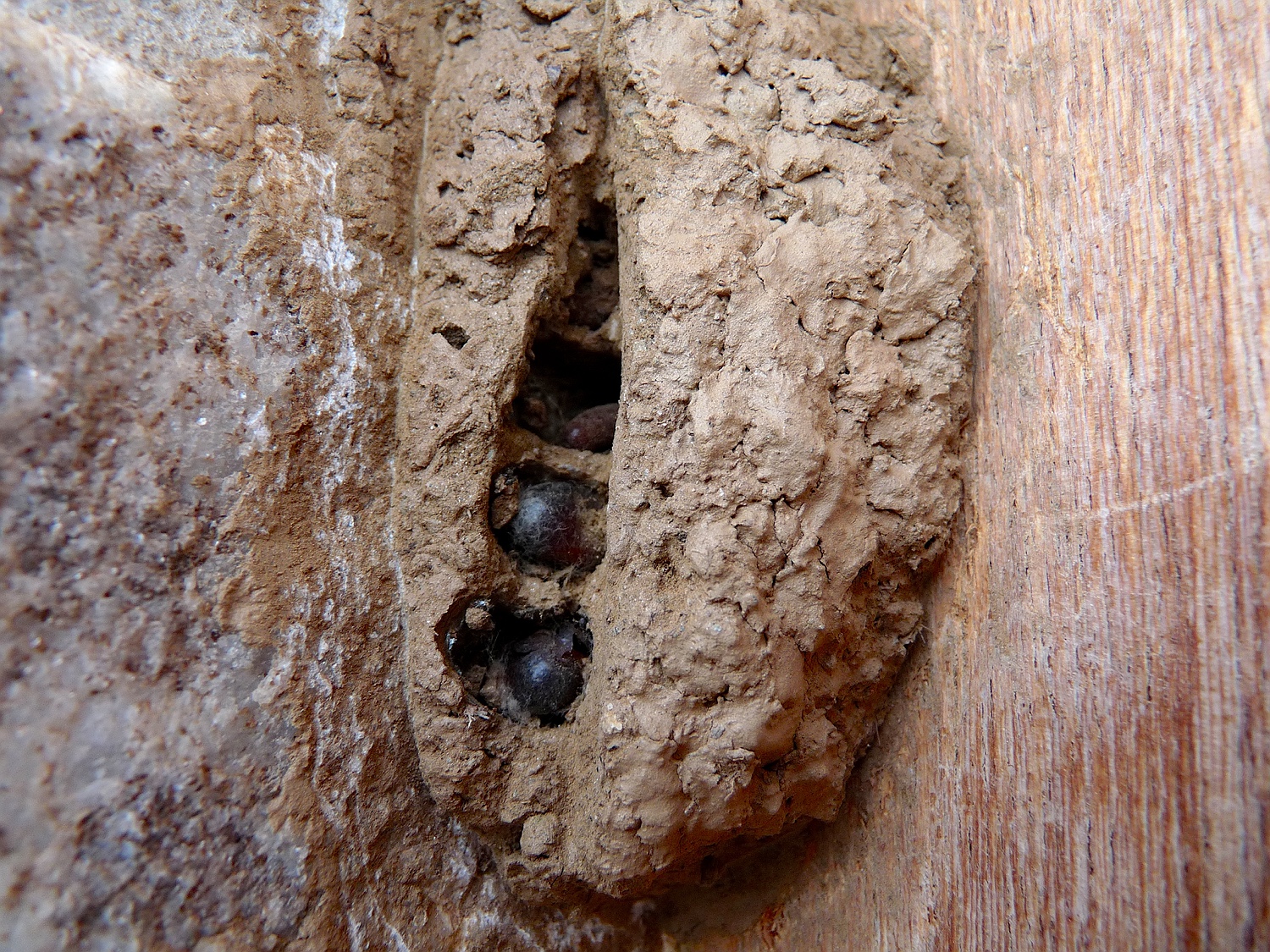
Inside the nest (which we had to remove in order to work on the door frame), several brood cells are visible.
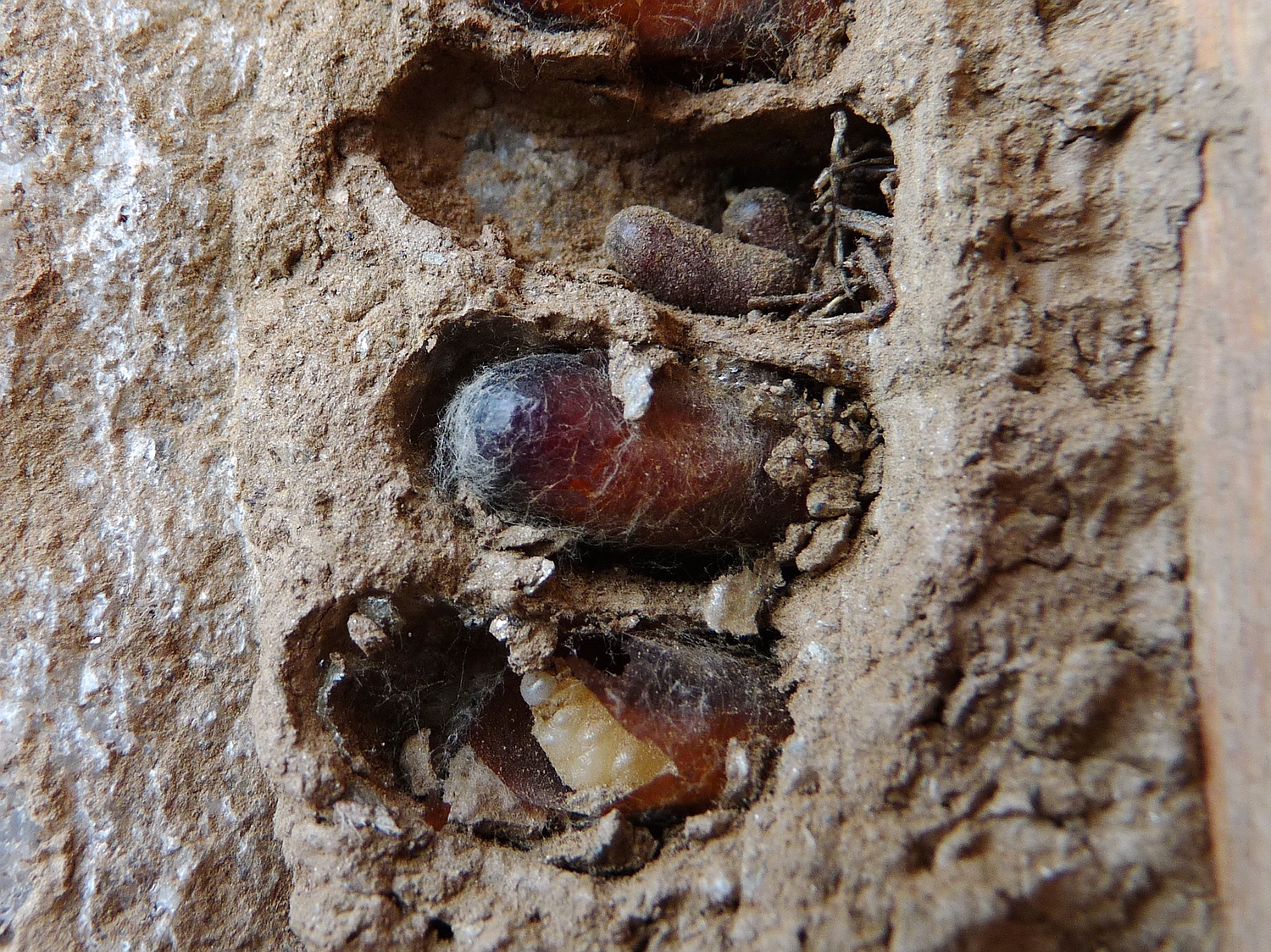
Here you can see a burst pupa with the wasp inside. In the topmost chamber, where no wasp has developed, you can see the spider placed inside as food for the larva.
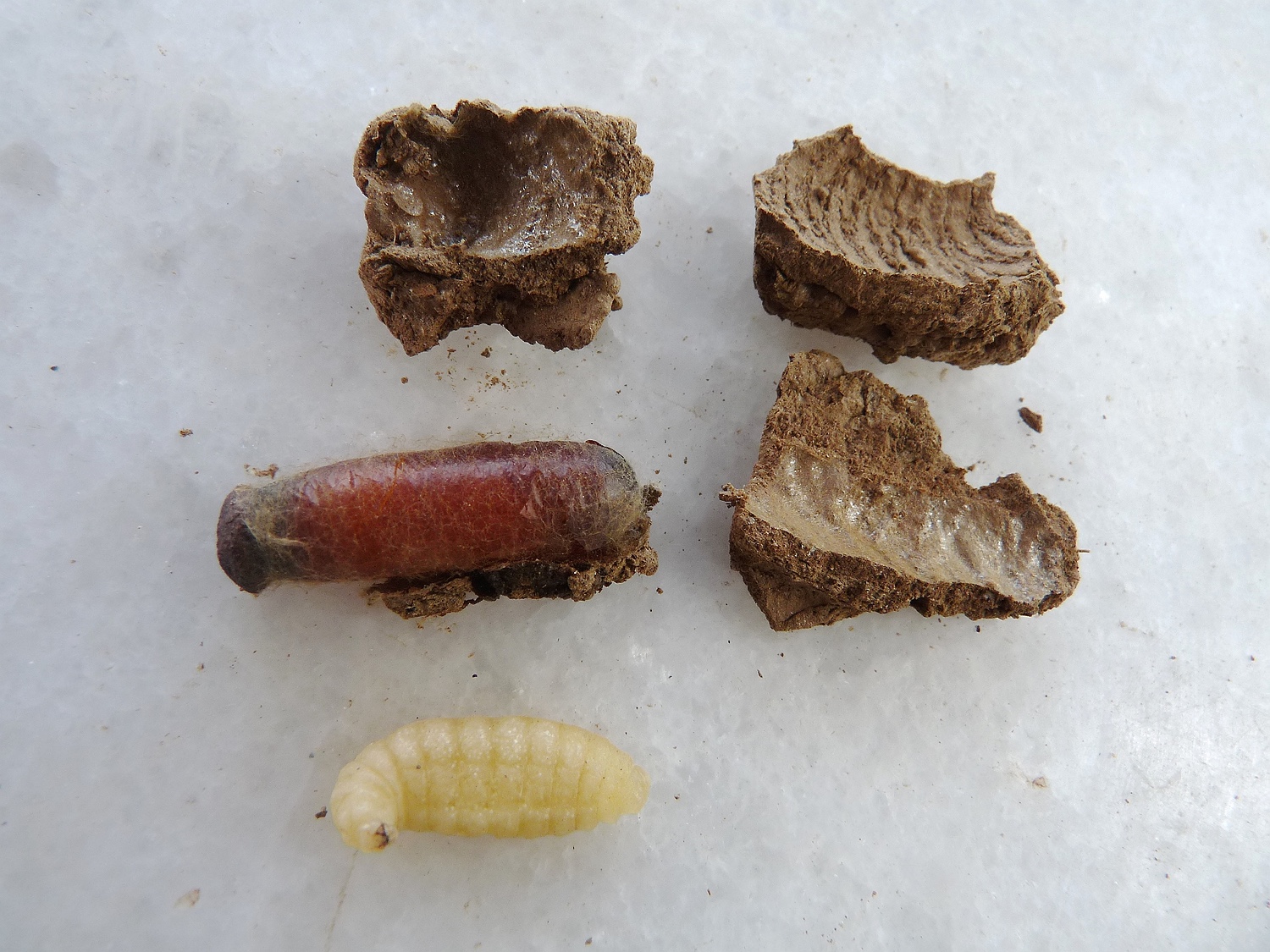
parts of the brood chambers made of carefully smoothed clay, a maggot and a pupa in its cocoon
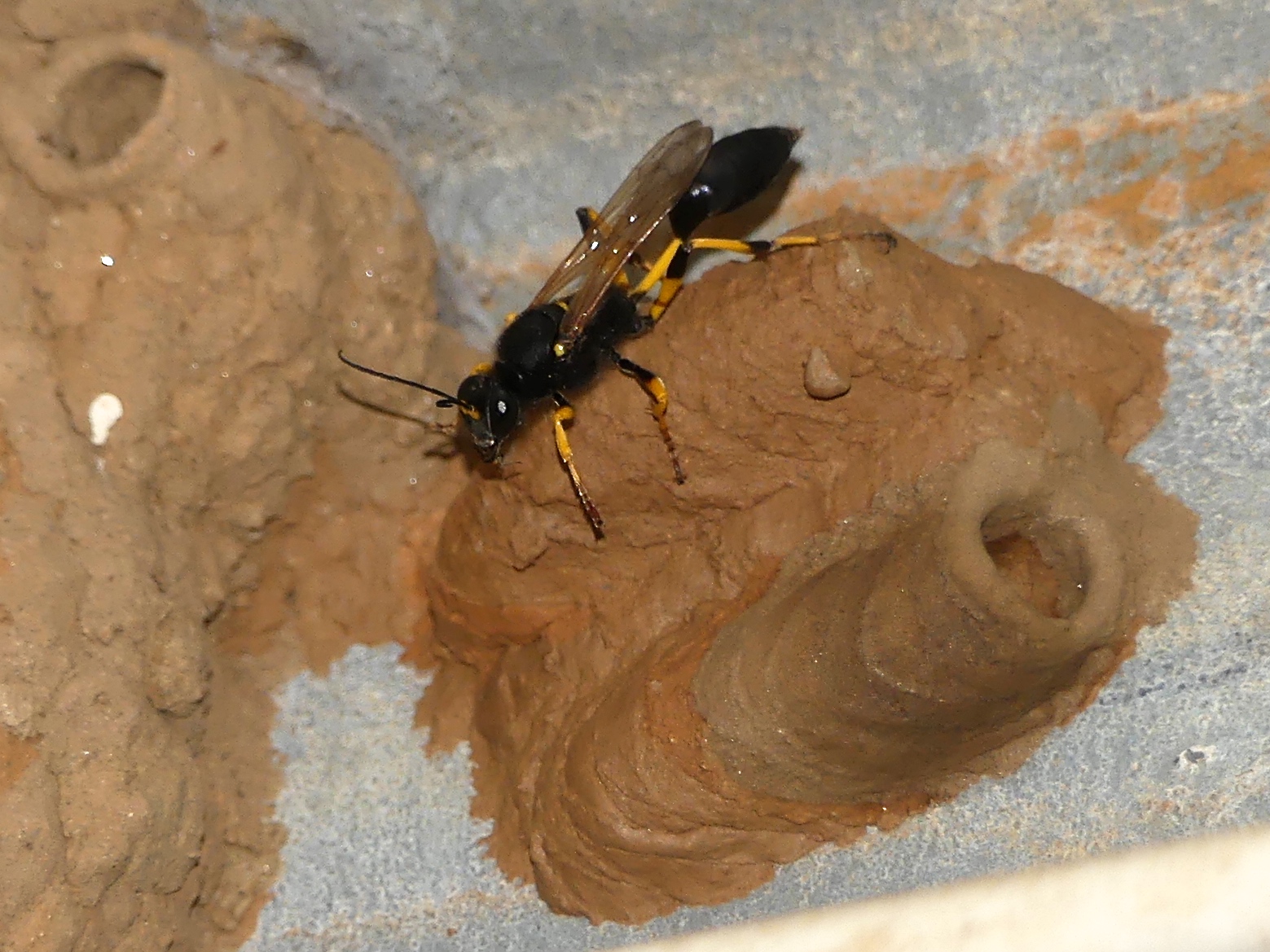
The black-and-yellow mud dauber wasp has long black and yellow legs and an extremely thin, yellow petiolus, the thin “stalk” of the abdomen. Here a wasp on its nest.
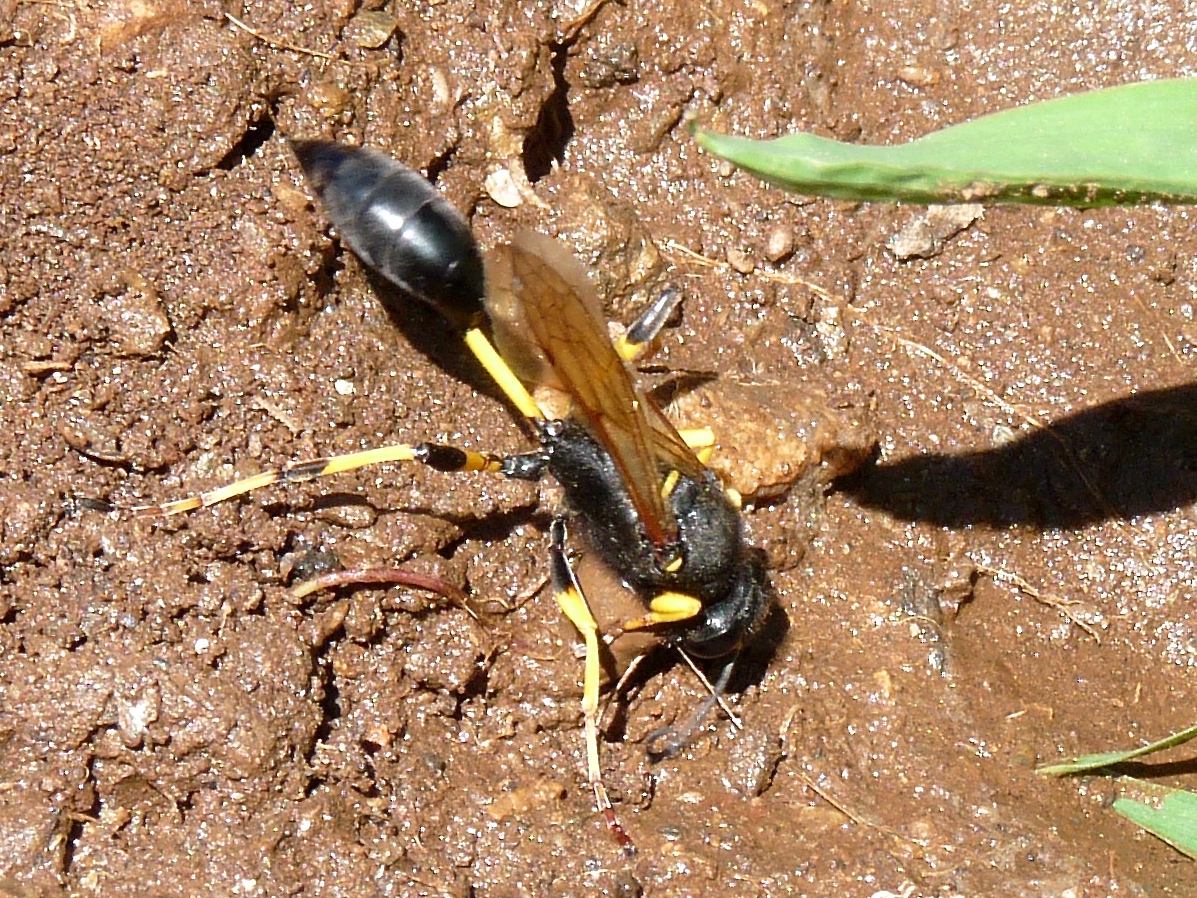
The black-and-yellow mud dauber wasp collects the building material for its nest in the garden, in beds with freshly watered soil. First, it carefully tests the soil to find places where it has exactly the right moisture. Once it has found a suitable spot, it begins to scrape up the damp soil with its front legs. It then shapes it into a round ball and carries it to its nest. If you look closely, you can see in the photo the ball of clay that the wasp is turning and shaping with its front legs and with the help of its curled antennae.
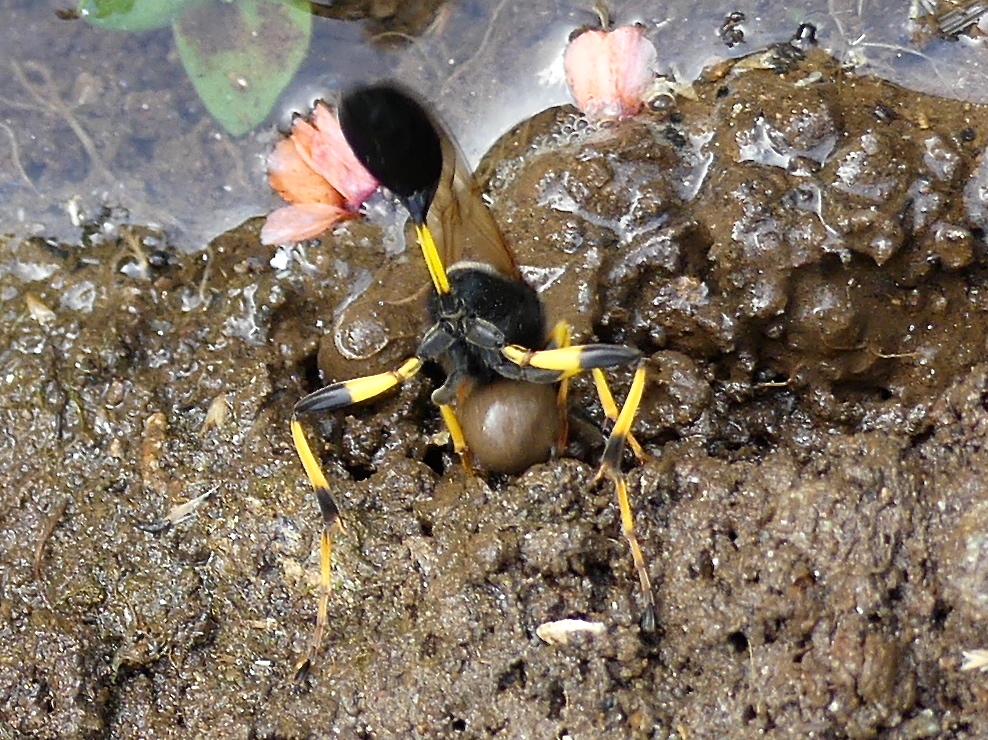
Here you can see the clay ball between the wasp’s legs just before it carries it away.
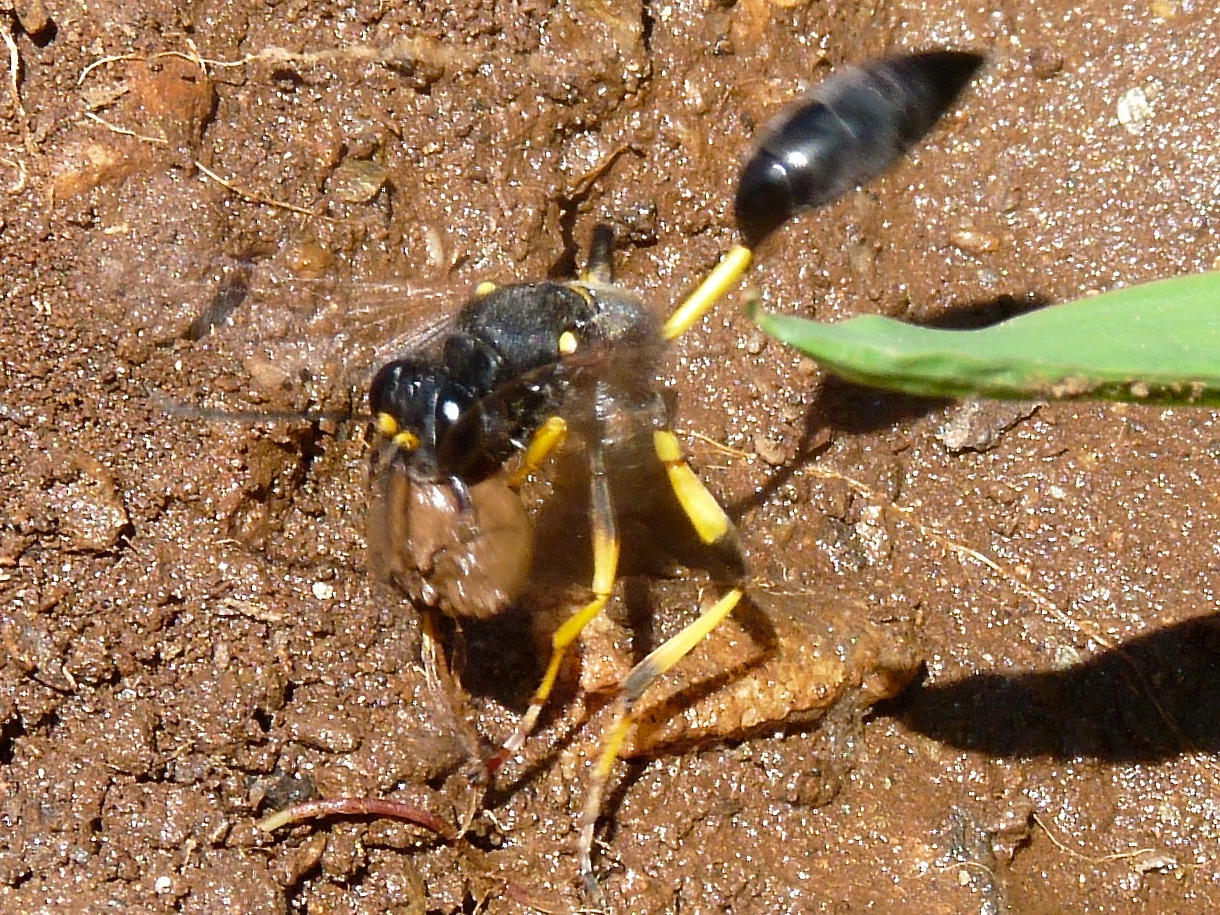
taking off
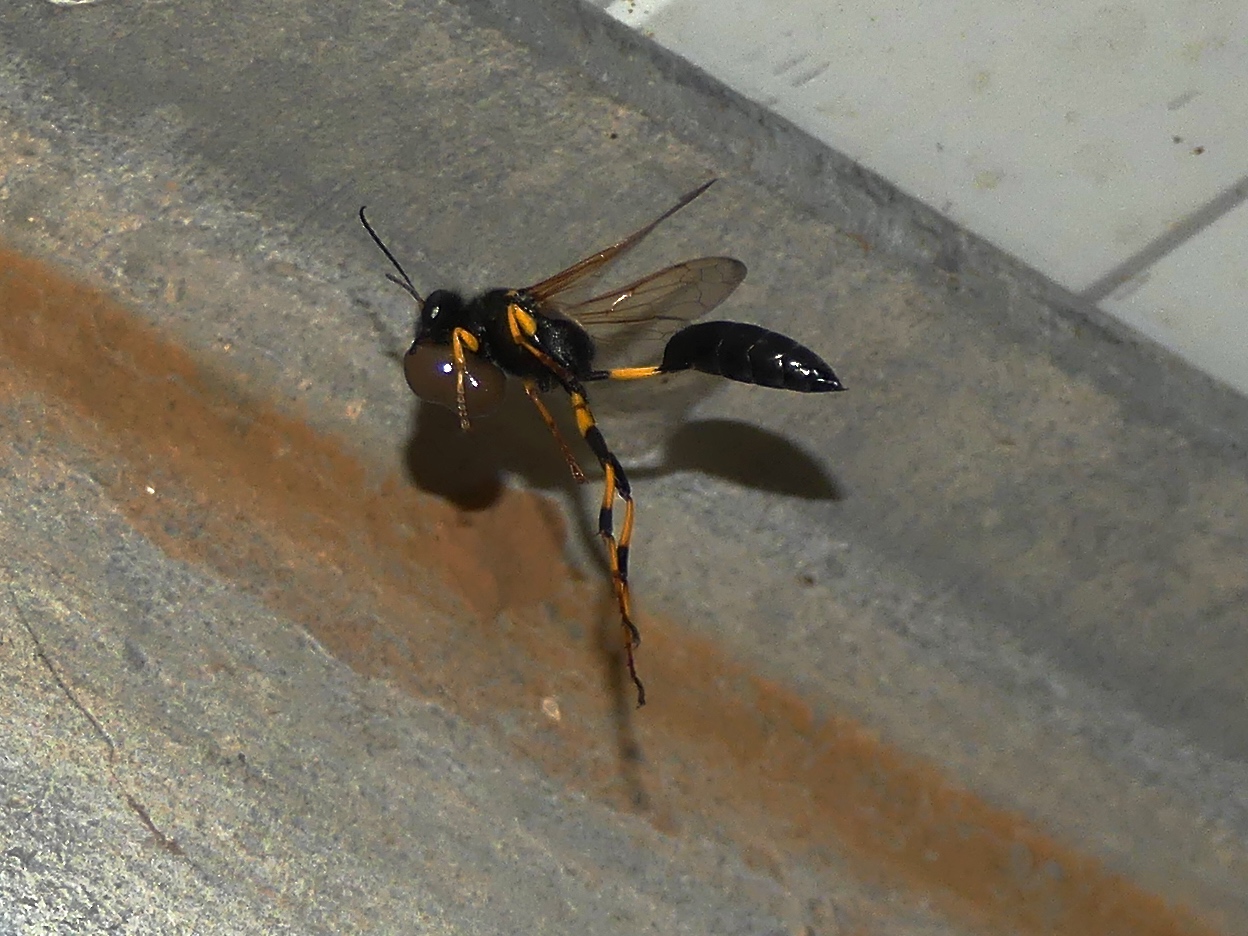
Here the wasp arrives at the nest it is constructing in our garage with its clay ball that it carries with the forelegs, pressed to the body.
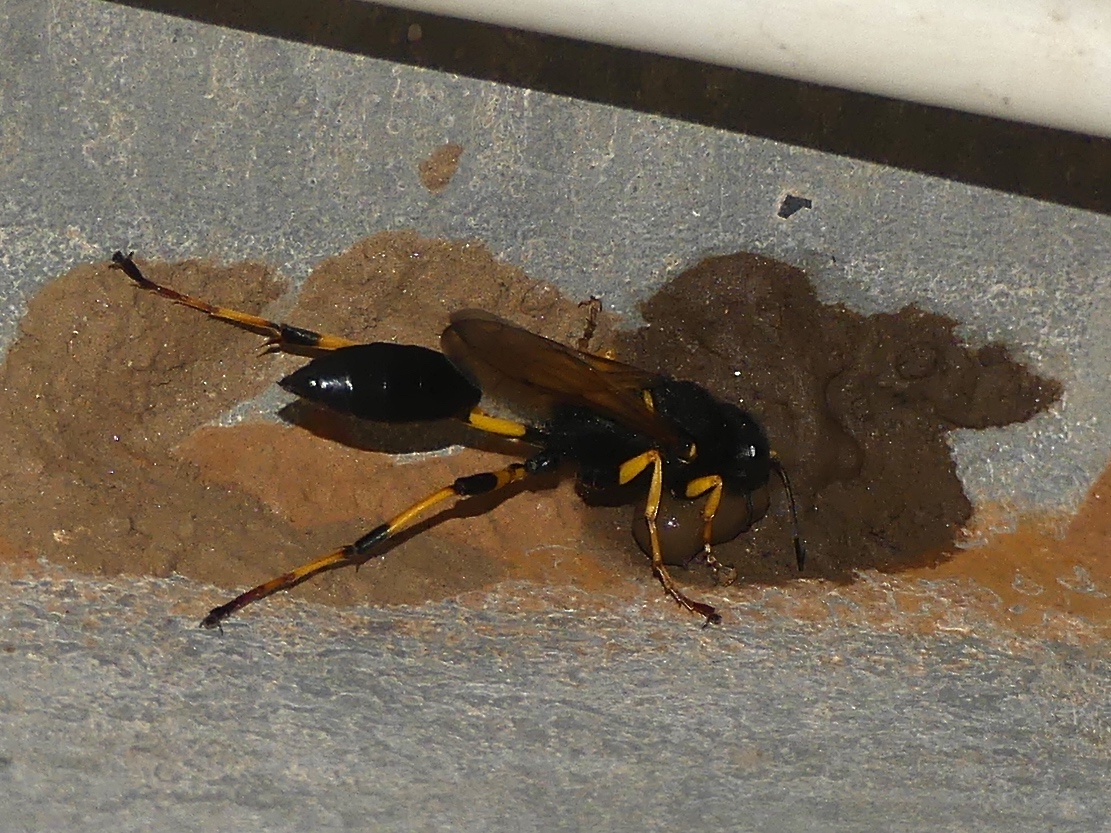
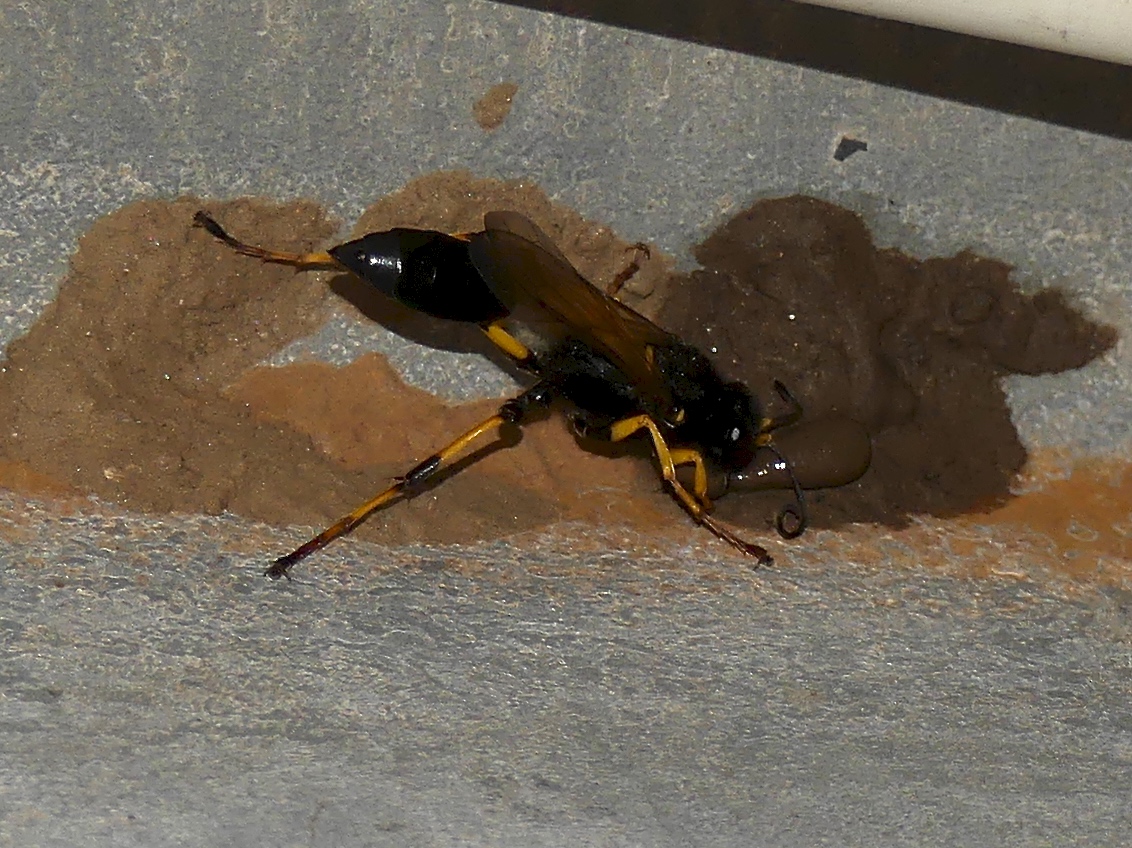
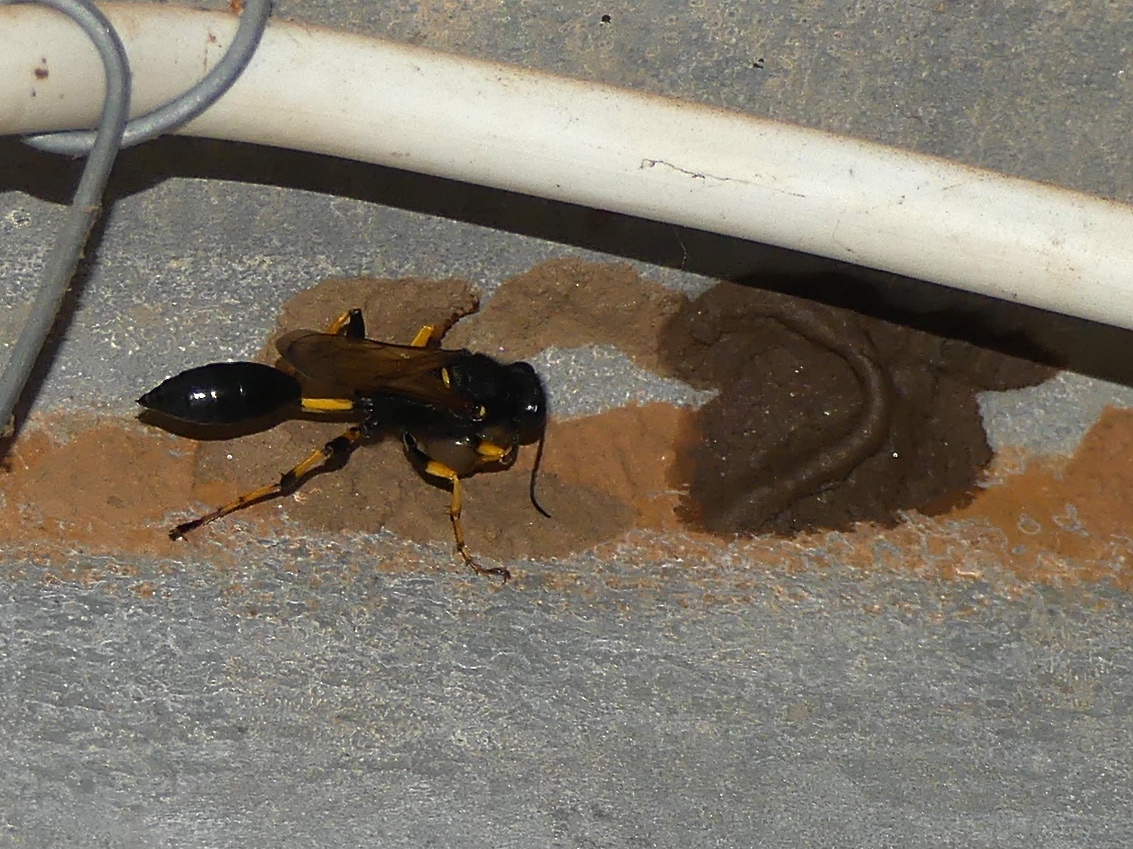
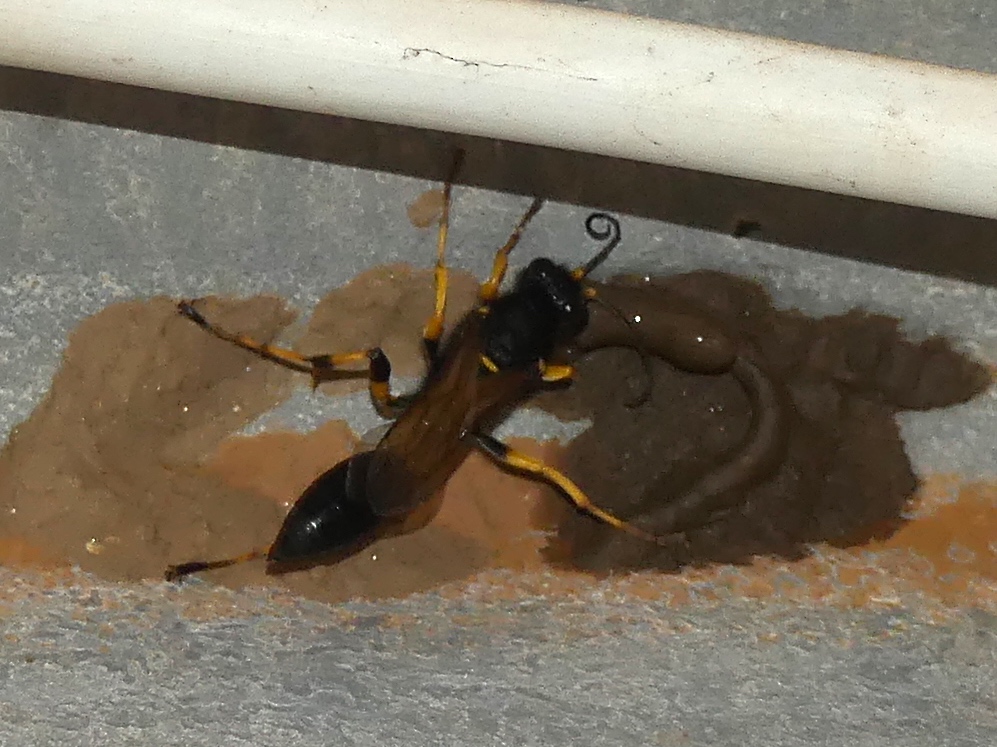
Bit by bit, the brood cell is formed.
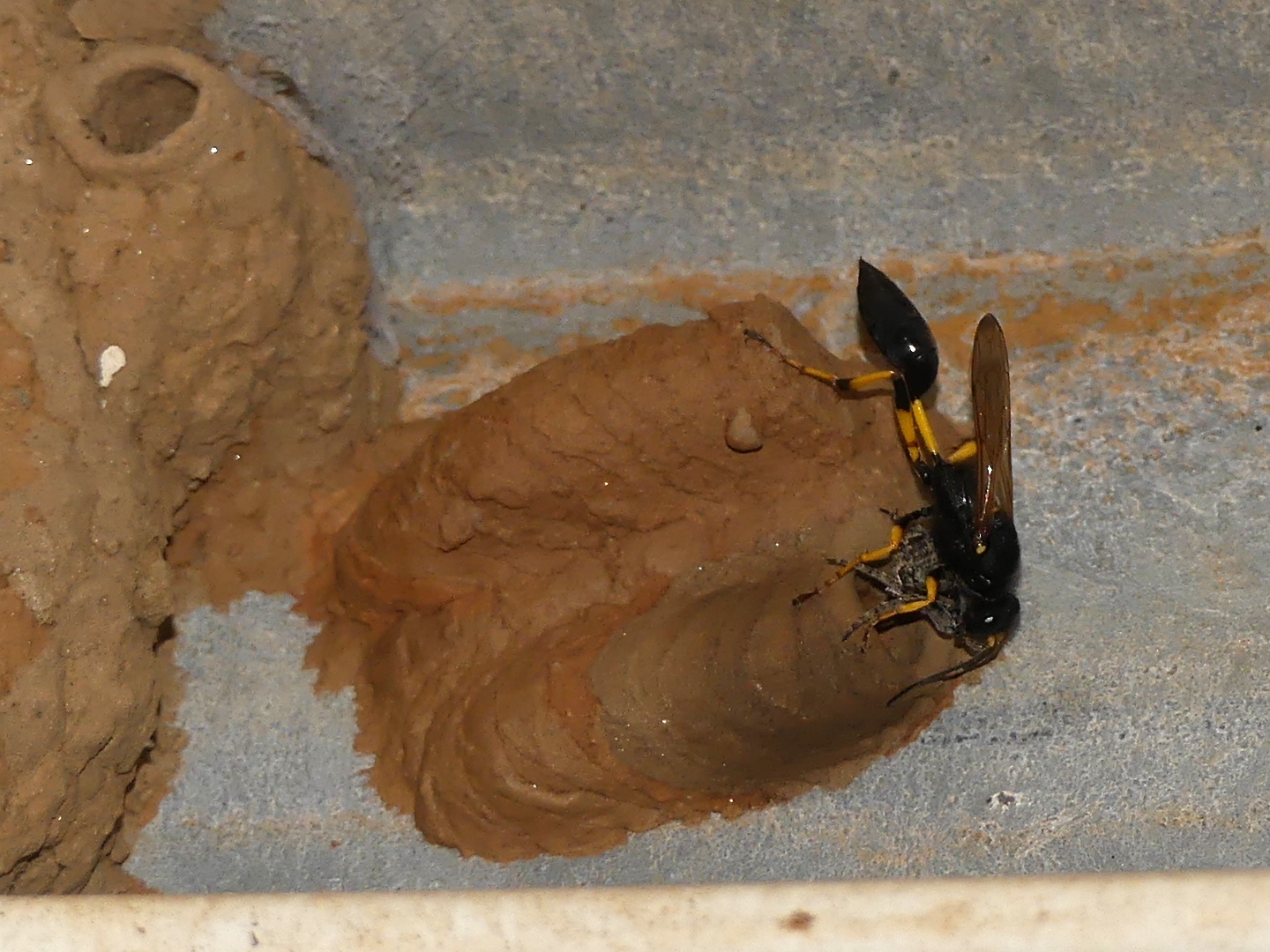
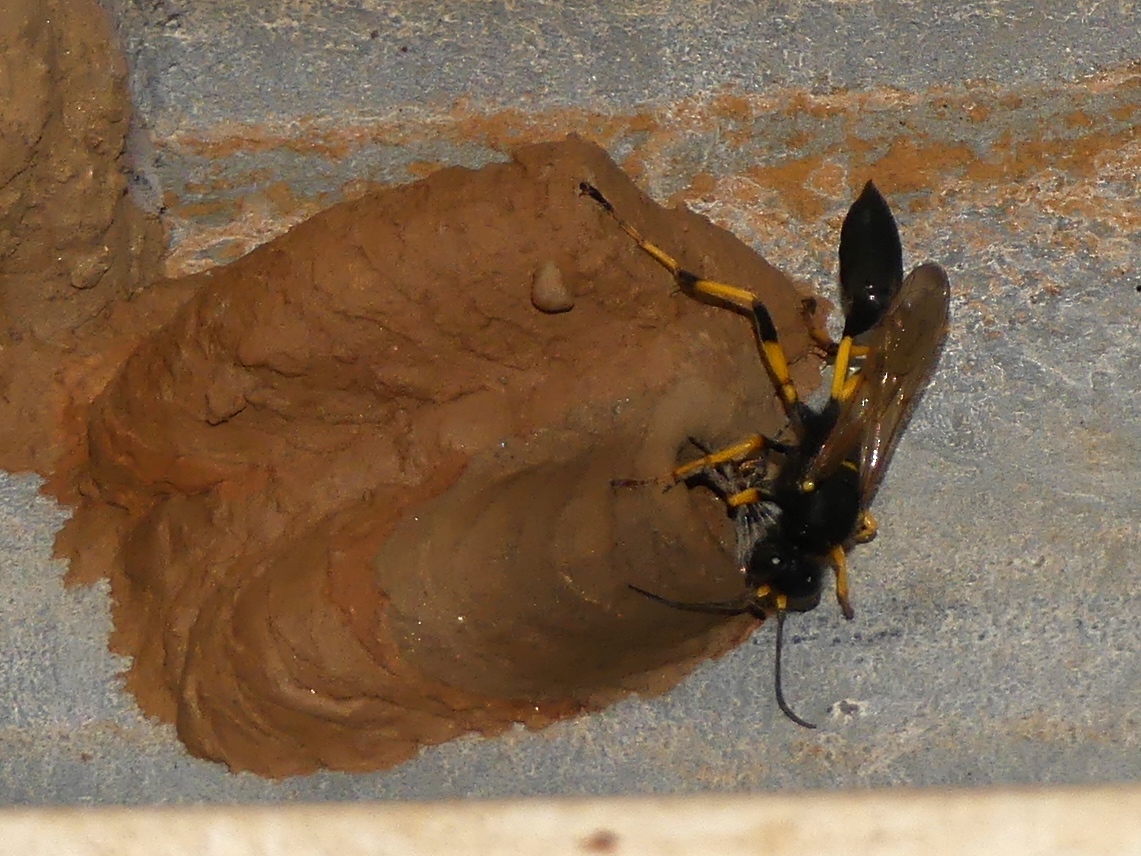
Now the brood cell is ready, and the wasp brings a spider as food supply. As it can only reach its nests by flying, the spiders must be small enough for the wasp to carry it in flight.
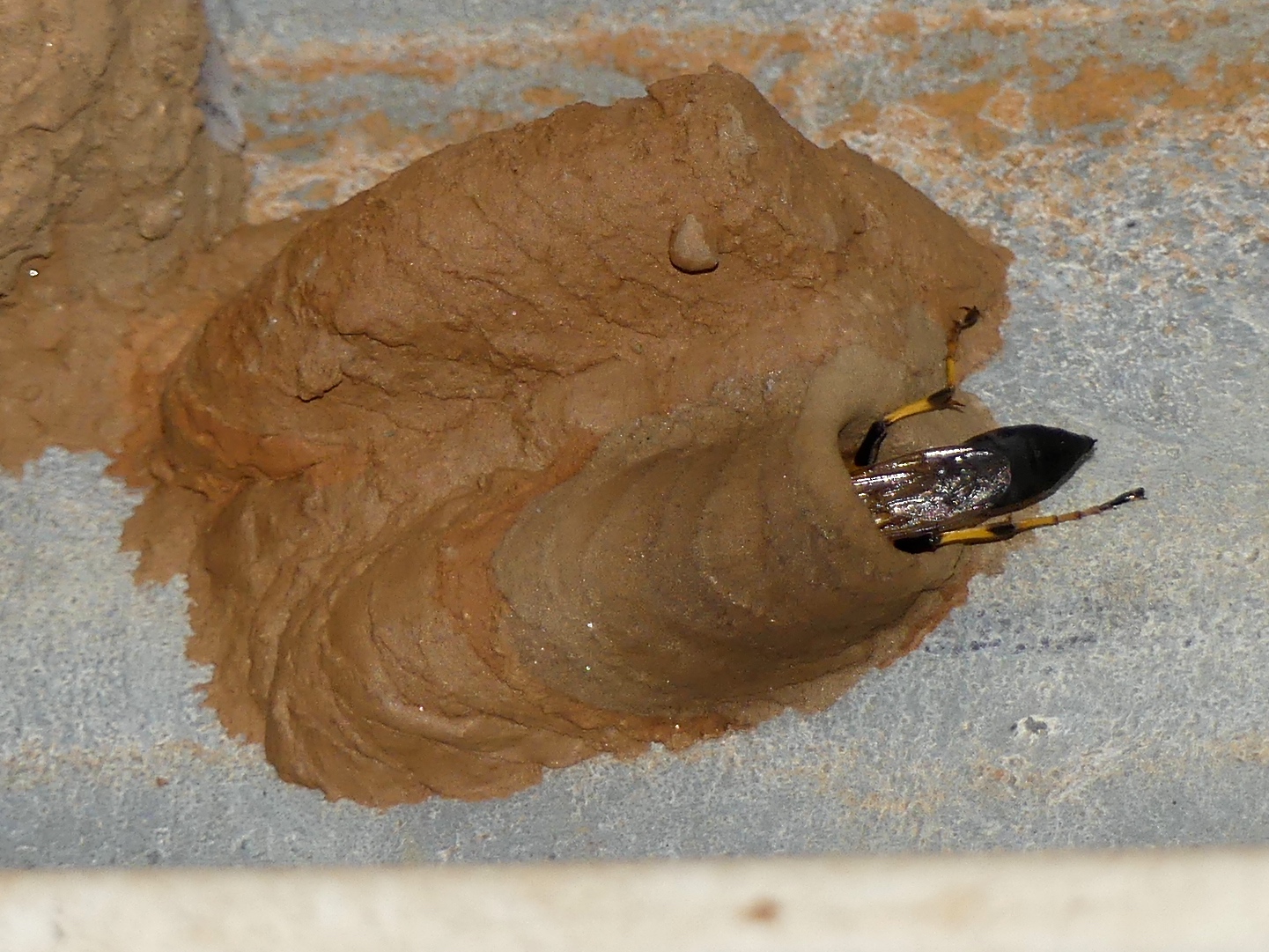
Once several adjacent brood cells are complete, filled and sealed, the dauber wasp covers the entire structure with an additional layer of clay (see first photo).
back:
see also: