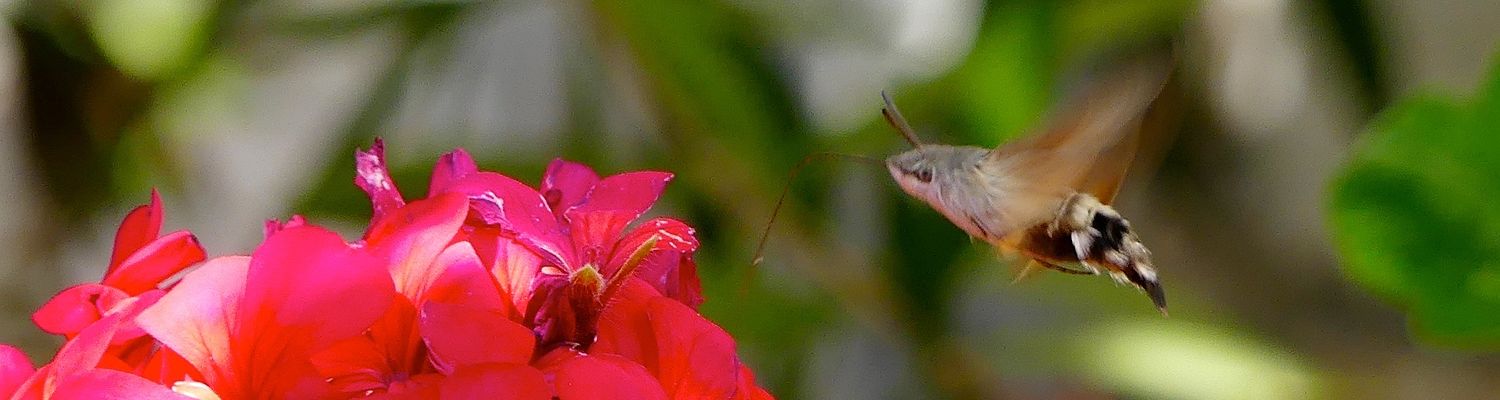
Moths
The moths are not a systematic group. Moths are called all members of the Lepidoptera, that are not butterflies, with the main differences being that butterflies are diurnal, while moths are nocturnal, and that butterflies have thin antennae with a club-shaped end, while moths have feathery or comb-shaped antennae. Over 90 per cent of all lepidopterans are moths. Usually we don’t see many moths because of their nocturnal life, though many species may be encountered when they are attracted at night to the lights. Of the many species that occur on Naxos, I can present here only the more common and those that are easier to identify. The butterflies are covered on a separate page.
Here you can skip the introduction and go directly to the species.
Anatomy
The anatomy of the moths is similar to that of butterflies. Unlike butterflies, however, they usually have a more inconspicuous colouring: most species are well camouflaged and therefore difficult to spot. In some species, the hind wings, which are hidden when resting, are conspicuously red or orange. Some moths have a thick, long-haired body. In most moths, the front and rear wings are connected to each other by special hooks during flight. When resting, the wings are usually held horizontally, not folded upright as in most butterflies. An important distinguishing feature from butterflies is the shape of the antennae, which are comb-like or feathery in moths, while butterflies have club-shaped antennae. While the pupae of butterflies usually are not enclosed in a cocoon, most moths build a cocoon out of silk.
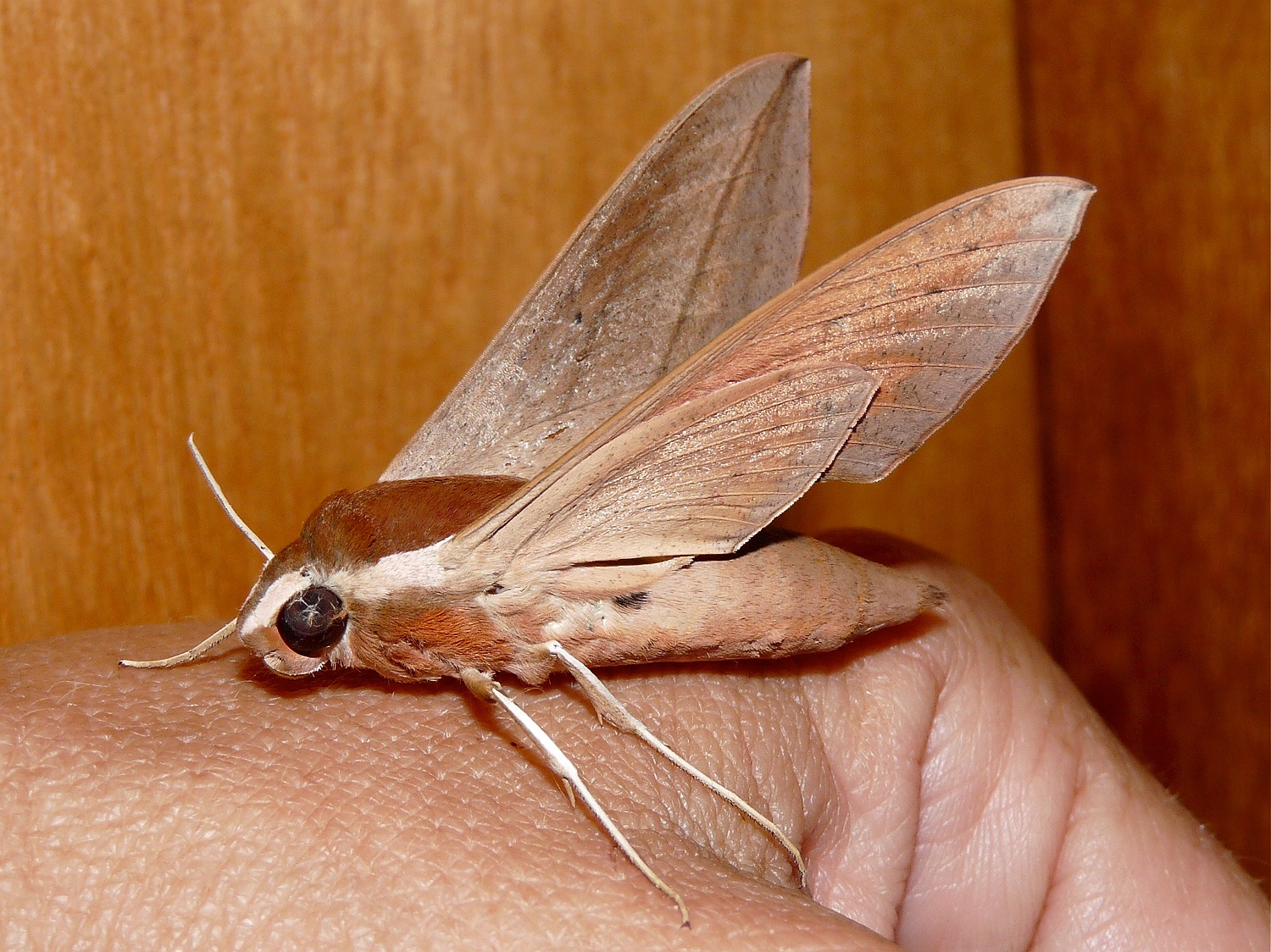
Moths are a very diverse group, including both large and stout species as well as very delicate ones. This Levant hawk-moth shows the characteristic anatomy of many moths, with a thick, densely hairy body. Note the large eyes.
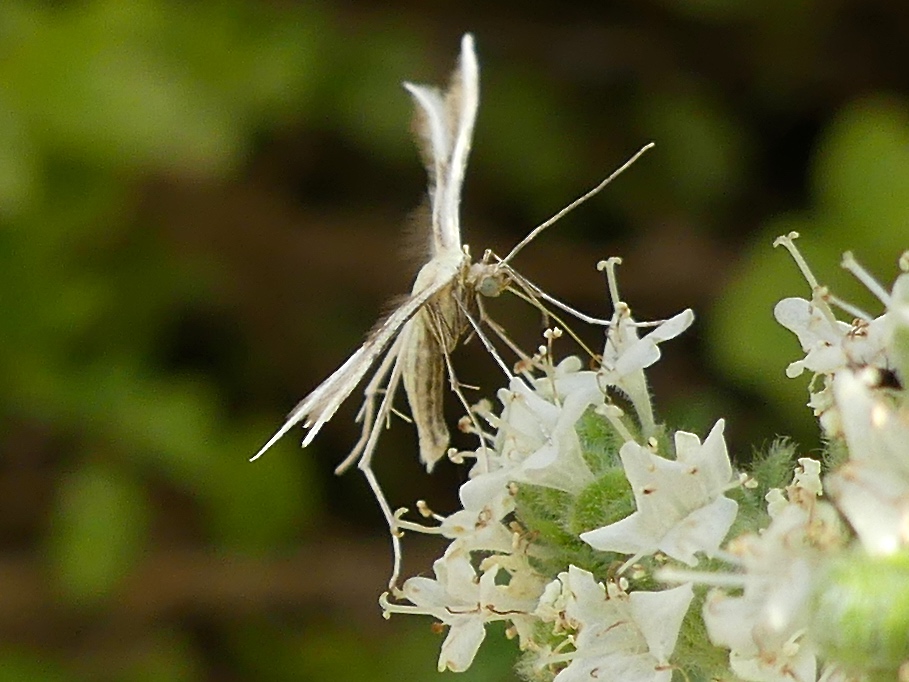
At the other end of the spectrum we have some very delicate moths such as the Stathmopodidae, to which this specimen belongs (the species cannot be determined).
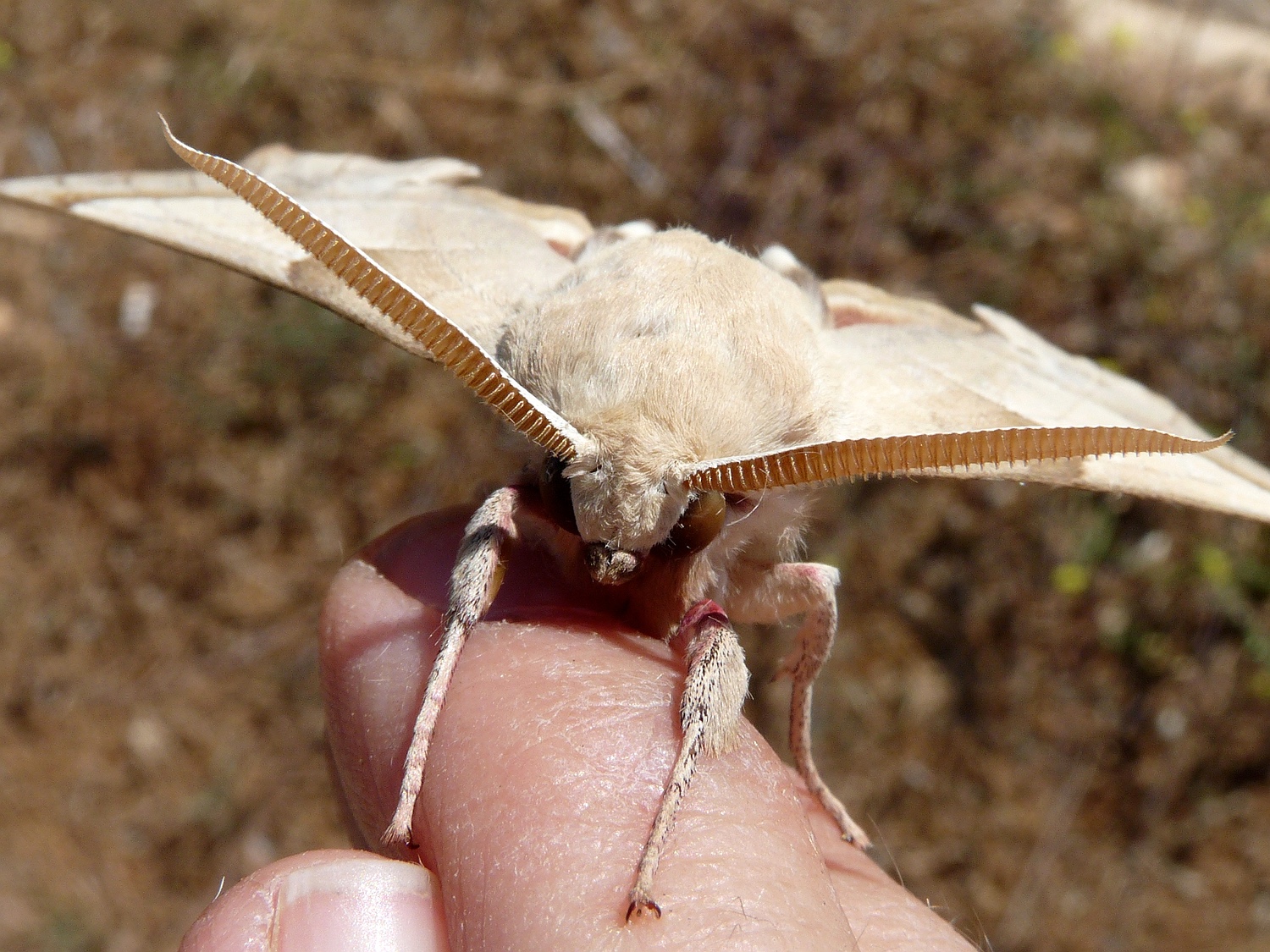
The males of many moths have large antennae; to increase their surface area, they are often feathery or comb-like in shape. These moths have an amazing sense of smell, which helps the males locate females over long distances, especially in species such as the Oak hawk-moth, which occur in very low population density.
The more inconspicuous, smaller moths are often difficult to identify. I have identified the species presented here as best I could using my (not very comprehensive) identification books and information found on the internet; however, I am not a specialist and (as always) cannot guarantee the accuracy of my identifications. I would like to express my sincere thanks to the Lepiforum e.V. for helping me identify several species.
Moth species on Naxos
The Photo gallery of the butterflies and moths gives an overview over the species.
Here you can jump directly to the families (return with the back arrow or by swiping back):
Eggars, Lasiocampidae – Hawk moths, Sphingidae – Saturniidae – Owlet moths, Noctuidae and Euteliidae
– Erebidae – Lymantriinae – Arctiinae – Geometer moths, Geometridae – Carpenter millers, Cossidae – Stathmopodidae, Pyralidae and Bagworm moths (Psychidae)
Eggars, Lasiocampidae
In Europe occur nearly 50 species of eggars. They are rather large, often thick-bodied moths that sometimes hold their wings roof-like at an angle above their body. The adult animals have reduced mouthparts and do not eat.
Pachypasa otus, Drury
Pachypasa otus, the largest European species of the Lasiocampidae, is rather rare in our region. The caterpillars of this species live on juniper and other trees and build a large cocoons, the silk of which was used to produce fine textiles as early as the 4th century BC (especially on the island of Kos), well before the introduction of Chinese silk to Greece.
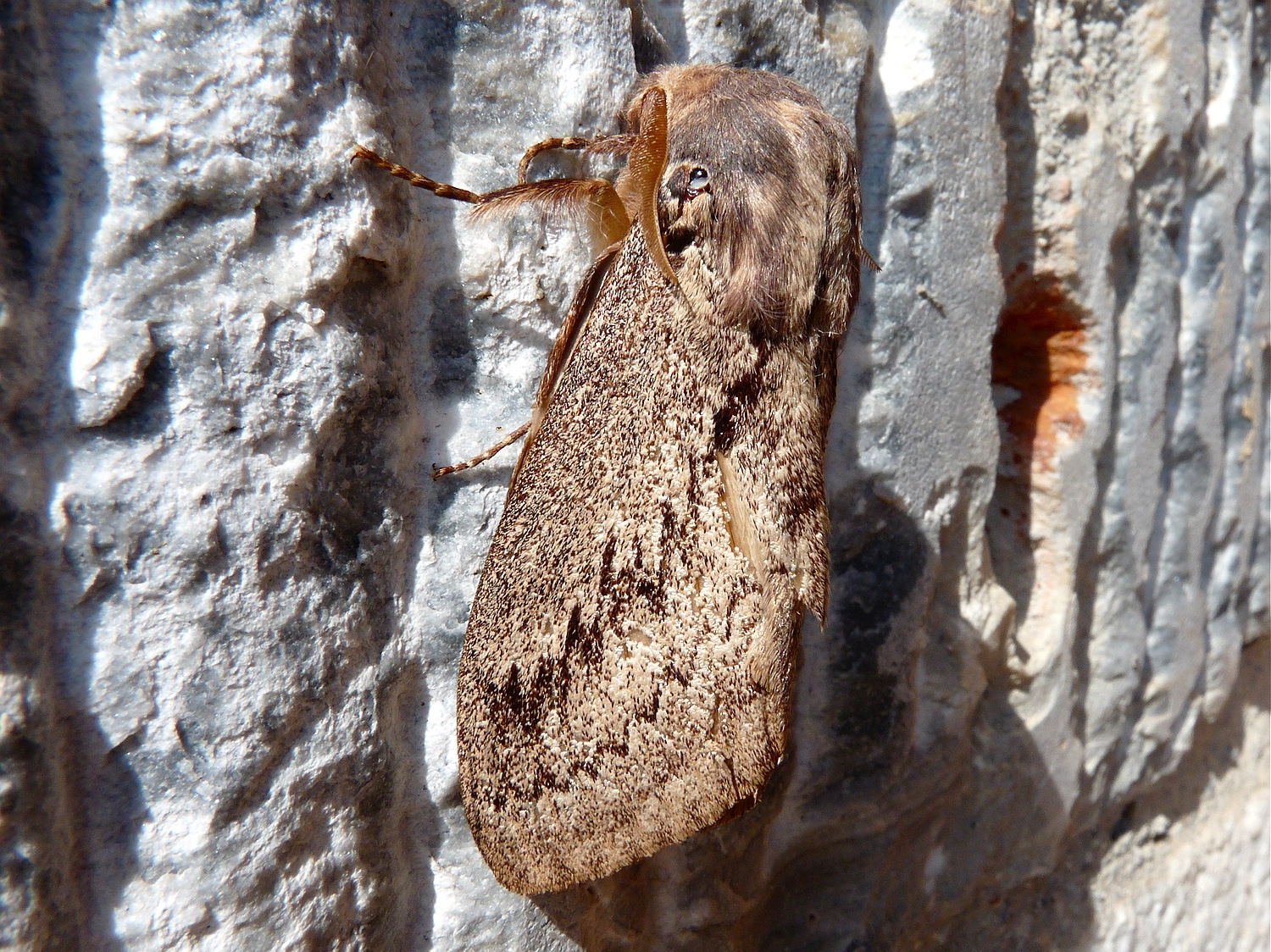
A rare visitor at night: Pachypasa otus, a large moth species native to south-eastern Europe. The wings of this species have a brownish colouring; characteristic are two small eye-like spots on the thorax.
Grass eggar, Lasiocampa trifolii, Denis & Schiffermüller
The Grass eggar is one of the moths that are often attracted to lights in the evening. It is mainly found in late summer and autumn.
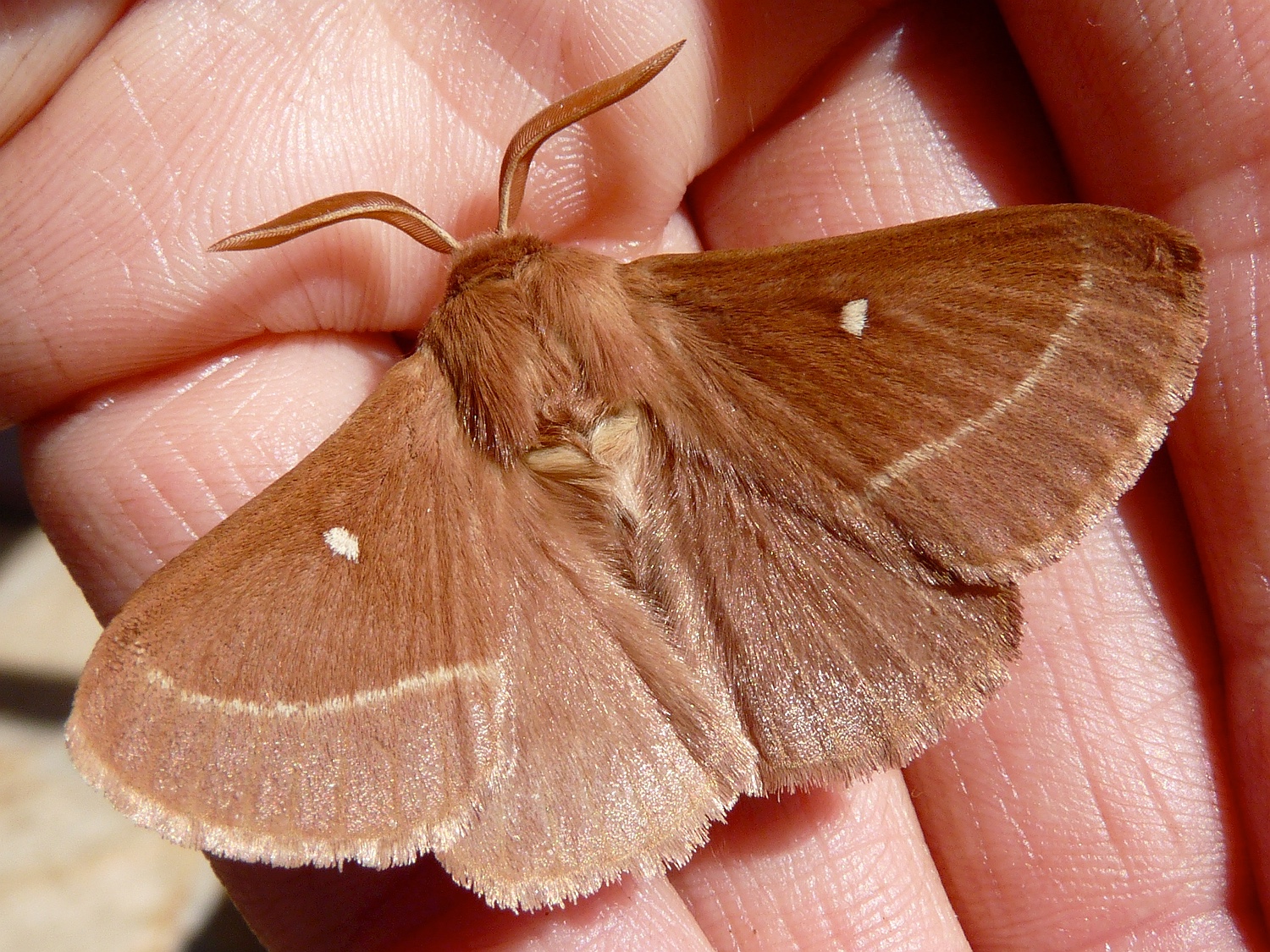
This species is brown in colour with a small white spot on each of its front wings.
Hawk moths, Sphingidae
The hawk moths are a large family comprising around 1,200 species, 40 of which are found in Europe. They are large, stout moths with thick, hairy bodies. Their long, pointed forewings, that are significantly larger than their hindwings, enable their elegant, rapid flight.
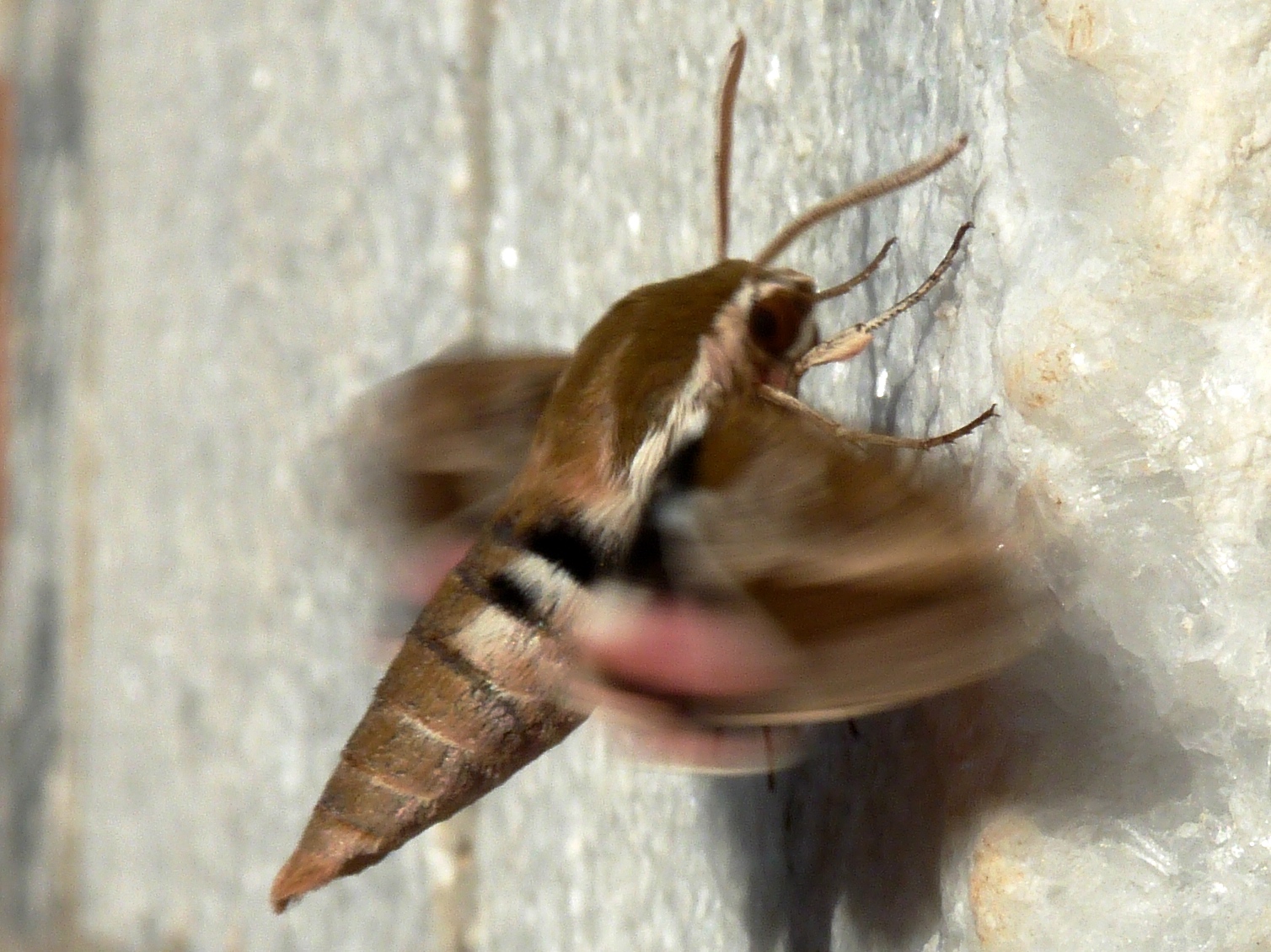
Despite their thick bodies, hawk moths are excellent flyers. While the head is rather small, the thoracic segments are often thick forming a “humped back”: this is where the powerful flight muscles are located.
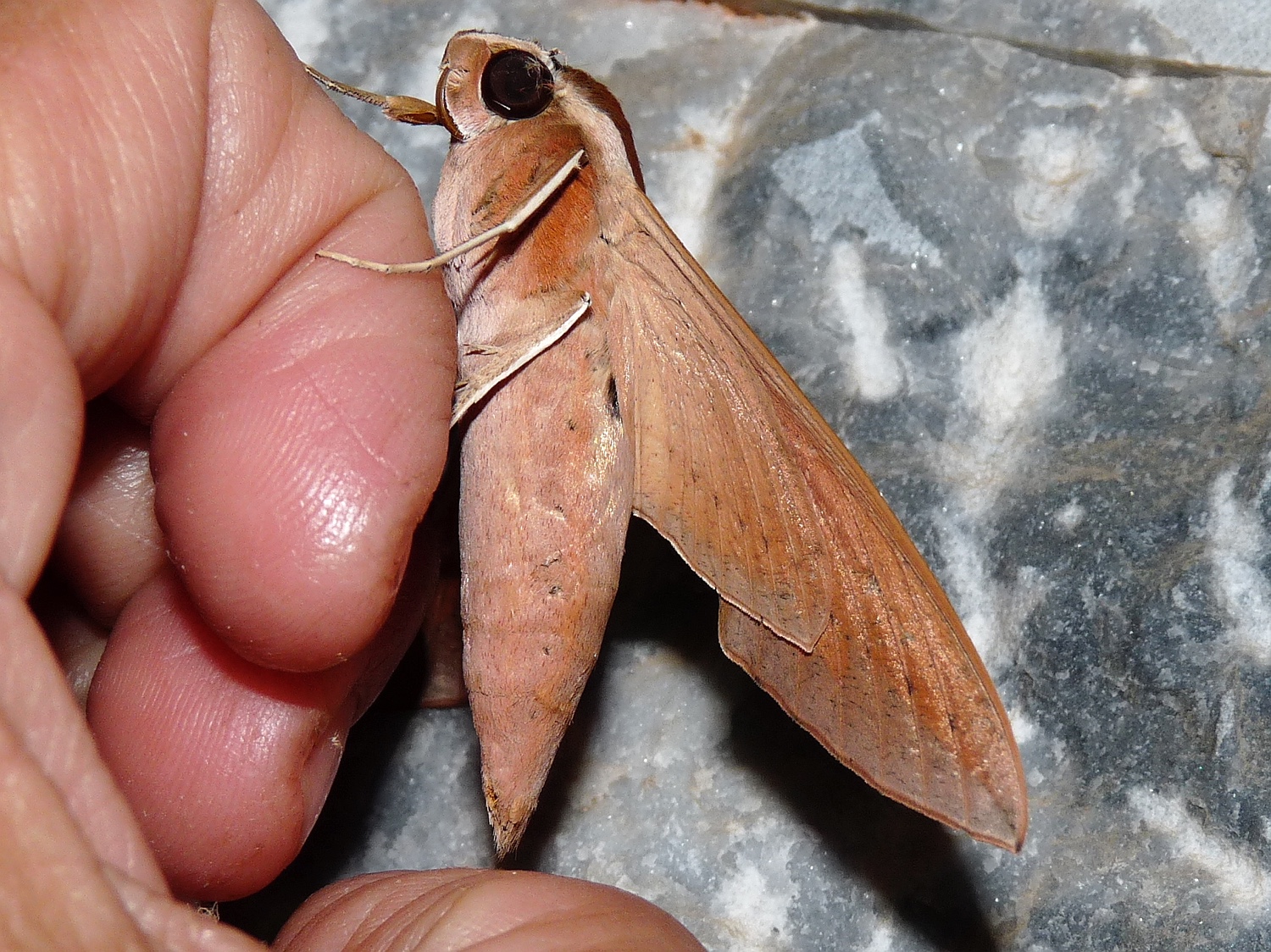
The forewings are long and narrow, the hindwings much smaller. In flight, the fore- and hindwings are coupled together, as with most moths.
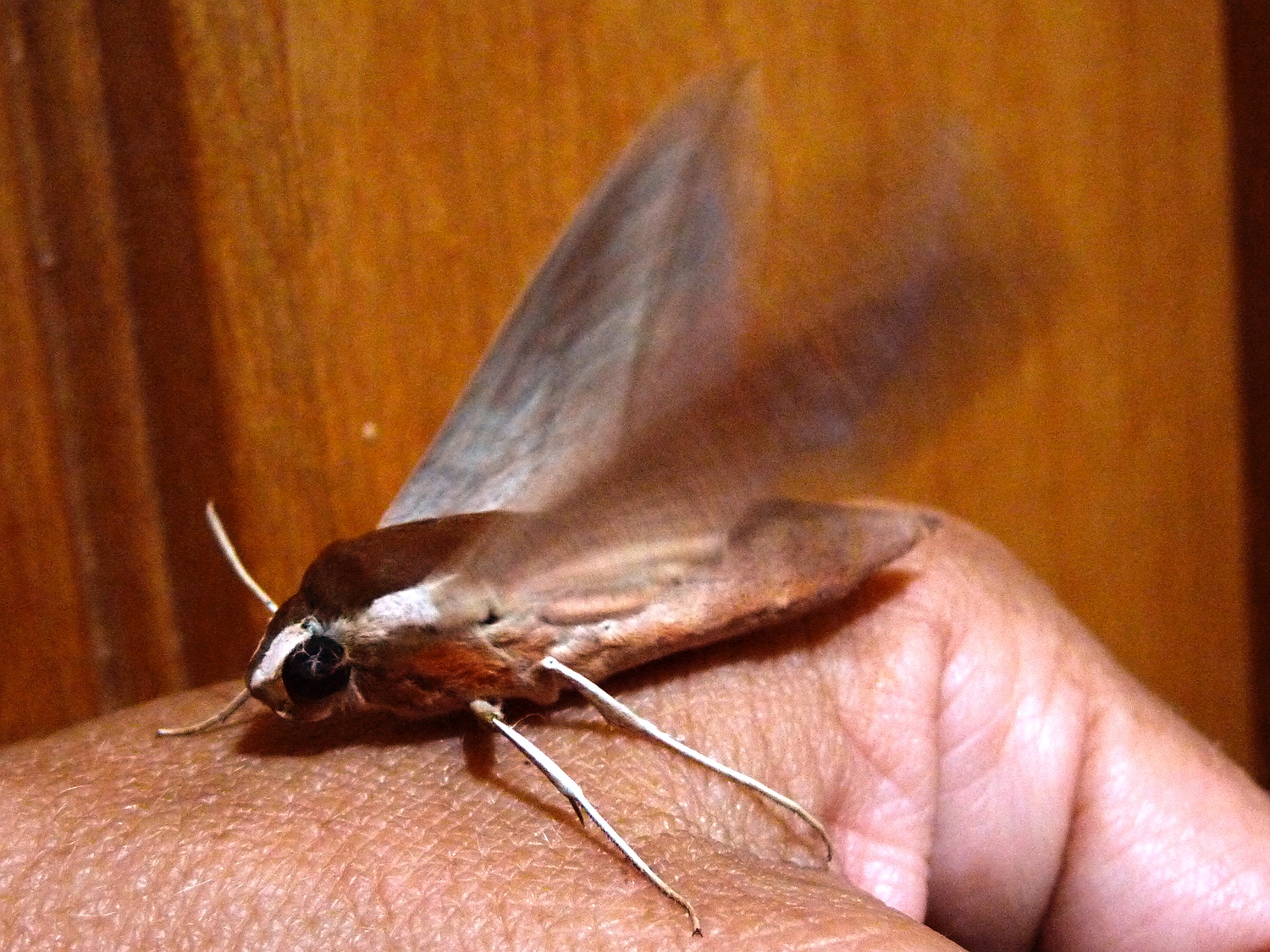
The hawk-moths have to warm their muscles by fluttering their wings before flying off.
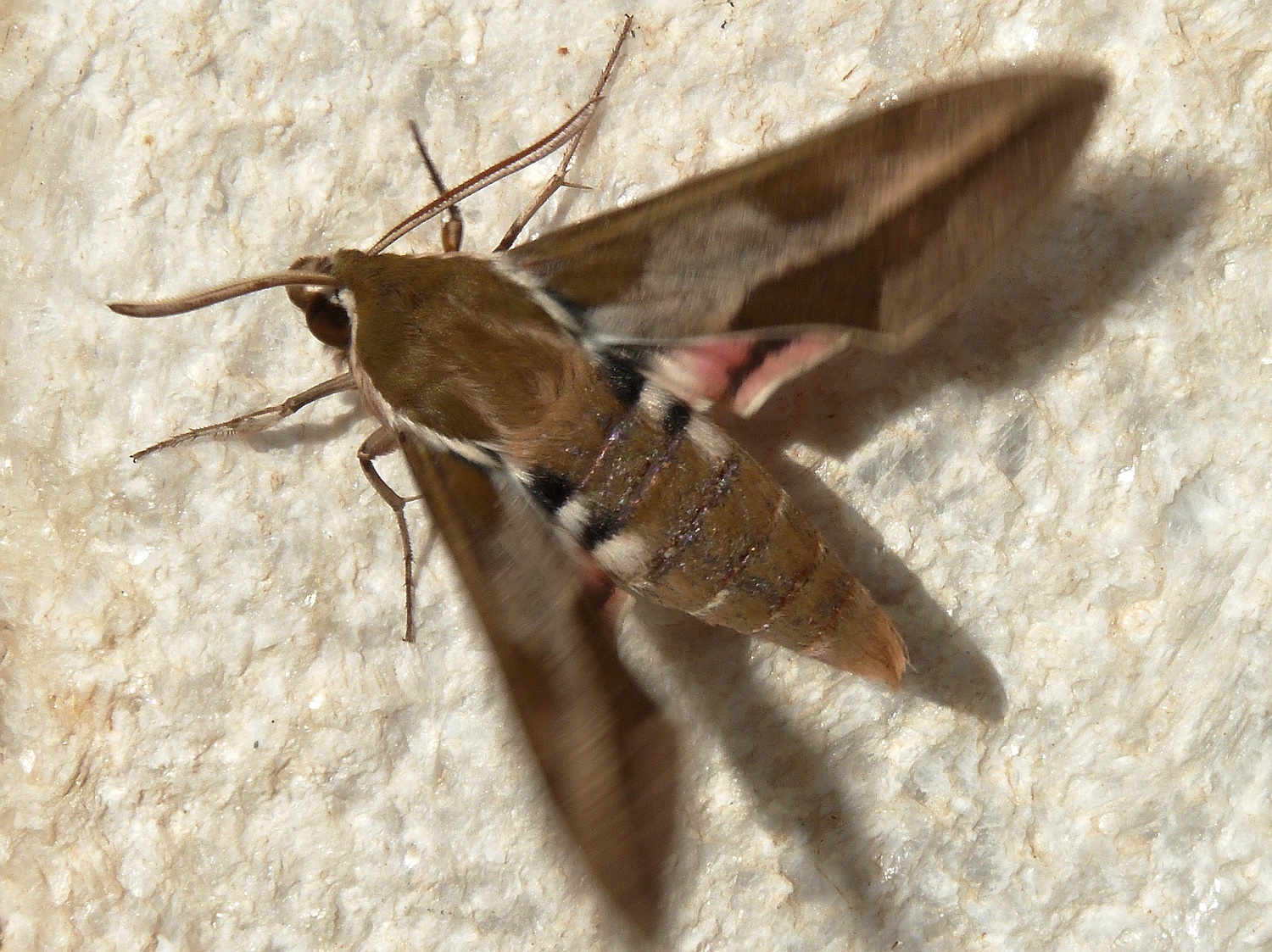
Here a Spurge hawk-moth warming up.

The caterpillars of hawk moths are also thick. They sometimes have eye-like spots on their thorax and long appendages at the end their abdomen.

Most caterpillars have limbs on their thoracic segments and on the last abdominal segment. These are absent in the caterpillars of hawk moths; instead, they have thick, rounded abdominal legs with hairy rings at the end for a better grip. These are not true jointed legs, but so-called prolegs.
Striped hawk-moth, Hyles livornica, Esper
The Striped hawk-moth is the most common species in our region; it can regularly be seen in the evenings in spring.
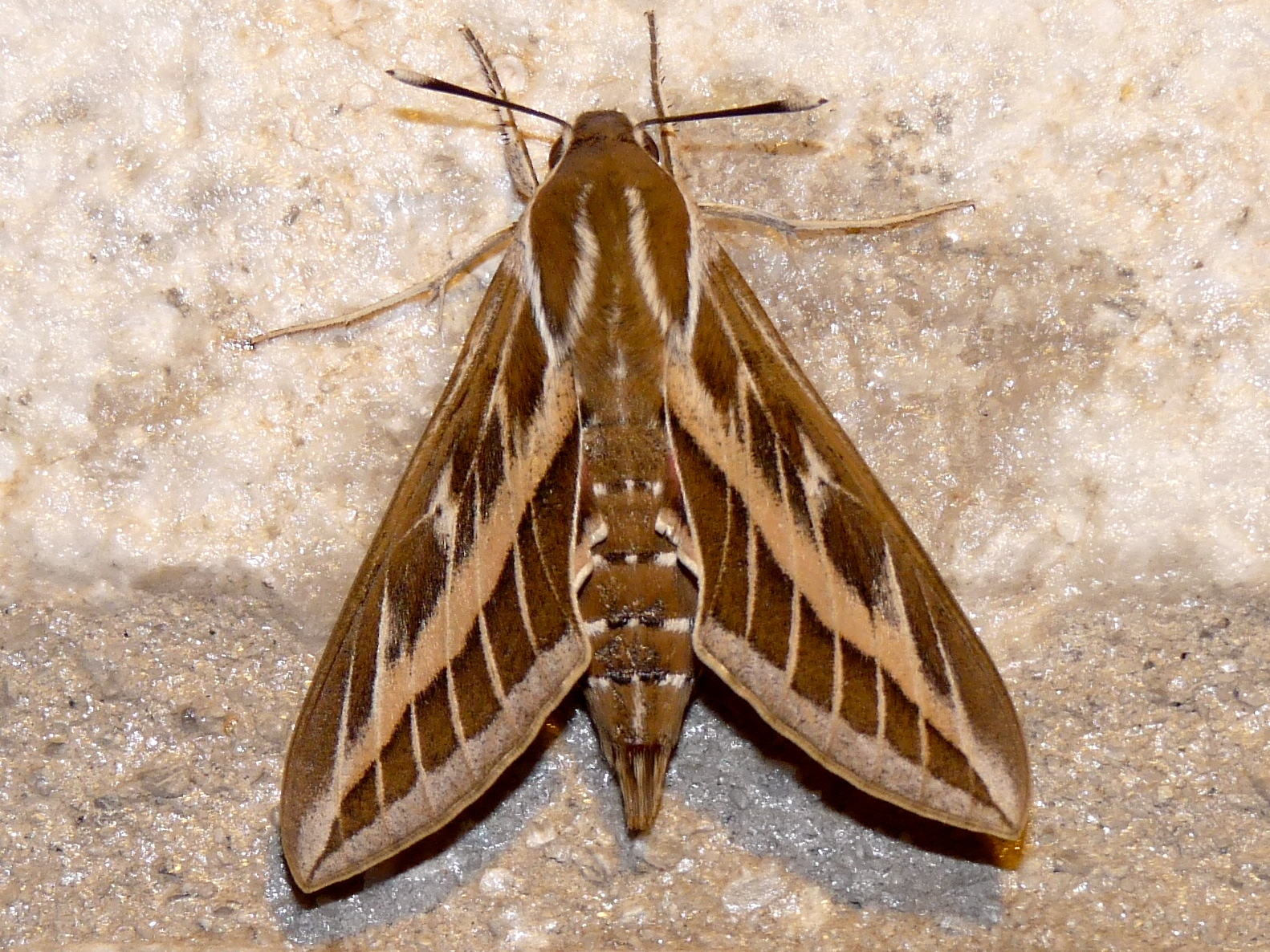
The Striped hawk-moth has a characteristic light-coloured band along the center of its front wings; the wing veins are also light-coloured. Its hairy body is brown with lighter stripes.
Spurge hawk-moth, Hyles euphorbiae, L.
The less conspicuous Spurge hawk-moth is rare in our region. The caterpillars live on euphorbias such as the Mediterranean spurge. They absorb toxic substances from their food plant, which makes them inedible. The caterpillar’s conspicuous markings are intended to warn potential predators.
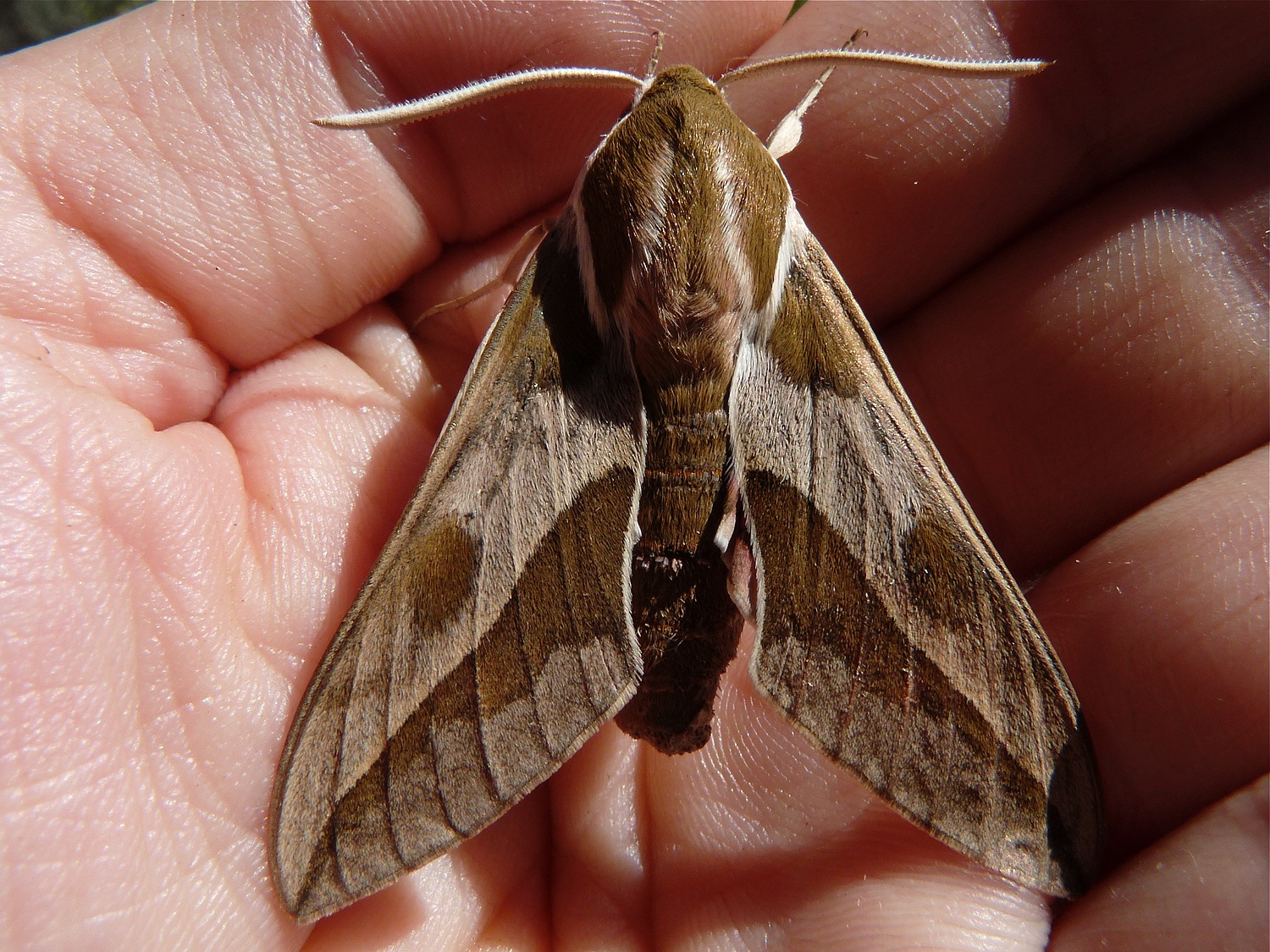
The Spurge hawk-moth has darker and lighter bands on its forewings.
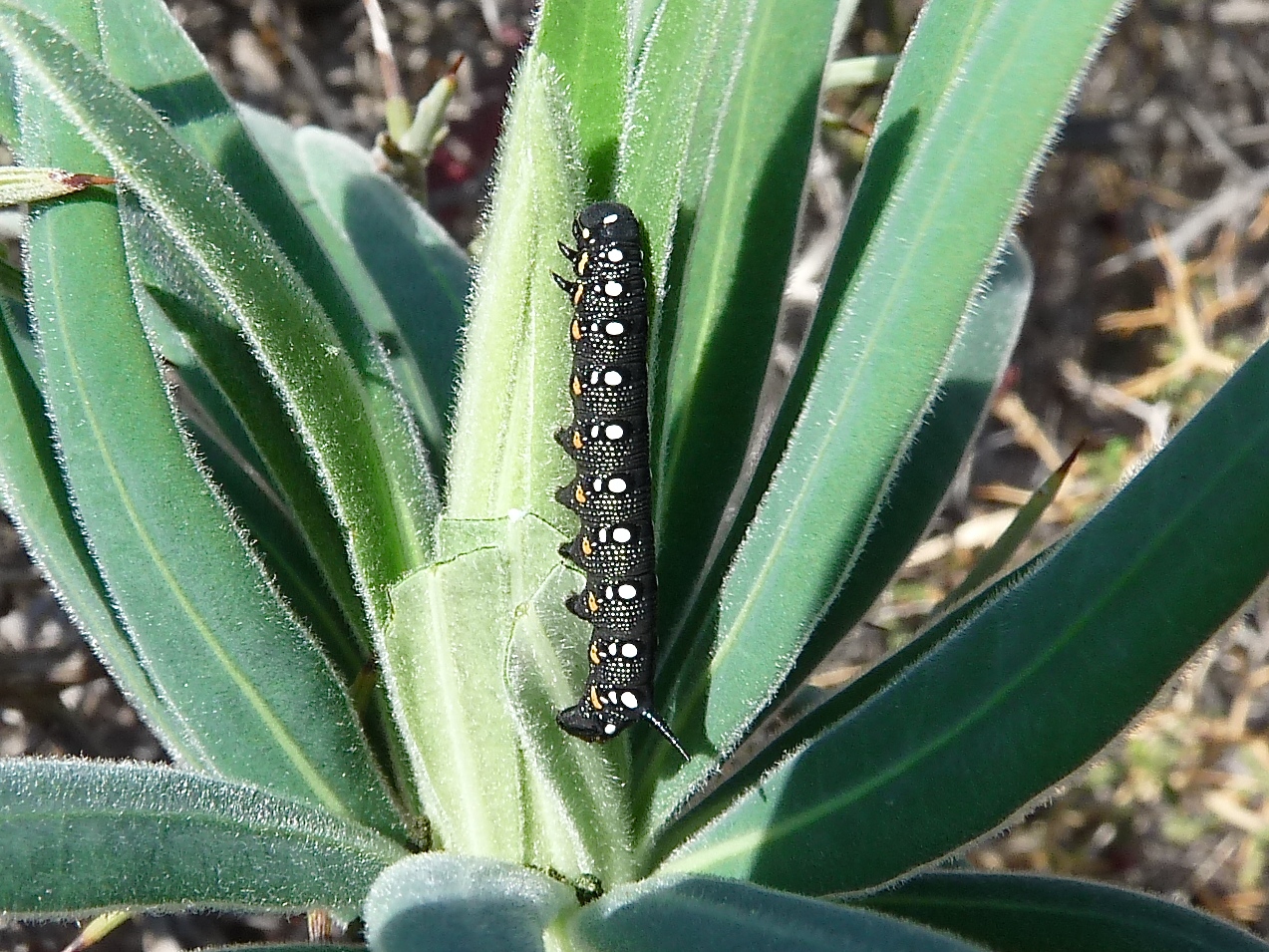
The conspicuously coloured caterpillars live mainly on Mediterranean spurge.
Levant hawk-moth, Theretra alecto, L.
This moth, which shows few markings but a beautiful brown colour, is also rather rare in our region. The caterpillar lives on grapevines. In Europe, this species is only found in Greece and Sicily; its range extends eastwards to Southeast Asia.
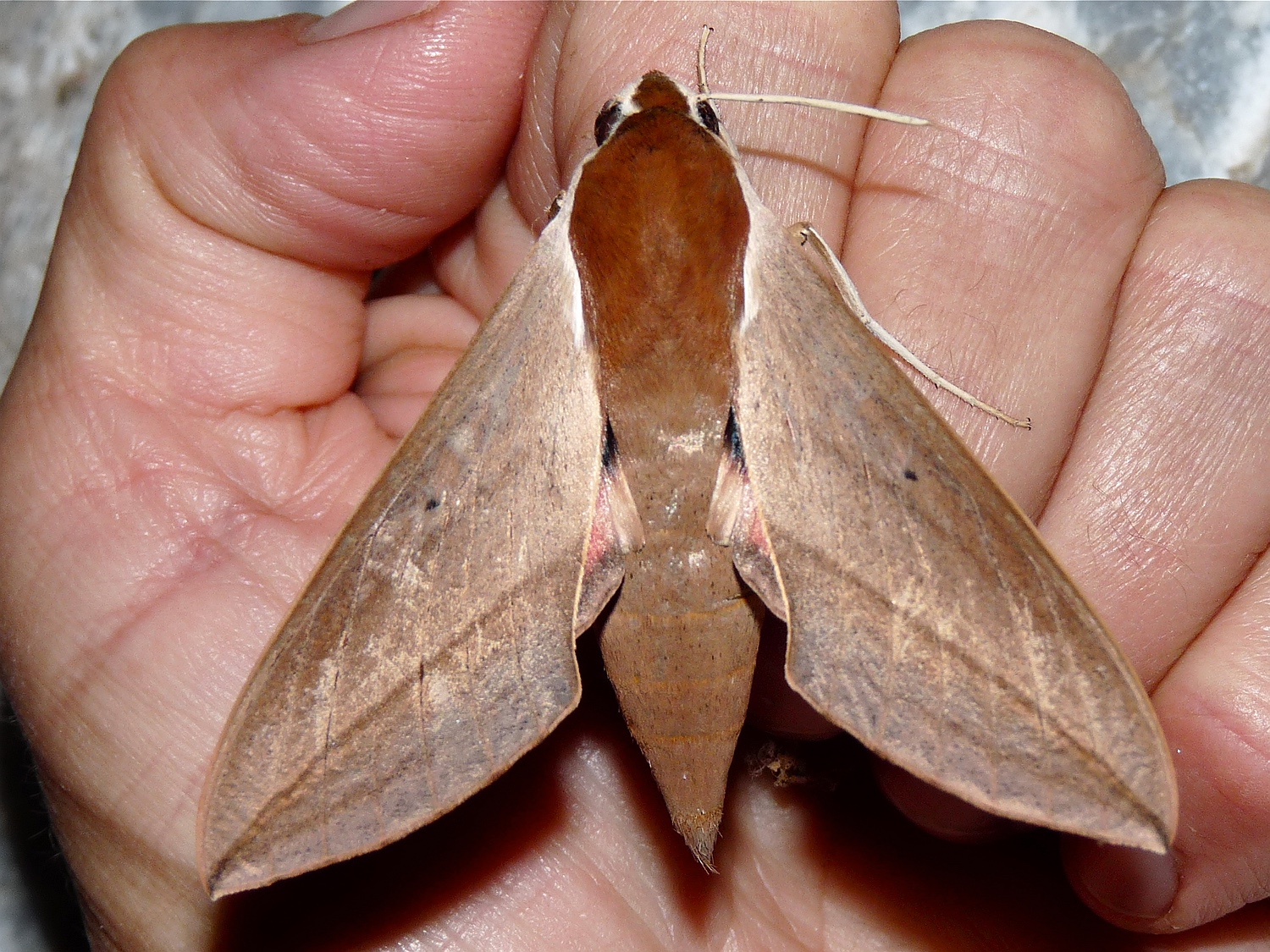
The wings of this species are almost unpatterned except for a tiny black spot.
Vine hawk-moth, Hippotion celerio, L.
Another large moth species that may be attracted to lamps in the night is the Vine hawk-moth.
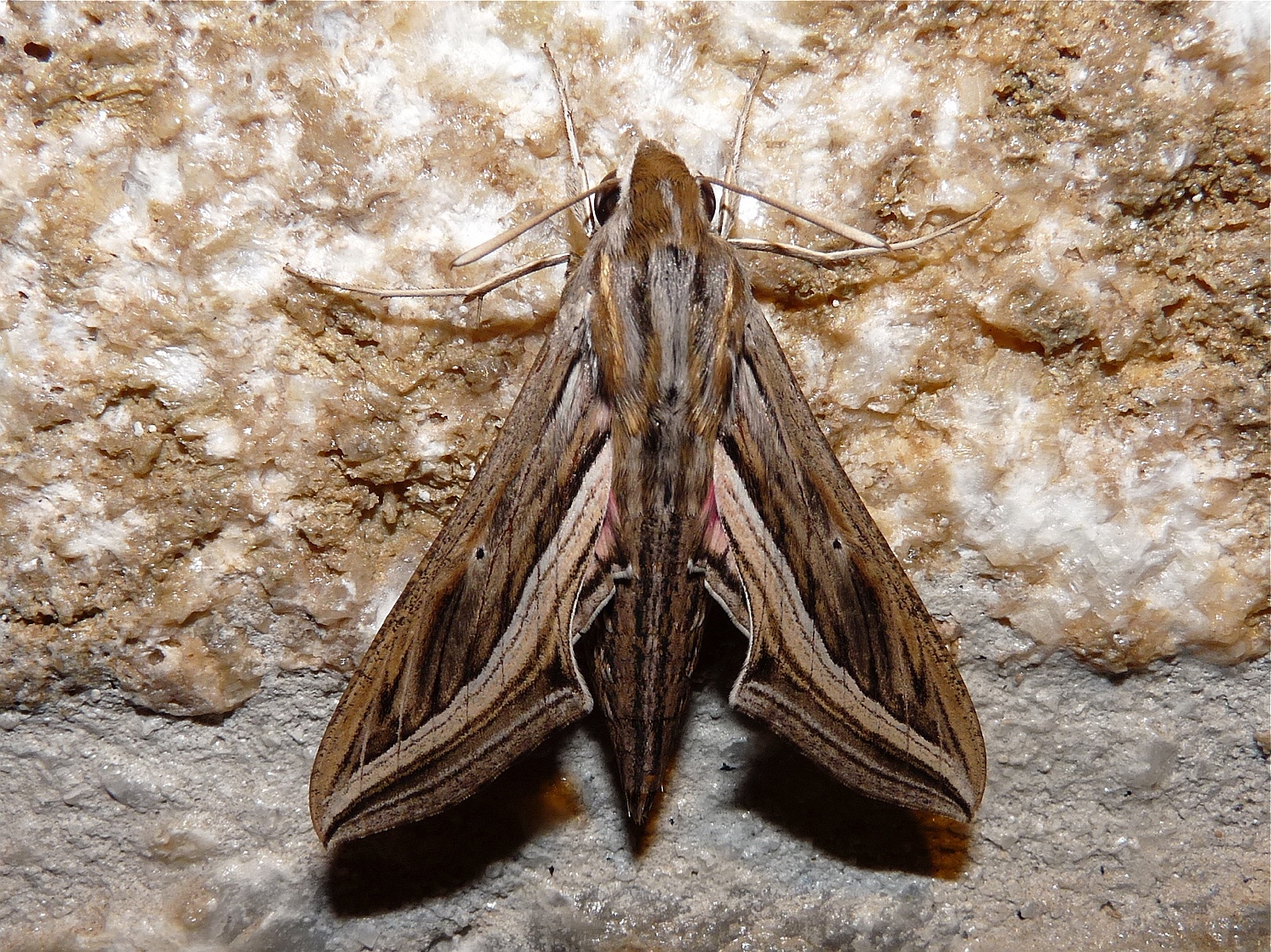
The Vine hawk-moth resembles the Striped hawk-moth, but has a different wing pattern.

The caterpillar of the Vine hawk-moth has striking ‘eye spots’ with four small white dots. The caterpillars can be brown or green in colour.
Oak hawk-moth, Marumba quercus, Denis & Schiffermüller
I have found the Oak hawk-moth only once in our area. It is particularly large (wingspan up to 12 cm) with a thick, hairy body. The adult moth does not feed at all; the caterpillar lives on oak trees. The species is restricted to the Mediterranean region and the Middle East.
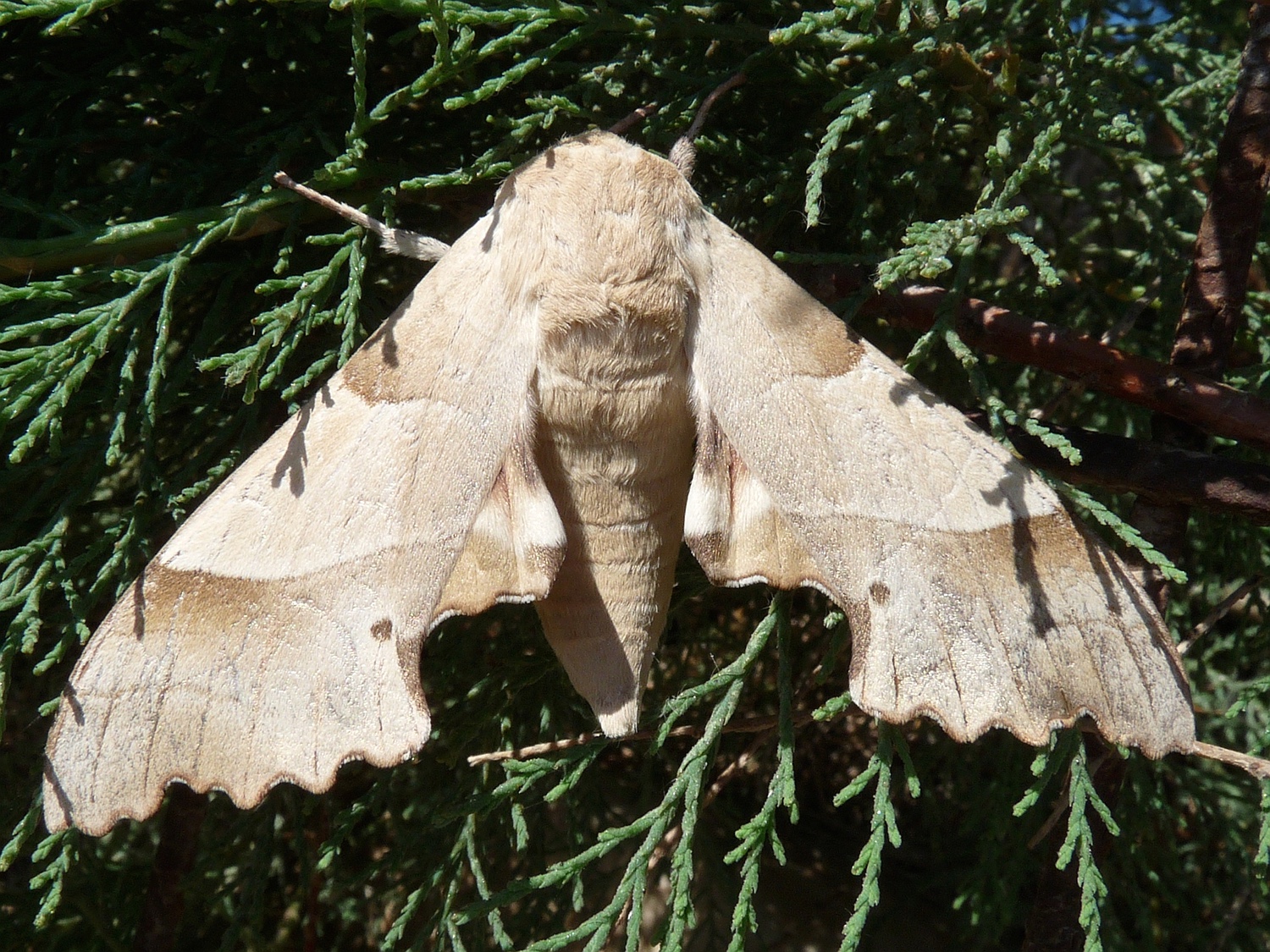
The large Oak hawk-moth has light brown wings with wavy edges.
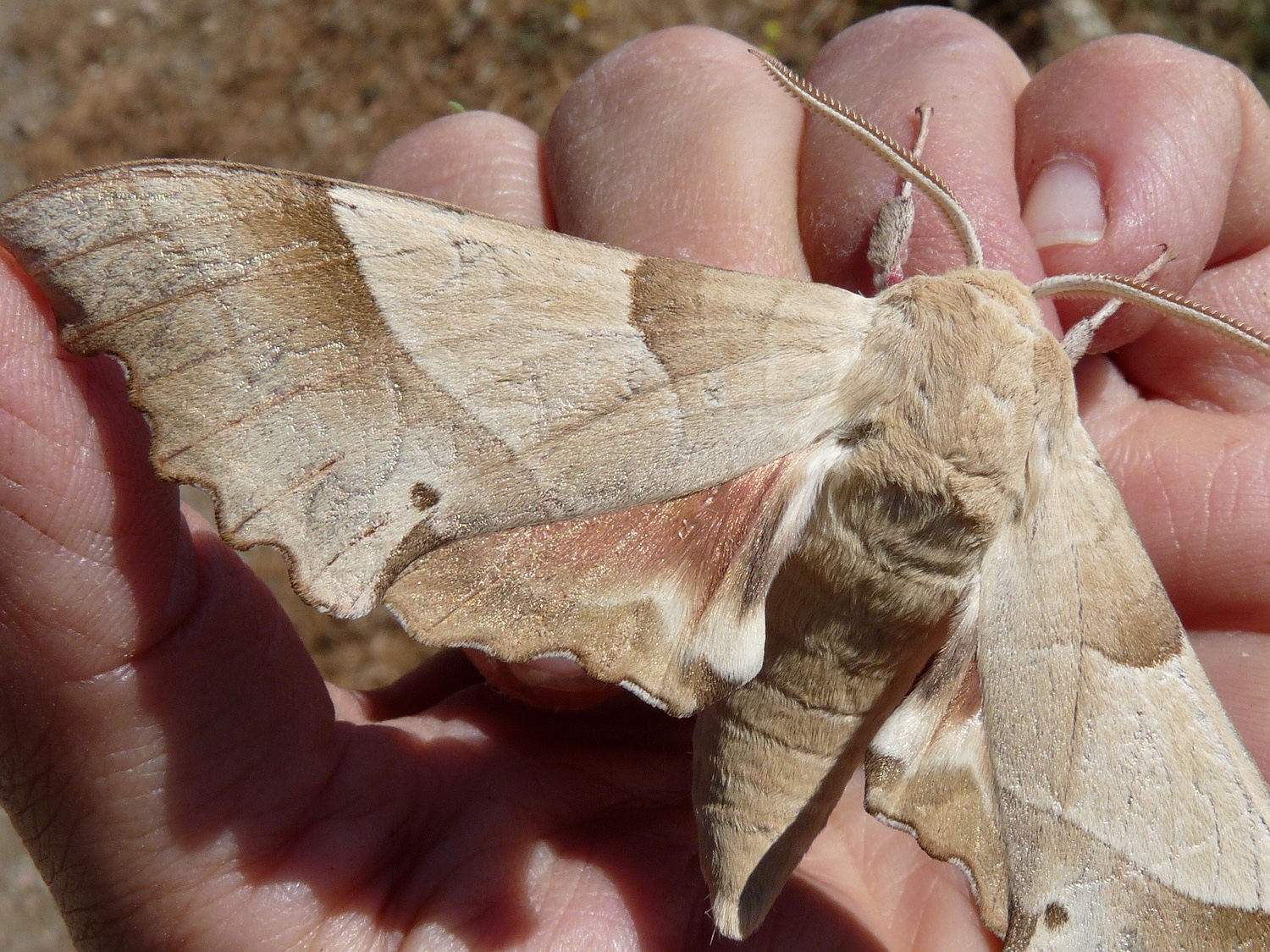
The significantly shorter hind wings are slightly reddish in colour.
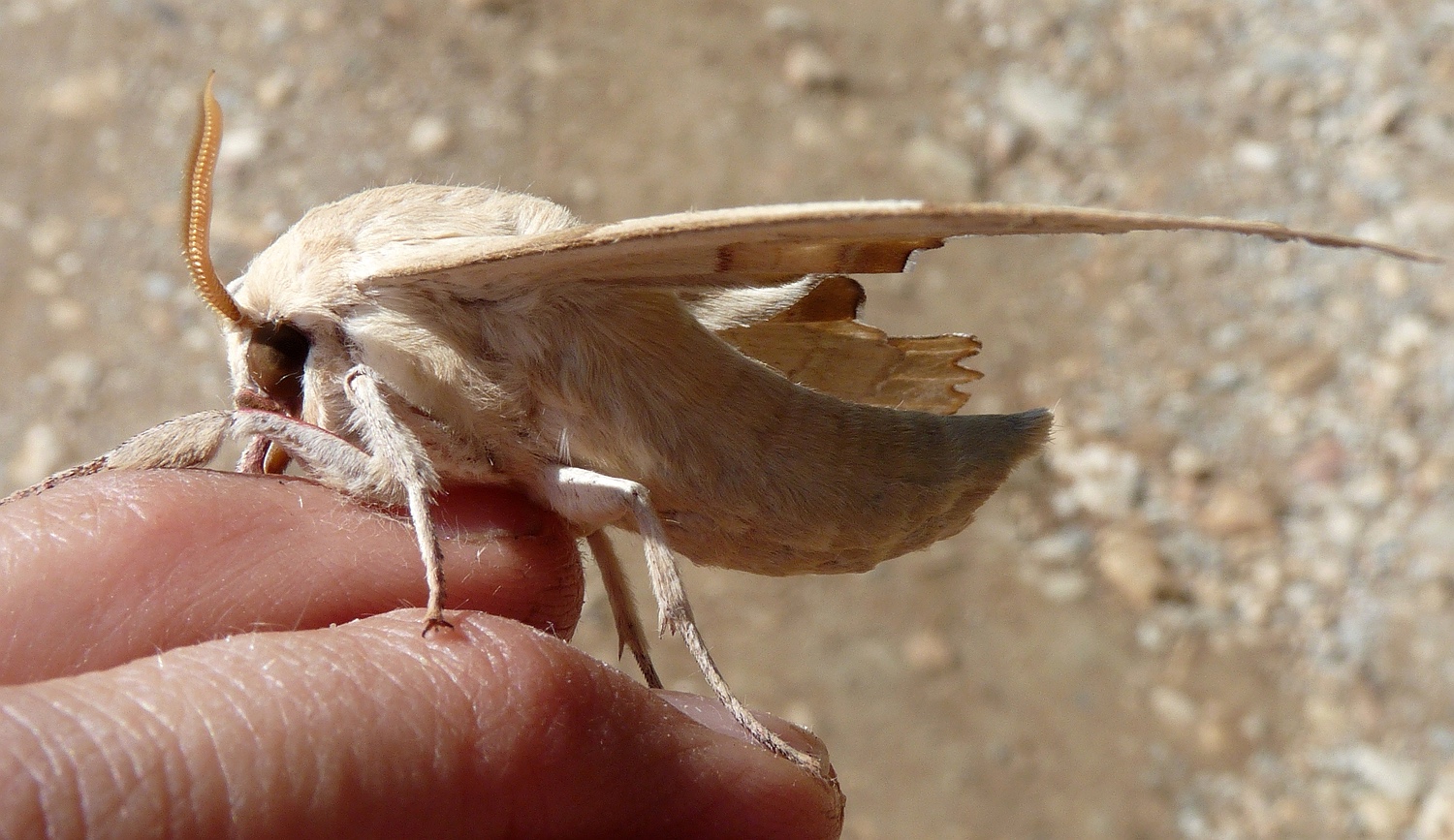
The long-haired body of the Oak hawk-moth is particularly thick. It has large brown compound eyes.
African death’s-head hawk-moth, Acherontia atropos, L.
The African death’s-head hawk-moth is the largest European hawk-moth. It is rather rare on Naxos. Death’s-head hawk-moths occur mainly in tropical Africa, but as migratory moths they may even reach Northern Europe. The caterpillars usually live on potato plants, but they also feed on a large number of other plants, including olive trees in Greece, where they can occasionally cause some damage. The adult moths have a short but unusually broad proboscis. They invade beehives, where they pierce the honeycombs and suck the honey. They are not attacked by the bees because they emit scents similar to those of the bees. Death’s-head hawk-moths have the ability to produce whistling or buzzing sounds with their throats when disturbed, which this specimen promptly demonstrated when I tried to pick it up.
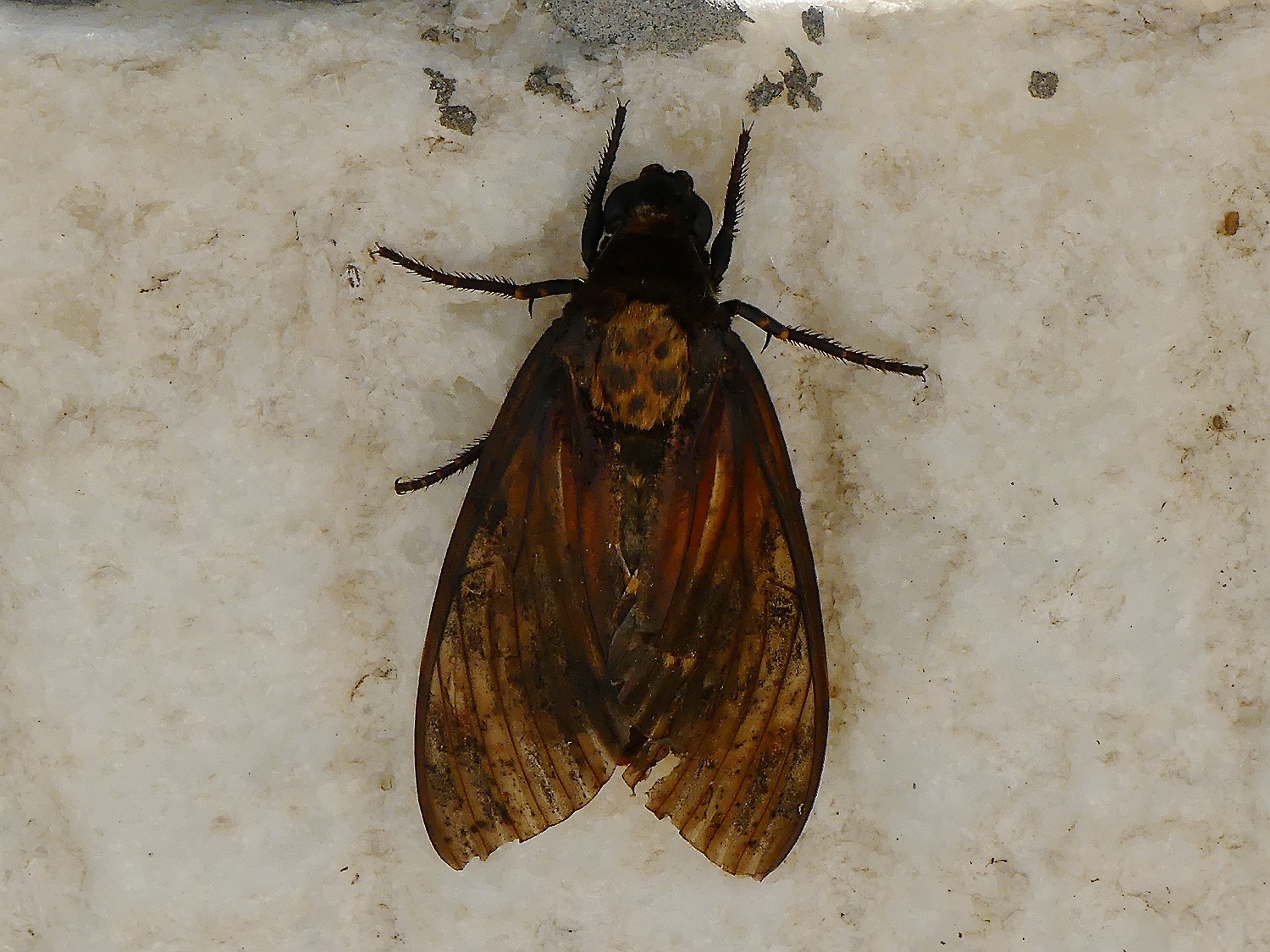
With a body length of up to 12 cm, the African death’s-head hawk-moth is the largest hawk moth. This specimen is very old and damaged; the original wing pattern is barely recognisable.
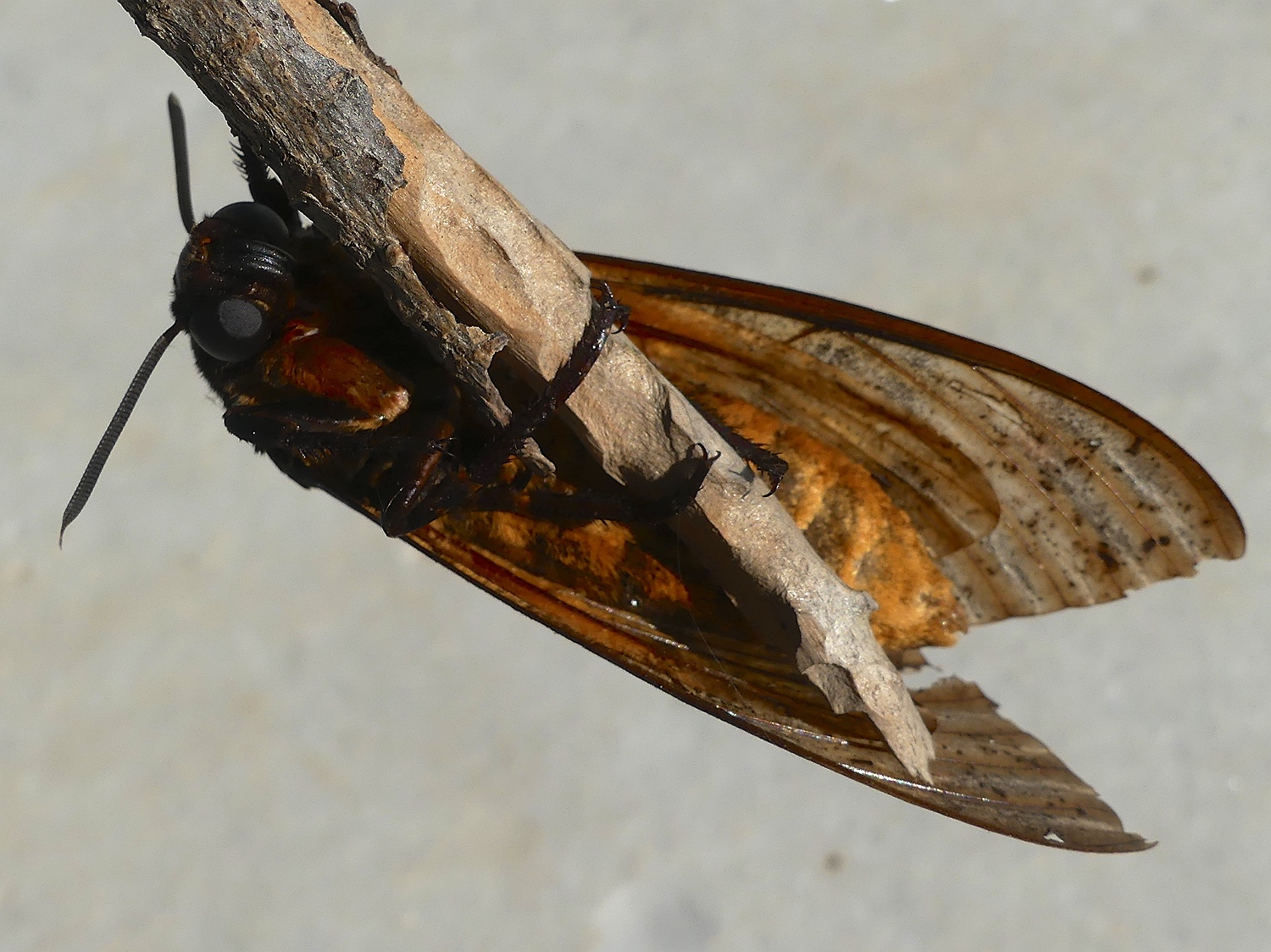
From below, you can see the large black eyes and the broad proboscis, which the moths use to pierce the honeycombs in beehives and suck out the honey.
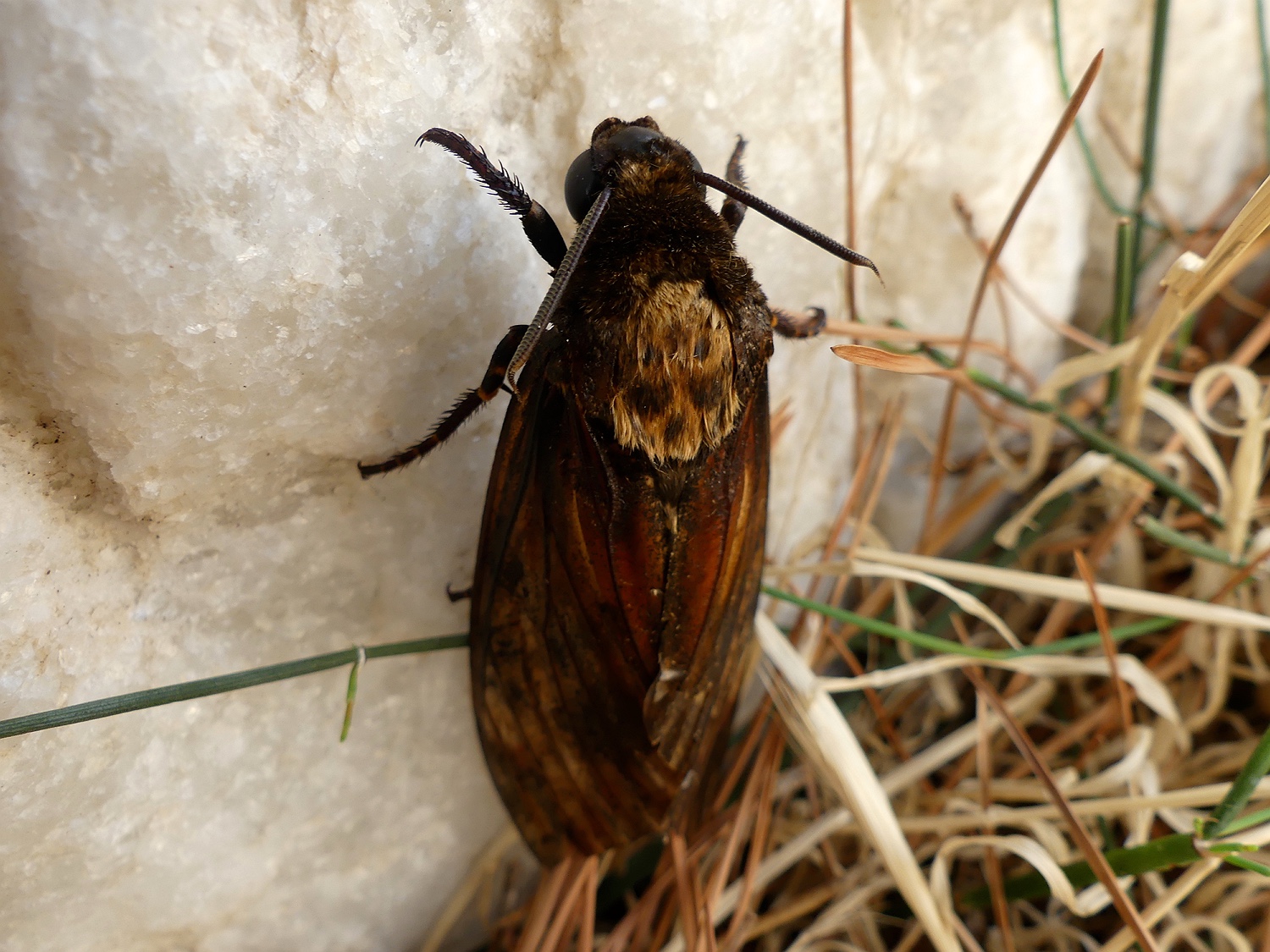
The name of the moth comes from the skull-like pattern on the thorax. Because of this pattern, the moths have been considered to bring bad luck since ancient times, which is also reflected in the scientific name referring to one of the goddesses of Fate in Greek mythology: Atropos, who cuts the thread of life.
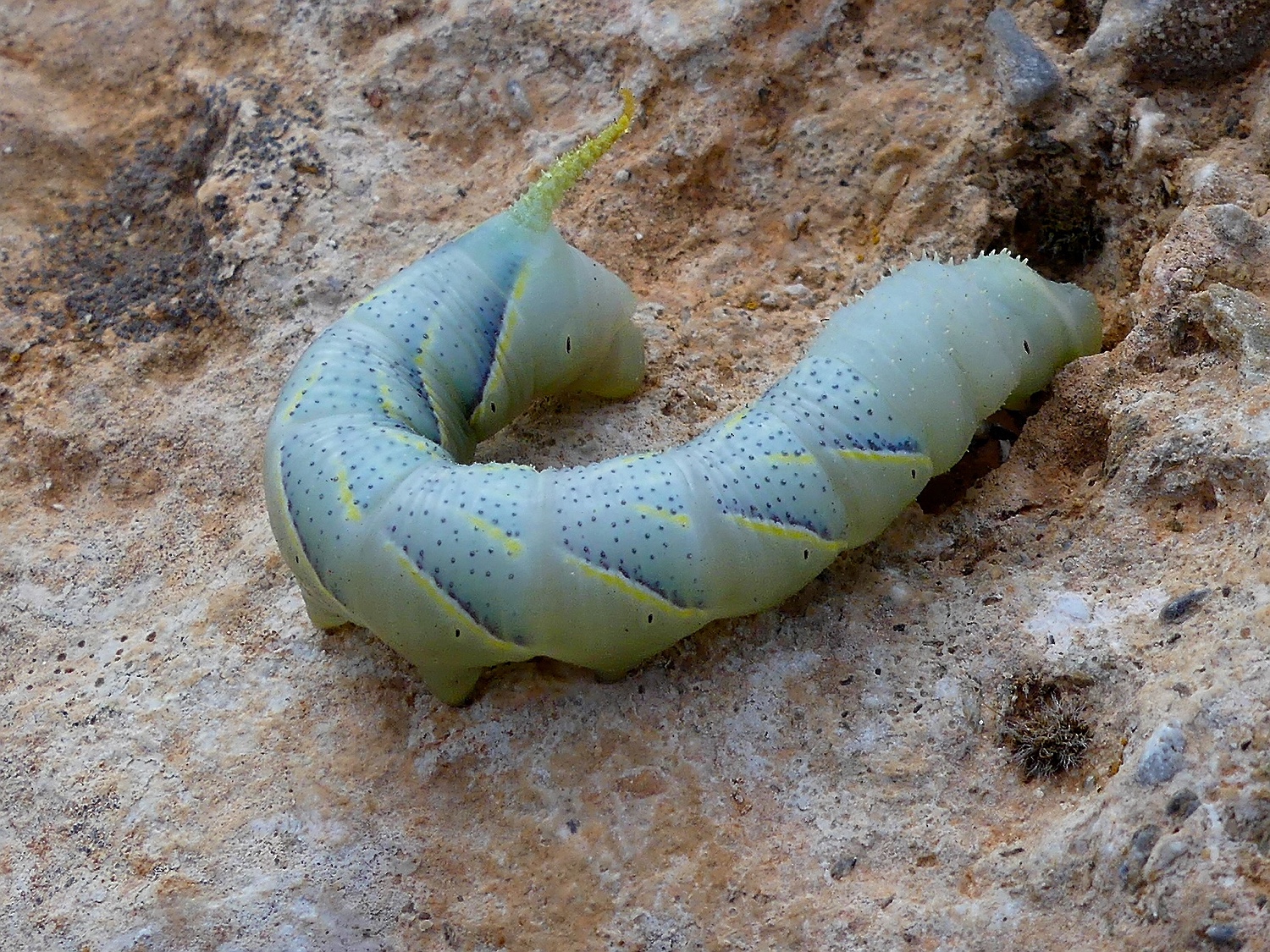
here you see the caterpillar
Hummingbird hawk-moth, Macroglossum stellatarum, L.
The Hummingbird hawk-moth is very common in our region, especially in late summer and autumn. Unlike most other moths, it is active during the day and therefore easy to observe. Hummingbird hawk-moths can often be seen in hover-flight sucking nectar with their long proboscis from flowers. Their flight and behaviour are reminiscent of a hummingbird. Hummingbird hawk-moths are rather dark in colour with lighter and darker spots on the sides of their abdomen. Their hind wings are orange. The caterpillars feed on Galium-species, less commonly on other Rubiaceae.
Hummingbird hawk-moths hibernate in our region as adults, seeking sheltered quarters in autumn, usually in houses. They can often be found, for example, in rolled-up carpets or unused clothing.
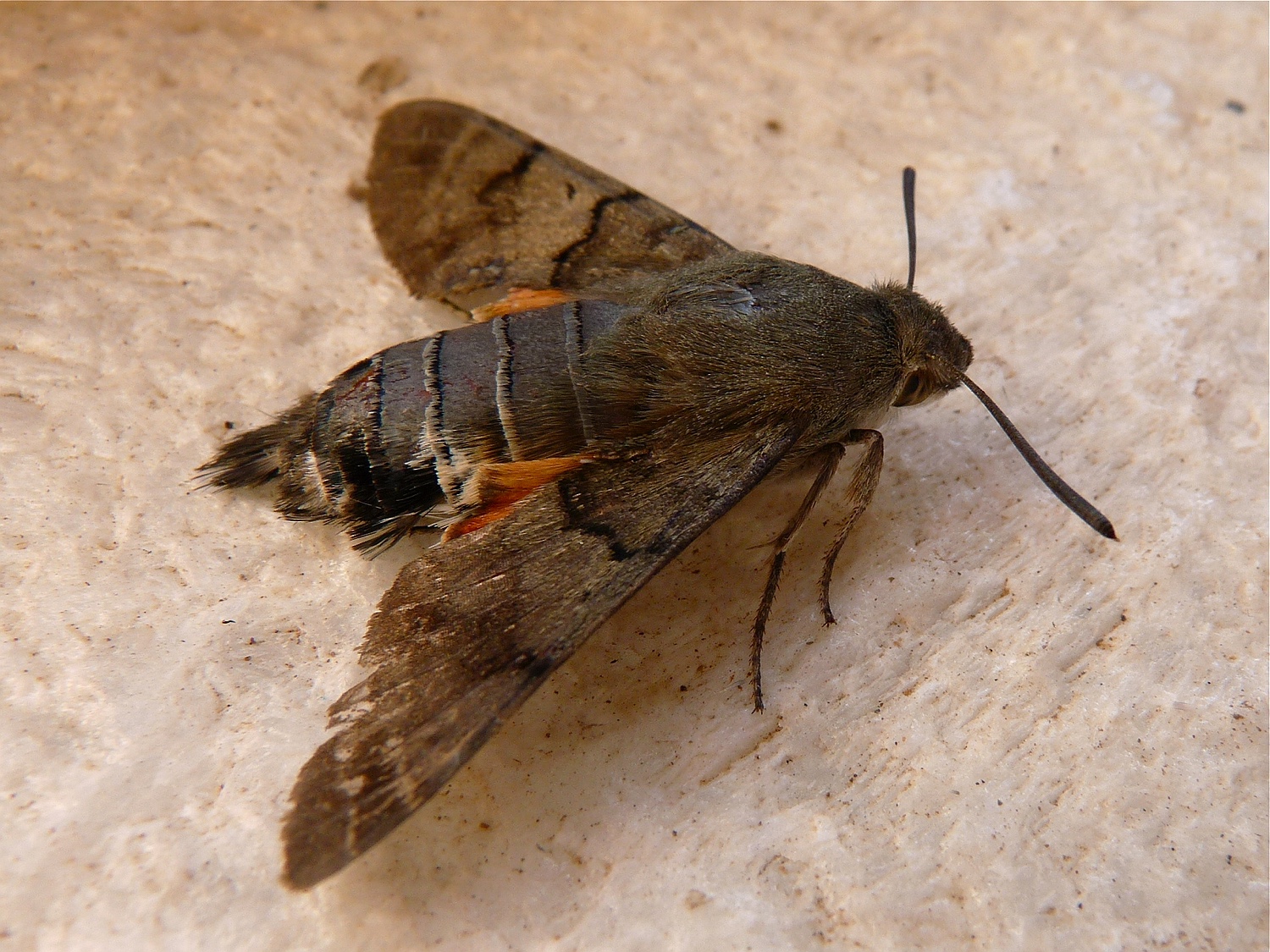
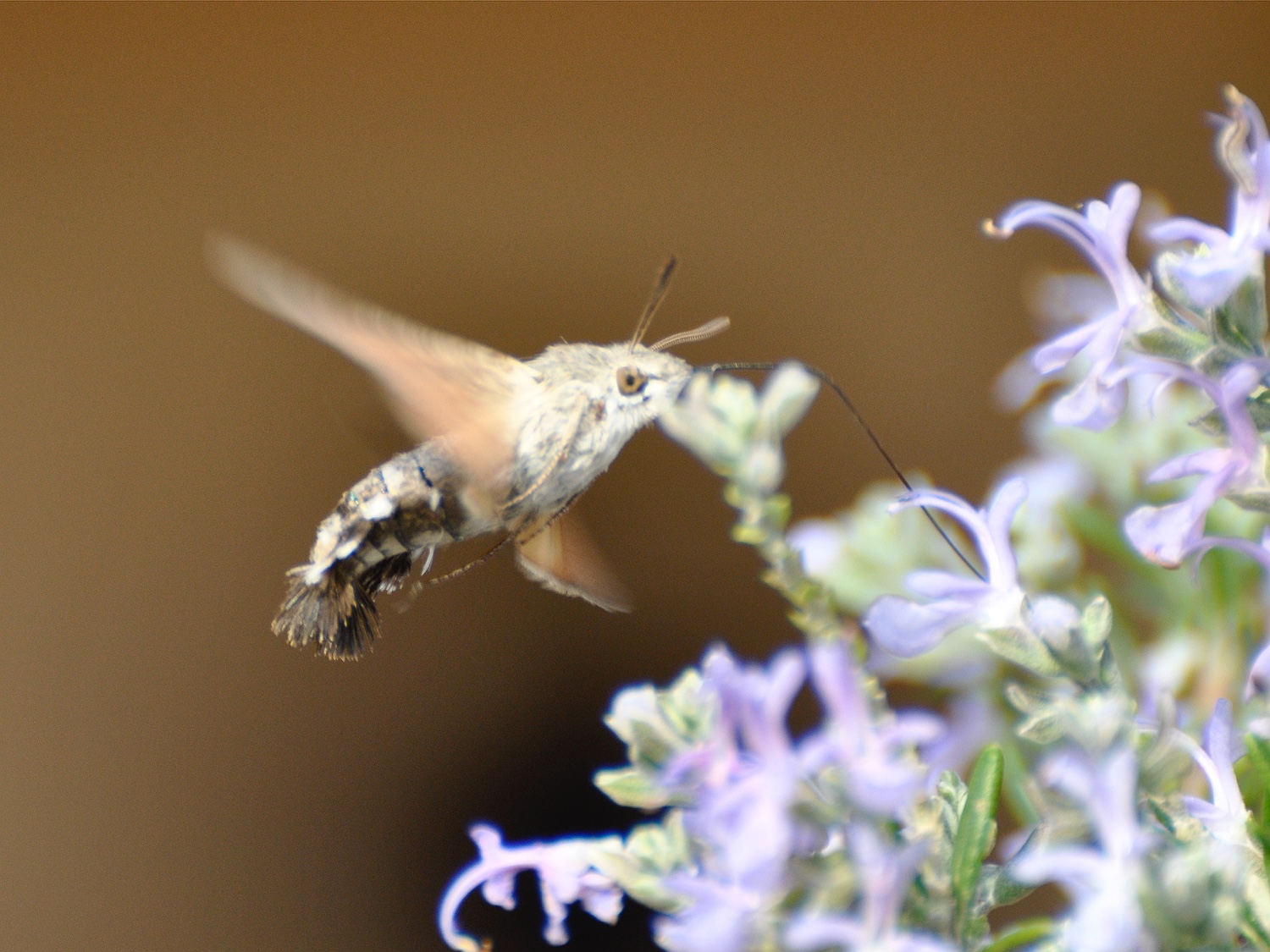
The Hummingbird hawk-moth sucks nectar from flowers in flight. Photo by Winfried Scharlau
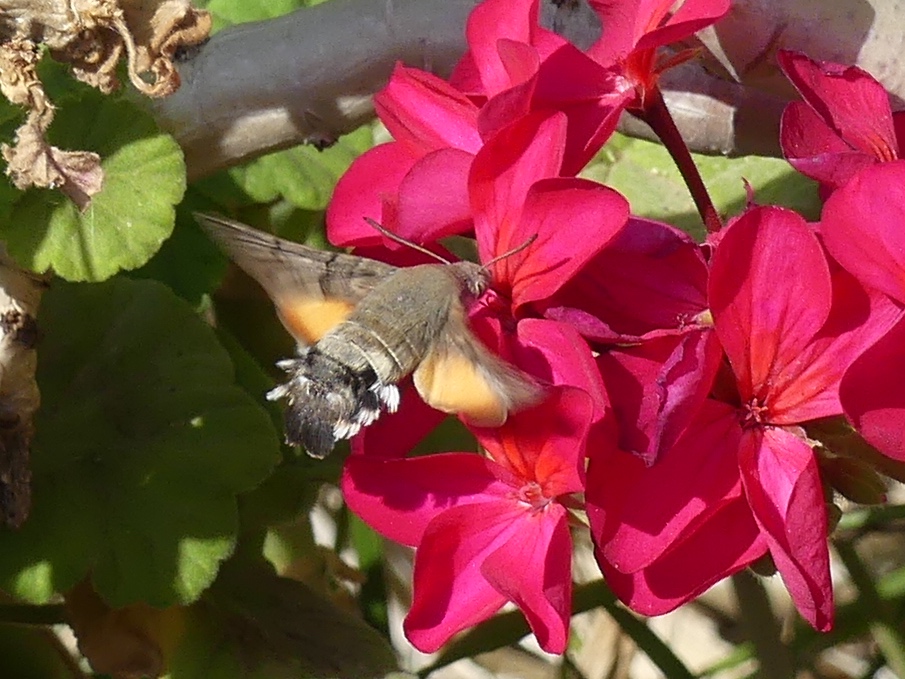
In size and behaviour it strongly resembles a hummingbird.
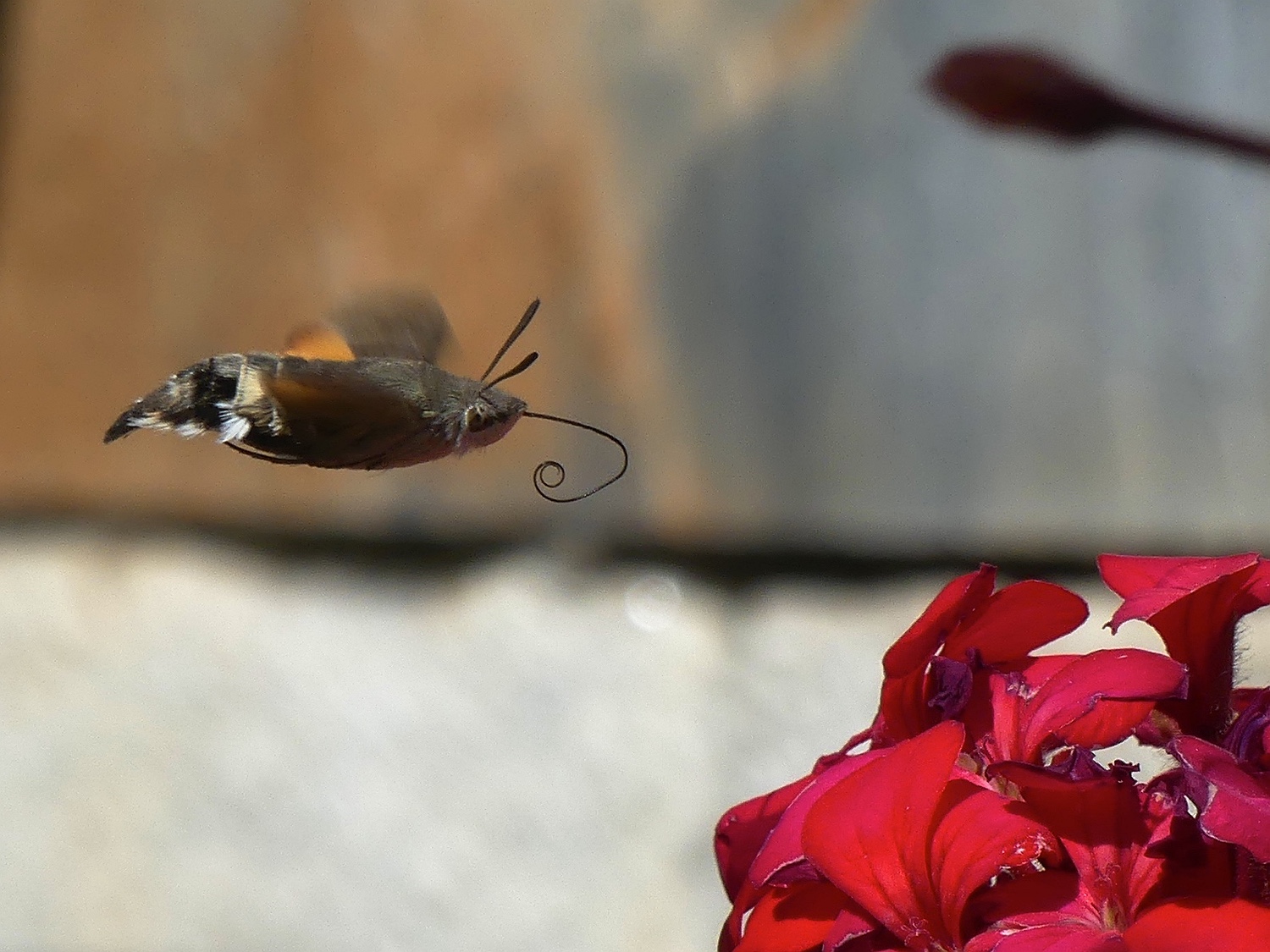
Here you can see the long proboscis of the Hummingbird hawk-moth.
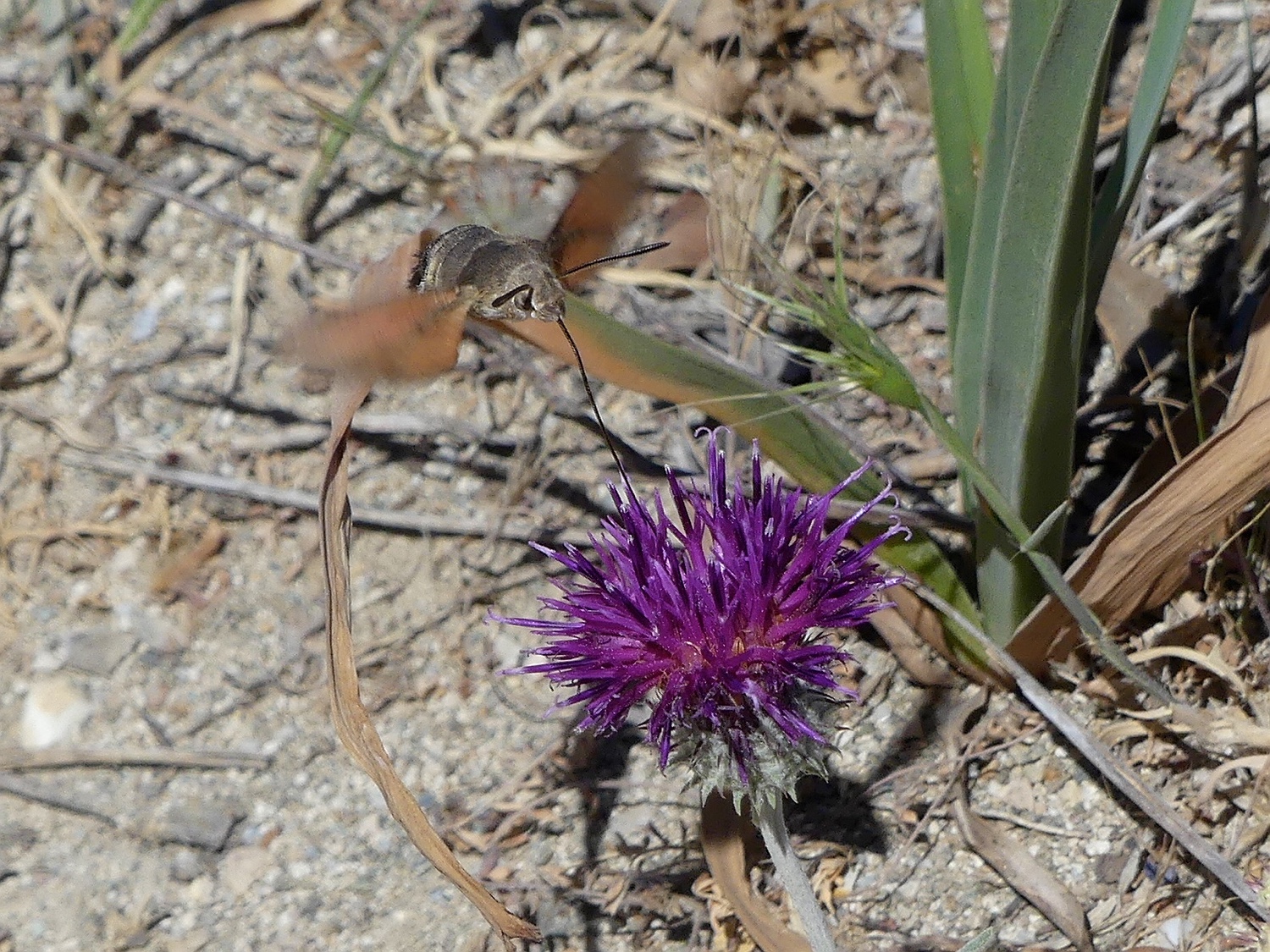
…and yet another picture!
Saturniidae
The family of the Saturniidae includes the largest butterflies. Only 10 species are found in Europe, most live in the tropics. Some species are used for silk production.
Giant emperor moth, Saturnia pyri
The Giant emperor moth or Giant peacock moth is the largest European lepidopteran. It has a wingspan of up to 15 cm. This species only appears during a short time in spring, usually in March or April. Its flight is clumsy; the animals often have difficulty taking off from the ground. The females emit a scent that attracts the males, who can detect the pheromone in incredibly low concentrations with their feathery antennae. The adult animals are unable to feed, and live only a few days, until they have mated and laid the eggs. The caterpillars live on fruit trees, sometimes causing considerable damage.
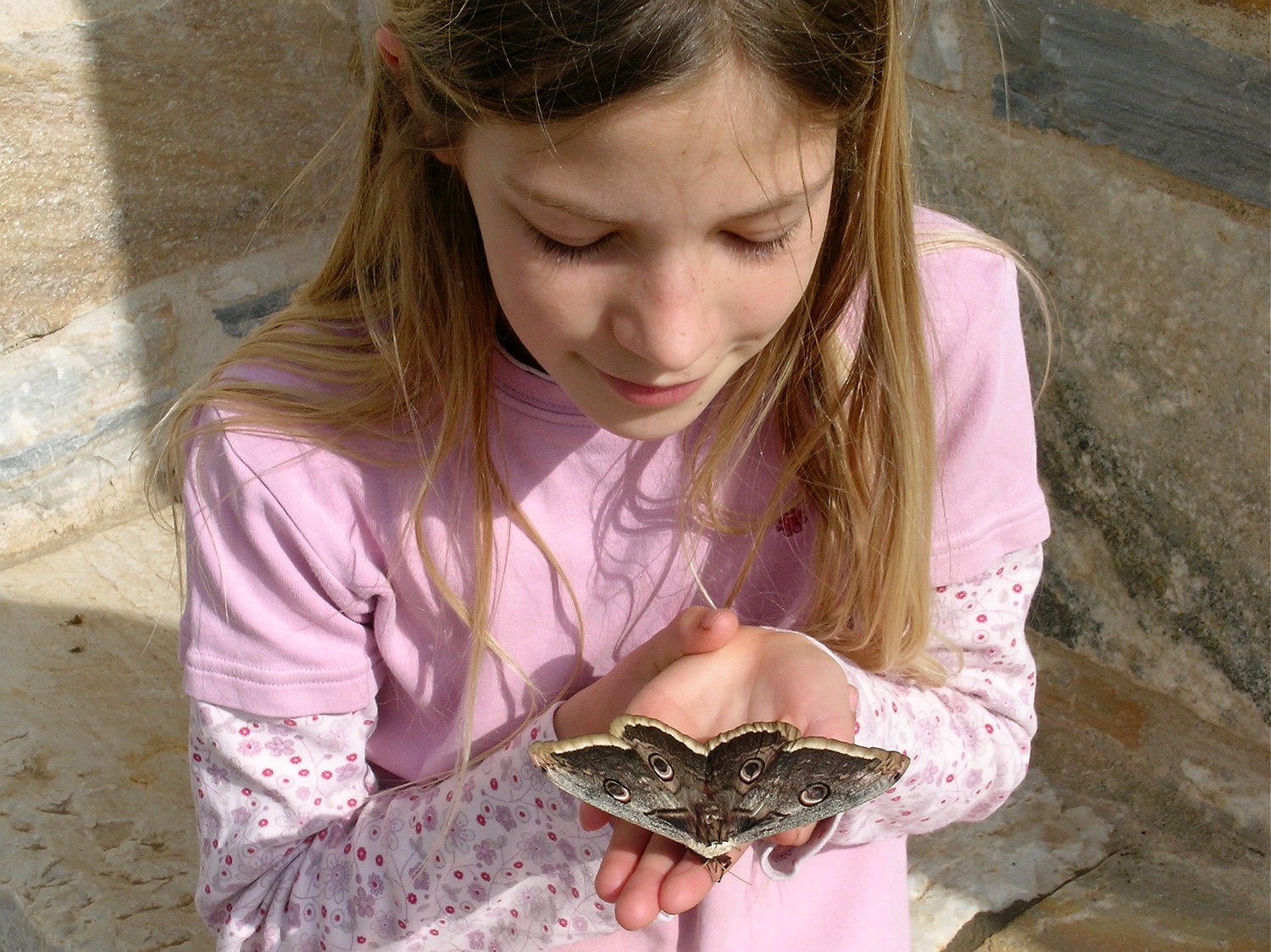
The Giant emperor moth is the largest European lepidopteran.
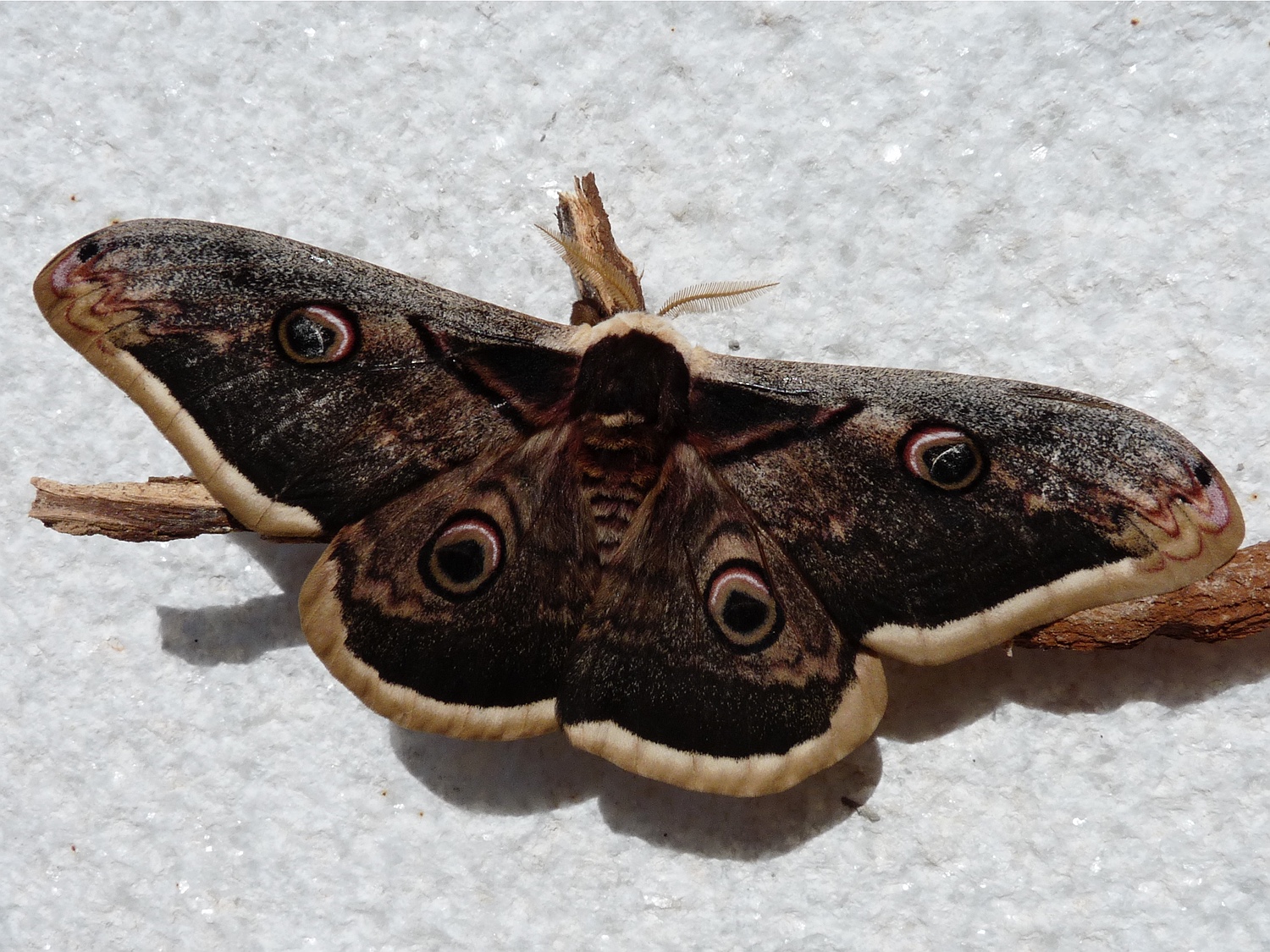
The beautiful wings have a light-coloured edge and large eye spots. The males use their feathery antennae to detect the pheromones secreted by the females.
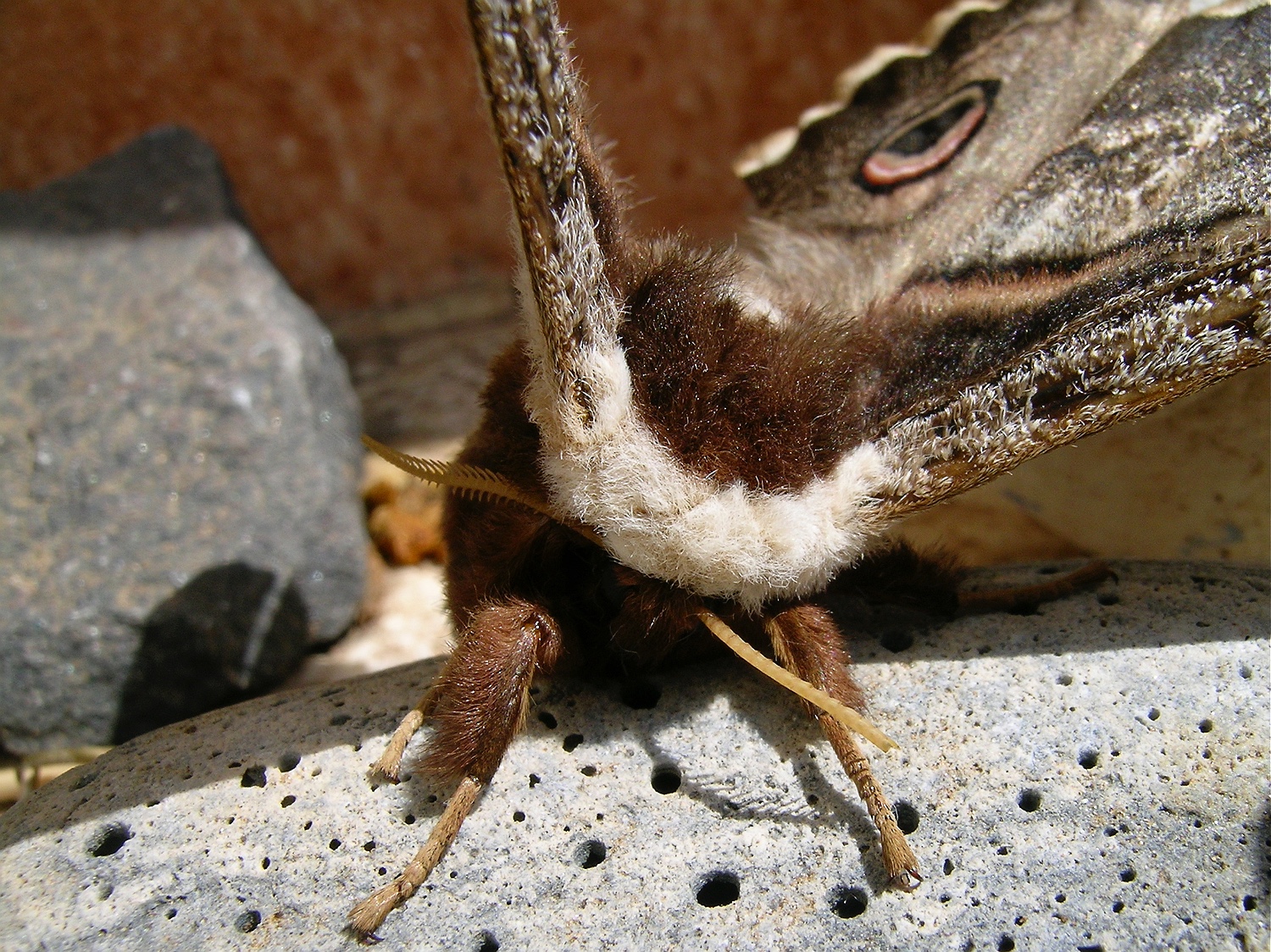
The thick body is covered in furry hair.
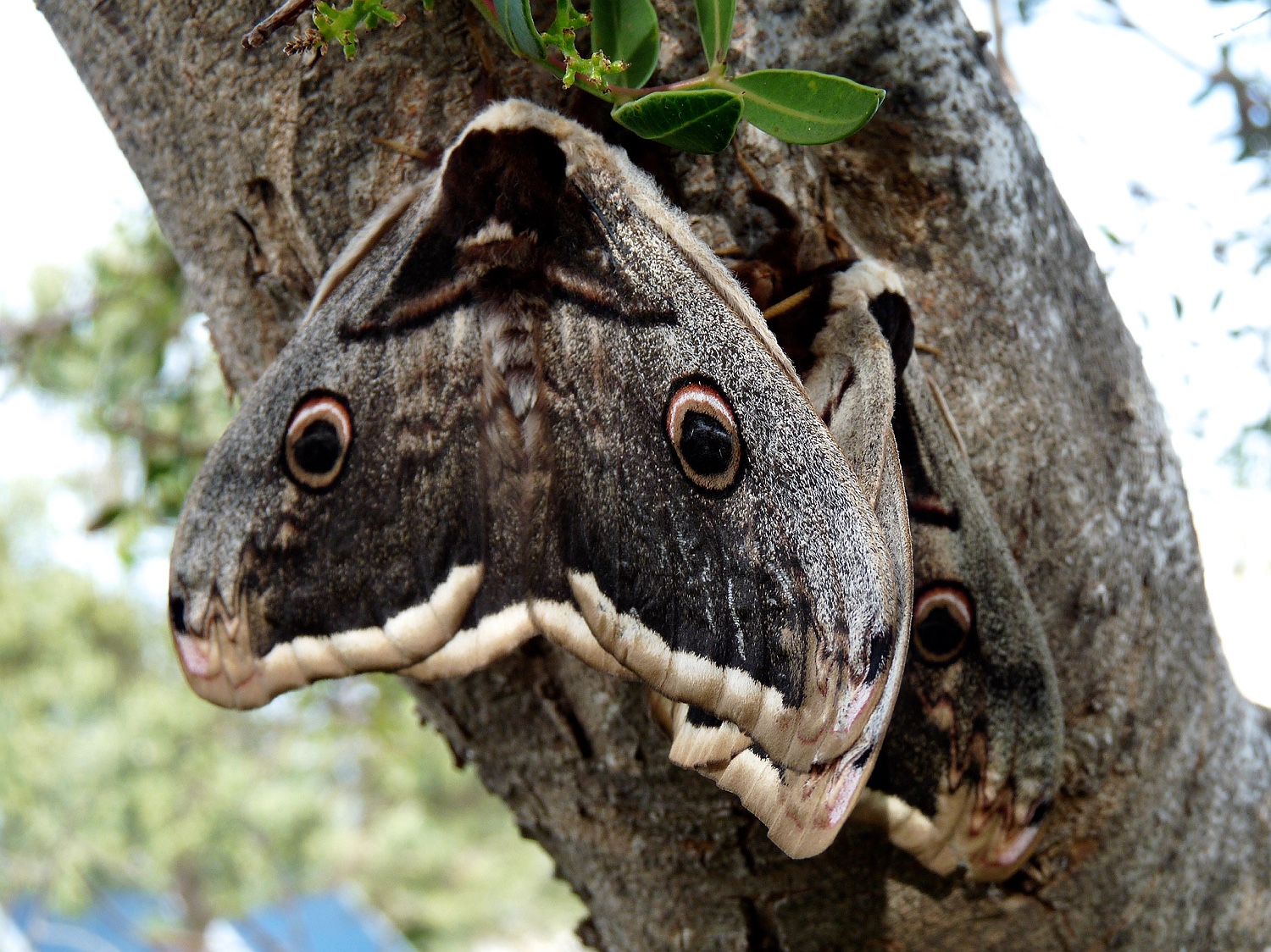
Giant emperor moths mating
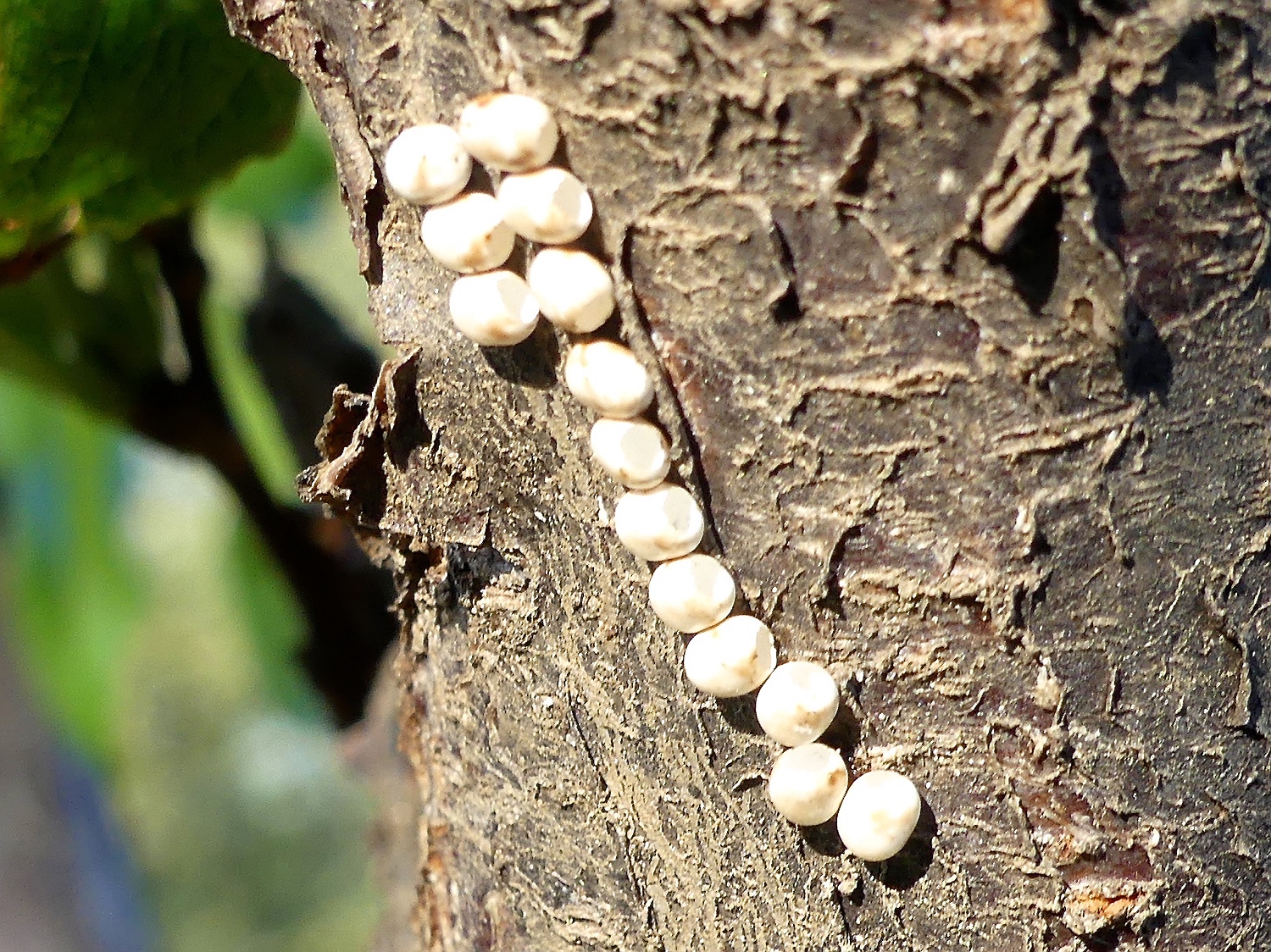
The eggs are laid mainly on fruit trees.
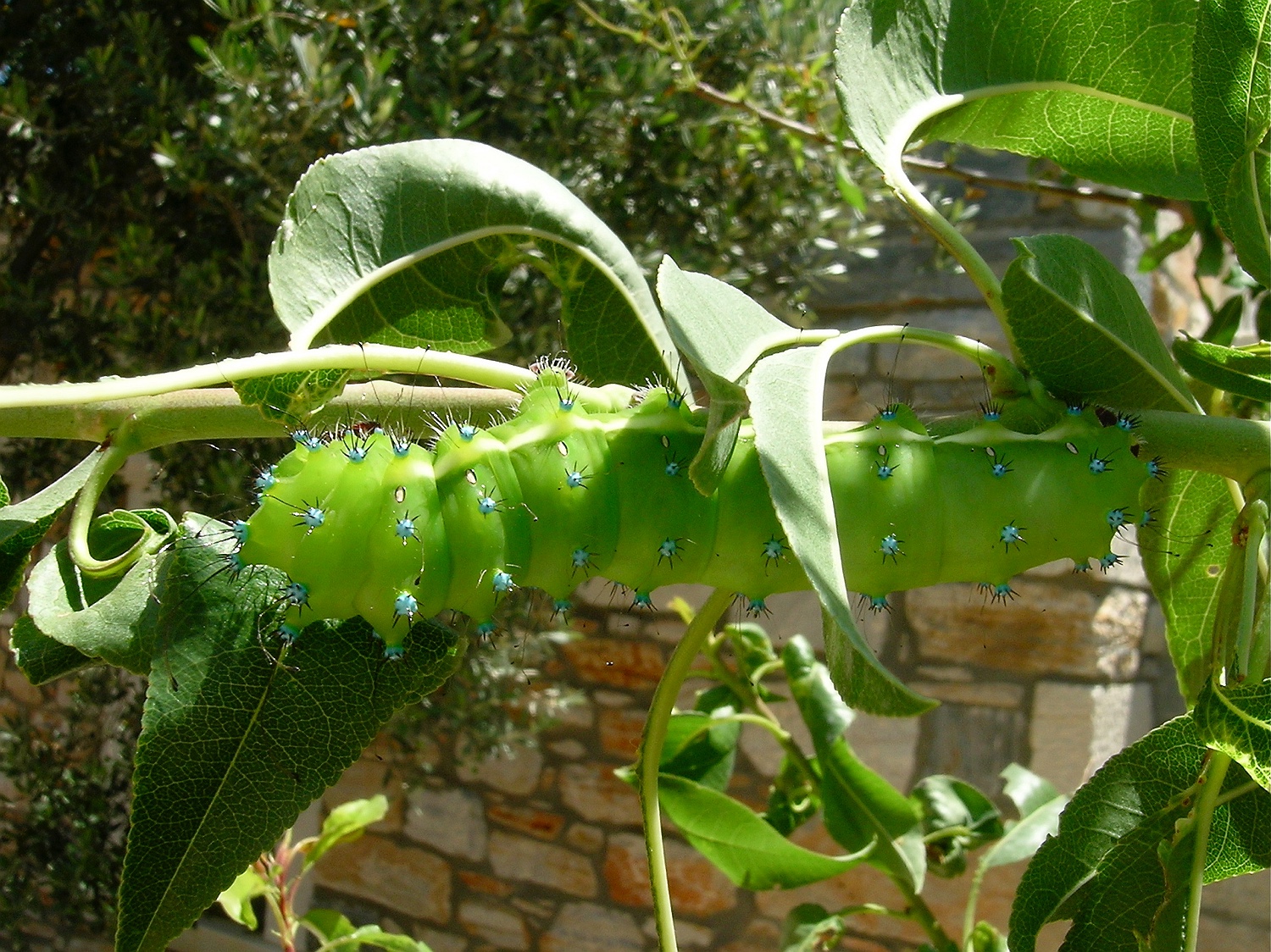
The large caterpillars are green with blue spots.
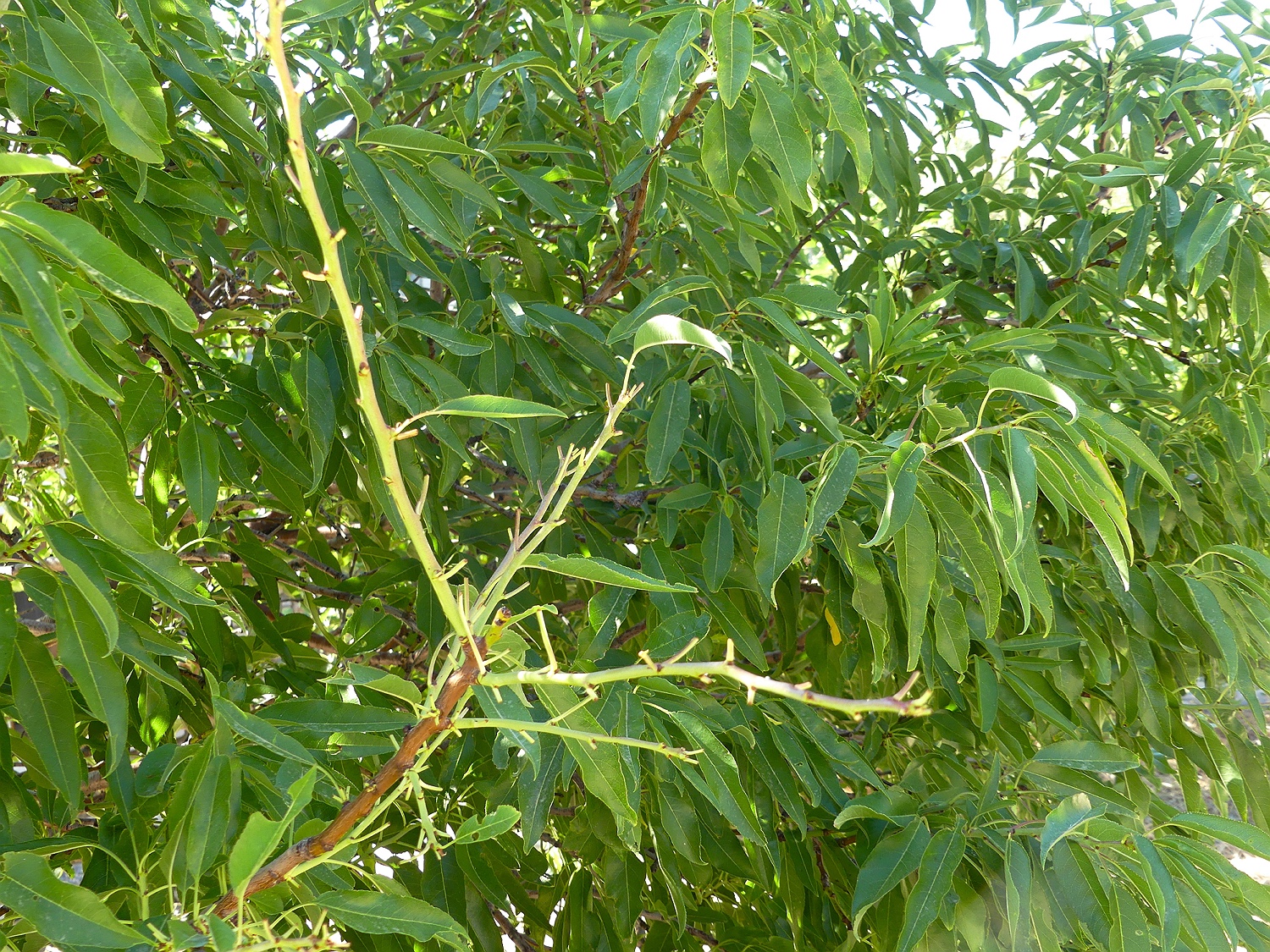
They can cause some damage to fruit trees by eating the leaves.
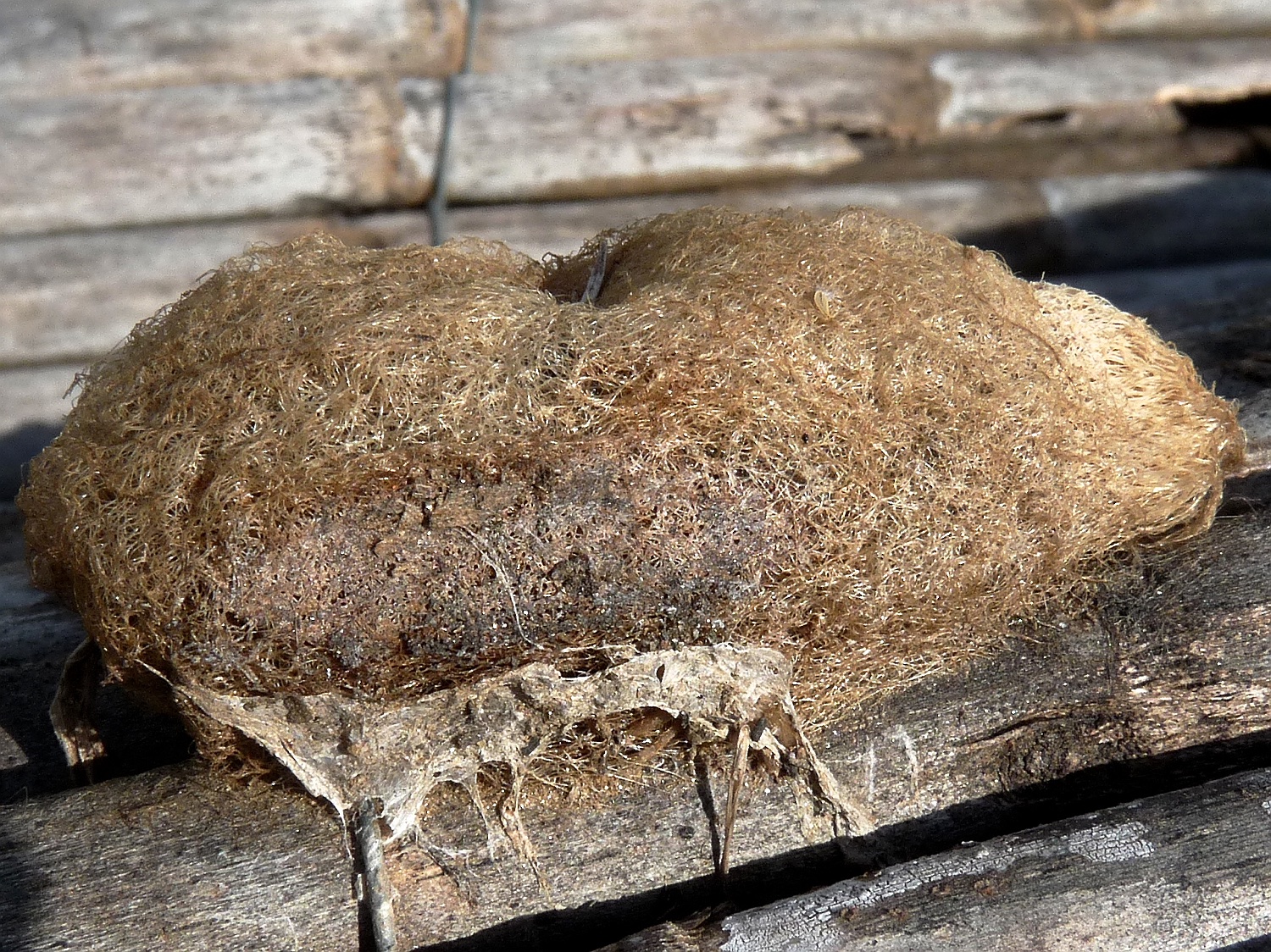
The caterpillars spin large cocoons in which they pupate.
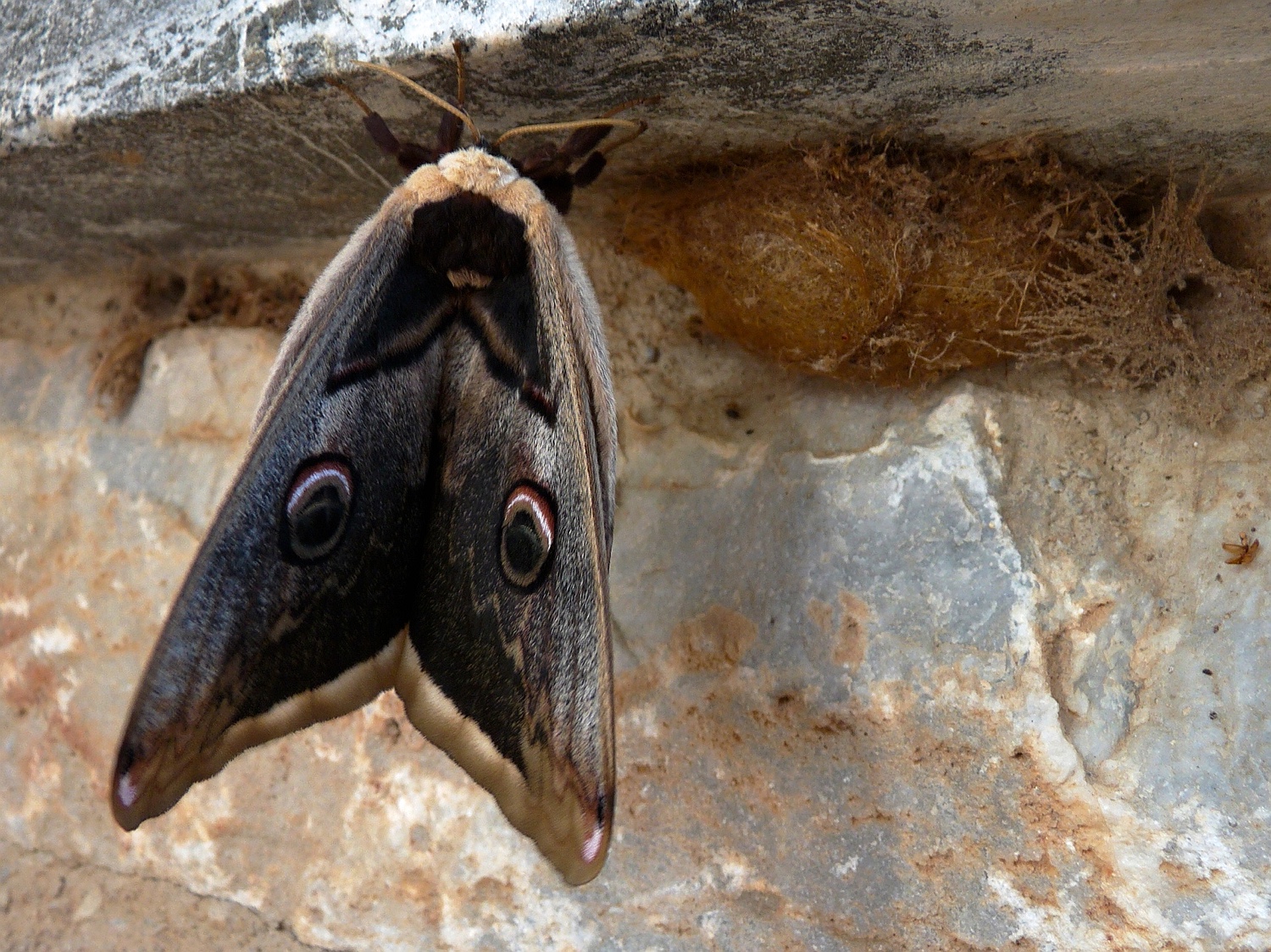
Newly “hatched” Giant emperor moth; the cocoon can be seen on the right.
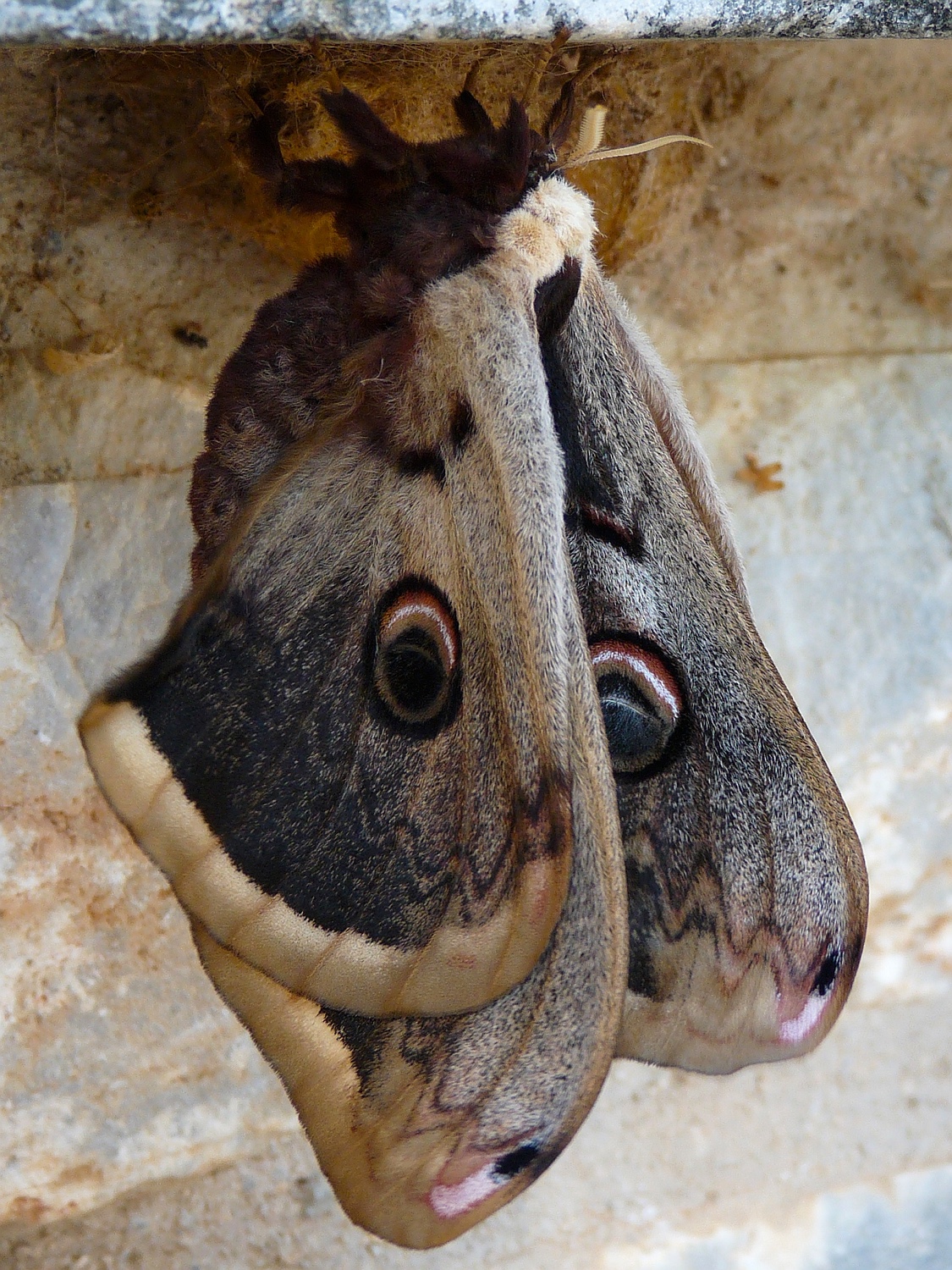
Immediately after hatching, the wings are still very soft and flexible: it took hours for this specimen’s wings to harden. The moth did not fly away until the following evening.
Owlet moths, Noctuidae
Owlet moths are a large family of moths that includes species of quite varied appearance.
Silver Y, Autographa gamma, L.
The Silver Y is one of the many small moths found on Naxos; it is quite common. This species is not very specialised in terms of its habitat and diet and sometimes occurs in large numbers. It is also active during the day. There are several similar species that are very difficult to distinguish, so the identification is not certain.
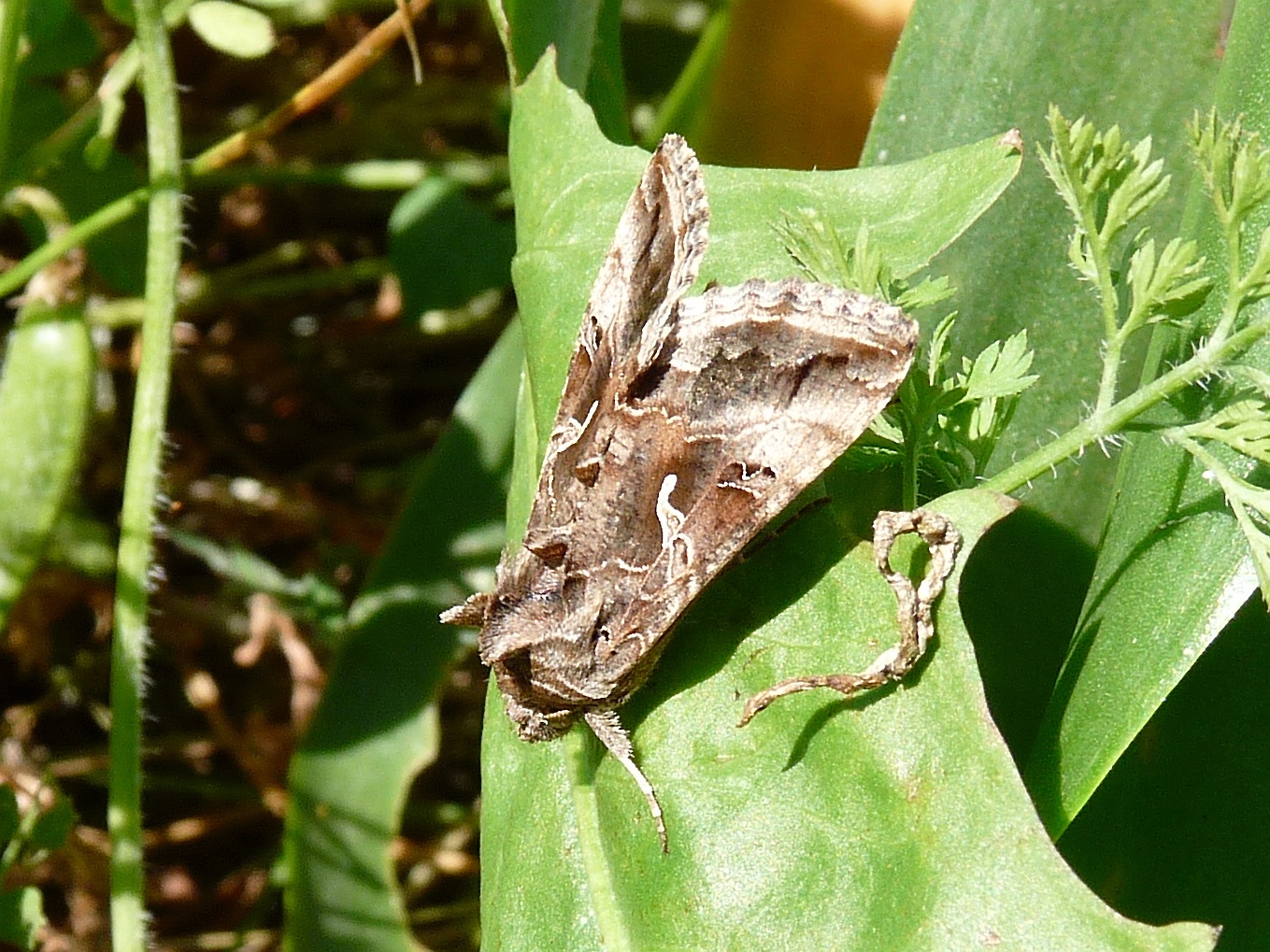
The Silver Y usually holds its wings folded at an angle. The wings have strange upright protuberances and a characteristic white hook-shaped spot which gave the moth its name.
Amephana dalmatica, Rebel
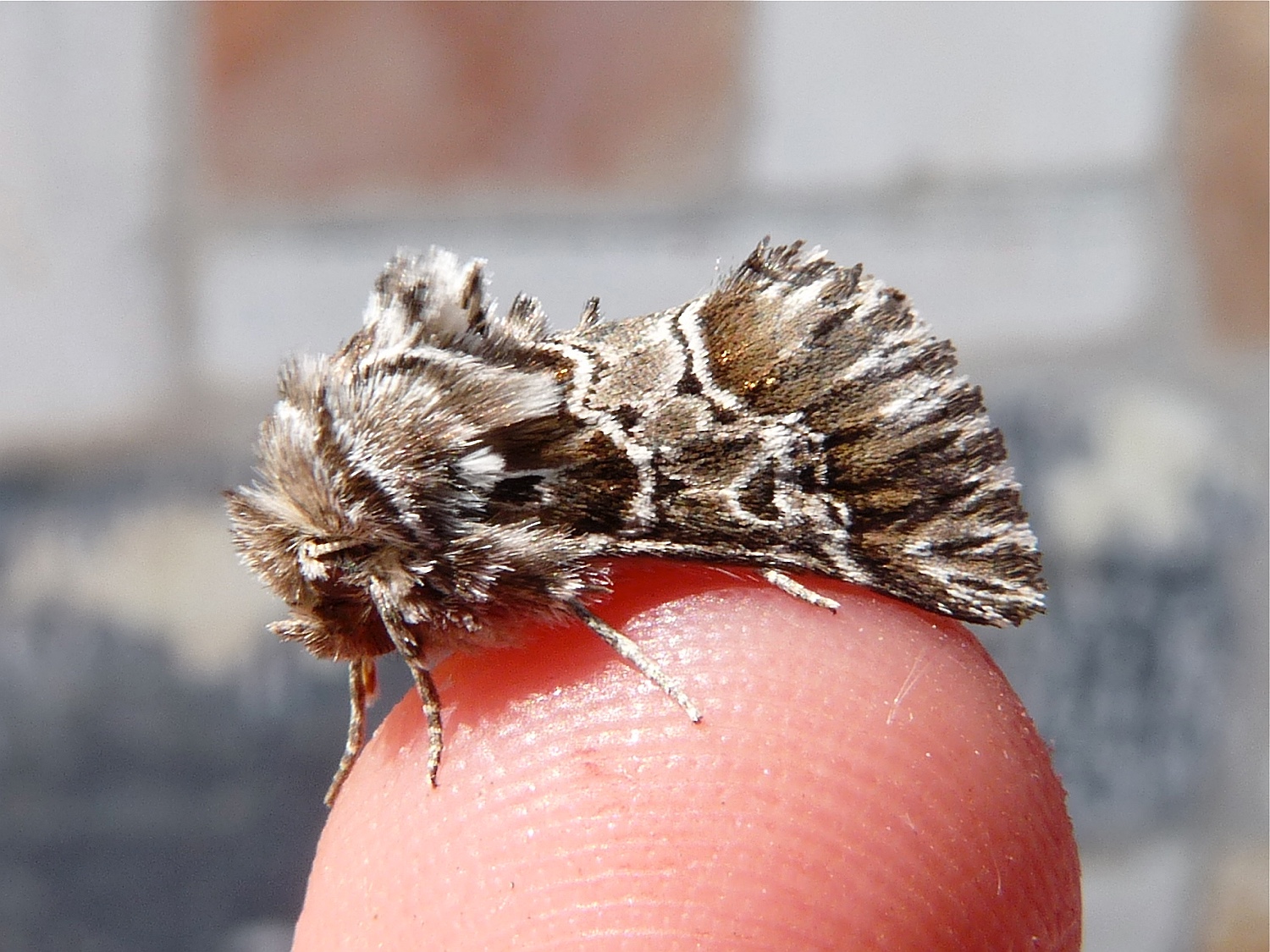
And another small, pretty species of owlet moth.
Euteliidae
The small family Euteliidae comprises around 500 species, of which only two species (of the genus Eutelia) occur in Greece.
Eutelia adulatrix, Hübner
This small species can sometimes be seen the winter. It sits in a strange posture with spread wings and an arched abdomen.
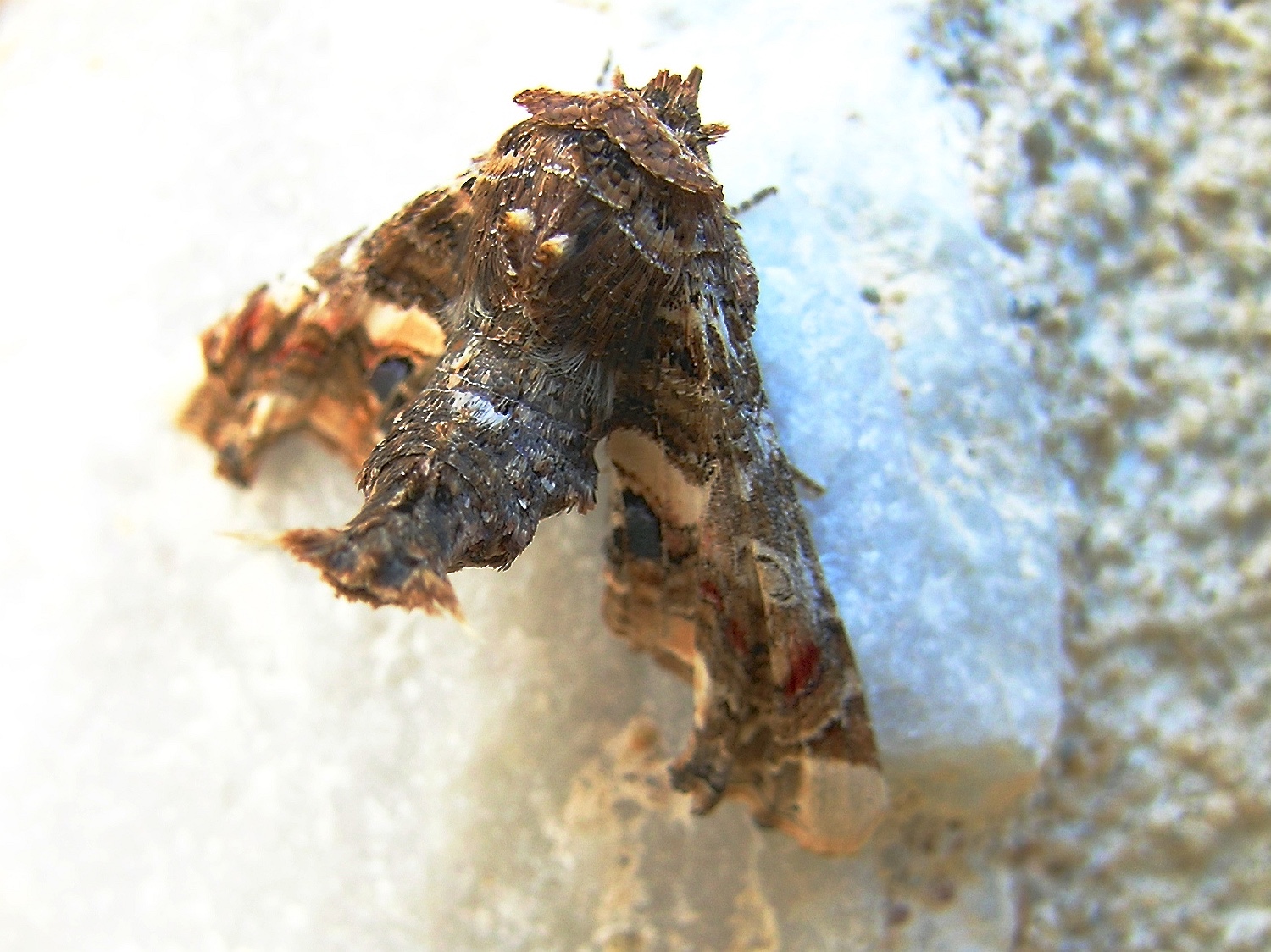
This small moth has strongly patterned wings with bluish eye spots on the hind edge.
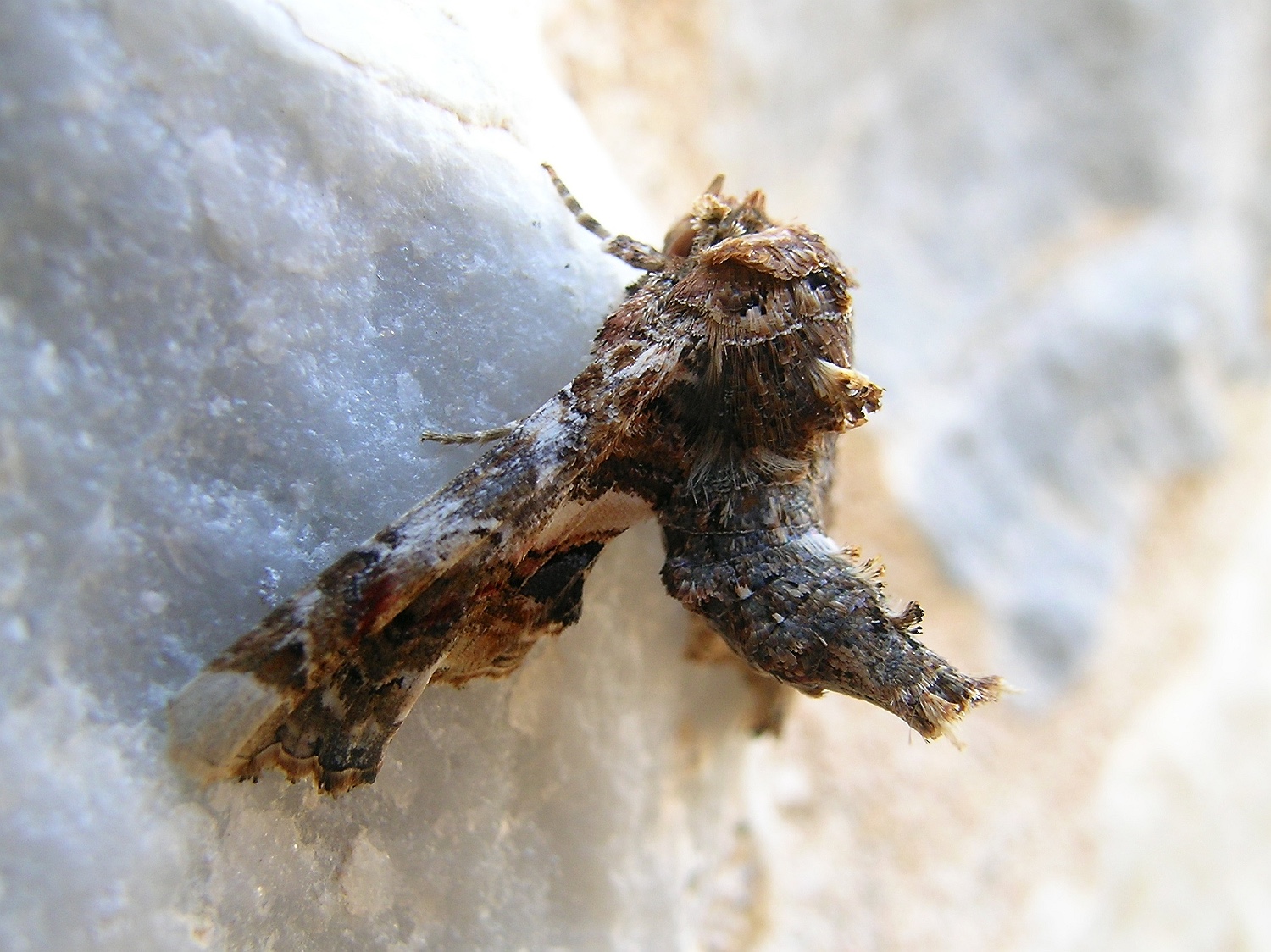
Here you can see how the moth holds the abdomen curved upwards.
Erebidae
The family Erebidae is one of the largest and most diverse families within the moths. Sometimes this group is only given the rank of a subfamily.
Catocala nymphaea, Esper
Catocala nymphaea is one of the most common nocturnal moths on Naxos which sometimes gathers in large numbers around lights, especially in windless nights.
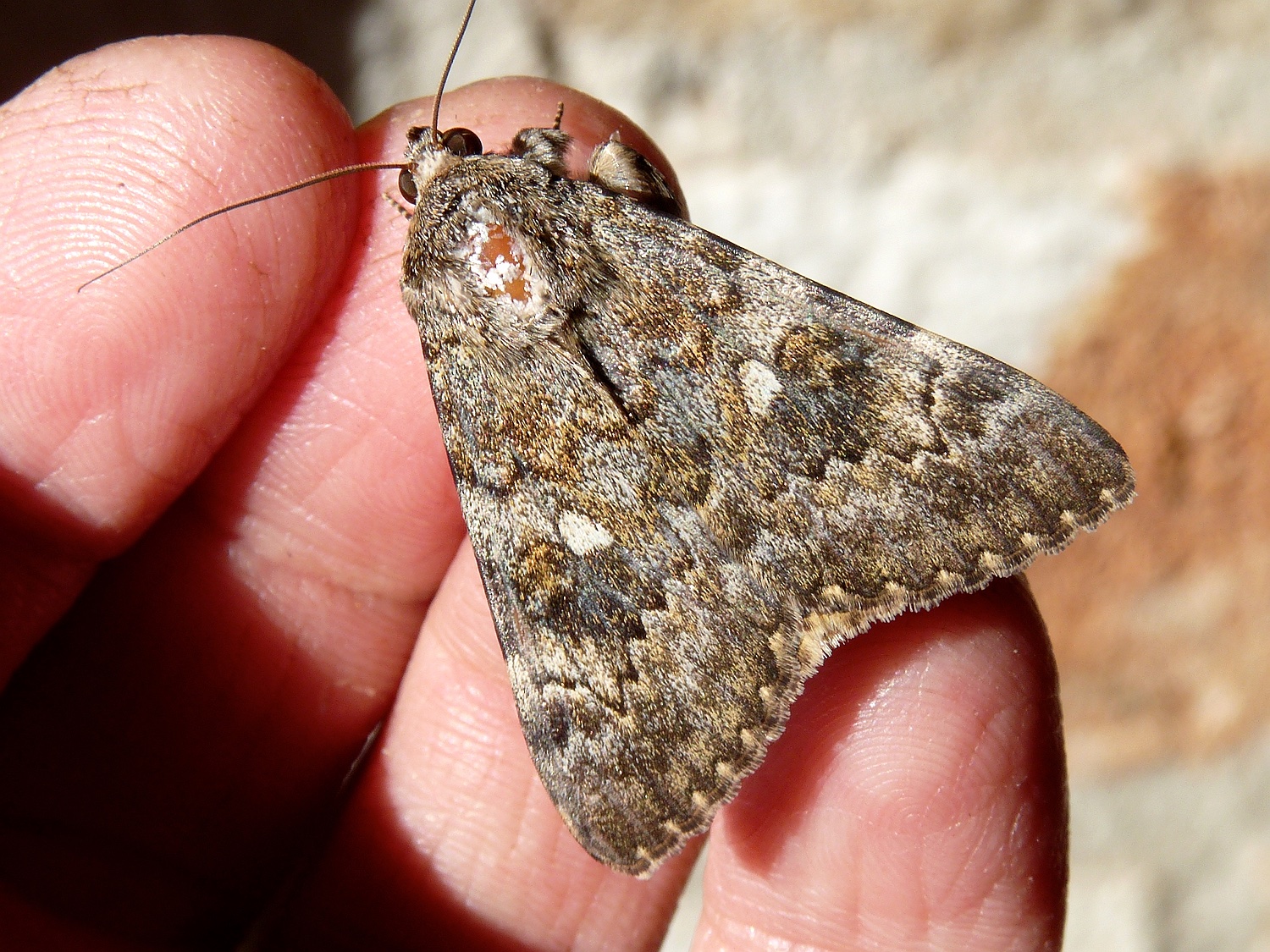
The forewings of Catocala nymphaea have an inconspicuous grey pattern. Typical of this species are the two whitish spots approximately in the middle of the wings.
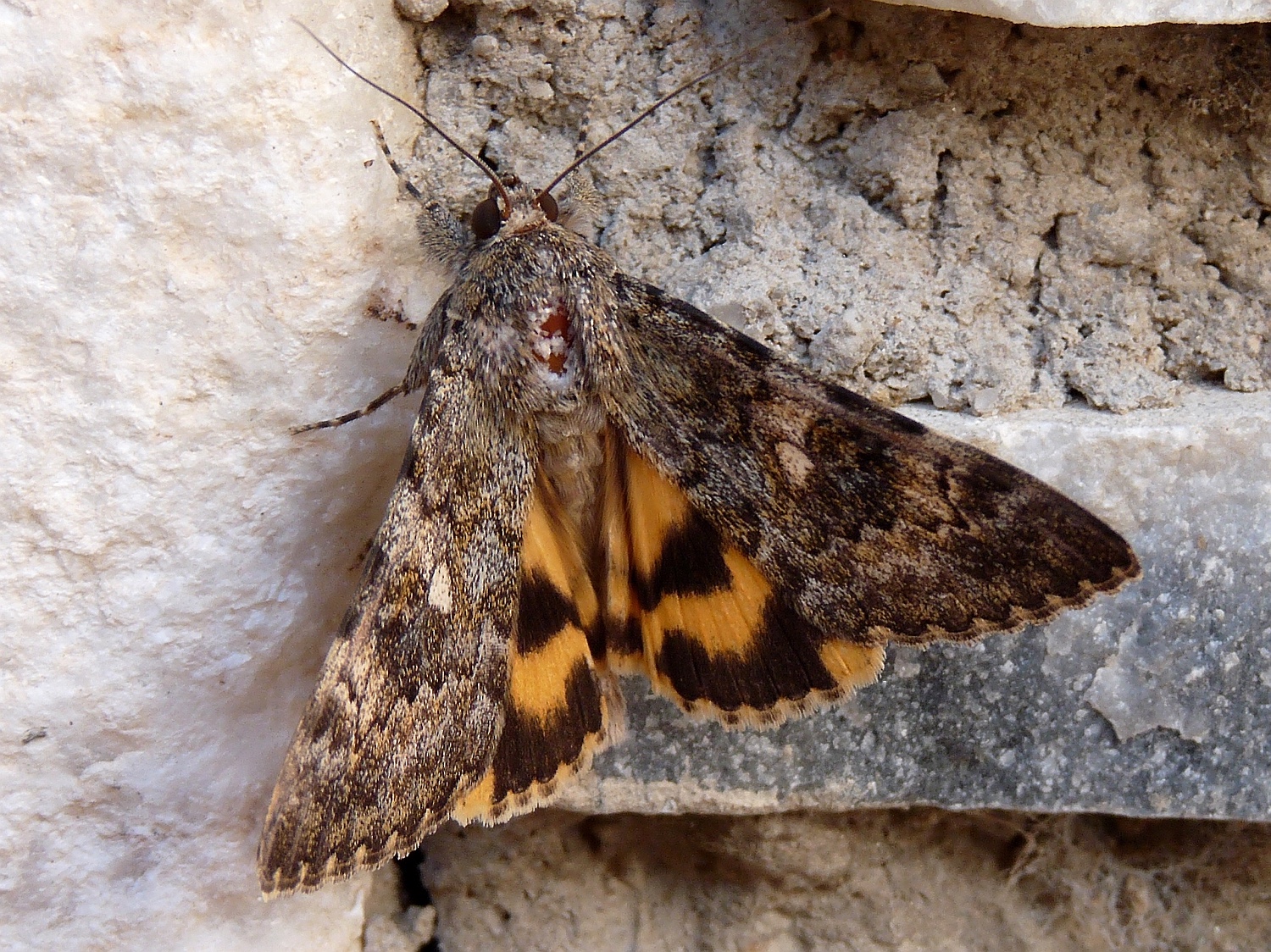
As in all species of Catocala, the undersides of the wings are orange to reddish in colour and have two broad black stripes.
Dysauxes famula, Freyer
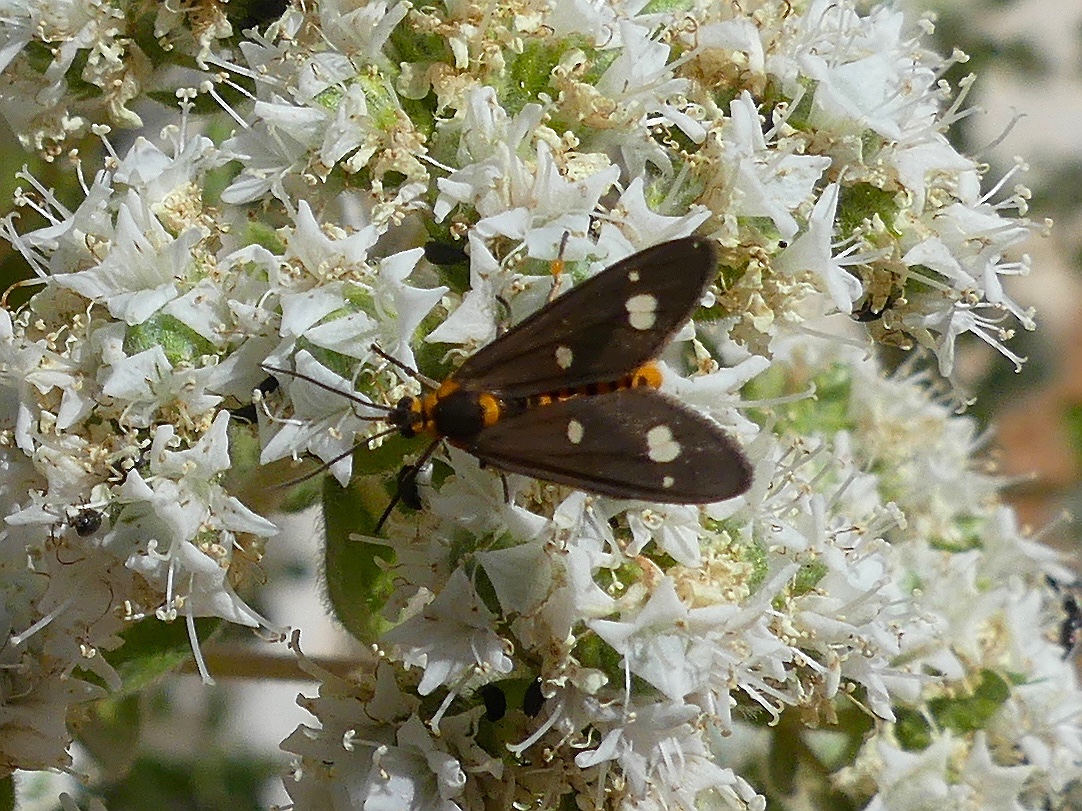
Dysauxes famula can be recognised by its dark brown colour and orange markings on the “neck”; the body is also mostly orange. The white dots can vary slightly in shape.
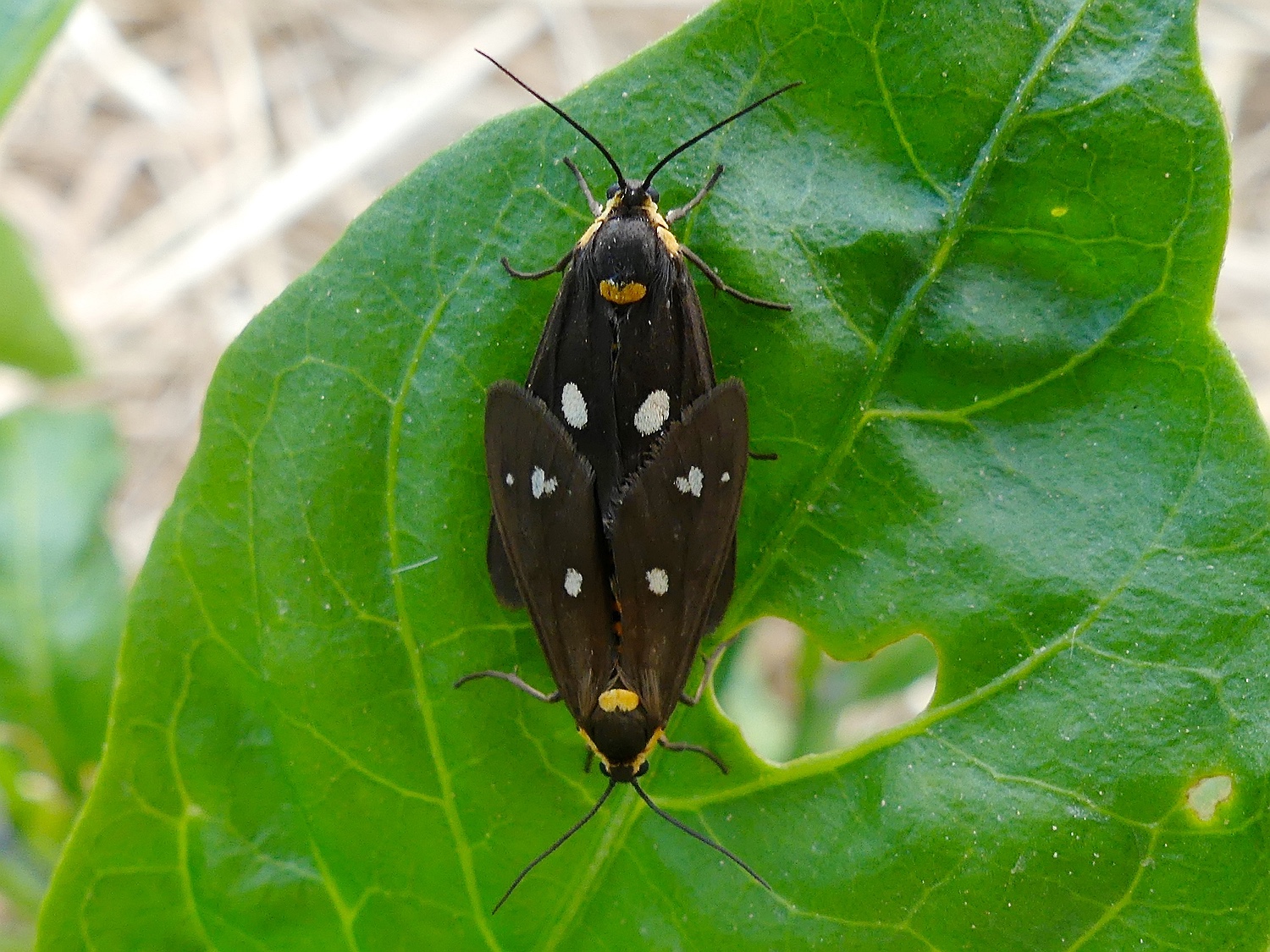
During mating. This pretty moth is rather common in our region; it is active during the day.
Geometrician, Grammodes stolida, Fabricius
The Geometrician can be recognised by the striking stripes on its wings. It usually holds its wings in a triangular shape.
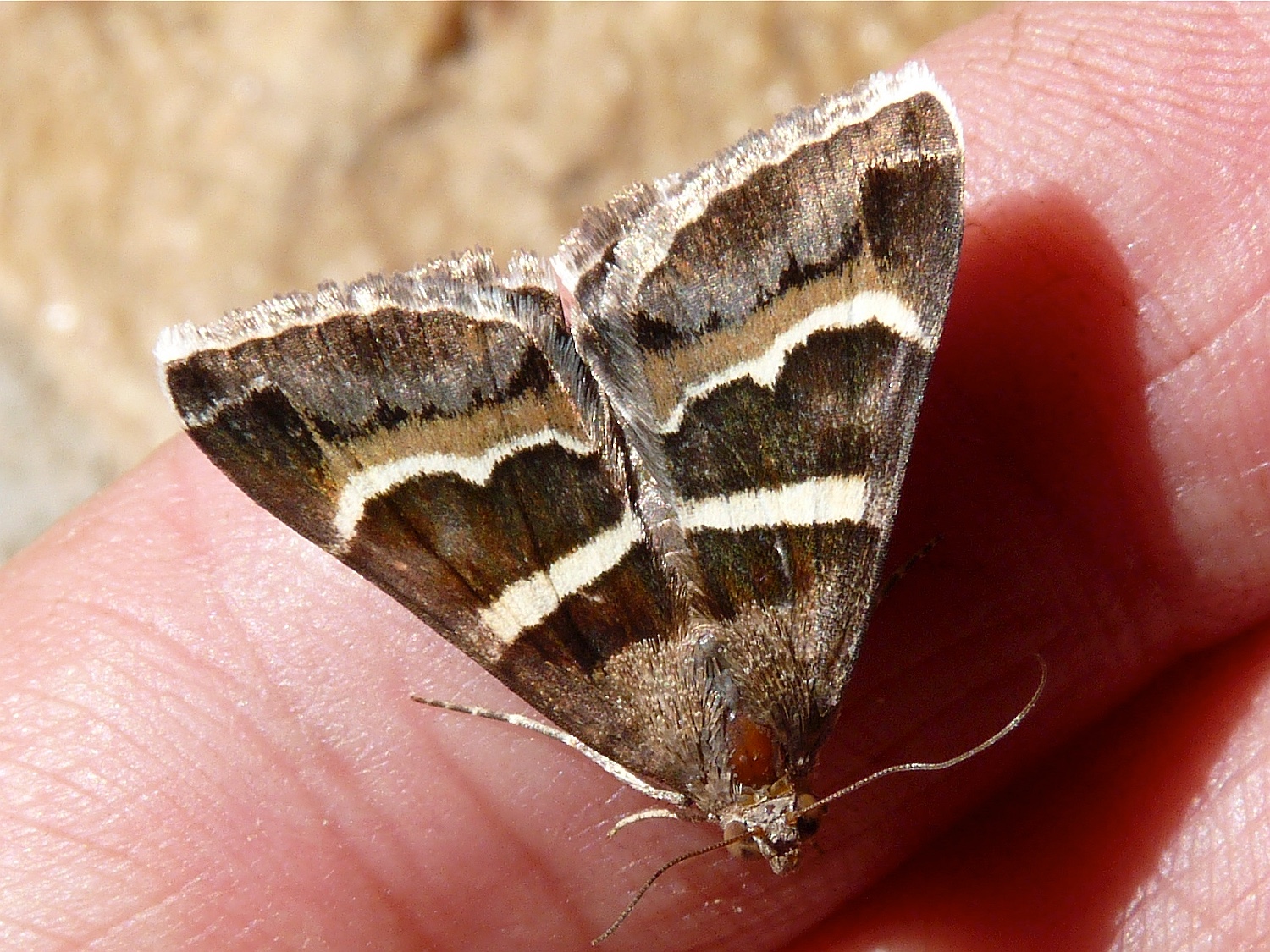
One of the many inconspicuous but very pretty moths!
Green drab, Ophiusa tirhaca, Cramer
The Green drab can occasionally be seen in autumn when it is attracted to lights at night. The caterpillars live on mastic trees and similar plant species.
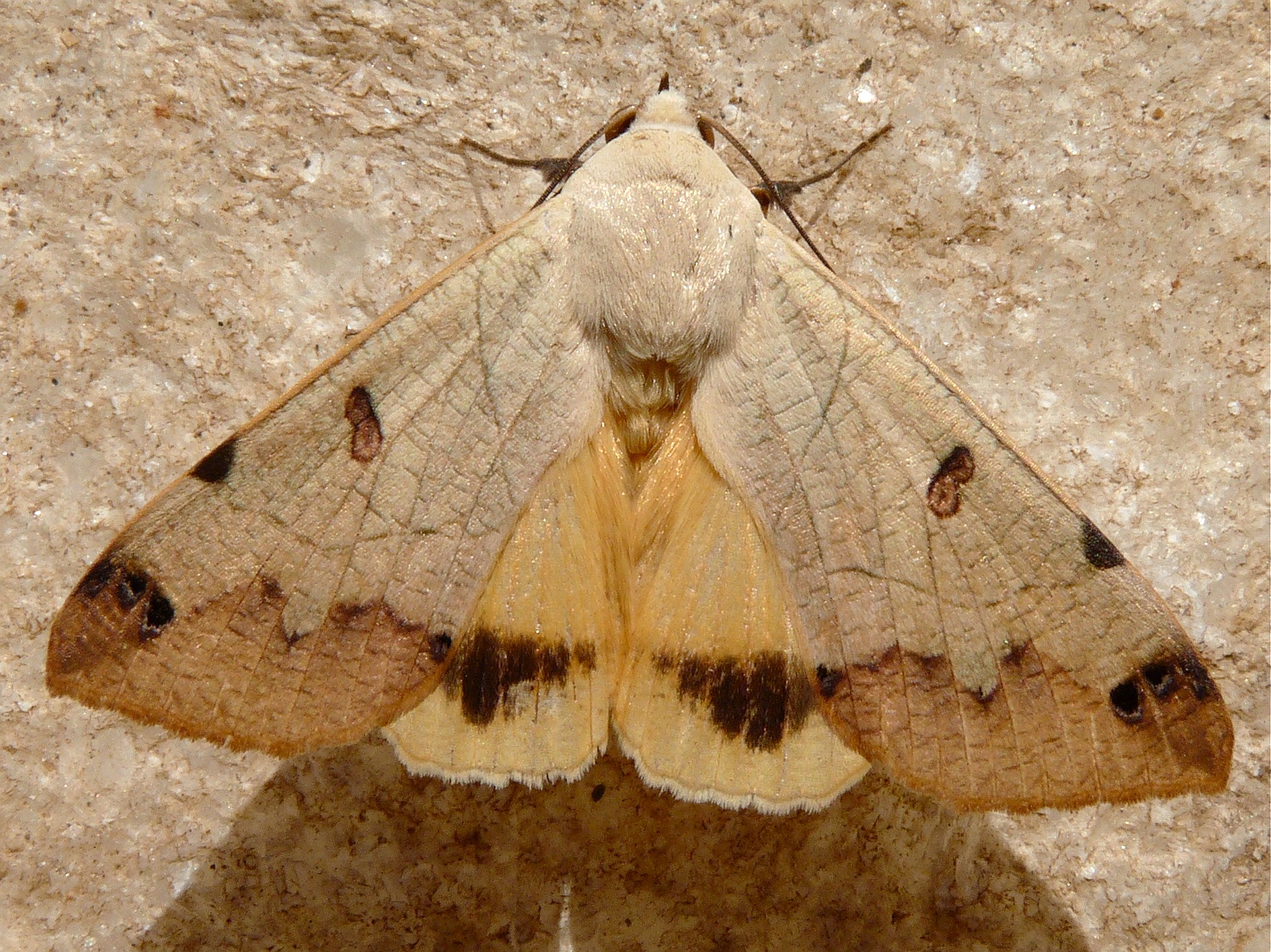
The Green drab is grey or yellowish with small spots and stripes.
Subfamily Lymantriinae
The subfamily Lymantriinae, which comprises around 3,000 species, consists of medium-sized, rather inconspicuous moths, some of whose caterpillars are significant pests.
Sponge moth, Lymantria dispar, L.
The Sponge moth is widespread in southern Europe, and is very common on Naxos, in some years occuring in large numbers especially in May and June. The caterpillars live mainly on kermes oak and in some years can destroy large areas in south-eastern Naxos. The trees sprout new leaves at the end of June when the caterpillars disappear, but later a second generation of caterpillars hatches, eating the leaves again. In the event of a severe infestation, this moth species causes considerable damage and the trees can sometimes die completely. In June, many of the predominantly diurnal moths can be seen, especially the males with their large antennae, fluttering around the trees. They are very restless and hardly ever settle down, so it is not easy to take a picture.
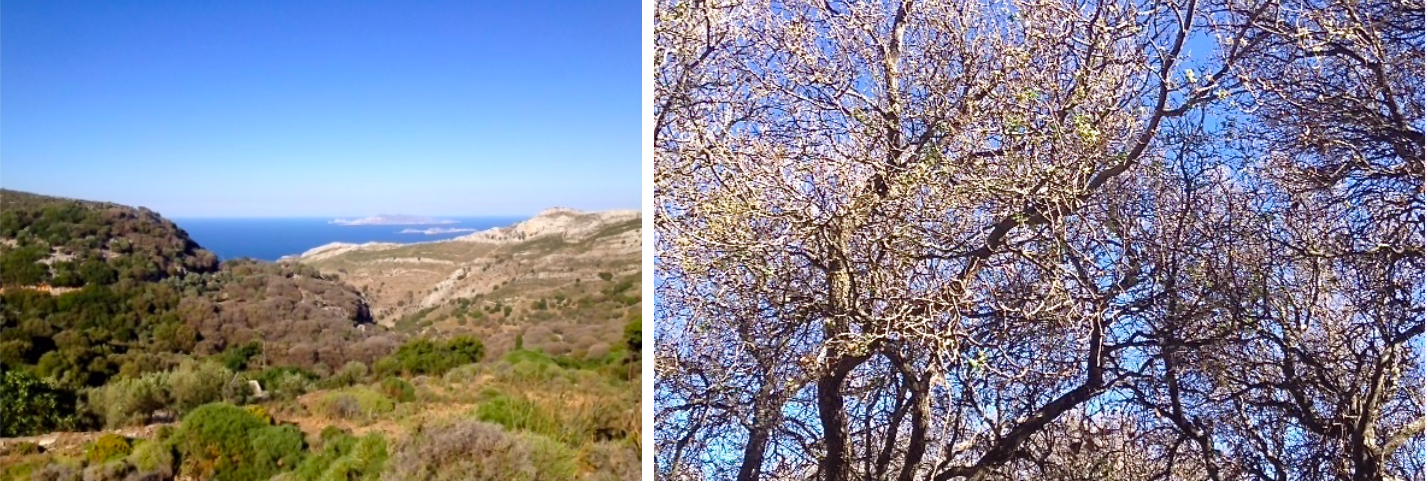
In spring, the Sponge moth may become so abundant in some years that its caterpillars strip entire groups of trees of their leaves, as can be seen in the middle of the left picture. The trees sprout new leaves in early summer, which are often eaten again by a second generation of caterpillars.
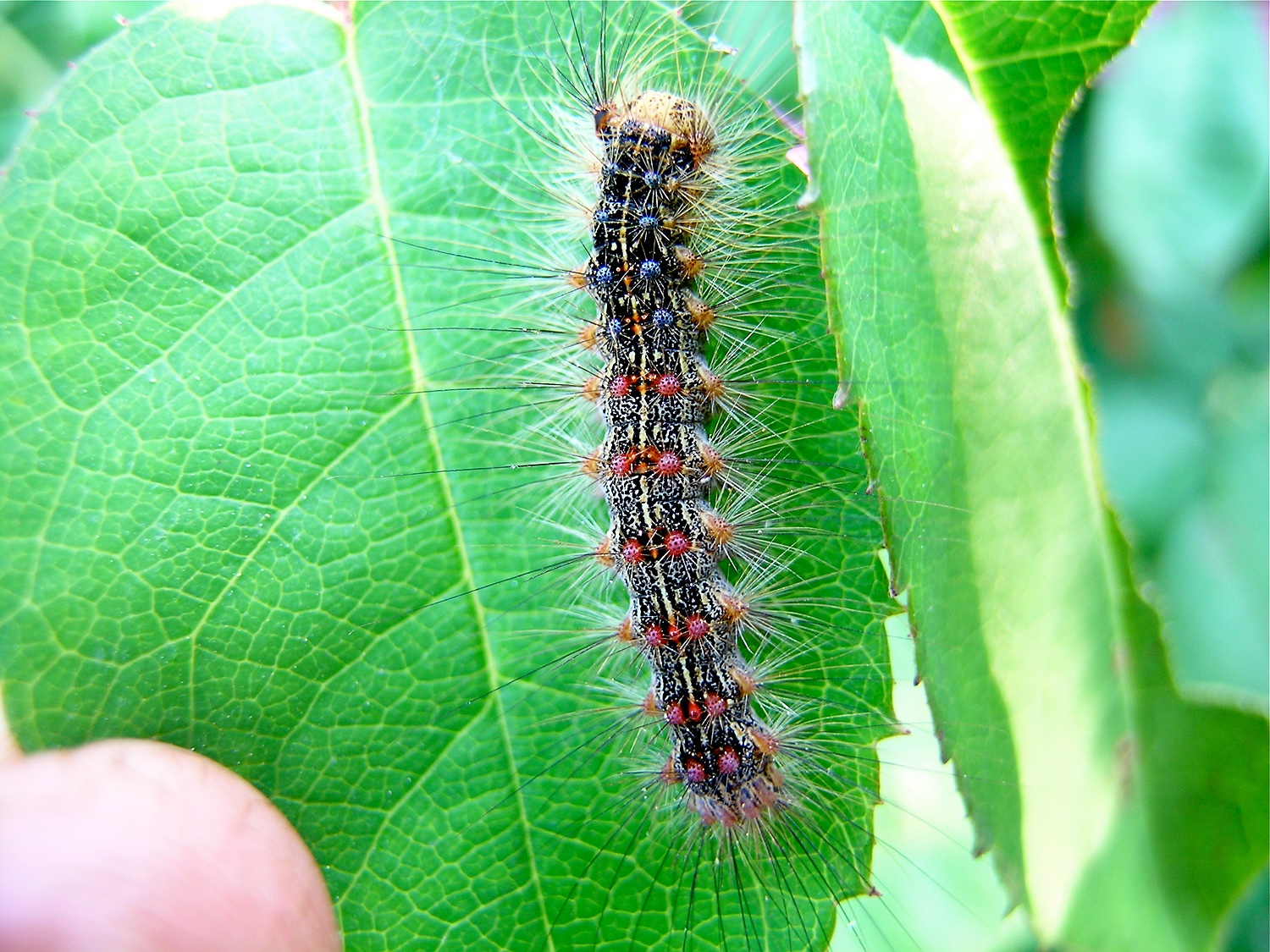
The caterpillar of the Sponge moth can be recognised by its long white and black hairs, which sit on red, orange and blue bumps. I would like to thank Lepiforum for helping me identify this caterpillar and other species.
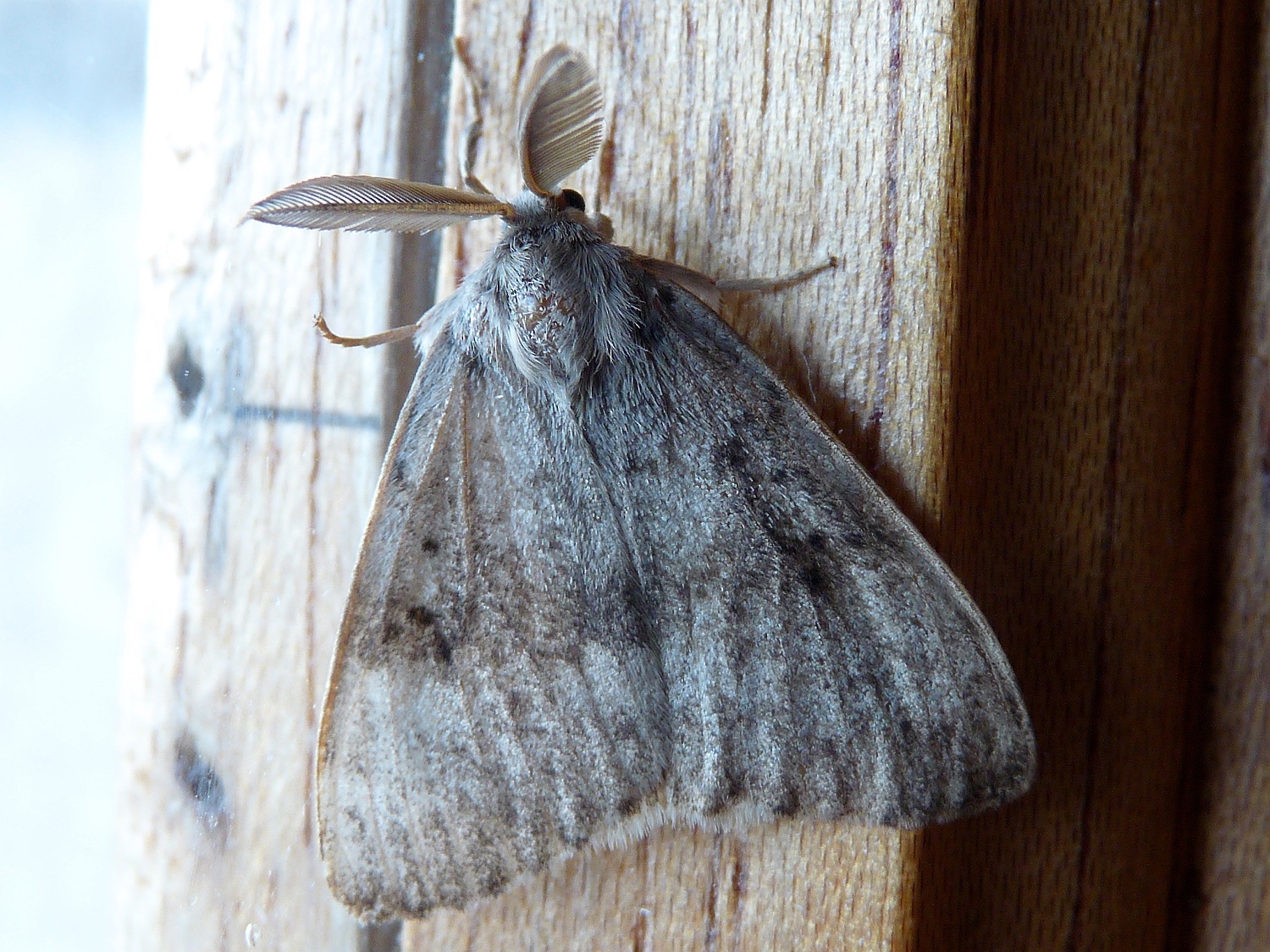
The moth is light grey in colour with no distinctive markings.
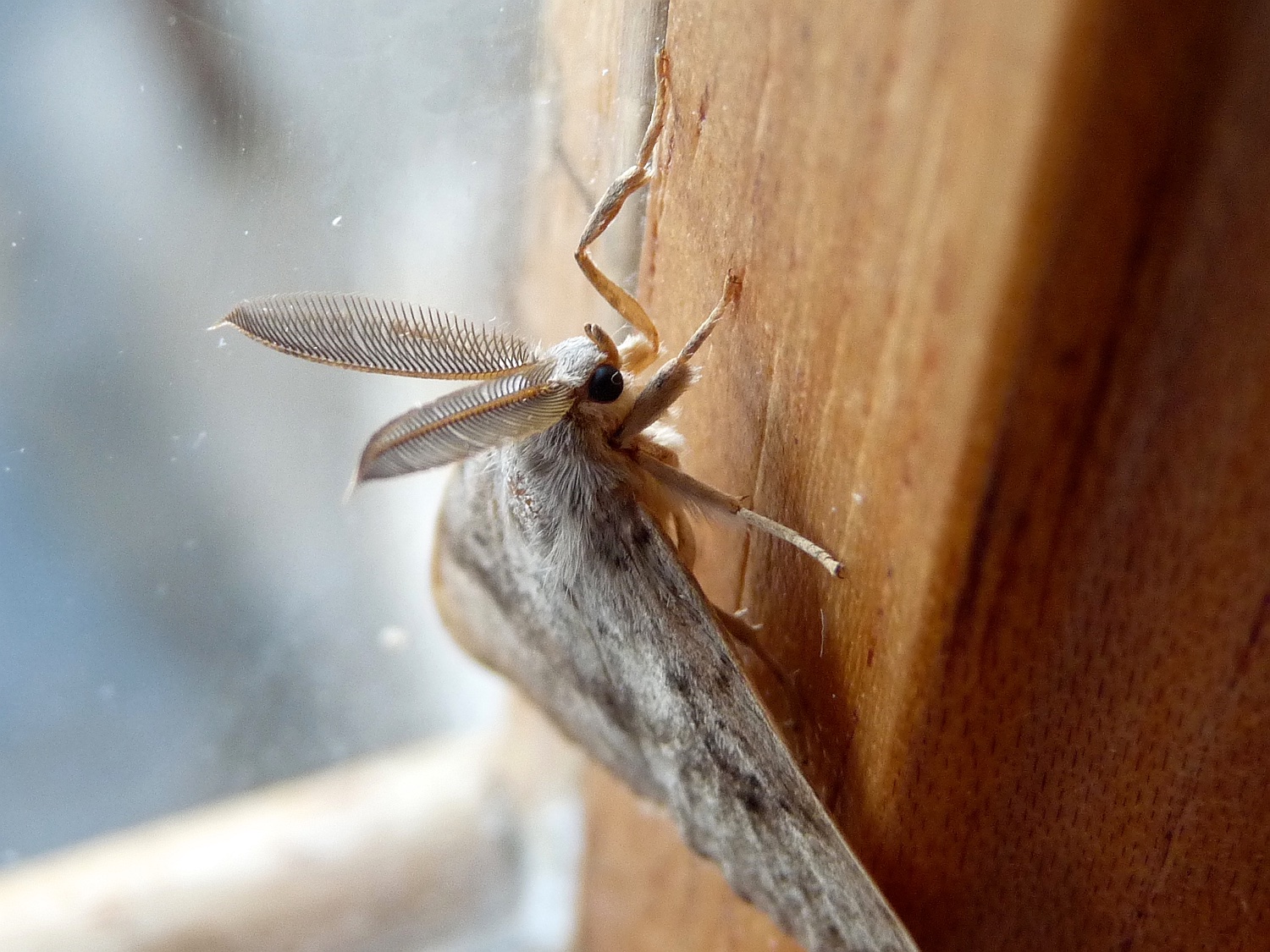
The males have conspicuous large, feathery antennae, which they use to locate females by their scent.
Subfamily Arctiinae
The Arctiinae, with around 11,000 species, are mainly found in the Neotropics; around 100 species occur in Europe. The more conspicuous species found in our region (genera Arctia and Euplagia) have bright red or orange hind wings, which are hidden under the black and white patterned forewings when the moths are sitting. Many species have tympanic organs on the third segment of their thorax, which they can use to produce ultrasonic sounds. These sounds probably help them to protect themselves from bats by confusing them.
Hebe tiger moth, Arctia festiva, Hufnagel
The Hebe tiger moth can be found in spring. It has a very beautiful black and white pattern, which can vary considerably. Its body and hind wings are patterned in black and red, and its body is covered in very long hairs.
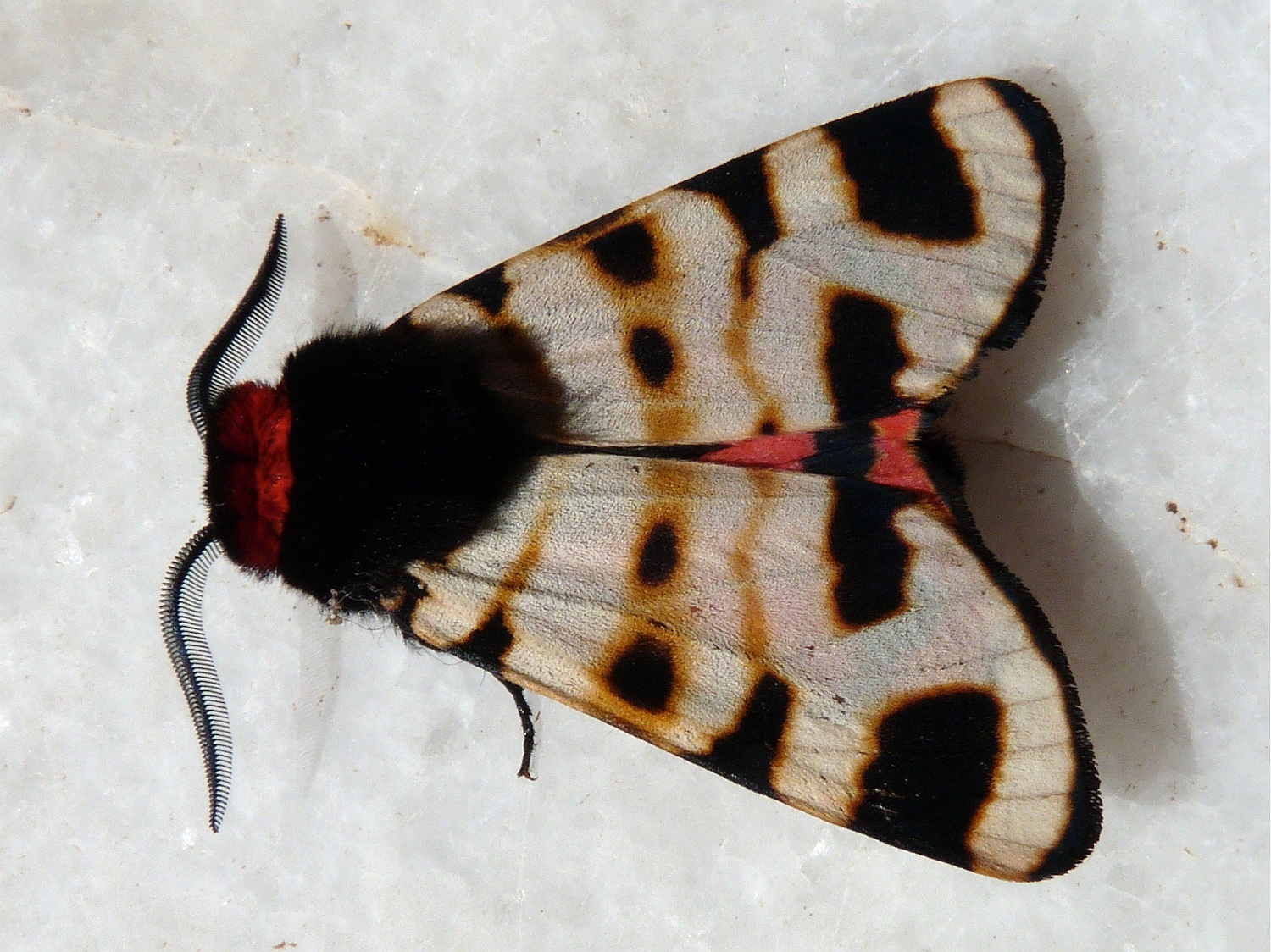
The front wings of the Hebe tiger moth show a beautiful pattern in black and white; this is a very light-coloured specimen.
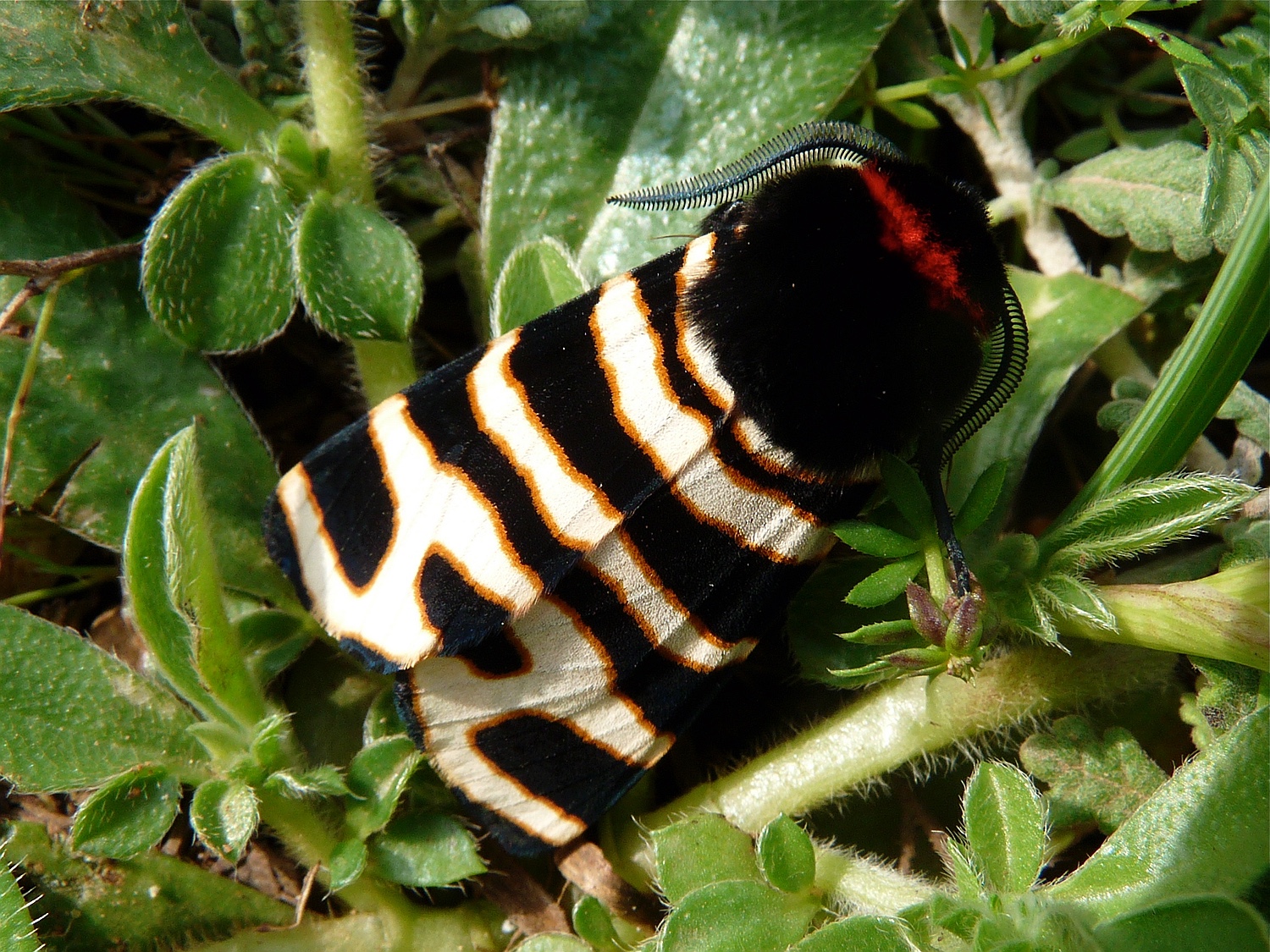
Here a specimen with a more typical colouring. Note the feathery antennae, which the male moths use to detect the pheromones of the females.
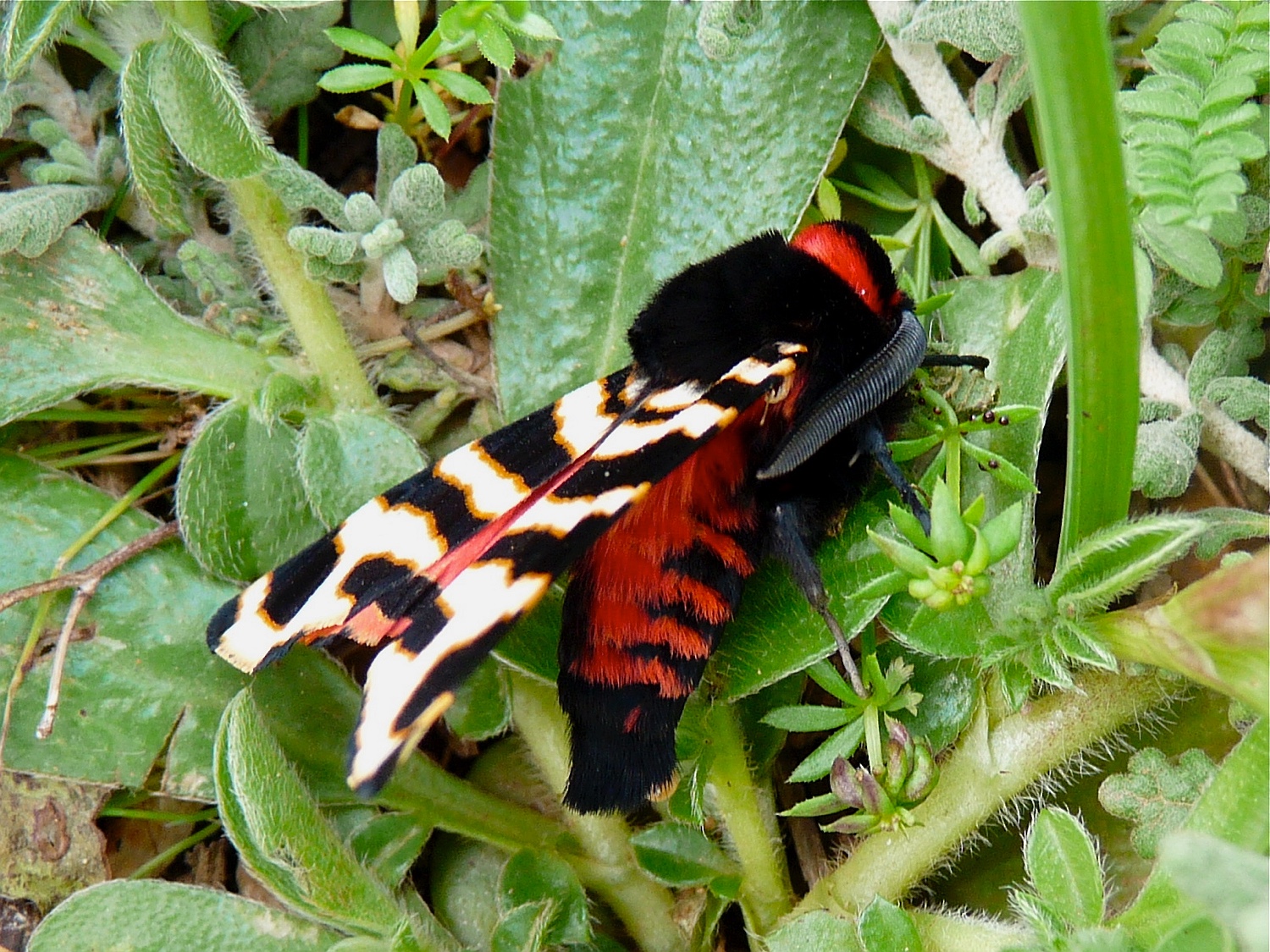
Here you can see the red body.
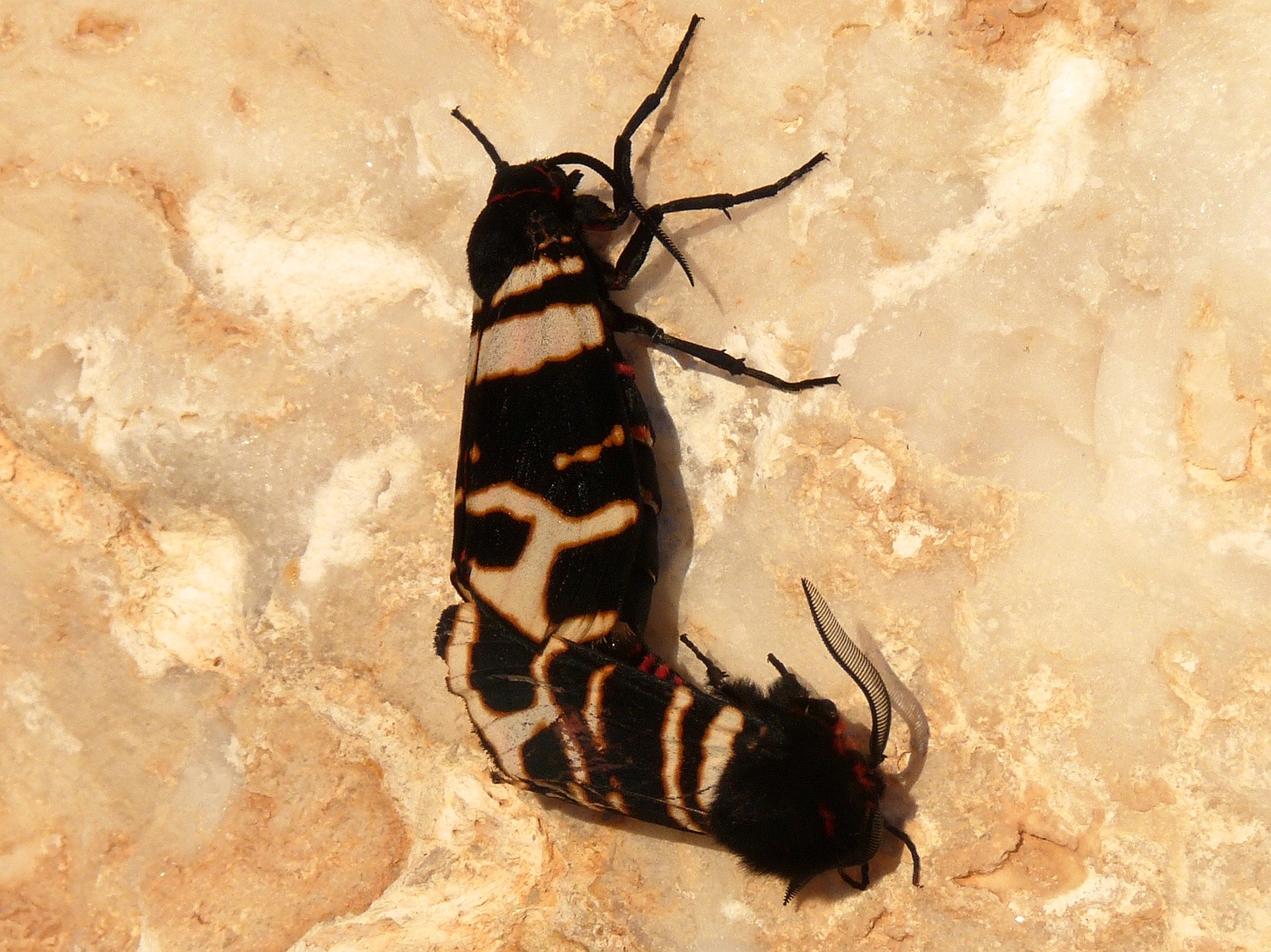
Hebe tiger moths mating
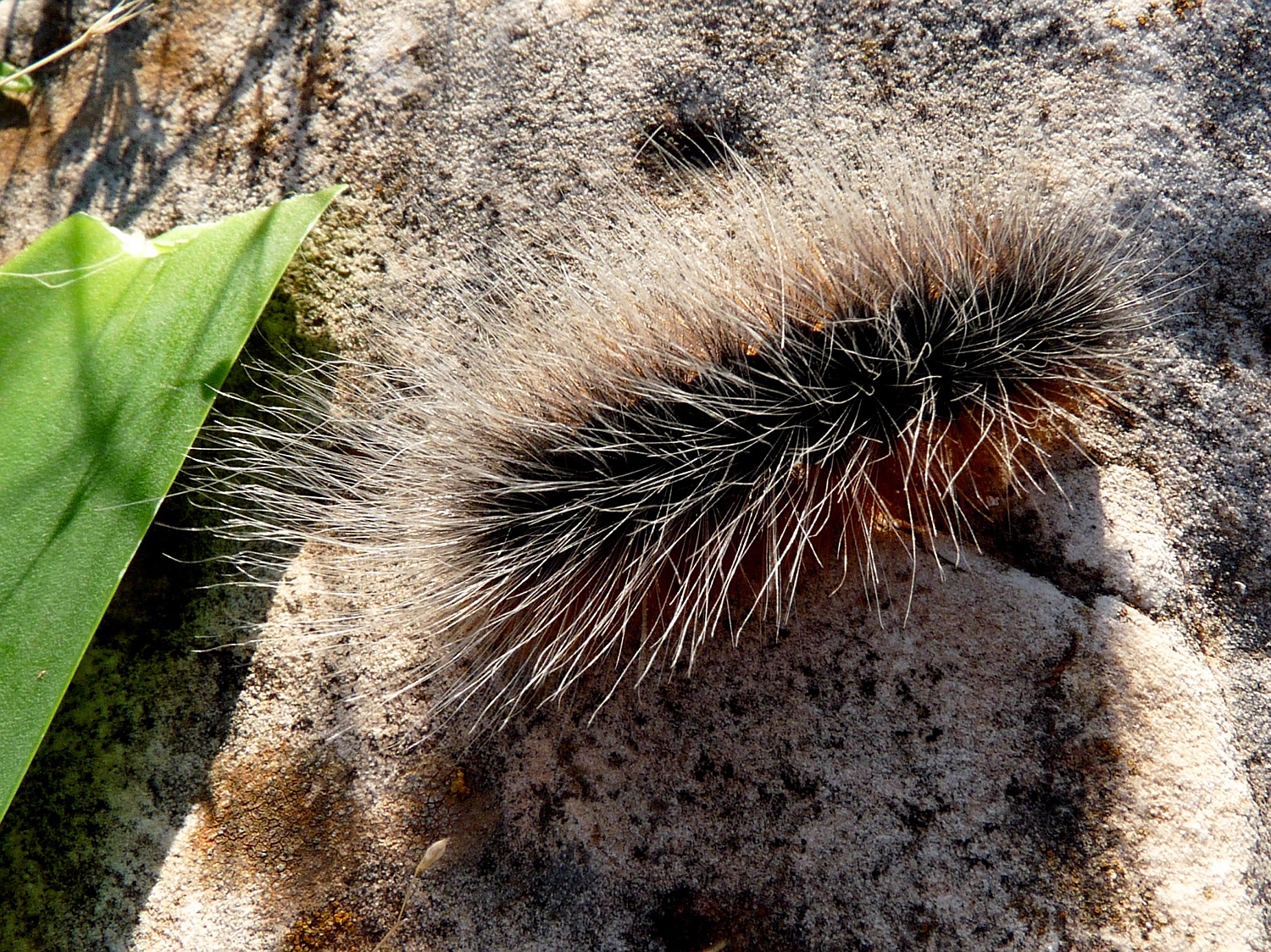
The caterpillars of tiger moths are very hairy, which is intended to deter predators.
Cream-spot tiger, Arctia villica, L.
The Cream-spot tiger, which is rare in our region, is very similar to the previous species. It has black fore wings with white spots; the hindwings are light orange-yellow with sparse black markings.
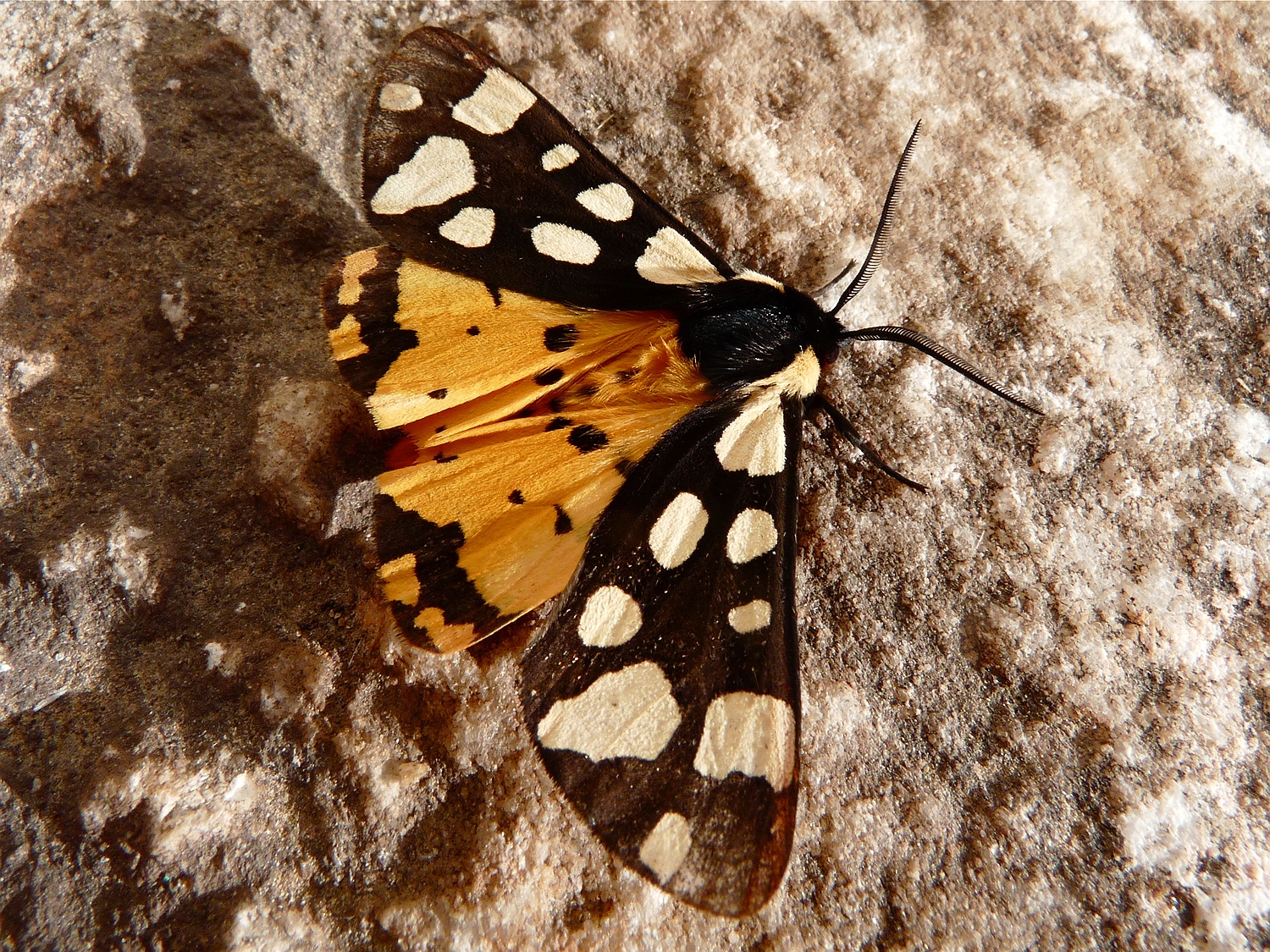
In contrast to the previous species, the black bear has round spots on its front wings.
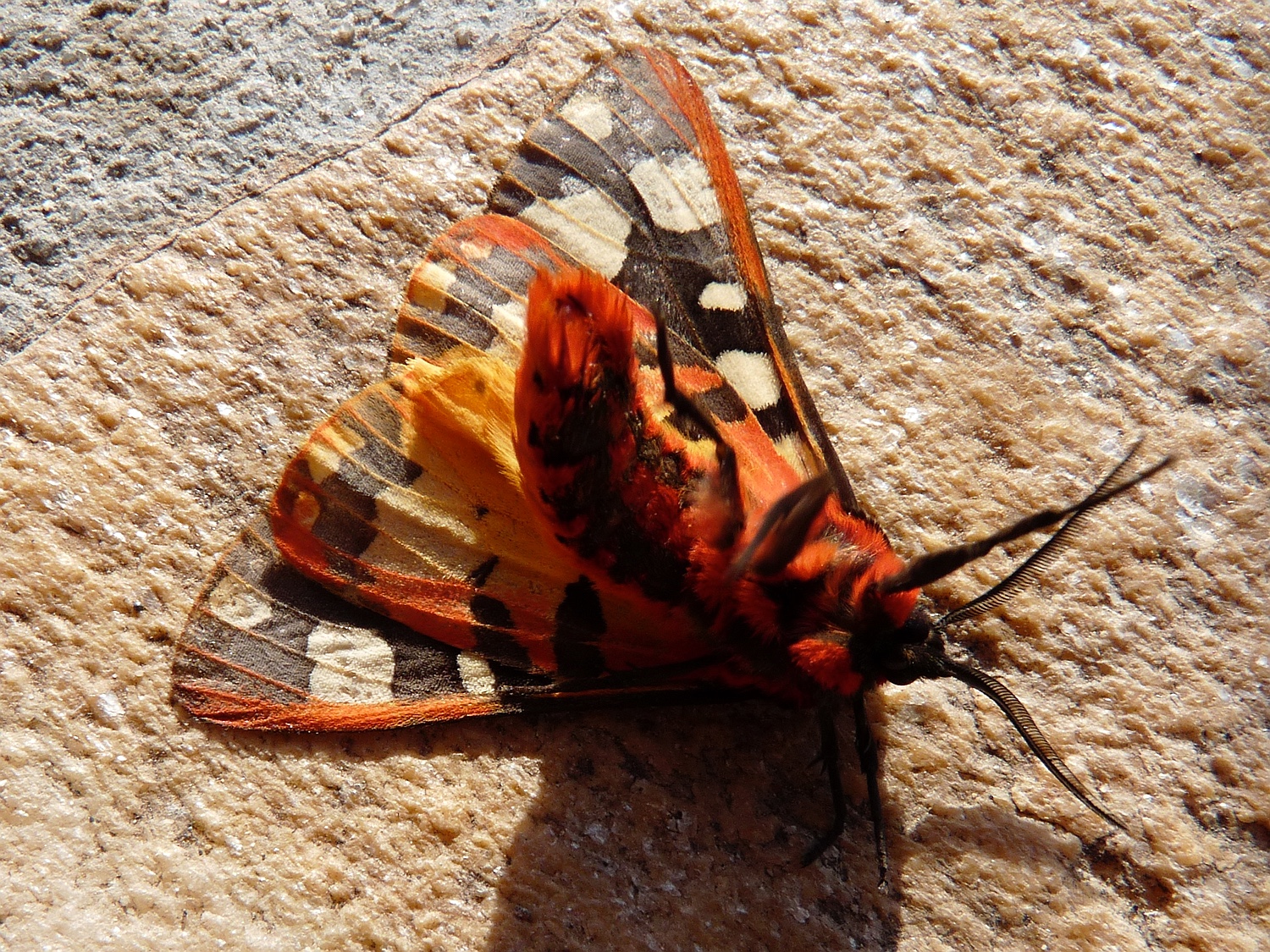
This species also has a long-haired body that is red in colour.
Spanish flag, Euplagia quadripunctaria, Poda
The Spanish flag is often found in large numbers in shady and lush, humid valleys. While sitting the moths are rather inconspicuous with the black and white stripes on their forewings. When they flutter away, the sudden flashing of their red hindwings creates a beautiful effect.
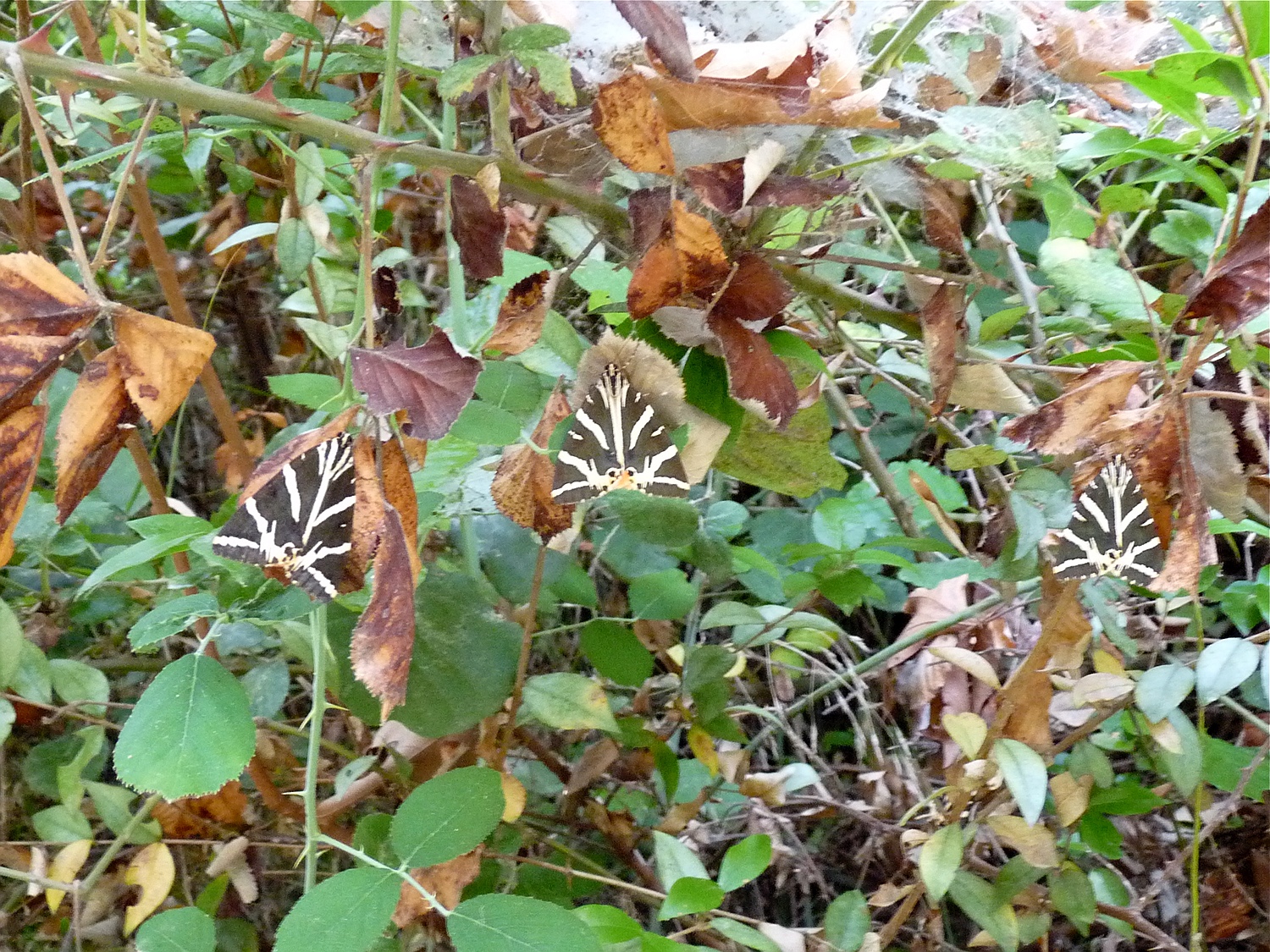
The Spanish flag often occurs in large numbers in humid, shady valleys.
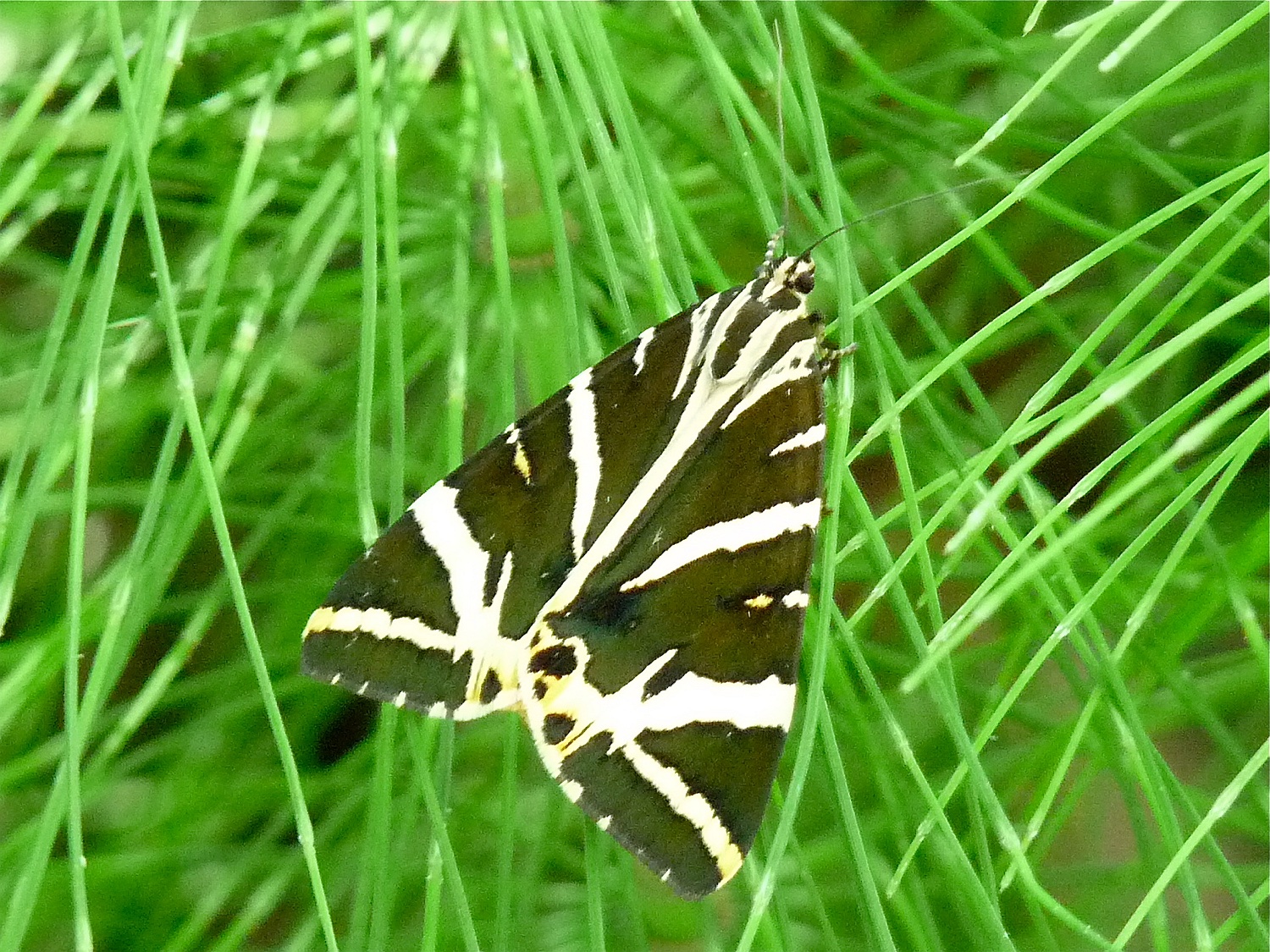
When sitting the Spanish flag is well camouflaged with the white and black stripes on the forewings that melt with the vegetation.
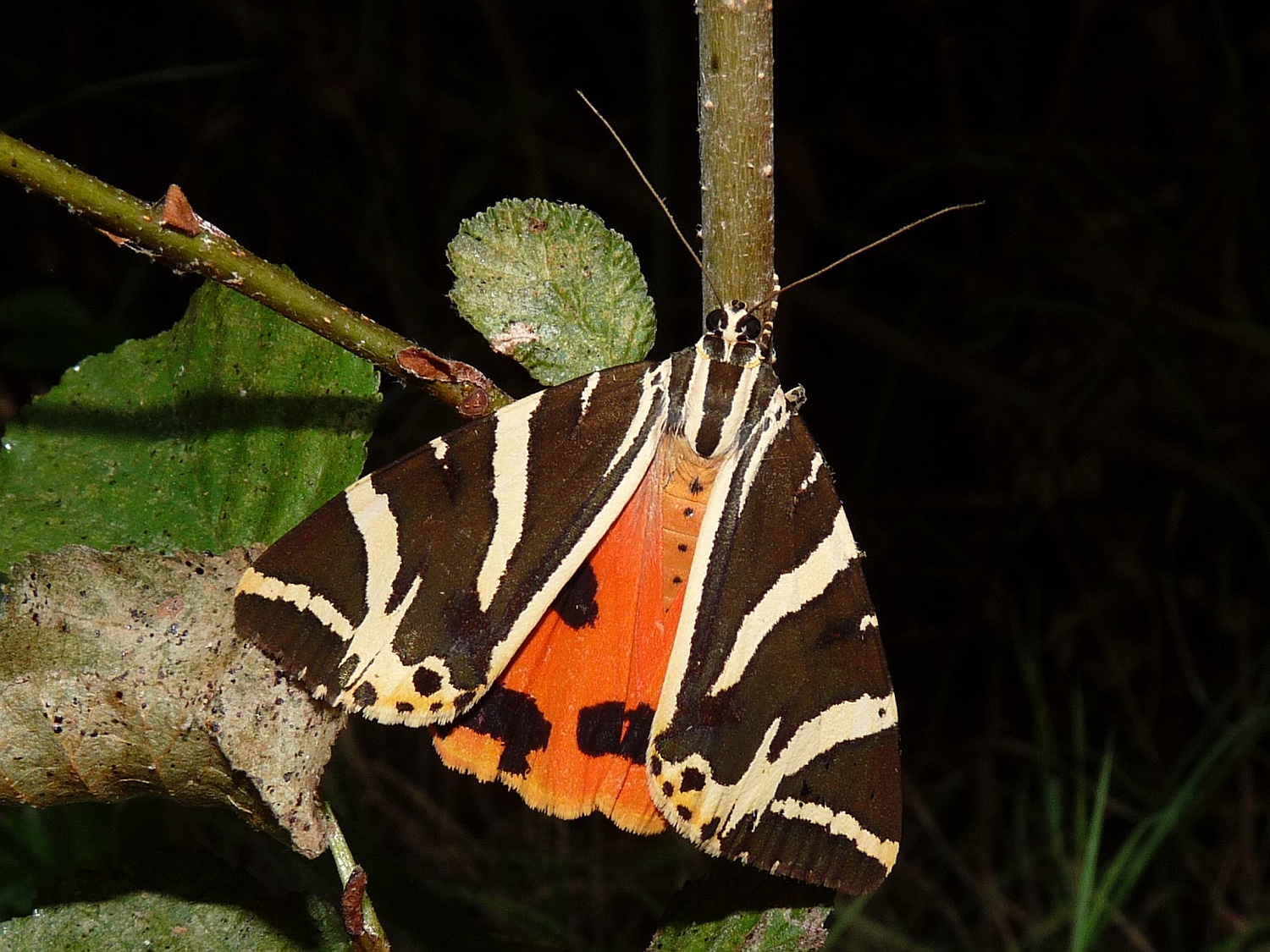
The bright red hind wings are visible only when the moth flutters away.
Crimson-speckled footman, Utetheisa pulchella, L.
The unmistakable Crimson-speckled footman is found in southern Europe, Asia and Africa. It can be seen fluttering around in autumn. The caterpillars live on plants of the Borage family such as Heliotropium.
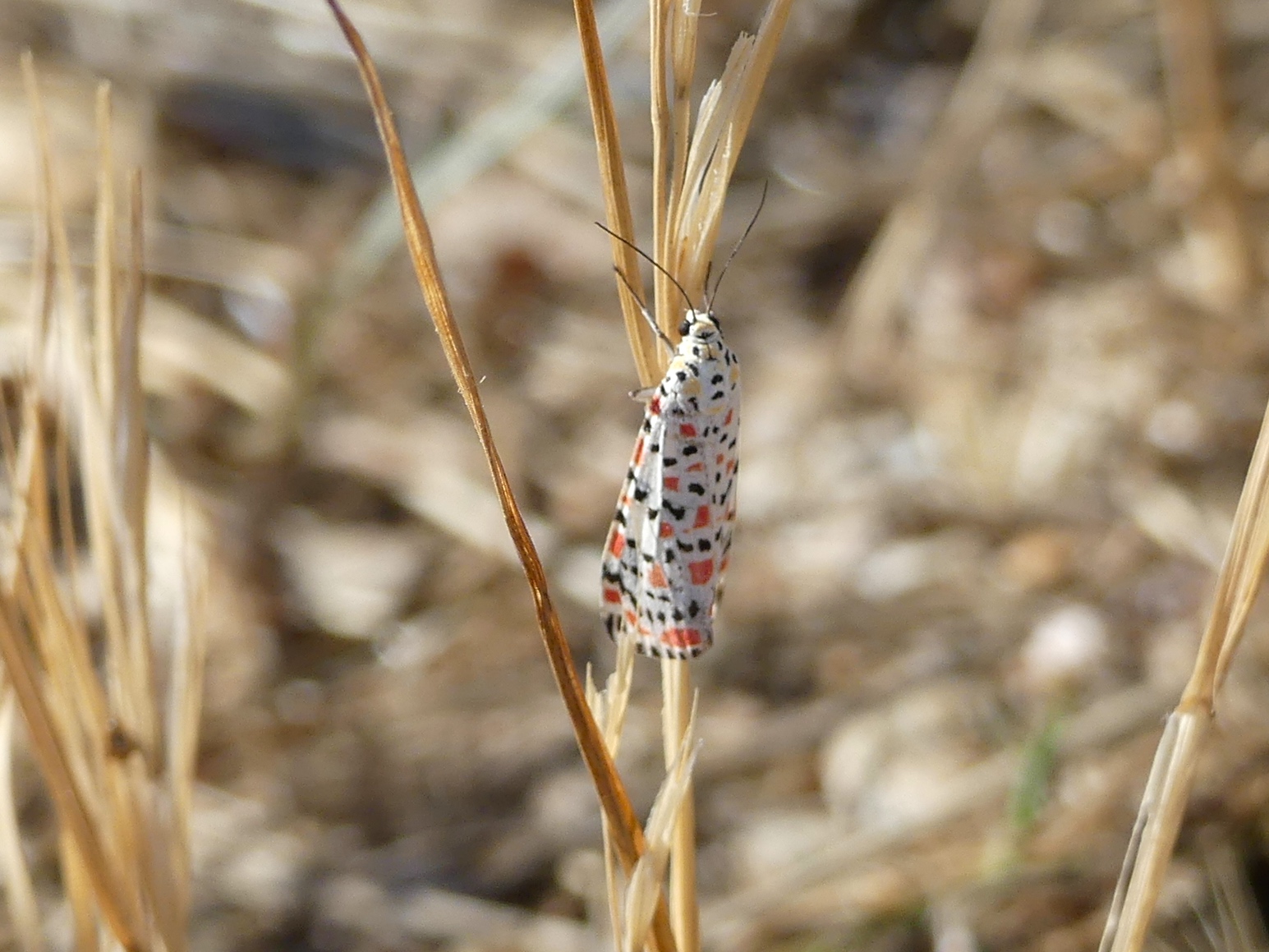
The pretty, unmistakable Crimson-speckled footman can be found mostly in autumn, when in some years it is quite common.

When it flutters up, the butterfly appears white, similar to a Large white, but as soon as it settles down, it is almost impossible to spot. Only when you look closely can you see the contrasting black and bright red dots.

The moth likes to sit on the underside of plants.

In this photo, you can see the light blue hind wings of the flying animal.

In some year, one can find many of the caterpillars in our garden – busily feeding on Heliotropium dolosum!
Geometer moths, Geometridae
With 23,000 described species, the Geometer moths are one of the largest butterfly families. The name refers to the way the caterpillar moves: It has legs only at the front and rear end of the body and moves forward ‘inch by inch’ by alternately bending like an Ω and stretching, as if it was measuring the distance: the name comes from the Greek words géo and métron meaning the surveyor, the one who measures the Earth.
Yellow shell, Camptogramma bilineata, L.
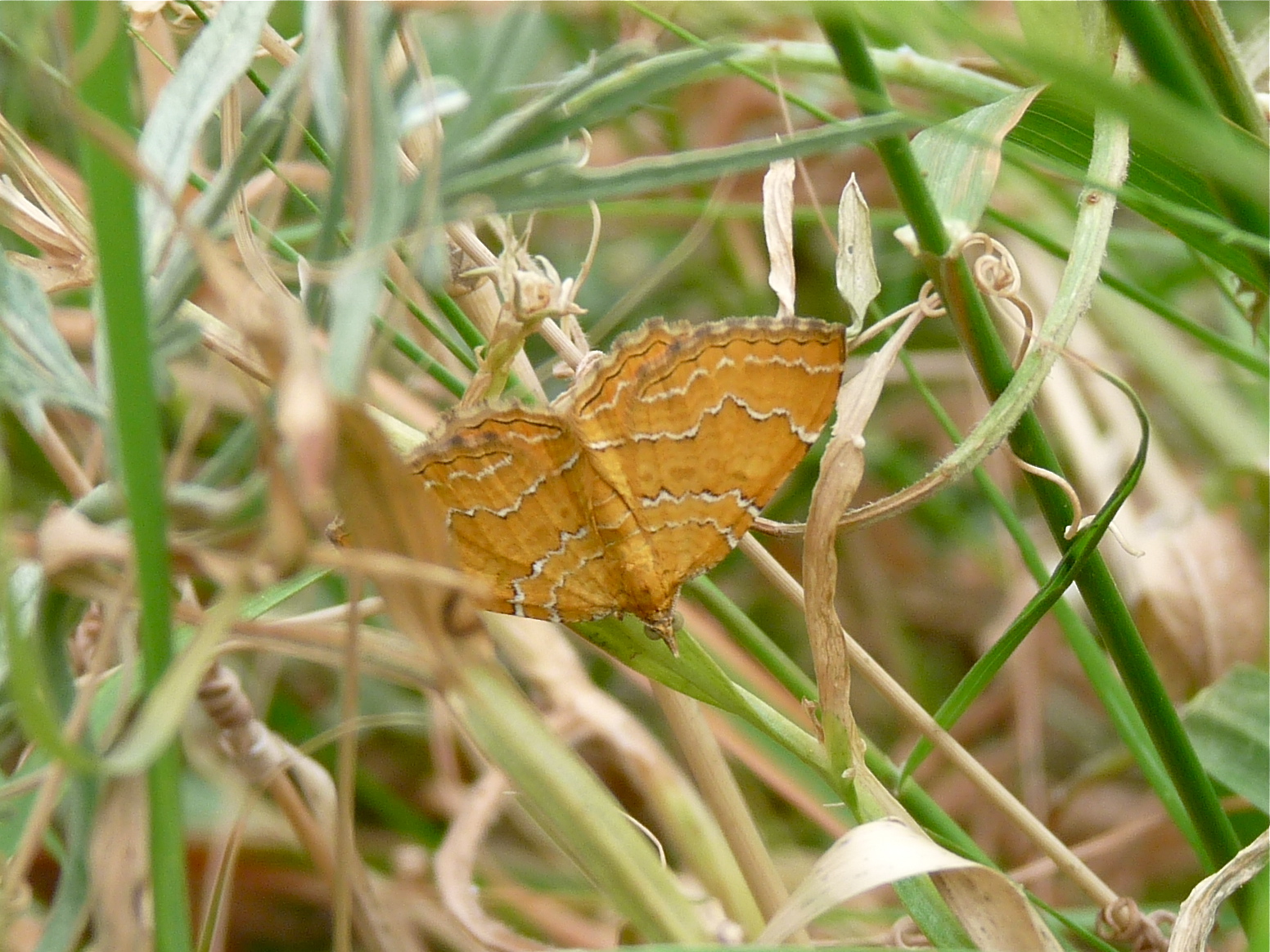
The pretty Yellow shell is diurnal. Its caterpillar feeds on many different plants.
Phaiogramma etruscaria, Zeller
Many geometer moths have a greenish colouring, such as this species; they belong to the large subfamily Geometrinae. Different from other moths, the fore- and hindwings of these species are not coupled together when flying; when resting, they are often spread out horizontally.
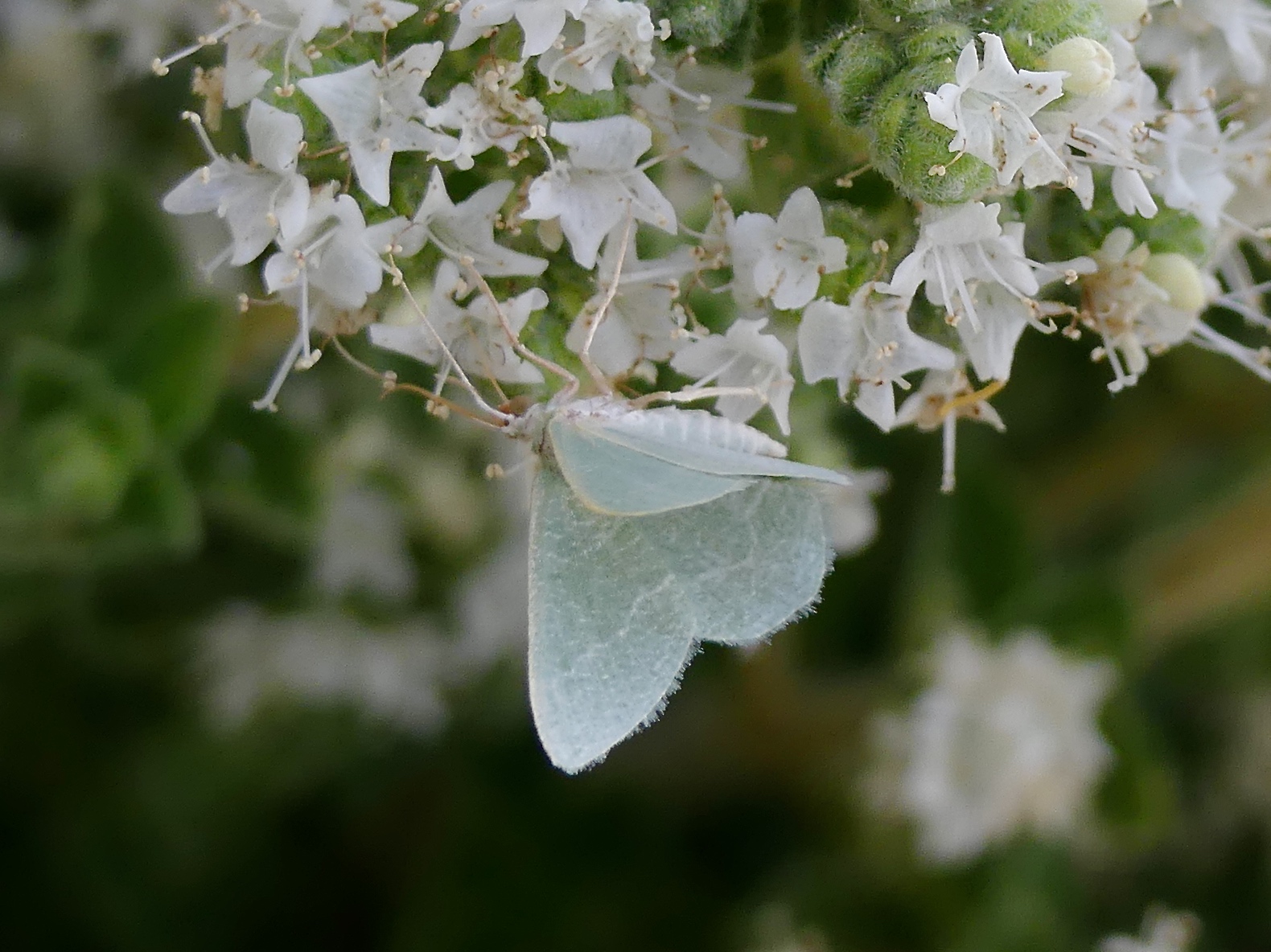
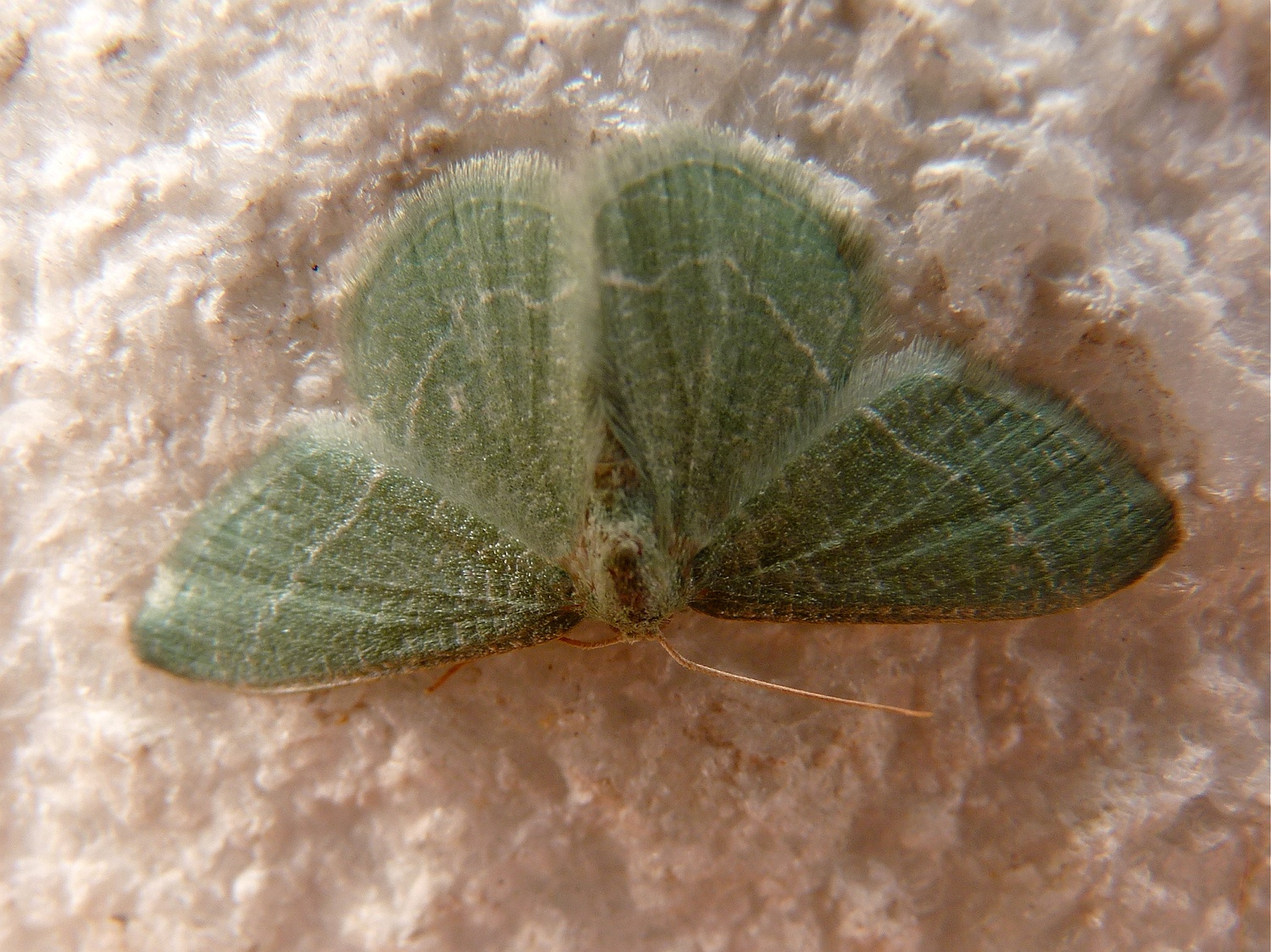
This specimen probably belongs to the species Phaeogramma etruscaria, which is active at night and is often attracted to lamps.
Idaea deversaria ?, Herrich-Schäffer
Among the brownish-coloured geometer moths one also encounters numerous species that are difficult to distinguish, especially in the large genus Idaea. Characteristic of the genus is the absence of the frontmost line on the hind wing. This could be Idaea deversaria.
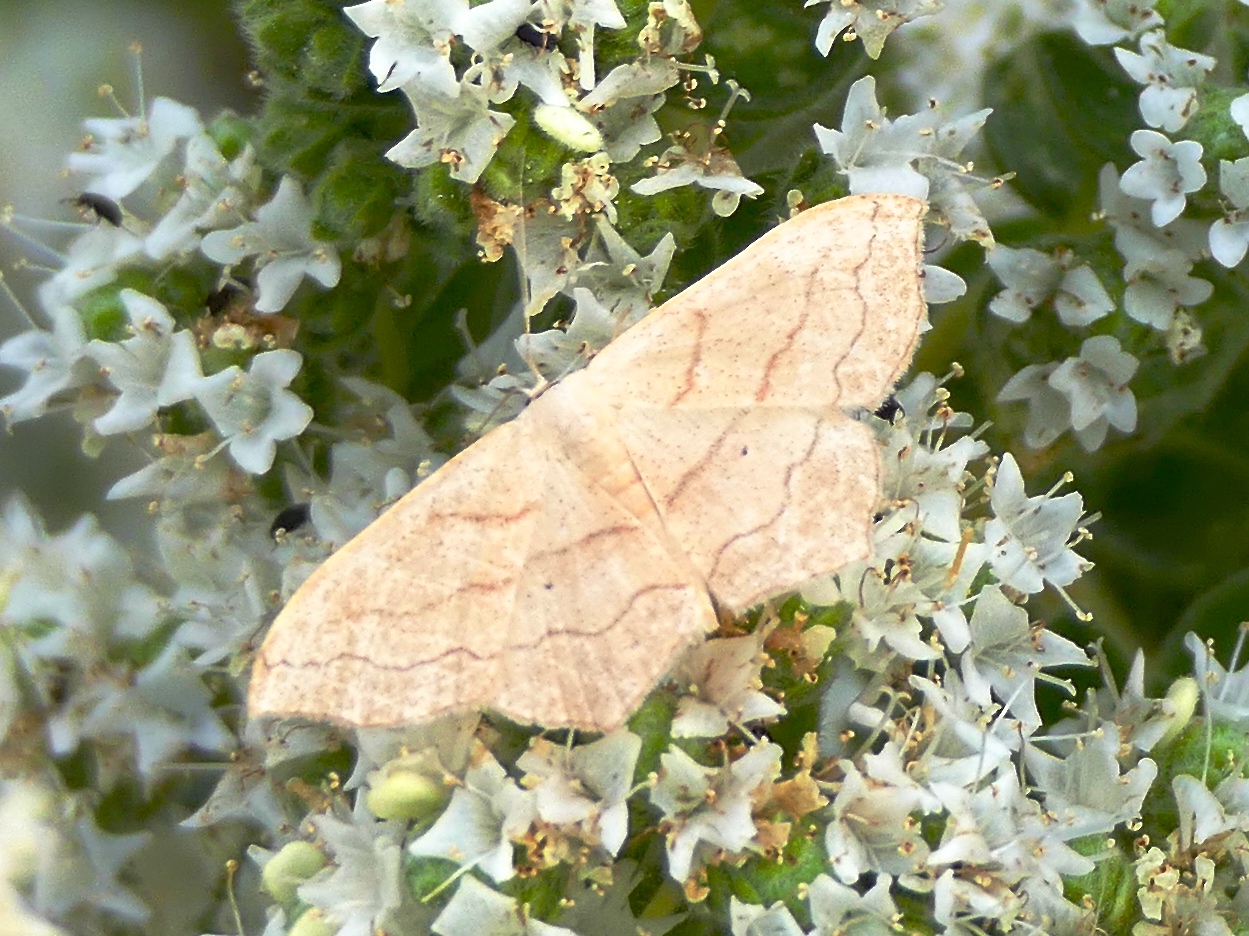
Several very similar species of the genus Idaea are difficult to distinguish, partly because the markings and colouring of the species are quite variable.
Apochima flabellaria, Heeger
This small, interesting moth is found in Greece, Turkey and Cyprus. When sitting, it folds its wings together and holds them in different directions: the front ones to the side and the hind ones to the back. This posture makes it easily recognisable.
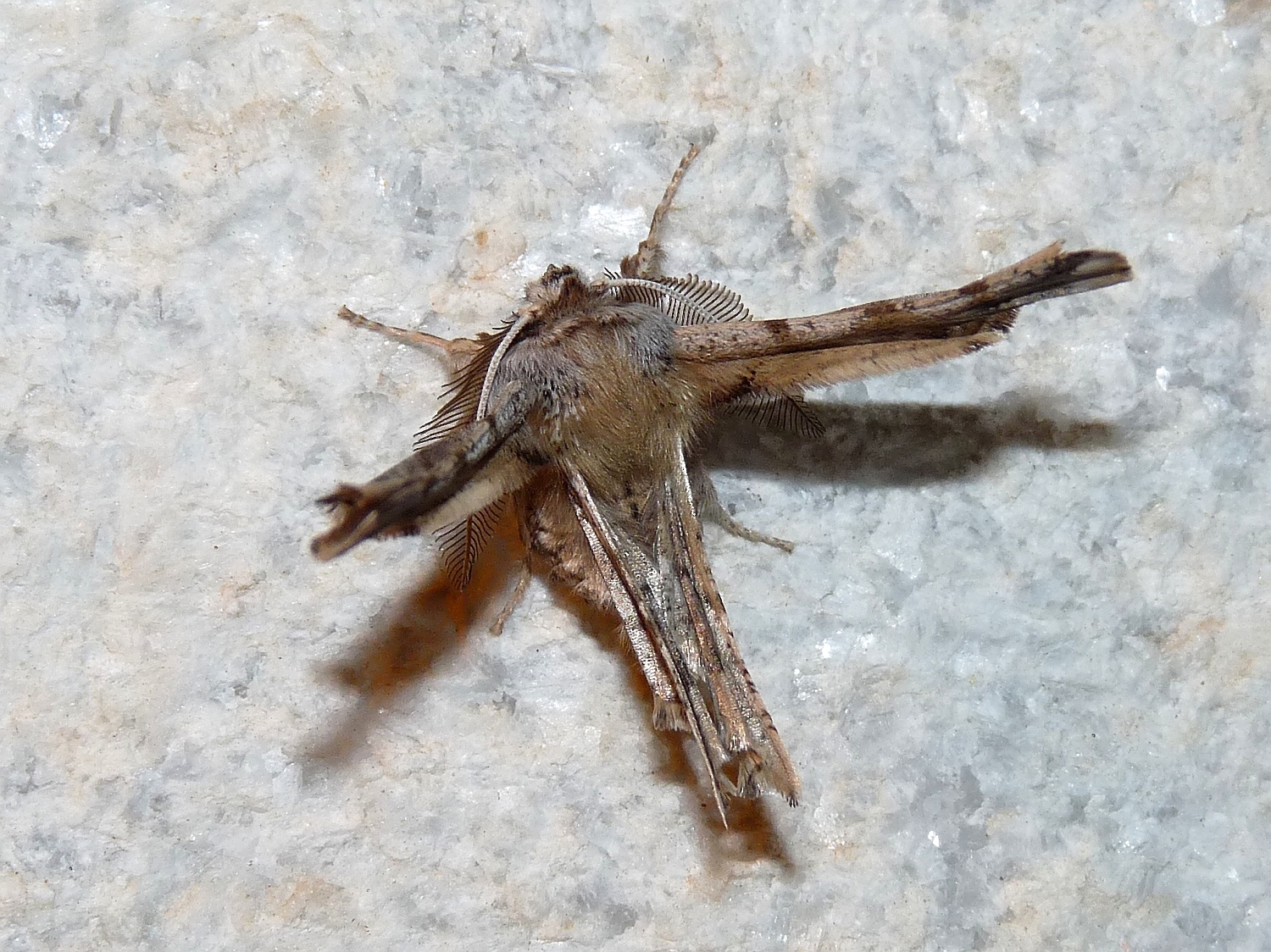
Apochima flabellaria holds its folded wings in a characteristic manner when sitting.
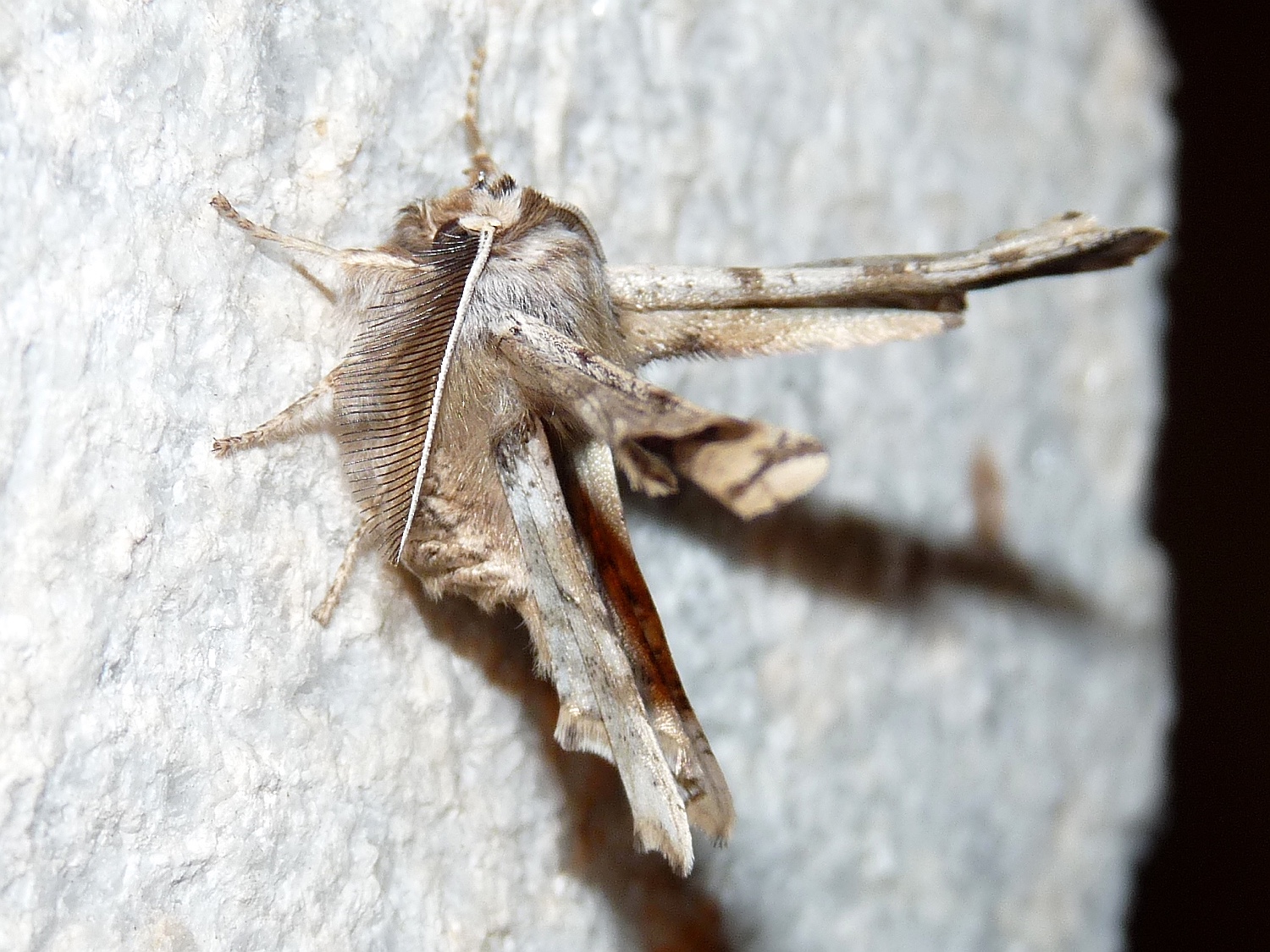
This small moth is grey-brown in colour with faint stripes on the wings. Its antennae are very long and feathery.
Problepsis ocellata, Frivaldszky
Problepsis ocellata is limited in its distribution in Europe to Greece and Turkey; it also occurs in Asia Minor and eastwards as far as Pakistan. The caterpillars live on olive trees, and the species only occurs in areas where wild olives grow. I have seen this rare, pretty moth only a few times so far.
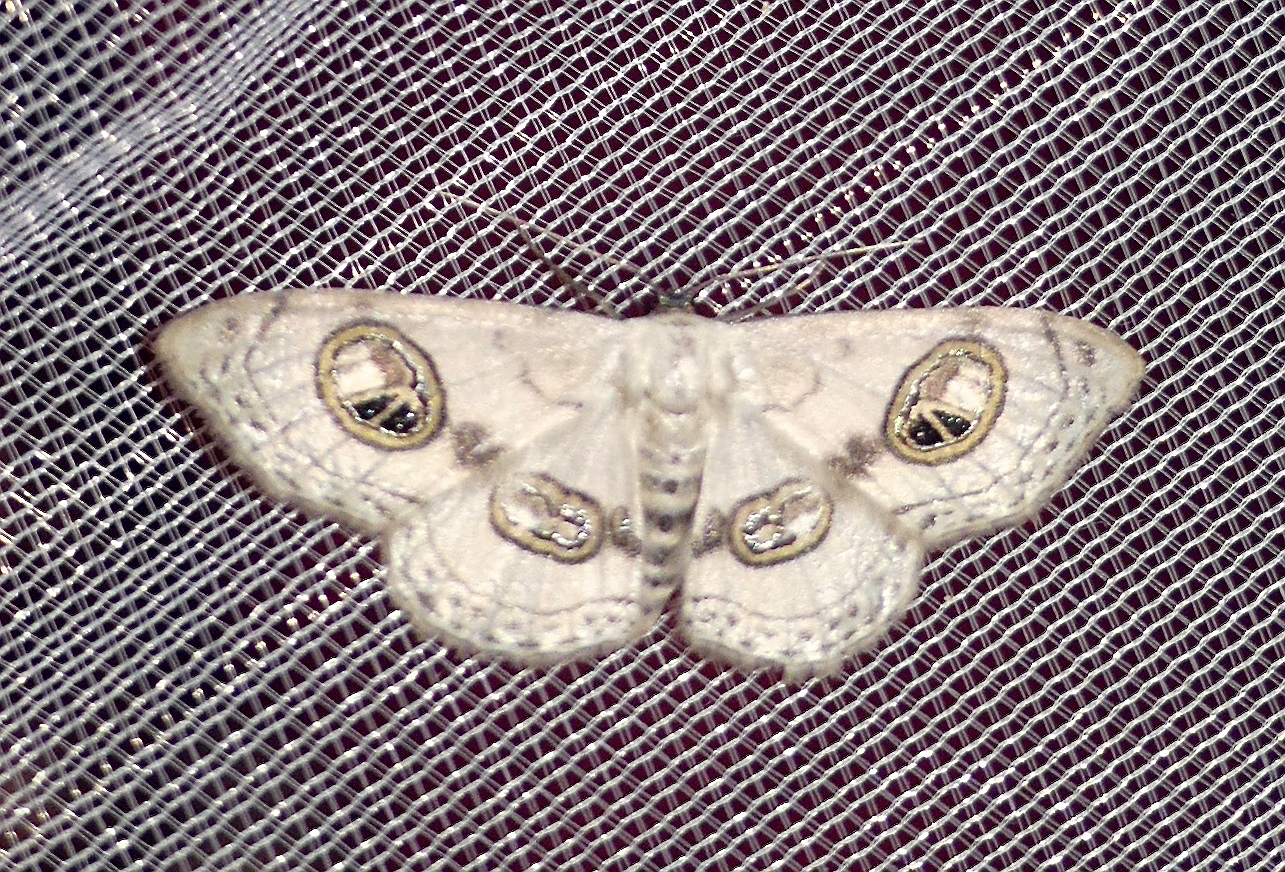
The caterpillars of the unmistakable Problepsis ocellata live on olive trees.
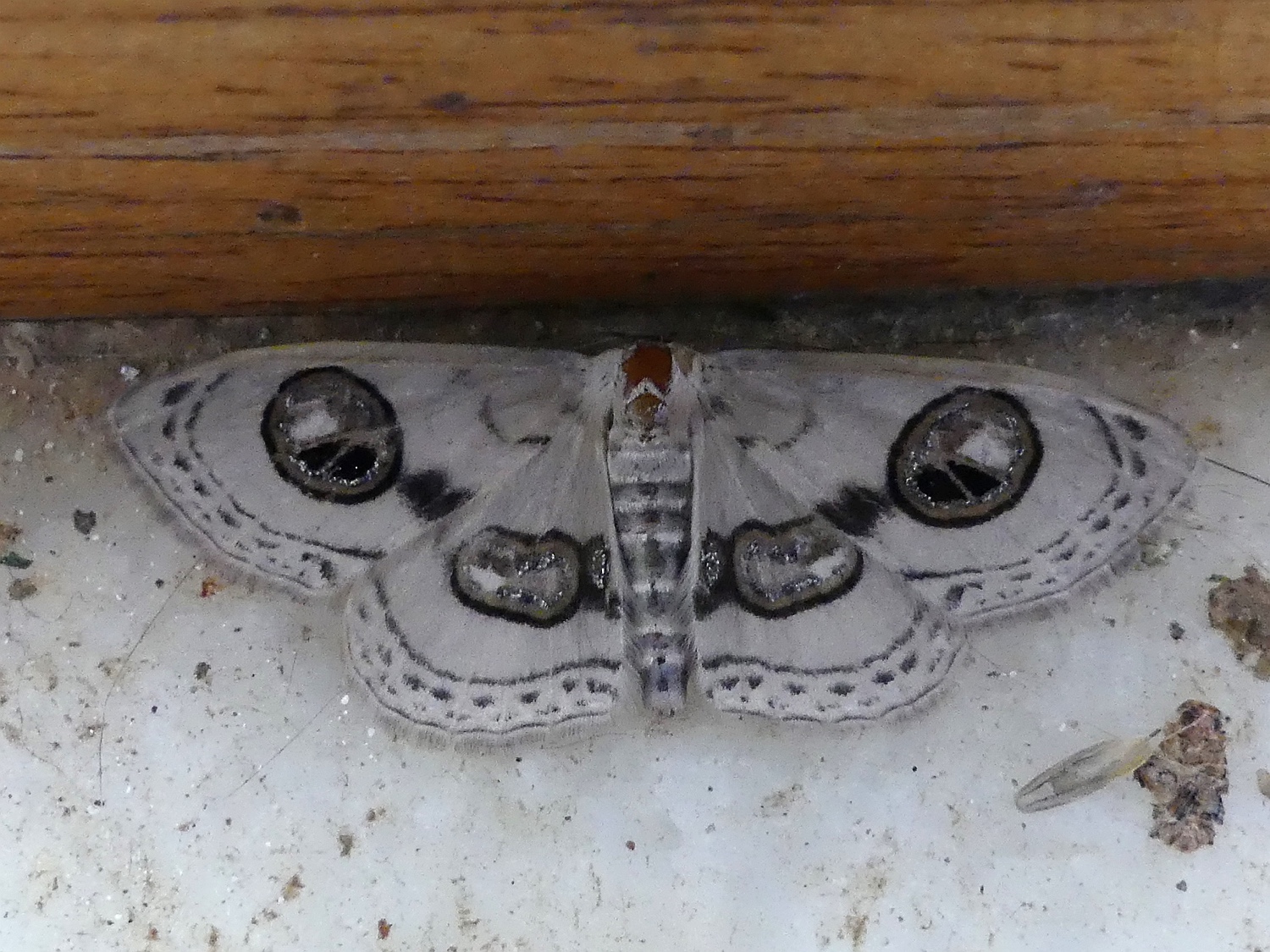
What a beautiful creature!
Carpenter millers, Cossidae
The Carpenter millers are a rather small moth family. Many species are particularly well camouflaged and mimic wood or tree stumps. The often large caterpillars usually live boring in wood. They are eaten in many parts of the world and were also popular in ancient Greece and Rome.
Parahypopta caestrum, Hübner
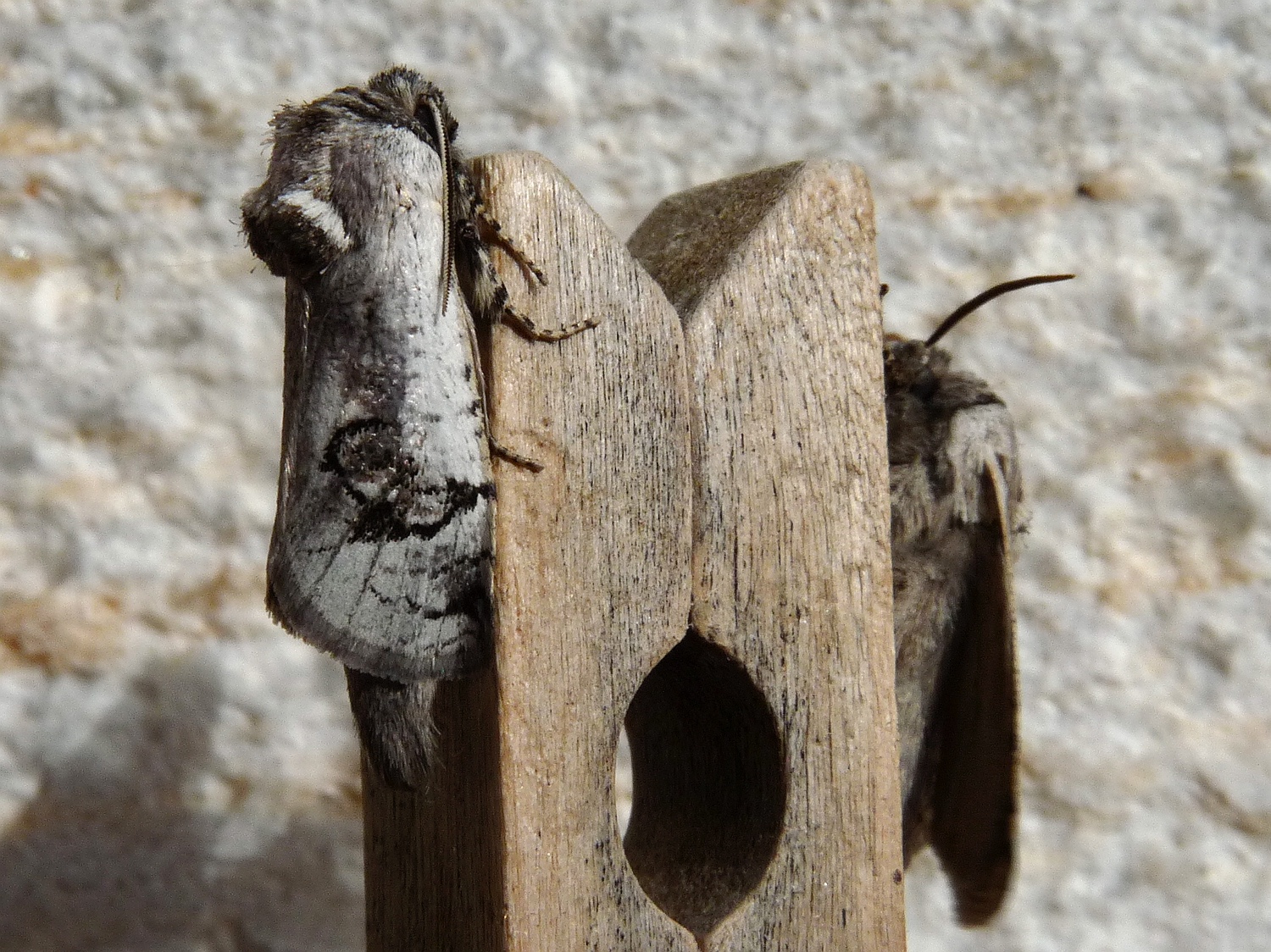
During the day, Parahypopta caestrum sits on branches or, in this case, on a clothes peg, looking exactly like a small stub. The caterpillars of this species live on (wild) asparagus.
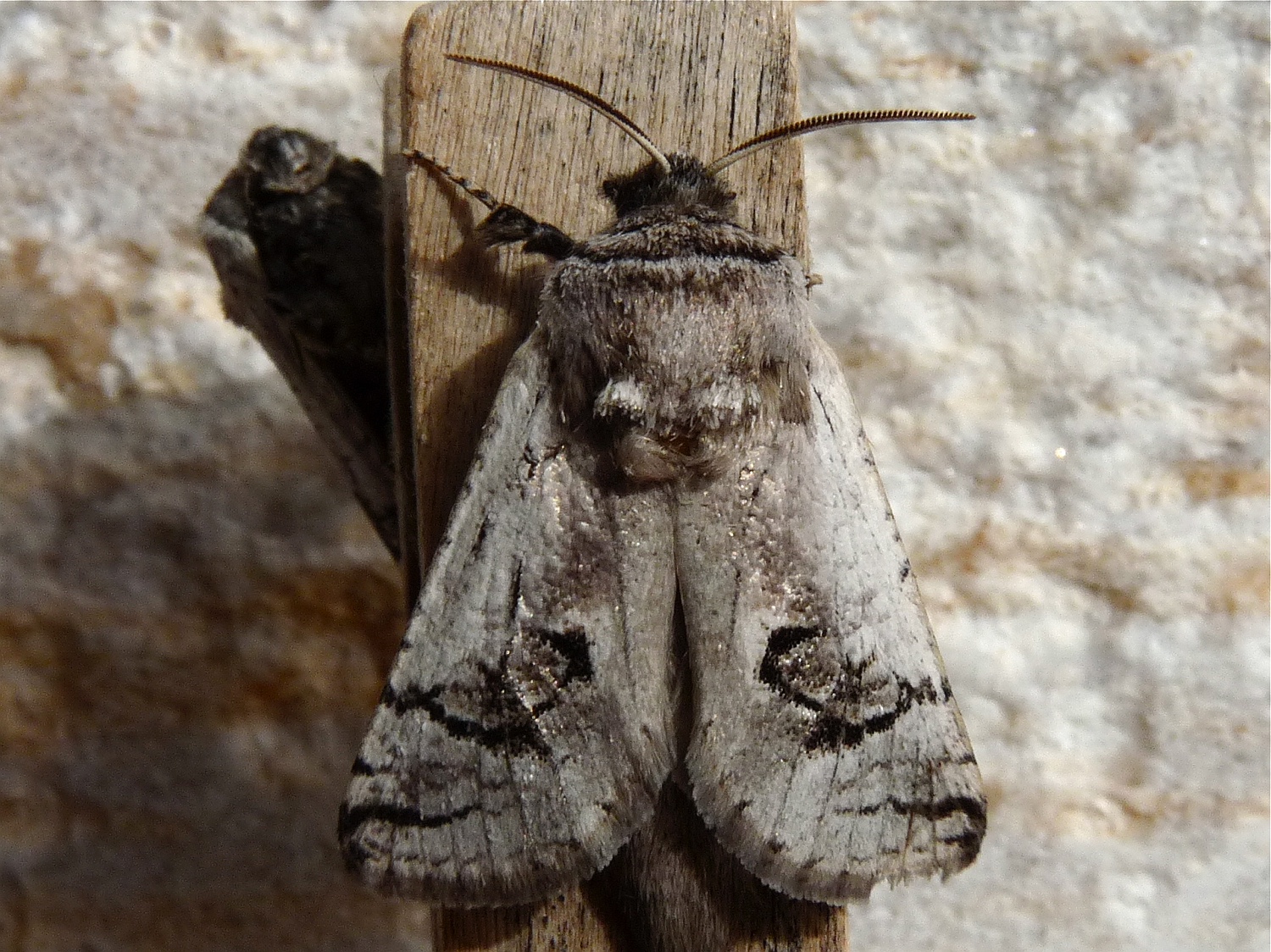
Its wings are delicately patterned in grey.
Stathmopodidae
The Stathmopodidae are a little known family of moths, although they include some significant plant pests in tropical regions. Though it is not possible for us to identify even the genus, I don’t want to leave this interesting moth out.
The wings of this small representative of the Stathmopodidae appear fringed due to scales with very long appendages; it keeps them folded and protruding sideways.
Pyralidae
Pyralids form together with other related moths a very large superfamily with about 16,000 described species, which is distributed worldwide. It is a family that we don’t yet know much about.. The caterpillars often live mining in leaves or build hiding places out of plant material. Many species are significant pests, for example of grain, flour, dry fruits and nuts.
Synaphe moldavica, Esper
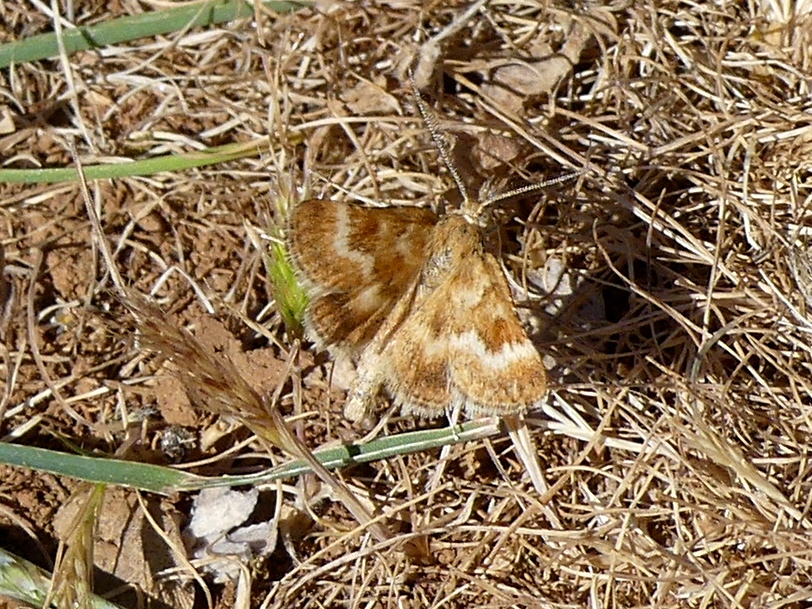
The brown-patterned species Synaphe moldavica is common in spring on the summit of Mount Zeus. The caterpillars feed on grasses. Its range extends across southern Europe to Iran.
Bagworm moths, Psychidae
The small family of the bagworm moths comprises only about 1300 species, most of which are rarely seen. The adult animals are very short-lived: the males usually live only a few hours and the females a few days. They are small, inconspicuous and often very hairy; the females are often wingless.
The bagworm moth species are most commonly seen as larvae. The larvae build a tube out of plant material or sand and silk thread, the ‘bag’, which they always carry around with them. Only the head and the front section of the body with the short legs protrude from the bag; when disturbed, they retreat completely into it. They feed on plants, with many species limited to a single host plant. After the metamorphosis to the adult, the female often remains sitting on her bag. The males find the females by their pheromones; as they are so short-lived, their development must be timed precisely. Some species can also reproduce parthenogenetically. Our specimen could belong for example to the species Canephora hirsuta.
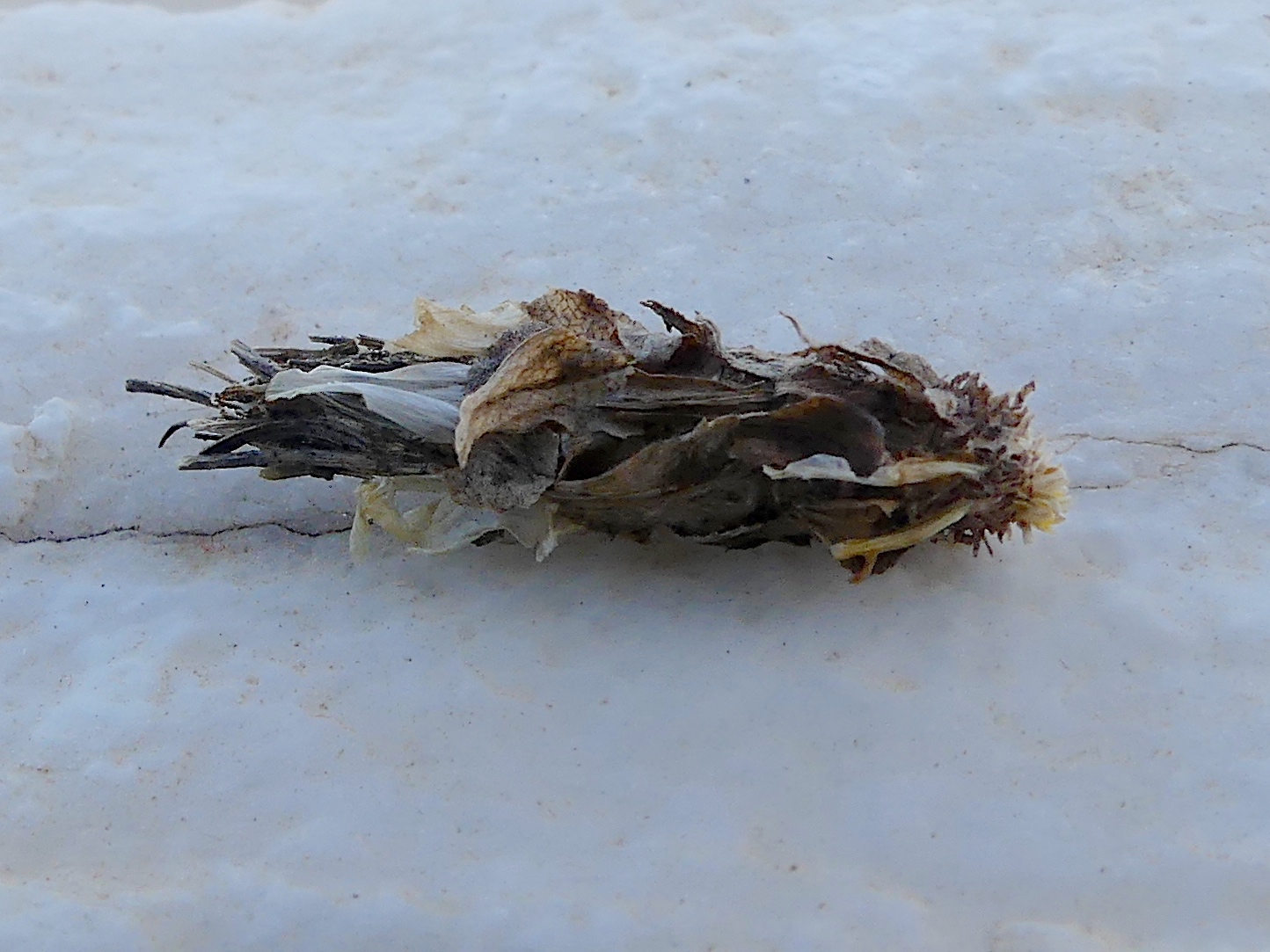
Here you can see the tube in which the larva permanently resides. It is constructed from small pieces of plant material held together with silk thread.
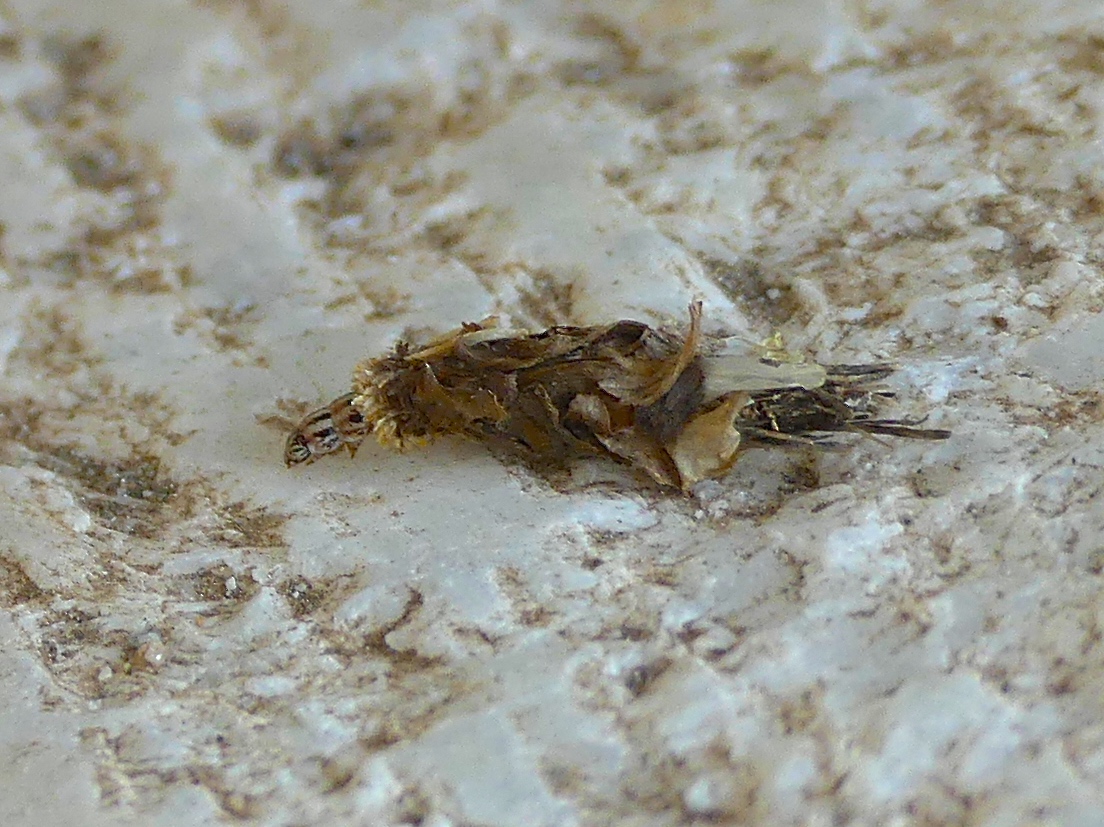
The caterpillar only sticks its head out when it feels completely safe. It pulls itself and the bag forward with its small thoracic legs. The caterpillars of the bagworm moths feed on plants.
continue: Bugs
back:
see also: