DE
ΕΛ
Home
Feedback and questions
About us
News from Azalas
Web site content
Categories - Directory
Best articles
Picture of the day
Holiday homes Azalas
Most important articles
The cottages
Photo galleries
Location
Calendar and Reservation
The Prices
How to get to Azalas
The area
Activities on Naxos
Guest book
Culture
Sights and monuments
The history of Naxos
History - the Epochs
Villages (in German)
Cultural landscape (in German)
Village life (in German)
Nature
Mediterranean Sea
Fauna of Naxos
Flora of Naxos (in German)
Vegetation (in German)
Landscape (in German)
Geology (in German)
Weather (in German)
Hikes and tours
Other islands
DE
EN
ΕΛ
Home
Feedback and questions
About us
News from Azalas
Web site content
Categories - Directory
Best articles
Picture of the day
Holiday homes Azalas
Most important articles
The cottages
Photo galleries
Location
Calendar and Reservation
The Prices
How to get to Azalas
The area
Activities on Naxos
Guest book
Culture
Sights and monuments
The history of Naxos
History - the Epochs
Villages (in German)
Cultural landscape (in German)
Village life (in German)
Nature
Mediterranean Sea
Fauna of Naxos
Flora of Naxos (in German)
Vegetation (in German)
Landscape (in German)
Geology (in German)
Weather (in German)
Hikes and tours
Other islands
Natures
Here you find all of the 400 or so articles dealing with the nature of Naxos, organised chronologically with the latest articles at the top.
1
2
3
4
…
24
Flora of the Makares-Islands
20. March 2026
Die Flora der Makares-Inseln Für die Makares-Inseln östlich von Naxos sind – nach dem “Atlas of the Aegean Flora” von Arne Strid – bislang etwa 150 Pflanzenarten verzeichnet: Im Vergleich zu Naxos m…
Zum Beitrag
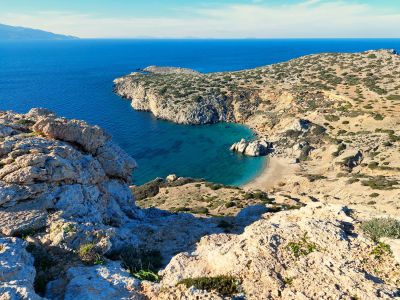
The wonderful Makares-Islands
28. February 2026
Every time I visit the Mákares Islands, I can’t stop wondering about this truly wonderful place. And that’s perhaps no surprise, because the nísói makáron of the ancient Greeks, the ‘Fortunate Isles’…
Zum Beitrag
Eine neue Pflanzenart für Naxos
6. January 2026
Auf einem Ausflug nach Agiassós fanden wir gestern bei der Kirche Panagía stous Gialloús eine Pflanzenart, die bislang auf Naxos nicht nachgewiesen war: Bellevalia hyacinthoides. Die Gattung der Bell…
Zum Beitrag
Storm petrels on the Makares islands
30. July 2025
The storm petrels are inconspicuous and little-known seabirds that even most ornithologists never get to see. I have never seen one and, until recently, did not even know that storm petrel also breed…
Zum Beitrag
Meeresschutzgebiet Südliche Kykladen
27. July 2025
Vor wenigen Tagen hat die griechische Regierung zwei neue Meeresschutzgebiete in Griechenland ausgewiesen, eins im Ionischen und eins im Ägäischen Meer. Dadurch sind nun gut 30% der Meeresfläche Grie…
Zum Beitrag
A visit to the shearwaters on the Makares islands
25. July 2025
Two species of shearwaters breed in the Aegean Sea: the Yelkouan shearwater and Scopoli’s shearwater. They breed mainly on uninhabited rocky islands, often in small or large colonies. Both species ar…
Zum Beitrag
Veränderungen in der Avifauna von Naxos
21. June 2025
Die Ägäis ist mit ihren vielen Inseln, die oft nahe aneinander liegen, so dass sie relativ leicht erreichbar sind, und auf denen überwiegend gleiche Umweltbedingungen herrschen, ein interessantes bio…
Zum Beitrag
Die Endstation der Schmirgelseilbahn
9. June 2025
Die Schmirgelseilbahn führt über 9 Kilometer mit 700 Metern Höhenunterschied, der zu überwinden ist, von den koronidiatischen Schmirgelminen, bei denen sich die Hauptstation mit dem Dieselmotor, mit…
Zum Beitrag
In der Schmirgelmine Sarandara
9. June 2025
Hier ein paar Fotos aus der Schmirgelmine Sarandára, die man nach Vereinbarung mit dem Wirt des Restaurants Delfináki in Liónas besichtigen kann. Bei dieser Schmirgelmine führt ein langer gerader Ga…
Zum Beitrag
Bei den koronidiatischen Schmirgelminen
9. June 2025
Die Schmirgelminen von Kóronos sind ein historisches Denkmal von besonderem Interesse. Seit vielen Jahren bemüht sich die Gemeinde, Teile der aus den 20er Jahren des 20. Jahrhunderts stammenden Schmi…
Zum Beitrag
Mittagsblumengewächse, Aizoaceae
23. April 2025
Die Mittagsblumengewächse mit etwa 1.500 Arten gehören zu den Nelkenartigen. Sie kommen vor allem in der Kapregion in Südafrika vor und sind für trockene Standorte typisch. Auf Naxos sind vier Arten…
Zum Beitrag
Erstaunliche Tiere 8: Der Grüne Igelwurm
18. April 2025
Bei einem nächtlichen Spaziergang an der Felsküste gibt es immer interessante Lebewesen zu entdecken. Dieses Mal fanden wir eine mir noch unbekannte Wurmart, gleich in mehreren Exemplaren, den Grünen…
Zum Beitrag
Der Große und der Kleine Wanderbläuling
9. October 2024
Großer Wanderbläuling, Lampides boeticus, L. Der hübsche Große Wanderbläuling ist in Europa auf den äußersten Südosten beschränkt; auf Naxos ist er sehr häufig. Mit bis zu über 3 cm Flügelspannweite…
Zum Beitrag
Zu den Schmirgelminen
27. September 2024
Es ist nicht weit von Azalás zu den Schmirgelminen; und man kann einen schönen Wanderweg entlang gehen (Wanderweg 1), der einen direkt an den Minen entlang führt. Für die Wanderung hin und zurück ben…
Zum Beitrag
Gastropoda 8: Pulmonata and Opisthobranchia
25. September 2024
While most marine gastropods belong to the Prosobranchia, whose gills are located in front of the heart (a taxonomic unit that is no longer used because it has been found to be paraphyletic, i.e. is…
Zum Beitrag
Gastropoda 7: Neogastropoda
24. September 2024
The Neogastropoda are a large and diverse suborder of the superorder Caenogastropoda, to which most marine snails belong. Among the snails that can be found in our region, the Neogastropoda include w…
Zum Beitrag
Gastropoda 5: Littorinimorpha
24. September 2024
The Littorinimorpha are a large and diverse suborder of the superorder Caenogastropoda, to which most marine snails belong. Among the snails that can be found in our region, the Littorinimorpha inclu…
Zum Beitrag
Gastropoda 4: Buccinidae and Turritellidae
24. September 2024
Within the large superorder Caenogastropoea (which comprises nearly all snails), the members of the superfamily Cerithioidea are characterised by their oblong shells. At least six species occur aroun…
Zum Beitrag
Gastropoda 3: Trochidae
24. September 2024
The large superfamily of Trochoidea is represented in our area by the families Trochidae, Calliostomatidae, Turbinidae, Phasianellidae and Colloniidae (sometimes considered subfamilies or superfamili…
Zum Beitrag
Gastropoda 2: Abalone and Fissurellidae
24. September 2024
The abalones (superfamily Haliotoidea) and the keyhole and slit limpets (superfamily Fissurelloidea) belong to the superorder Vetigastropoda, as do the Trochidae, which I discuss on a separate page…
Zum Beitrag
1
2
3
4
…
24