
Gastropoda 4: Buccinidae and Turritellidae
Within the large superorder Caenogastropoea (which comprises nearly all snails), the members of the superfamily Cerithioidea are characterised by their oblong shells. At least six species occur around Naxos.
The Photo gallery of the marine snails gives an overview over the species.
A note on identification: Some species usually can be identified easily and reliably. In many cases, however, several related species are difficult to distinguish. Also not all species are included in the field guides; even using the internet, it is difficult to find information on some species. Accordingly, some of the identifications may not be correct.
And a word about the names: As with many marine animals, there is a great deal of confusion surrounding the names of snails: for almost all species, a large number of synonyms exist that are no longer valid today but are still used in older books. I use the names according to the World Register of Marine Species (as of 2020), where you can also find the corresponding synonyms.
Here you can jump directly to the species (return with the back arrow or by swiping back):
Cerithium – Bittium – Turritellinella
1. Cerithiidae
Cerithium vulgatum, Bruguière
very common
Cerithium vulgatum is one of the larger snails in our region; it grows up to 6 cm long. It lives mainly on fine sand and feeds on detritus and diatoms. It is often seen in small ponds at the waterline.
Its shell is pointed and oblong (“tower-shaped”) with small spirally arranged knots. The aperture shows a small groove at the top and a short, wide siphon canal at the bottom (almond-shaped). Its colouring is light with fine brown spots.
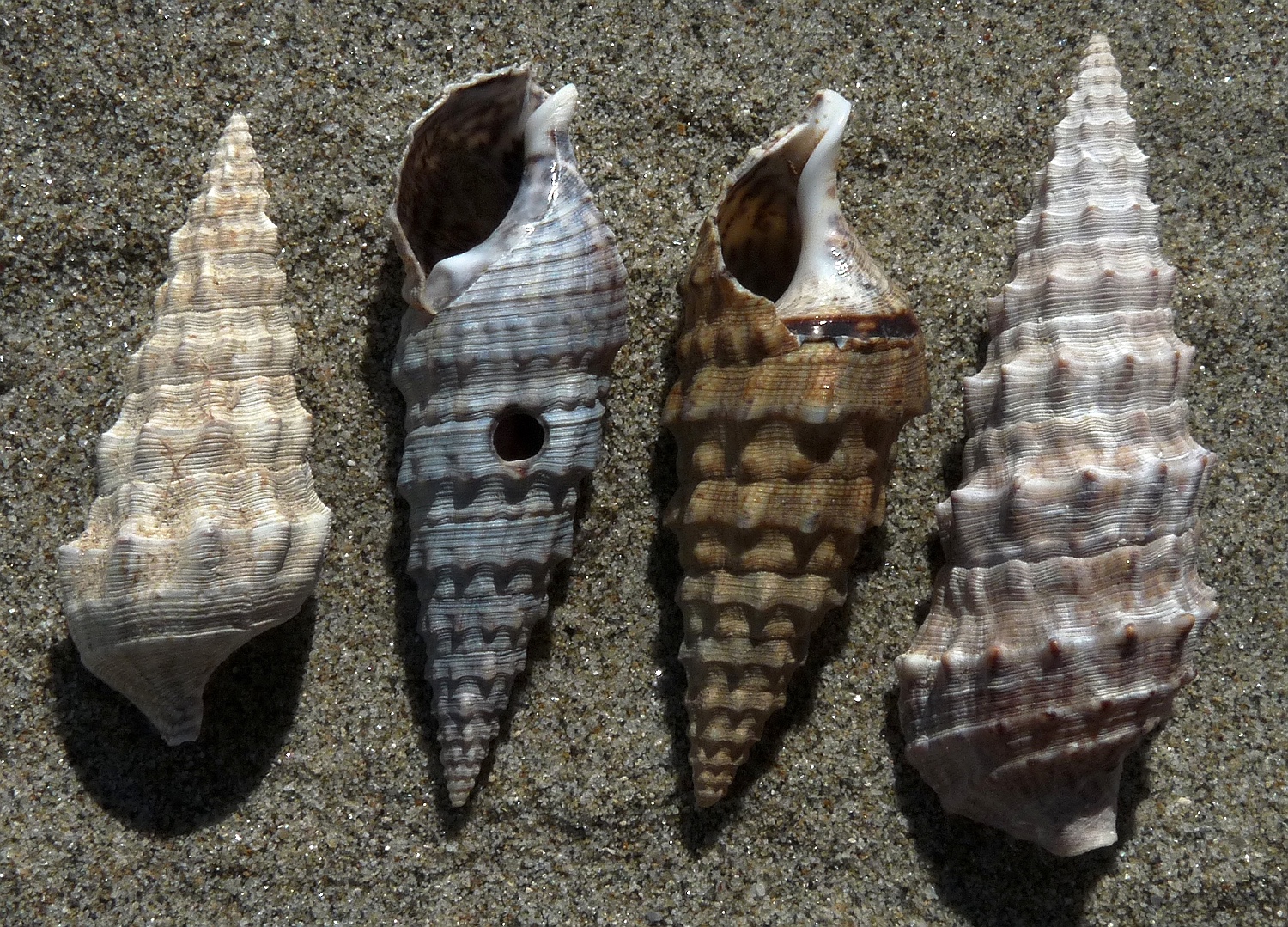
Cerithium vulgatum grows to a length of up to 6 cm. Height: 50 mm
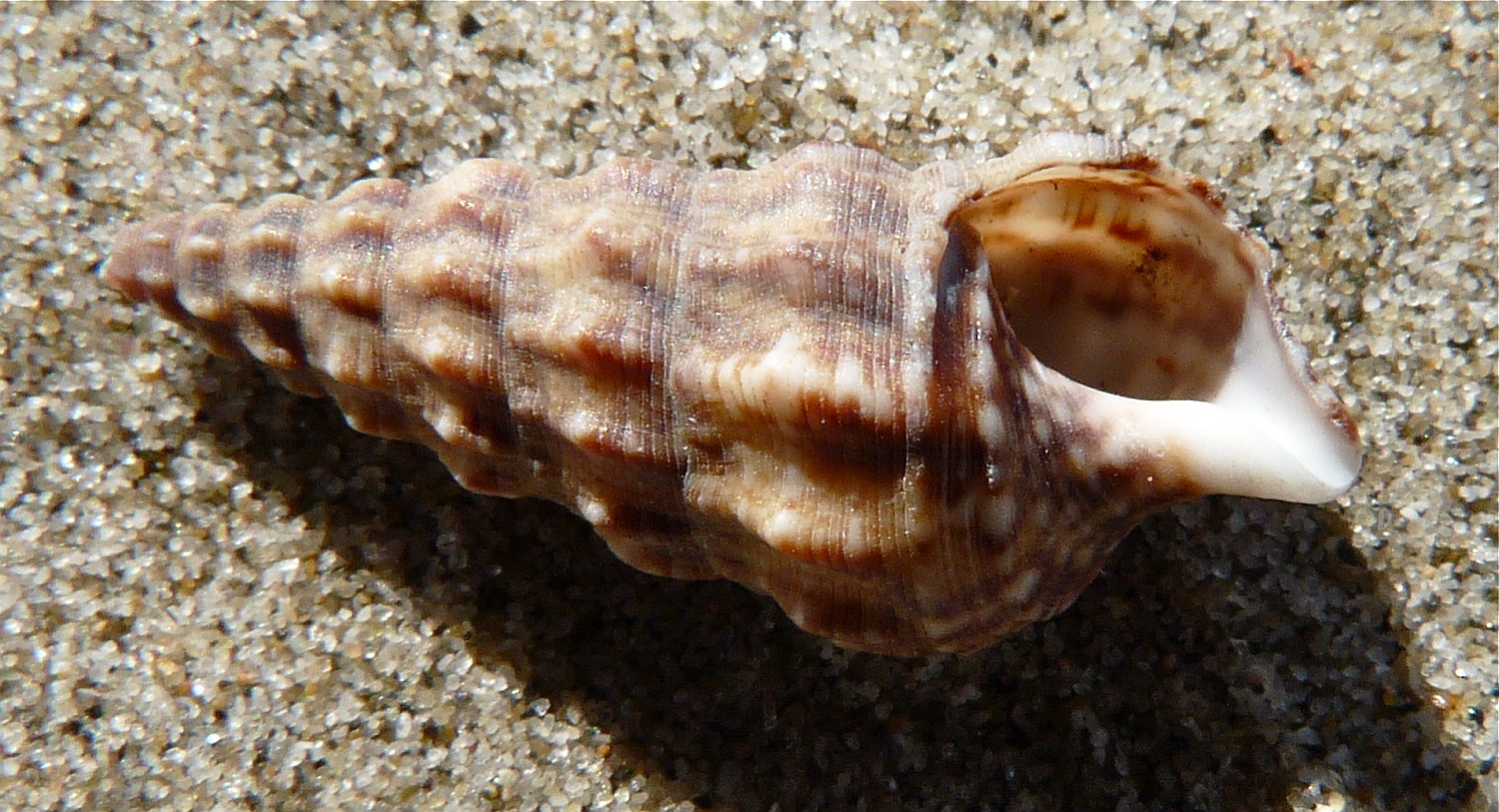
This also might be Cerithium vulgatum, or maybe C. alucastrum. Height: 20 mm
Cerithium rupestre, Risso
very common
This smaller form was earlier considered to be a separate species; now it is often seen as belonging to Cerithium vulgatum.
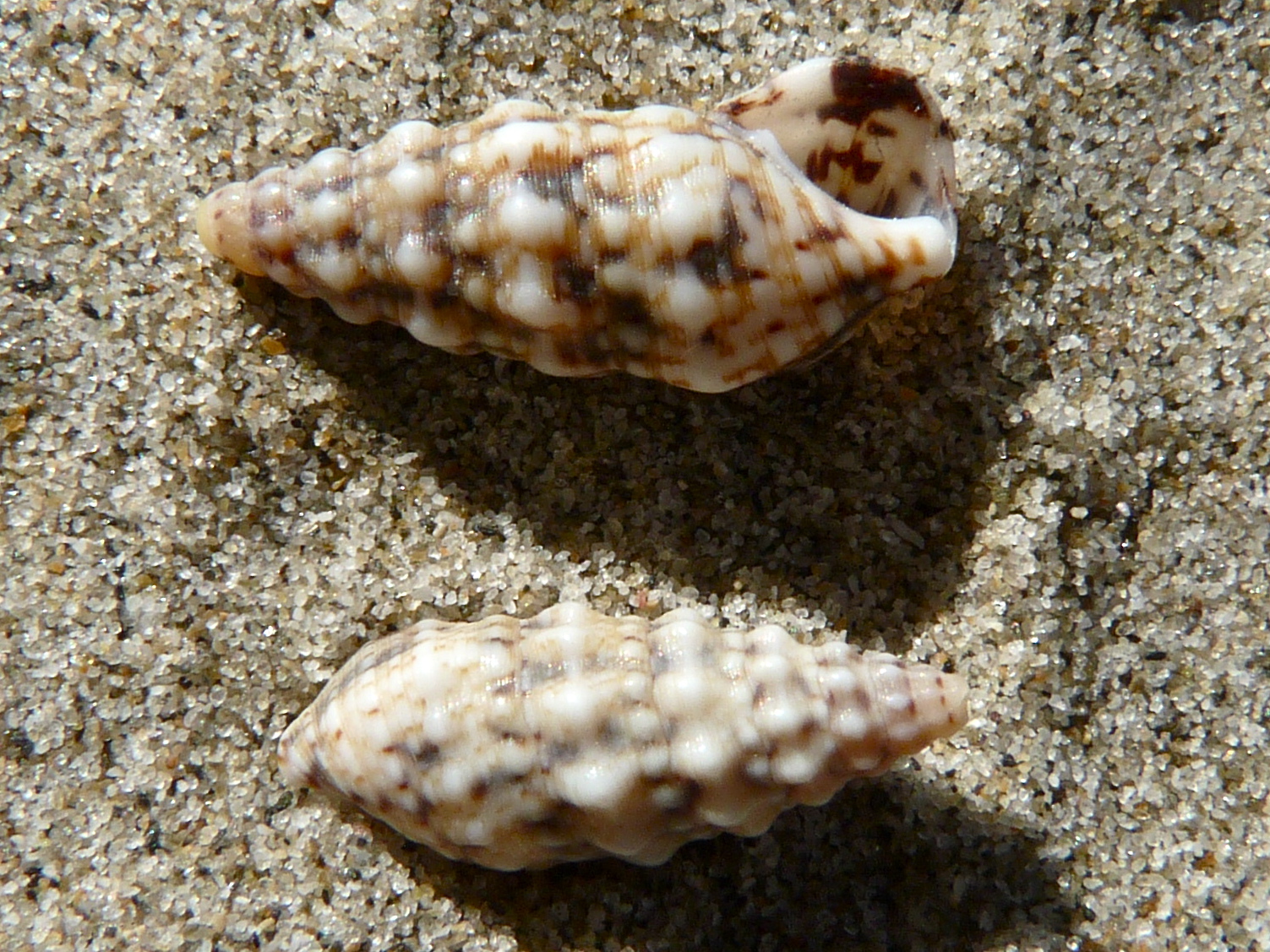
These snails, with smaller shells with larger, smoother knots, are sometimes considered to represent a different species: Cerithium rupestre. Height: 15 mm
Cerithium lividulum, Risso
common
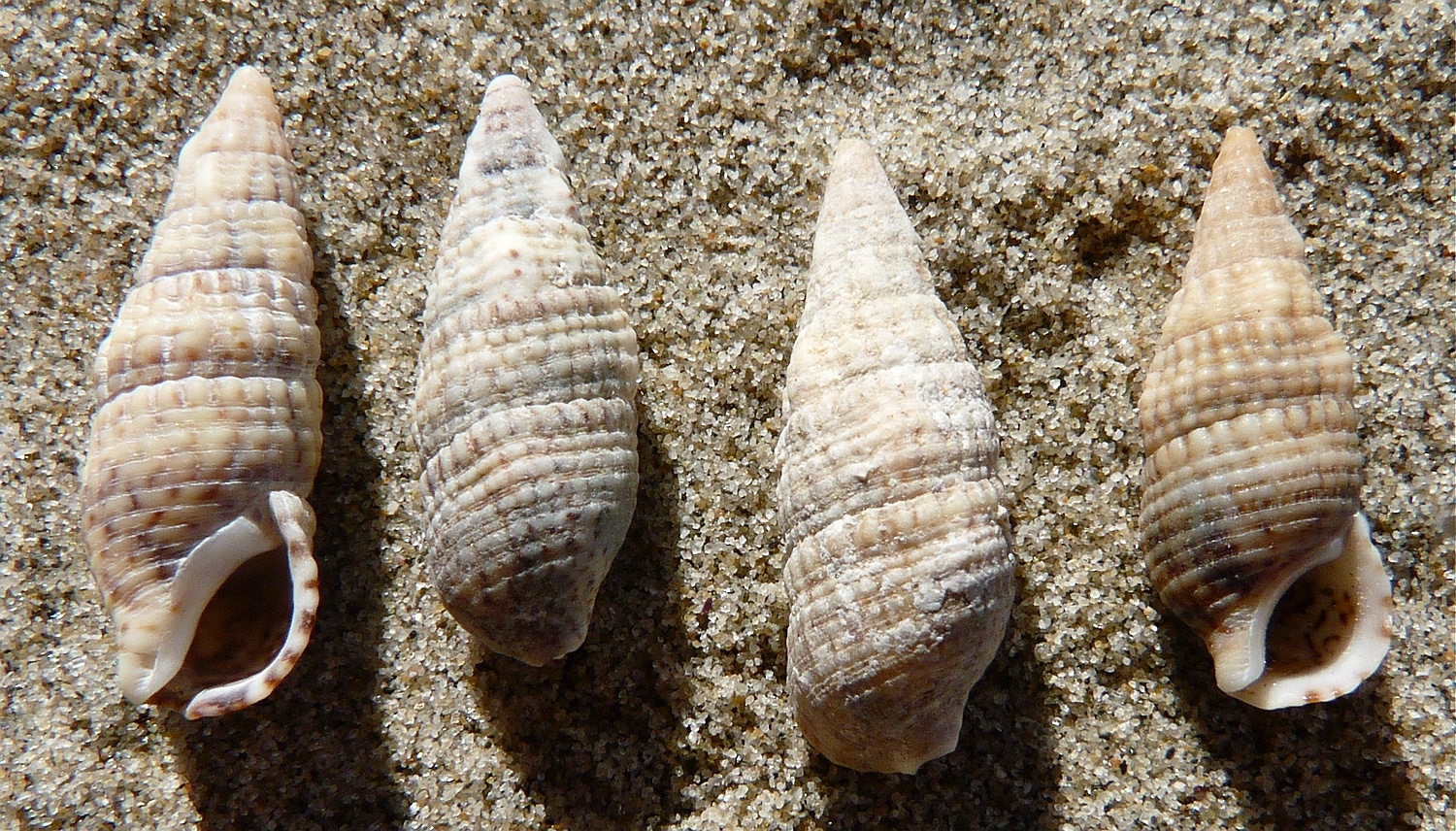
Cerithium lividulum has a light grey shell with a fine reticulate sculpture with irregular spiral lines; here too, the almond-shaped mouth shows a groove at the top and bottom. The inner lip is folded back. Height: 20 mm
Bittium latreillii, Payraudeau
common
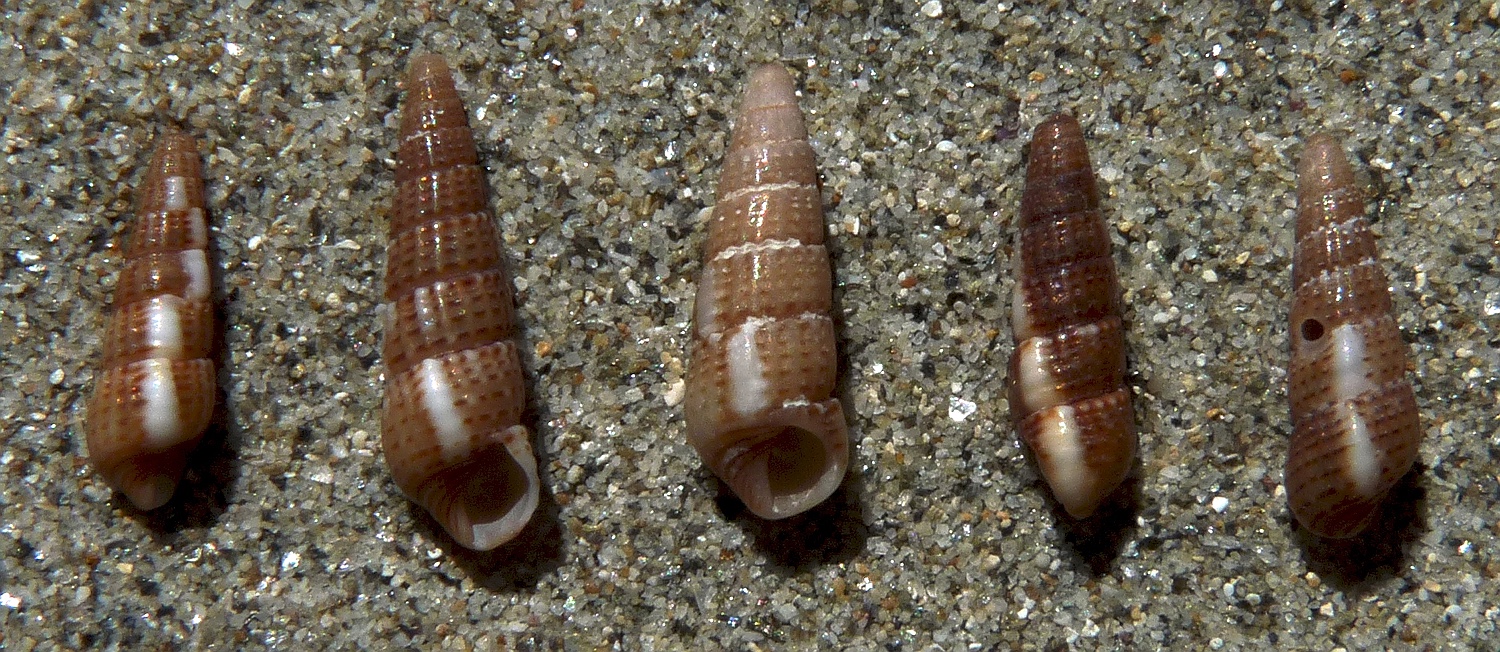
This very small species has a tall, slender shell with a fine reticulate pattern and characteristic white dashes on the whorls. Height: 12 mm
Bittium reticulatum ?, da Costa
very rare
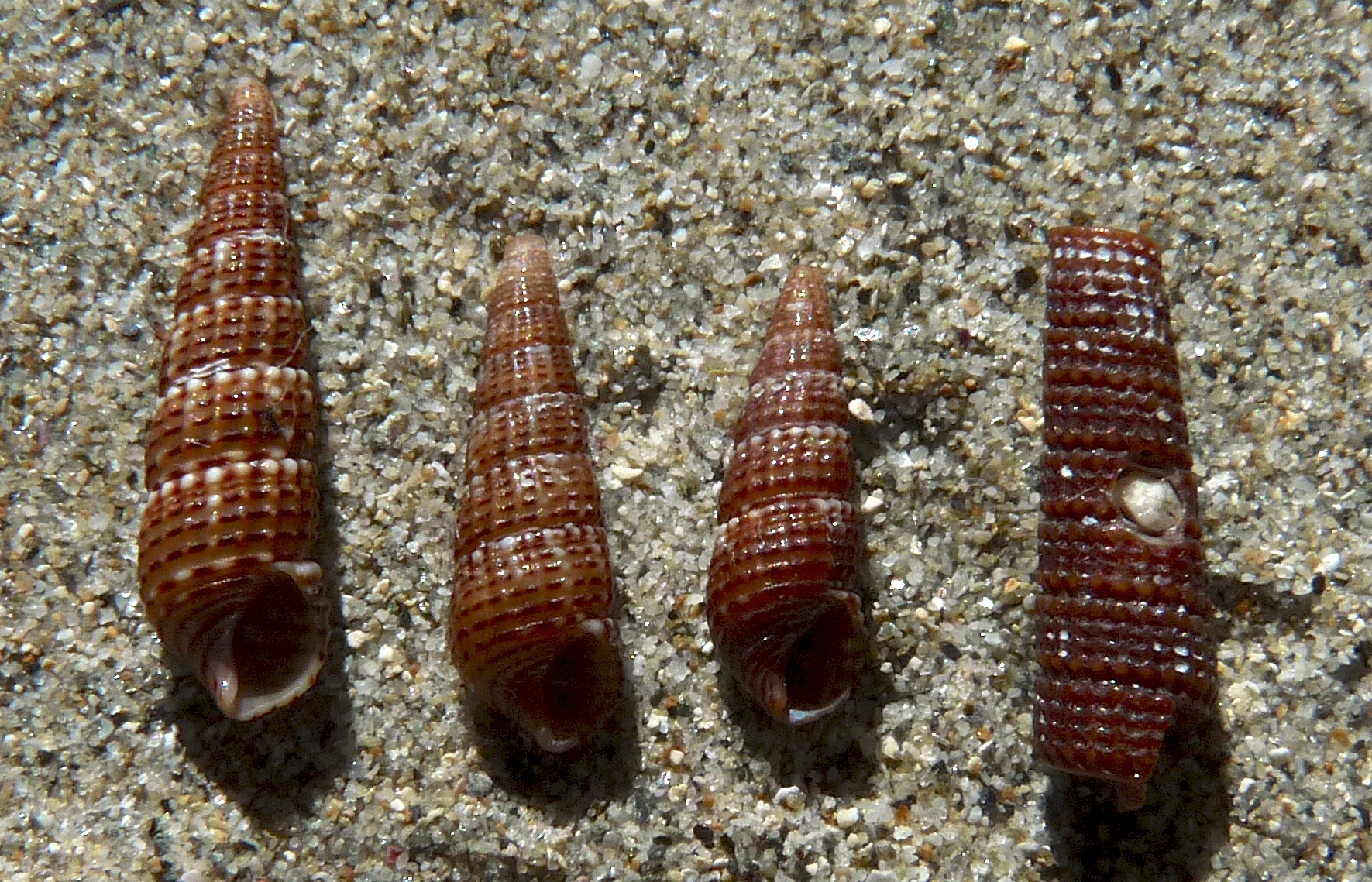
This species is very similar to the previous one, but has a darker, more strongly sculptured shell with fewer white dashes. It could be B. reticulatum. Height: 13 mm
2. Turritellidae, Tower snails
Tower snails have very tall, pointed tower-shaped shells. They live buried in the sandy seafloor filtering tiny particles out of the sea water.
Turritellinella tricarinata, Brocchi
very rare
This common and widespread species lives buried in the sediment and feeds by filtering small organisms out of the sea water. It grows to a length of up to 6 cm. It seems to occur only rarely around Naxos; in any case we have hardly ever found a shell.
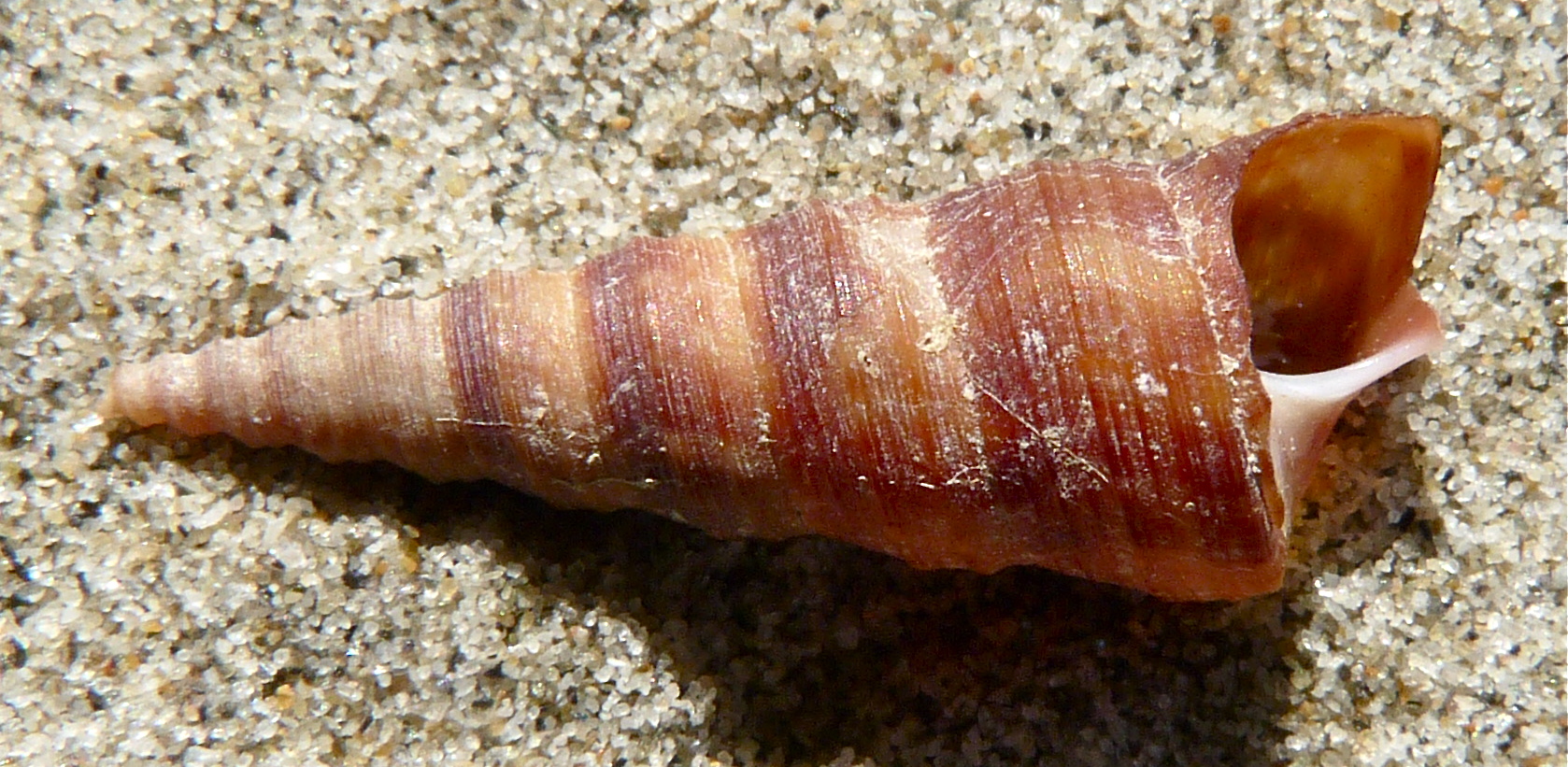
Turritellinella tricarinata has a pointed, tall shell with fine spiral stripes on the whorls. Height: 22 mm
continue: Littorinimorpha
back: