
The Eulittoral
The eulittoral is the tidal zone; it is defined as the area between the upper and lower waterlines (mean high and low waterlines). In areas with strong tides, especially in mudflats, the eulittoral is extremely extensive, teeming with life and playing an important role in the ecosystem.
In the Mediterranean, on the other hand, the intertidal zone is limited to a narrow zone of often only a few centimeters due to the low tidal range. Here, the eulittoral is the zone that is regularly washed over by the waves, i.e. exposed to both the sea and the air. The eulittoral zone therefore begins (towards the top) at the height regularly reached by the waves and ends (towards the bottom) at the height that is at least occasionally exposed to the air, so that the organisms of the benthal, which cannot tolerate drying out at all, can not exist here. On Naxos the water level does not fluctuate in a tidal rhythm, but changes depending on the weather conditions. When there is no wind and thus no waves, the upper zone of the eulittoral can dry out completely for several days, so that only very resistant crustose calcareous red algae can grow here, while the lower zone is only exposed for short times to the air. Here more sensitive non-calcareous algae species can also exist.
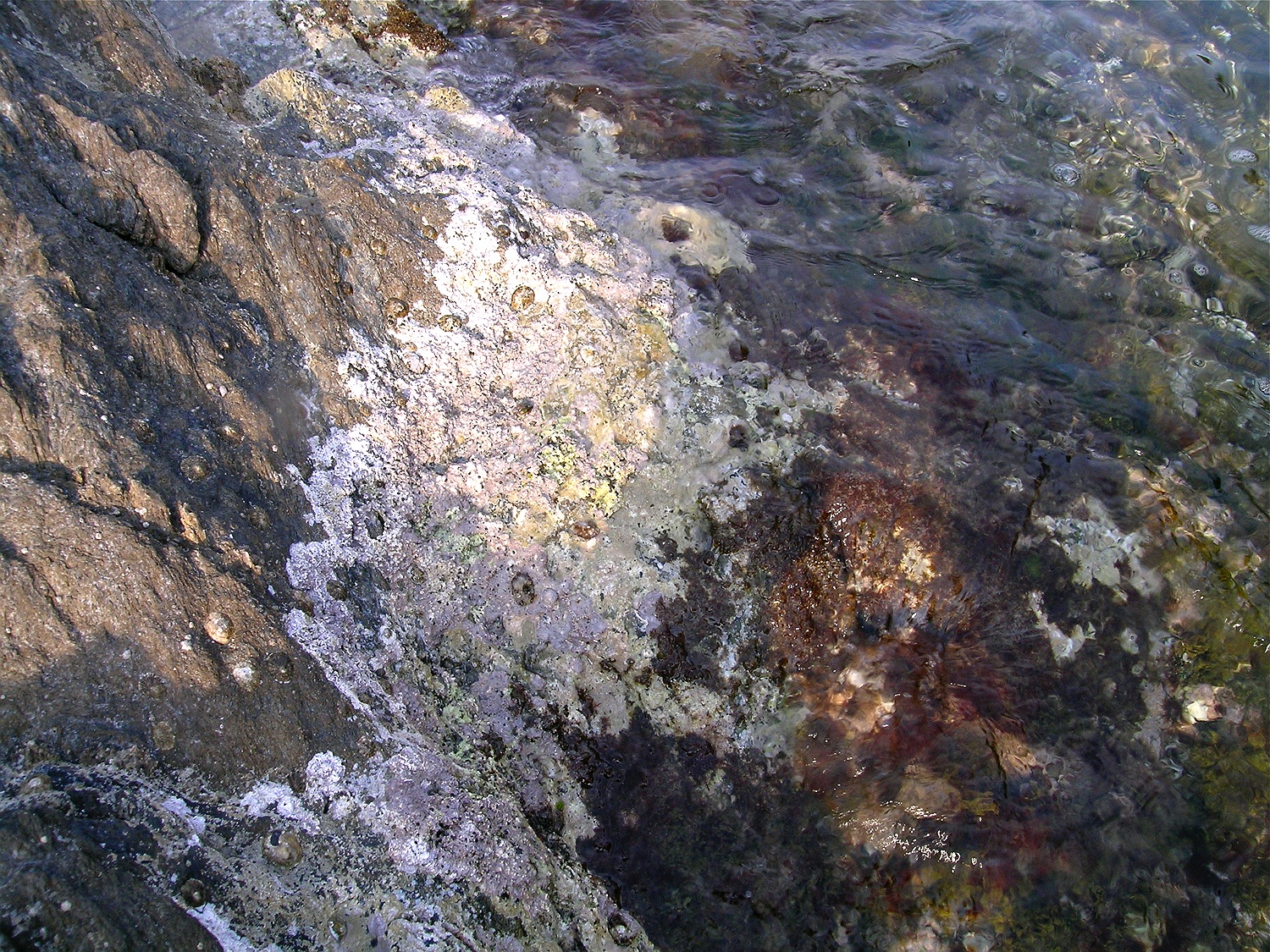
Due to the lack of tidal variation of the water level and the mostly steep coastline, the eulittoral zone on Naxos is very narrow.
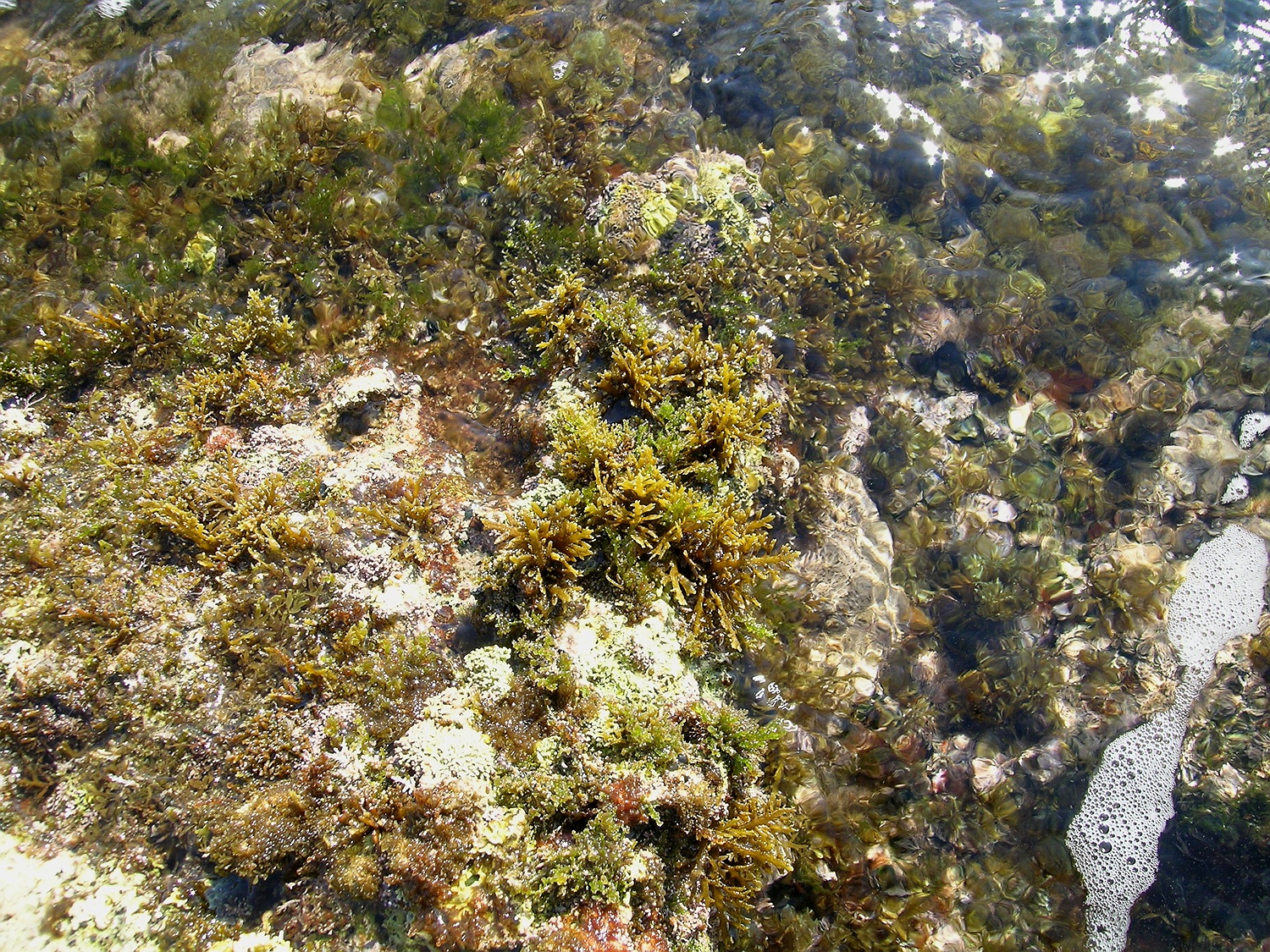
Many species of algae occur in this zone which is alternately exposed to the air and water.
The sessile organisms in the eulittoral zone must also be able to survive both submerged with water and exposed to the air; and they must be able to withstand the strong mechanical stress caused by the waves. However, the environmental conditions in this zone are less extreme than in the supralittoral.
1. Beaches of sand and fine gravel
On beaches of sand and fine gravel, no sessile organisms can grow in the eulittoral zone, as they need solid substrate. Even (larger) animal organisms hardly ever live here, except for small detritus feeders. However, numerous microscopic organisms live in the so-called sand gap system, that is in the water-filled spaces between the grains of the sand.
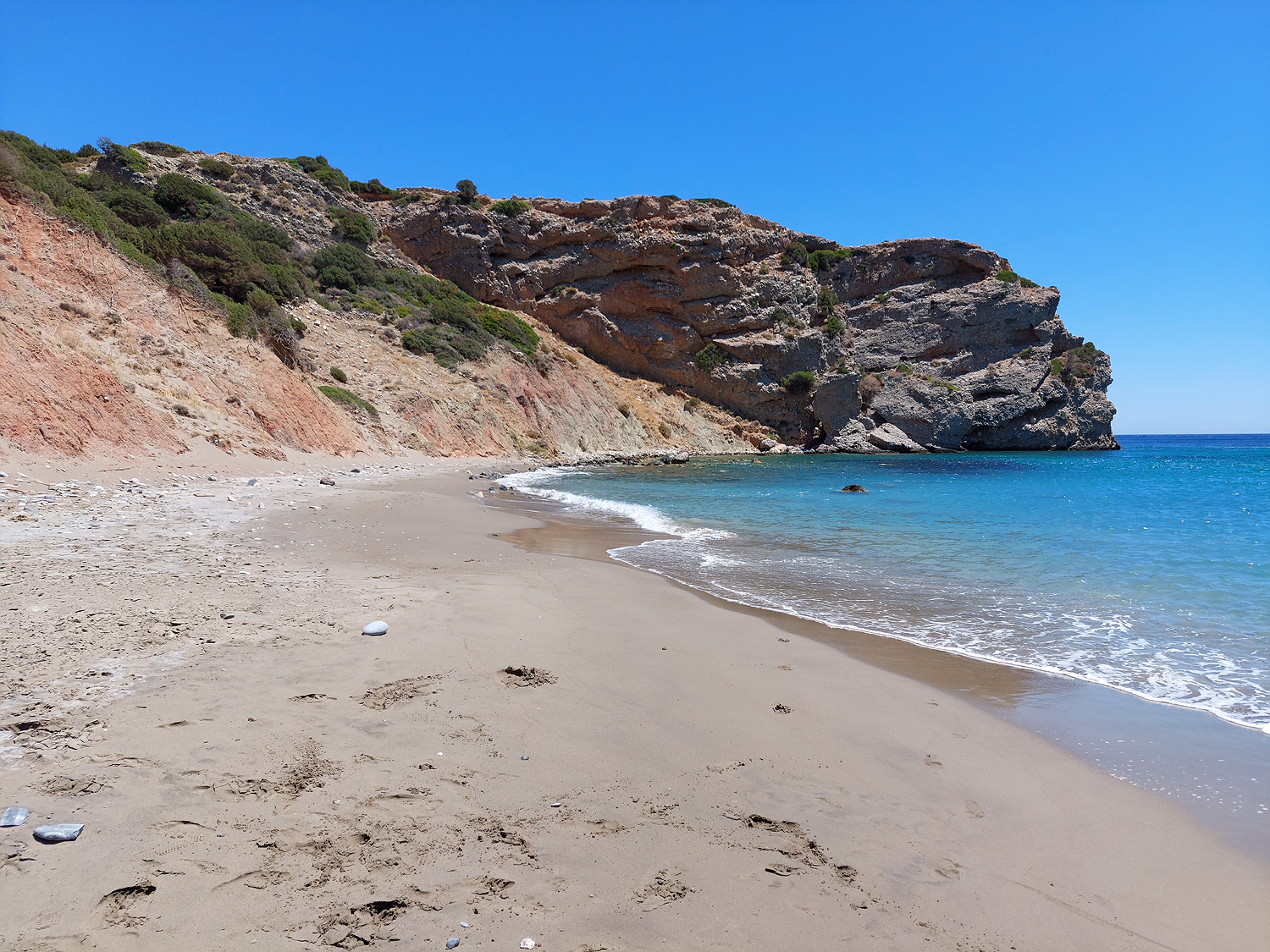
No sessile plants or animals can grow on sandy beaches in the eulittoral zone. However, countless tiny organisms of the sand gap system live between the grains of sand.
2. Beaches of coarse gravel and loose stones
On beaches consisting of loose stones and coarse gravel, the organisms of the sand gap system are absent. However, some larger animals can be found in the intertidal zone, where they find shelter beneath the stones. Sessile organisms, on the other hand, cannot grow on the stones that are moved by the waves.

Animals of the sand gap system and sessile organisms cannot exist on beaches of loose stones; however, a number of animal species can be live between and beneath the stones.
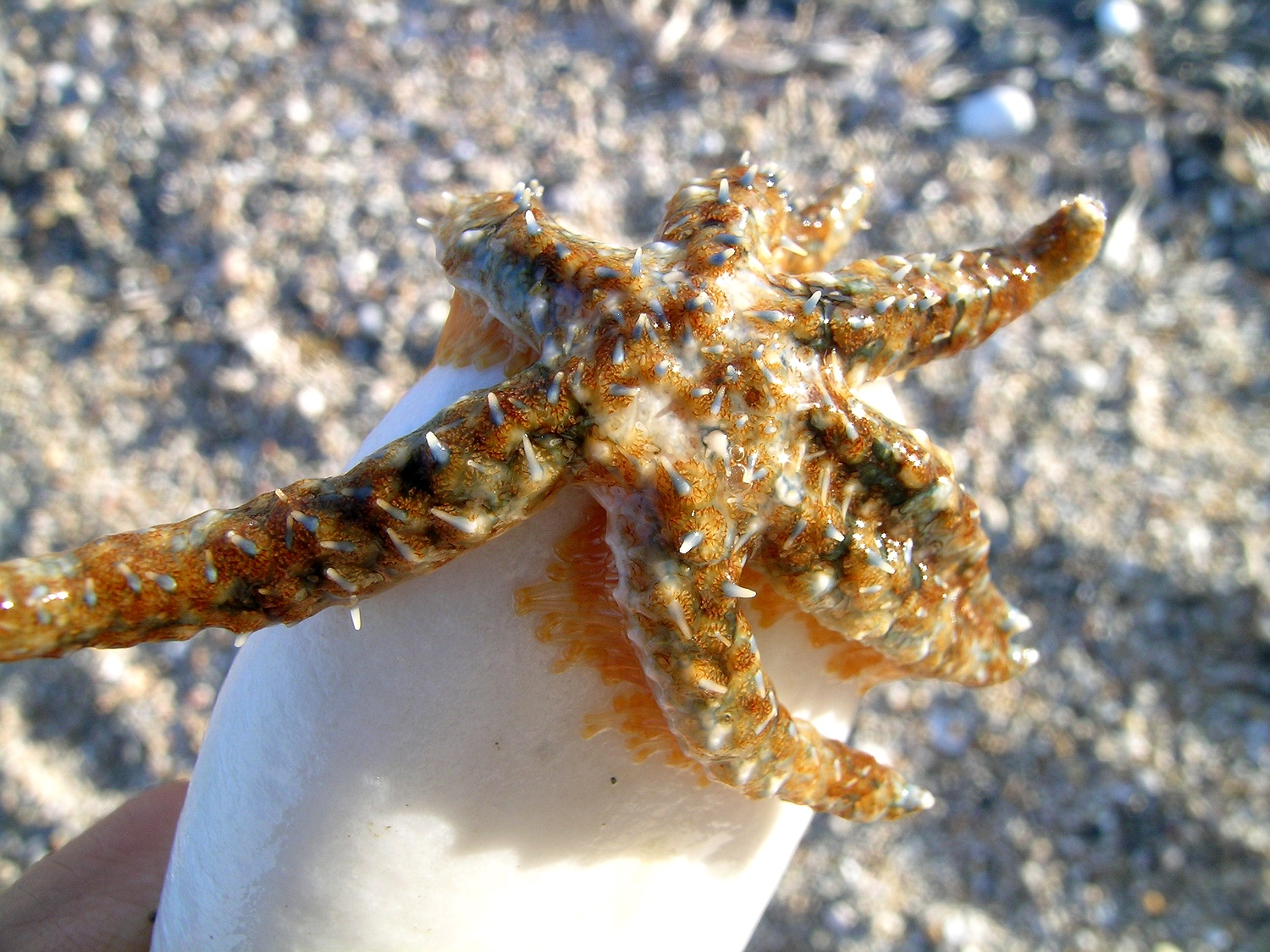
If you turn over the stones at the waterline, you will sometimes find a blue spiny starfish (Coscinasterias tenuispina).
3. Rocky coast
At rocky parts of the coast, the eulittoral zone is densely covered with algae. Usually there is a clear division into an upper zone with crustose calcareous algae such as Lithophyllum incrustans and a lower zone where a great variety of calcareous and non calcareous algae grows. When the layer of the calcareous algae is particularly thick, it may form a reef-like structure.

The eulittoral on marble: in the lower part of the image one sees the upper zone with Lithophyllum incrustans, and in the upper part the lower zone with various shrubby algae species.
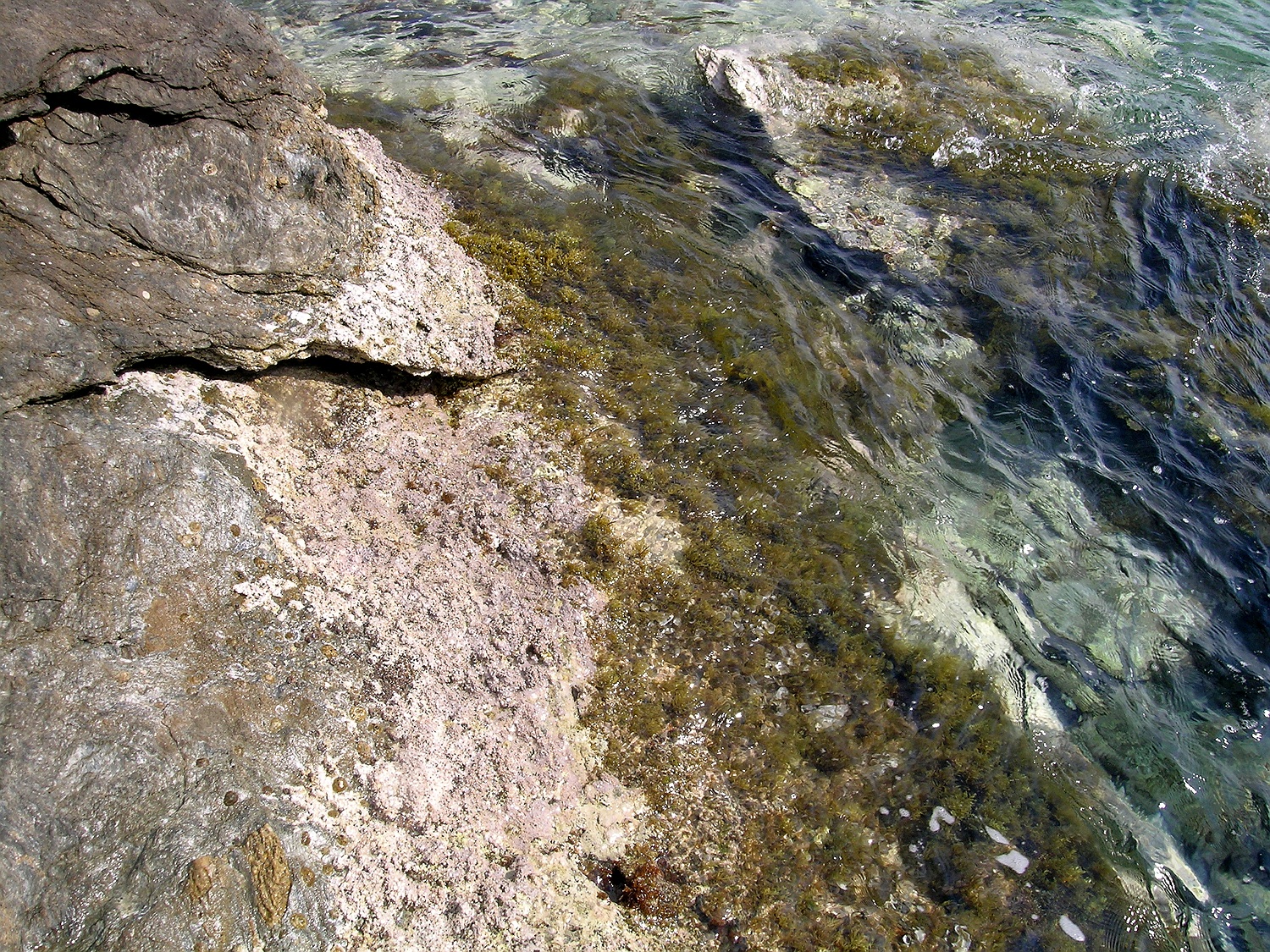
The eulittoral on slate: Lithophyllum incrustans predominates in the upper zone, while species of Cystoseira are characteristic for the lower zone.
3.1. Upper zone
The upper zone of the eulittoral can be exposed for several days when the water is calm and the water level is low, and is then clearly discernible from a distance as a light-coloured fringe. On Naxos it is usually about 10 to 30 centimeters wide. By far the most important alga species in this zone is the crustose calcareous alga Lithophyllum incrustans, which occurs on both marble and slate.
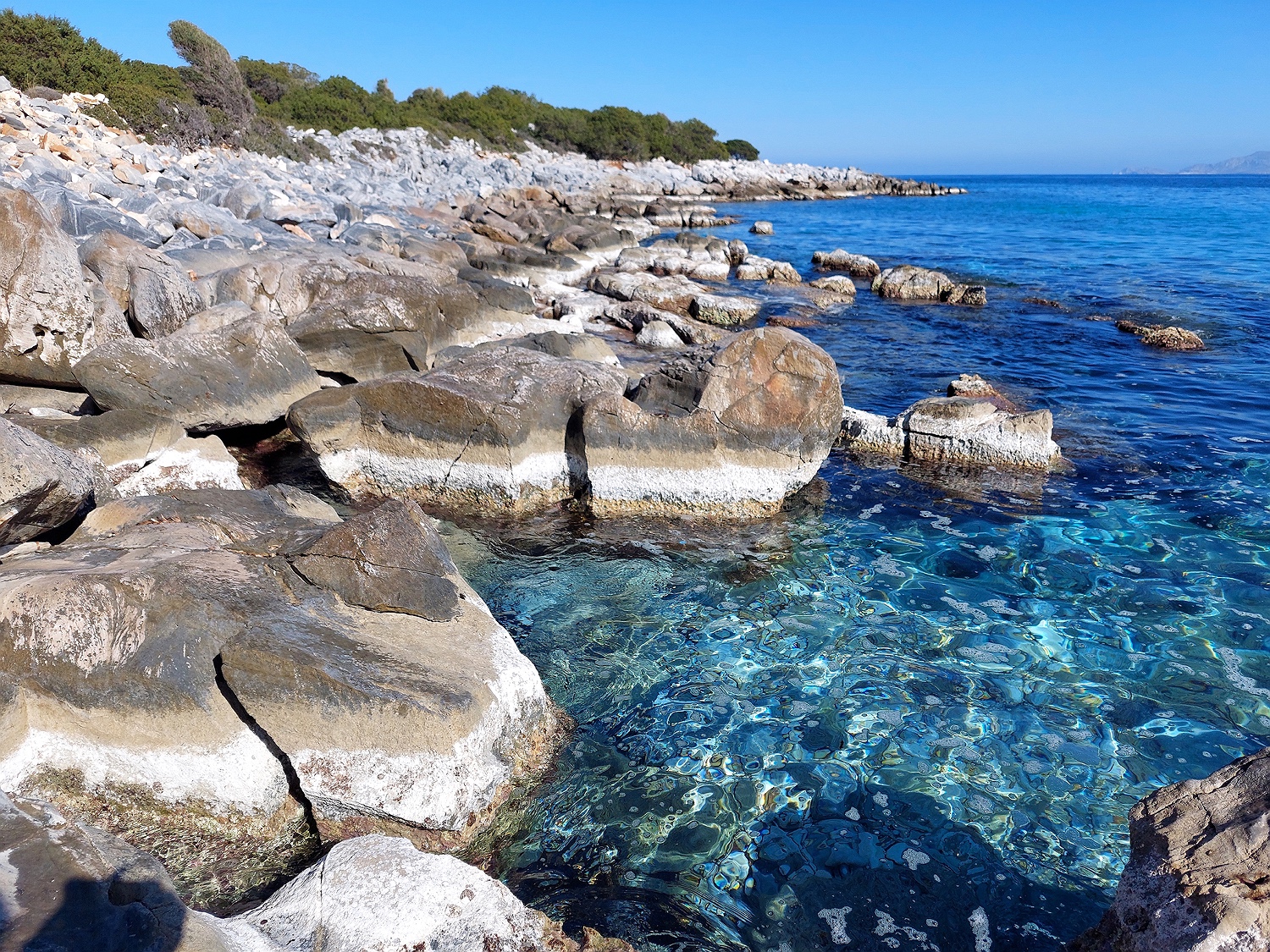
At low water levels, the upper zone of the eulittoral is often exposed and clearly visible as a white fringe.
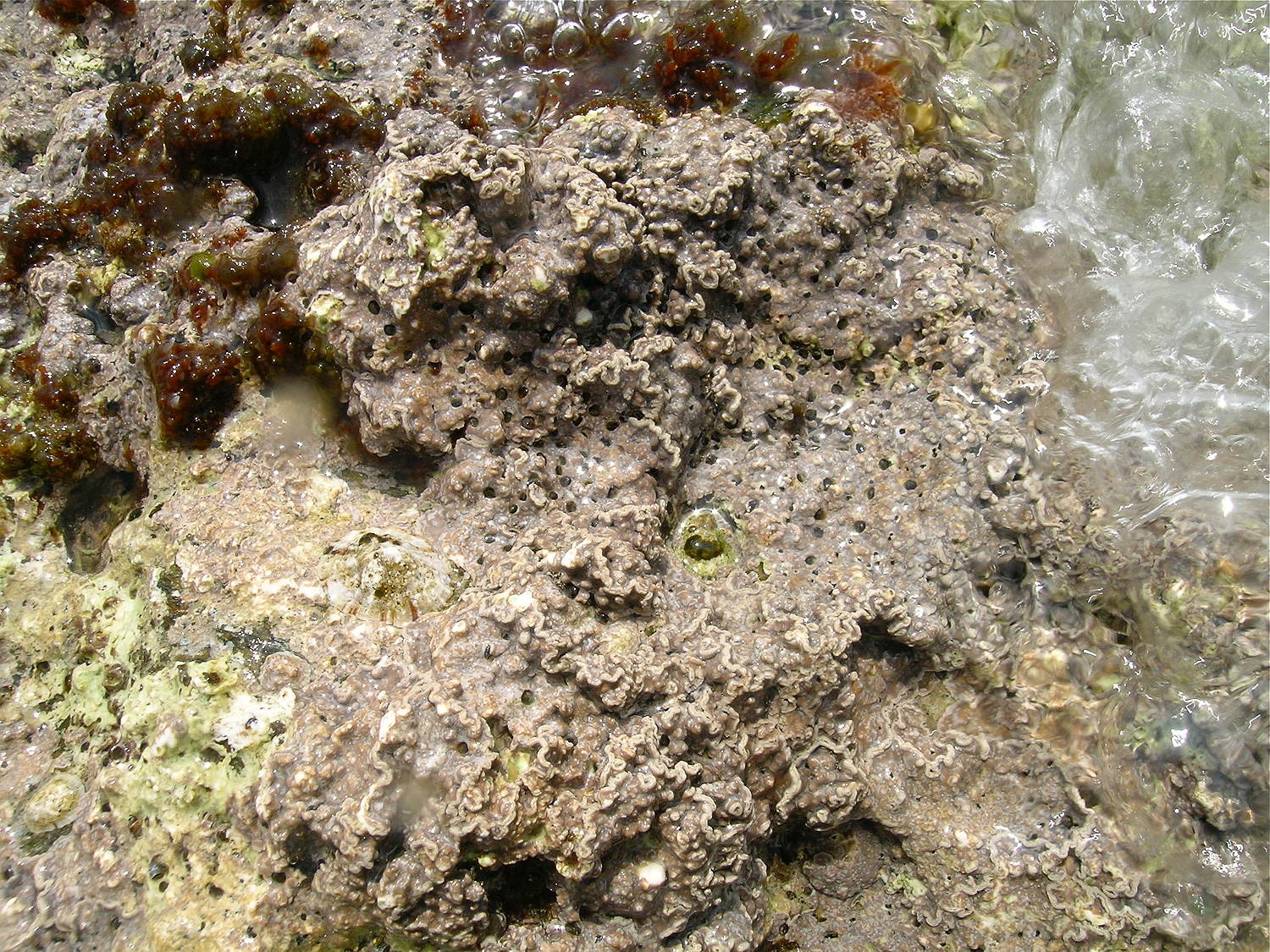
In this zone, the grey-pink crustose calcareous alga Lithophyllum incrustans often completely covers the rocks.
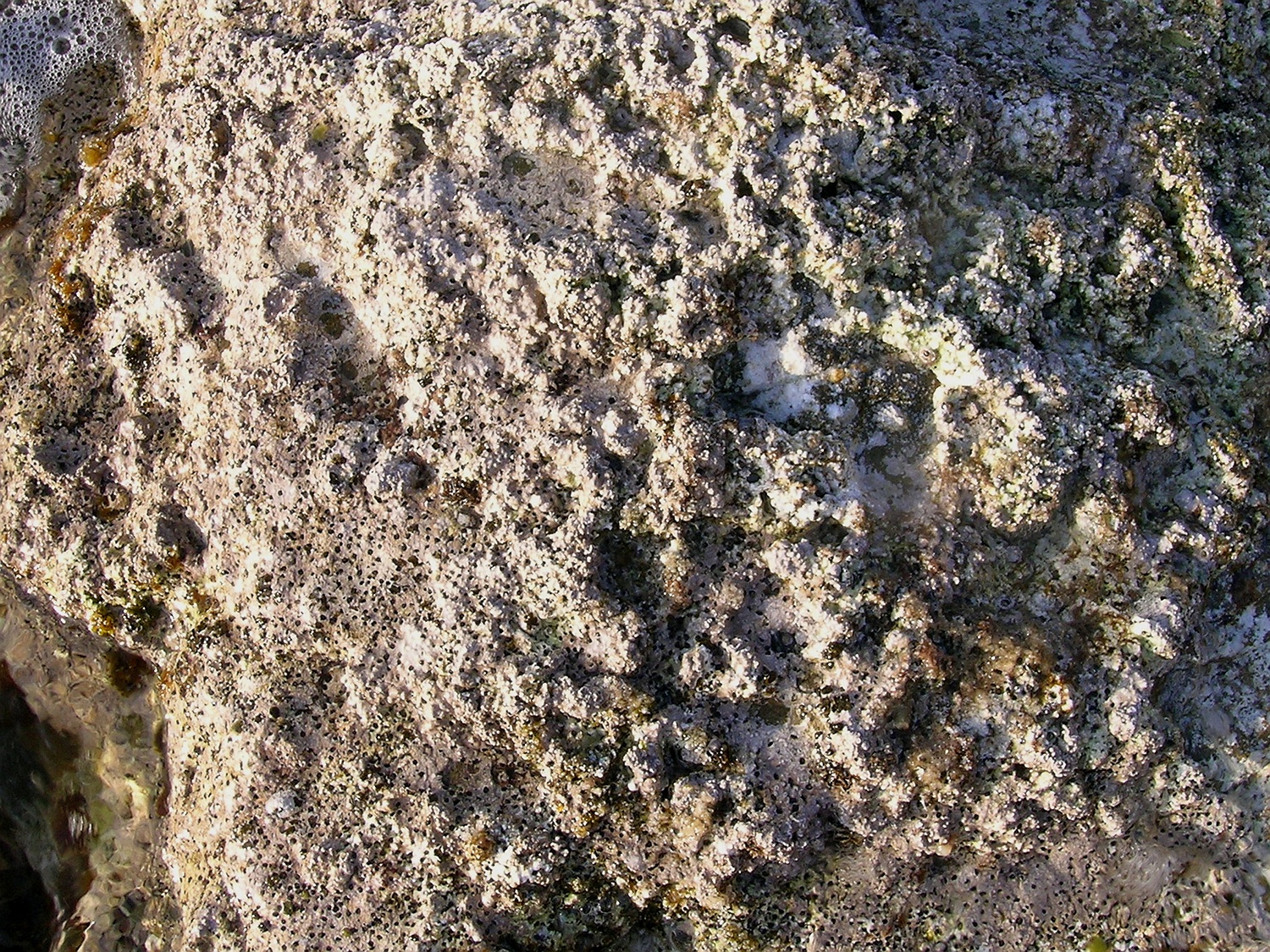
Particularly characteristic for this zone are the countless tiny sessile worm snails (Dendropoma cristatum), which are overgrown by Lithophyllum incrustans so that only the shell openings appear as small black dots.
3.2. Lower zone
The lower zone of the eulittoral is dominated by non-calcareous algae, some of which are also common in the infralittoral, while others are largely confined to the intertidal zone. In this zone, there is a clear difference in algae growth between marble and slate, although many species occur on both substrates.
3.2.1. On marble
On marble occurs a great variety of alga species, mainly non-calcareous red algae such as hornweed (Ceramium spec.) and Wrangelia penicillata(?) as well as calcareous red algae such as species of the genera Titanoderma and Amphiroa. Marble is slowly dissolved by seawater, a process that is intensified by endolithic blue-green algae (as in the supralittoral) so that the coastline is often jagged with numerous holes that provide living spaces for countless organisms. In some areas the calcareous algae grow to a thick reef-like layer. Here, the diversity of algae species is particularly high, with calcareous algae and non-calcareous species growing in a colourful mixture.
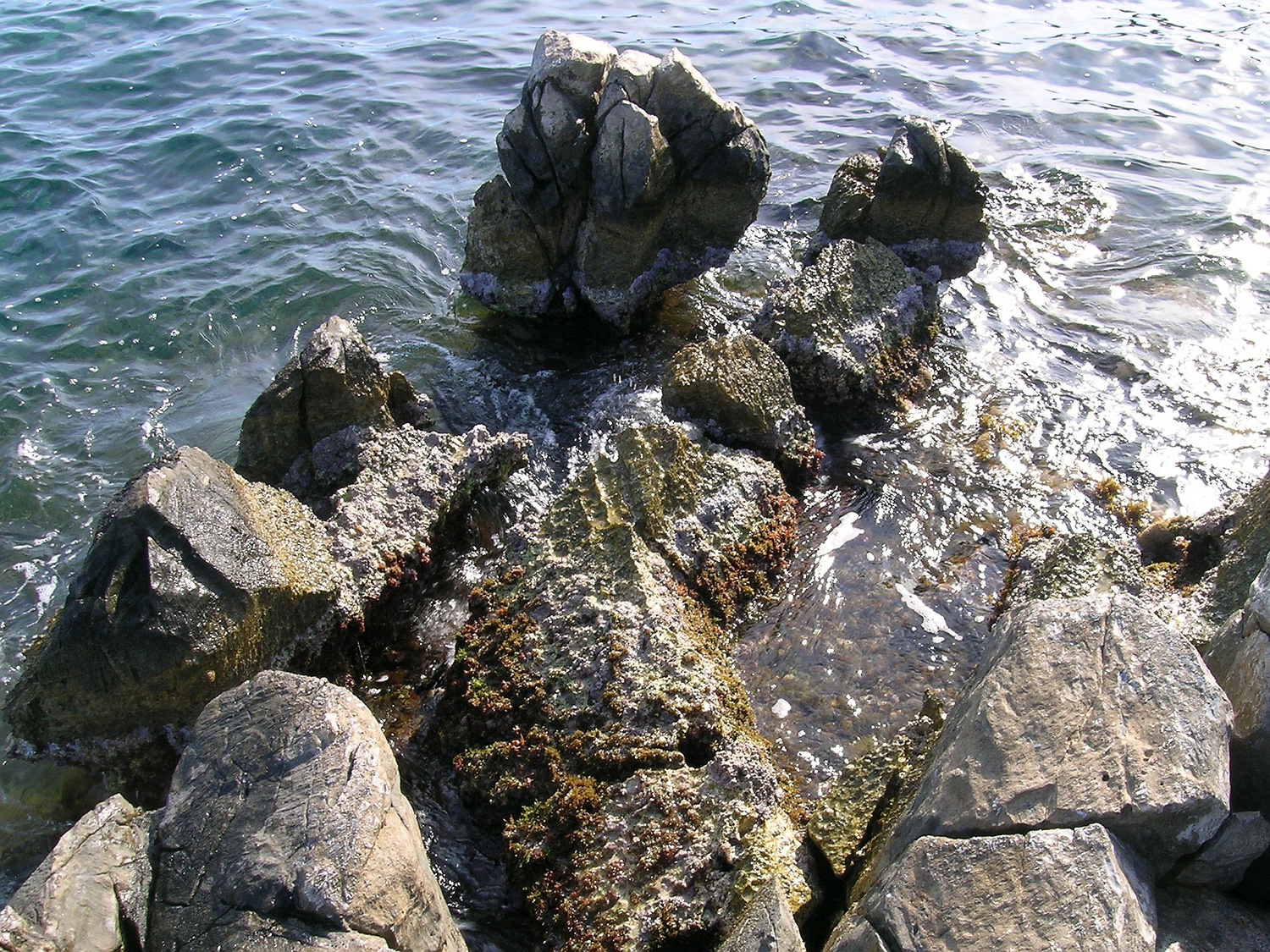
eroded marble coast
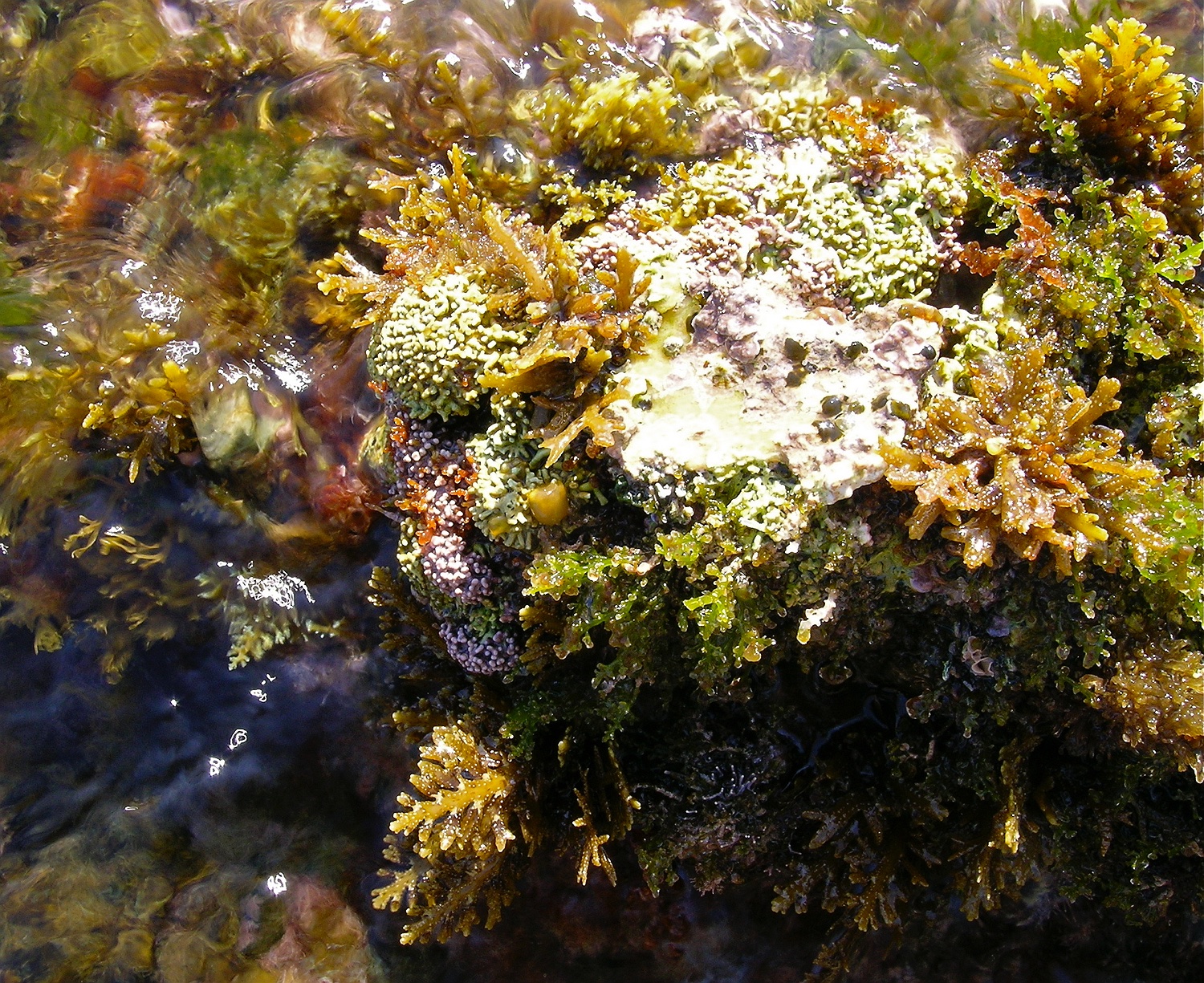
In the lower part of the eulittoral on marble, a great variety of algae species grows forming thick layers.
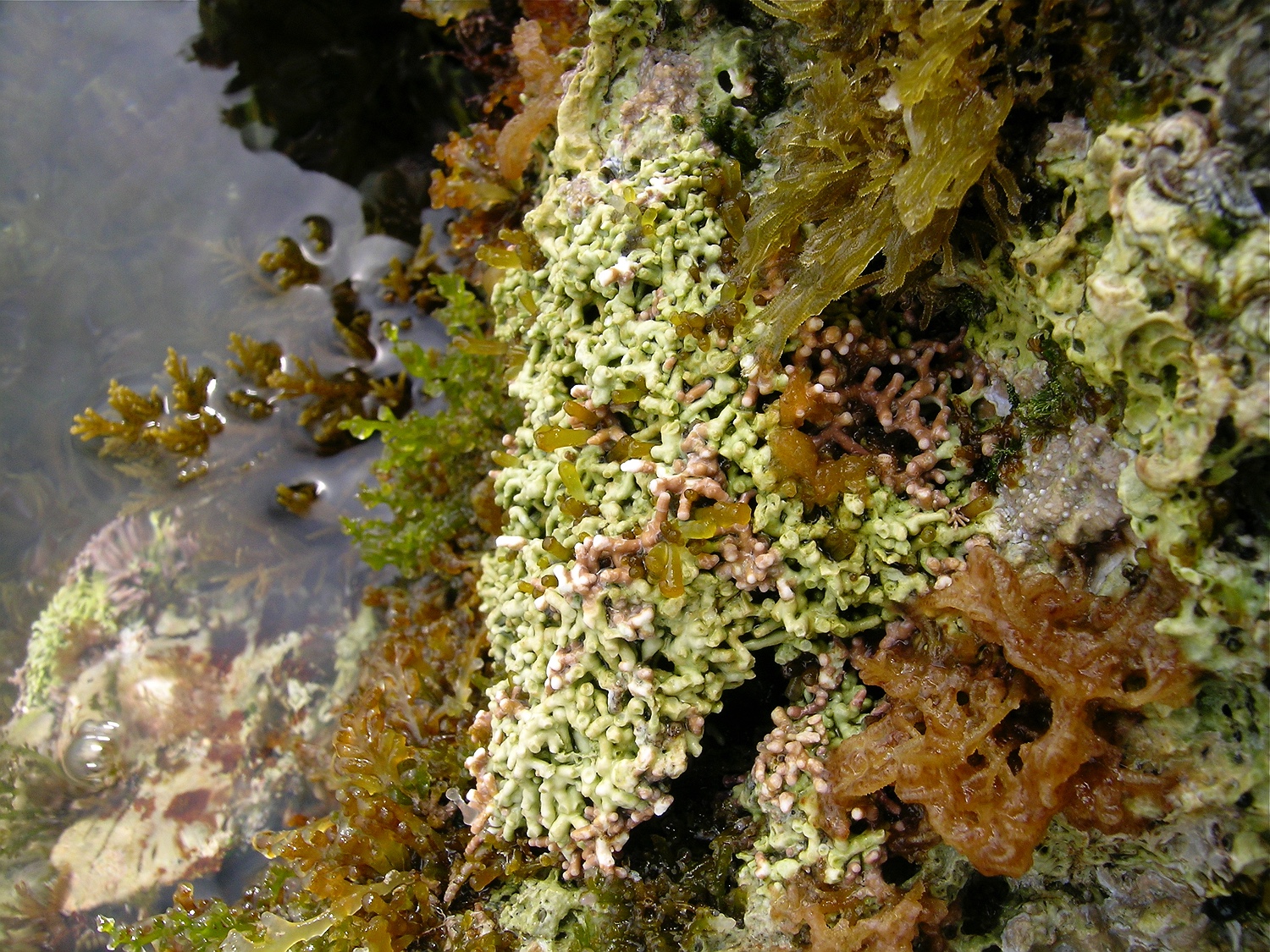
typical algae at the waterline
3.2.2. On slate
On slate generally fewer species are found. These areas are often dominated by brown algae such as Cystoseira compressa and non-calcareous red algae such as Laurencia obtusa.
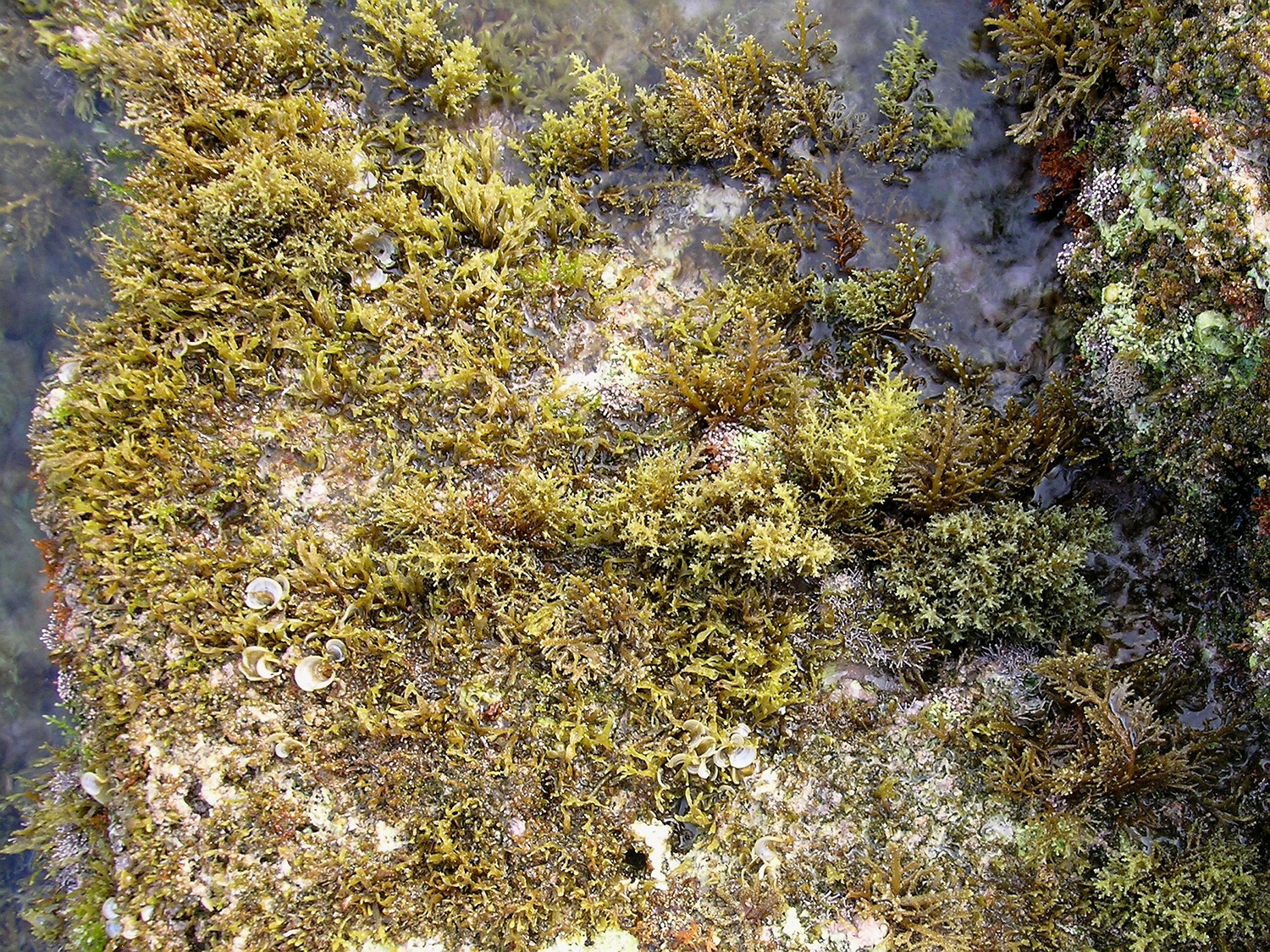
On slate, shrubby brown and red algae are common in the lower eulittoral zone.
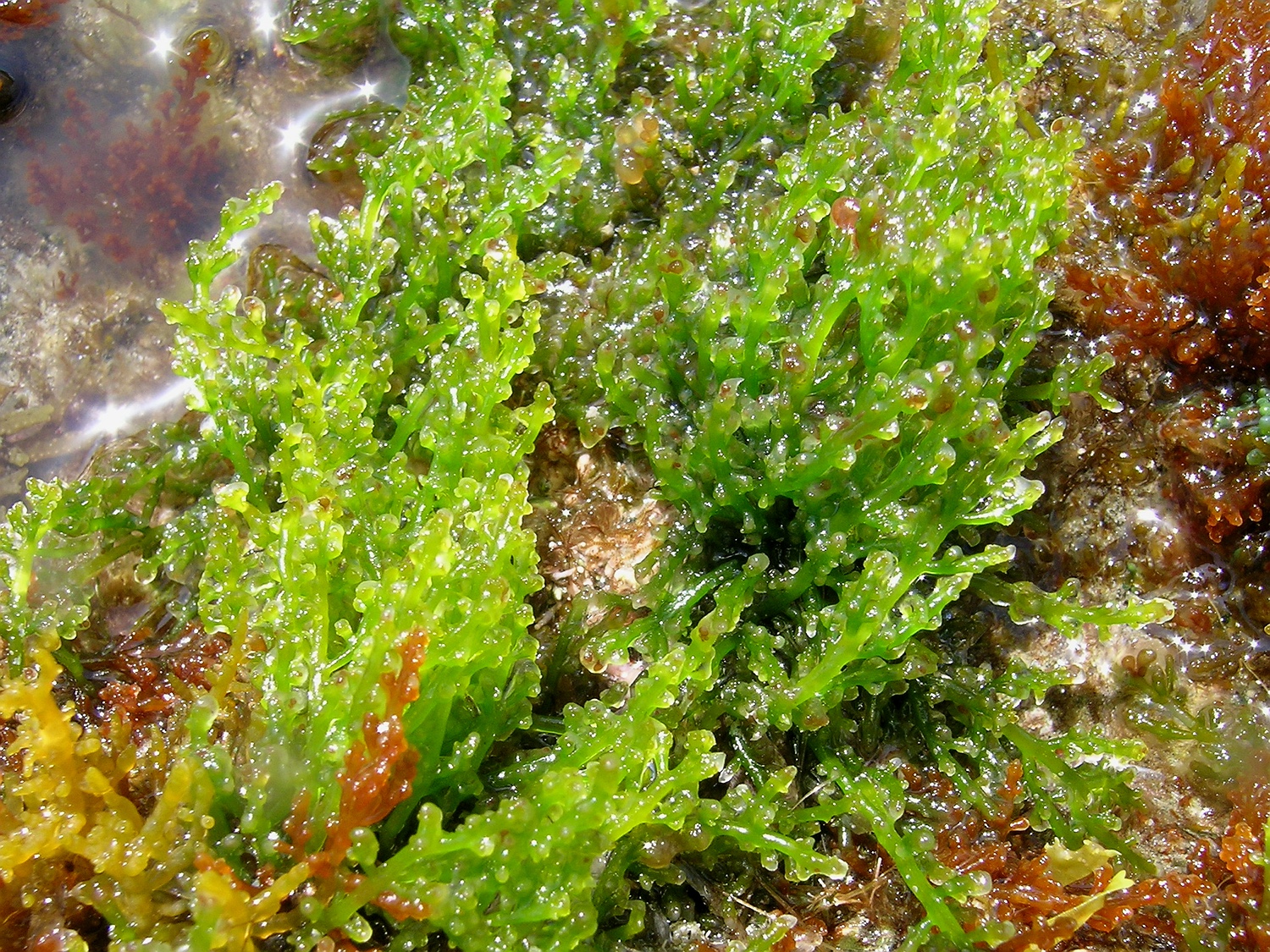
The red or green-coloured Laurencia obtusa often forms dense stands.
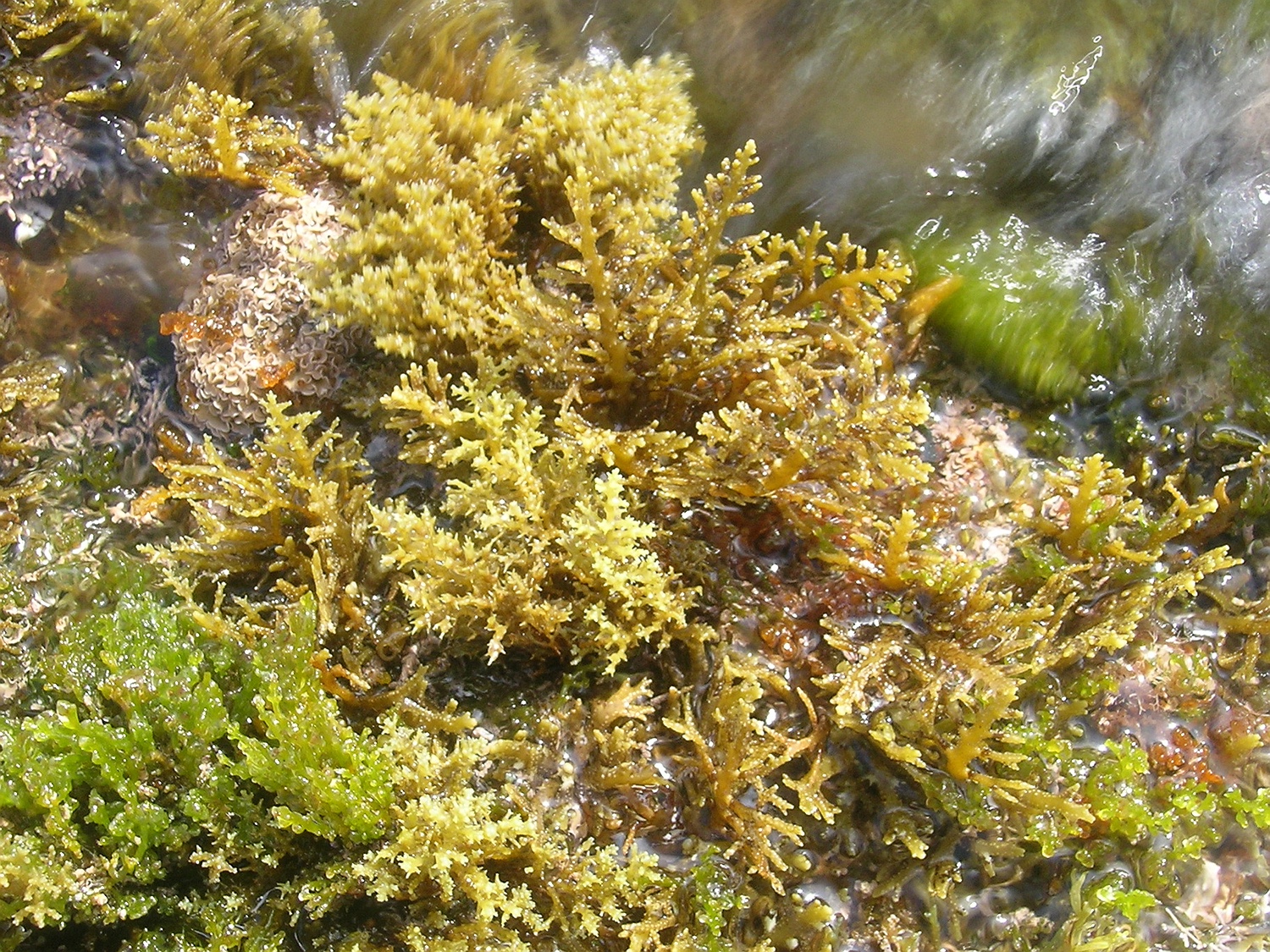
One of the most abundant brow algae in the eulittoral is Cystoseira compressa.
Animals in the eulittoral zone
Few animal species are permanent inhabitants of the eulittoral zone. By far the most important of these is the small worm snail Dendropoma petraeum, which dominates many areas of the upper eulittoral zone together with the crustose alga Lithophyllum incrustans. Another typical inhabitant of the eulittoral zone is the Beadlet anemone, which can close itself effectively when the eulittoral falls dry fora longer time. In addition numerous animals regularly visit the eulittoral zone. Typical visitors include various species of snails, crabs, chitons and blennies.
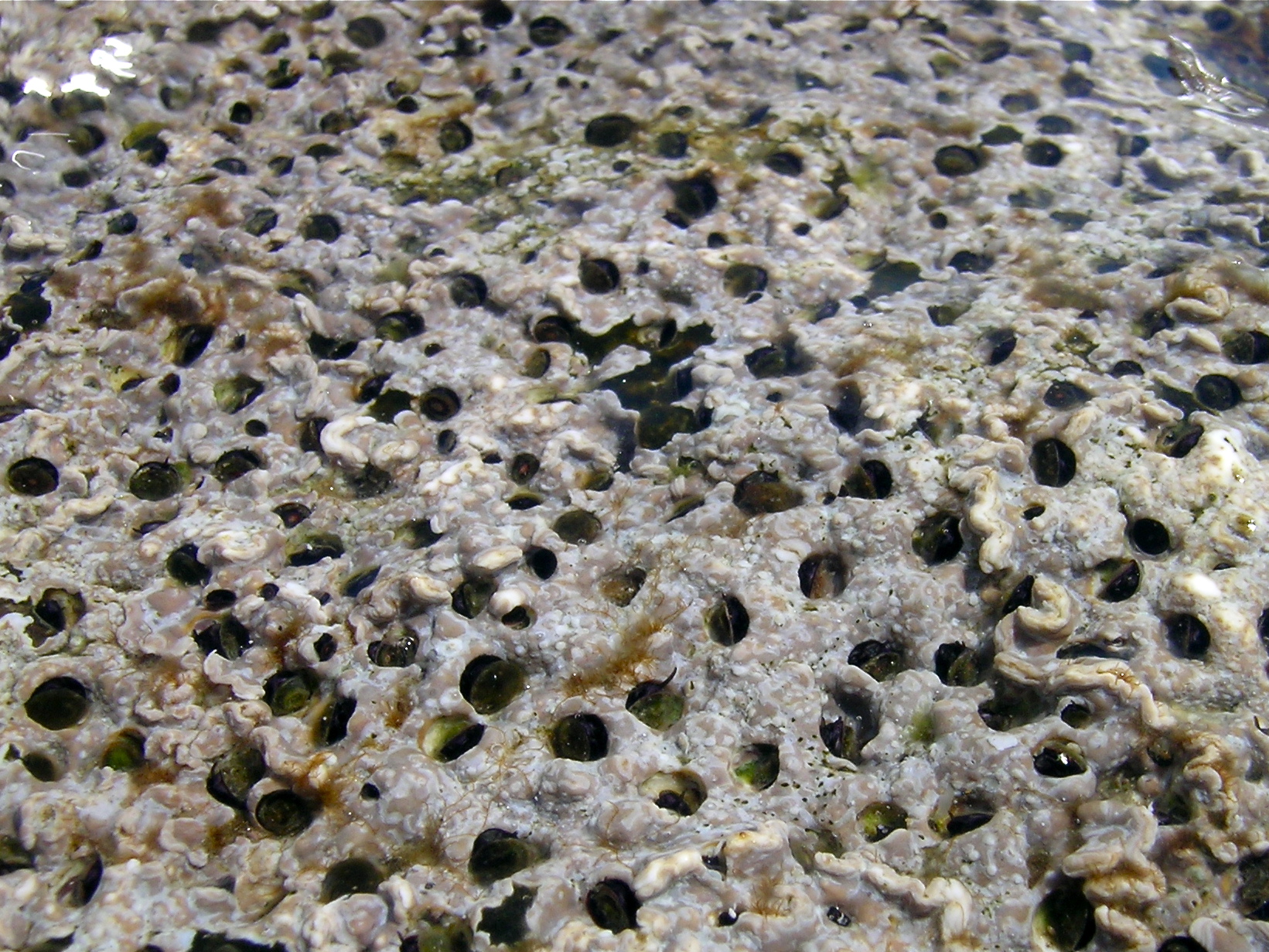
The most characteristic animal species of the eulittoral zone is this tiny worm snail, whose irregular shell is firmly attached to the substrate and overgrown with the calcareous algae Dendropoma cristatum, and which usually occurs in large numbers.

The Beadlet anemone is found in the eulittoral zone; when the water level is low, it retracts its tentacles.

Hermit crabs often sit in small groups right at the waterline.
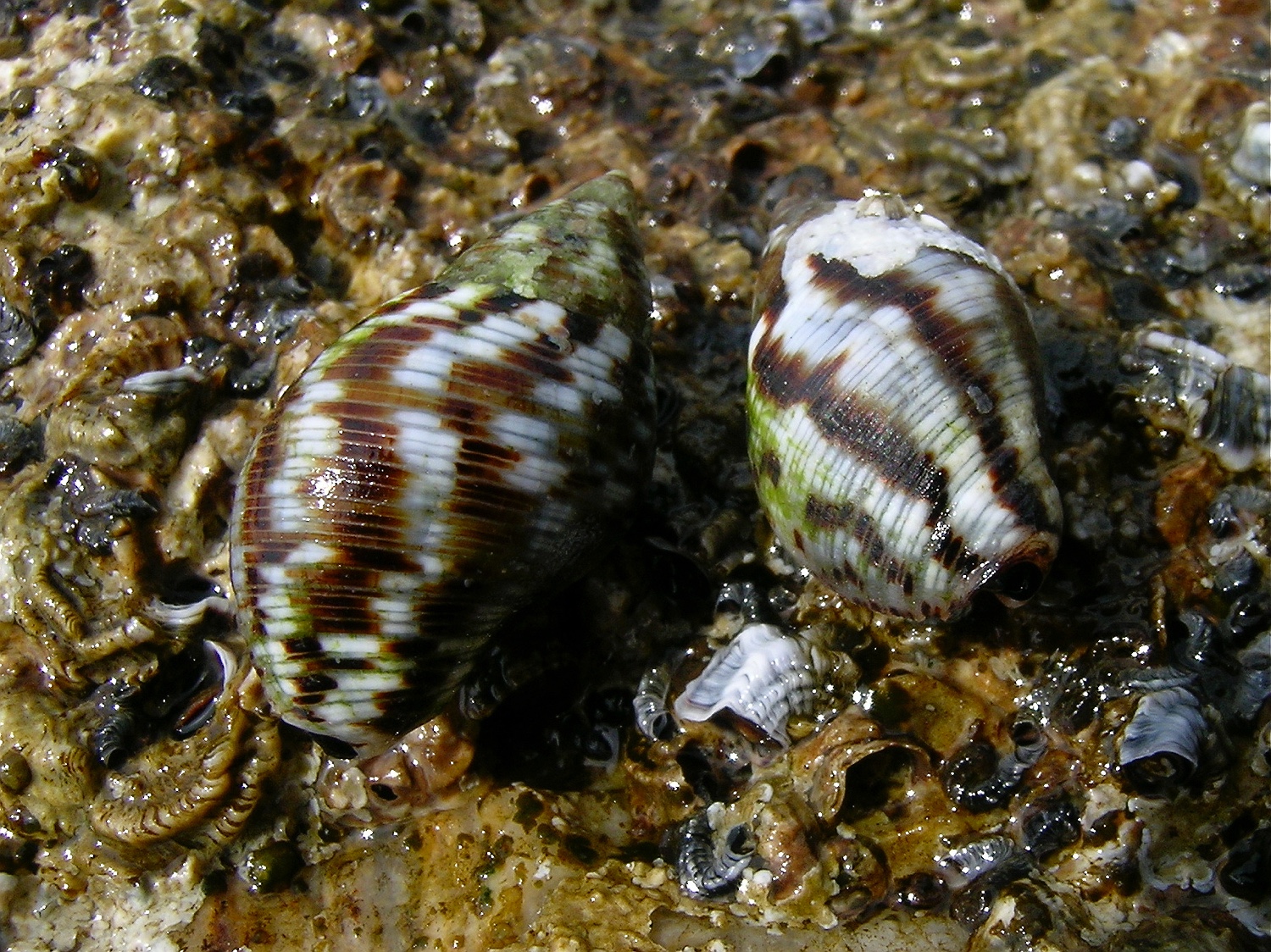
Pisania striata is a typical snail of the eulittoral zone.
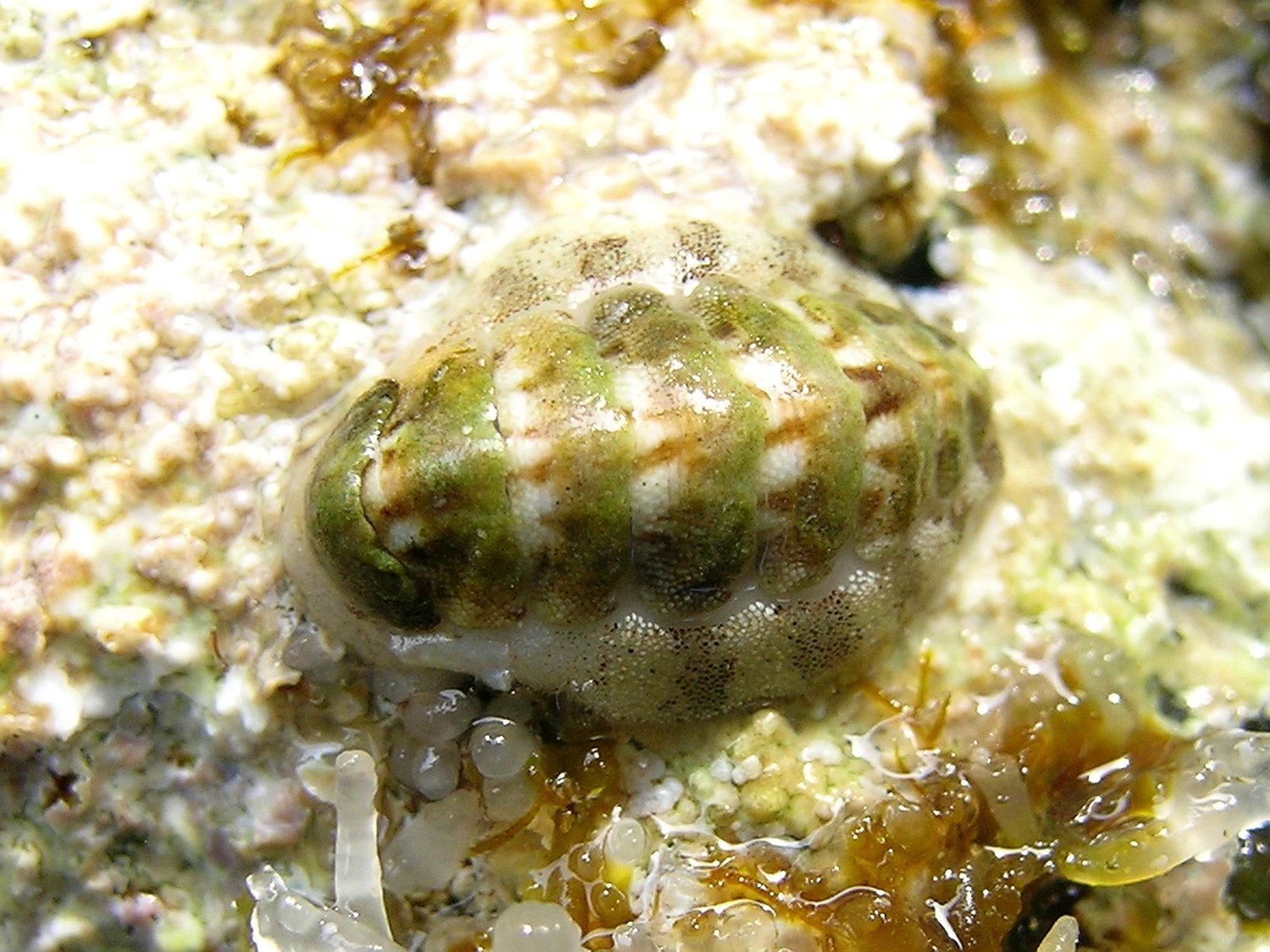
Chitons are well camouflaged and difficult to spot.
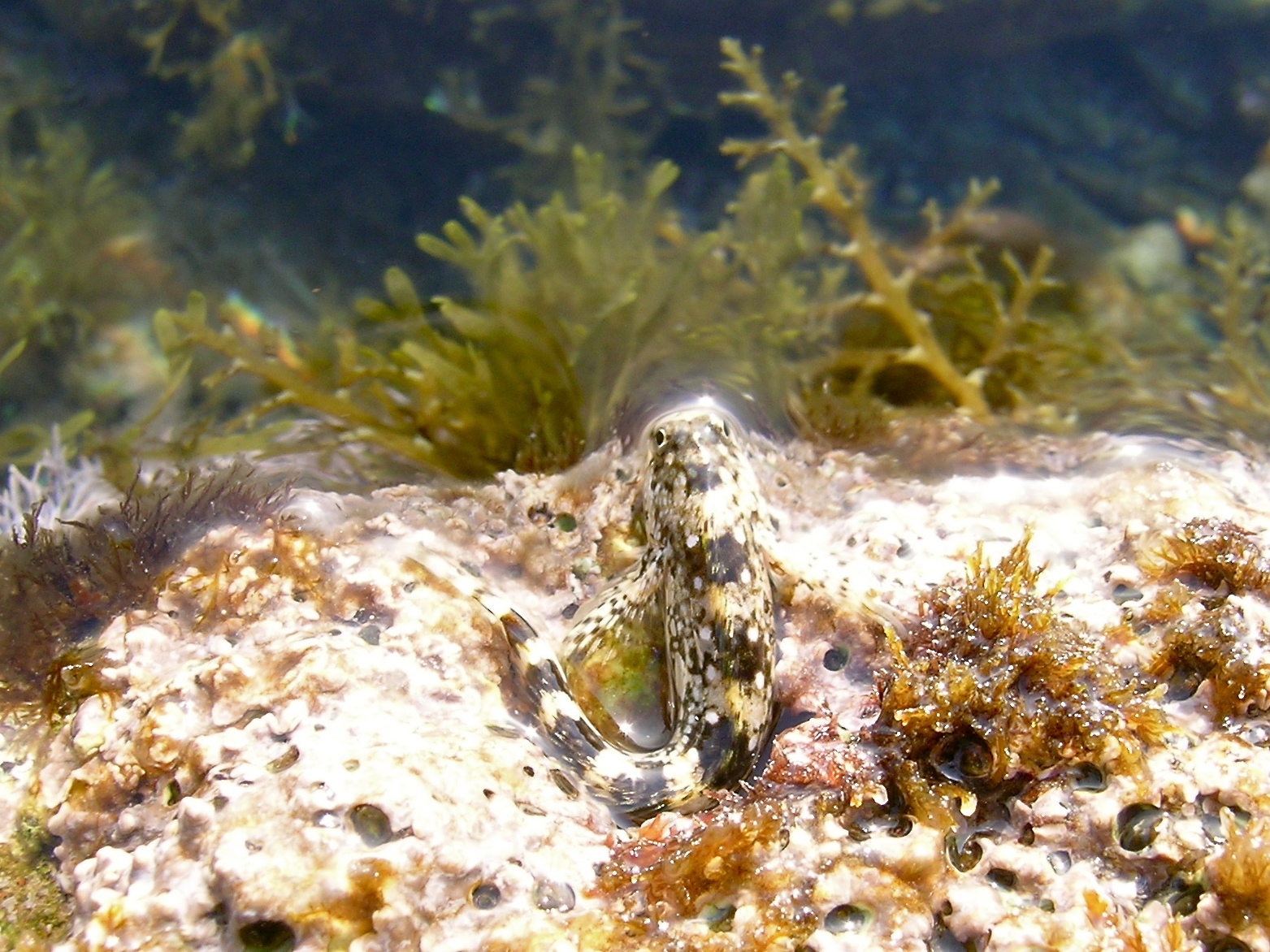
Blennies often live close to the waterline; some species like to sit in places that are exposed between the waves.
continue: The Infralittoral
back: The zones of the Mediterranean Sea
see also: