
The Supralittoral
The supralittoral is the splash zone, which ist not submerged permanently, but reached by the waves and the spray. It begins at the mean high-water line (the average water level at high tide) and extends to the highest point reached by the waves or spray. In the Aegean Sea, where the tidal range is minimal but the water level fluctuates significantly for other reasons, it seems most sensible to consider the supralittoral zone as the part of the coast that lies above the mean water line at high water level and is reached only by the waves and the spray. In sheltered locations, the supralittoral is only a narrow zone, while in wave-exposed locations it can extend to several meters in height.
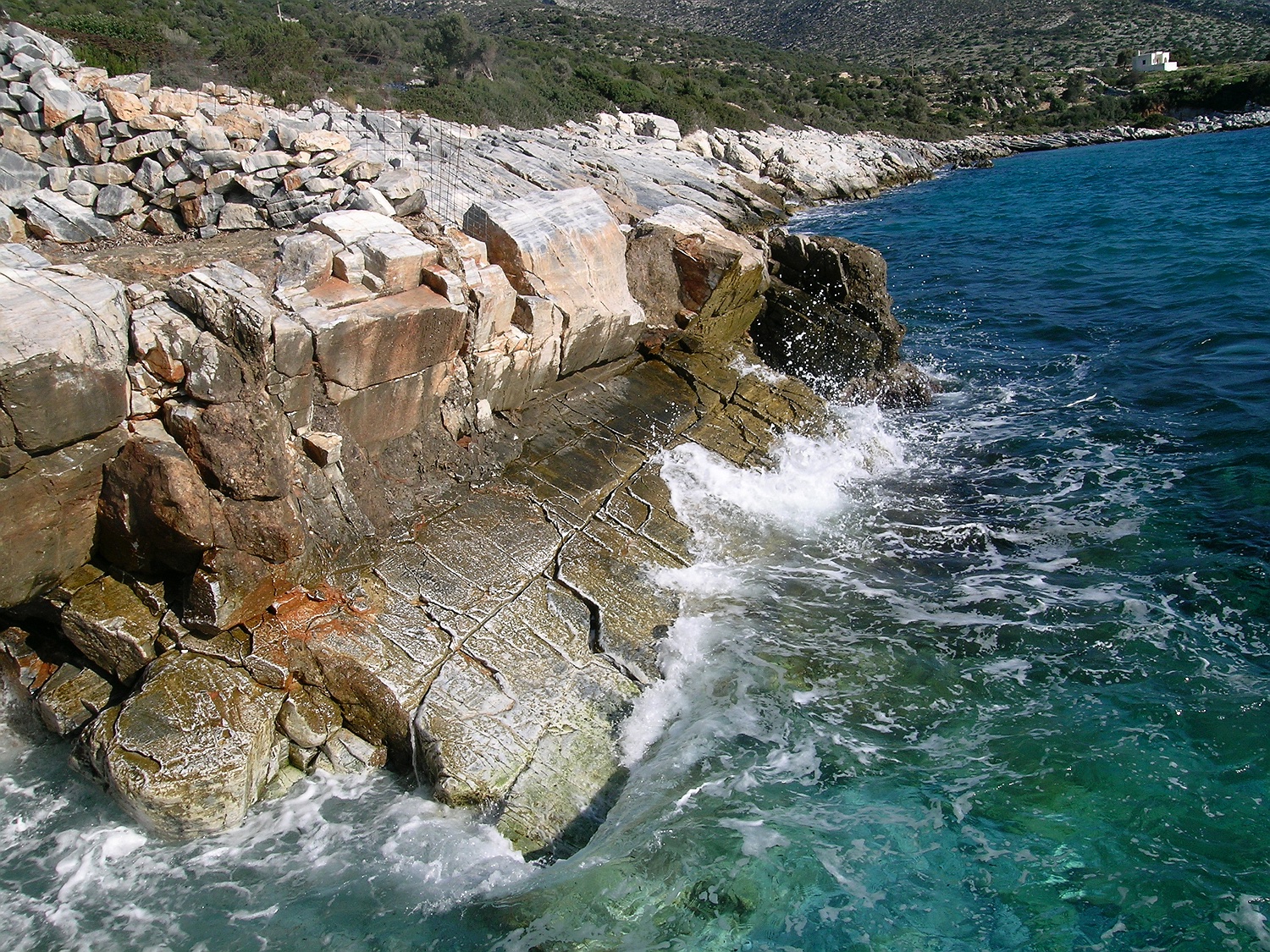
The supralittoral is a difficult habitat.
The splash zone is an extreme habitat characterised by highly varying environmental conditions. It can fall completely dry for long periods of time; in between, it is exposed to salt water, but also to fresh water when it rains, so the organisms must be able to withstand all these conditions. Another challenge is the often extreme mechanical stress caused by the waves. Temperatures also fluctuate greatly: the rocks are heated up in the sun, and then suddenly cooled when showered with water. Many animals in the splash zone are nocturnal to avoid the high temperatures during the day. Food is scarce: plants can hardly survive because they are torn off by the waves, and only a few specialised animals can live permanently in the supralittoral.
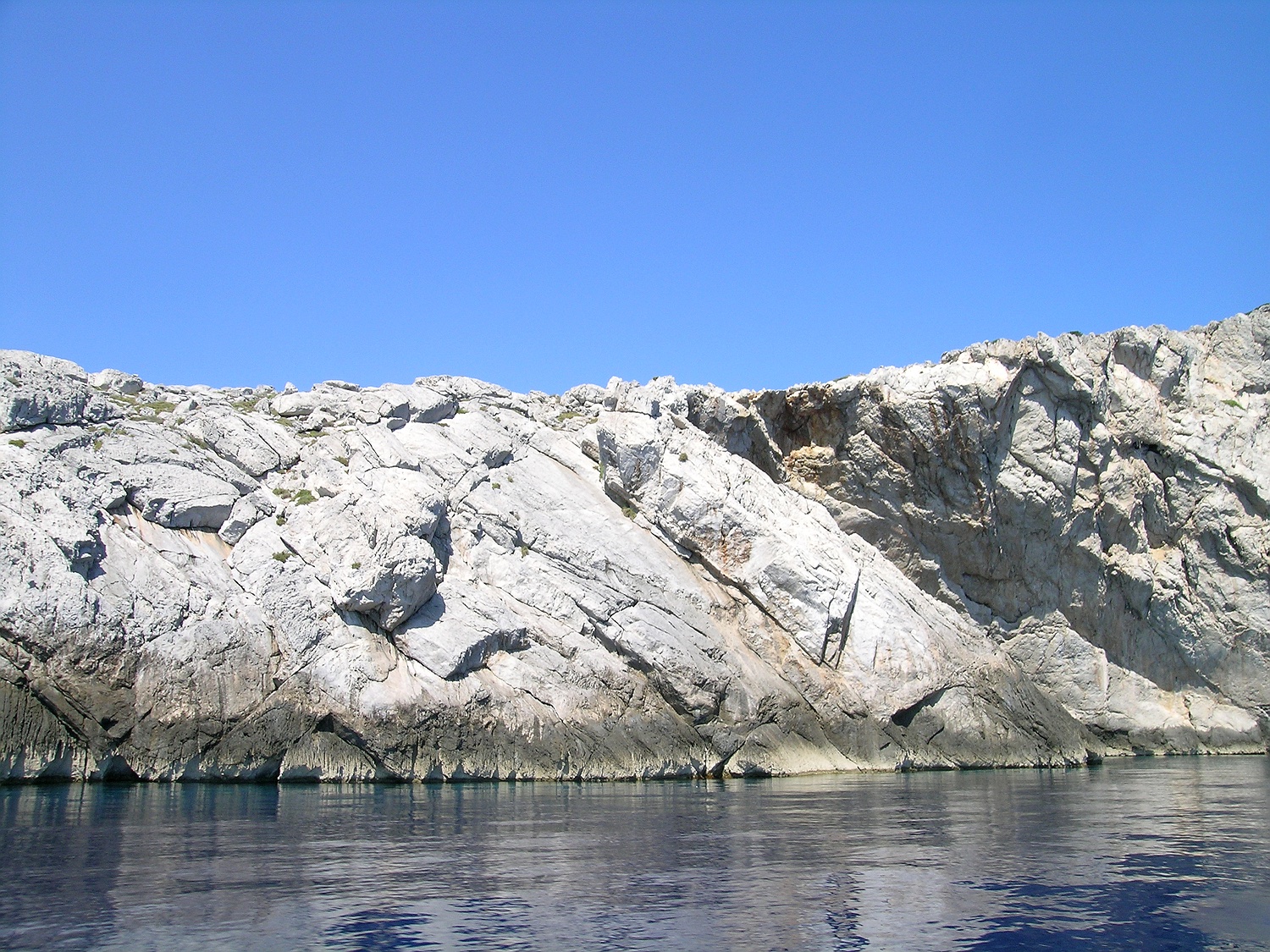
The coastal rocks exposed to strong waves are usually completely bare.
1. Beaches of sand and fine gravel
The type of substrate is of great importance for the organisms living in the supralittoral zone. A sandy or gravelly beach offers completely different living conditions to a rocky coast, so that significantly different organisms occur in the two habitats. Due to the loose substrate, no plants or sessile animals can grow in the supralittoral of sandy beaches; thus it is usually inhabited by only a few organisms. However, a number of small detritus feeders visit the supralittoral regularly searching for food in the wash margin (drift line). A walk along a sandy beach can also provide an interesting insight into the marine fauna of the eu- and infralittoral zones: different snail and mussel shells, crabs and sea urchin skeletons can be found, as well as the pretty “Eye of virgin Mary” (the operculum of the turban snail Bolma rugosa).
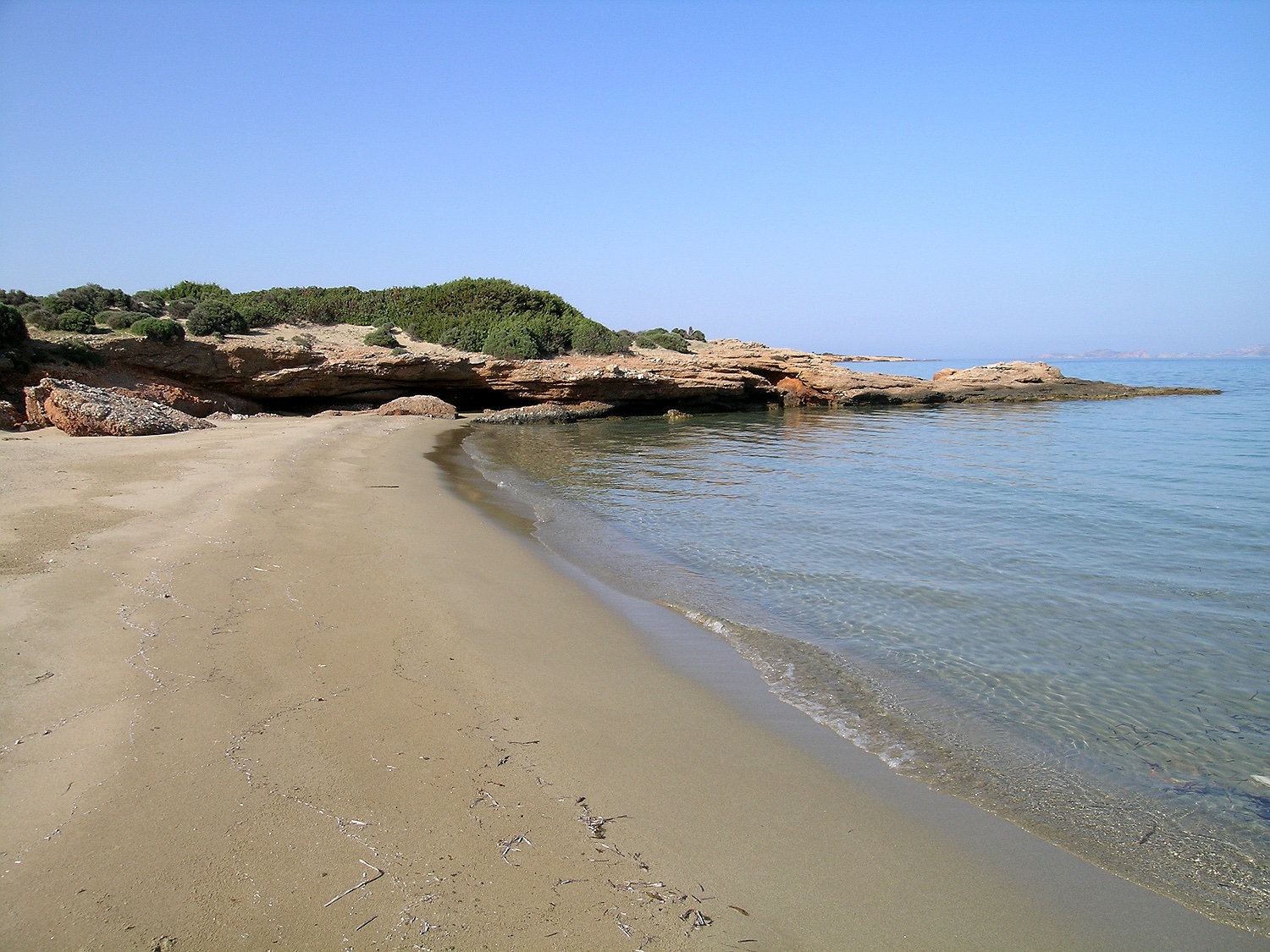
On a sandy beach, plants can only grow above the supralittoral zone in areas that are not reached by the waves. Thus the supralittoral appears mostly lifeless.
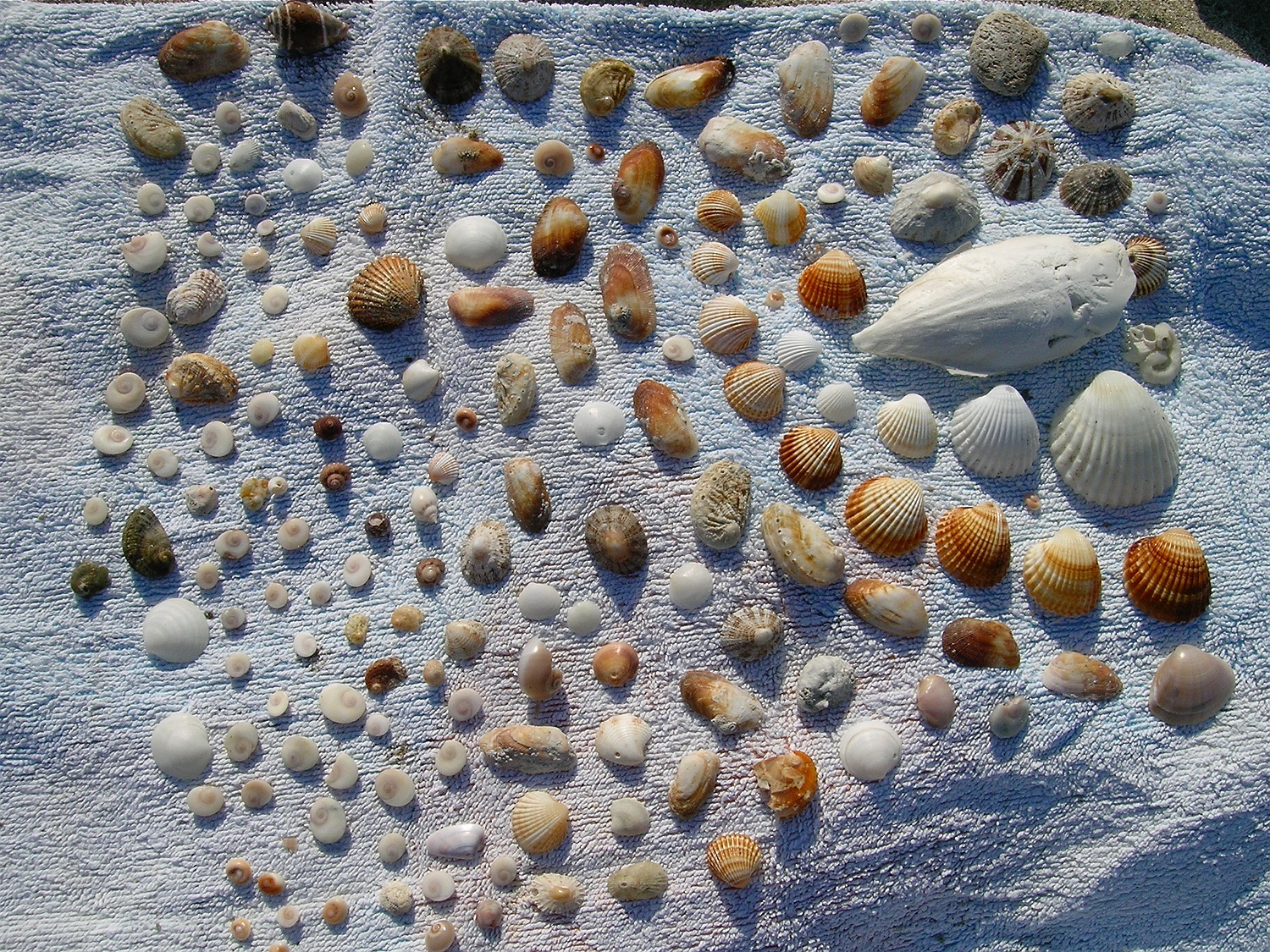
However, numerous remains of animals from the eu- and infralittoral zones can be found in the wash margin and on the sand beach: mussels, snails, clams, etc (here the finds from a trip to the beach of Psilí Ámmos).
2. Beaches of coarse gravel and loose stones
On beaches with coarse gravel or loose stones (mostly marble, as slate, granite and similar rocks are quickly ground down or crumble into grains), the living conditions for animals and plants are particularly unfavourable. Directly at the waterline, some animals can live beneath the stones, but further up, where there is no water retained between the stones, even these disappear almost completely.
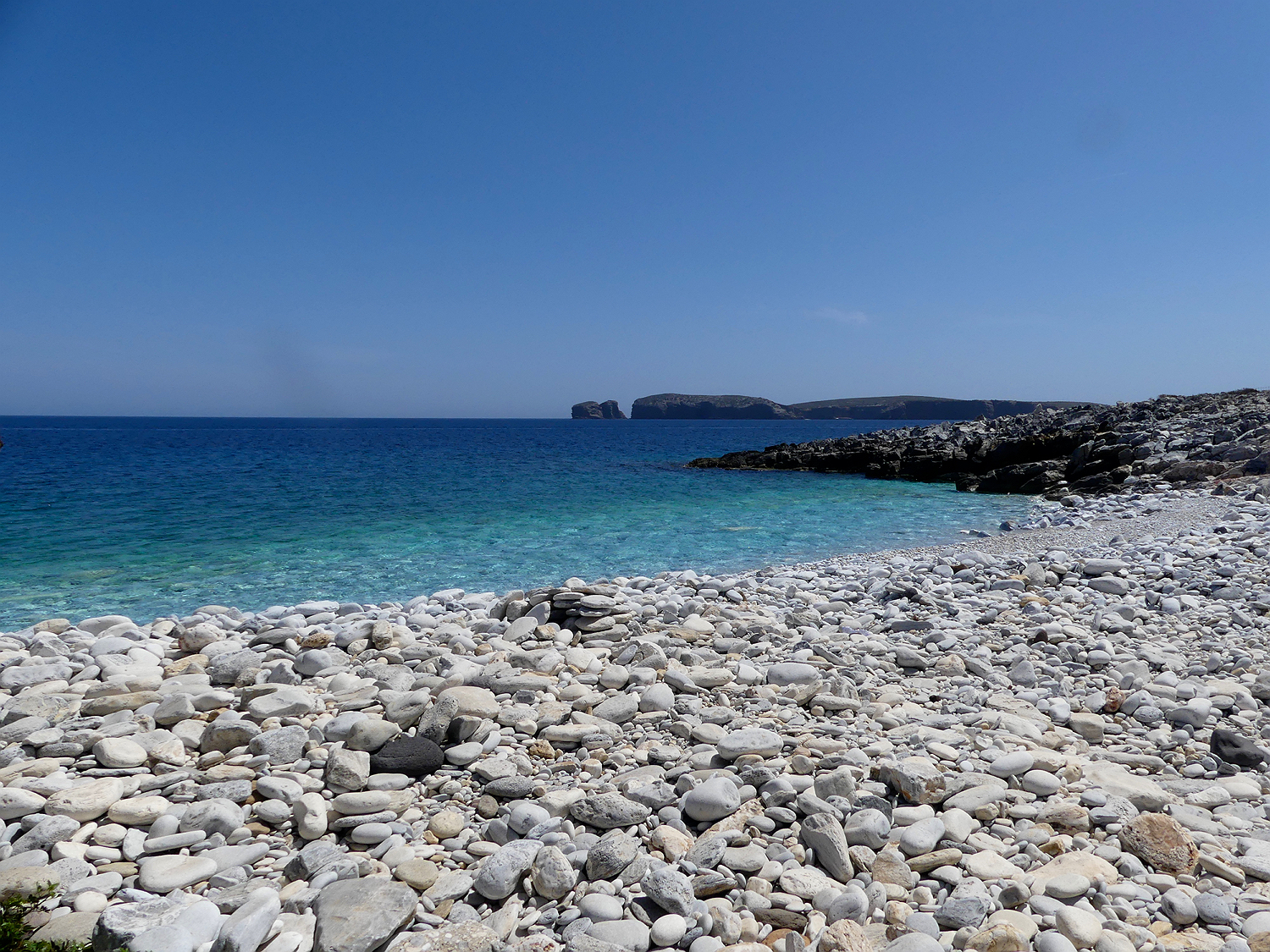
Beaches consisting of stones and coarse gravel are the most unfavourable habitat: almost no organisms can live in the supralittoral zone.
3. Rocky coasts
Rocky coasts constitute a very different habitat from sand or stone beaches with marked differences according to the type of rock.
3.1. Slate
Coastal rocks of slate are usually only sparsely inhabited in the supralittoral; there are a few animals that live on the rocks (see below), while algae can only thrive in the lowest areas of the splash zone, which are still frequently reached by the spray.
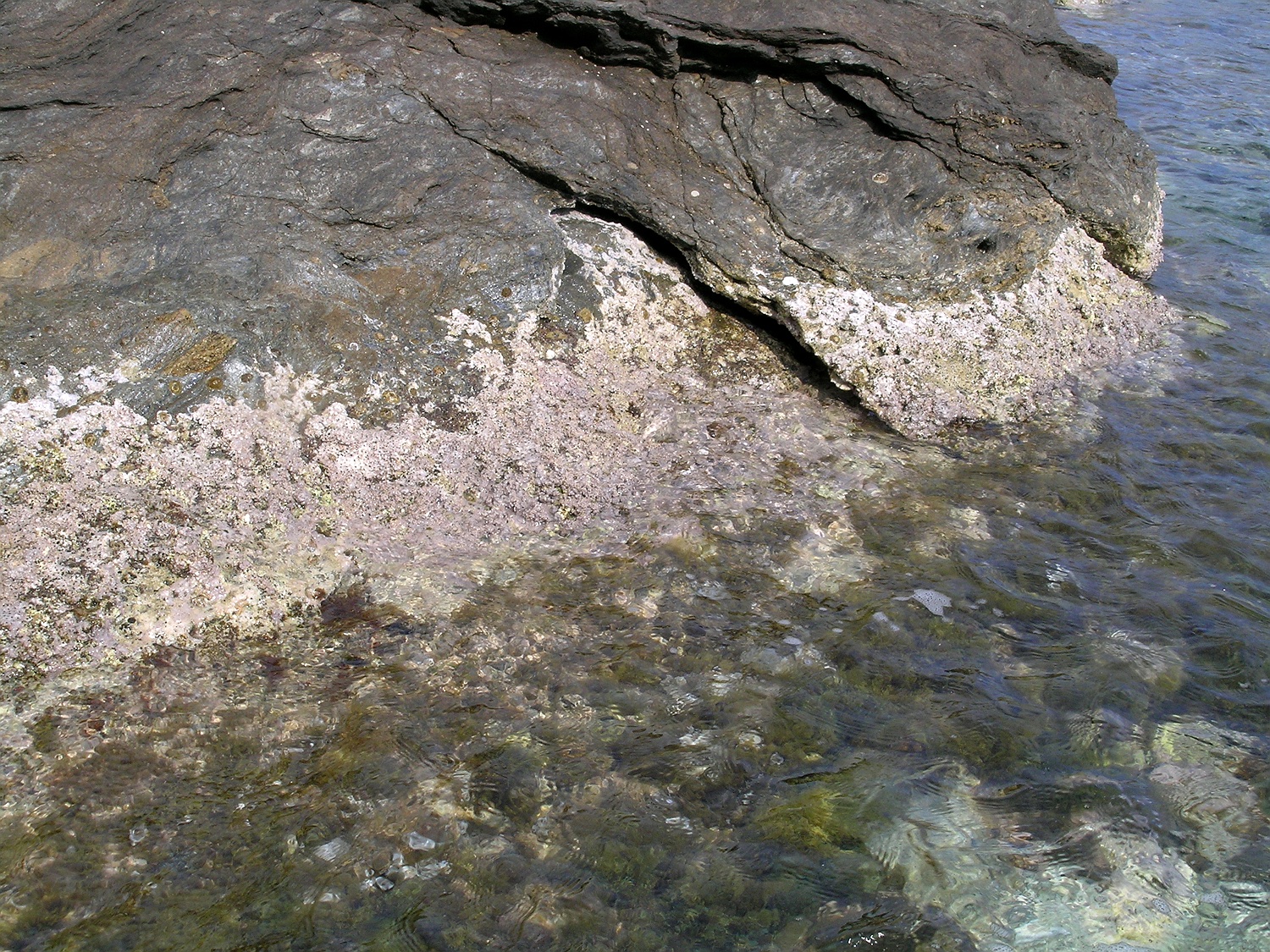
Above the upper waterline the calcareous algae that are widespread in the eulittoral zone disappear (the photo was taken when the water level was particularly low).
The lowest zone of the supralittoral is often inhabited by a few algae species, mainly of the genera Chaetomorpha and Neosiphonia. A little higher up, one can encounter Polysiphonia sertularioides (also on marble) and, rarely, Nemalion elminthoides.
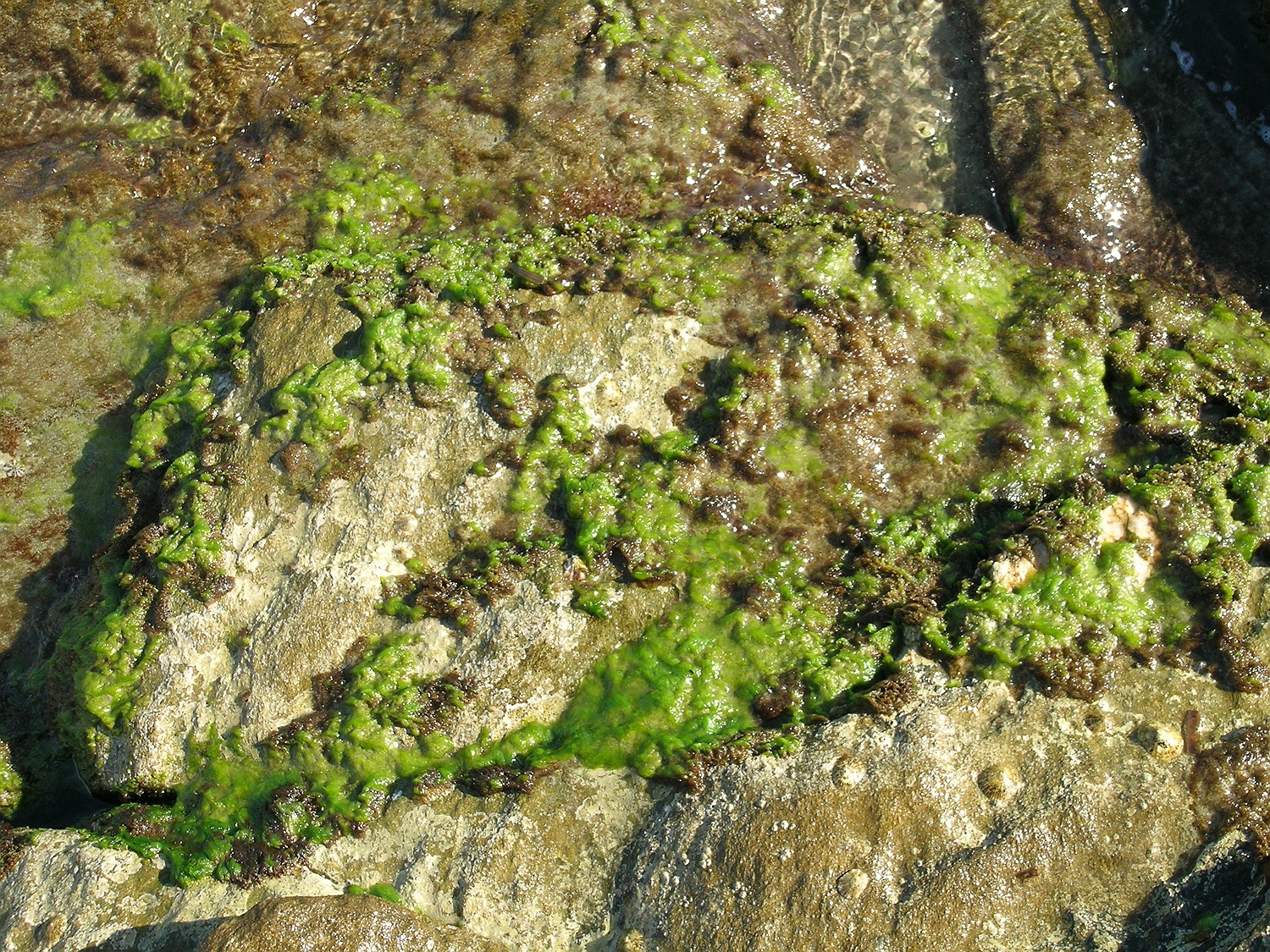
Chaetomorpha spec. (green) and Neosiphonia(?) (brown) on slate rocks in the lowest part of the supralittoral
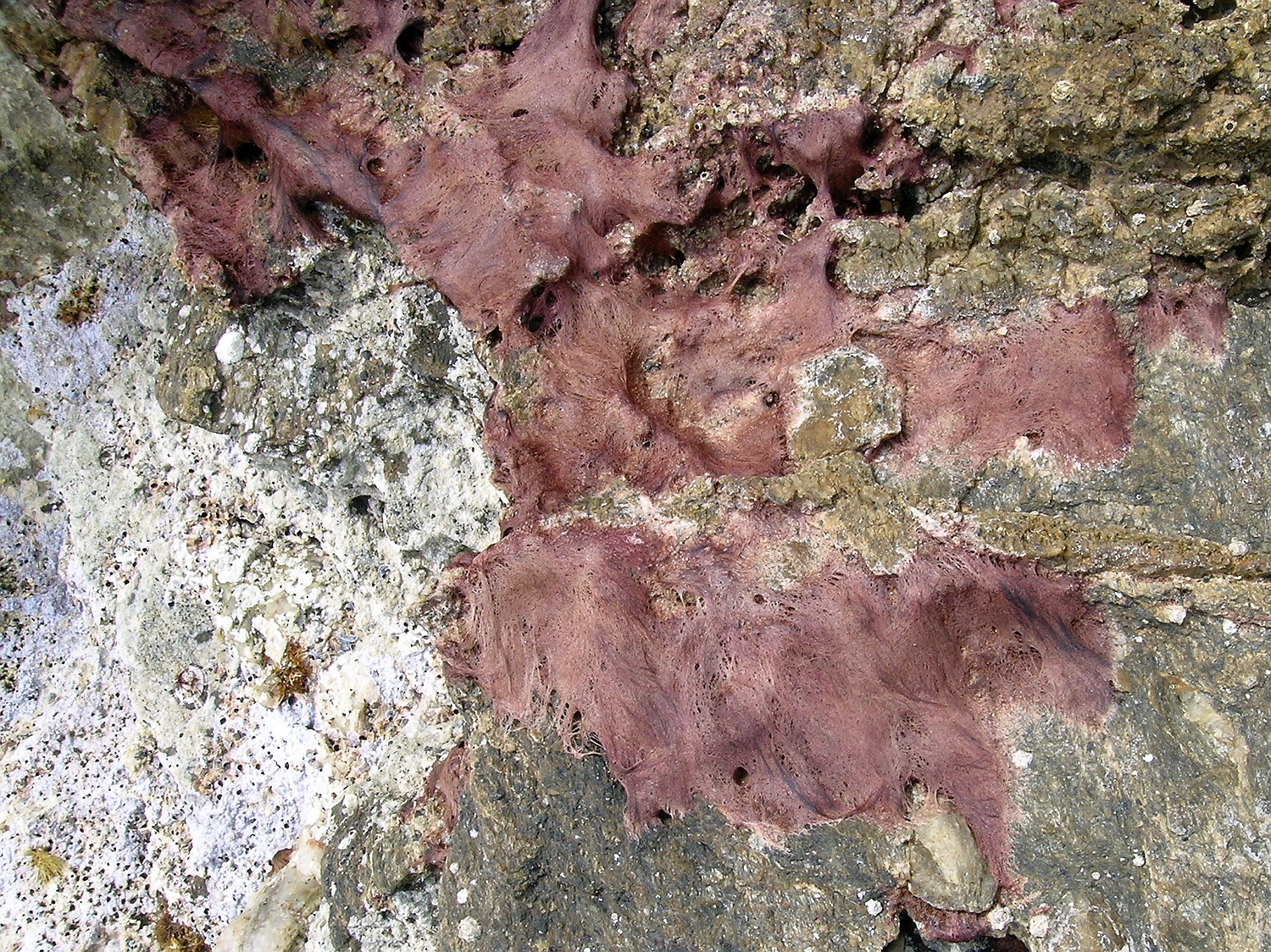
Polysiphonia sertularioides can survive prolonged exposure to the air.
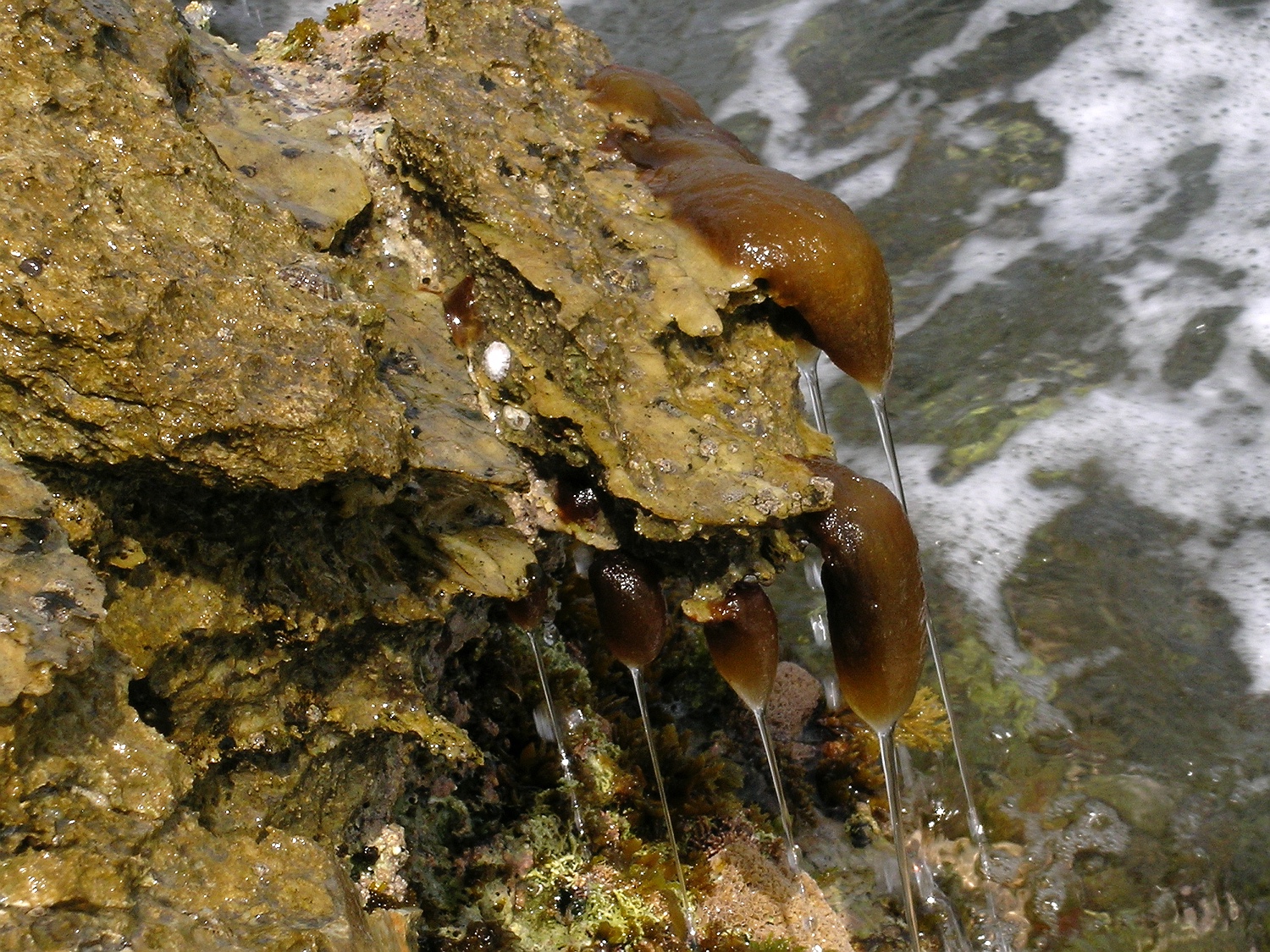
The same species when reached by the waves.
3.2. Marble
On marble the entire splash zone (often up to a height of over one meter) is characterised by a thin coating of blue-green algae. Three sub-zones can be distinguished: a lower brown-green zone, a middle black zone and an upper white to brownish zone. The lowest zone near the water, which is regularly washed by the waves, has yellow or brown-green growths of small filamentous blue-green algae (= cyanobacteria) such as Calothrix scopulorum. In this so-called lithophyte zone grow not only epilithic but also endolithic blue-green algae (e.g. Mastigocoleus testarum), which dissolve the calcareous rock with acids, causing the formation of small depressions and holes. The natural acidic reaction of the sea water also slowly dissolves the stone. The holes retain moisture, which promotes the growth of more blue-green algae, so that the holes become larger and larger; in this way, the rocks are gradually eaten away.
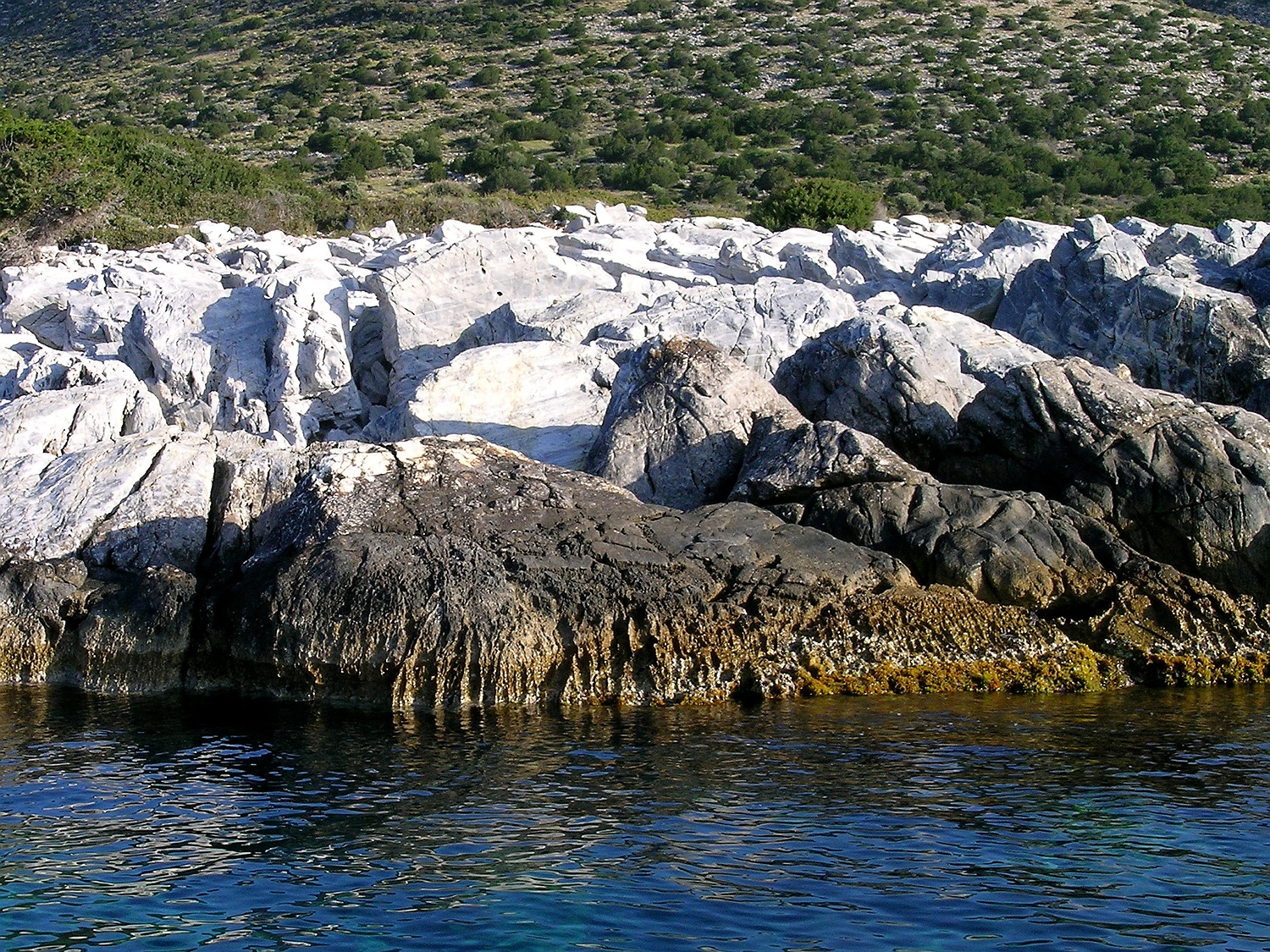
On the marble coast three zones can be distinguished by their colouring.
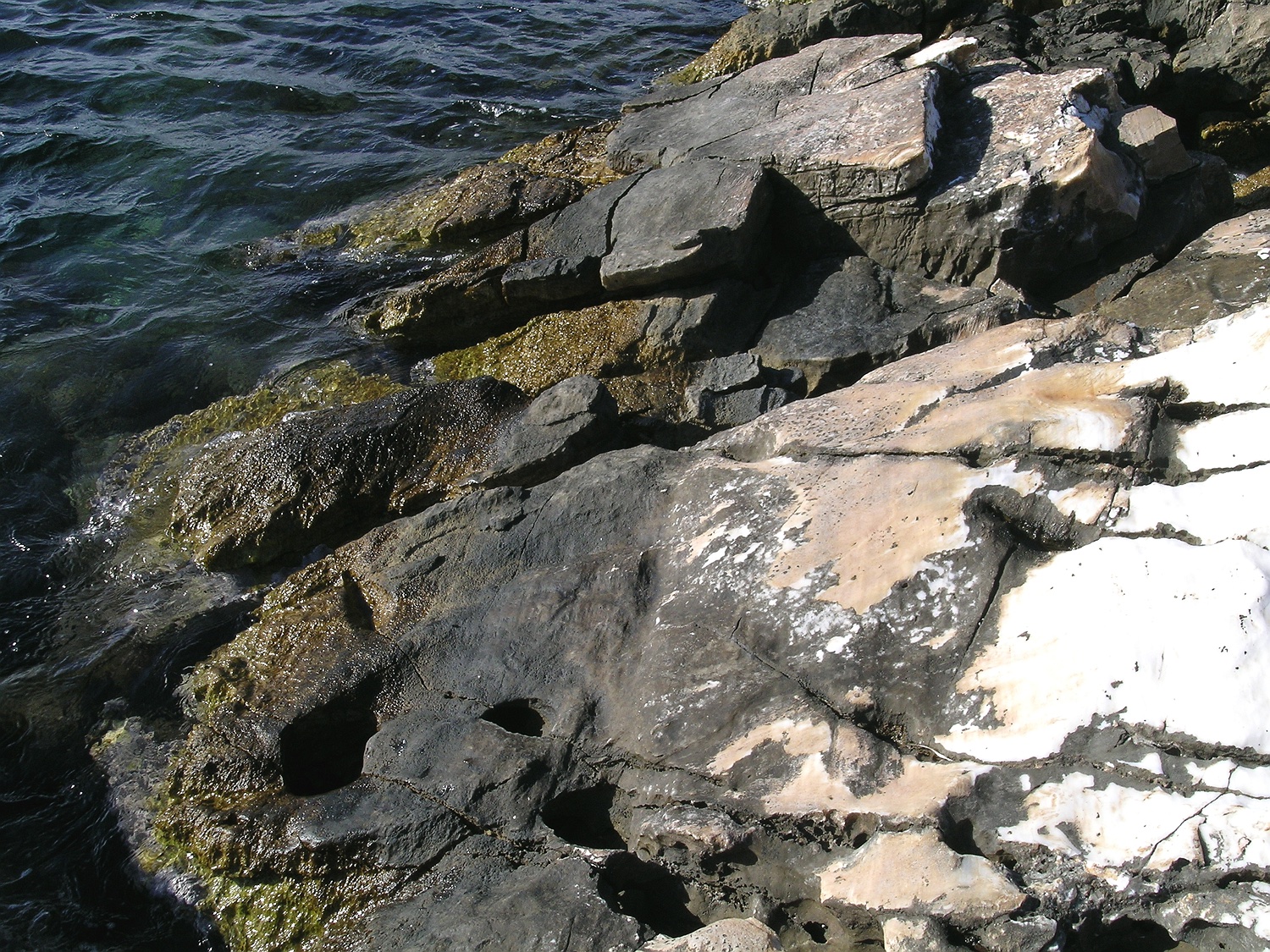
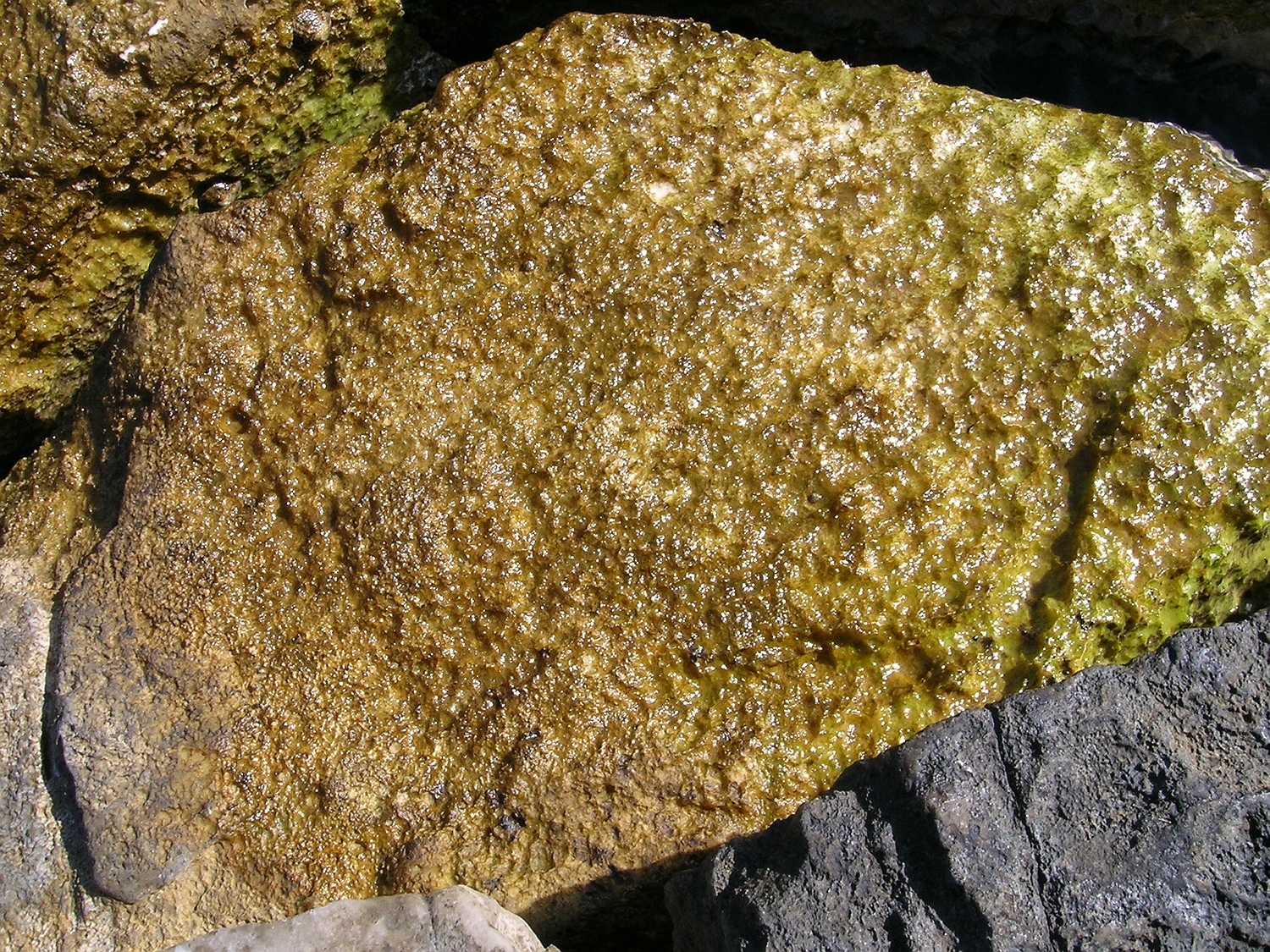
blue-green marble rocks overgrown by cyanobacteria in the lower supralittoral
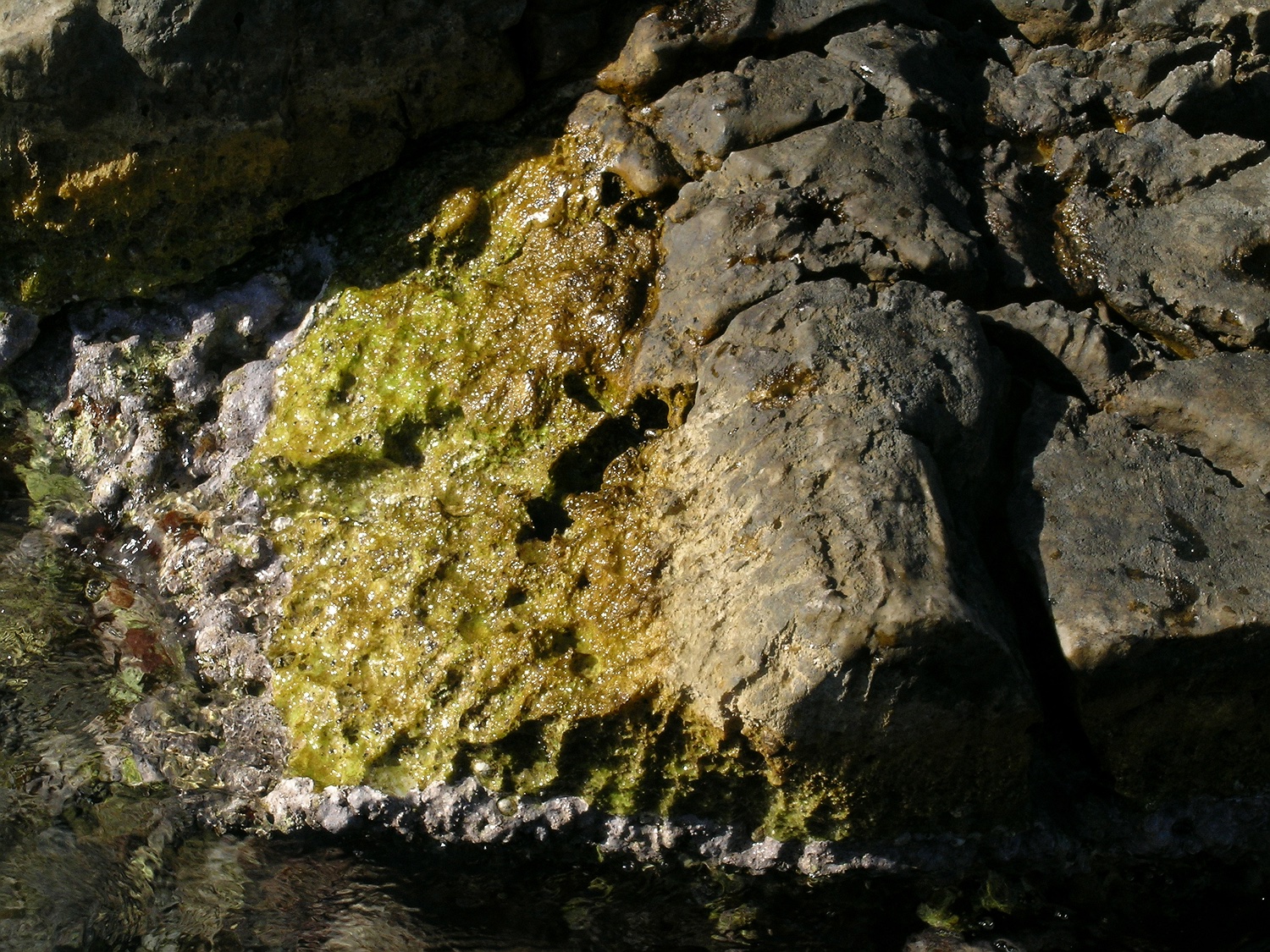
Endolithic and epilithic blue-green algae dissolve the marble.
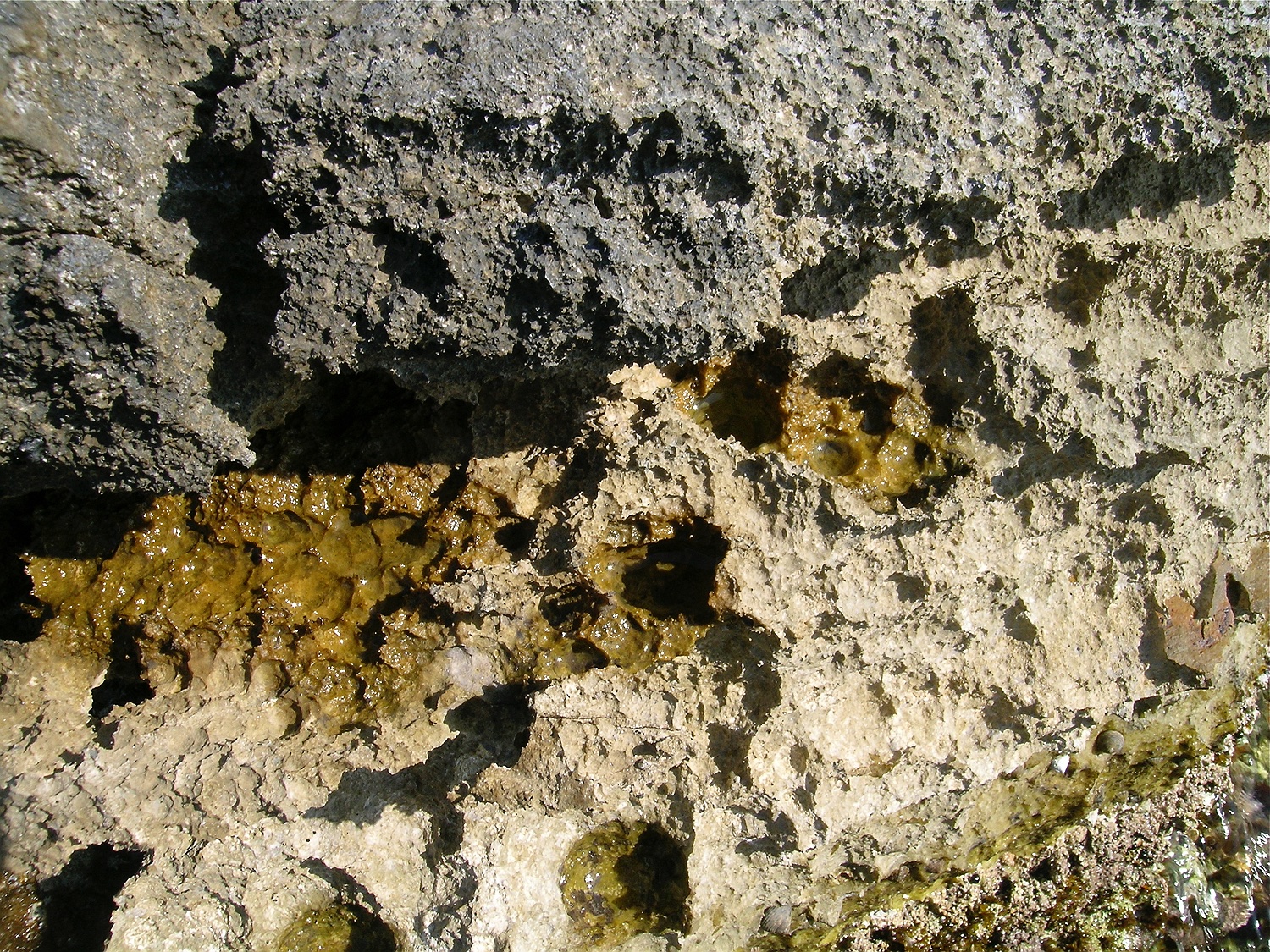
Thus depressions and holes are created.
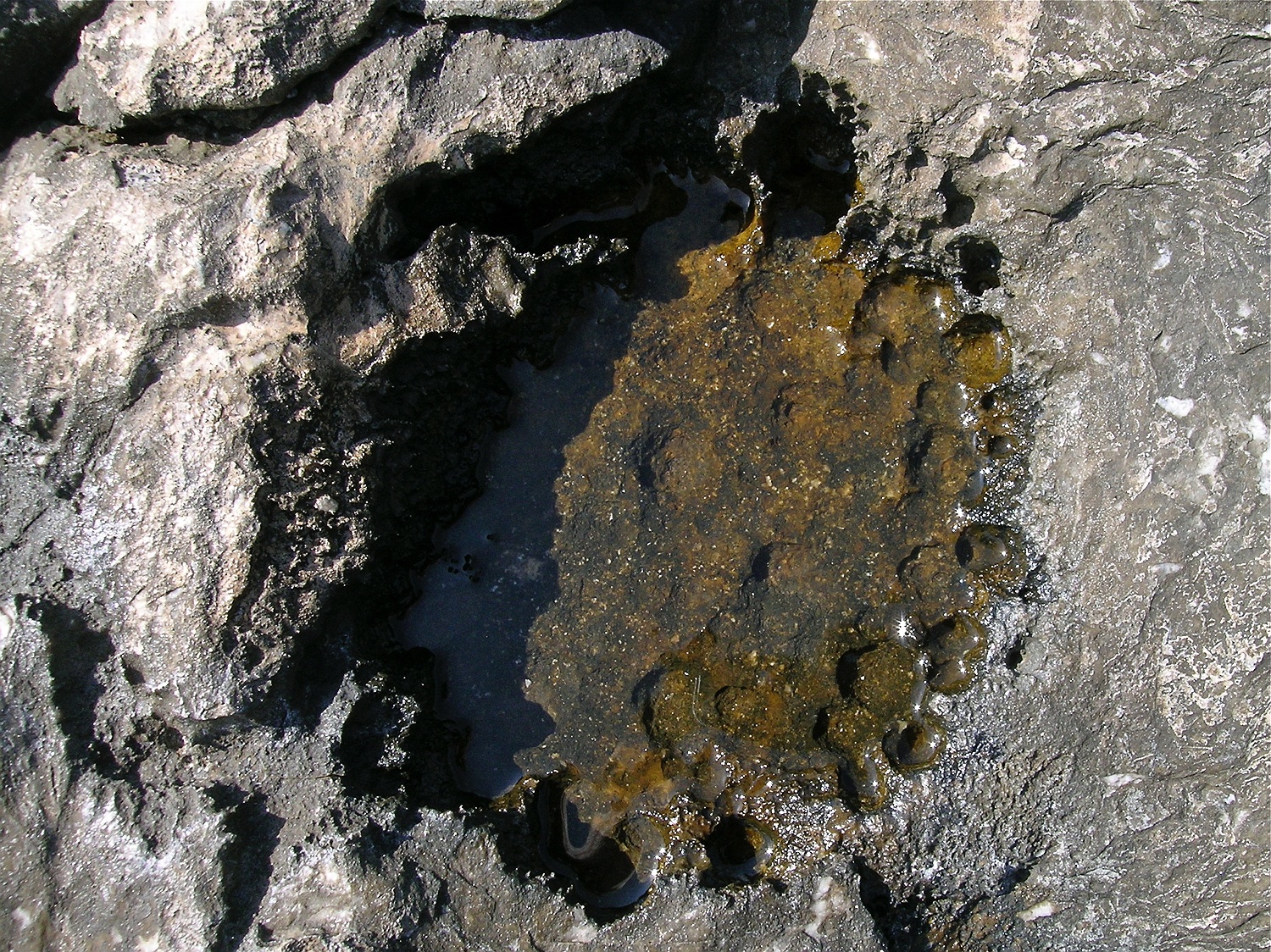
Water collected in the depressions further promotes the growth of blue-green algae, so that the holes become larger and deeper.
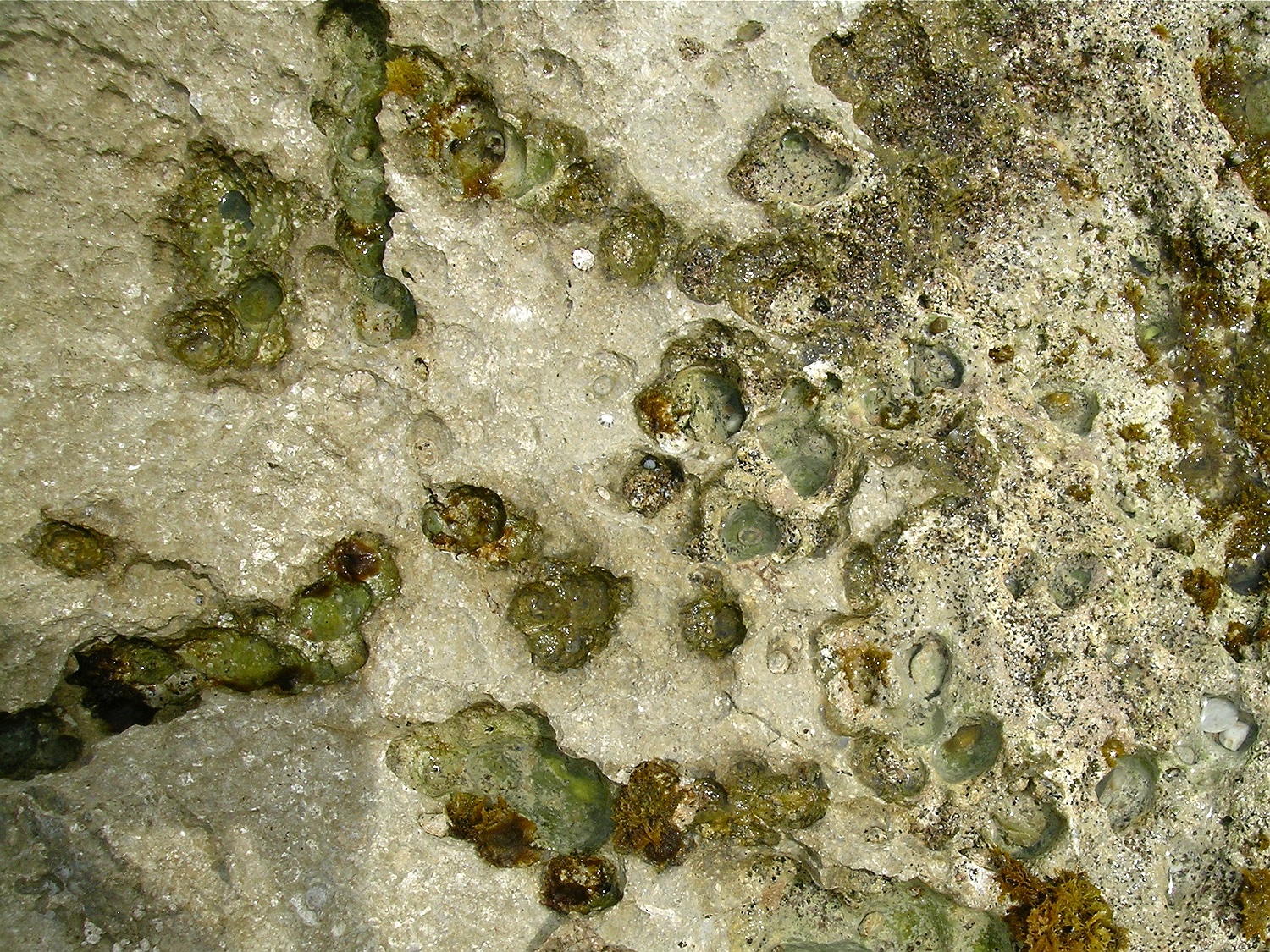
typical rocks in the supralittoral zone displaying many holes
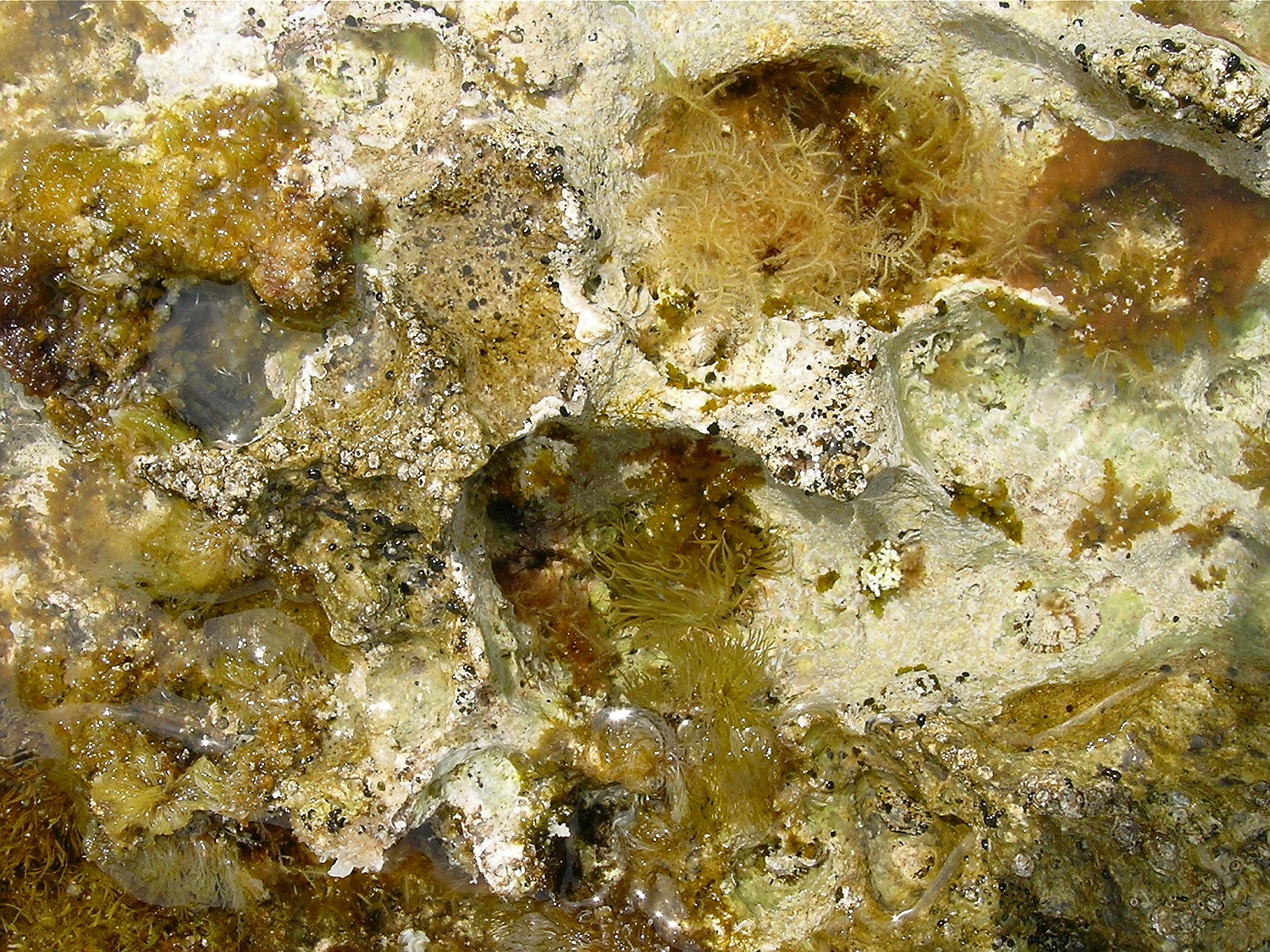
When water from the waves remains permanently in large depressions, organisms from the eu- and even infralittoral zones can settle there (in the picture: barnacles, limpets and various species of algae, as well as a sea anemone (Aiptasia mutabilis) in the center of the picture).
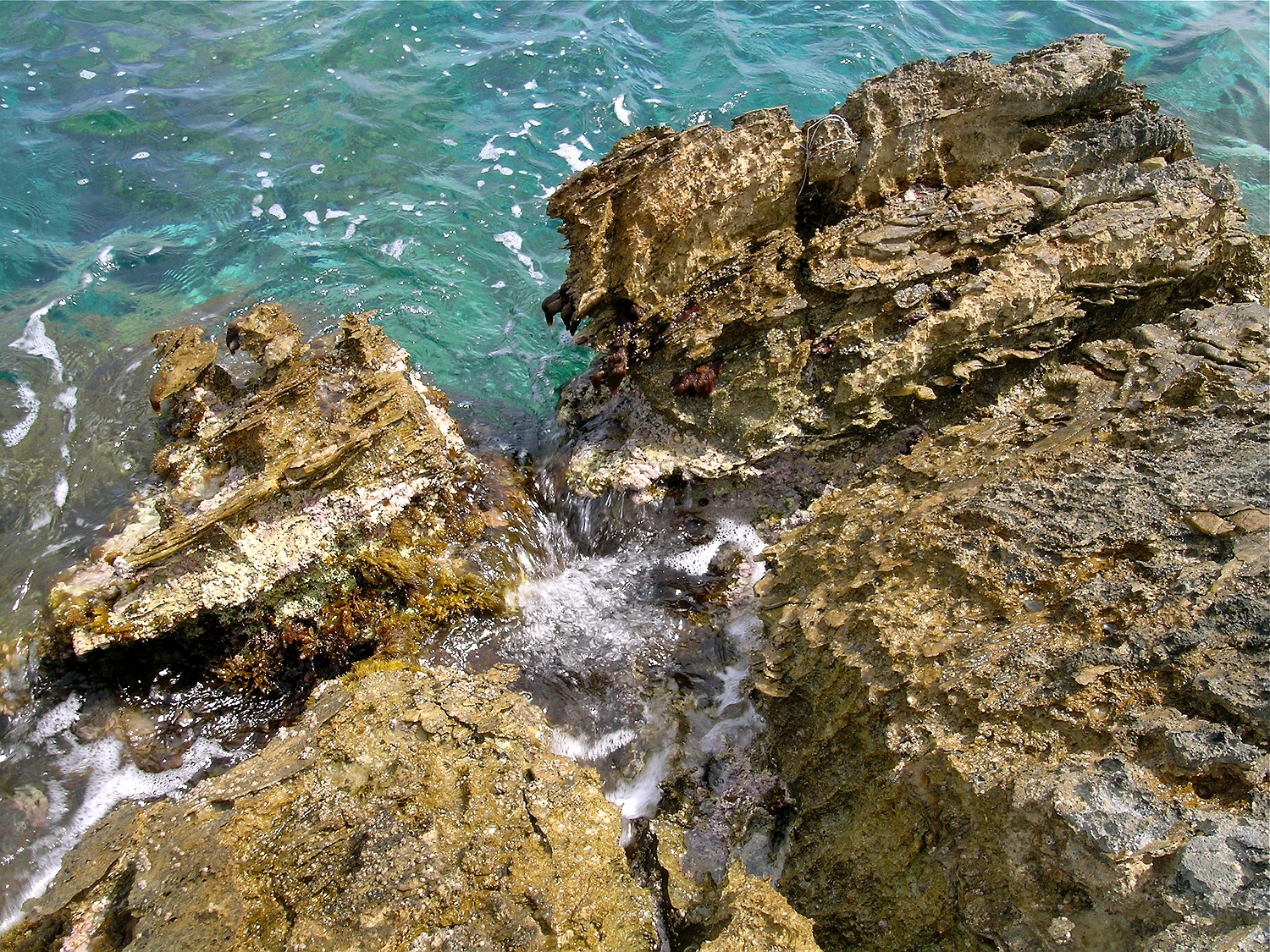
The activity of blue-green algae and the dissolving effect of the slightly acidic seawater often cause the marble rocks to erode into razor-sharp ridges.
Above this “lithophyte zone” lies a zone of about half a meter height, which is rarely flooded but is regularly sprayed by sea spray. Here, the marble rocks obtain a black colour through a thin coating of the blue-green alga Entophysalis granulosa. In this black coating (as in the green zone), one can often find feeding traces of the limpets that scrape the algae off the rock.
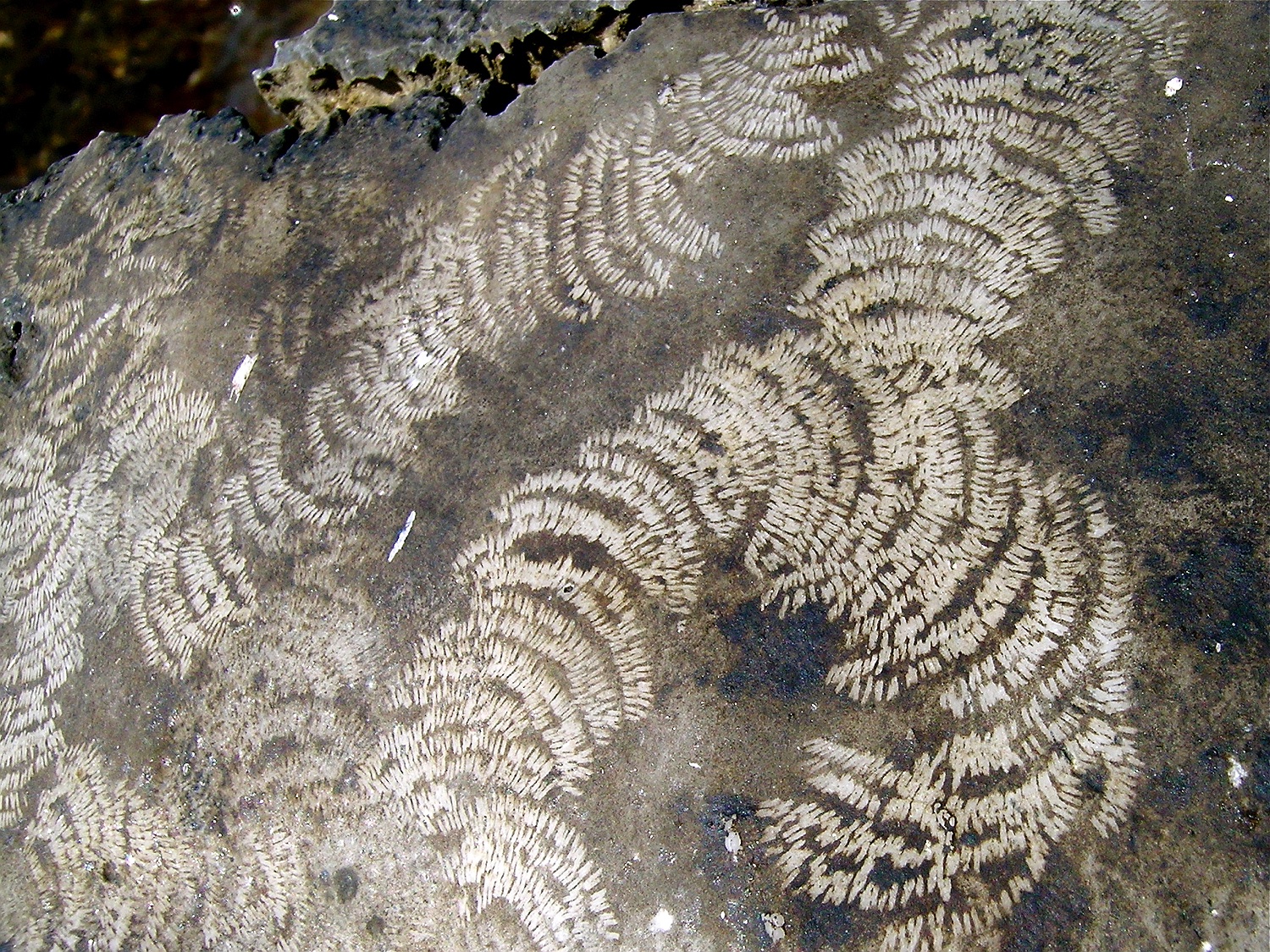
black coating produced by blue-green algae on marble rocks in the supralittoral zone with feeding traces from limpets
This black zone is followed by a slightly narrower zone in which the marble rocks are covered with a brownish to white, lacquer-like coating. Here, the rocks are only reached by spray and waves during storms. This coating is also thought to be formed by blue-green algae.

brownish-white coating in the uppermost zone of the supralittoral zone
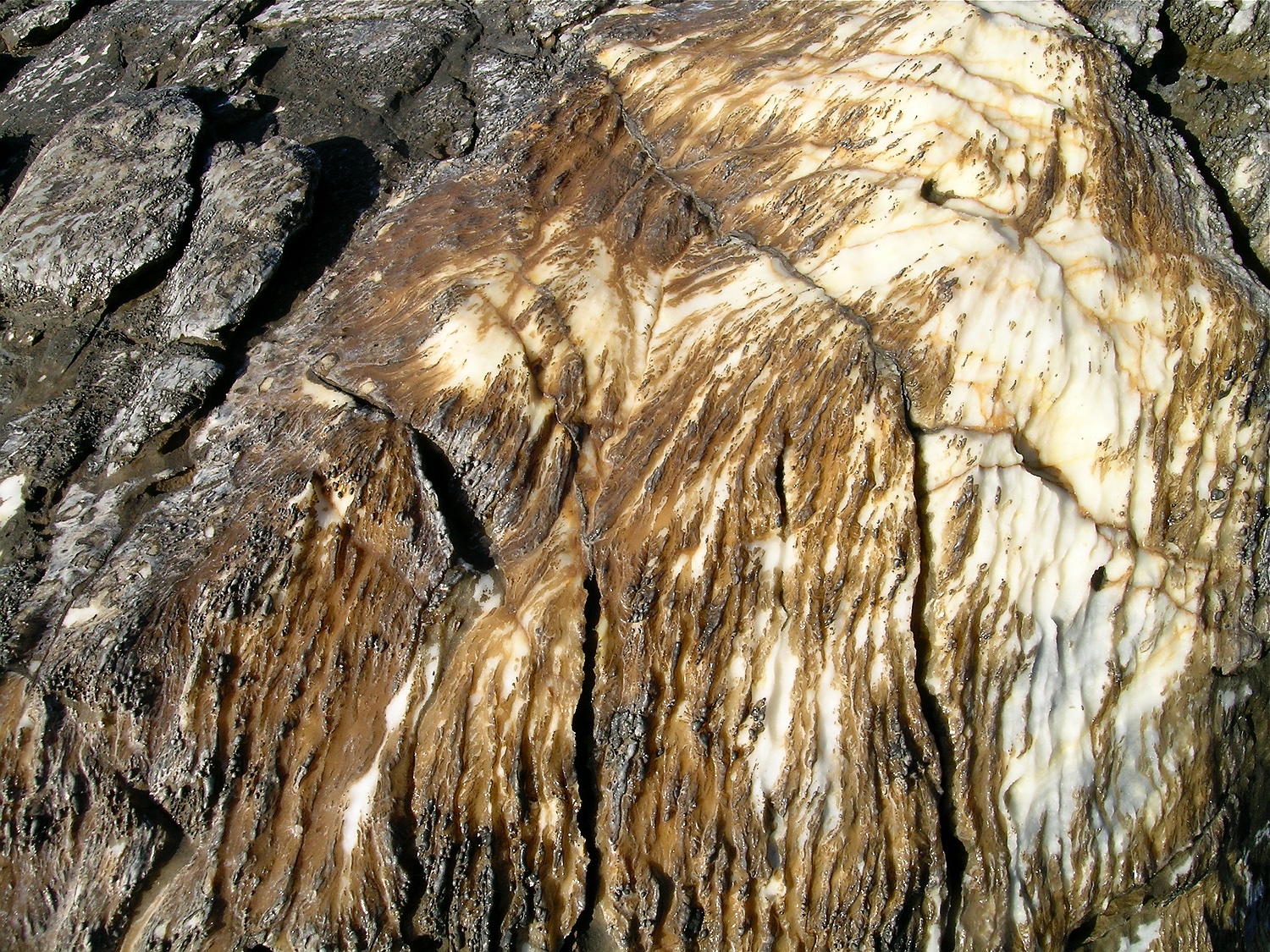
These white and brown deposits in the supralittoral zone are probably also caused by blue-green algae.
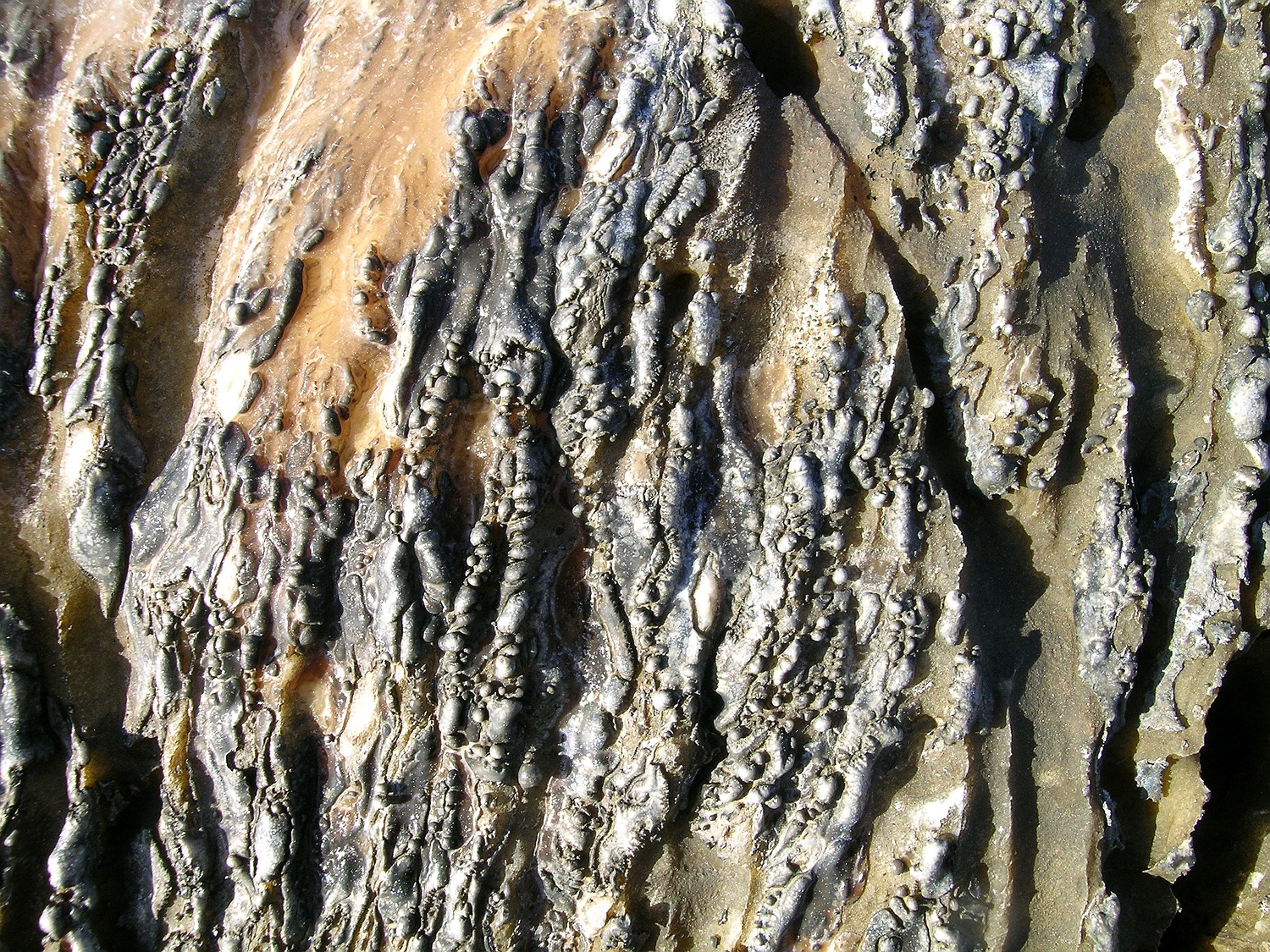
In the dark brown, pockmarked deposits, you can see distinct grooves in which rainwater and spray water run off.
Animals in the supralittoral zone
The most characteristic and common animals of the supralittoral zone are limpets, which graze on the (blue) algae growth in the supralittoral zone or in the neighbouring eulittoral zone during the night. The Small periwinkle (Melarhaphe neritoides, see Marine snails) during the day sits high above the waterline, while in the night it feeds on the algae that grow on the rocks. In the lowest, occasionally still flooded areas of the supralittoral zone, filter-feeding barnacles can be found on both slate and marble. Some crustaceans also live in the supralittoral zone: The nocturnal Ligia italica (an isopod species) can be found in rock crevices or under washed-up seaweed, and the Marbled rock crab (Pachygrapsus marmoratus) is also a frequent visitor to the supralittoral zone, although it has to dive back into the sea from time to time.
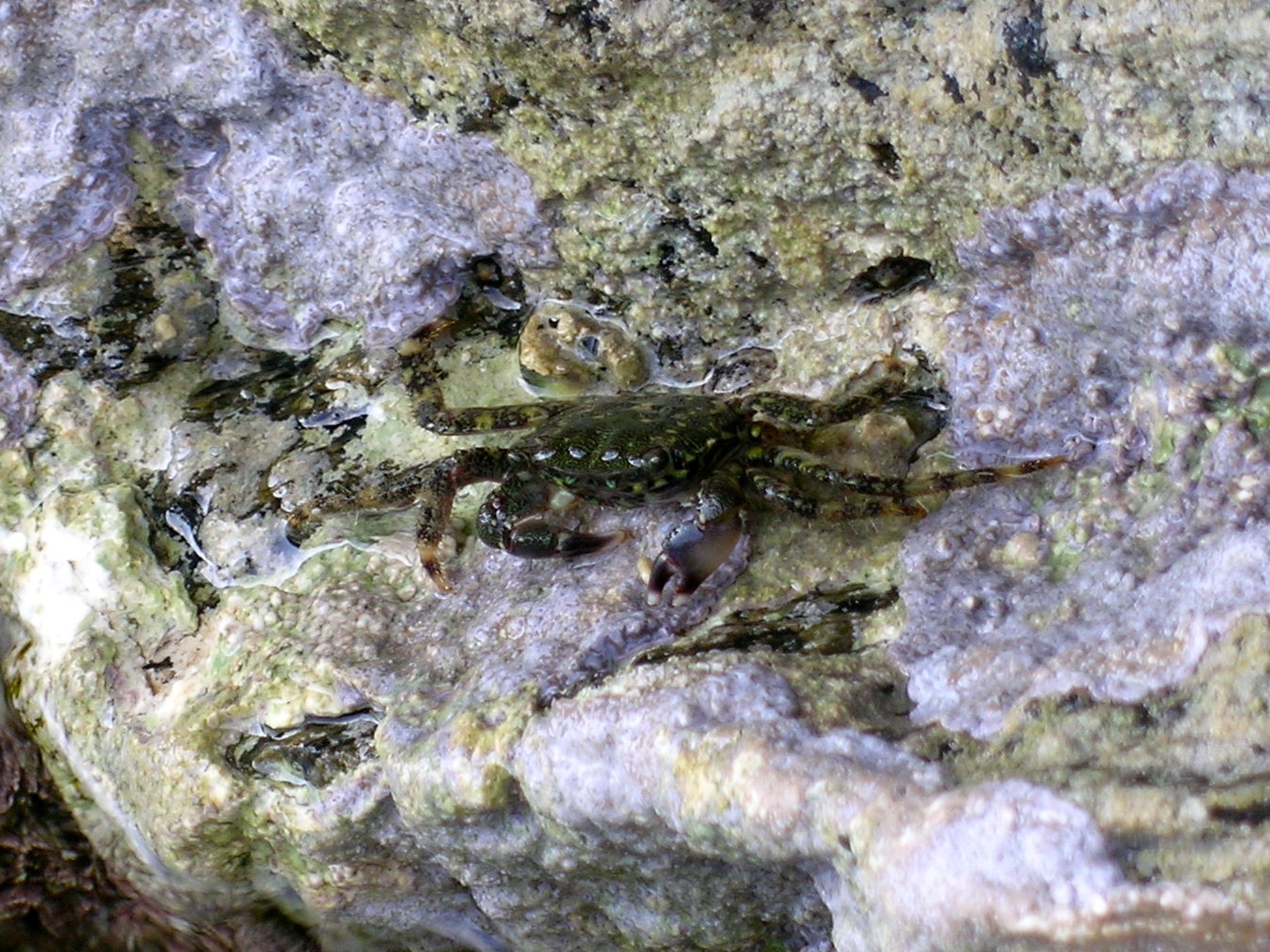
The Marbled rock crab often sits just above the waterline.
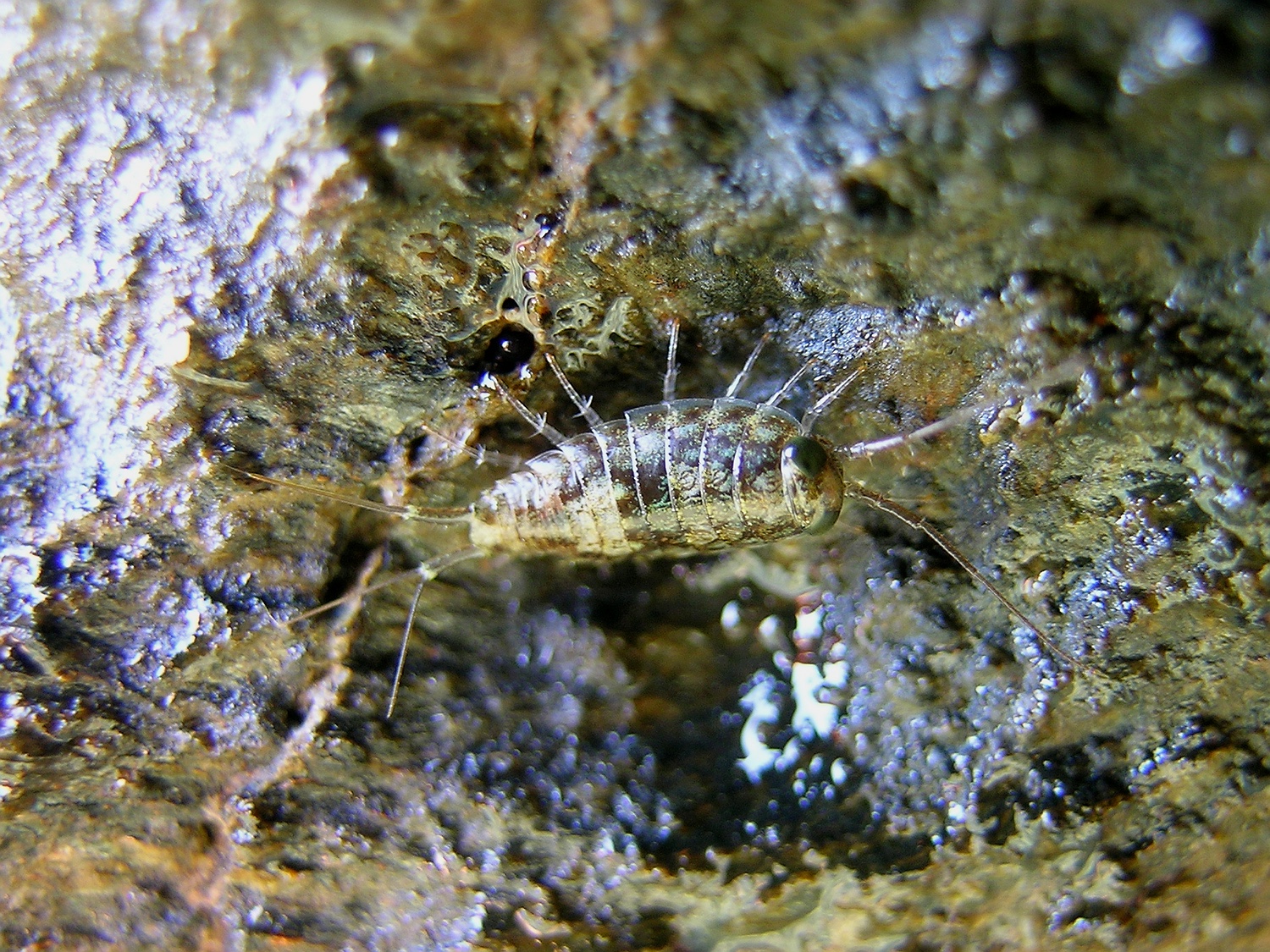
The shy isopod Ligia oceanica is regularly found in the splash zone.
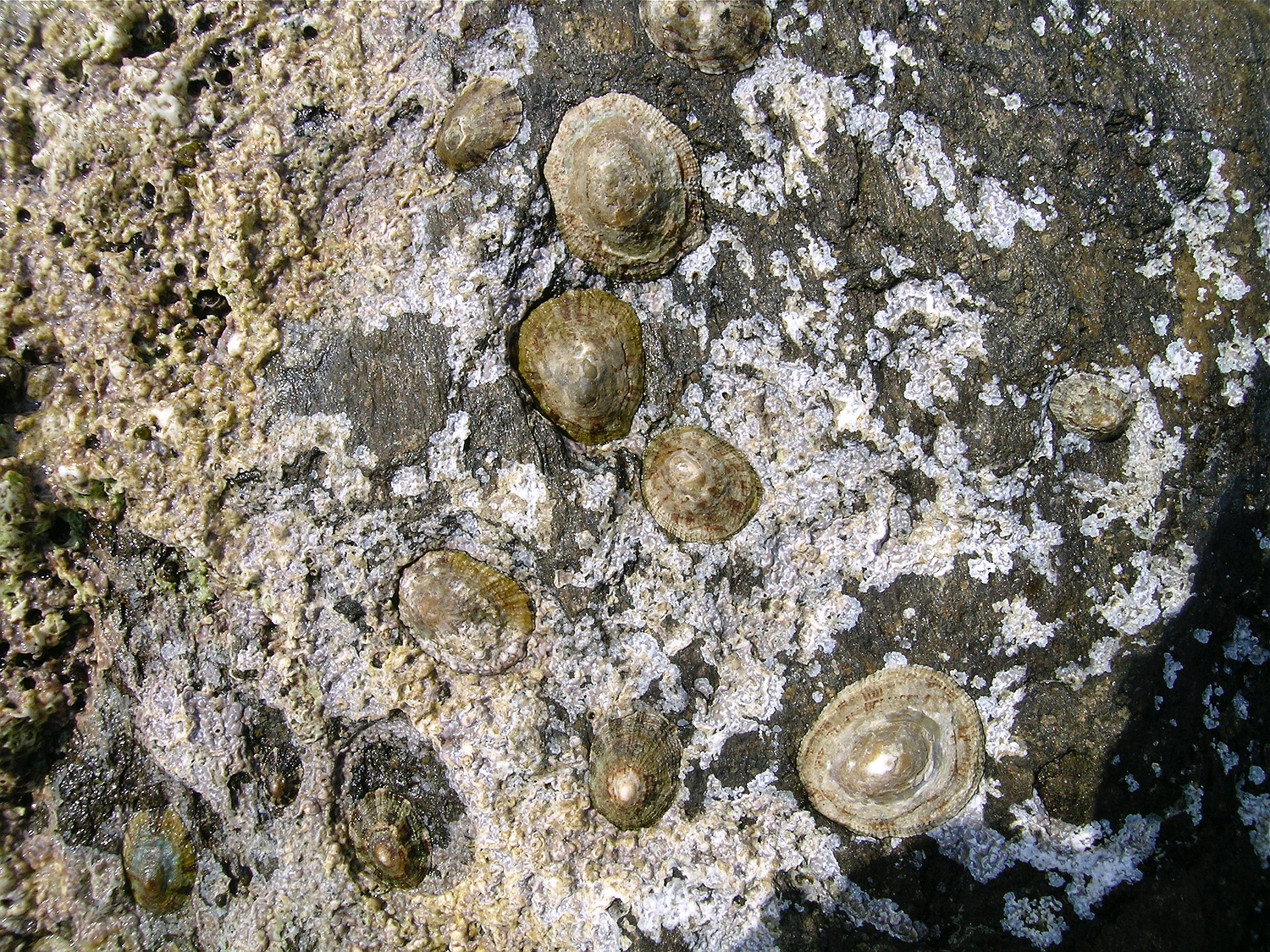
The most characteristic inhabitants of the supralittoral zone are the limpets.
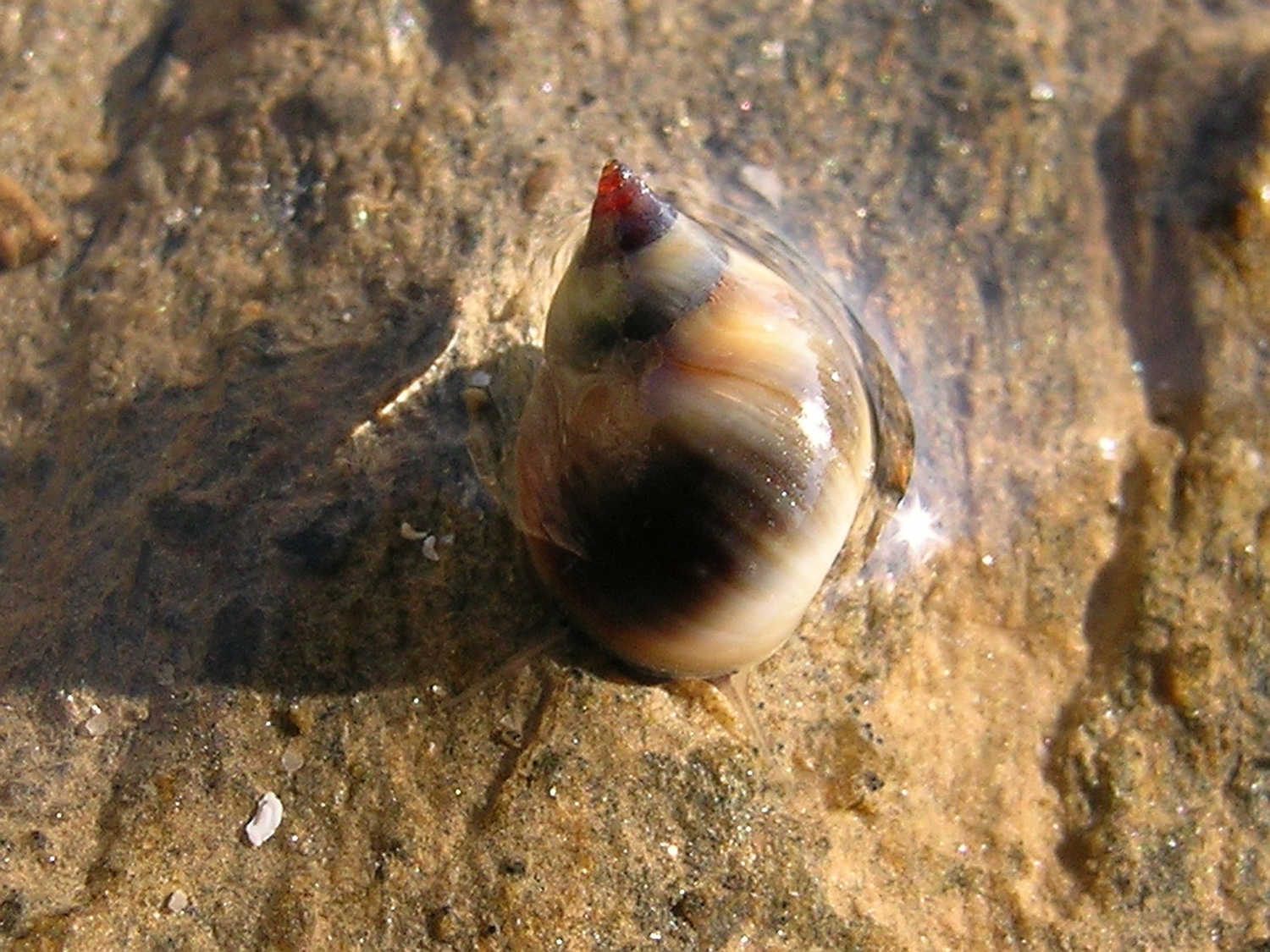
The tiny Small periwinkle (size 8 mm) can be found in rock crevices in the upper supralittoral zone.
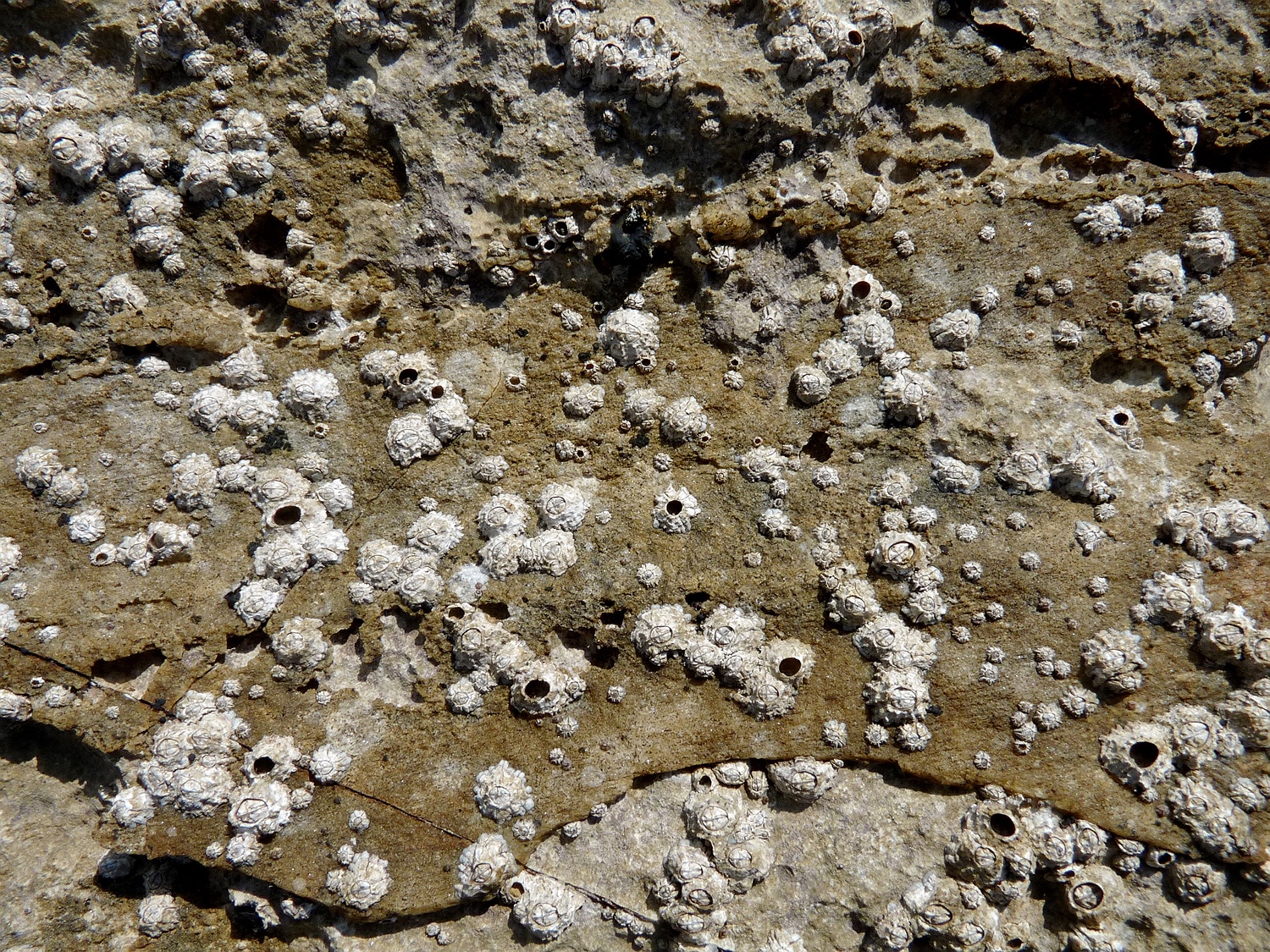
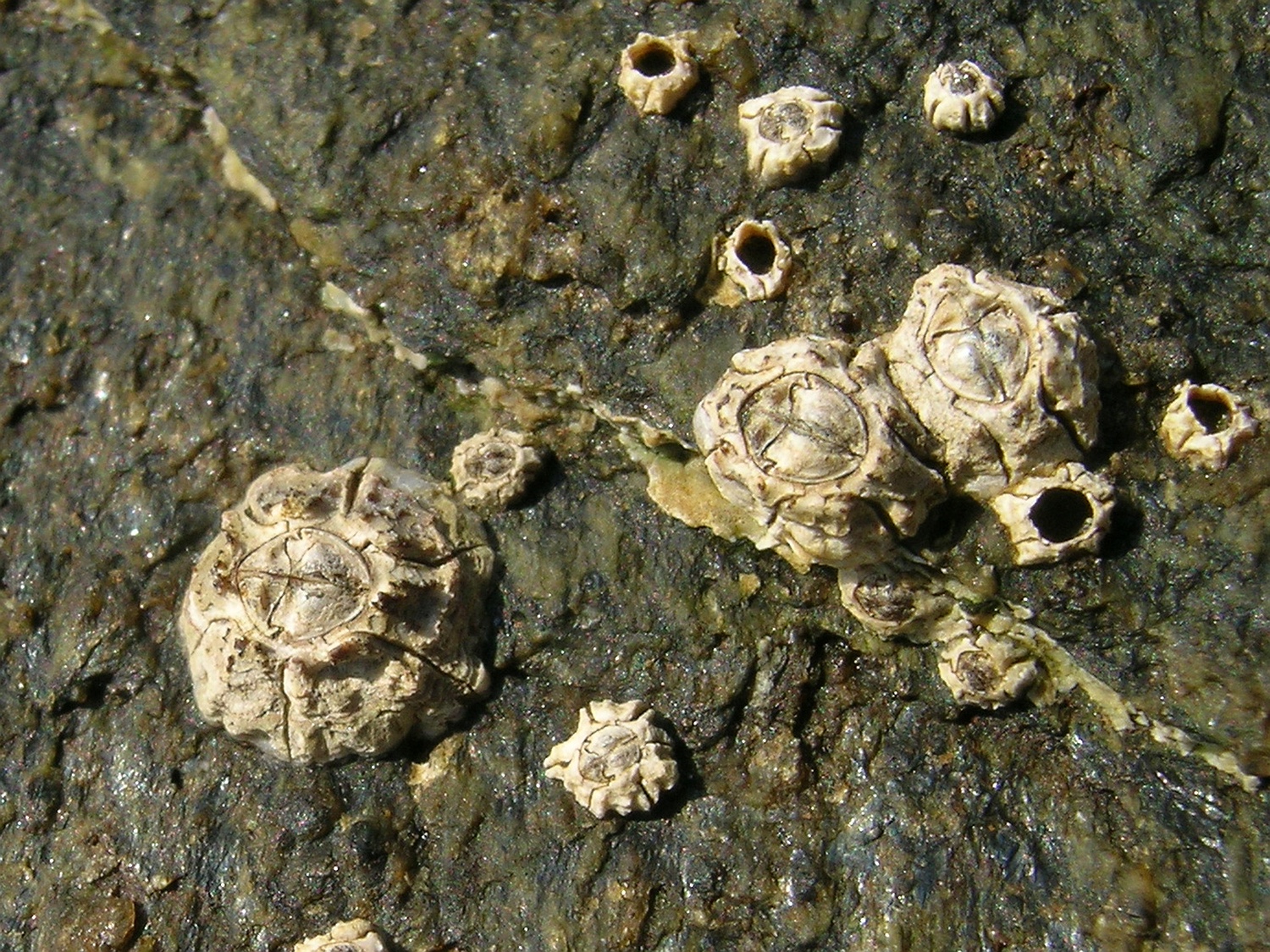
Poli’s stellate barnacle is common in the splash zone.
continue: The Eulittoral
back: The zones of the Mediterranean Sea
see also: