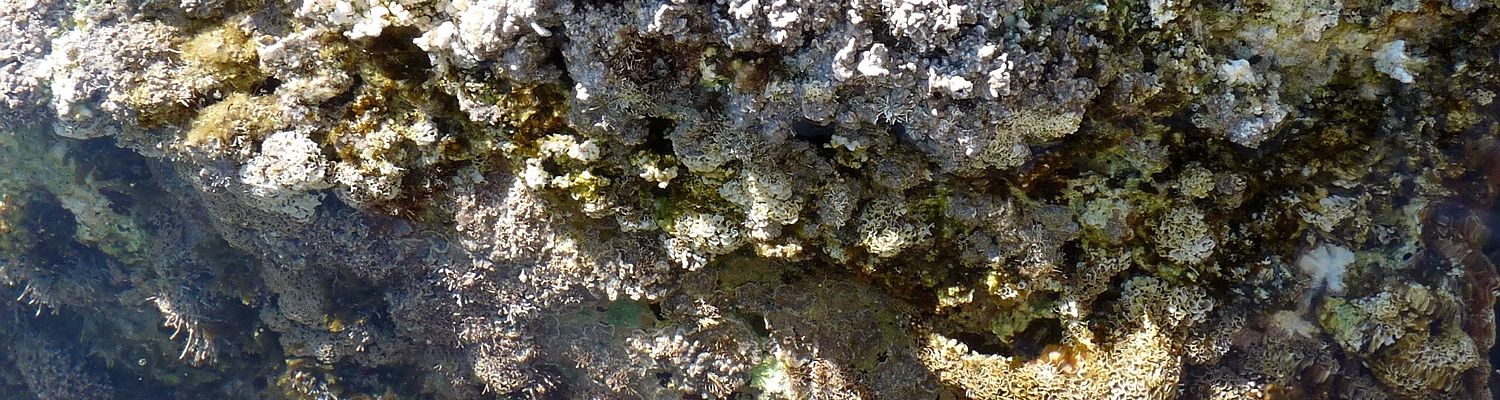
The coastal "reef" of Calcareous red algae
Calcareous algae often form a thick, almost reef-like layer on both slate and marble in the tidal zone (eulittoral), in places creating a wide, embankment-like ledge that is inhabited by many organisms. In our region, this “reef” is sometimes clearly visible, although it is nowhere particularly wide. The most common and important calcareous alga in our region is the crustose species Lithophyllum incrustans.
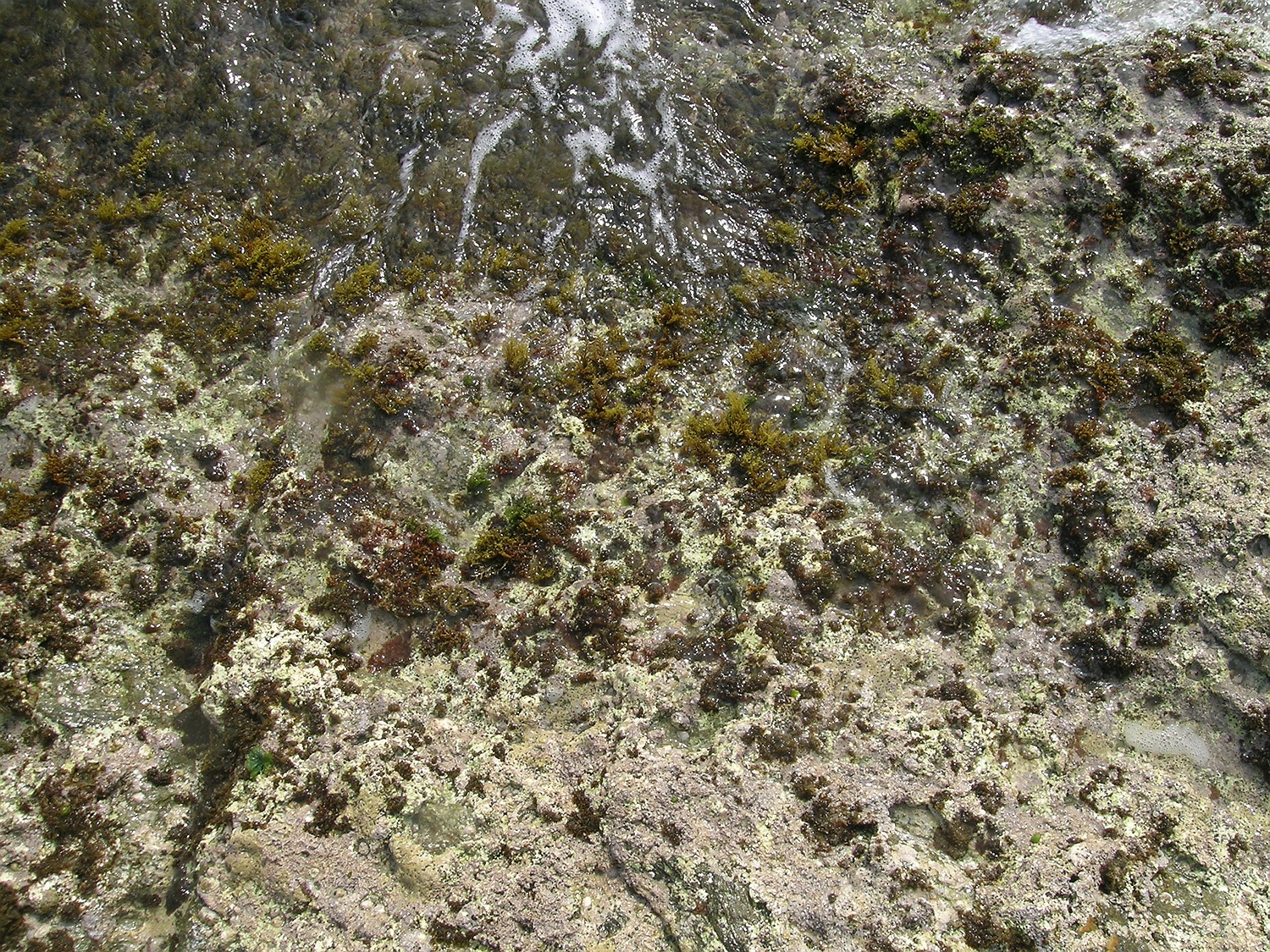
Many calcareous red algae grow in the eulittoral zone, especially the crustose species Lithophyllum incrustans.
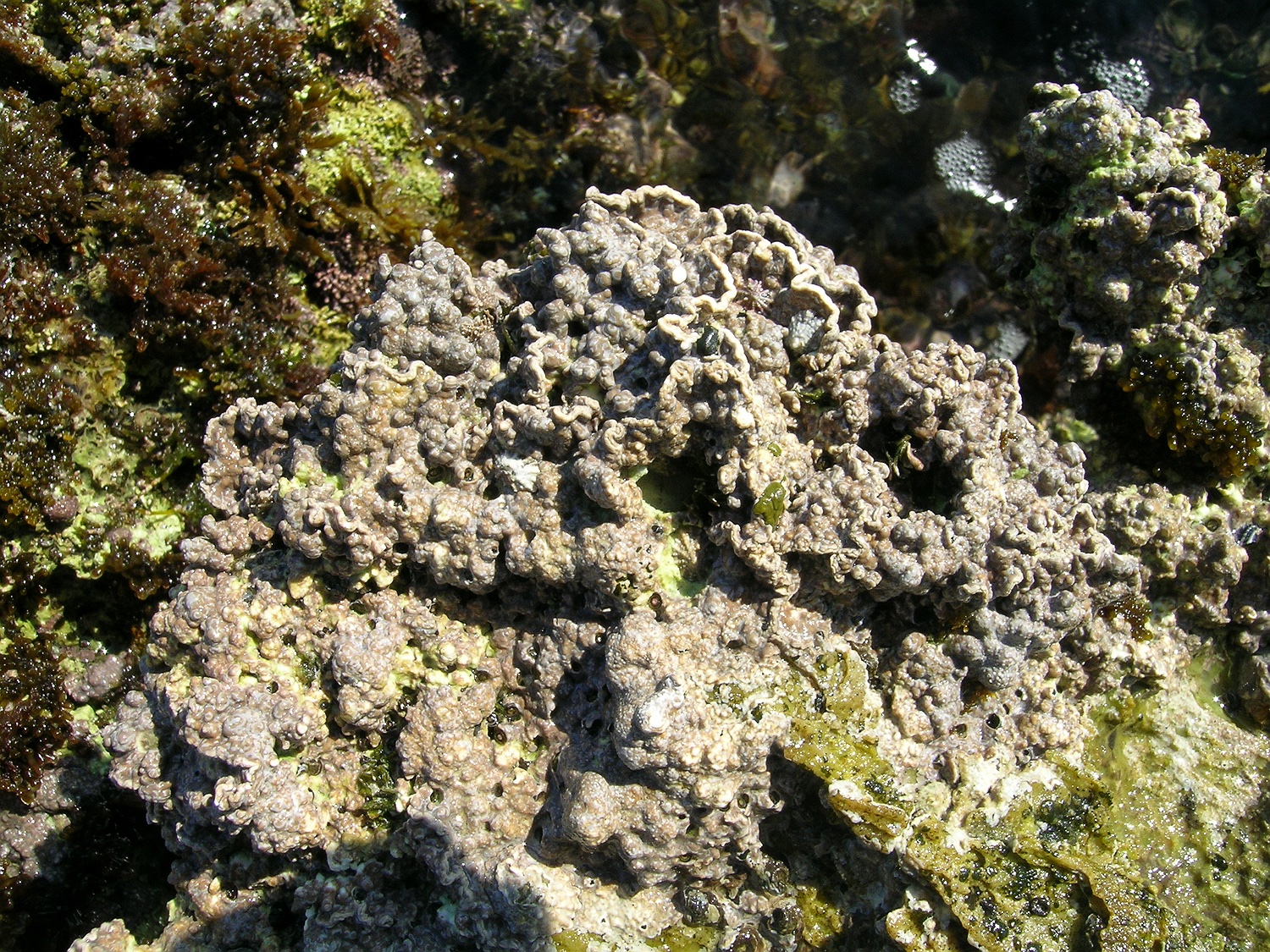
Lithophyllum incrustans often forms quite thick layers.
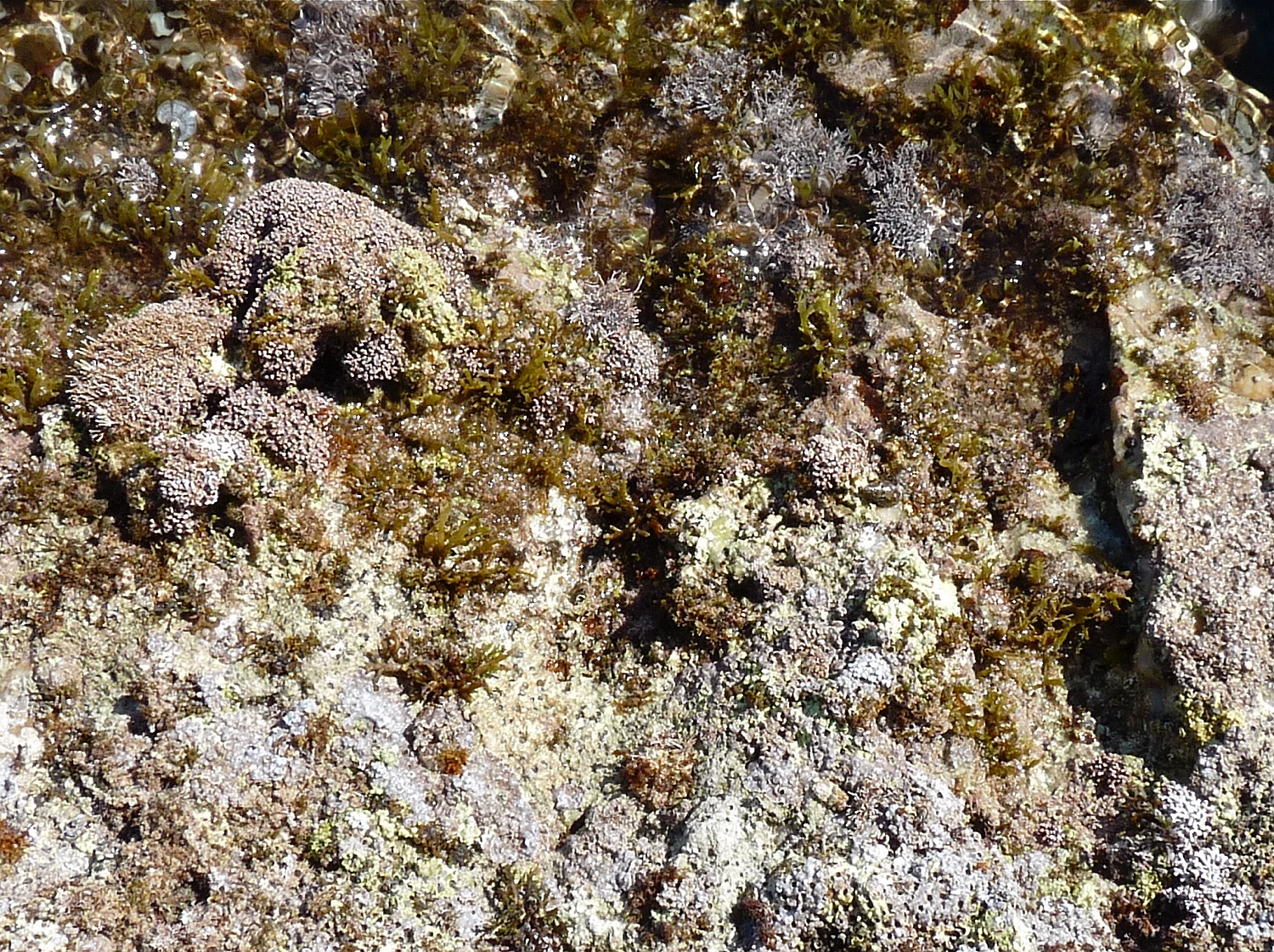
In many places, shrub-like or cushion-like species also occur.
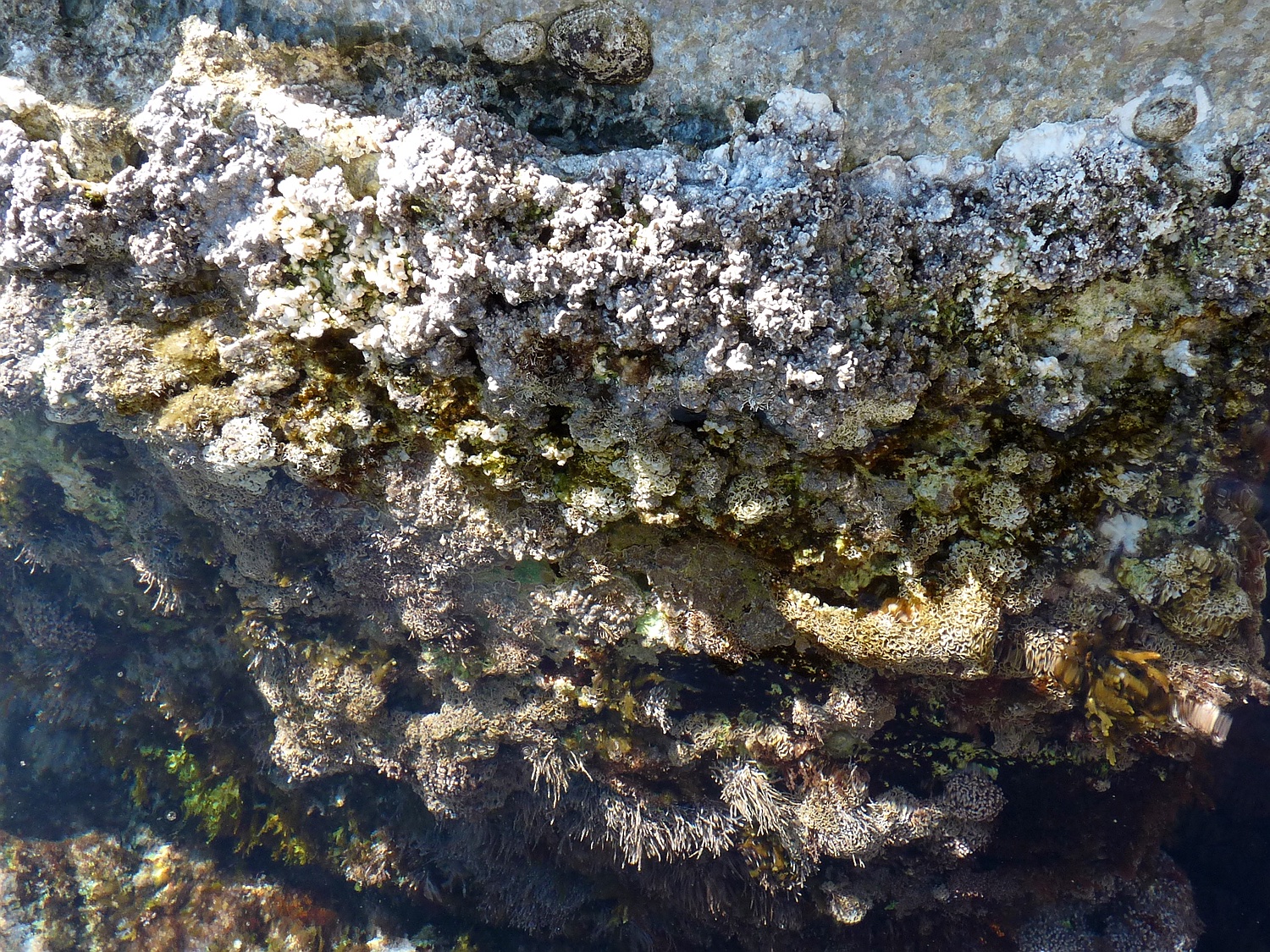
Directly at the waterline, calcareous algae often form a reef-like structure. In our region, this is usually not very thick, but often clearly recognizable.
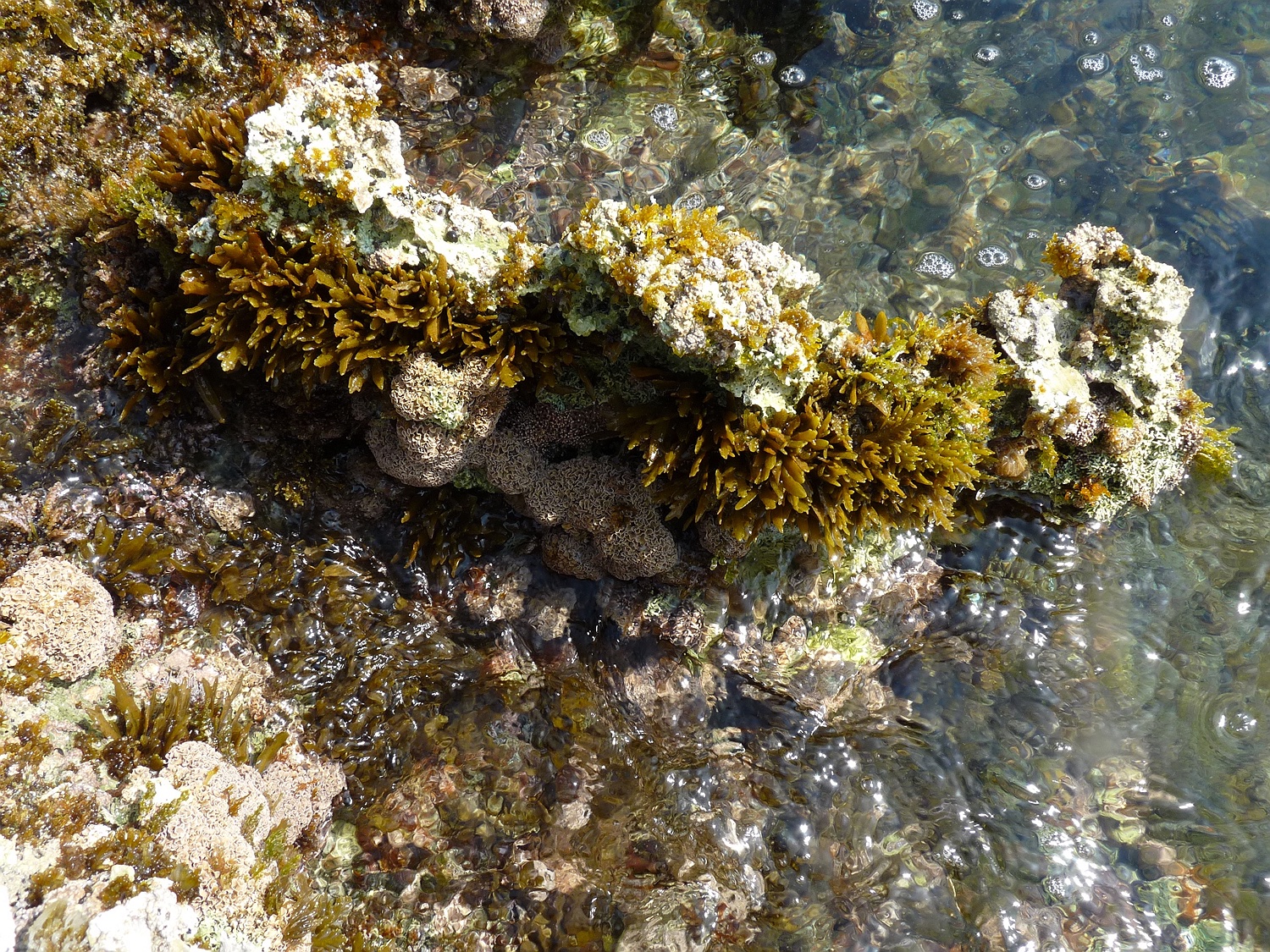
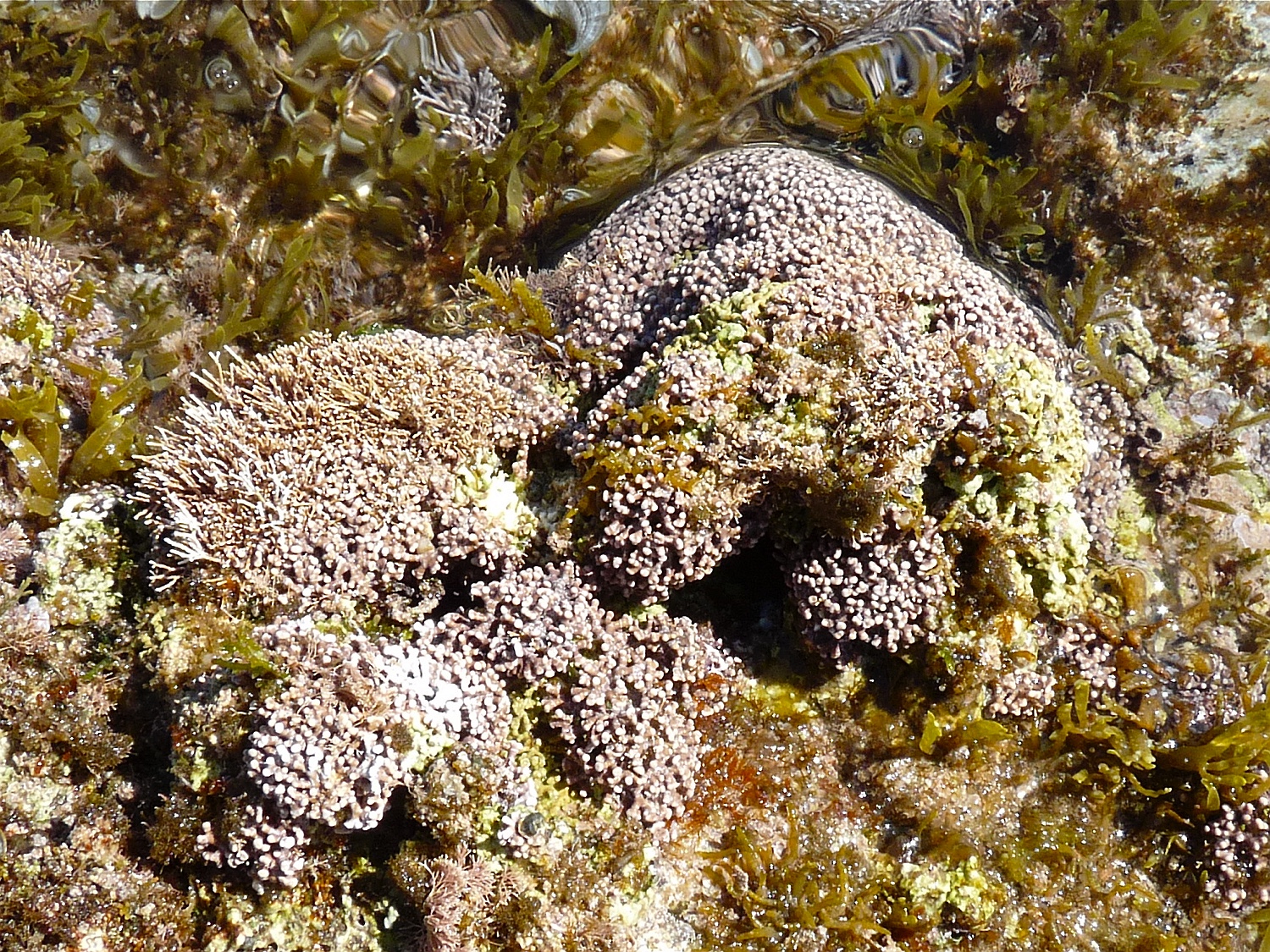
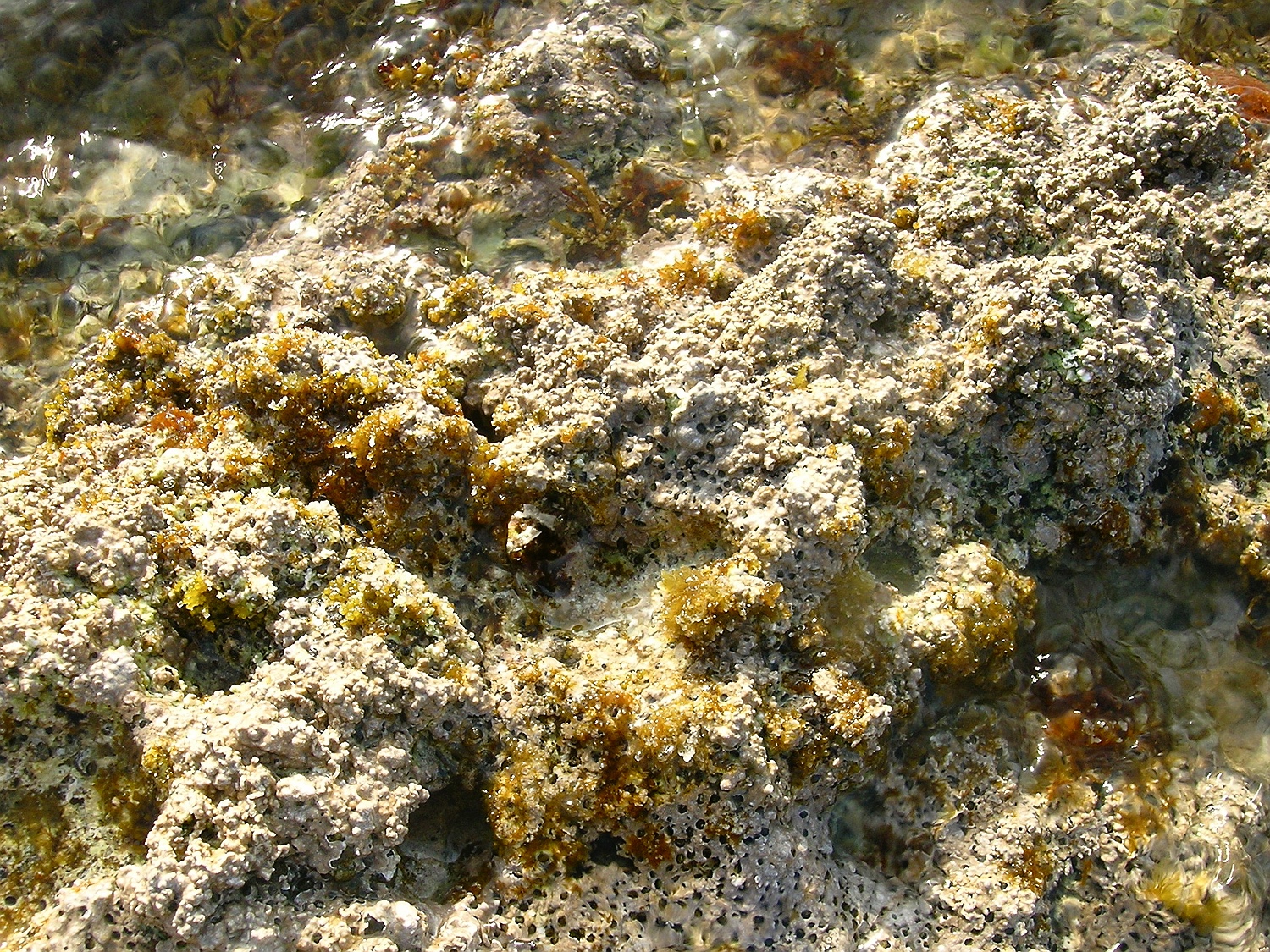
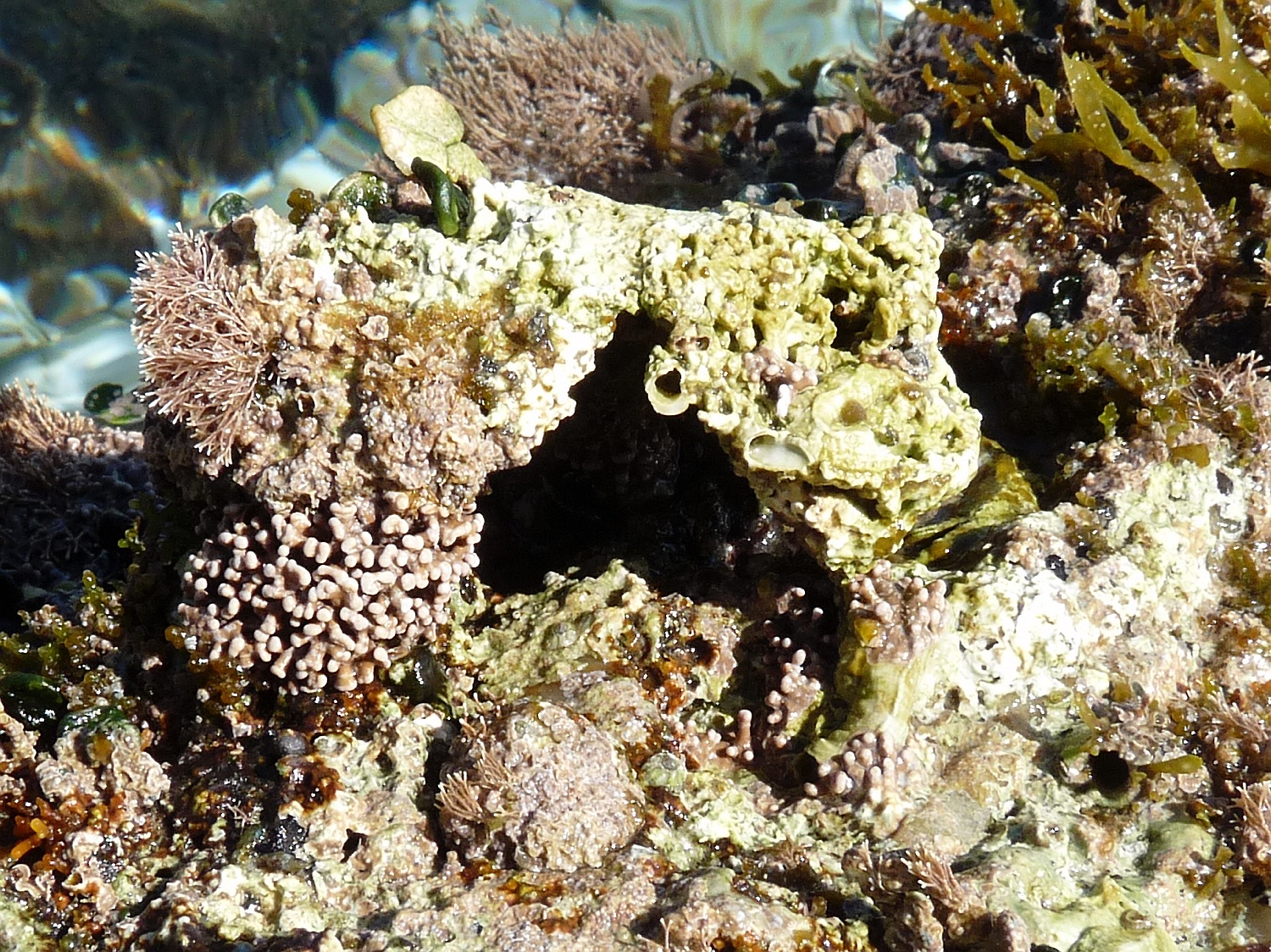
Small cavities form among the calcareous algae, providing shelter for numerous animals.
Among the most interesting animals that live or find shelter in the calcareous algae “reef” are the sessile worm snails, which occur here in thousands, the well-camouflaged chitons and various species of bivalvia and marine snails. One can also find hermit crabs (Clibanarius erythropus), the crab species Eriphia verrucosa and Pachygrapsus marmoratus and the small, interesting blennies, which often sit in places that fall dry in between the waves.
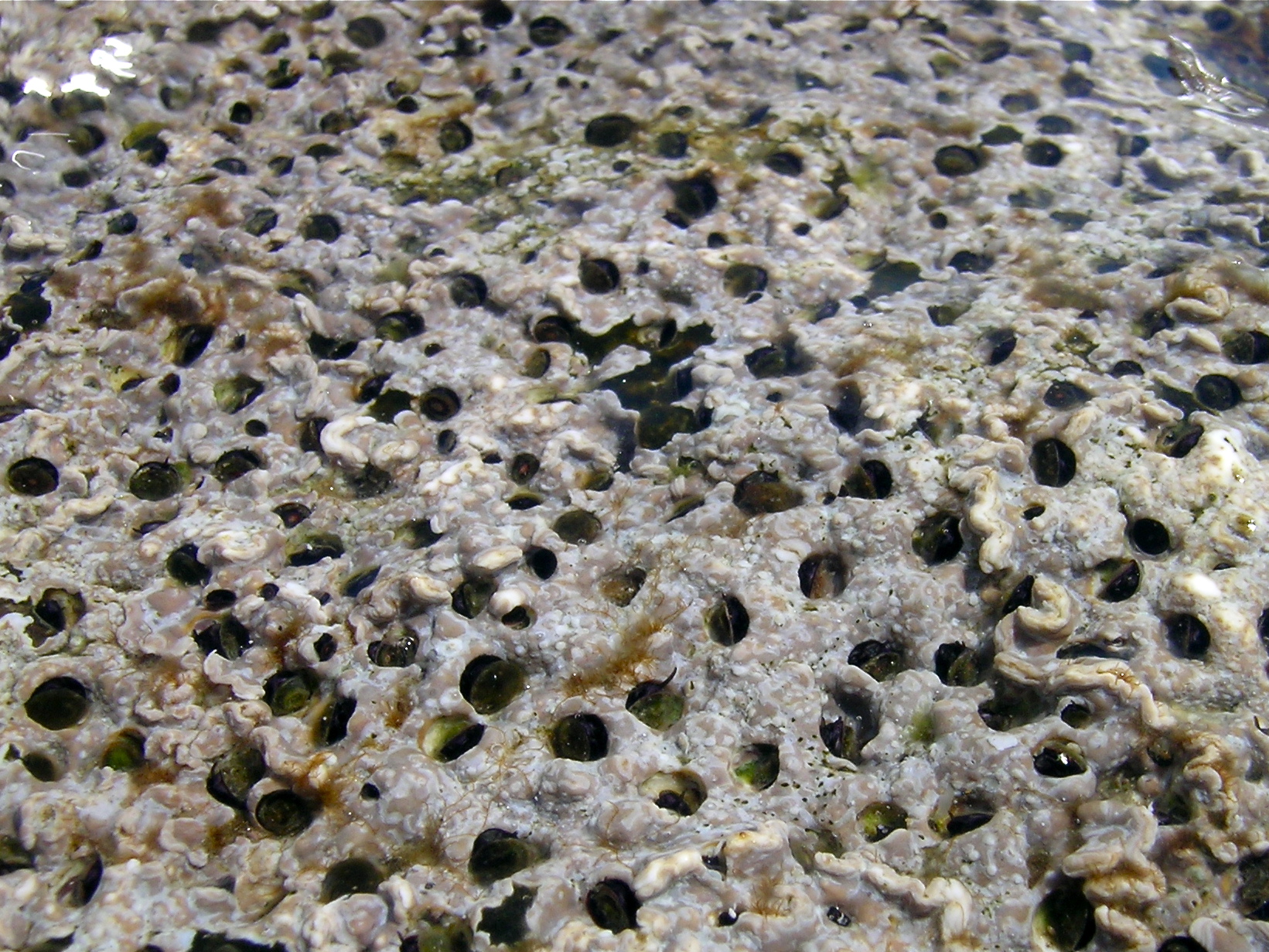
The small, sessile worm snails of the species Dendropoma cristatum live in large numbers directly at the waterline, where they are mostly covered by the crustose calcareous alga Lithophyllum incrustans, which leaves only the shell openings free.
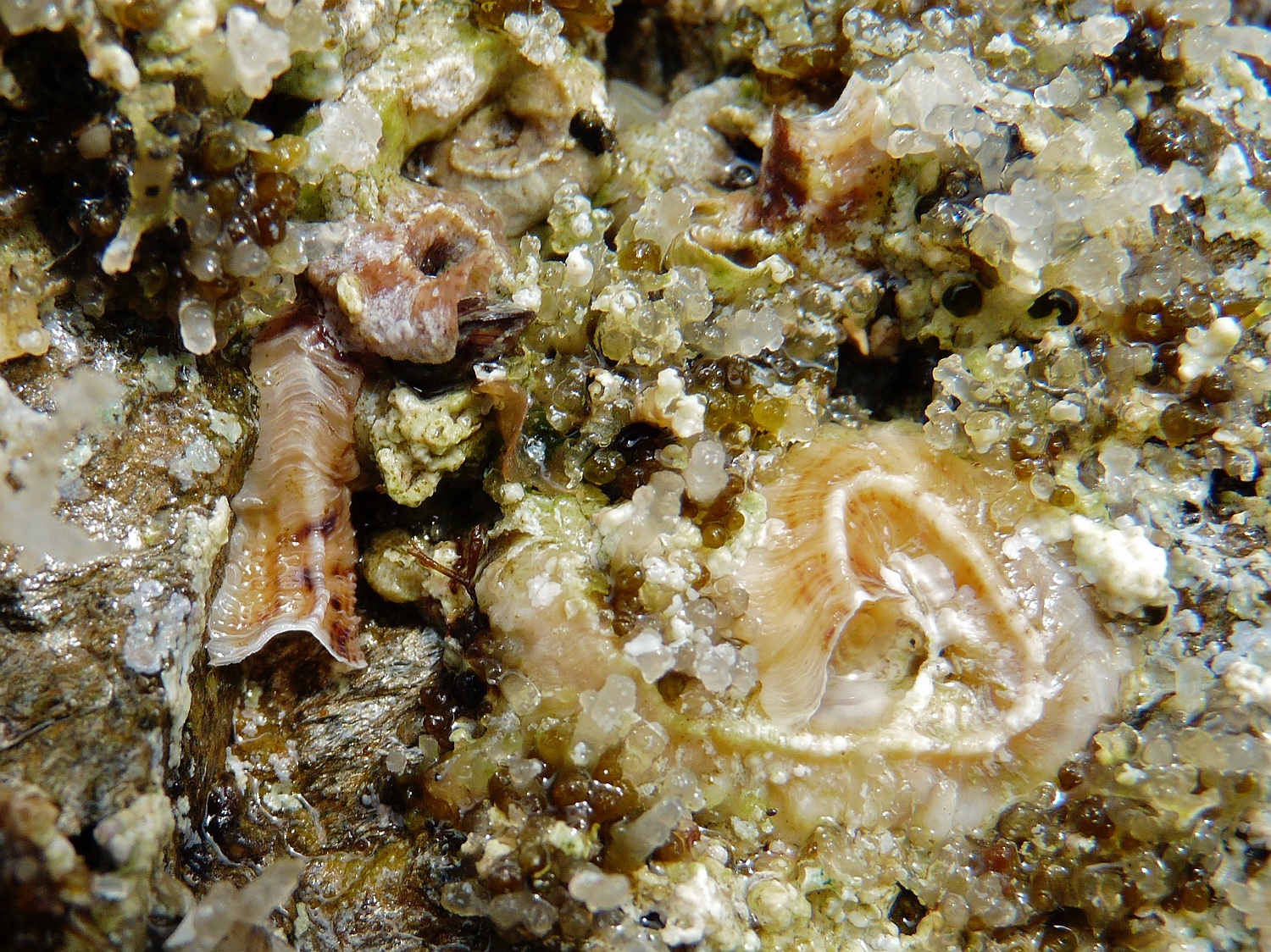
The rarer species Vermetus triquetrus is usually not overgrown by Lithophyllum incrustans, so that one can see the worm-shaped, irregularly formed shell adhering to the substrate, which in this species is slightly triangular in shape.

The shell of the rare and inconspicuous chiton consists of several leathery plates that can be moved relative to each other, with a muscular belt around.
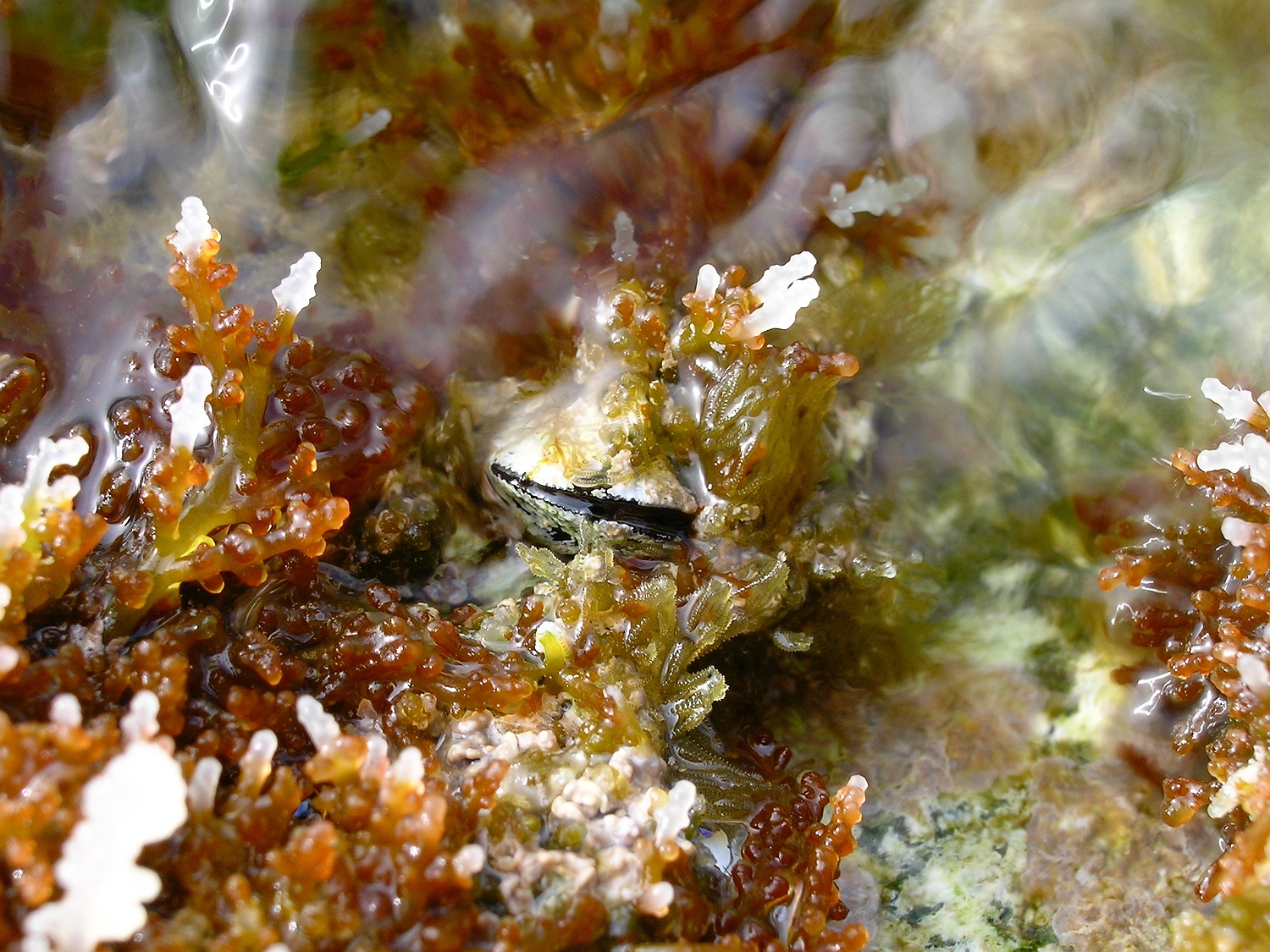
Bivalvia are also rare and very hard to spot.

Hermit crabs in snail shells of various species (here mainly Columbella rustica) often gather at the water line.

The warty crab also lives in the calcareous algae “reef”.
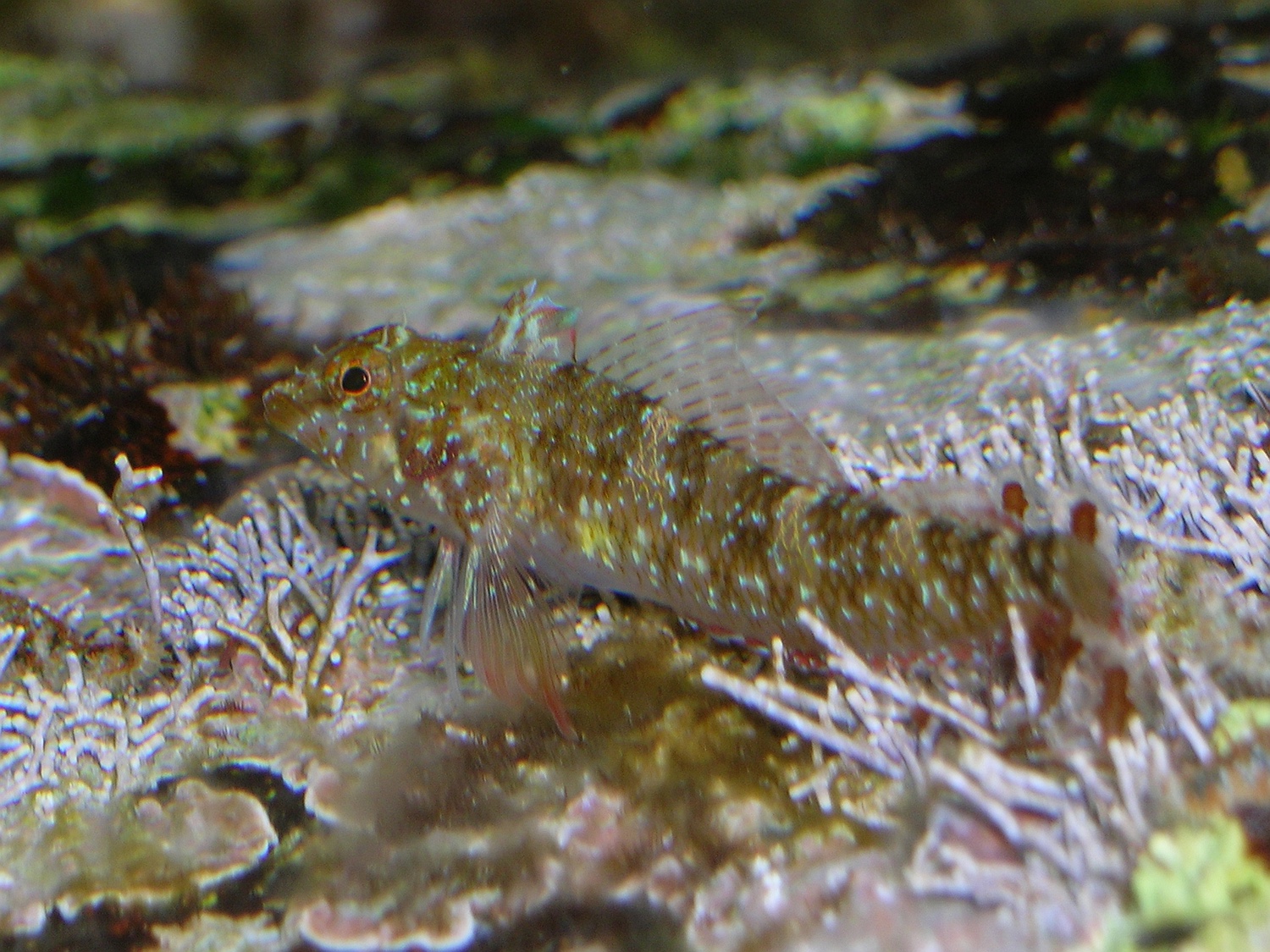
Different blenny species can be observed, here Tripterygion tripteronotus.
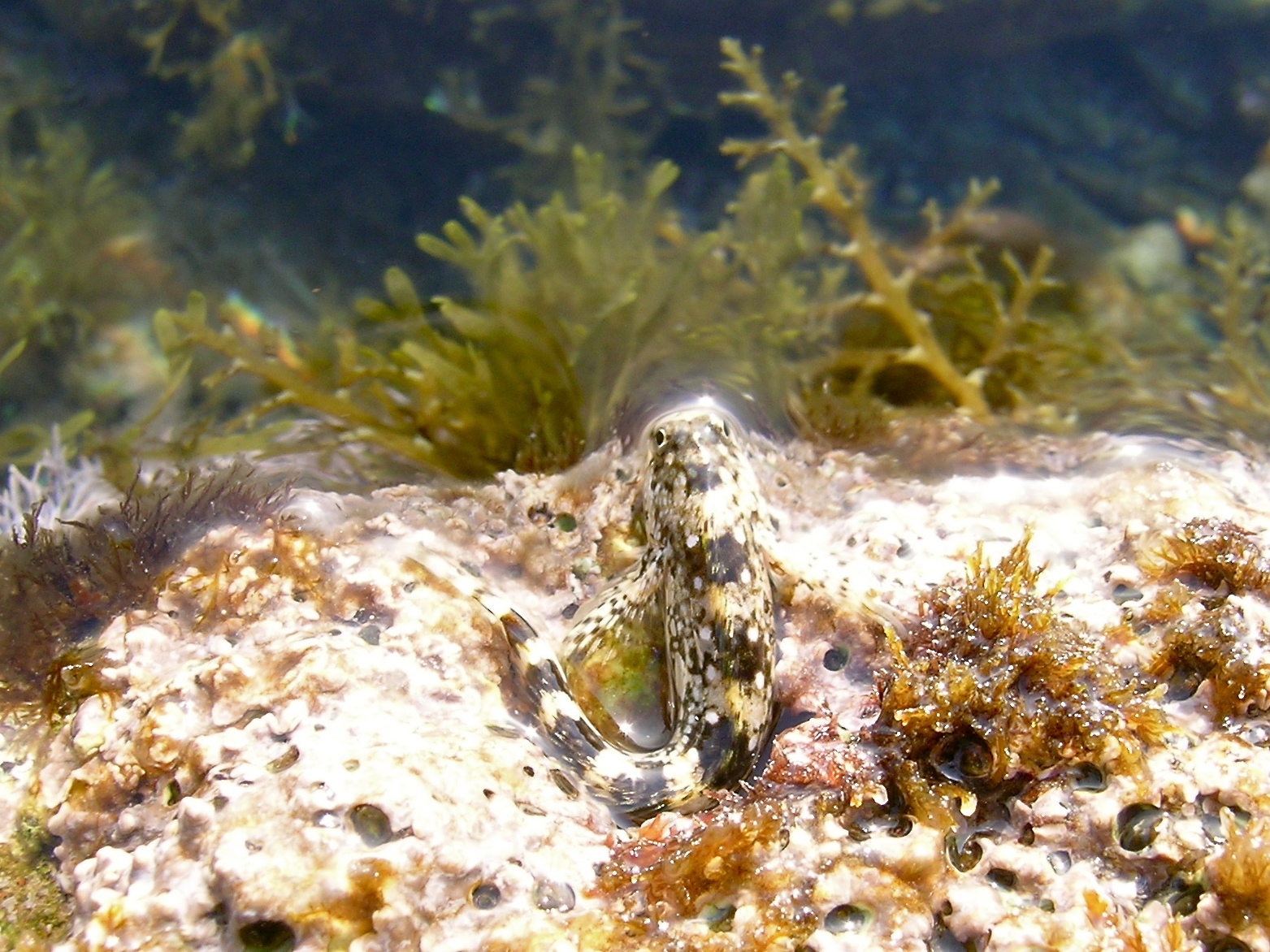
The small blenny Coryphoblennius galerita likes to sit in places that fall dry in between the waves.
see also: