
Brown algae
Brown algae or Phaeophyta are mainly found in our area in the intertidal zone and in shallow water. They usually have a characteristic brownish colour. Brown algae include most of the more or less leaf-shaped seaweeds that often form huge forests in the oceans. In the Mediterranean these large seaweeds are less common.
Here you can skip the introduction and go directly to the species.
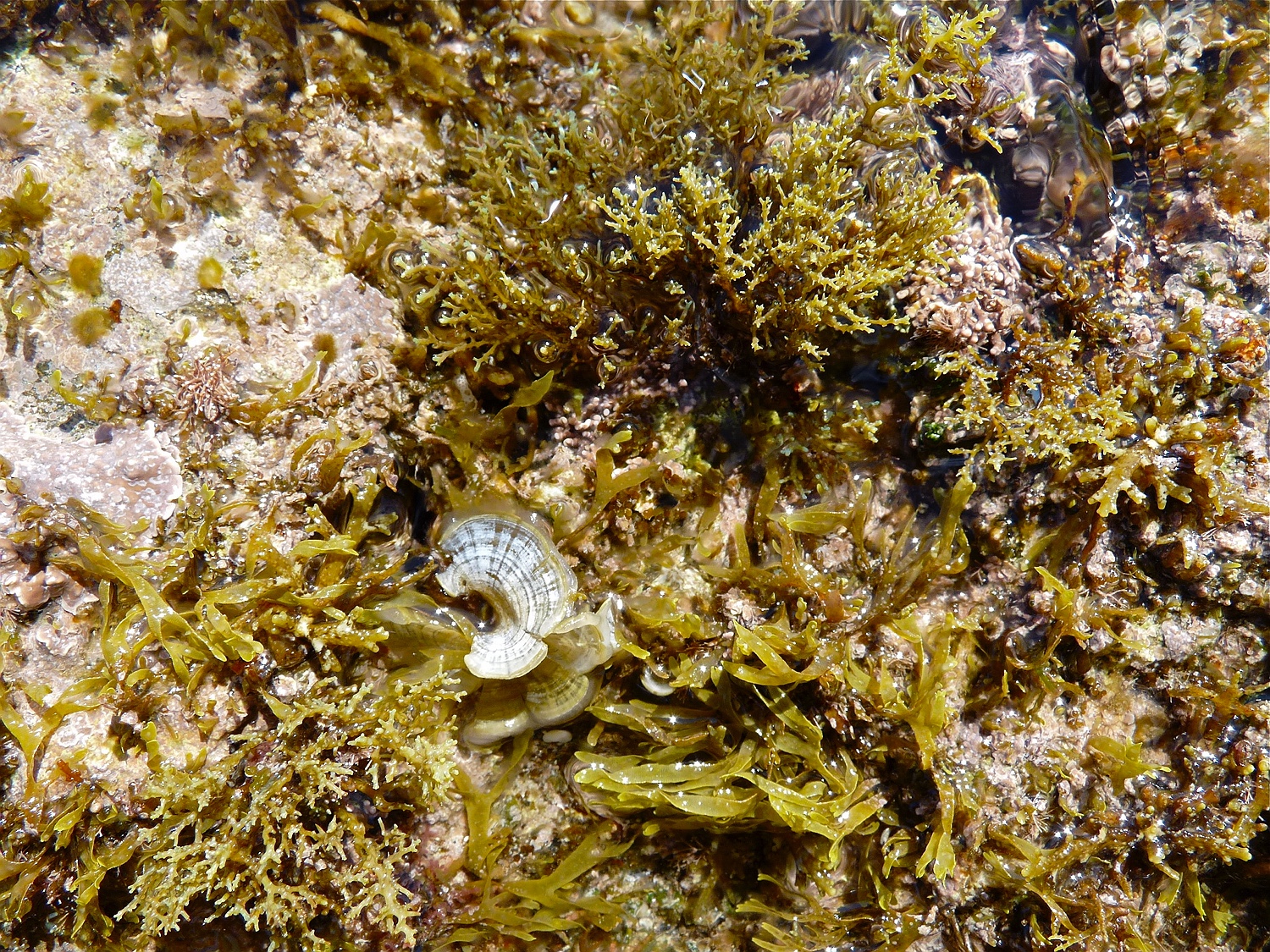
typical community of brown algae
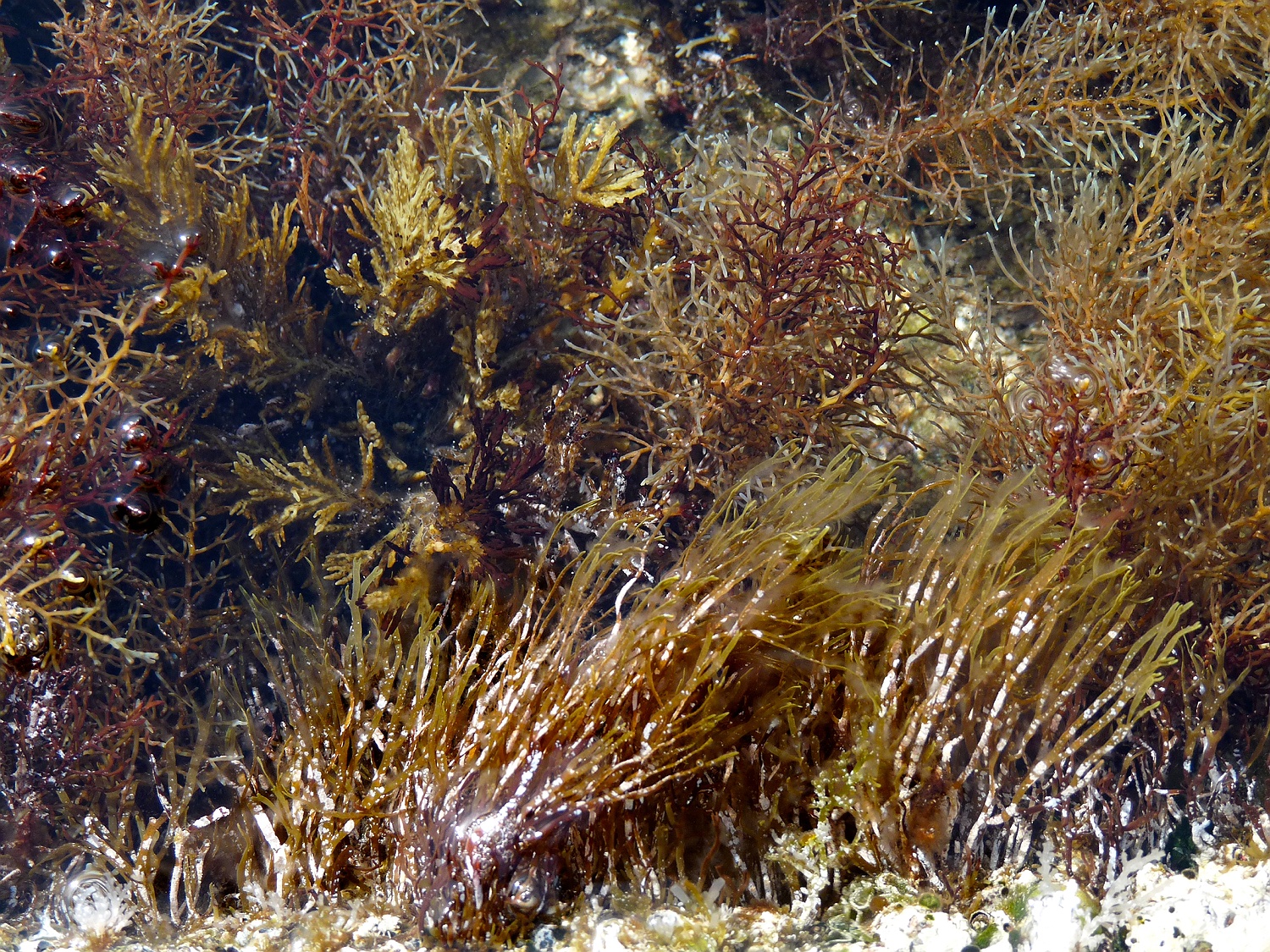
Brown algae occur especially on slate and granite; on marble they are less common.
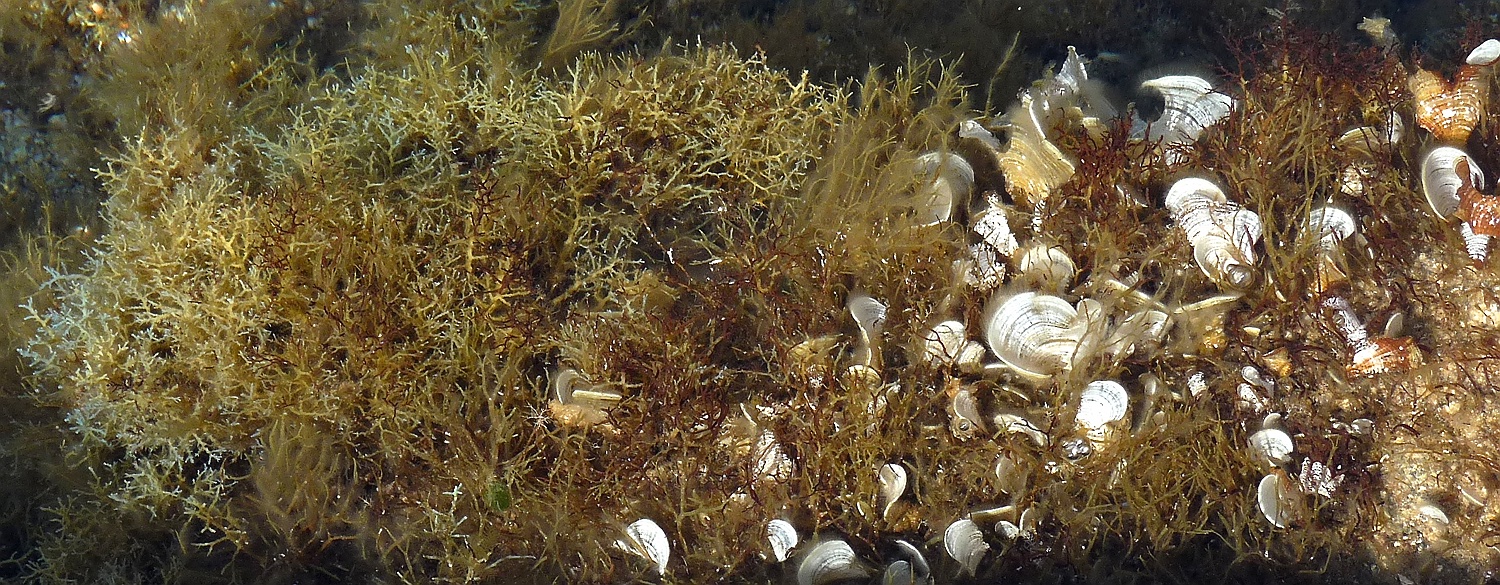
They often form dense populations on rocks both in the intertidal zone and in the shallow water.
Most brown algae around Naxos show a shrub-like growth form. They form extensive colonies, especially on slate in shallow water. The most common genus is Cystoseira with numerous, partly endemic species, which are generally difficult to distinguish. Apart from Cystoseira, Dictyota dichotoma and Peacock’s tail (Padina pavonica) are the most common species.
Brown algae on Naxos
The Photo gallery of the marine plants gives an overview over the species.
A note on identification: Some species of algae can be identified easily and reliably. In many cases, however, there are several related species that are difficult to distinguish. Often, examination under a microscope is necessary for correct identification. Another problem with the identification is that not all species are included in the field guides; even using the internet, it is difficult to find information on many species. Often, the species identified with the help of books or photos on the internet look quite different from our specimen here. Accordingly, many of the identifications are unfortunately quite uncertain, and some species must remain completely unidentified.
Here you can jump directly to the species (return with the back arrow or by swiping back): Dictyota – Taonia atomaria – Zonaria tournefortii – Padina pavonica – Stypopodium zonale – Cystoseira – Sporochnus pedunculatus
Dictyota dichotoma, J. V. Lamouroux
common in shallow water, especially on slate
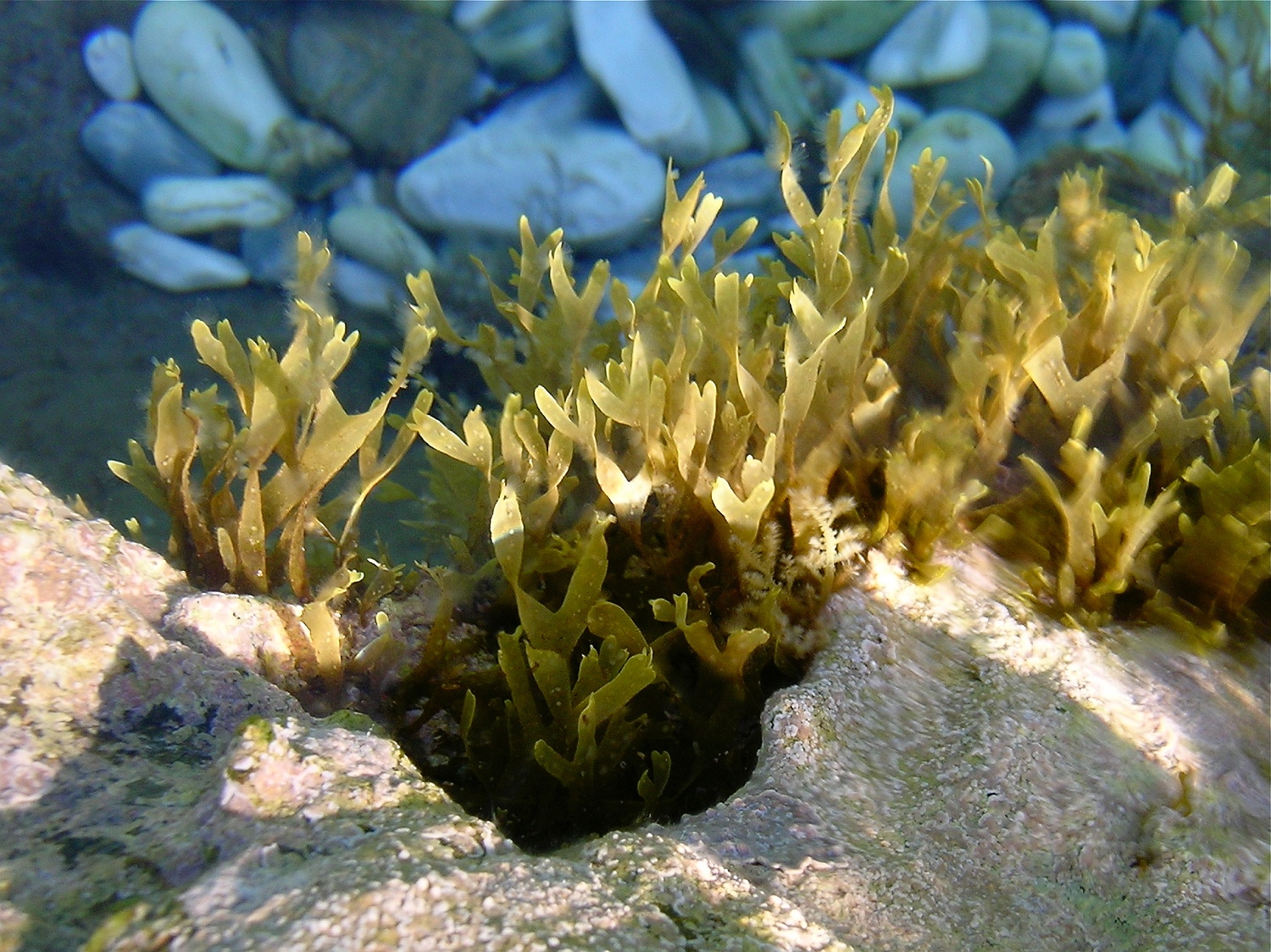
Dictyota dichotoma is easily recognisable by its ribbon-shaped, forked thallus.
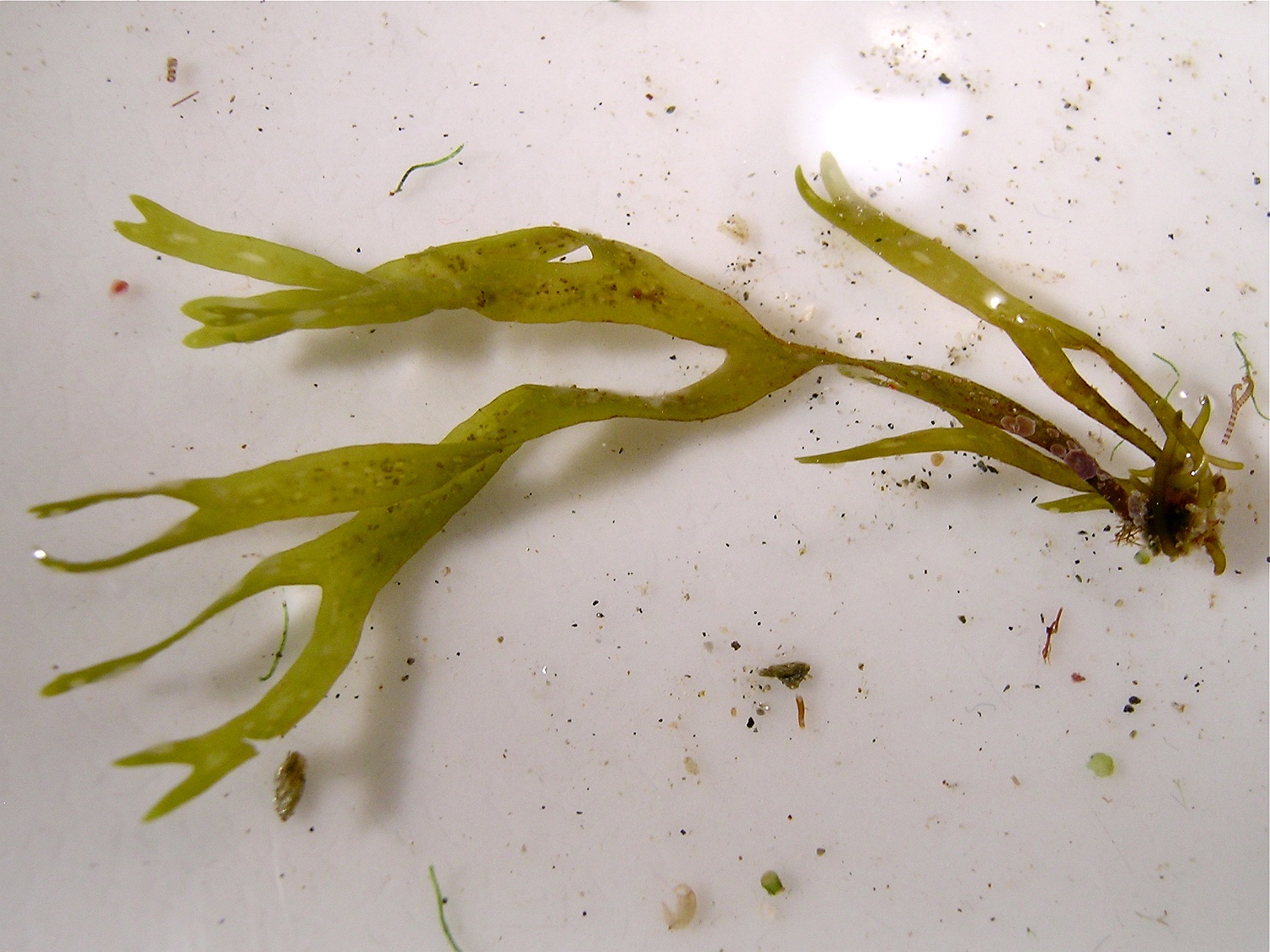
The fine dots on the thallus are the spore-producing areas.
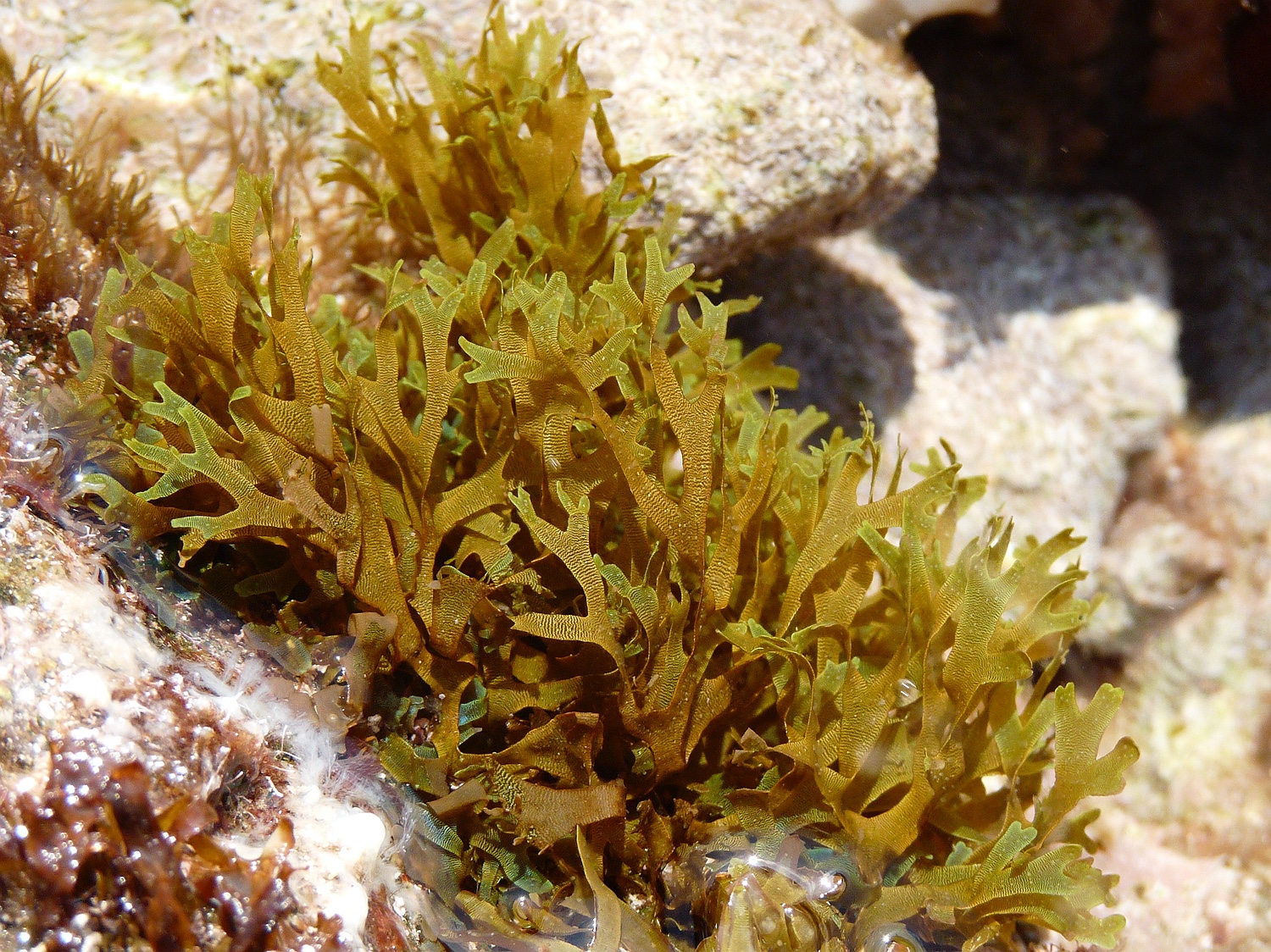
Here, the spore-producing areas are arranged in indistinct transverse lines.
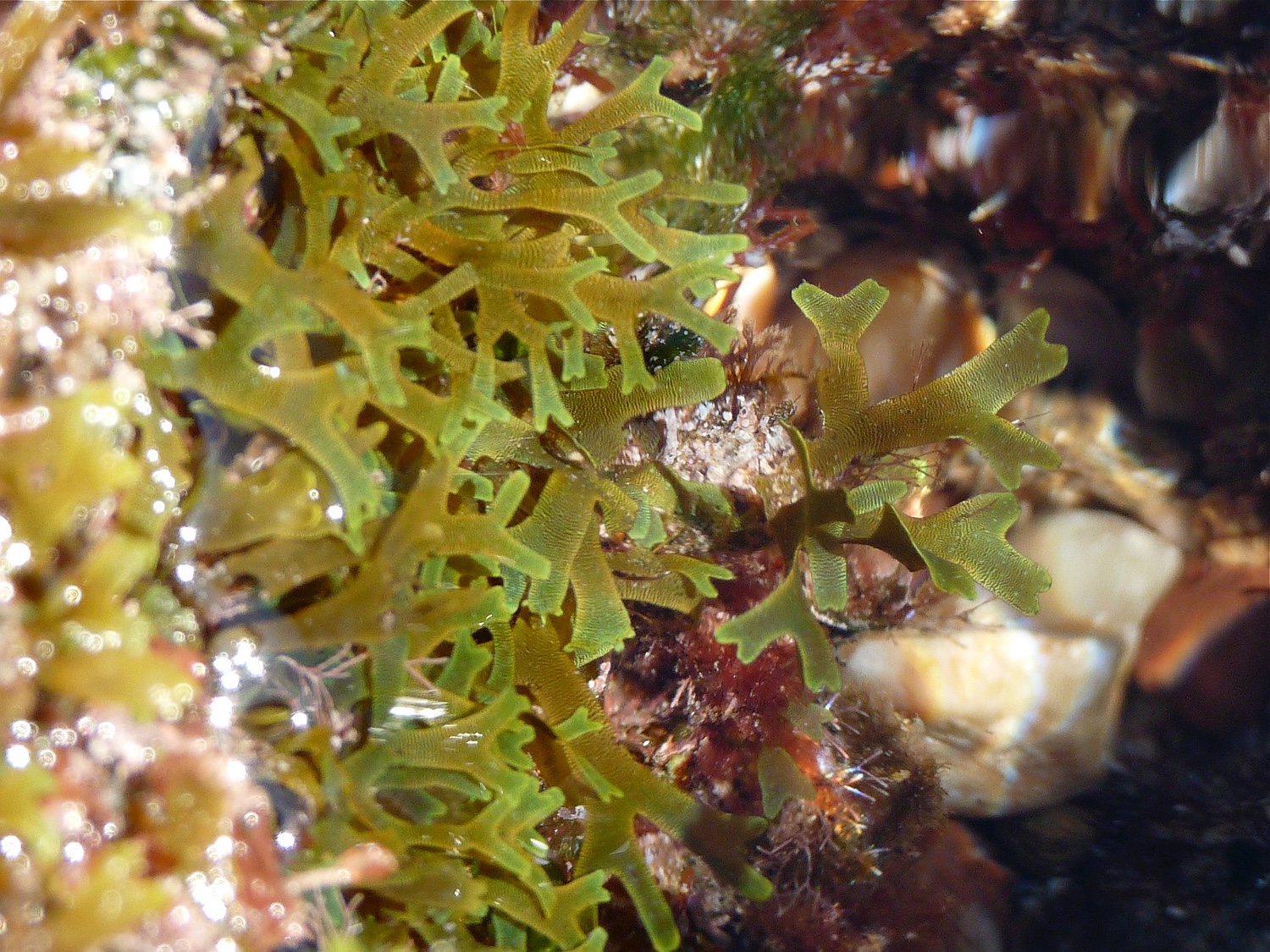
Sometimes Dictyota dichotoma shows a greenish iridescence.
Dictyota dichotoma var. intericata, Greville
much rarer, found on granite in the south-west of Naxos; at the waterline
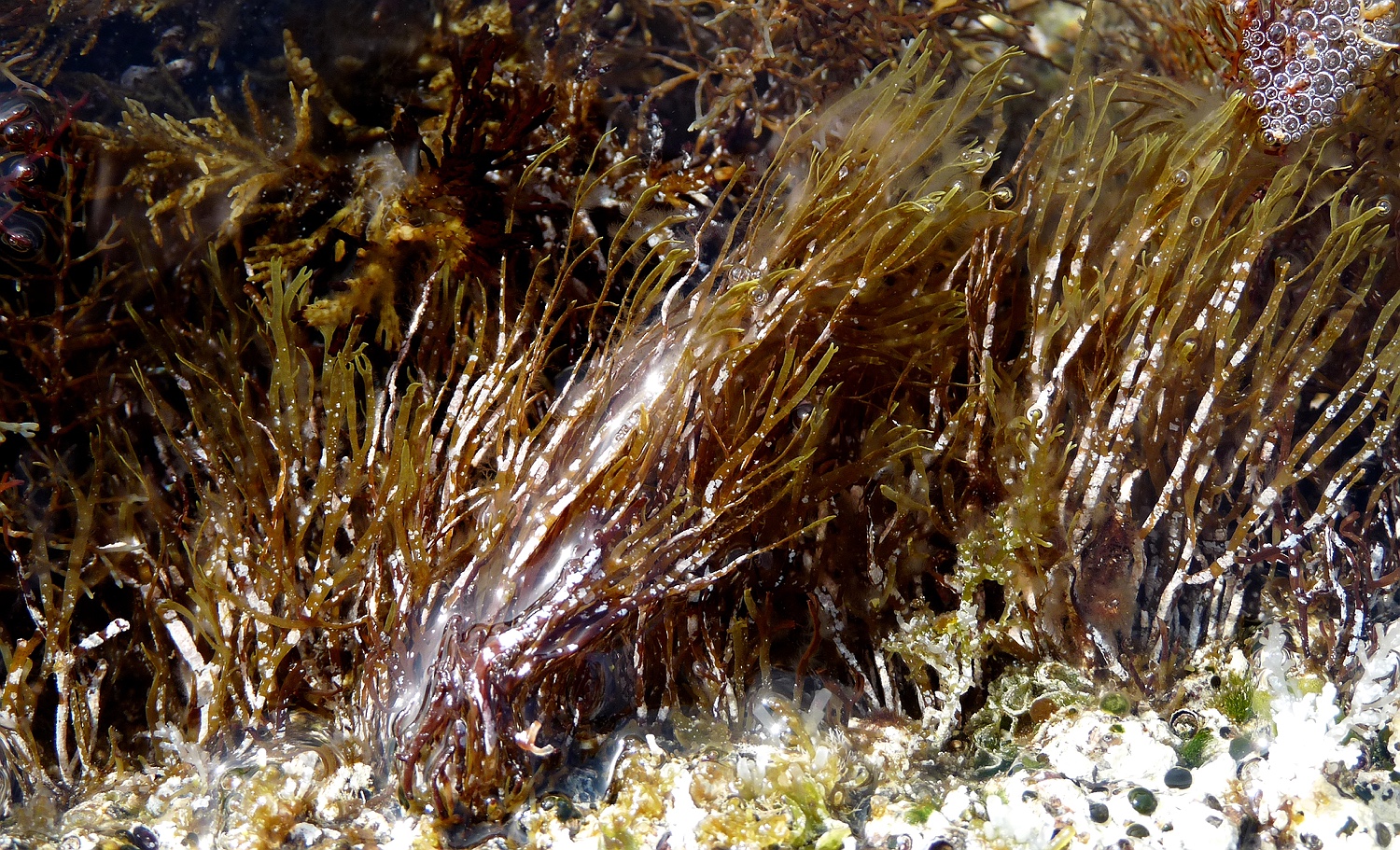
Dictyota dichotoma var. intericata has much finer thallus sections, which are approximately the same width along their entire length.
Dictyota fasciola, J. V. Lamouroux
very rare, perhaps in deeper water
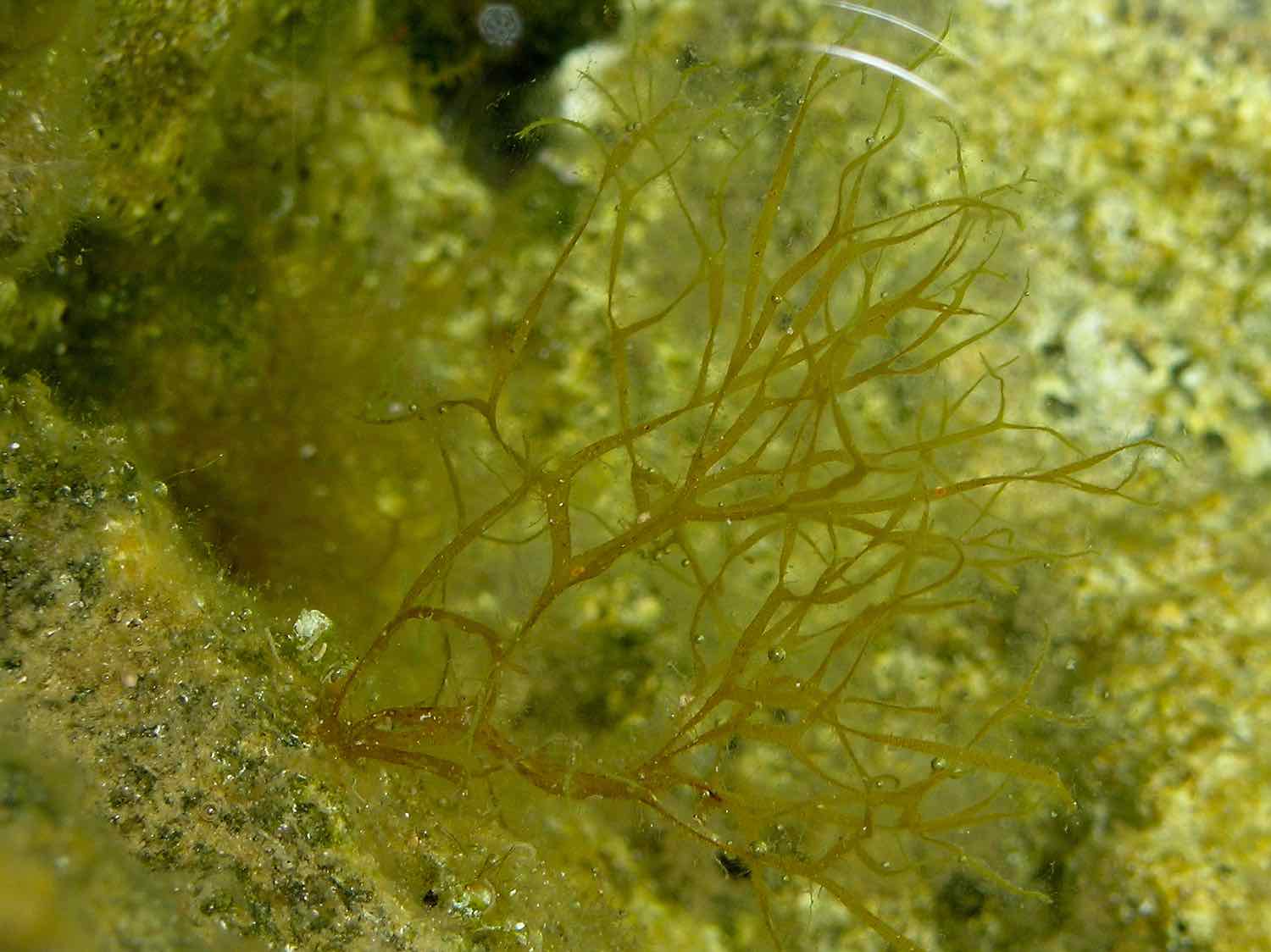
In this species, the narrow thallus sections become thinner towards the ends; the plant forms an upward-spreading tuft that is attached to the substrate with an adhesive organ.
Taonia atomaria, J. Agardh
rare, in slightly deeper water
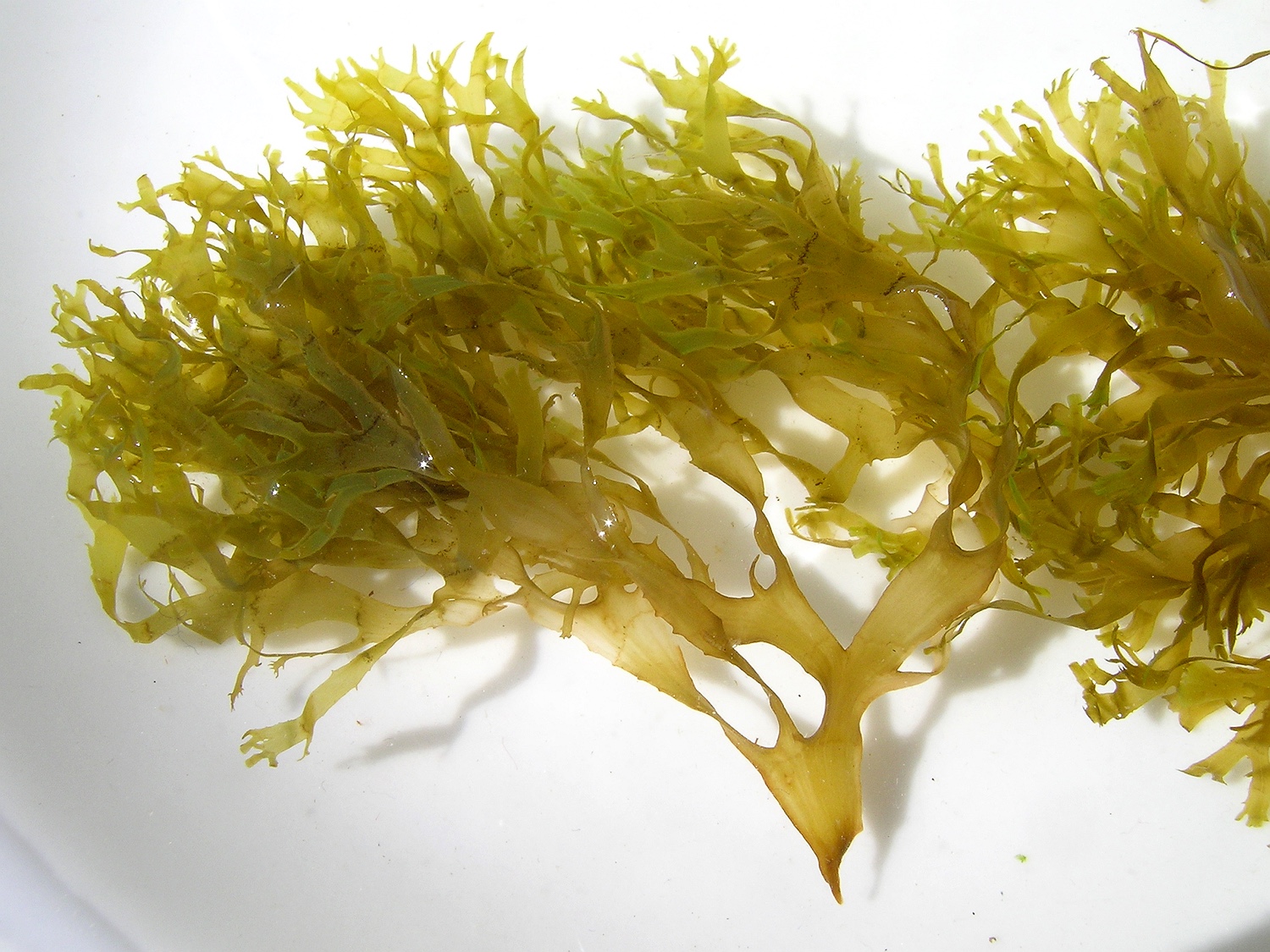
This species is closely related to the genus Dictyota, but it does not occur directly at coast; occasionally we find it washed ashore.
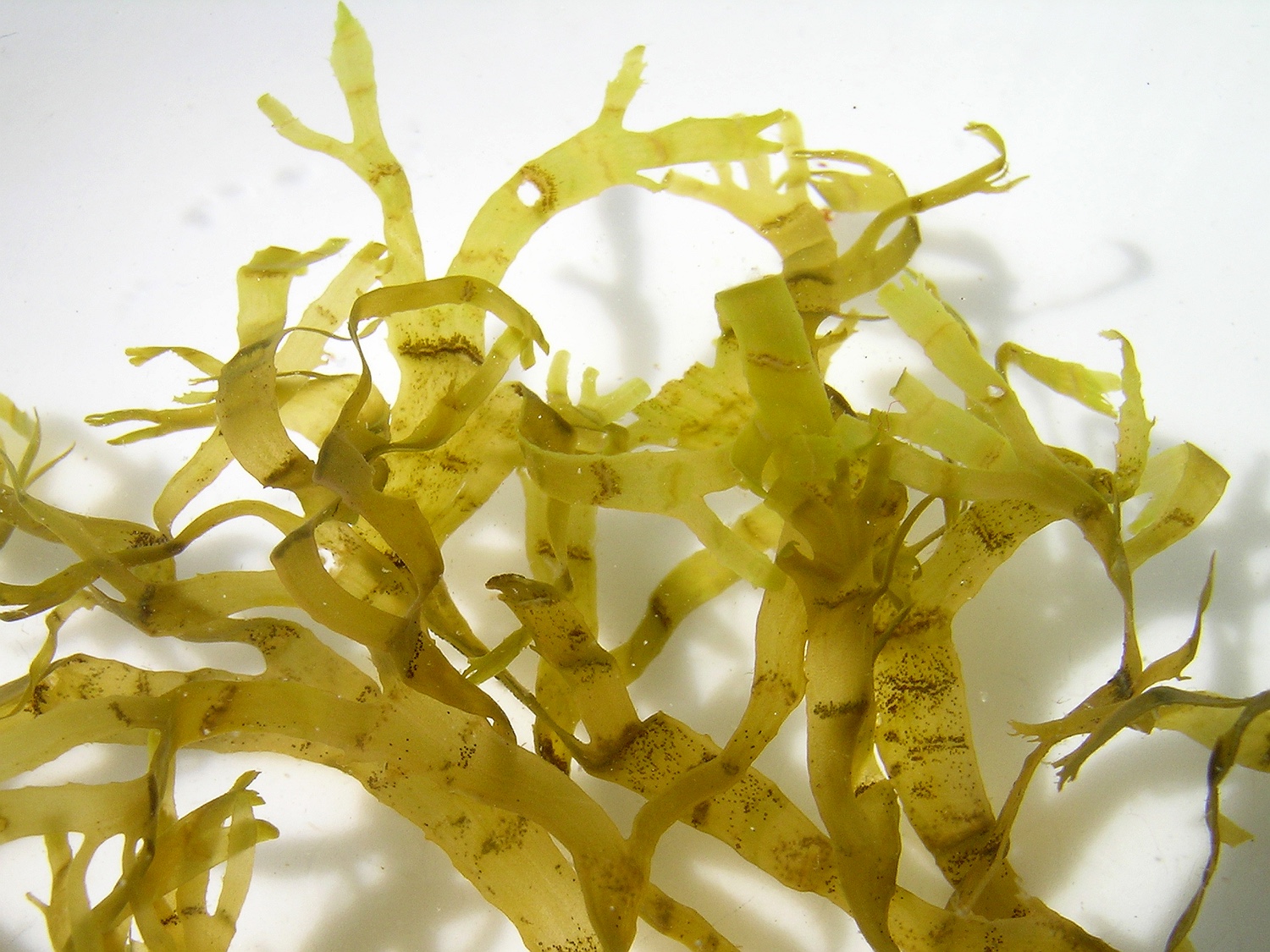
Its very thin thallus is divided into lobes or narrow bands that taper towards the ends. The spores are produced in the darker transverse bands.
Zonaria tournefortii, Montagne
very rare
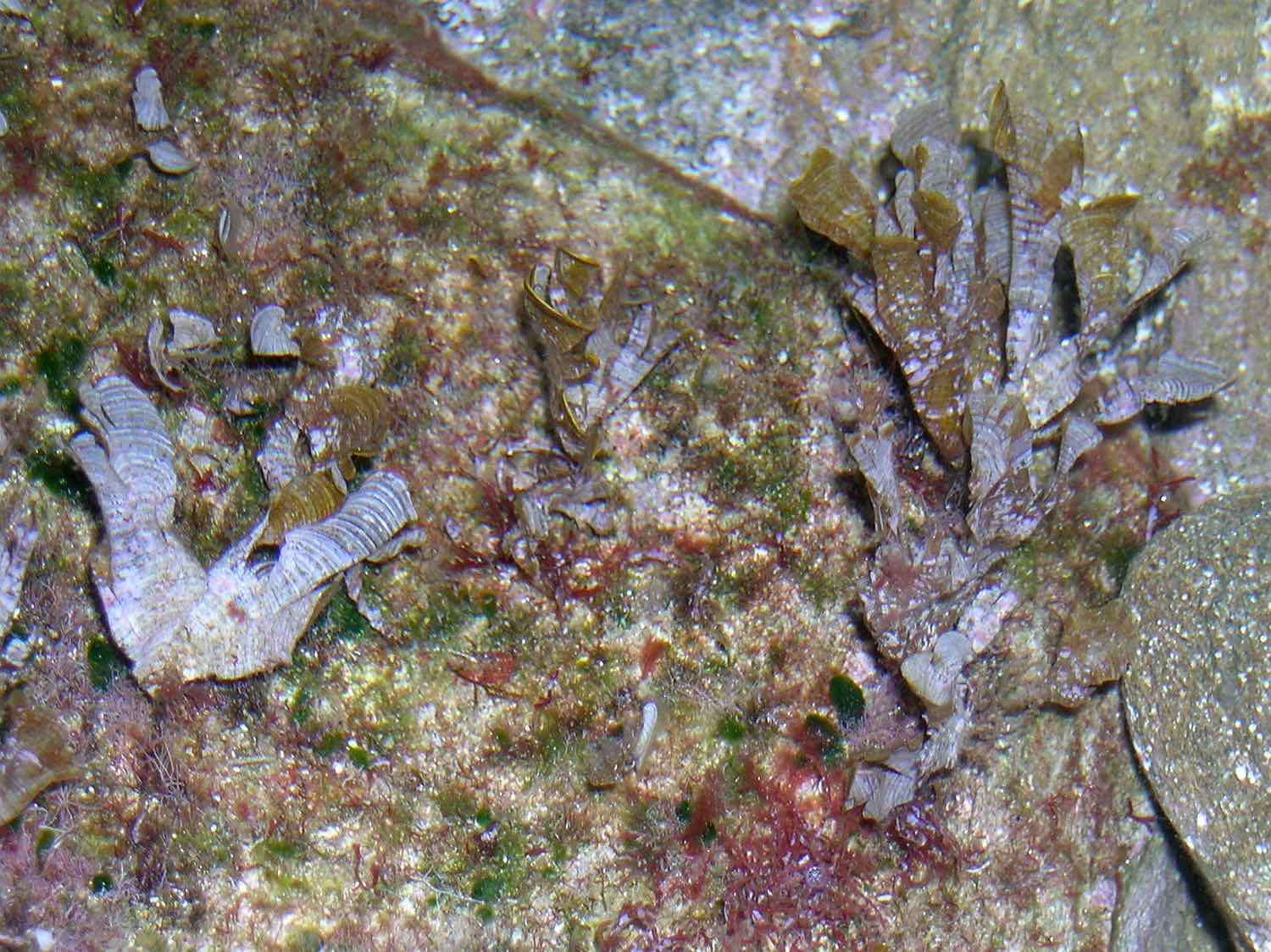
The thallus of this species is irregularly divided into larger and smaller sections, which always have a broad, rounded end. It shows clearly visible transverse bands.
Peacock’s tail, Padina pavonica, L.
common in shallow water, especially on slate
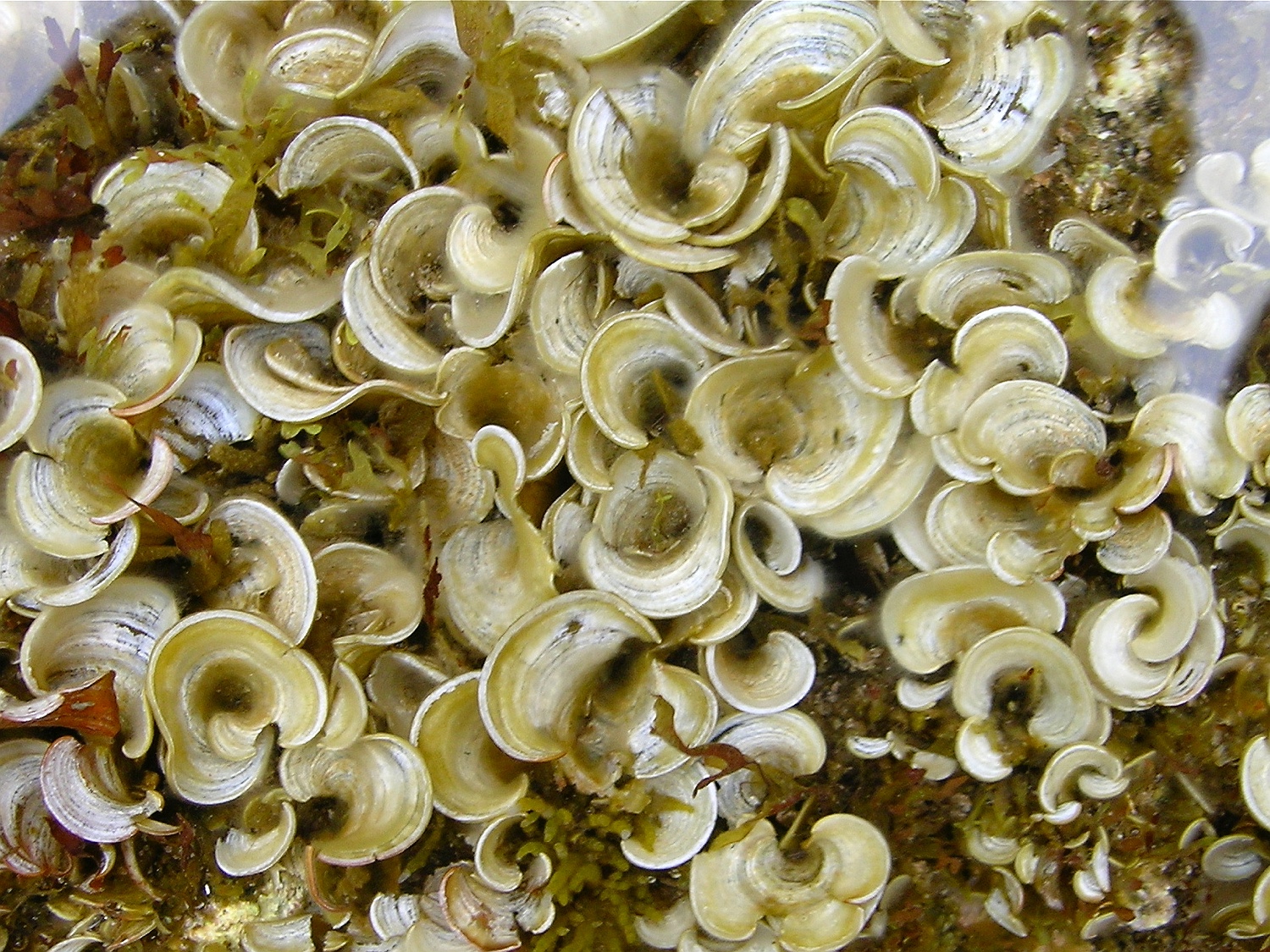
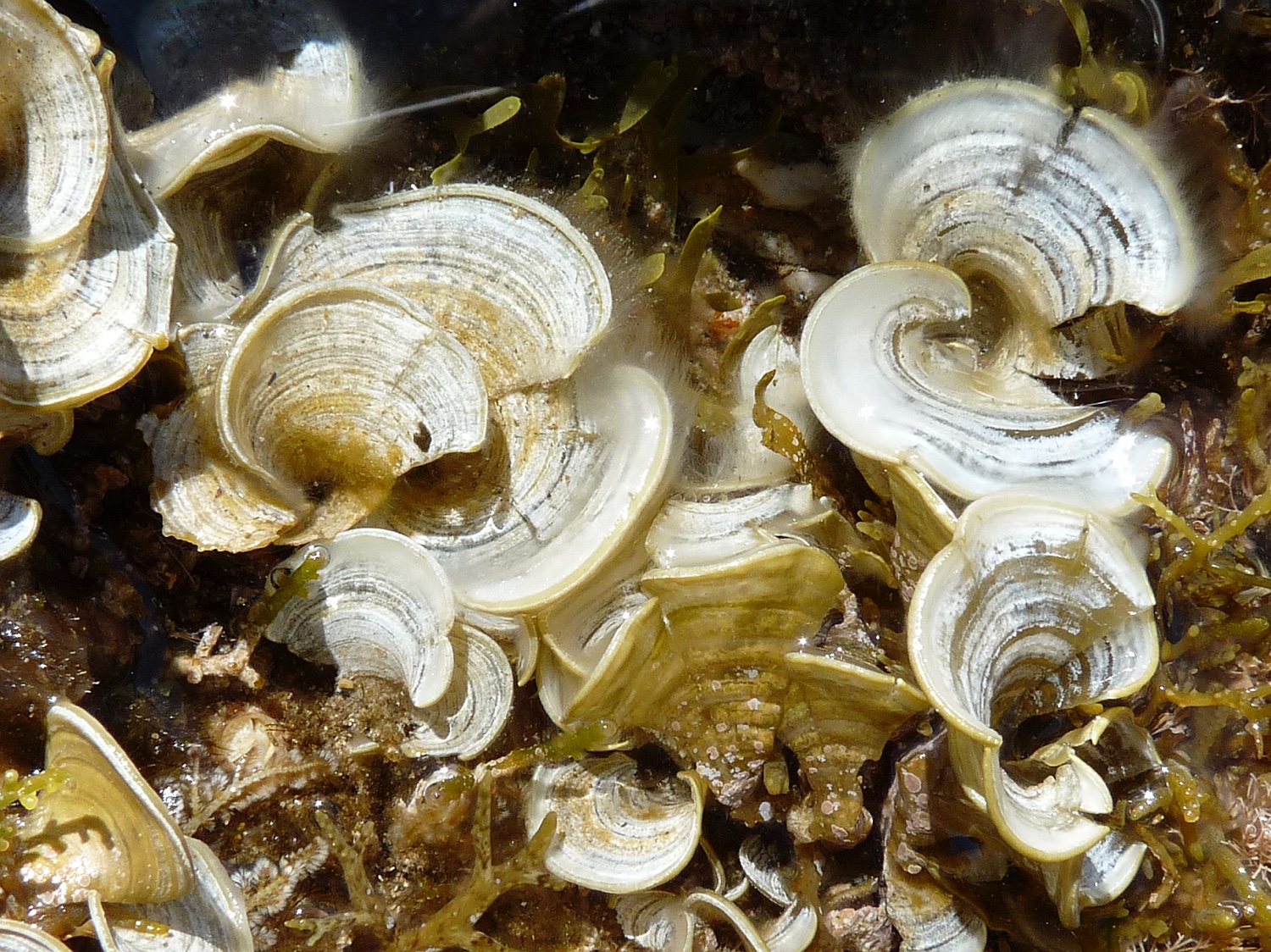
The unmistakable Peacock’s tail is one of the common brown algae in our region.
Stypopodium zonale ?, Papenfuss
rare, inconspicuous and small
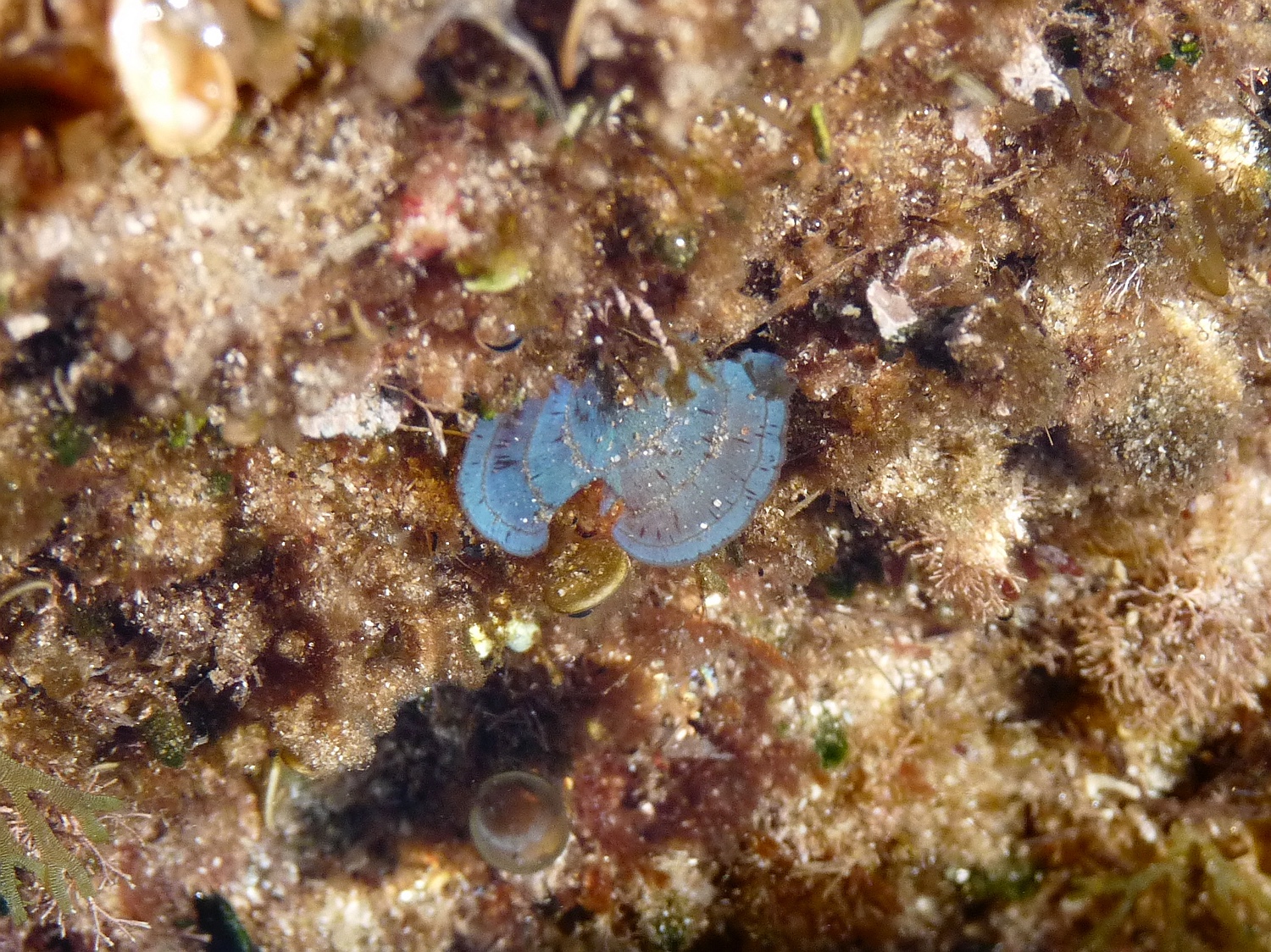
This very small alga forms a thin, fan-shaped thallus. It shows a very strong blue-green iridescence.
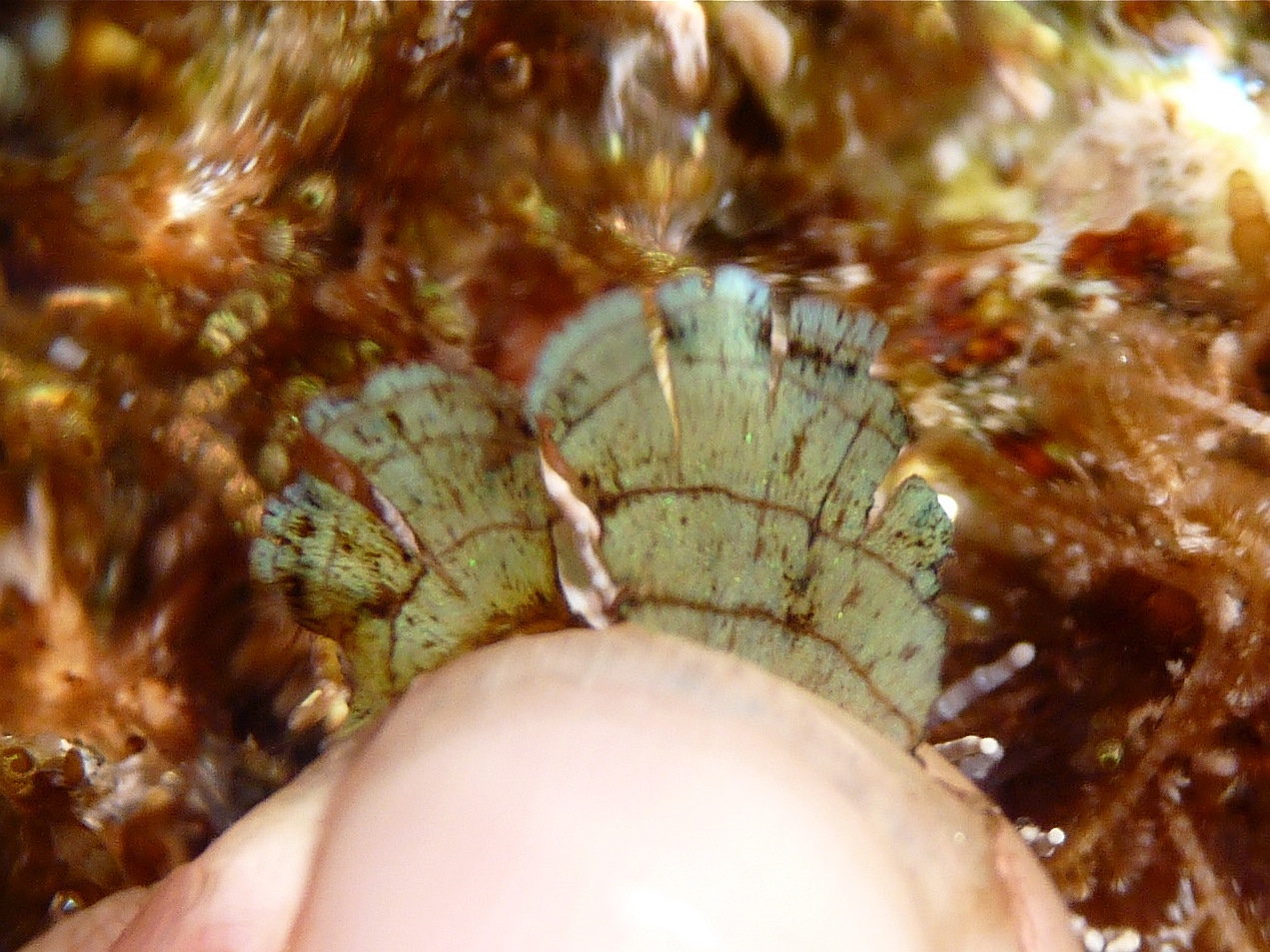
Here you can see the fine transverse bands on the thallus.
Cystoseira
very common in the infralittoral zone from the waterline downwards
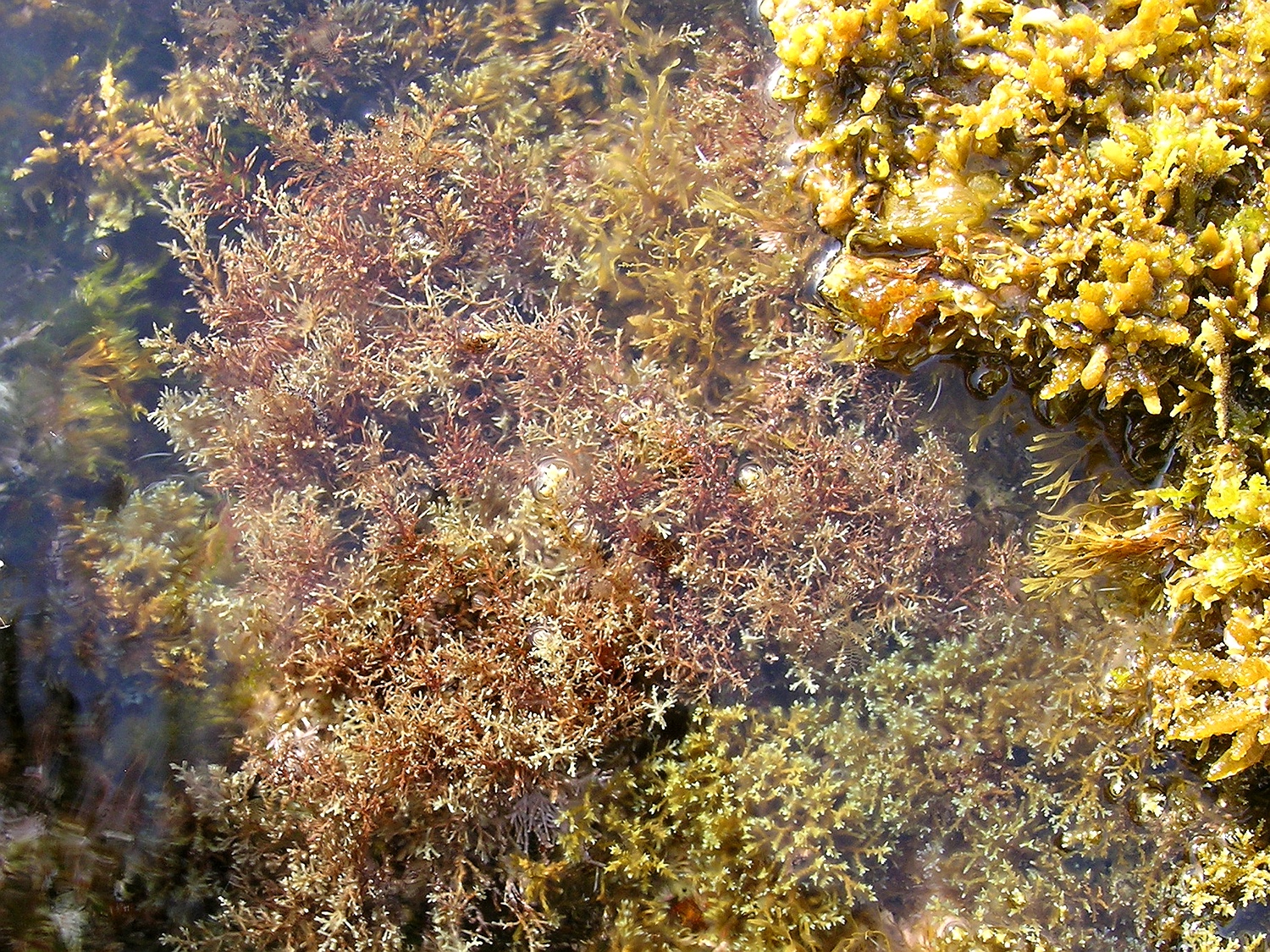
The genus Cystoseira is particularly typical of the Mediterranean region. Most species are difficult to tell apart.
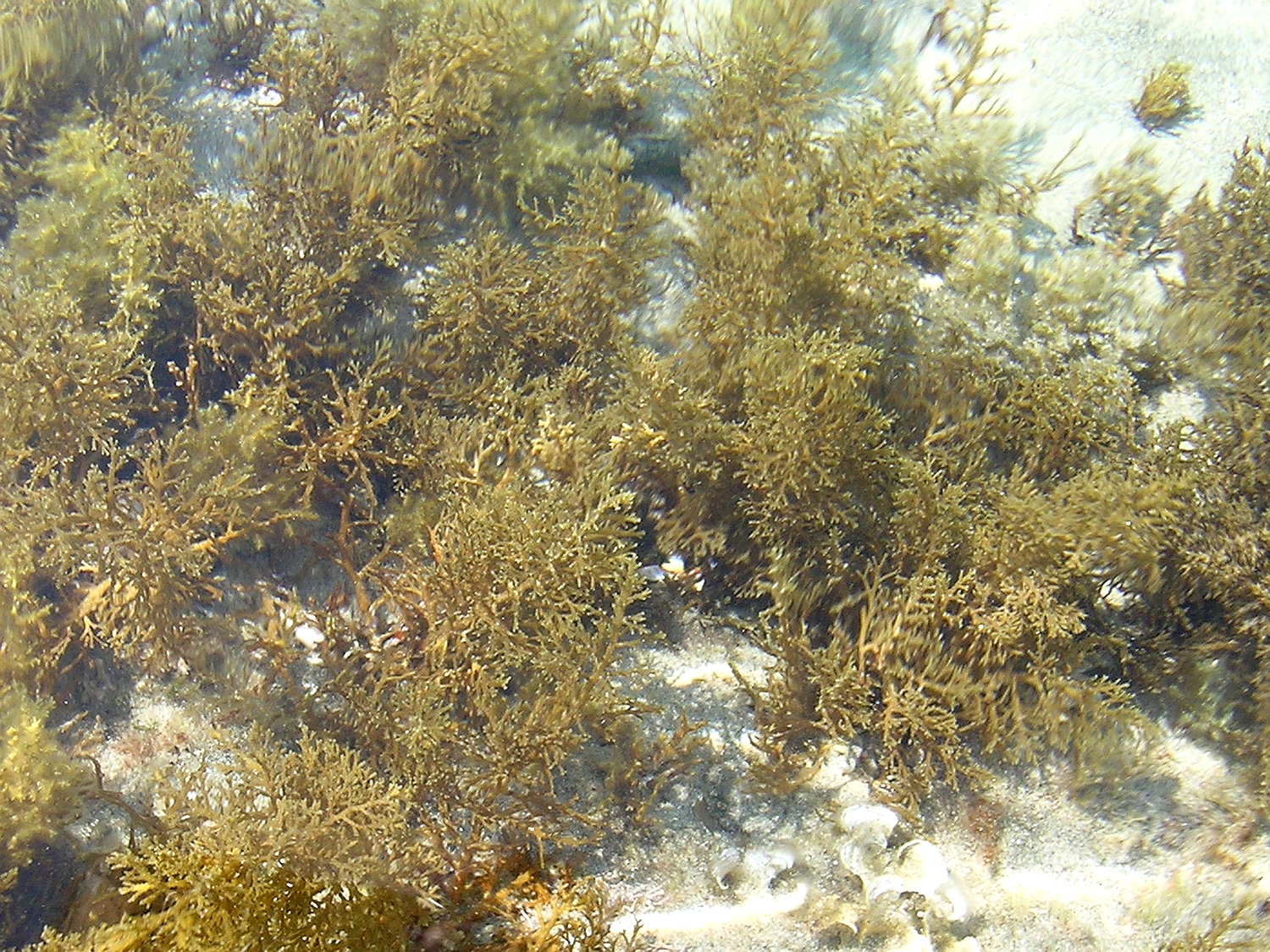
The species of Cystoseira have round stems, from which many branched fronds emerge, often bearing small pneumatocysts (air filled swim bodies) or spines.
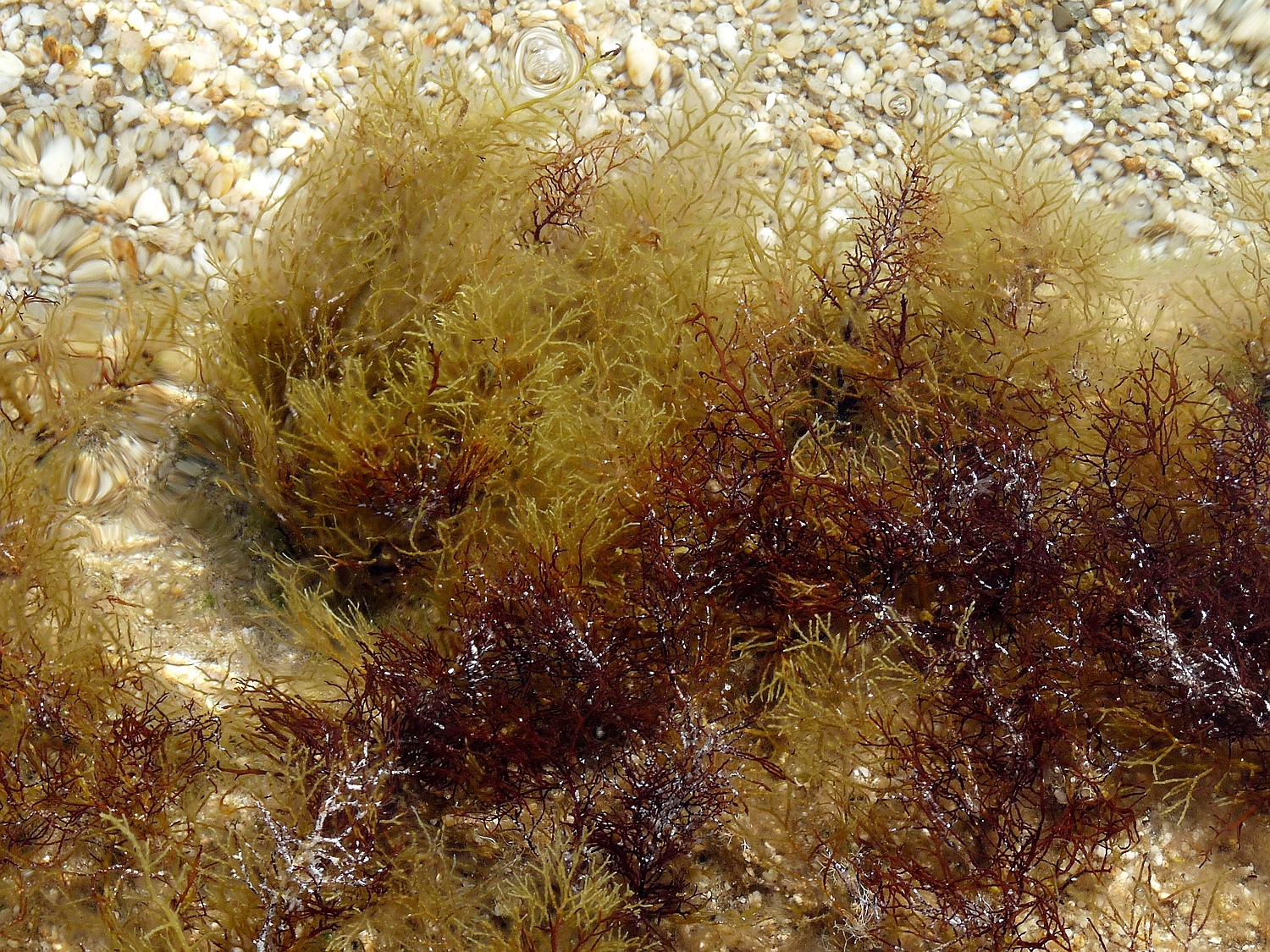
Some species are finely branched, such as the one pictured here.
Identification of the species is not easy. Here an attempt:
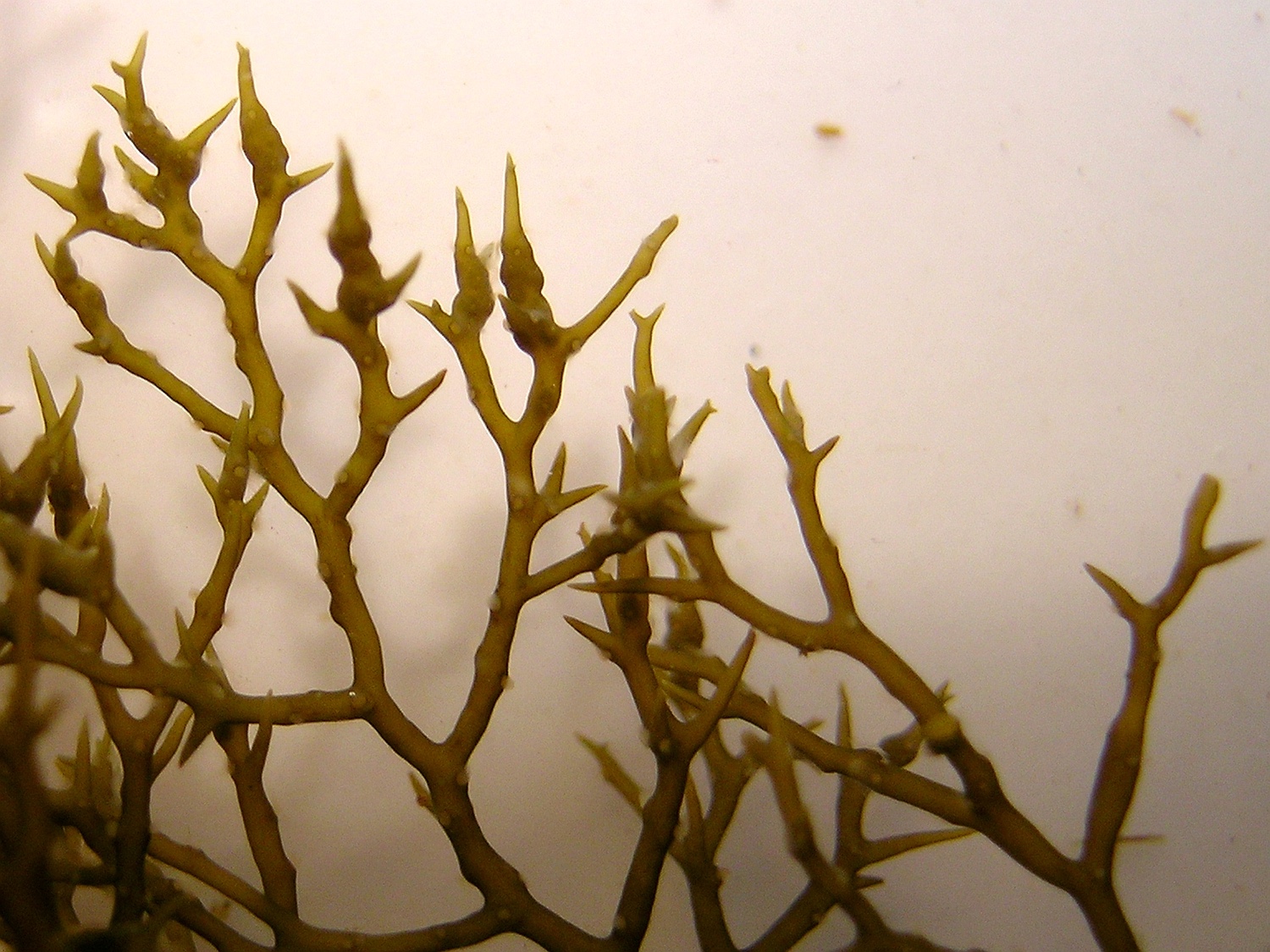
Cystoseira abies-marina has no pneumatocysts, but sawtooth-like spines.
Cystoseira barbata has no spines, but slightly inflated pneumatocysts arranged in chains.
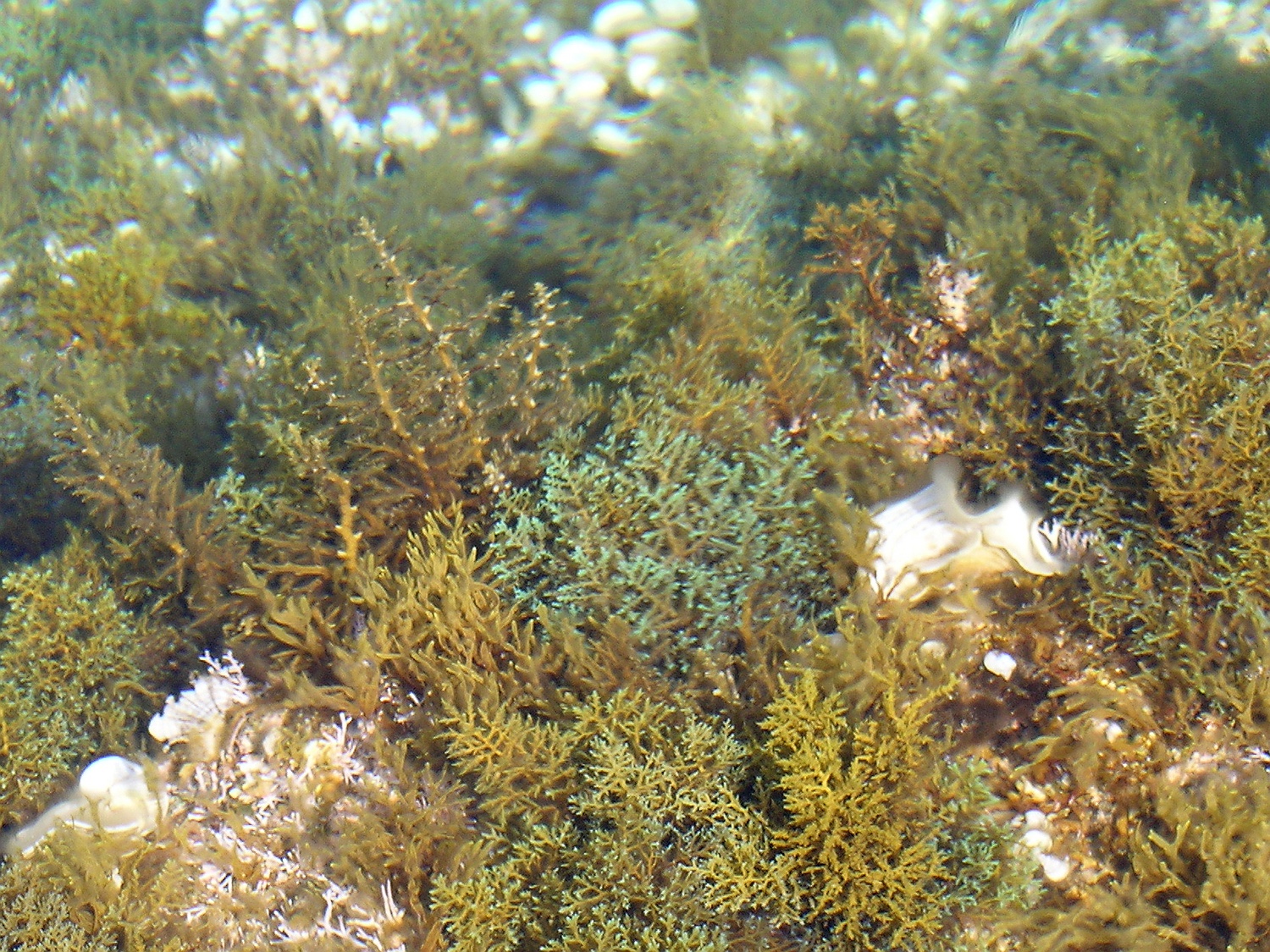
Cystoseira mediterranea (middle) shows a greenish iridescence.
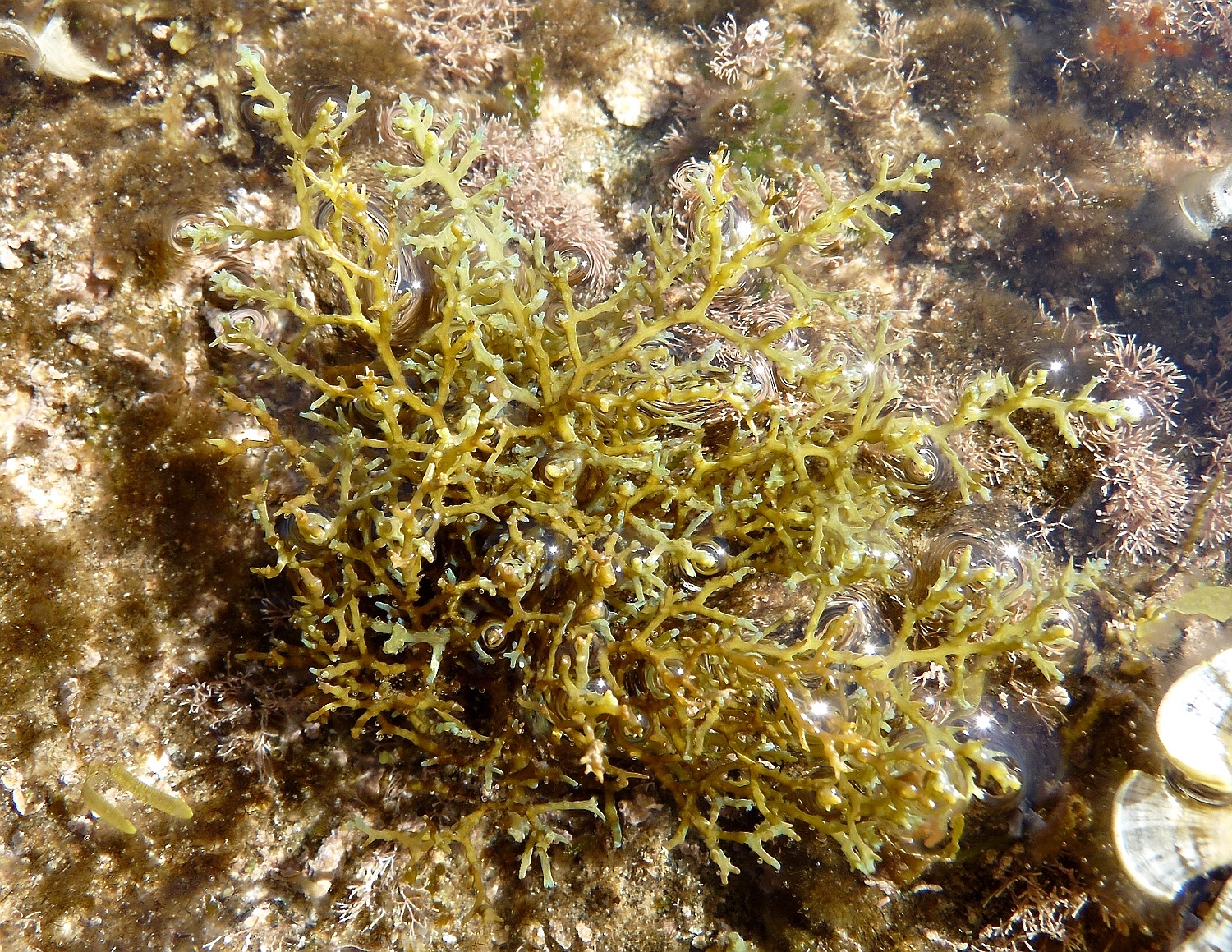
This species is supposed to have small thorns clustered densely at the ends of the branches; however, these are missing here and the branching is quite sparse, making identification uncertain.
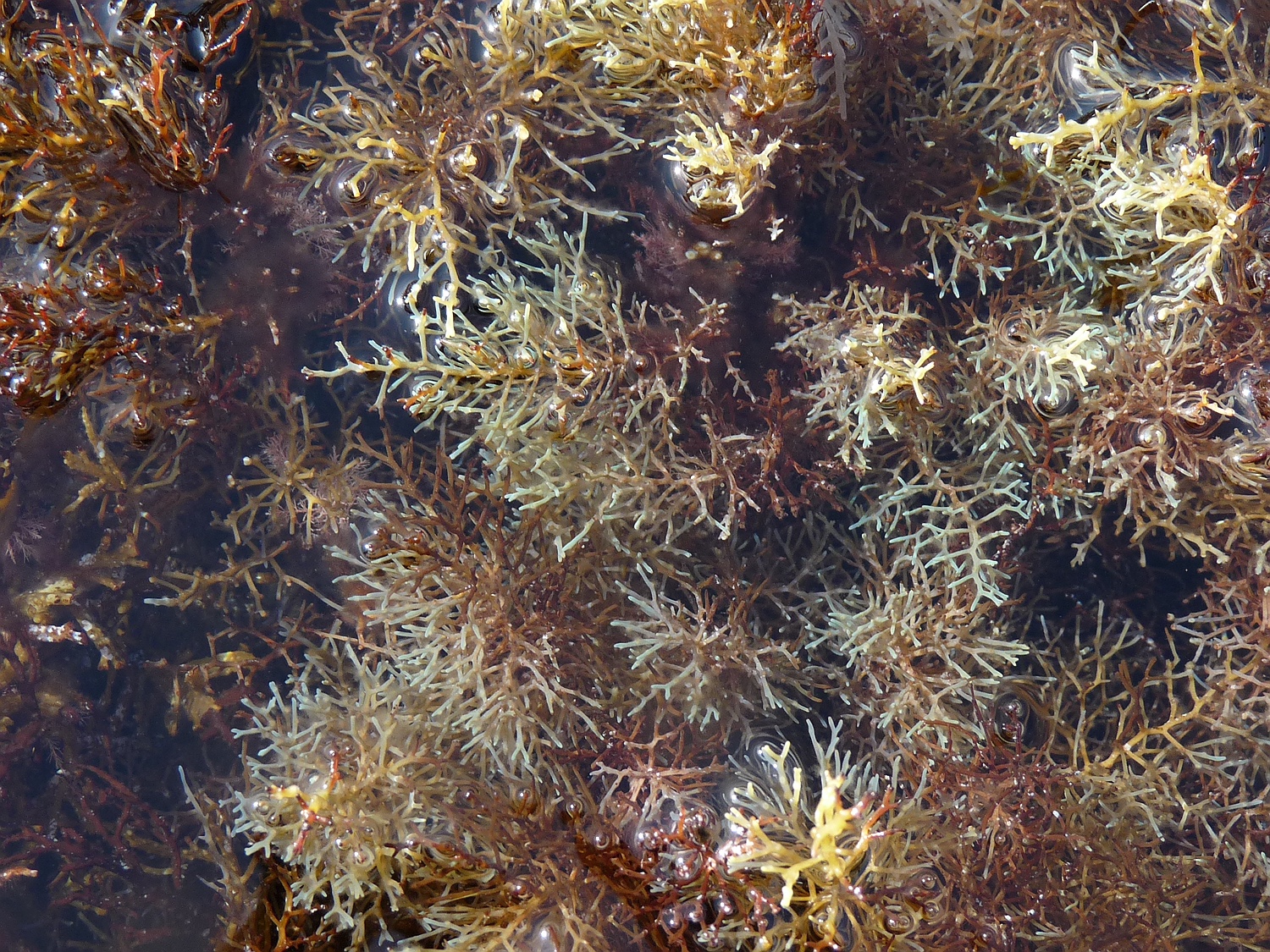
Here is a specimen with finer branches; possibly a different species.
Cystoseira compressa, Gerloff & Nizamuddin
Unlike other species, Cystoseira compressa occurs primarily in the eulittoral zone, where it is very common.
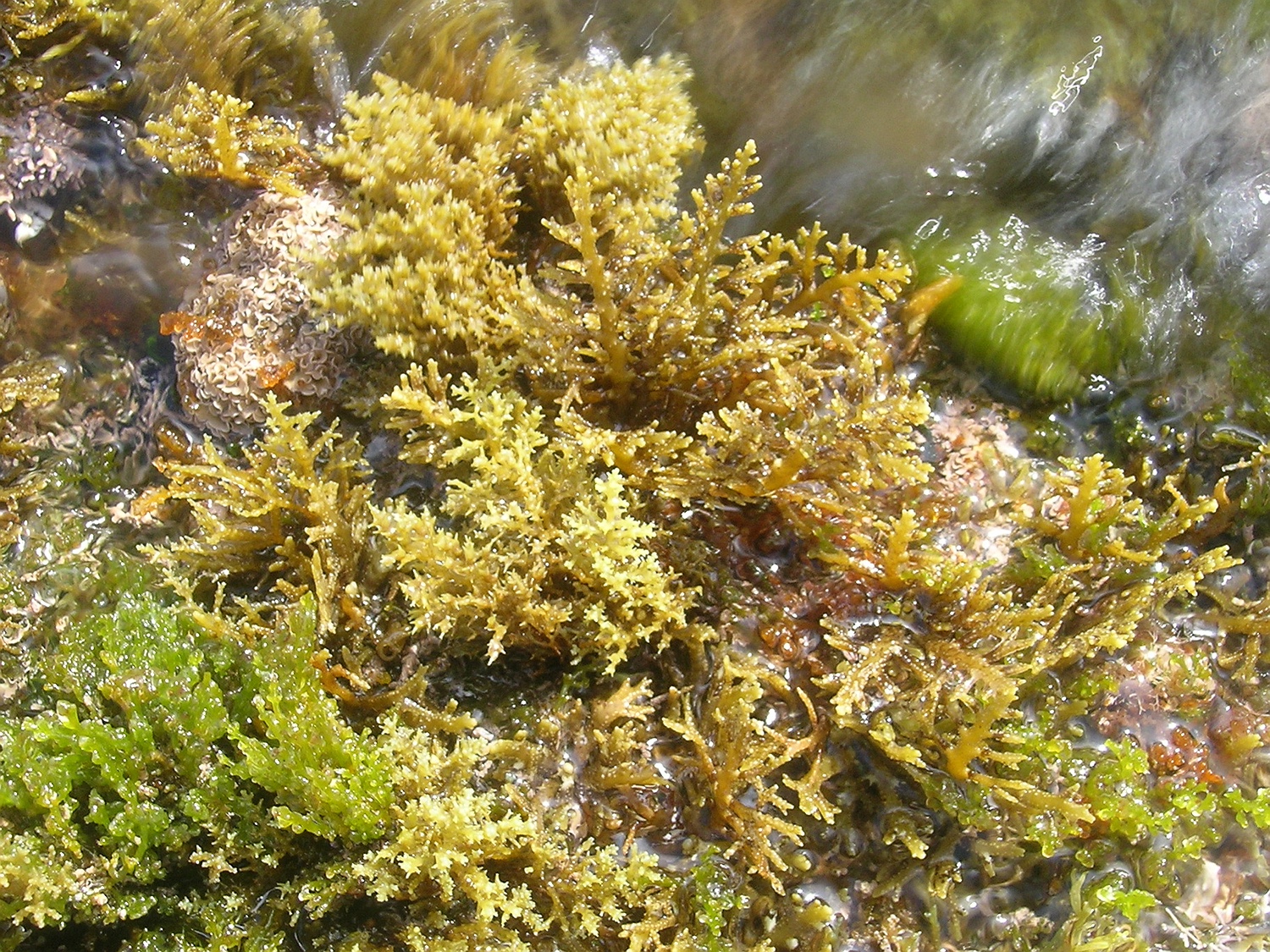
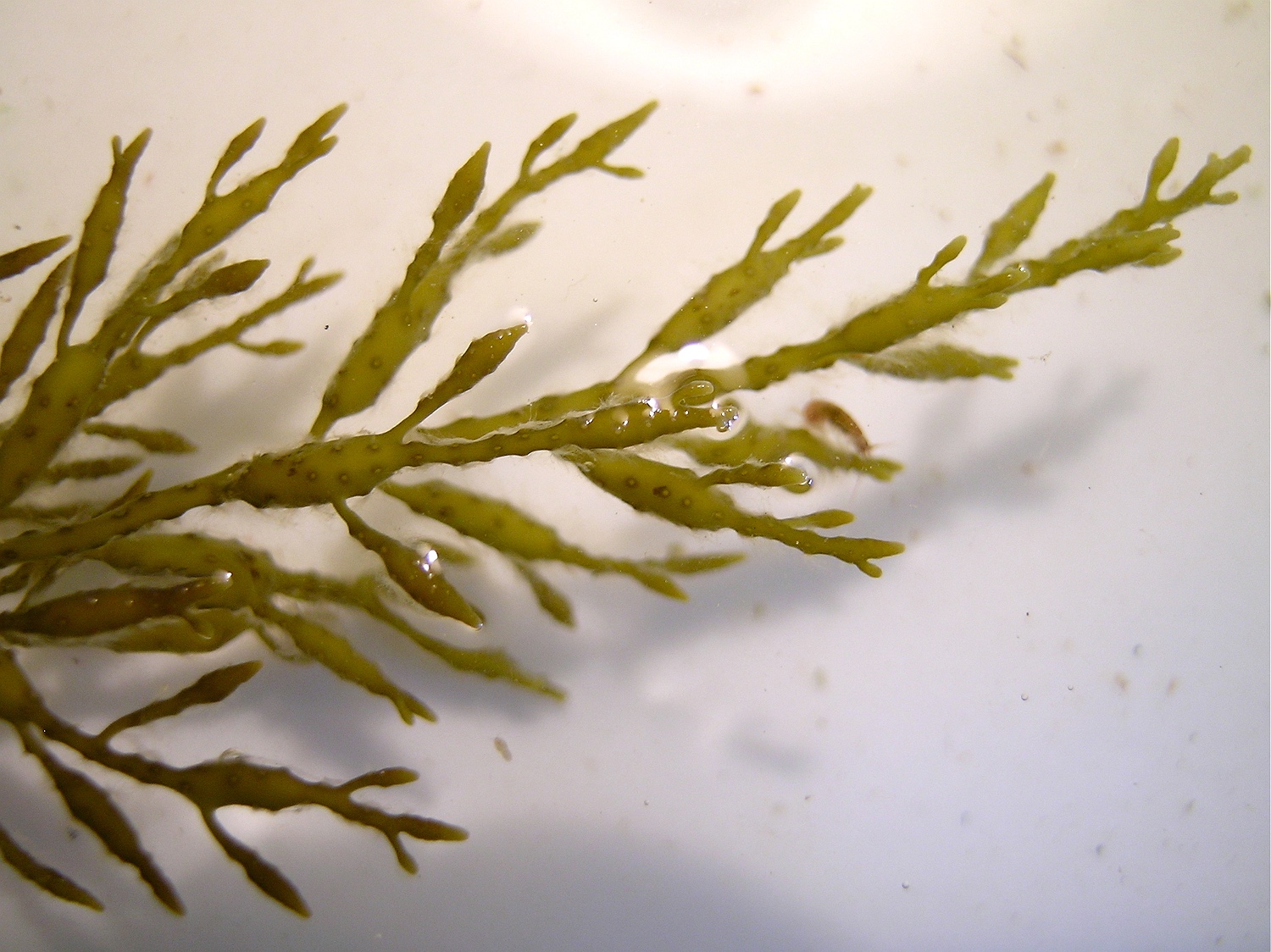
Cystoseira compressa differs from other species in its flat and branched thalli. It has neither pneumatocysts nor spines.
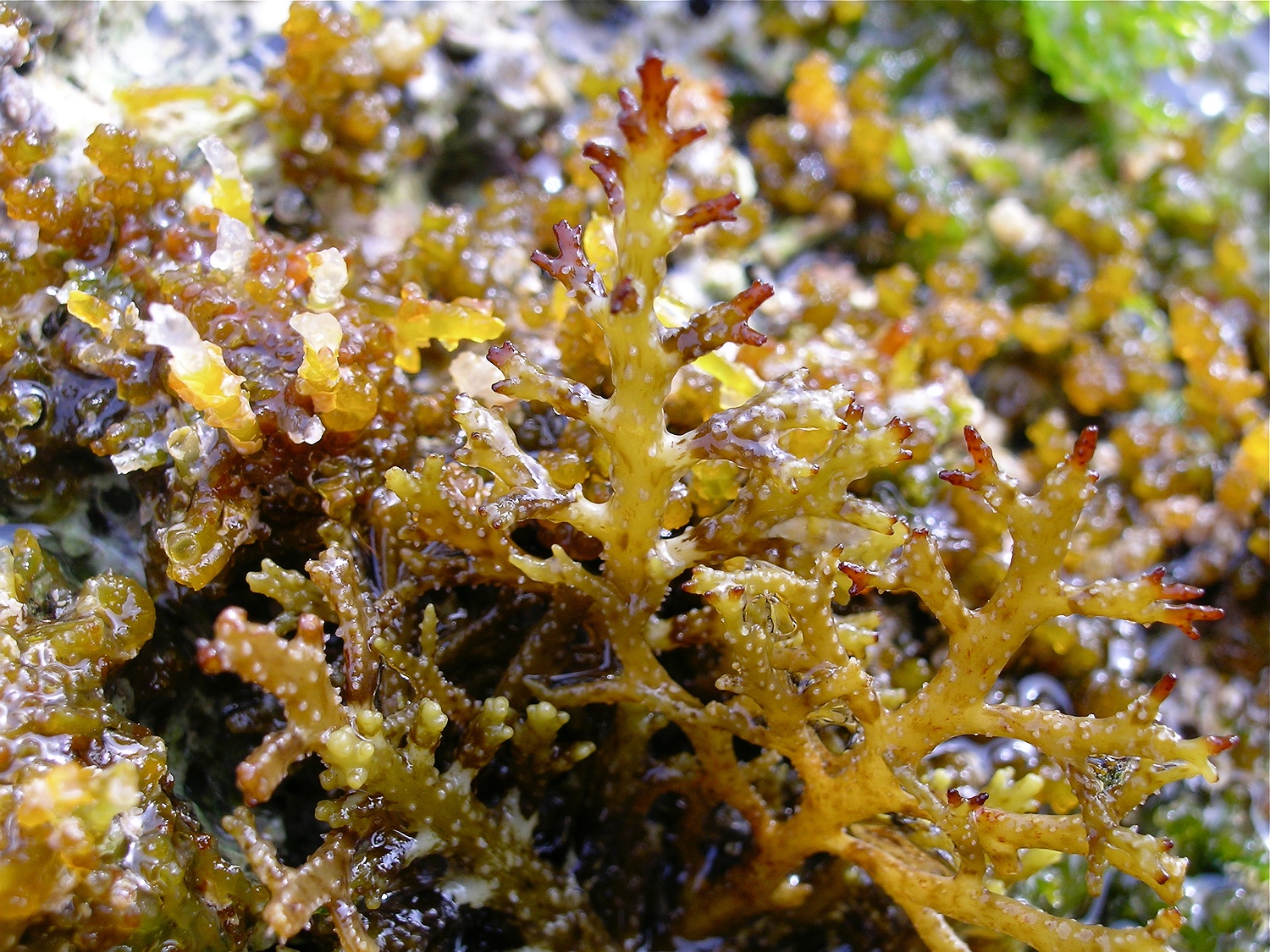
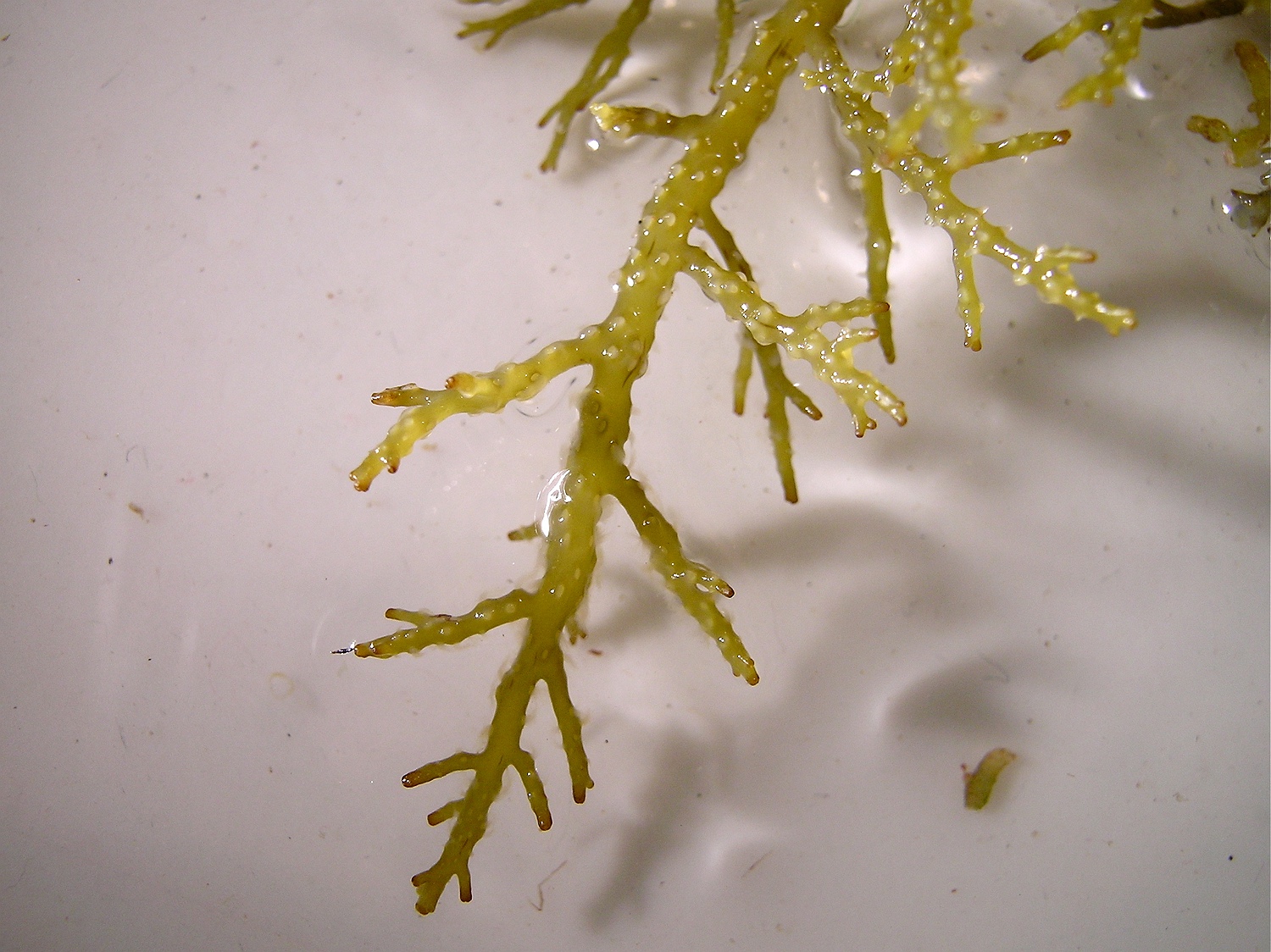
Numerous white dots (spore-forming zones?) sit on the thallus.
unidentified species
rare, on marble in the eulittoral
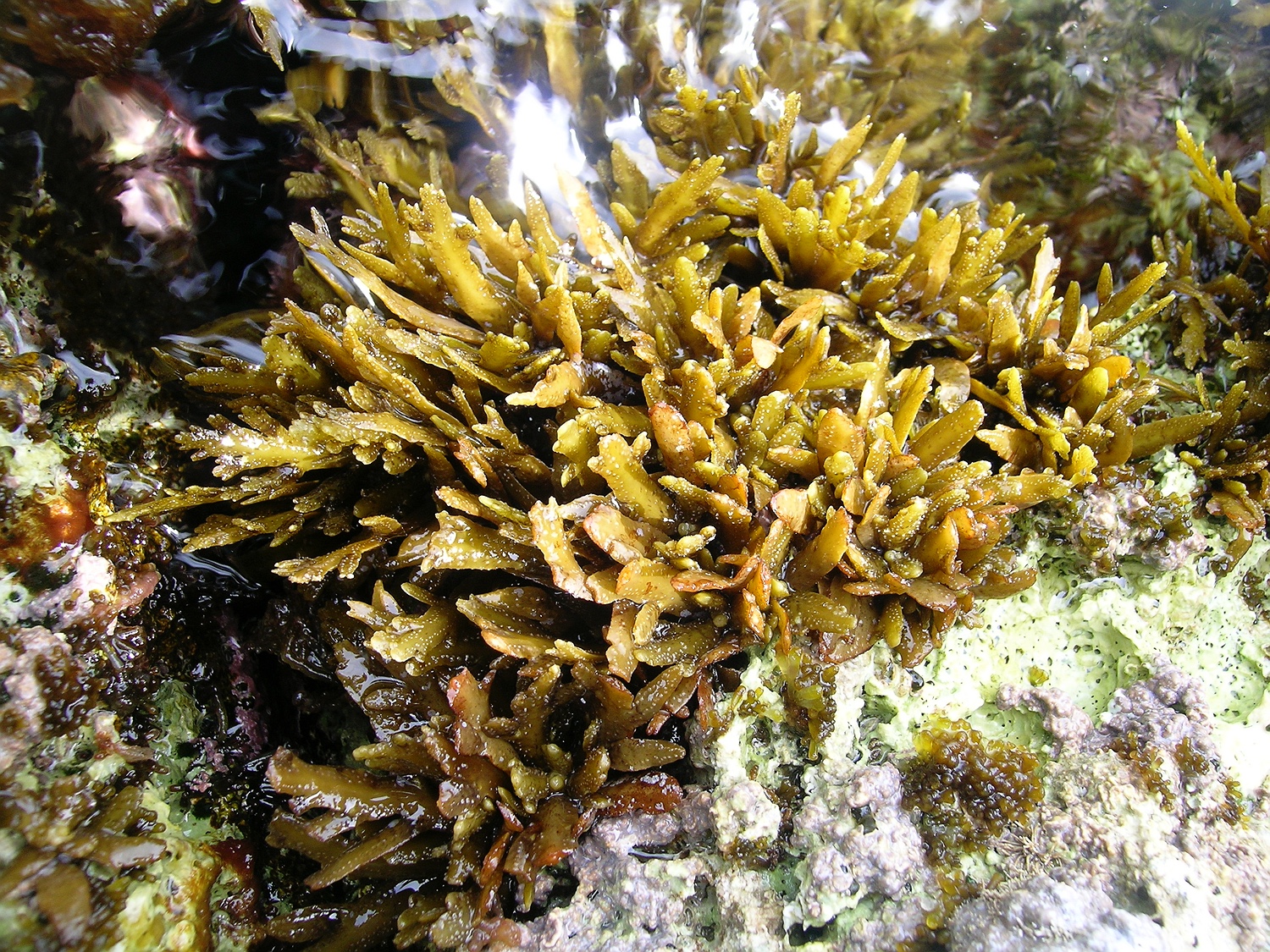
This stiff alga with short, strong, ribbon-shaped leaves is rather rare in our region. It occurs close to the waterline on marble.
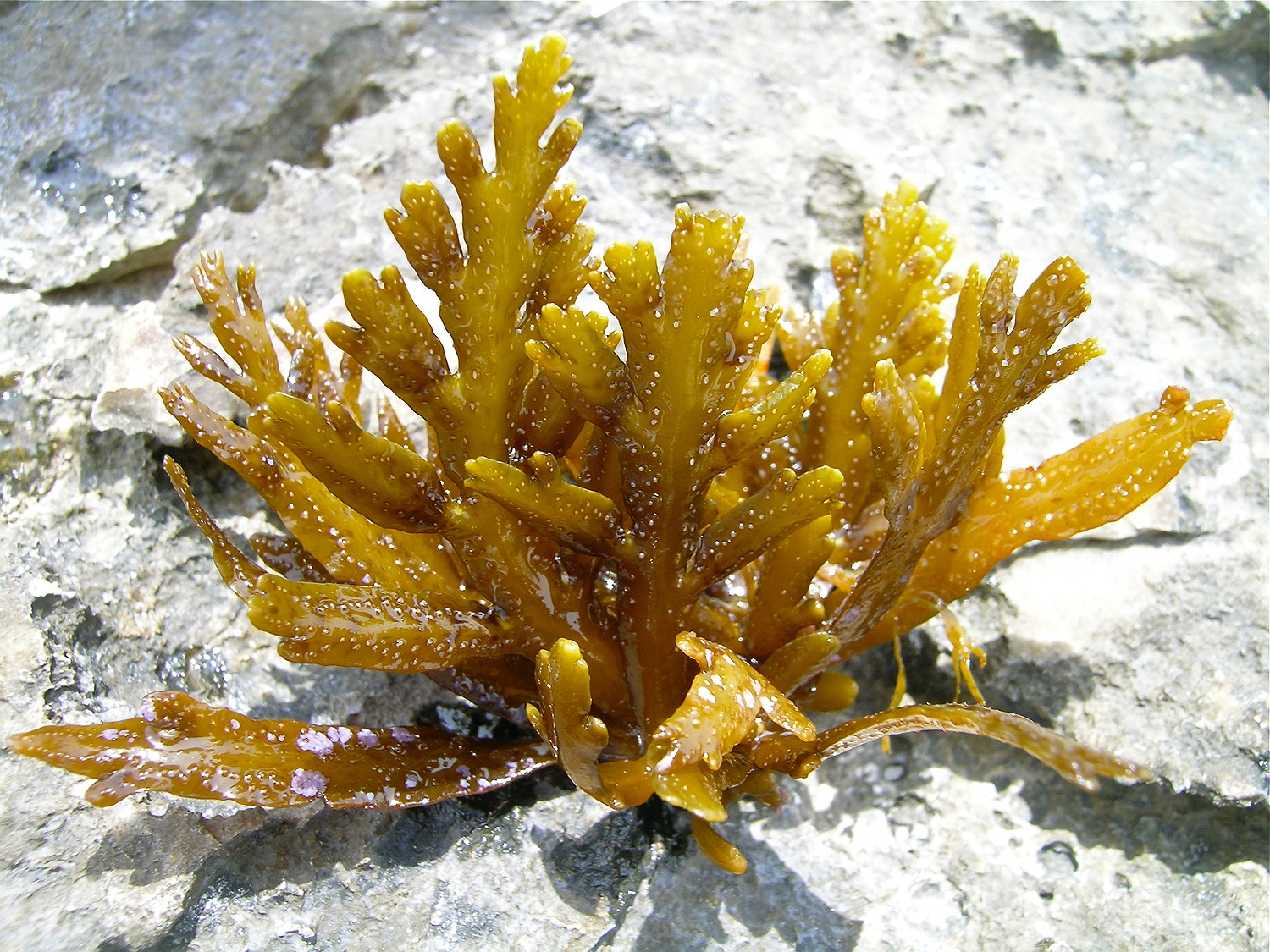
At first glance, the species resembles a Fucus, but it grows upright, is very stiff and has only an indistinct, broad midrib; the pneumatocysts typical of this genus are also missing.
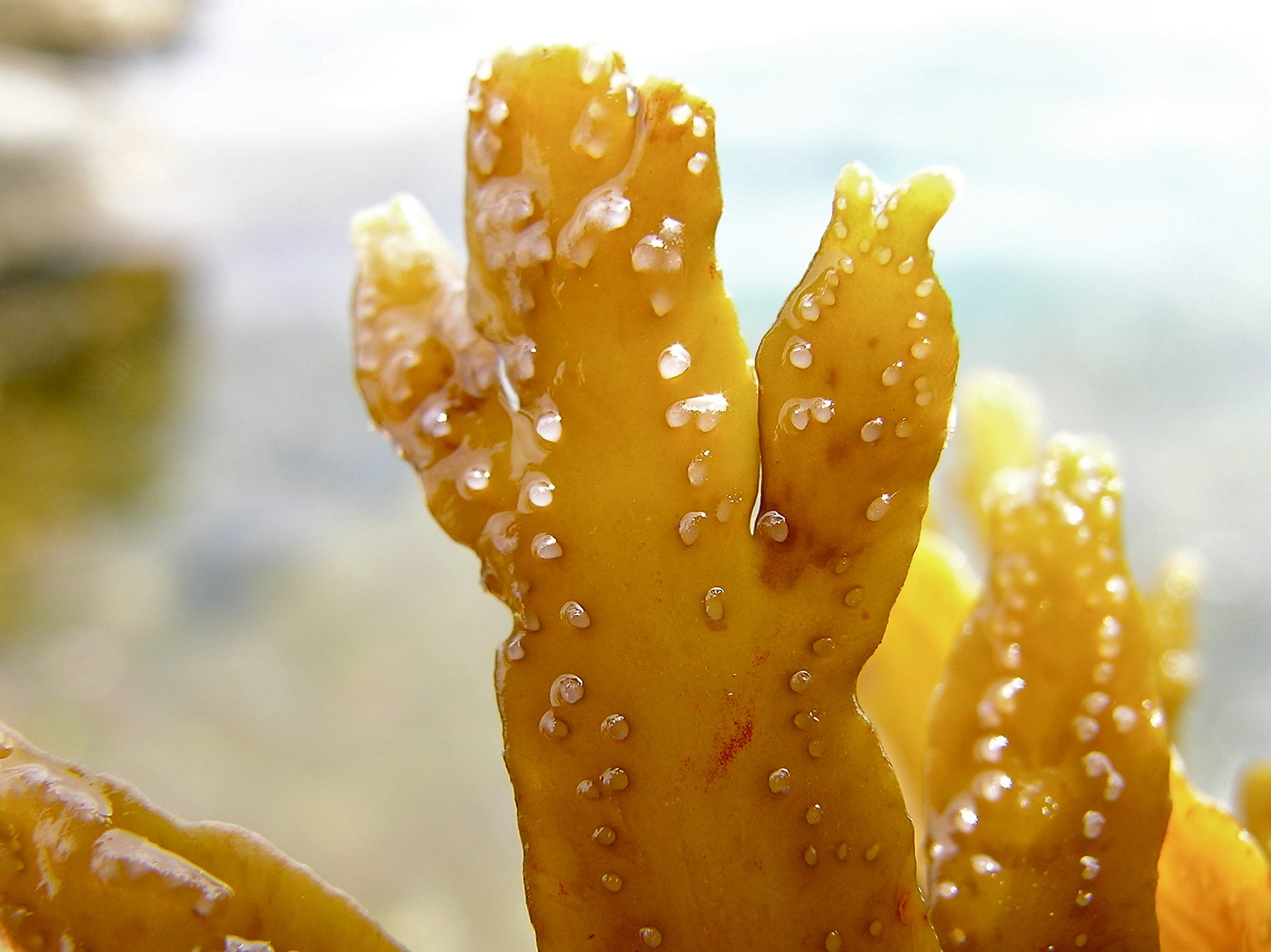
The smooth leaves are covered with many small ‘bubbles’ which probably produce the spores.
Sporochnus pedunculatus ?, C. Agardh
in deeper water, often washed ashore at the beach
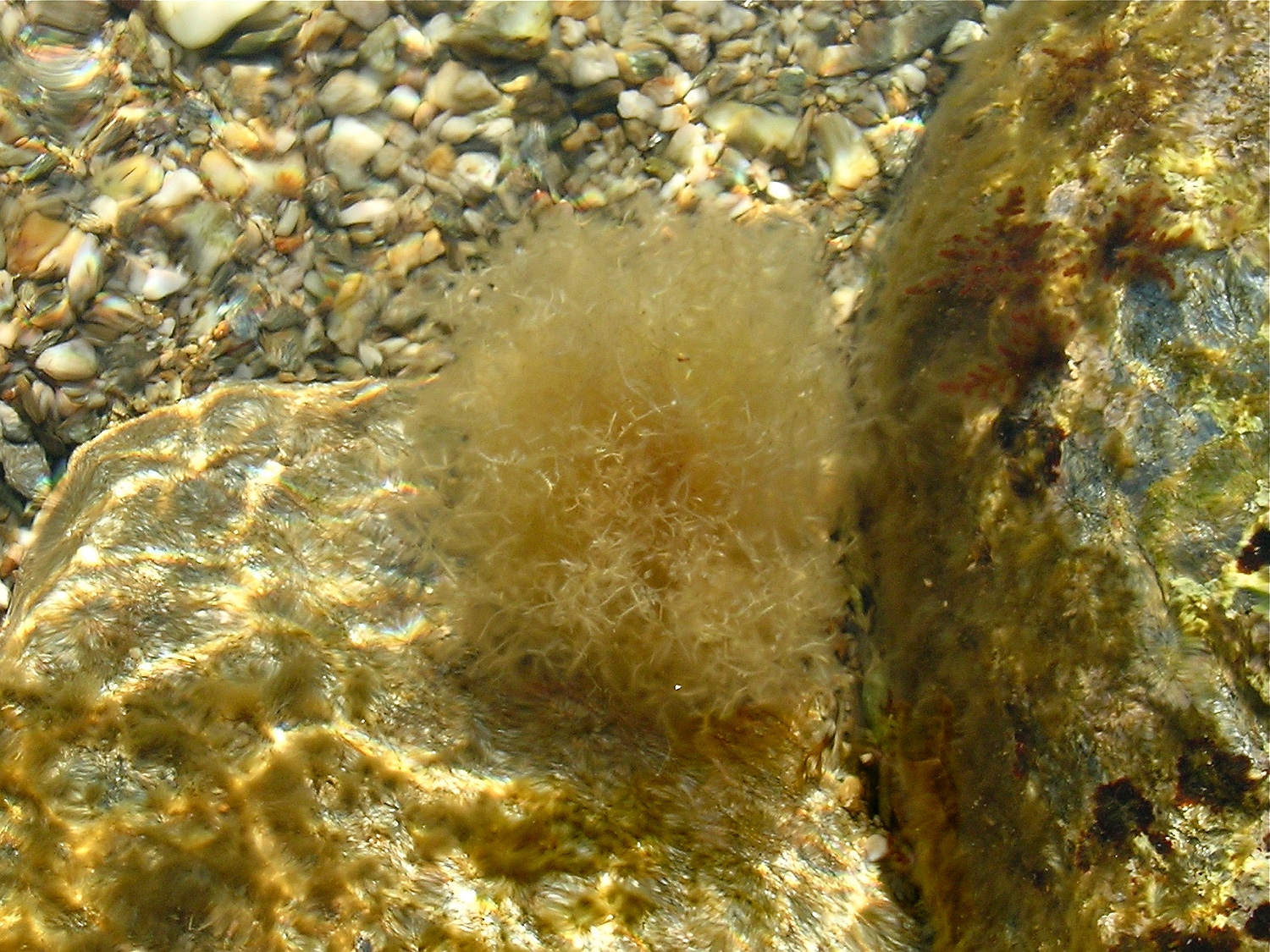
This species is particularly delicate and fine-threaded; when floating in water, it takes on a somewhat spherical shape.
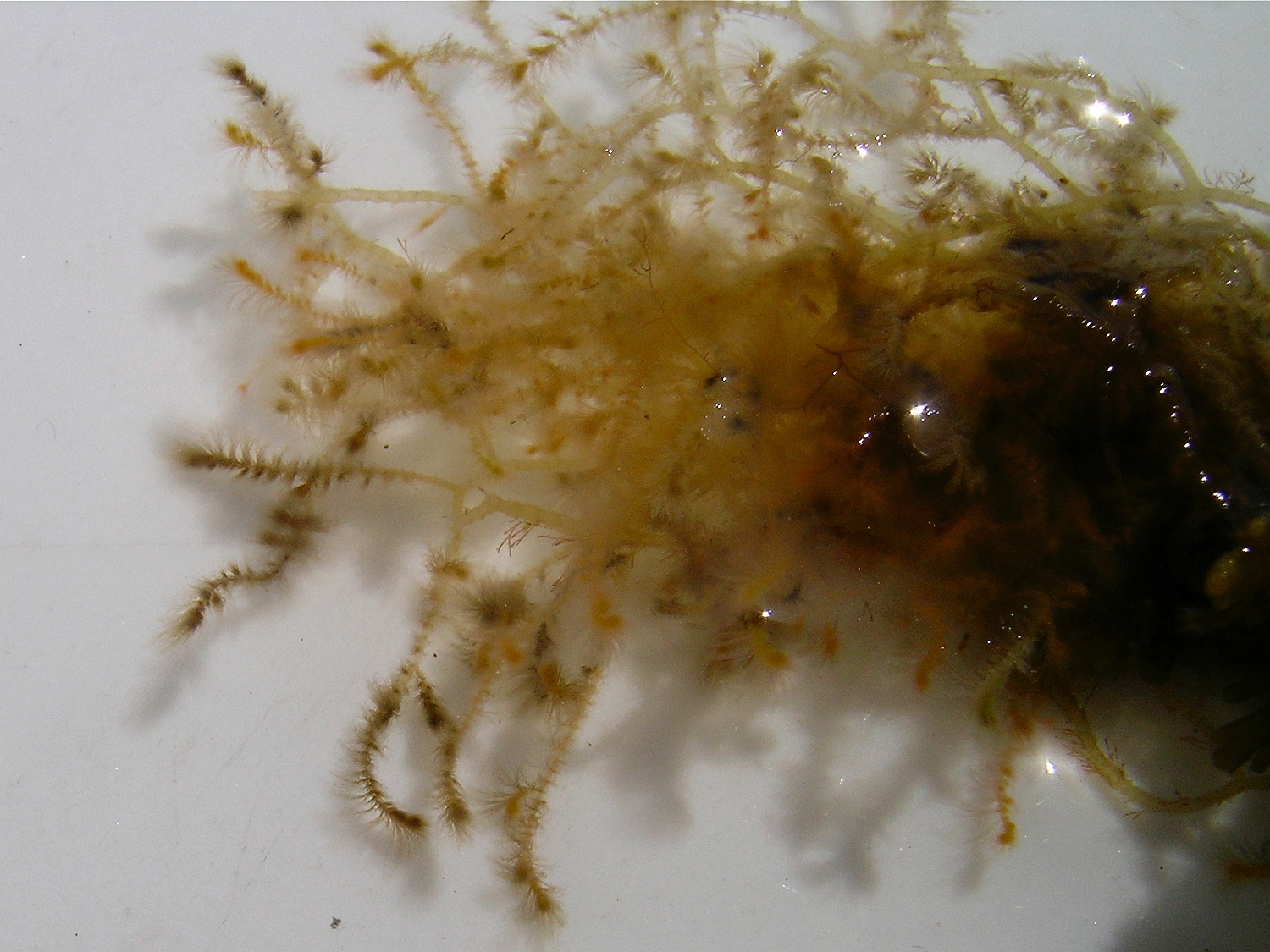
Its structure resembles that of the red algae Wrangelia with its tufted side branches, but it is significantly more delicate.
continue:
see also: