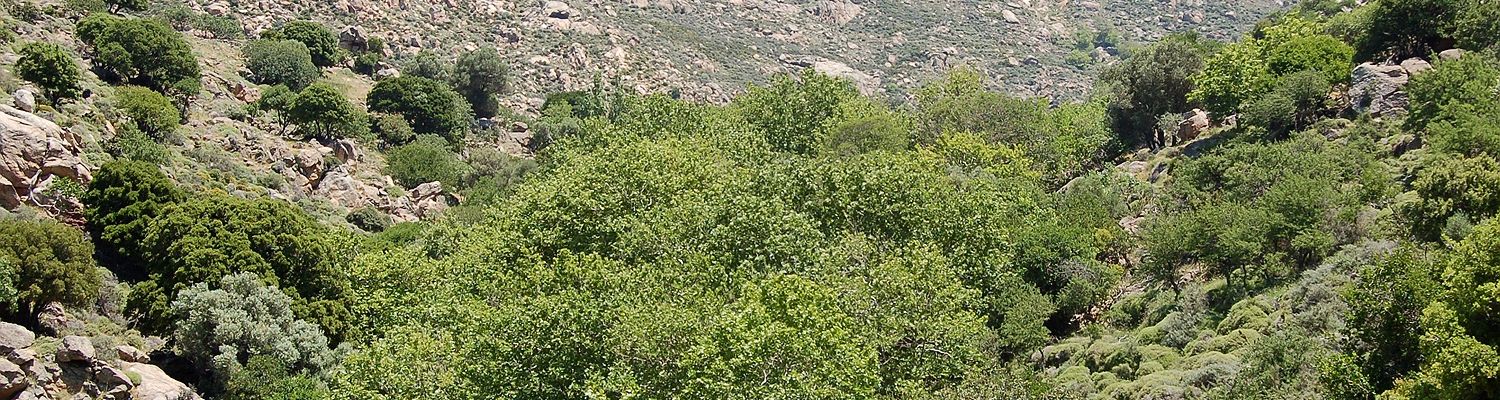
– ein verwunschener Gebirgsbach und Erdbeerbäume
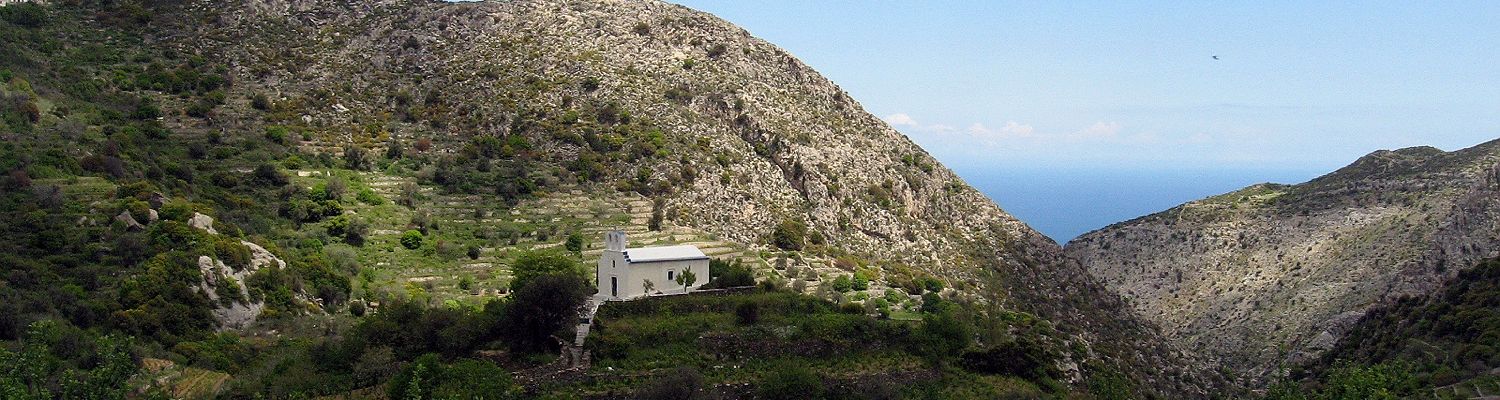
Skepóni heißt die Gegend oberhalb des großen Stausees nördlich der Chóra, am westlichen Abhang des Kóronos-Berges. Den Spaziergang zur verlassenen Siedlung haben wir schon beschrieben; um dorthin zu gelangen, muss man an der Weggabelung oberhalb des Hirtenhofes nach links abbiegen und den nördlichen Flussarm überqueren. Die rechte Straße führt in steilen Biegungen weiter den Berg hinauf bis zu einem umzäunten, noch...
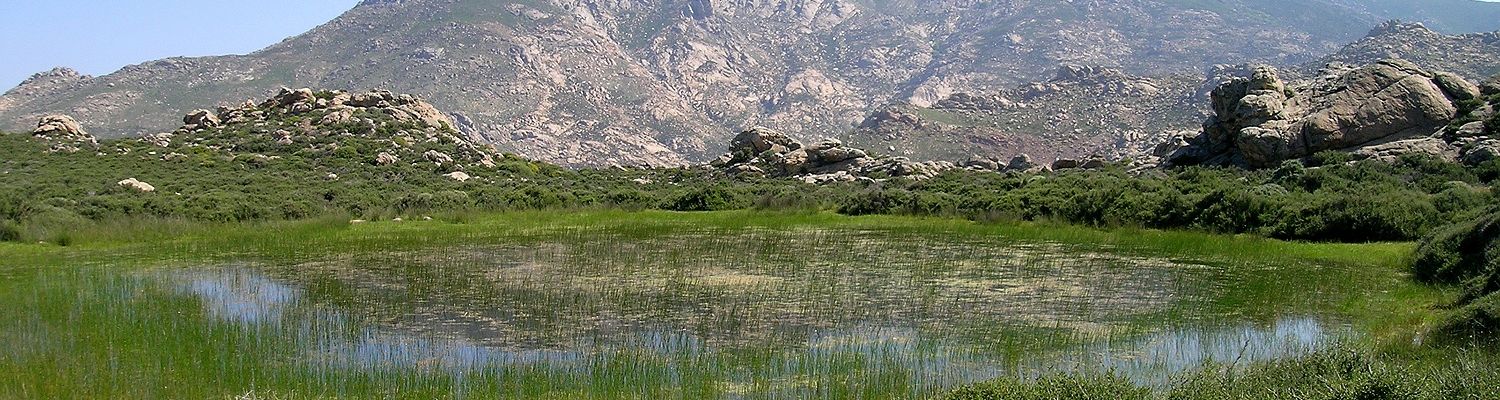
Ein Tümpel bei Kinidaros
Bei uns im östlichen Teil der Insel bestehen die Berge hauptsächlich aus Marmor und verwandten Gesteinen. Anders in Zentral-Naxos: Hier ist die Wurzel des Gebirges aus Granit (bzw. Migmatit) und Gneis freigelegt. Ende Mai machten wir einen Spaziergang durch die Gneislandschaft in der Nähe des Marmorwerks an der Straße von Kinídaros nach Moní: Wir wollten einen Teich suchen, den wir als blaue glänzende Wasserfläche vom Gipfel des Kóronos-Berges ausgemacht hatten.
...
Bei Atsipapi
Wenn man vom Dorf Kóronos aus Richtung (Süd-)Osten fährt, gelangt man auf eine Hochebene mit aufgegebenen Feldern und Olivenhainen. Hier liegt die kleine, schon lange verlassene Siedlung Atsipápi mit ihren malerischen Steinhäusern und einer von hohen Bäumen beschatteten Quelle.
Blick über die Hochfläche mit aufgegebenen Getreidefeldern; im Hintergrund das Argokili
In der Nähe von Atsipápi wird auf einer kleinen Anhöhe eine große Wallfahrtskirche gebaut, der Panagía...
Mauervegetation bei Koronos
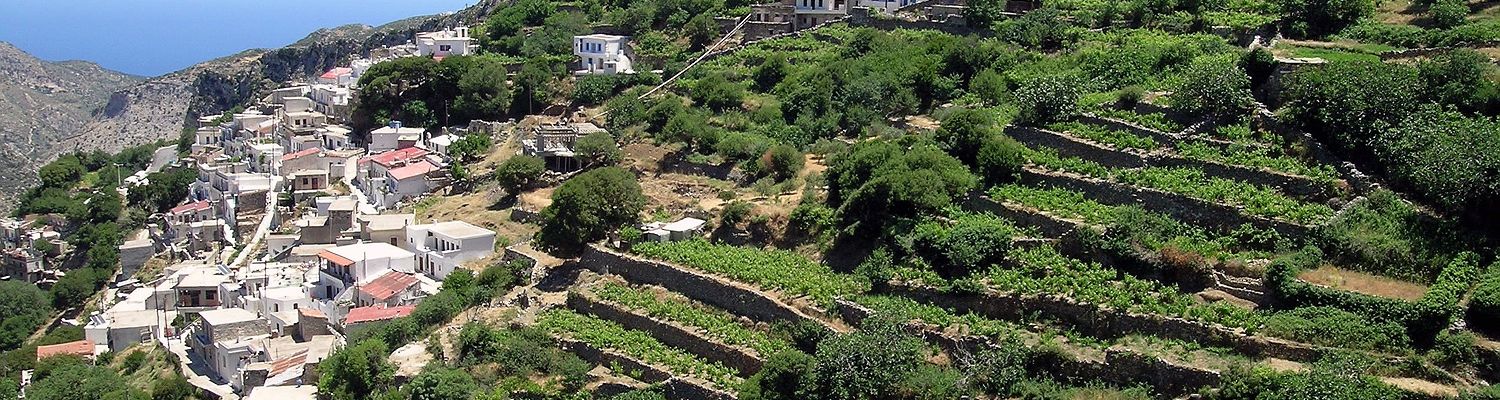
Auf Naxos stehen außer im westlichen Bereich nur an wenigen Stellen ebene Flächen zur Verfügung, die für eine großflächigere Kultivation geeignet sind. In der Bergregion mussten die Bauern für den Anbau von Pflanzen, die mehr Erde benötigen, wie vor allem Gemüse und Obstbäume sowie Wein, die Hänge terrassieren. Die Terrassen schützen nicht nur die oft spärliche Erde vor dem Wegschwemmen durch die Winterregen, sondern ermöglichen auch eine gleichmäßige Bewässerung. Zum Bau...
Von Koronos nach Skado
Kóronos und Skadó sind zwei typische, urtümliche Gebirgsdörfer von Naxos. Sie liegen am Rande eines der schönen, fruchtbaren Hochtäler der Gebirgsregion, nordöstlich des fast 1000 Meter hohen Gebirgrückens des Kóronos-Berges. Das Hochtal von Kóronos mündet nach Osten in ein steiles, karges, teilweise fast schluchtartiges Tal, das bei dem winzigen Hafenörtchen Liónas das Meer erreicht.
Unsere Wanderung beginnt am Pass, der nach Kóronos führt, der Pórta...
A stroll through the phrygana
If you love hiking and are interested in flowers, then the best time to come to Naxos is spring, from the end of March to the beginning of May (depending on the weather conditions). This is the peak flowering time for most plants: There are chrysanthema and daisies, poppies and bindweed, numerous varieties of clover and vetch and many more.
If you come to Naxos in April, you should not miss a walk through the phrygana, the dwarf shrub community that occurs in Azalás on...
Cape Stavros near Moutsouna
Cape Stavrós near Moutsoúna is the only major cape of the island of Naxos. It extends about one and a half kilometers into the sea. Our Holiday homes lie approximately two kilometers north of the cape. We have a magnificent view of its tip, which turns slightly northwards, across the bay of Azalas.
View of Agios Dimitris and the cape; in the background to the right lies Moutsouna.
The word “Azalas”, which is used for the beach next to the cape and the area...
The Circalittoral
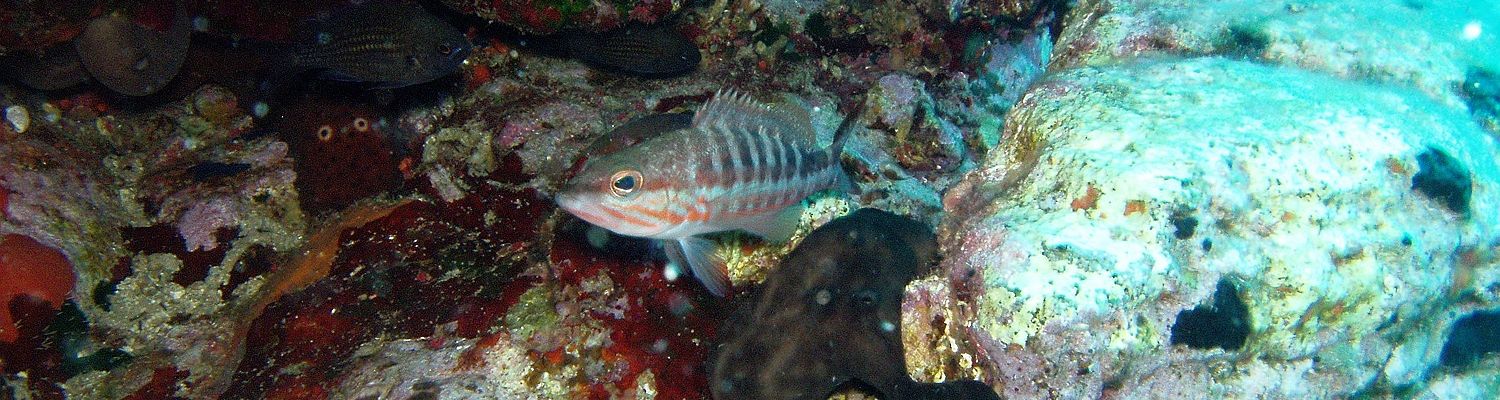
The circalittoral zone begins where the light becomes too weak for light-loving organisms (such as seagrass) to thrive, i.e. at depths of around 30 to 50 meters, or even 100 meters in very clear waters. On northern slopes and especially in caves, however, species of the circalittoral can also be found much closer to the surface.
I do not dive myself and only snorkel very rarely. All photos on this page were taken by Themos Bogiatsoglou, whom I would like to thank for...
The Infralittoral
The infralittoral zone begins at the lower waterline, which means that it encompasses the permanently submerged area of the coastal benthal. It extends down to the depth at which light-loving species such as seagrass and many types of algae can no longer thrive. Due to its large extent and the fact that its organisms are not exposed to drying out, the infralittoral is much richer in species than the zones above it. In terms of environmental conditions, the infralittoral...
The Eulittoral
The eulittoral is the tidal zone; it is defined as the area between the upper and lower waterlines (mean high and low waterlines). In areas with strong tides, especially in mudflats, the eulittoral is extremely extensive, teeming with life and playing an important role in the ecosystem.
In the Mediterranean, on the other hand, the intertidal zone is limited to a narrow zone of often only a few centimeters due to the low tidal range. Here, the eulittoral is the zone that is...
Life between the algae
Benthic algae, i.e. algae that are attached to the substrate, provide a habitat for countless animals. Since most of these species are quite small, you have to make an effort to spot them. Many can only be found by picking off the algae and examining them with a magnifying glass.
The best living space is provided by various species of Cystoseira, whose dense branches offer an ideal hiding place for numerous animals. However, most of these animals are so small that they are...
Ascects of the evolution of the algae
The first living organisms on Earth were bacteria (and archaea, a now rather rare and still little-researched bacteria-like group that differs significantly from both bacteria and eukaryotes (i.e. plants, animals, fungi)). These organisms lived in the sea and obtained their energy from chemical reactions with hydrogen sulphide or hydrogen (the Earth’s atmosphere was still oxygen-free at that time). Relatives of these bacteria still exist today in the ‘black smokers’...
Algae
Algae do not generally have a particularly good reputation. When it comes to algae, most people think of killer algae, toxic algal blooms or simply slippery, bone-breaking, ugly coatings on wet rocks. Yes, algae can be annoying or even dangerous, especially where the natural balance of an ecosystem is disturbed for example by excessive nutrient input.
‘Ugly’, slippery algae coatings of this kind, which are completely natural, form on rocks in shallow water that are not...
The emergence of the Mediterranean flora and fauna
The precursor oceans of the Mediterranean, the Paleo- and Neotethys, were tropical oceans located near the equator. Accordingly, as fossils show, they were inhabited by a tropical flora and fauna similar to the species found today for example in the Indian Ocean. During the Jurassic and Cretaceous, huge coral reefs existed in the then extensive shelf areas of Africa and in the relatively shallow ocean arms, as well as on the flooded terranes that were later stacked up to...
Oliven: Tsakistés
Die Oliven sind reif! Bei uns sind sie eigentlich schon ziemlich lange reif; wir haben die ersten schon Mitte August gepflückt. In Azalas sind wir im Garten immer besonders früh dran; in den kühlen Bergen werden viele Früchte erst zwei oder drei Monate später reif als bei uns. Jetzt, Anfang Oktober, werden die Oliven bei uns schon schwarz, das heißt, es ist höchste Zeit zu pflücken. Oliven für Öl zu ernten hat (noch) keinen Zweck, da die Ölmühlen noch gar nicht geöffnet...
Meerzwiebel, Drimia maritima
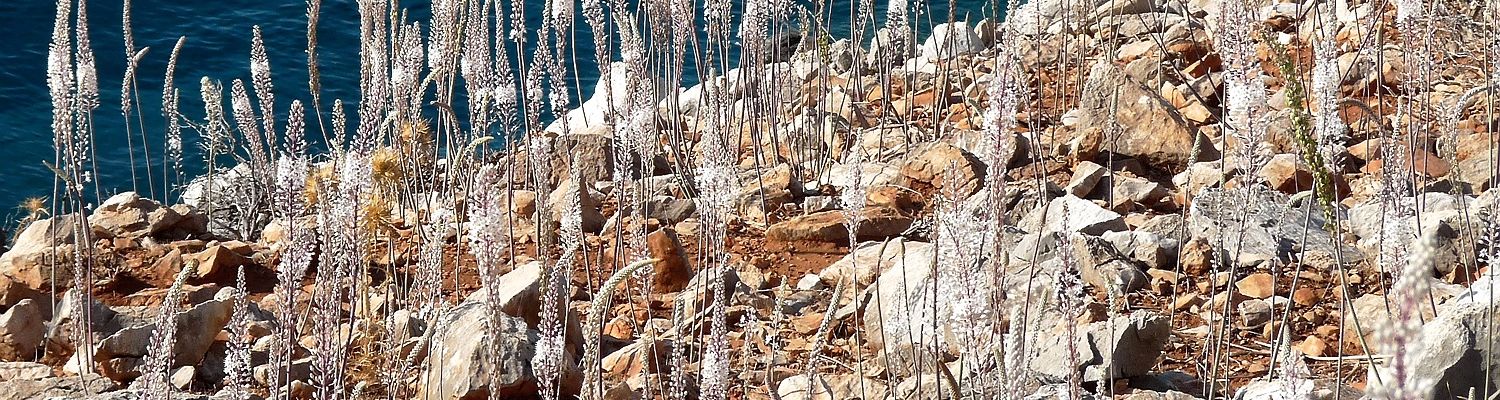
Die erste Pflanze, die im Herbst wieder austreibt, meist noch deutlich vor den ersten Regenfällen, ist die Meerzwiebel (Drimia maritima = Urginea m.). Ihr Name kommt daher, dass sie vor allem in den wärmsten, meernahen Lagen auftritt. Sie bildet eine dicke Zwiebel, die einer großen Küchenzwiebel ähnlich ist. Ab Mitte August wächst aus den Zwiebeln ein bis über einen Meter hoher Blütenstand, eine Traube mit hübschen, kleinen, weißen Blüten, die nach und nach von unten nach...
Das Lebensformenspektrum von Naxos
Das Lebensformen-Spektrum von Naxos
Von großer Aussagekräftigkeit über die Vegetation eines Gebietes ist das sogenannte Lebensformenspektrum. Die Pflanzen werden eingeteilt in folgende Lebensformen:
Phanerophyten
Chamaephyten
Geophyten
Hemikryptophyten
Therophyten
Hydrophyten
Phanerophyten (Bäume, Sträucher und Lianen)
Chamaephyten (Zwergsträucher)
Geophyten (Knollen-, Zwiebel- und Rhizompflanzen)
Hemikryptophyten (Staudenpflanzen)
Therophyten...
Beweidung
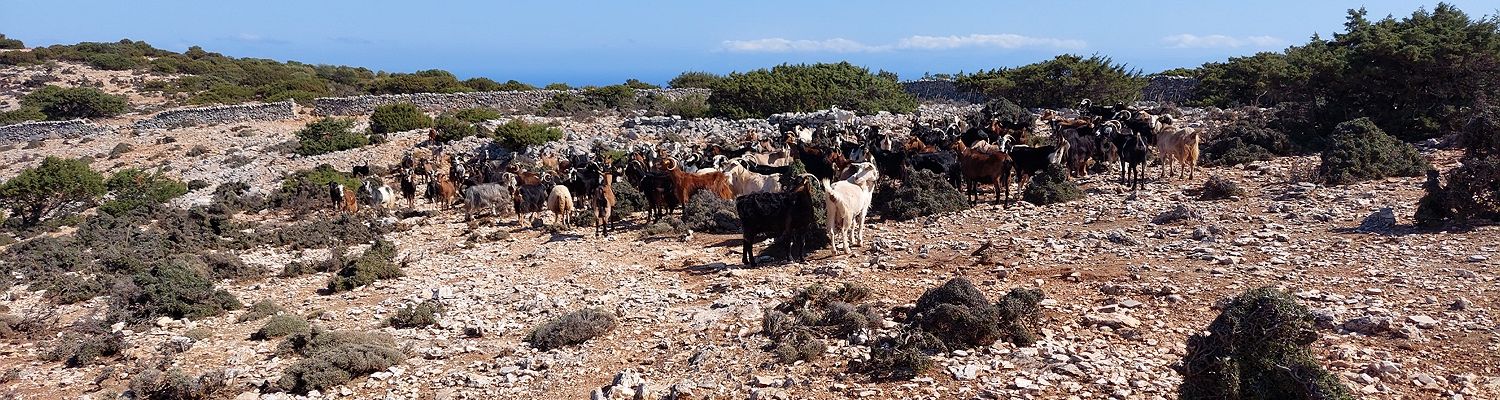
Fast alle Pflanzen der Insel Naxos müssen sich mit dem Problem der Beweidung auseinandersetzen, da es nur sehr wenige Stellen gibt (wie etwa die Auwälder oder extrem schlecht erreichbare Felsstandorte), die nicht oder nur wenig beweidet werden. Schafe beweiden vor allem die Krautschicht, das heißt Gräser und andere meist einjährige Pflanzen, die zwischen den Sträuchern gedeihen. Für sie gibt es einen sehr großen Unterschied im Nahrungsangebot je nach Jahreszeit, so dass...
The vegetation of Naxos
Unfortunately there is yet no translation available for this page as well as for the connected pages you find under the links below. Maybe try to translate the page with Google translate (copy the URL and paste it into the field opening when you click on “websites”).
(Hier kann man direkt zu den weiterführenden Links ganz unten springen.)
Für den Besucher aus Mitteleuropa wirkt die Insel Naxos auf den ersten Blick eher karg was die Vegetation betrifft.
...
Die Hartlaubvegetation
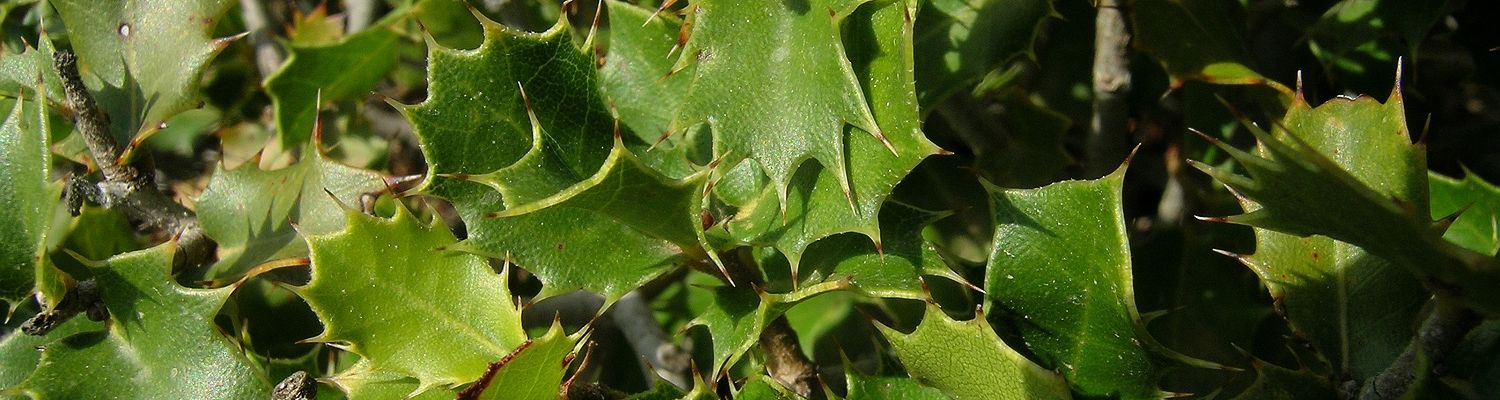
Die typische Vegetationsform der mediterranen Klimagebiete ist die Hartlaubvegetation. Als Hartlaubgewächse werden Bäume und Sträucher mit immergrünen, harten oder ledrigen, trockenheitsresistenten und eher kleinen Blättern bezeichnet. Typische Hartlaubgewächse sind die Steineiche, die Kermeseiche, die Steinlinde, die Olive, der Erdbeerbaum, der Mastixstrauch, die Baumheide, der Rosmarin, der Lorbeer und die Myrte.
Kermeseiche, Quercus...