Skip to main content
DE
ΕΛ
Home
Feedback and questions
About us
News from Azalas
Web site content
Categories - Directory
Best articles
Picture of the day
Holiday homes Azalas
Most important articles
The cottages
Photo galleries
Location
Calendar and Reservation
The Prices
How to get to Azalas
The area
Activities on Naxos
Guest book
Culture
Sights and monuments
Villages (in German)
Cultural landscape (in German)
Village life (in German)
Nature
Mediterranean Sea
Fauna of Naxos
Flora of Naxos (in German)
Vegetation (in German)
Landscape (in German)
Geology (in German)
Weather (in German)
Hikes and tours
Other islands
DE
EN
ΕΛ
Home
Feedback and questions
About us
News from Azalas
Web site content
Categories - Directory
Best articles
Picture of the day
Holiday homes Azalas
Most important articles
The cottages
Photo galleries
Location
Calendar and Reservation
The Prices
How to get to Azalas
The area
Activities on Naxos
Guest book
Culture
Sights and monuments
Villages (in German)
Cultural landscape (in German)
Village life (in German)
Nature
Mediterranean Sea
Fauna of Naxos
Flora of Naxos (in German)
Vegetation (in German)
Landscape (in German)
Geology (in German)
Weather (in German)
Hikes and tours
Other islands
Natures
Here you find all of the 400 or so articles dealing with the nature of Naxos, organised chronologically with the latest articles at the top.
1
…
18
19
20
21
22
23
24
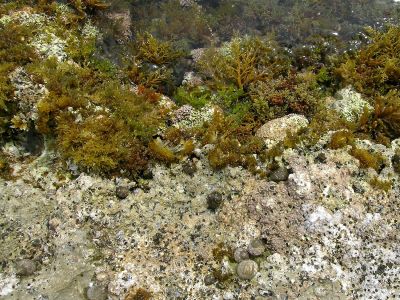
The Infralittoral
22. April 2009
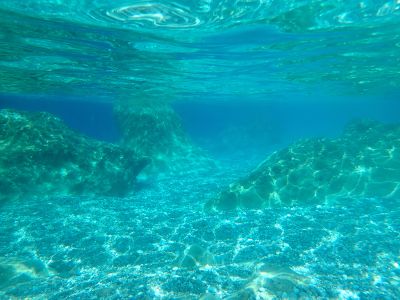
The infralittoral zone begins at the lower waterline, which means that it encompasses the permanently submerged area of the coastal benthal. It extends down to the depth at which light-loving species…
Zum Beitrag
The Eulittoral
22. April 2009
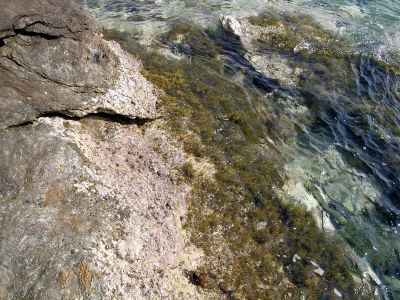
The eulittoral is the tidal zone; it is defined as the area between the upper and lower waterlines (mean high and low waterlines). In areas with strong tides, especially in mudflats, the eulittoral i…
Zum Beitrag
The Supralittoral
20. April 2009
The supralittoral is the splash zone, which ist not submerged permanently, but reached by the waves and the spray. It begins at the mean high-water line (the average water level at high tide) and ext…
Zum Beitrag
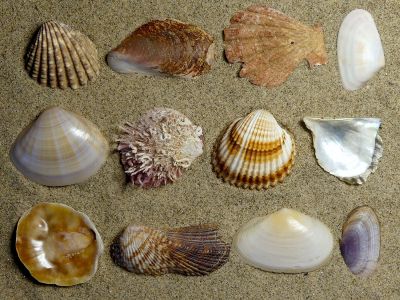
Bivalvia
15. April 2009
The Bivalvia belong to the phylum Mollusca, together with the snails and cephalopods (octopuses, squids) and some smaller groups such as the chitons and the tusk shells. Around 8,000 species have bee…
Zum Beitrag
10. April 2009: Der Frühling ist da!
10. April 2009
Der Frühling ist da: Der Wein treibt aus… …im Weinfeld blüht der Mohn… …Schmetterlinge flattern umher… …Bienen besuchen die Birnbaumblüten… …und überall blüht es. Und die Vögel z…
Zum Beitrag
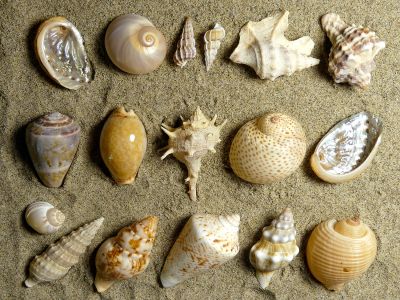
Marine snails – Introduction
9. April 2009
The snails, or gastropods, belong to the same phylum as bivalvia (e.g. mussels), cephalopods (e.g. octopus and squid) and some smaller groups such as chitons and tusk shells, i.e. the phylum Mollusca…
Zum Beitrag
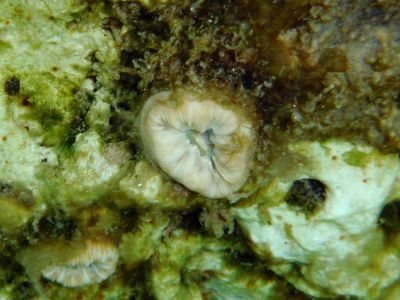
Corals
7. April 2009
Corals belong to the class of anthozoans (Anthozoa), together with the sea anemones. These form the phylum Cnidaria together with the hydrozoans and the jellyfish. Cnidarians are a ‘lower’ group of a…
Zum Beitrag
Chitons
7. April 2009
The phylum of molluscs comprises several classes, among which the bivalvia (mussels), the snails and the cephalopods (octopuses, squids) are the most important and best known. However, to the mollusc…
Zum Beitrag
Life between the algae
6. April 2009
Benthic algae, i.e. algae that are attached to the substrate, provide a habitat for countless animals. Since most of these species are quite small, you have to make an effort to spot them. Many can o…
Zum Beitrag
Ascects of the evolution of the algae
6. April 2009
The first living organisms on Earth were bacteria (and archaea, a now rather rare and still little-researched bacteria-like group that differs significantly from both bacteria and eukaryotes (i.e. pl…
Zum Beitrag
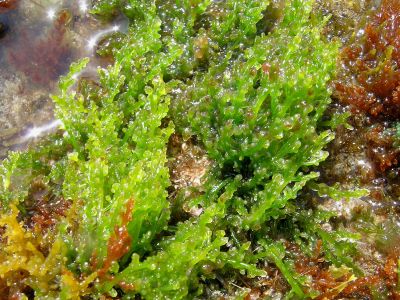
Algae
4. April 2009
Algae do not generally have a particularly good reputation. When it comes to algae, most people think of killer algae, toxic algal blooms or simply slippery, bone-breaking, ugly coatings on wet rocks…
Zum Beitrag
Fish
22. March 2009
When it comes to marine animals, most people naturally first think of fish: these are known to everybody and of the greatest importance to us as a source of food. Due to its low content in nutrients…
Zum Beitrag
Organisms living in stone
21. March 2009
Apart from the numerous plants and animals that grow on the rocks in the sea, some organisms live inside the rock. Understandably, these are rarely visible while they are alive, but you can find thei…
Zum Beitrag
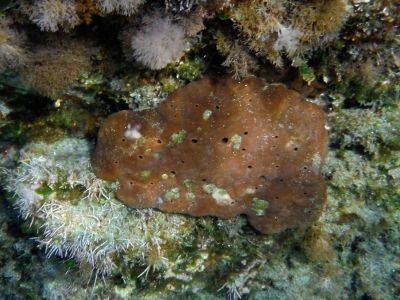
Sponges
19. March 2009
Sponges are very unusual organisms. They belong to the animal kingdom, but in some respects they are more like plants, for example they are sessile (attached to the substrate), their shape is not sym…
Zum Beitrag
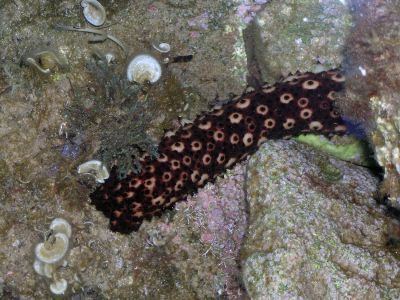
Sea cucumbers
19. March 2009
Sea cucumbers do not look particularly attractive; they are in fact rather ugly and appear boring and uninteresting. Nevertheless, these animals play a very important role in the marine ecosystem and…
Zum Beitrag
Sea anemones
19. March 2009
On the rocks in shallow water in the small bays near Azalás, it is easy to find some particularly beautiful and interesting representatives of marine fauna: the sea anemones. The order of sea anemone…
Zum Beitrag
Gastropoda 6: Worm snails
18. March 2009
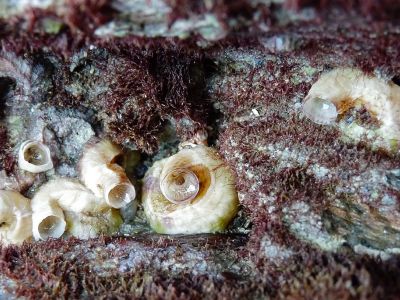
Among the many strange creatures of the intertidal zone are the worm snails. These snails only crawl around freely while they are young, then they attach themselves to the substrate and adopt a sessi…
Zum Beitrag
Barnacles
18. March 2009
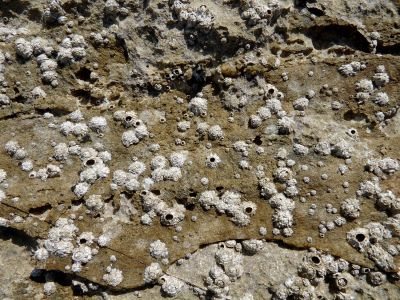
Seeing barnacles on a rocky coastline one would hardly think that they are close relatives of crabs and lobsters. However, they belong to the Crustacea, and together with the Goose barnacles and some…
Zum Beitrag
The Zones of the Mediterranean Sea
17. March 2009
The marine ecosystem is divided into a number of zones with different environmental conditions. To begin with one must distinguish the seabed, known as the benthal, and the water column, known as the…
Zum Beitrag
The demands of the sea on its inhabitants
16. March 2009
Life in the sea places significantly different demands on organisms than life on land. First of all, of course, there is an unlimited supply of water. All organisms need water – they consist largely…
Zum Beitrag
1
…
18
19
20
21
22
23
24