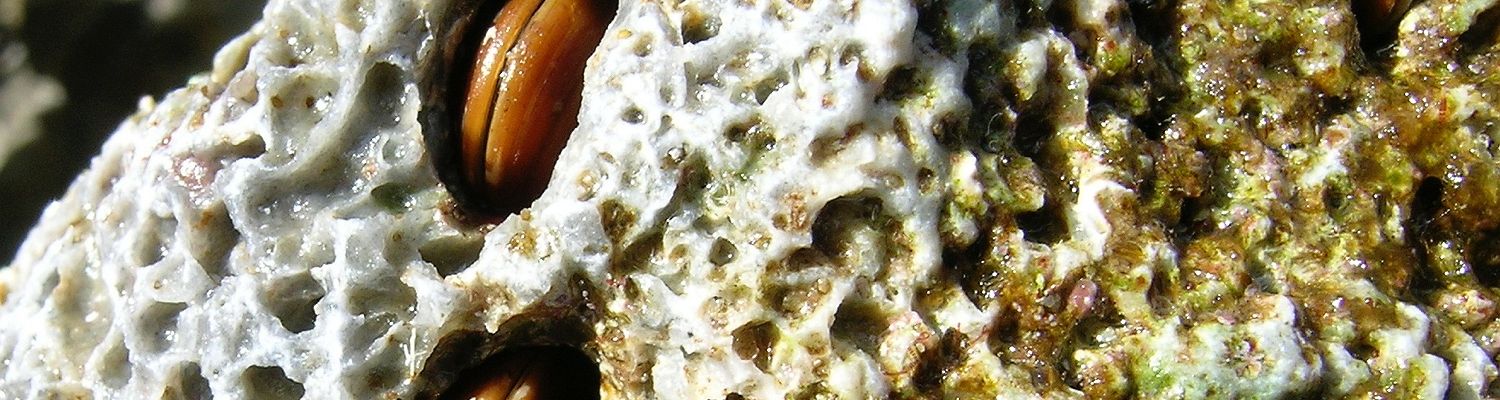
Organisms living in stone
Apart from the numerous plants and animals that grow on the rocks in the sea, some organisms live inside the rock. Understandably, these are rarely visible while they are alive, but you can find their traces in many stones on the beach. The most common are the holes and chambers eaten into the stone by boring sponges.
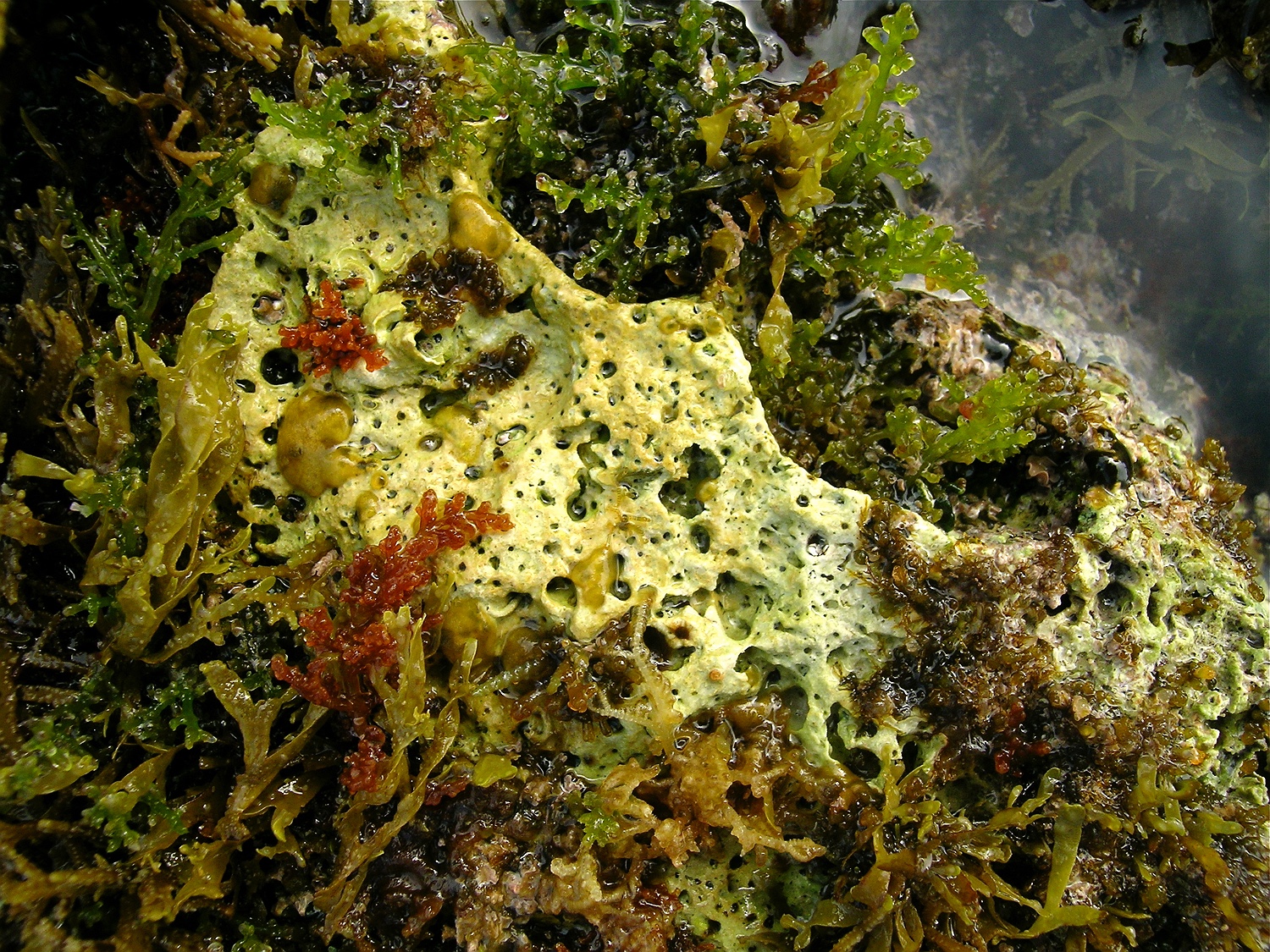
Heavily eroded marble rock just below the sea surface
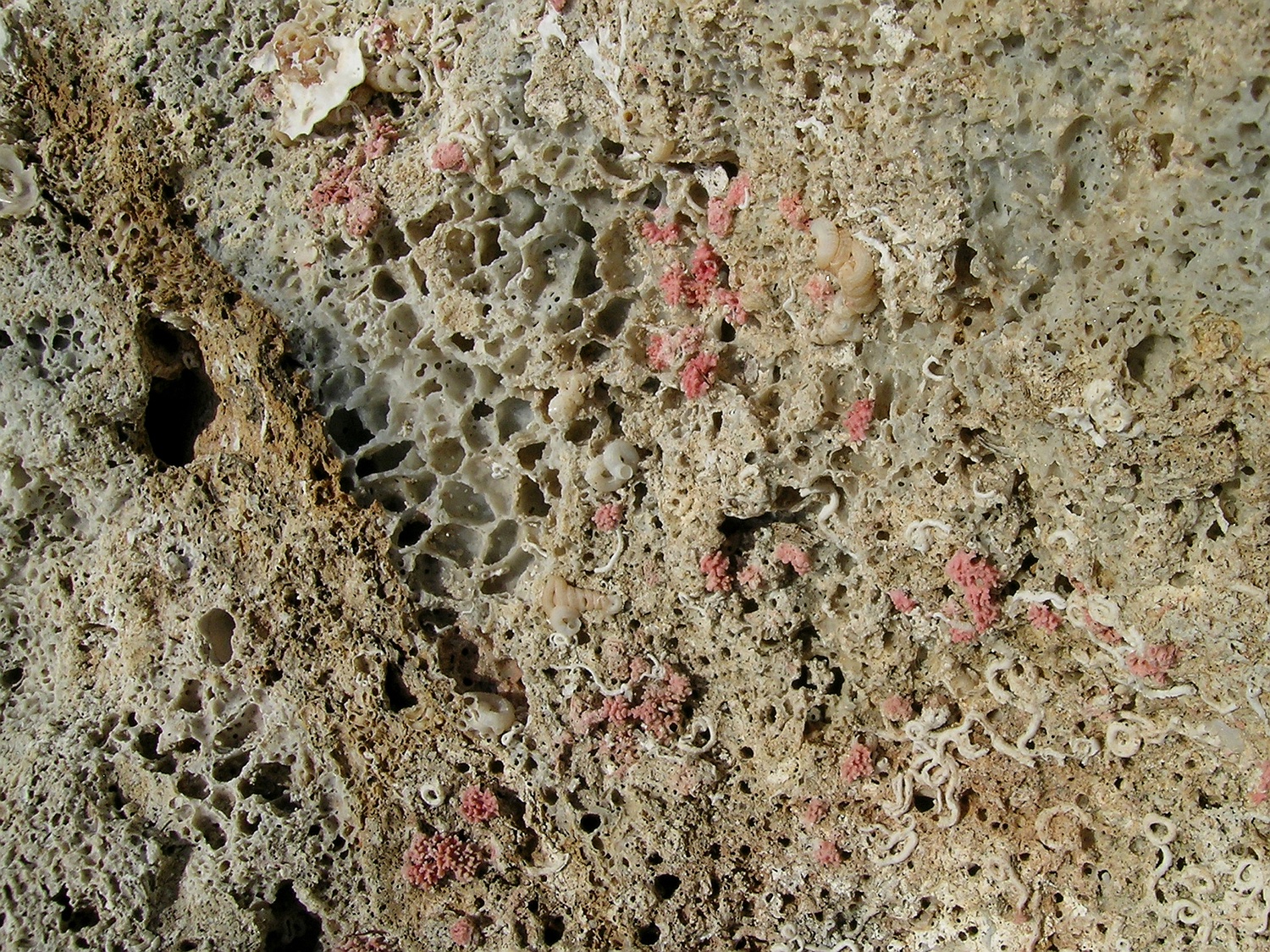
limestone rock eroded by the boring sponge and inhabited by many other creatures
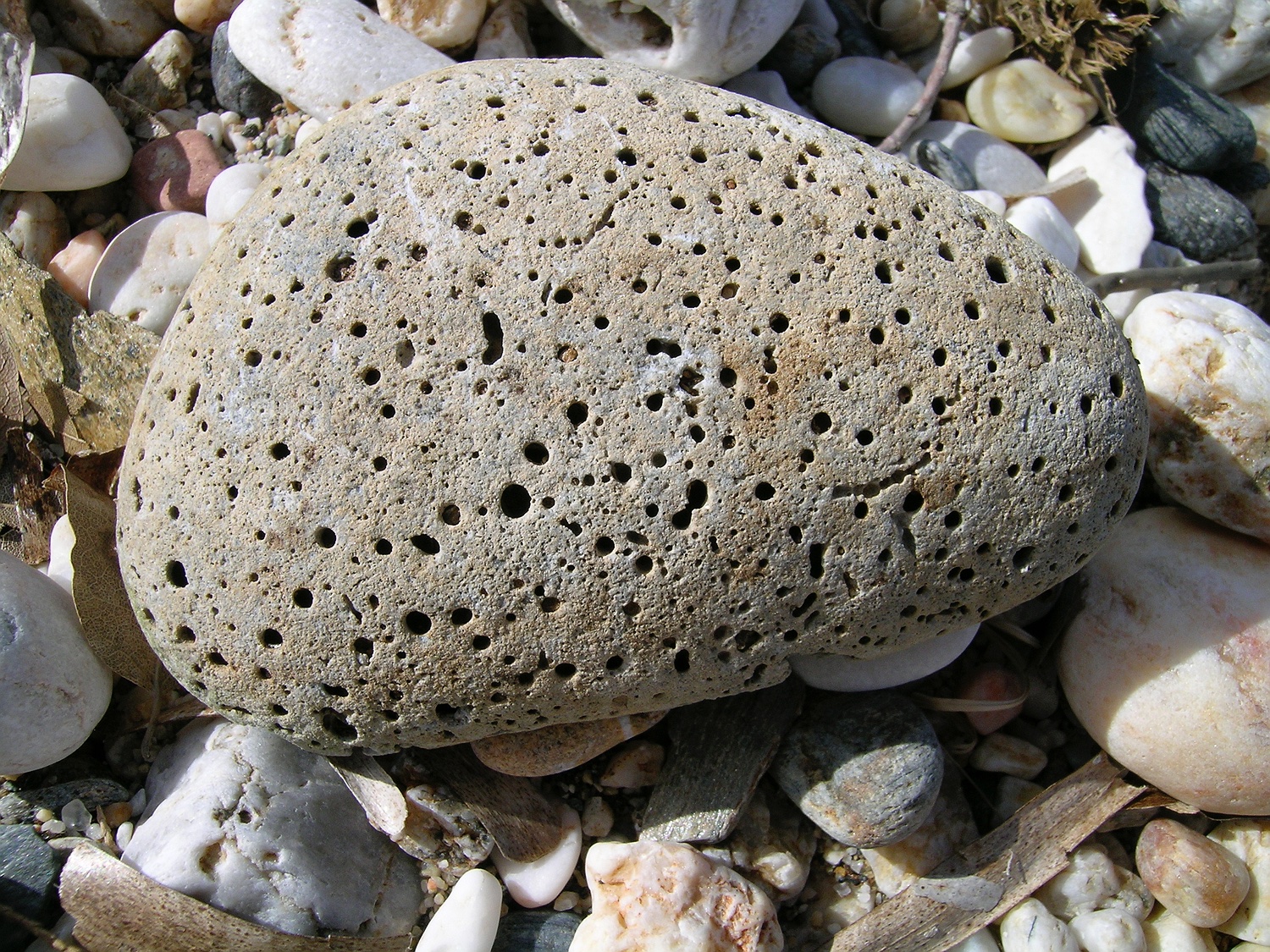
Stone with holes made by the boring sponge
The boring sponge Cliona celata lives in limestone, into which it etches holes with acid. The chambers, which are several millimeters in size, are connected to each other and to the outside world by small holes. The chambers are often arranged in rows, but can also cover the entire stone.
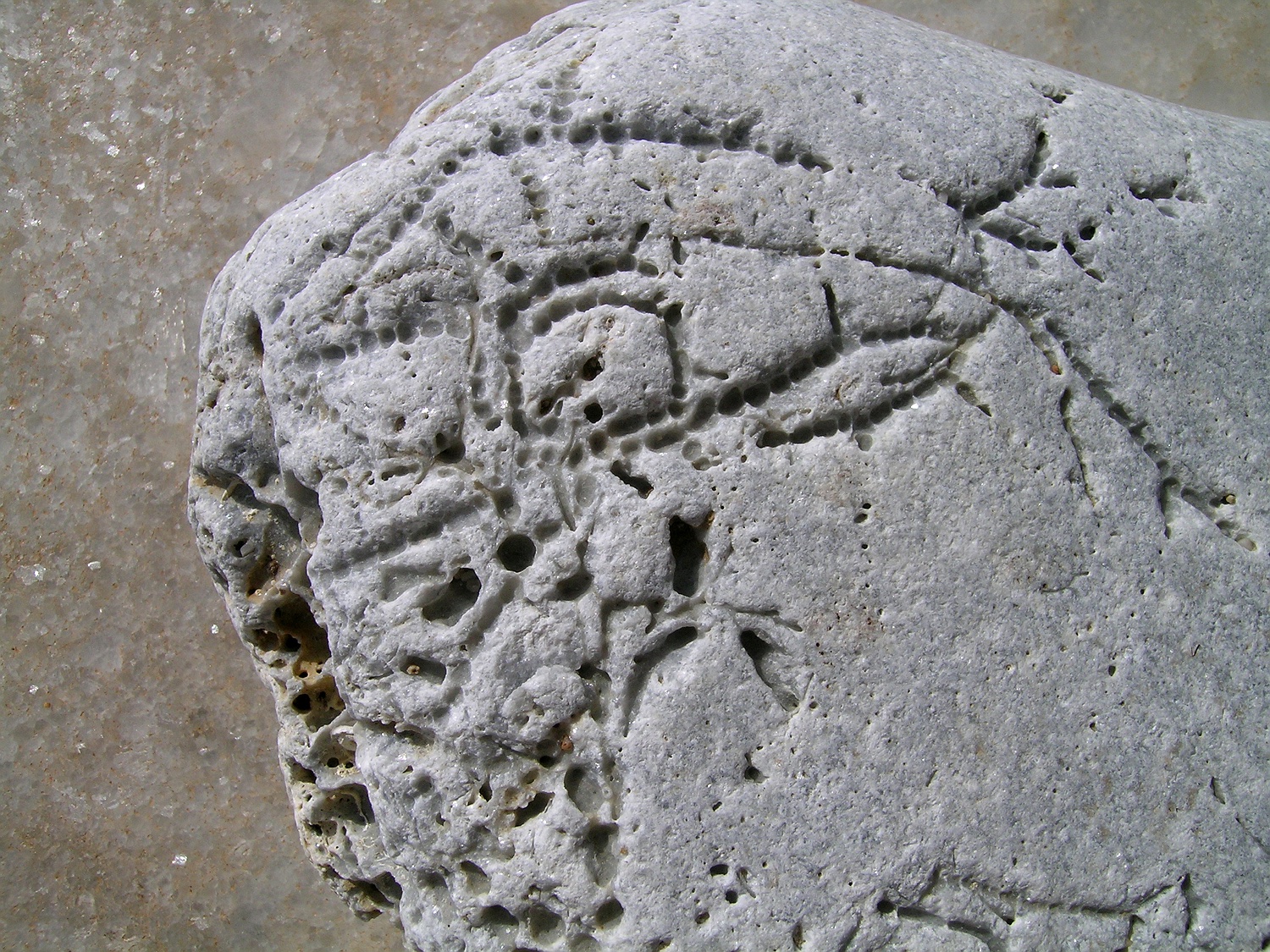
Stone with rows of holes caused by the boring sponge
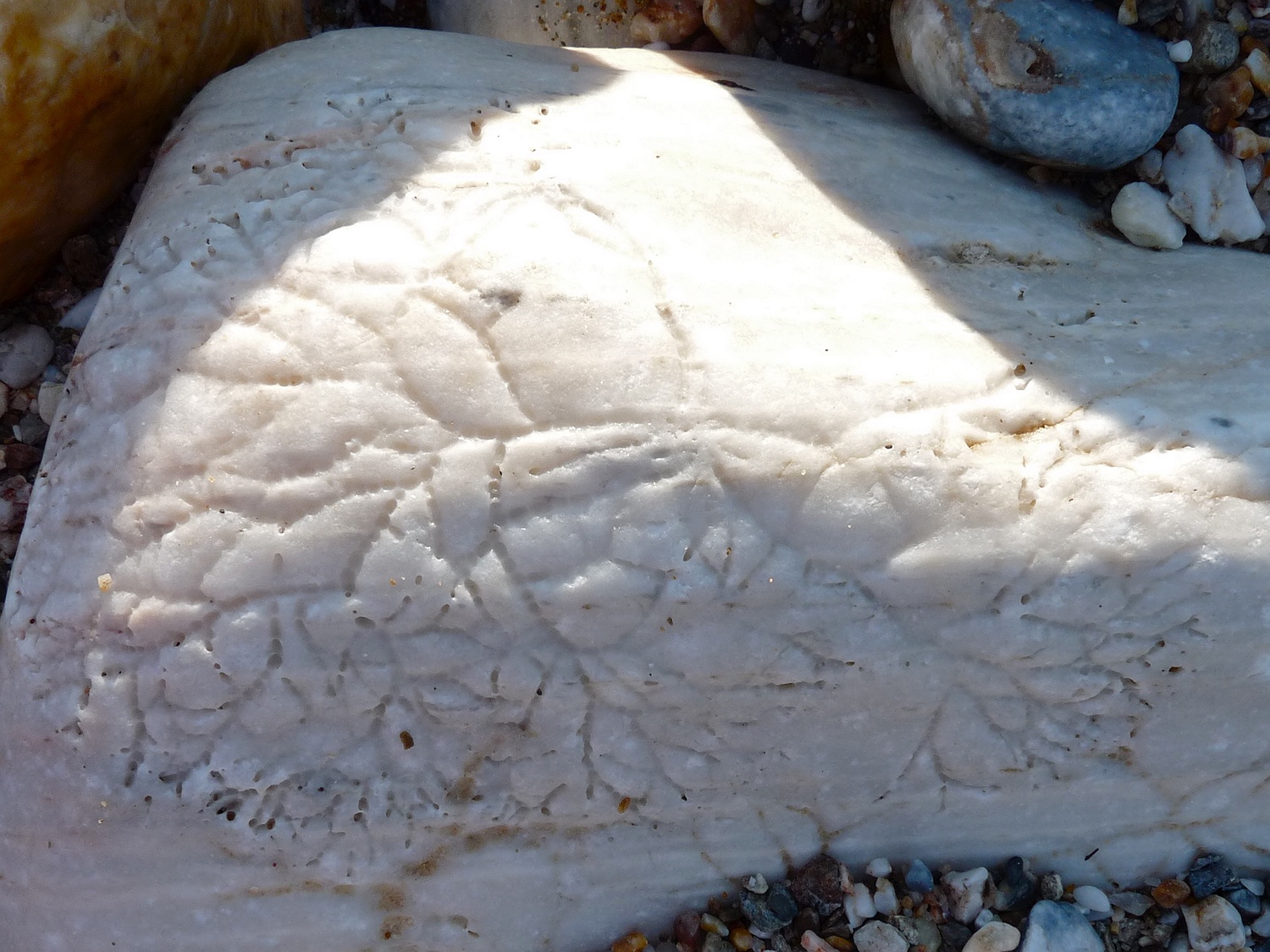
In this stone, the rows of holes branch out increasingly.
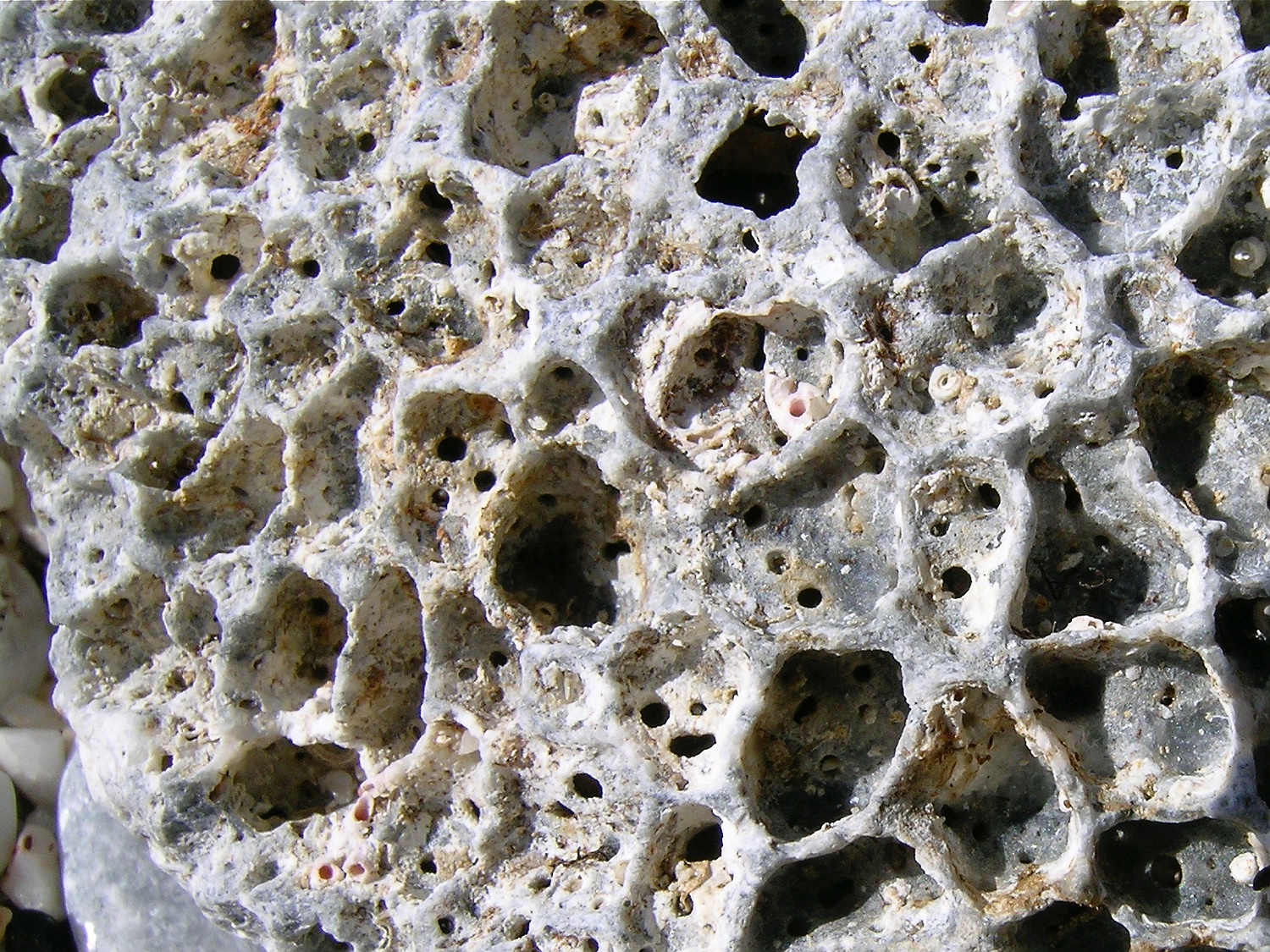
Exposed chambers of the boring sponge; the small holes connecting them are visible
When the sponge is alive, only the small holes through which it draws in water are visible. Sometimes a little of the yellow sponge body can be seen protruding from the holes. There are also specimens of the same species that are not wholly endolithic.
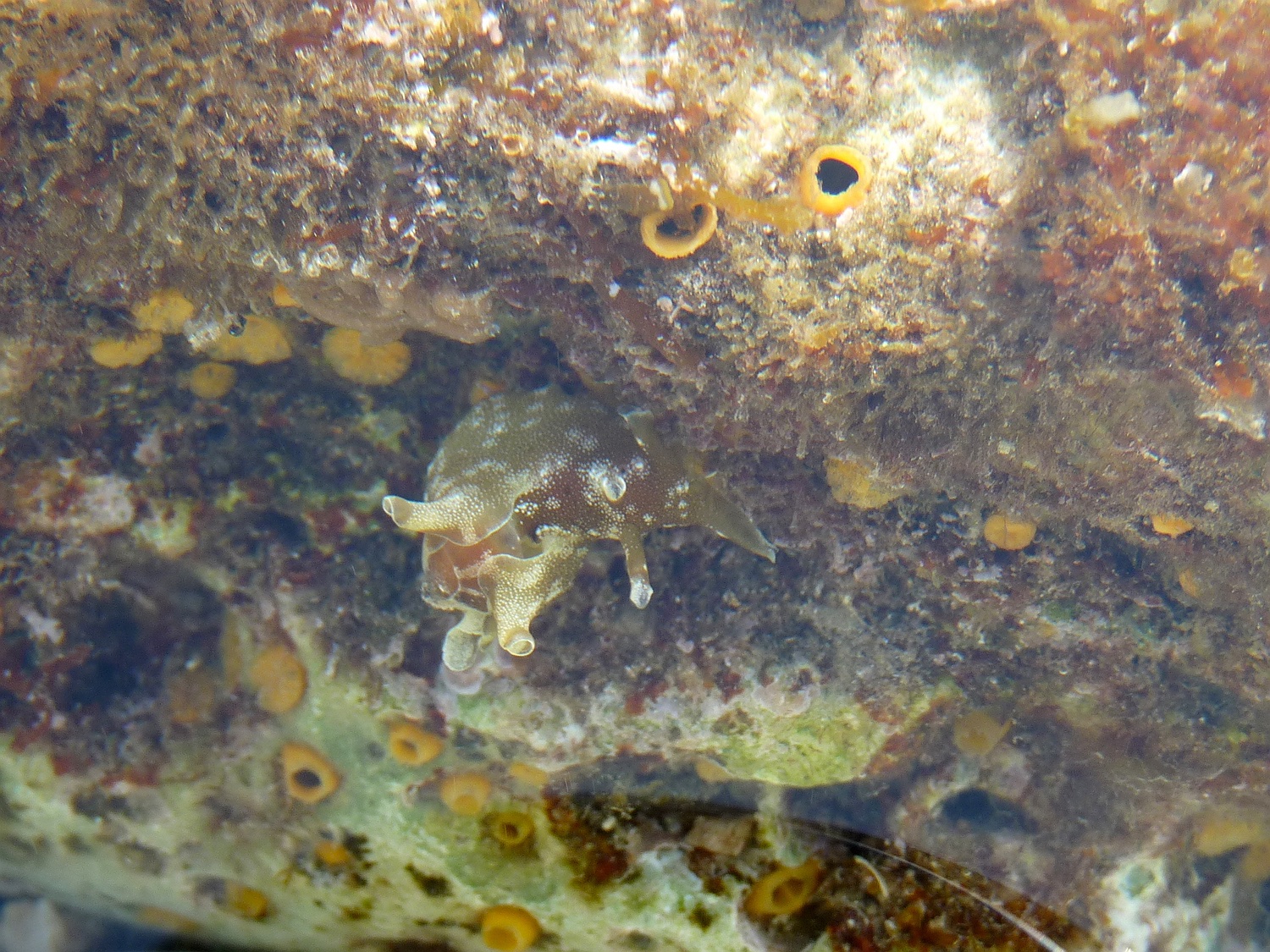
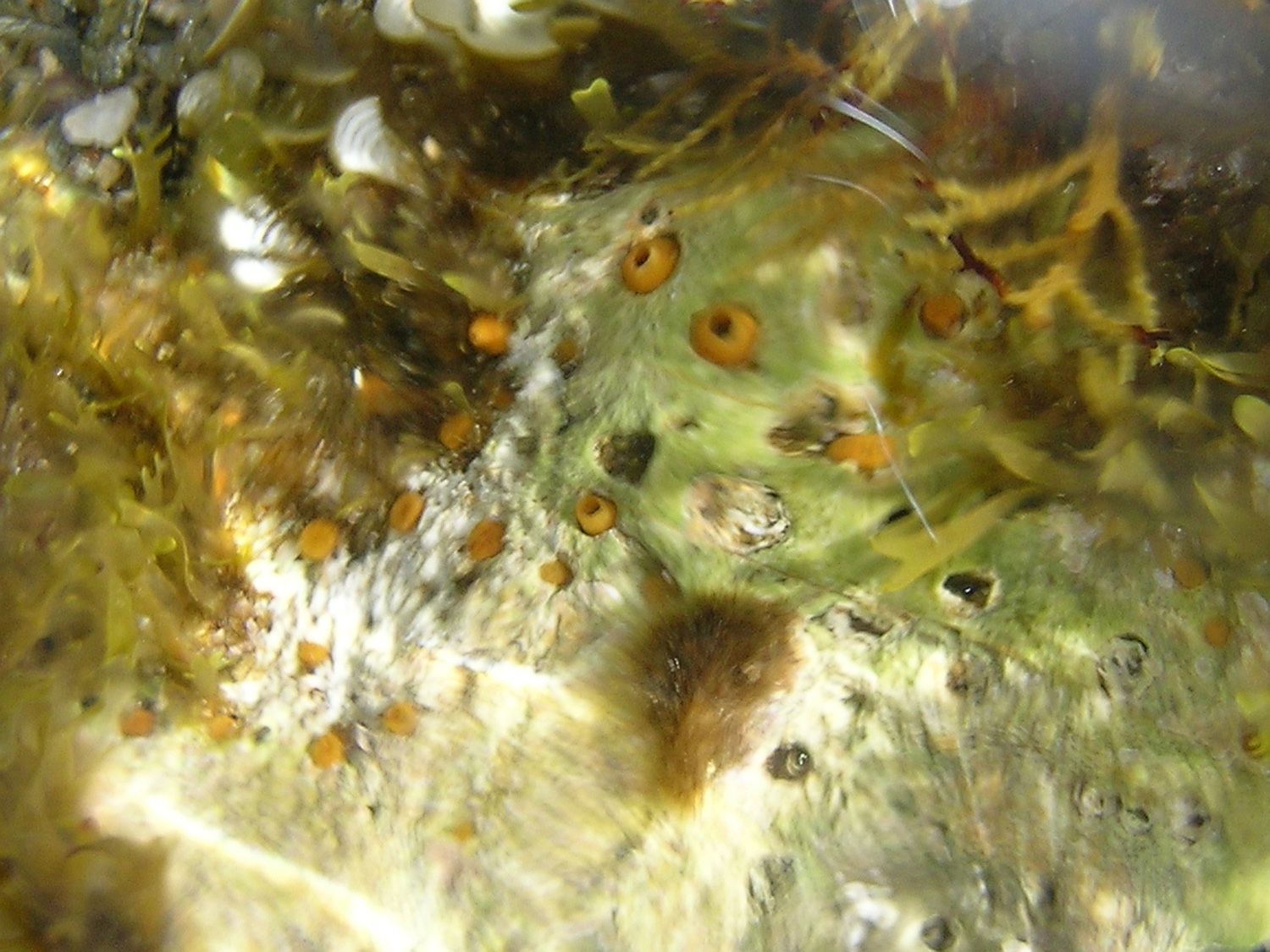
The yellow boring sponge Cliona celata peeks out of the holes in the rock.
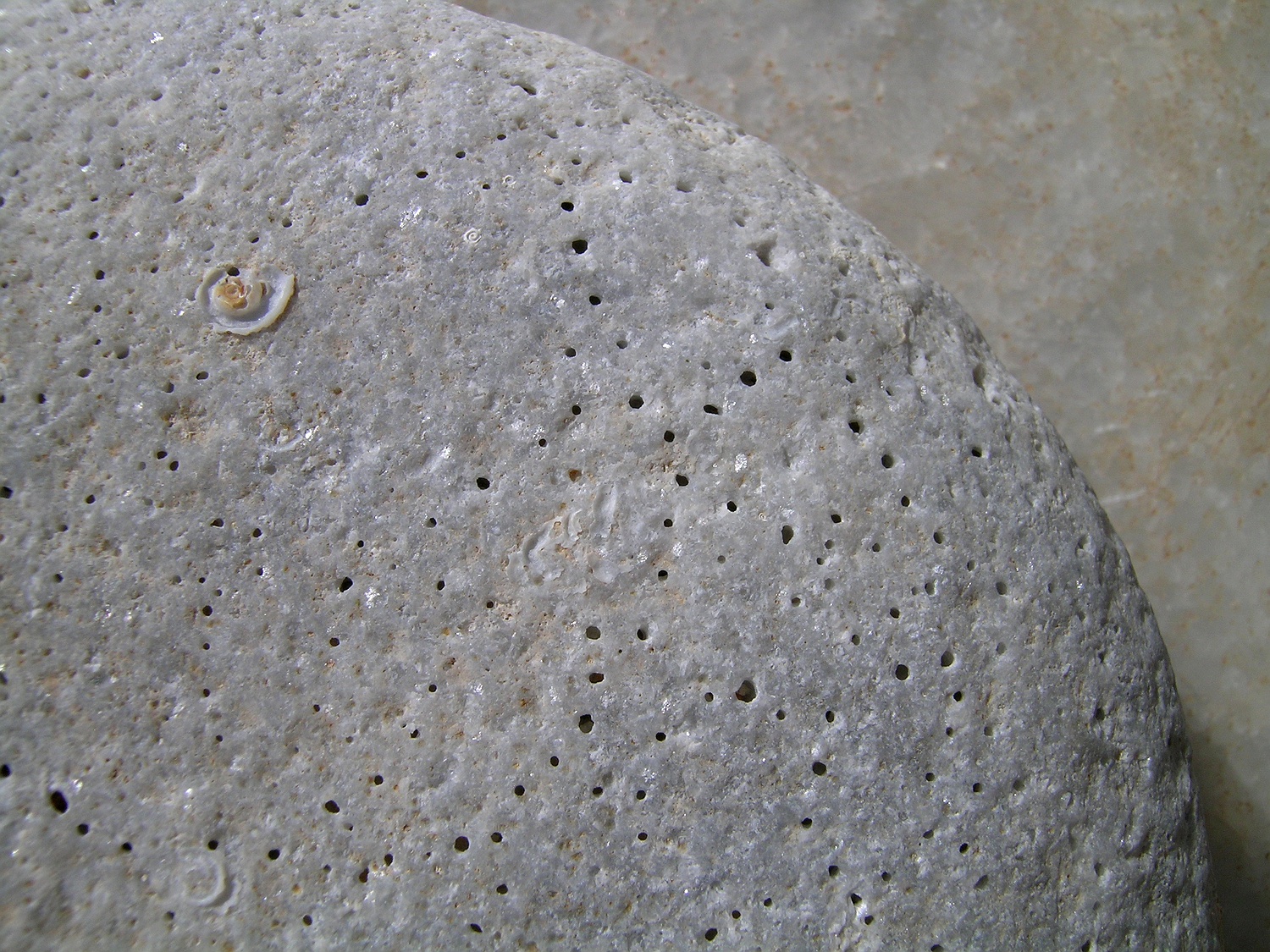
At first, only small holes are visible.
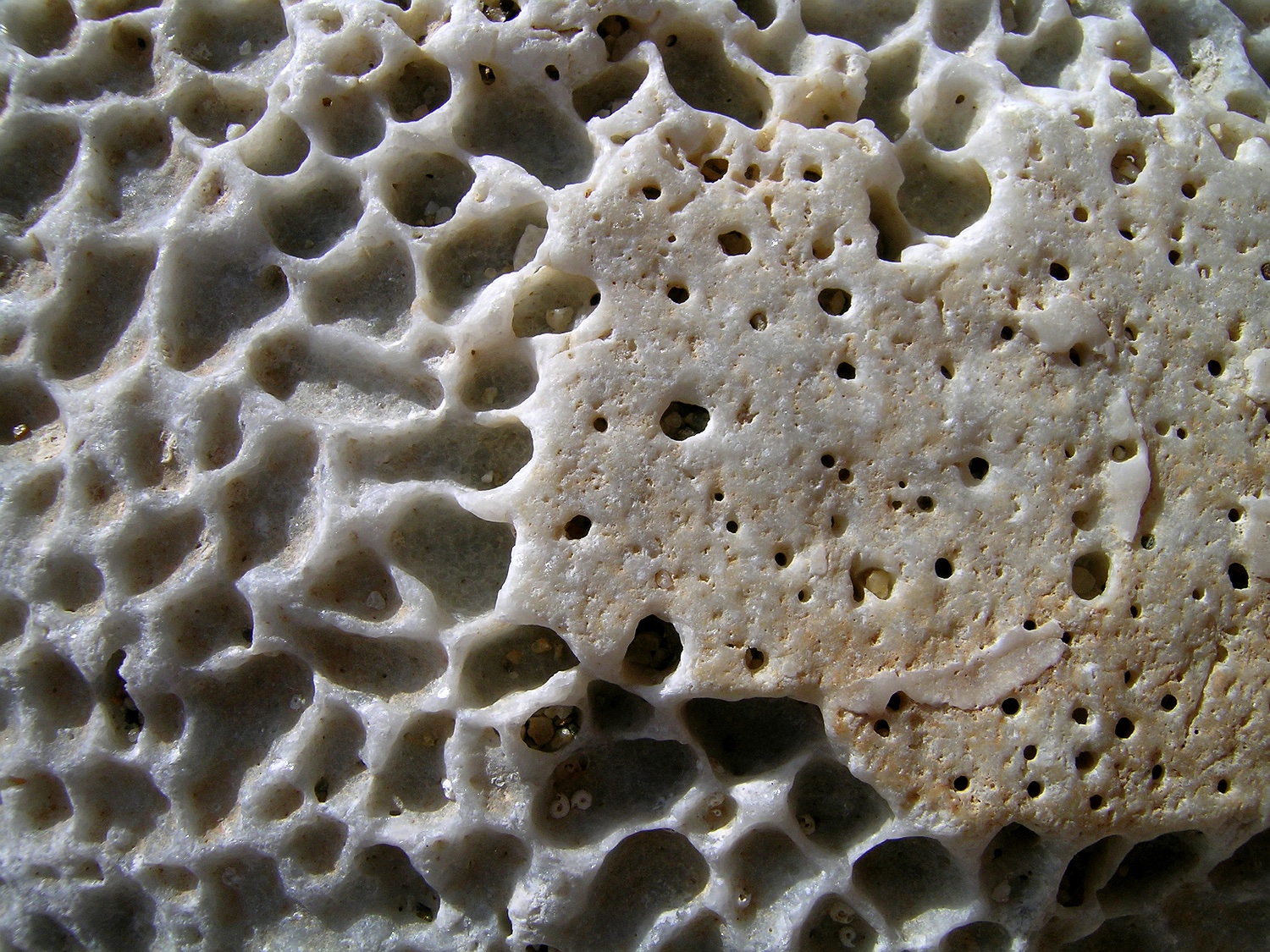
As the surface erodes away, the chambers become visible.
Several blue-green algae species that grow just above the waterline on the marble rocks also dissolve the stone through secreted acids, creating small cavities that in turn serve as sheltered habitats for many animals. This lower zone of the supralittoral is called the lithophagous zone.

Marble rock corroded by blue-green algae at waterline level (‘lithophagous zone’)
Another animal that bores holes in the marble is the date mussel Lithophaga lithophaga. The date mussel has an elongated shape, with the hinge connecting the two halves located at one corner. As the mussel grows, it steadily eats away the marble, creating a deep, smooth hole in which it sits; only its brown-coloured end is visible.
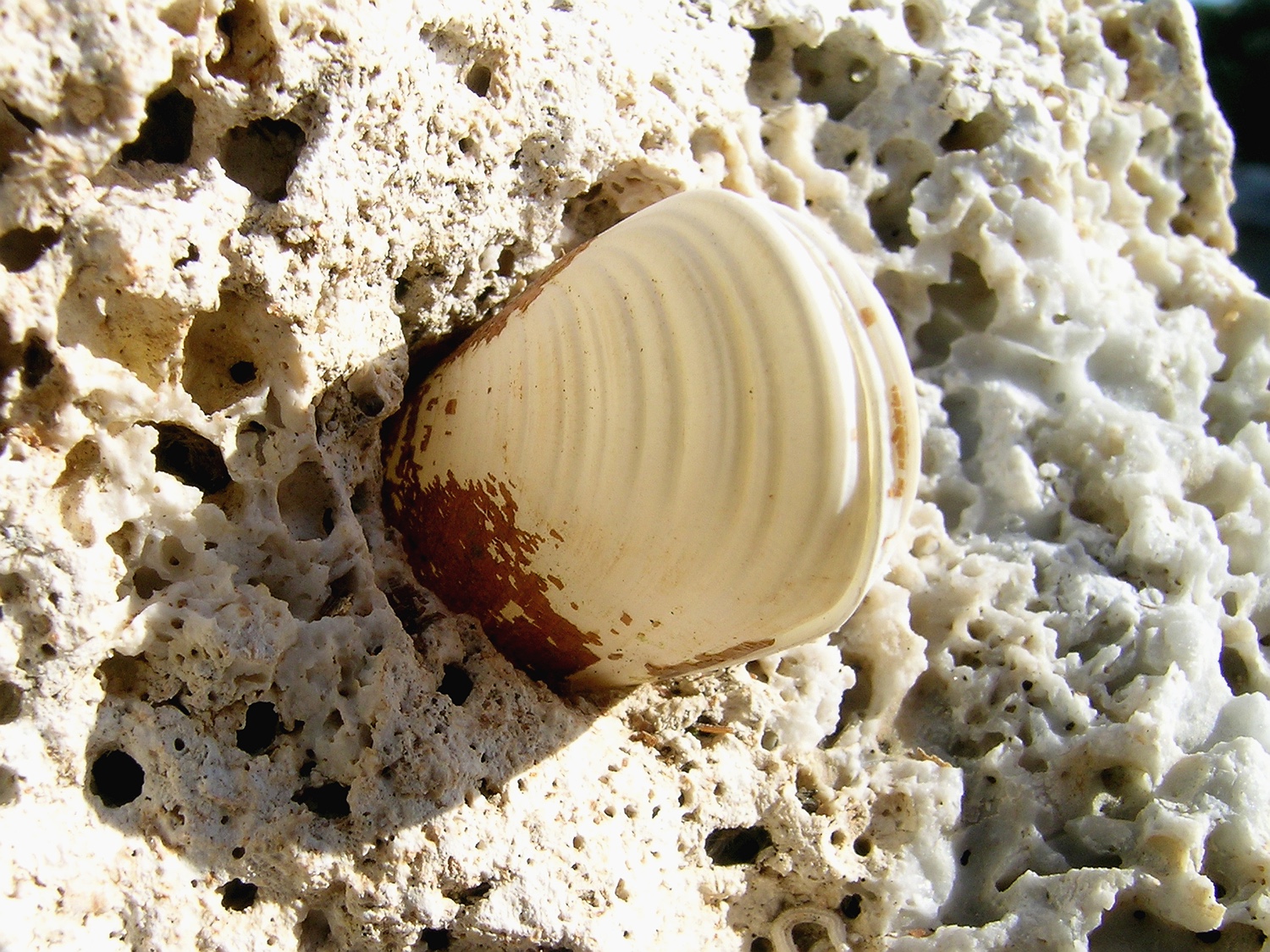
Rock with dead date mussel
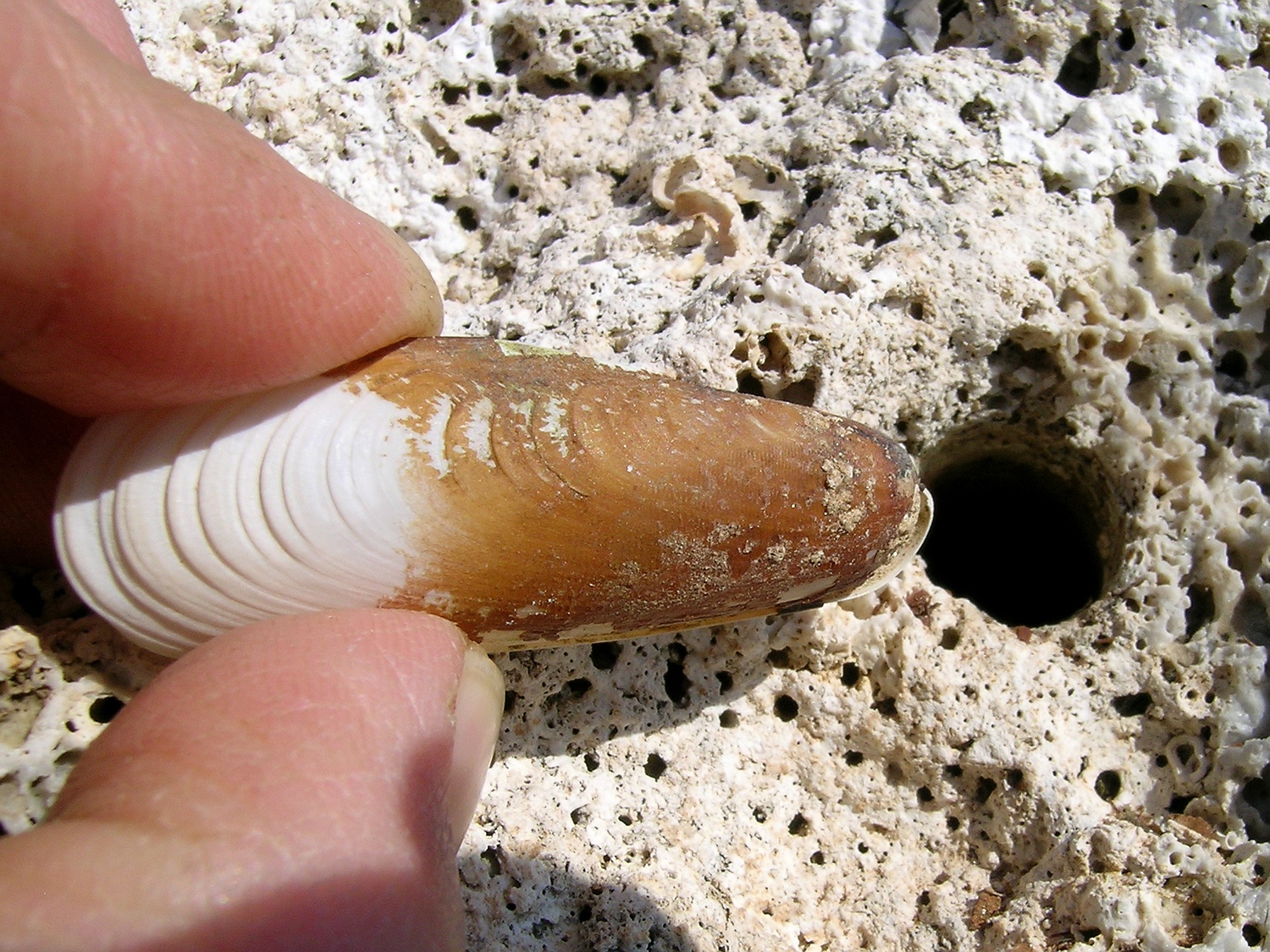
The mussel and its hole
The date mussel grows rather slowly; it takes up to 20 years to reach a size of five centimeters. It feeds by filtering the water. It is edible, but to my knowledge it is not collected on Naxos.
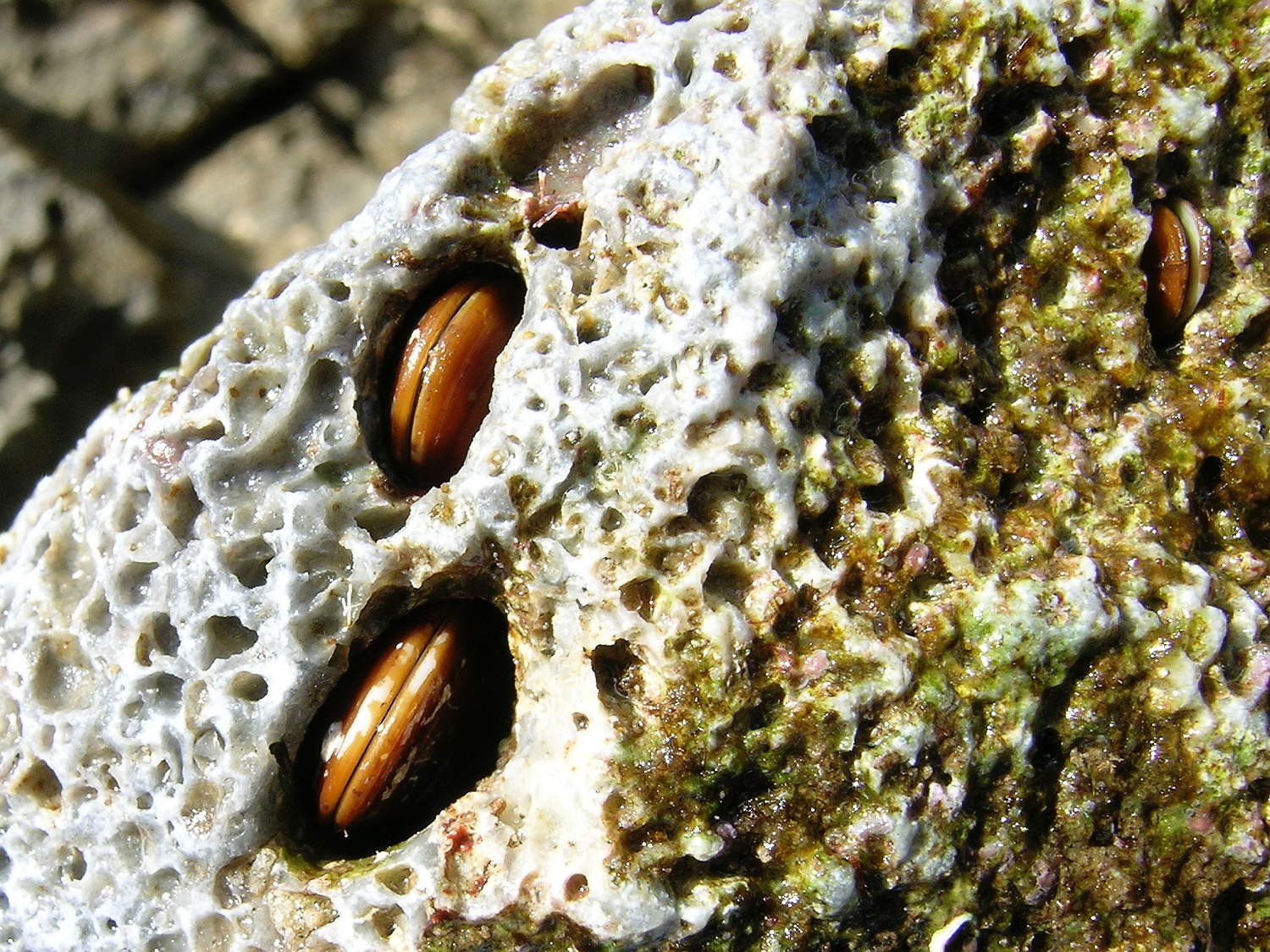
living dates mussels in their rock
See also:
- Amazing animals 1: The boring sponge (in German)
- Blue-green algae
- Sponges
- Bivalvia
- Marine animals overview
- The Mediterranean Sea
Further reading: Cliona celata on Wikipedia