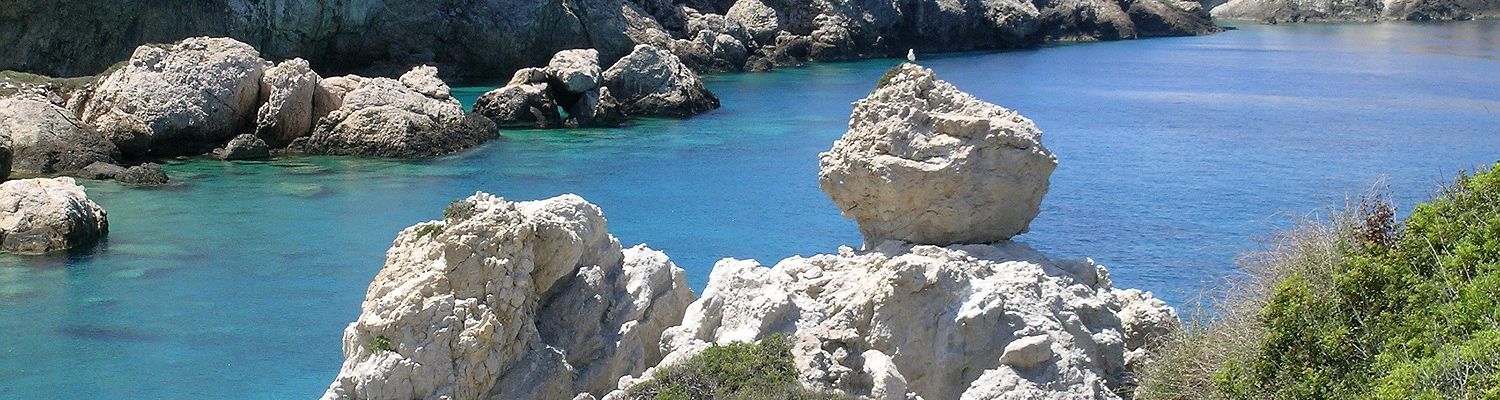
Makares - uninhabited islands out of paradise
About seven kilometers off the east coast of Naxos, directly opposite Azalás, lies an uninhabited group of islands, the Mákares Islands. We see them every day, but it is something else to take a boat out on a windless day and actually go there: the islands seem to be left over pieces of paradise!
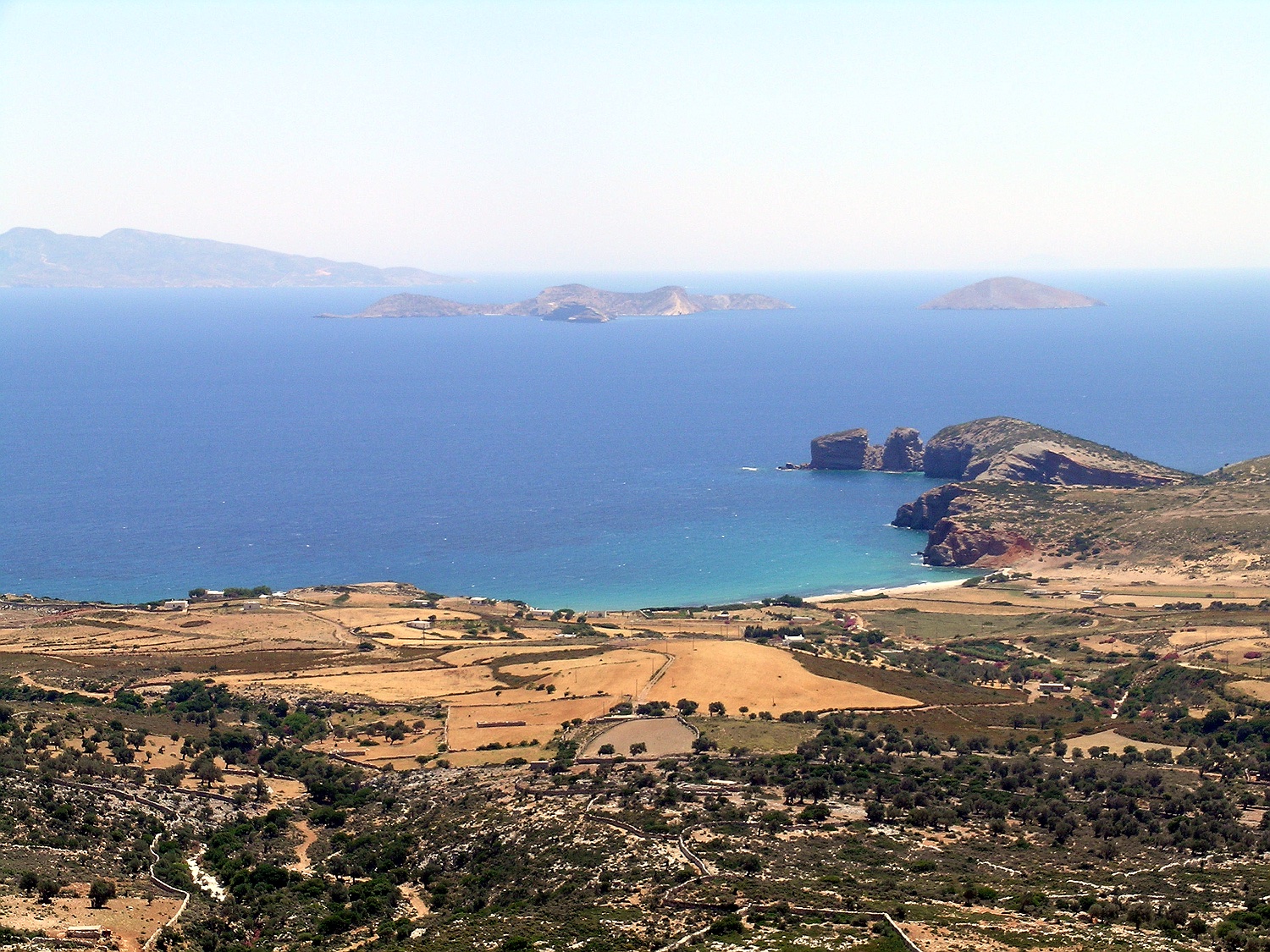
the Mákares Islands; in the background on the left the inhabited island of Donoussa
The Mákares group consists of three islands: the largest, called Ágios Nikólaos, is located in the north-west; a smaller one called Prásini (‘the green one’) or Ágia Kyriakí lies eastwards behind it; and a little further south lies the pyramid-shaped island of Strongýle (‘the round one’). Today we are heading for the largest island, Ágios Nikólaos, which is also the most beautiful and interesting. It is mostly steep and rocky, with a height of about 100 meters, and it is divided by three large bays and three capes jutting out in different directions.
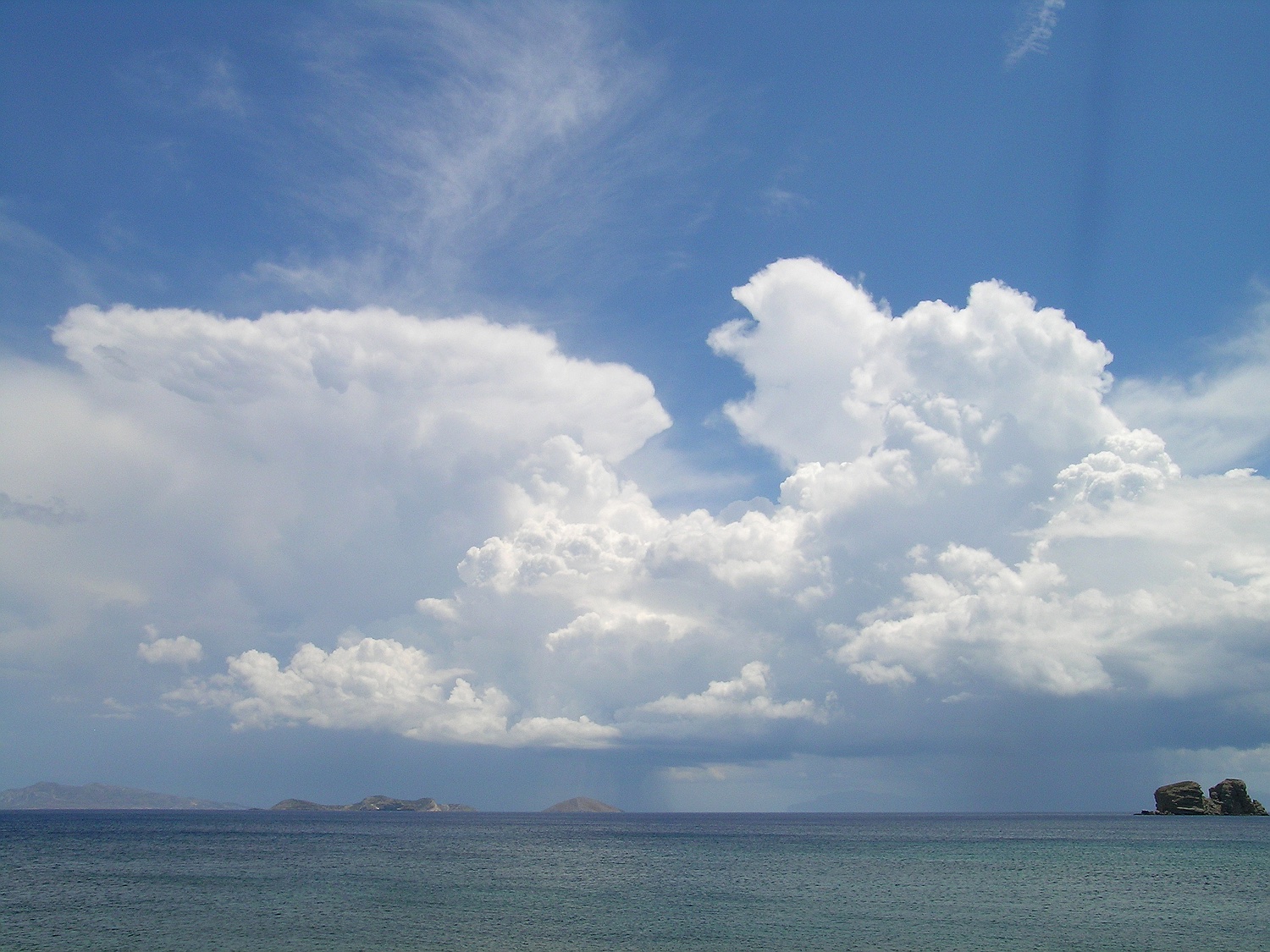
Thundercloud over the Mákares Islands, picture taken on 25th of June in 2009: an unusual summer rain!
The Makares Islands are uninhabited – by humans, at least. A shepherd from Amorgos used to keep his goats on the island, but they are no longer there. Now only a some insects, lizards and birds live here: the ubiquitous Sardinian warblers, a few linnets here and there, wagtails on the coast, Blue rock thrushes in the rocks, as well as Common and Alpine swifts, one or two pairs of kestrels, a few ravens, a Scops owl and perhaps a Peregrine falcon. And there is a large colony of Eleonora’s falcons, a rare and unusual, very beautiful species of falcon that lives only in the Mediterranean and breeds during the autumn migration season feeding on migrating birds. And of course there are also seabirds: mainly Yellow-legged gulls, which breed here in a large colony, occasionally one may also see a rare Audouin’s gull and a few shags. And the interesting shearwaters: Cory’s shearwater and (much more frequently) the slightly smaller Yelkouan shearwater both breed on the islands. Let’s also not forget the very rare monk seal, which, with a little luck, can still be observed here.
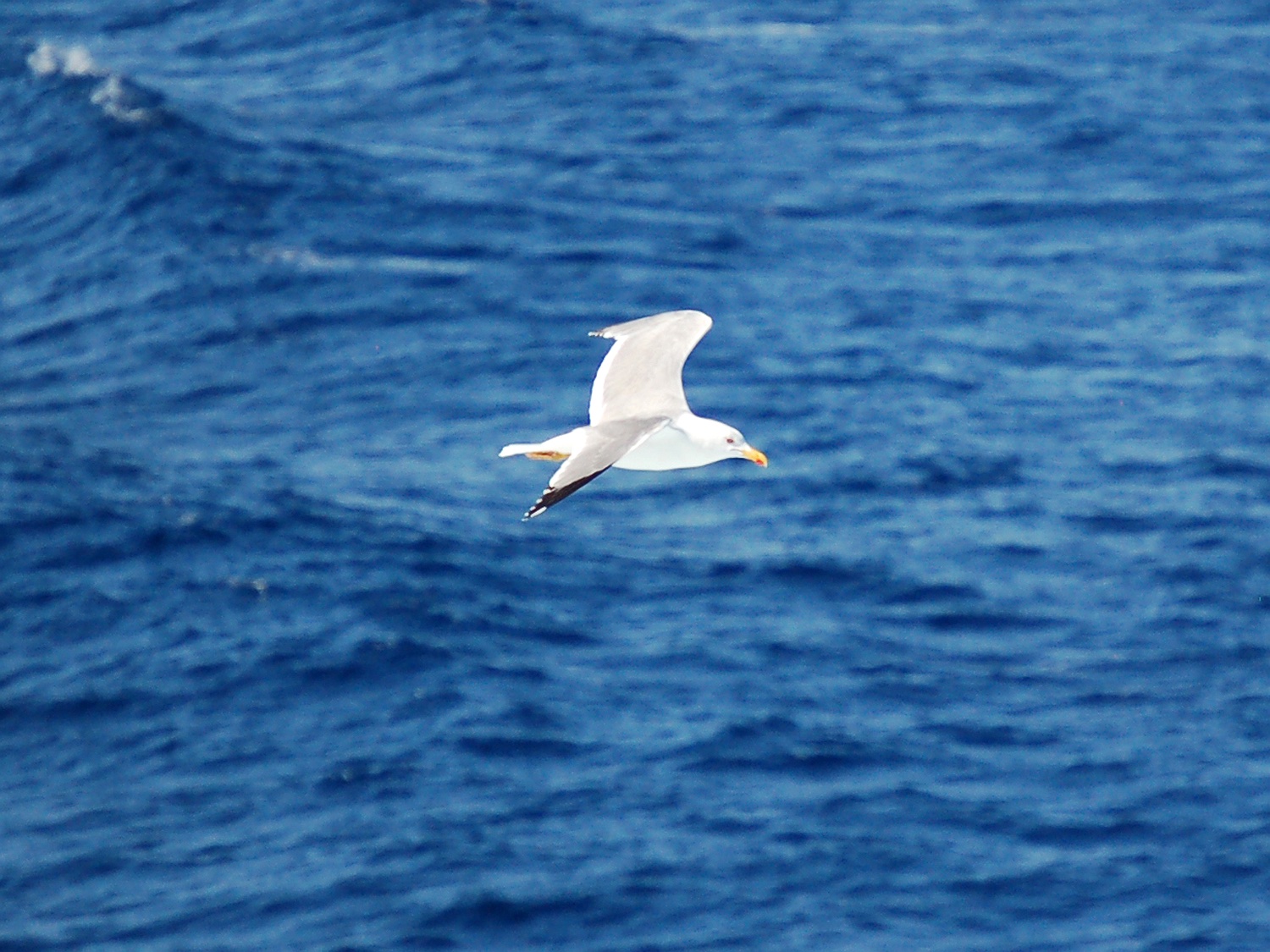
Yellow-legged gull
The islands owe their name to the shearwaters. The name “Mákares” is derived from makários, which means ‘happy, content, peaceful’ and is usually applied to the dead (who have escaped the plagues of life). And the connection with the shearwaters? Well, that becomes immediately clear when you spend a night on the island in spring with full moon. That is the season when the shearwaters breed, and the birds, which spend the whole day fishing at sea, come to the lonely rocky islands at night, where they nest in small caves or under large rocks. The large, white, ghostly birds fly around the island, heading for their nests, suddenly disappearing into holes under the rocks. It is even worse during the mating season: at night, the birds emit ghastly screeches that sometimes resemble the squealing of a pig, sometimes the whimpering of a child, sometimes an eerie snoring, sometimes a terrible squeaking. Anyone who has experienced this can imagine what the first people felt when they heard this wailing and howling and saw the eerie white creatures flying through the air. No wonder they thought of ghosts and the dead! A larger cave on the neighbouring island of Keros, which was certainly used by shearwaters, was believed to be the entrance to the underworld!
Geologically, the Mákares Islands are also interesting, and quite different from Naxos: The islands were not affected by the last metamorphosis, which played such an important role on Naxos. The northern part of the island is made of marble; in the middle, there is a highly eroded area with soft rock, and in the south there are layers of a type of sandstone that was formerly quarried and used, for example, to cover roofs and for pavements. Workers from Naxos came to Mákares to quarry the sandstone, which is so soft that it can be cut with saws. They lived on the island for long periods of time and even grew grain. They also built the stairs that lead through the cliffs from one part of the island to the other and constructed a drinking water tank that still exists today. The stones were mainly exported to Athens.
But enough talk: it’s time for a little tour around the island!
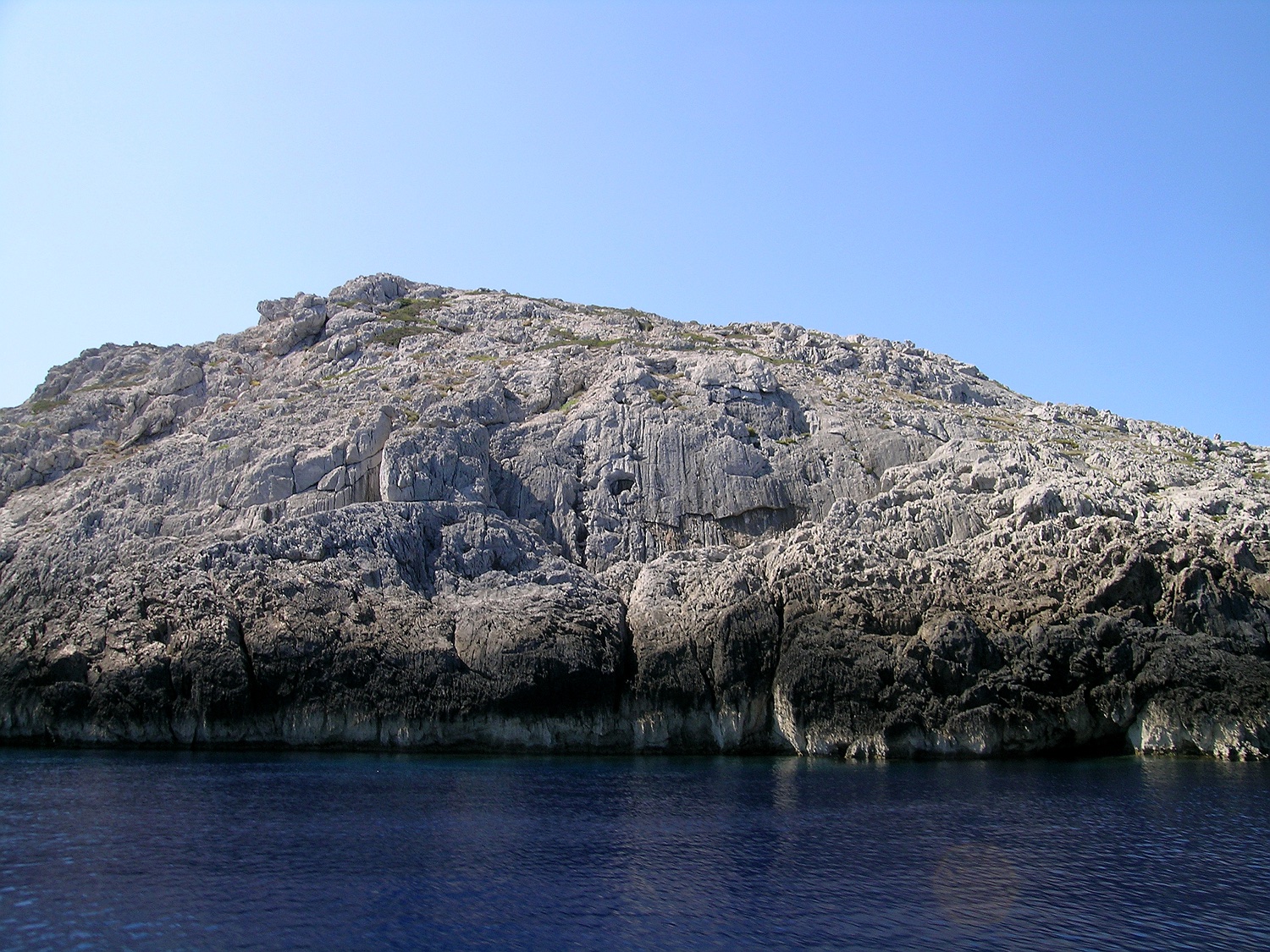
The north side of the island consists of bare marble.
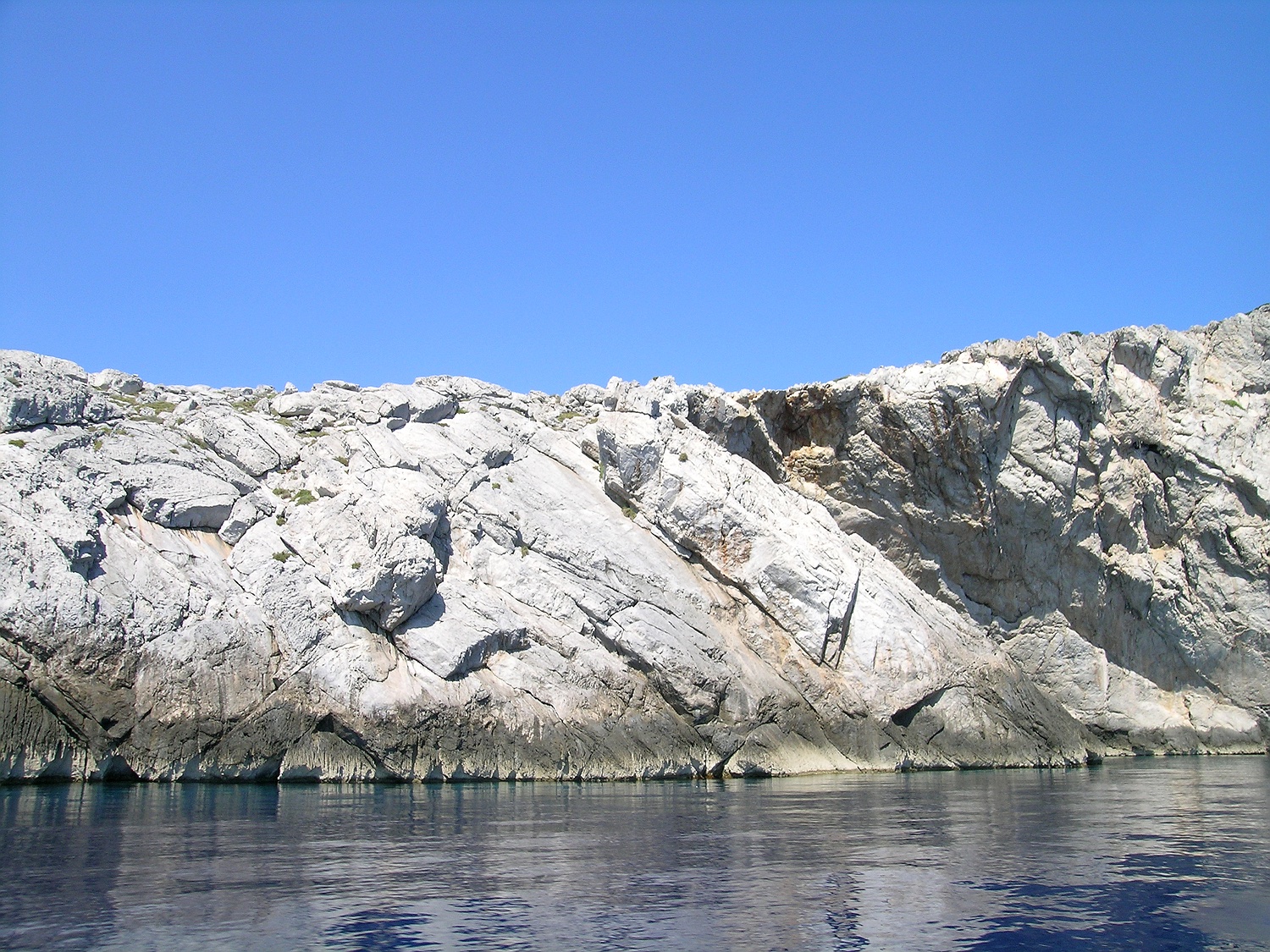
Any vegetation is prevented from growing here by the large waves hitting the coast during the winter storms.
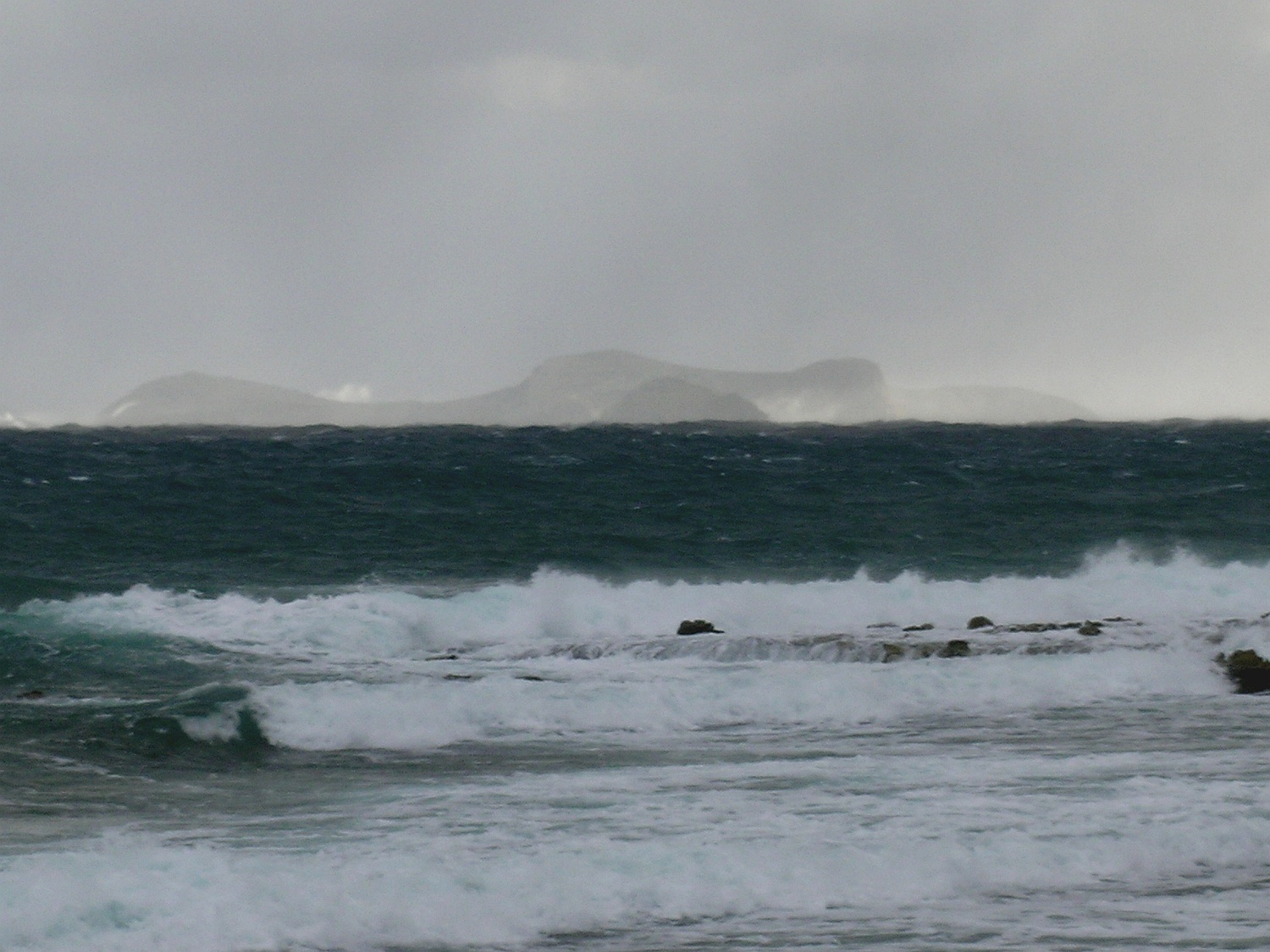
In winter, during storms, the spray of the waves is blown over half the island (the peak is a good 100 meters high!).
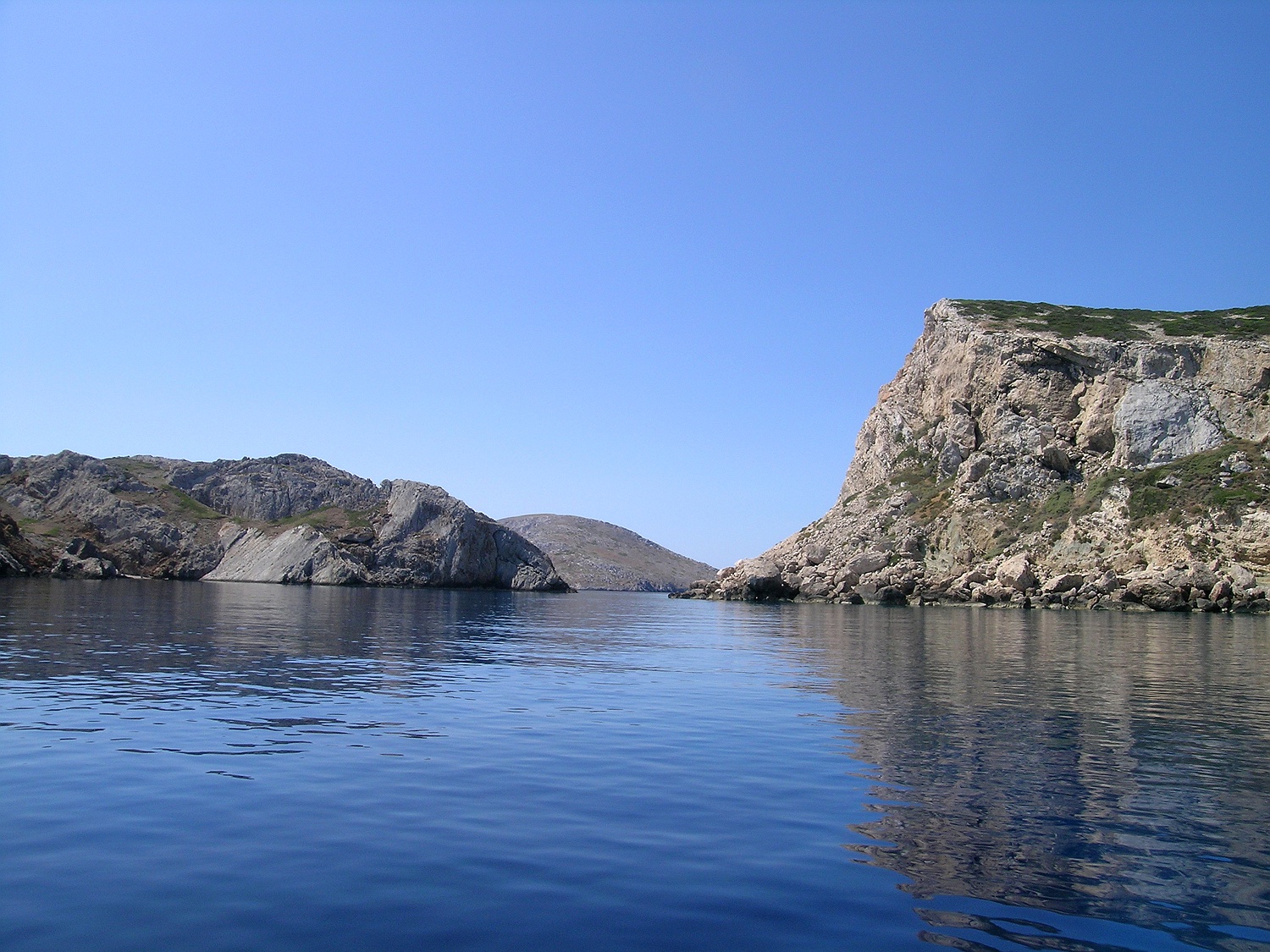
From the north, we enter the passage between the two islands of Ágios Nikólaos (right) and Prasíni (left); the third island, Strongýle, is visible in the background.
In the passage between the islands, we spot a large fish, a type of swordfish with a short sword, which swims right at the surface of the water and which we can observe clearly. The men even try to harpoon it from the boat, but miss it.
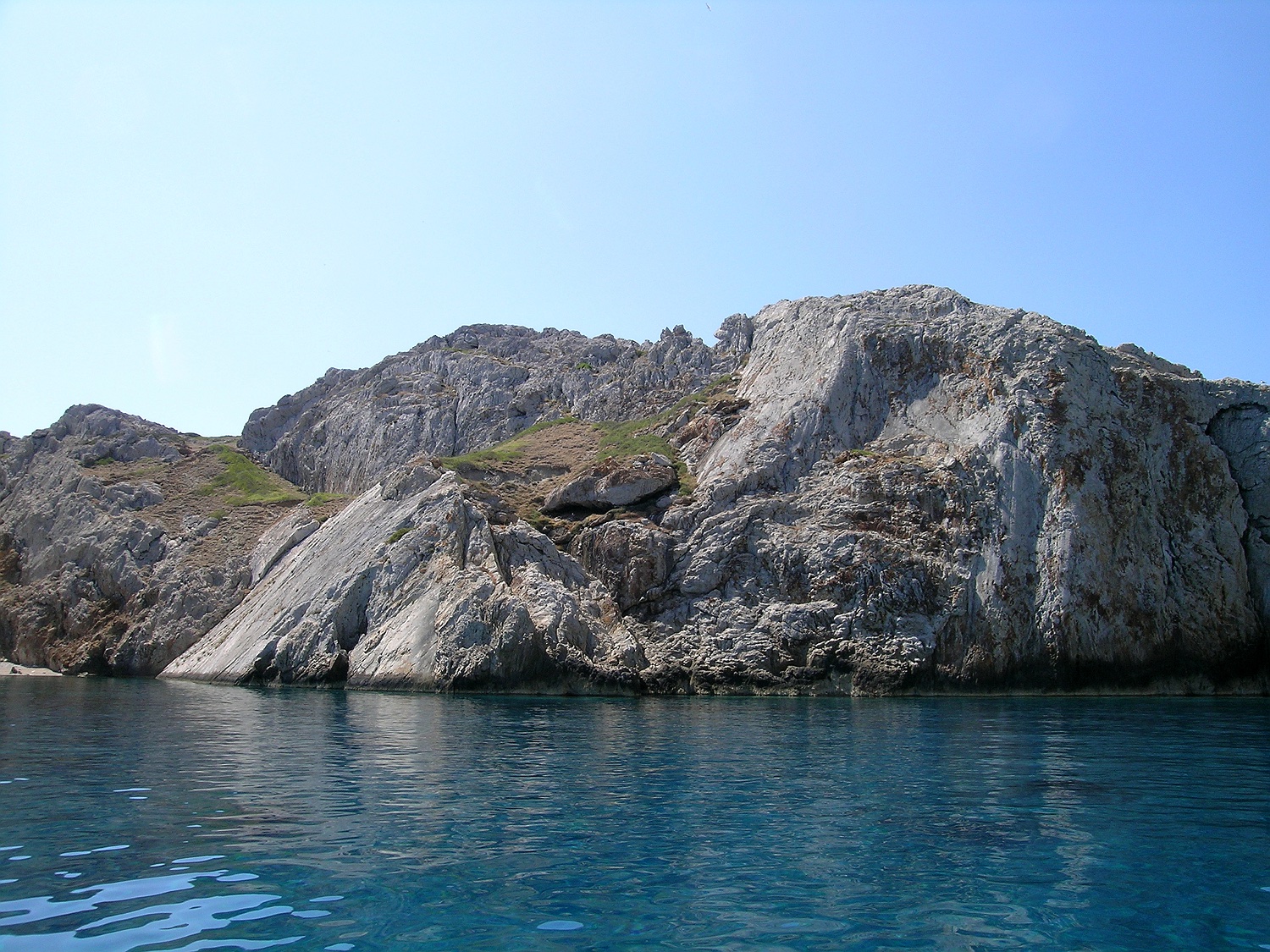
View of Prasíni Island
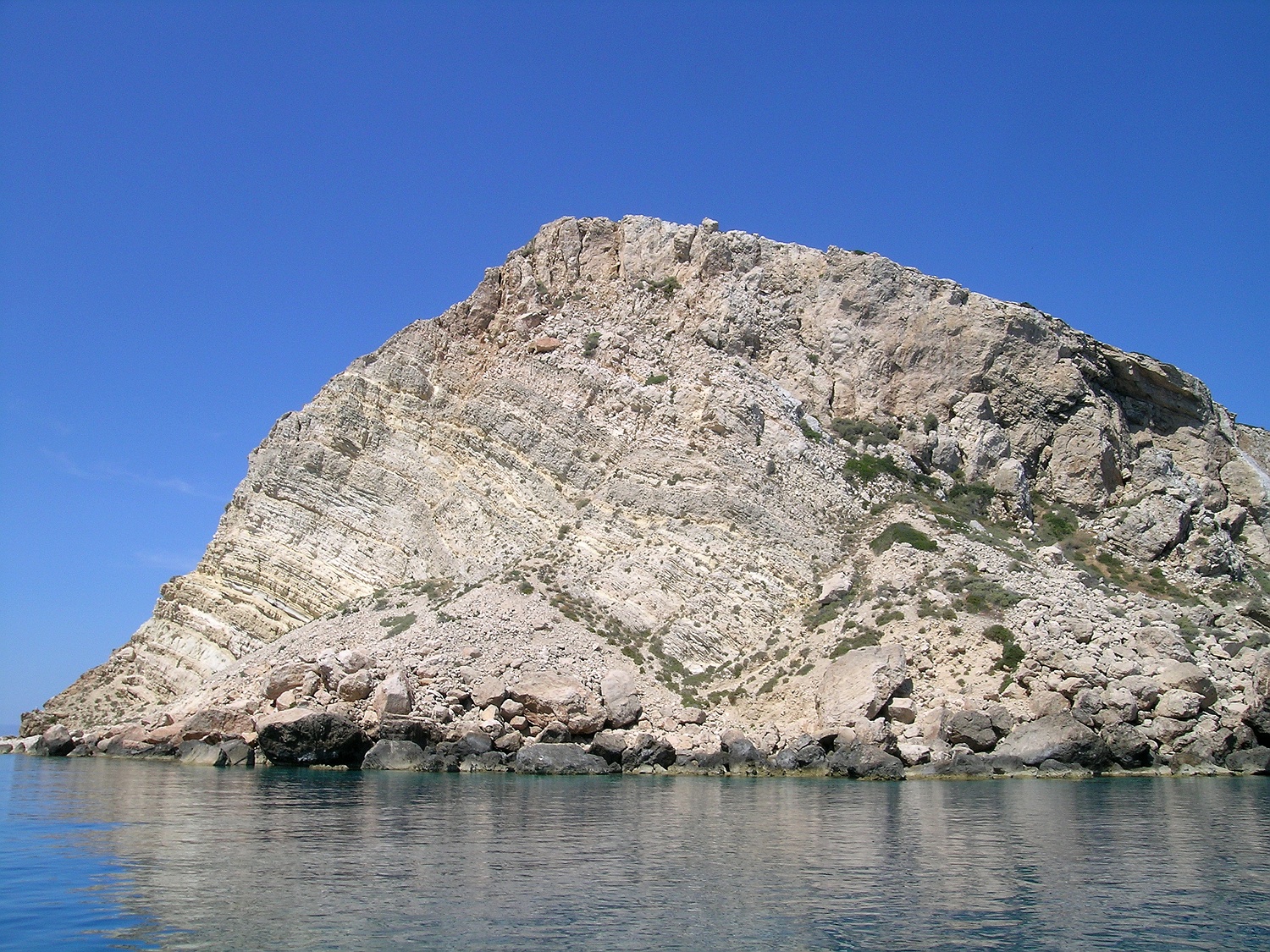
This high cliff rises up to our right.
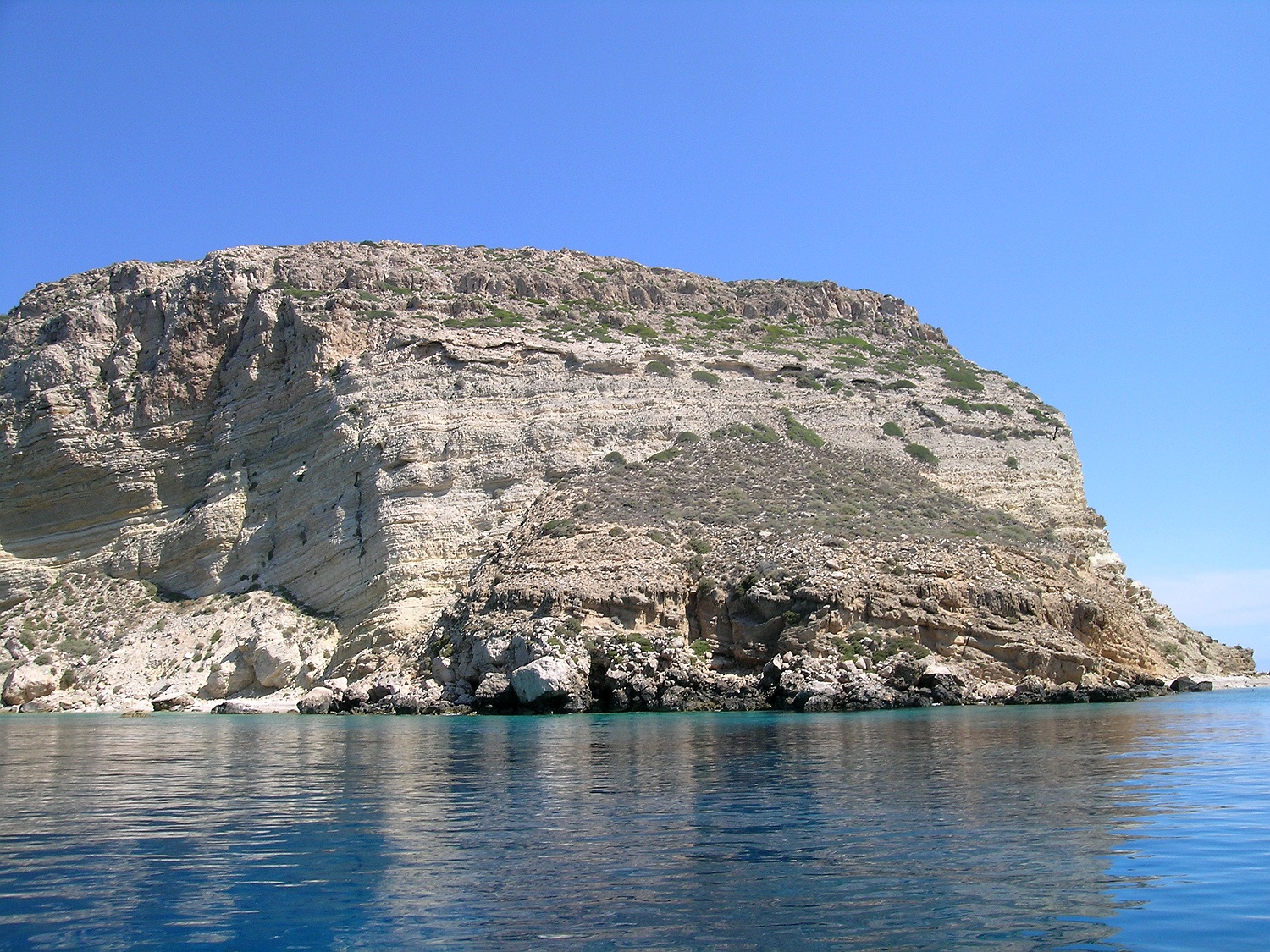
Now we are following the south side of the island; here too, the slopes are very steep.
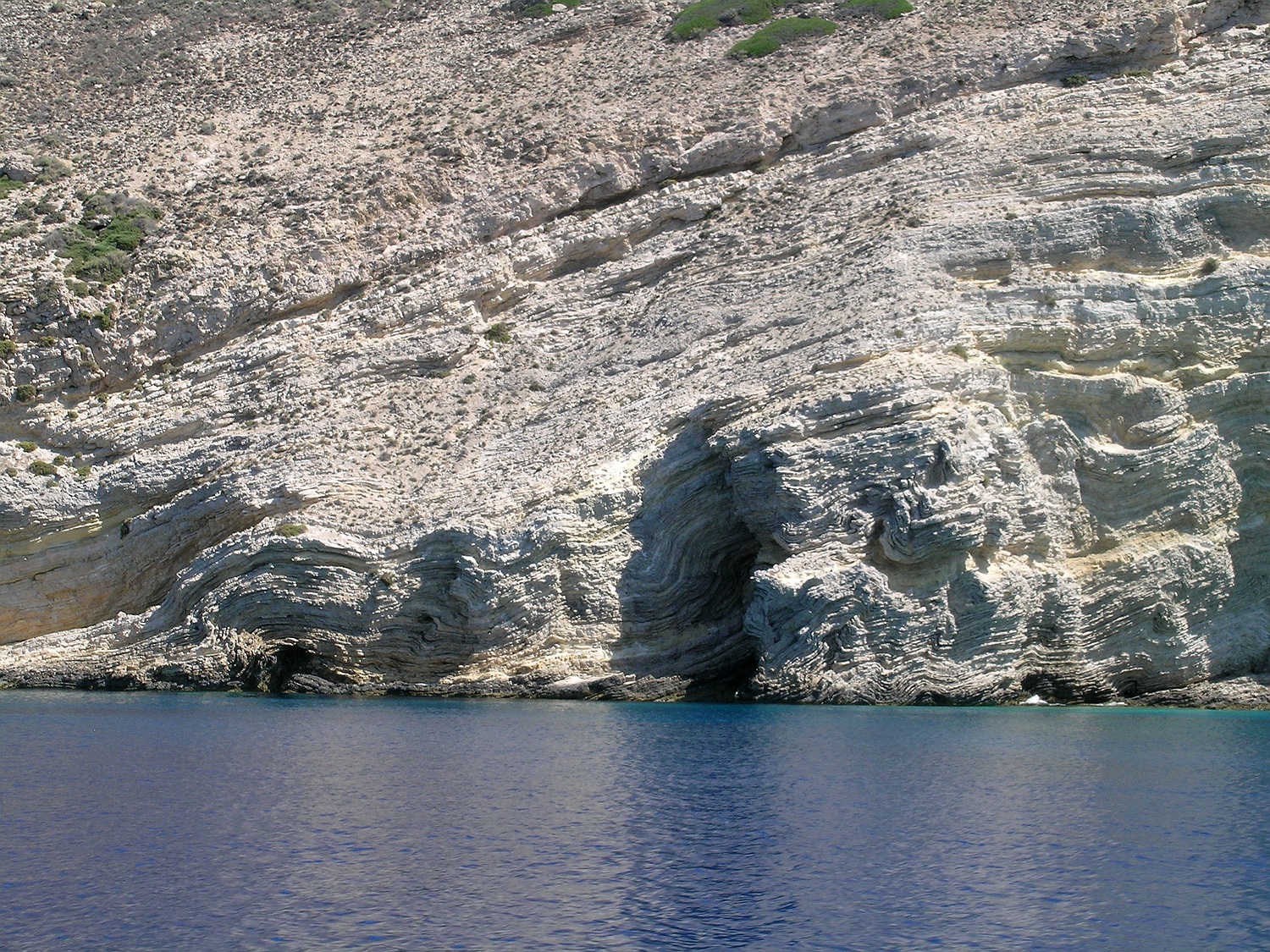
The sediment layers of the sandstone are clearly visible.
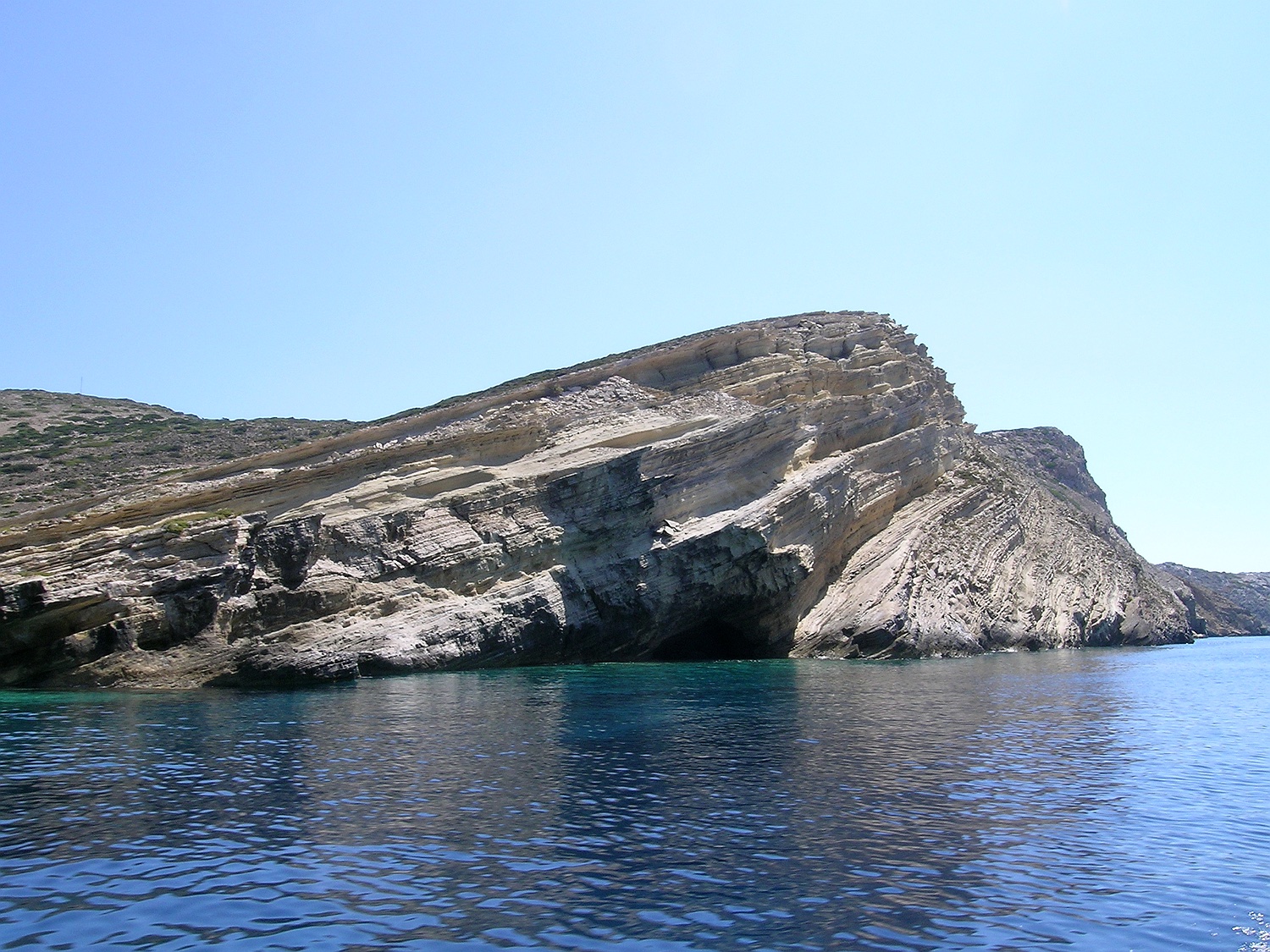
Not far from here, the sandstone was quarried.
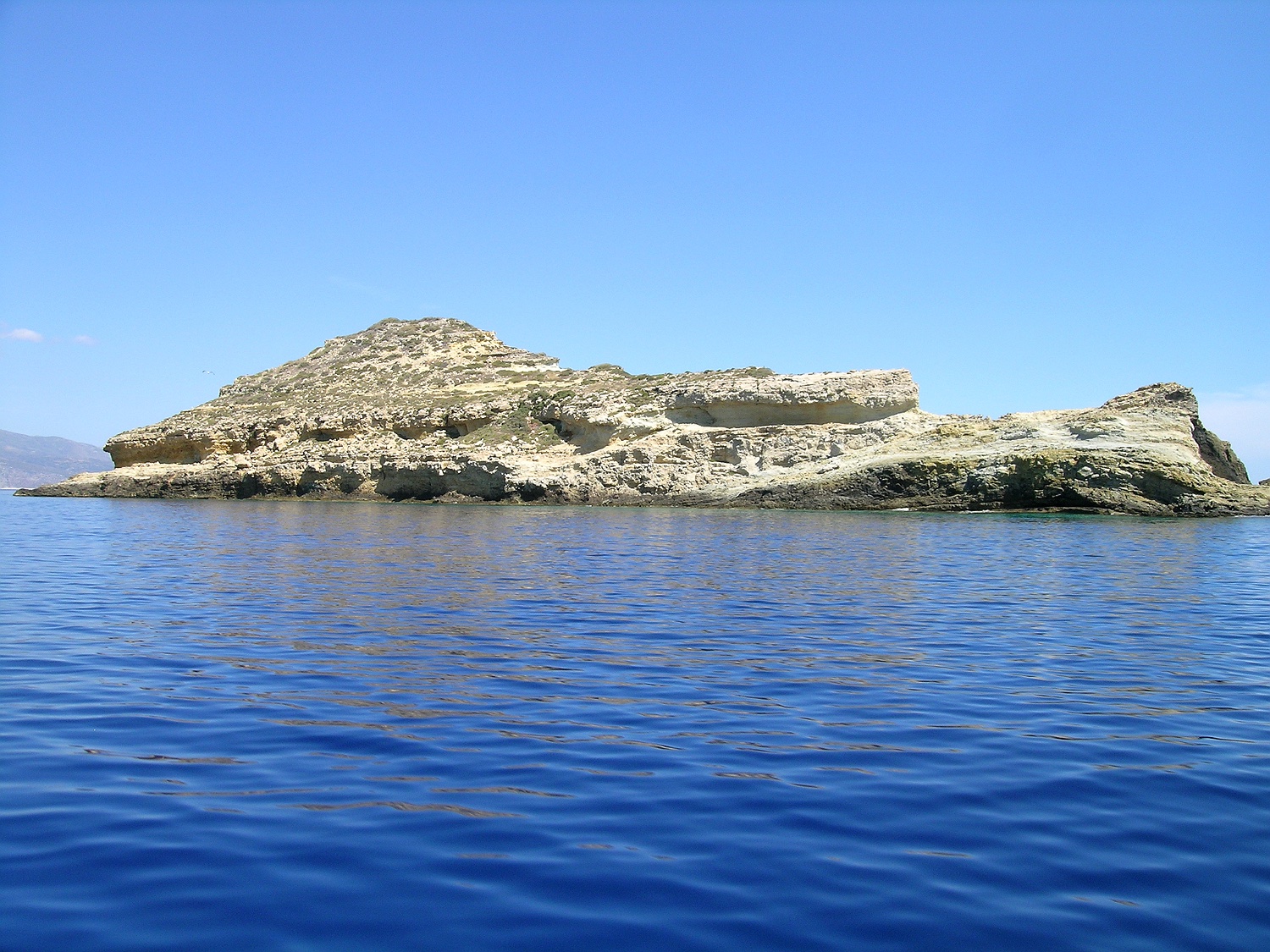
the south-western cape
We enter the west-facing bay to swim and spend some time on the beach. The beautiful large beach consists of fine gravel; the crystal-clear water is very tempting! Only the garbage brought by the sea spoils the idyllic picture…
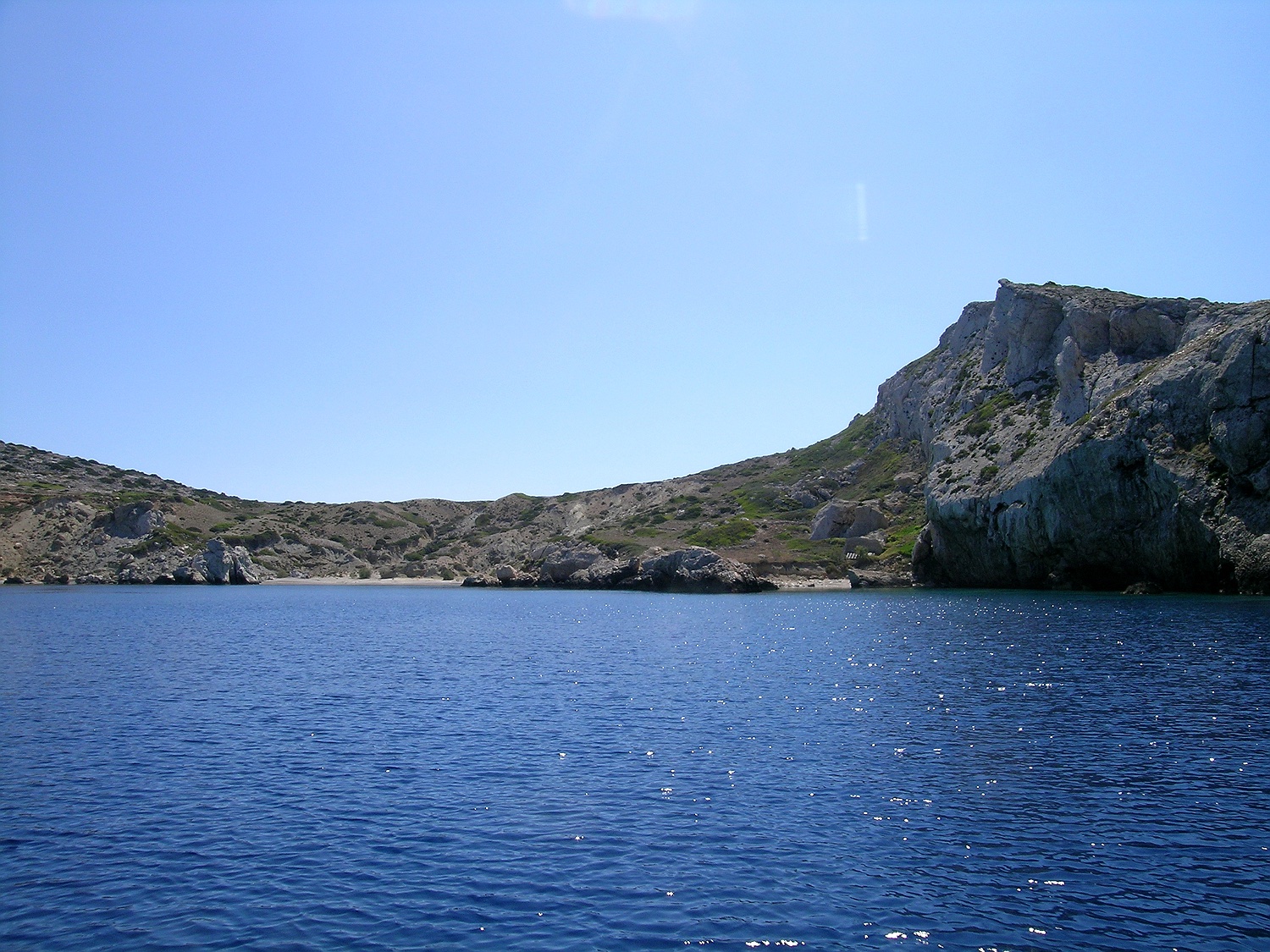
the entrance to the bay
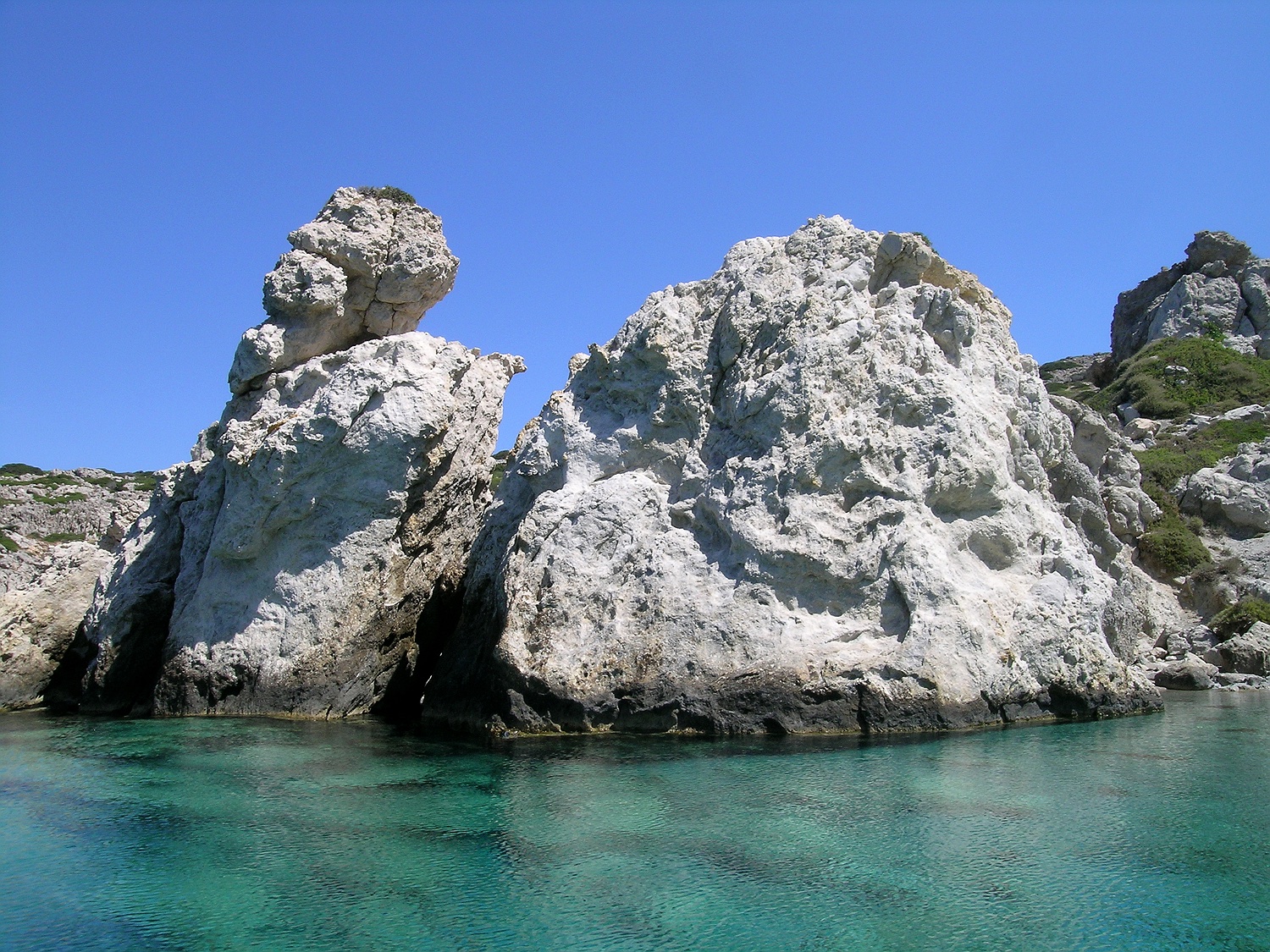
These picturesque rocks stand right next to the beach.
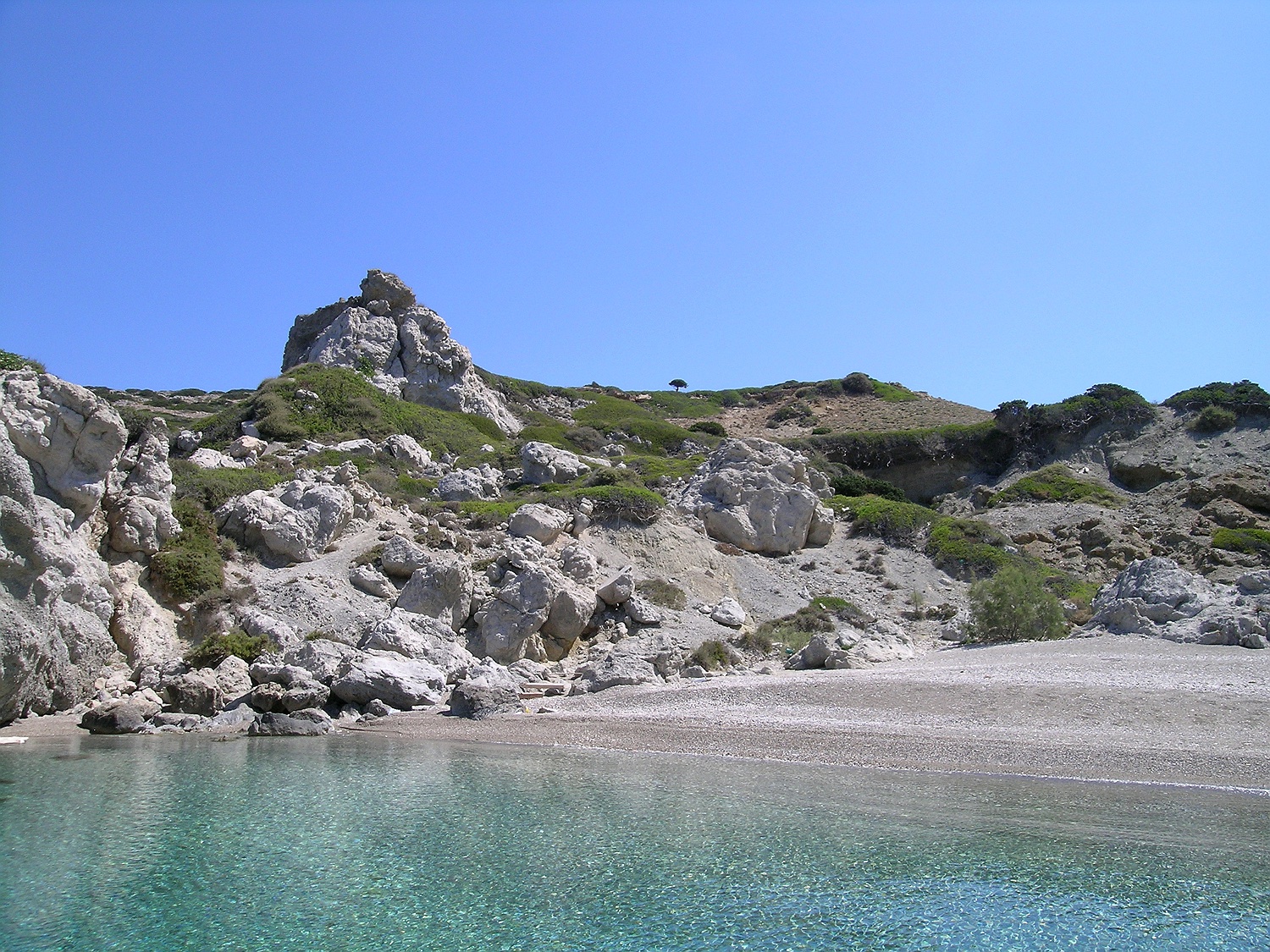
A paradise on earth!
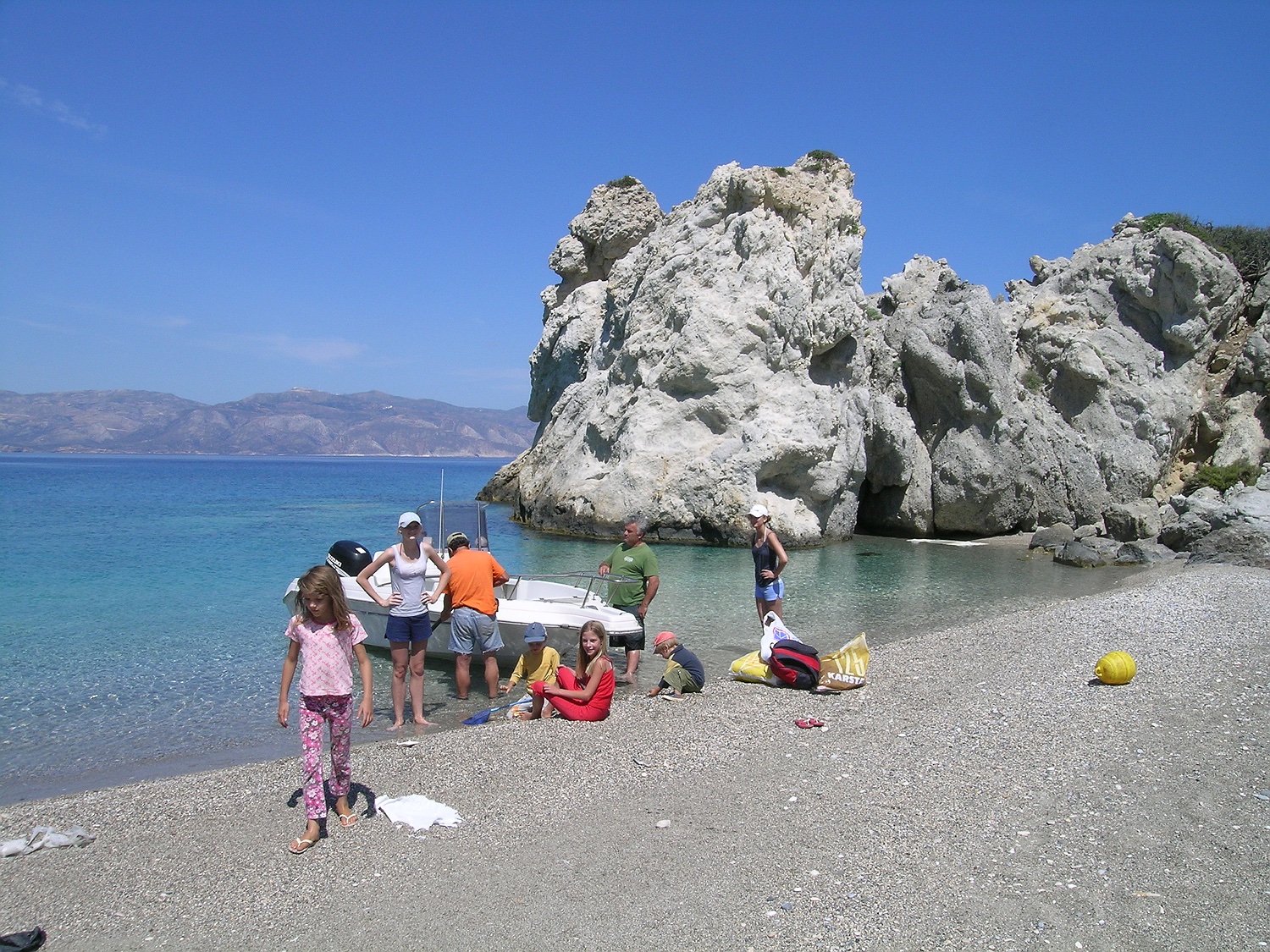
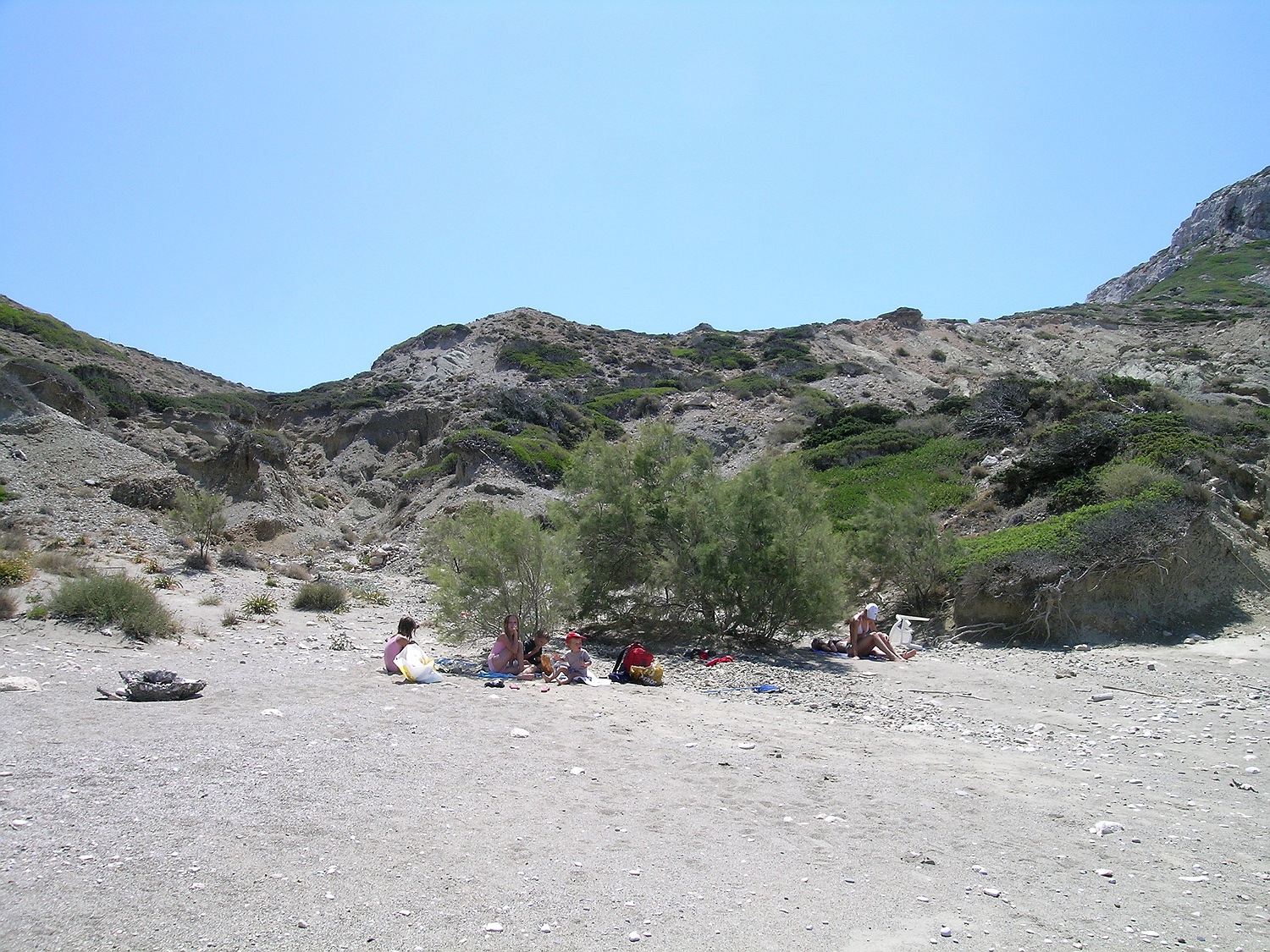
Only under these tamarisks can we find some shade.
A few plants grow on the beach that are able to survive in this difficult habitat characterised by drought and salt. Countless wild bees buzz over the sand, carrying food back to their nest holes.

The sea fennel (Crithmum maritimum) is edible.
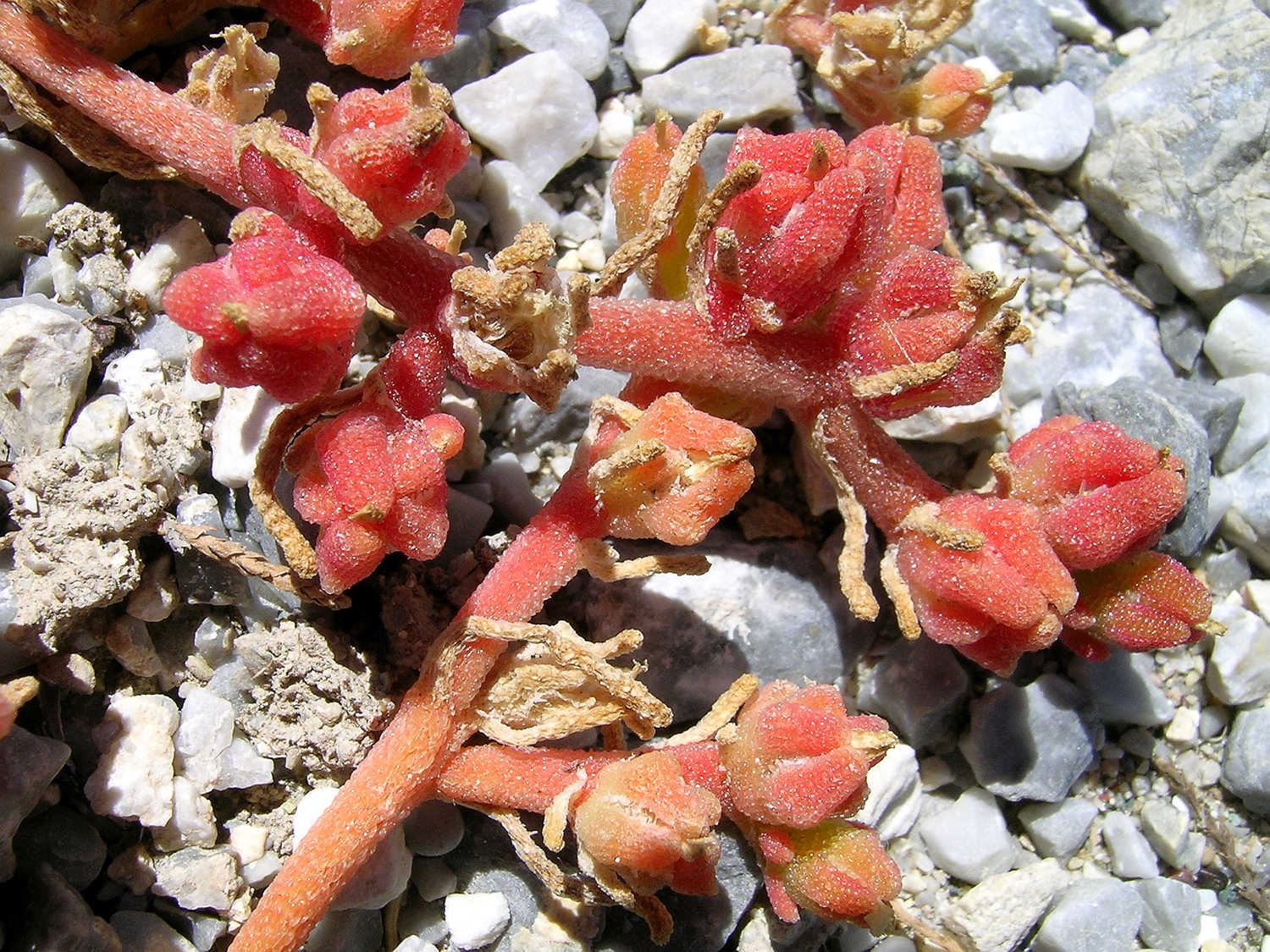
Like most salt-resistant beach plants, the one pictured here is thick and fleshy.
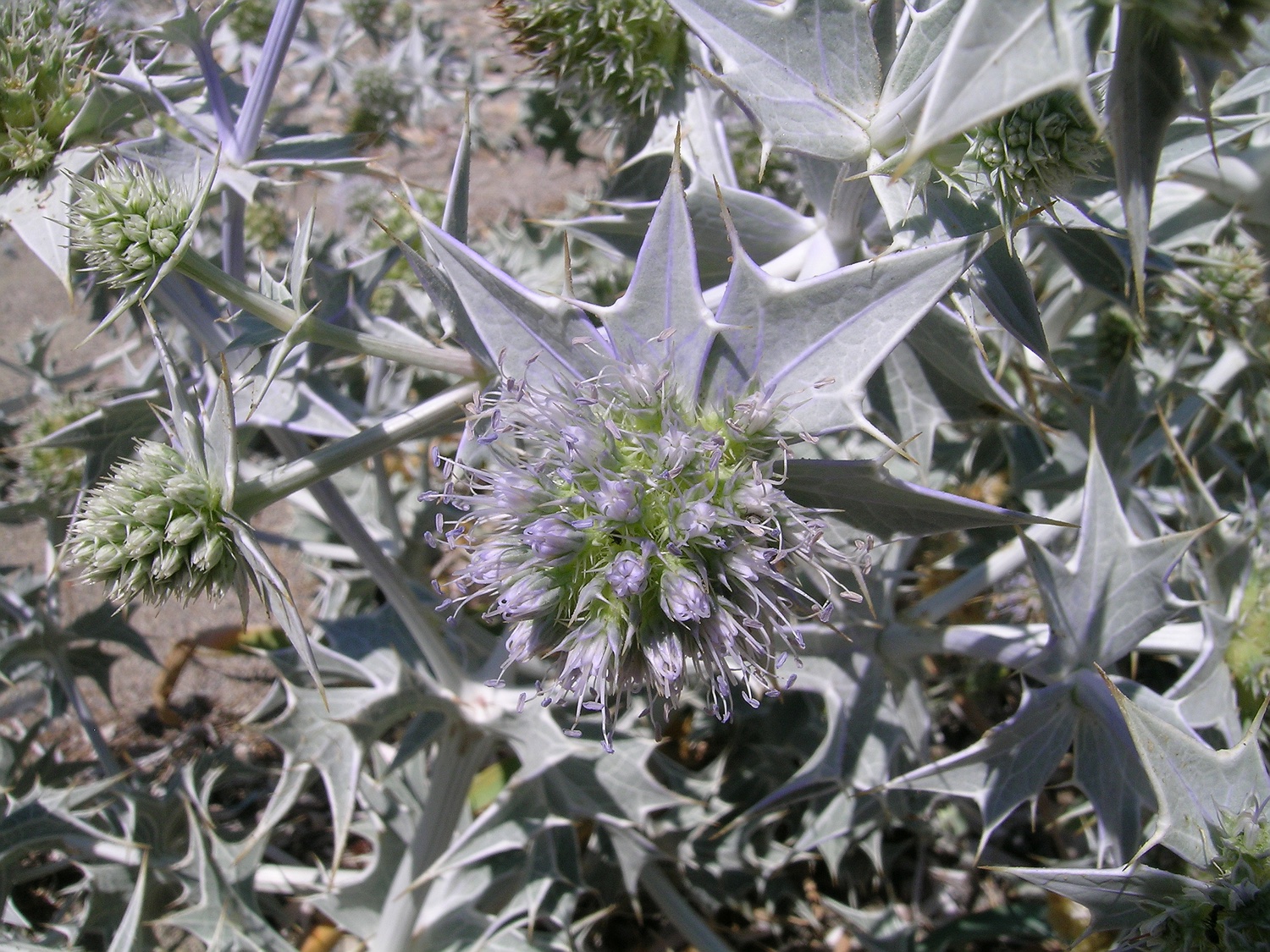
The sea holly (Eryngium maritimum) is currently in bloom.
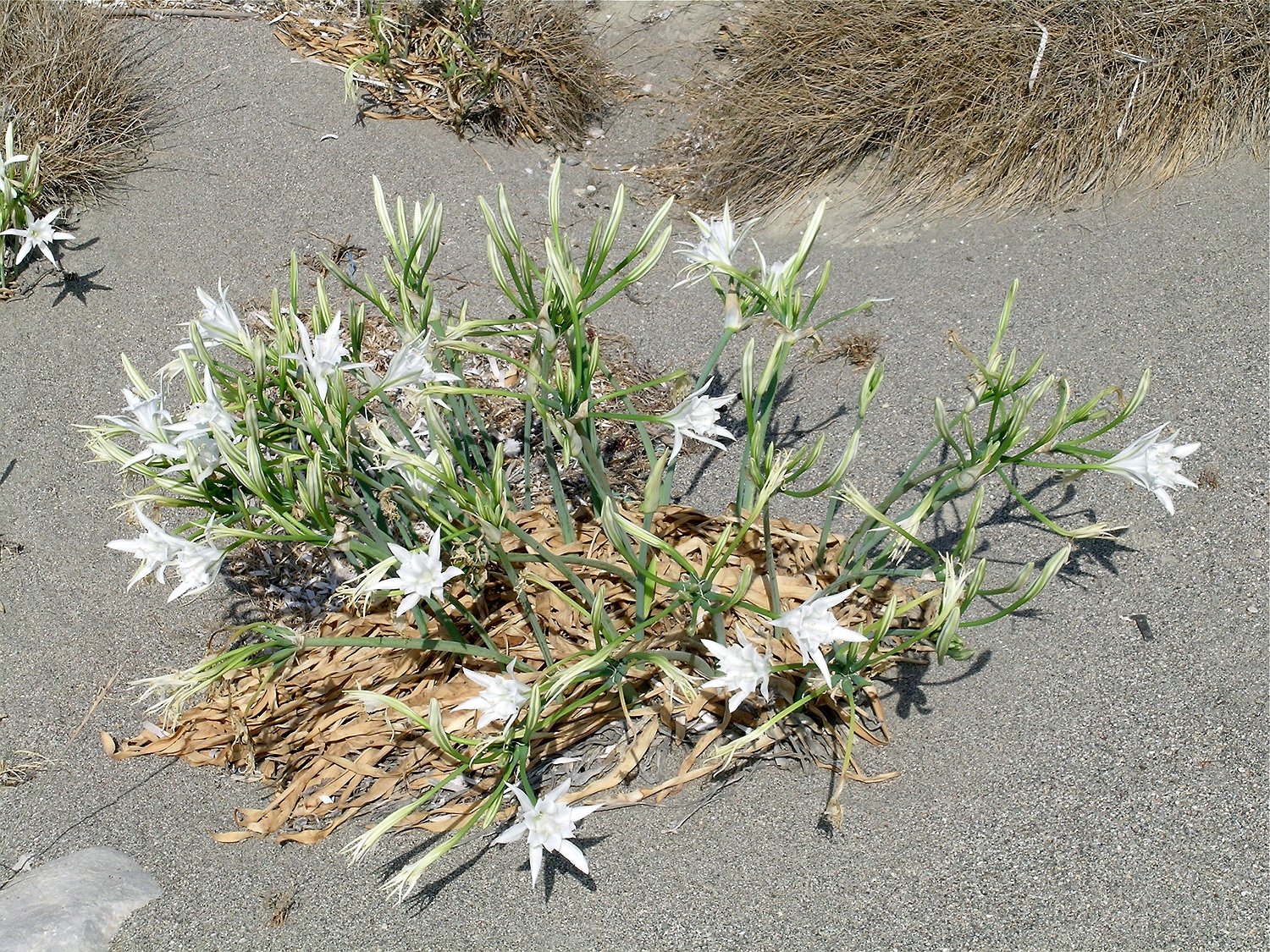
The sea daffodil (Pancratium maritimum) only blooms in summer; this picture was taken in August.
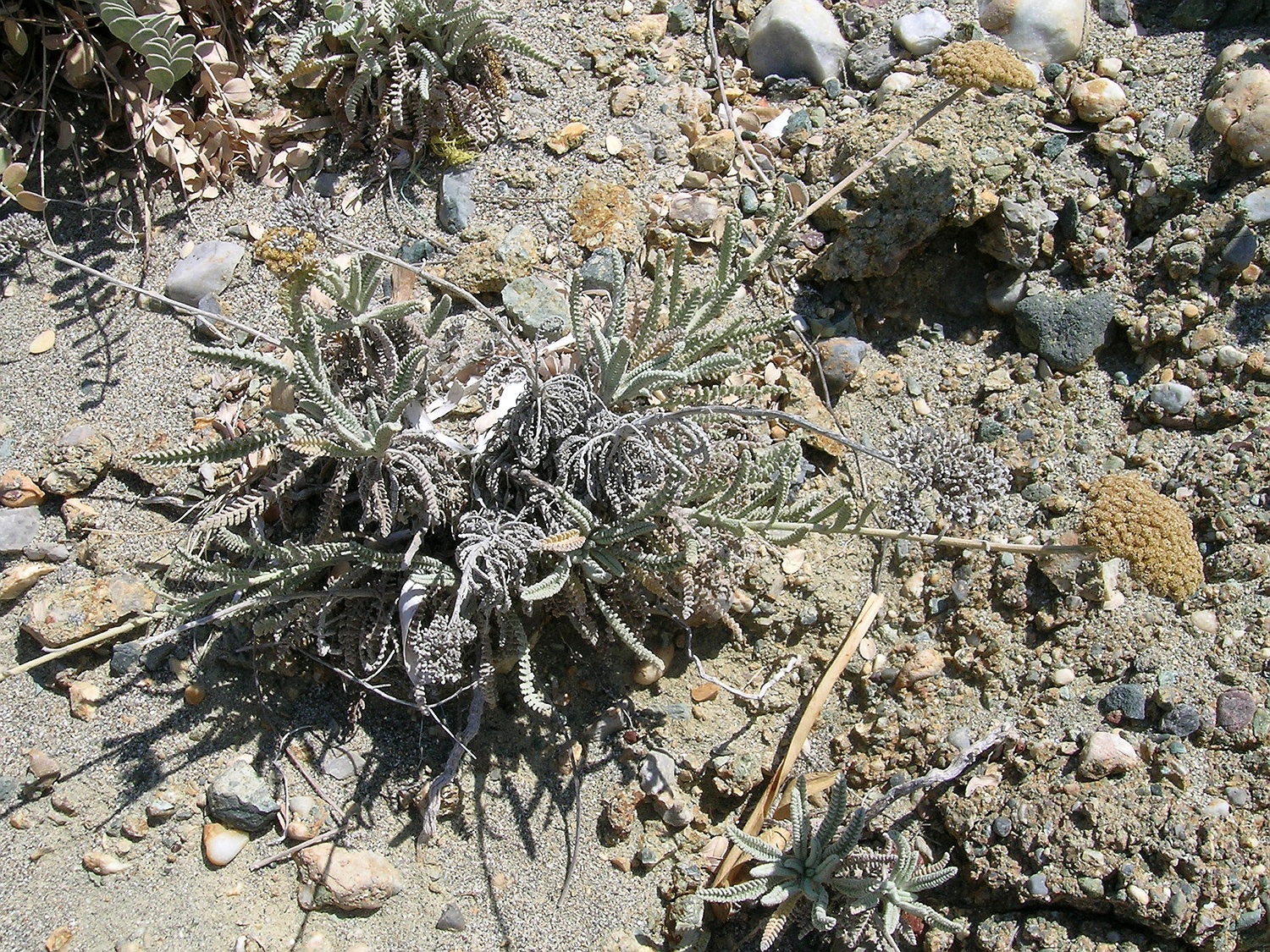
This species of yarrow (Achillea spec.?) is very common on the island.

The Mediterranean strawflower (Helichrysum stoechas) also grows abundantly.
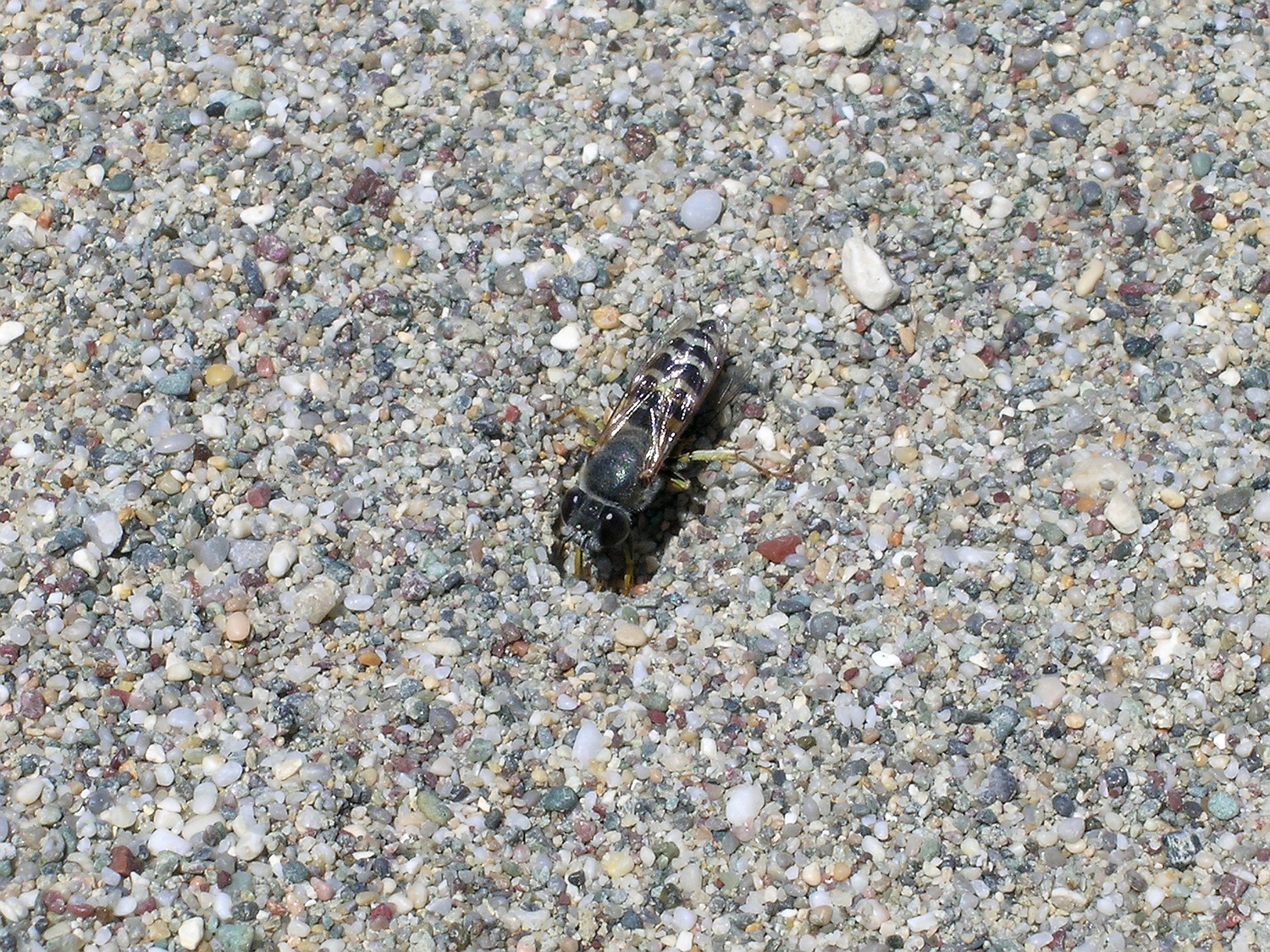
These sand wasps (Bembix spec.) buzz all over the beach.
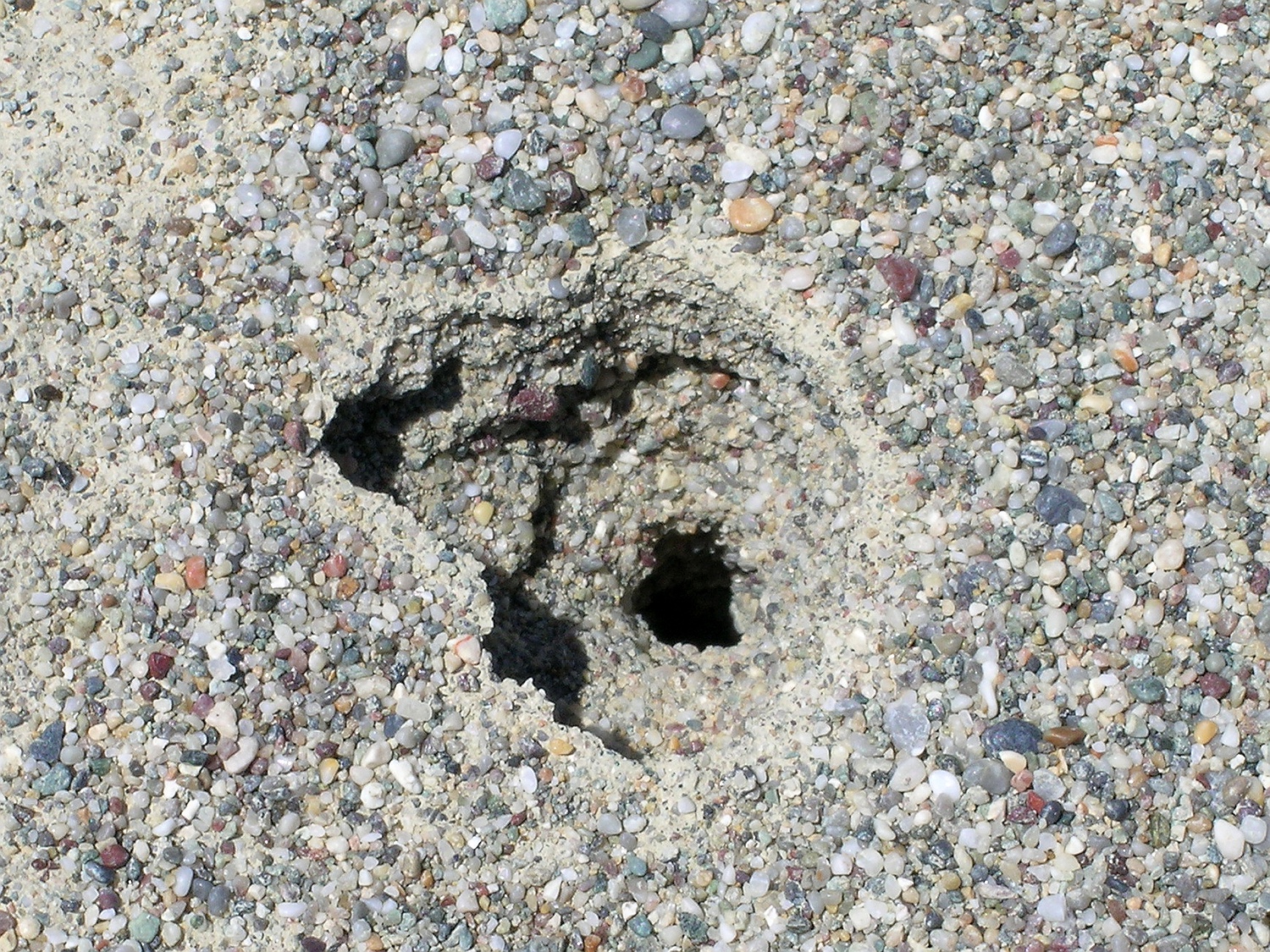
The wasps fly to their nest holes and crawl inside; they are probably carrying food back to their nests.
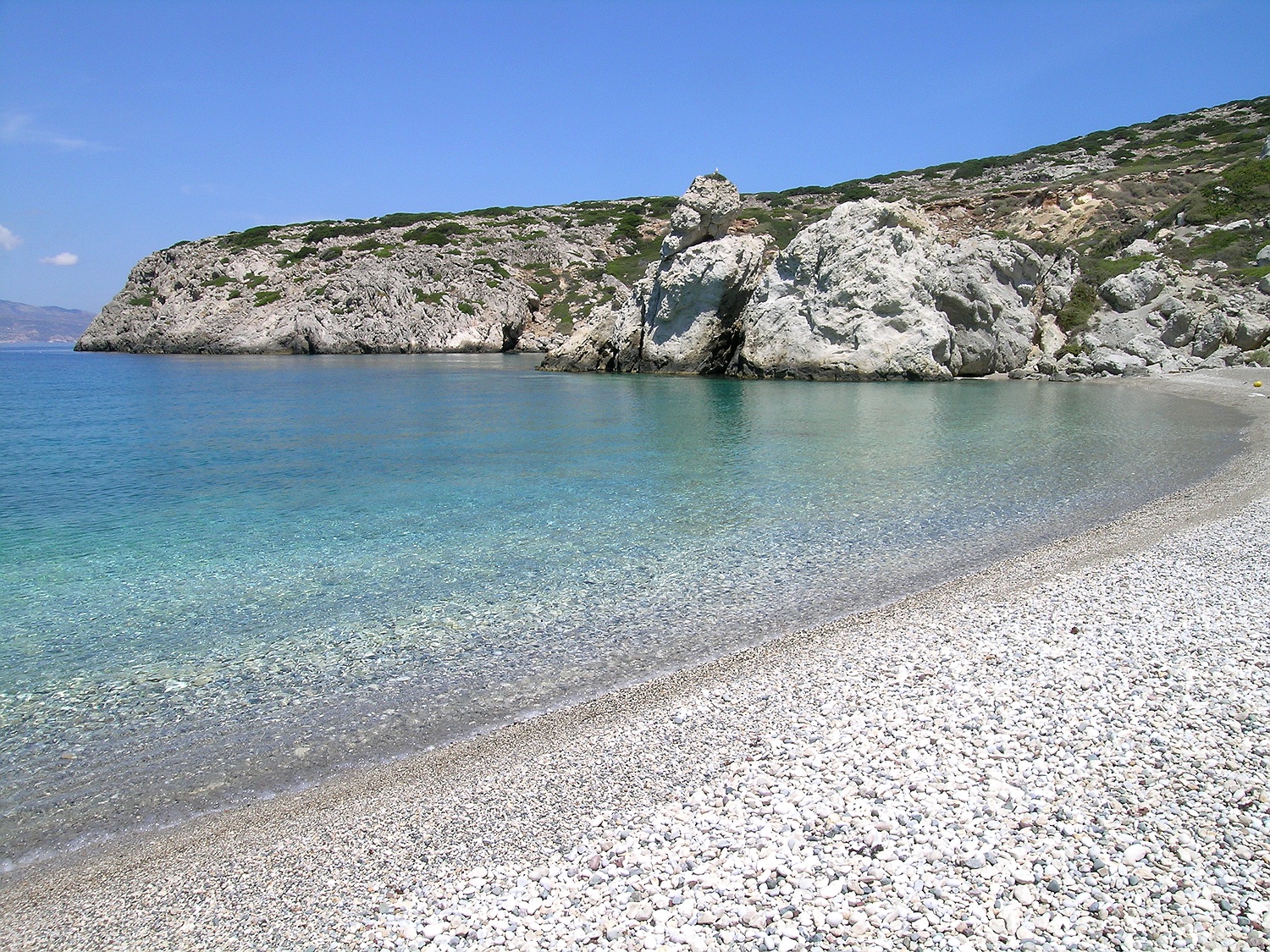
View across the beach
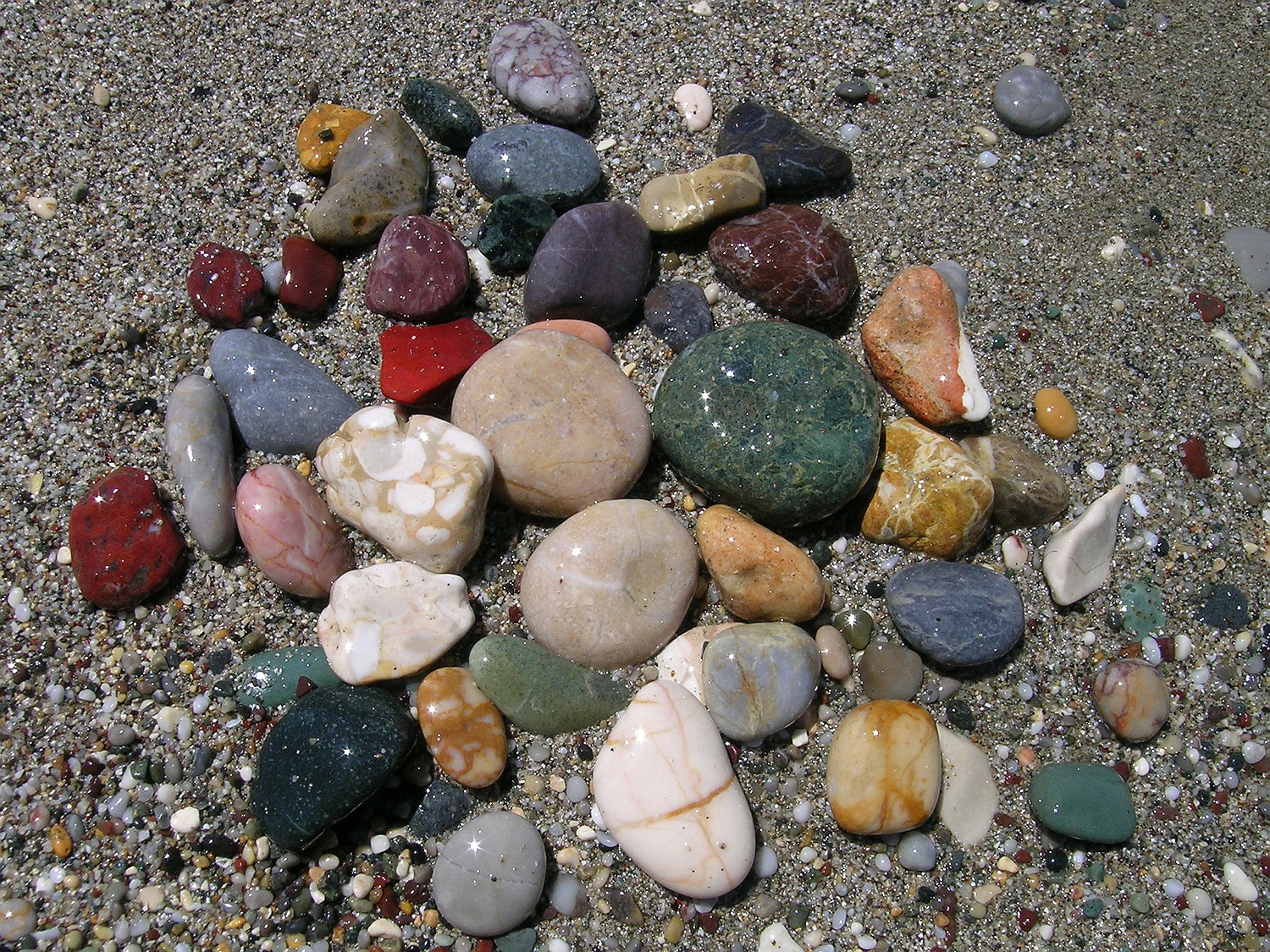
The beach consists of the most beautiful, colourful pebbles.
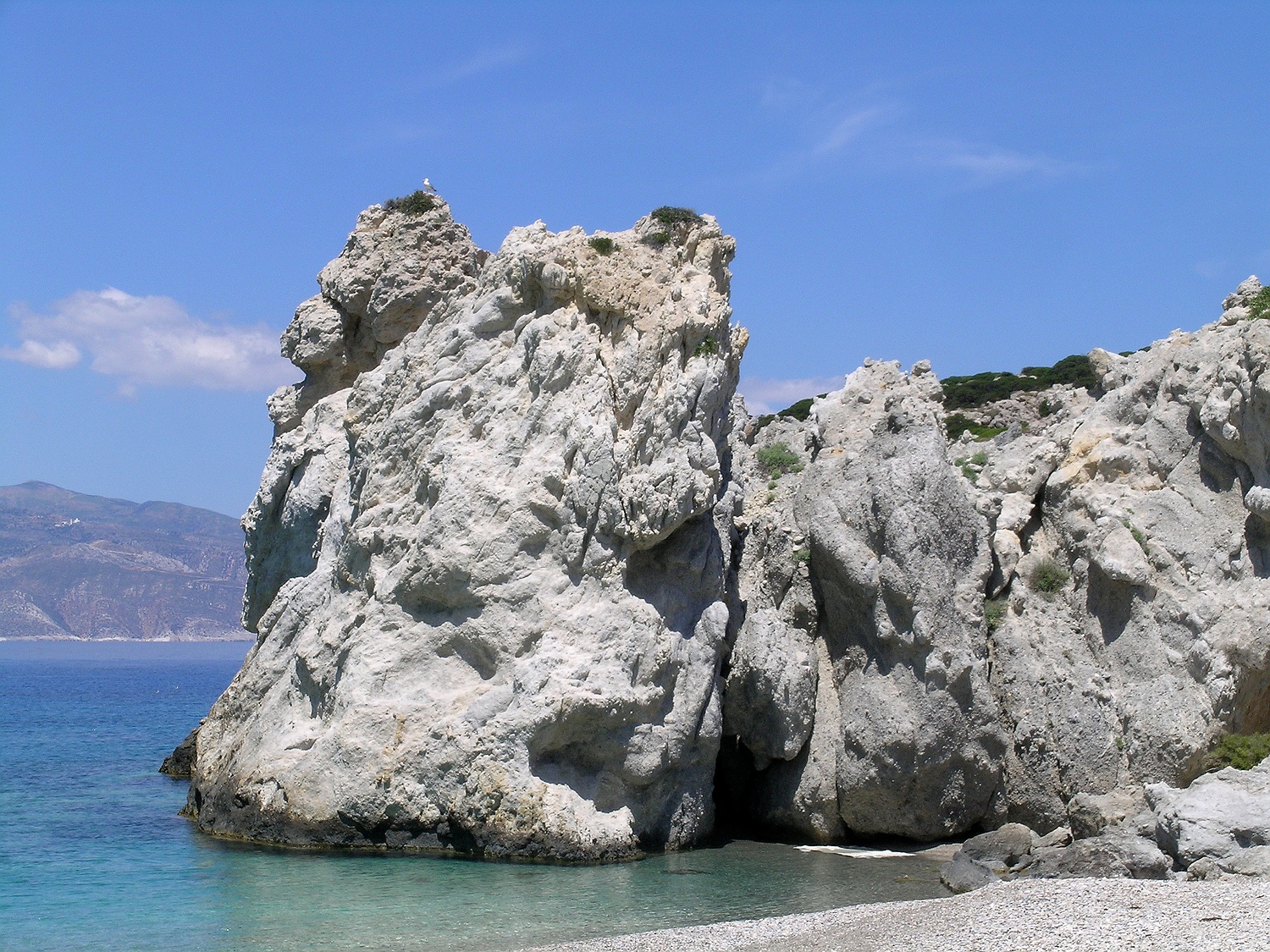
and once more the picturesque rock at the edge of the beach
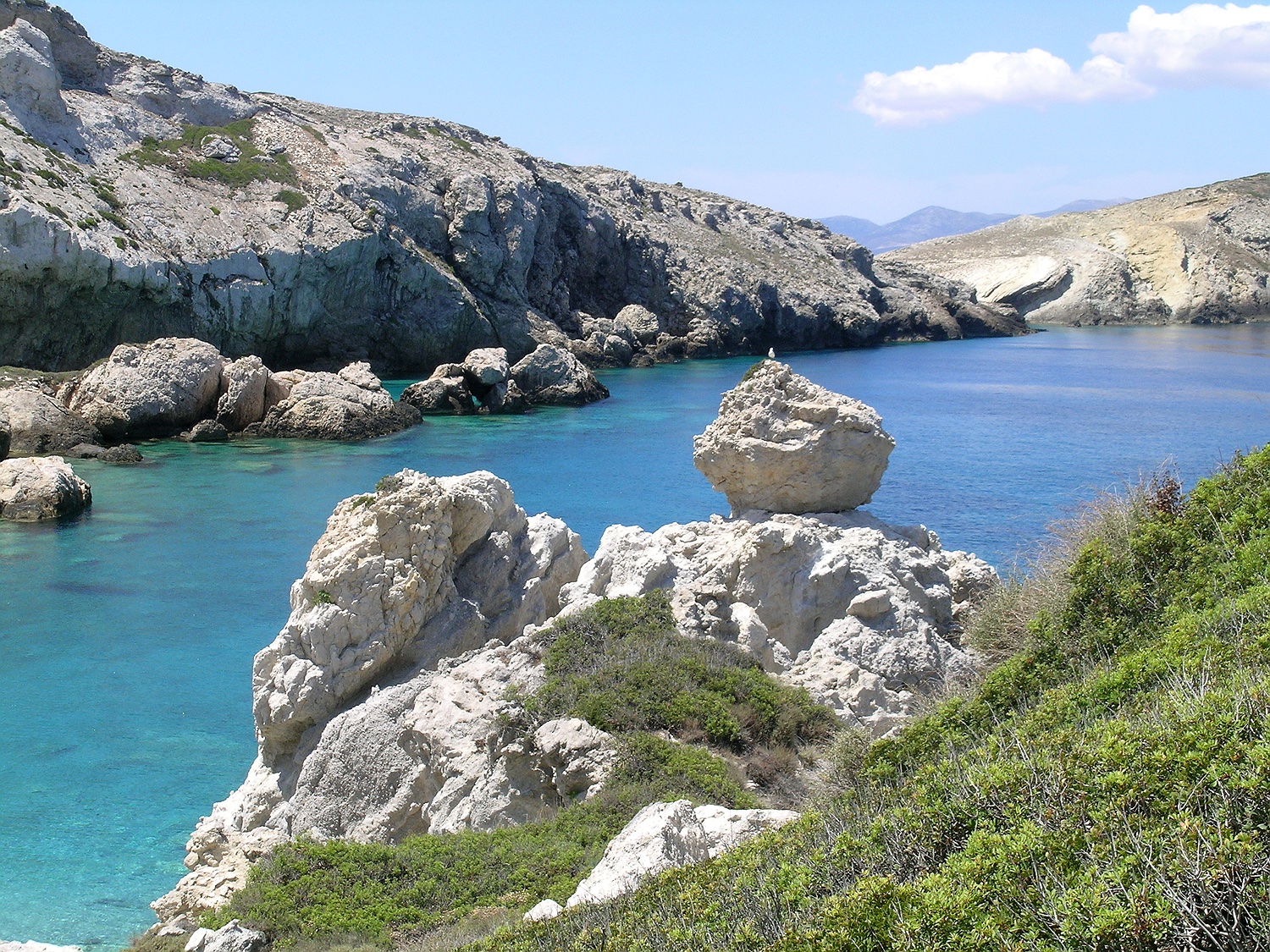
– without words –
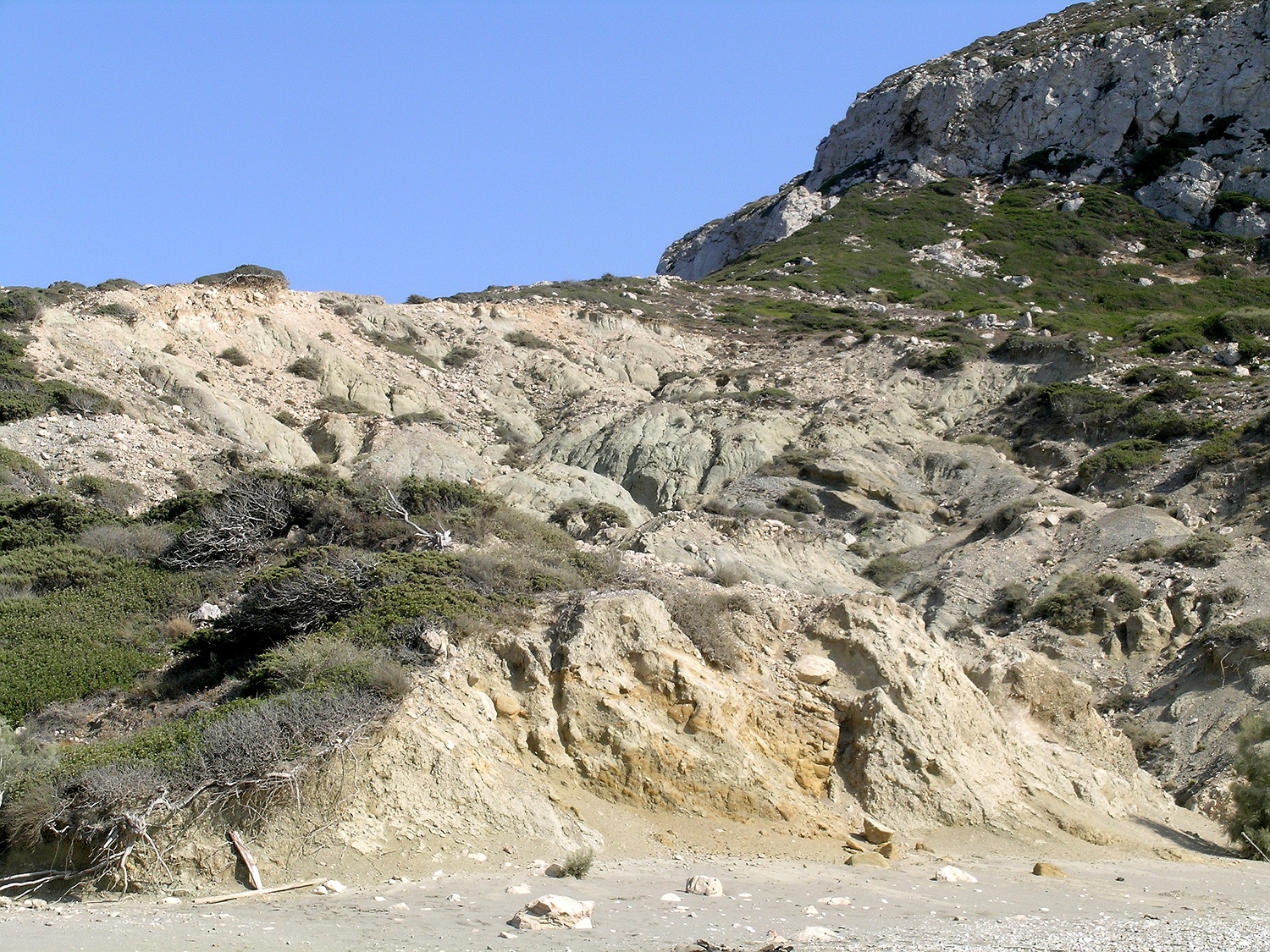
Behind the beach begins a heavily eroded slope.
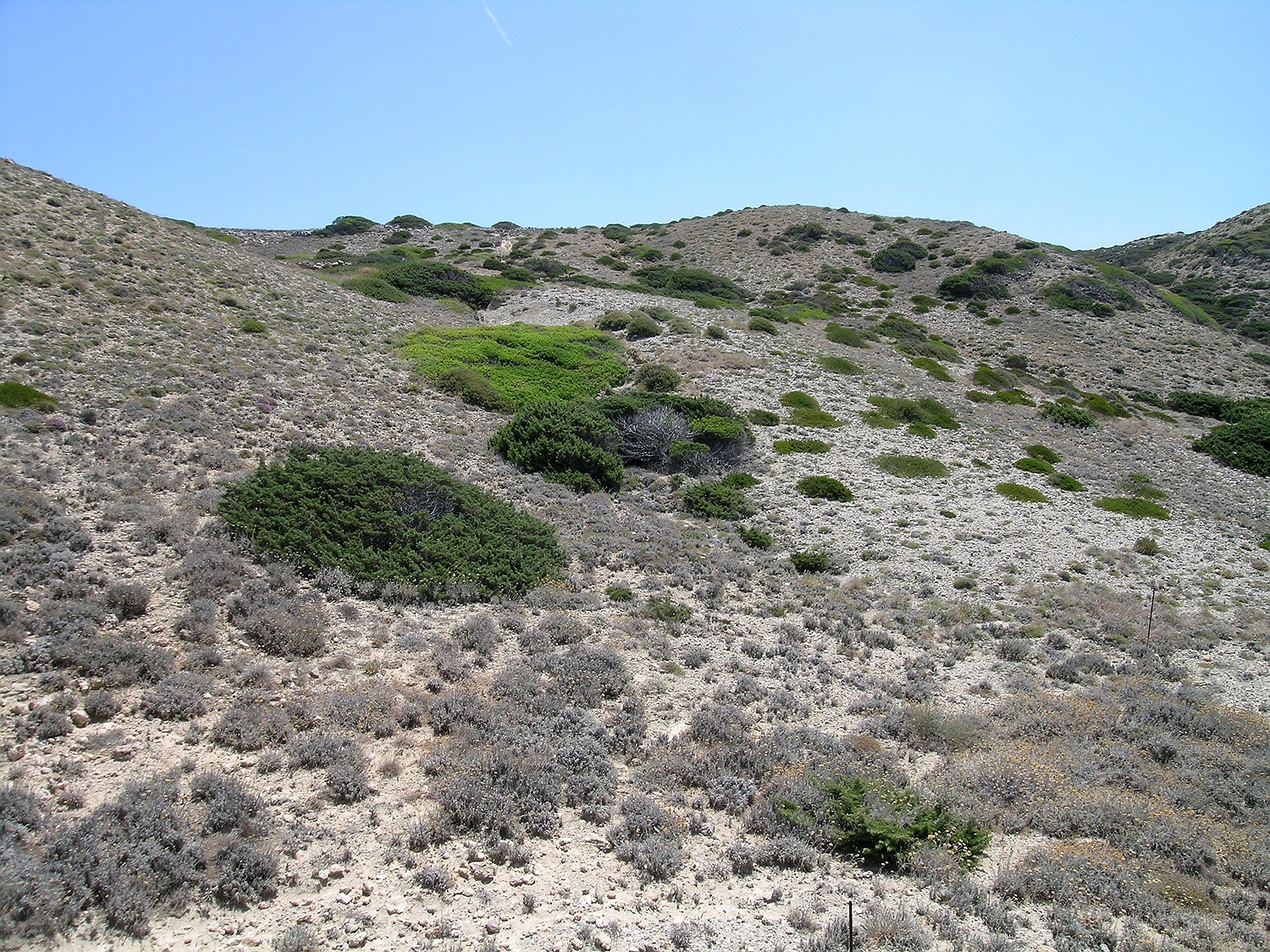
Further up, you come to a flatter area that is mainly covered with yarrow.
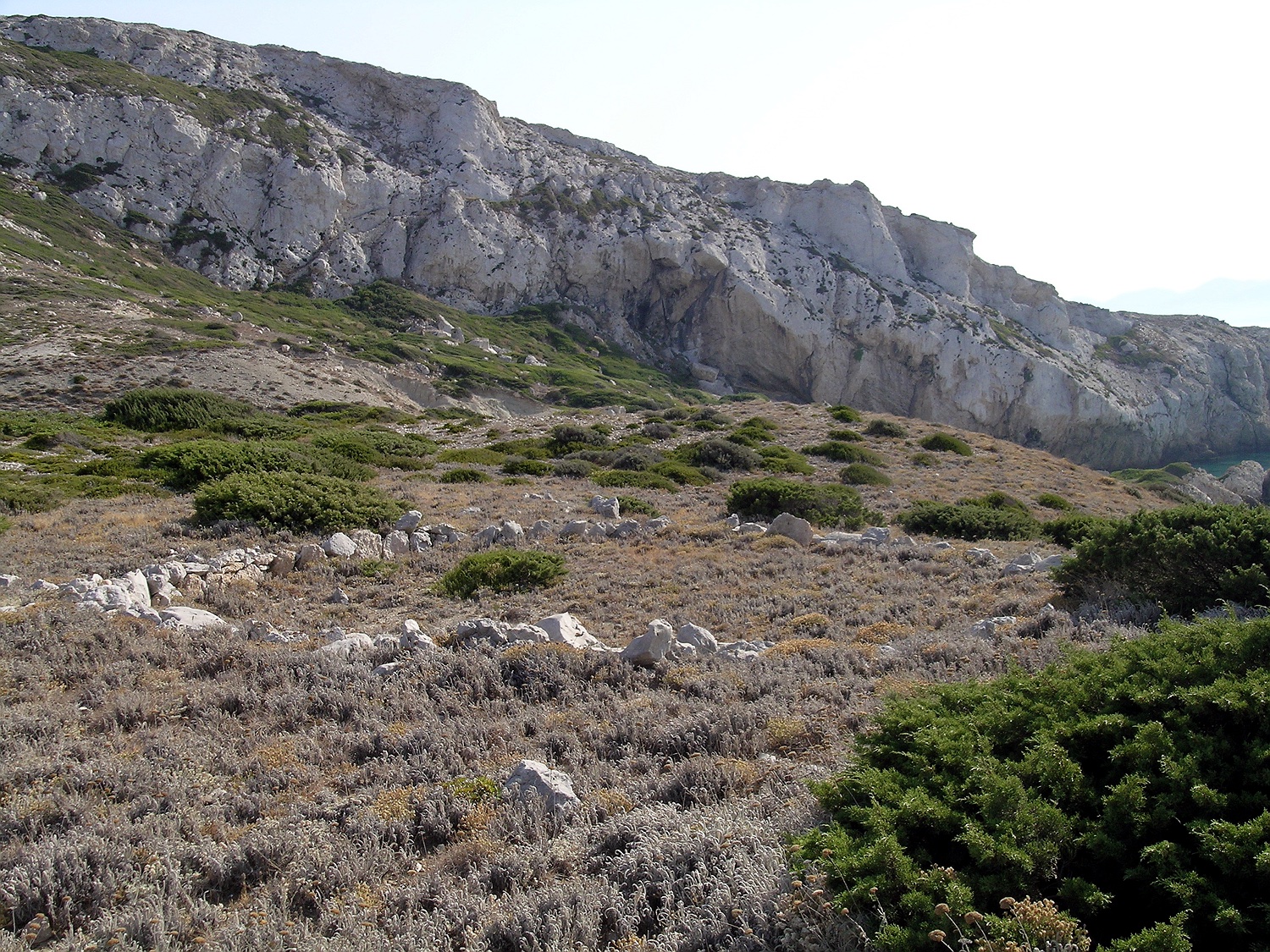
Quarry workers used to grow grain here, as proven by this threshing floor.
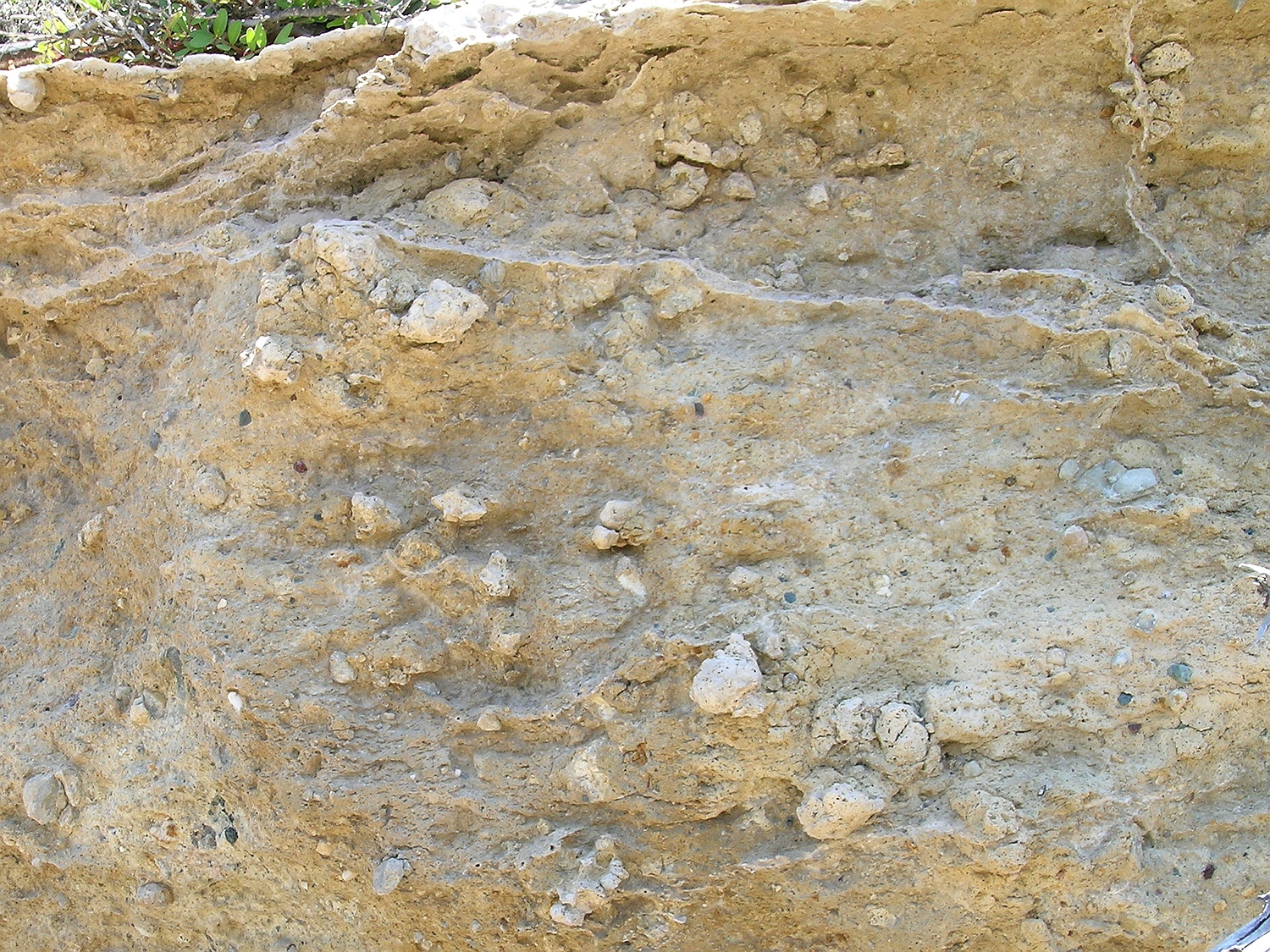
We come across sedimentary layers containing pumice, which originated from an eruption of the volcano of Santorini.
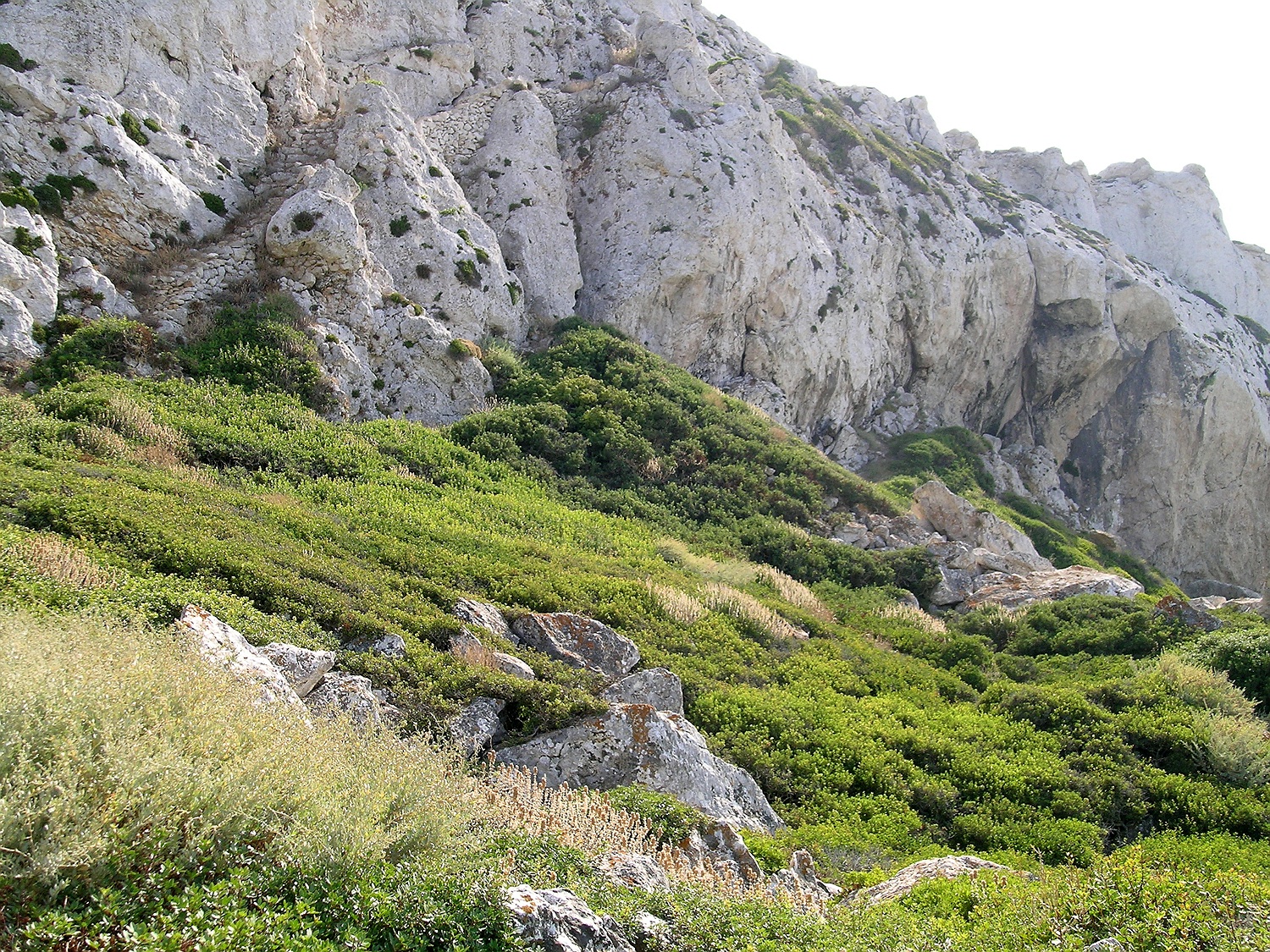
To the south, you reach this rocky cliff, which one can transverse only on a narrow stair built into the rock. To reach it, one must find a way through what is now quite impenetrable scrub of mastic bushes (Pistacia lentiscus).
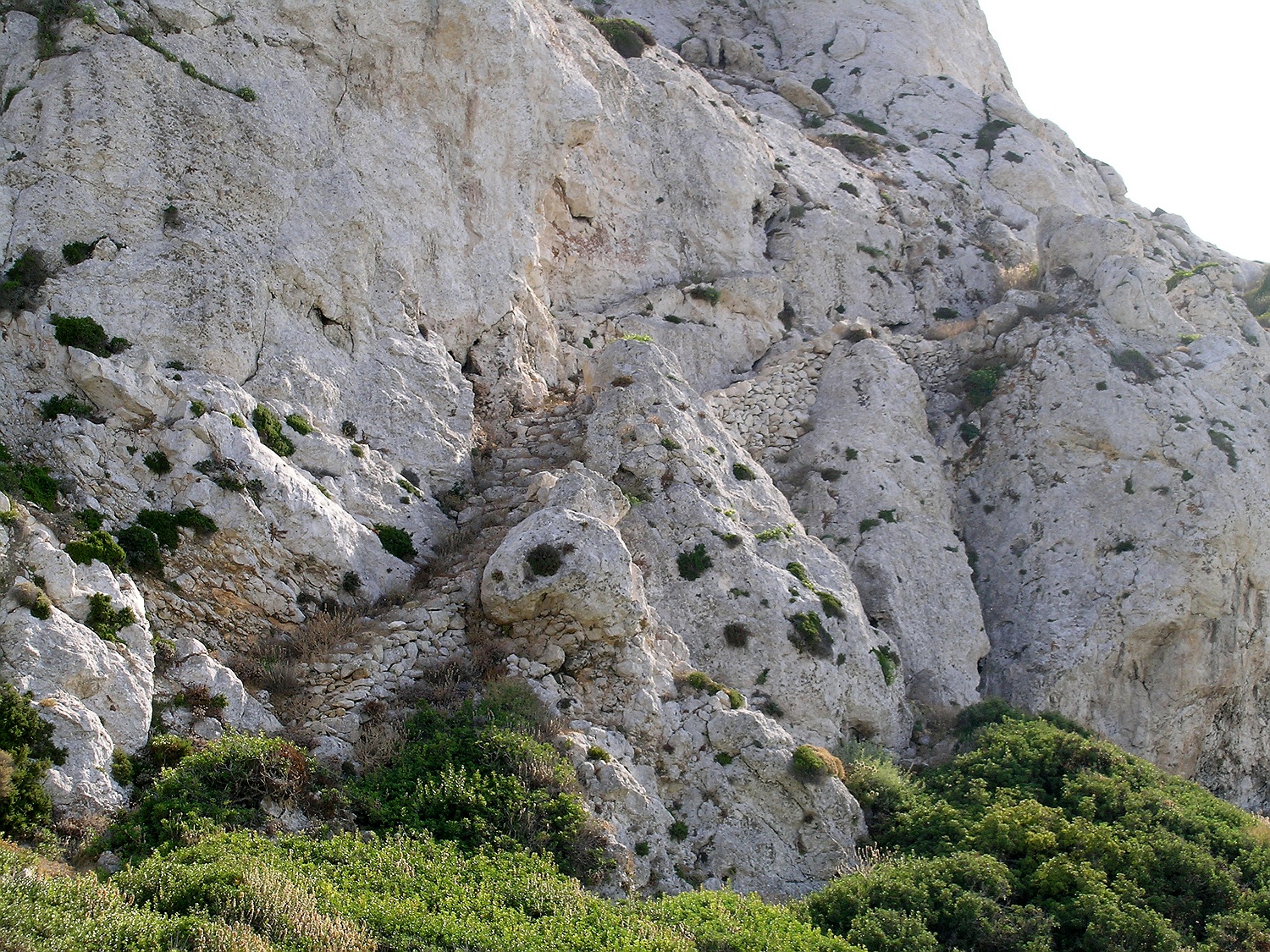
the stair
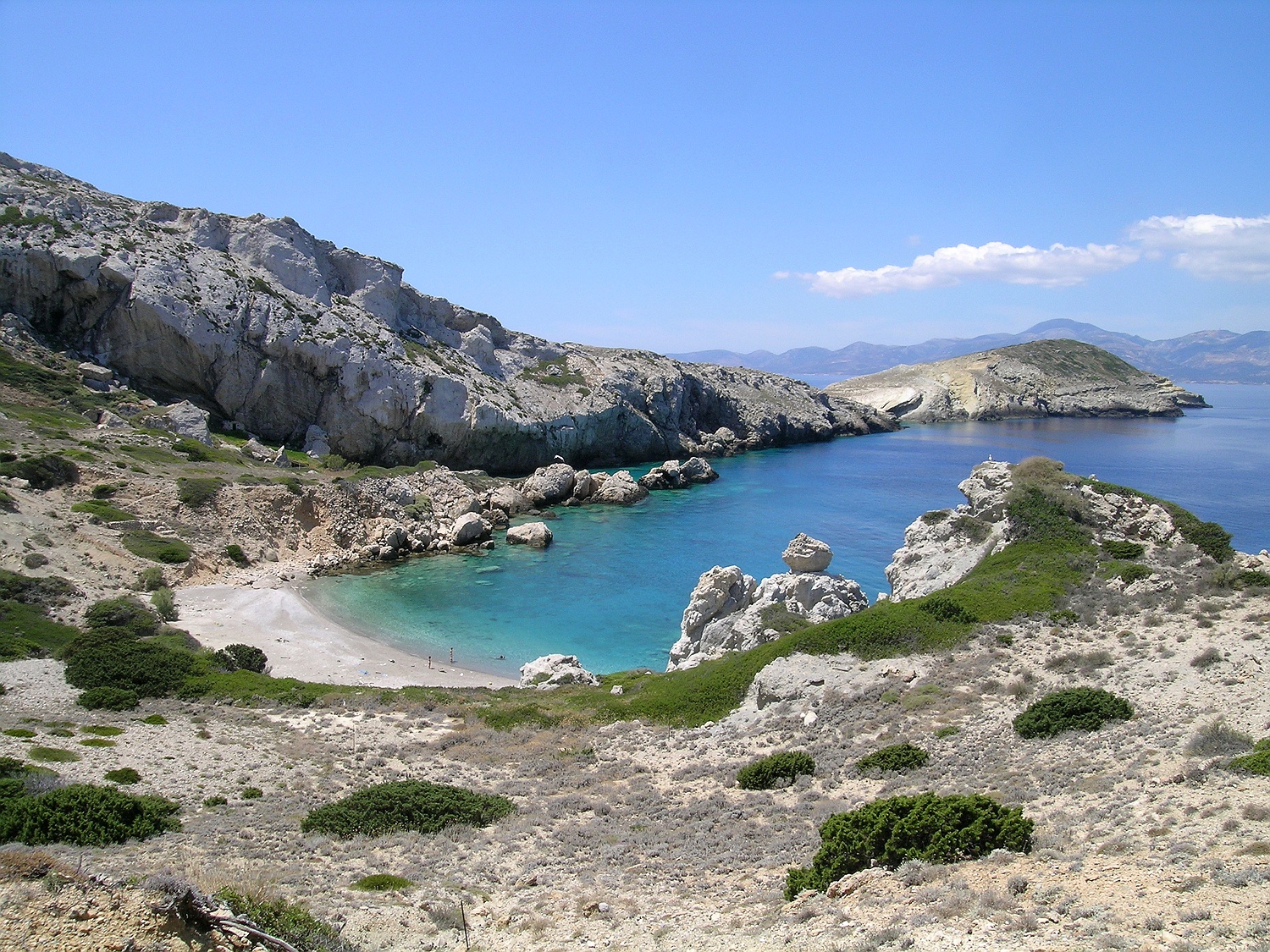
View from above over the bay and the south-western cape
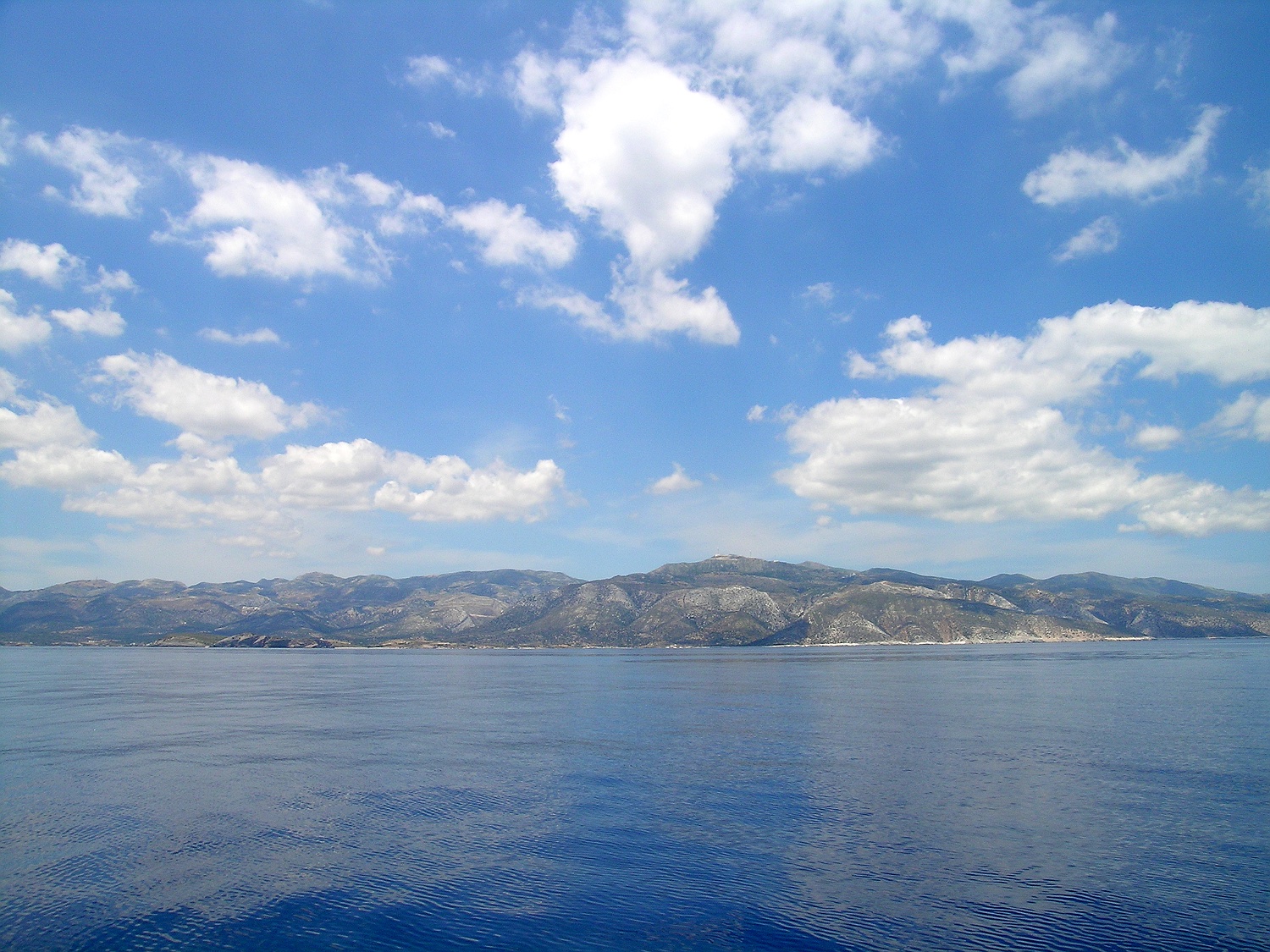
On the way back; view of Naxos, our houses are located roughly in the center of the picture
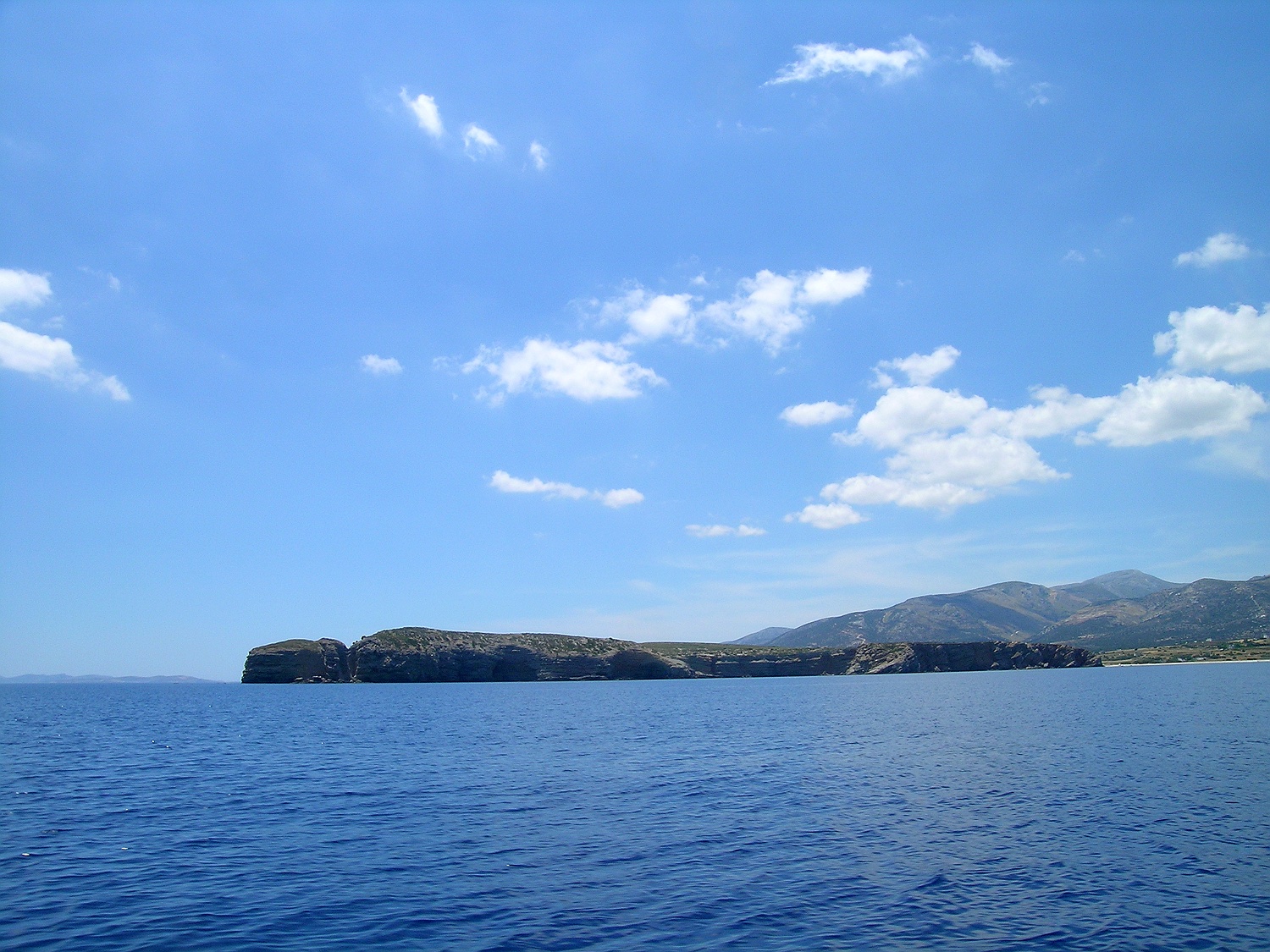
The cape seen from an unusual angle
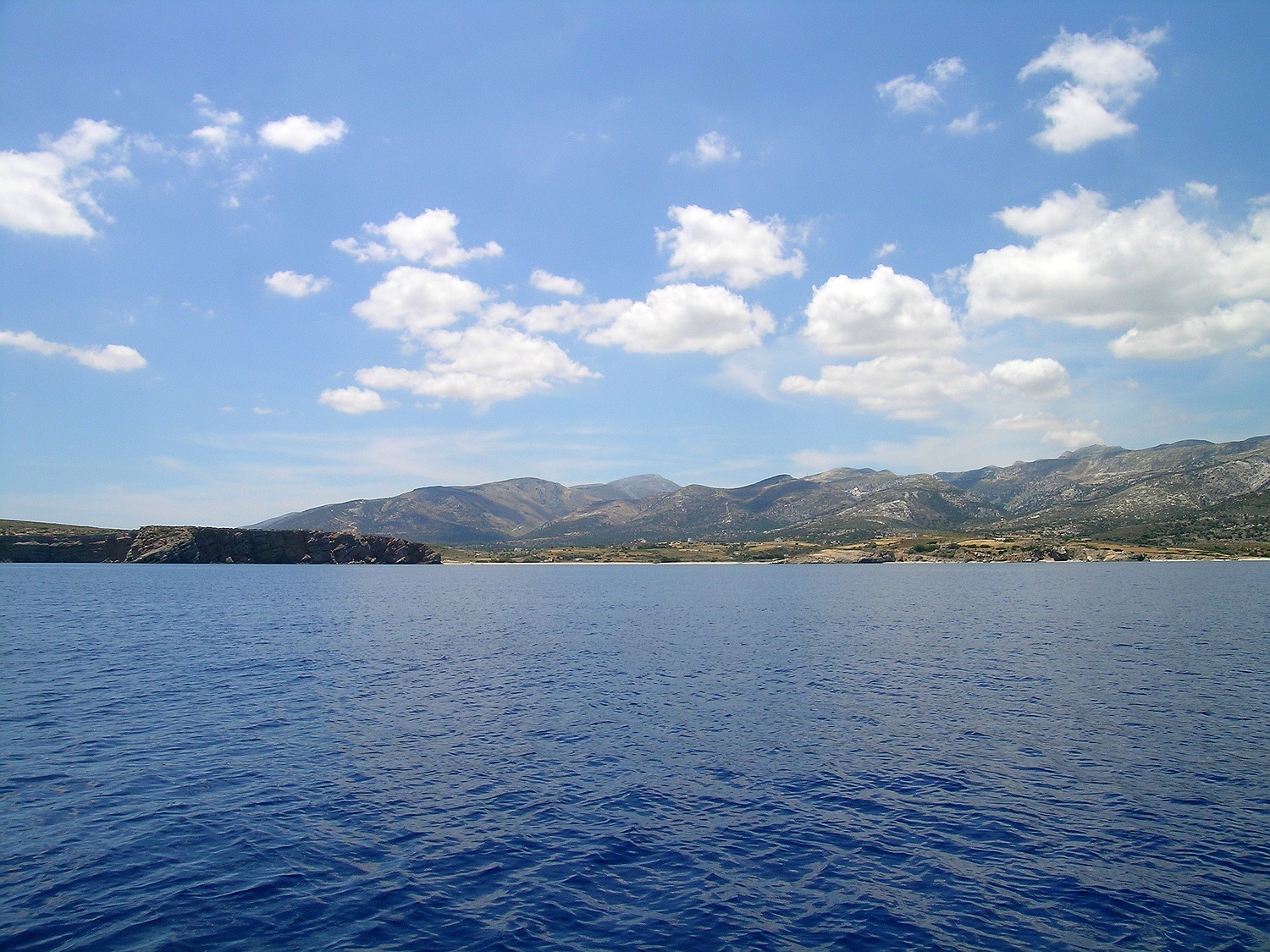
View of Azalas Bay
See also:
- Hikes and walks (in German)
- The wonderful Makares-Islands
- On the Makares-Islands
- Snorkeling at the islands of Makares
- Sunset on the Makares-Islands
- The flora of the Makares Islands
- Eleonora’s falcons on the Makares Islands
- A visit to the shearwaters on the Makares islands
- European storm petrels on the Makares islands
- The Fauna of Naxos
- The Flora of Naxos
Comments are closed.