
The pollination of Ophrys-species via Pouyannian mimicry
The orchids of the genus Ophrys (ragwort) are remarkable for their strangely shaped flowers. In some species, the flowers resemble certain insects, e.g. bees or flies. But what is the reason for these similarities?
In orchids, the pollen is contained in so-called pollinaria, which sit on the column formed by fused stamens and pistils. The pollinaria are two sticky, roughly teardrop-shaped pollen masses containing all the pollen of the flower. Orchid flowers produce an unusually large number of seeds, namely between 10,000 and 1 million seeds per flower. All of these can be fertilised by the pollen from a single pollinarium. This unusually high number of seeds is apparently intended to ensure that, despite the complicated pollination process, enough seeds manage to germinate to secure the survival of the species, even though each plant produces very few flowers and usually only about a tenth of the flowers are actually pollinated.
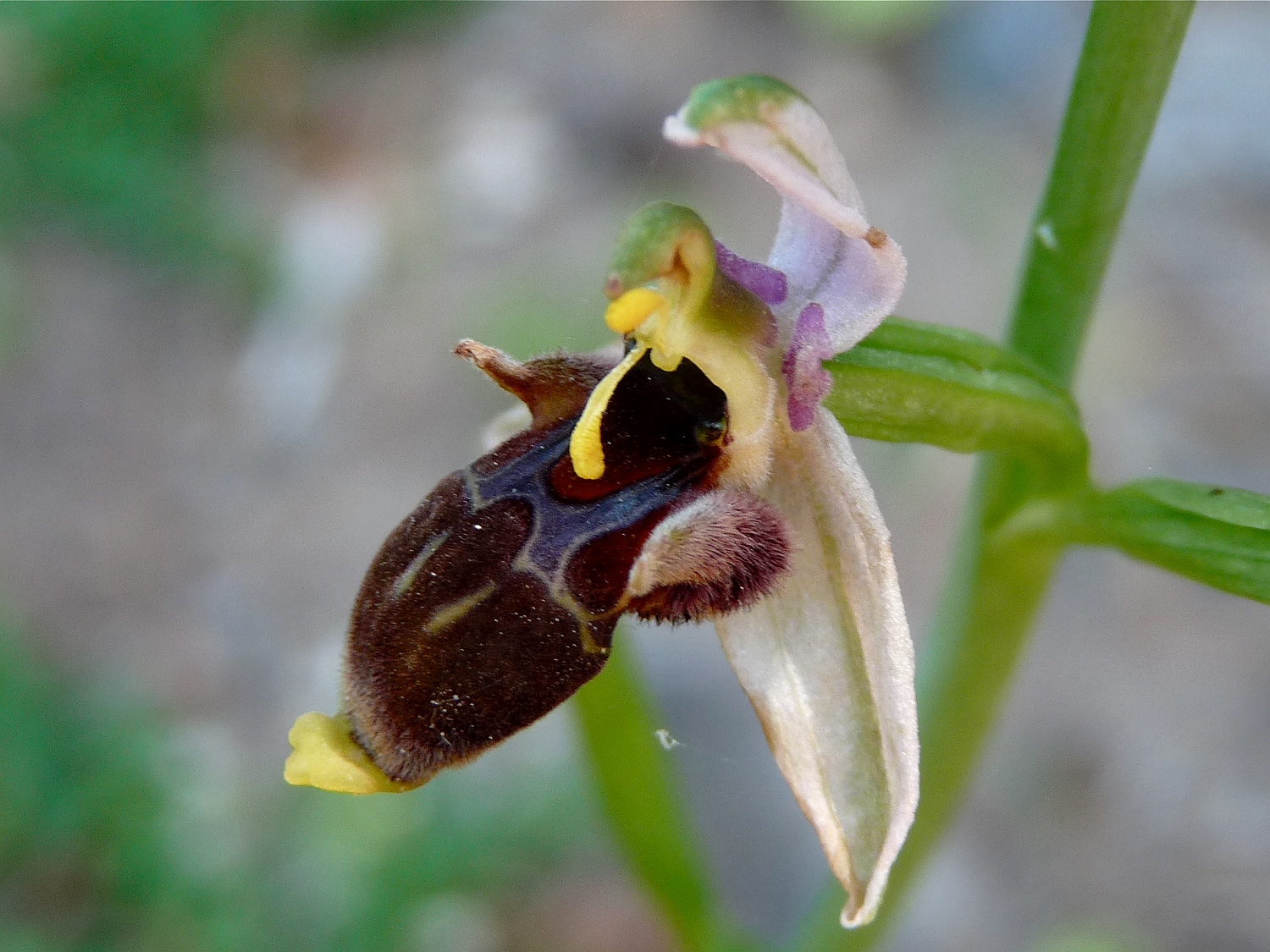
One of the yellow pollinaria (partially detached) can be seen on this ragwort flower.
In early February, whilst observing some wild bees on our rosemary bush – which had ventured out thanks to the lovely weather – I noticed a bee carrying two pollinaria on its abdomen. It wasn’t easy at all to photograph the bee, as it flew very quickly from flower to flower and hardly ever settled for long. But with patience, I managed to get a few usable photos. Naturally, I wanted to know what species of bee it was and which orchid species the pollinaria came from.
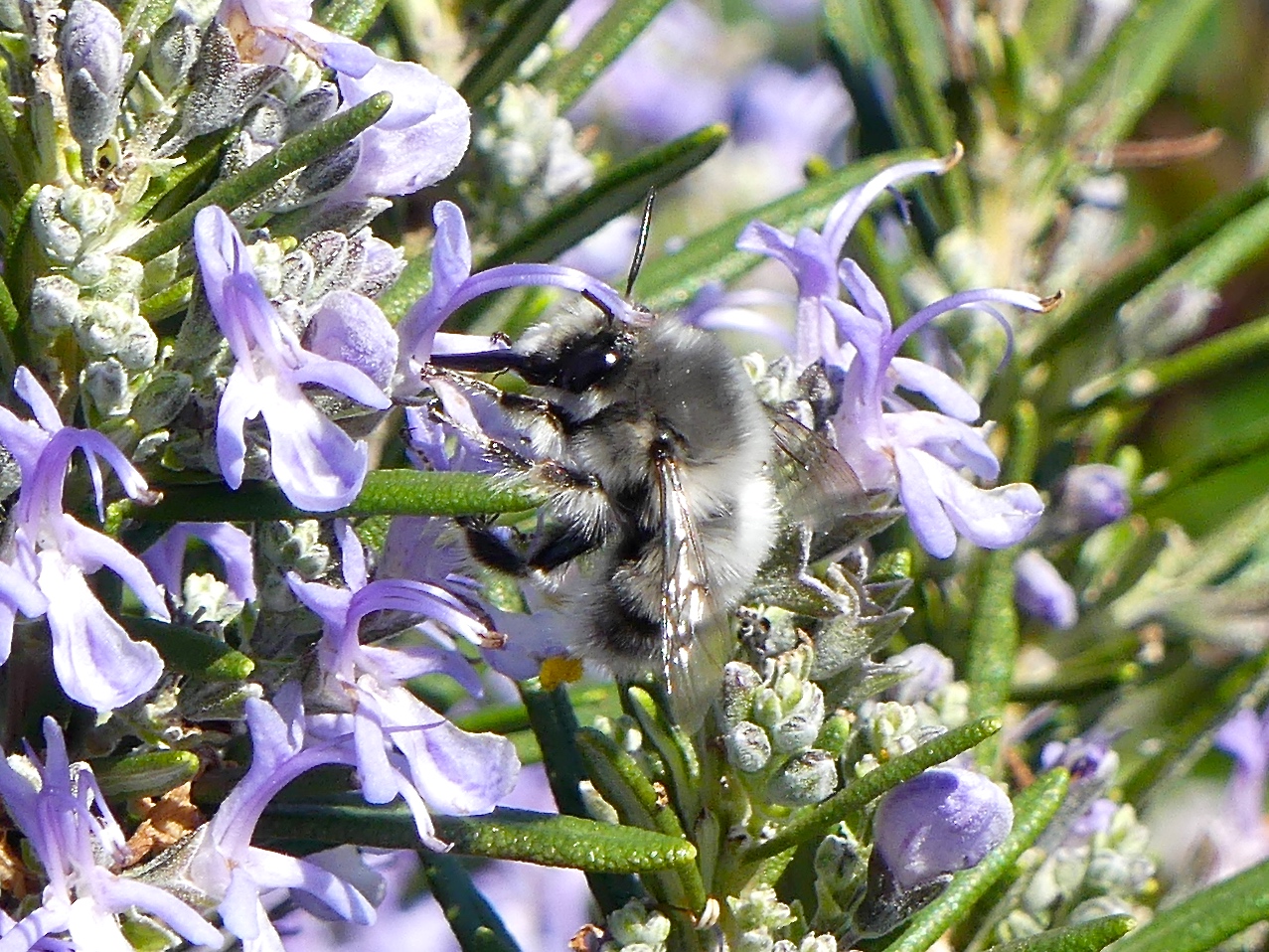
The light grey bee, conspicuously covered in dense, long hairs, buzzed incessantly from flower to flower, only occasionally settling briefly to sip a little nectar.
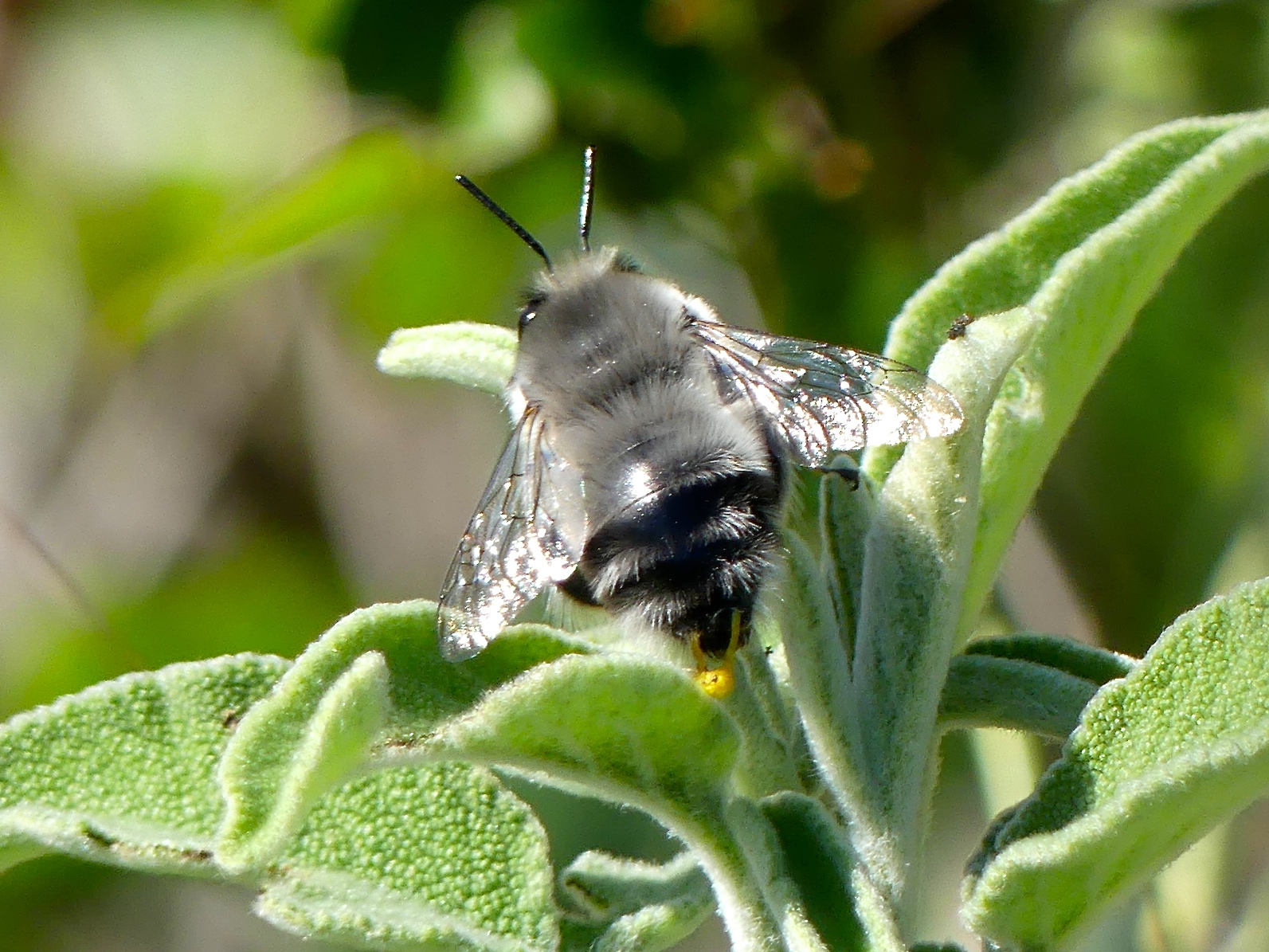
Here you can see the yellow pollinaria sticking to its abdomen.
This bee belongs to the species Anthophora nigrocincta (= A. canescens), which acts as a pollinator in south-eastern Greece for the very early-flowering orchid species Ophrys basilissa (often regarded as a subspecies or form of Ophrys omegaifera). I have not managed to locate the plant from which the pollinaria originate, although it must be nearby, but I have encountered Ophrys basilissa in our area in previous years. I would like to express my sincere thanks to Prof. Hannes Paulus for identifying both the bee and the pollinaria!
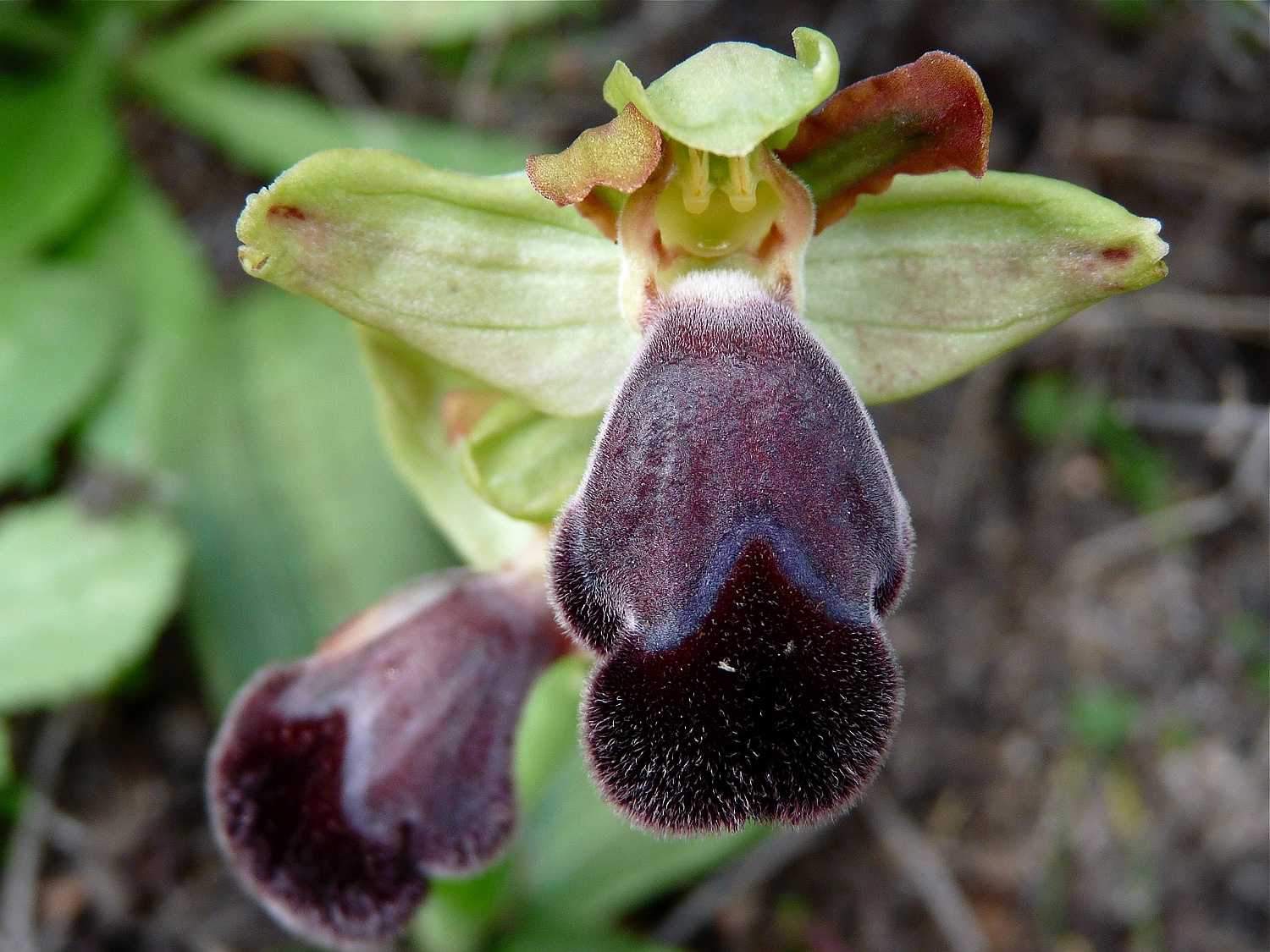
The pollinia belong to the early-flowering orchid species Ophrys basilissa.
In 1916, a French entomologist named Pouyanne was the first to conclude that the pollination mechanism of the orchid genus Ophrys involves sexual mimicry. This means that the flower mimics a female insect, thereby attracting the males. When the male lands on the flower to copulate, the pollinaria become attached to it. During its next attempt on another flower, it can then transfer the pollinaria to the stigma in the same way. In most orchid species, male bees act as pollinators; less commonly, males of wasp species or other insects do so.
Through extensive and detailed studies, biologist Hannes Paulus and his colleagues – both in the laboratory and in the field – were able to demonstrate how the flower achieves this deception. It emerged that each orchid species is attracts only one particular pollinator species; visits by other species are rare. Sexual mimicry comprises three aspects: olfactory, visual and tactile signals.
To begin with, the males are attracted by pheromones emitted by both the orchid flower and the female bee. The pheromones create a scent trail which the male follows in a zigzag flight over several meters. Numerous scents identical to those of female bees were detected in the orchid flowers. These are present in a species-specific mixture, so that (almost) only males of the correct species were attracted.
When the male bee reaches the flower, it orients itself using visual cues, the colouring of the lip being particularly significant, as well as the shiny ‘mirror’ that mimics the female’s iridescent wings. UV light also plays a role here, as it is reflected more strongly from certain areas and is easily visible to bees.
In some orchid species, the female insects are directly mimicked in appearance, so that the resemblance is also apparent to humans. Generally, however, the orchid limits itself to the features that actually guide the male; for instance, the flowers of some species have small round spots at the base of the lip that resemble the female’s wing joints. In other cases, there is only a very rough resemblance, sometimes limited solely to the basic colouring of the lip; in other words, for these species, the visual characteristics are of lesser importance.
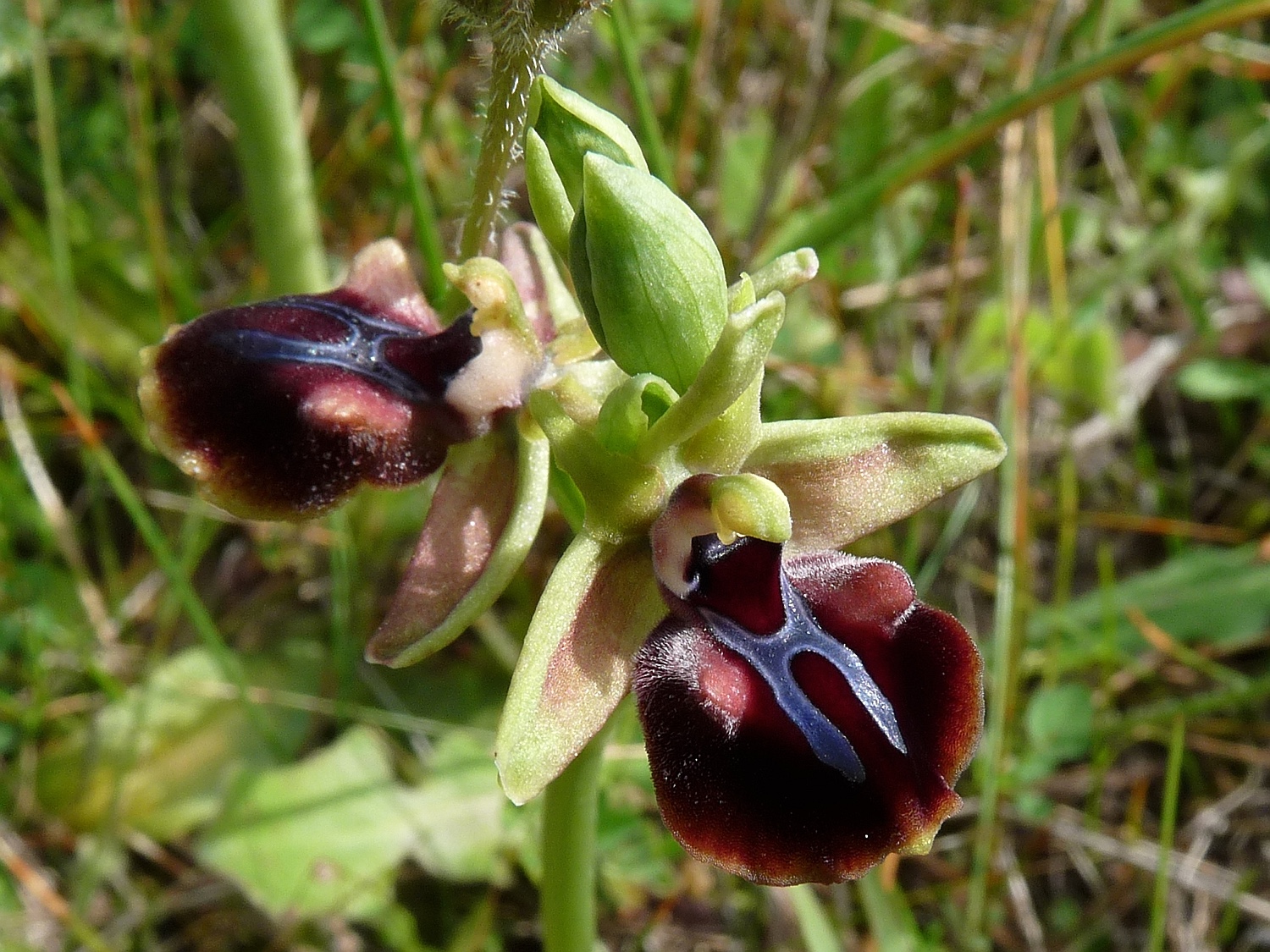
Ophrys mammosa is pollinated by a very dark-coloured Andrena species. The silvery, shiny markings mimic the wings of the female bee.
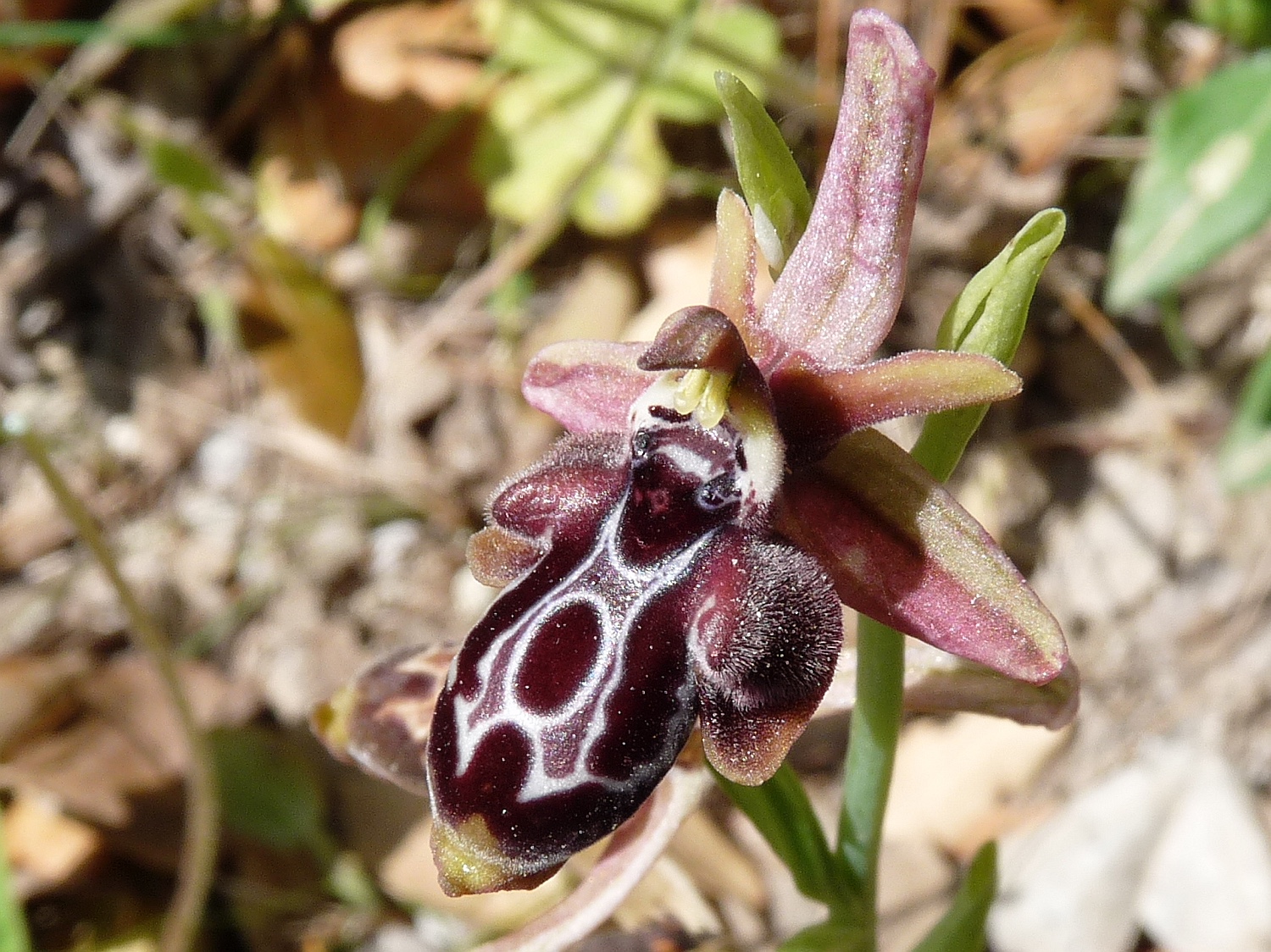
Ophrys cretica ssp. beloniae, with its striking, high-contrast markings, is pollinated by mourning bees of the genus Melecta.
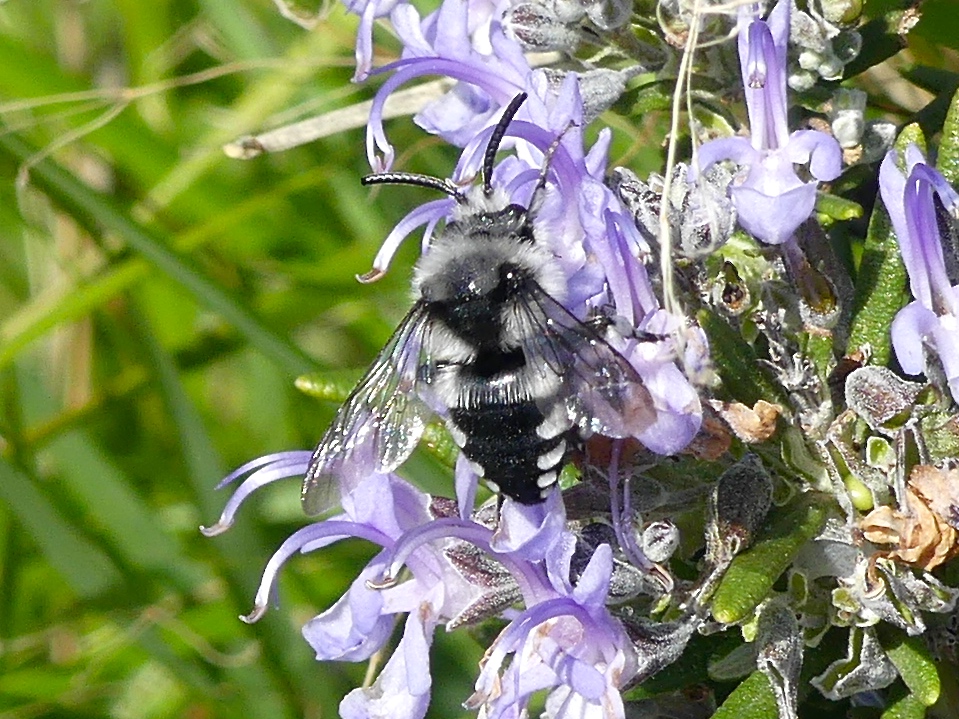
The mourning bee is black in colour with white spots on the sides of its body and on its legs.
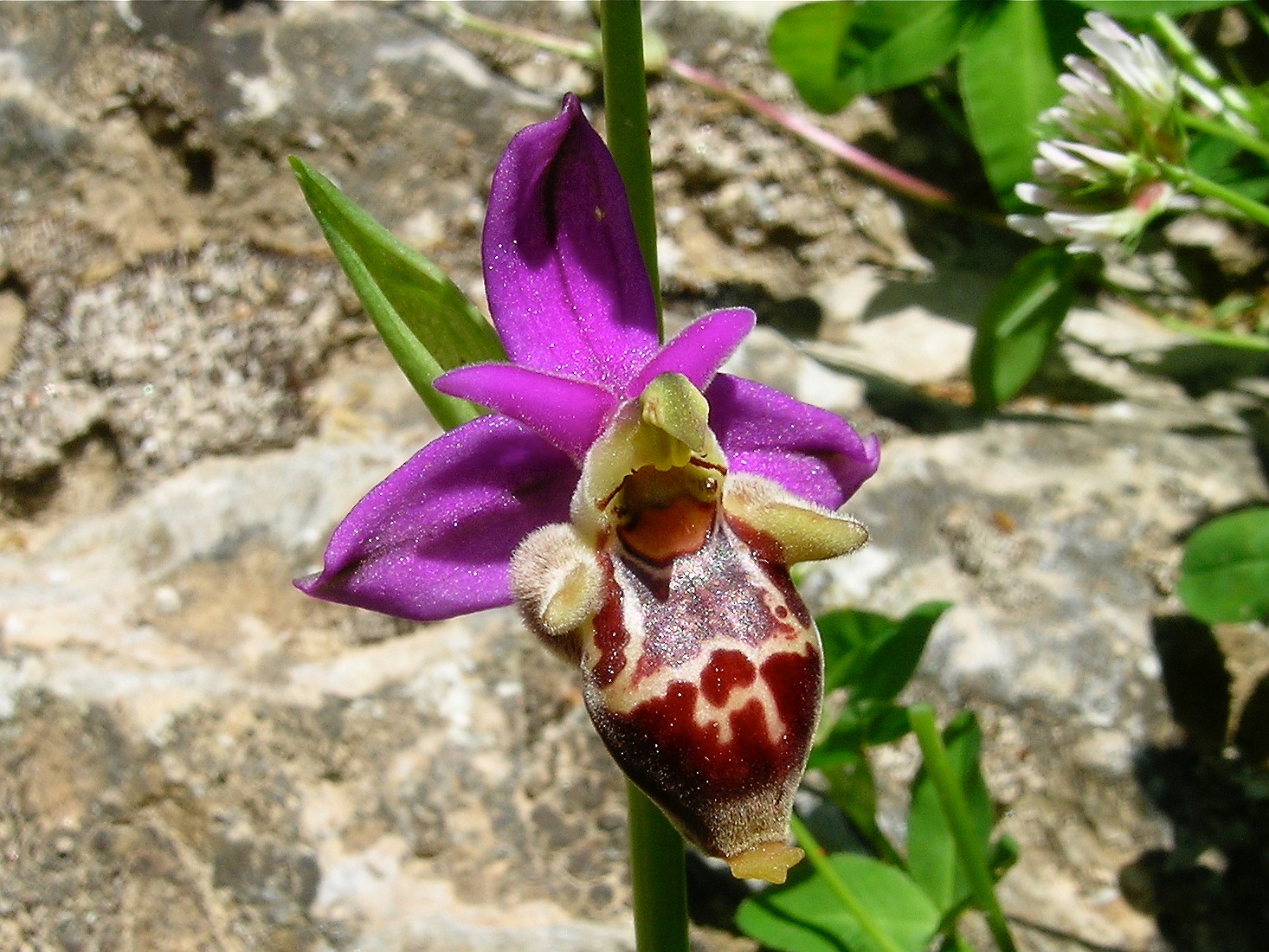
Ophrys heldreichii is pollinated by long-horned bees of the genus Eucera. The intricate pattern presumably mimics the light reflection from the female’s wings. Next to the cavity beneath the column sit two small, button-like spots corresponding to the bee’s wing joints.
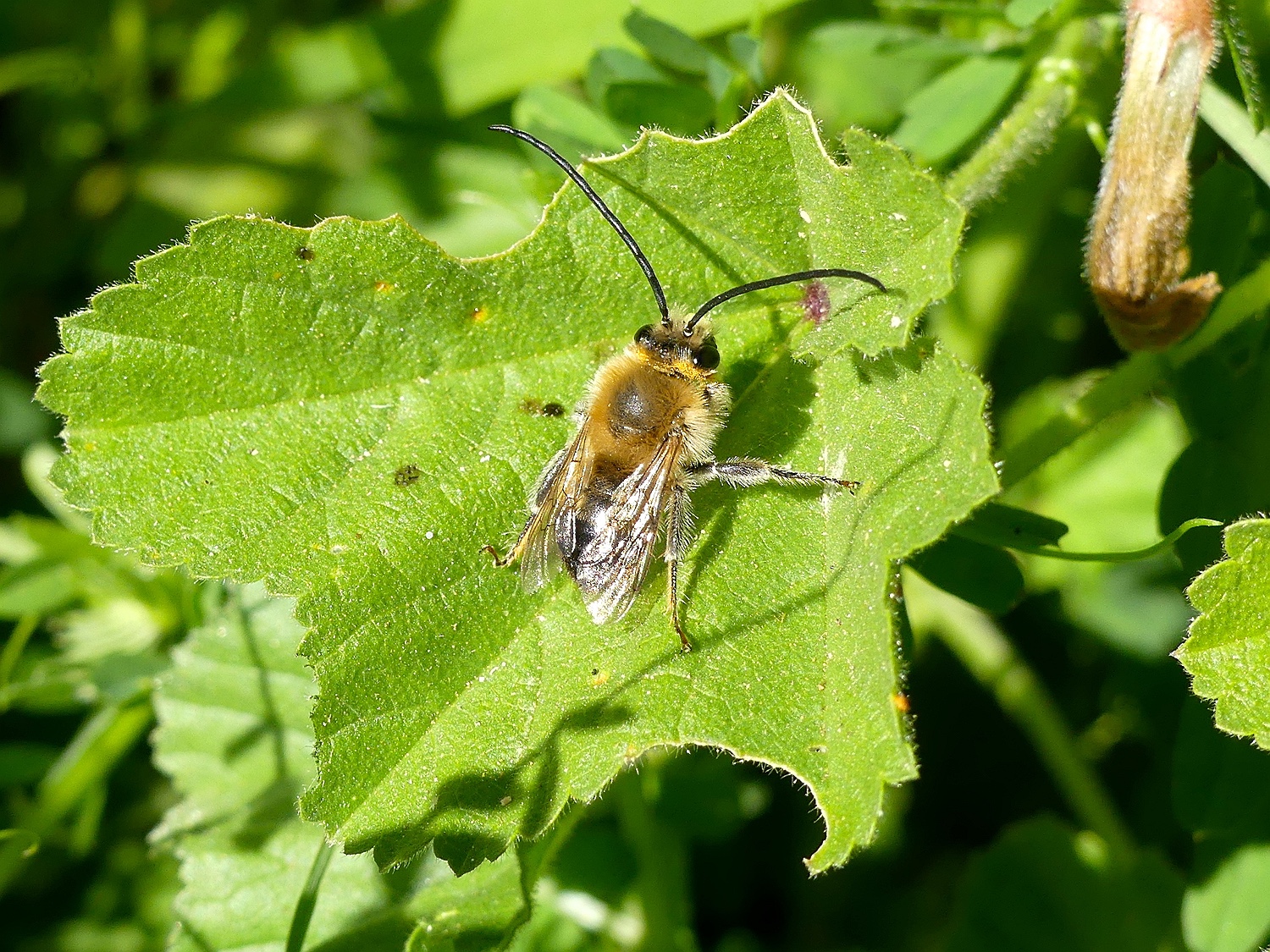
Male long-horned bees have very long antennae, of about the length of their bodies, which they use to detect the scents of the females (and the orchids).
When the male bee has settled on the flower, tactile stimuli come into play. The first factor is the flower’s furry pelt, which mimics the bee’s fur. In some orchid species, the male lands on the lip with his head facing upwards, so that the pollinaria are attached to his head; in others, the direction of the hairs is reversed and the male lands with his head facing downwards, so that the pollinaria attach to his abdomen. Furthermore, the lateral ‘arms’ of the lip serve as a visual or tactile mimicry of the female’s legs. The male must position itself on the flower with such precision in response to these tactile stimuli that the pollinaria are attached exactly to the correct, species-specific spot, ensuring they are successfully deposited on the stigma of the next flower.
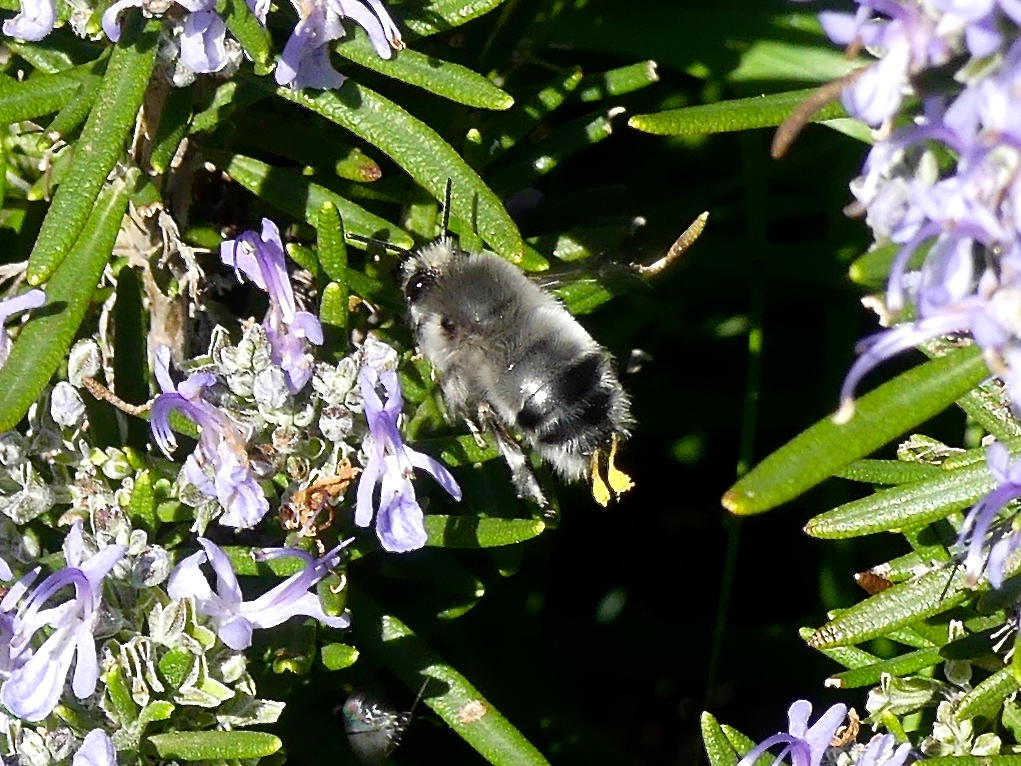
In the orchids of the Ophrys omegaifera-group, the male lands on the flower with its head pointing downwards, so that the pollinaria are attached to its abdomen.
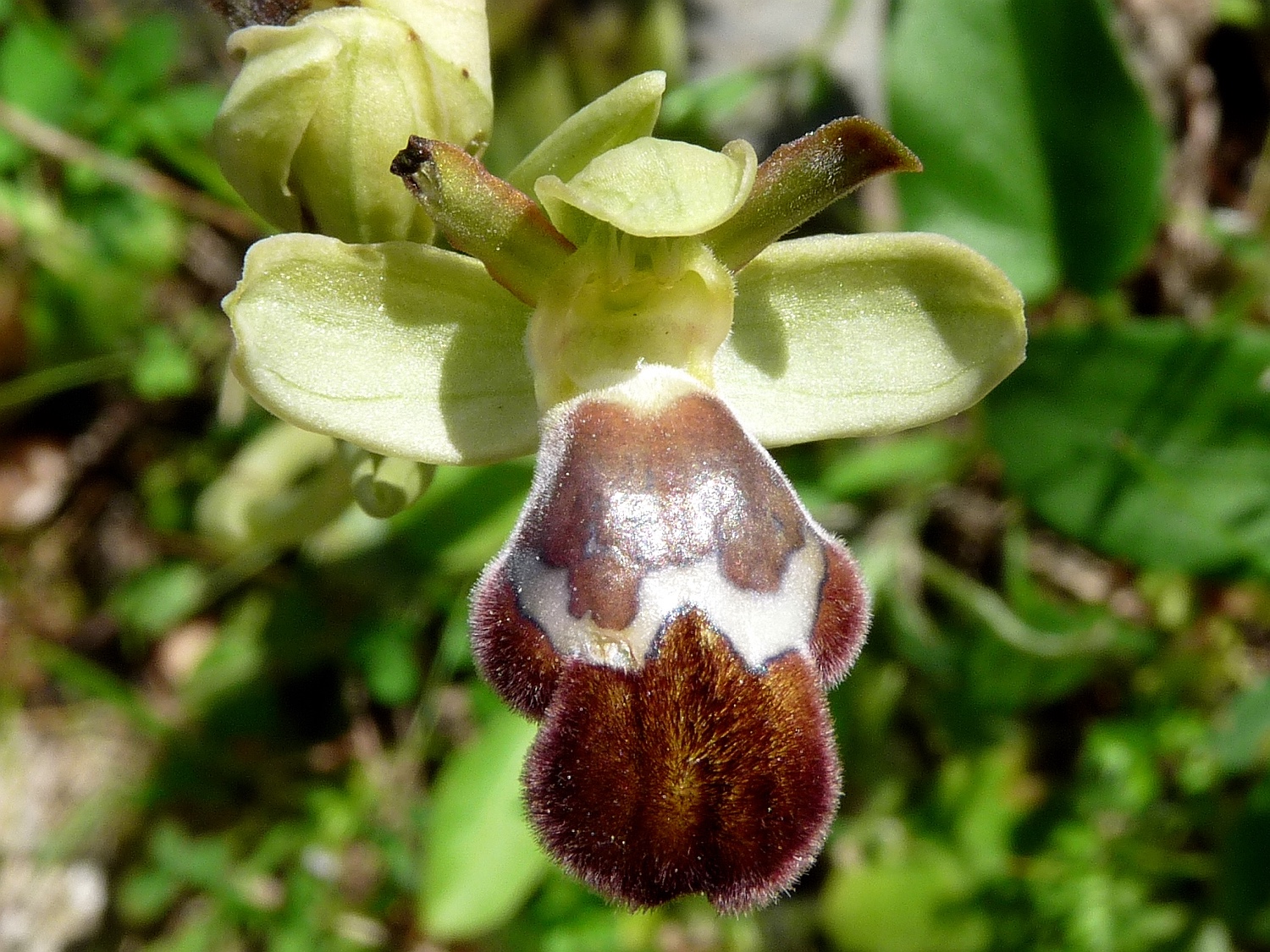
Ophrys israelitica from the Ophrys omegaifera group also has clearly visible upward-pointing hairs; in other words, with this species too, the bee sits on the lip with its head pointing downwards.
Self-pollination through a renewed mating attempt by the male with the same flower is made unlikely by two mechanisms. Firstly, the males remember the ‘useless’ flower, whereby, according to experiments, they orient themselves both by the individual ‘scent bouquet’ of each flower and (in some species) by its individual markings. This learning effect is apparently the reason why the flowers of each plant often look slightly different: the male continues to fly towards the slightly different-looking flowers of other plants, whilst now avoiding the flower it has already visited. After several unsuccessful attempts, it no longer falls for the orchid flowers at all – but by then, successful pollination of a flower has often already taken place.
Additionally, self-pollination is prevented by the fact that, one or two minutes after attaching to the male, the pollinaria bend slightly downwards as their stalks dry out. Only then, i.e. once enough time has passed for the male to reach another plant, do the pollinaria move into the correct position to be deposited on the stigma.
Already pollinated orchid flower ceases to produce scents or begins to produce a scent that is also emitted by the already fertilised female bees, so that it is no longer visited by males: an important measure to ensure that no precious pollinaria are wasted.
It is easy to understand how selection works in this case: the flowers that attract males most effectively, and on which the males land in exactly the right spot, are most likely to be pollinated, ensuring that their traits are passed on. Species specificity is also of particular importance here: only in this way can it be ensured that the pollinaria are not wasted. This usually works because only males of the correct species visit the flower in the first place. However, there are also cases in which the same bee species pollinates several different orchids. In this case, the pollinia are attached to different parts of the body, ensuring they are deposited only on the stigma of the correct species. Incidentally, the pollinia adhere so firmly to the bee that it cannot remove them and may carry them around for days.
Among the orchids, the classification and division of the species is particularly contentious: the genus Ophrys comprises, depending on the interpretation, only 10 or up to 350 species. It was previously assumed that hybridisation was responsible for the great variability of the ragworts. However, the fact that the flowers of each individual look slightly different can easily be explained as a mechanism to prevent self-pollination (by recognising a flower that has already been visited), which means that this characteristic conferred a selective advantage. The many local variants of orchids are interpreted by different authors as forms, subspecies, separate species, or simply as individual variability. Studies of pollinating insect species show, however, that the various forms are in most cases pollinated by different insects, particularly when they occur in the same area. Even if the visual or genetic differences between these variants are only slight, they must nevertheless be regarded as separate species if they are pollinated by a different insect species, as these populations no longer interbreed. For example, Ophrys fusca in the Mediterranean region comprises 60 distinct species, which are isolated from one another by their geographical distribution, flowering time and, in most cases, the pollinating insect.
see also: