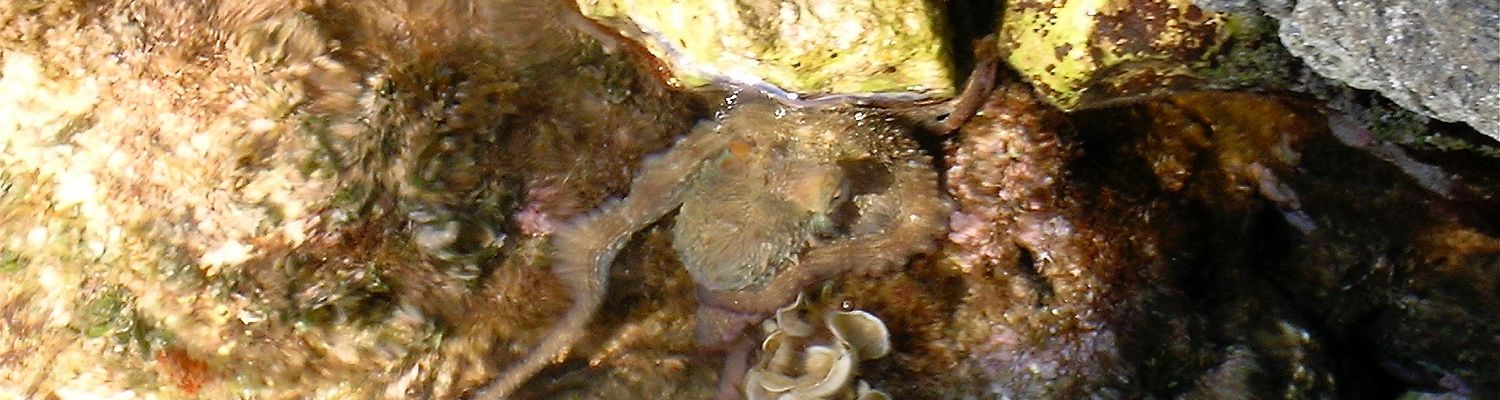
Cephalopods
The class of cephalopods (Cephalopoda) belongs together with snails and bivalvia and some smaller groups to the phylum Mollusca. The cephalopods found in the Mediterranean region can be divided into three orders: cuttlefish, squid and octopuses.
Here you can skip the introduction and go directly to the species.
The cephalopods seem to consist, as their name suggests, mainly of a large head with eight or ten tentacles (“arms”). The body is simply structured and consists of the so-called mantle (as with other molluscs), which encloses a cavity containing gills and digestive organs and sometimes an internal shell. Cephalopods move with the help of their arms (in the case of octopuses) or fins (in the case of cuttlefish and squid), as well as by expelling water through a tubular funnel using the principle of recoil. The mouth is equipped with a powerful, horny beak. Cephalopods have remarkably highly developed eyes. Octopuses in particular show an excellent orientation and, despite their simple nervous system, are intelligent animals showing curiosity and an impressive capability to learn.
In the Mediterranean Sea occur 53 species of cephalopods (about 1,000 species exist worldwide), but only a few of them live near the coast. They are effective predators and feed on fish, crabs, mussels and snails. A particularly characteristic feature of cephalopods is their ink, which the animals can expel when they are in danger to confuse their pursuers, allowing the them to escape. In addition, most species are able to change their colour and to adapt it perfectly to their surroundings. Cephalopods produce numerous eggs, which they laid in strings or clusters in sheltered places. The octopus mother protects her eggs and cares for them till the young hatch, then she dies.
The Photo gallery gives an overview over the species.
Here you can jump directly to the species (return with the back arrow or by swiping back):
Common cuttlefish, Sepia officinalis – Common squid, Loligo vulgaris – Shortfin squid, Illex coindetii – Common octopus, Octopus vulgaris
Common cuttlefish, Sepia officinalis, L.
Cuttlefish have an oval body with a frill around the edge, which they use to move. They can grow to over half a meter in length. Their head has eight shorter and two longer arms with suction cups. Inside their body lies a white shell, the cuttlebone, which is used to regulate the buoyancy. Cuttlefish are able to change their colour to match their surroundings. During the breeding season in spring, the males often display zebra stripes. Cuttlefish then frequently come into shallow water and can occasionally be observed directly at the beach, while they spend the rest of the year in deeper water.
Cuttlefish are mainly nocturnal. They usually swim low above the sea floor in sandy areas or live in seagrass meadows. They are skilled hunters who stalk their prey (fish, crabs, prawns) and then suddenly grab them with their long tentacles. Cuttlefish ink was formerly used for writing.
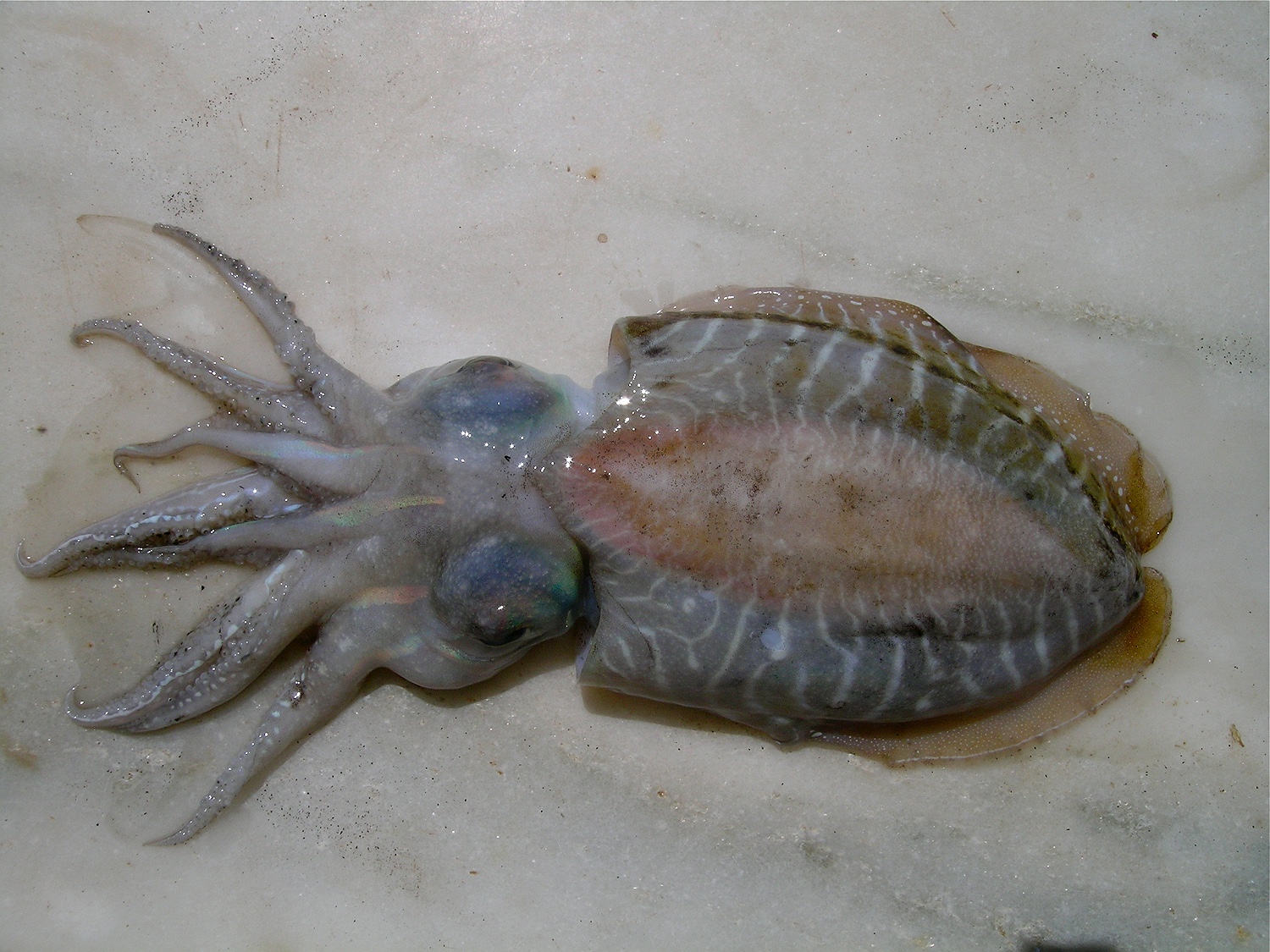
The body of the cuttlefish is oval in shape with a surrounding fringe. Eight short and two longer arms (the latter are missing here) are attached to the large head.
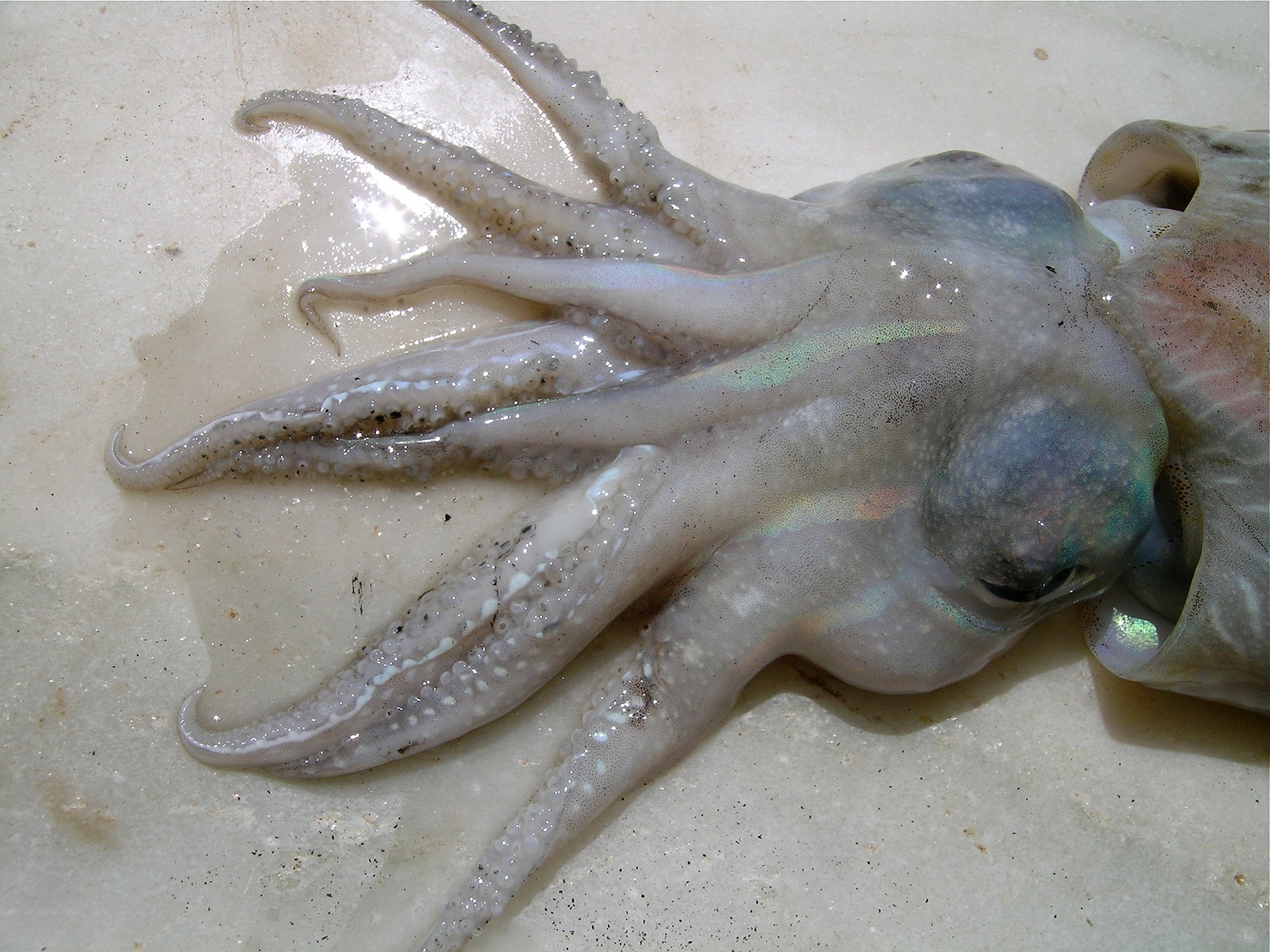
Like all cephalopods, cuttlefish have highly developed eyes. Their arms have four rows of small suction cups.
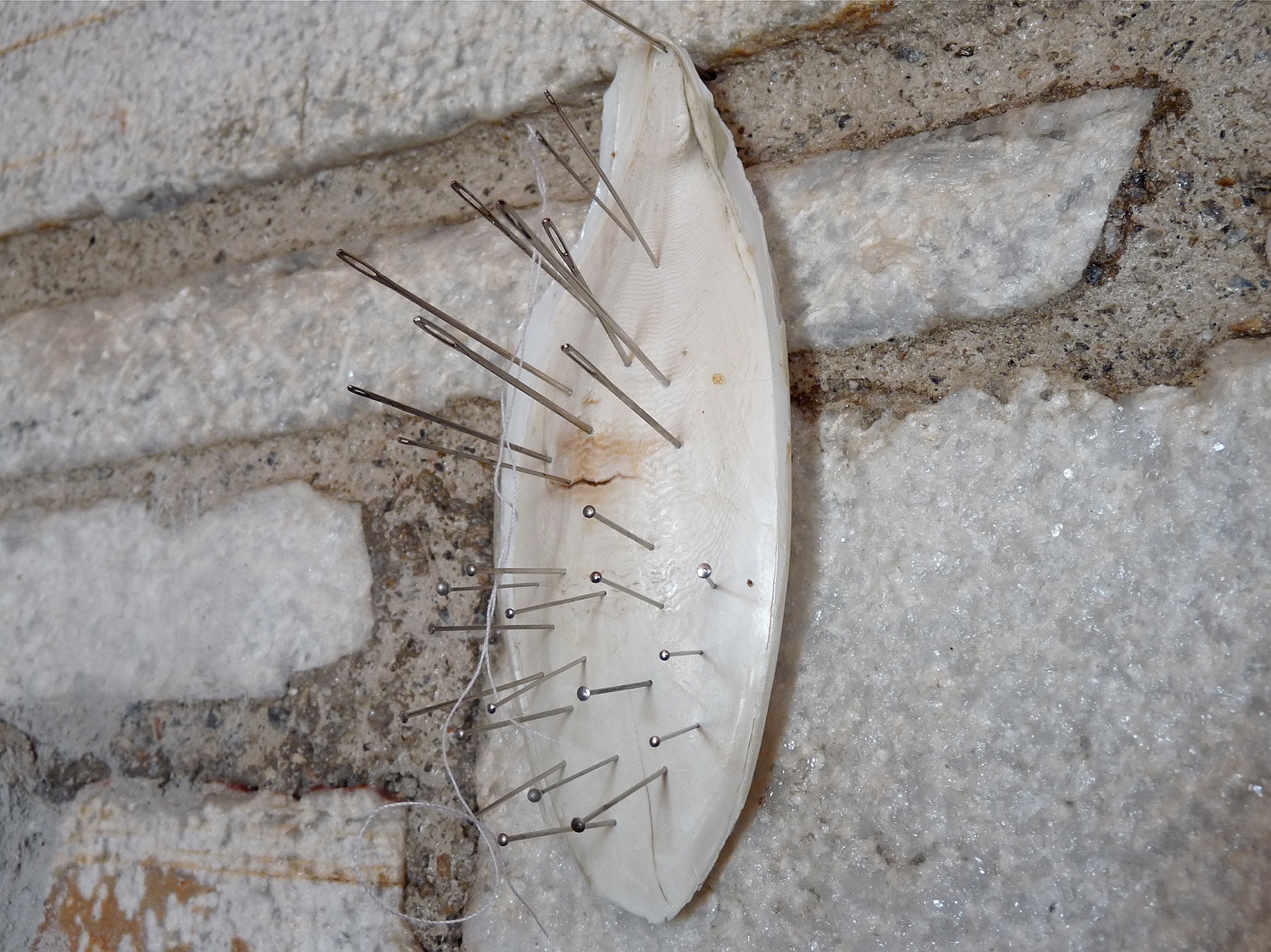
The cuttlebone was used by the local people as a pin cushion.
Common squid, Loligo vulgaris, Lamarck
Squids live in the open water and are excellent swimmers. Their bodies are elongated with two lateral fins at the end of the body. In the Common squid, the fins are longer than half the body. Like cuttlefish, squid have eight shorter and two longer arms. They are reddish in colour with numerous spots that can change shape and colour depending on their mood. Inside their bodies lies a thin, horny, transparent shell, the gladius.
Squid are fast hunters that often follow schools of fish. They can grow up to half a meter in length.
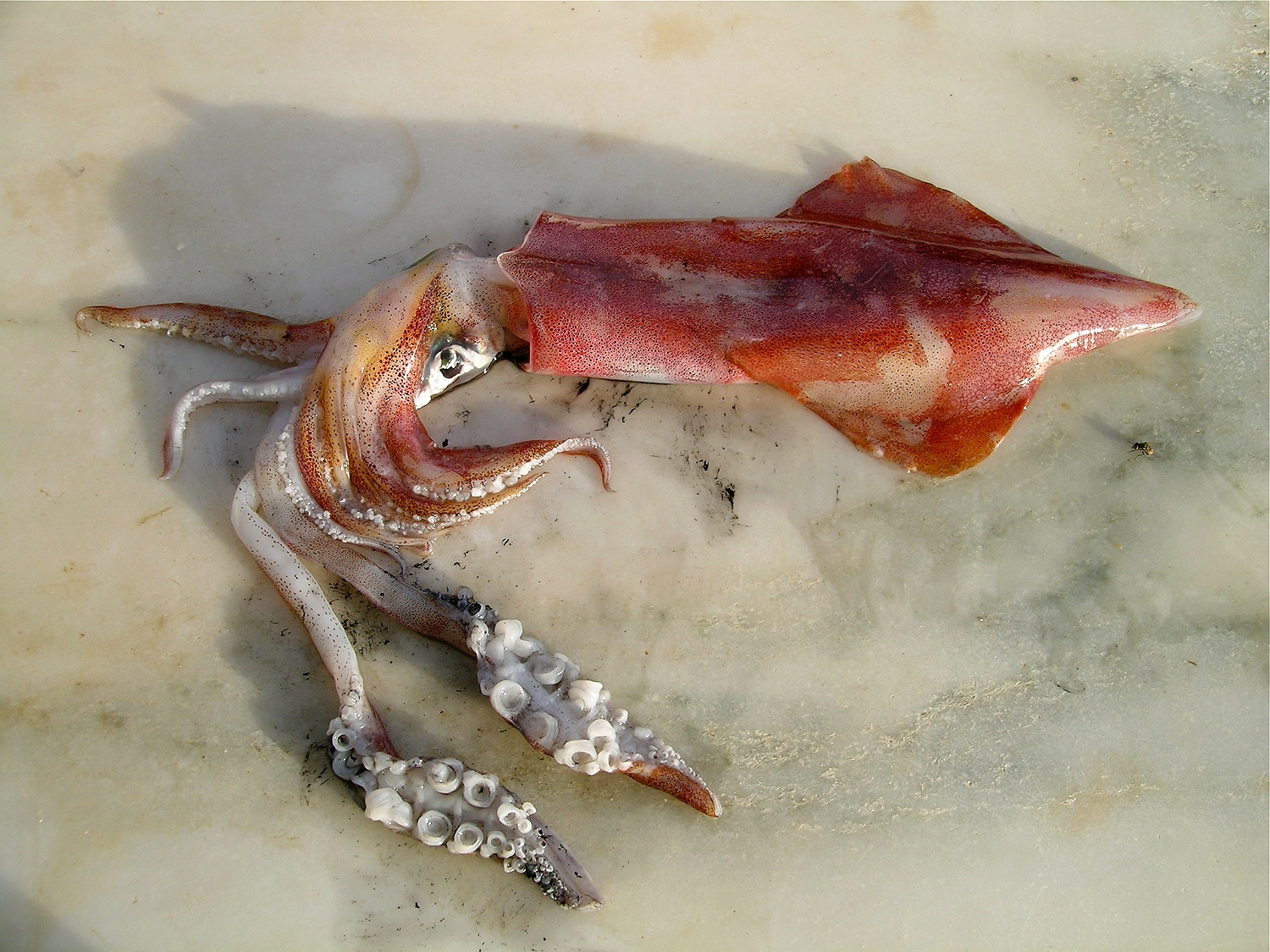
Squids have an elongated body with two triangular lateral fins.
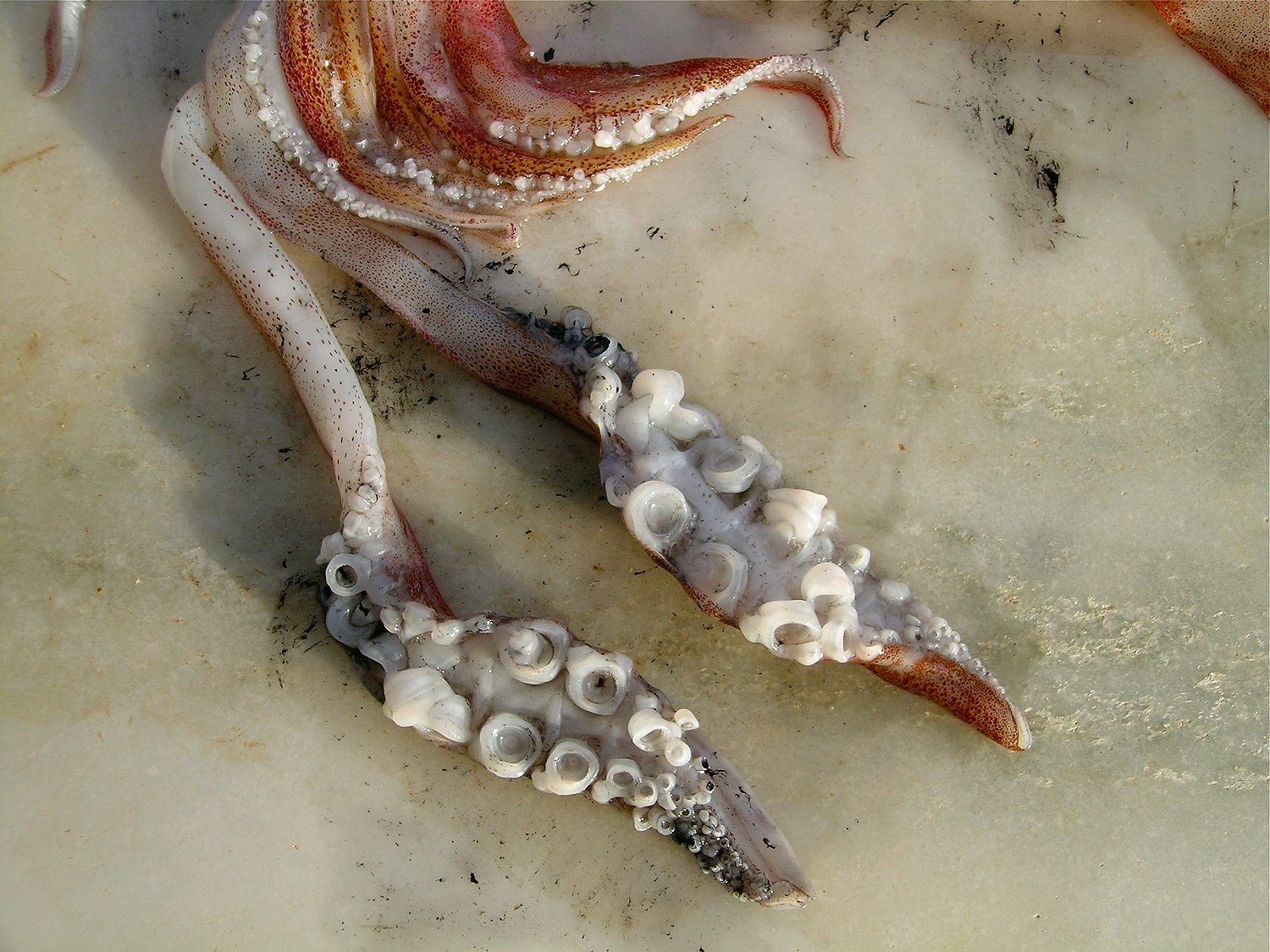
The long tentacles have suction cups of varying sizes.
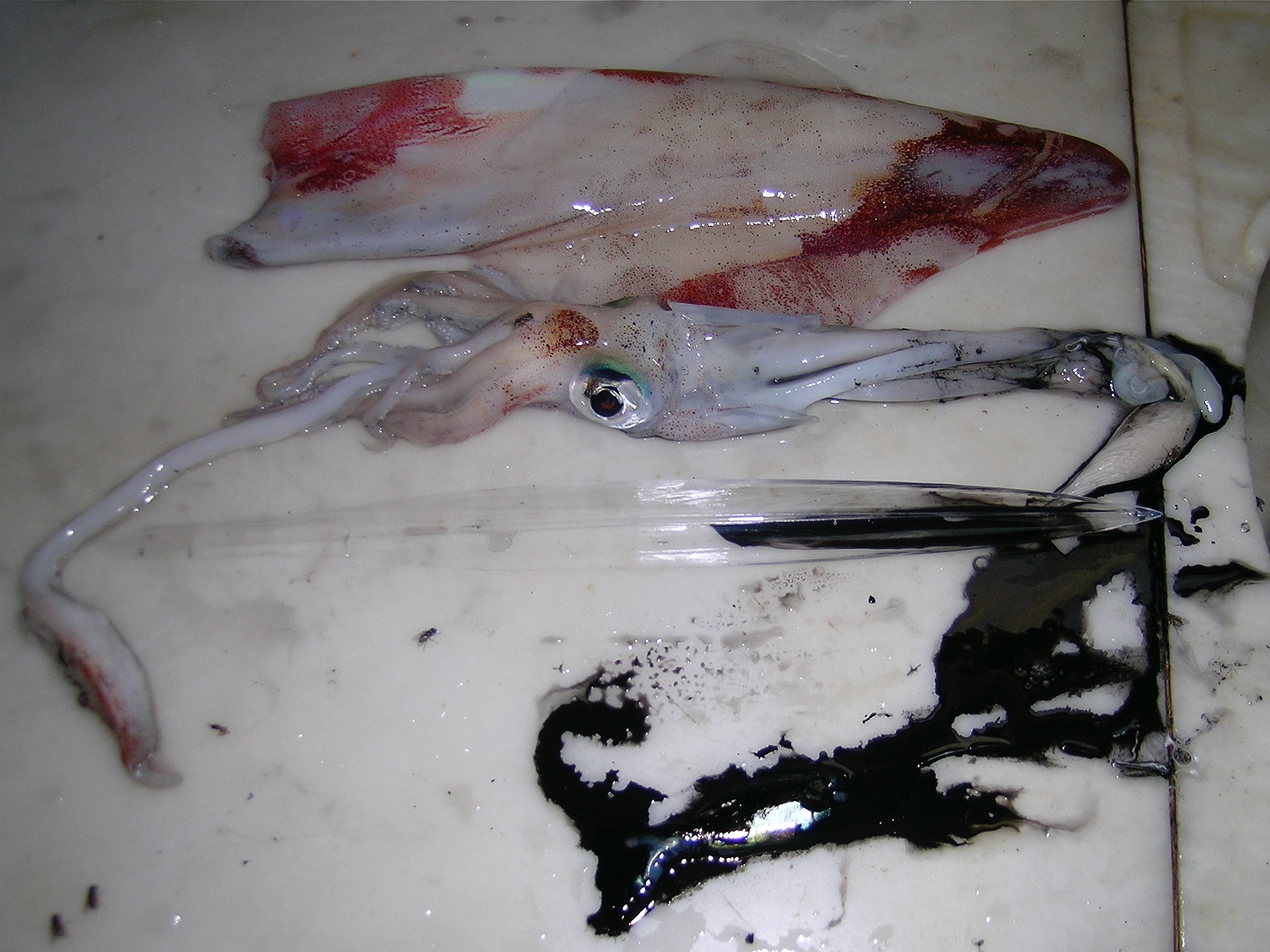
Here you can see the transparent gladius and the ink gland (at the very front, in shiny silver) with the ink oozing out.
Southern shortfin squid, Illex coindetii ?, Vérany
Occasionally, other species of squid can be encountered, such as this species with much shorter side fins. This is probably the Southern shortfin squid, which is mainly found in deeper waters (up to 500 m).
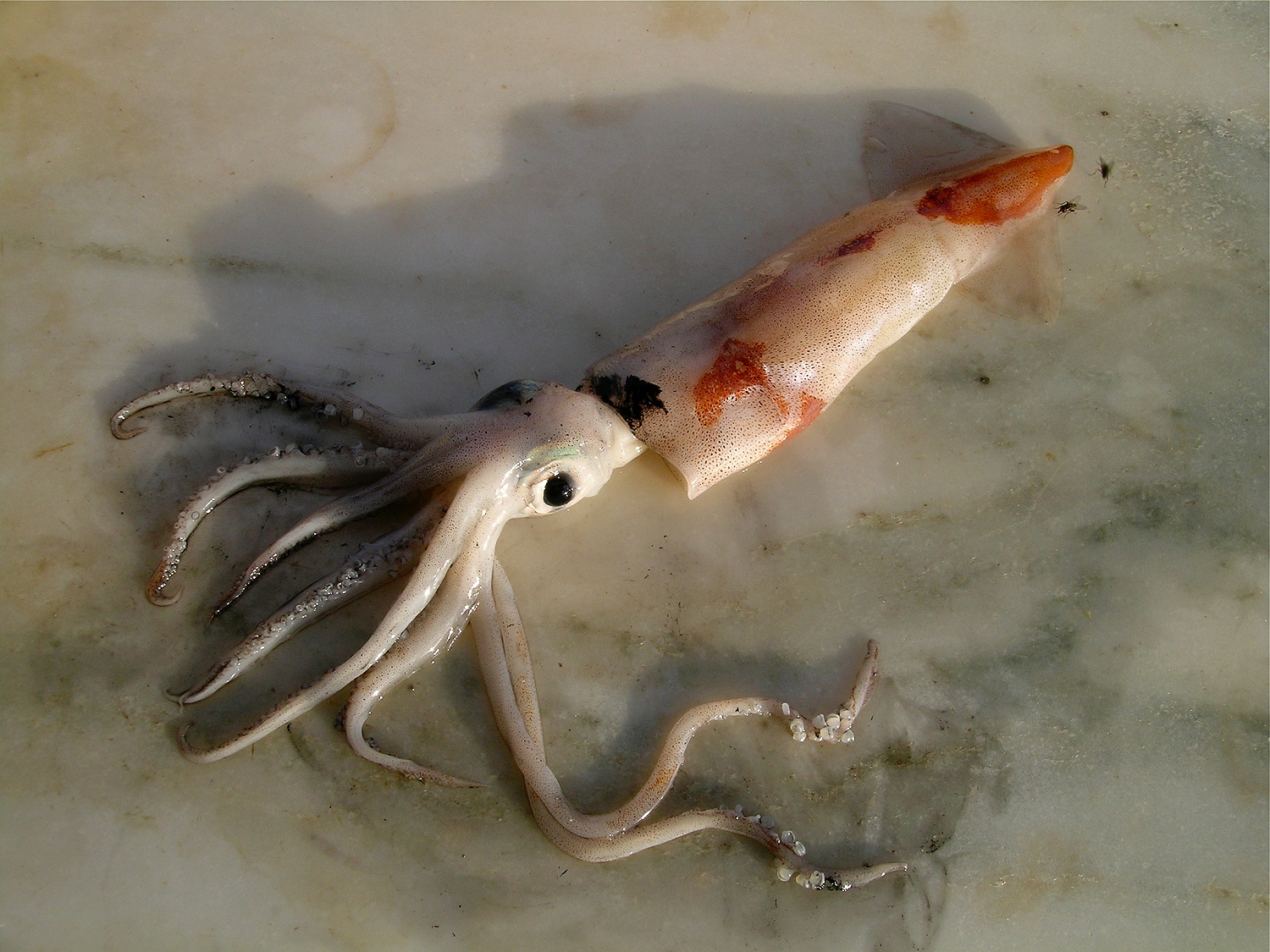
Here we probably have a Southern shortfin squid, which has much shorter (almost transparent) side fins.
Common octopus, Octopus vulgaris, Cuvier
Octopuses have eight very long arms, which they use to move on the ground. Their bodies are roundish and relatively small. Between the arms lies the mouth with its strong horny beak. The tube-like funnel ends at the side of the head where water is taken in towards the gills and expelled out. The arms have two rows of suction cups. The Common octopus is usually brownish, but can quickly change its colour and surface texture depending on its mood and the substrate. It is the most common of nine octopus species that occur in the Mediterranean Sea and can be found on a wide variety of substrates, from shallow water to depths of 100 meters. It can weigh up to 10 kilograms; specimens up to 3 meters long are said to occur at greater depths.
The Common octopus is nocturnal and usually hides in small caves during the day. It can squeeze through astonishingly small openings. If the entrance to its cave is too large, it closes it with a stone, which it holds in place with one arm. Where natural caves are lacking, octopuses often build their own castles out of large stones. In the vicinity of their hiding places, octopuses often leave the remains of their meals, such as mussel and crab shells. The female octopus lays up to 150,000 eggs on the ceiling of her cave and guards them there for about two months until the young hatch. During this time, the mother does not eat and usually dies soon afterwards.
Octopuses are curious and have a preference for white objects. This can lead to surprise encounters when an octopus suddenly attaches itself to the light-coloured feet (or bottoms!) of people who are innocently bathing in the sea – this has happened to us too.
The Common octopus has eight long arms and a small, round body.
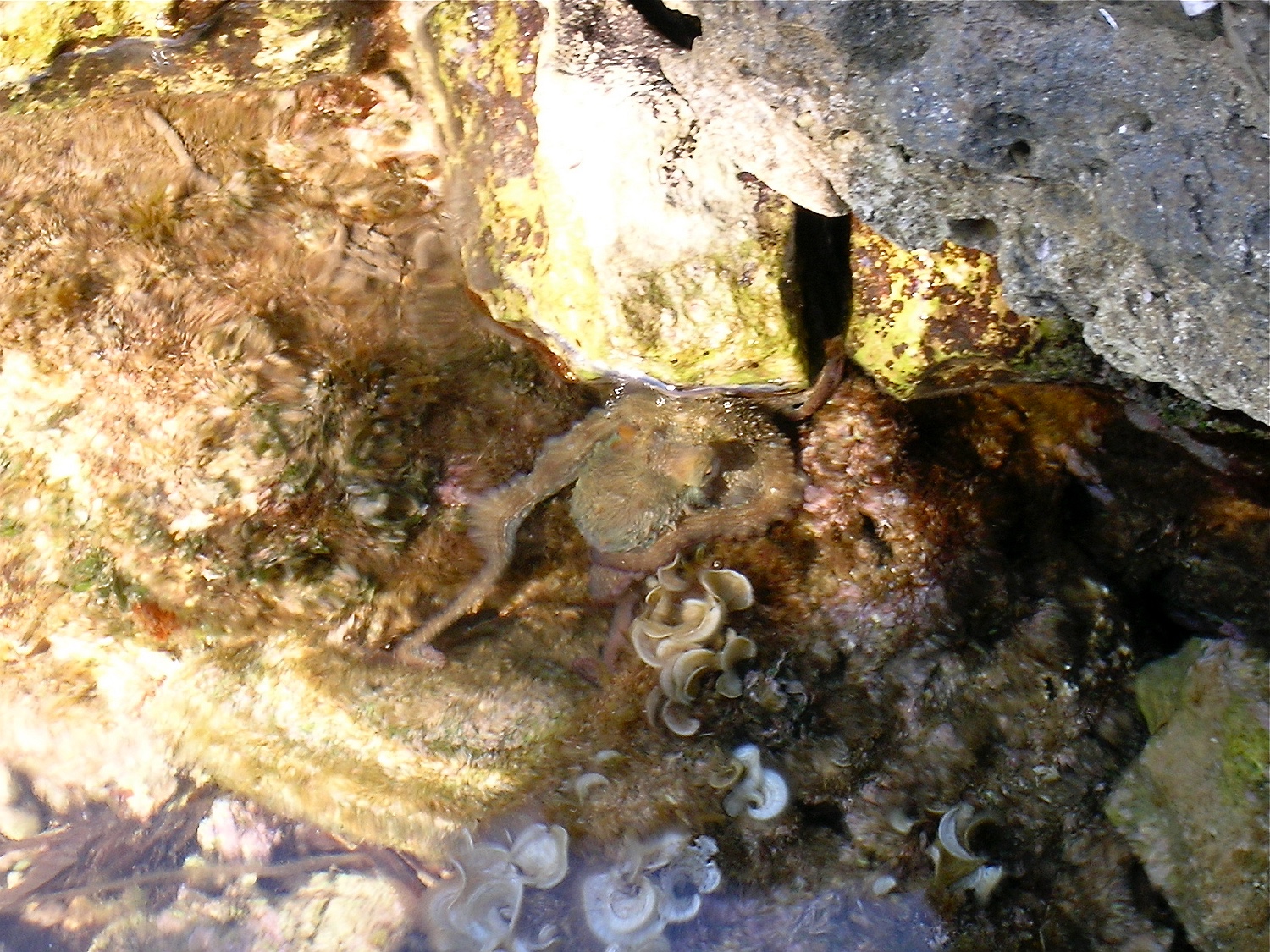
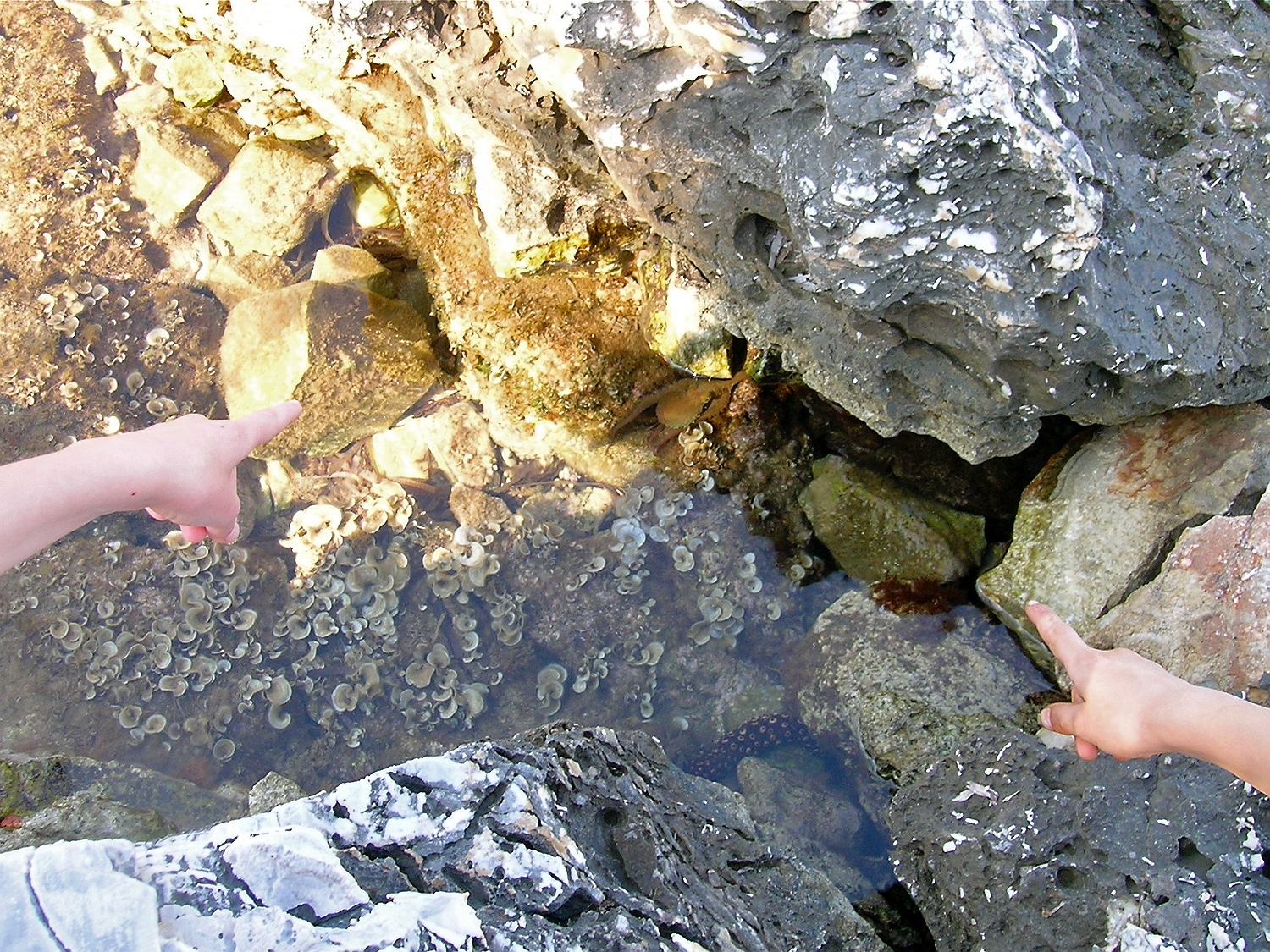
Occasionally, you can spot an octopus from the shore.
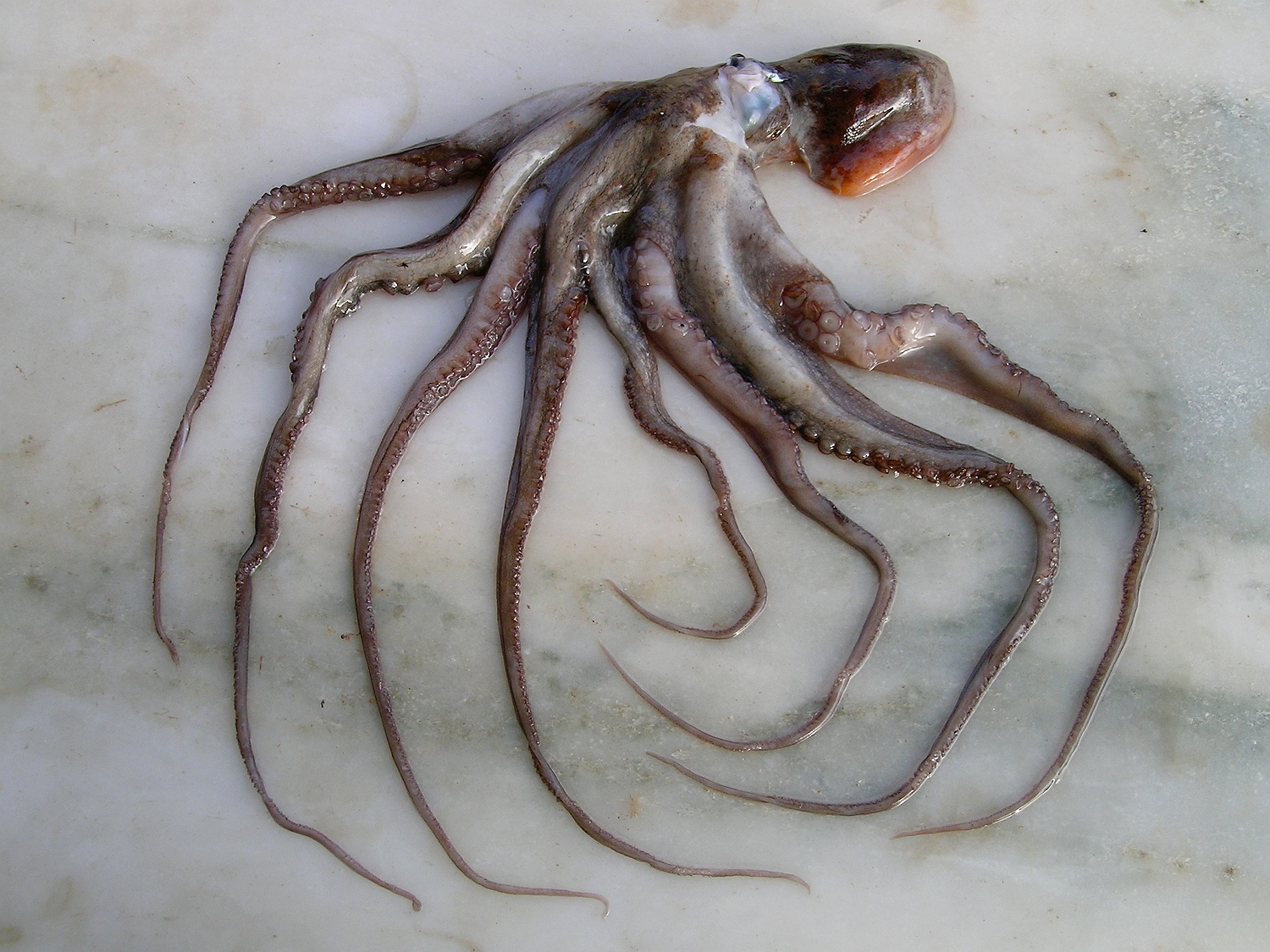
This is a rather small specimen.
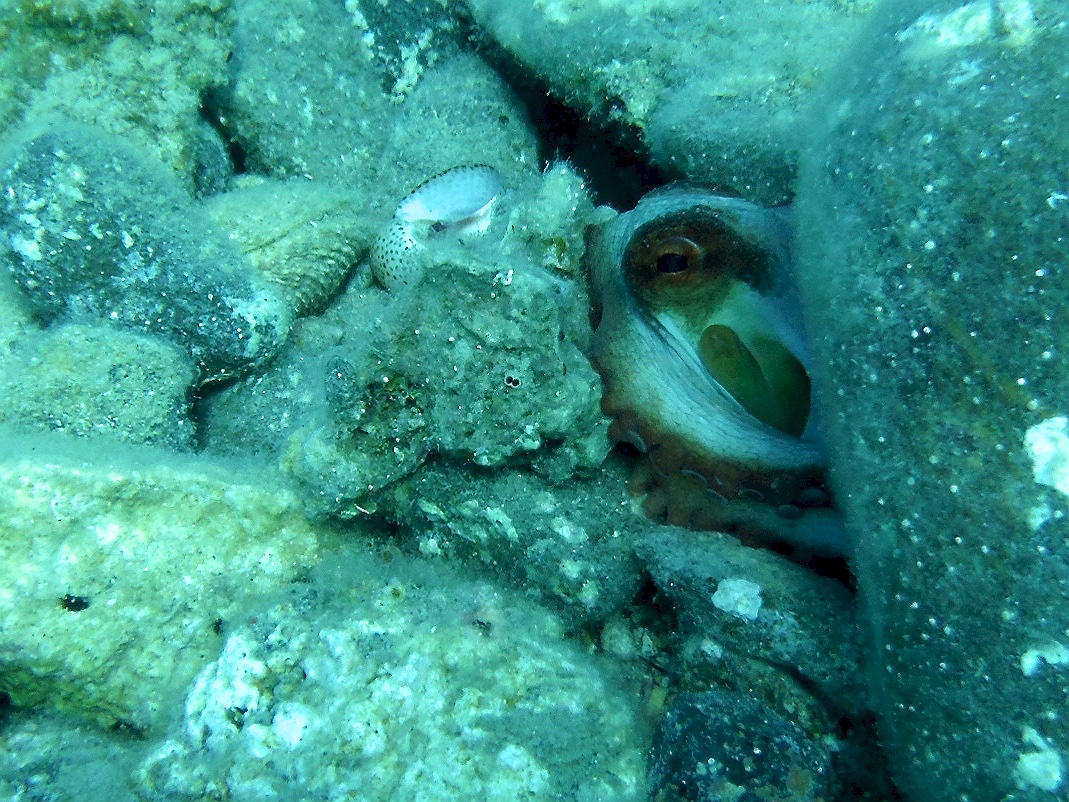
And another octopus, well camouflaged among the rocks.
continue: Crustaceans
back: Marine animals (Overview)
see also:
Comments are closed.