Skip to main content
DE
ΕΛ
Home
Feedback and questions
About us
News from Azalas
Web site content
Categories - Directory
Best articles
Picture of the day
Holiday homes Azalas
Most important articles
The cottages
Photo galleries
Location
Calendar and Reservation
The Prices
How to get to Azalas
The area
Activities on Naxos
Guest book
Culture
Sights and monuments
The history of Naxos
History - the Epochs
Villages (in German)
Cultural landscape (in German)
Village life (in German)
Nature
Mediterranean Sea
Fauna of Naxos
Flora of Naxos (in German)
Vegetation (in German)
Landscape (in German)
Geology (in German)
Weather (in German)
Hikes and tours
Other islands
DE
EN
ΕΛ
Home
Feedback and questions
About us
News from Azalas
Web site content
Categories - Directory
Best articles
Picture of the day
Holiday homes Azalas
Most important articles
The cottages
Photo galleries
Location
Calendar and Reservation
The Prices
How to get to Azalas
The area
Activities on Naxos
Guest book
Culture
Sights and monuments
The history of Naxos
History - the Epochs
Villages (in German)
Cultural landscape (in German)
Village life (in German)
Nature
Mediterranean Sea
Fauna of Naxos
Flora of Naxos (in German)
Vegetation (in German)
Landscape (in German)
Geology (in German)
Weather (in German)
Hikes and tours
Other islands
History
On this page you will find all the articles about the history of the island of Naxos and the sights and monuments that give us insights into the different eras.
1
2
3
4
5
6
Naxos in the Byzantine era
As far as Greek history is concerned, most people only think of Ancient Greece, and with good reasons, since Greece developed in antiquity (and before) a very important culture, that not only profoun…
Zum Beitrag
Agios Mamas near Potamia
Near Káto Potamiá lies an interesting church dedicated to Ágios Mámas, the patron saint of shepherds. It dates back to the 10th century and was used as an episcopal church by the island’s Catholic bi…
Zum Beitrag
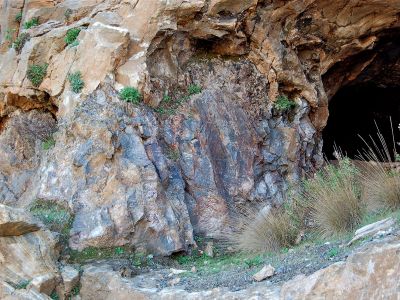
The Cave of Mount Zeus
The Cave of Mount Zeus is located at an altitude of 628 metres on the steep western slope of Mount Zeus and can be reached by a short hike from the spring “ton Arión”. The Cave of Mount Zeus lies hi…
Zum Beitrag
Agios Panteleimonas in Lakkomersina
Southeast of Apíranthos, between the road to Moutsoúna and the road from Danakós to the coast, lies a valley called Lakkomérsina. When we explored that area in November 2011, we discovered a small By…
Zum Beitrag
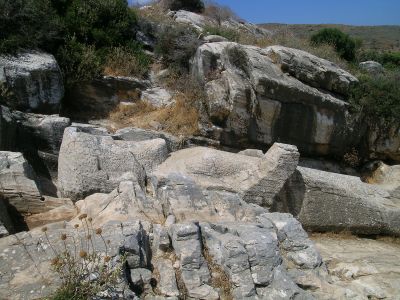
Quarries and statues
Steinbrüche und Statuen Für die kulturelle und wirtschaftliche Entwicklung der Insel Naxos waren ihre Vorkommen an hervorragendem Marmor und Schmirgel von großer Bedeutung, aufgrund derer sich die I…
Zum Beitrag
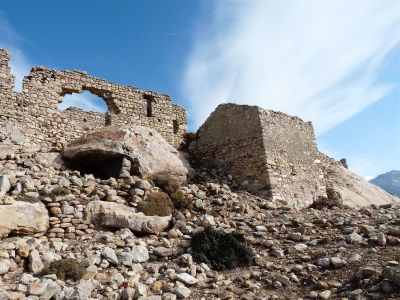
Fortresses and towers
Festungen und Wehrtürme In der Ägäis mit ihren zahlreichen Inseln hat sich schon sehr früh eine Schifffahrt entwickelt: Mittels Booten und Schiffen erreichten die Menschen die Inseln, standen in Kon…
Zum Beitrag
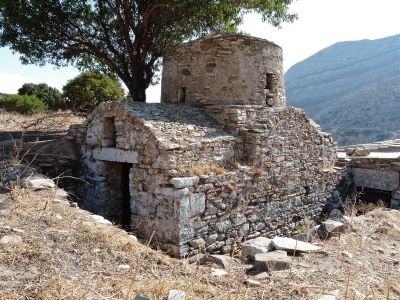
Churches and monasteries
Kirchen und Klöster Viele griechische Inseln rühmen sich, 356 Kirchen zu besitzen, für jeden Tag des Jahres eine. Auf Naxos könnte das vielleicht sogar stimmen: Allein die byzantinischen Kirchen sin…
Zum Beitrag
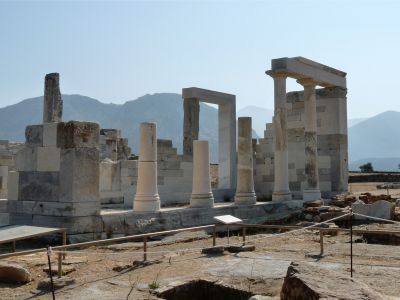
Temples and sanctuaries
Tempel und Heiligtümer Die Insel Naxos hat mehrere Ruinen antiker Tempel und Heiligtümer vorzuweisen: ein prähistorisches Heiligtum im Südwesten der Insel, an dem man interessante Ritzzeichnungen ge…
Zum Beitrag
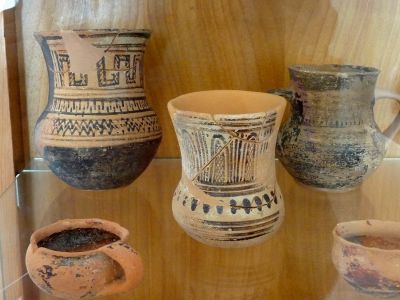
The Geometric epoch
In the 12th century BC, the Dorian tribes from the north began to migrate to the Greek mainland, leading to armed conflicts, social upheaval and population shifts. Tribes such as the Ionians, who had…
Zum Beitrag
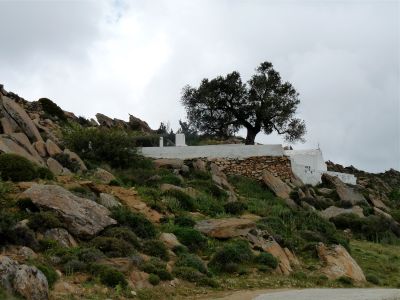
Agios Pachomios near Tsikalario
Near the village of Tsikalarió lies the chapel of St Pachomios, one of the many small Byzantine churches scattered around the island. It is of interest to us here because it is linked to the history…
Zum Beitrag
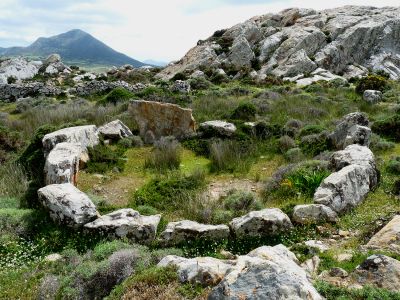
The Geometric cemetery at Tsikalario
Near the village of Tsikalarió lies an ancient cemetery from the Geometric epoch (11th – 8th century BC), not far from the The Venetian fortress Apano Kastro. It is located within the granite landsca…
Zum Beitrag
Agios Joannis und Agios Georgios near Sifones
Close to the small abandoned village of Sífones between Moní and Stavrós Keramotís lies one of the numerous Byzantine churches of Naxos, a double-naved church dedicated to Saint Joannis and Saint Geo…
Zum Beitrag
The Venetian tower and monastery of Agia
In the mostly uninhabited northwest of Naxos lies hidden in a secluded lush valley a small monastery called Agiá. Nearby on a hill stands a dilapidated Venetian tower. The Venetian tower of Agiá is…
Zum Beitrag
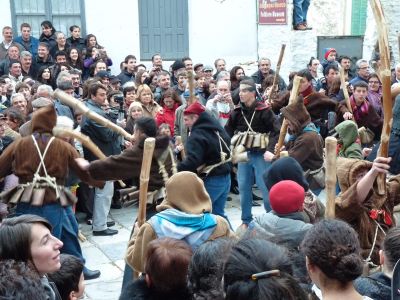
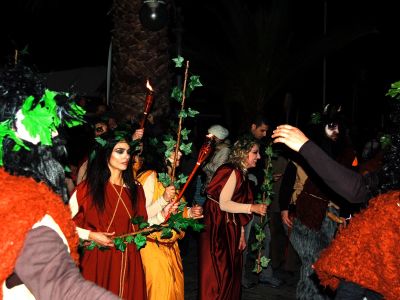
Karneval in Apiranthos: die Koudounati
Ich bedanke mich herzlich bei den Einwohnern von Apíranthos, die mir beim Erstellen dieses Artikels geholfen haben, insbesondere Frantzeskos Margaritis, Jannis Eleftheriou und Jannis Bardanis. Am let…
Zum Beitrag
Karneval auf Naxos
Der Karneval (gr. apókries oder karnaváli) hat eine lange Tradition auf Naxos, ja es ist keine große Übertreibung, wenn man behauptet, dass er hier besonders zu Hause ist: Unseren heutigen Erkenntnis…
Zum Beitrag
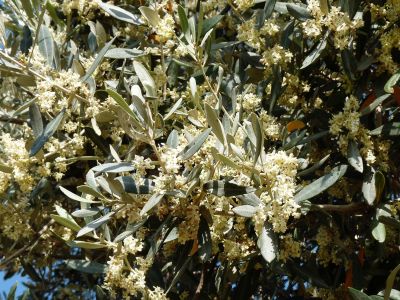
Ölbaum, Olea europaea: Der heilige Baum der Athene
Wenn man Natur und Kultur des Mittelmeergebietes durch ein Symbol repräsentieren will, dann wird man wohl den Ölbaum wählen: den genügsamen, überlebenstüchtigen, langlebigen Baum, der den Menschen da…
Zum Beitrag
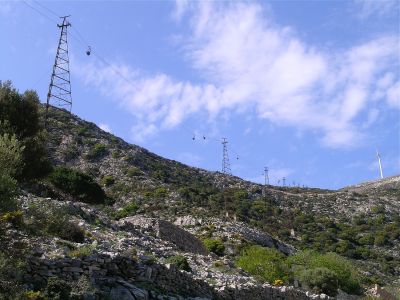
The emery Cable car
Unfortunately there is yet no translation available for this page as well as for descriptions of the hiking tours you find under the links below. Maybe try to translate the page with Google translat…
Zum Beitrag
Die Schmirgelminen von Naxos
Eine der vielen Besonderheiten der Insel Naxos sind ihre Schmirgelvorkommen. Es gibt kaum einen Ort auf der Welt, an dem dieses außergewöhnlich harte Mineral in so reiner Form auftritt und schon seit…
Zum Beitrag
The ancient water pipe from Flerio to Chora
The Chóra, the main settlement of Naxos, has been inhabited since the Neolithic age, i.e. for over 6,000 years. During the Bronze age and in ancient times an important settlement existed in the area…
Zum Beitrag
The Jesuit monastery in Kalamitsia
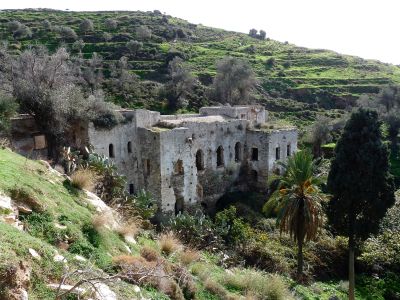
Between the villages of Mélanes and Potamiá, in a sheltered, hidden valley called Kalamítsia, lies an old, partially dilapidated building that was once the country house (“palace”) of the Jesuit orde…
Zum Beitrag
1
2
3
4
5
6