Skip to main content
DE
ΕΛ
Home
Feedback and questions
About us
News from Azalas
Web site content
Categories - Directory
Best articles
Picture of the day
Holiday homes Azalas
Most important articles
The cottages
Photo galleries
Location
Calendar and Reservation
The Prices
How to get to Azalas
The area
Activities on Naxos
Guest book
Culture
Sights and monuments
The history of Naxos
History - the Epochs
Villages (in German)
Cultural landscape (in German)
Village life (in German)
Nature
Mediterranean Sea
Fauna of Naxos
Flora of Naxos (in German)
Vegetation (in German)
Landscape (in German)
Geology (in German)
Weather (in German)
Hikes and tours
Other islands
DE
EN
ΕΛ
Home
Feedback and questions
About us
News from Azalas
Web site content
Categories - Directory
Best articles
Picture of the day
Holiday homes Azalas
Most important articles
The cottages
Photo galleries
Location
Calendar and Reservation
The Prices
How to get to Azalas
The area
Activities on Naxos
Guest book
Culture
Sights and monuments
The history of Naxos
History - the Epochs
Villages (in German)
Cultural landscape (in German)
Village life (in German)
Nature
Mediterranean Sea
Fauna of Naxos
Flora of Naxos (in German)
Vegetation (in German)
Landscape (in German)
Geology (in German)
Weather (in German)
Hikes and tours
Other islands
History
On this page you will find all the articles about the history of the island of Naxos and the sights and monuments that give us insights into the different eras.
1
2
3
4
5
6
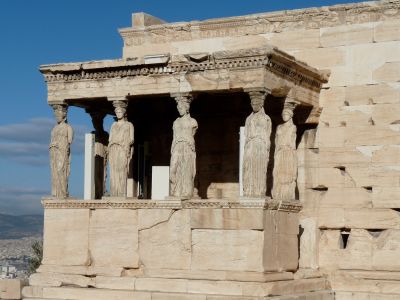
Die Athener Akropolis
Für alle, die auf ihrer Reise Station in Athen machen, ist ein Besuch der Akropolis auf jeden Fall zu empfehlen. Von der Metrostation aus steigt man von Osten zur Akropolis hinauf. Als erstes kommt m…
Zum Beitrag
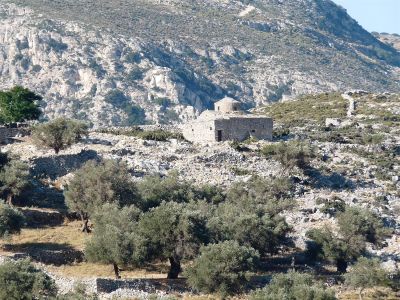
Gute Nachrichten für die Kirche Agia Kyriaki
Für die kleine byzantinische Kirche Agia Kyriaki bei Apeiranthos, die mit sehr seltenen Wandmalereien aus der Zeit des Bilderstreites (8. und 9. Jhd.) ausgeschmückt ist, gibt es gute Nachrichten: Ihr…
Zum Beitrag
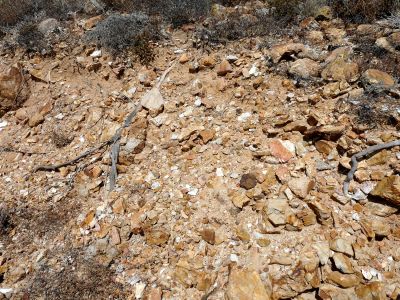
Paleolithic and Mesolithic
Until recently it was assumed that the Aegean islands were inhabited by humans only in the Neolithic age. One of the earliest proofs that humans had reached the Cyclades were the findings of obsidian…
Zum Beitrag
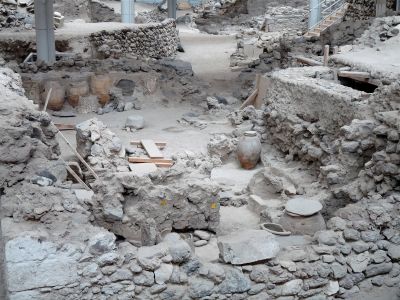
Akrotiri on Santorin
Unfortunately there is yet no translation available for some of the pages you find under the links below. Maybe try to translate the pages with Google translate (copy the URL and paste it into the f…
Zum Beitrag
Ein Thron beim Antiken Thera
Auf dem Weg von Períssa zum Antiken Thera kommt man kurz unterhalb des Eingangs zur archäologischen Stätte an einem zu einem “Thron” zurecht gehauenen Felsen vorbei. Bei genauer Betrachtung sind auch…
Zum Beitrag
Das Antike Thera auf Santorin
An der Ostküste von Santorin liegt das Antike Thera, die Hauptsiedlung der Insel in der Antike (archaische bis frühe byzantinische Epoche). Von Períssa aus führt ein schöner Wanderweg zur Ausgrabungs…
Zum Beitrag
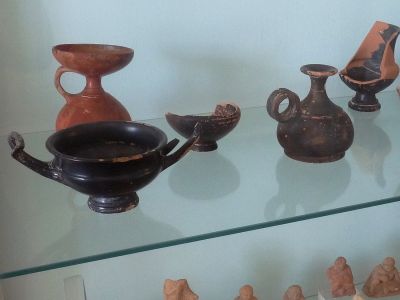
The archaeological museum in Apiranthos
In the small village of Apiranthos one can visit five museums, one ethnological, one geological, one of natural history, one of fine arts and one archaeological. The archaeological museum was the fir…
Zum Beitrag
The Early Bronze age sanctuary Koryfi t’Aroniou
In the south-east of Naxos, about three kilometres north of the bay of Pánormos with the small Early Bronze age acropolis Korfári ton Amygdalión, there is a small site from the same period, which is…
Zum Beitrag
The Roman epoch
Around the middle of the second century BC the different areas of Greece (Macedonia, the rest of the Greek mainland, the Aegean islands and finally Asia Minor) were successively subdued by the Romans…
Zum Beitrag
The Hellenistic epoch
The Hellenistic epoch covers the period from 336 BC, starting with the murder of the Macedonian king Phillip II, the father of Alexander the Great, till the beginning of the 1st century BC. The most…
Zum Beitrag
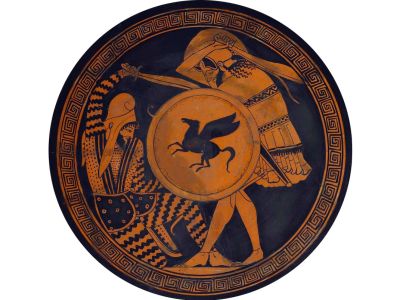
The Classical epoch
The Classical Epoch includes the 5th and 4th centuries BC (about 500 BC to 340 BC), the Golden Age of Greek antiquity. I outine here only the fate of the island of Naxos during this epoch, about whic…
Zum Beitrag
The Archaic epoch
The Archaic epoch covers the 7th and 6th centuries BC. During this period a remarkable cultural development took place in the Greek region, i.e. on the Greek mainland, the islands of the Aegean and t…
Zum Beitrag
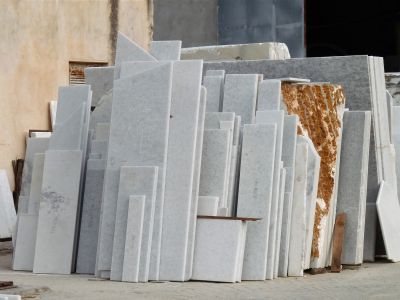
Im Marmor-Schneidewerk
Auf Naxos wird Marmor guter Qualität in mehreren Steinbrüchen abgebaut und in Schneidewerken weiter verarbeitet. Hier ein paar Fotos aus dem Schneidewerk östlich von Kinídaros. In den Steinbrüchen w…
Zum Beitrag
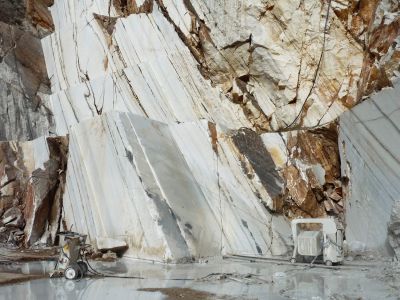
Marmorabbau im Steinbruch bei Kinidaros
Außer dem Schmirgel besitzt die Insel Naxos ein weiteres wichtiges Naturgut: den Marmor, der seit über 5000 Jahren verwendet, abgebaut, bearbeitet und auch exportiert wird. Eine wichtige Rolle spielt…
Zum Beitrag
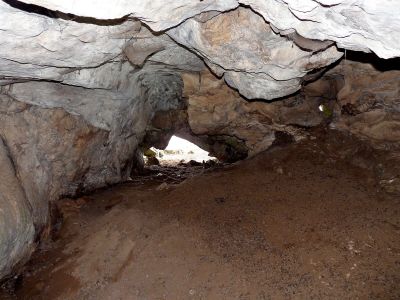
The Cave Kako Spilaio near Koronos
There are many caves on Naxos, although most of them are inaccessible, hidden and quite small. The most famous cave is the one on Mount Zeus, which was used for many thousands of years by the island’…
Zum Beitrag
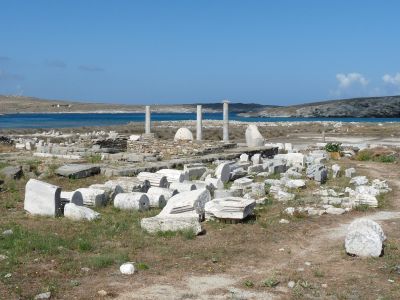
Delos, die heilige Insel des Apollon
Die Insel Delos ist mit 5 Kilometern Länge eher klein. Sie ist größtenteils weich hügelig gestaltet; die höchste Erhebung ist der “Berg” Kynthos mit 112 Metern. Die Insel besteht aus Granit und Gneis…
Zum Beitrag
The Mycenaean epoch
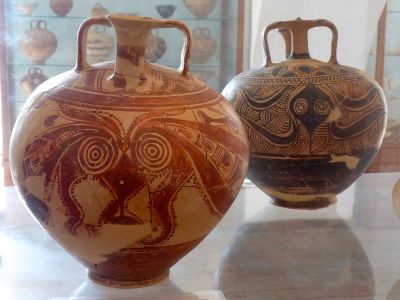
The Late Bronze age in the Cyclades is called Mycenaean (= Late Helladic) epoch (about 1700 to 1150 BC). The most important centres of the Mycenaean epoch were on the Peloponnese and the southern Gre…
Zum Beitrag
The Mycenaean domed tomb at Komiaki
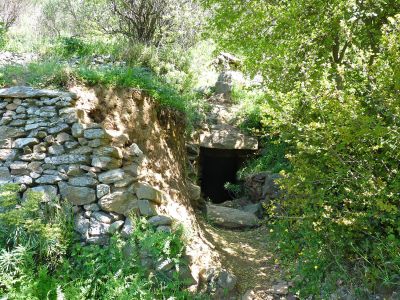
On Naxos exist only relatively few testimonies from the Mycenaean epoch (approx. 1,700 to 1,150 BC). One of them is the Mycenaean domed tomb (or tholos tomb) near Komiakí, one of only three domed tom…
Zum Beitrag
Panagia Drosiani near Moni
The most famous Byzantine church and one of the main attractions of Naxos is the church of Panagía Drosianí near Moní. It dates from the 6th century AD and is one of the oldest churches in Greece. In…
Zum Beitrag
The Byzantine churches of Naxos
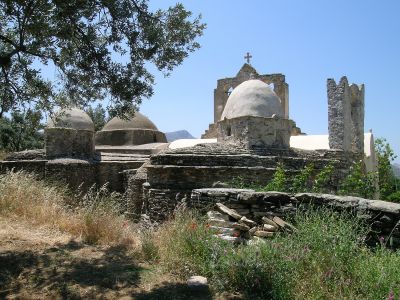
The island of Naxos possesses an extraordinary treasure with over 140 Byzantine churches, the oldest of which date back to the 5th or 6th century, possibly even as early as the 4th century. The churc…
Zum Beitrag
1
2
3
4
5
6