Skip to main content
DE
ΕΛ
Home
Feedback and questions
About us
News from Azalas
Web site content
Categories - Directory
Best articles
Picture of the day
Holiday homes Azalas
Most important articles
The cottages
Photo galleries
Location
Calendar and Reservation
The Prices
How to get to Azalas
The area
Activities on Naxos
Guest book
Culture
Sights and monuments
The history of Naxos
History - the Epochs
Villages (in German)
Cultural landscape (in German)
Village life (in German)
Nature
Mediterranean Sea
Fauna of Naxos
Flora of Naxos (in German)
Vegetation (in German)
Landscape (in German)
Geology (in German)
Weather (in German)
Hikes and tours
Other islands
DE
EN
ΕΛ
Home
Feedback and questions
About us
News from Azalas
Web site content
Categories - Directory
Best articles
Picture of the day
Holiday homes Azalas
Most important articles
The cottages
Photo galleries
Location
Calendar and Reservation
The Prices
How to get to Azalas
The area
Activities on Naxos
Guest book
Culture
Sights and monuments
The history of Naxos
History - the Epochs
Villages (in German)
Cultural landscape (in German)
Village life (in German)
Nature
Mediterranean Sea
Fauna of Naxos
Flora of Naxos (in German)
Vegetation (in German)
Landscape (in German)
Geology (in German)
Weather (in German)
Hikes and tours
Other islands
History
On this page you will find all the articles about the history of the island of Naxos and the sights and monuments that give us insights into the different eras.
1
2
3
4
5
6
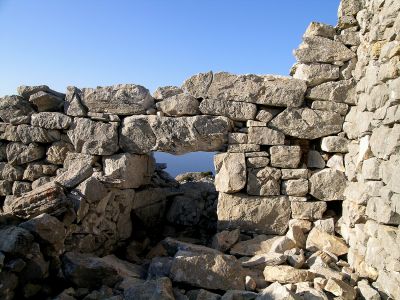
The Byzantine fortress on Mount Kalogeros
Near Apóllonas on the northern tip of Naxos, the remains of a small Byzantine fortress lie on the 350 metre high mount Kalógeros. View of the Kalogeros from the harbour of Apollonas; the fortress li…
Zum Beitrag
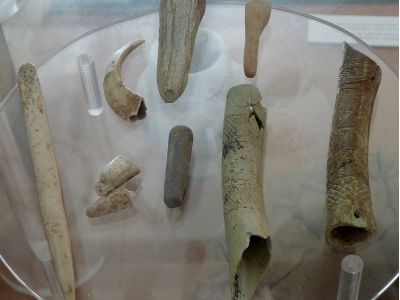
Seafaring and trade in the Cycladic culture
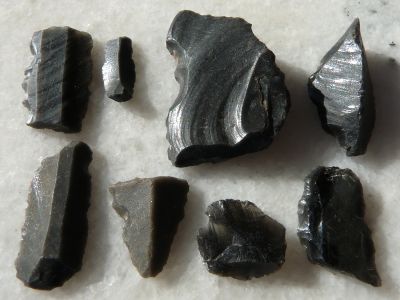
The earliest evidence of human presence on the Cyclades are the Paleo(!)- and Mesolithic chert tools on Naxos and the Mesolithic finds of obsidian from the island of Milos on the mainland and on othe…
Zum Beitrag
Contacts to the neighbouring peoples
As an island people the inhabitants of the Cyclades always had close contacts to their neighbours. The islands were probably settled by a people from the East, from the Levant and Asia Minor. Since t…
Zum Beitrag
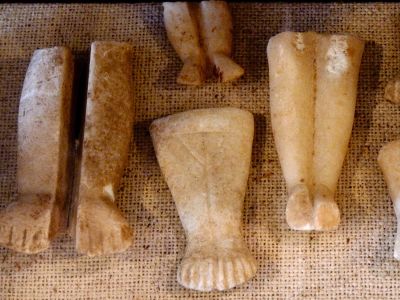
The idols and the religion of the Cycladic culture
The Cycladic idols The most famous artefacts of the Cycladic culture are doubtless the marble idols. These unique works of art testify in an especially impressive way to the craftsmanship and artisti…
Zum Beitrag
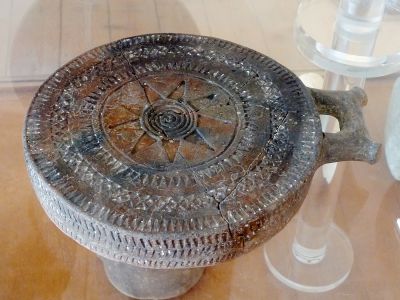
Crafts in the Cycladic culture
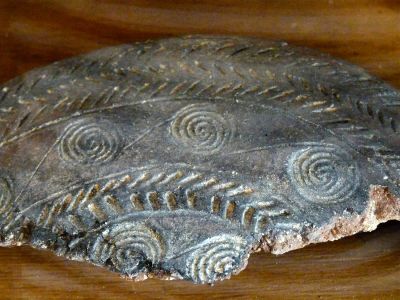
In the Early Bronze age, crafts and techniques already known from the Neolithic age such as pottery, sculpture, metalworking and shipbuilding developed to a significantly higher level. Individual peo…
Zum Beitrag
Metal crafts in the Cycladic culture
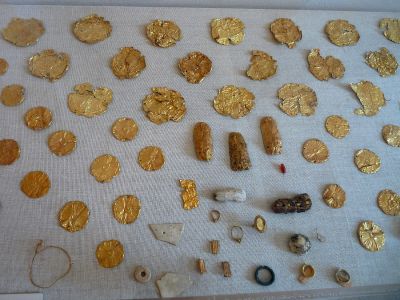
Even in the late Stone age, people occasionally used metal to make simple tools or jewelry. These were mostly made of metals, which could be found in a pure form in nature, not as an ore, like silver…
Zum Beitrag
Cemeteries and burials in the Cycladic culture
Already during the Stone age people started to bury their dead. The oldest known graves are dated to an age of 40,000 years. The first known cemeteries are about 12,000 years old. On the Cyclades as…
Zum Beitrag
Peoples and language of the Cycladic culture
We don’t know exactly who the people were who lived in the Cyclades in the Early Bronze age. There is no direct written evidence from the time of the Cycladic culture; the first writings in Greece, t…
Zum Beitrag
The settlements of the Cycladic culture
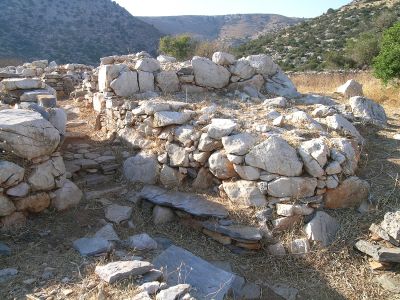
During the Neolithic age, human settlement on Naxos was probably still sparse. In the Early Bronze age, on the other hand, large areas of the island were inhabited: numerous sites have been found, es…
Zum Beitrag
The Cycladic culture
In the third millennium BC a remarkable culture developed on the Cyclades, the so-called Cycladic culture, which had an important centre on Naxos. It was one of the first cultures in Europe to take t…
Zum Beitrag
The history of Naxos
(Here you can jump directly to the links further down on the page.) The history of the Cyclades and of Naxos in particular is exceptionally interesting. The first humans reached the Cyclades already…
Zum Beitrag
Neolithic
Relatively little is known about the Stone age in Naxos and in Greece, especially compared to the later times. But also in comparison to Central Europe our information about the human presence in Gre…
Zum Beitrag
Mein Buch “Zwei Türen hat das Leben”
Ich habe ein Buch geschrieben, in dem man viel über Naxos, über das traditionelle Leben auf der Insel und über die jüngere Geschichte Griechenlands erfahren kann: Es handelt sich um die Lebenserinne…
Zum Beitrag
Apollonas – ein malerisches Hafenörtchen
Apóllonas ist ein malerischer kleiner Hafenort an der Nordspitze von Naxos, der immer einen Ausflug wert ist. Apollonas vom Meer aus gesehen Blick auf Apollonas mit seiner Kirche Fischerboote im…
Zum Beitrag
The Early Bronze age acropolis at Panormos
Near the bay of Pánormos at the southeastern tip of Naxos lies on a low hill called Korfári ton Amygdalión (= hill of the almond trees) a small Bronze age acropolis (= fortress). It consists of about…
Zum Beitrag
The inscription at the ancient quarry at Apollonas
The village of Apóllonas was named after an antique inscription which lies on a marble cliff on the southern side of the hill with the ancient marble quarry in which the famous Kouros, a gigantic, un…
Zum Beitrag
The ancient quarry at Apollonas
Close to the small village of Apóllonas, at the northern tip of Naxos, lies the island’s main antique marble quarry. It is located on a small hill to the southwest of the village that consists of ver…
Zum Beitrag
The Kouros of Apollonas
In an ancient quarry near the village Apóllonas in the north of Naxos lies a large, unfinished marble statue, the Kouros. On the whole hill many traces of the marble quarrying are still visible today…
Zum Beitrag
The traditional lime kilns
A typical Cycladic village is characterised by its simple, roughly cube-shaped, whitewashed houses standing close together. This preference for white plaster is relatively new; in the Middle Ages, t…
Zum Beitrag
Landwirtschaft in der Antike
Schon ab der Steinzeit, d.h. vor über 3000 v. Chr., wurde auf Naxos Getreide angebaut. Allerdings haben wir nur recht wenige Funde aus dieser Zeit, so dass unser Wissen begrenzt ist. Während der Bron…
Zum Beitrag
1
2
3
4
5
6