A visit to the bats in the cave on Mount Zas
Bats belong to the animals that are somewhat difficult to study: they are only active at night and spend the days in caves, crevices, dilapidated houses or tree hollows. After not finding any bats in the emery mines (as far as we were able to inspect them), at least at this time of year, we now want to try our luck in the cave on Mount Zas, where there are supposed to be many bats. We are accompanied by Michalis Bardanis from Apíranthos, who has been to the cave many times before.
We set off in the early afternoon so that we have enough time to explore the cave before the bats become active in the evening. It is a walk of about 30 minutes from the parking place near the spring “ton Arión”. We have to carry quite a bit of equipment: we are taking a bat trap with us, which will be set up at the entrance to the cave.
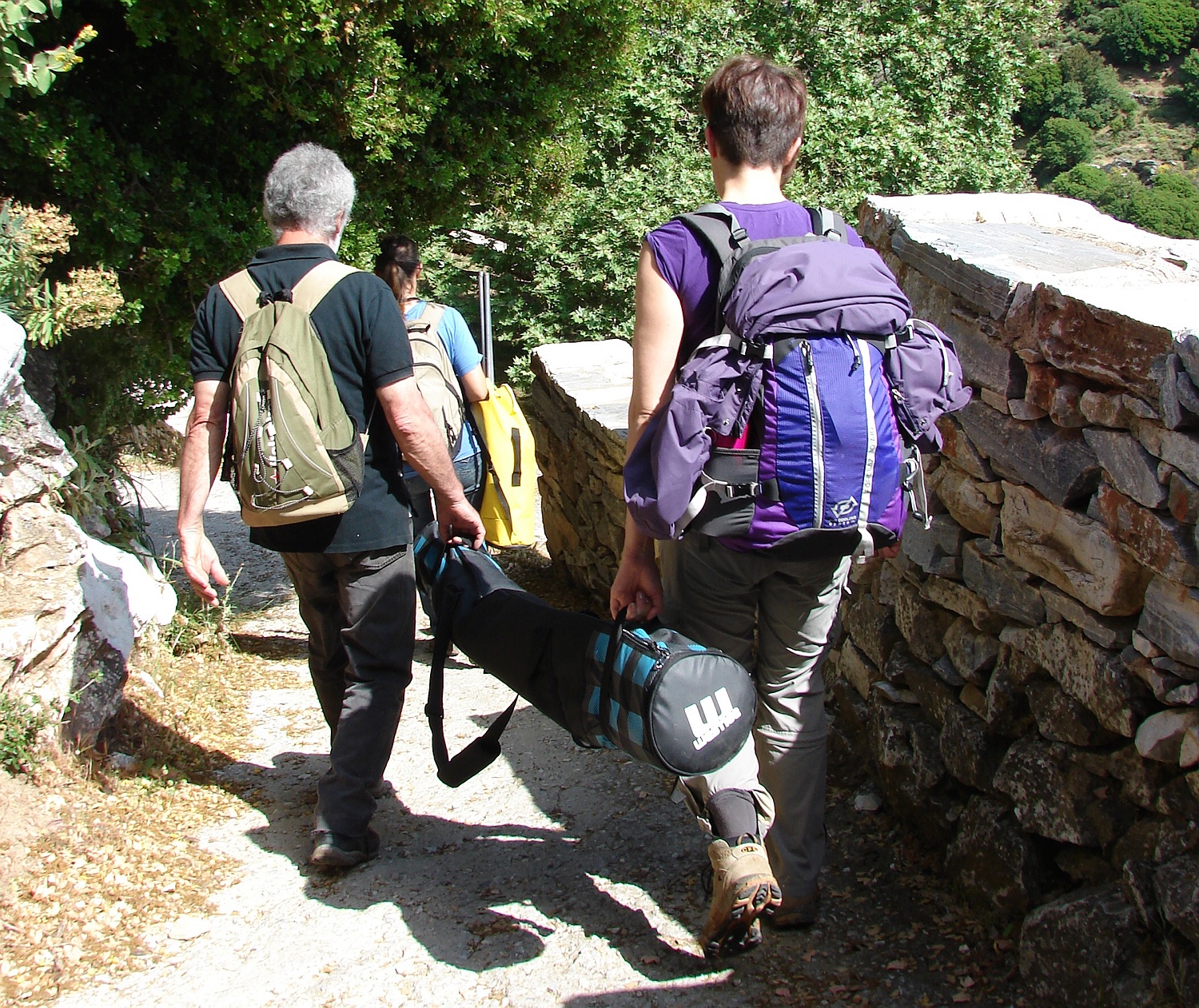
From the spring we need about 30 minutes to the cave.
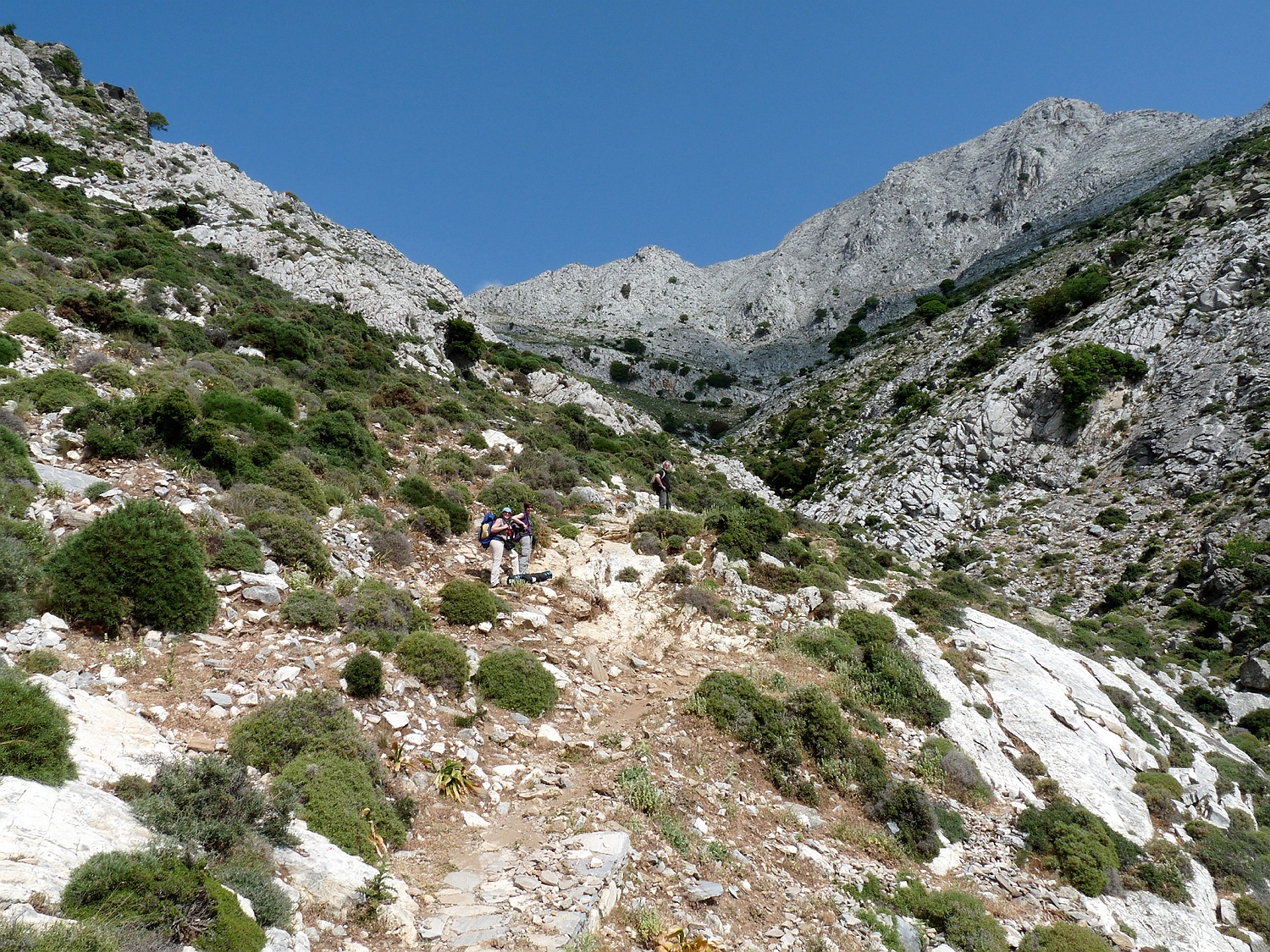
Halfway there. In the background the summit of Mount Zeus, the highest mountain in the Cyclades.
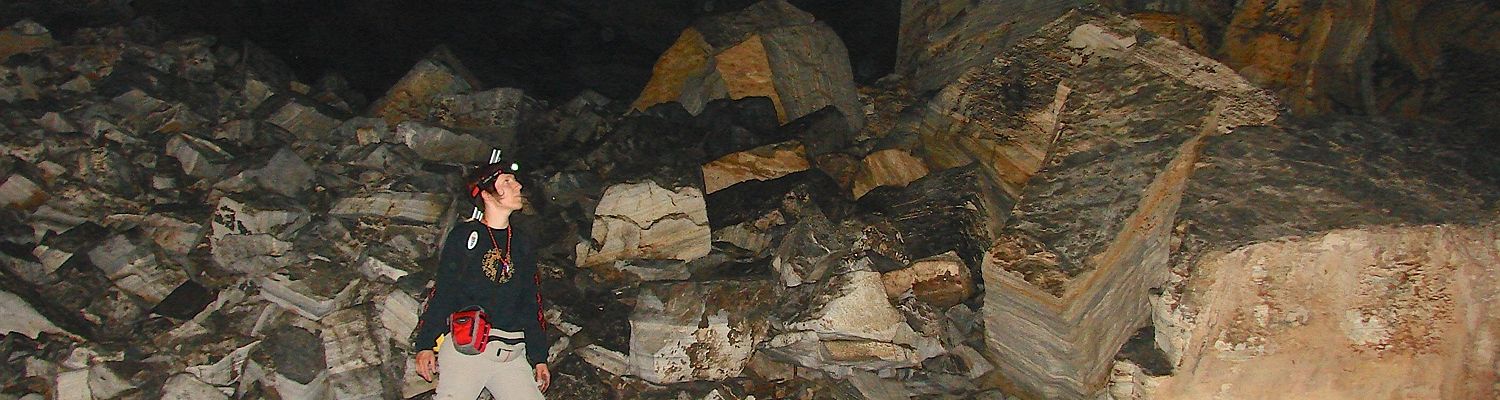
The cave is located in the thick layers of marble that make up Mount Zas. The first chamber of the cave is quite large, but rather low. Near the entrance, it is still quite easy to walk, but the further you go, the more difficult it becomes to move forward because the entire floor is covered with large boulders that have fallen from the ceiling and must be laboriously climbed over. The second impressive chamber of the cave measures 78 by 65 meters and is up to 22 meters high. Progress becomes very difficult here; exploring the cave to the other end is out of the question. The biggest problem is that the large boulders we have to climb over are so greasy and slippery from bat droppings that you can only move forward with extreme caution.
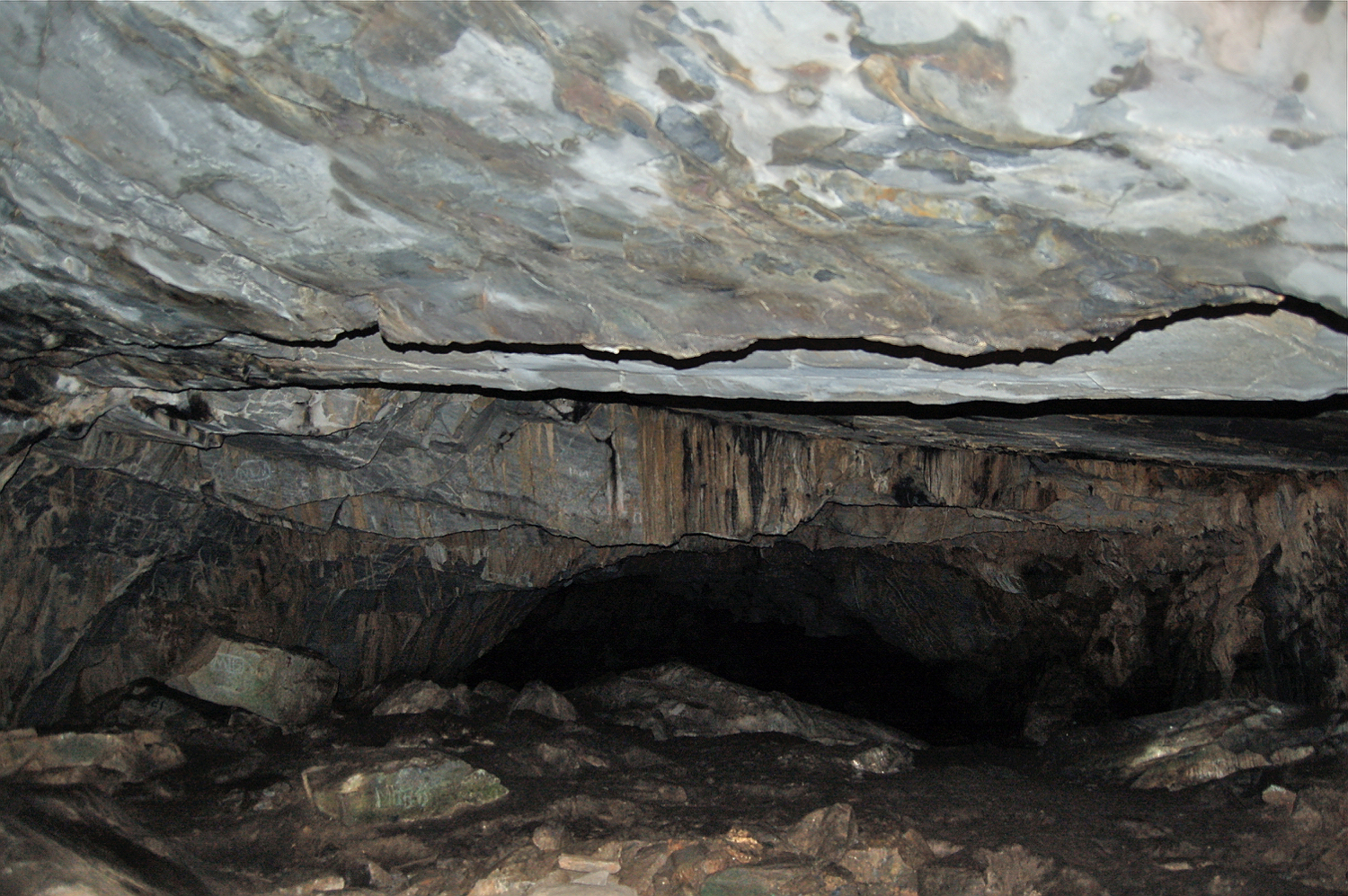
At the entrance, the cave forms a large but rather low space, with a height of up to about 5 meters.
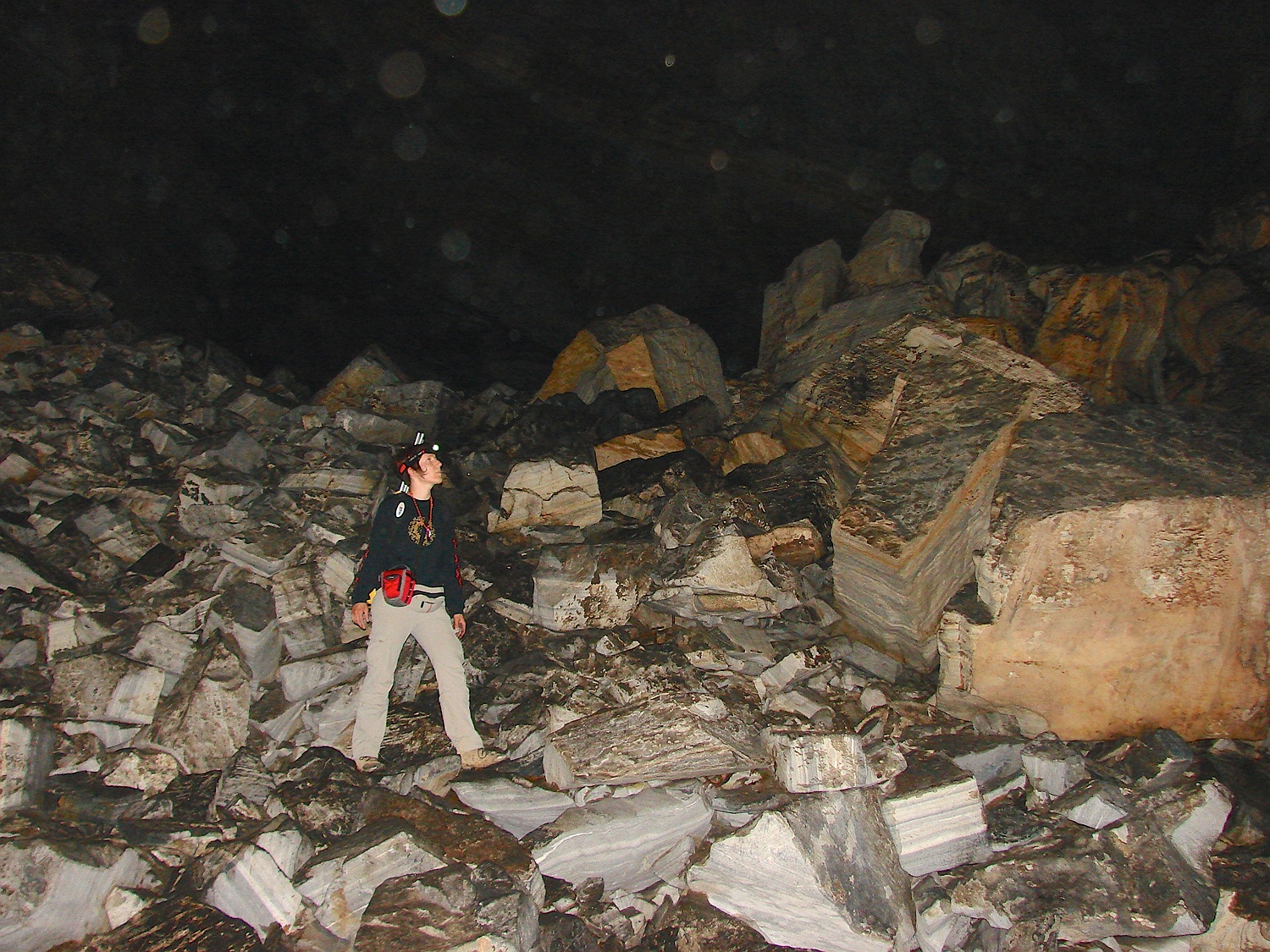
Further inside, behind the elevation you see here, you get to a second chamber, which is much larger, measuring 78 by 65 meters with a height of up to 22 meters. Here it is very difficult to walk because the ground is covered with great fallen rocks.
After we have ventured a little way into the cave, we hear an increasing squeaking: bats! The noise comes from an area in the rear chamber; fortunately, the place is not very deep inside the cave, but reasonably accessible for us. We cautiously approach the source of the commotion and finally see a large cluster of bats hanging high above us on the wall. We carefully move a little closer and take photos of the bats without disturbing them with too much light. They are mouse-eared bats; it is not possible to determine the species from the distance. In addition to this cluster, we discover a few individual bats, probably horseshoe bats, hanging in several places from the cave ceiling.
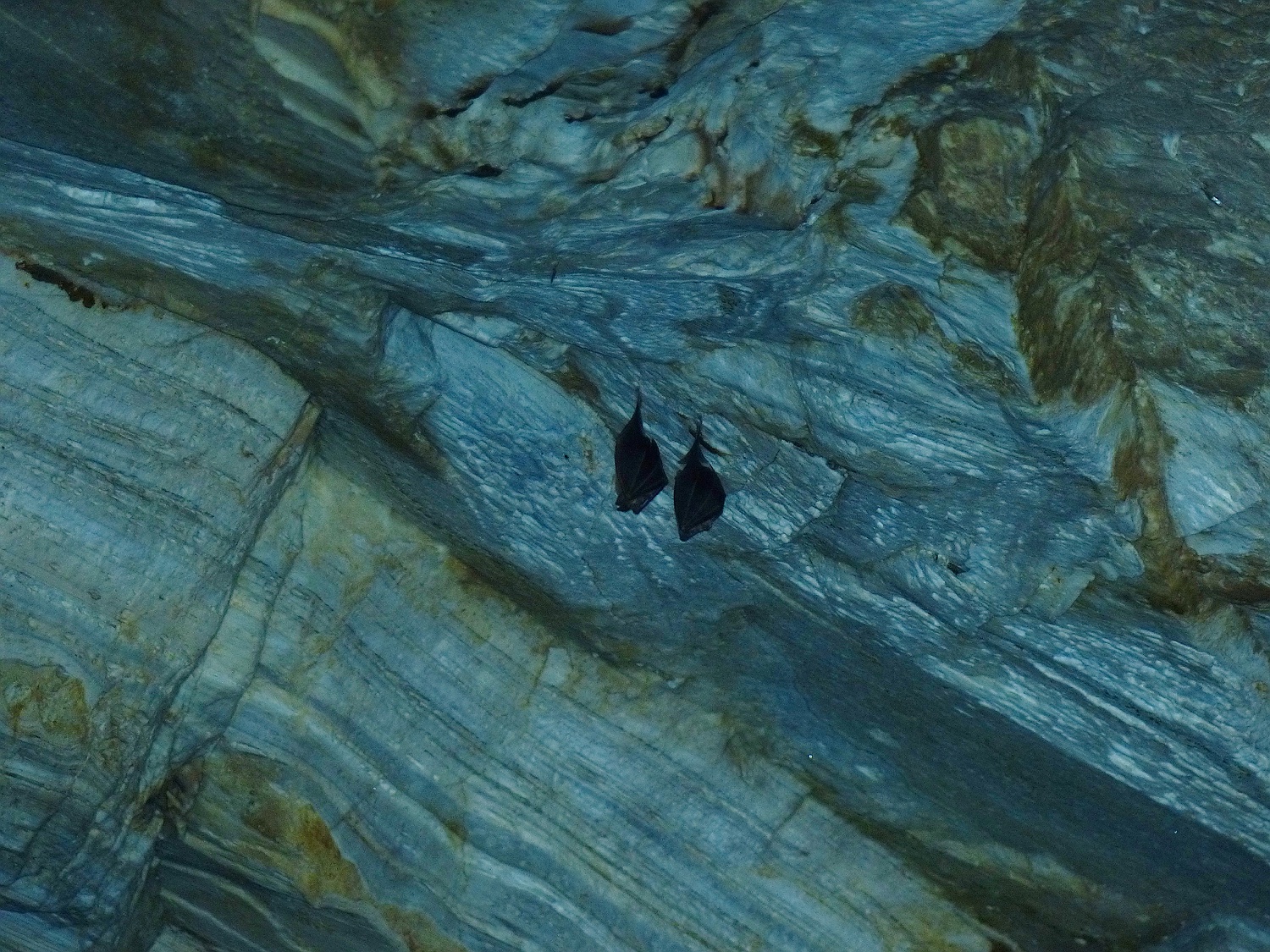
A few individual horseshoe bats hang here and there from the cave ceiling.

Further inside we come upon a whole cluster of mouse-eared bats, which, as we approach, produce a squeaking sound that can be heard from afar.

The cluster consists of about 1,000 to 1,500 individuals, all huddled together to keep each other warm.

Some bats fly up, but soon sit down again.
We leave soon so as not to disturb the animals too much. More than half of the bat species found in Europe are listed as endangered on the Red List. Bats are particularly threatened by the destruction and sealing of their sleeping and living spaces, as well as by disturbance in their (winter) quarters. Especially during the cold season, it takes a lot of energy for the bats to wake up and fly away. For these reasons, if you are lucky enough to encounter bats, you should take special care to disturb or scare them as little as possible.
As part of the survey, Elena and Artemis want to catch some of the bats in order to identify the species, measure the animals and take DNA samples. To do this, we set up the bat trap we brought with us at the cave entrance. Bats must be handled with extreme caution; apart from the fact that the animal should not be harmed, bats are sometimes infected with diseases that can be transmitted through a bite. Even the small species should only be handled in an emergency and only with gloves: they have sharp teeth that can easily pierce human skin. Researchers who work with bats and catch them must be vaccinated against the relevant diseases.
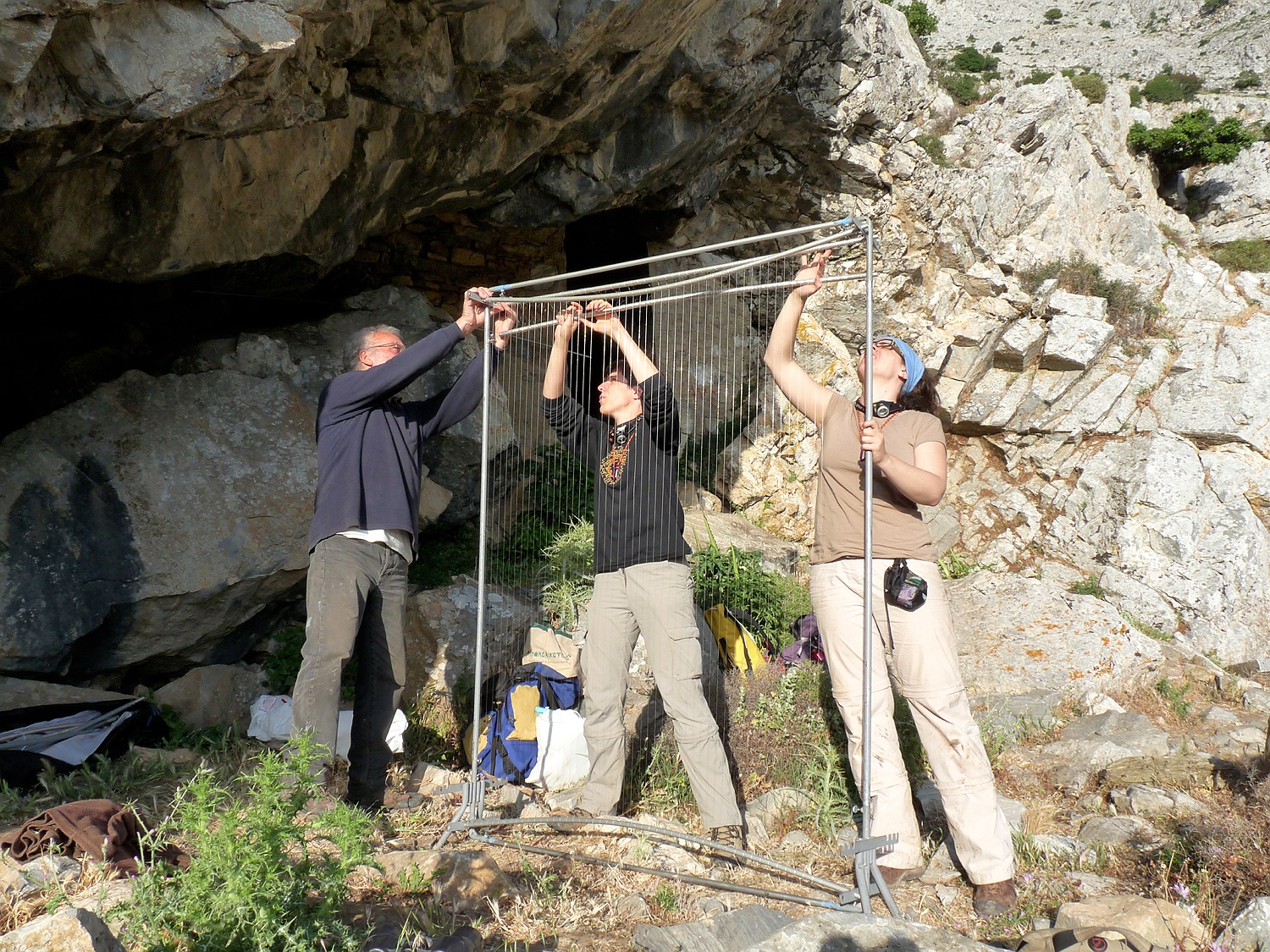
The bat trap is set up. It consists of an aluminium frame strung with fine nylon threads in the manner of a harp.
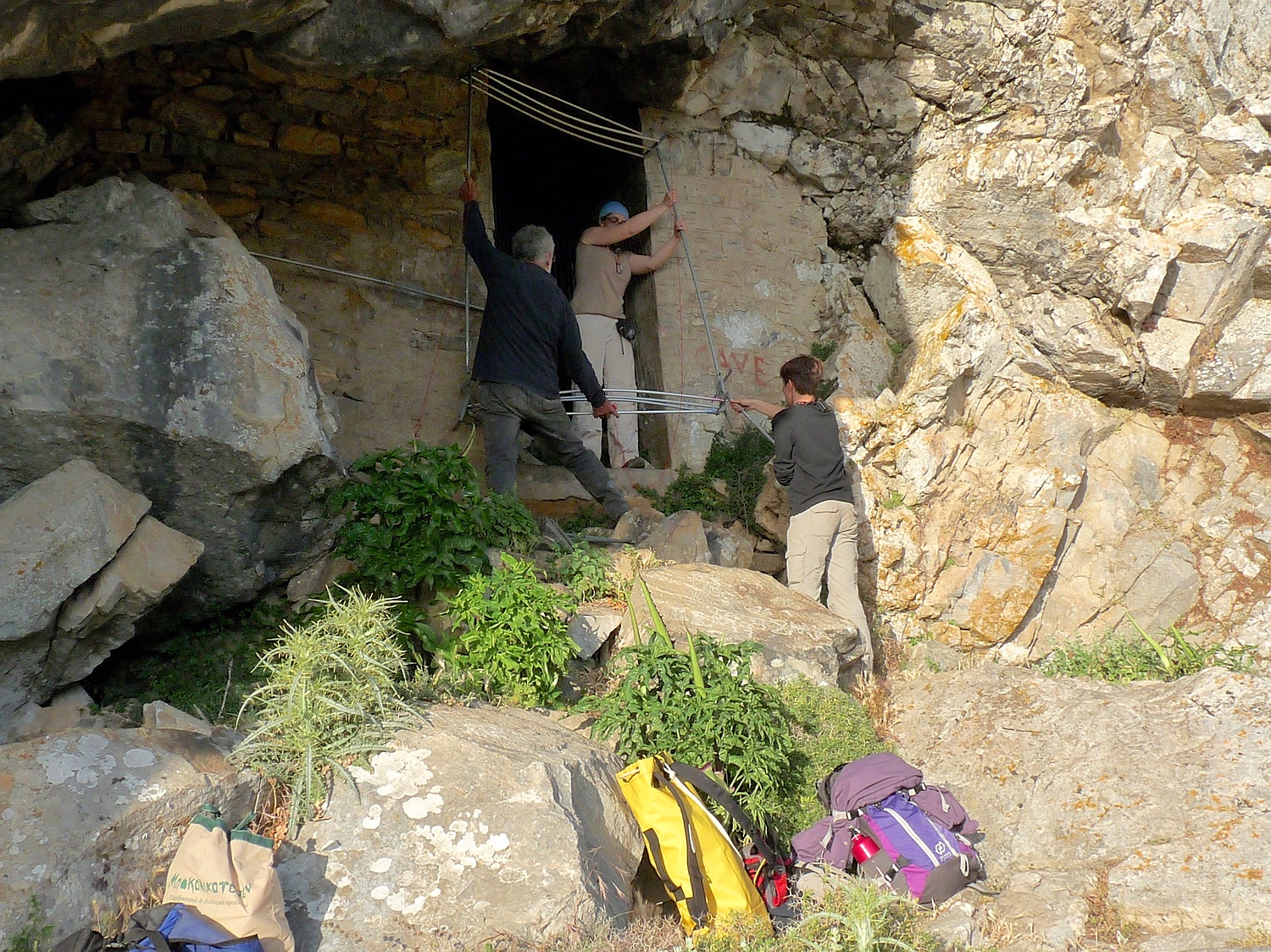
It takes a while to set up the trap securely and stably in front of the cave entrance.
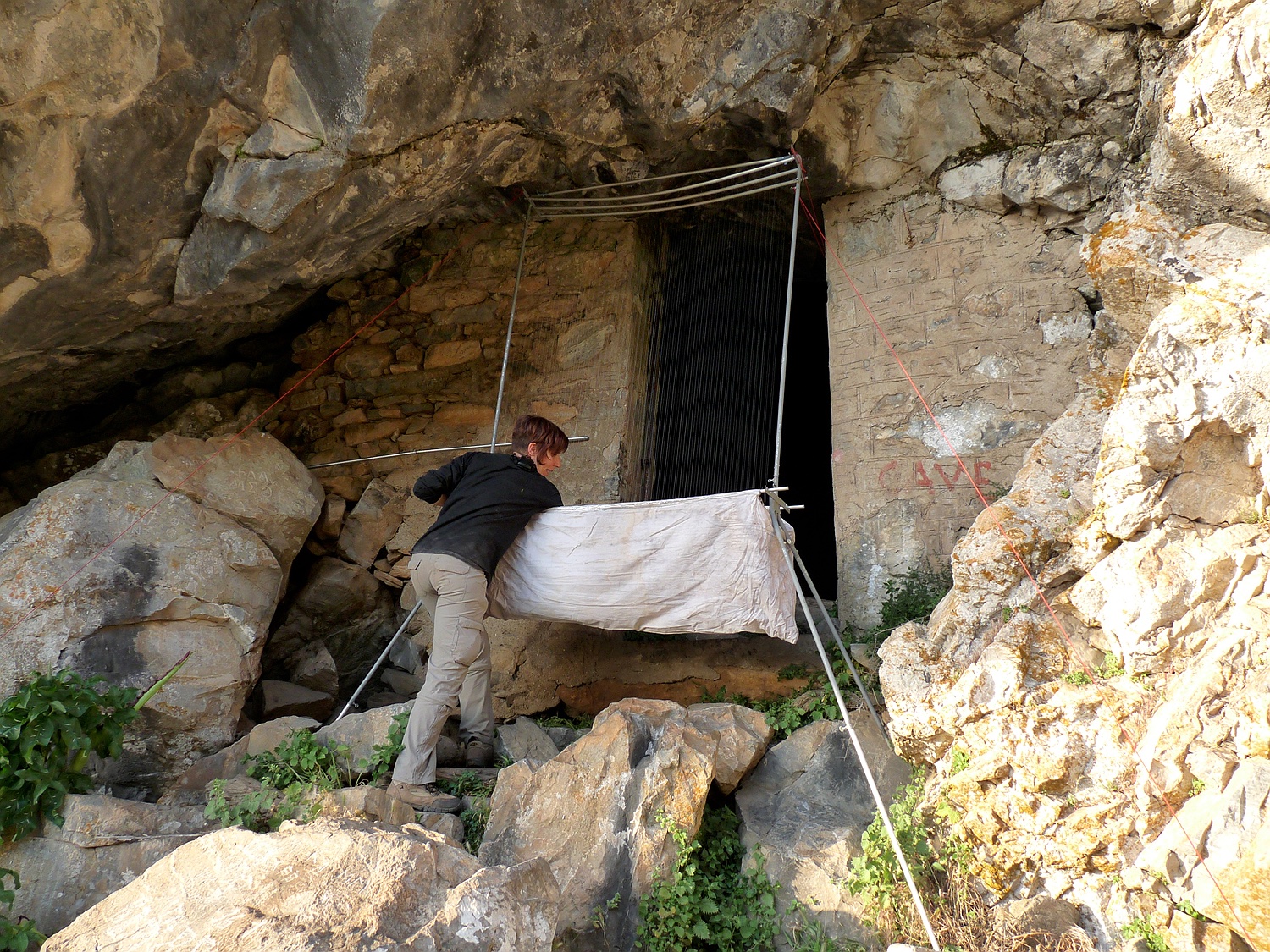
A sheet is hung under the frame, into which the bats fall when they collide with the strings as they fly out of the cave.
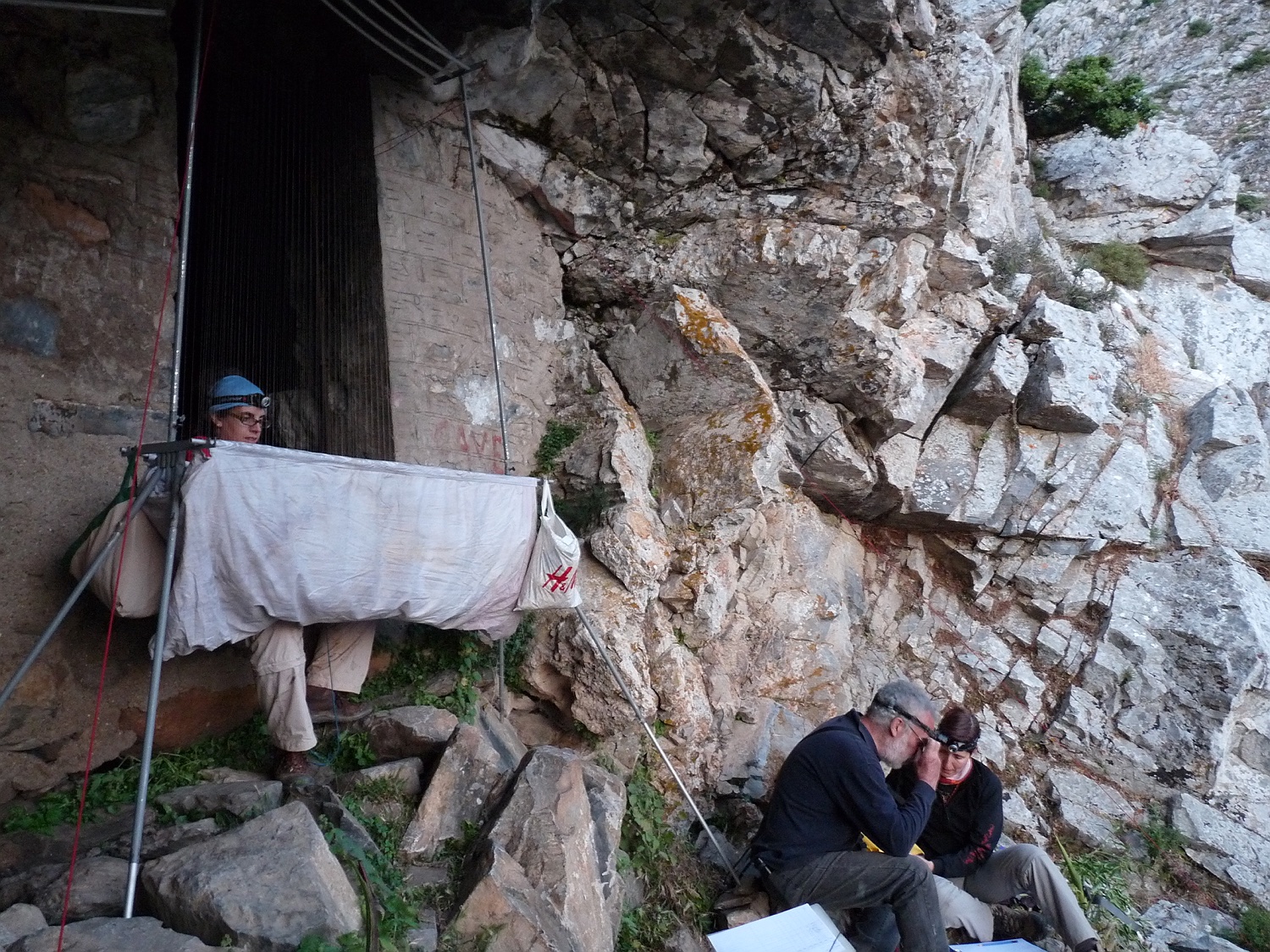
Everything is ready and in place. Artemis sits in the doorway to take care of the bats, while Elena arranges her papers and measuring equipment.
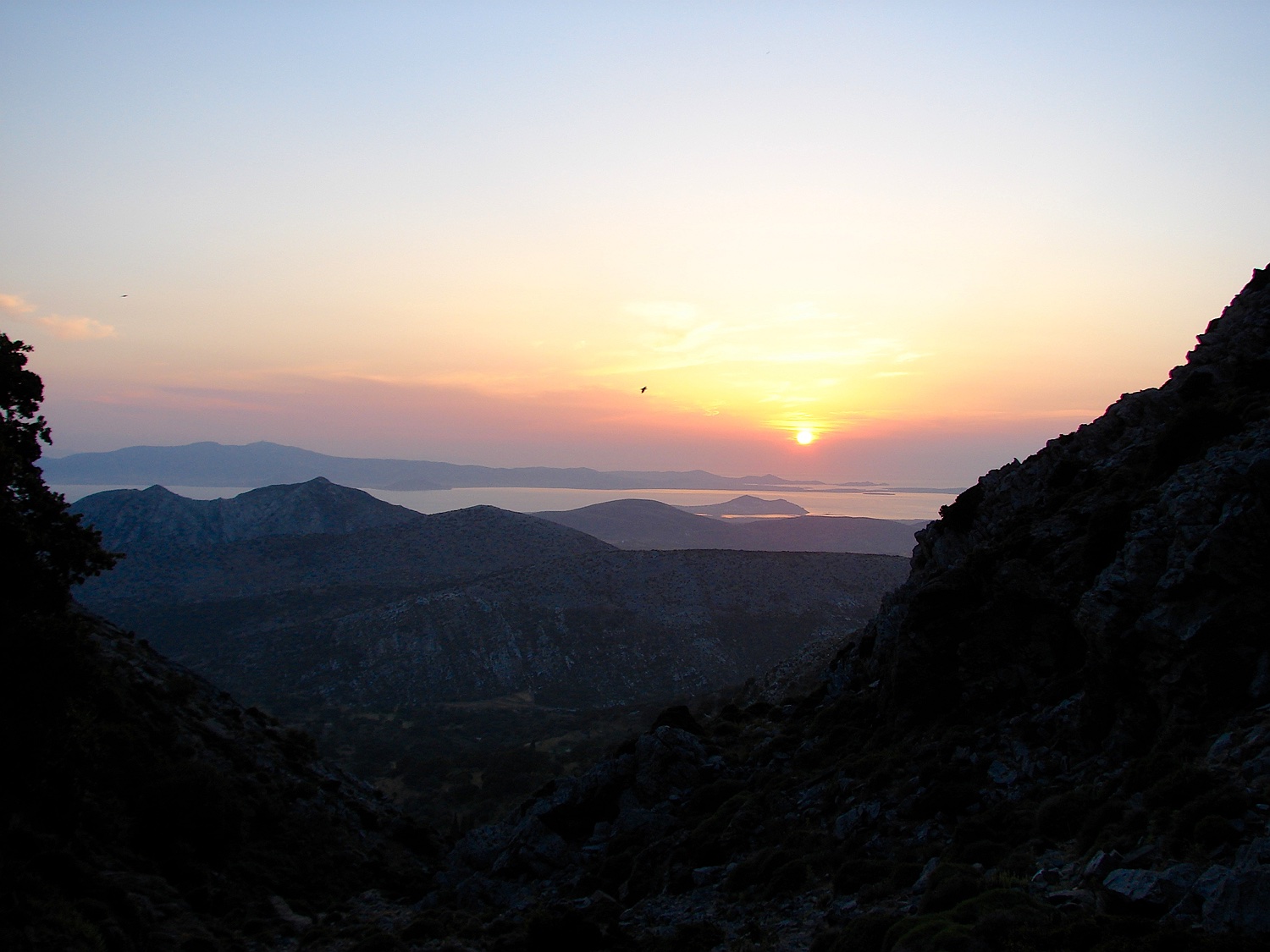
Now the only thing that remains to do is to wait for the sun to set!
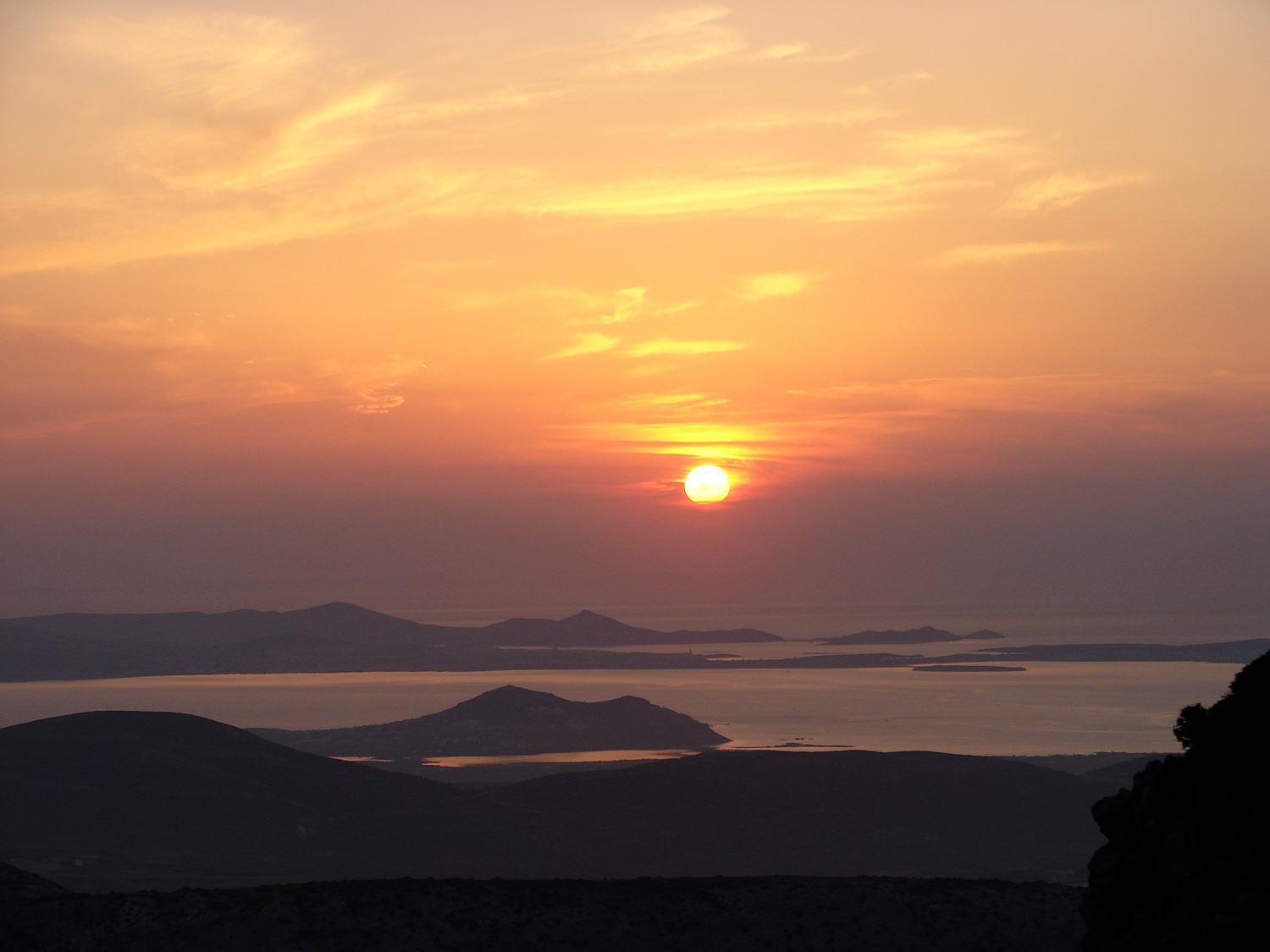
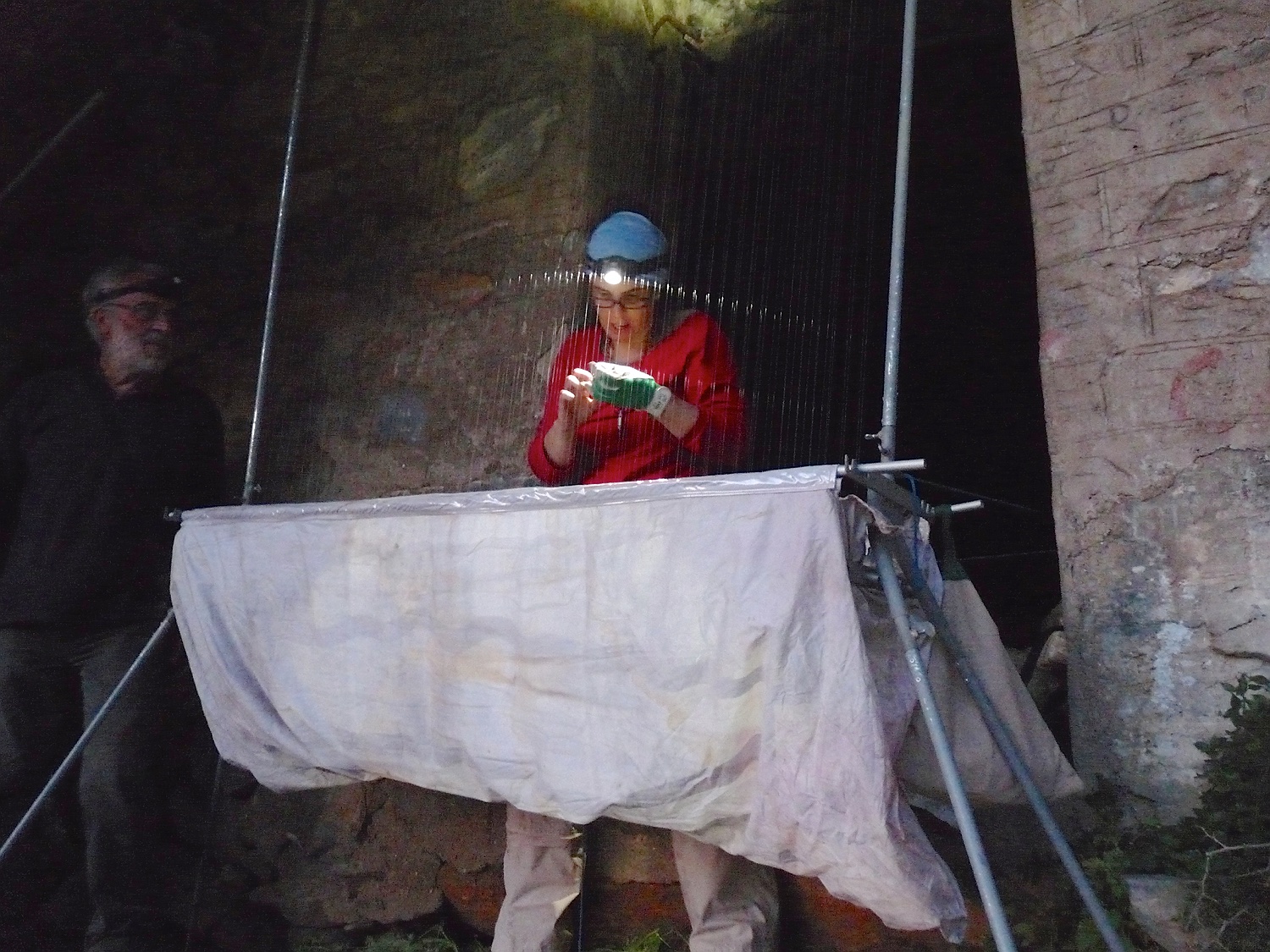
The first bats arrive while it is still a little light.
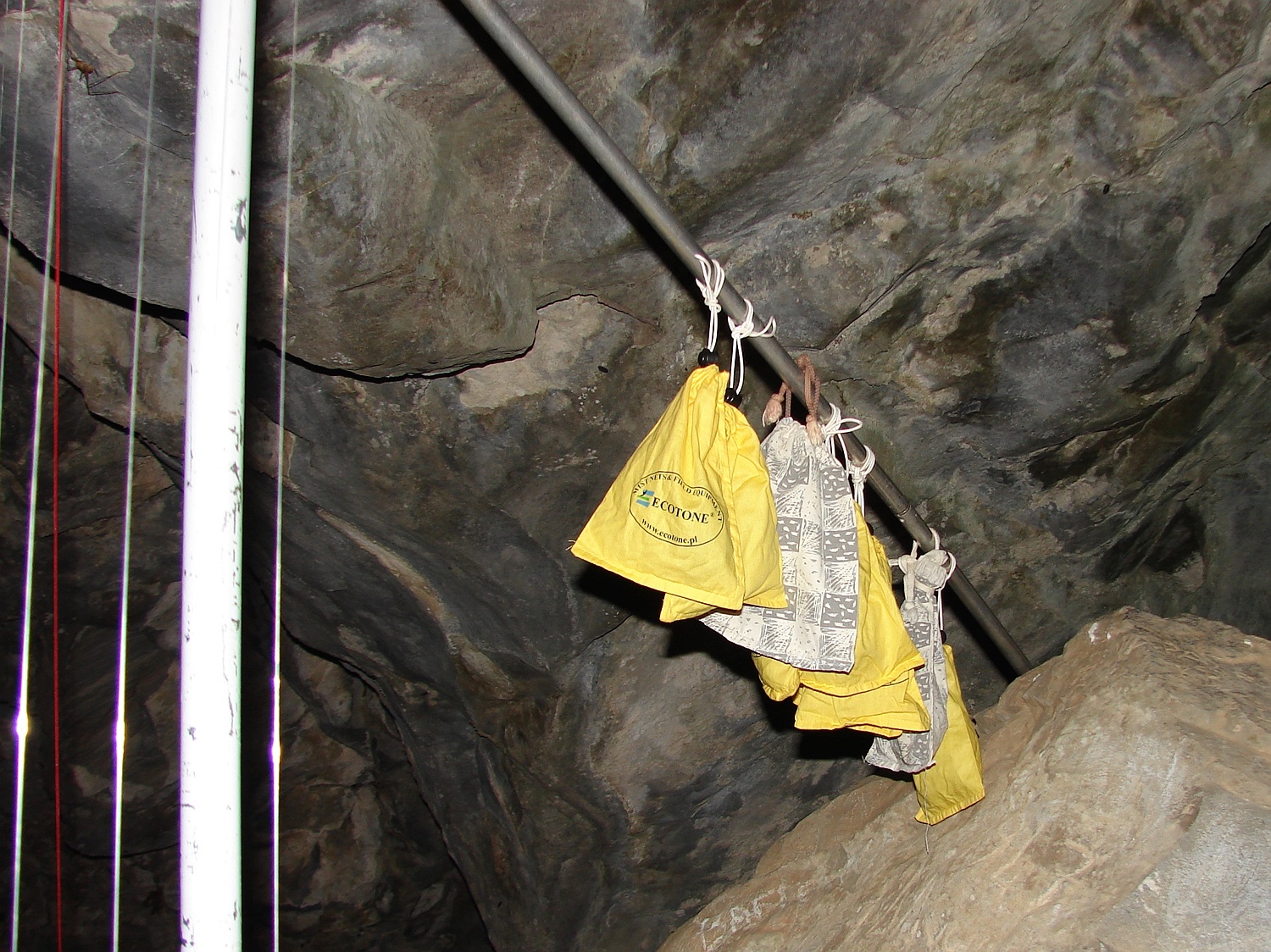
The animals are removed from the sheet under the trap and placed in small bags that are hung on a pole until it is their turn to be measured.
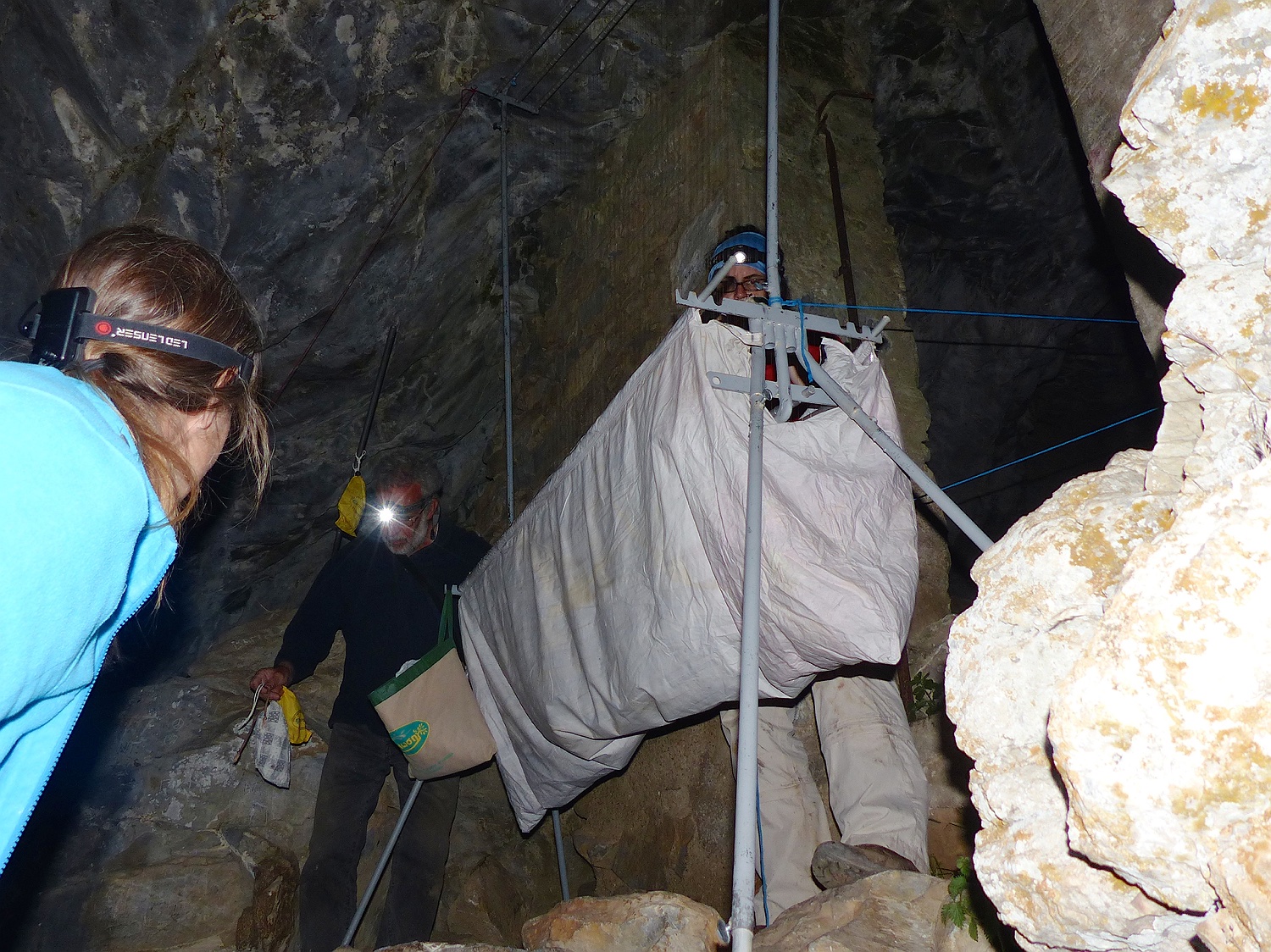
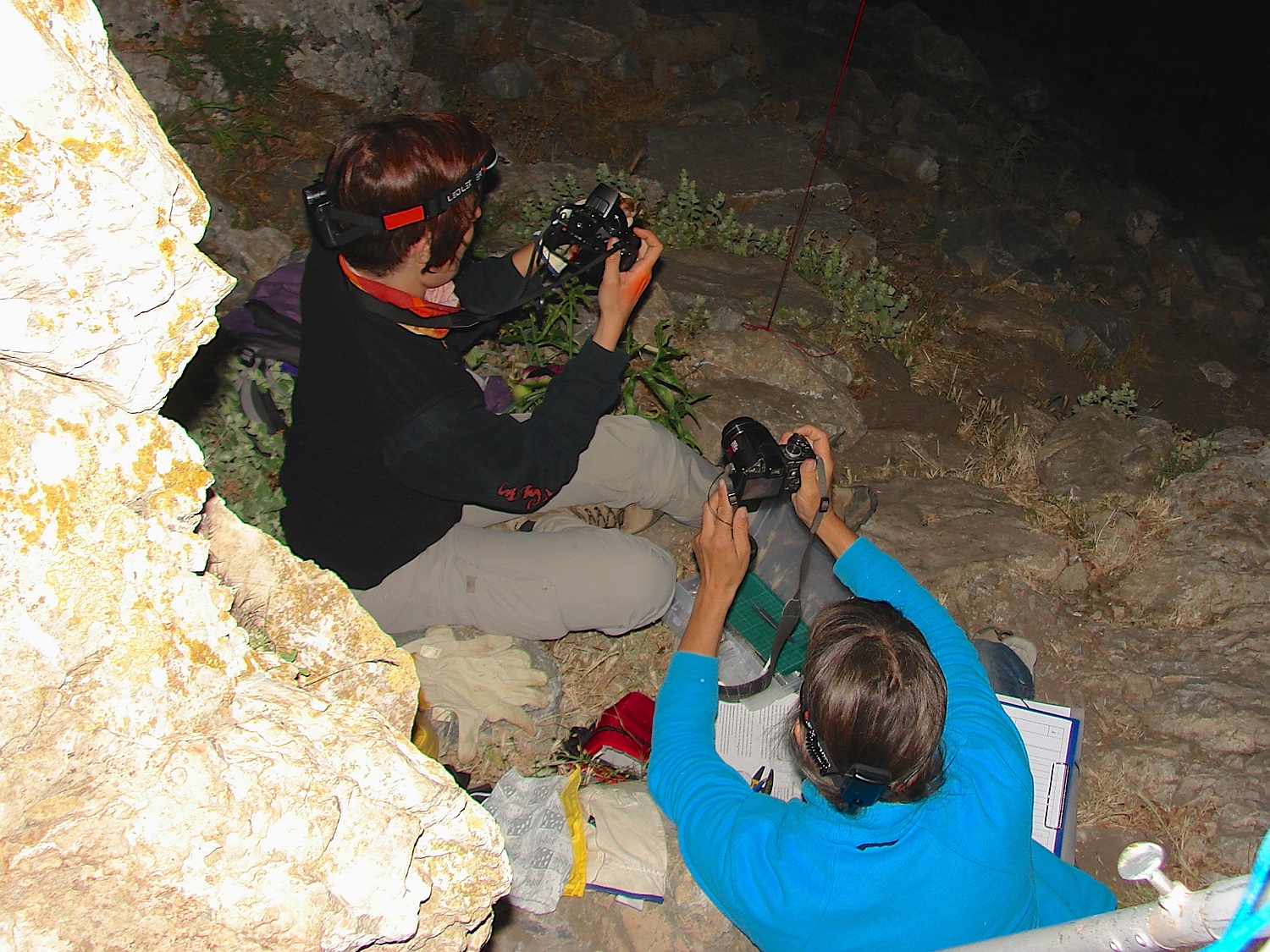
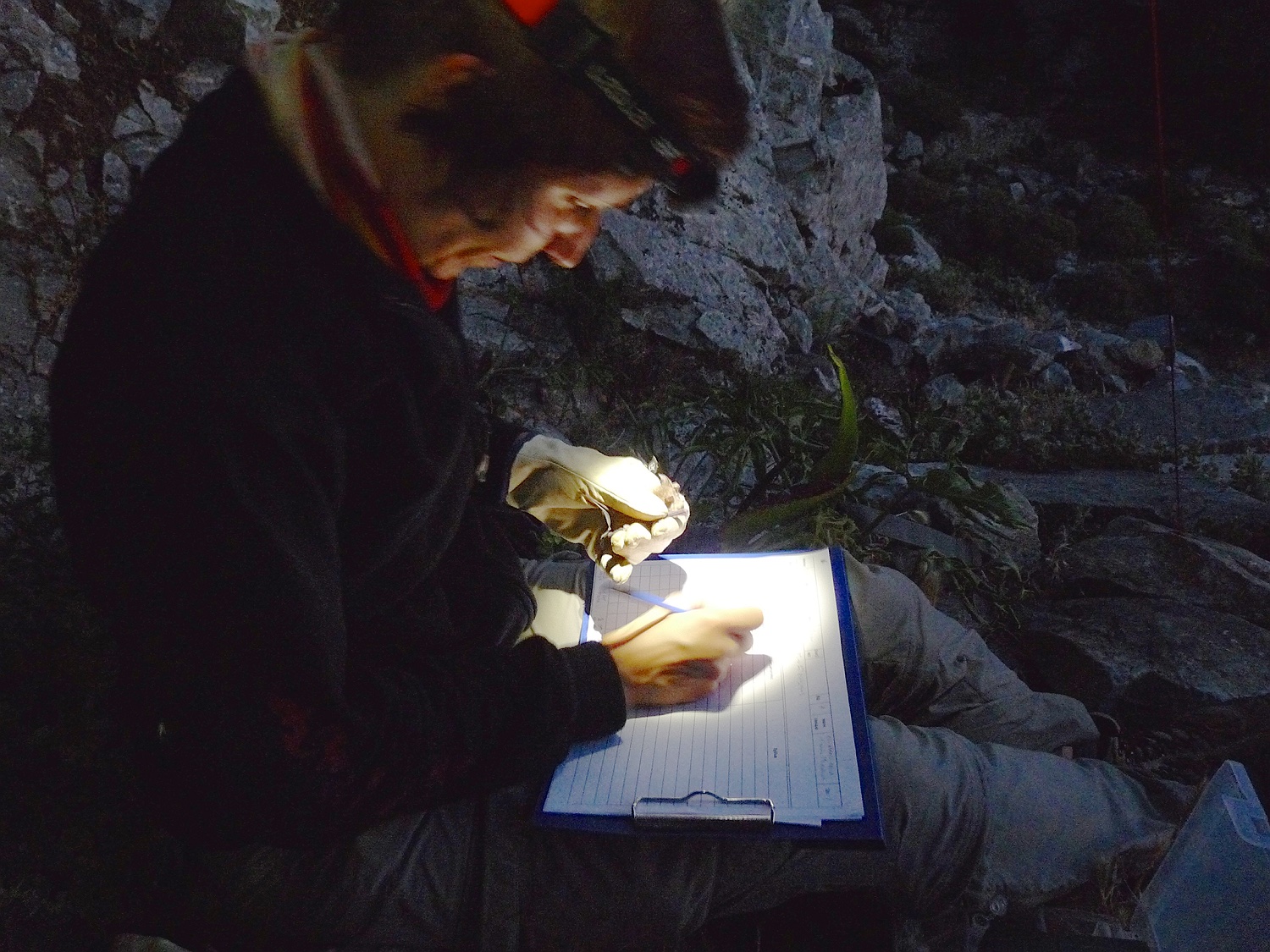
The species, sex and specific measurements are noted for each bat.
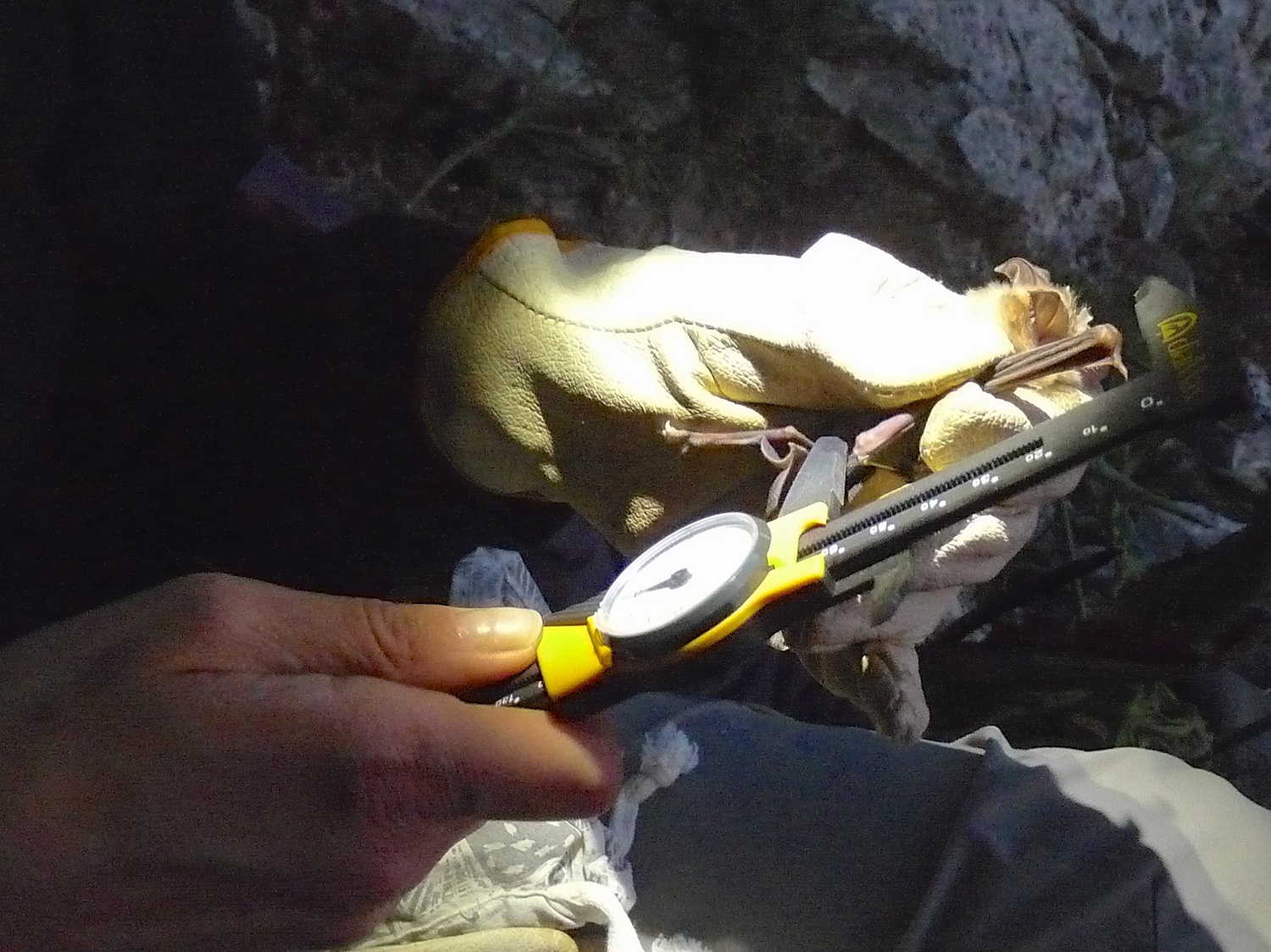
Here, the length of the forearm is measured.
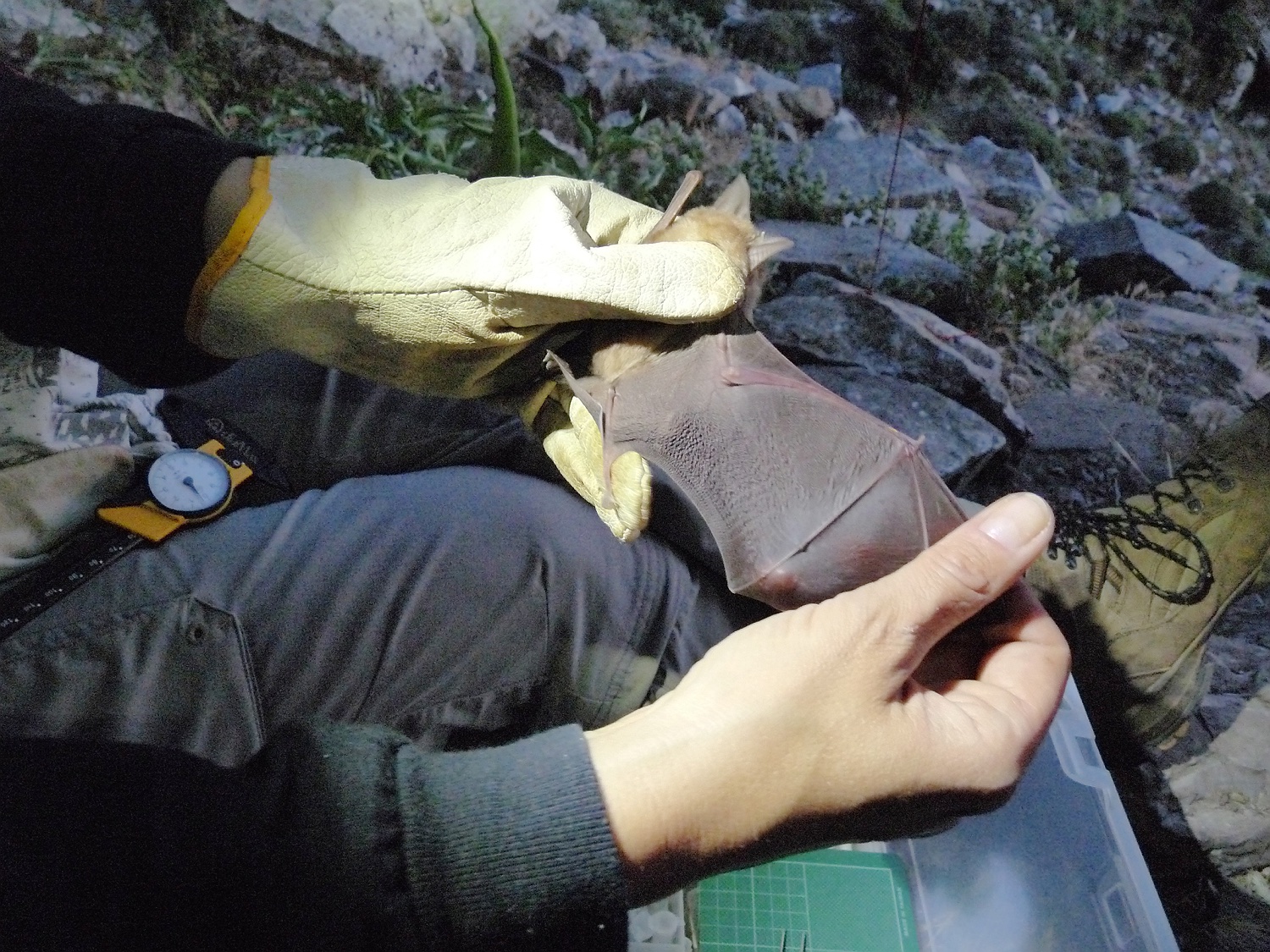
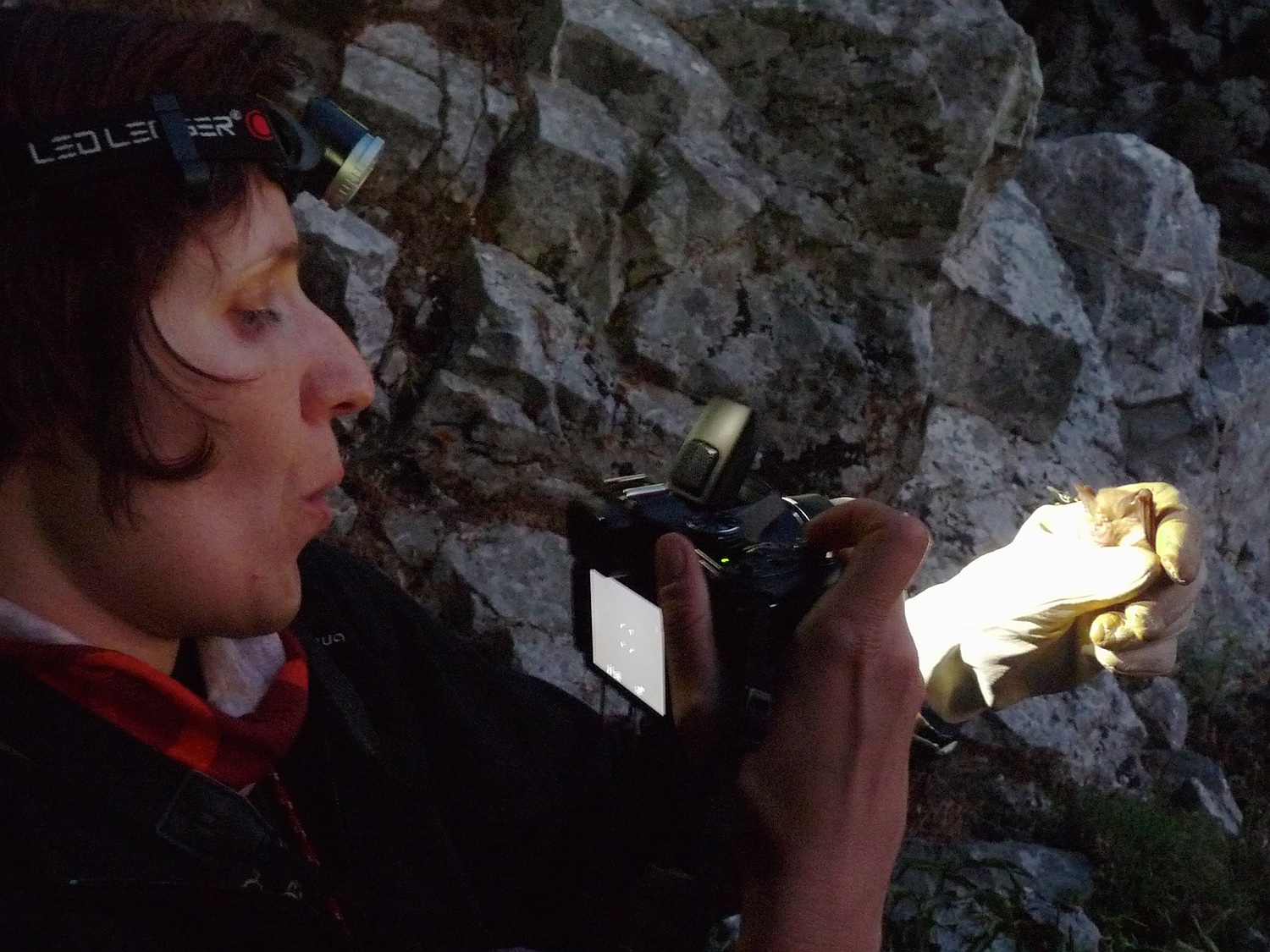
The animal is then photographed.

The horseshoe bats are the first to emerge from the cave; they wake up earlier than the mouse-eared bats. Most are Greater horseshoe bats (Rhinolophus ferrumequinum).

We also catch a few individuals of Blasius’s horseshoe bat (Rhinolophus blasii), a south-eastern European species.

The most common bats in the cave are Lesser mouse-eared bats (Myotis blythii). These do not have extensions on their noses like the horseshoe bats.

Bats can live to quite an old age: 20 to 30 years is not uncommon. Here an old male whose teeth are mostly worn away.

In addition to the Lesser mouse-eared bat, we also catch some Geoffroy’s bats (Myotis emarginatus). This species is significantly smaller and has a straight ear without a fold on the outer edge.
After catching and measuring 20 specimens of the two more common species and taking DNA samples (a small piece of the wing membrane), we take down the trap and leave so as not to disturb the animals unnecessarily. It was an exciting experience and a successful undertaking, which provided us with some further information about the bat species on the island and expanded the species list to eight.
continue: Bat Cave
back: Bats
See also: