Bat Cave
This year (2017), Naxos is again being visited by bat researchers, this time led by English ecologist and bat specialist Geoff Billington. I accompany the team on their trip to the cave Kakó Spílaio, the “Bad Cave”, whose name we change to “Bat Cave” on this occasion. I have already described the hike to Kakó Spílaio and the cave itself (only in German):
All photos have been taken by Geoff Billington and his colleagues, whom I would like to thank very much for the experience, the photos and the information.

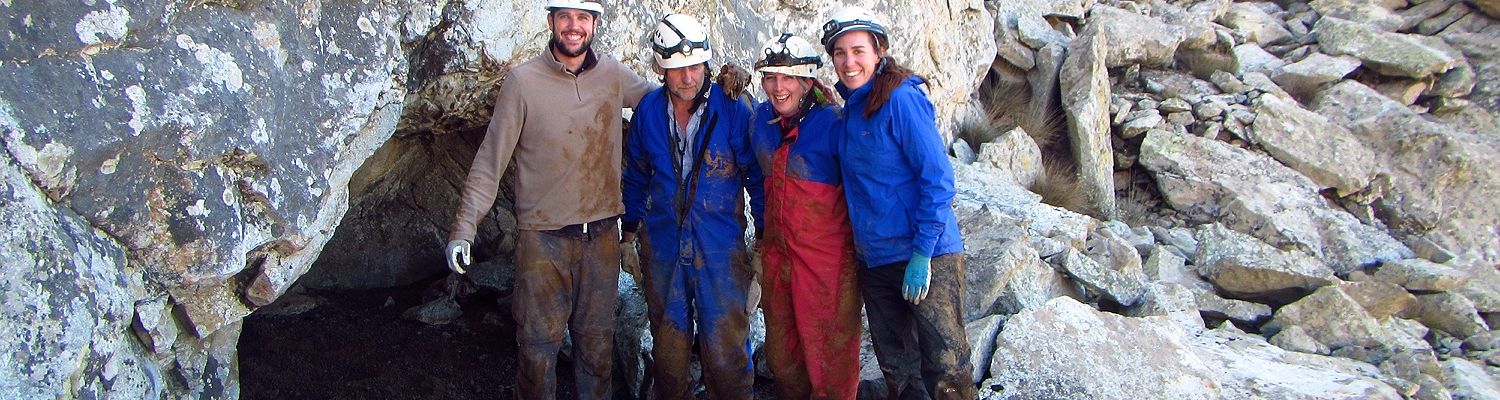
in front of the cave entrance

The cave floor is thickly covered with goat dung in the entrance area. In the first chamber, which is quite large but low, we find only two bats (Greater horseshoe bats).

In the adjoining small chamber, over 20 Greater horseshoe bats hang from the ceiling.

The Greater horseshoe bat is one of the most common bats on Naxos.

Here you can see the distinctive nose-leaf that gave this species its name.

All bats are weighed and their sex and approximate age determined (juvenile or adult). Then they are hung back on the cave ceiling. This is sometimes not so easy – the animals often have some difficulty to attach to the smooth rock.

Another about twenty bats hang in the next chamber. These too are almost exclusively Greater horseshoe bats. Most of the animals are females, about half of them are young animals and the other half adults.
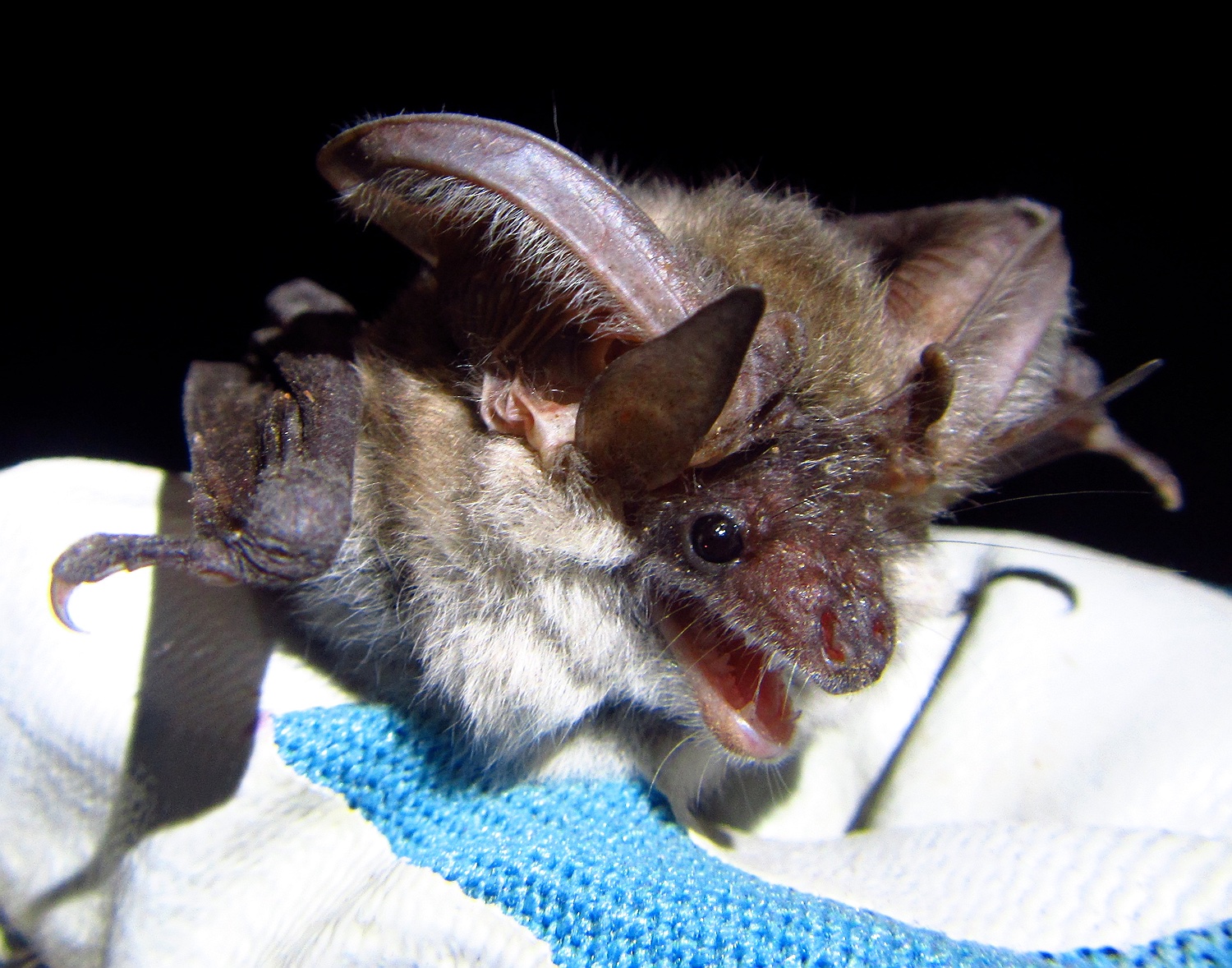
We find only one bat of a different species: a Mediterranean long-eared bat (Plecotus kolombatovici). This rare species has no nose appendage and very long ears, which are more than half as long as its body.
From the third chamber, we crawl more or less on our bellies through a low passageway, above which the rock hangs down like a curtain, into the fourth chamber, which is slightly larger than the second and third. From the rear of this chamber, we can turn left (east) through a very small, roughly square passageway into another larger chamber. To the right (west), another very narrow, winding passage leads several meters down to the last chamber, which is about 45 meters long. However, you can only go down there if you are equipped for it: you have to slide on your belly through the very narrow passage with clayey, damp earth. Our bat researchers are equipped not only with helmets but also with waterproof overalls, and they are not deterred by the mud. In this last chamber, they find only a few bats, but they do find the small lake at the end of the cave.

In the last and largest chamber, which can only be reached by sliding on your belly through a very narrow passage several meters long, the intrepid explorers finally find the small lake we had heard and read about.

Here we are back in daylight. It is clear to see why biologists need special equipment (helmets and waterproof overalls) for excursions of this kind!
Despite the fact that everyone comes out of the cave in a pretty dirty state, the team is very satisfied: This cave yielded the most bats for their stay – 55 Greater horseshoe bats and one Mediterranean long-eared bat. The long walk and the rather arduous descent to the cave were well worth it!
Back: Bats
See also: