Snakeflies
Snakeflies do not belong to the flies (order Diptera), but form their own order (Raphidioptera), which is related to the Neuroptera.
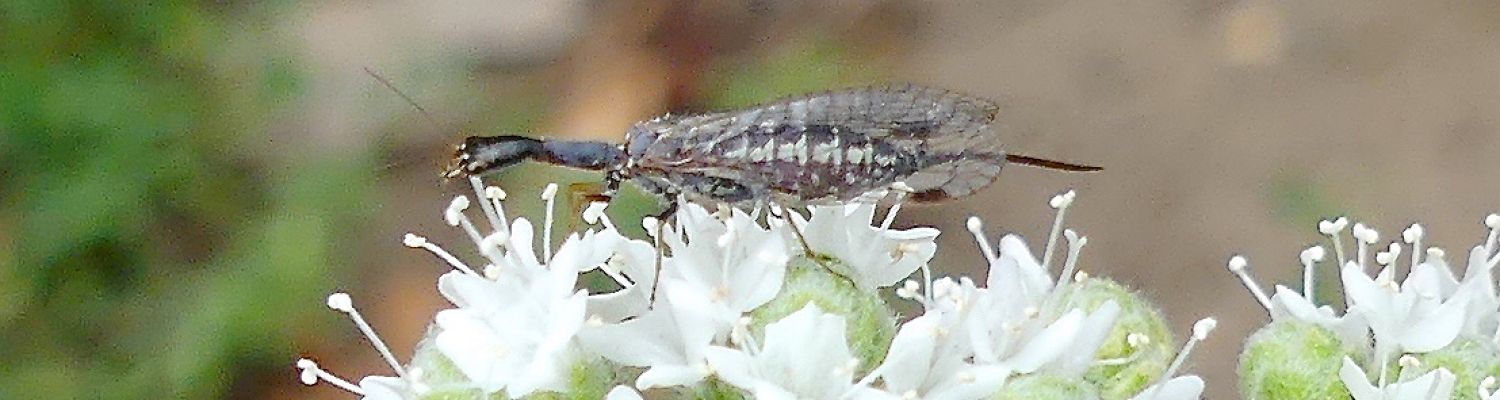
Only about 260 species of snakeflies are known worldwide, exclusively in the northern hemisphere. Snakeflies are characterised by their long “neck”, from which their name derives, i.e. the greatly elongated first segment of the thorax. The head is rather small and flat with powerful mouthparts of the chewing and biting type. It is very mobile, which is useful for snakeflies in their predatory lifestyle. The antennae of the snakefly are thread-like and consist of many tiny segments. The two identical pairs of transparent wings are held over the back, in a characteristic angle. The body is usually black, often with white or yellowish spots. The females have a long ovipositor that extends far beyond the end of the abdomen. The different species look quite similar and are difficult to identify.
Snakeflies live in vegetation, shrubs and trees, where they prey on small insects such as aphids. They defend their territory. The larvae usually live under tree bark or on the ground. They have a very elongated body, which is rather soft-skinned except for the head and prothorax. They can run fast and prey on plant pests such as bark beetles and longhorn beetles; they also eat the eggs of different species of moths, whose caterpillars can cause great damage to trees. Accordingly, snakeflies can be used for biological pest control. They themselves have few enemies; only some birds eat them. However, their long development time is a disadvantage when used in biological pest control: the larval stage usually lasts two or three years. They are holometabolous insects, that is their development includes a pupal stage.
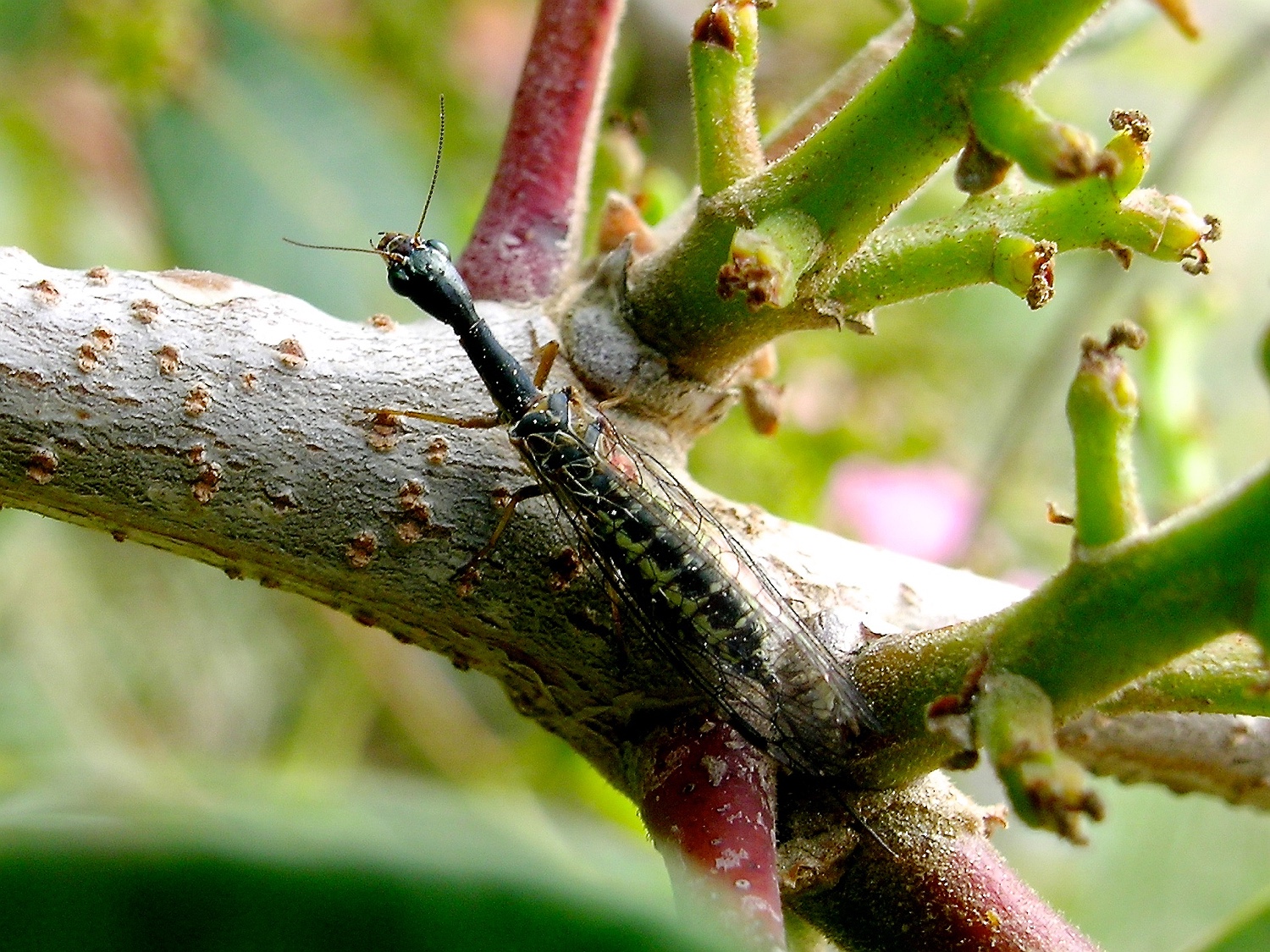
Snakeflies form an order of their own. They can be recognised by their elongated first thoracic segment (prothorax). They live as predators in vegetation, especially in shrubs and trees. They usually occur in small numbers and are rather rarely seen. The different species are very similar. In addition to their compound eyes, snakeflies have three simple eyes (ocelli) on top of their heads, visible here as small dots.
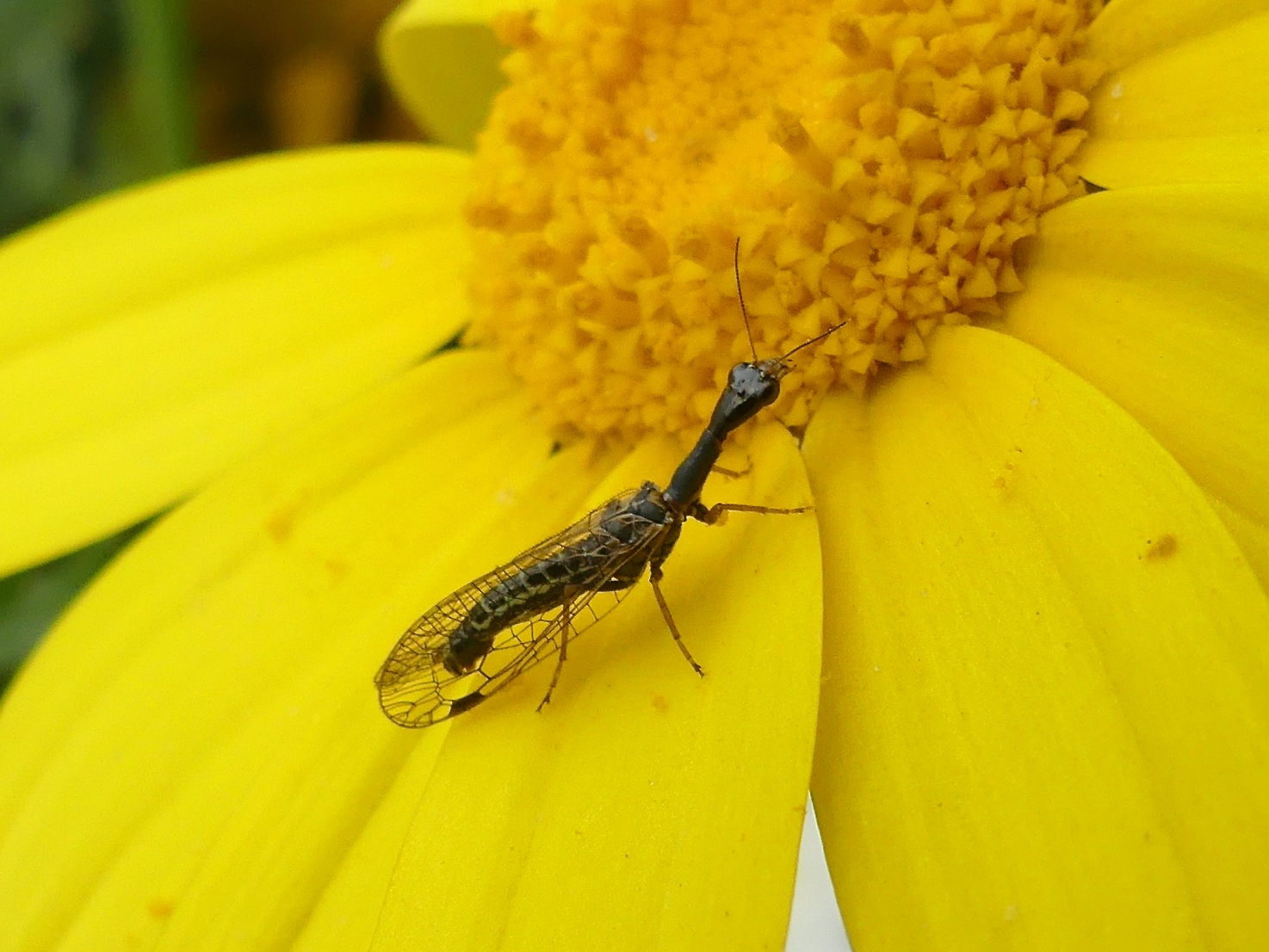
Here you can see the characteristic roof-like angle in which the wings are held. The front and rear wings of snakeflies are identical.
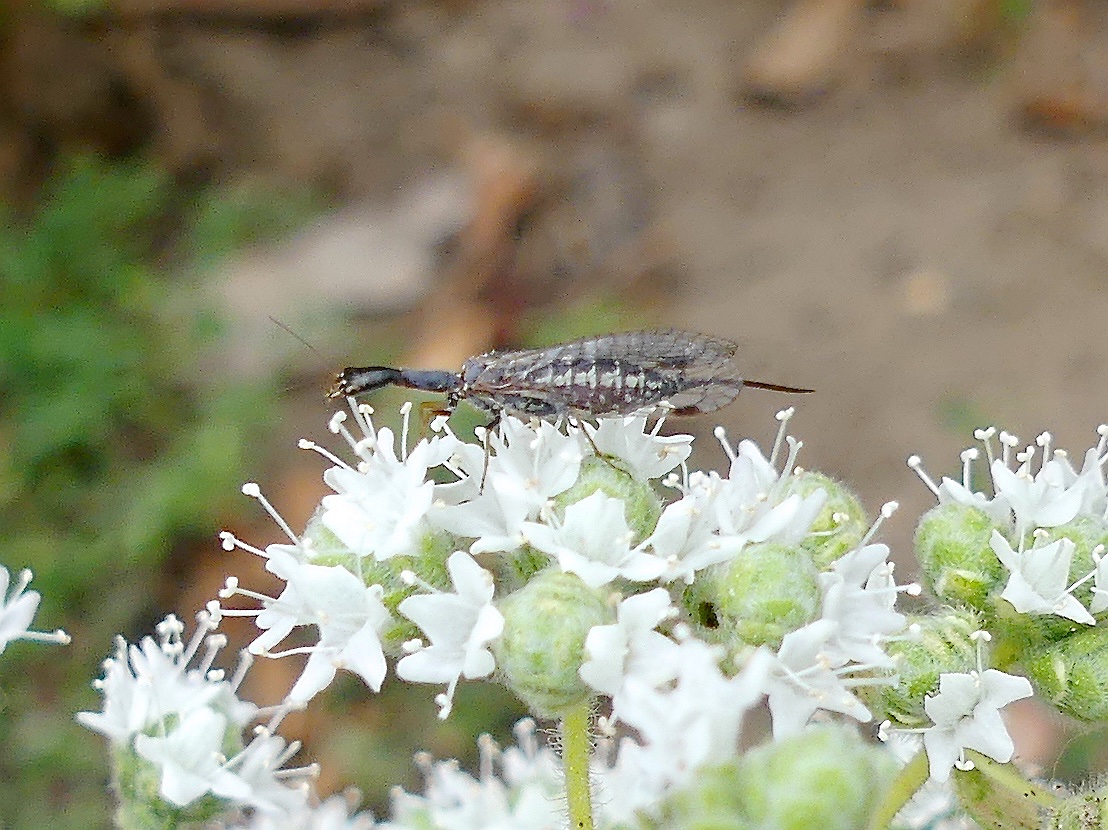
In this female specimen the long ovipositor protruding far beyond the abdomen and wings can be seen.
continue: Butterflies
back:
See also: