
Tusk shells
The tusk shells or scaphopods are molluscs with a very simple body structure that form a class of their own (Scaphopoda). They live buried in the sediment of the sea floor and can be found in all areas of the sea down to a depth of 7000 meters. Around 500 species are known worldwide; fossils of tusk shells have been found dating back to the Triassic period. Around 20 species of scaphopods live in the Mediterranean Sea.
Tusk shells possess a tubular, pointed shell that can be a few millimeter to 15 cm long and is open on both sides. At the larger end lies the highly extendable burrowing foot with a very simple mouth cavity containing small radula teeth, which are used to break down food. Tentacle-like feeding arms, which secrete a sticky substance, are used to locate and catch food in the surrounding sediment, primarily foraminifera and other microorganisms. The narrow rear end of the shell protrudes from the sediment. Here, the animal takes in water into the mantle cavity for respiration; the water flow is generated by the movement of small hairs. By contracting the mantle, the water is excreted every few minutes, whereby waste products are also removed. Tusk shells move through the sediment by contracting their burrowing foot.
Common tusk shell, Antalis vulgaris ?, de Costa
The Common tusk shell is found in Western Europe, off the west coast of Africa and in the Mediterranean.
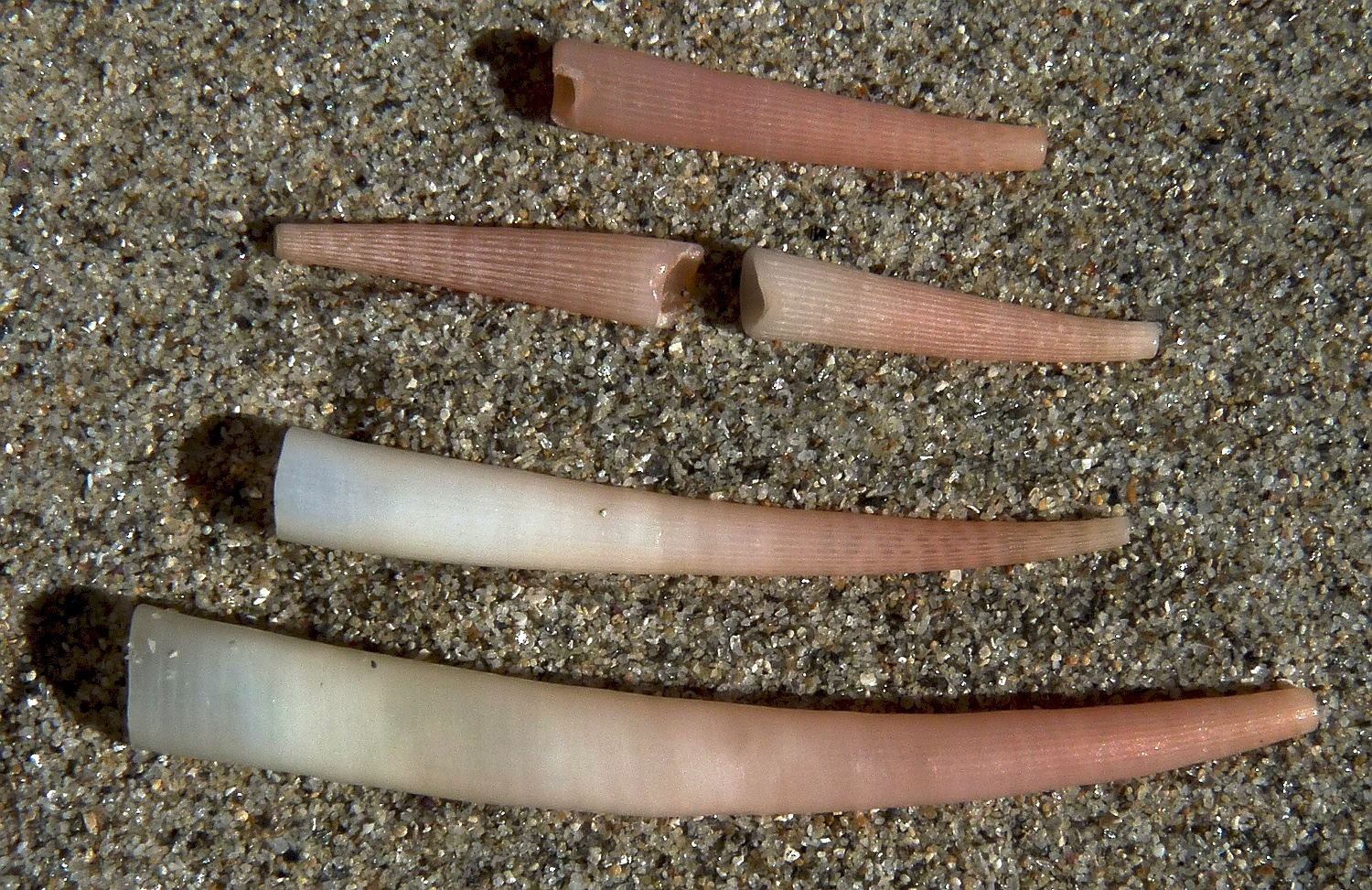
On the sandy beaches of Naxos, you can occasionally find these shells of scaphopods, which are called tusk shells because of their curved shape.
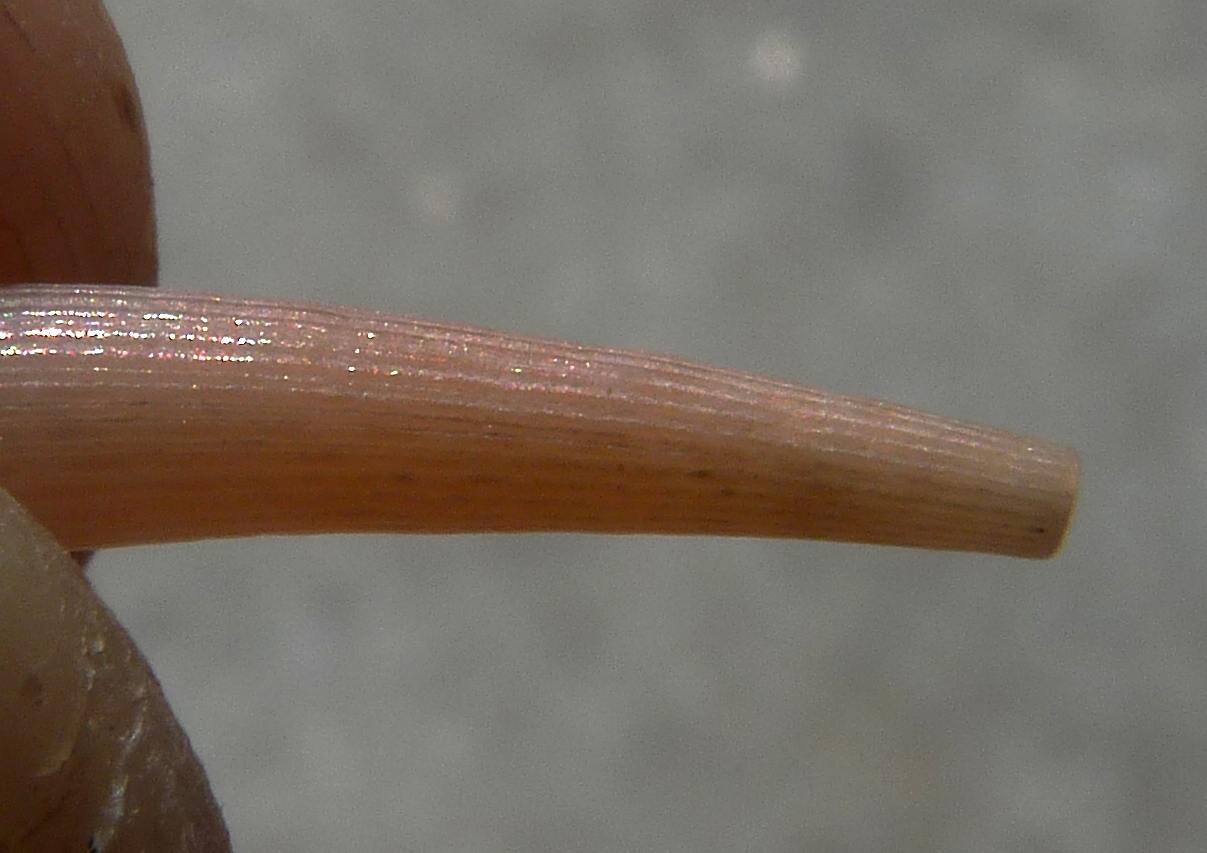
The thin, only slightly sculpted shells that we have found so far probably belong to the species Antalis vulgaris (Common tusk shell). Size: 26 mm
continue: Cephalopods
back: Marine animals (Overview)
see also: