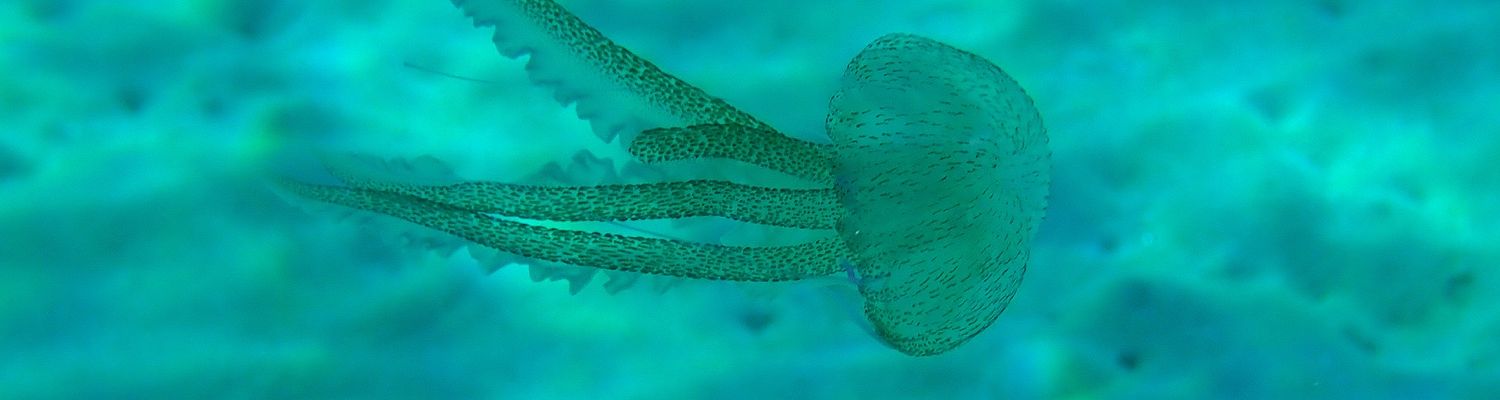
Jellyfish
We meet jellyfish only rarely in Azalás. Occasionally, small transparent jellyfish can be seen floating in open water in early summer, but they rarely come into our bay. These small jellyfish do not sting and are harmless to humans. Other species of jellyfish can cause minor or sometimes more serious burns: they have stinging cells with very effective toxins that damage the skin or nerves.
Here you can skip the introduction and go directly to the species.
What to do if you come into contact with a jellyfish?
First things first: if you come into contact with a jellyfish (or a sea anemone) and are stung the first thing to do is to remove the tentacles that are stuck to your skin without causing further stinging cells to sting you. The best way to do this is varies depending on the type of jellyfish. You should carefully wash the affected area with sea water (not fresh water!) and scrape off any adhering threads with a smooth object such as a credit card or the back of a knife. Opinions differ when it comes to treatment with vinegar. Some instructions recommend using sea water with bicarbonate of soda (1:1) instead of vinegar. Cooling does not seem to be the right method as heat neutralises the toxins more quickly, but cooling can help to relieve the pain. In the case of more severe burns, it is always important to drink plenty of water. If in doubt, especially if the symptoms persist, you should of course consult a doctor.
The Systematics of jellyfish
Most jellyfish belong to the cnidarians (together with corals and sea anemones). Cnidarians are characterised by alternating generations: a free-floating medusa (jellyfish) generation alternates with a sessile polyp generation (in many cnidarians, however, the medusa or polyp generation is absent or greatly reduced). The generations are so different in appearance and lifestyle that they were originally often described as different species. Sometimes, only one of the two forms is known. In general, our knowledge of many jellyfish groups and species is still quite incomplete due to their pelagic lifestyle.
Many jellyfish belong to the class of hydrozoans (“hydromedusae”), whose sessile polyps usually grow in colonies, while the medusa generation drifts freely in the plankton, swims actively or, in the case of some tiny forms, lives in the “sand gap system” of the sea floor. Hydromedusae usually are are very small. They include colonial jellyfish, which are colonies of polyps growing together and drifting in the sea.
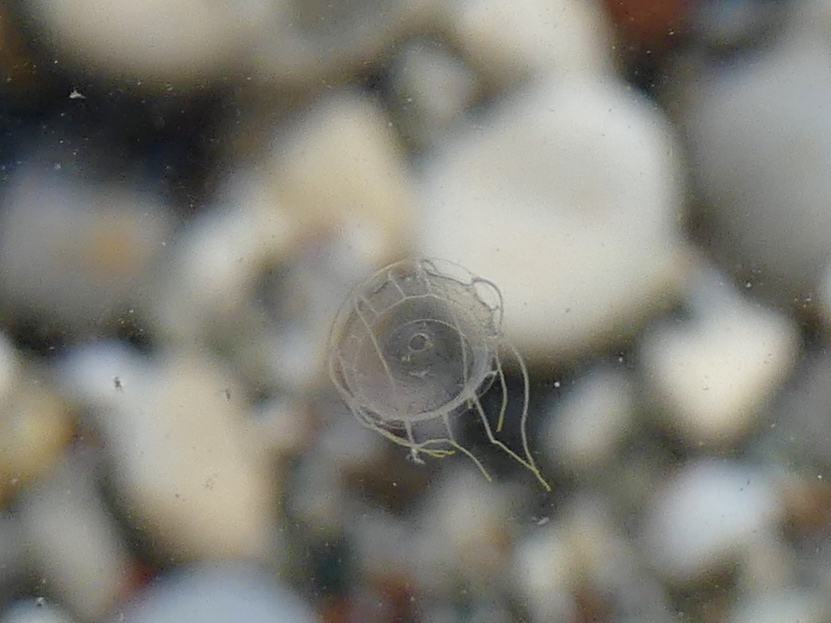
This jellyfish, which is only about one centimeter in size, is probably a hydromedusa.
Two other groups of jellyfish with only a few species each are the small stalked jellyfish (Stauromedusae), which are something in between jellyfish and polyp and are usually attached to the sea floor, and the tropical box jellyfish (Cubozoa), active swimmers, some of which possess very dangerous venoms.
Most species of jellyfish belong to the true jellyfish (Scyphozoa), which comprise around 200 species. These also have a polyp generation. The polyps usually live individually, attached to the sea floor; in some species, they are attached to the jellyfish generation. True jellyfish drift in the plankton of coastal areas, less frequently in the open sea, or move actively through rhythmic contraction.
Anatomy and way of life
Jellyfish usually measure a few centimeters to decimeters in size; some species can reach up to two meters in diameter. They have a roundish umbrella consisting of an upper and lower cell layer and a gelatinous, cell-free mass in between. Tentacles of varying shapes and sizes hang down from the edge and underside of the umbrella (surrounding the central mouth opening). Jellyfish have a very simple digestive and nervous system and few simple sensory cells or organs. The individuals are usually either male or female; eggs and sperm are released into the water. Jellyfish move passively by drifting in the ocean current or actively by contracting their umbrella using the recoil of the water to move forward. The tentacles, which sometimes hang down as very long, thin threads, have stinging cells that “explode” when touched. In many species, the stinging cells cannot penetrate human skin, while others irritate the skin in a similar way to a stinging nettle; some can cause annoying or even dangerous paralysis and wounds.
Jellyfish mostly feed on small organisms of the plankton, which they capture with their tentacles. The prey sticks to the tentacles and is then transported to the mouth, by the cilia of the tentacle cells or by shortening of the tentacles, and ingested. Larger or more agile species are able to catch small fish. Natural enemies include sea turtles, which love jellyfish and can eat even the most stinging and dangerous species.
Jellyfish are often annoying, especially when they appear in large numbers, affecting the beaches. In some areas, including the Mediterranean, there has been a notable increase in jellyfish in recent years, which is thought to be linked to the warming of the sea and to overfishing. Jellyfish can also be a problem for fishermen because they clog their nets. Poisonous species can cause considerable damage to fish farms. Some species can become so numerous and are such effective competitors for food that they can cause considerable damage to fisheries. However, it should not be forgotten that jellyfish, as part of the natural ecosystem, also play an important role in the balance of the ecosystem. Some species are used today in cell and molecular research, and recently their potential role as a source of collagen has been investigated, as well as their use in filters that can clean the sea of microplastics and similar pollutants.
Jellyfish on Naxos
Jellyfish on Naxos
The Photo gallery of the marine animals gives an overview over the species.
A note on identification: Some species of algae can be identified easily and reliably. In many cases, however, there are several related species that are difficult to distinguish. Often, examination under a microscope is necessary for correct identification. Another problem with the identification is that not all species are included in the field guides; even using the internet, it is difficult to find information on many species. Often, the species identified with the help of books or photos on the internet look quite different from our specimen here. Accordingly, many of the identifications are unfortunately quite uncertain, and some species must remain completely unidentified.
Here you can jump directly to the species (return with the back arrow or by swiping back):
Mediterranean jelly, Cotylorhiza tuberculata – Mauve stinger, Pelagia noctiluca – Venus girdle, Cestum veneris
Numerous species of jellyfish occur in the Mediterranean Sea, but most of them are rarely seen because they live in the open sea.
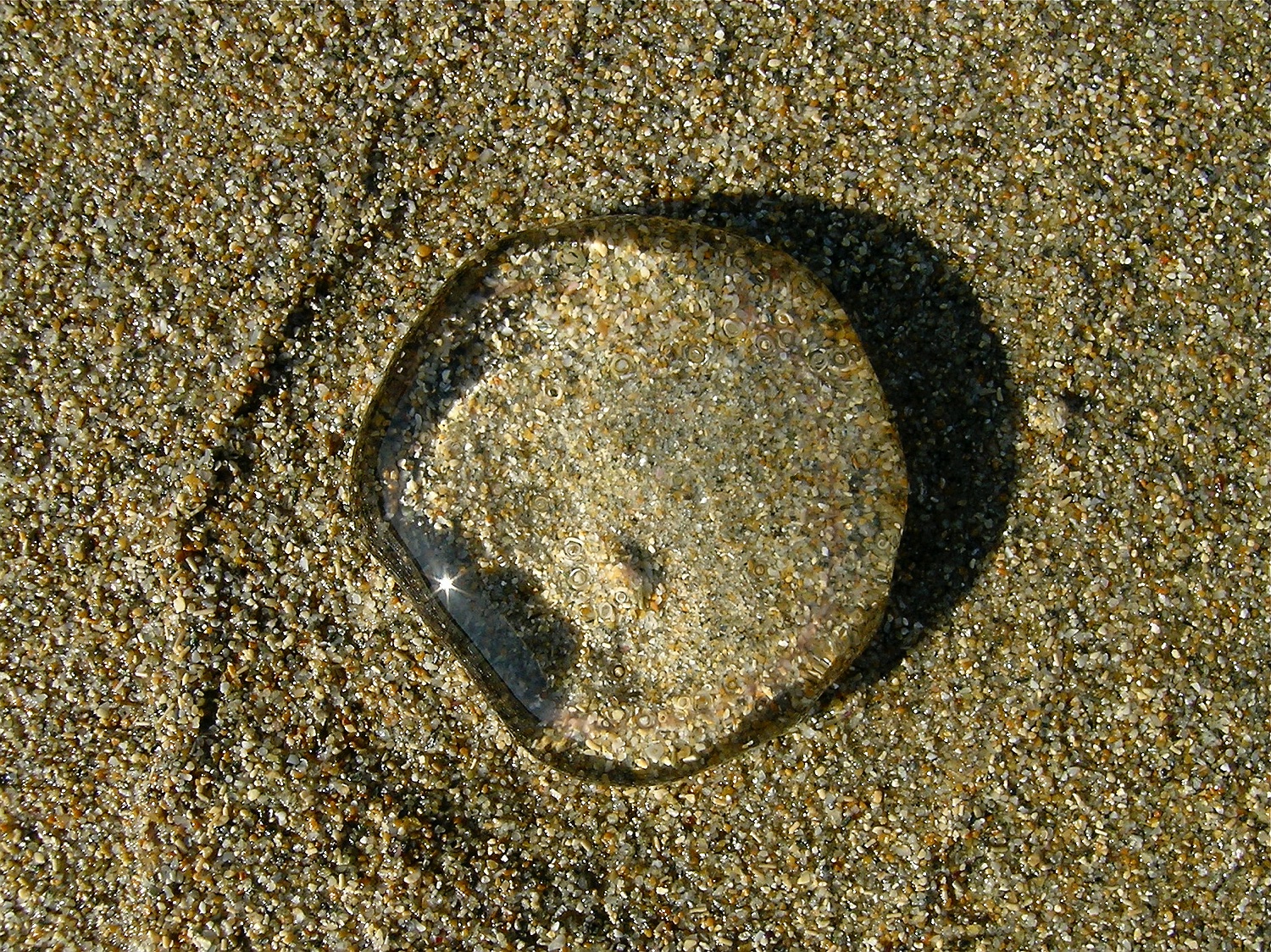
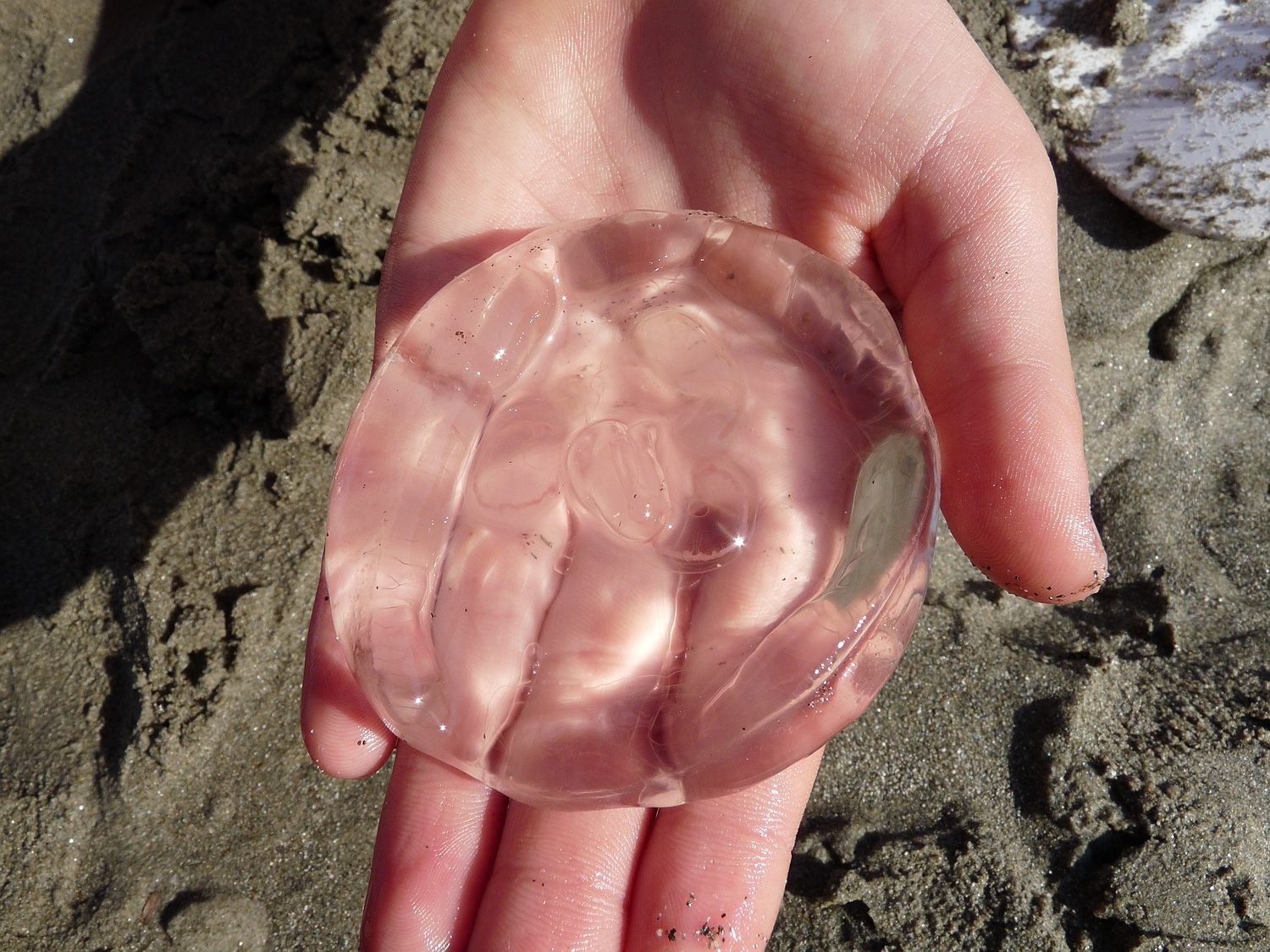
This jellyfish, which does not sting, is occasionally washed up on the sandy beaches of Naxos.
True jellyfish, Scyphozoa
Mediterranean jelly, Cotylorhiza tuberculata, (Macri)
The Mediterranean jelly, whose umbrella can reach a diameter of 40 cm, is harmless to humans: its stinging filaments cannot penetrate our skin. It is occasionally found in open water in our region, but very rarely appears near the coast.
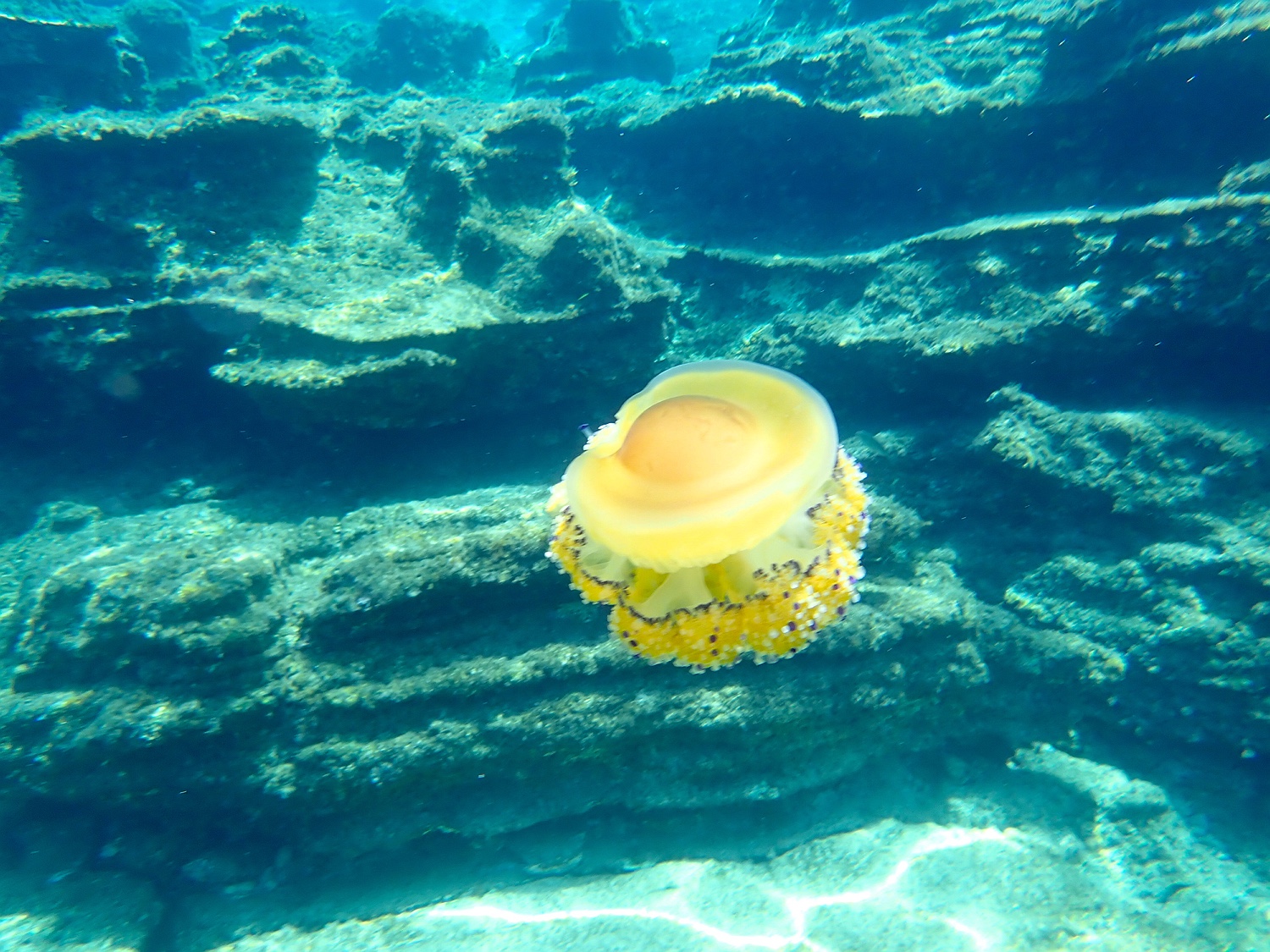
The Mediterranean jelly is easy to spot in the sea due to its yellow colouring. It can swim actively by contracting its umbrella. It is often accompanied by small fish that seek shelter under its umbrella.
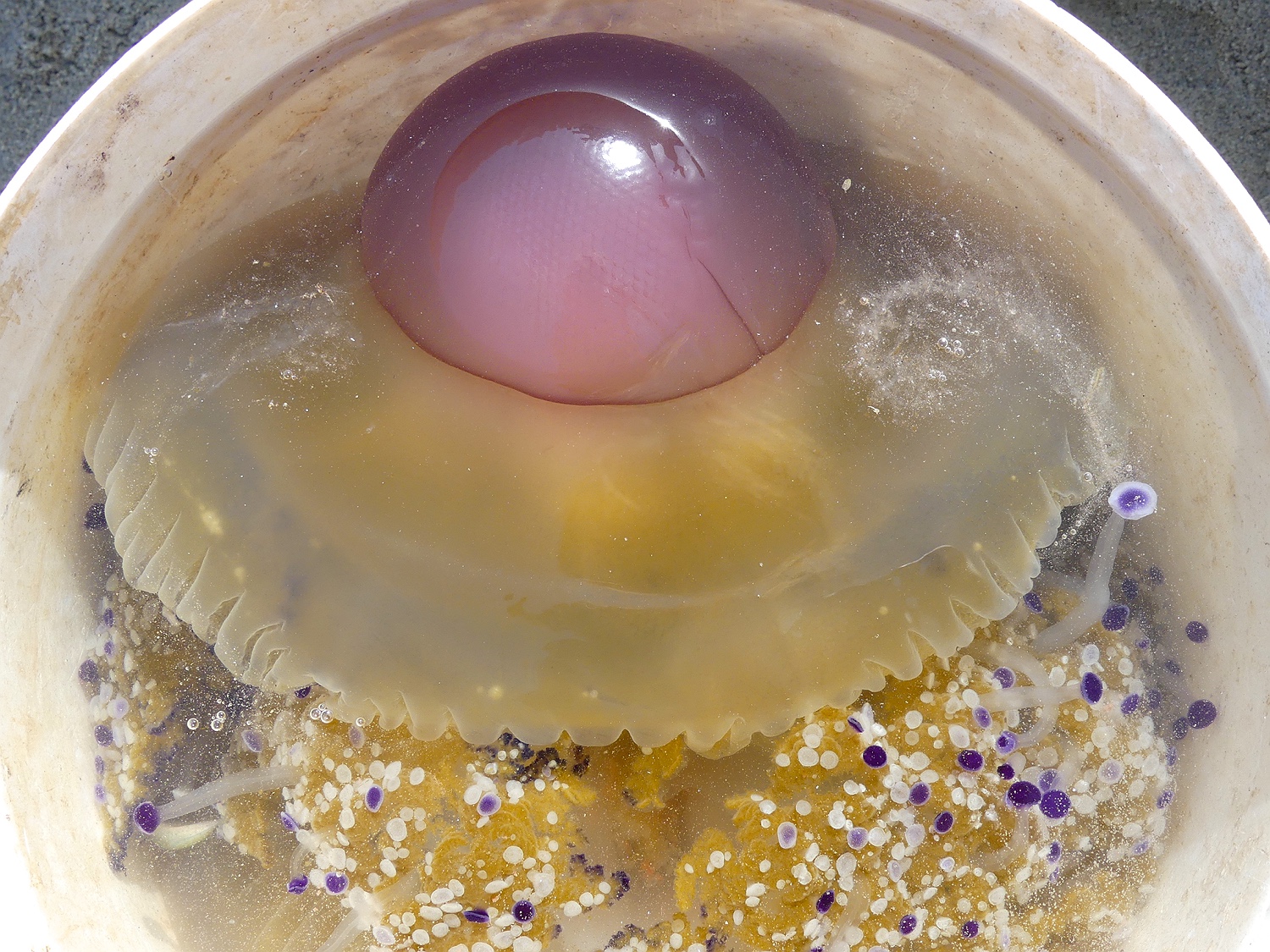
In the center of the yellowish umbrella sits a hemispherical, reddish or yolk-coloured bulge, because of which it is also called fried egg jellyfish.
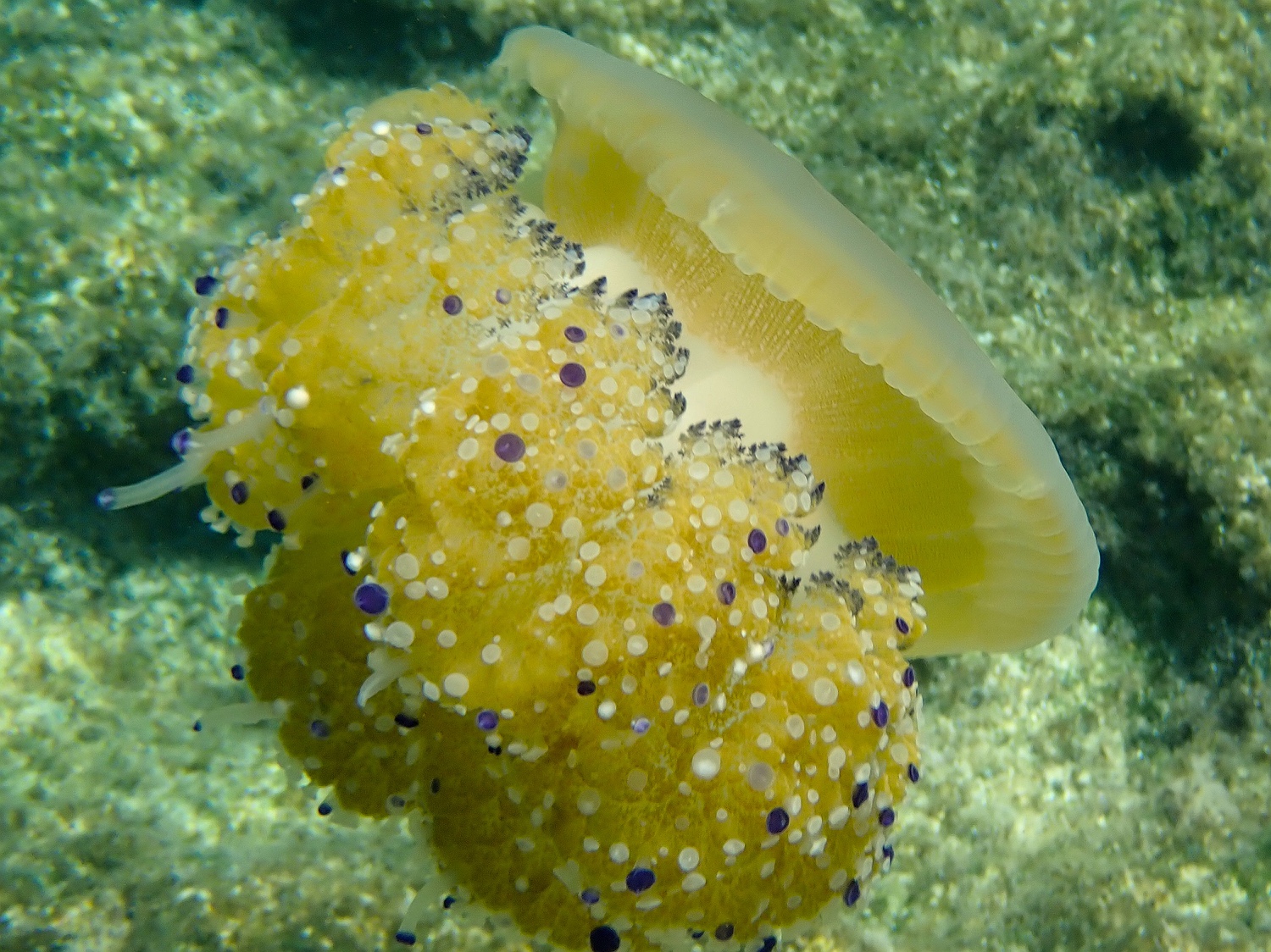
Eight larger and numerous smaller, densely branched arms hang down from the umbrella, bearing many bright purple ‘buttons’.

the tentacles and the umbrella close up
Mauve stinger, Pelagia noctiluca, Forsskål
The Mauve stinger or Luminous jellyfish belongs to the fire jellyfish and has stinging cells that are unpleasant for humans but not life-threatening. It can emit a faint glow at night. Usually it does not occur in our region, but in the year 2021 a flood of jellyfish reached Naxos, with a few specimens drifting into our bay; fortunately, it lasted only for one day. This jellyfish mainly swims just above the seabed, making it even more difficult to spot.
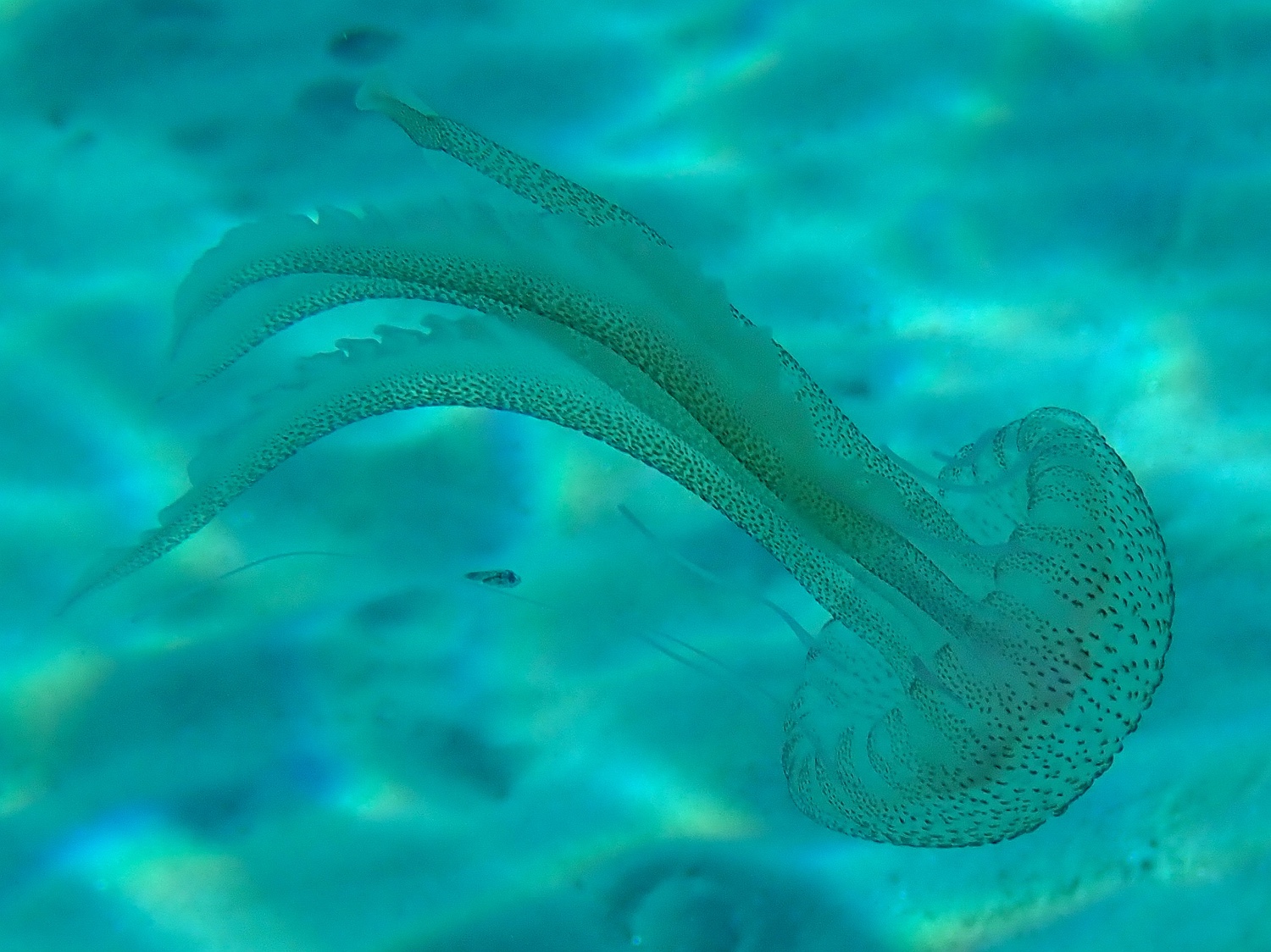
The Mauve stinger is quite small and easy to overlook. It is faintly reddish or mauve in colour and has a strongly curved umbrella with a diameter of no more than 10 cm and four strong mouth tentacles. The long stinging threads of his species can cause unpleasant stinging in humans. A small fish can be seen hanging from the stinging threads of this jellyfish, which is now gradually being transported to the mouth opening on the underside of the jellyfish’s umbrella.
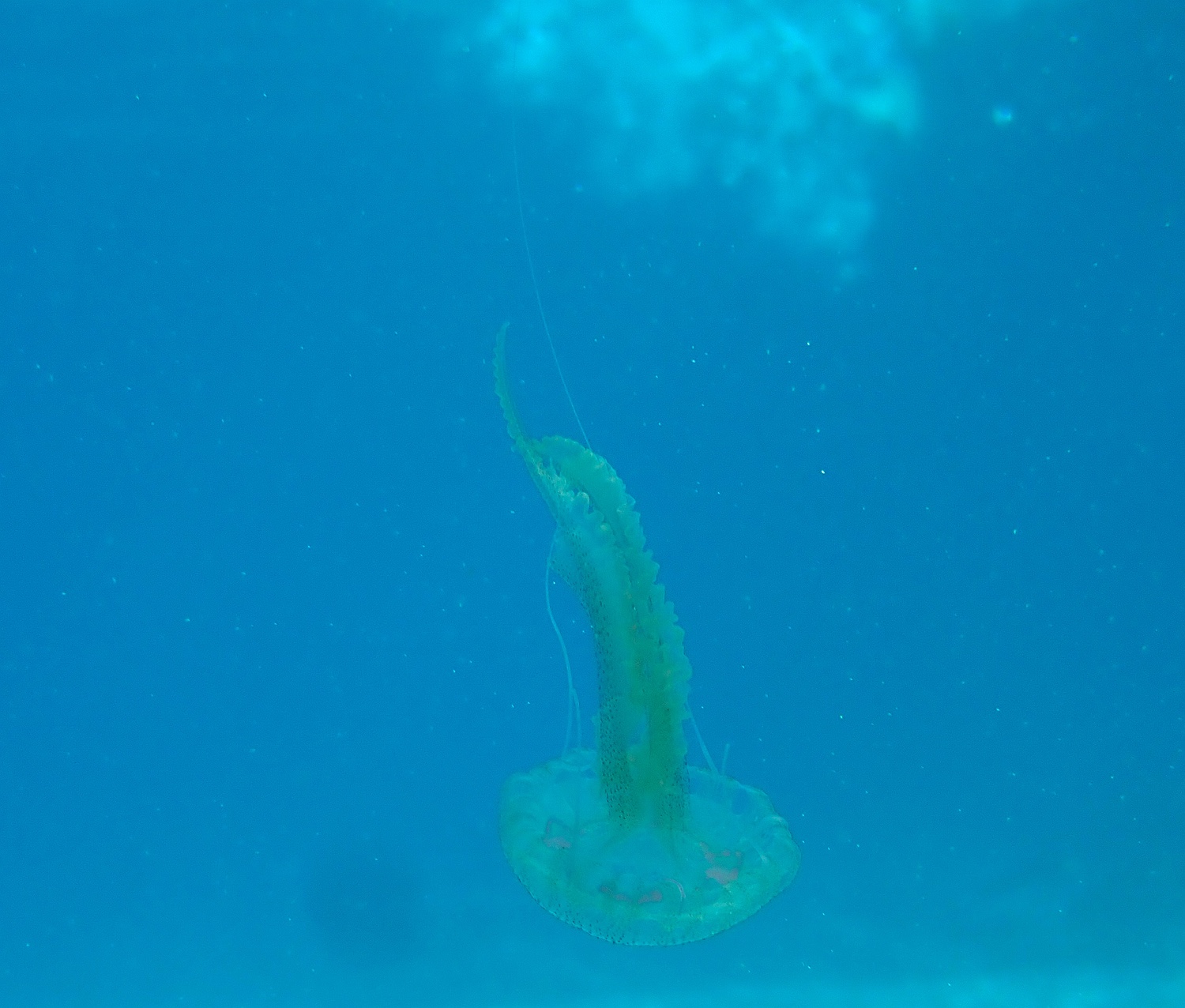
In this species the stinging threads are up to 1 m long; they are very thin and very hard to see.
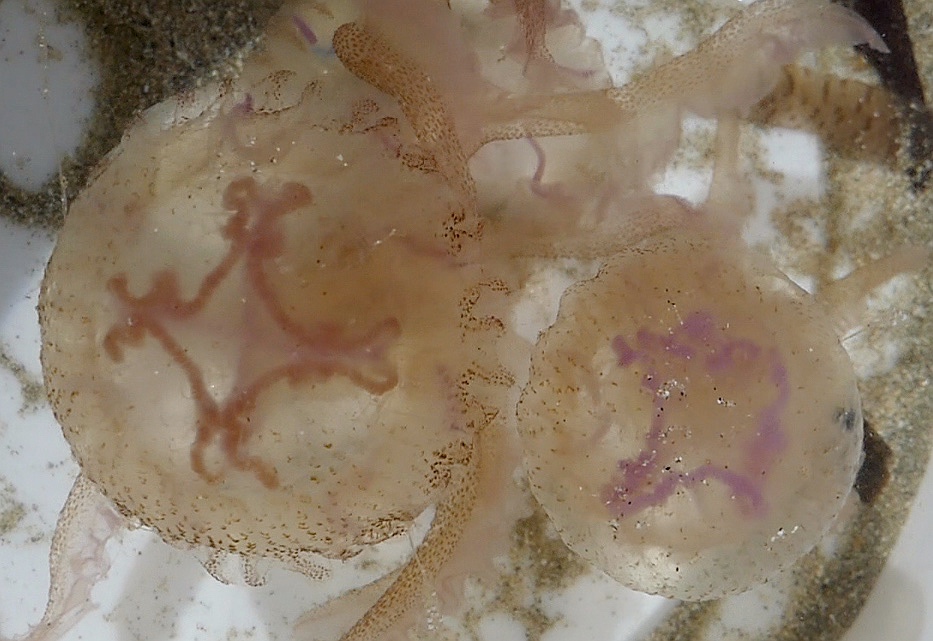
On the day of the jellyfish plague, we collected the Mauve jellyfish in our bay with hand nets. Here you can see them in the bucket. The umbrellas display a beautifully curved reddish band.
Comb jellies
Some organisms known as jellyfish do not belong to the cnidarians: the comb jellies (Ctenophora), which constitute their own phylum. They have a similar anatomy to other jellyfish with a transparent and gelatinous body and tentacles. Characteristic are many longitudinal strips on the bodies, which are covered with tiny flagella that the jellyfish use to move around. Not much is known about the approximately 100 species of comb jellies that have been described so far, partly because they are very fragile. Like other jellyfish, comb jellies feed on plankton and small animals, which they catch quite effectively with their adhesive cells. Members of the genus Haeckelia feed exclusively on other jellyfish and manage to somehow “steal” their stinging cells without setting them off and incorporate them into their own tentacles, which is why they were previously thought to be and classified as cnidarians.
Venus girdle, Cestum veneris, Lesueur
The strange Venus girdle belongs to the comb jellies. It looks like a transparent gelatinous ribbon with a central line. Along the upper edge of the “girdle” sit small plates covered with flagella, which the Venus girdle uses to move around, and at the lower edge lies the mouth groove, which is surrounded by tentacles. The tentacles can be extended considerably; in order to catch prey the jellyfish places them on the surface of its body, thus turning itself completely sticky. The Venus girdle is stiff and straight when it swims in the sea, but when disturbed, it makes wriggling movements.

We found this Venus girdle (the transparent “plastic strip” held up with the knife) in shallow water near the Mákares Islands, and couldn’t believe that it is actually a living creature!
continue: Bryozoa
back: Marine animals (Overview)
see also:
Much information in this article comes from the book: Robert Hofrichter (Hrsg): Das Mittelmeer, Fauna, Flora, Ökologie, Band II, 1: Bestimmungsführer