Corals
Corals belong to the class of anthozoans (Anthozoa), together with the sea anemones. These form the phylum Cnidaria together with the hydrozoans and the jellyfish. Cnidarians are a ‘lower’ group of animals that, at first glance, resemble plants. Their members are usually small, simply structured and mostly radially symmetrical; a characteristic feature are the cnidocytes, special stinging cells, which they use to capture and kill their prey.
Unlike sea anemones, which usually live solitary, corals usually form colonies that are made up out of large numbers of small, polyp-shaped individual animals; the colonies can be crustose, shrub-like, fan-shaped or feather-shaped. However, there are also a number of solitary corals. Colony-forming corals, as well as many solitary corals, form skeletons made of calcium carbonate (“stony corals”), horn or chitin, and sometimes they are also gelatinous. The colonies are often bright red, yellow or orange in colour.
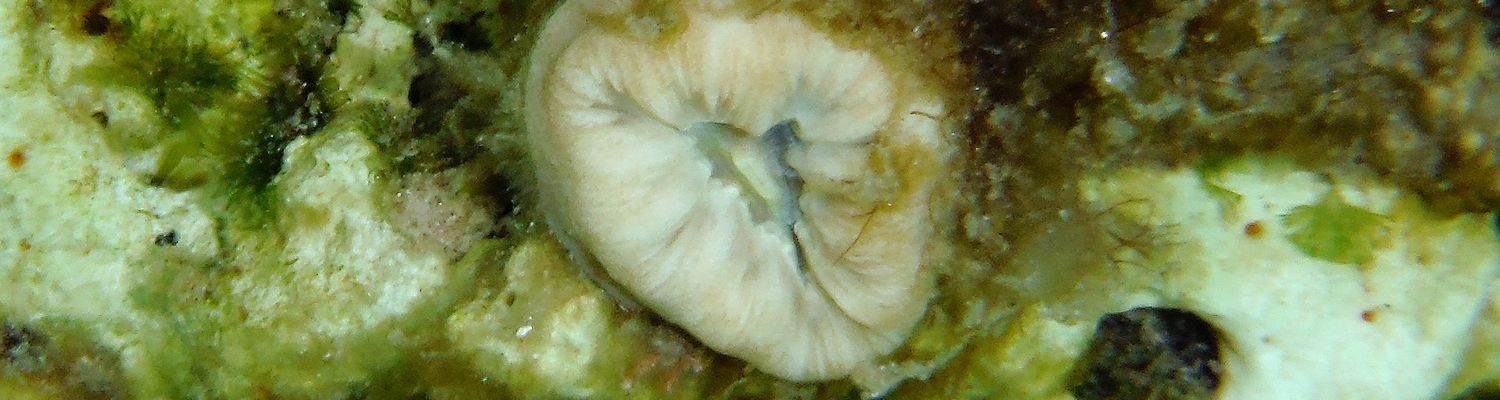
Coral reefs are mainly found in the tropical seas, but they also occur in cold waters and generally play a very important role in marine ecosystems. Around 150 species of corals occur in the Mediterranean Sea, but they do not form large reefs. At the coasts of Naxos one mainly finds a solitary species, the pig-tooth coral; in deeper waters occur also other species such as the beautiful gorgonians.
Like other cnidarians, corals feed on plankton and tiny animals, which they capture with their tentacles. Some species live in symbiosis with photosynthetic single-celled algae. The delicate fan- and bush-shaped corals grow mainly in deeper waters, where they stretch into the ocean currents that provide their food. Reef-forming species and smaller solitary corals live mainly in shallow waters, where the movement of the waves ensures their supply of plankton.
The Photo gallery of the marine animals provides an overview of the described species. Please note that I am not an expert and that some of the identifications may therefore be incorrect.
Pig-tooth coral, Balanophyllia europaea, Risso
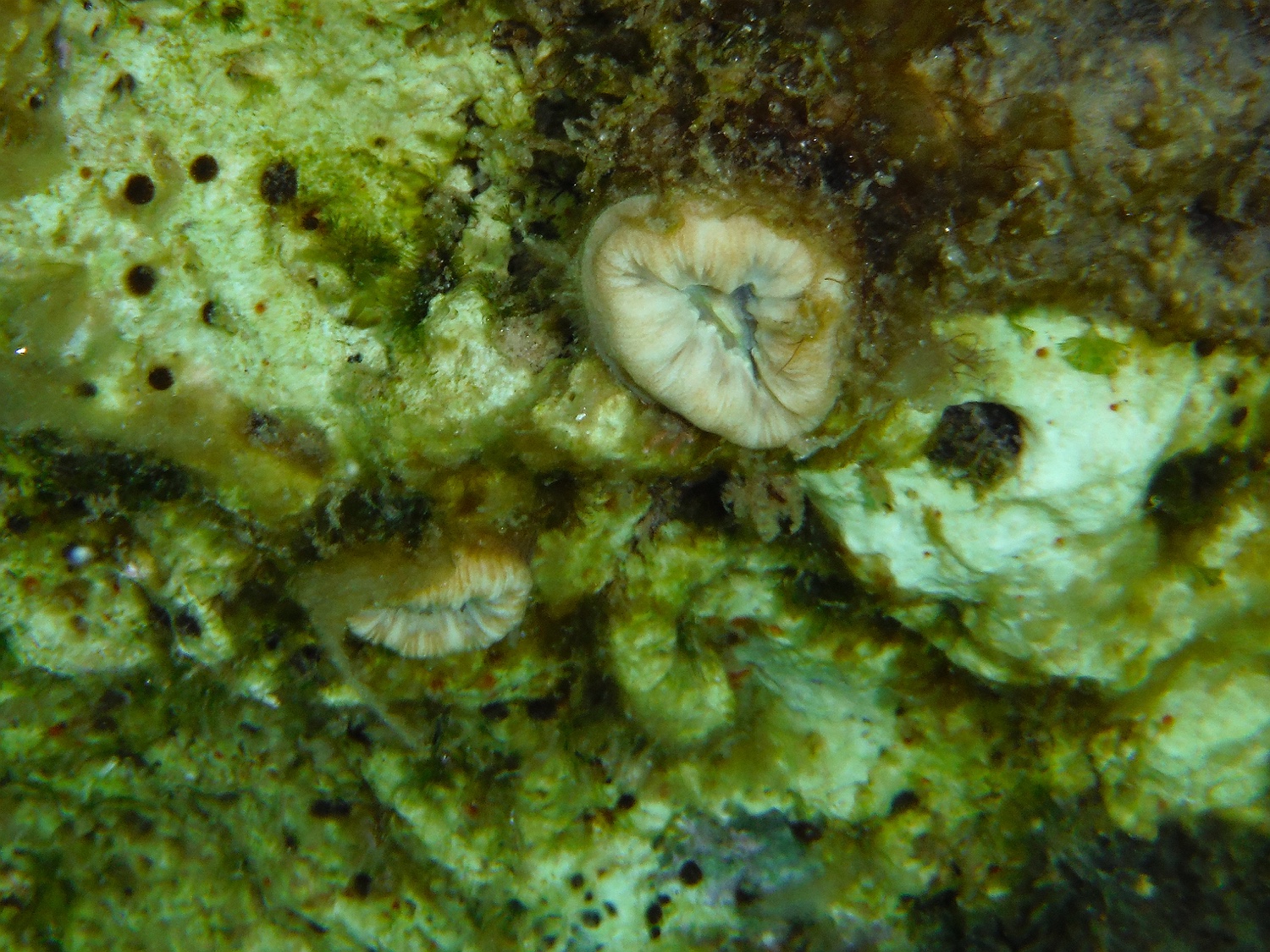
Around Naxos the small, solitary pig-tooth coral, which belongs to the stony corals, can often be observed just below the water’s surface. It is easy to recognize due to its oval shape. Like many other corals, this species lives in symbiosis with single-celled algae, which help it to build its calcareous skeleton and also contribute to its nutrition; accordingly, it is dependent on sufficient light.

The pig-tooth coral lives on rocks directly below the waterline.

On the beaches one can often find the skeletons of pig-tooth corals
continue: Sea anemones
see also: