Foraminifera
Foraminifera are single-celled organisms, i.e. organisms that consist only of a single cell. With 10,000 species they form a very diverse group. They carry shells (“tests”) of calcium carbonate or sand particles, each species showing a specific shape. The shells can be elongated, spiral-, star- or disc-shaped and consist of one or more chambers. Their size ranges from a few micrometers to several centimeters.
The foraminifera form characteristic thread-like extensions called pseudopods, which are reinforced by microtubules and often branch out to form an extensive network. The pseudopods serve to anchor the organism to the substrate and to take in food: They are used to pick up small detritus particles or microscopic plankton organisms and transport them to the cell.
The vast majority of foraminifera lives on the sea floor; a few species live in the plankton or freshwater. They occur in all areas of the sea, from shallow coastal waters to the deepest ocean trenches. Most species are too small to be seen with the naked eye and are therefore only known to specialists.
In general we do not know much about the reproduction of the foraminifera. Only in a few species details are known: These species usually show an alternation between sexual and asexual generations.
Due to their shells, foraminifera are very preserved as fossils: over 40,000 extinct species are known (e.g. nummulites), the oldest ones dating to the Cambrian epoch (560 million years ago). Many species serve as index fossils for dating rock strata or are important for researching oil deposits or the palaeoclimate, for example.
The Photo gallery of the marine animals provides an overview of the described species. Please note that I am not an expert and that some of the identifications may therefore be incorrect.
Miniacina miniacea, Pallas
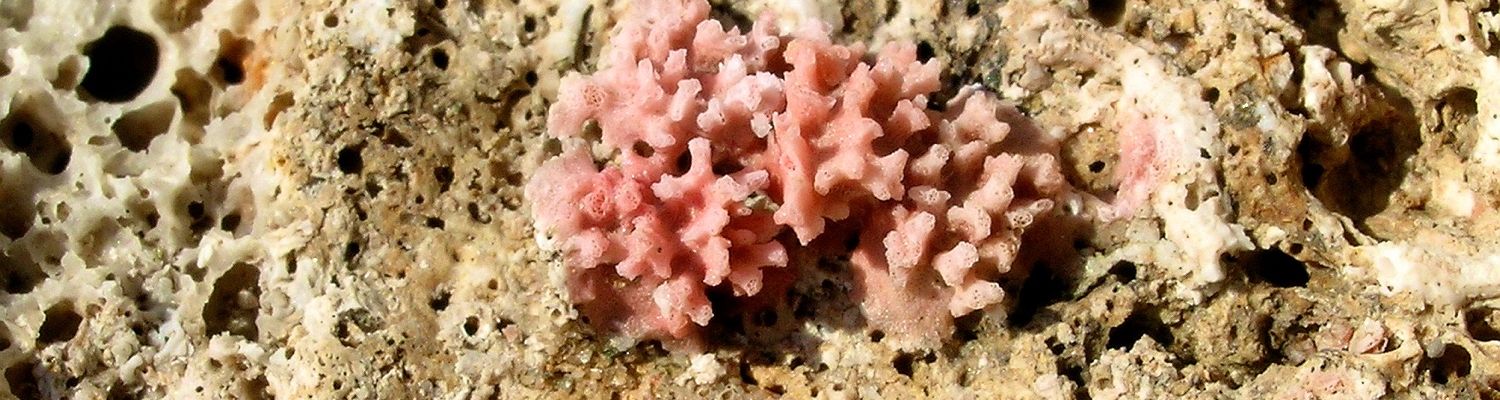
A relatively large and conspicuous foraminifera, measuring up to one centimeter, occurs in the Mediterranean Sea (from shallow waters to great depths). It lives attached to solid substrates or plants such as seagrass. Its shell is easy to recognise with its characteristic red colour and its irregular shape with branched protuberances. Tiny pores are visible in the walls, through which the pseudopods protrude in the living organism.
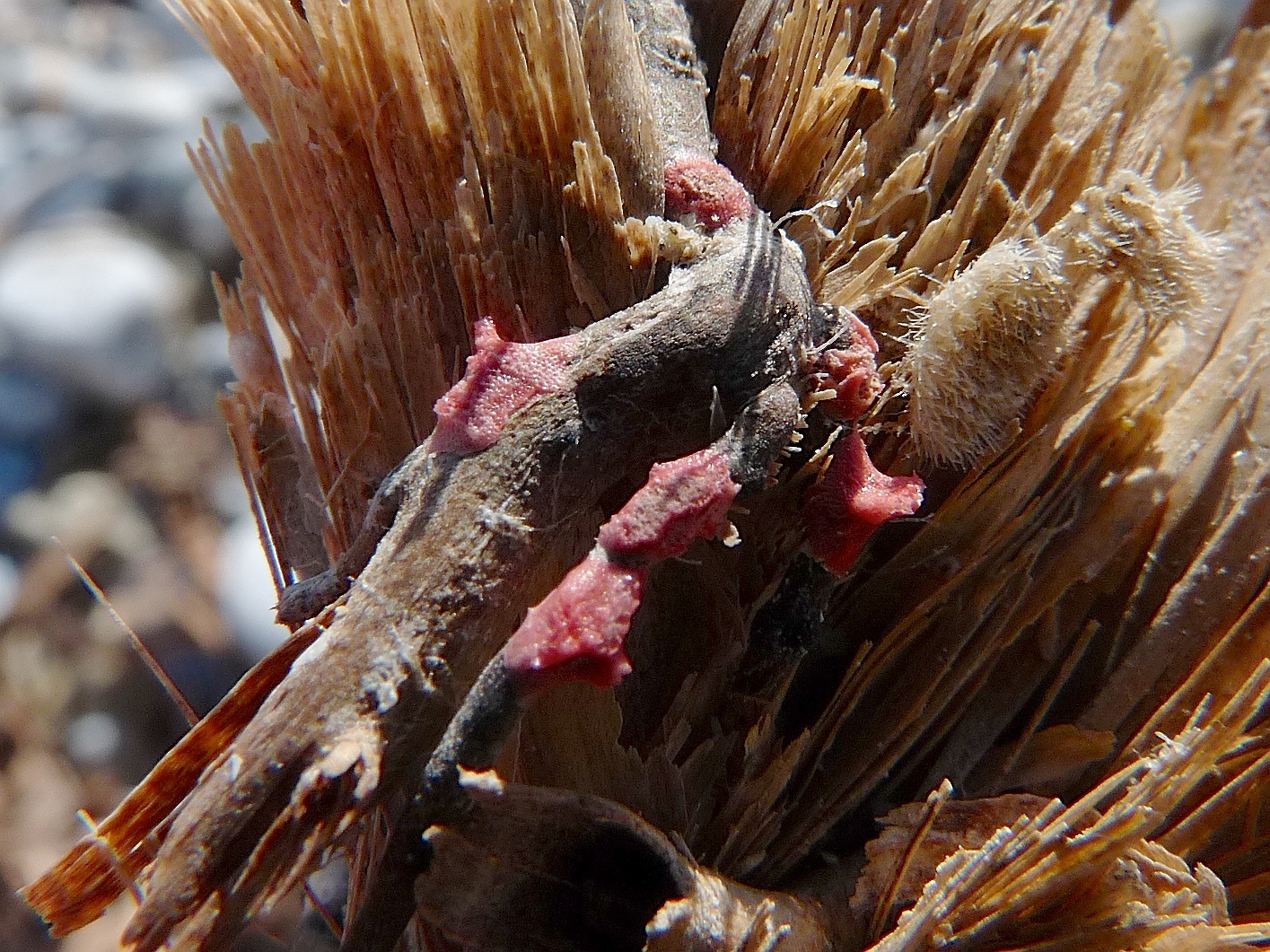
Miniacina miniacea often lives on plants like the seagrass Posidonia oceanica (Neptune grass).

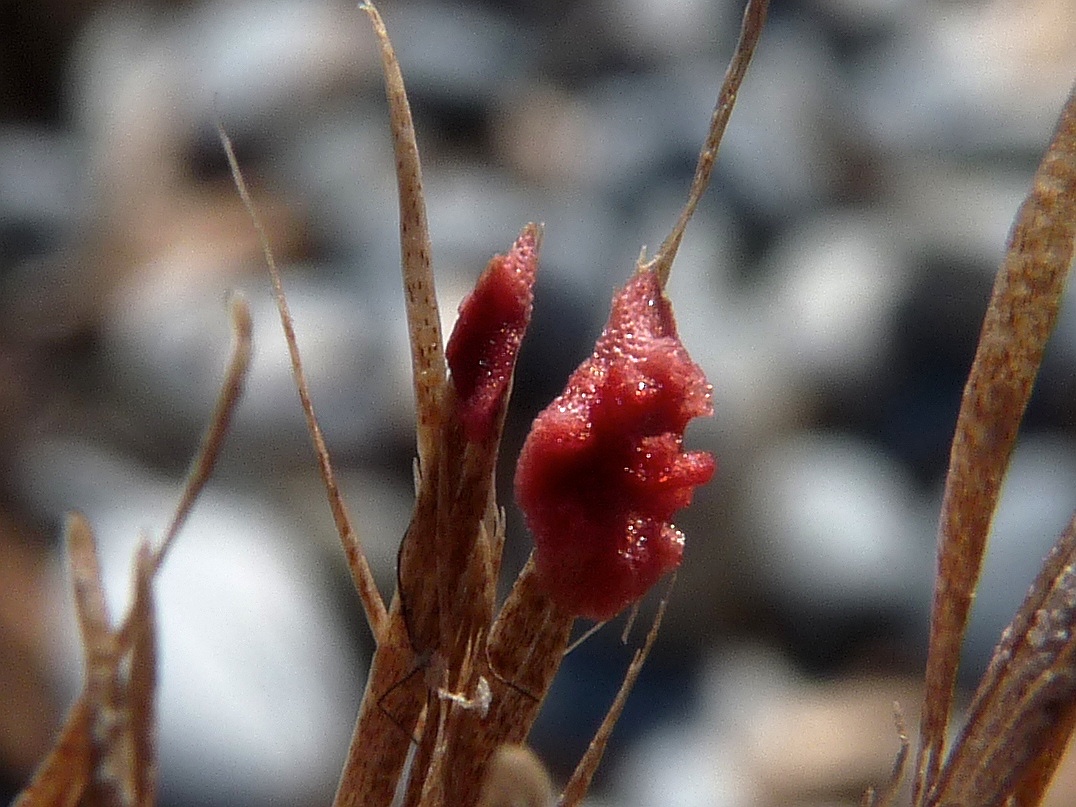
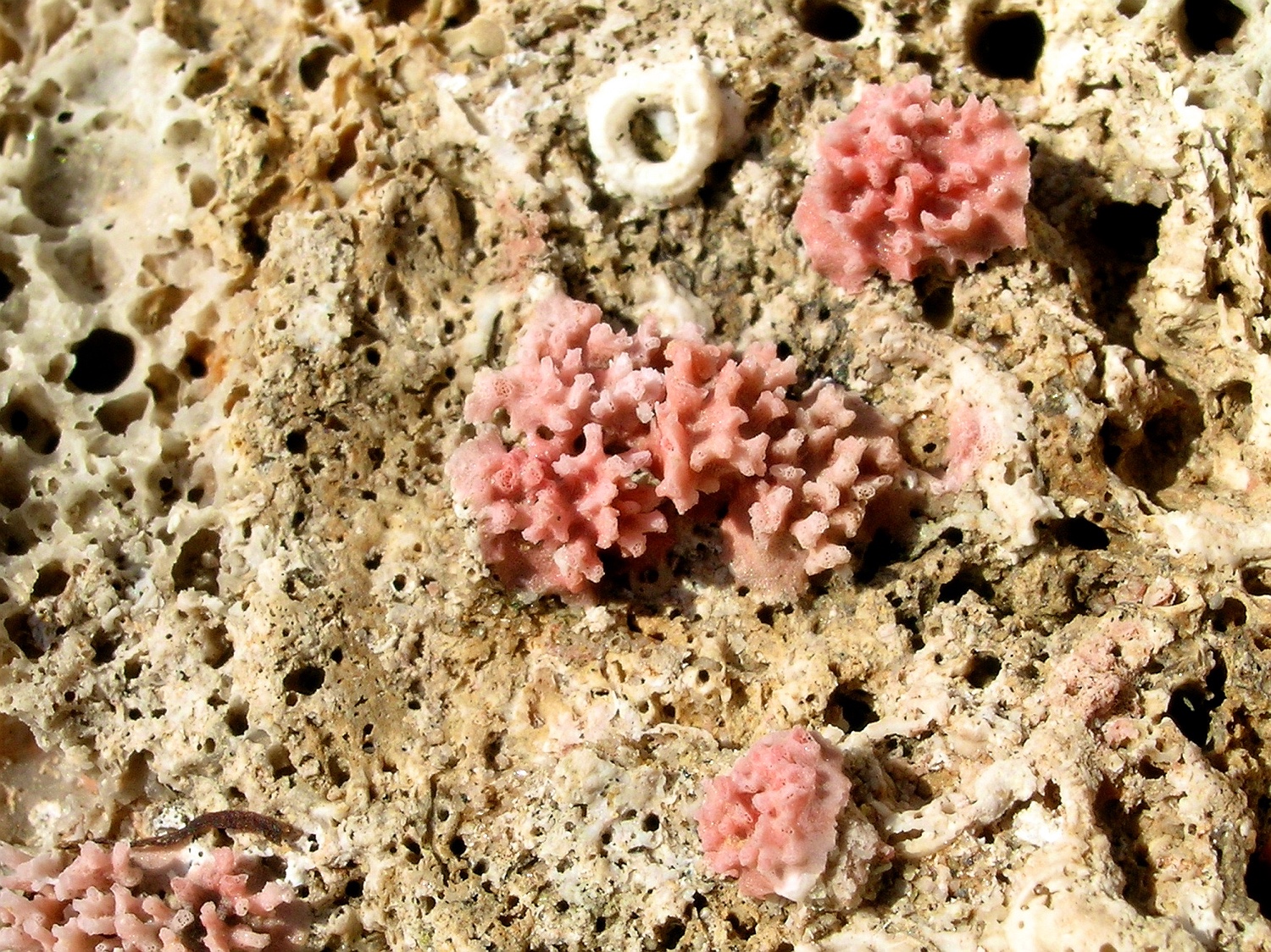
Its shell features a distinctive reddish colour and smaller or larger irregular protrusions. With a magnifying glass, you can see the small pores through which the pseudopods extend.
continue: Sponges
back: Marine animals (Overview)
see also: