
Calcareous Red algae
Some red algae deposit substantial amounts of calcium carbonate in their tissues resulting in a more or less hard thallus. These so-called calcareous algae can grow either in a crustose or a shrub-like form. They are particularly common in the intertidal zone, but also occur in deeper layers of the sea, often forming dense colonies.
Here you can skip the introduction and go directly to the species.
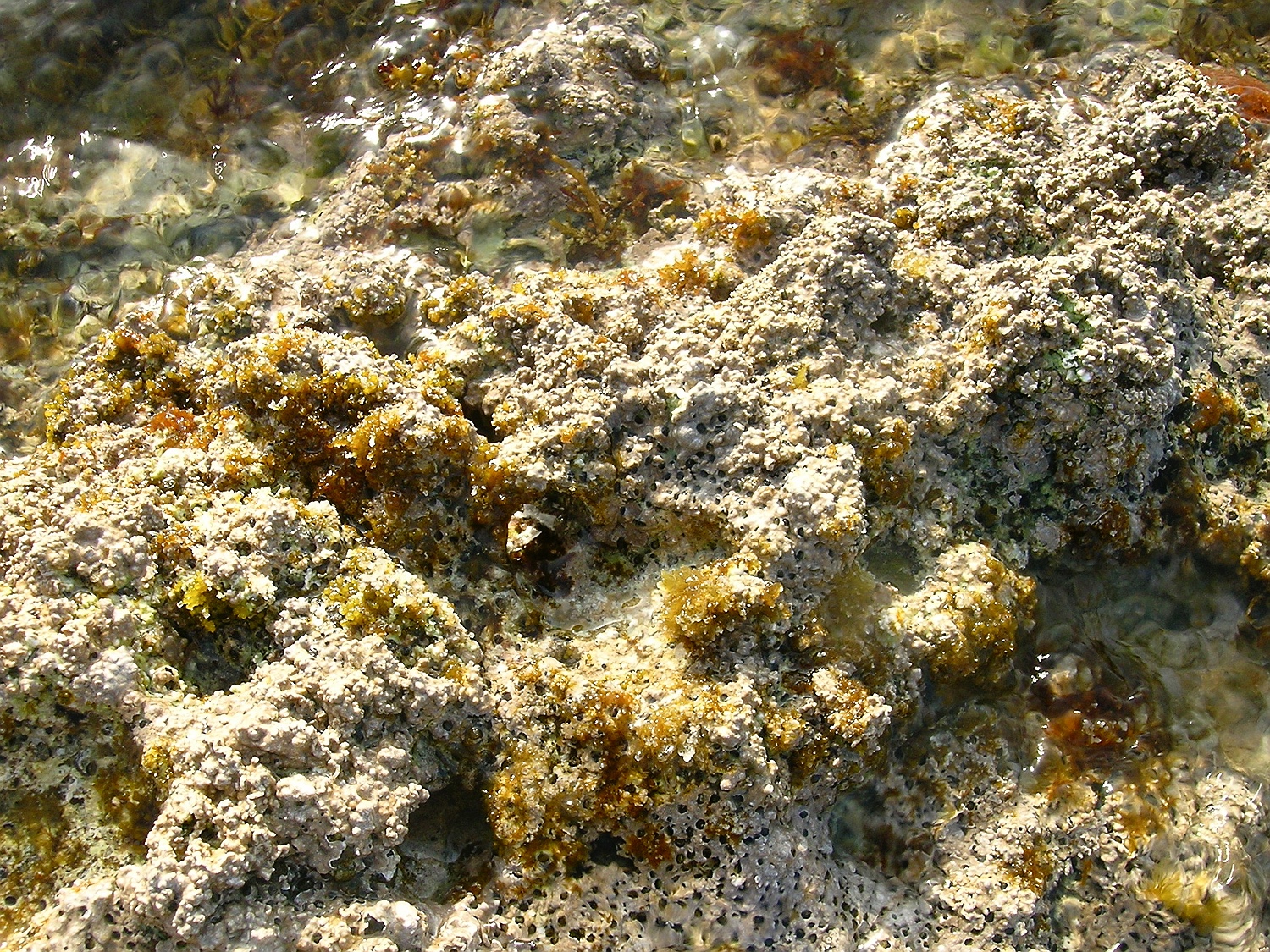
calcareous red algae
In the Mediterranean, calcareous alga communities sometimes form reef-like structures directly at the waterline (mainly on marble, but also on slate). These occasionally are not much more than a thin crust, while in other places they grow thicker to form a small embankment. The most common calcareous alga in our region is the crustose Lithophyllum incrustans. Shrubby species of the genera Jania, Amphiroa and Titanoderma are also widespread. Ellisolandia elongata (= Corallina mediterranea) and Tenarea tortuosa (?) are less common.
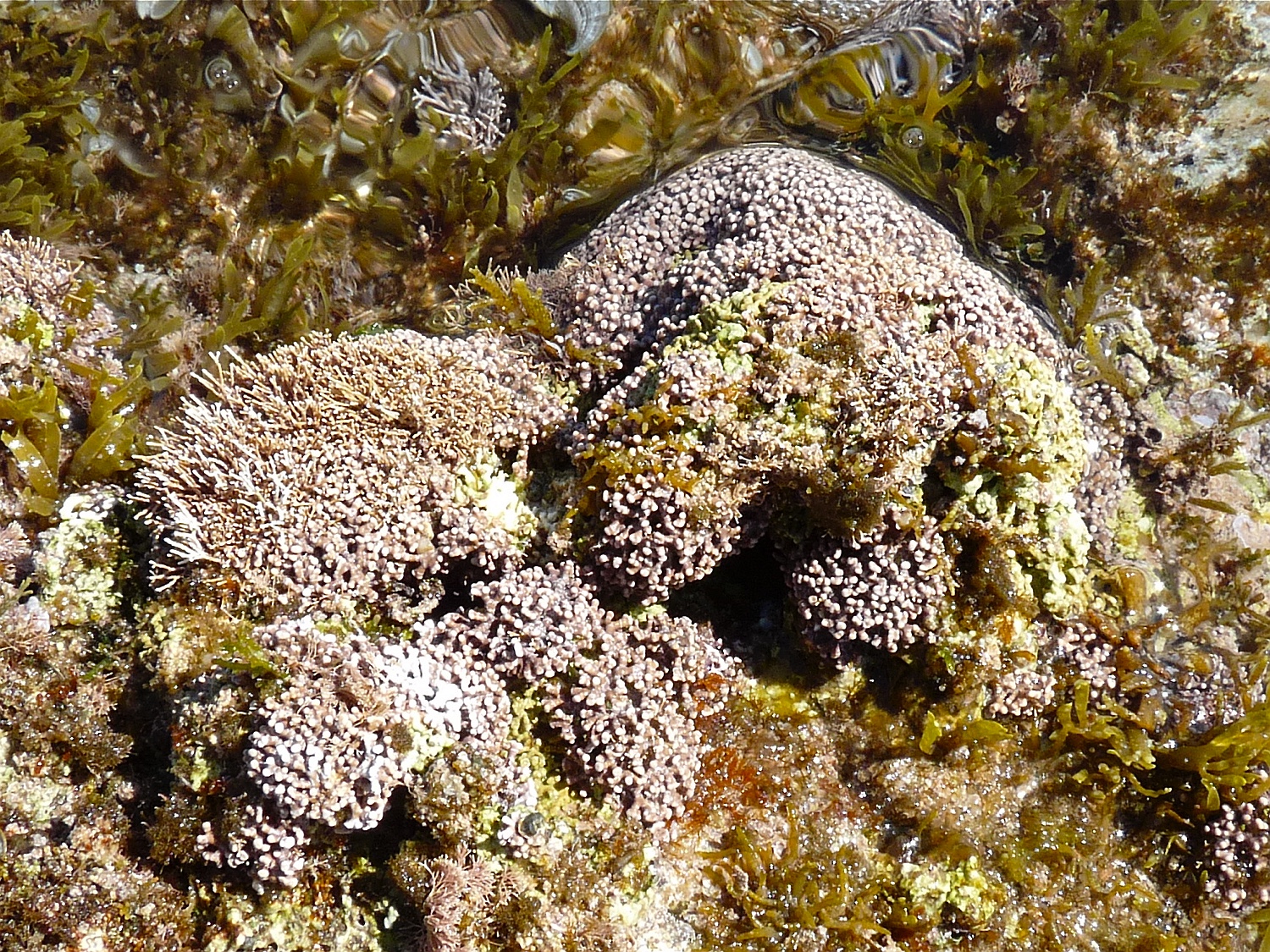
different calcareous red algae
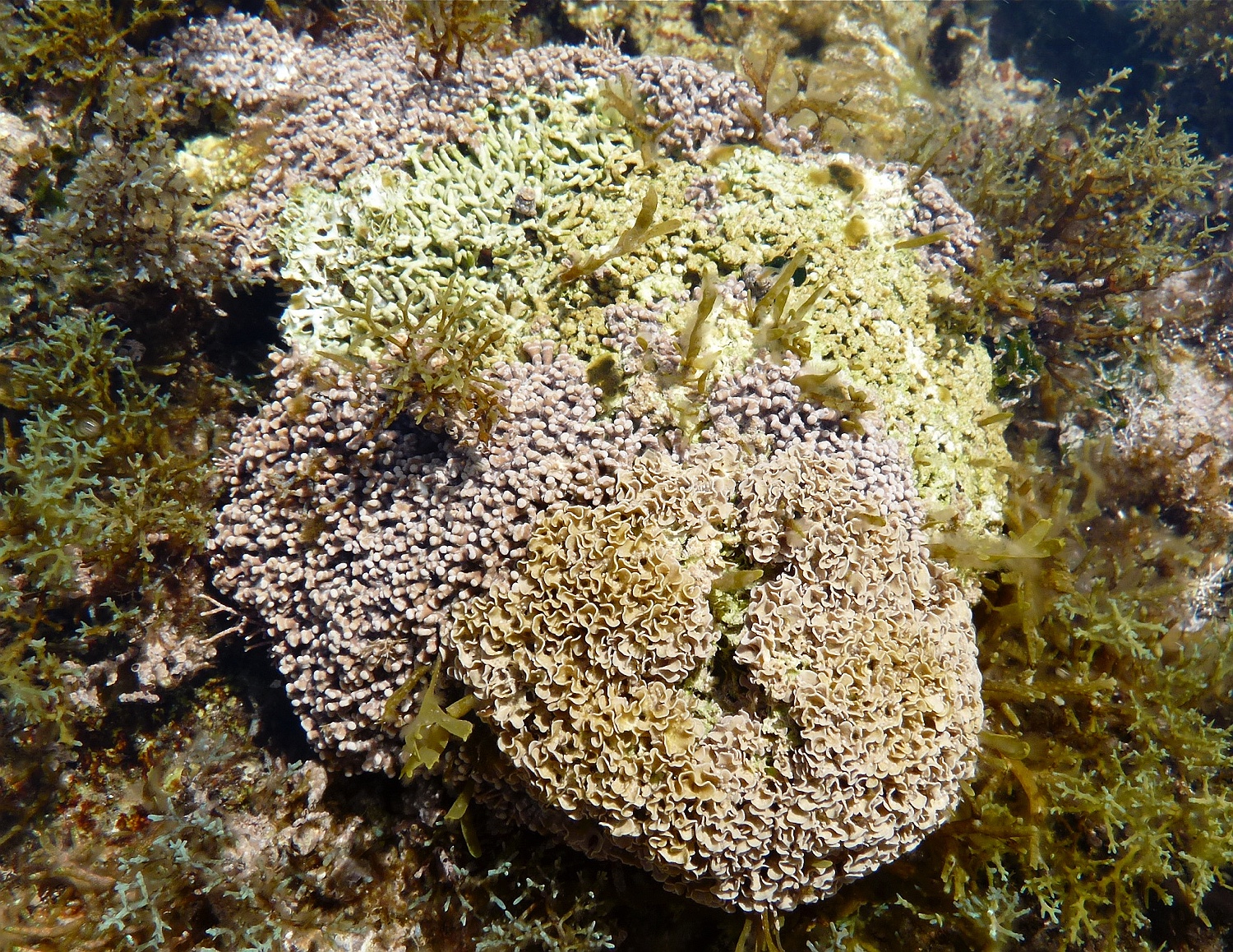
Often several species grow together.
red alga species on Naxos
The Photo gallery of the marine plants gives an overview over the species.
A note on identification: Some species of algae can be identified easily and reliably. In many cases, however, there are several related species that are difficult to distinguish. Often, examination under a microscope is necessary for correct identification. Another problem with the identification is that not all species are included in the field guides; even using the internet, it is difficult to find information on many species. Often, the species identified with the help of books or photos on the internet look quite different from our specimen here. Accordingly, many of the identifications are unfortunately quite uncertain, and some species must remain completely unidentified.
Here you can jump directly to the species (return with the back arrow or by swiping back):
Amphiroa rigida – Ellisolandia elongata – Jania rubens – Lithophyllum incrustans – Mesophyllum lichenoides – Tenarea tortuosa – Lithophyllum byssoides – Titanoderma trochanter – Hildenbrandia rubra – Peyssonnelia squamaria
Amphiroa rigida ?, J. V. Lamouroux
not very common, but regular and locally dominant; other, very similar species may occur
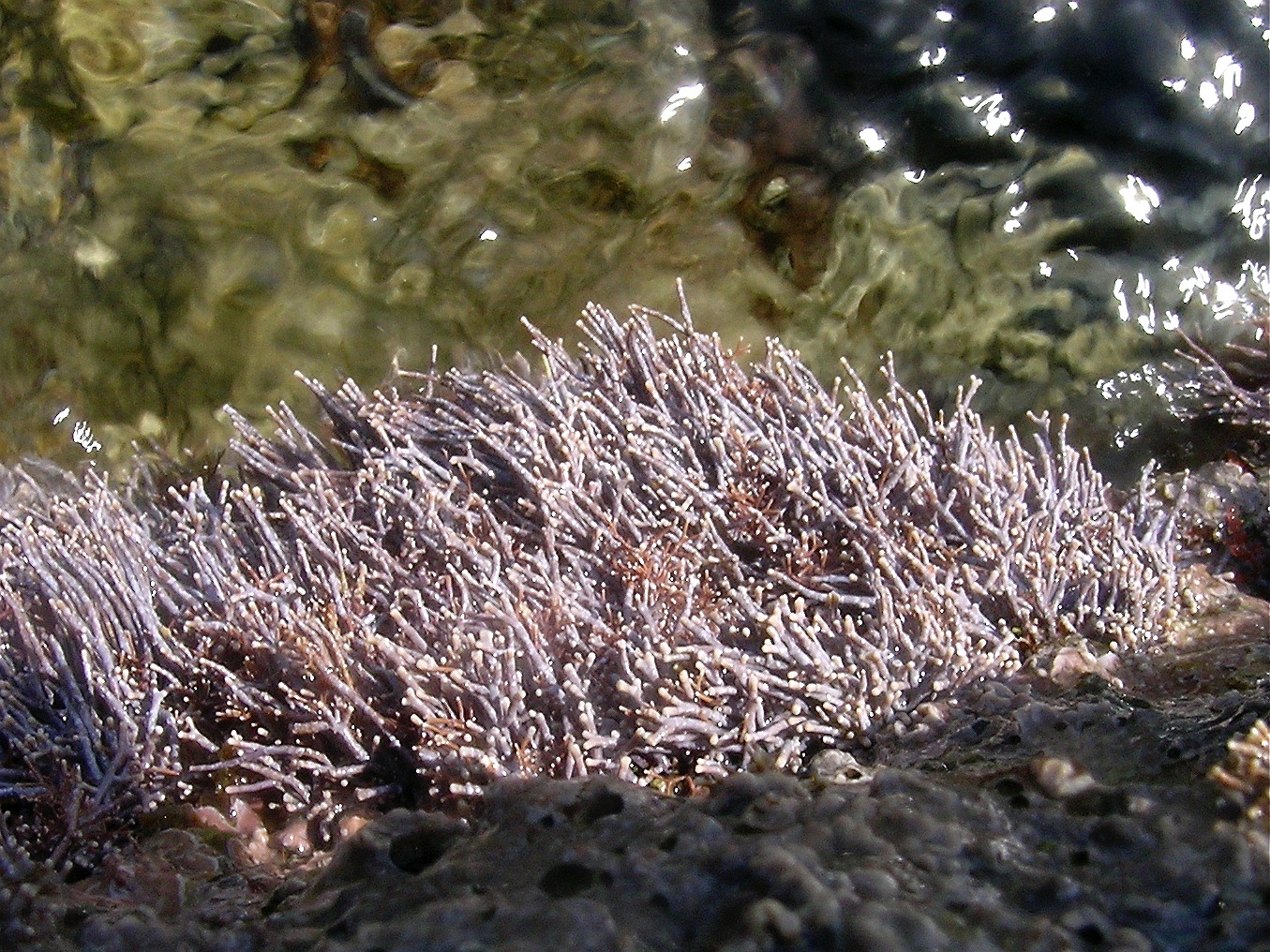
Amphiroa rigida consists of hard, short, slightly branched, grey-pink stems.
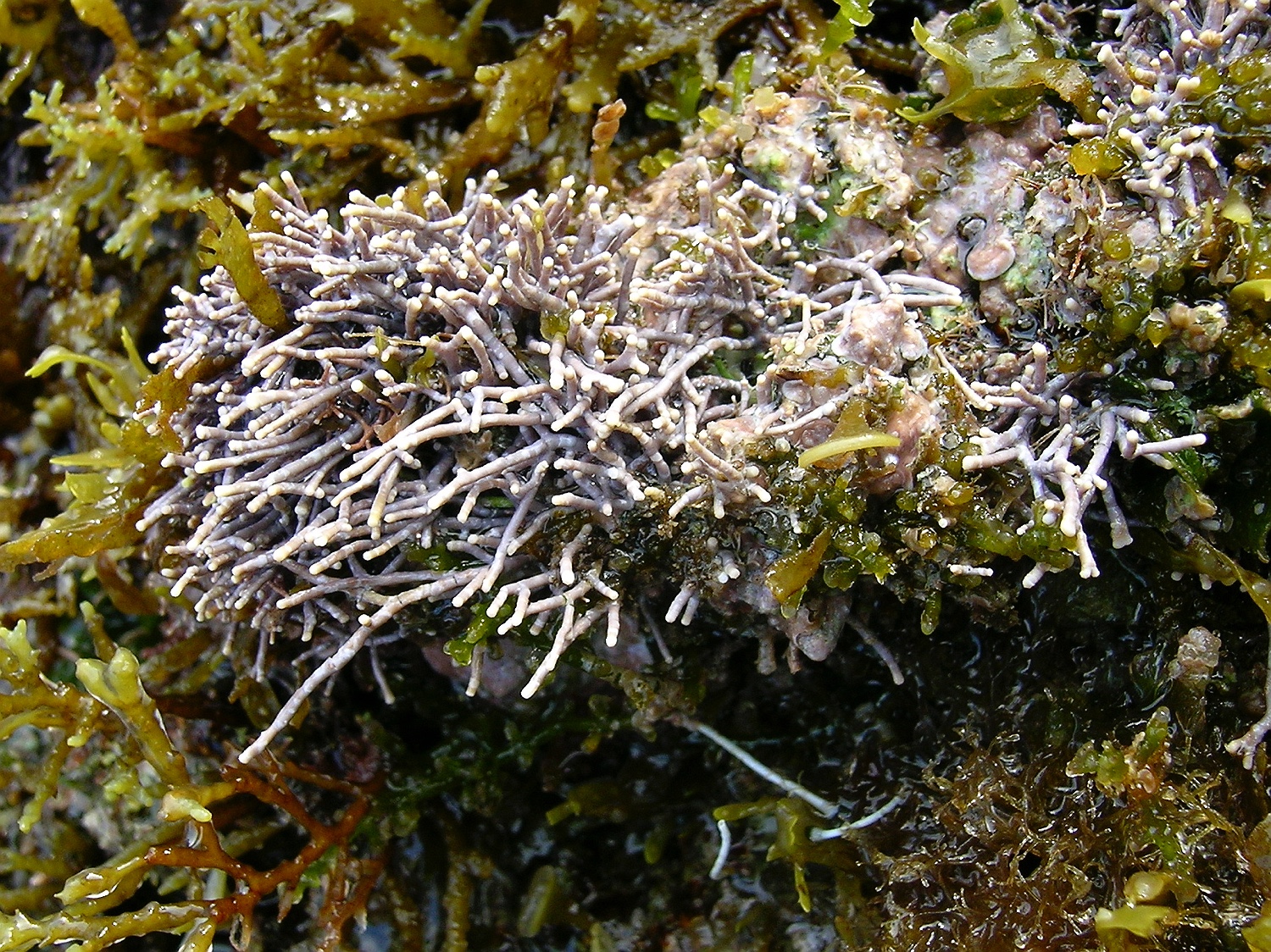
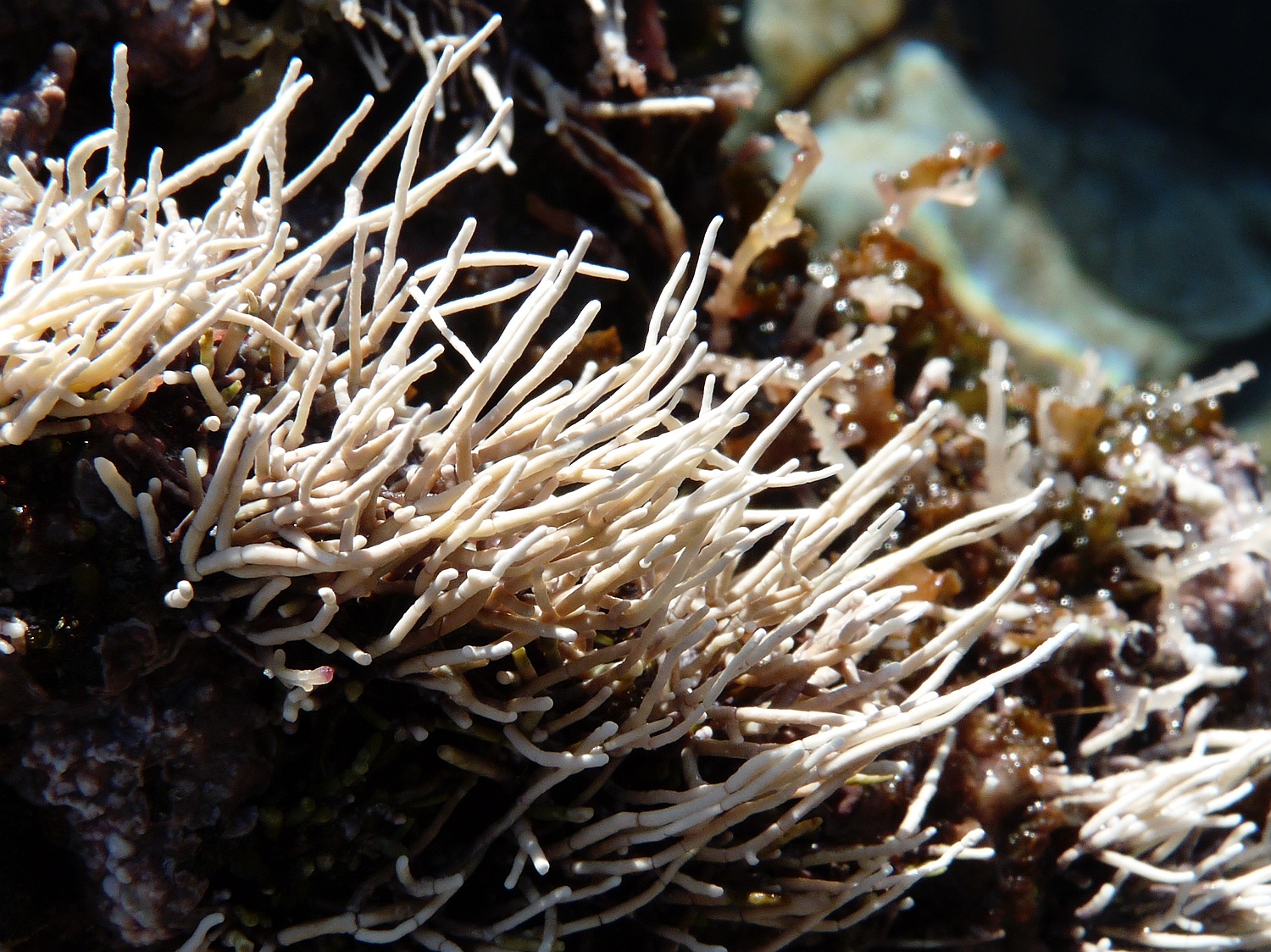
Here a whitish, less branched form; possibly a different species.
Ellisolandia elongata, Hind & Saunders
(= Corallina e., Corallina mediterranea)
rather rare, in shady areas
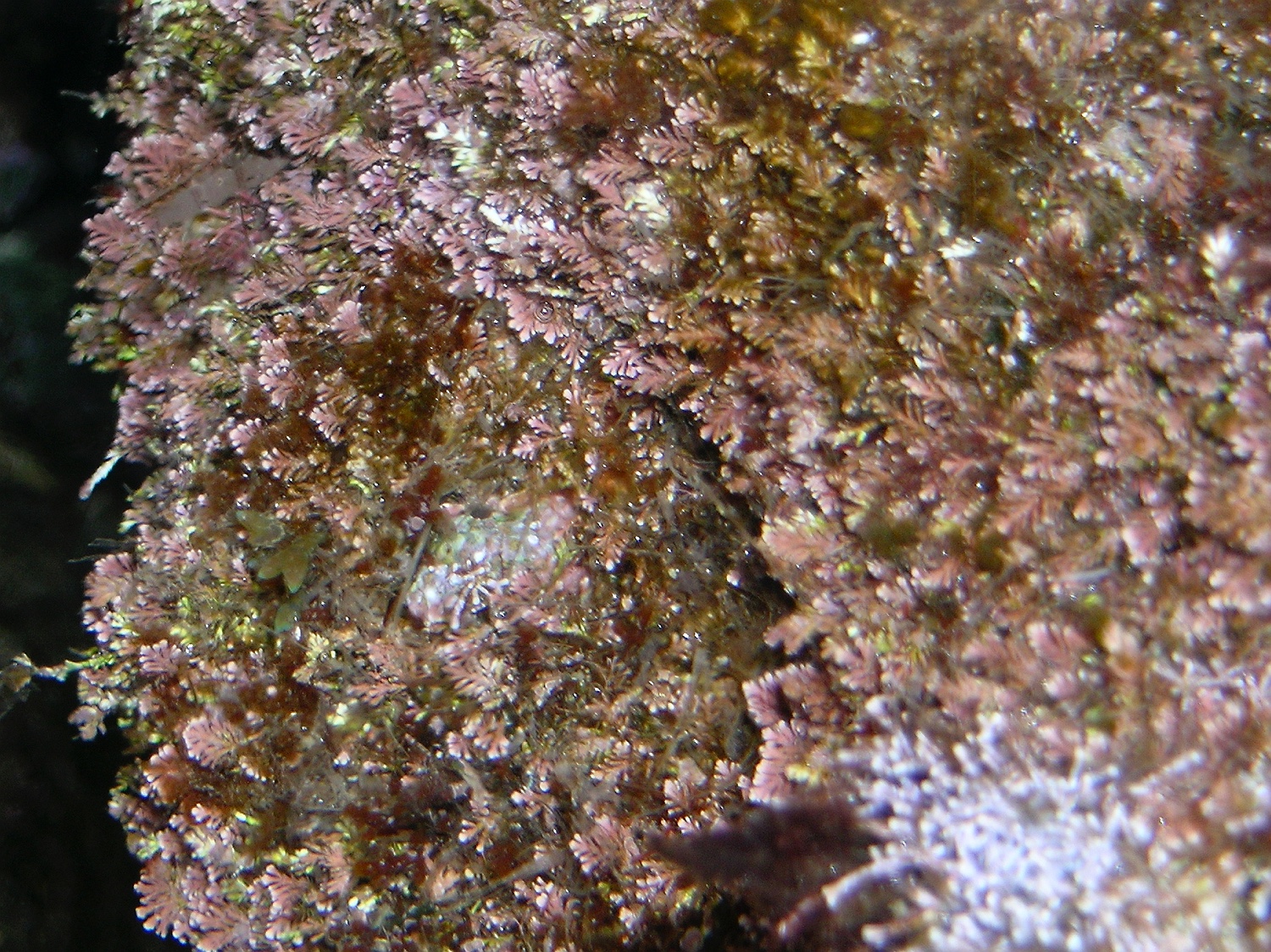
Ellisolandia elongata grows in shady areas, mostly on vertical rock faces.
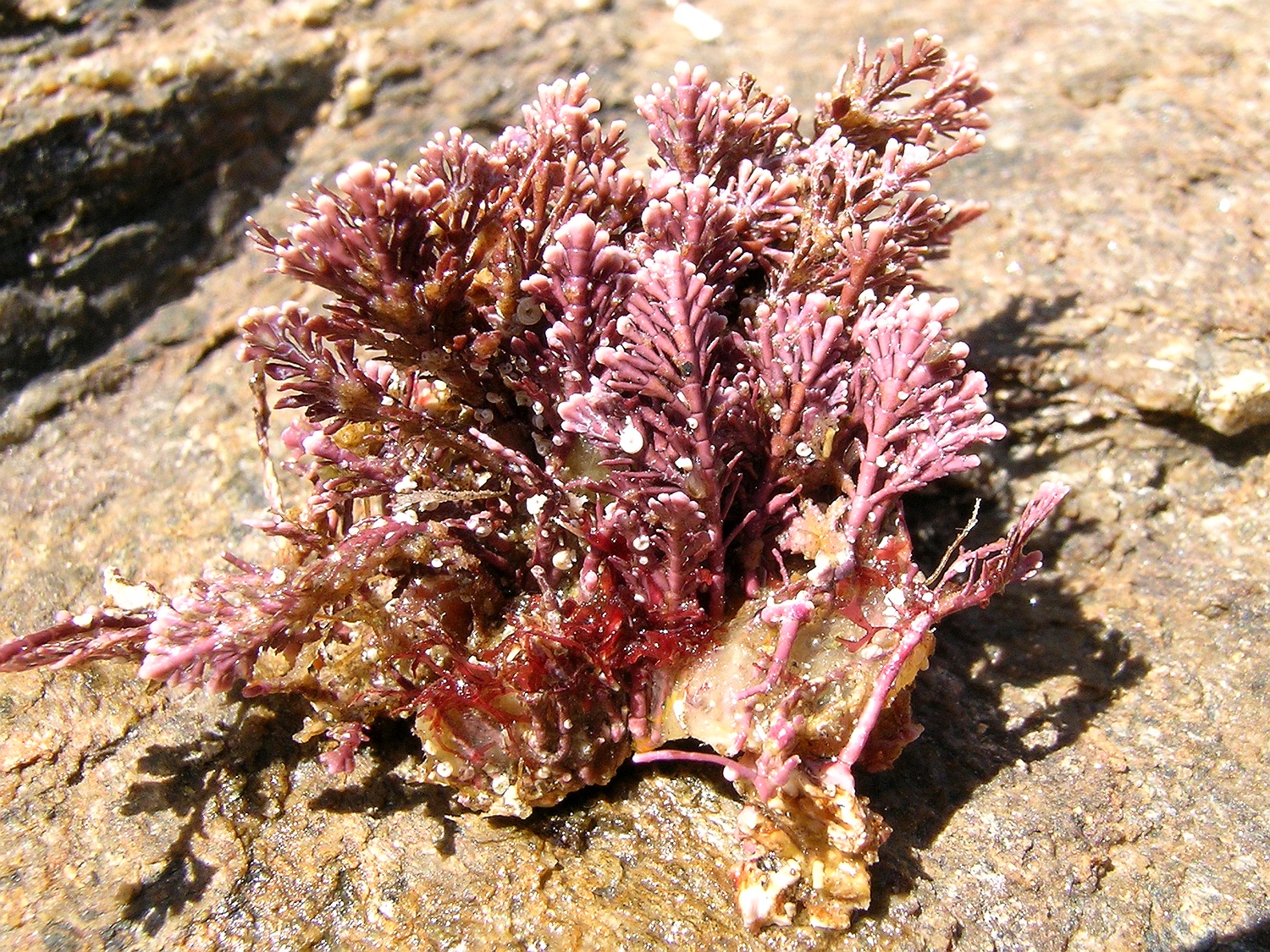
The pinkish-red branches are densely pinnate, with the pinnules arranged in a single plane.
Jania rubens ?, J. V. Lamouroux
often found at the waterline, especially on slate; the genus includes several species that are very difficult to distinguish
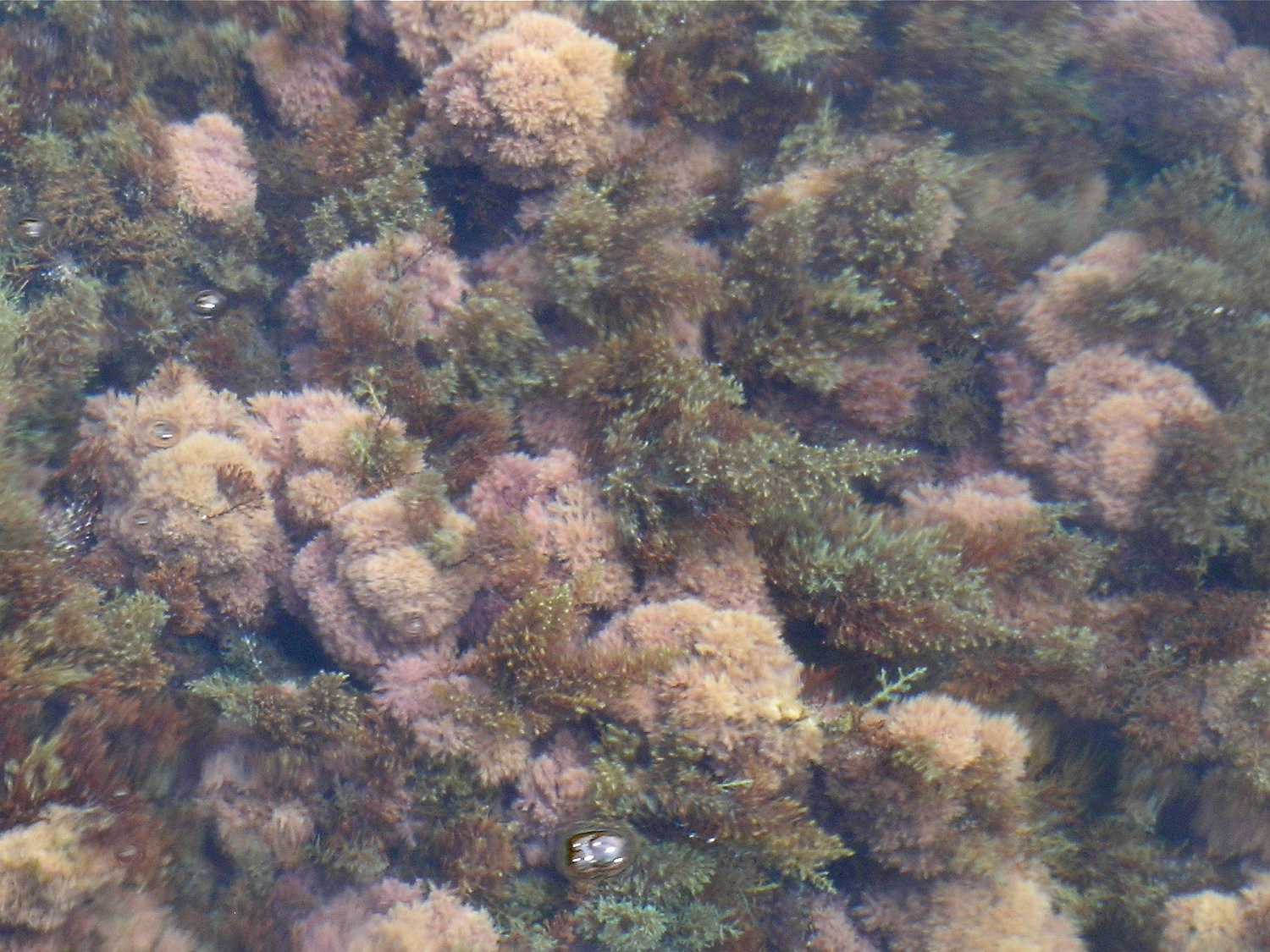
Jania rubens occurs mostly in with stands of Cystoseira.
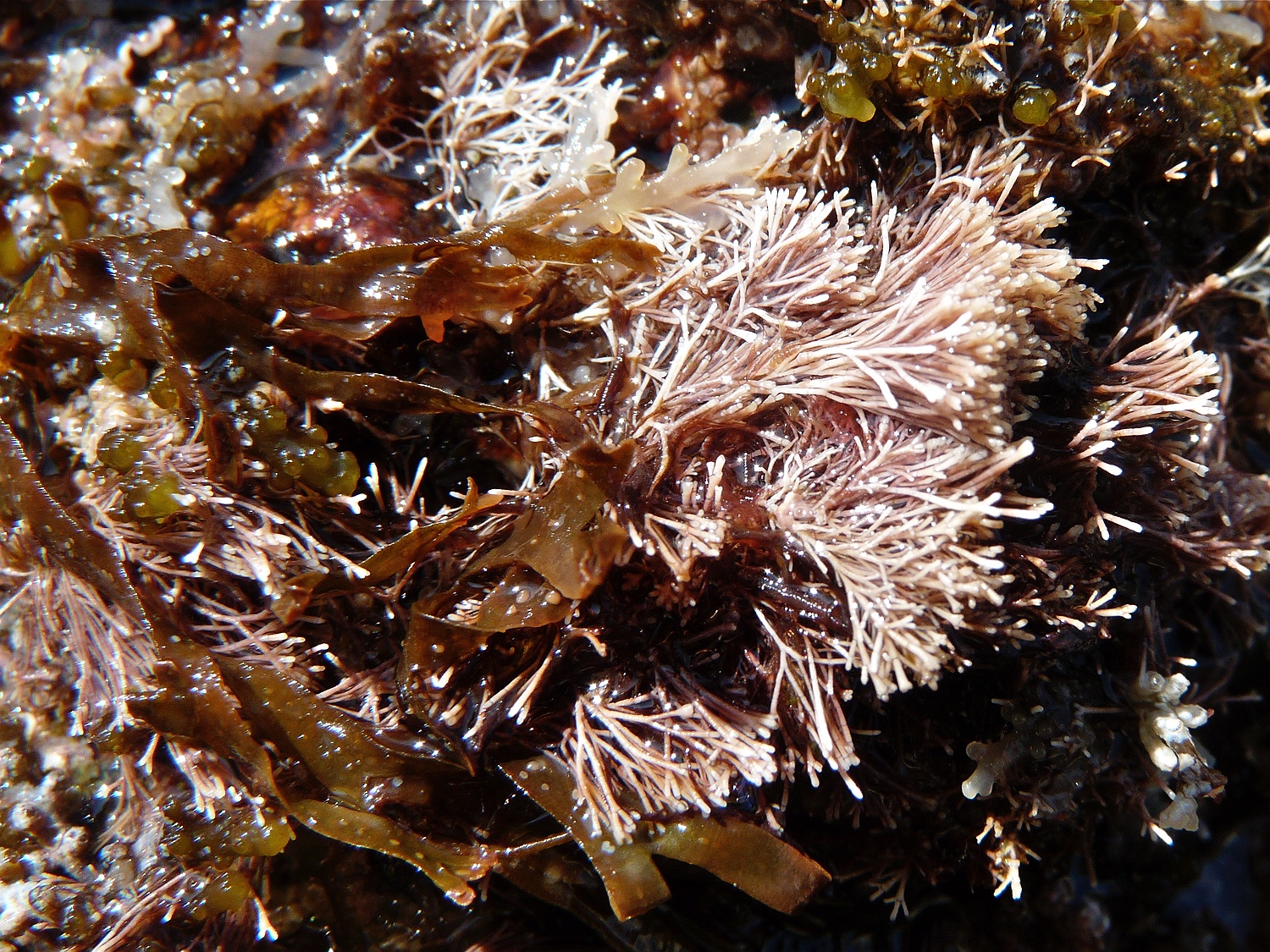
It is not very hard and consists of fine, highly branched tufts.
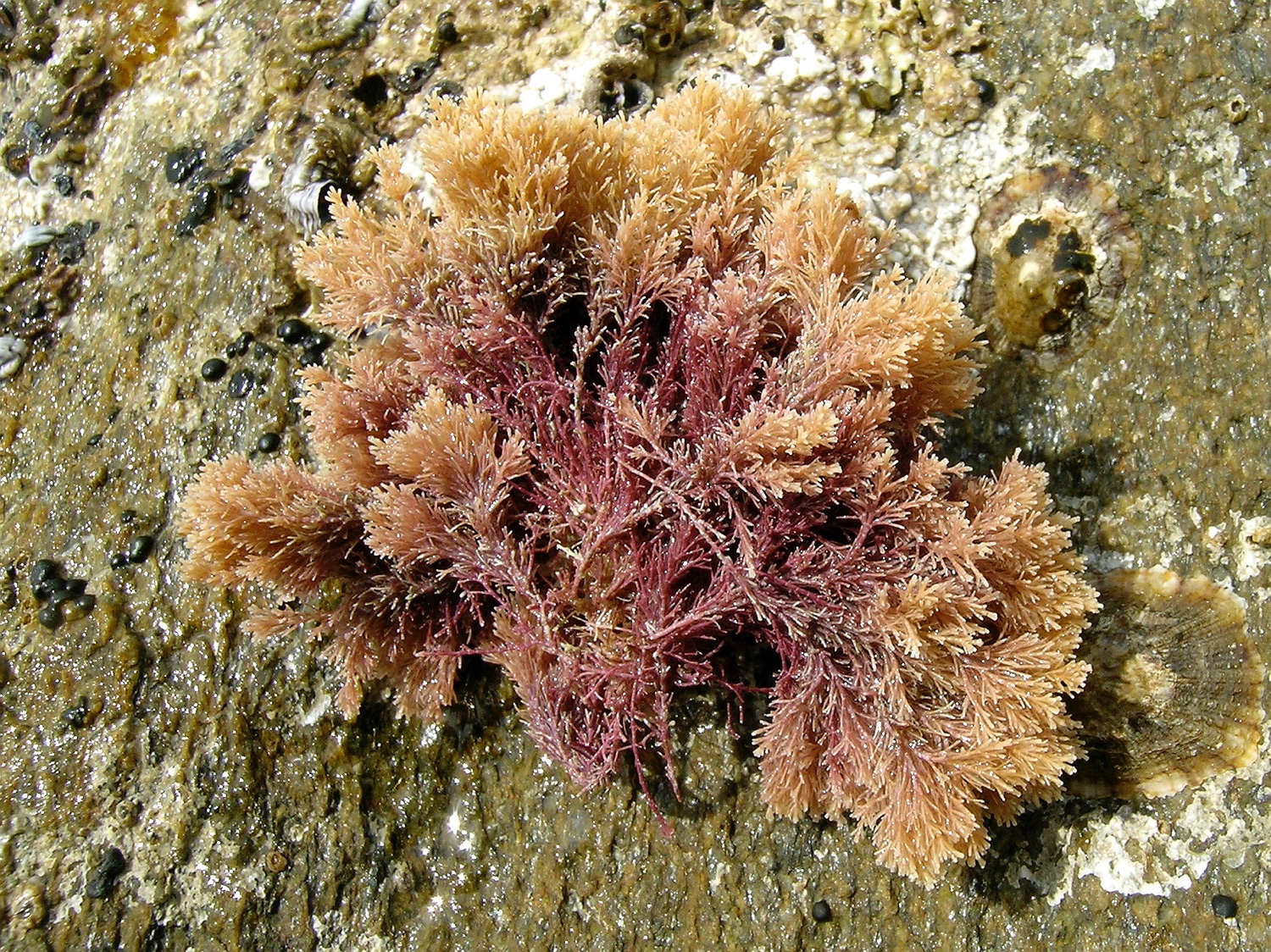
Lithophyllum incrustans, Philippi
very common in the intertidal zone (eulittoral), especially on slate, often covering large areas at the waterline; difficult to distinguish from other similar species
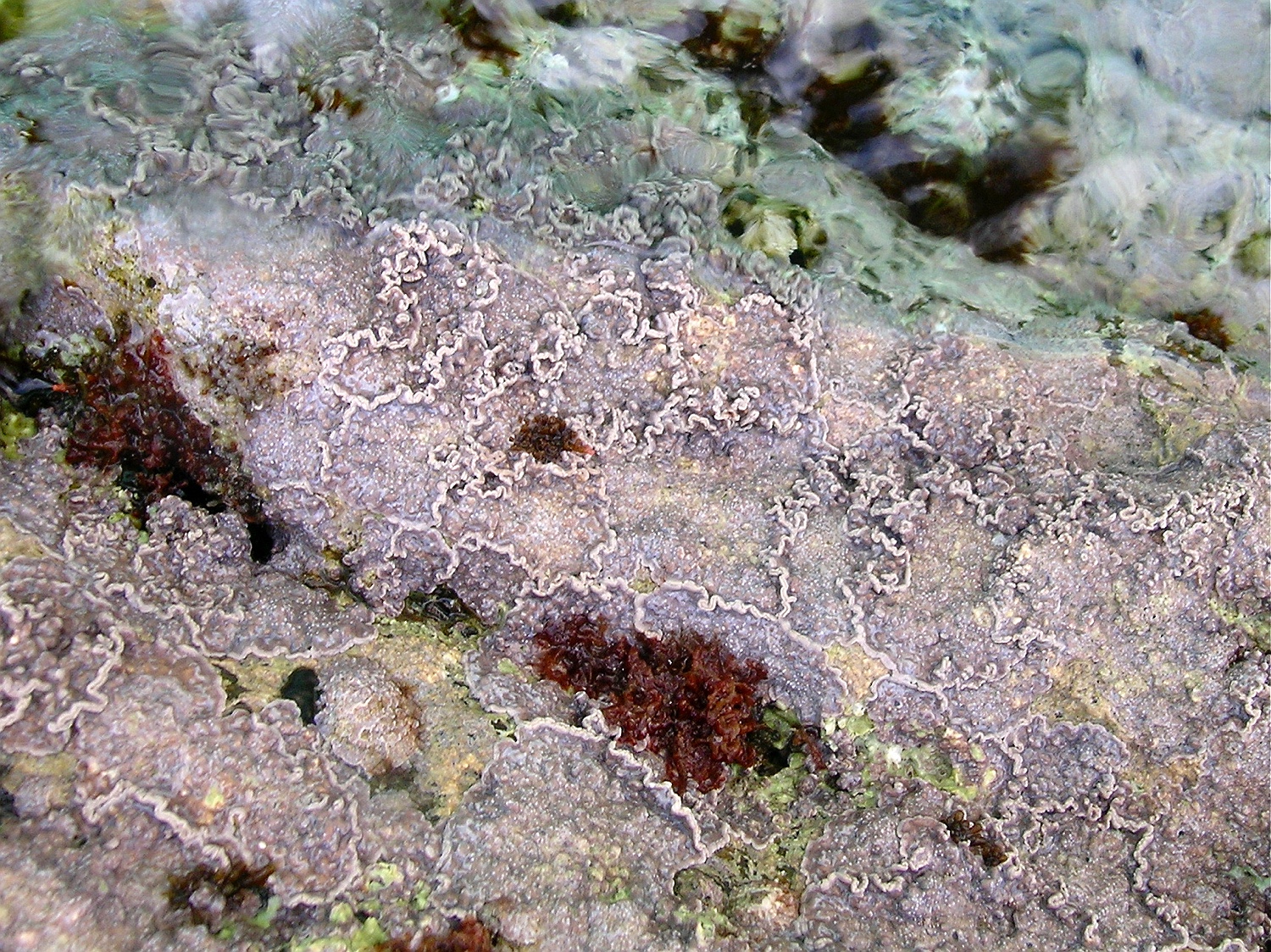
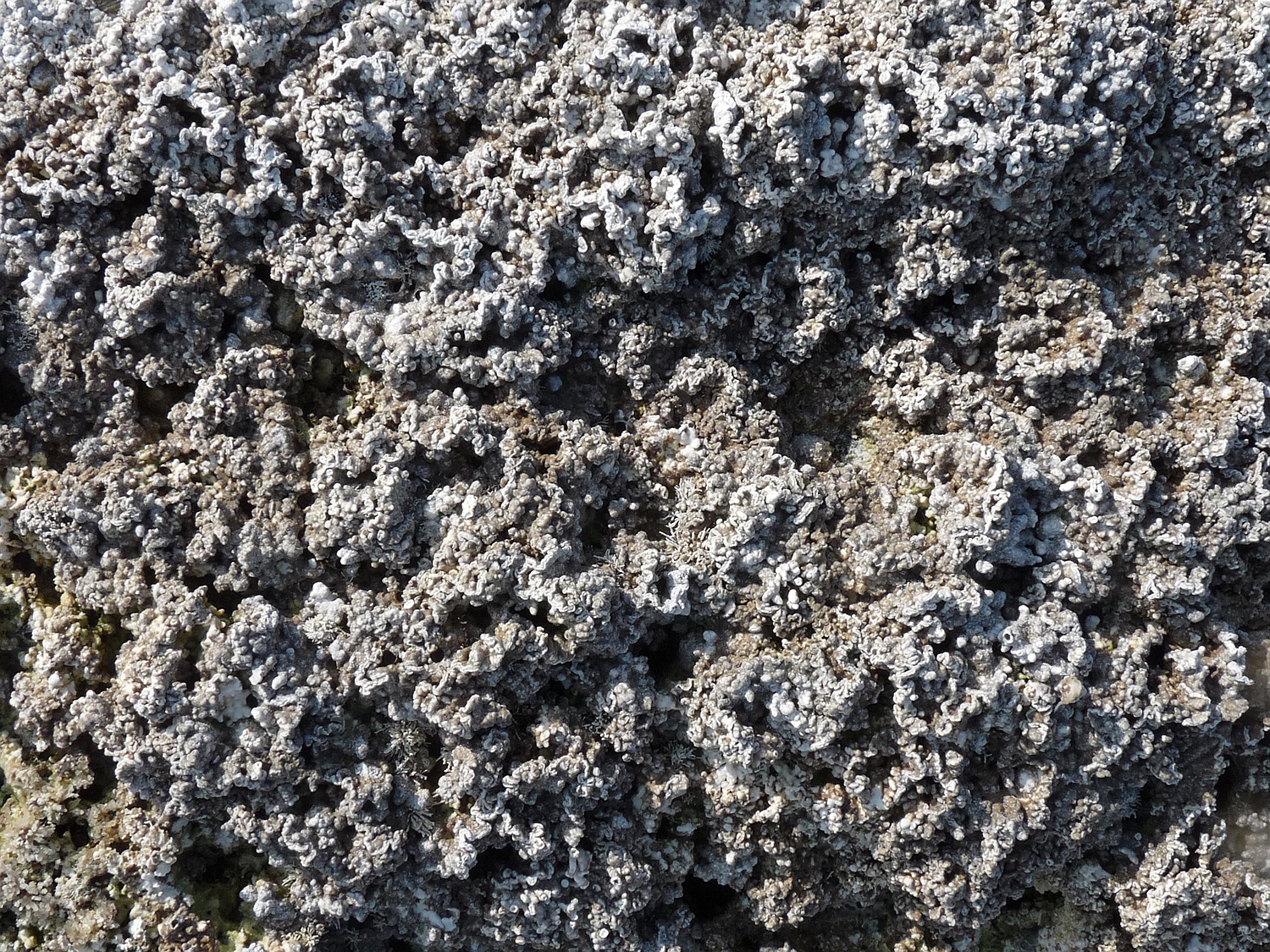
Lithophyllum incrustans is the most common alga in the eulittoral. In some places it makes up most of the reef-like “embankment”. It forms greyish-pink crusts of varying thickness.
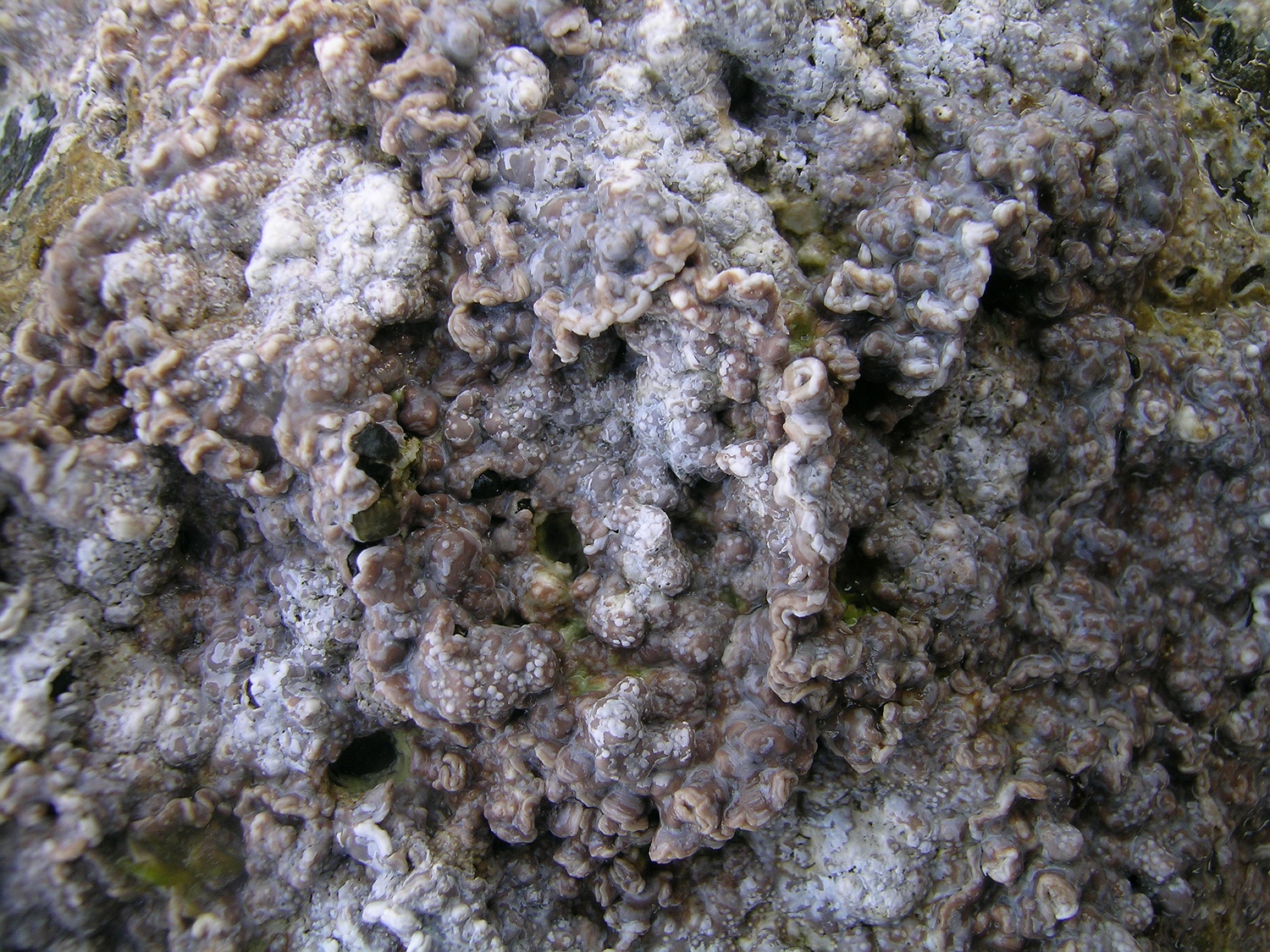
The surface of thicker specimens is covered with many bumps and small dots.
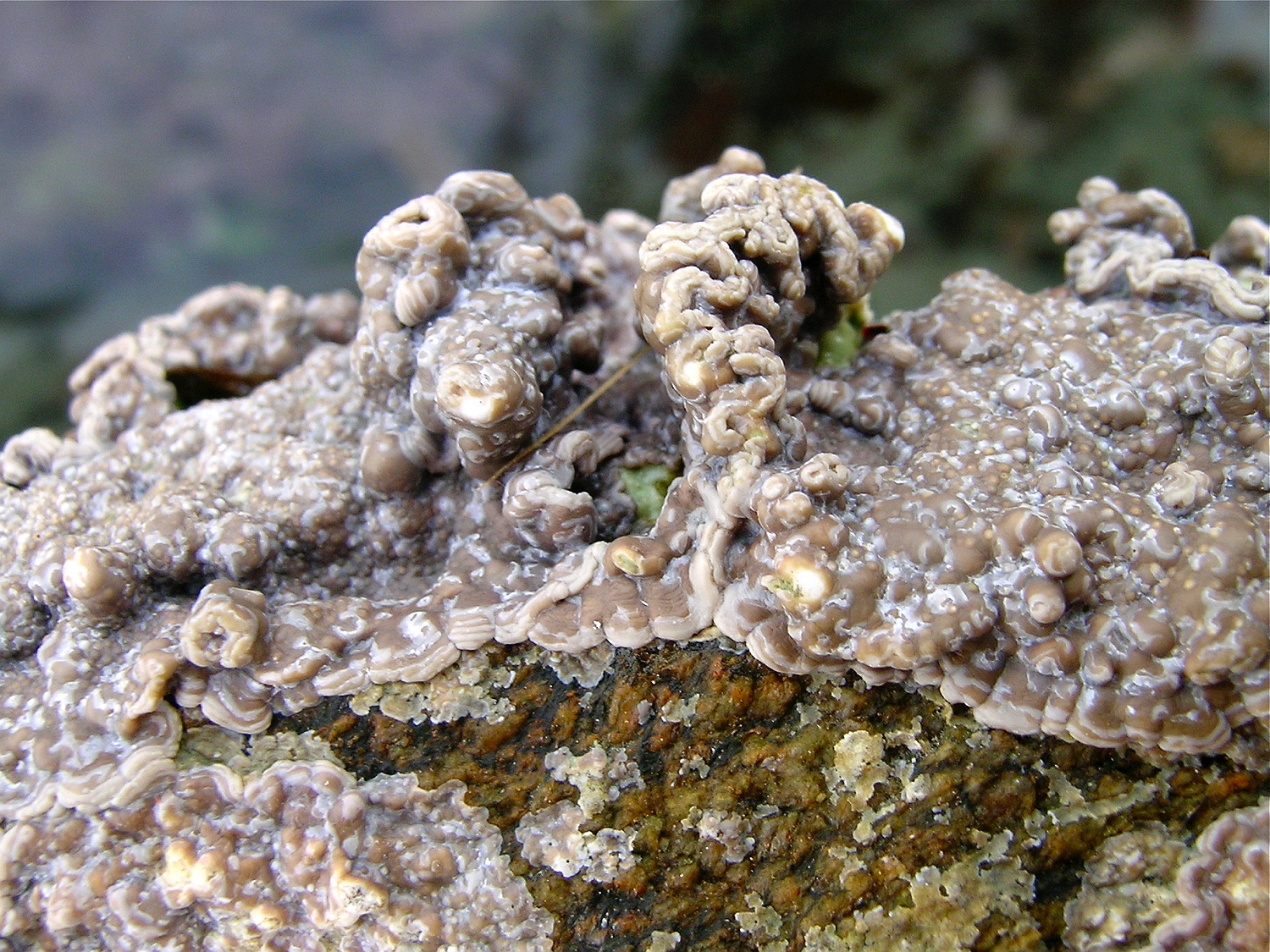
The thalli often curve upwards at the edges, which are strongly undulated.
Mesophyllum lichenoides, Me. Lemoine
similar, but much rarer, pink, leafy
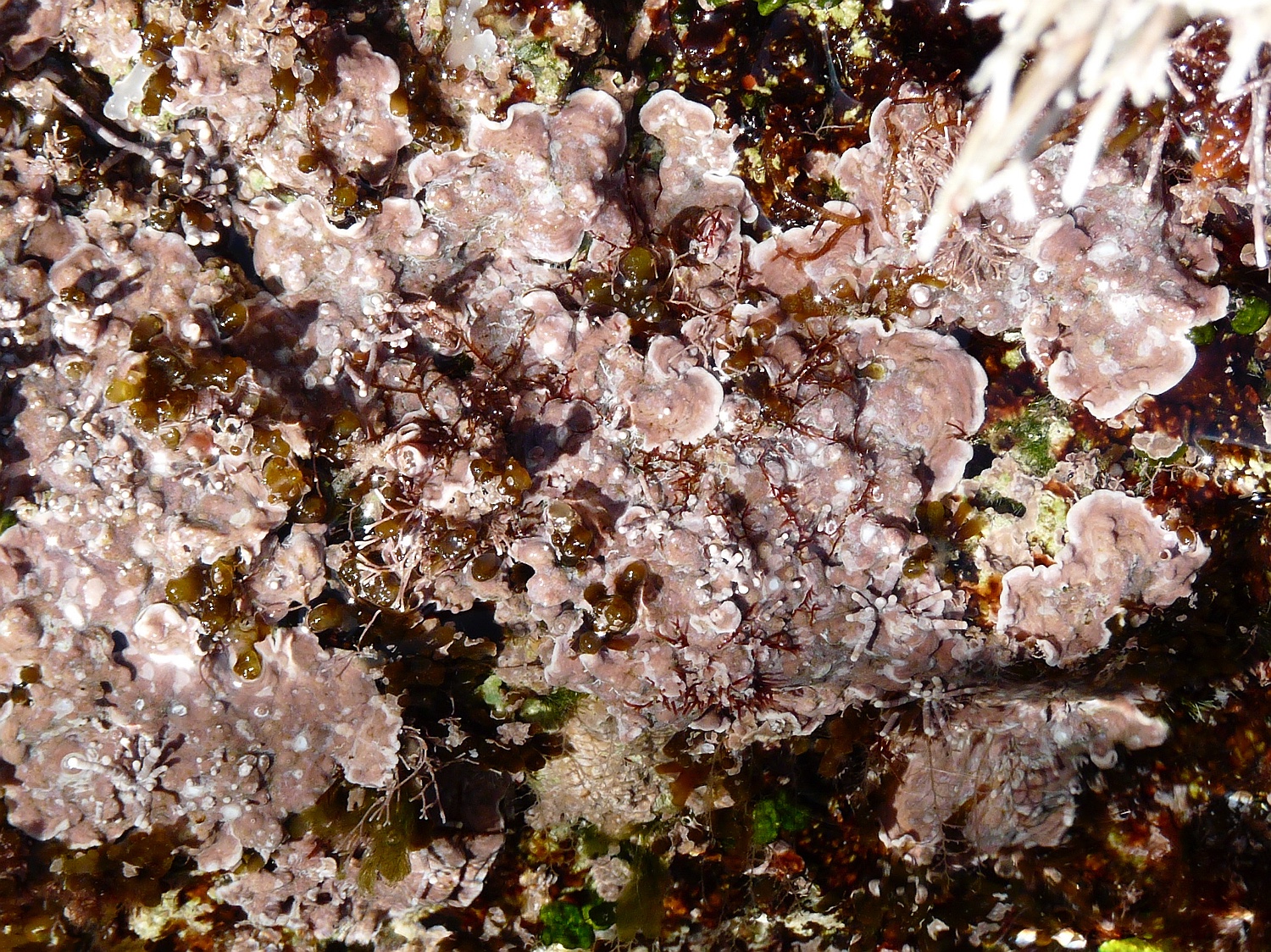
Mesophyllum lichenoides is similar to the previous species, but has a more distinct pink colouration. The thallus is more clearly leaf-like and has a conspicuous white margin that is only slightly wavy. Concentric rings are visible on the thalli.
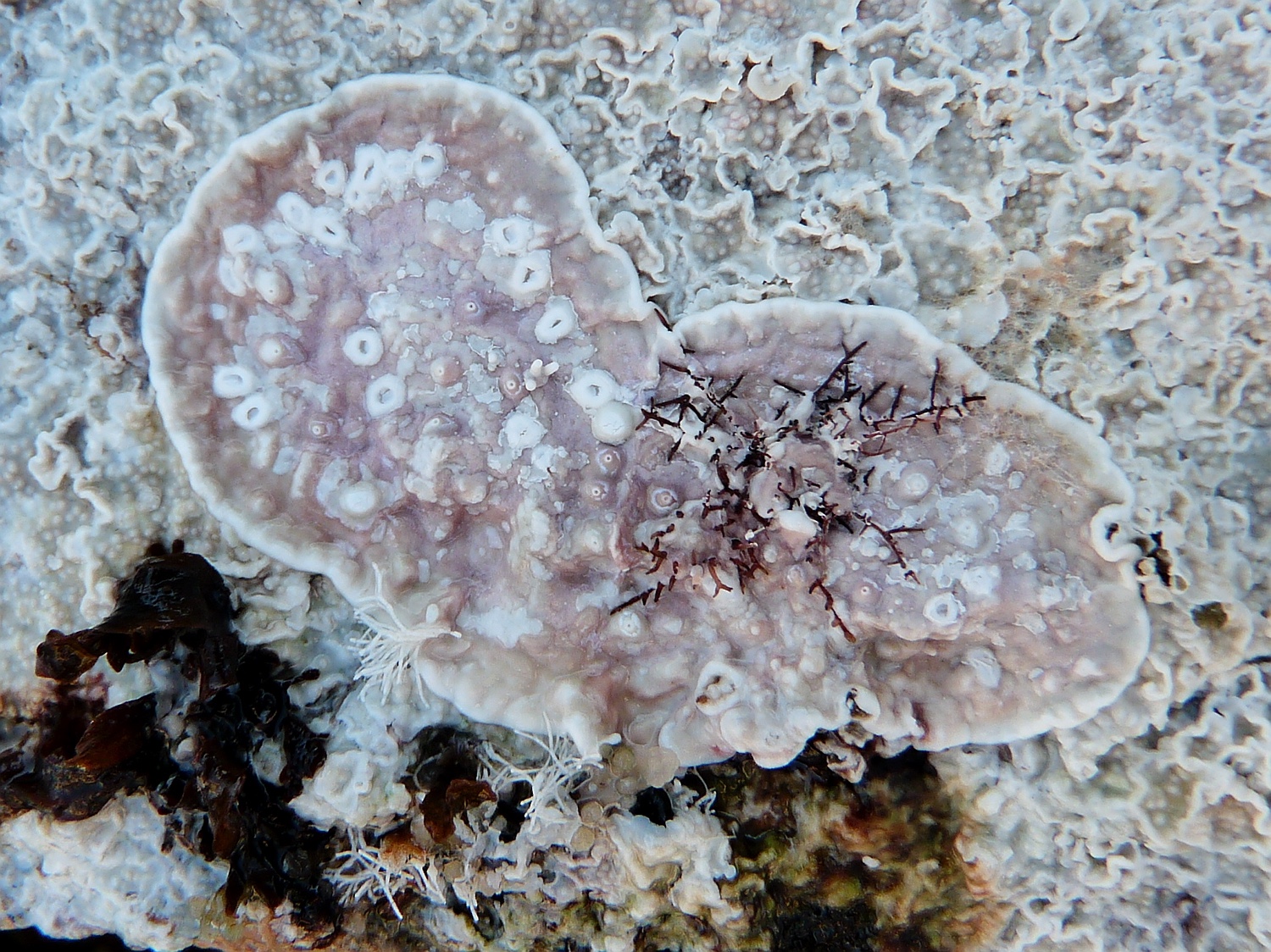
The conceptacles, white indented structures containing the reproductive organs, are clearly visible.
Tenarea tortuosa ?, Me. Lemoine
rather rare, just below the waterline, on marble
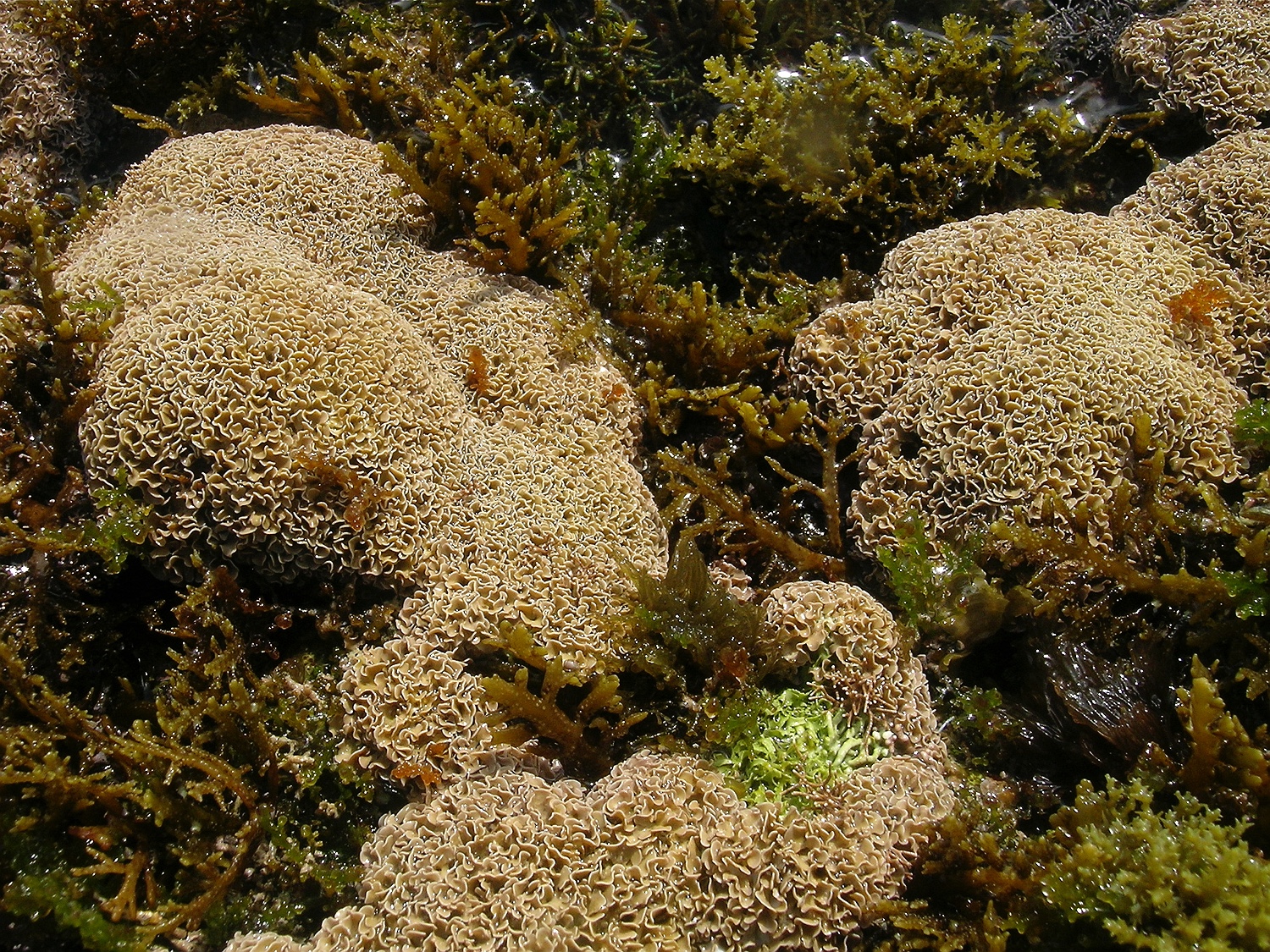
This beautiful species has a very characteristic growth form; nevertheless, its identification is uncertain. It could be Tenerea tortuosa.
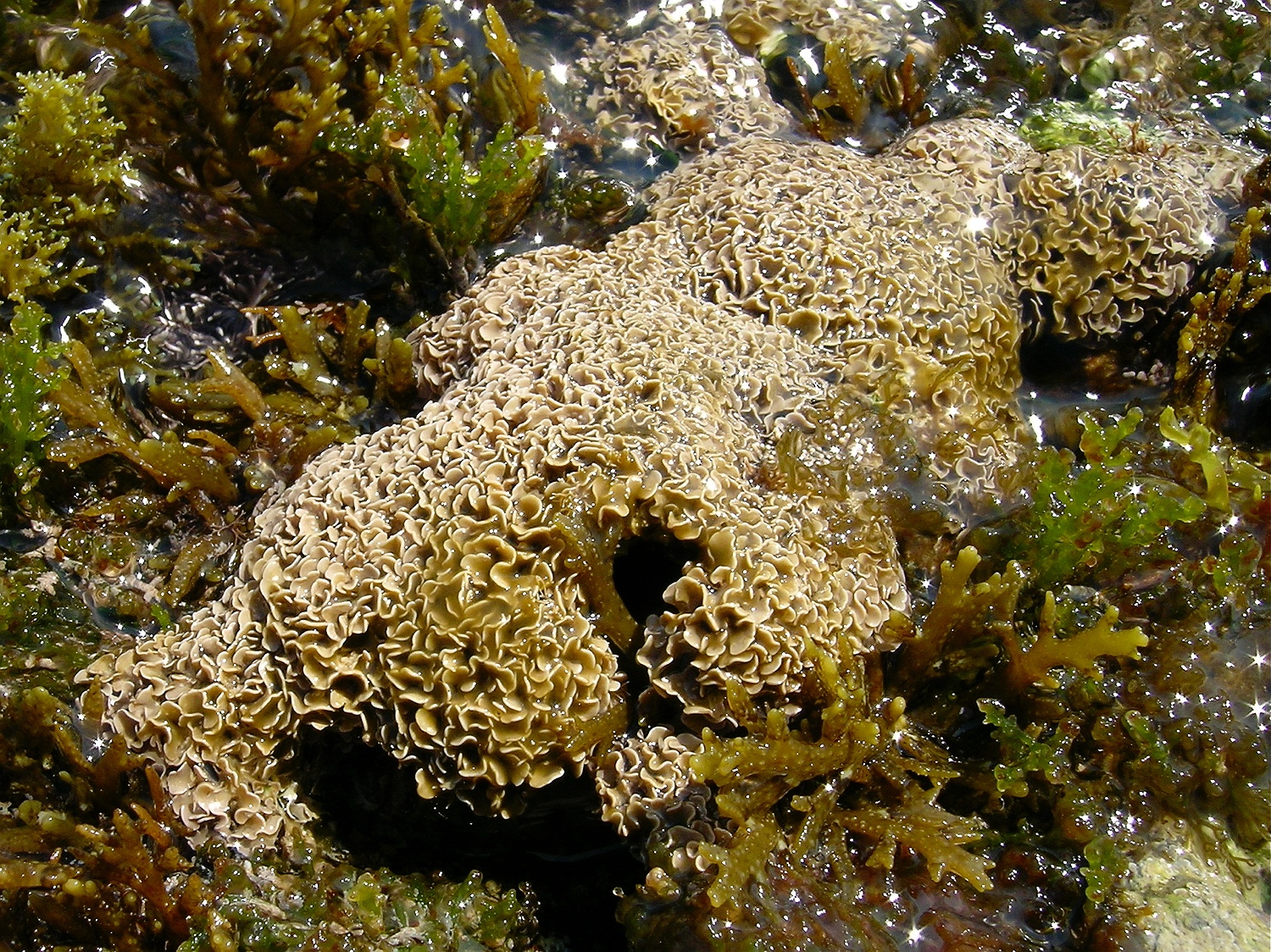
Lithophyllum byssoides ?, Foslie
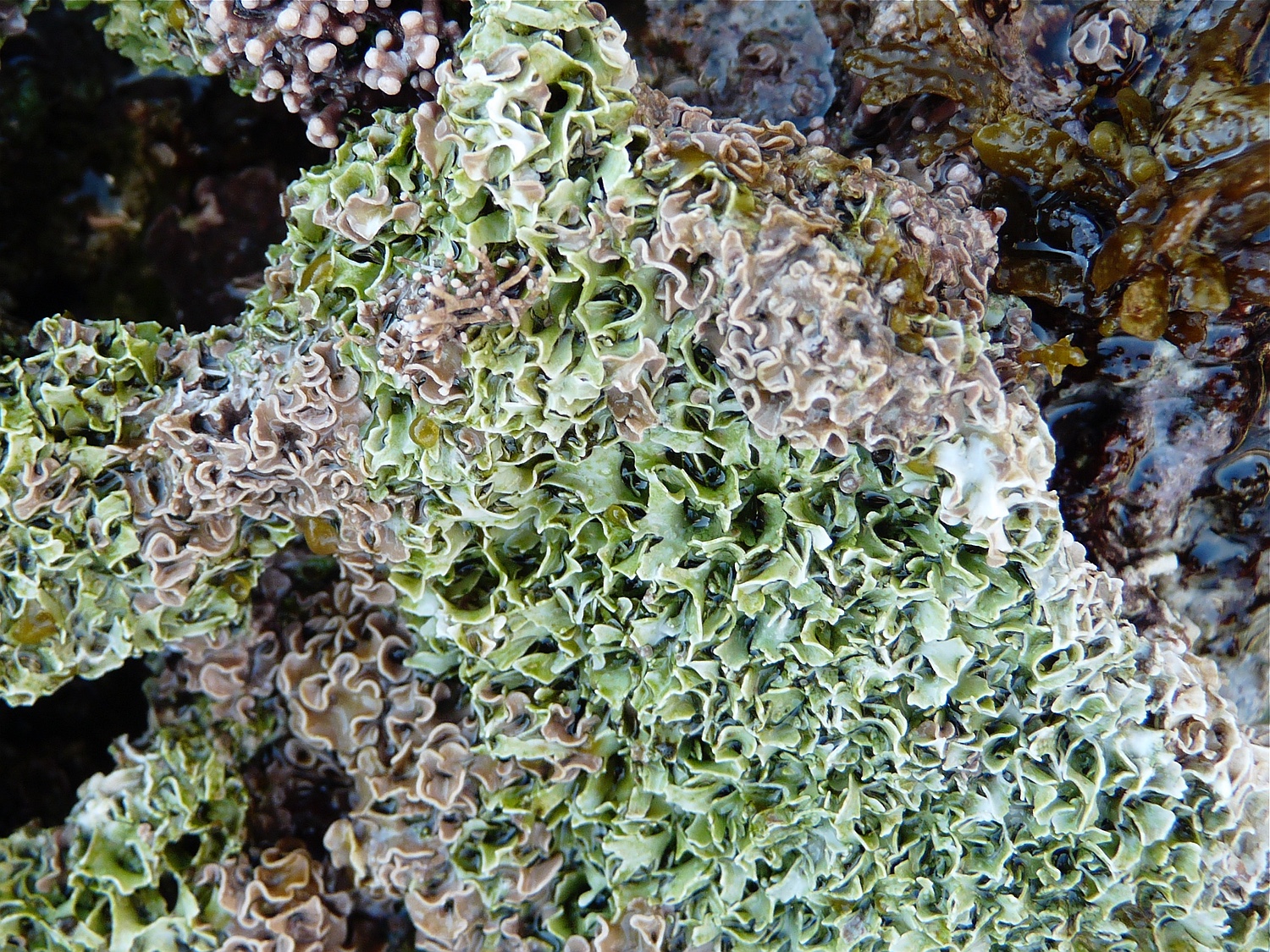
This species is similar to the previous one, but has a greener colouring and looks more untidy (‘broken’); perhaps this is Lithophyllum byssoides.
Titanoderma trochanter ?, Benh., Boud., Per.-Boud. & Verl.
regular and locally frequent from the waterline downwards, especially on marble
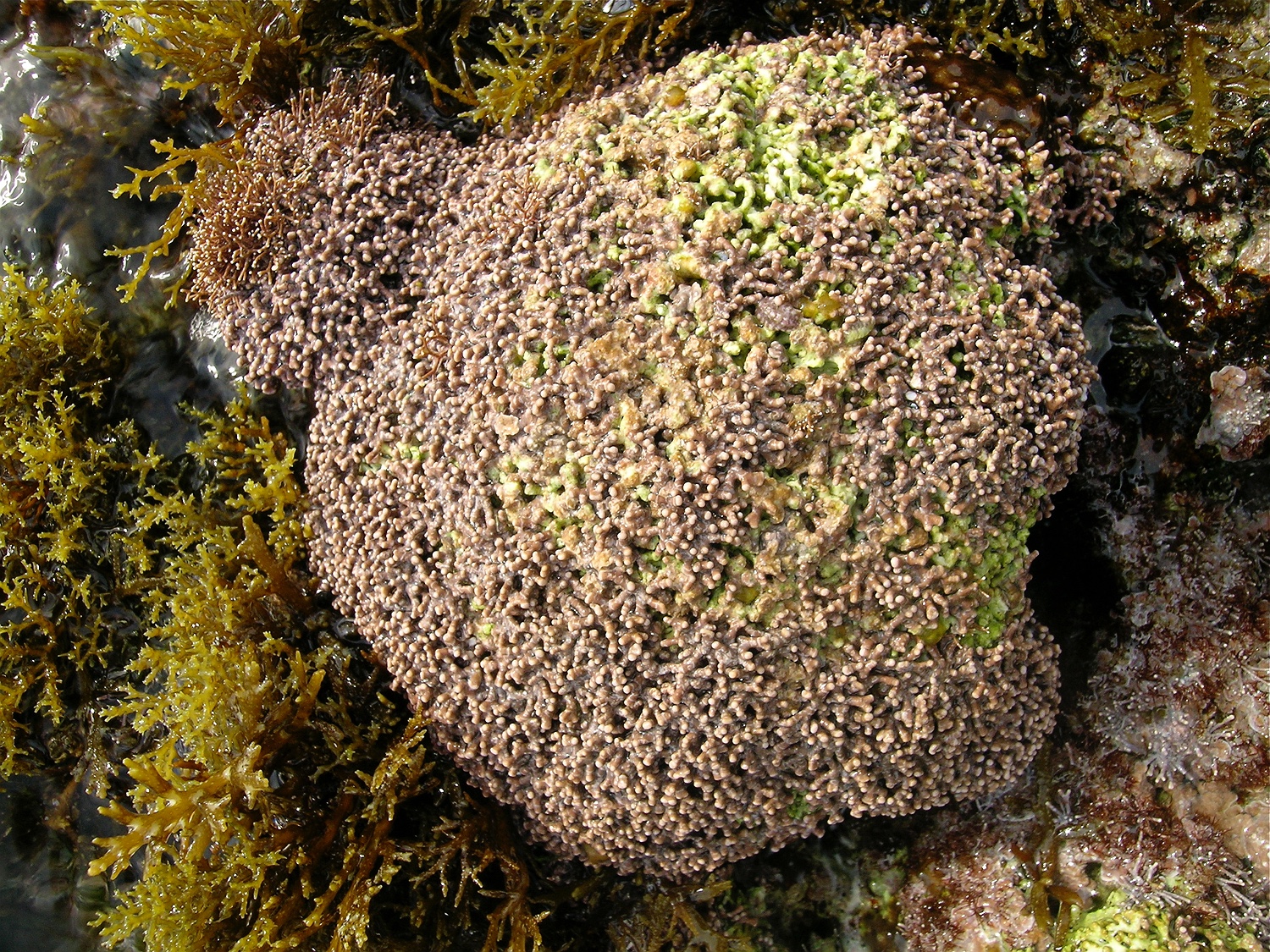
This species consists of thin, cylindrical, densely branched thallus-segments.
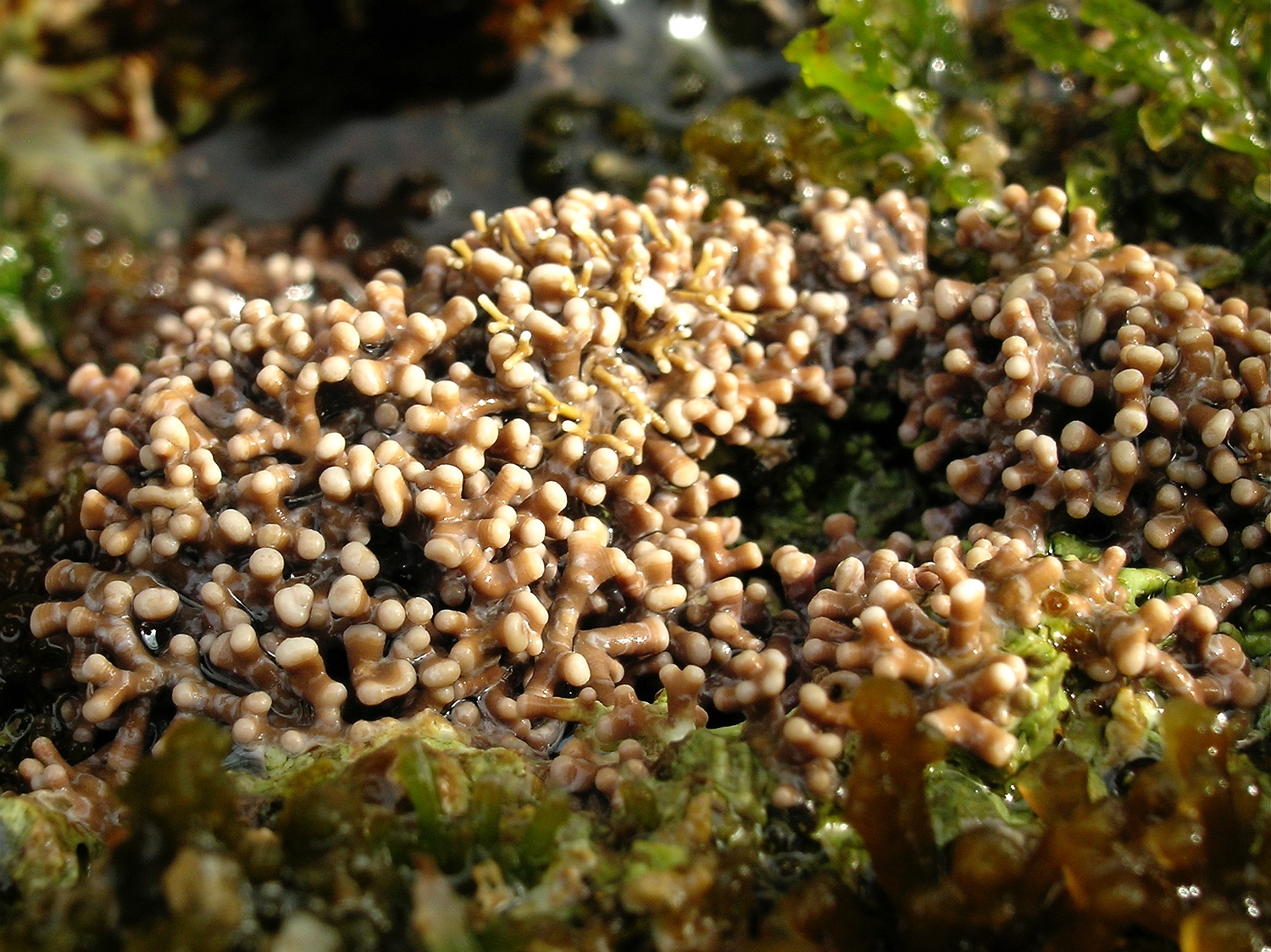
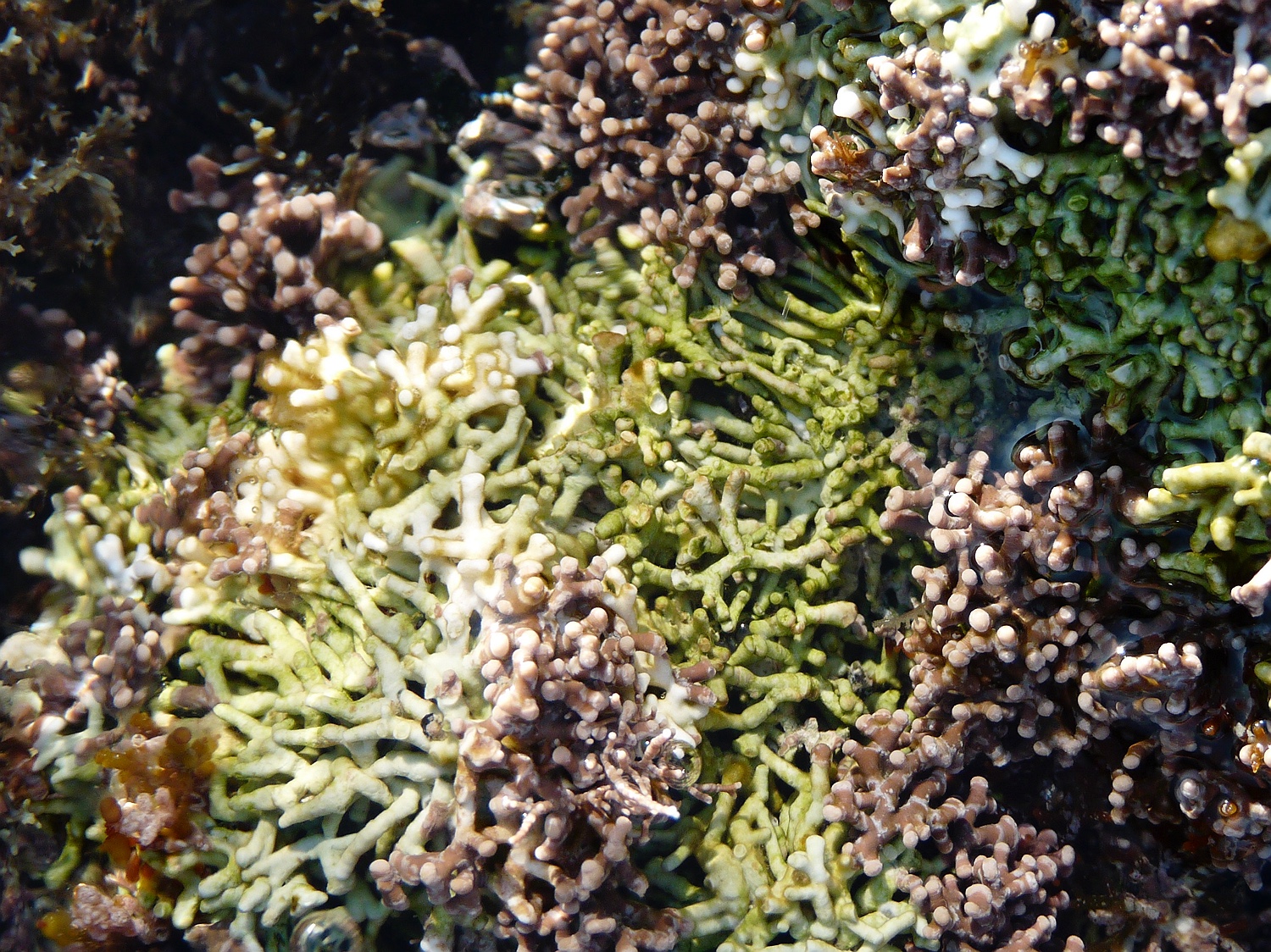
There appear to be two very similar types: a more compact pink one and a looser one with longer, yellow-green “branches”.
Hildenbrandia rubra, Meneghini
rare, in shady places
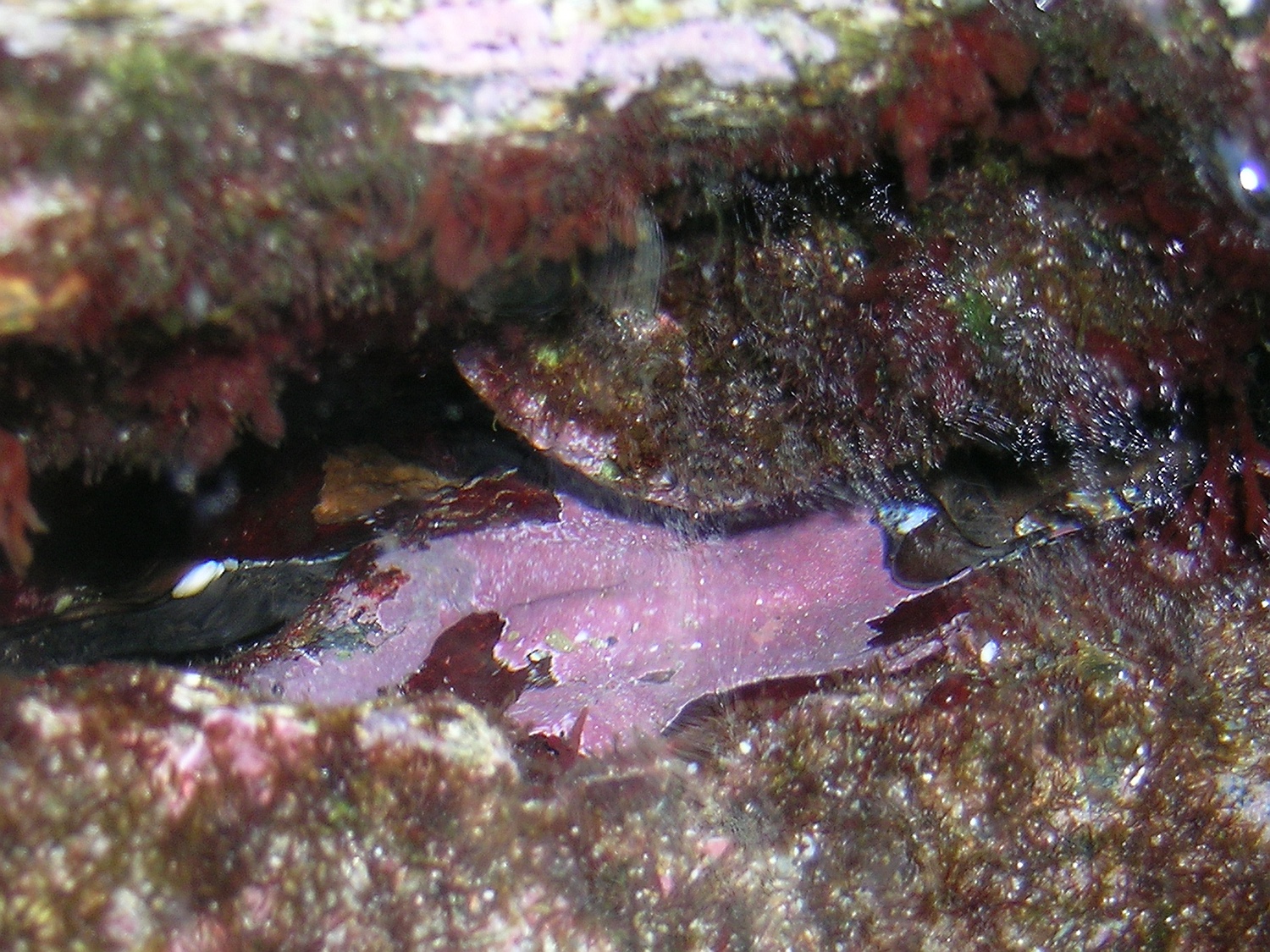
The endolithic species Hildenbrandia rubra forms thin, non-detachable, intensely red or pink crusts.
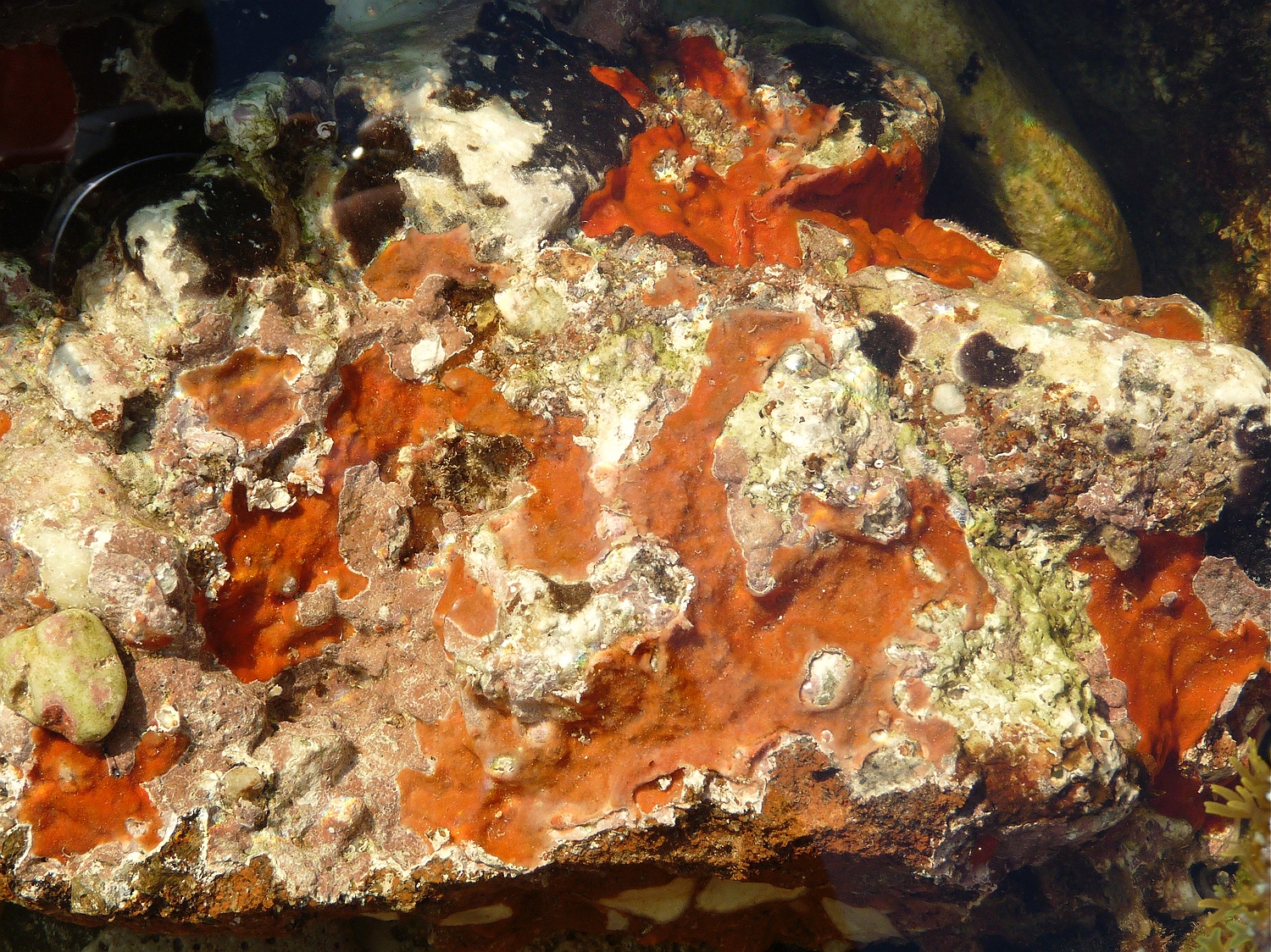
The orange-red thalli probably belong to Hildenbrandia rubra; the light pink alga in between might be a different species.
Peyssonnelia squamaria, Decaisne ex J. Agardh
very rare, on shady, vertical rock faces
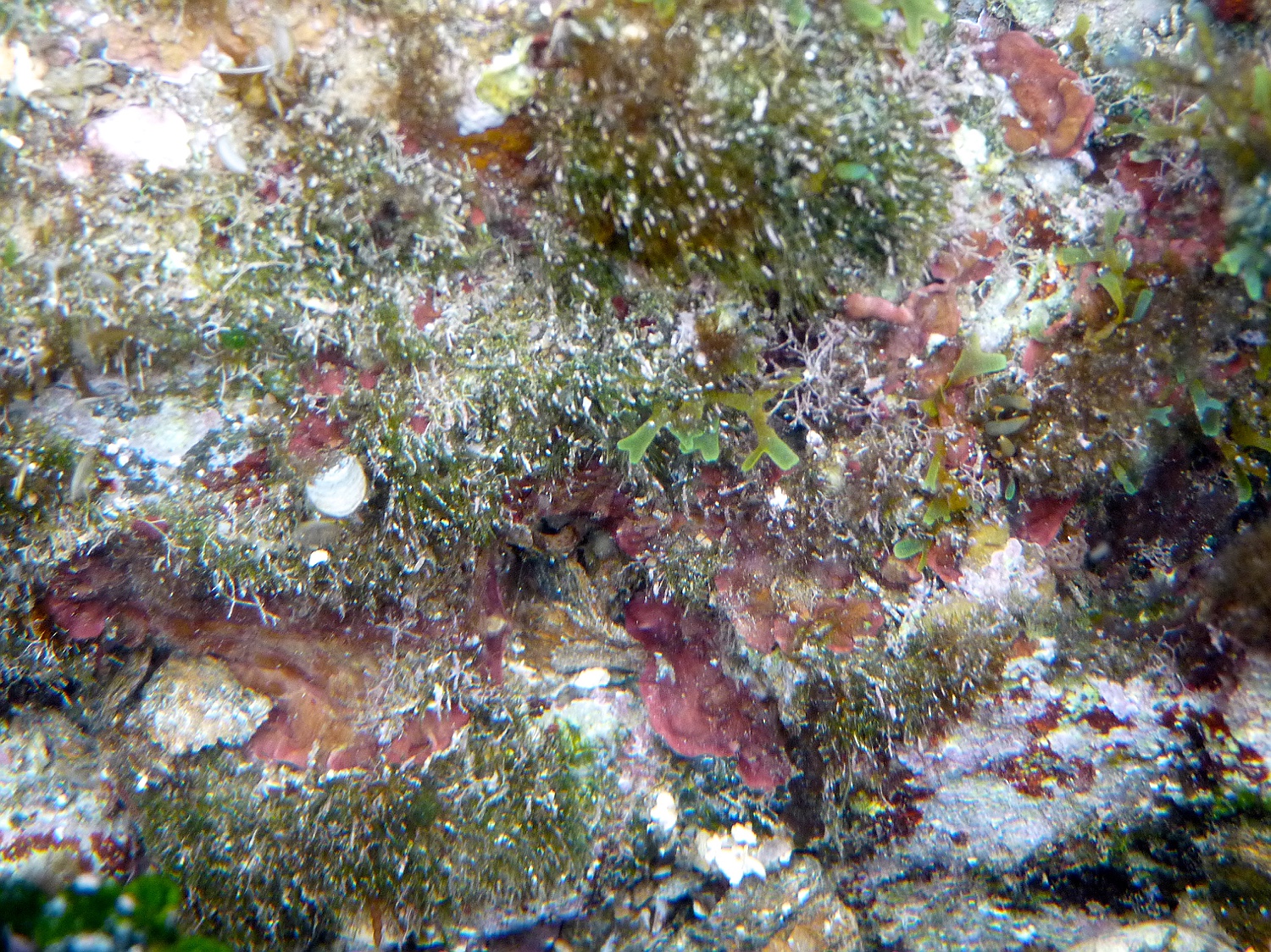
This species forms disc-shaped thalli that adhere to the rock. Concentric rings and slight radial stripes are visible on the discs.
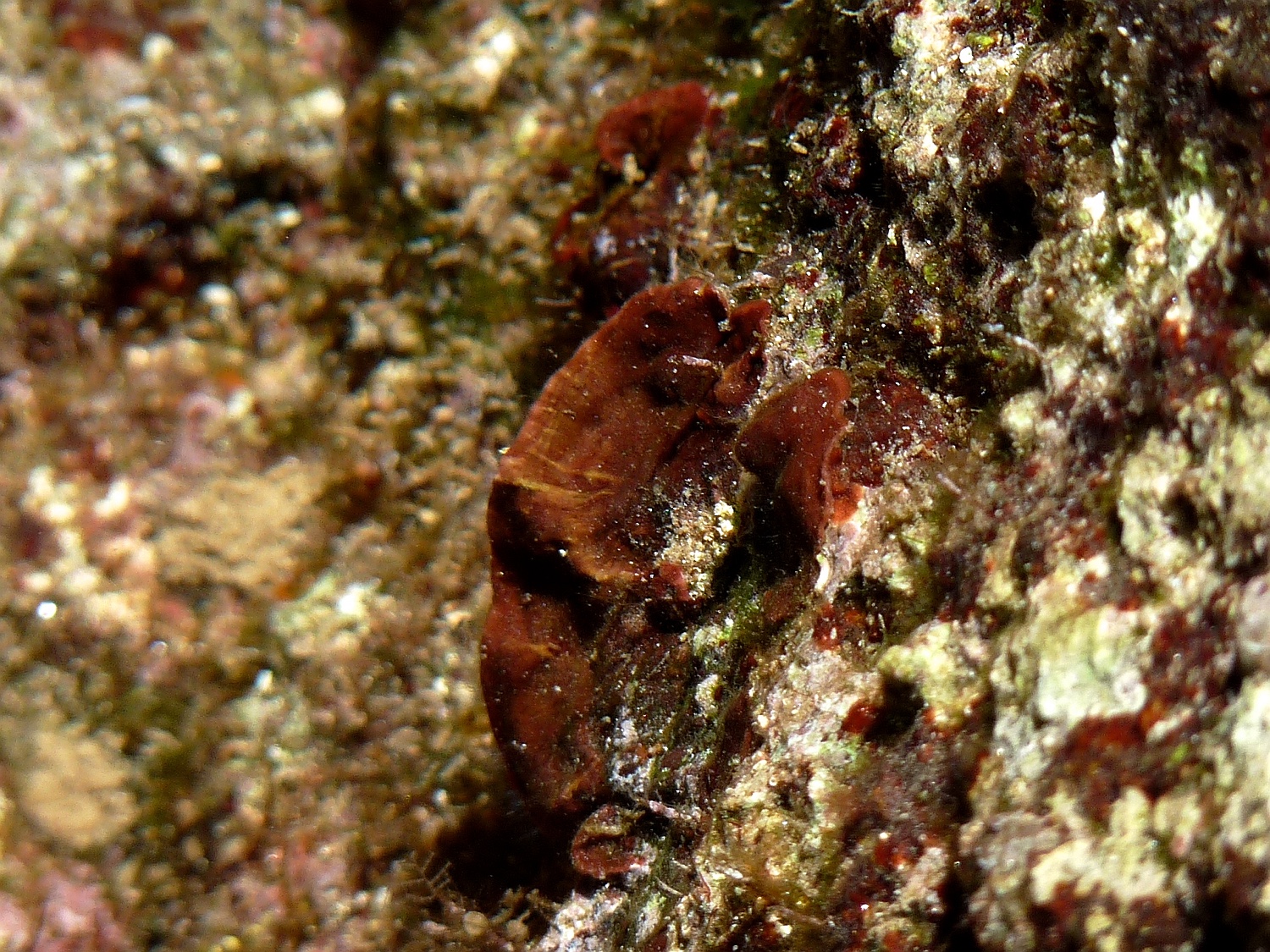
The thallus is dark reddish-brown in colour and only slightly calcified.
continue:
see also: