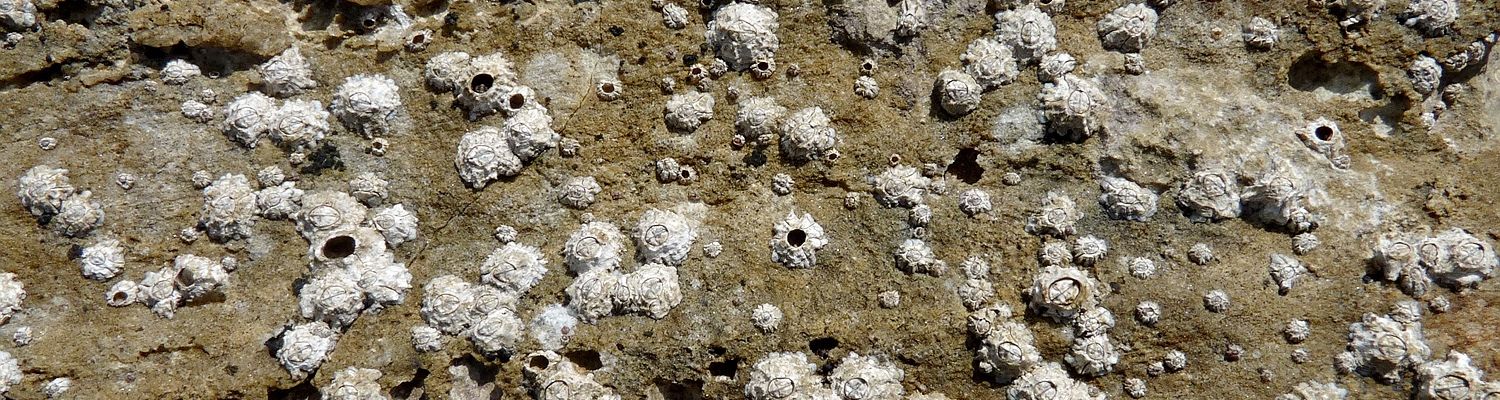
Barnacles
Seeing barnacles on a rocky coastline one would hardly think that they are close relatives of crabs and lobsters. However, they belong to the Crustacea, and together with the Goose barnacles and some parasitic forms, they make up the subclass Cirripedia.
Here you can skip the introduction and go directly to the species.
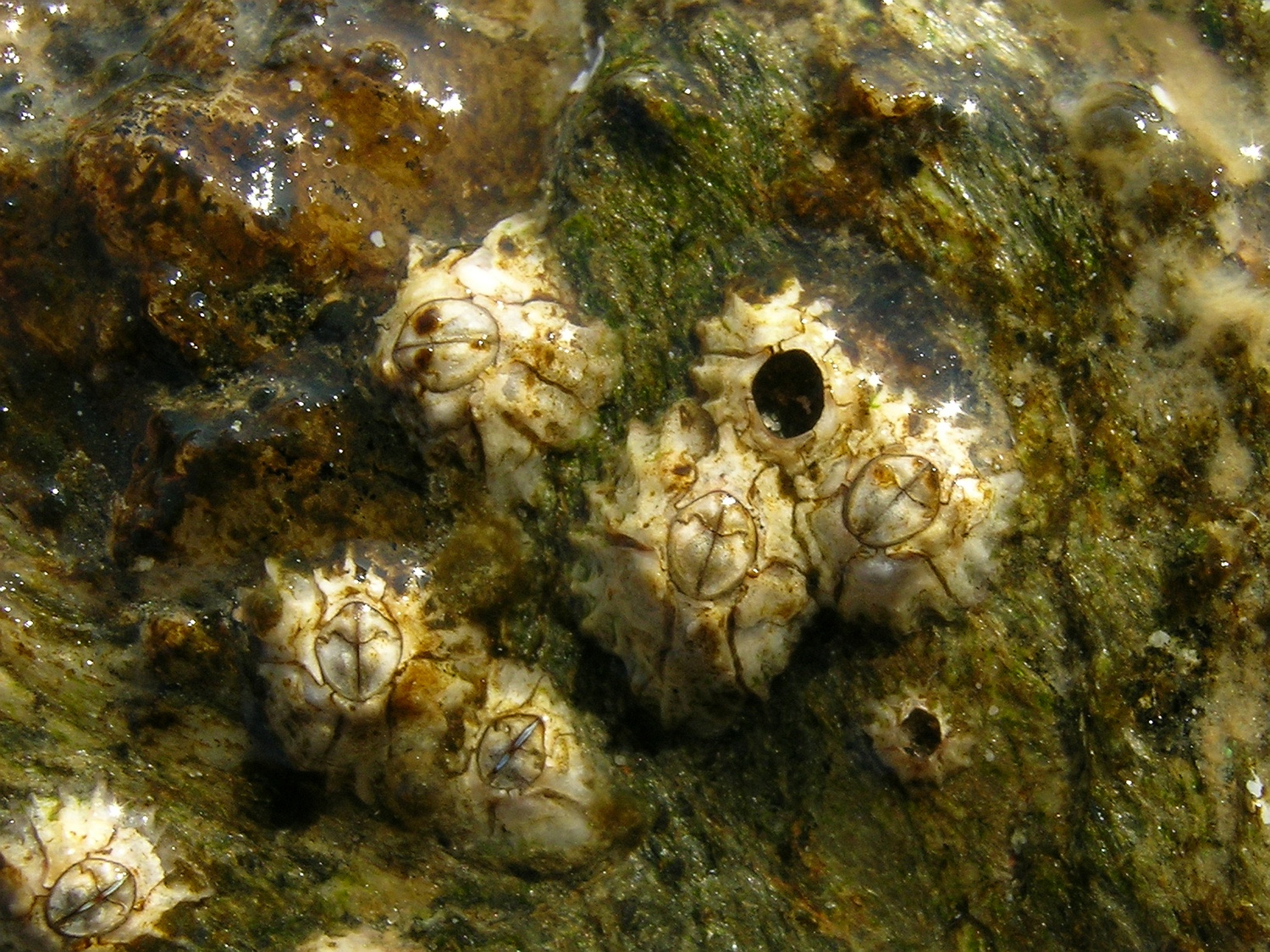
Barnacles are sessile animals. Their carapace takes the form of a cone-shaped shell made of calcareous plates, the open tip of which is closed with movable calcareous plates. When the barnacle opens, it extends small cirri, modified legs, that are used to create a water current and filter out the plankton.
Barnacles usually are hermaphrodites. Surprisingly, despite their sessile lifestyle, they use internal fertilisation, which means that only barnacles sitting close together can fertilise each other (although they are among the animals with the relatively longest penises). To avoid these restrictions, barnacles also are capable to self-fertilise. The numerous eggs initially remain in the mother and are only released as small larvae. After a planktonic larval stage lasting several weeks, the young animals, which are still shell-less, attach themselves and undergo a metamorphosis in which their first antennas are transformed into an attachment organ and the shells are secreted. The adhesive substance with which barnacles attach themselves to the substrate is one of the strongest adhesives in nature.
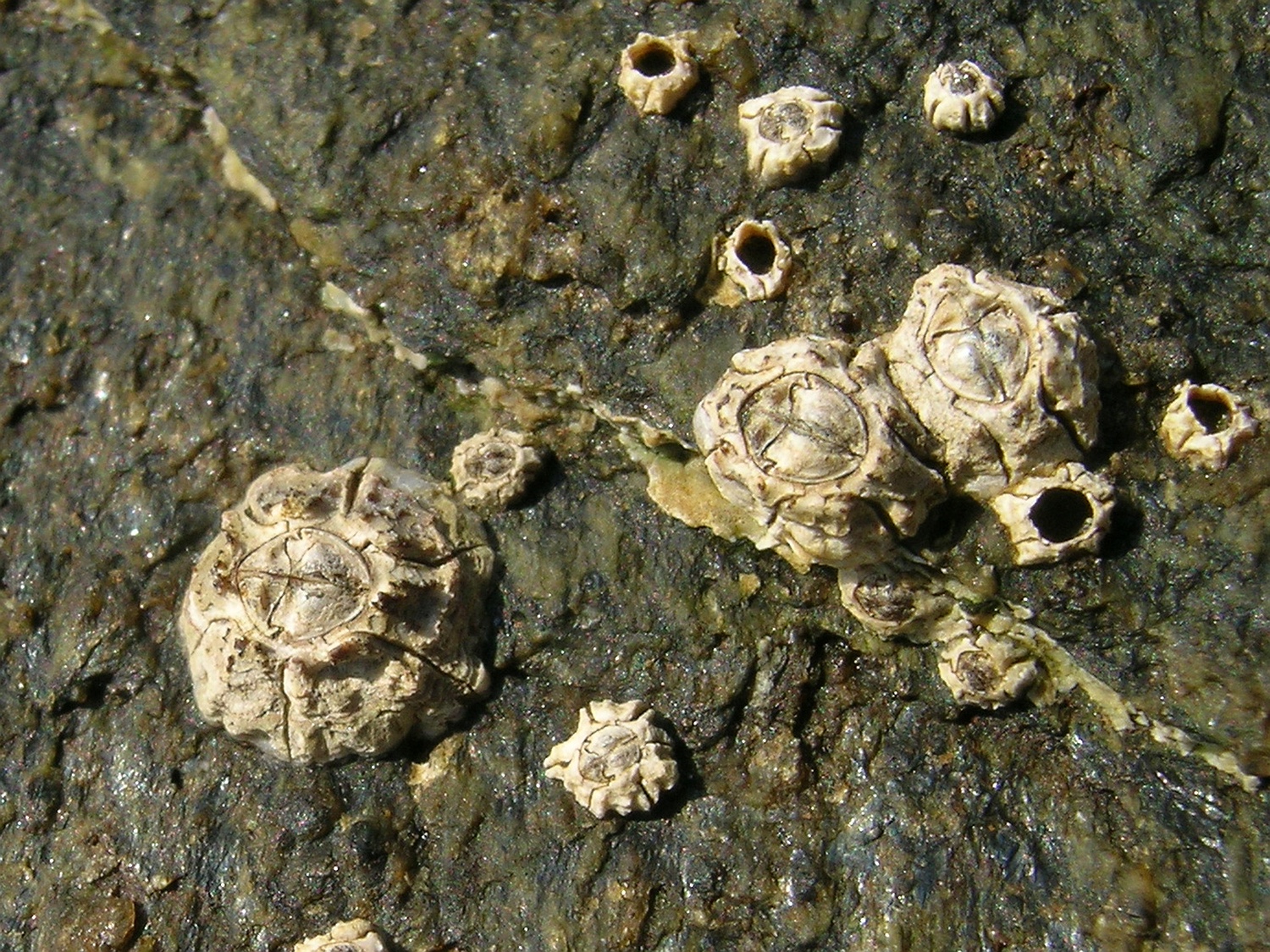
Thanks to their hard shells, barnacles are very resistant to wave action, and to drying out and being exposed to high temperatures. Thus they are well adapted to the extreme environmental conditions in the splash zone. They are found mainly directly at the waterline. At the coasts of Naxos, barnacles occur only locally in great numbers, which may be due to the limited supply of plankton.
The Photo gallery of the marine animals gives an overview over the species. Please note that I am not an expert and some of the identifications may therefore be incorrect.
Here you can jump directly to the species (return with the back arrow or by swiping back):
Poli’s stellate barnacle, Chthamalus stellatus – Balanus trigonus – Perforatus perforatus
Poli’s stellate barnacle, Chthamalus stellatus, Poli
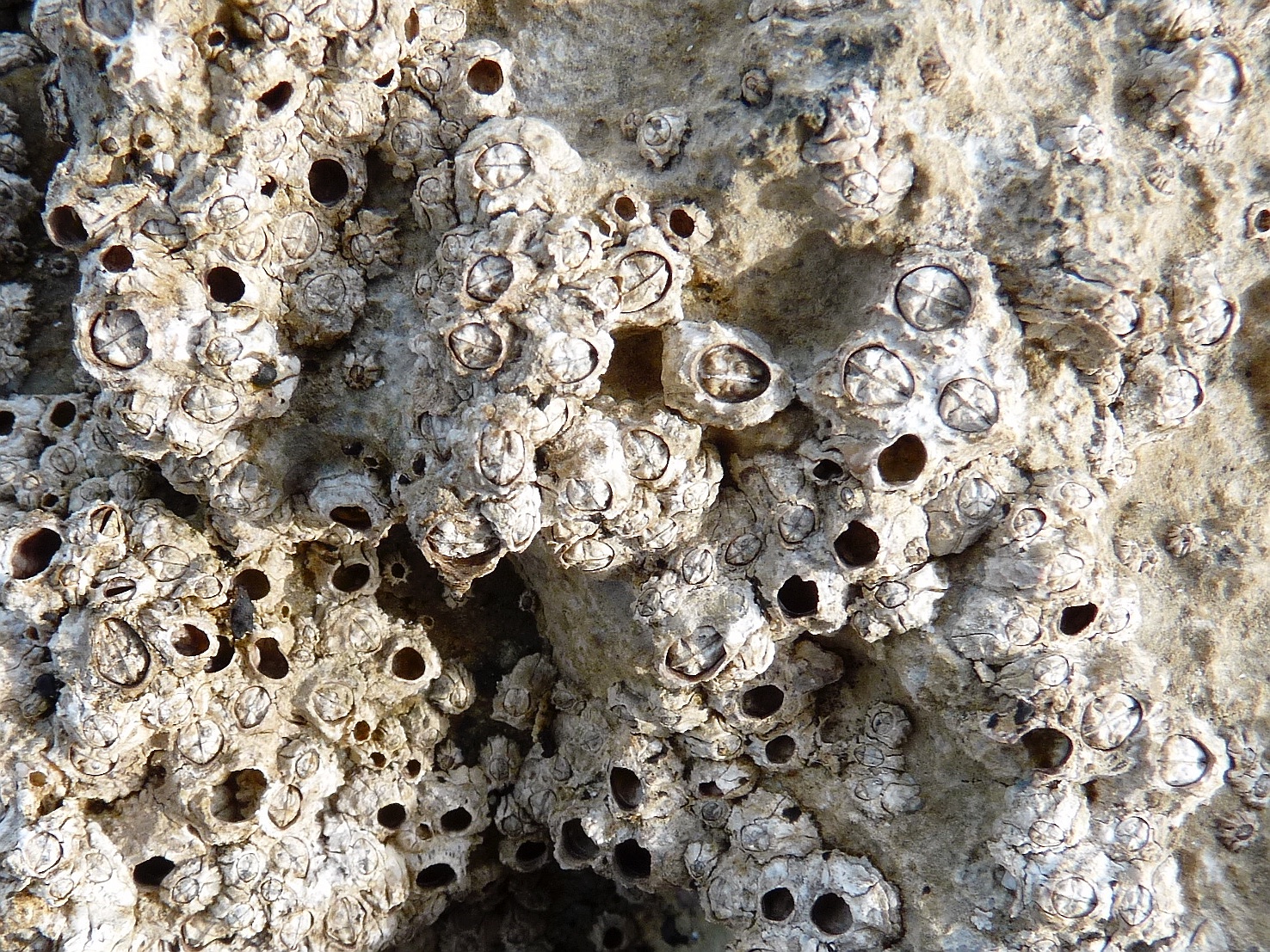
By far the most common barnacle on Naxos is Poli’s stellate barnacle, which is widespread in the Mediterranean and can be recognised by the curved line between its valves and by its star-shaped outline; however, it is not always easy to distinguish from related species.
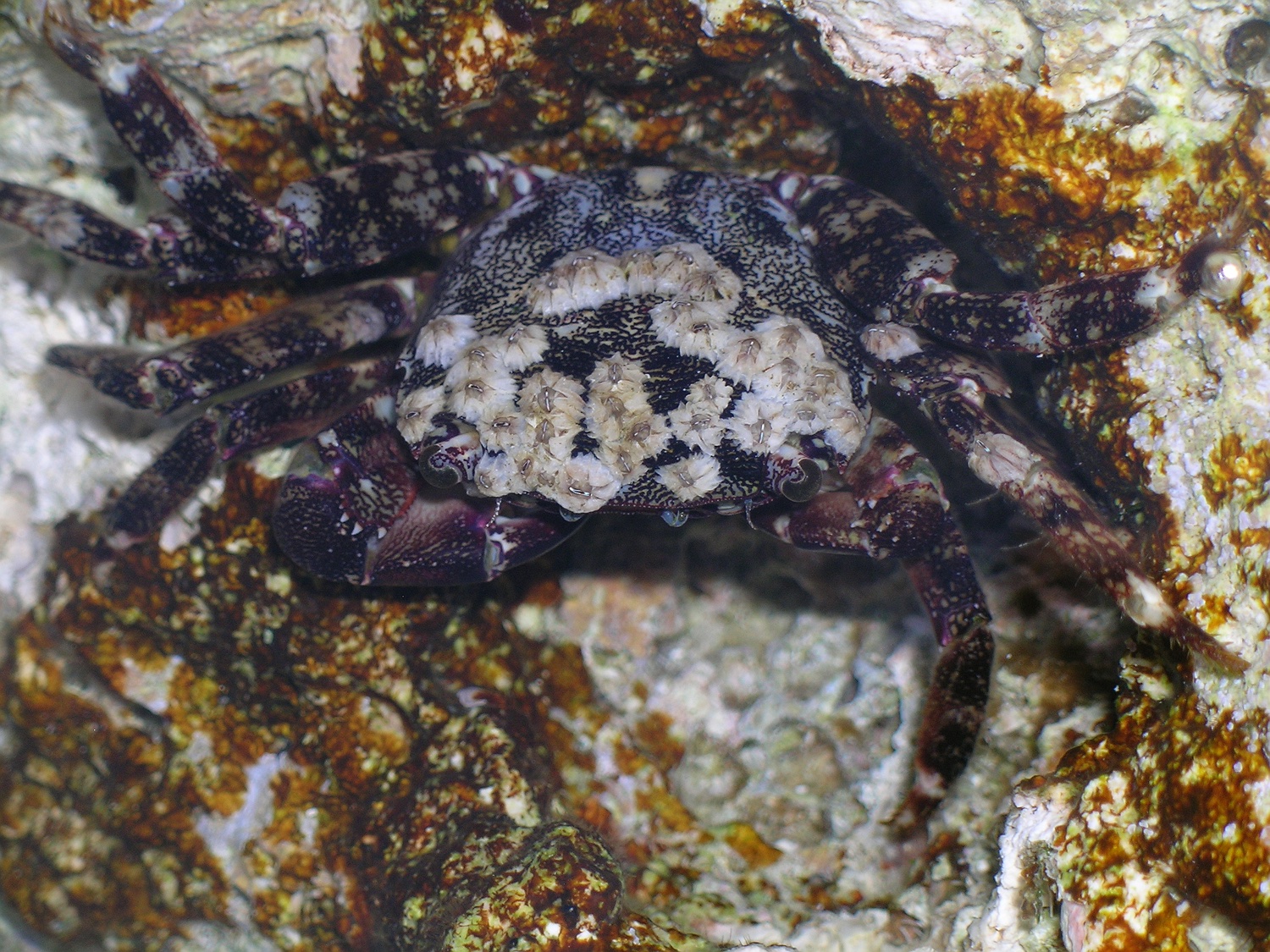
Barnacles grow not only on rocks, but also on animals such as snails and mussels, or in this case, a Marbled rock crab.
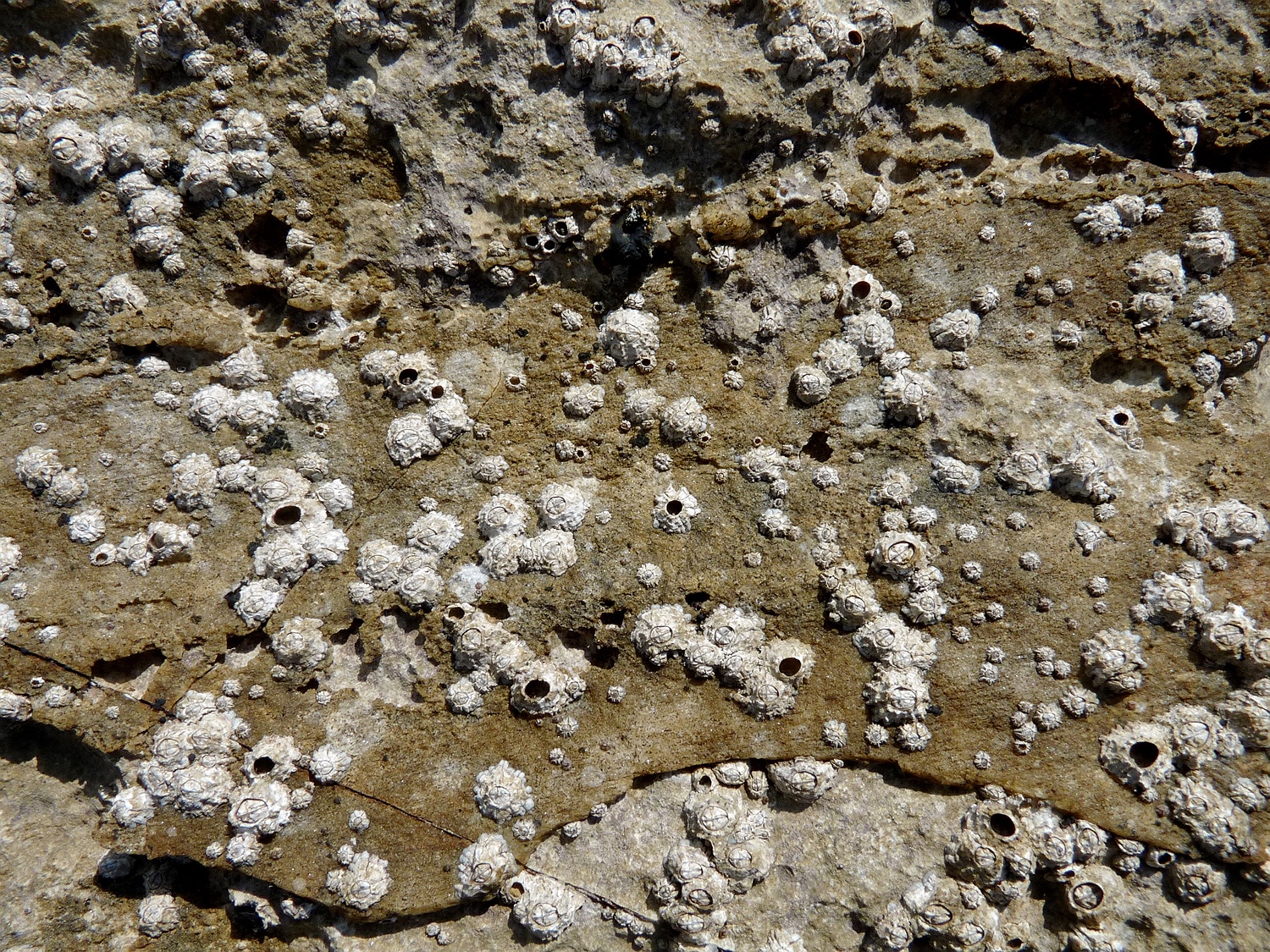
They live in the splash zone and are particularly common on slate.


rocks densely covered with Poli’s stellate barnacles in Apollonas
Balanus trigonus, Darwin
Only once have I found (on a mussel shell) the species Balanus trigonus, which can be recognised by the shape of its calcareous plates and the triangular opening.
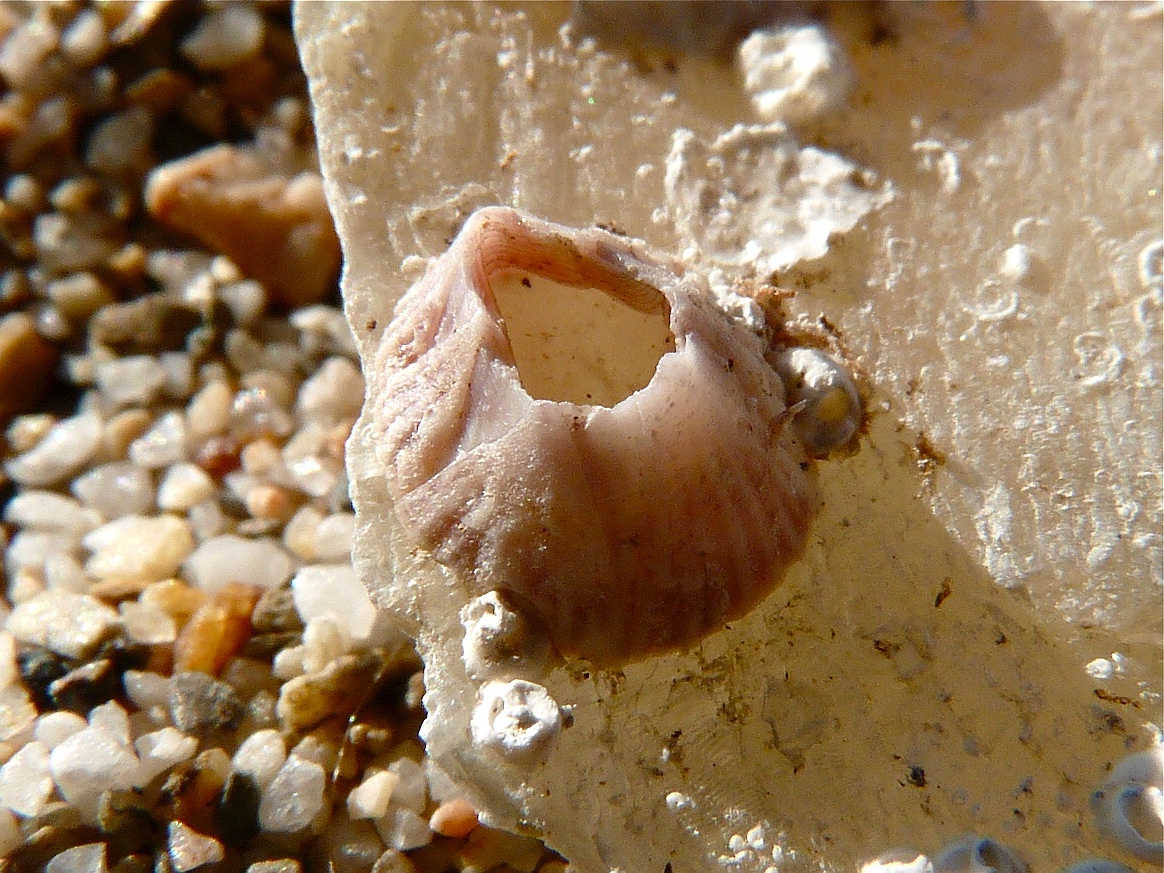
Balanus trigonus has a triangular-shaped opening.

The calcareous plates of the shell are reddish in colour.
Perforatus perforatus ?, Bruguière
This species, with its very steep, cone-shaped shell with uniform grooves on the calcareous plates and small opening, is probably Perforatus perforatus.
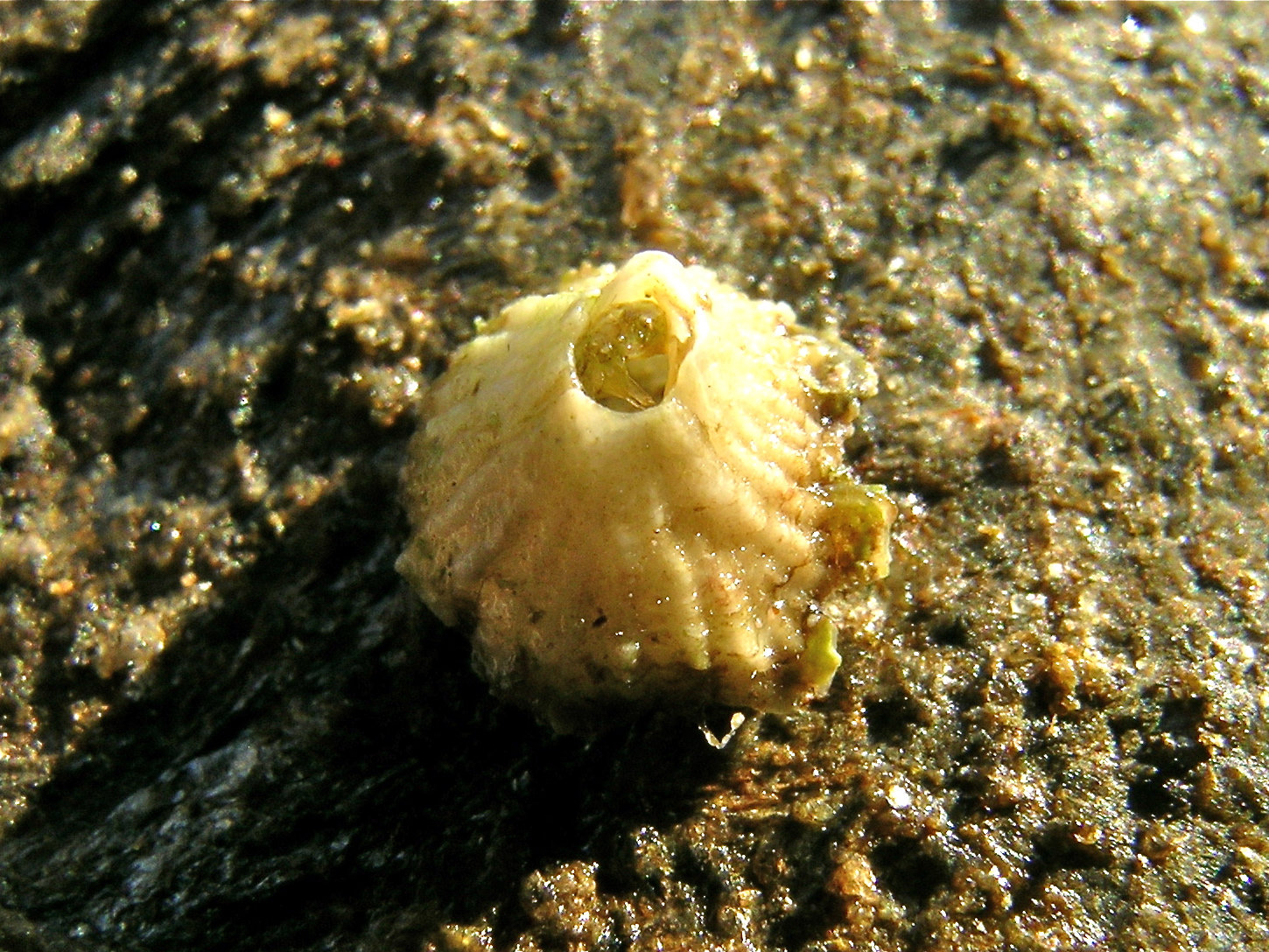
Perforatus perforatus has a steep shell like a volcanic cone; the identification is not certain.

This species is very rare in our region; it prefers shady places below the waterline.
continue: Goose barnacles
back: Marine animals (Overview)
see also: