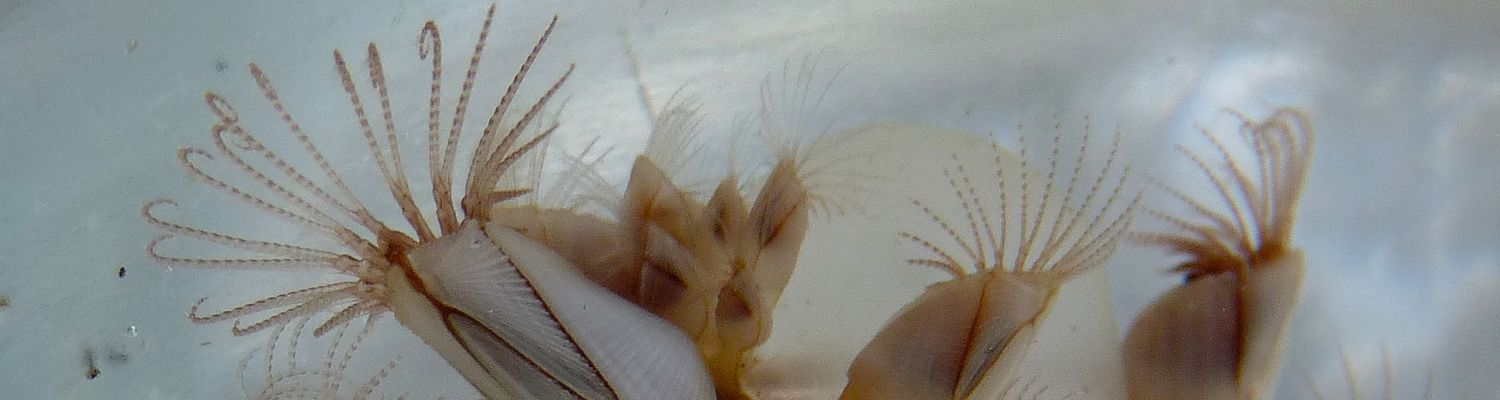
Goose barnacles
Recently, some interesting flotsam washed up on our beach: an old glow stick with goose barnacles. These fascinating creatures belong to the crustaceans, even though they hardly look like crabs or lobsters. Like their close relatives, the similarly sessile barnacles, they feed by filtering seawater.
The members of the class Pedunculata (Goose barnacles) are characterised by their muscular stalk, which is formed by special cells of the head and can reach a length of several decimeters. The back shell (carapace) typical for the crustaceans is transformed into five plates in barnacles, which enclose the simple body. Six pairs of so-called cirri protrude from the capitulum. These are modified limbs that serve as a filtering apparatus and, through regular contraction, swirl the seawater towards the mouth opening.
The larvae of Goose barnacles initially float freely in the sea (nauplius larva) until they attach themselves to a suitable substrate. Goose barnacles can grow on rocks in the intertidal zone, but they usually attach themselves to marine animals such as turtles or whales, or to flotsam such as pieces of wood and rubbish. Barnacles are cosmopolitan, i.e. they occur in all the oceans, as well in tropical as in temperate and cold regions.
The Photo gallery of the marine animals provides an overview of the described species. Please note that I am not an expert and that some of the identifications may therefore be incorrect.
Lepas anserifera, L.
The sessile Goose barnacles have a distinct stalk formed by the animals’ greatly reduced heads. Their body is encased in five whitish plates. The filter apparatus, consisting of six double tentacles, protrudes from this capitulum.

The species Lepas anserifera can be recognised by the distinct radial grooves on the plates and the light colouring of the tentacles and stalk.
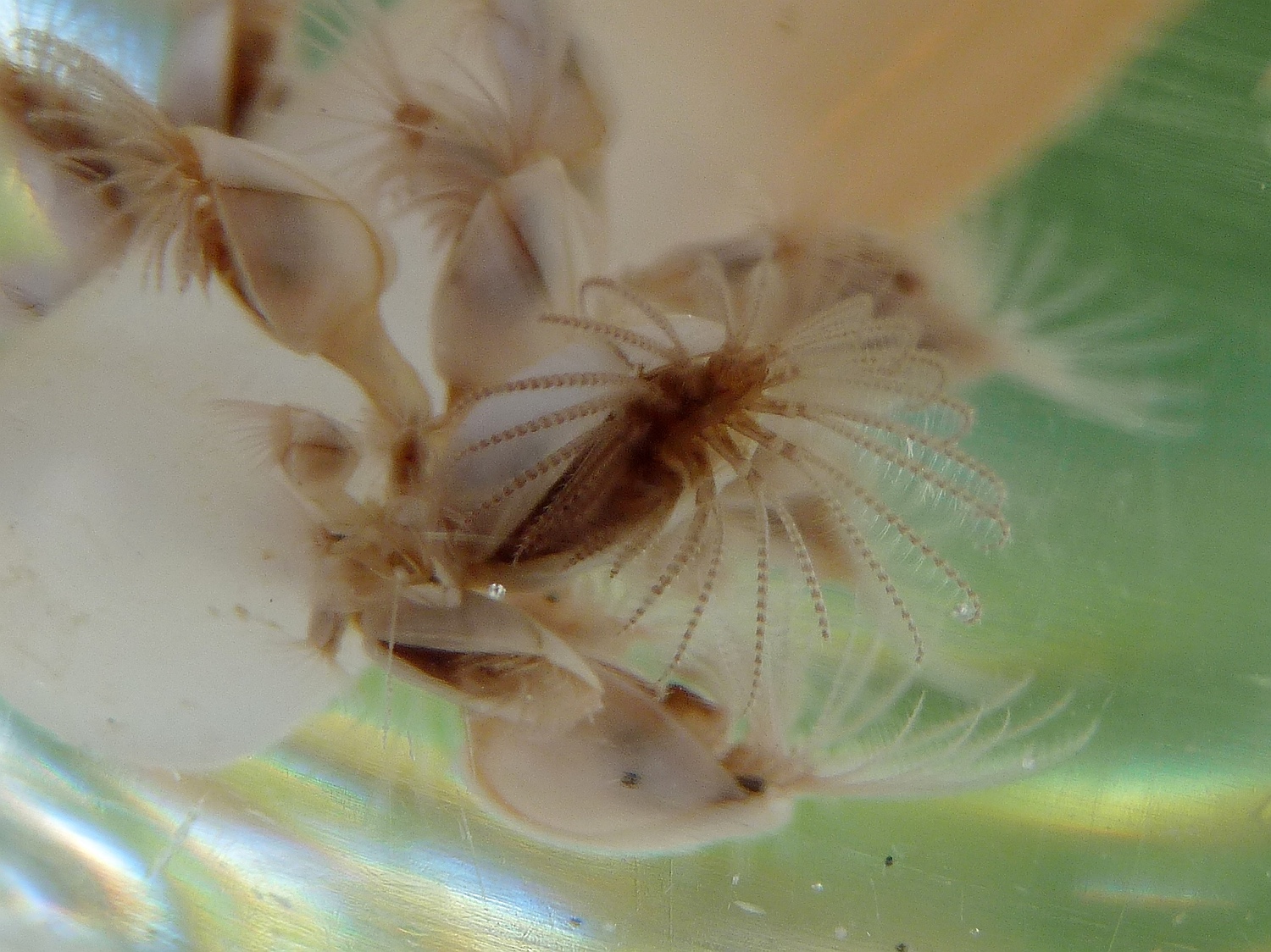
Here you can see the animal from the ventral side; the tentacles with their fine bristles are clearly visible. This filtering apparatus is contracted at regular intervals, creating a water current that supplies the animal with seawater. Goose barnacles feed on plankton.
continue: Sea urchins
See also: