
Non-calcareous Red algae
The red algae (rhodophyta) are a particularly species-rich and diverse group of algae. They can grow at greater depths and predominate in low-light areas because their pigments are specially adapted to utilise the minimal light available in the depths (i.e. high-energy blue light). However, there are also many species of red algae in the intertidal zone.
Here you can skip the introduction and go directly to the species.
Red algae are particularly diverse in form: there are leafy, shrubby, finely branched and crust-like species. Many are red or reddish in colour, others are white, grey, brown or green.
A whole range of red algae species occur around Naxos. The most important species are the calcareous red algae, which are very common especially close to the waterline and on marble sometimes form reef-like structures. However, numerous non-calcareous red algae also occur in the water as well as in the intertidal zone. The most common in our area are Laurencia obtusa, Ceramium and Polysiphonia.
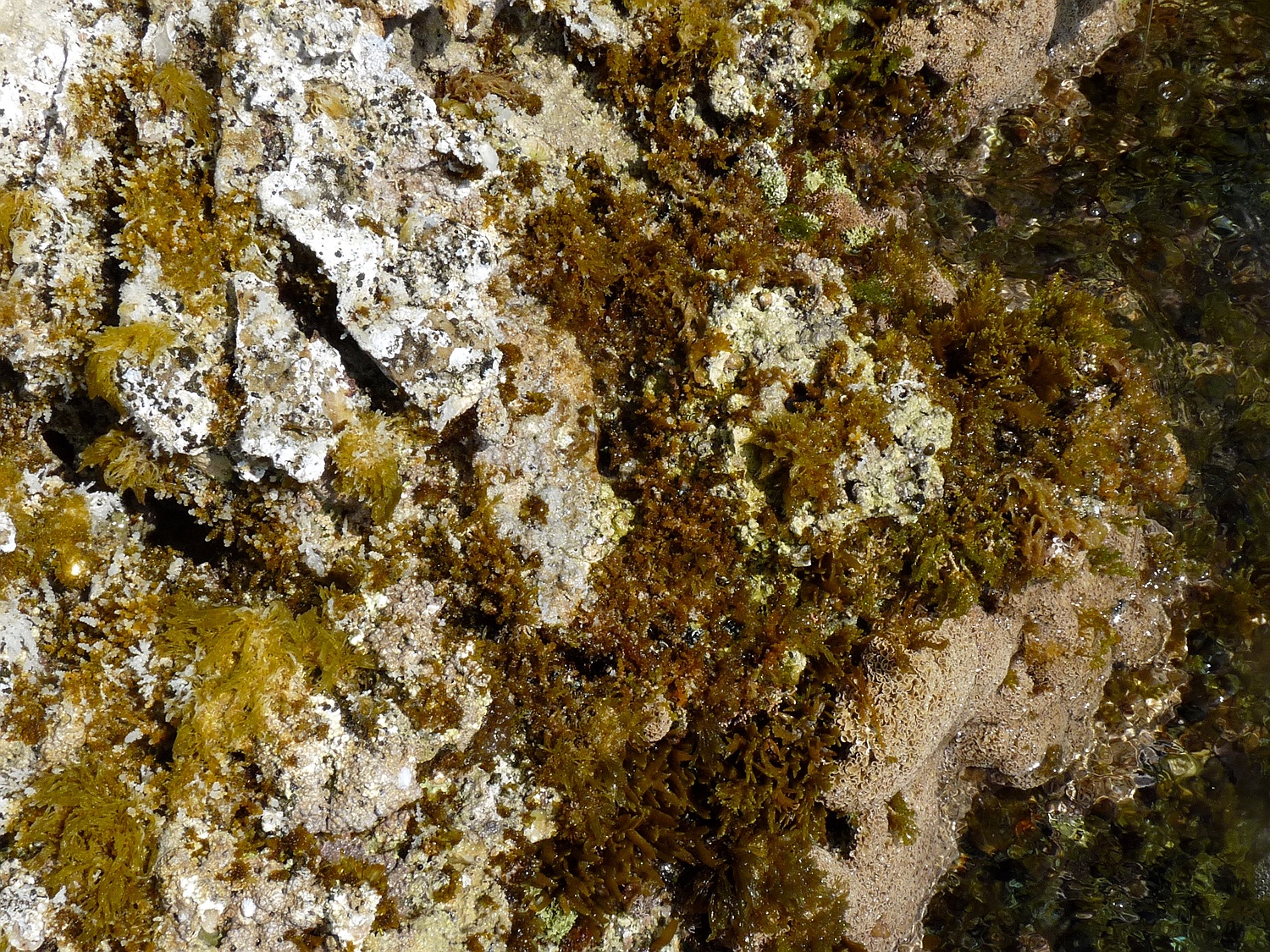
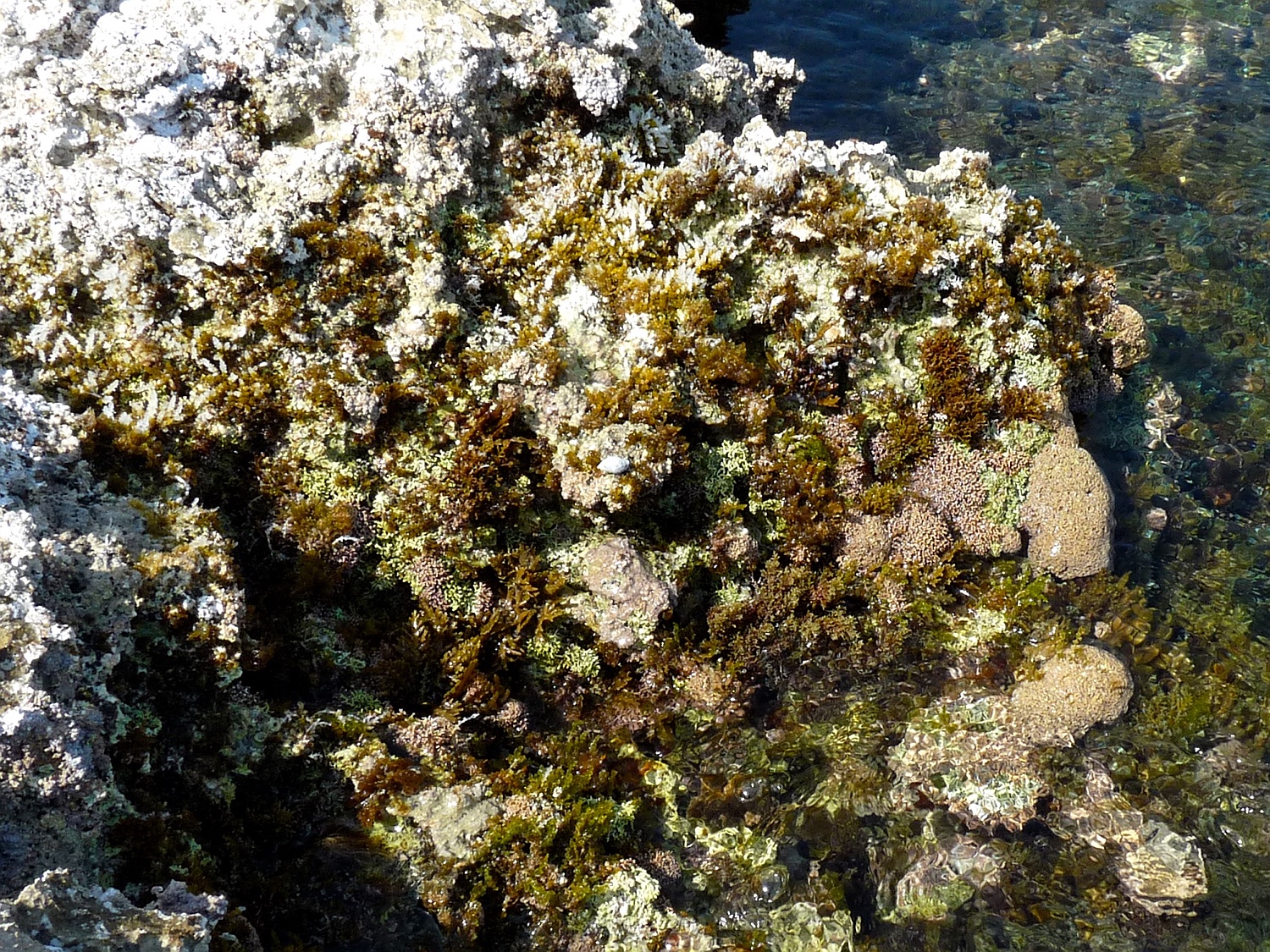
alga communities in the intertidal zone with many non-calcareous and calcareous red alga species
red algae on Naxos
The Photo gallery of the marine plants gives an overview over the species.
A note on identification: Some species of algae can be identified easily and reliably. In many cases, however, there are several related species that are difficult to distinguish. Often, examination under a microscope is necessary for correct identification. Another problem with the identification is that not all species are included in the field guides; even using the internet, it is difficult to find information on many species. Often, the species identified with the help of books or photos on the internet look quite different from our specimen here. Accordingly, many of the identifications are unfortunately quite uncertain, and some species must remain completely unidentified.
Here you can jump directly to the species (return with the back arrow or by swiping back):
Laurencia obtusa – Ceramium – Wrangelia penicillata – Polysiphonia sertularioides – Neosiphonia – Nemalion elminthoides – Aglaothamnion – Callithamnion tetragonum – Liagora viscida – Scinaia furcellata – Verlaquea lacerata – Halurus equisetifolius
Laurencia obtusa ?, J. V. Lamouroux
very common in the eu- and infralittoral zones, tolerates prolonged exposure to the air, very diverse in form
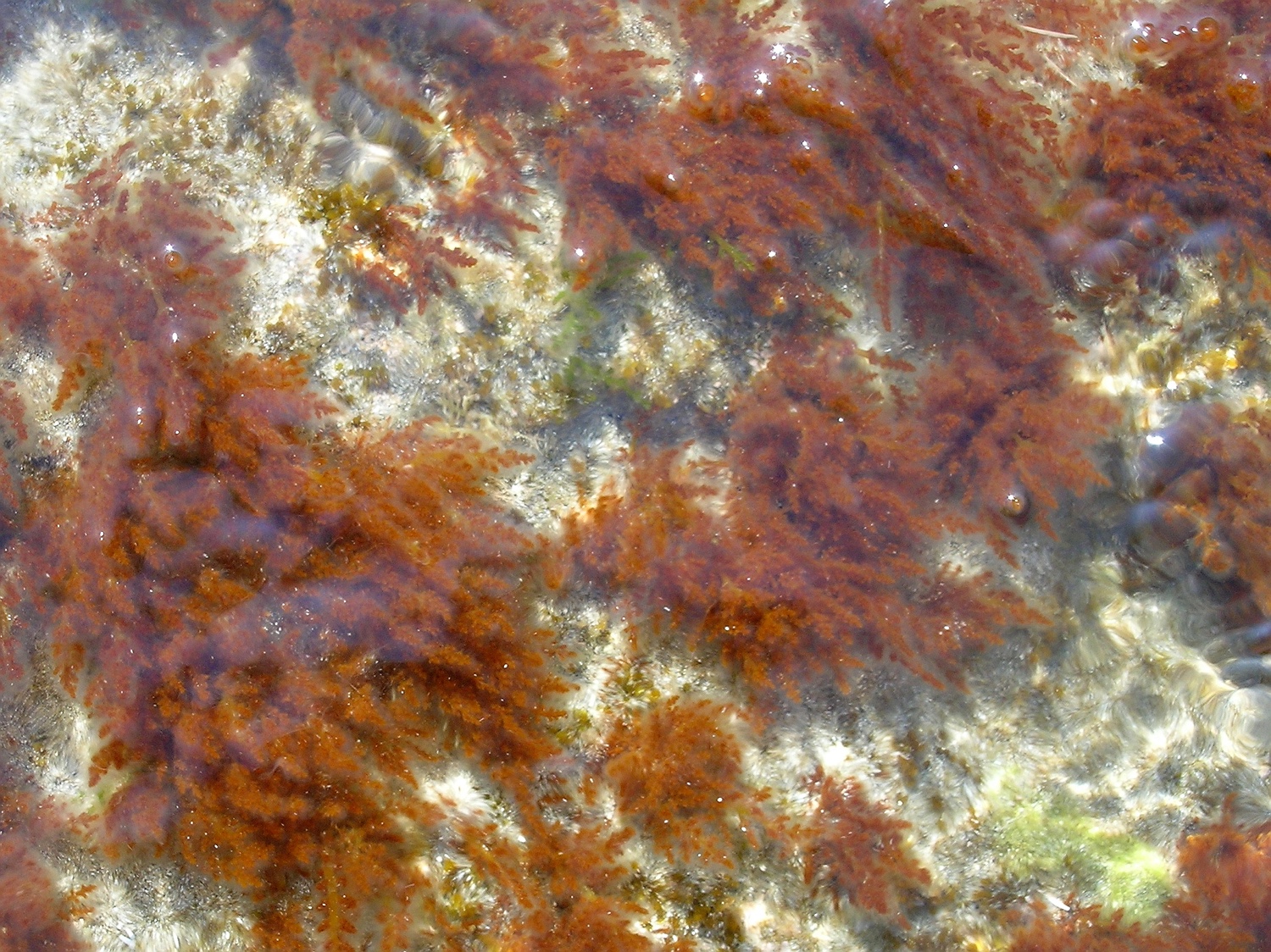
This species which is very common in the intertidal zone, especially on slate, is probably Laurencia obtusa.
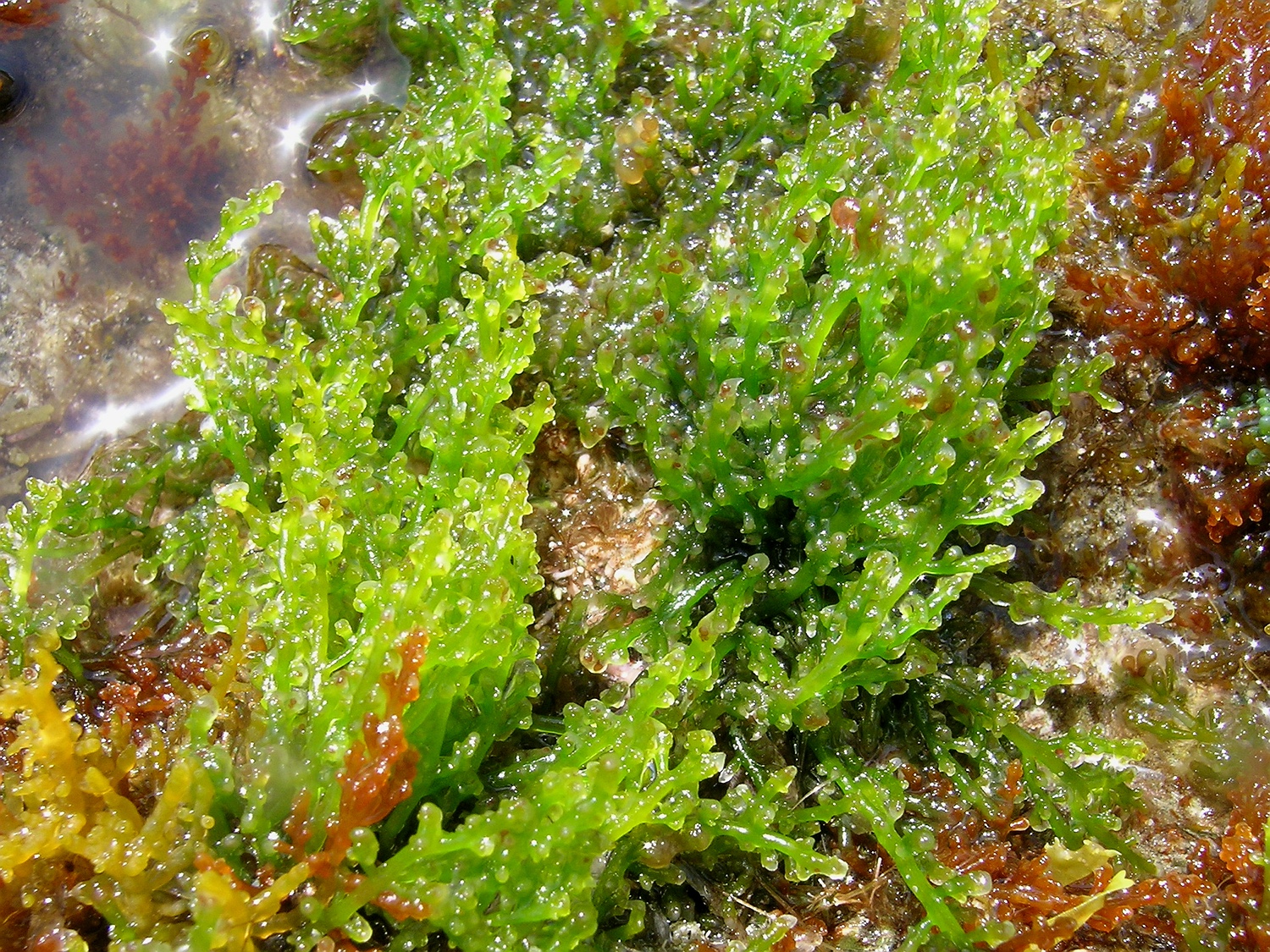
It is highly variable and occurs in both red and green; the thickness and branching of the cartilaginous branches also vary considerably.
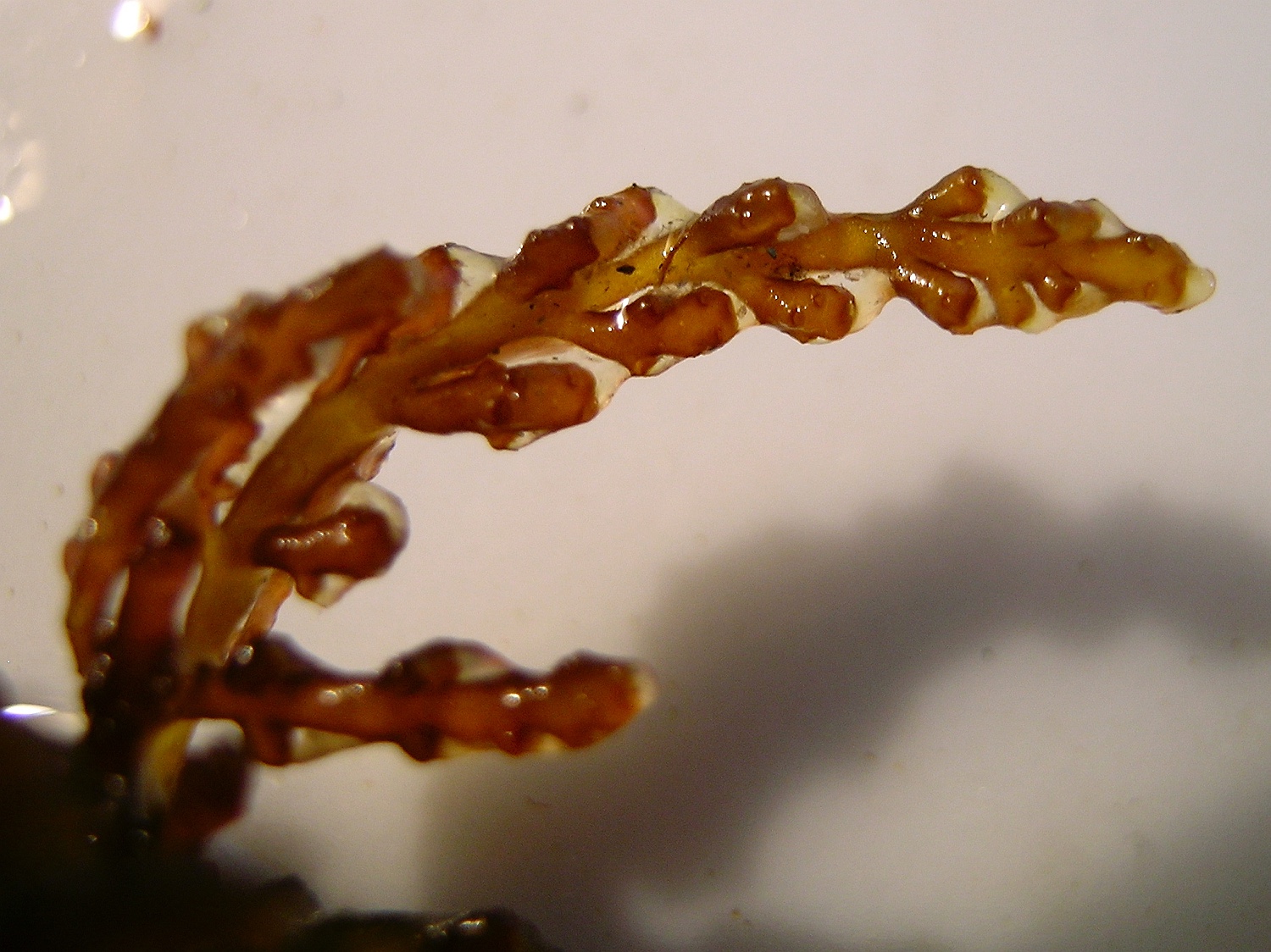
Characteristic are the cylindrical, club-shaped branches, which, on closer inspection, bear transparent tufts of hair at their ends.
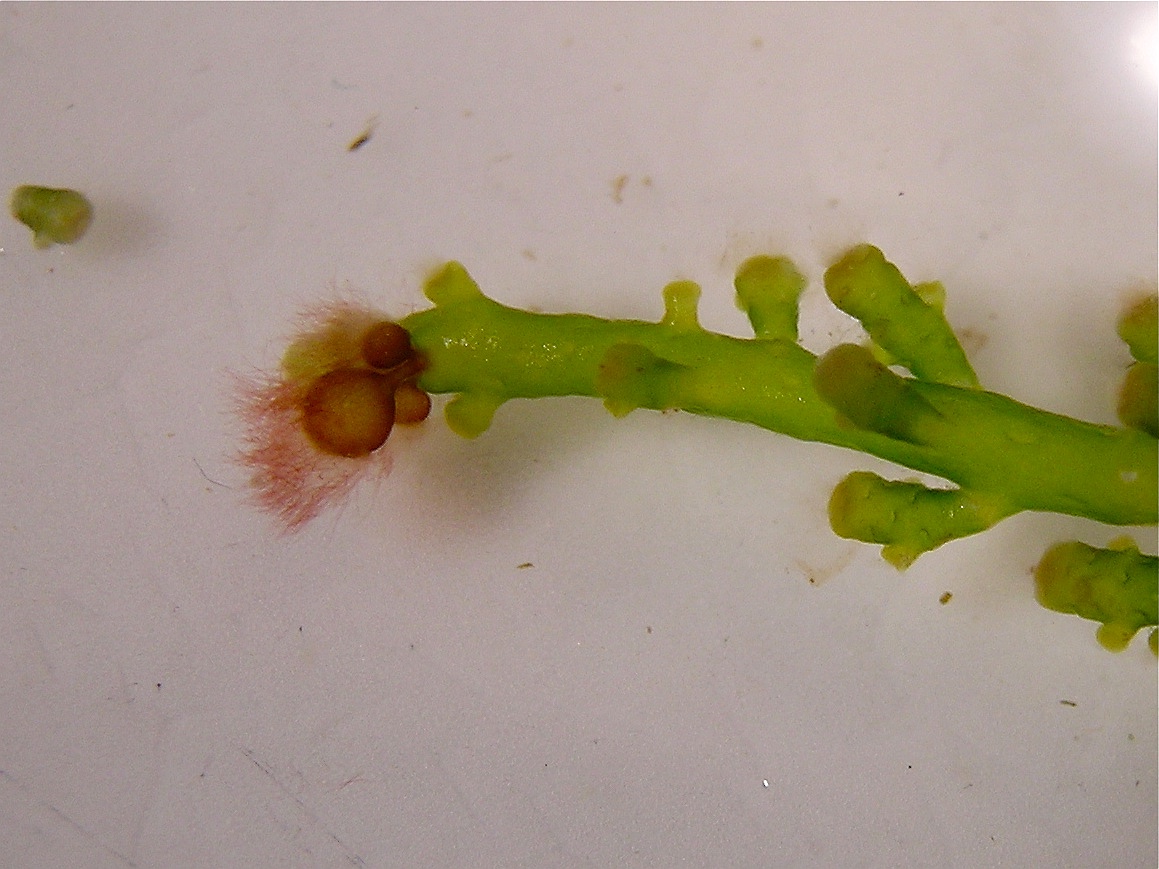
Red algae display an alternation of three generations: the sexual generation and two asexual ones. Laurencia obtusa often shows round, reddish growths on a green individual, which could be the diploid (with a double set of chromosomes) generation that grows from the fertilised egg cell. This generation does not exist independently but develops on the mother plant; it produces haploid spores (with a single set of chromosomes), which grow to spore-forming, haploid plants that are morphologically identical to the sexual generation.
Ceramium spec.
common in the eulittoral zone and in shallow water
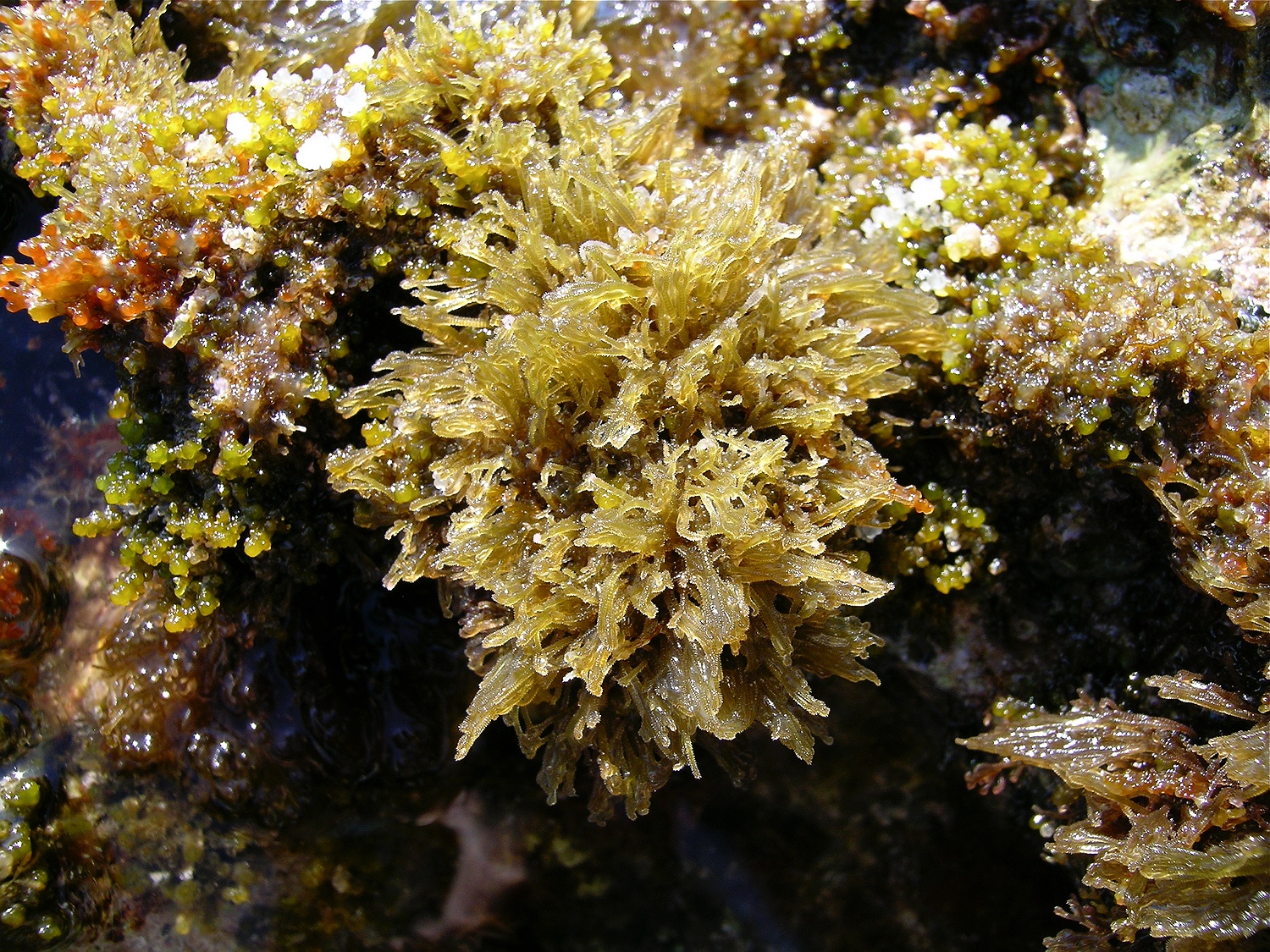
This small, tufted, pale species grows mainly on marble in the intertidal zone.
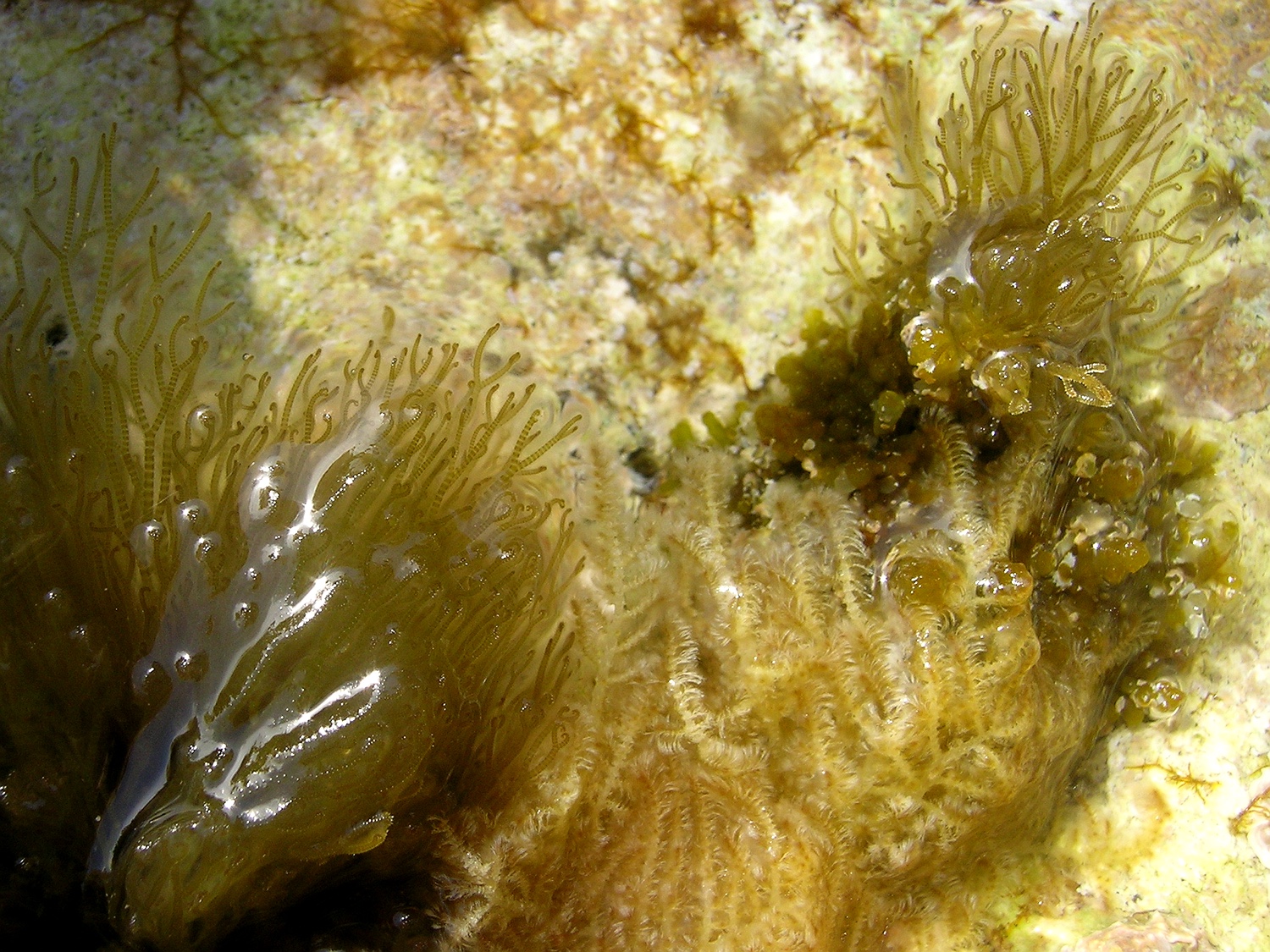
The richly branched thallus consists of filaments which are made up of rows of single cells (here with Wrangelia penicillata).
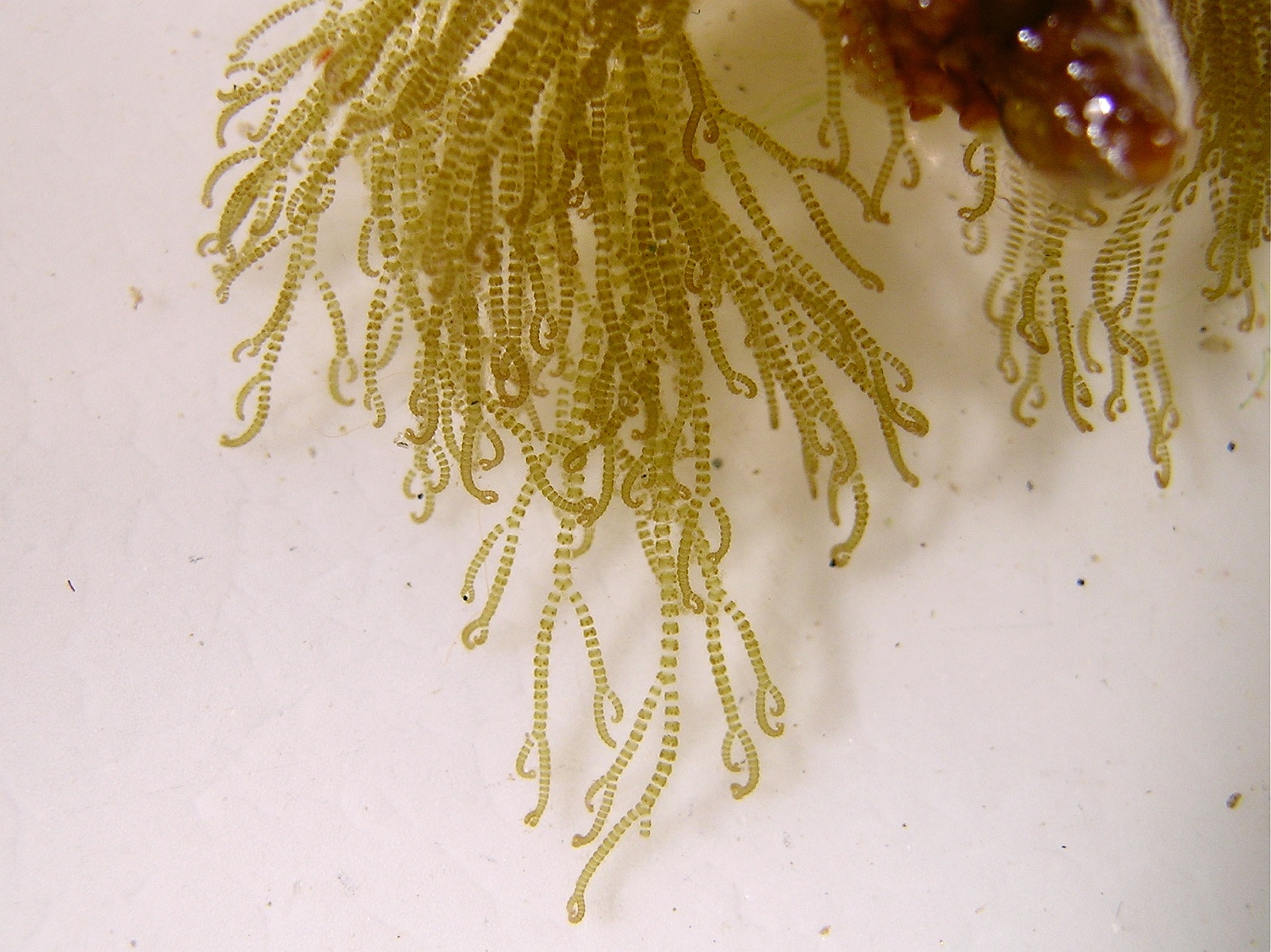
Close up one can see the structure of the filaments with alternating “nodes” and translucent parts, as well as the characteristic tiny pincer-shaped terminal forks.
Wrangelia penicillata ?, C. Agardh
regularly in the eulittoral zone
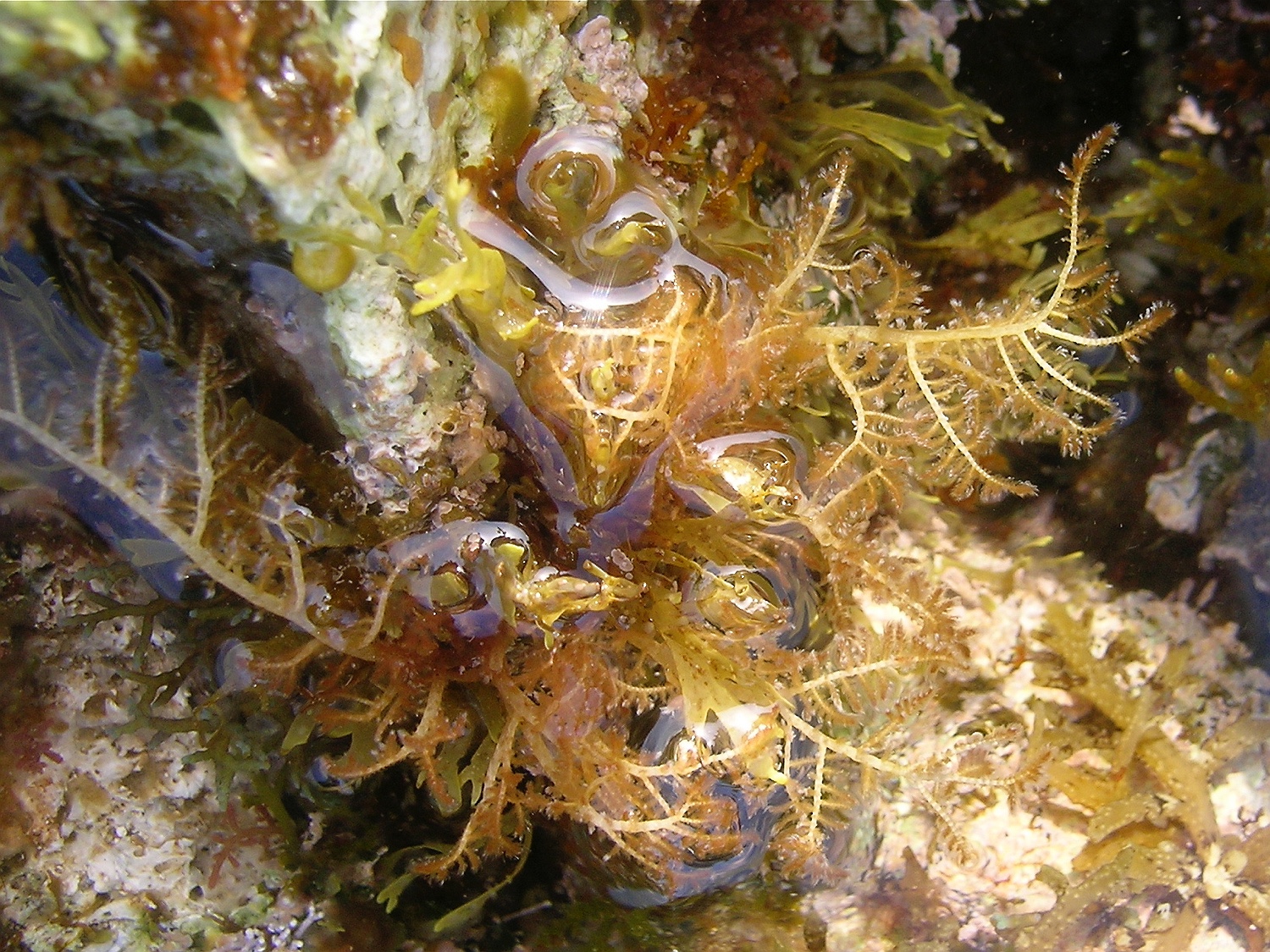
This species has a pale pink, loosely branched thallus, whose branches often curve in a characteristic manner in one direction.
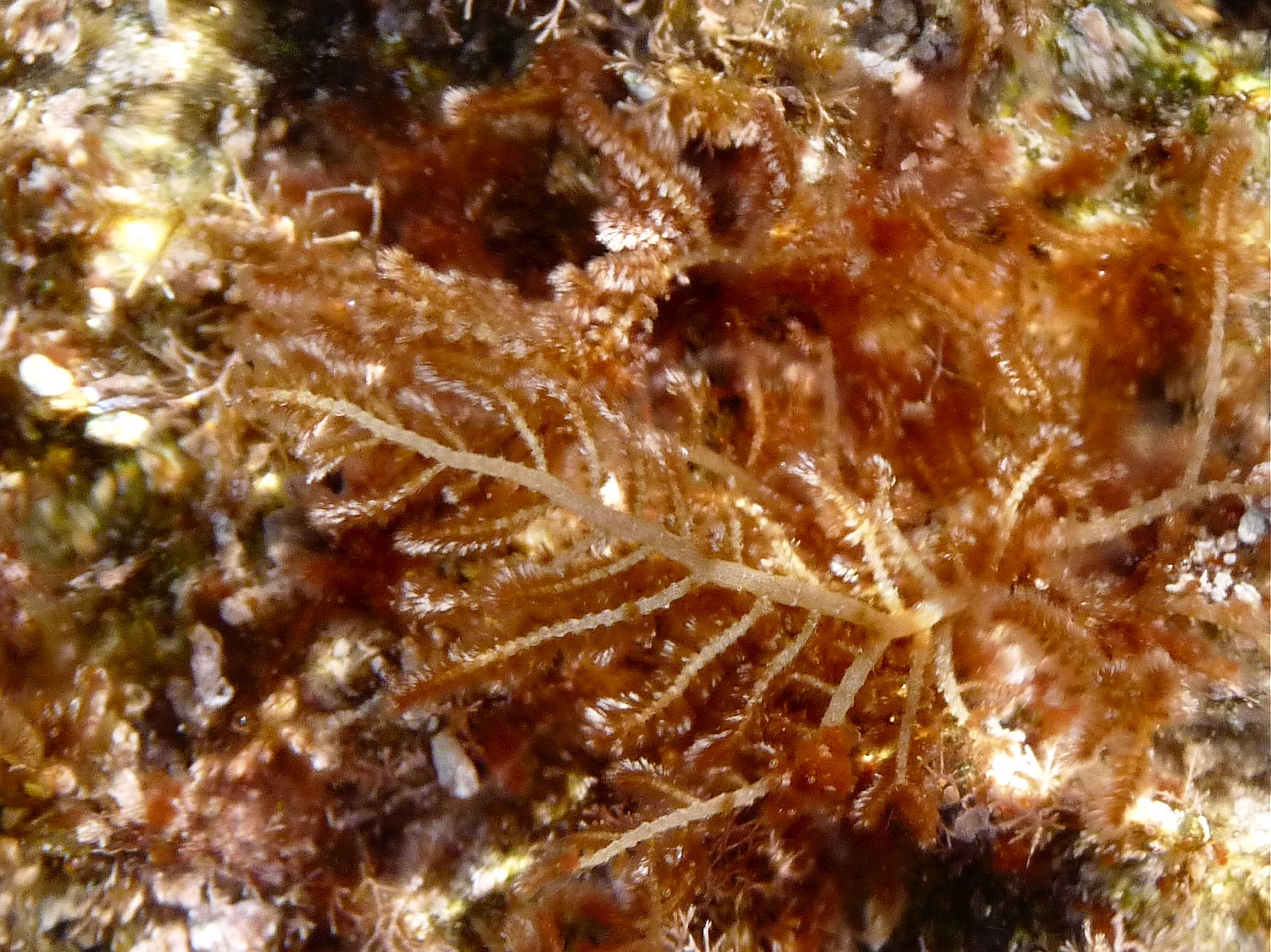
The identification is uncertain; though the species is very characteristic it does not look exactly as the descriptions.
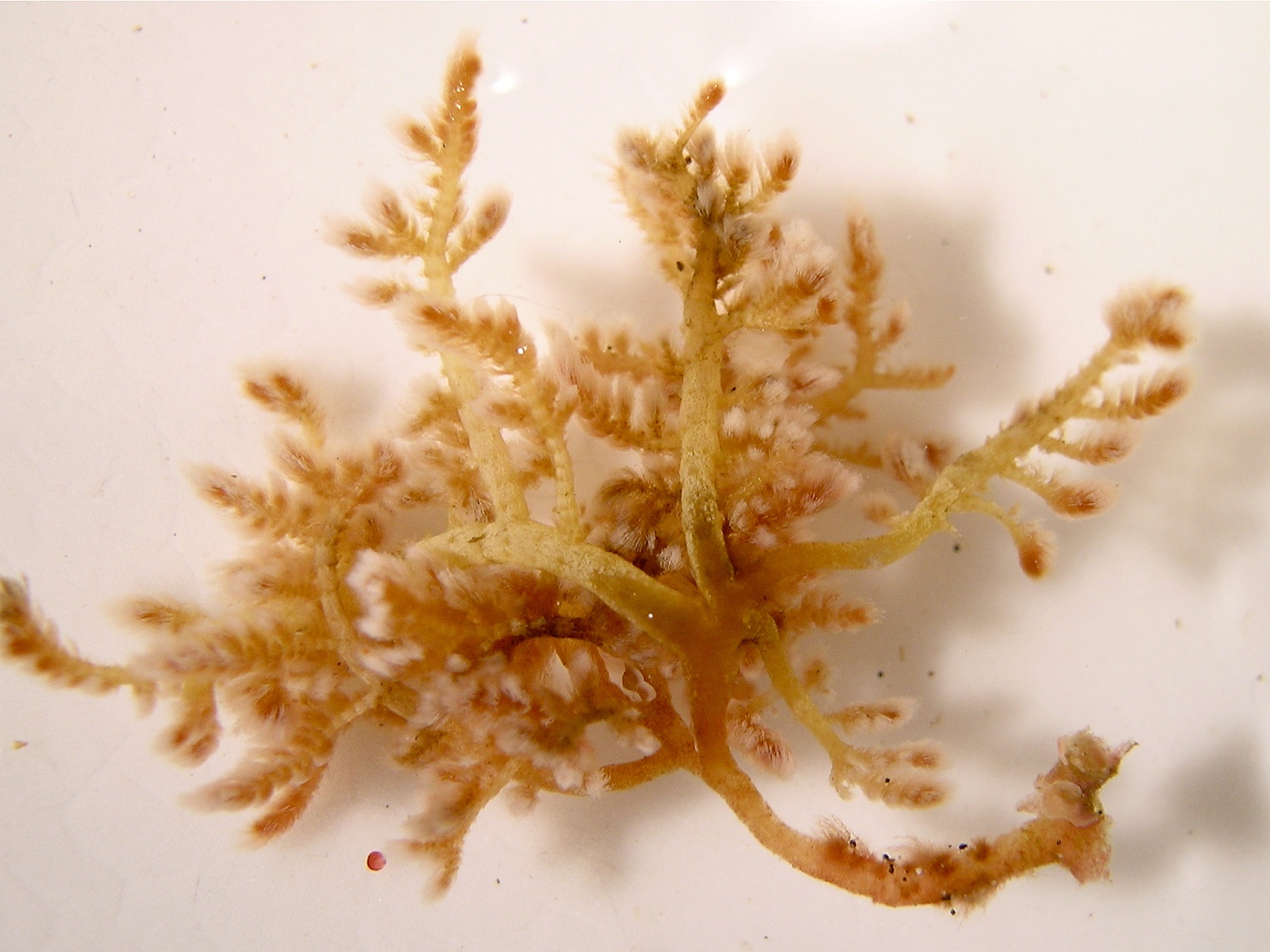
The branches and side branches are covered with fine whorled tufts.

Simply beautiful!
Polysiphonia sertularioides ?, J. Agardh
quite common, on slate, in the eu- and supralittoral zones
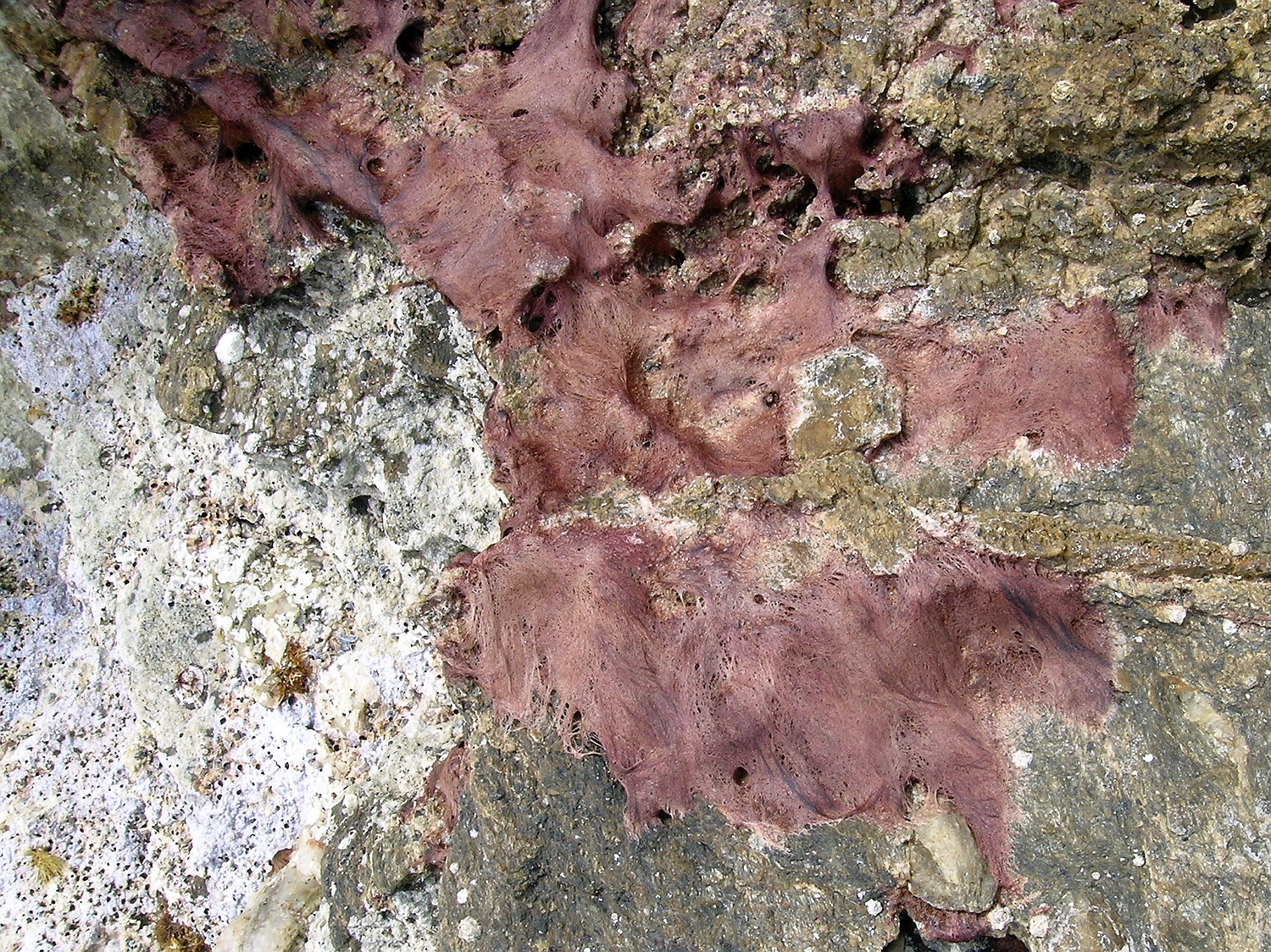
This reddish-brown, finely branched, tufted species, probably Polysiphonia sertularioides, grows in the intertidal zone and just above it and can tolerate prolonged exposure to dry conditions.
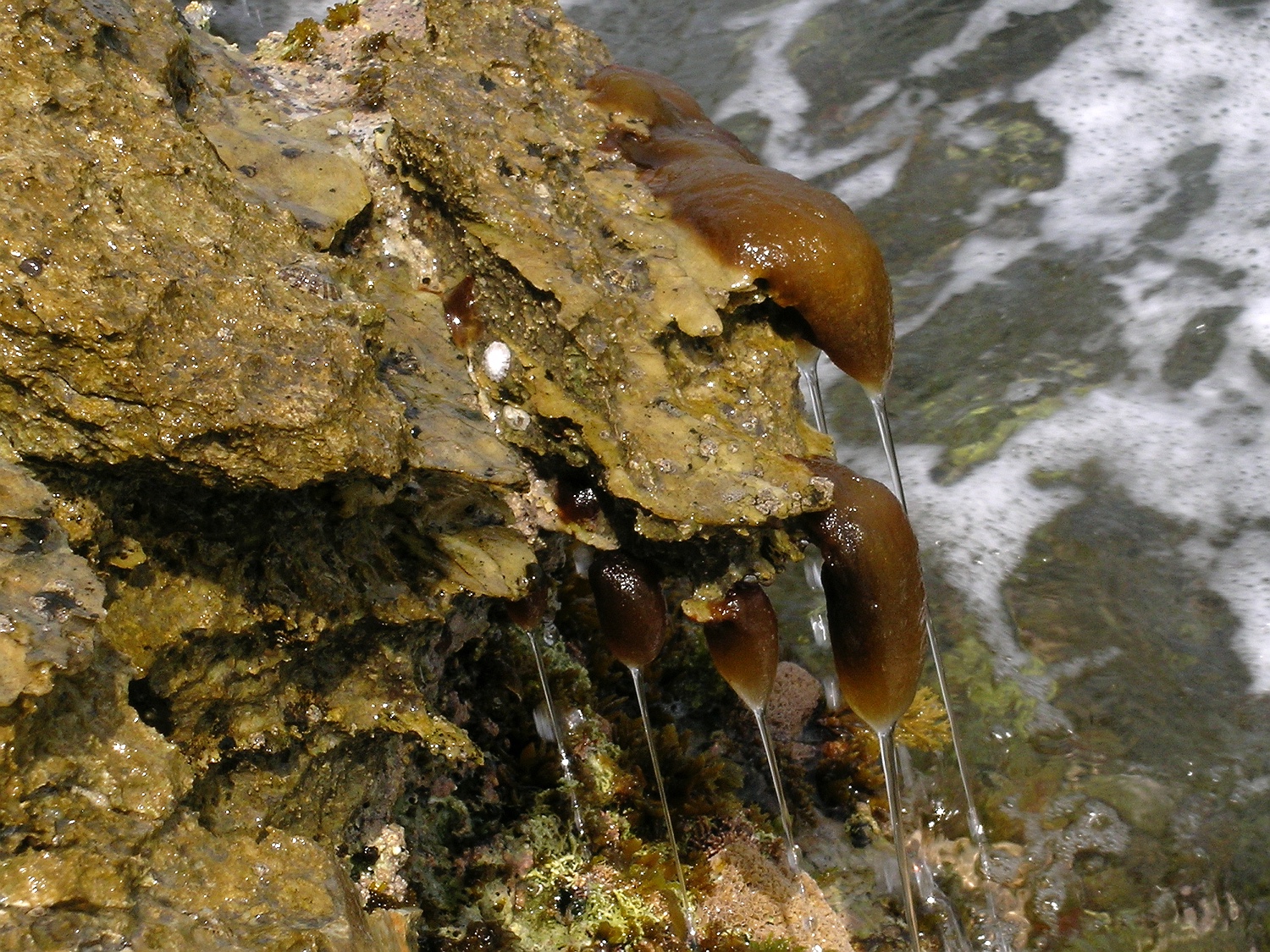
Polysiphonia sertularioides in the waves
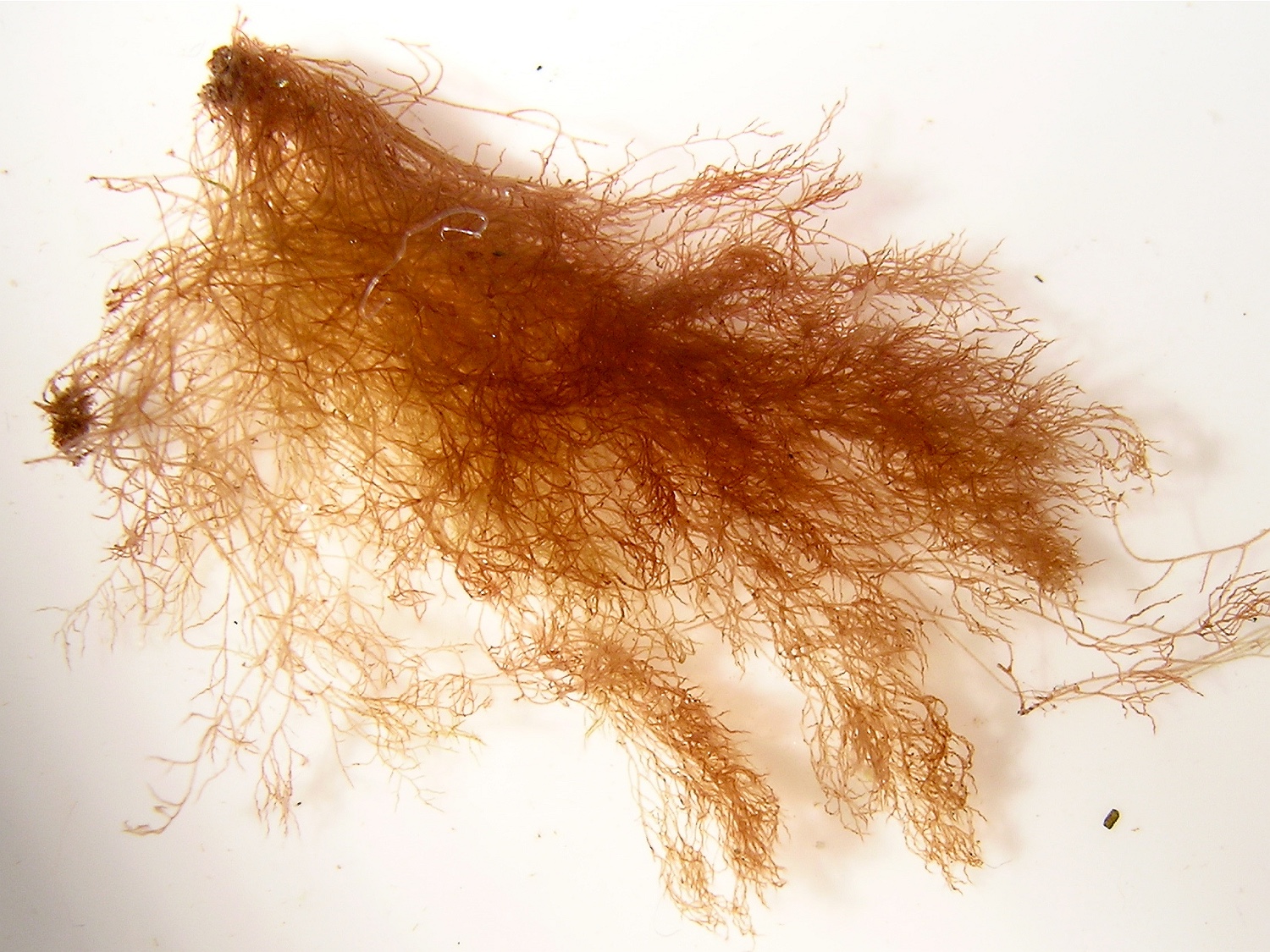
The thallus filaments of this species are very fine; one can see their characteristic structure of a central cell surrounded by regular sheath cells only under a powerful magnifying glass or microscope.
Neosiphonia ?
regular, locally common in the eulittoral zone on slate, often with Chaetomorpha; identification of the genus is uncertain and only possible under a microscope
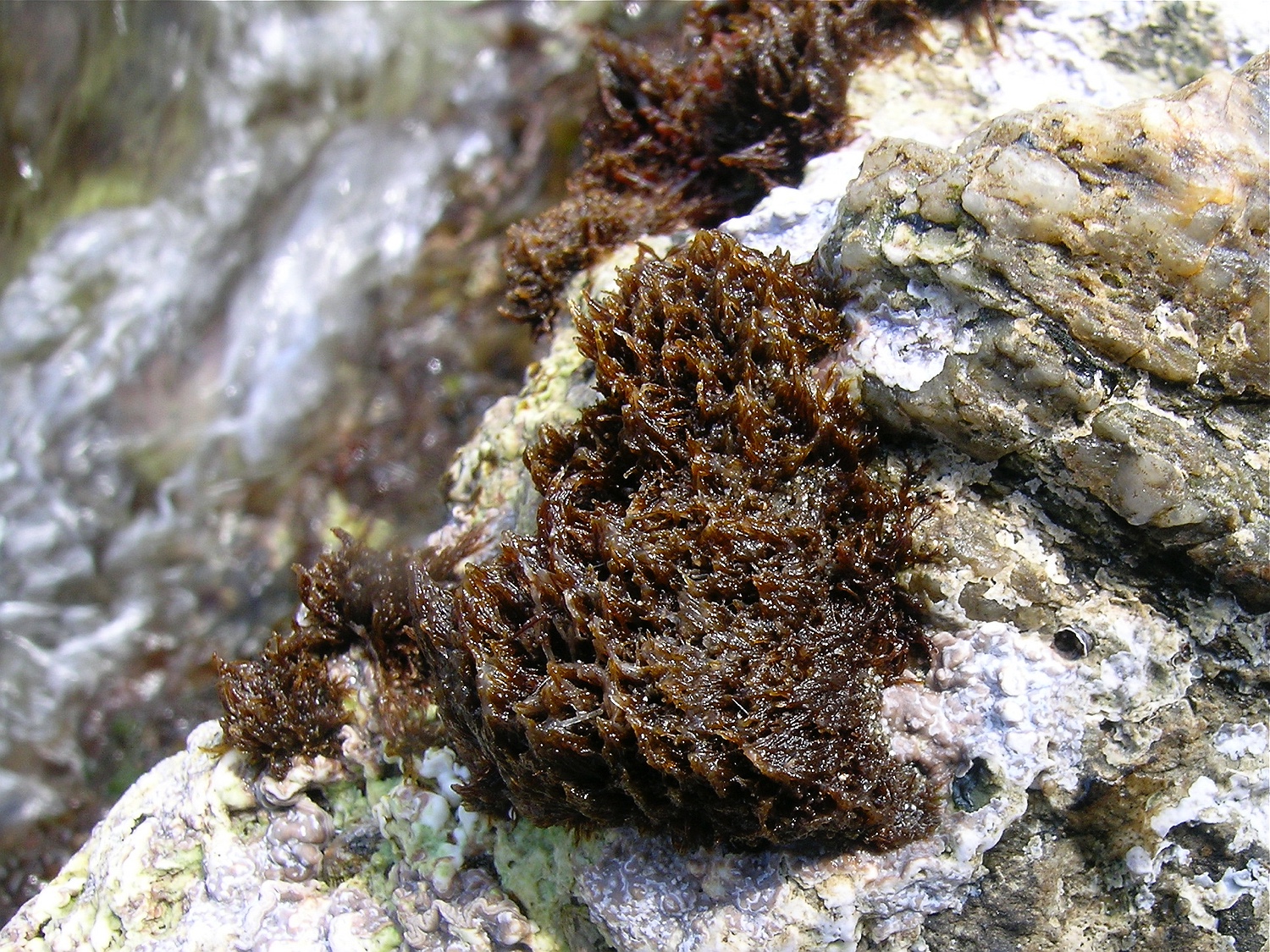
This species is similar to Polysiphonia sertularioides, but shorter, stiffer and darker brown in colour. It grows in the same habitat as the previous species.
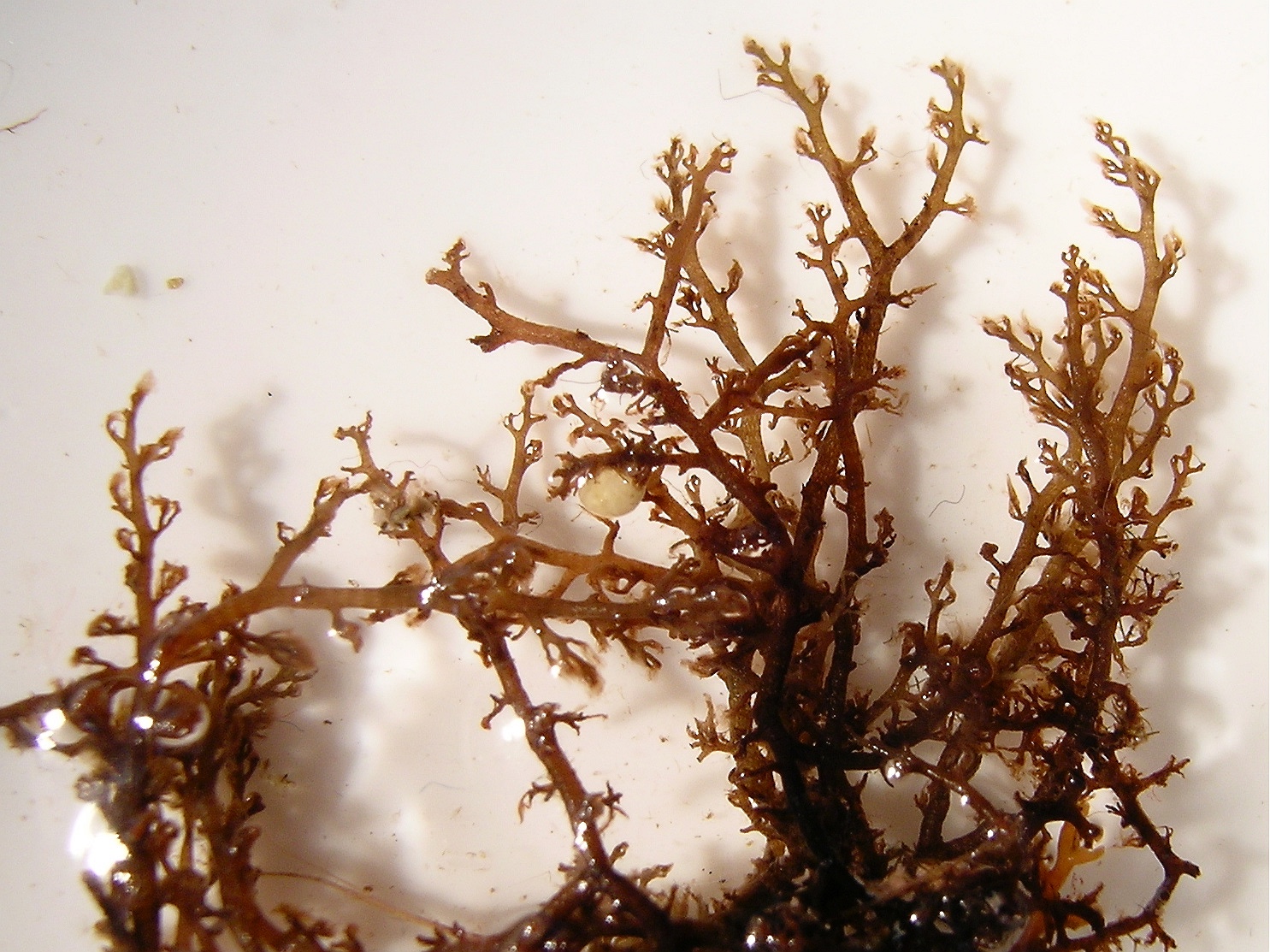
With magnification on sees the similar structure of the thicker thallus filaments with their typical curved side branches.
Nemalion elminthoides, Batters
very rare in our region, found on slate above the waterline; tolerates drying out
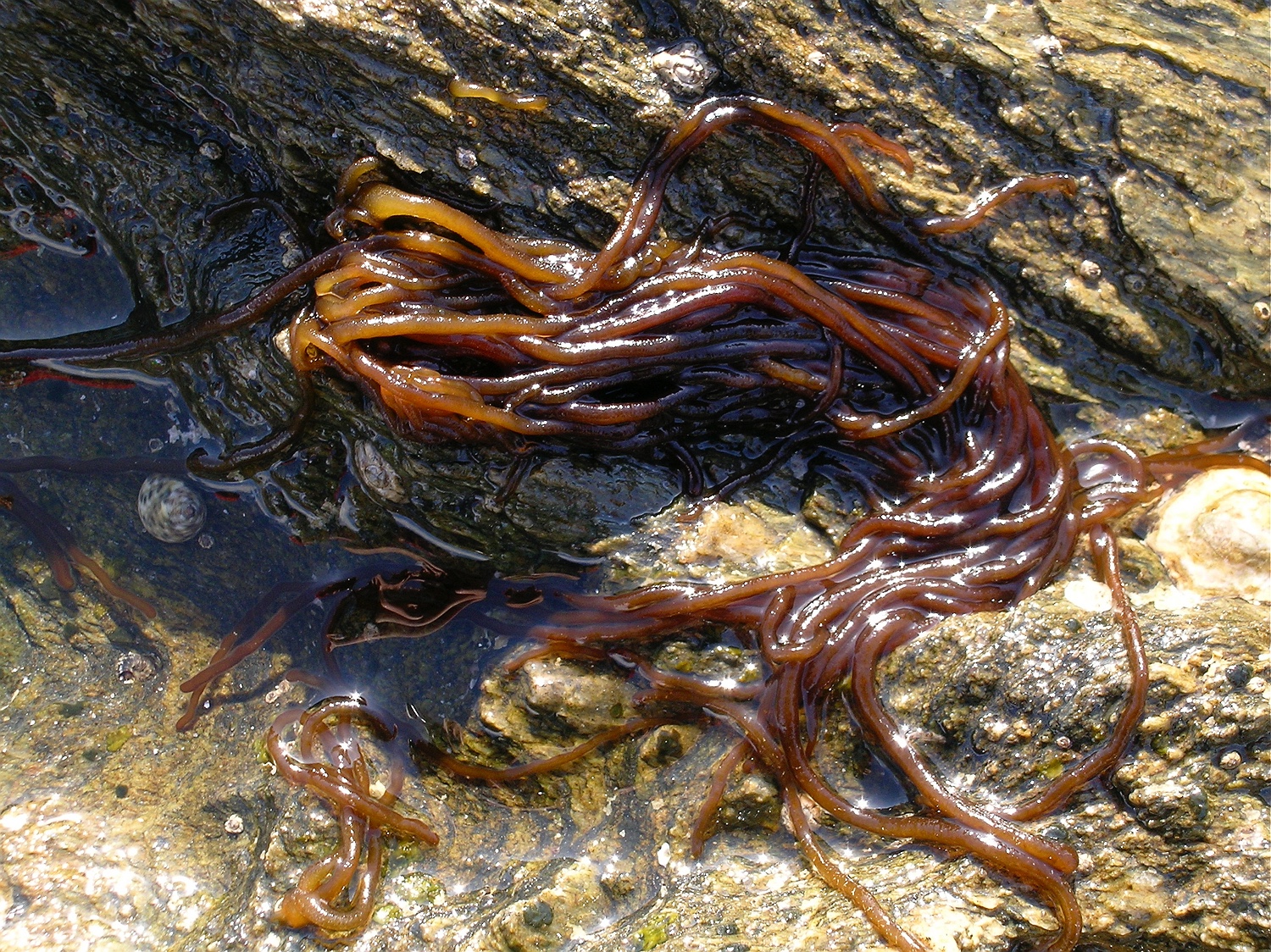
Nemalion elminthoides is easily recognisable by its soft, long worm-shaped thallus.
Aglaothamnion ?
rare in our region, at the waterline, on marble; identification of the genus is uncertain and only possible with a microscope: in this genus the vegetative cells each have only one cell nucleus.
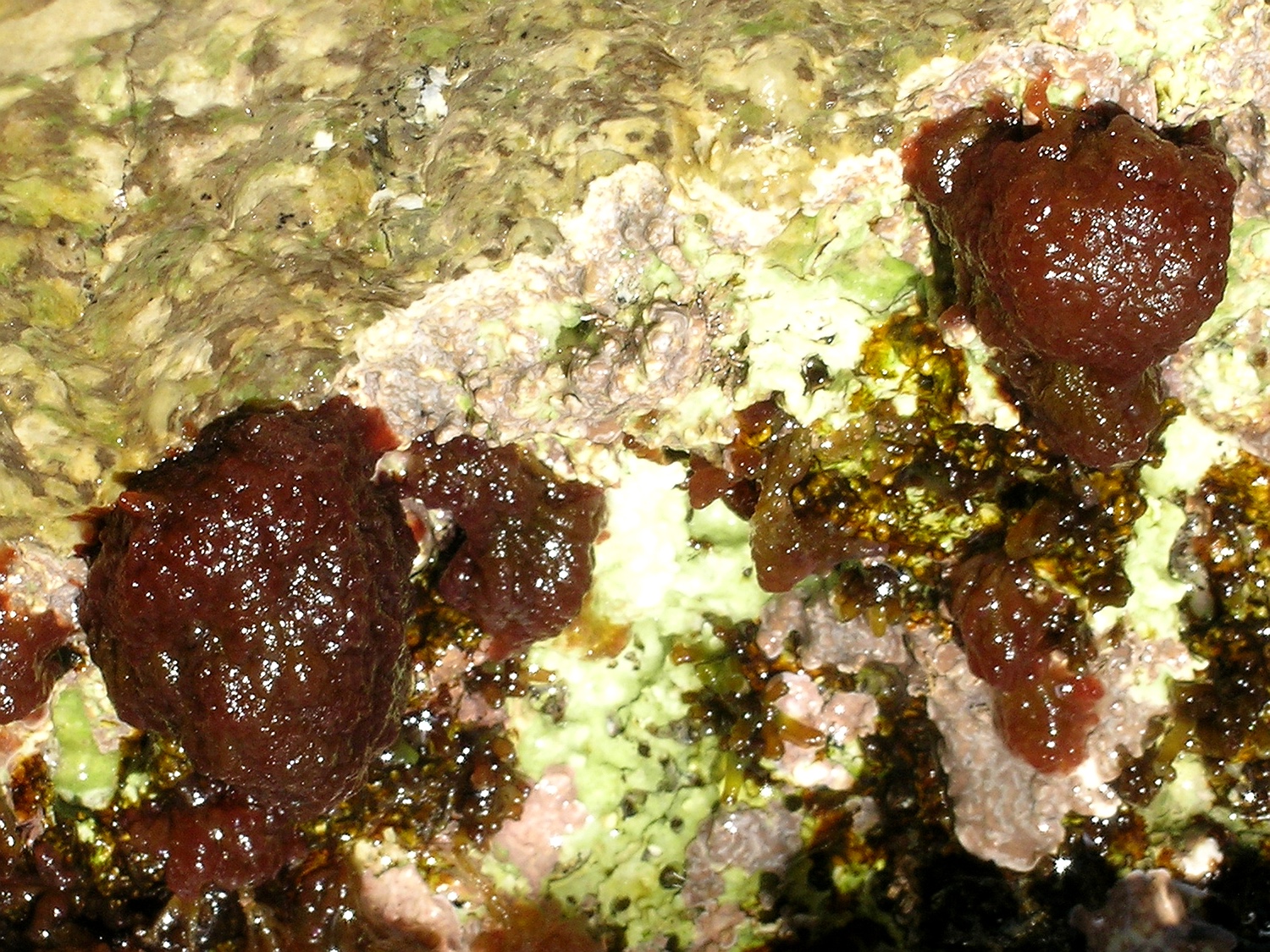
This small alga grows directly at the waterline.
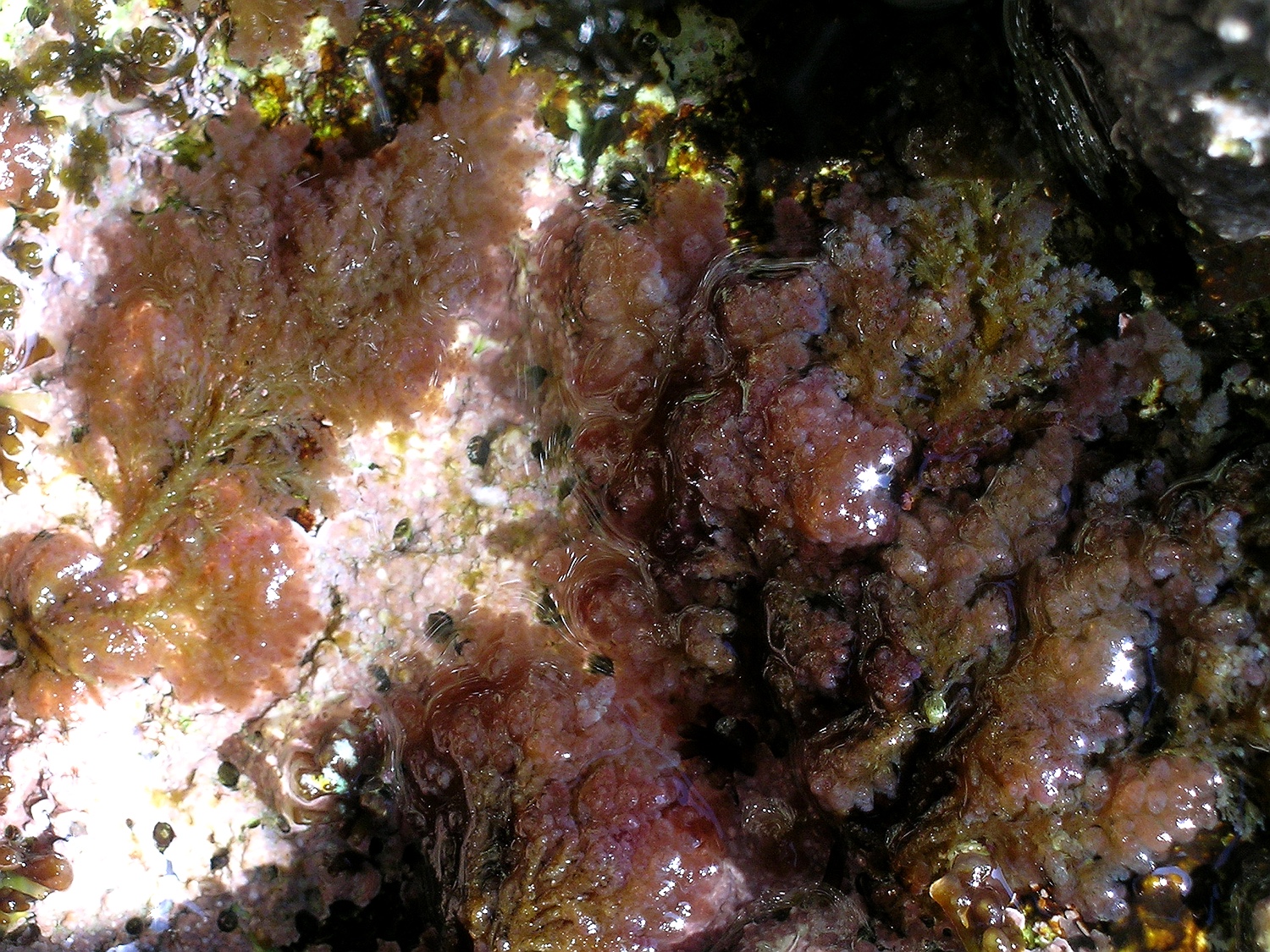
The species of this genus and the related genus Callithamnion are very difficult to distinguish from one another.
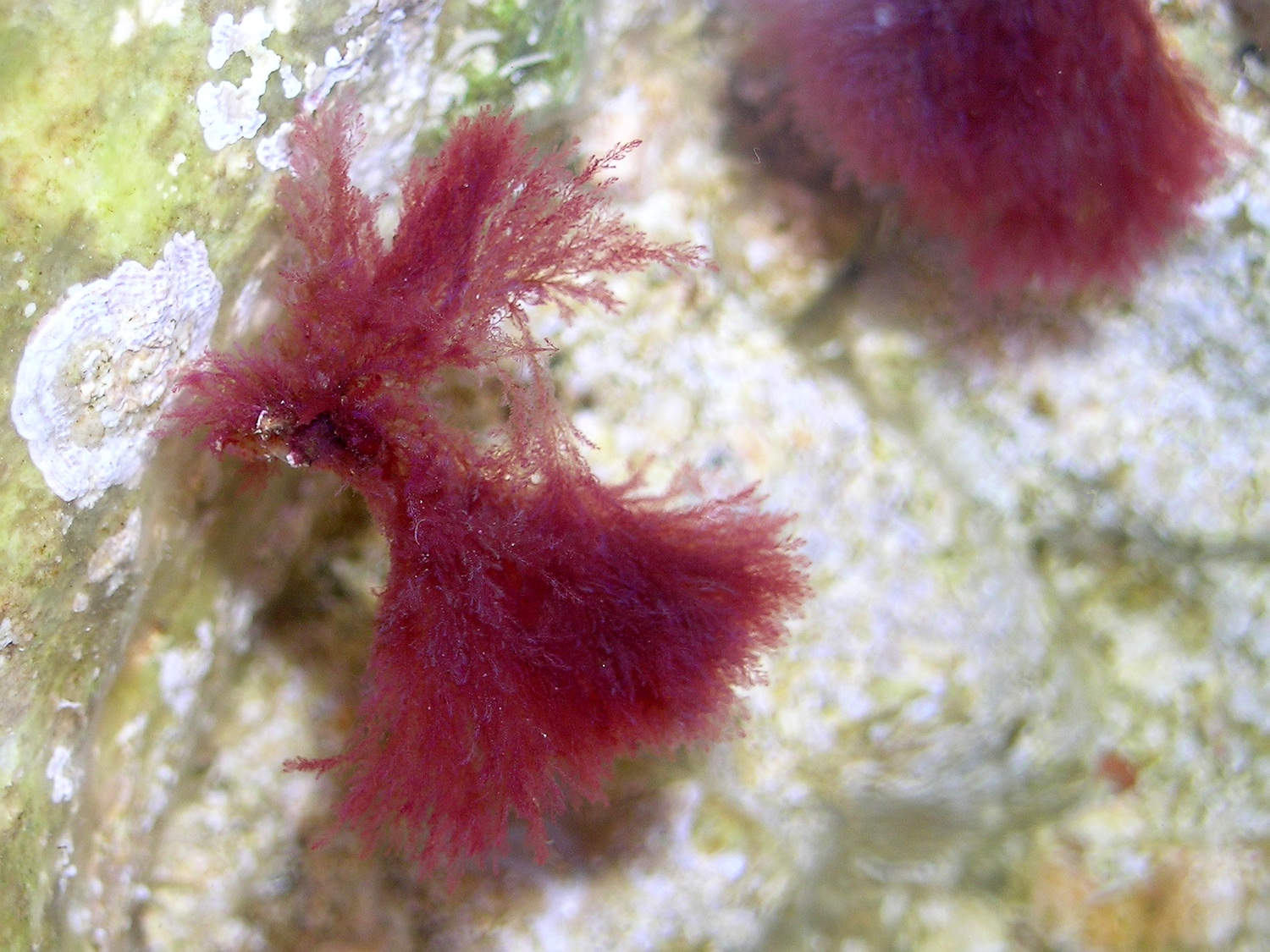
The intensely red, tufted thallus consists of very fine, strongly branched filaments of single cell rows.
Callithamnion tetragonum ?, S. F. Gray
rare in our region, directly below the waterline in shady areas, small and easy to overlook; morphologically identical to the previous species, but with multiple cell nuclei in each vegetative cell
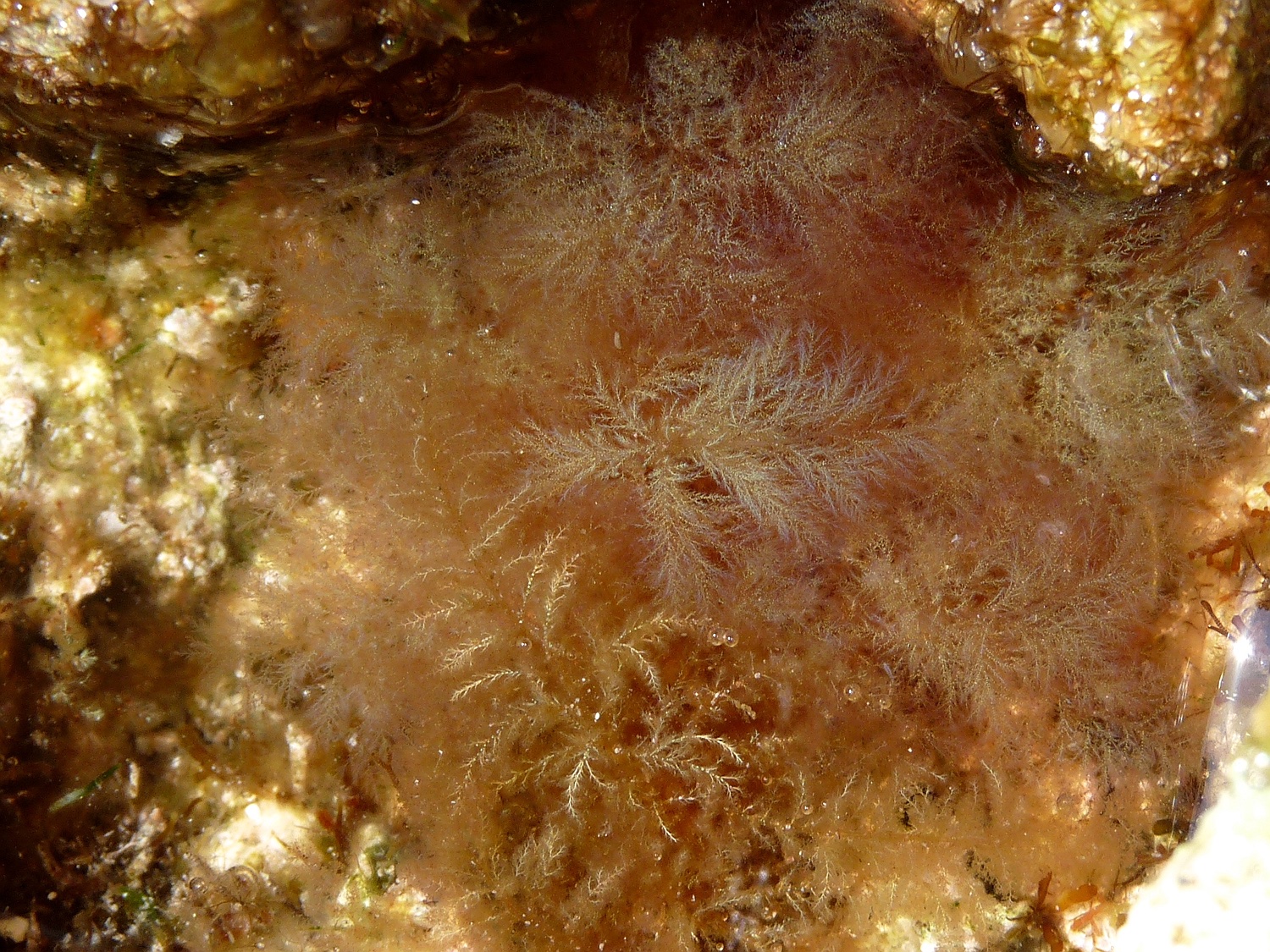
All Calliothamnion species are reddish in colour. This species shows a light orange-red. It grows as a small, round tuft.
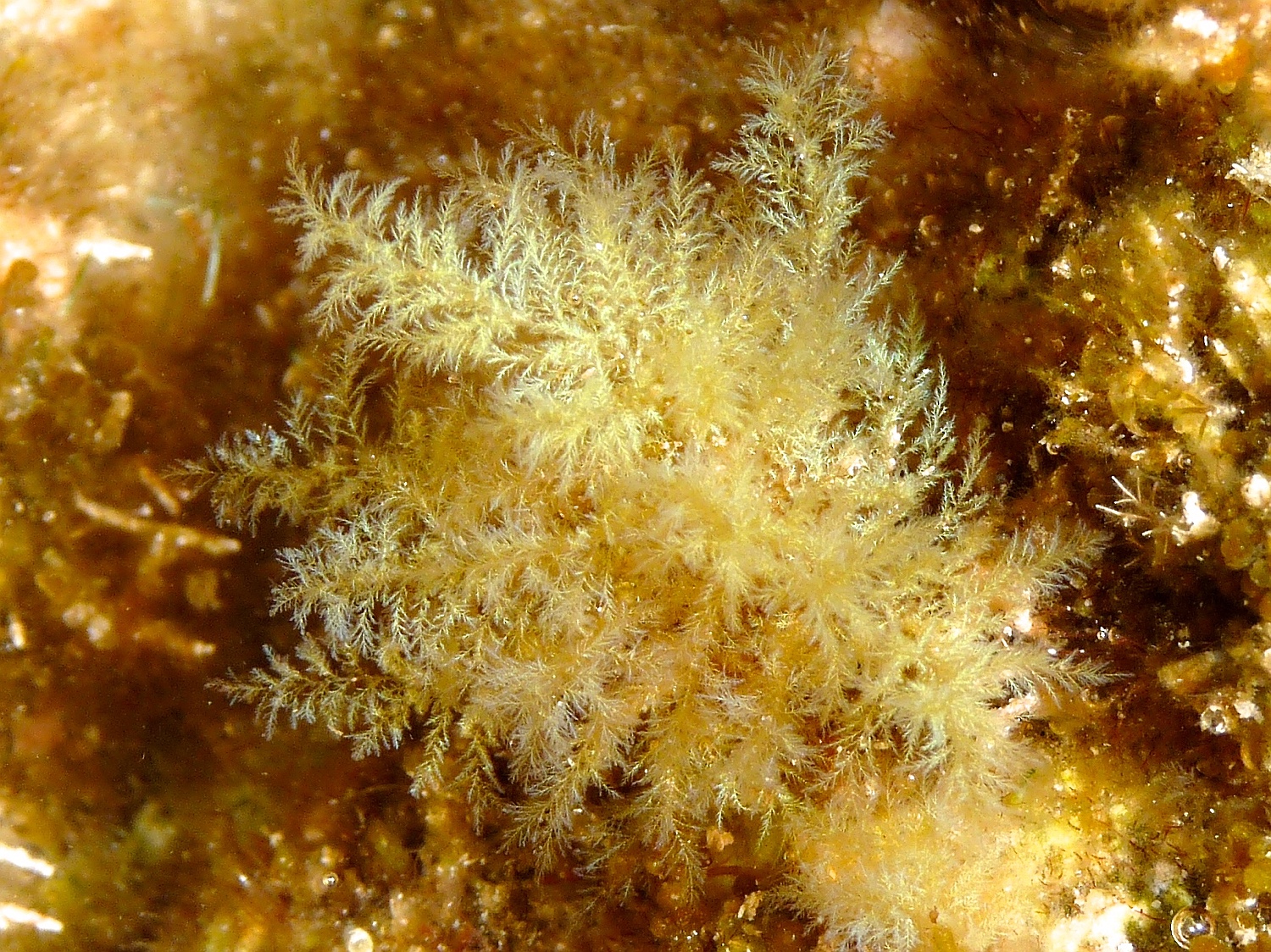
The very fine side branches of this species become shorter towards the tip.
Liagora viscida, C. Agardh
rare
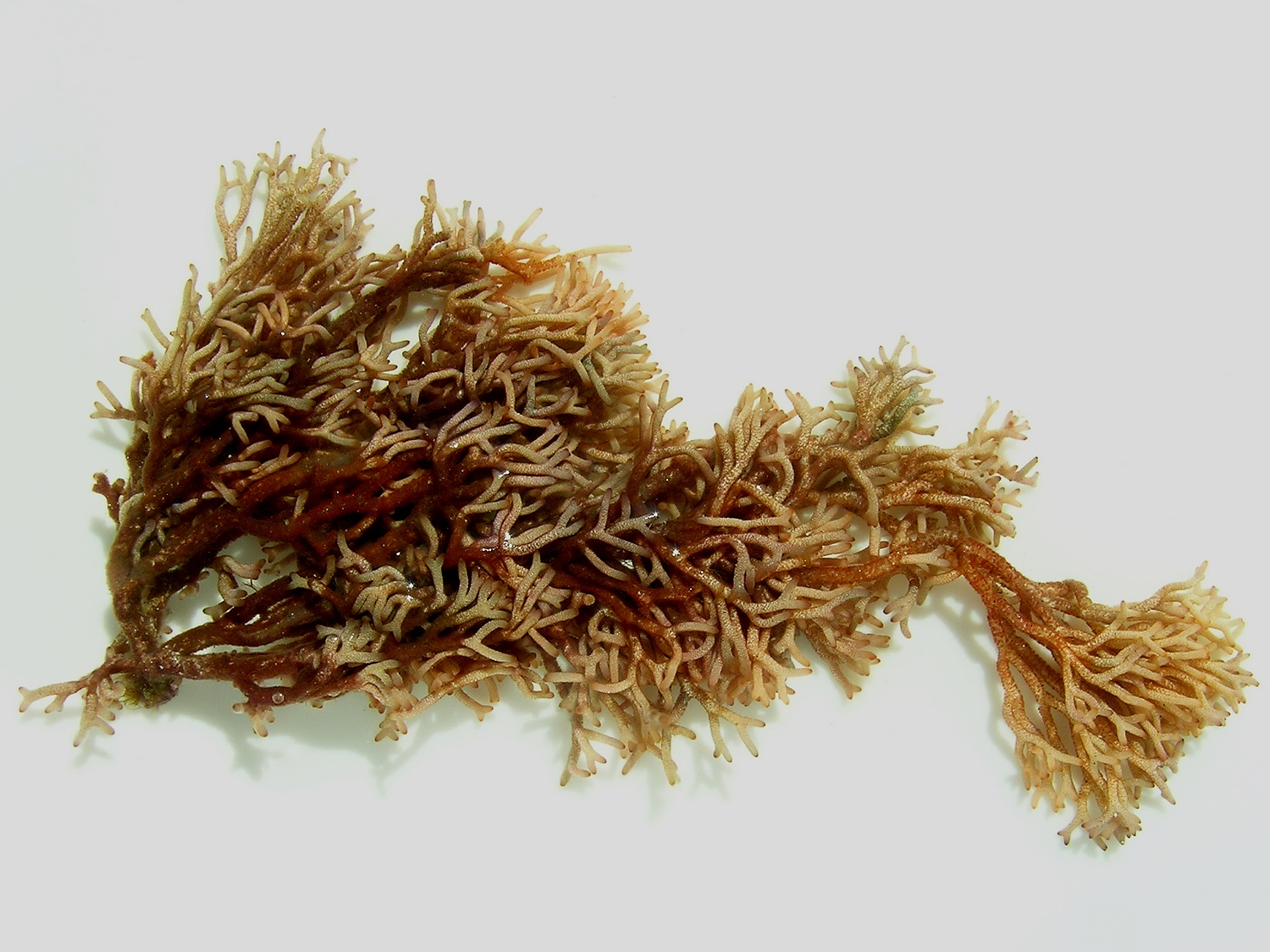
Liagora viscida has a slippery, richly branched, whitish-reddish thallus, whose narrow, rounded, dichotomously branched sections retain approximately the same diameter along their entire length.
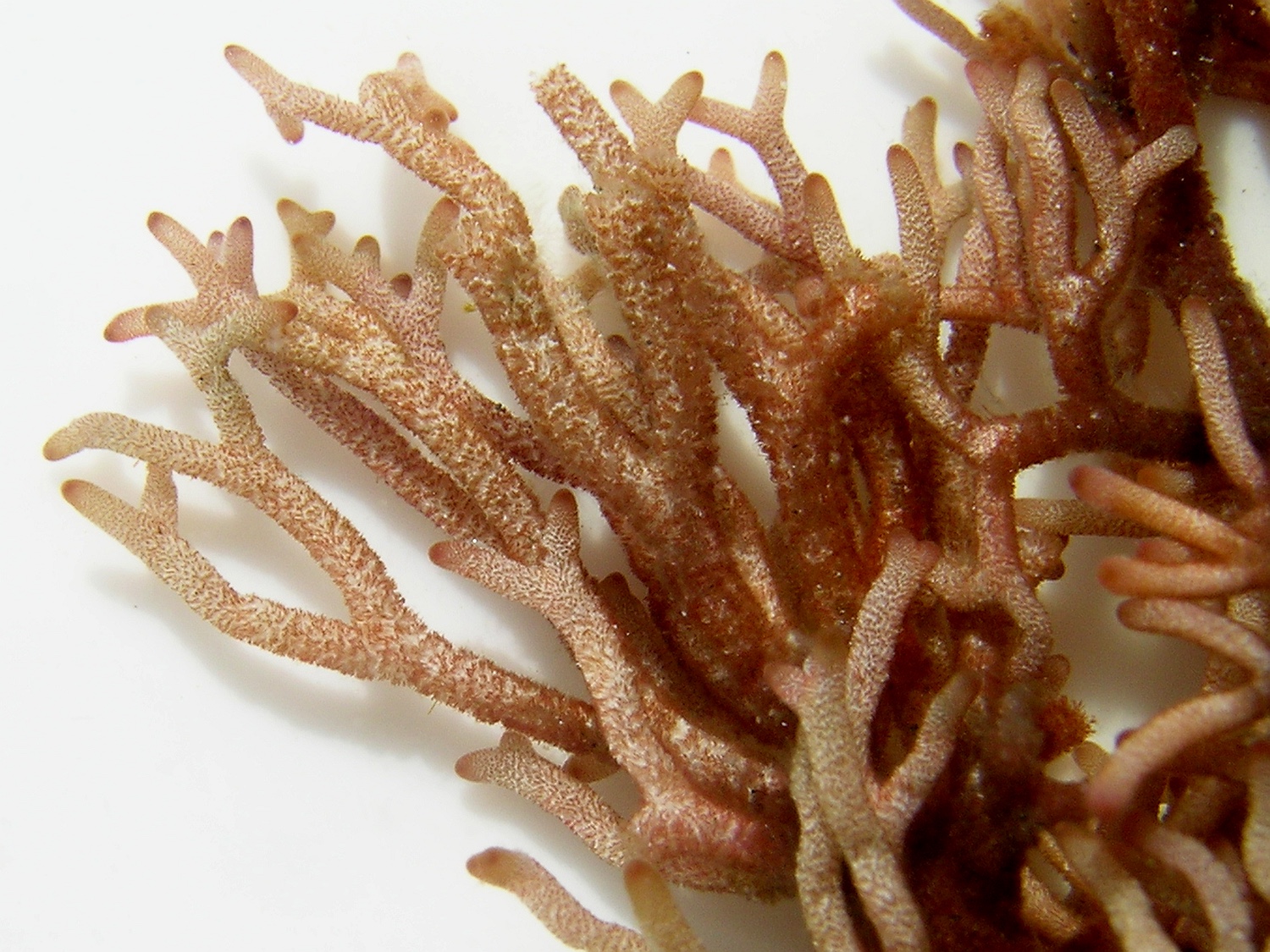
We usually find this species drifting in the water; only rarely have I discovered a specimen attached to substrate.

The thallus consists of a loose medulla of white filaments, from which numerous short, branched, red filaments sprout in all directions, forming the cortex (here, however, here the filaments are somewhat closer together and less branched than is typical for this species).
Scinaia furcellata, J. Agardh
rare, just below the waterline
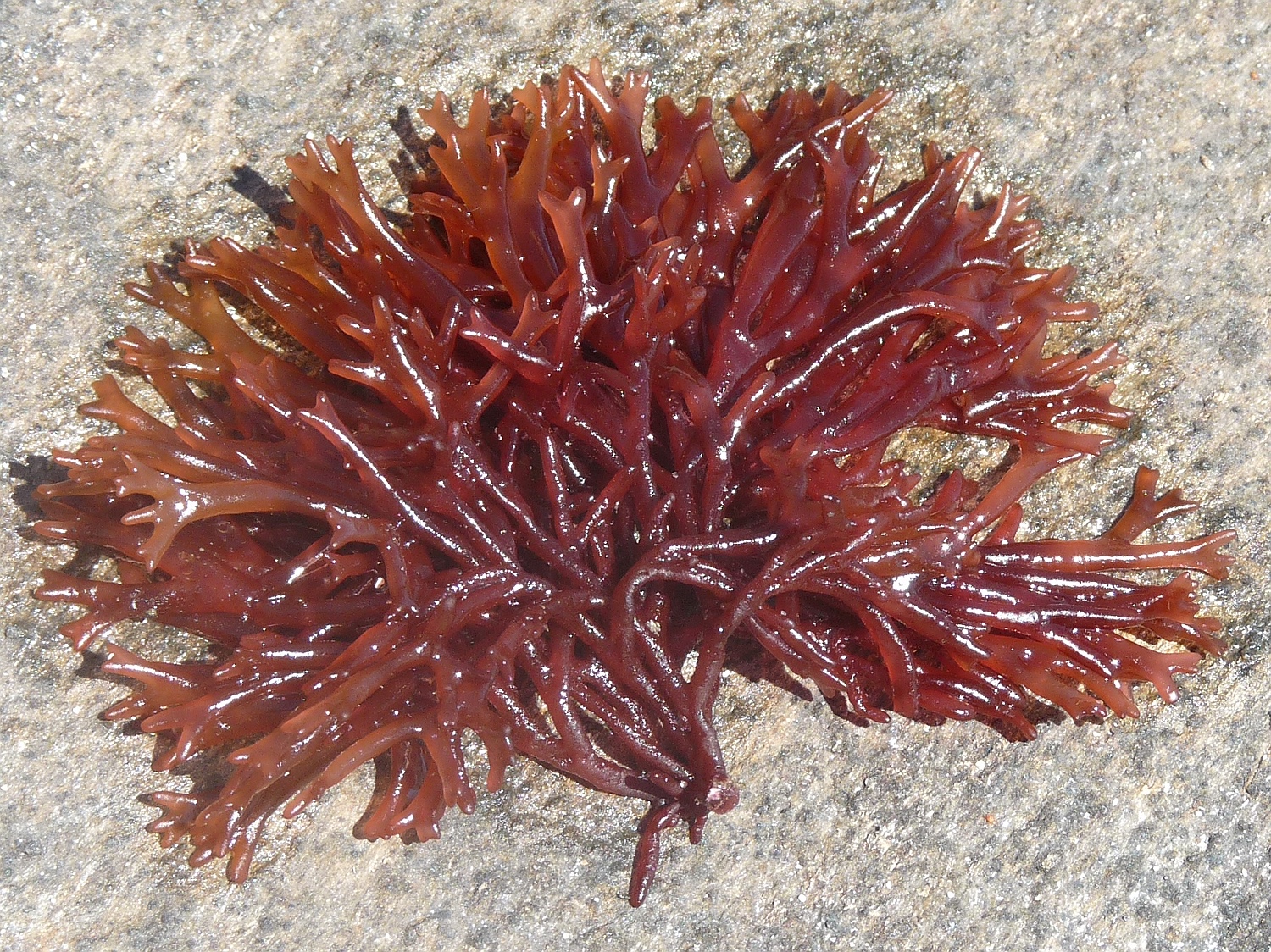
Scinaia furcellata has a thick, fleshy, broadly forked thallus, sometimes with small spore-forming branches.
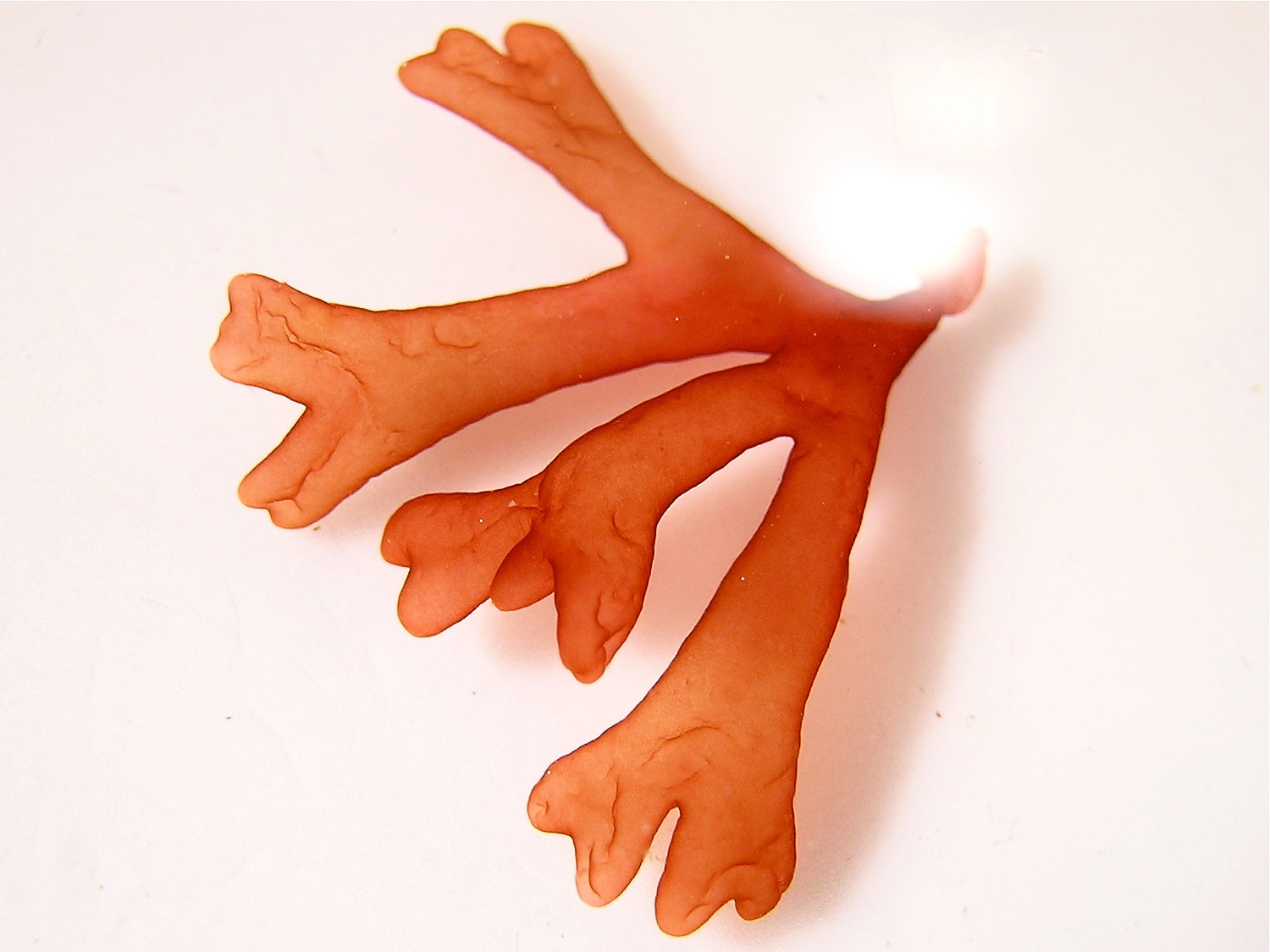
The thallus shows characteristic indentations, which make the species easy to recognise.
Verlaquea lacerata ?, Le Gall & Vergés
(= Kallymenia l.)
very rare in our region, not found directly on the coast, only floating in the water
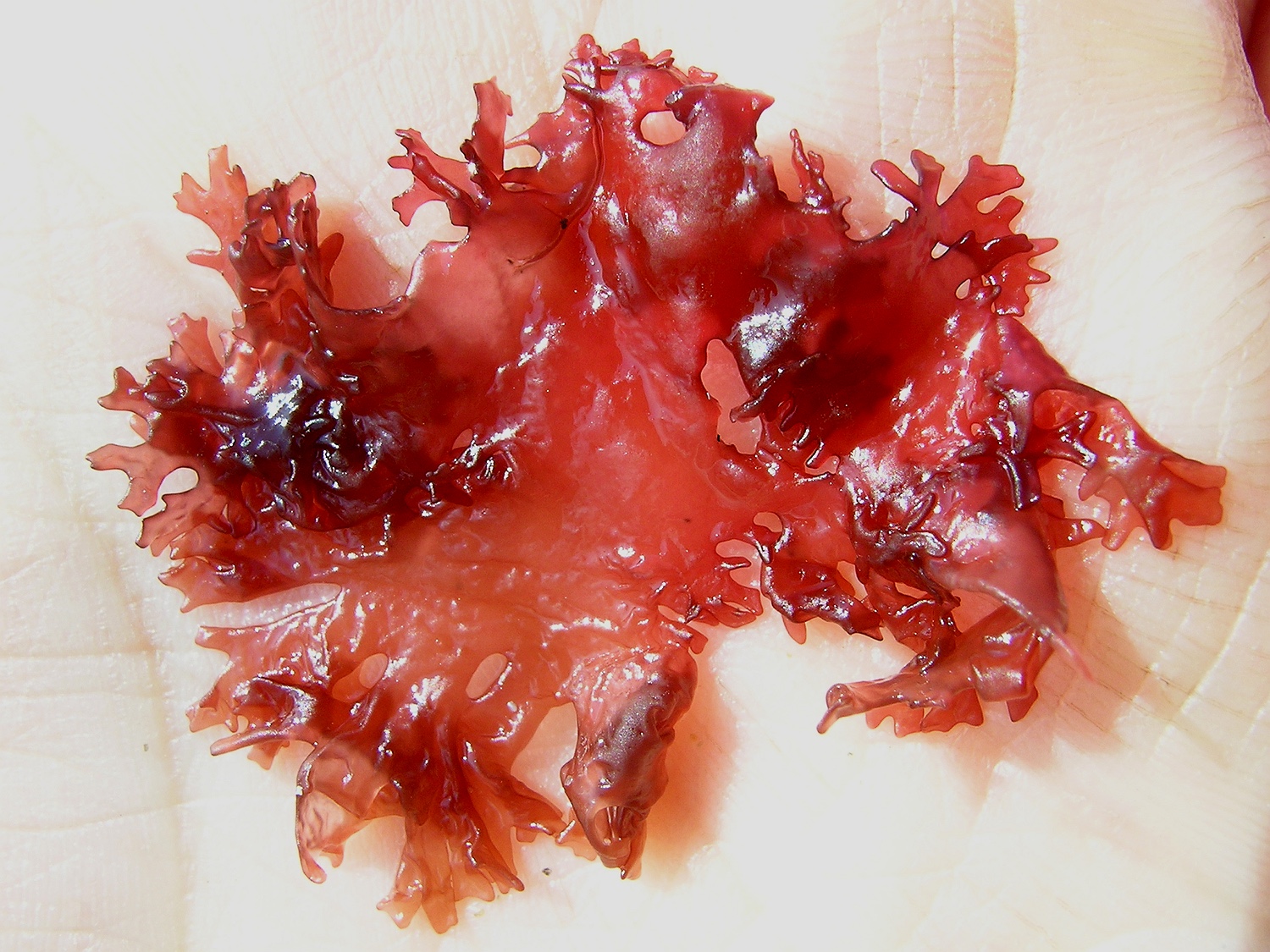
The flat, fleshy thallus of this species is lobed and slightly branched.
Halurus equisetifolius ?, Kützing
very rare, found only in one location, directly below the waterline
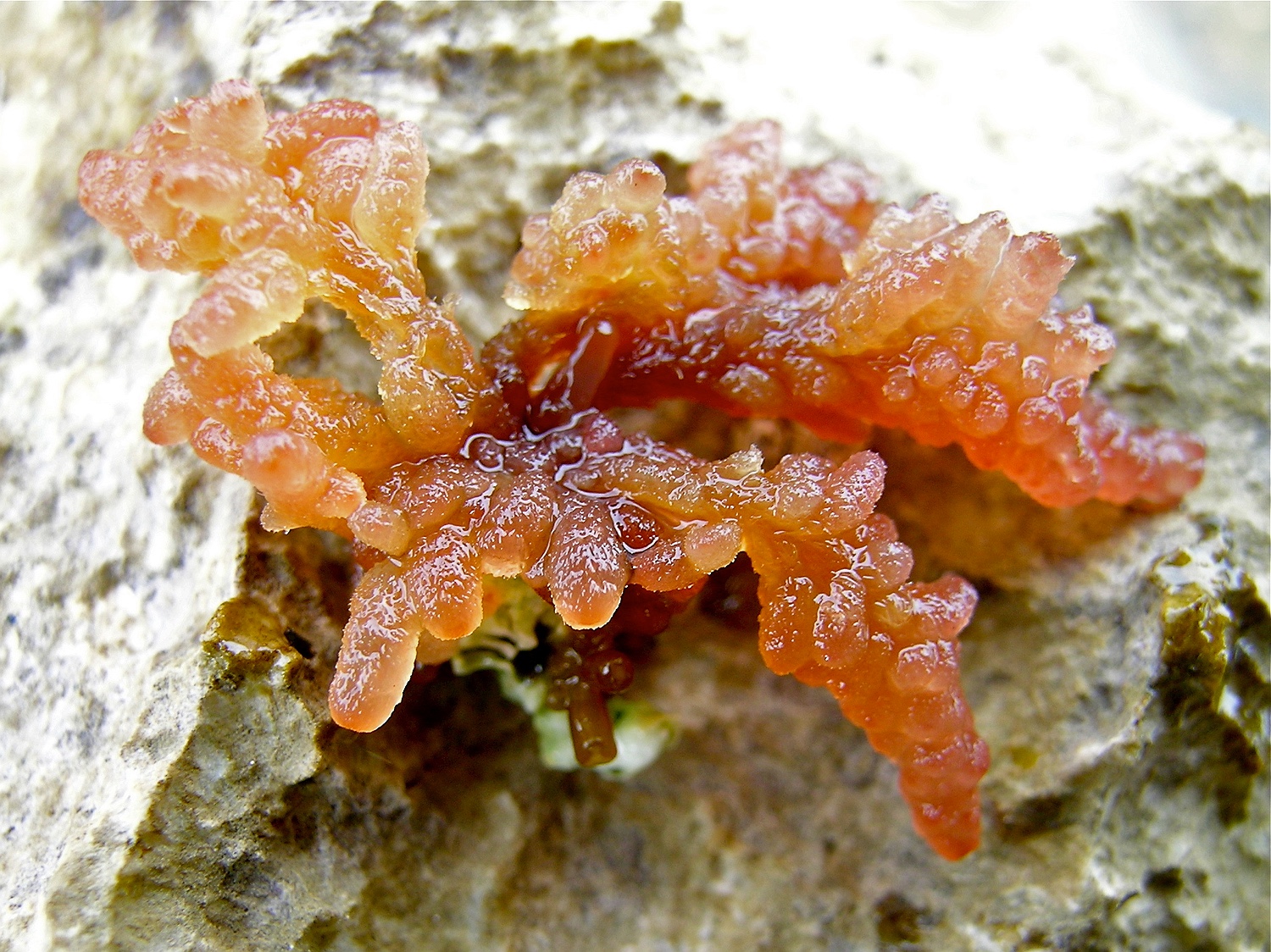
The loosely branched, fairly firm thallus of this species is covered with dense, whorled tufts of small, branched side branches. It could possibly be Halurus equisetifolius, although the growth form looks a bit different.
continue:
see also: