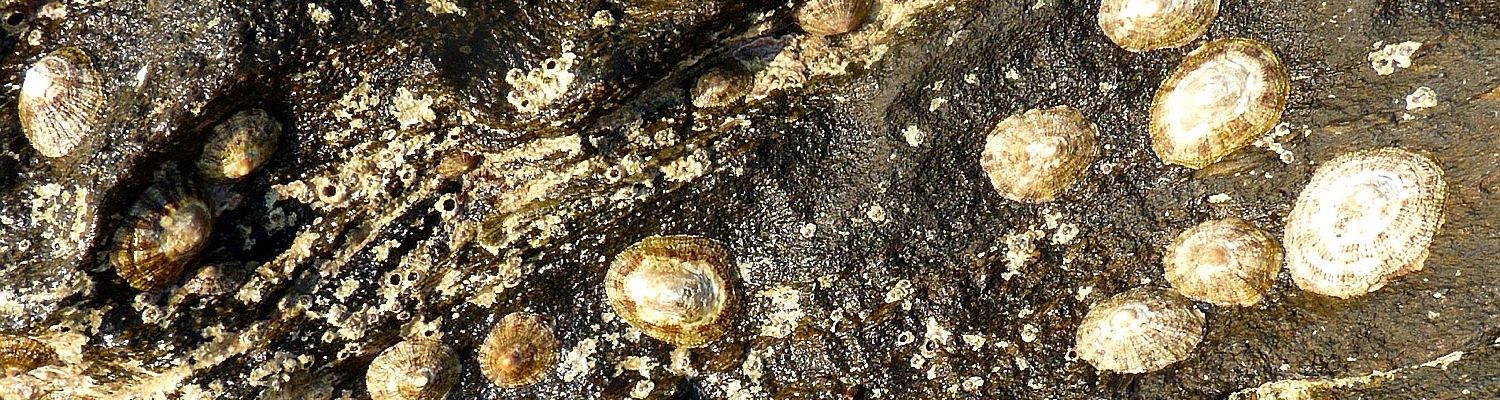
Gastropods 1: Limpets
The limpets (genus Patella) belong to the snails and not to the mussels, even though their shells are not coiled. Unlike snails, mussels always have two shells. Within the snails, the limpets and their relatives form the more primitive subclass Eogastropoda, while all the other snails belong to the subclass Orthogastropoda.
Here you can skip the introduction and go directly to the species.
At least two species of limpets are common in the intertidal zone of Naxos. Unfortunately, as with so many snails, identification is not easy.
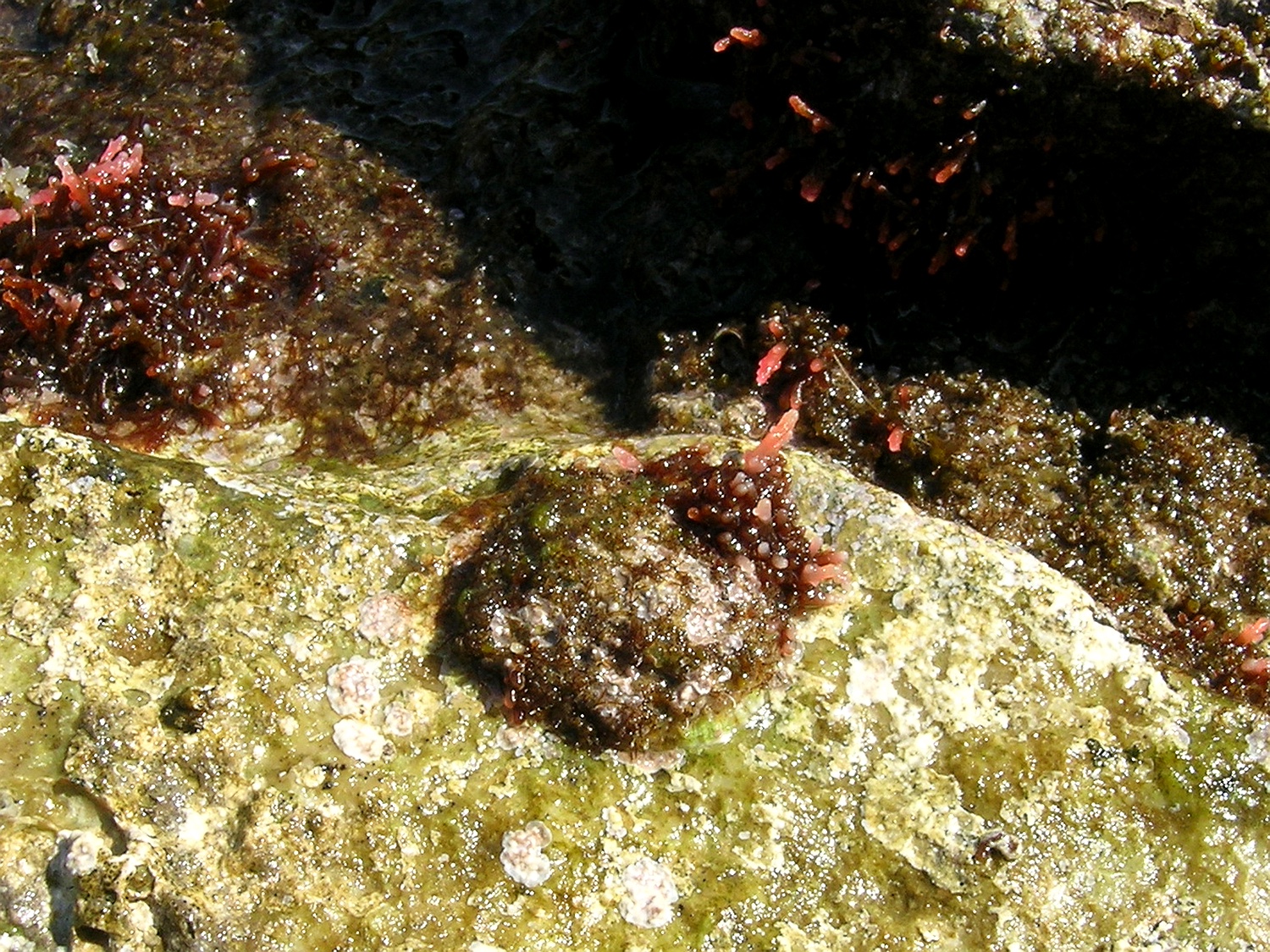
Limpets live in the intertidal zone. They are very common, but not always easy to spot.
Limpets sit on the rocks at and above the waterline. They are among the few organisms that can exist in the supralittoral (the splash zone) with its extreme environmental conditions. Limpets attach themselves so strongly to the rock that they are almost impossible to remove. Thanks to their robust shells and strong foot muscles, they can resist even the strongest waves. They are also unaffected by prolonged exposure to dry conditions: a small water chamber inside their shells ensures their water supply.
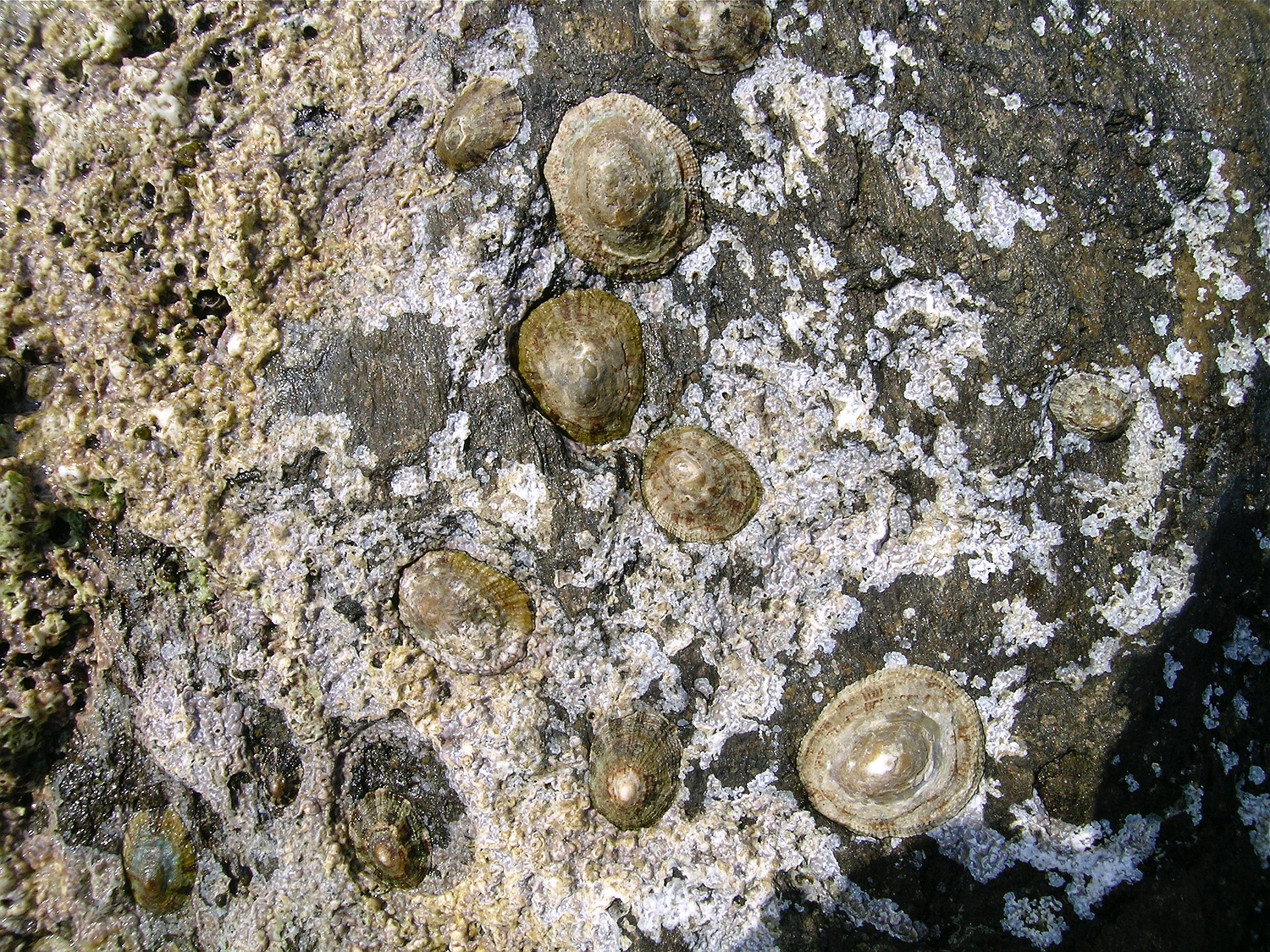
During the day, each limpet sits in a specific spot on the rock, to which the shape of its shell is perfectly adapted.
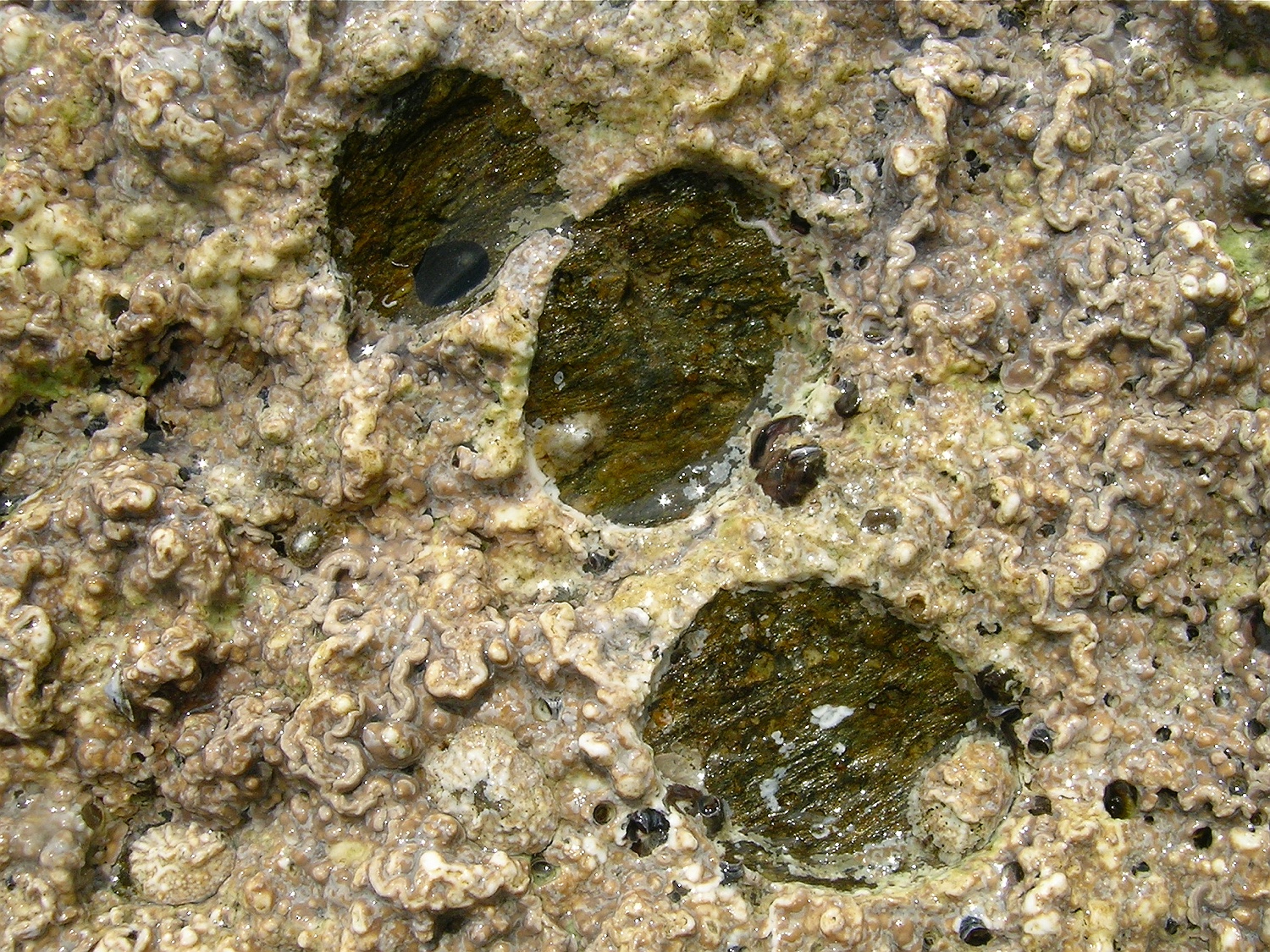
Here you can see empty limpet “seats”.
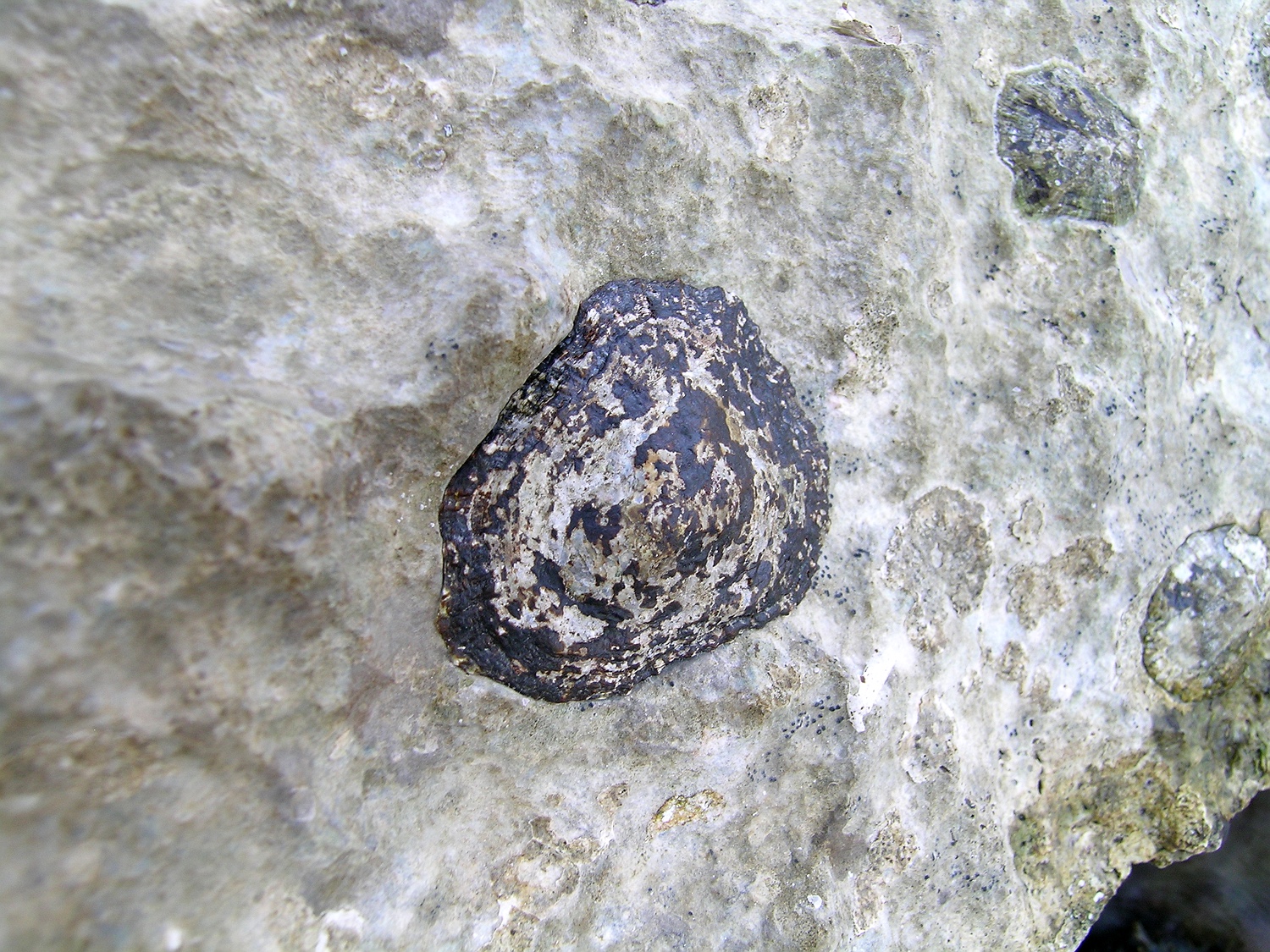
Limpets cling so tightly to the rock that even the strongest waves cannot tear them off.
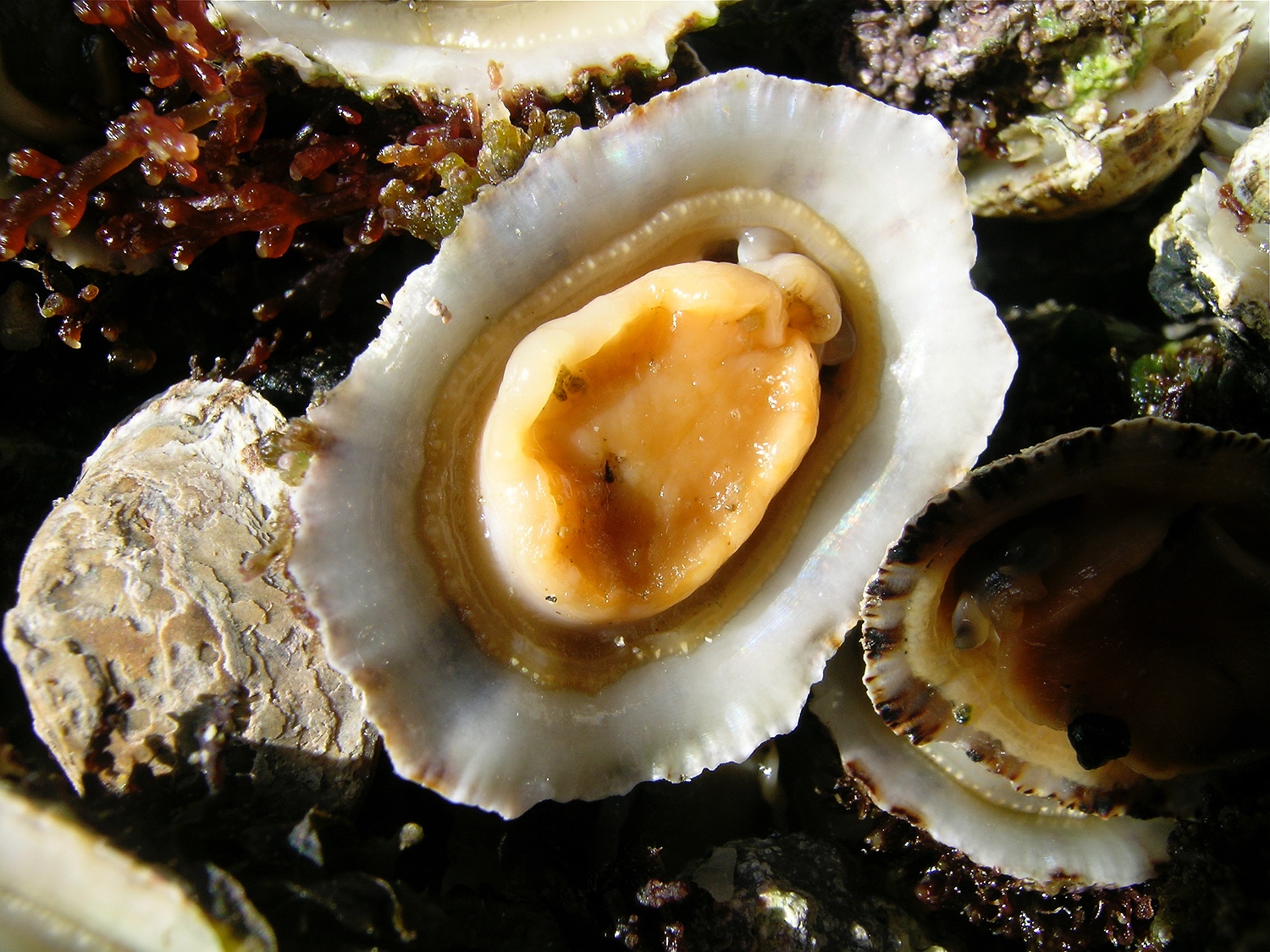
From below, you can see their powerful foot and the head; they breathe through small gill-like appendages that sit as a narrow fringe between the foot and the mantle (which adheres to the shell).
At night, limpets wander around and graze on the algae that grow on the rocks. On slate, they have to descend into the mesolittoral with its crustose calcareous algae, while on marble they graze on the thin layer of blue-green algae that covers all the rocks of the supralittoral and gives them their characteristic colouring. During the day, each limpet returns to its own place, to which its shell is perfectly adapted.
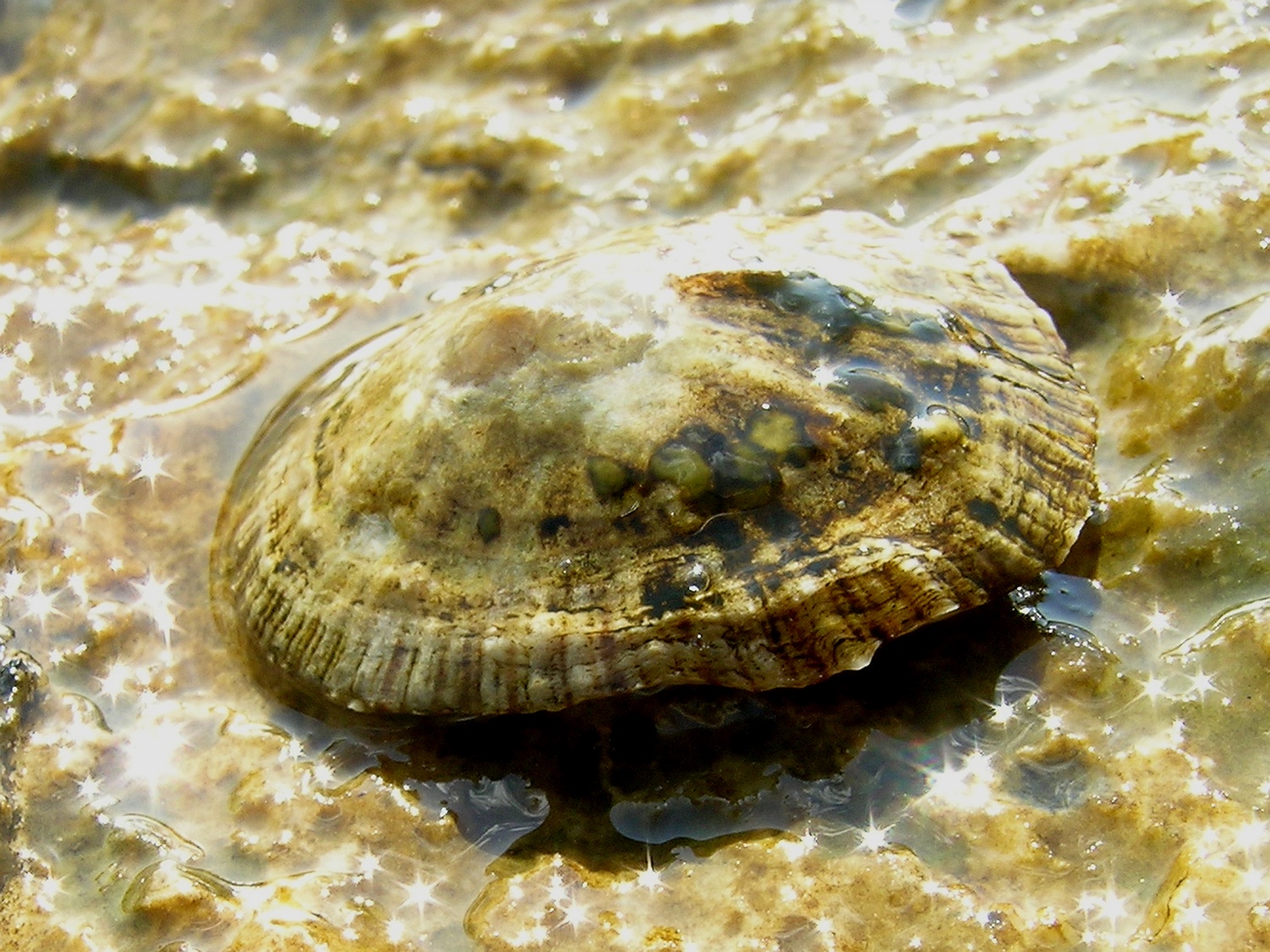
feeding limpet; the shell is slightly raised from the substrate
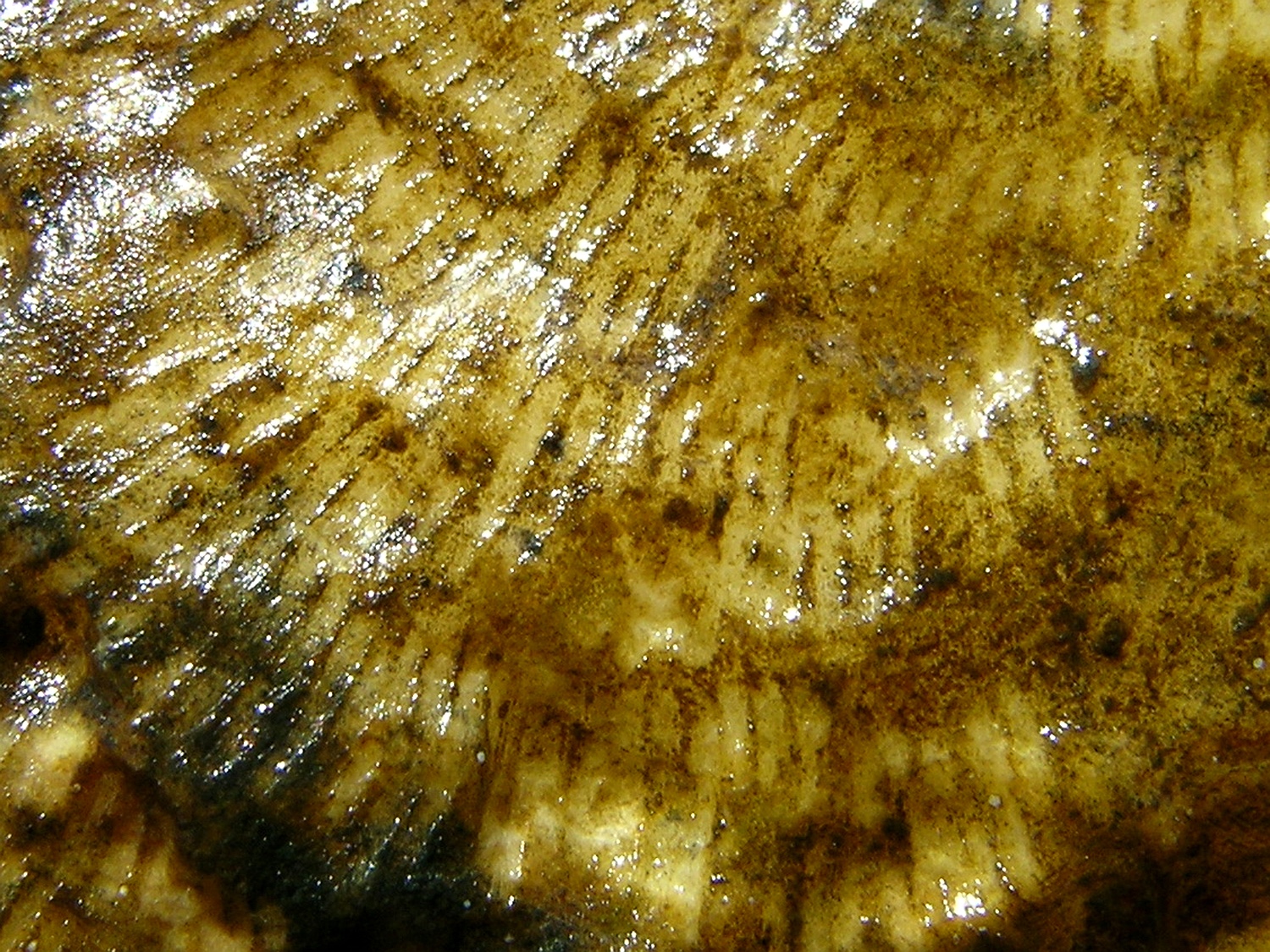
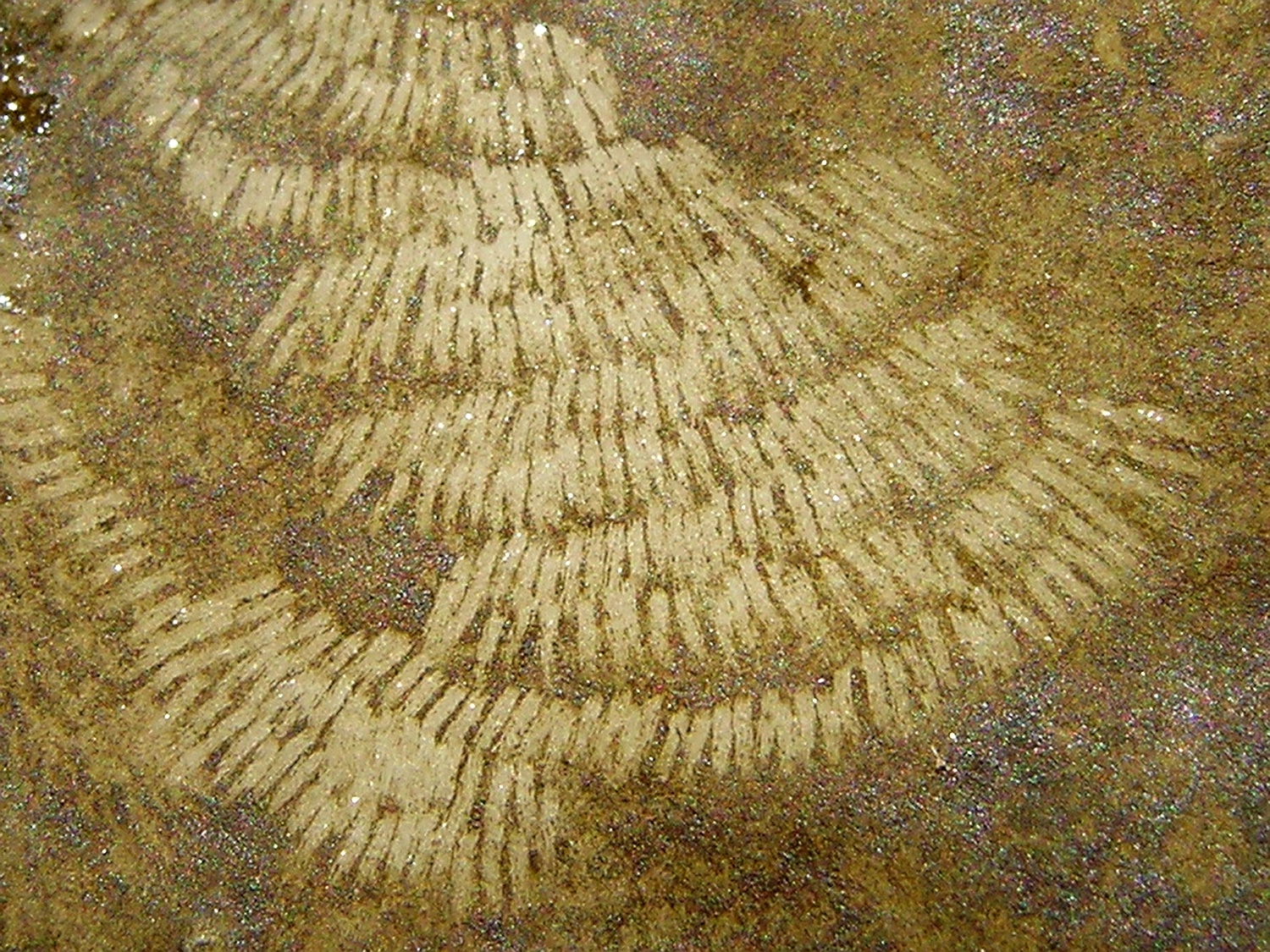
feeding traces of limpets in the blue-green algae (Entophysalis granulosa) in the lower supralittoral
Limpets occur on both marble and slate. The limpets that live at or below the waterline are usually covered with algae, making them almost indistinguishable from their surroundings.
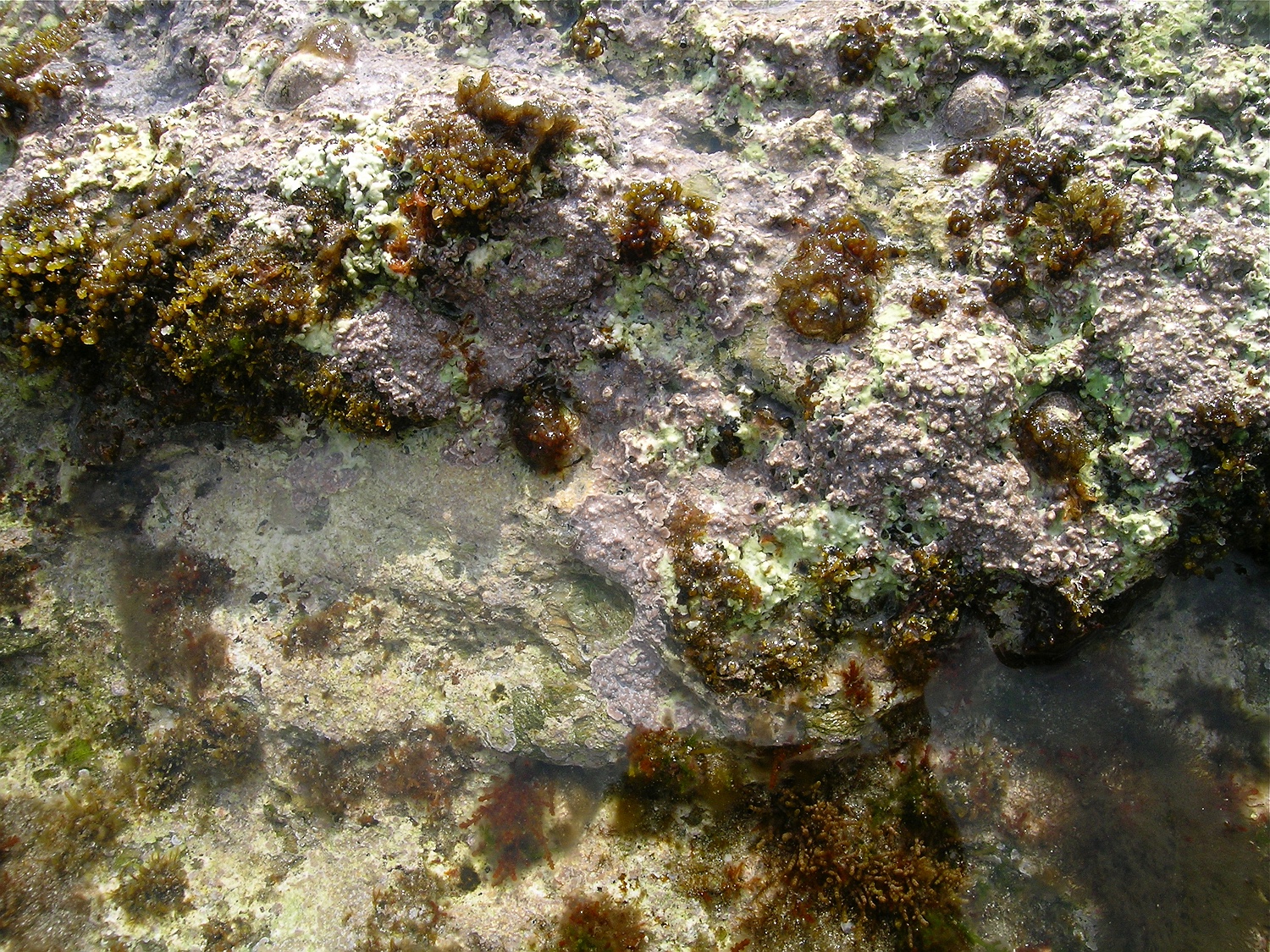
At least six limpets can be seen in this picture.
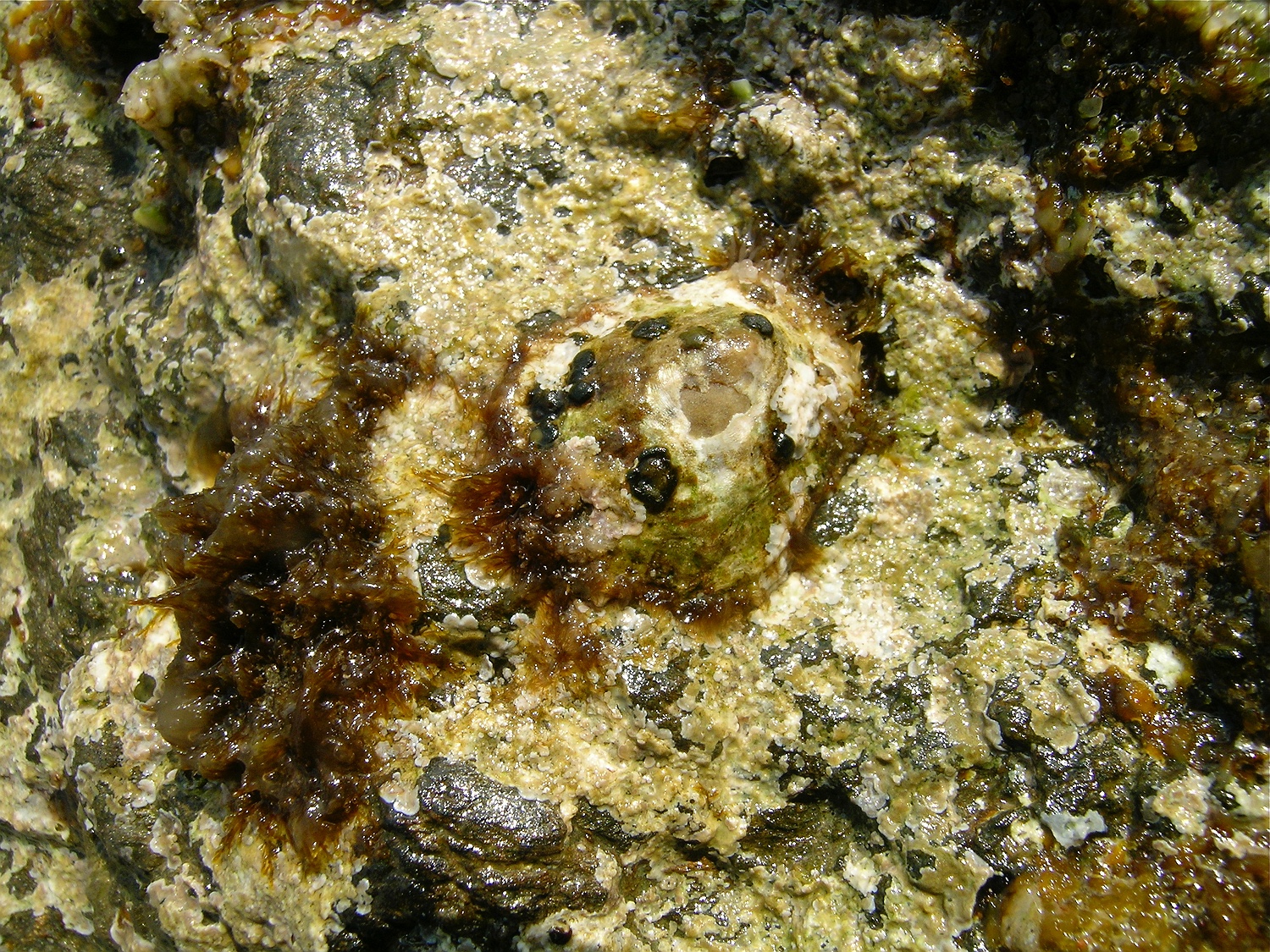
Limpets are very well camouflaged!
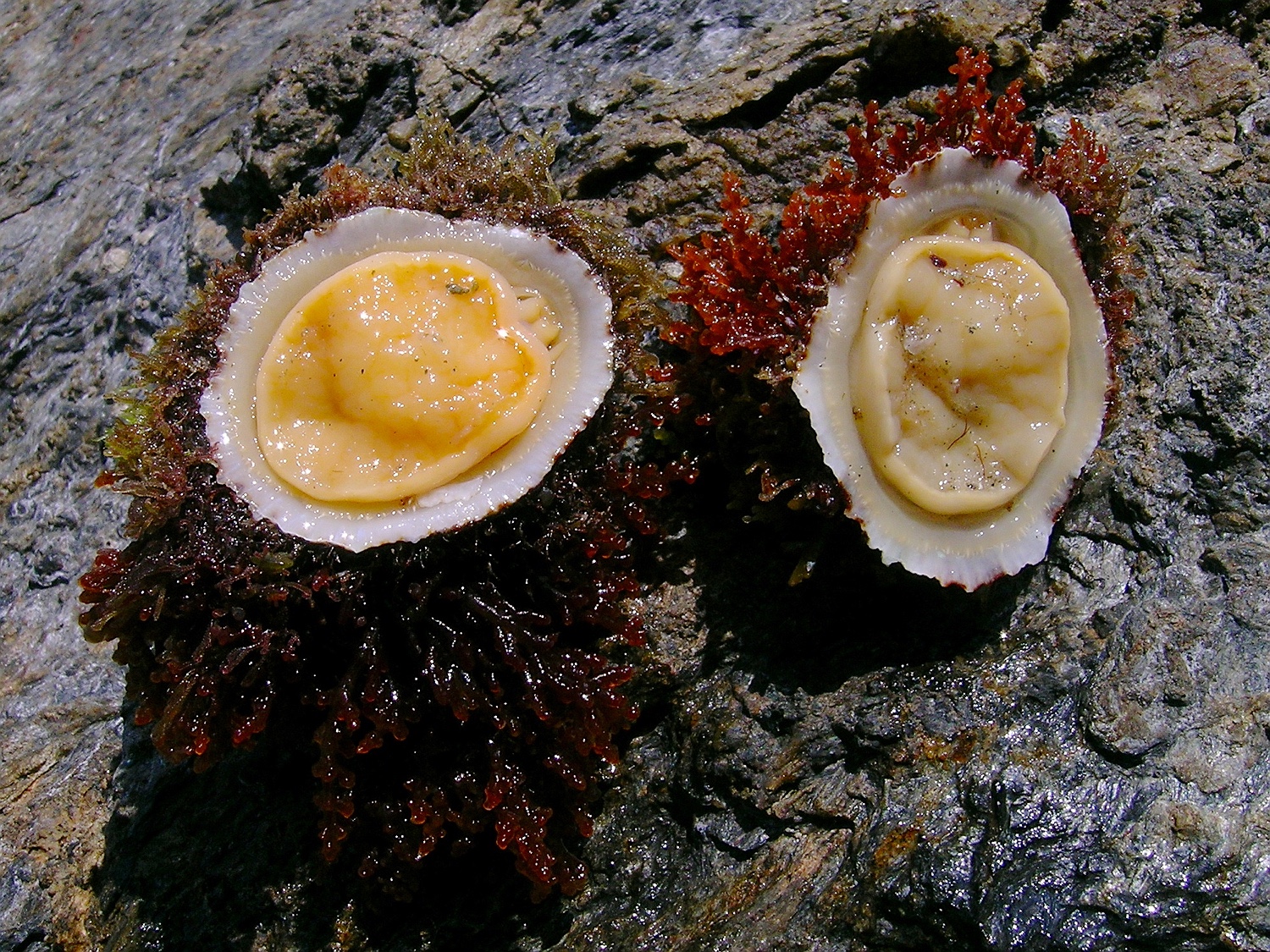
Limpets densely covered with algae seen from below. One can see the strong yellowish foot and the tiny head with the mouth opening and the short antennae.
Natural enemies of the limpets are the starfish, against which they can defend themselves quite effectively: As soon as a starfish’s arm touches the edge of a limpet, it lifts its shell and snaps back down, often injuring the attacker. In fact, starfish usually give up their attack after such a reaction from the limpet.
Species of limpets on Naxos
The Photo gallery of the marine snails gives an overview over the species.
A note on identification: Some species usually can be identified easily and reliably. In many cases, however, several related species are difficult to distinguish. Also not all species are included in the field guides; even using the internet, it is difficult to find information on some species. Accordingly, some of the identifications may not be correct.
And a word about the names: As with many marine animals, there is a great deal of confusion surrounding the names of snails: for almost all species, a large number of synonyms exist that are no longer valid today but are still used in older books. I use the names according to the World Register of Marine Species (as of 2020), where you can also find the corresponding synonyms.
Mediterranean limpet, Patella caerulea, L.
The Mediterranean limpet is the most common species on Naxos. It has a flat shell with around ten more or less distinct ribs and faint concentric growth lines. The shape and colouring of the shell are highly variable.
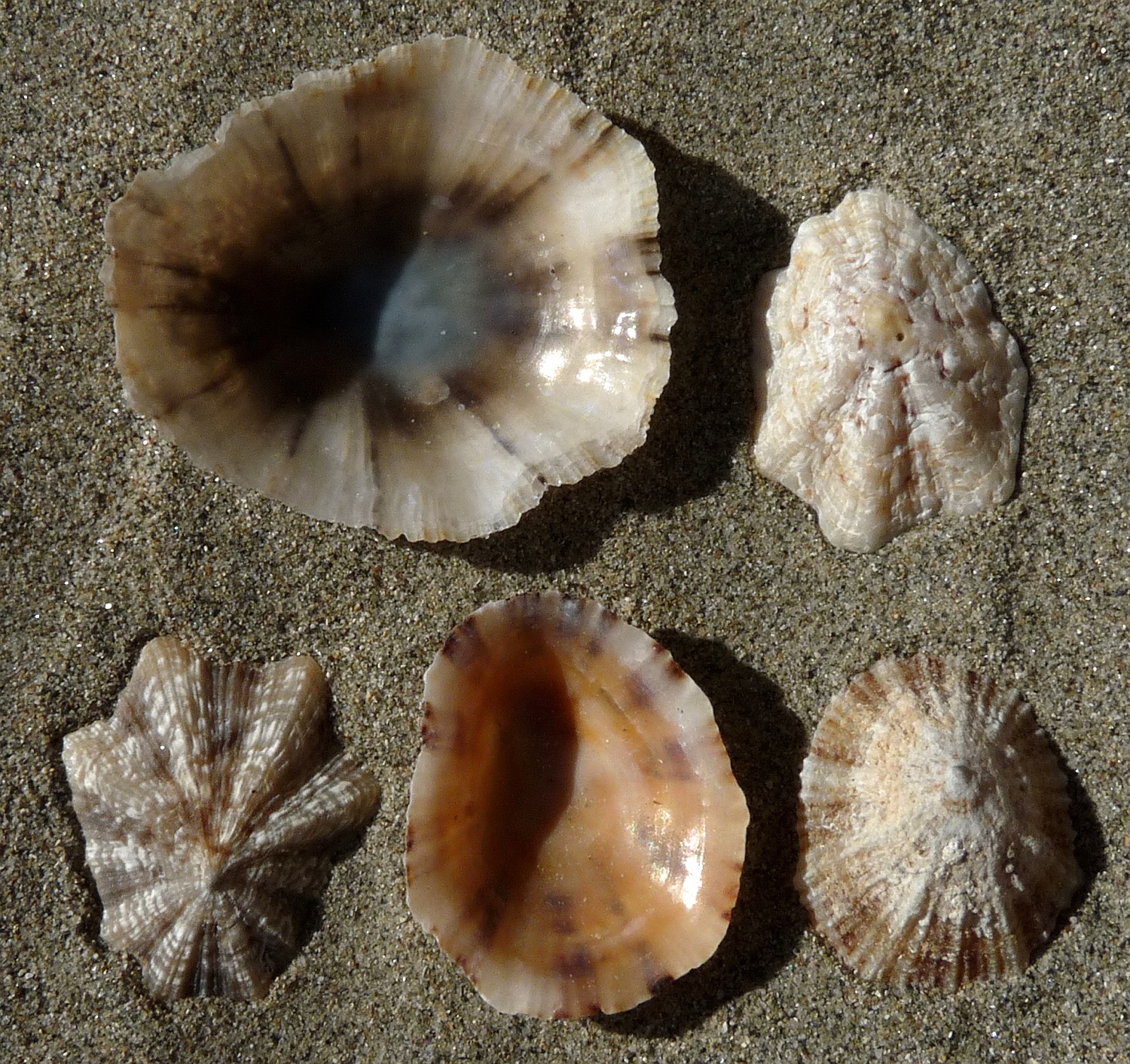
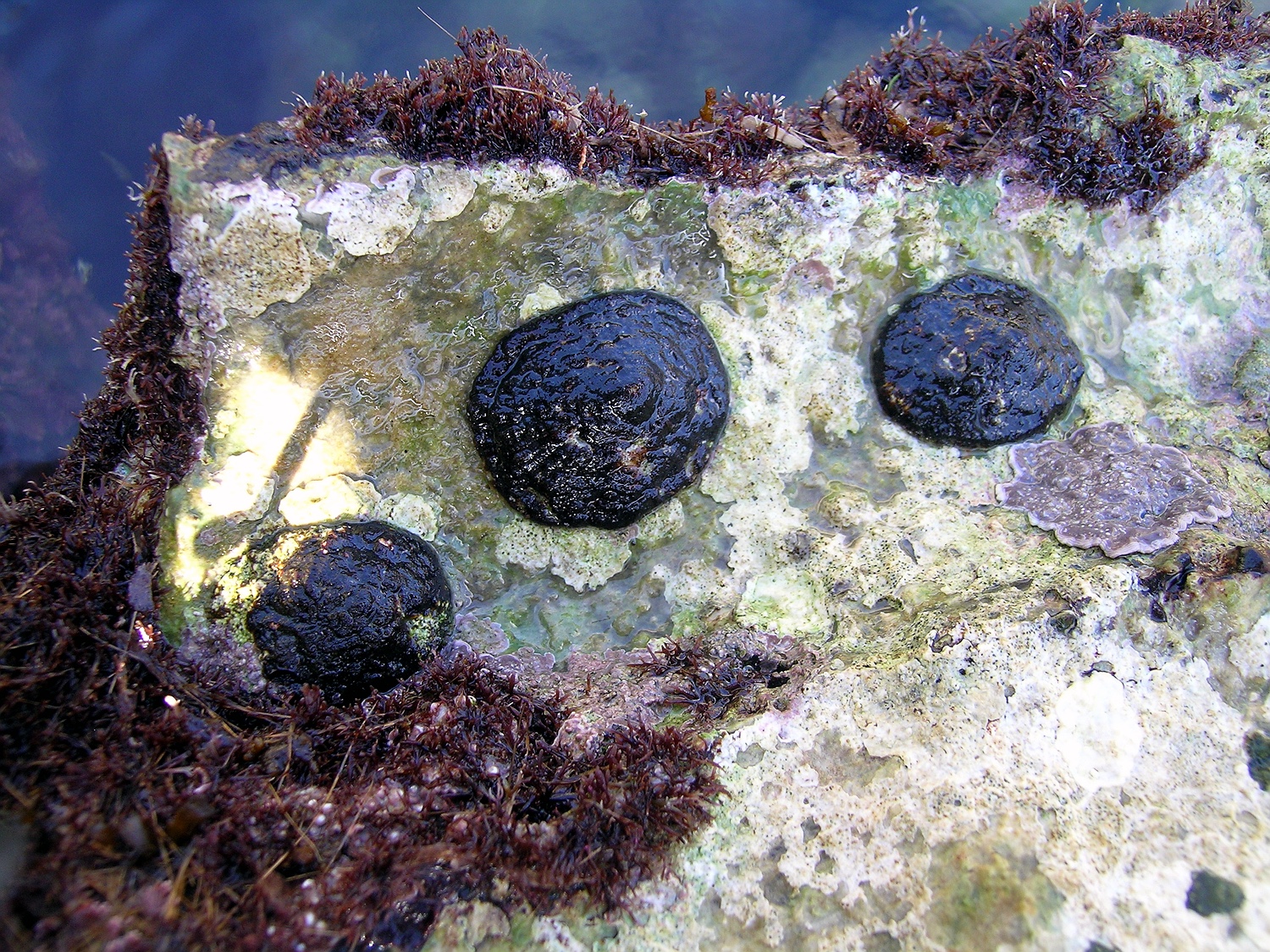
Often the shells are quite flat.
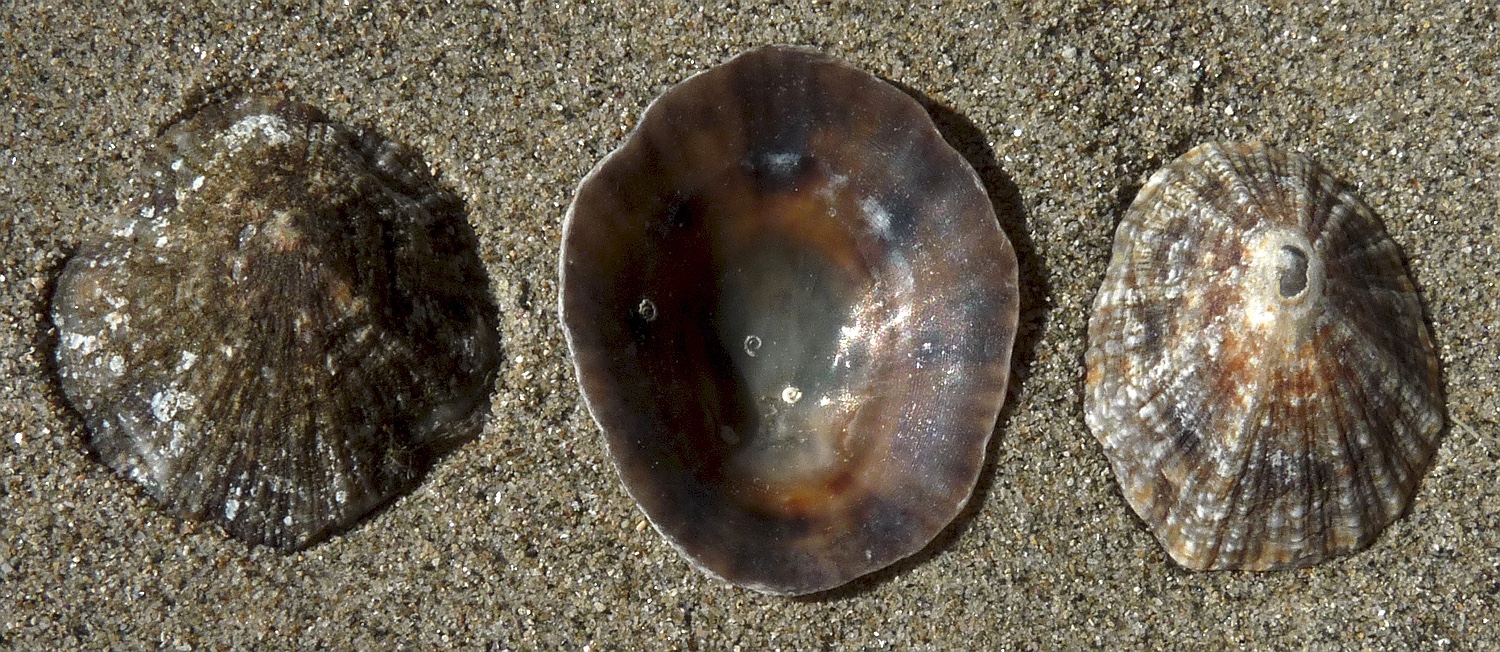
Some shells are dark on the inside.
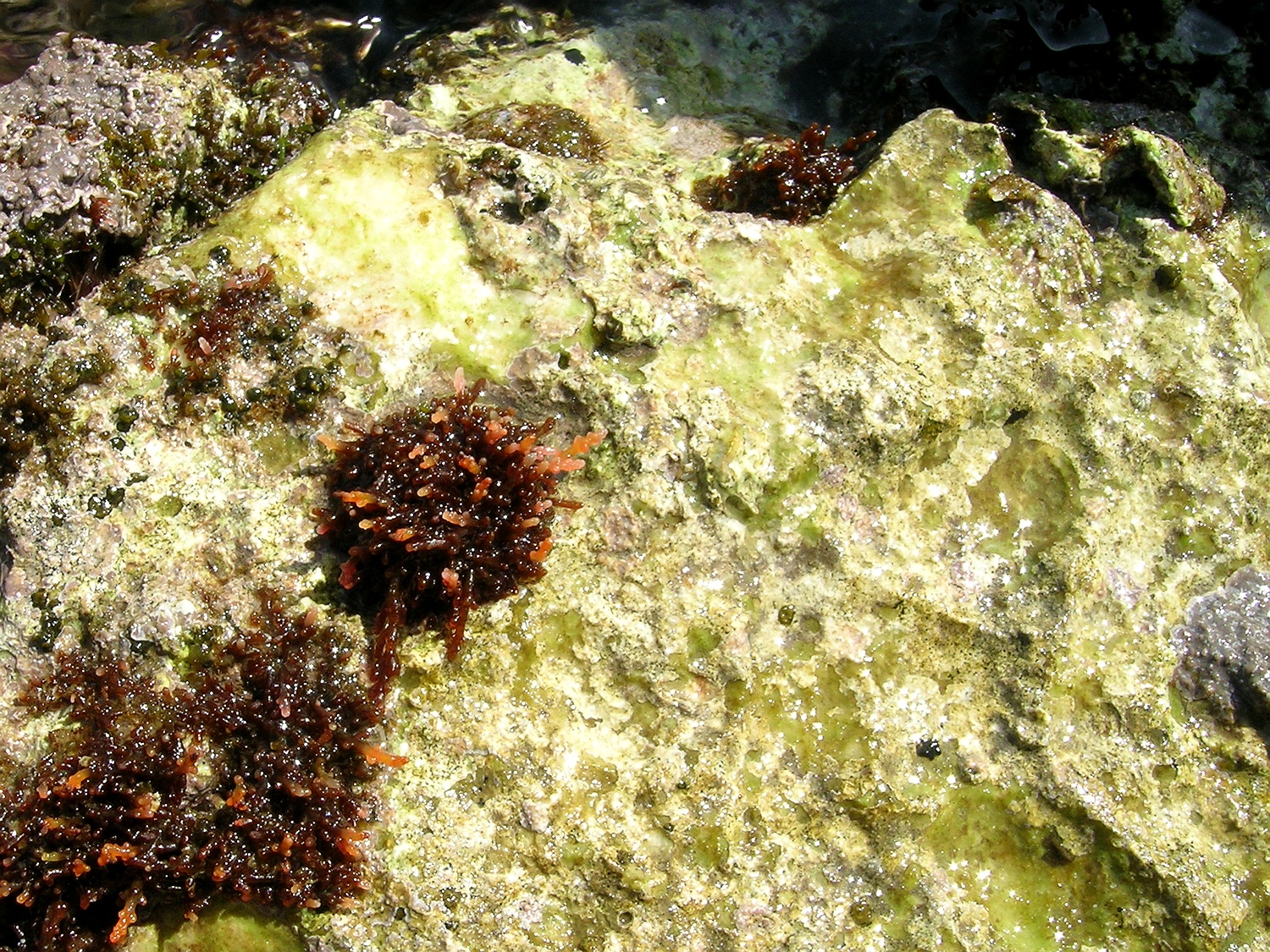
Below the waterline, the specimens often have a slightly higher shell; the foot of these limpets is orange in colour from below. These limpets probably also belong to the species Patella caerulea.
Lusitanian limpet, Patella rustica, L.
The shells of Patella rustica are taller and more regularly shaped, with numerous ribs of equal thickness on the upper side. They are brownish or whitish in colour with small, darker spots on the ribs. On the inside, the shells are orange in the centre and lighter towards the edges, with a dozen or so dark radial stripes.
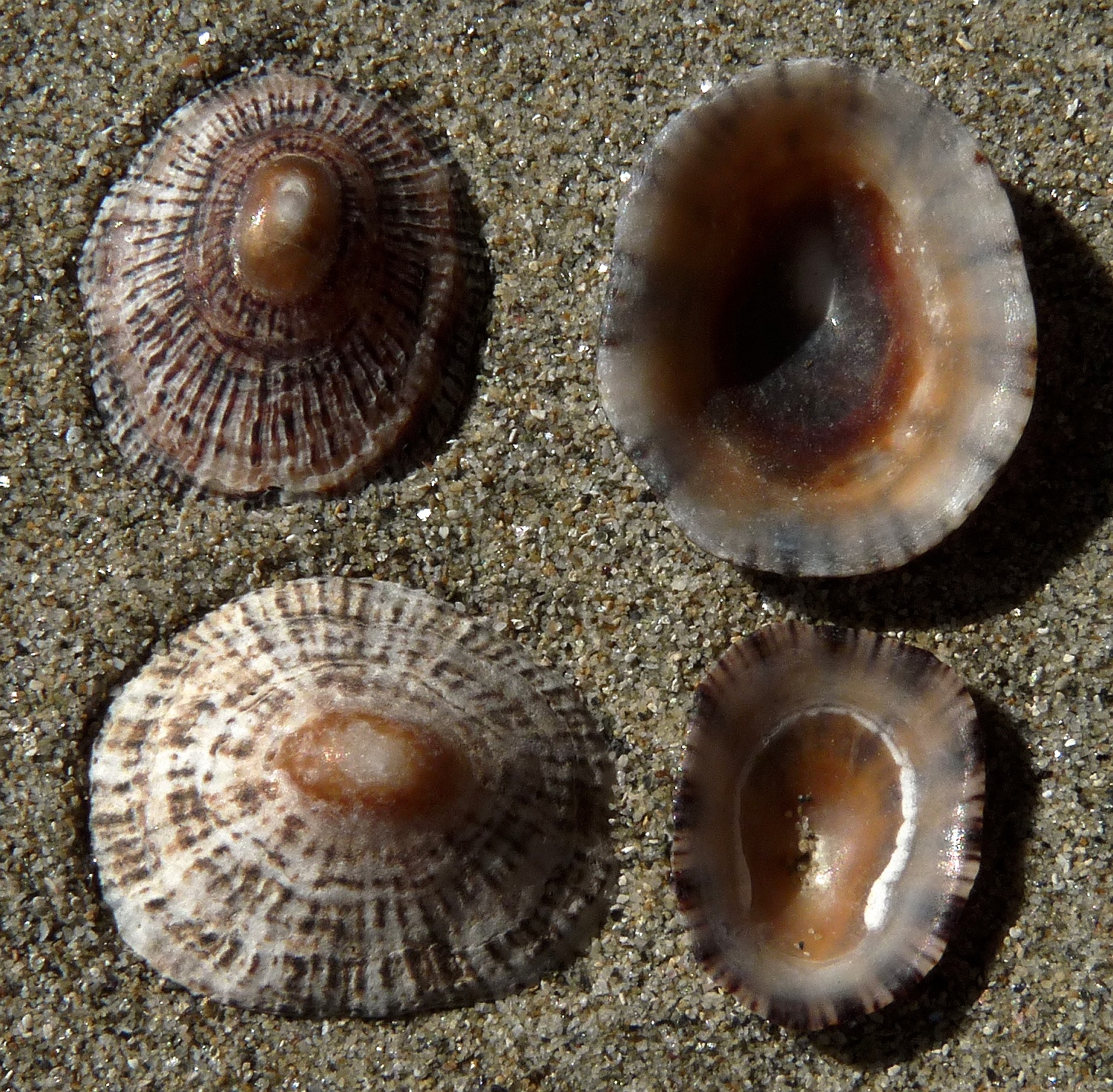
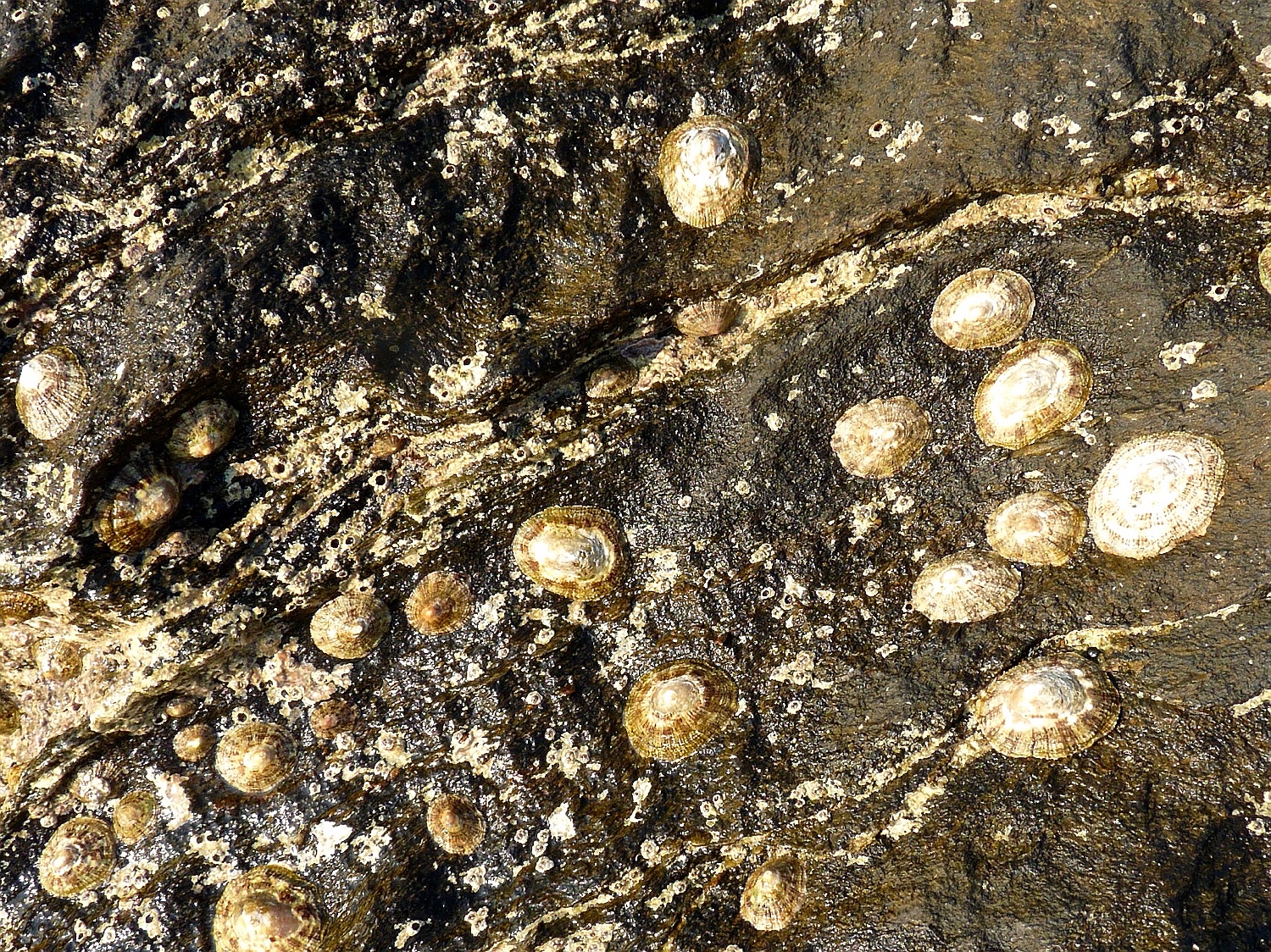
The Lusitanian limpet is mainly found well above the waterline; accordingly, it is not usually covered with algae.
continue: Abalone and Fissurellidae
back:
Comments are closed.