
Green algae
Green algae are particularly common in the light-rich layers of the sea near the surface. Most species have an intense green colour (some red algae are also green). Green algae display very different growth forms. The thallus (body) can, for example, be leaf-like, turf-like or club-shaped. Some green algae are delicate and thin; they occur mainly in calm waters, where they often form large colonies.
Here you can skip the introduction and go directly to the species.
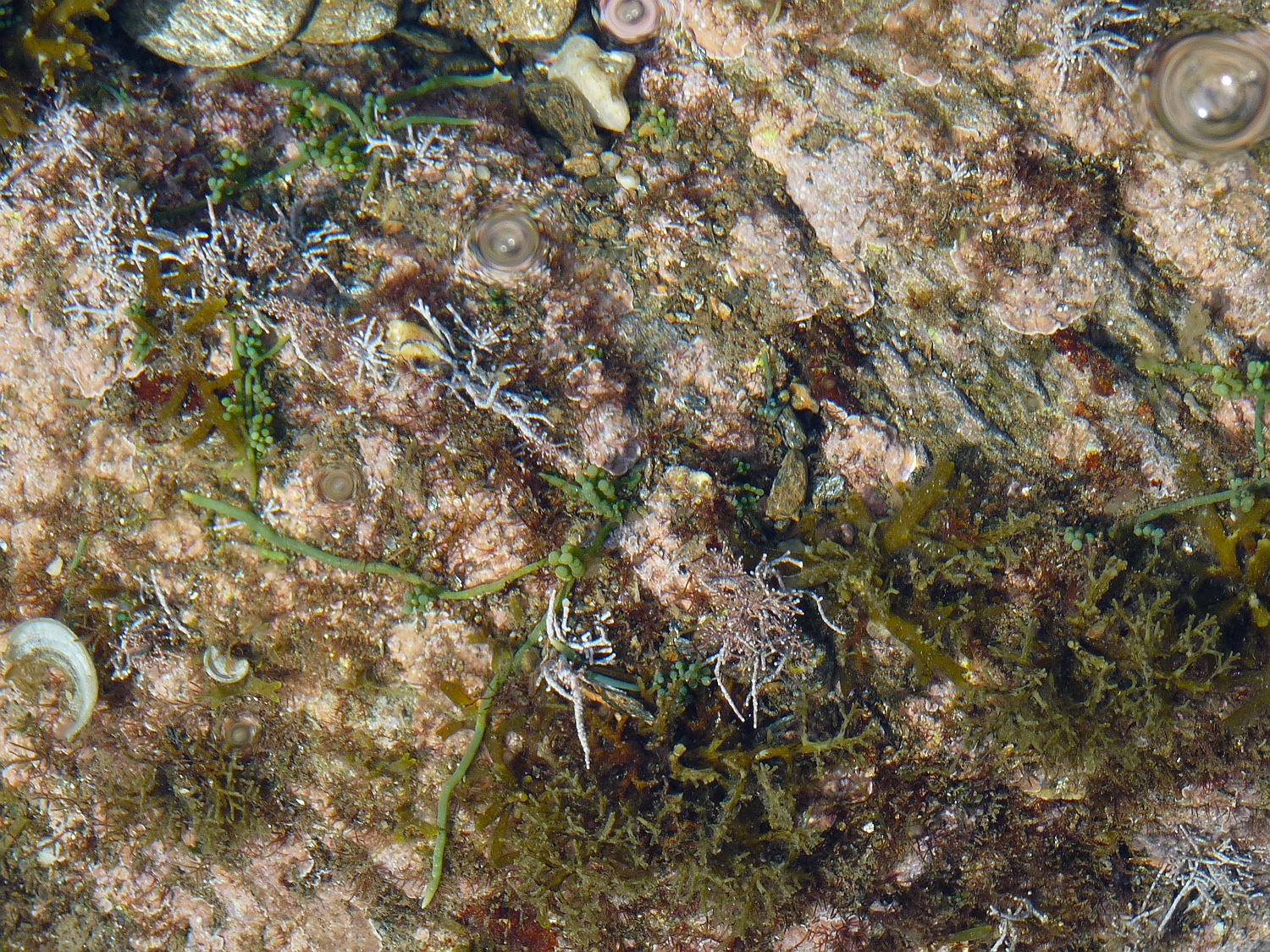
Here, the green alga Caulerpa racemosa grows between brown and red algae.
Around Naxos only a few species of green algae are common. They are mainly found in the intertidal zone (eulittoral) and in the shallow water. The most conspicuous species is the turf-like Chaetomorpha, which grows on slate near the waterline. In sandy bays such as Pánormos or Apóllonas, the leaf-like sea lettuce is also common. Other species such as the mermaid’s wine glass, Halimeda tuna and Caulerpa racemosa can only be found with a little more searching.
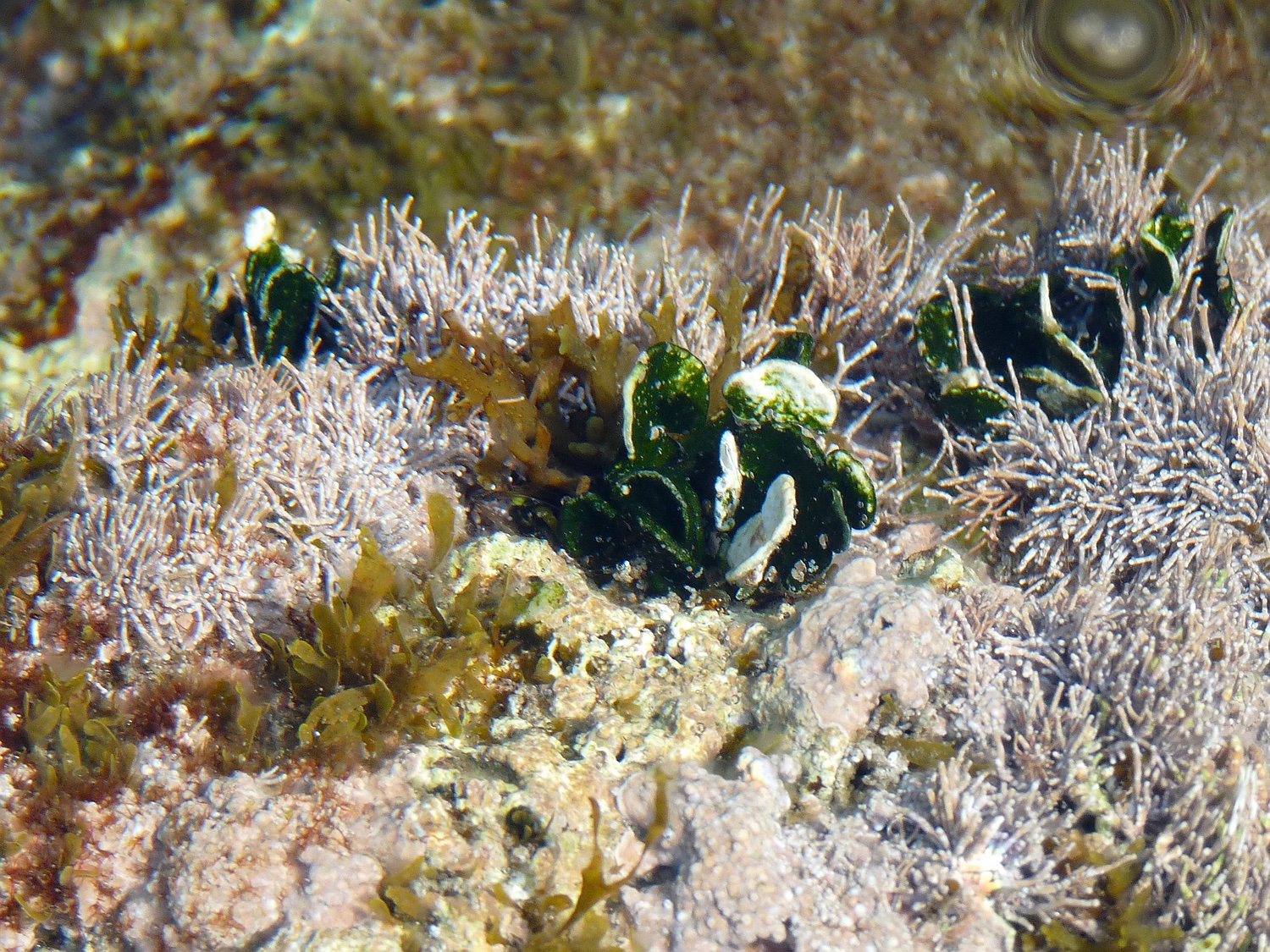
Green algae, which are usually quite easy to recognise by their intense green colour, usually make up only a small proportion of the algae flora in our area.
Species of green algae on Naxos
The Photo gallery of the marine plants gives an overview over the species. Please note that many identifications are uncertain.
A note on identification: Some species of algae can be identified easily and reliably. In many cases, however, there are several related species that are difficult to distinguish. Often, examination under a microscope is necessary for correct identification. Another problem with the identification is that not all species are included in the field guides; even using the internet, it is difficult to find information on many species. Often, the species identified with the help of books or photos on the internet look quite different from our specimen here. Accordingly, many of the identifications are unfortunately quite uncertain, and some species must remain completely unidentified.
Here you can jump directly to the species (return with the back arrow or by swiping back): Sea lettuce, Ulva – Anadyomene stellata – Chaetomorpha – Caulerpa – Flabellia – Halimeda tuna – Mermaid’s wine glass, Acetabularia acetabulum – Dasycladus vermicularis
Sea lettuce, Ulva lactuca ?, L.
in calm, shallow bays such as Pánormos or Apóllonas, also in eutrophic water; the exact species can only be identified with a microscope
Sea lettuce is edible and can be used as a salad. It has a very high content in various minerals.
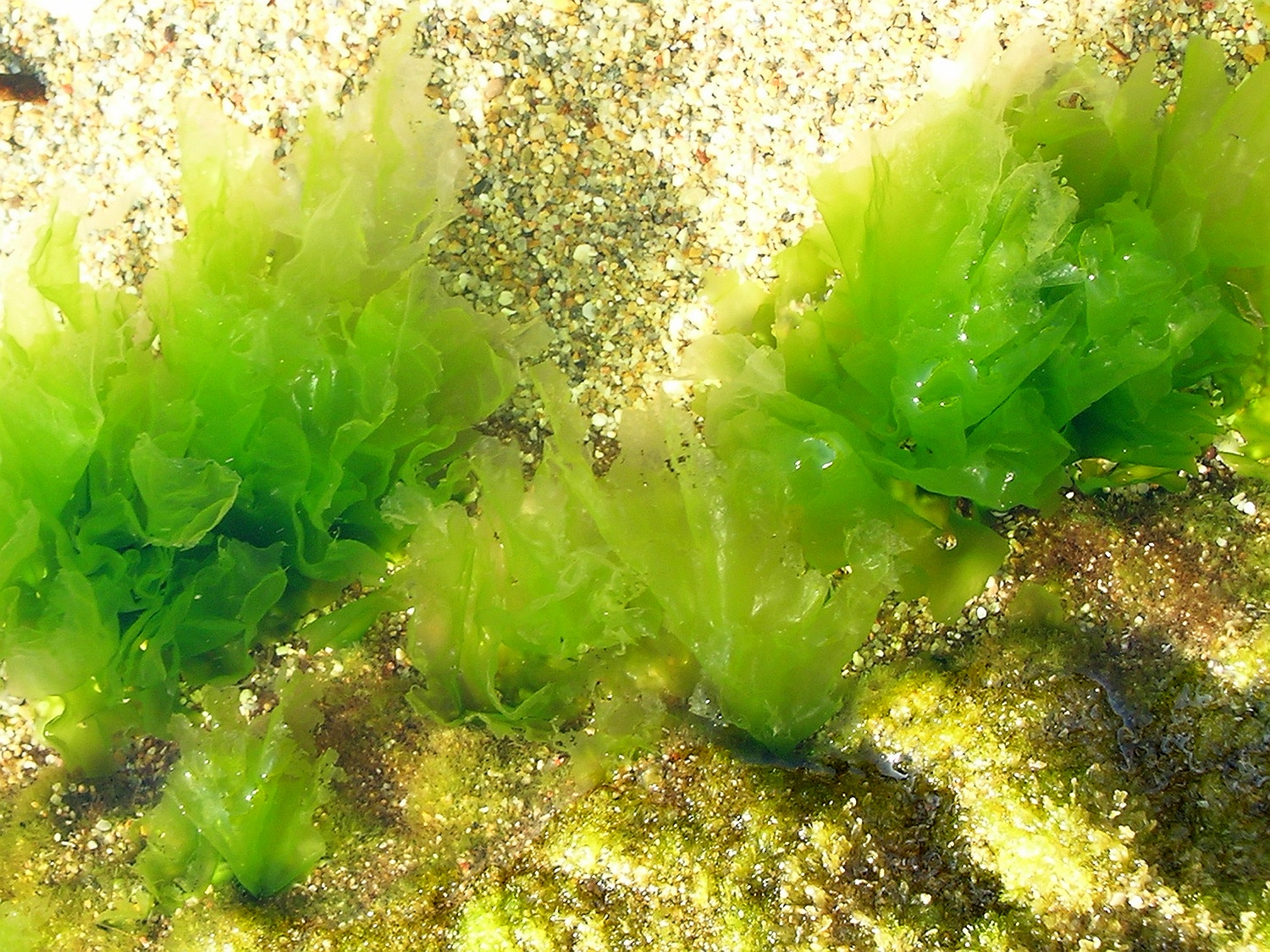
Sea lettuce is typical of calm, sandy bays with brackish or even slightly polluted water; it does not occur here in Azalás, but we have found it in Pánormos and Apóllonas.
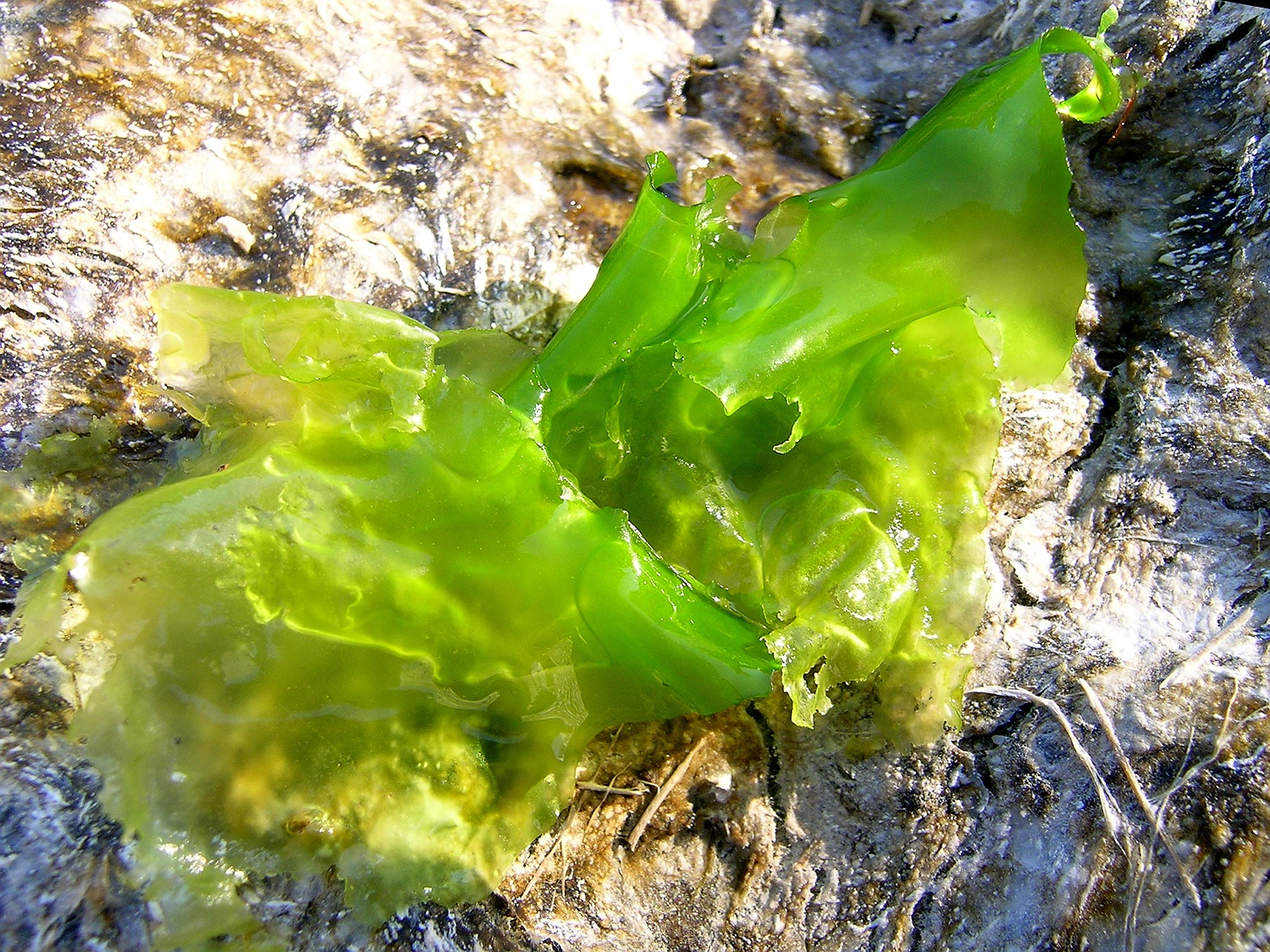
The species Ulva lactuca can be recognised by its very delicate leaves with smooth edges.
Ulva intestinalis ?, L.
in Apóllonas on washed-over, wave-exposed slate rocks together with Chaetomorpha; the species are difficult to identify
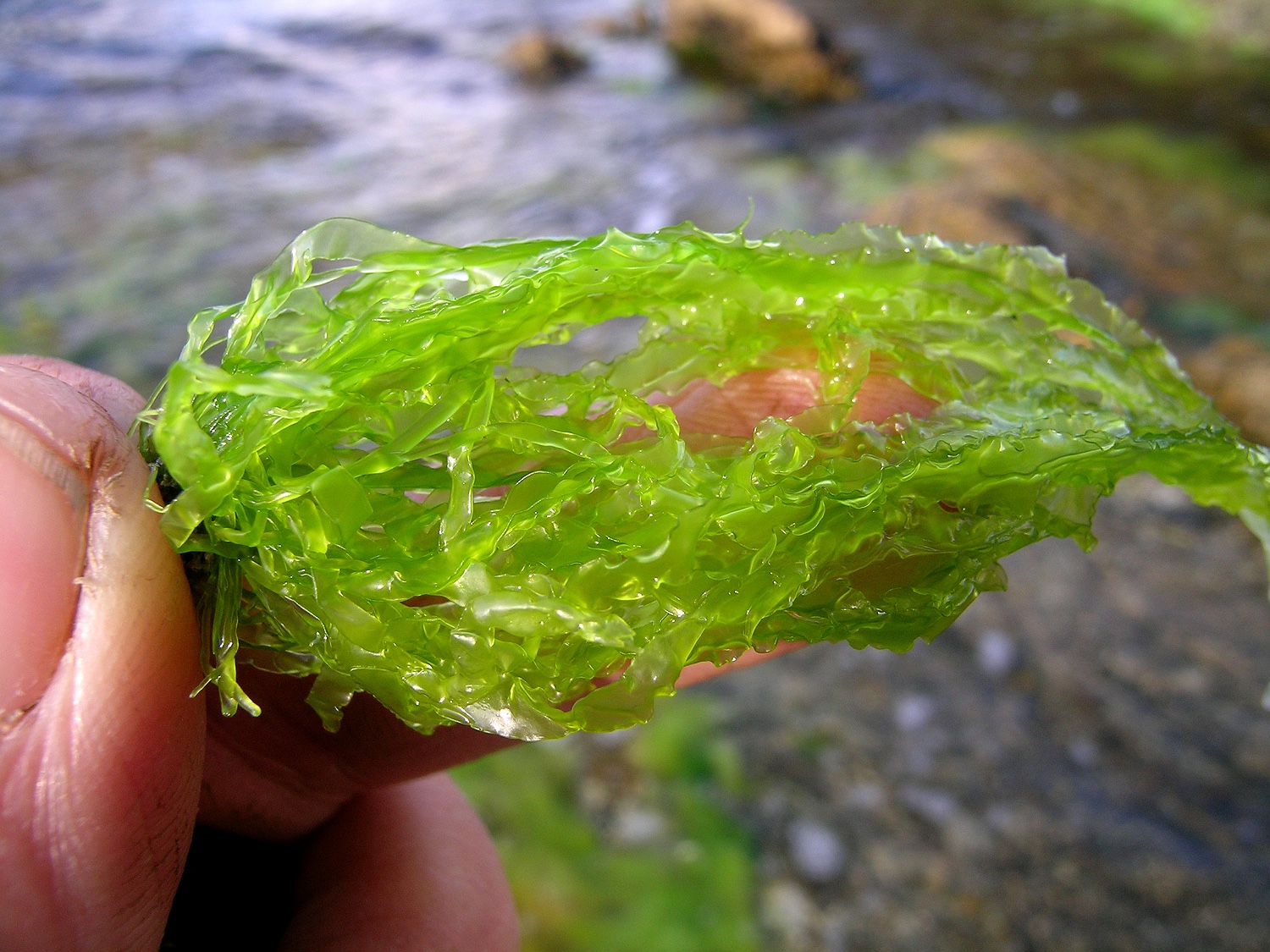
This species with tubular, ribbon-like frond branches is probably Ulva intestinalis.
Anadyomene stellata, C. Agardh
rather rare and inconspicuous, from the eulittoral downwards
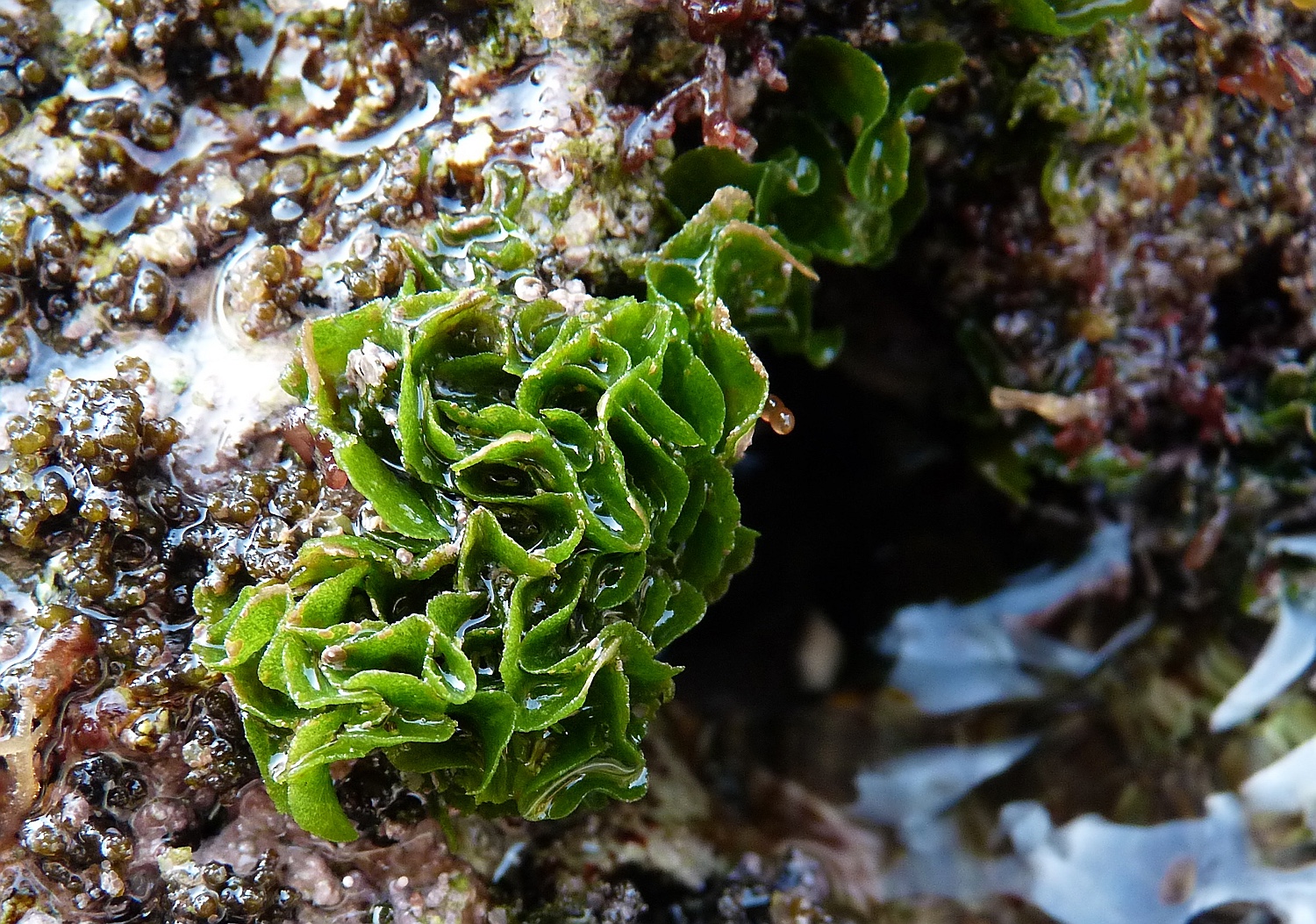
The small species Anadyomene stellata, which is rare in our region, has stiff leaves arranged in tight clusters.
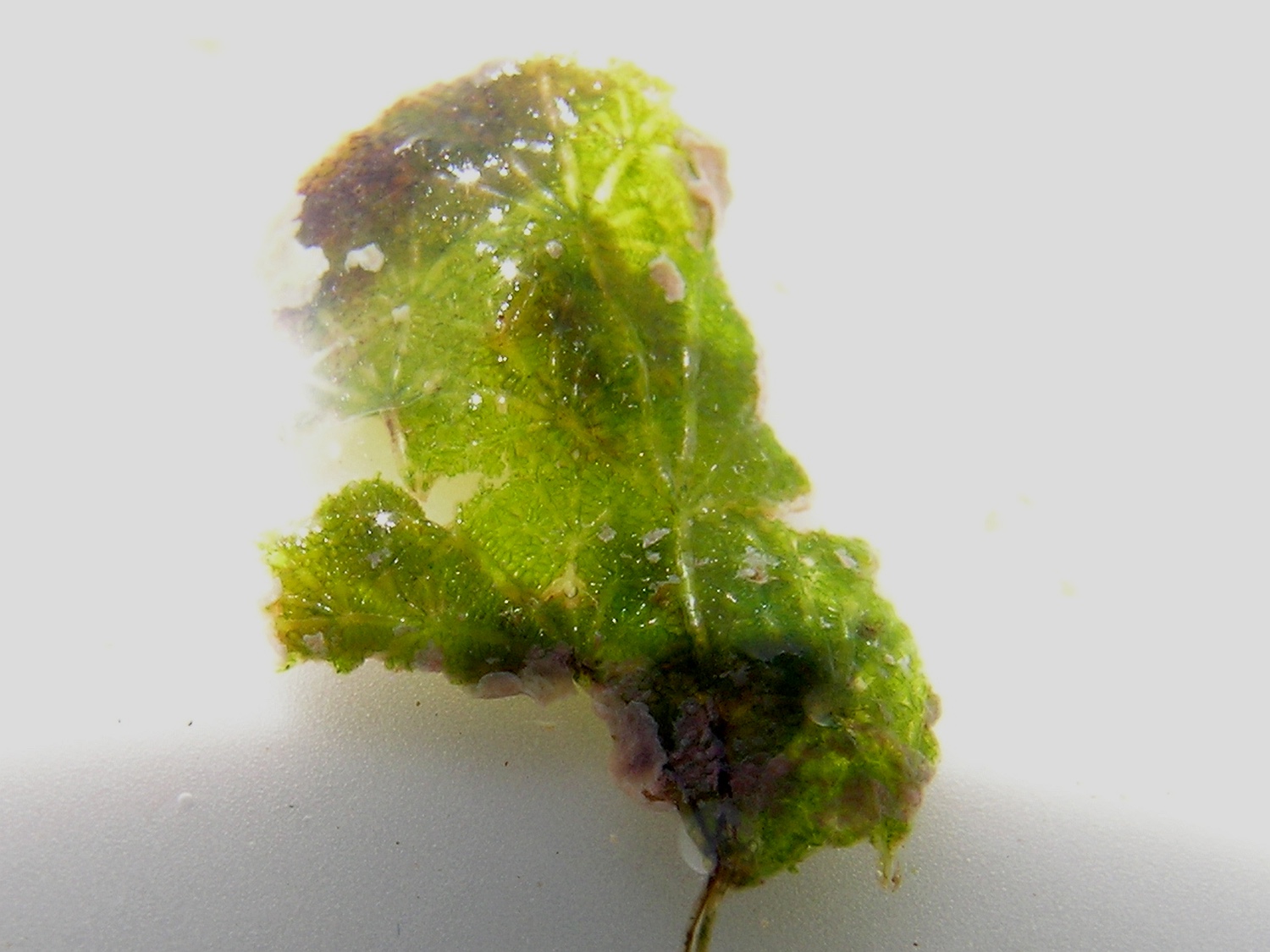
It can be recognised by the characteristic fan-shaped arrangement of its cells.
Chaetomorpha spec. ?
common on slate; tolerates prolonged exposure to the air
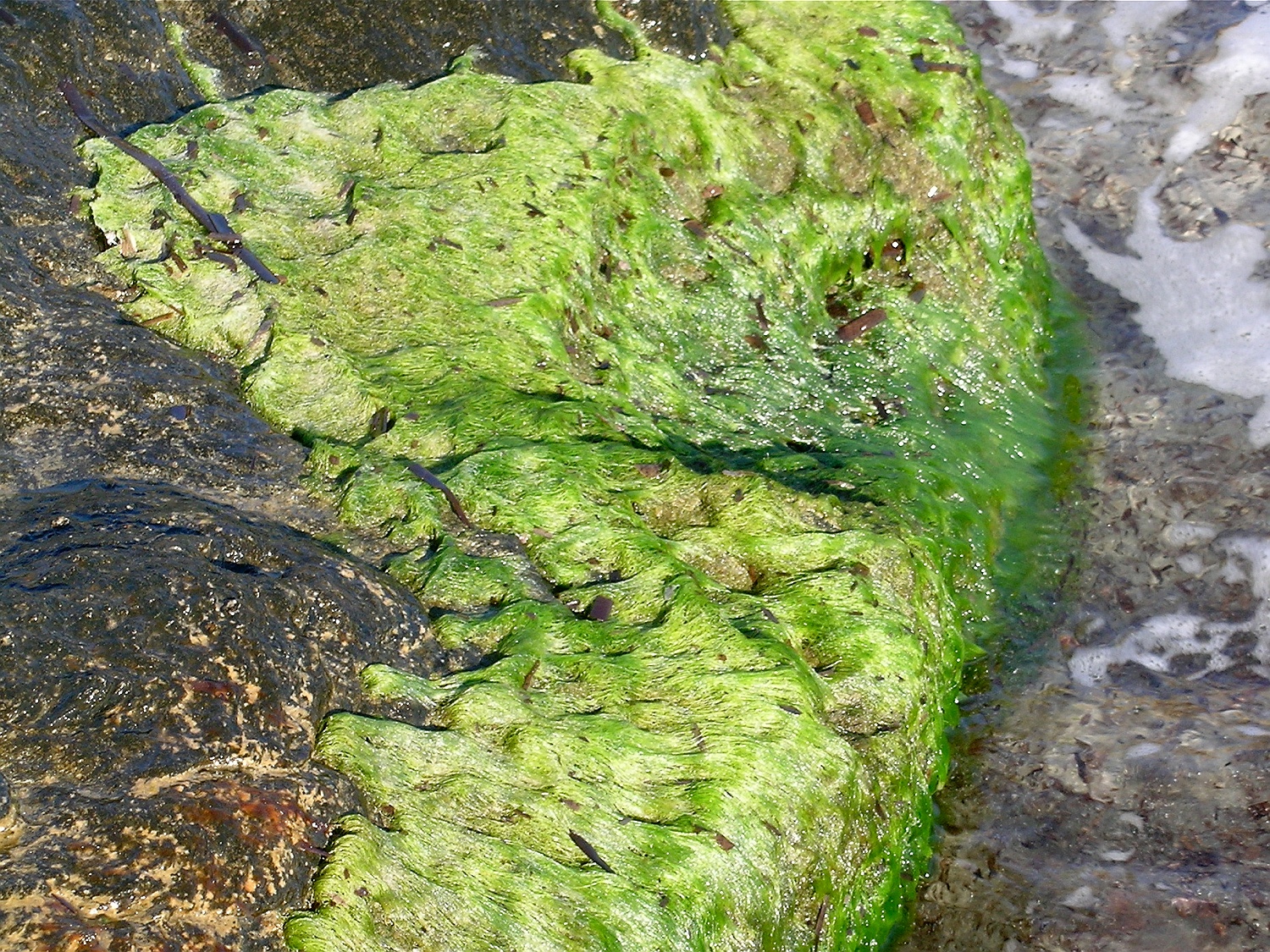
Chaetomorpha grows in dense turf-like stands on slate directly at the waterline.
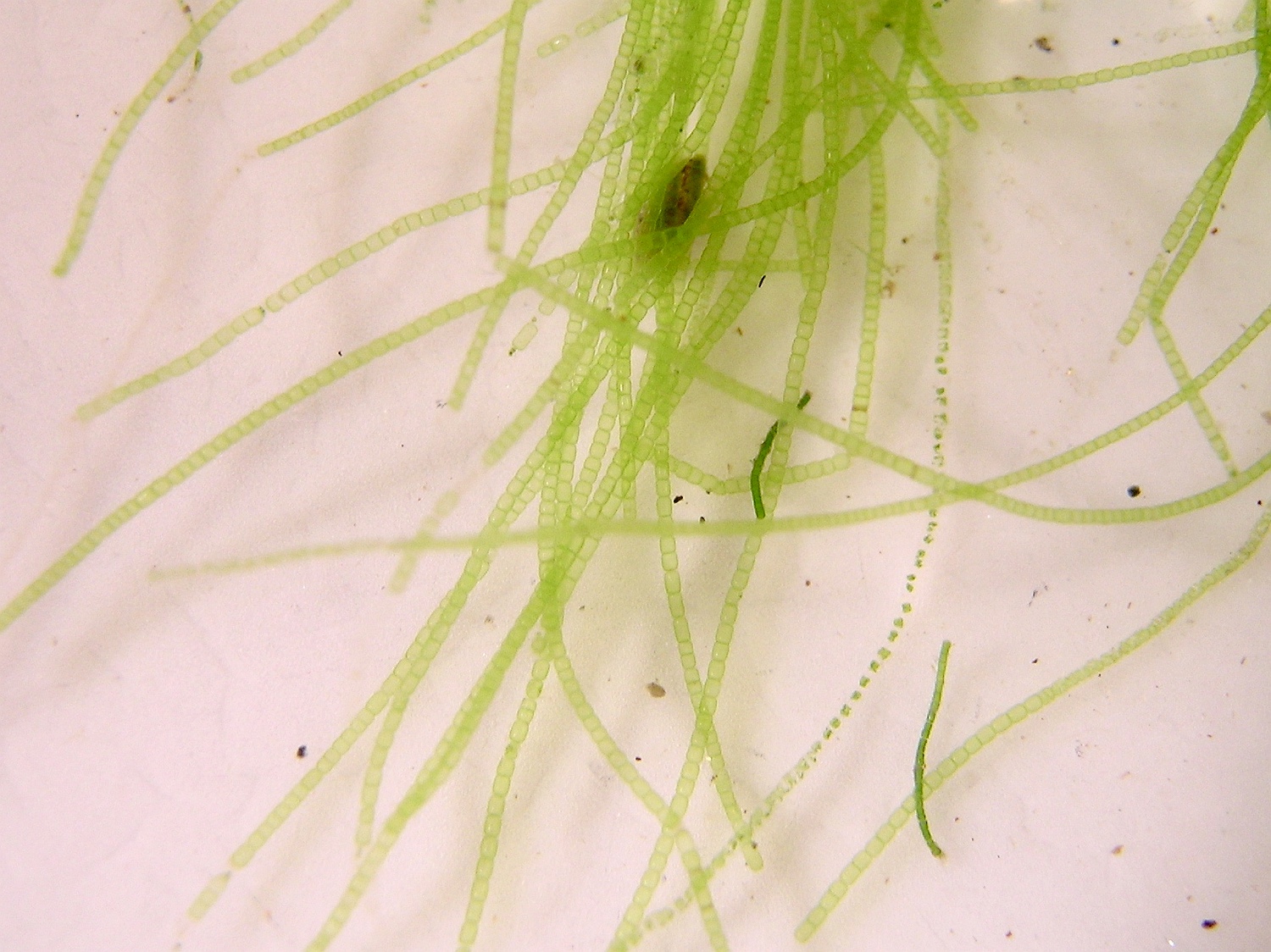
The individual thallus filaments consist of unbranched rows of cells, which in most species are more tangled than here; therefore, the identification is uncertain.
Caulerpa racemosa, J. Agardh
occasional, below the waterline
The native species Caulerpa racemosa is closely related to the invasive toxic species Caulerpa taxifolia, which has caused great damage in the central Mediterranean.
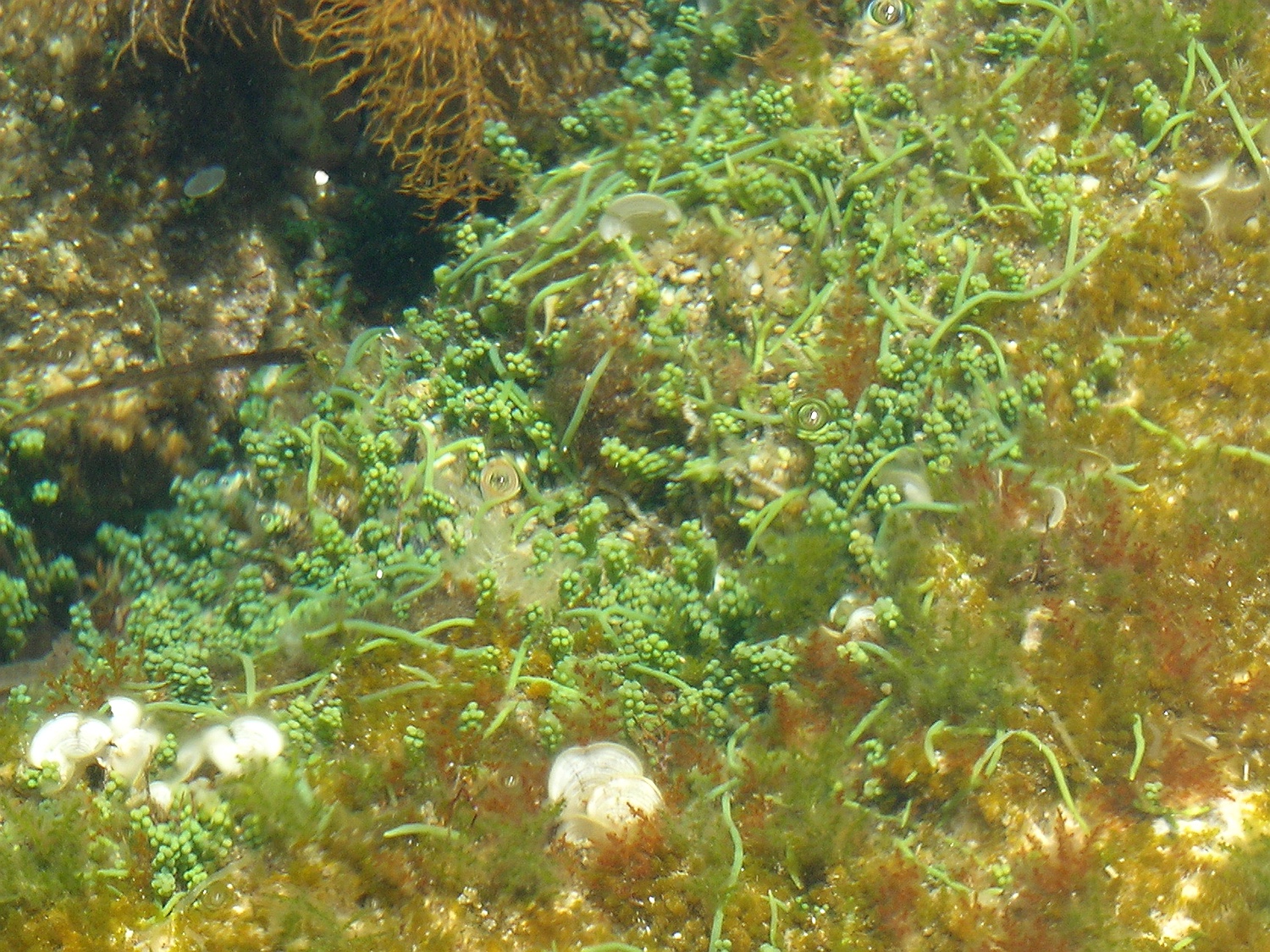
Caulerpa racemosa is unmistakable with its small stems with club-shaped protrusions that grow from horizontal stolons.
Caulerpa prolifera, J. V. Lamouroux
rare, found in sandy or gravelly bays, in shallow water
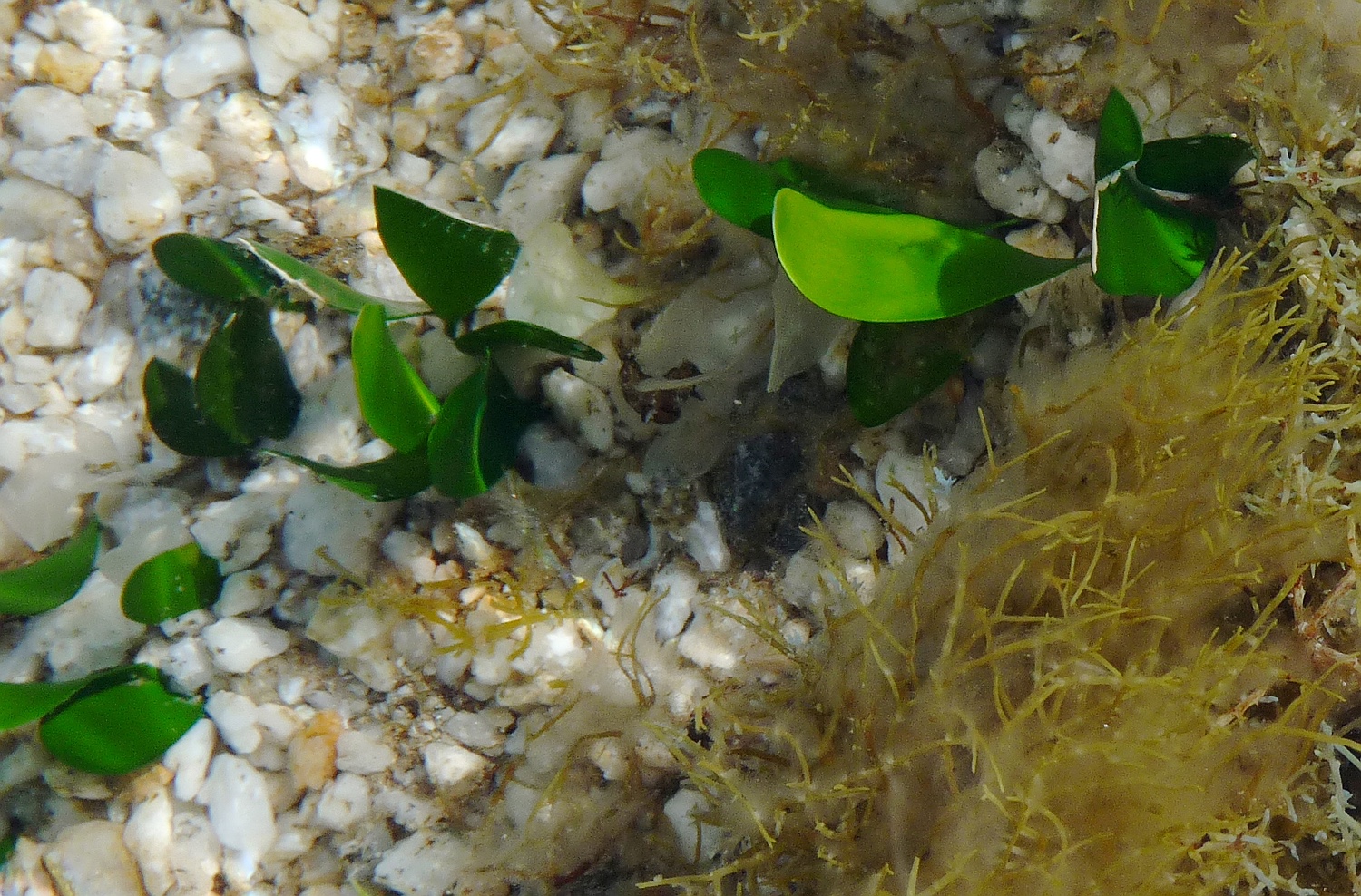
This species has slender, inconspicuous stolons (not visible here) that bear bright green, elongated ‘leaves’.
Flabellia petiolata, Nizamuddin
rare, in deeper water; near the surface in sheltered locations
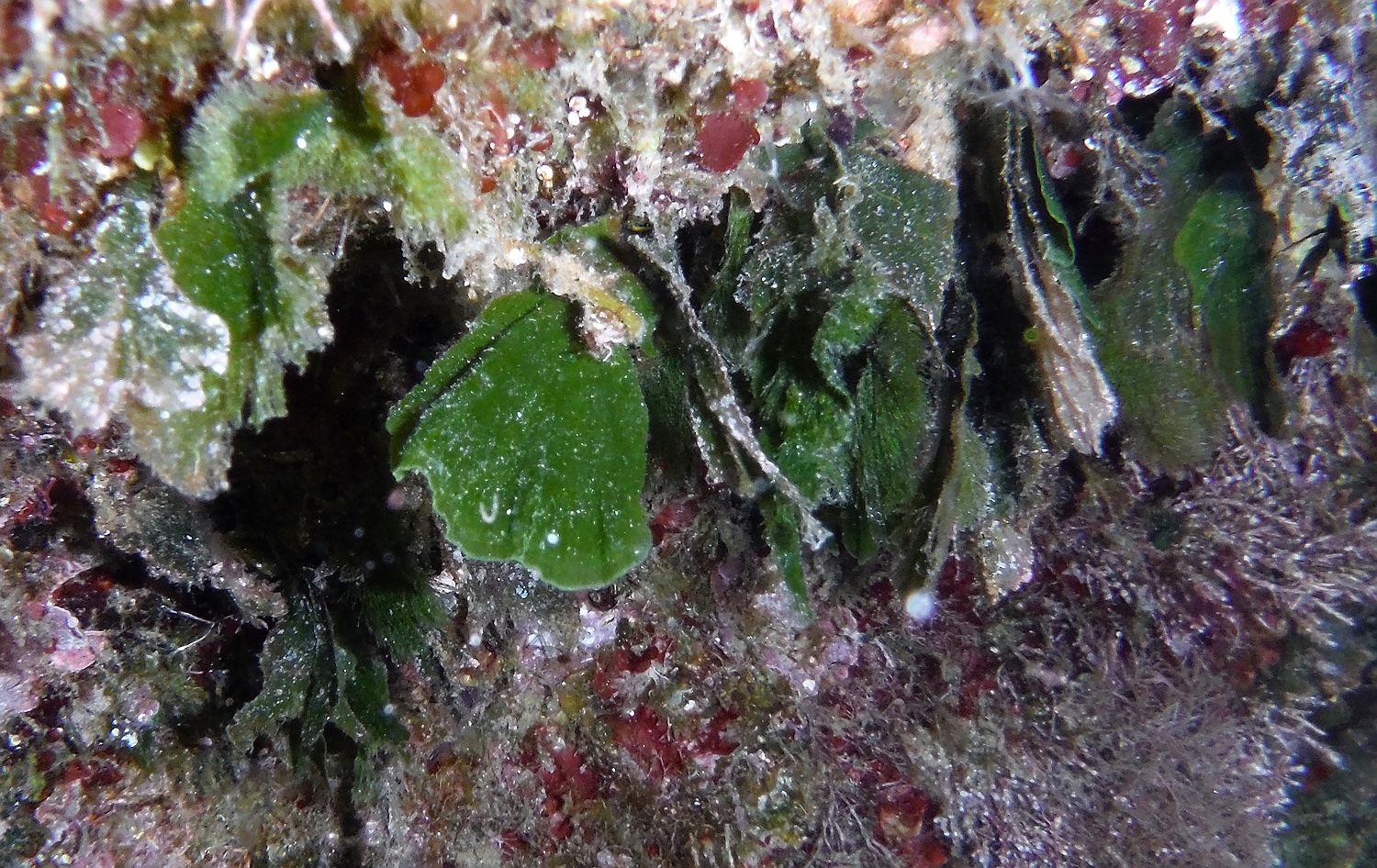
Flabellia petiolata occurs in shady locations such as under overhanging rocks. It is quite rare in our area.
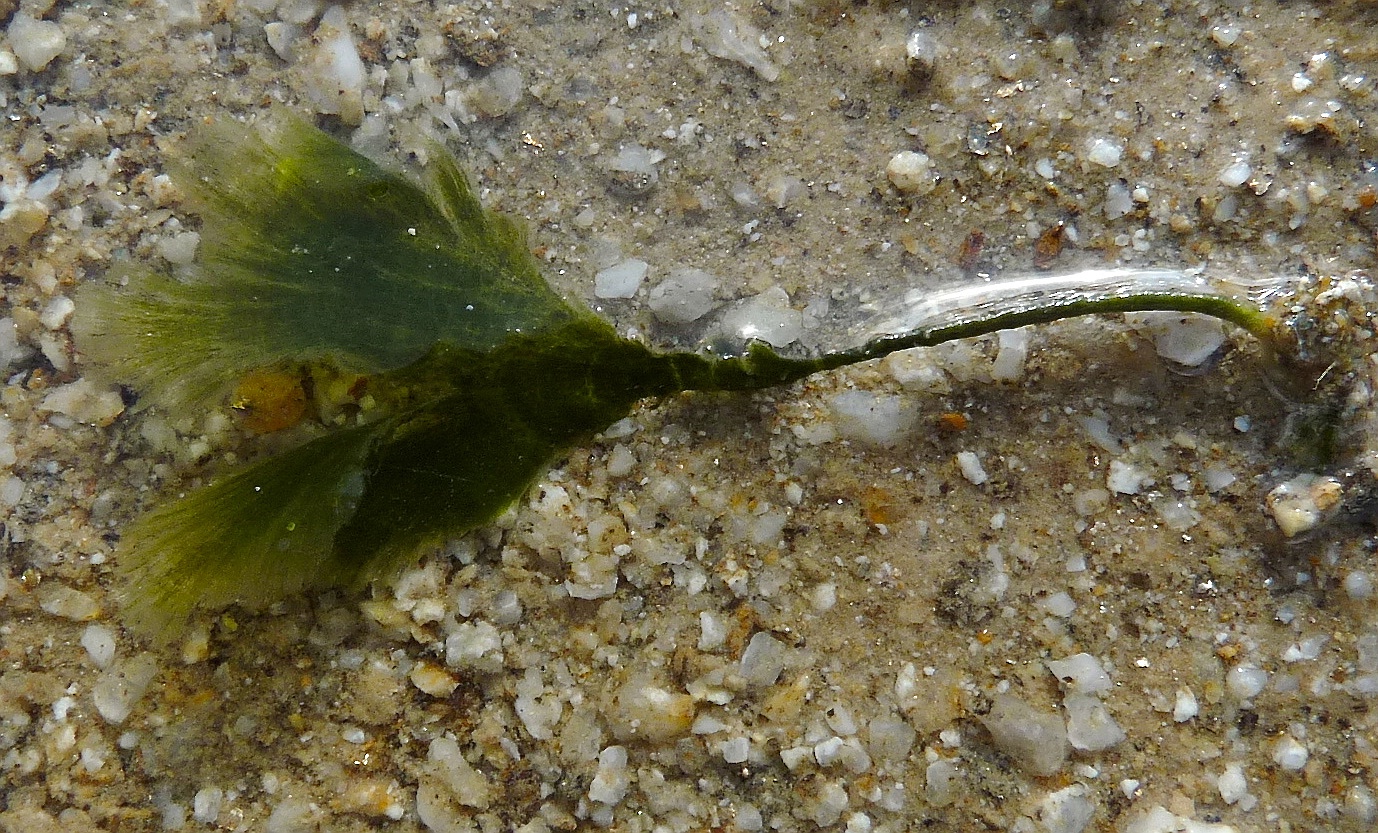
Flabellia petiolata has a fan-shaped thallus with a long, slender stem and a rounded, usually slightly frayed ‘fan’.
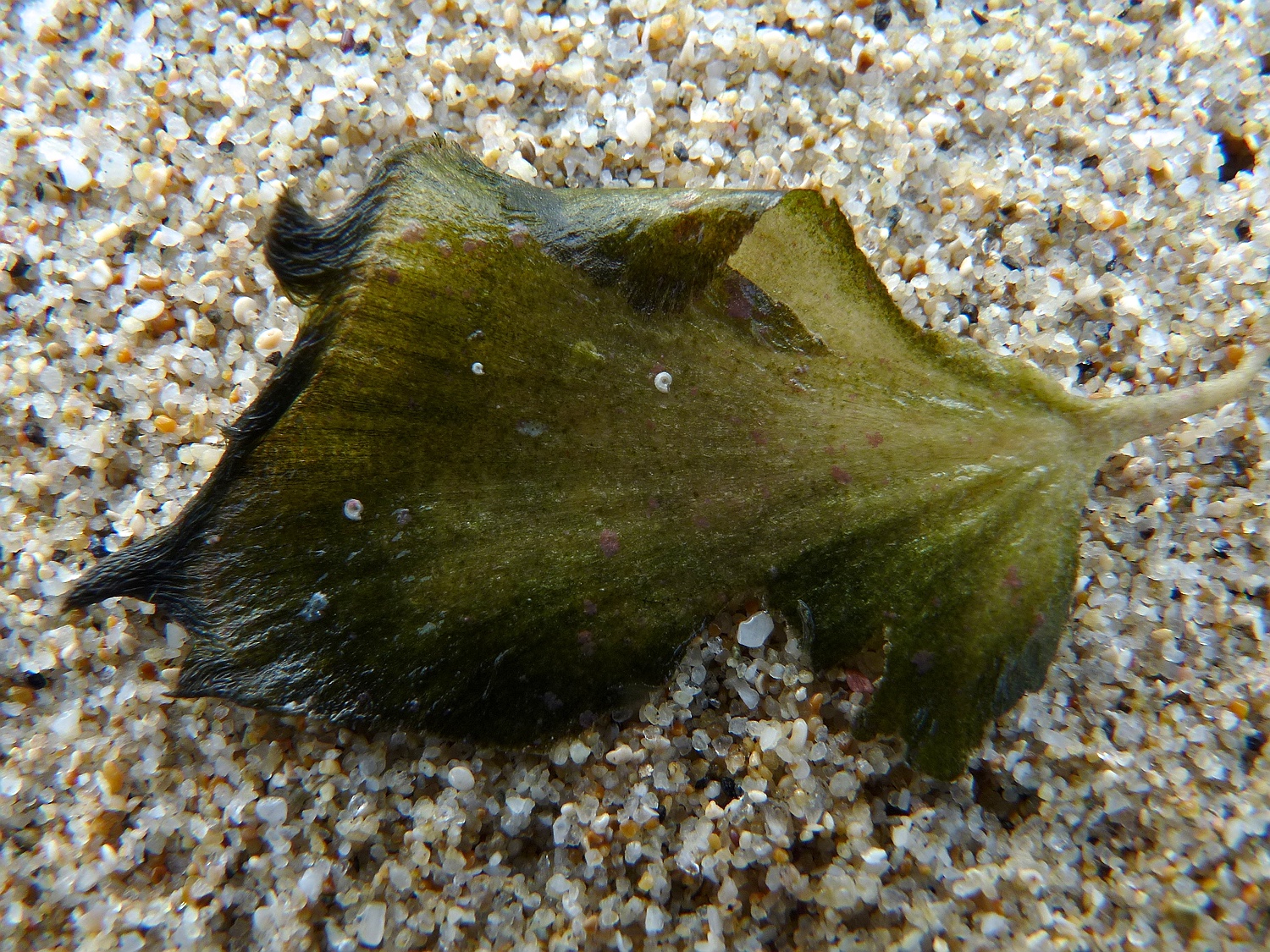
The thallus is dark green in colour.
Halimeda tuna, J. V. Lamouroux
occasional, below the waterline
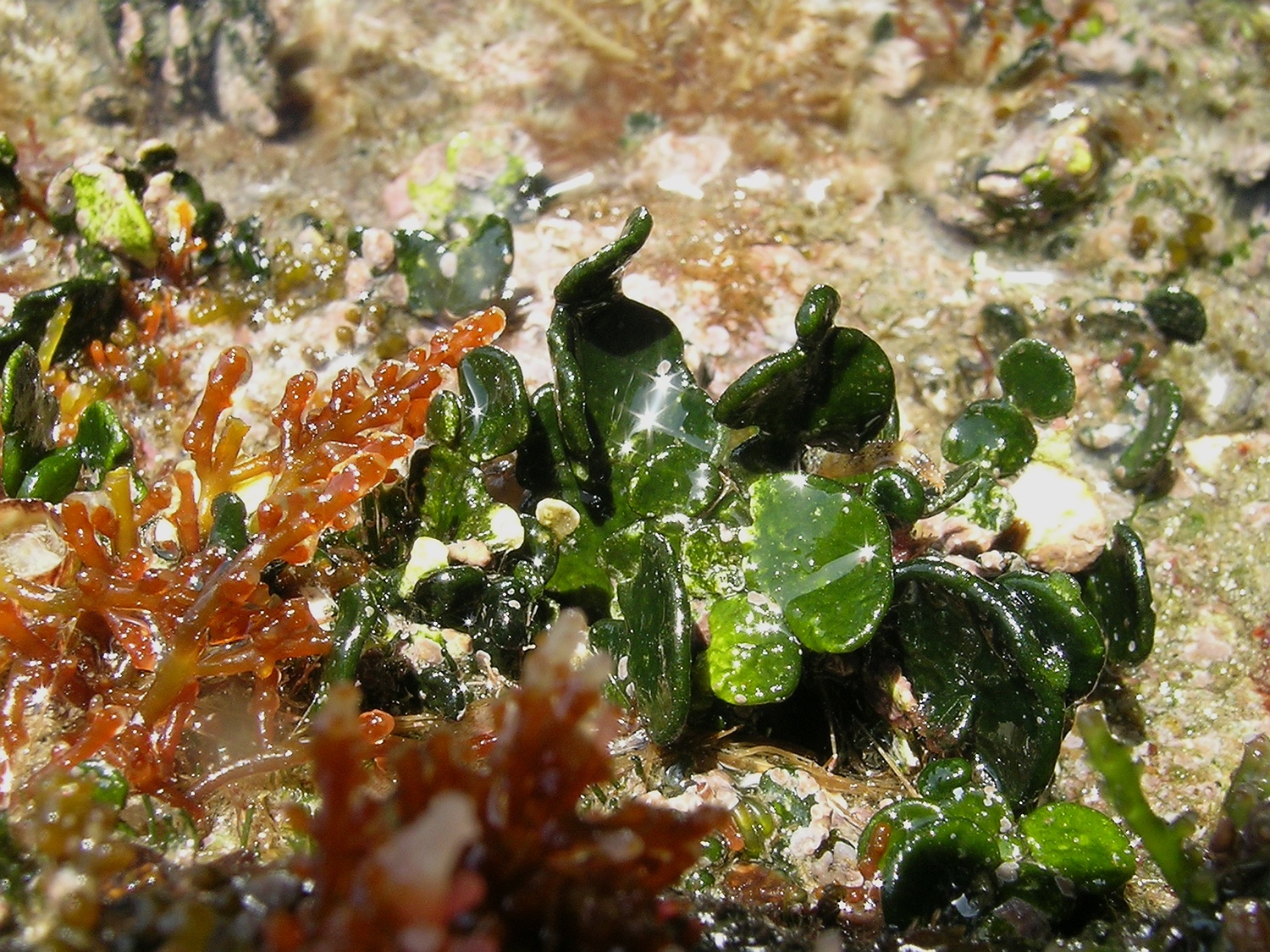
Halimeda tuna has calcified thallus “discs” arranged in a chain-like pattern. It is rather rare, but easily recognisable.
Mermaid’s wine glass, Acetabularia acetabulum, P.C. Silva
not very common, often only as an inconspicuous stalk without a cap; below the waterline
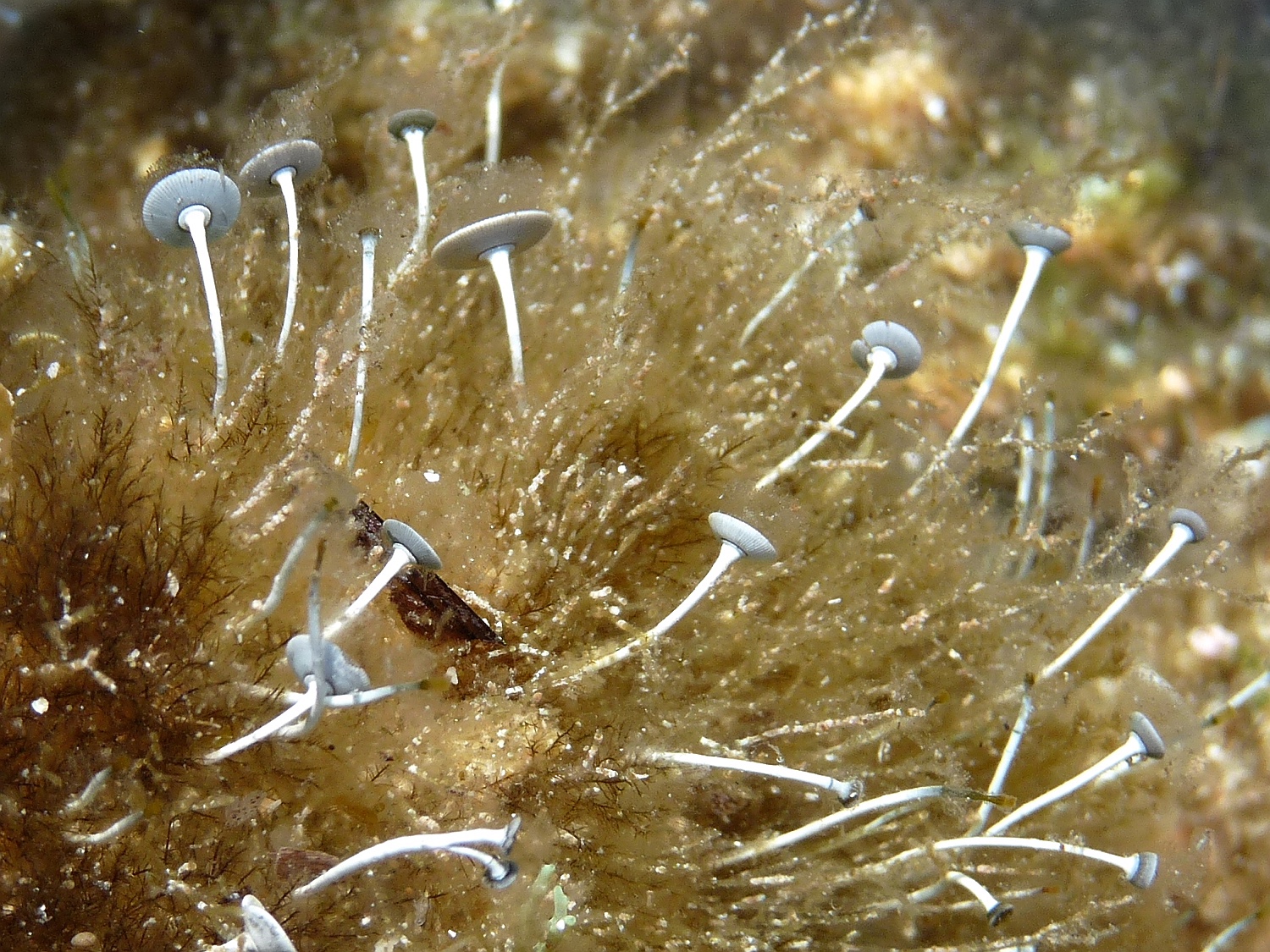
The interesting species Acetabularia acetabulum, which consists of only a single cell with many nuclei, is unmistakable.
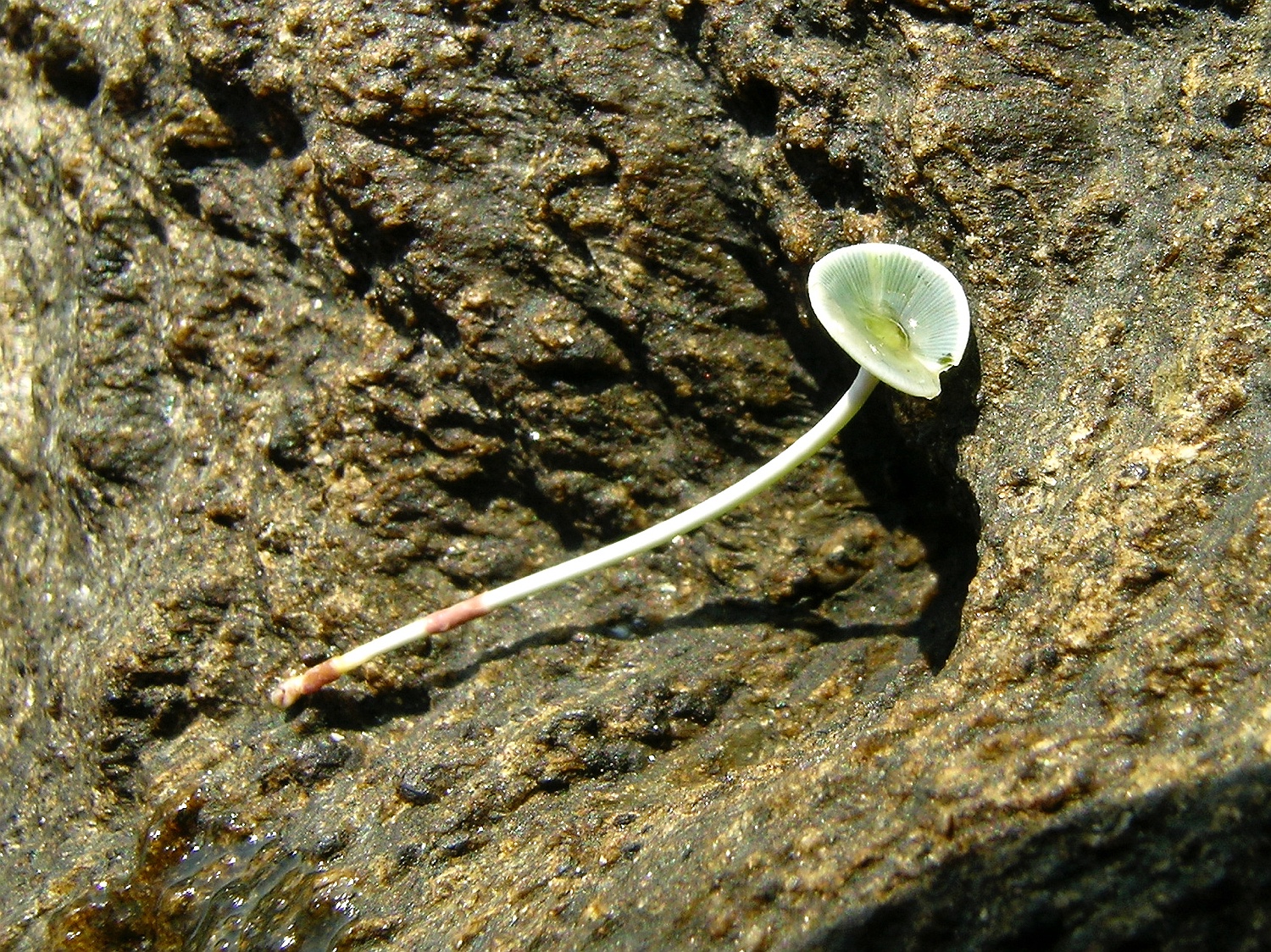
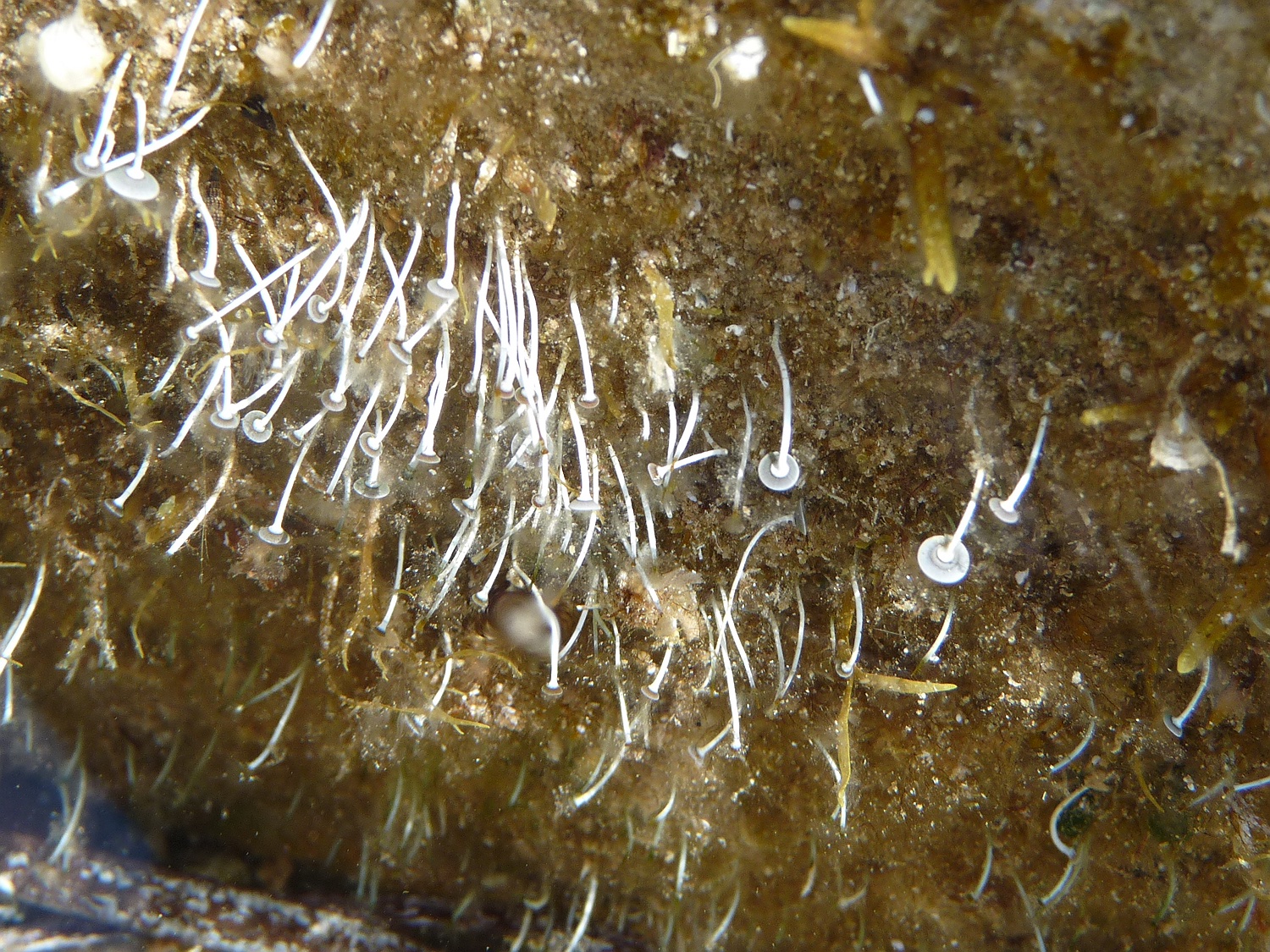
The umbrella-like structures only develop in late spring and summer; during the rest of the year one can find only the small, inconspicuous stalks.
Dasycladus vermicularis, Krasser
occurring locally in large numbers, easily recognisable; found in shallow, shady, sheltered areas, often on the sea floor, can tolerate some sand accumulation
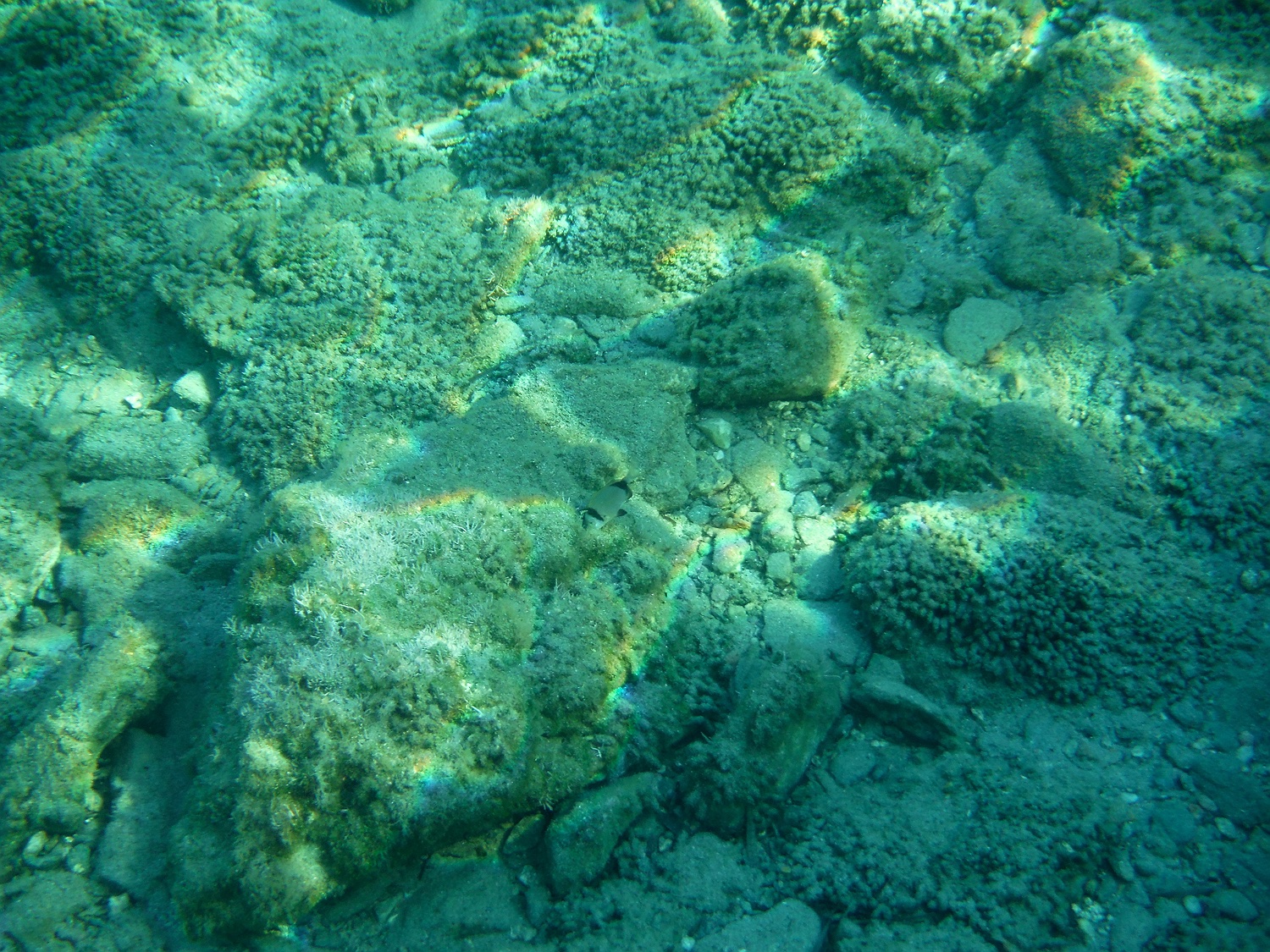
Dasycladus vermicularis grows often on the sea floor, where it seems to tolerate being covered with sand and sediment to a certain extent.
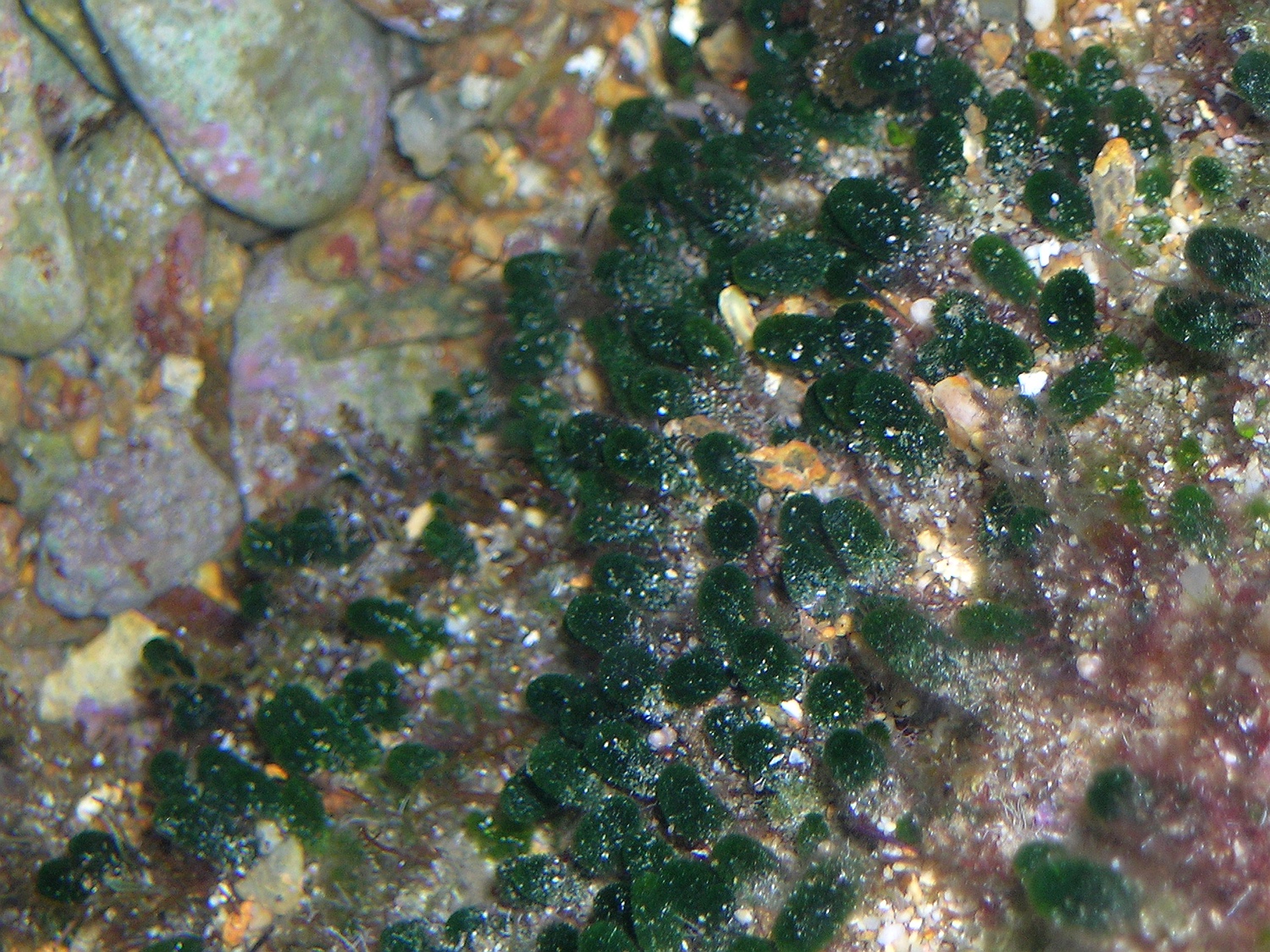
well developed specimen in a shady cave
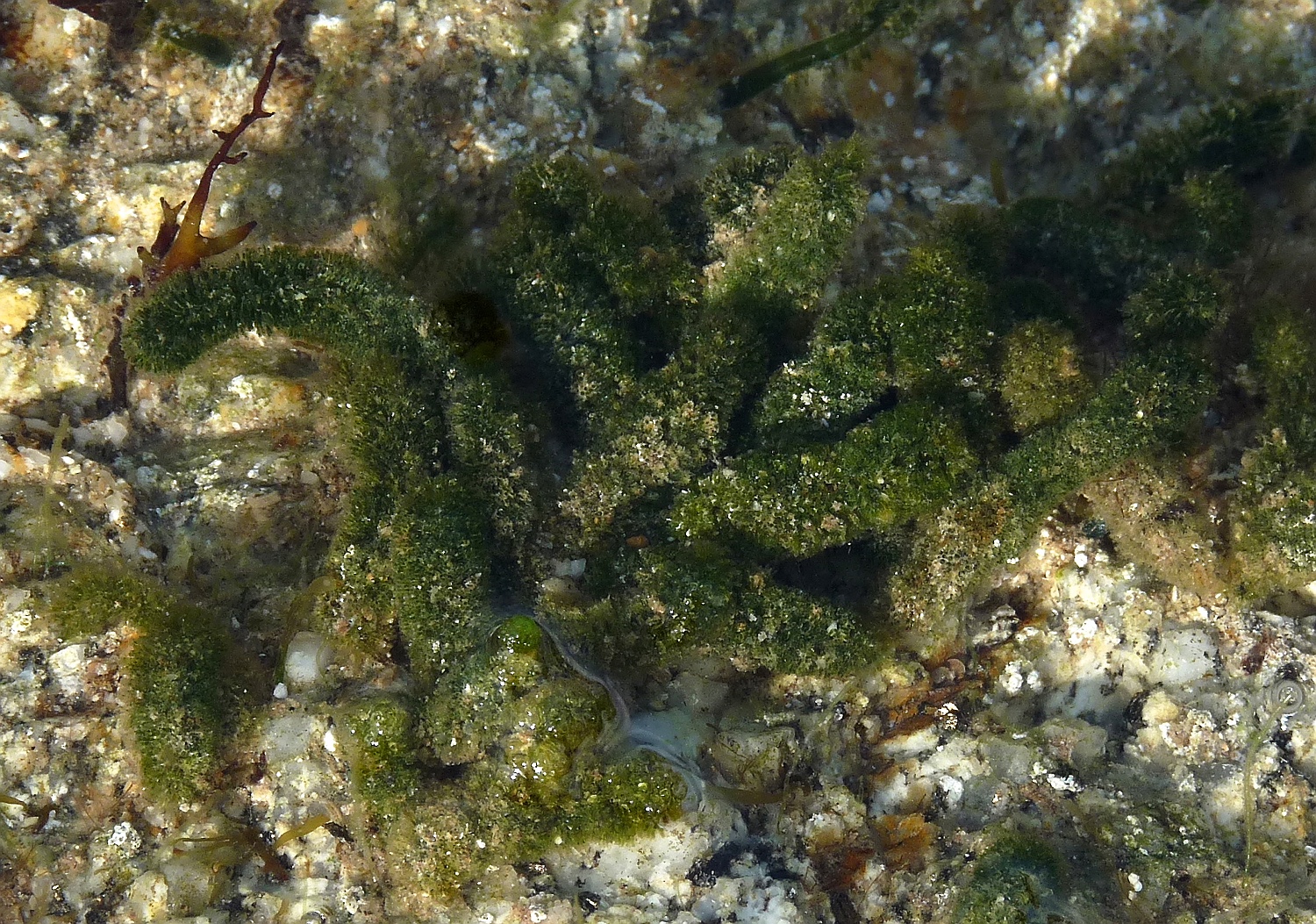
The species is also common in the sandy bays on the south-western side of Naxos.
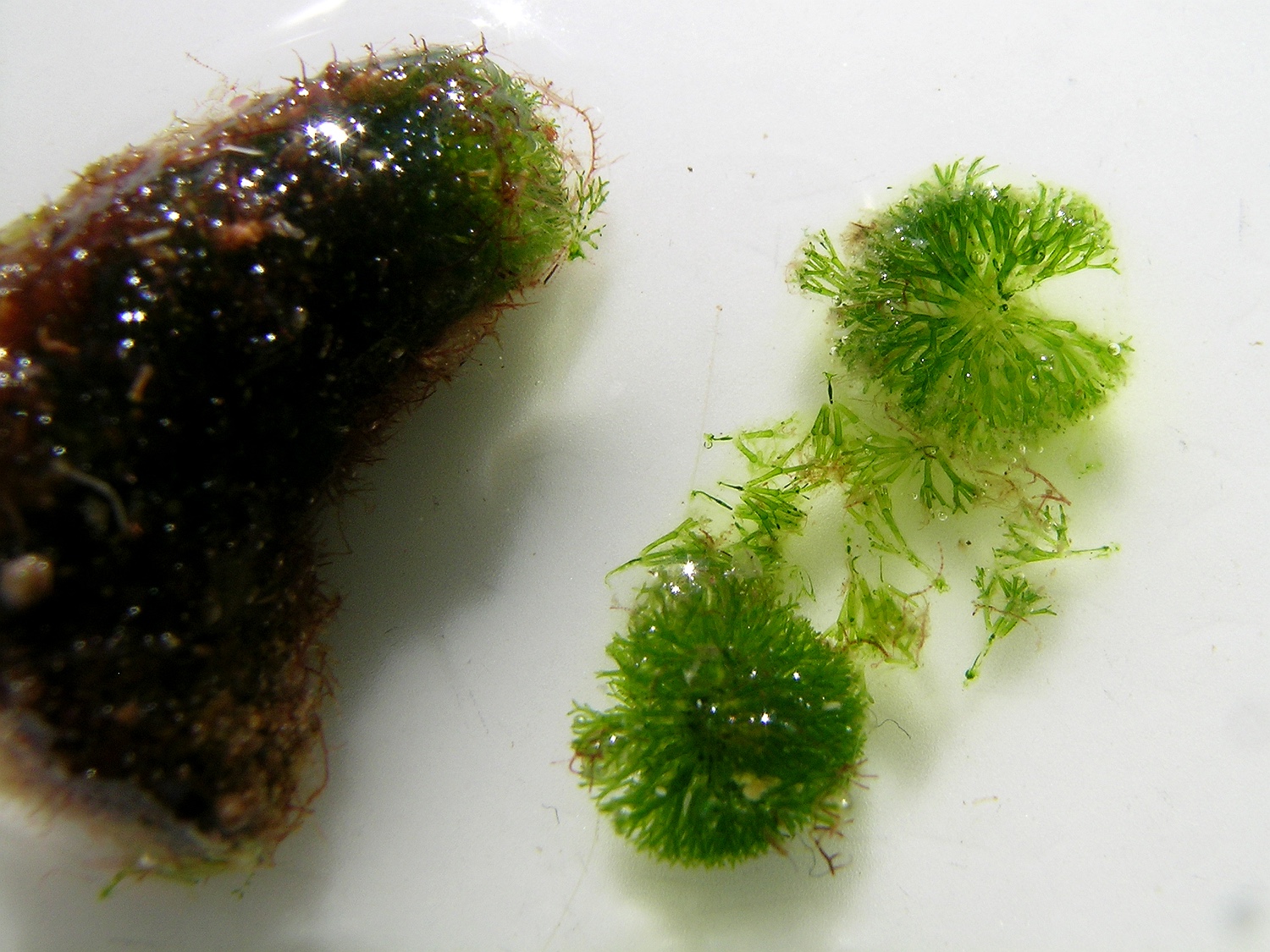
The club-shaped thallus of Dasycladus vermicularis consists of a long axial cell from which whorled, branched “twigs” emerge.
continue:
see also: