
Frogs and toads
All amphibians (frogs, toads, salamanders, newts, etc.) are adapted to living in or near the water. Almost all species require water for their reproduction: the larvae (“tadpoles”) live in water and breathe through gills, while the adult animals have lungs, and thus those that live in the water must come to the surface to breathe. The name amphibians refers to this double life. Due to their dependence on water, relatively few amphibians occur in the dryer areas of the Mediterranean region, both in terms of species and number of individuals. To my knowledge, only two species occur on Naxos: the Balkan water frog, which is quite common along the island’s rivers and also lives in some cisterns, and the Green toad.
Balkan water frog, Pelophylax kurtmuelleri, Gayda
The Balkan water frog has only recently been separated from the Marsh frog (Pelophylax ridibundus) as a distinct species. The frog genera Rana and Pelophylax are still highly controversial in terms of their systematics, and there are differing views on what should count as a genus and what should count as a species. Many species hybridise extensively with each other, with populations in many areas consisting solely of hybrids that can reproduce without any problems.

The Balkan water frog is common along the watercourses of Naxos.
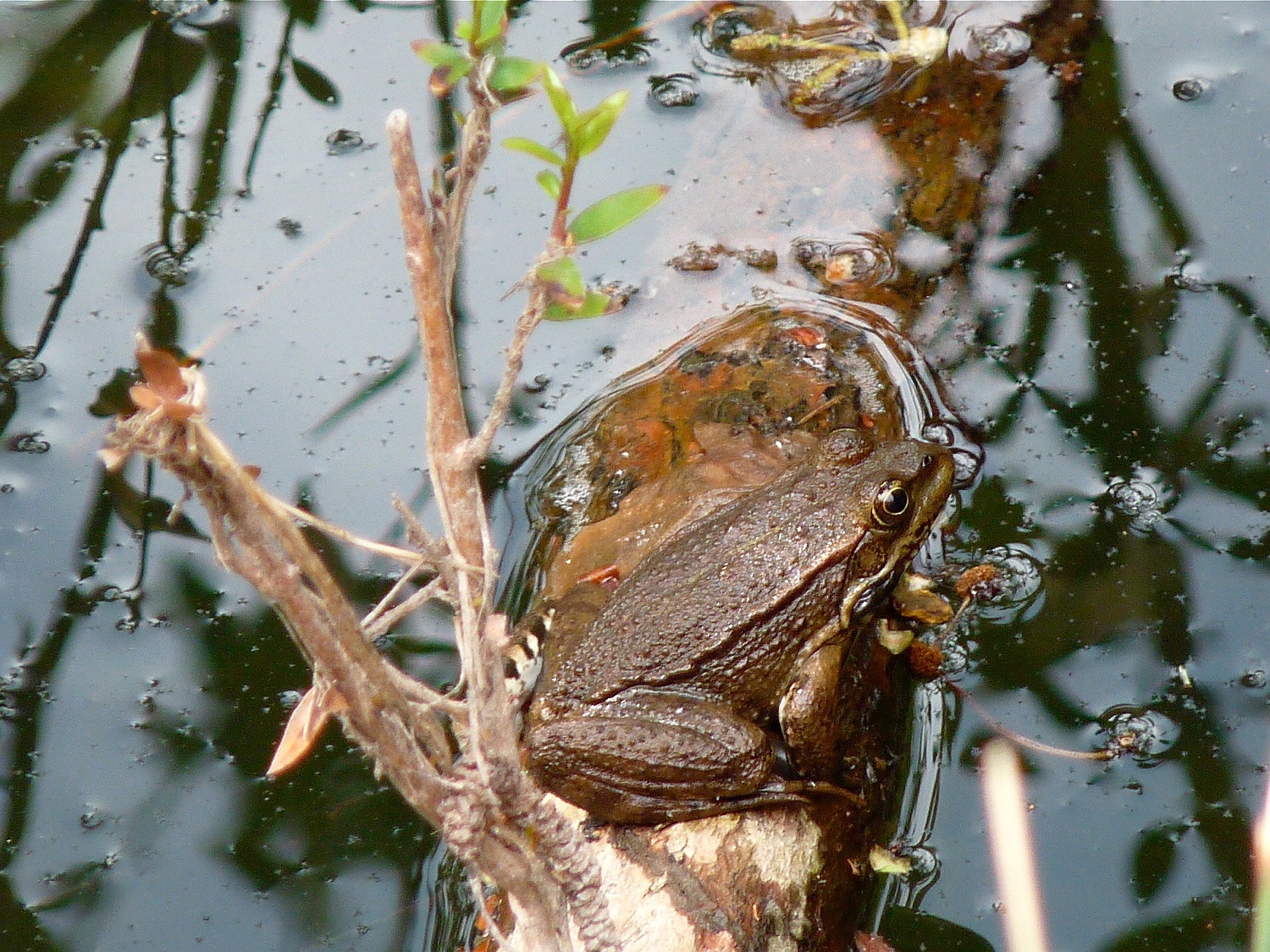
Water frogs have quite variable colouring; in our region, they are brownish in colour and have more or less pronounced spots.
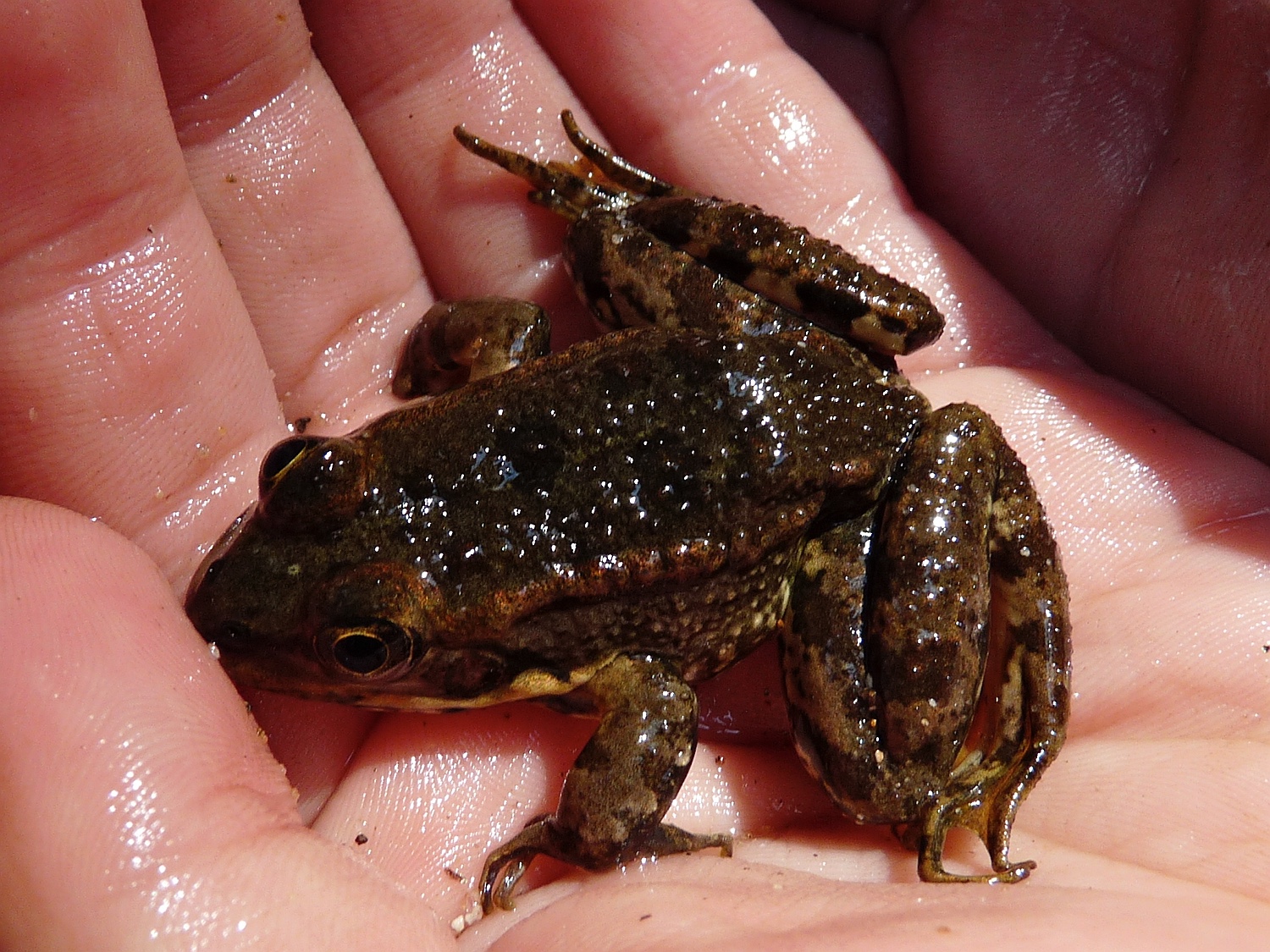
The skin of amphibians is soft, moist and often glandular. A considerable proportion of the animals’ respiration takes place through the skin.
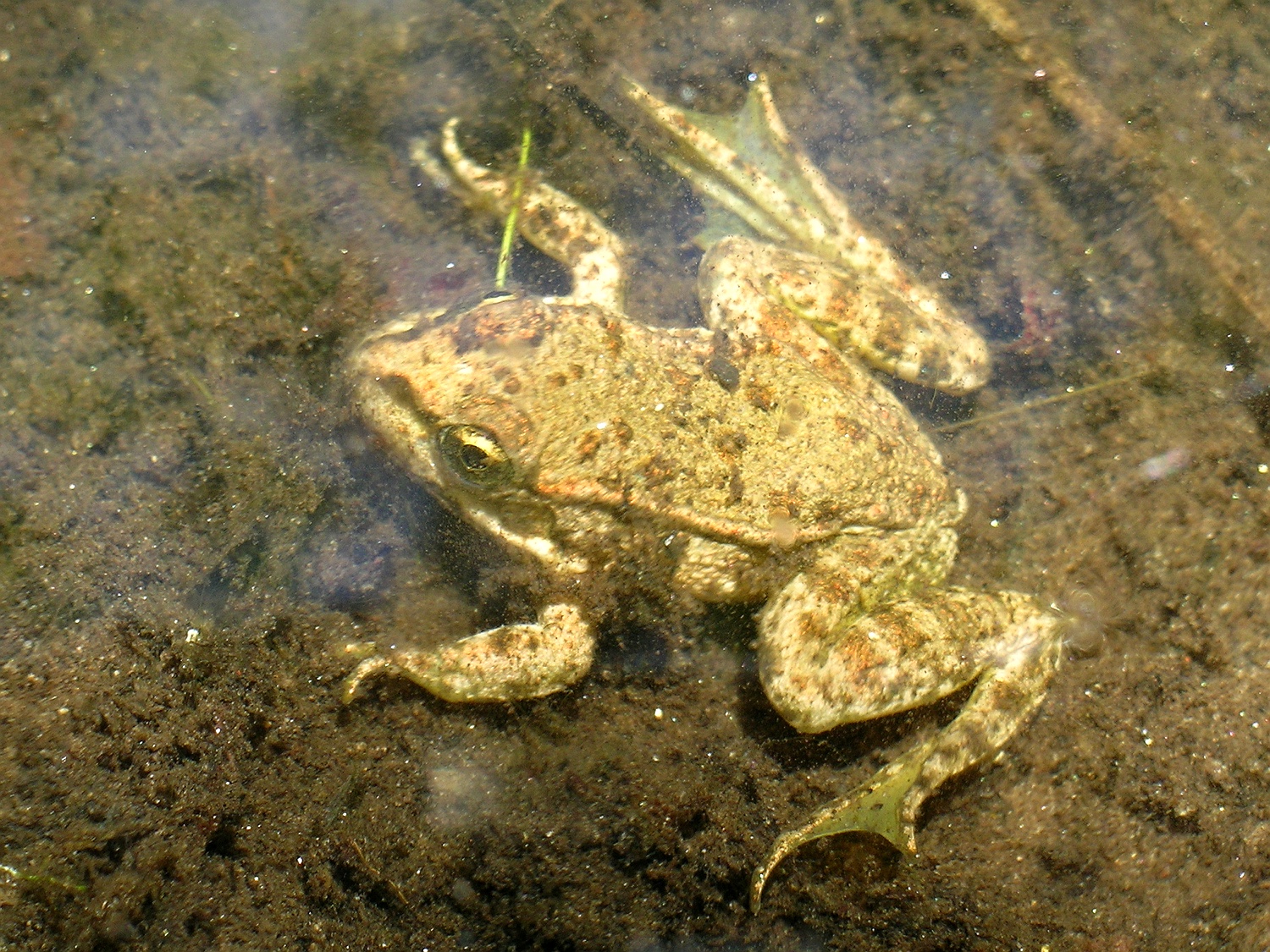
The water frog is only found in close proximity to the water.
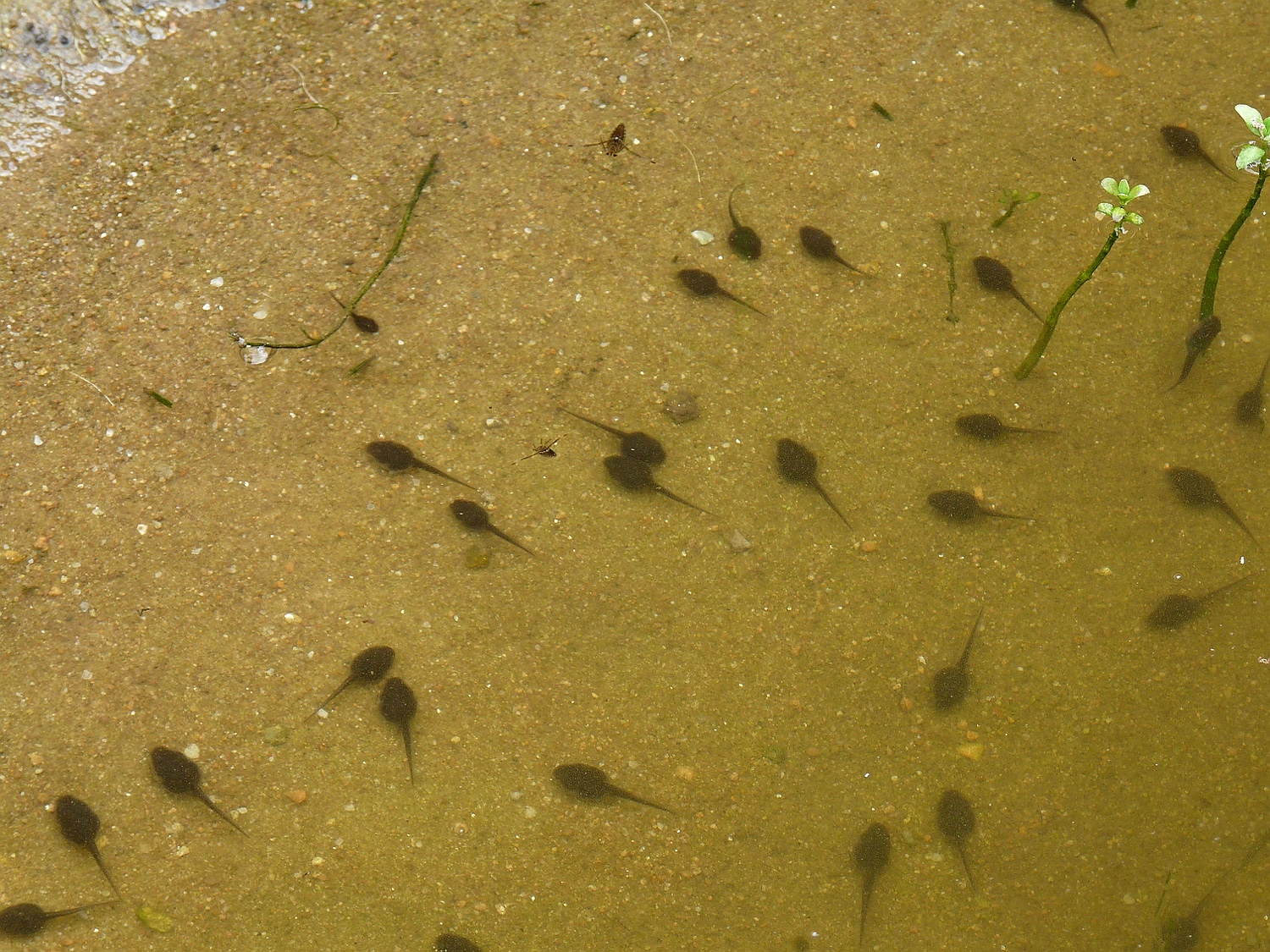
Tadpoles in a small pool
European green toad, Bufotes viridis, Pallas
In my first years on Naxos, we regularly encountered Green toads in our garden; later, probably because of several dry years, they disappeared completely, and it was not until 2020, after an extremely rainy year, that a Green toad reappeared in our garden; the following year many toads could be found in the whole area, and now, several years later, we still encounter them, despite very little rainfall in the last two winters.
Like all amphibians, Green toads need water to reproduce, but they get along with small rivulets or ponds that dry up in summer. Adult animals do not need water and prefer dry habitats.
The classification of the Greek green toad has been changed several times, with the populations found in the Balkans sometimes being separated as Bufotes variabilis, or considered to be hybrid populations between B. viridis and B. sitibundus, which occurs in Asia Minor to Iran. According to recent studies, the Greek toads are once again considered to belong to the widespread European species B. viridis. The status of the Green toads found on the Aegean islands has yet to be clarified.
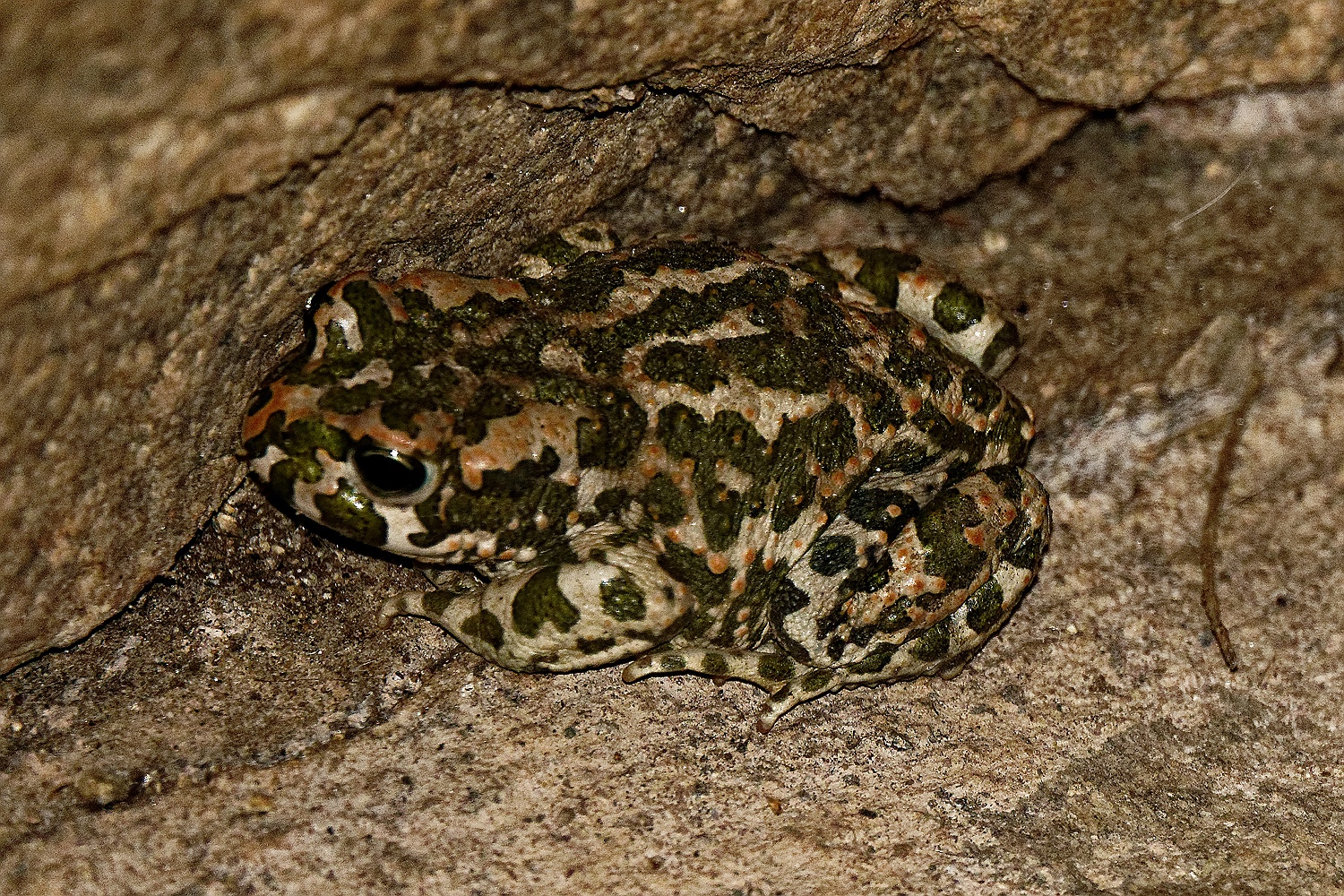
The Green toad is nocturnal and lives in rather dry habitats. It is grey in colour with well-defined green spots on its body and legs. Photo by Dieter Linde
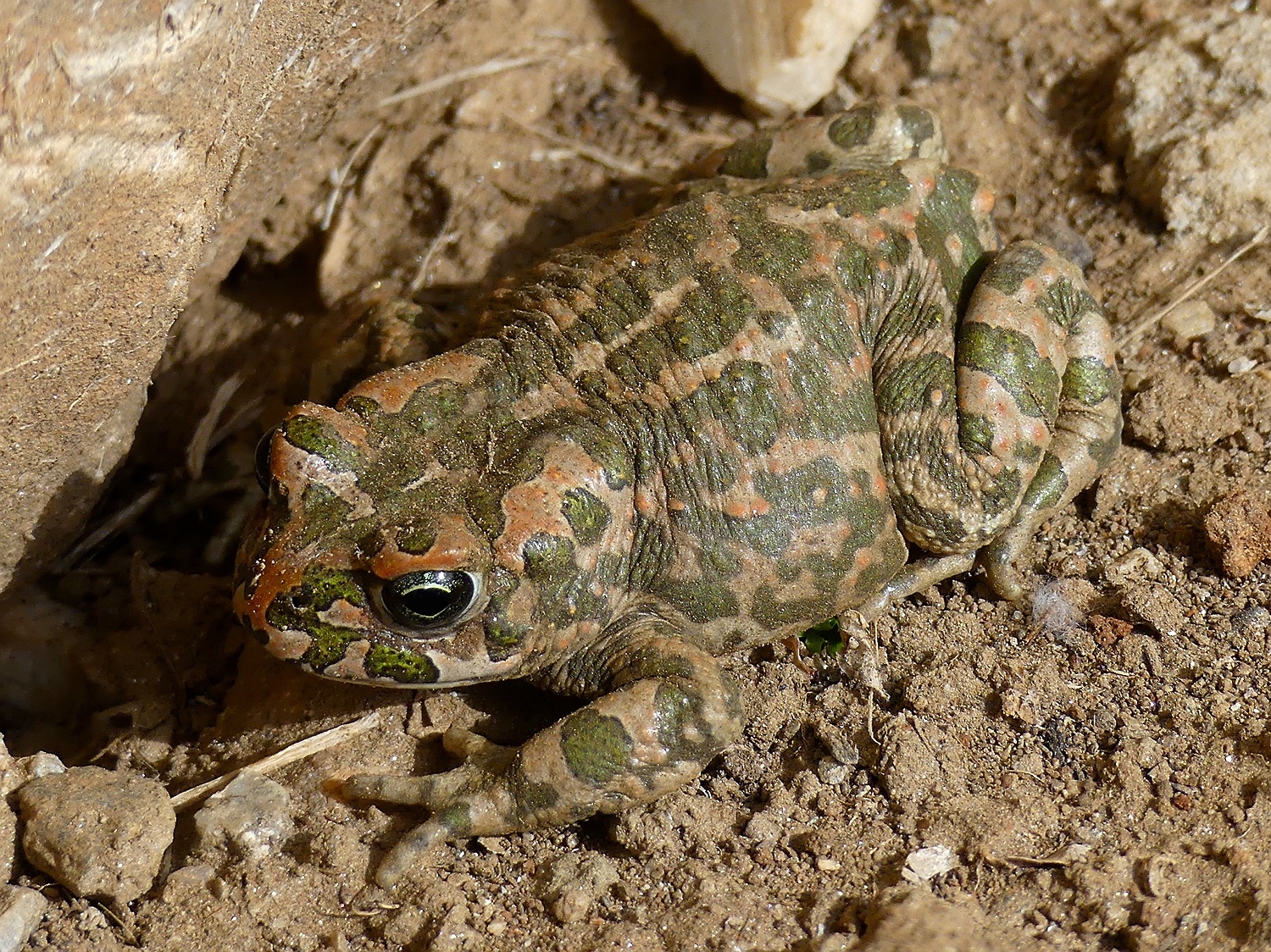
In recent years, we also regularly encounter young specimens of the Green toads in our garden, which apparently wander here from the river mouth about 1 km away, where some water remains until summer. The toads feel particularly at home in our cucumber patch, which is watered every day. They were active during most of the mild winter of 2023/24, while two winters earlier we found a large, fat toad about 15 cm deep in the ground when we were digging a hole for a post (fortunately, the toad came away unharmed).
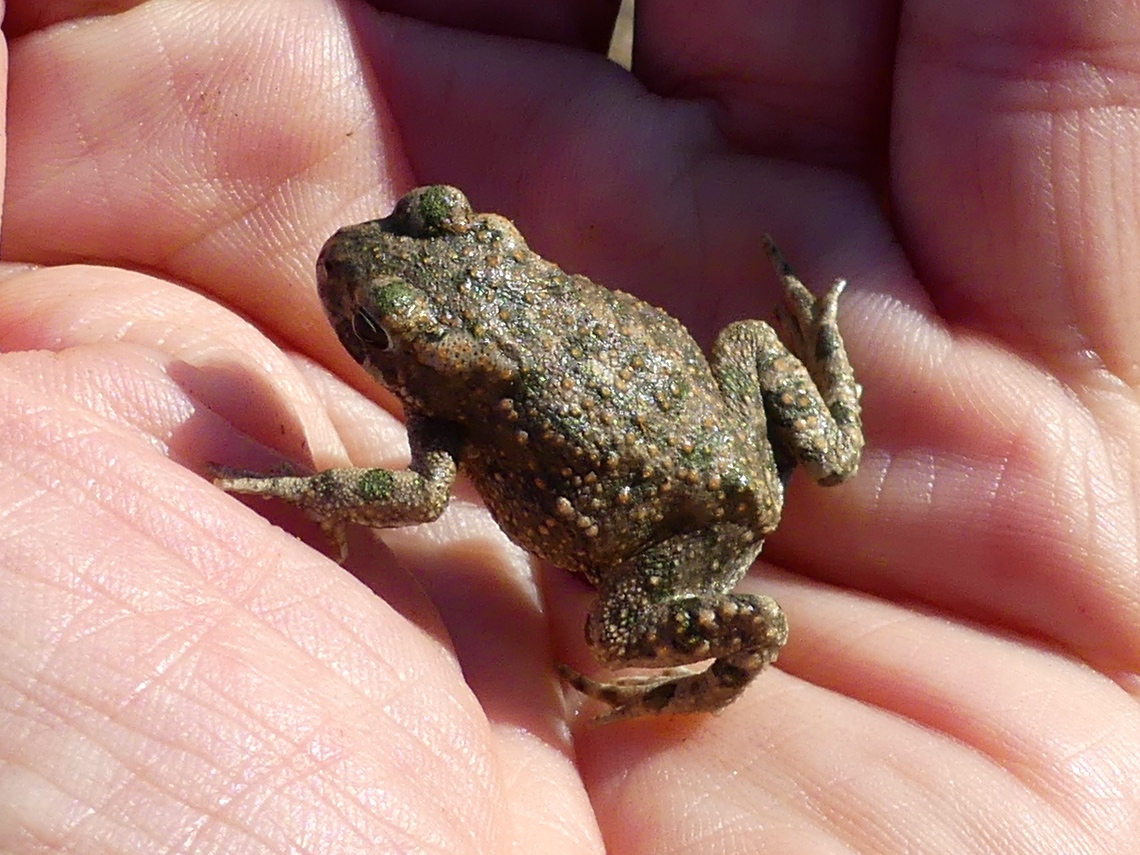
Young Green toad in our garden
continue: Turtles, geckos and lizards
back: The Fauna of Naxos
see also: Animals in the rivers of Naxos