
The endemic Cave cricket of Naxos
Caves are very special and interesting habitats which place unusual demands on their inhabitants. Food is mostly scarce, as no plants can survive due to the lack of light. Accordingly, only very few animal species live permanently in caves. Another important factor is the uniformity of the environmental conditions: temperature and humidity hardly fluctuate.
In caves, one may encounter a number of interesting animal species, such as the remarkable cave crickets. Cave crickets belong to the suborder of crickets in the order Orthoptera. Cave crickets can jump, but usually move slowly by walking. They have no wings, in adaptation to cave life, and therefore cannot chirp (crickets chirp by rubbing their wings together). Accordingly, they also lack the hearing organ that other crickets carry on their front legs. The females have a long, curved ovipositor, by which they can be distinguished from the males. Orthoptera develop through incomplete metamorphosis with the young – called nymphs – already resembling the adults and becoming more similar to them with each moult. The nymphs of the cave crickets moult about 10 times over the course of a year until they reach the adult stage. The adults live for about another year. They feed on both plant material and various small animals.
The Photo gallery of the orthoptera and relatives gives an overview over the species.
Naxian cave cricket, Dolichopoda naxia, Boudou-Saltet
Iin the caves of Naxos occurs an endemic cave cricket called Dolichopoda naxia, i.e. a species that is restricted to this island. The genus Dolichopoda is widespread in southern Europe. It is divided into about 30 species, each of which is restricted to a small area, such as a region, an island or sometimes even a single cave. In today’s Mediterranean climate, the cave crickets cannot survive outside the caves, so that the individual populations are mostly isolated from each other, which has led to their splitting into numerous species. The cave crickets probably migrated into the Aegean region during the late Miocene (about 5.5 million years ago) when the Mediterranean Sea had dried up; genetic studies suggest that the Naxian species has been isolated for about 3 million years. The closest relatives of the Naxian species are found on Samos and on Kalimnos, and their cousins on Crete.
On Naxos, cave crickets are found not only in natural caves, but also in the emery mines, which often are connected with natural caves. In some mines the cave crickets occur in large numbers, especially in damp places.
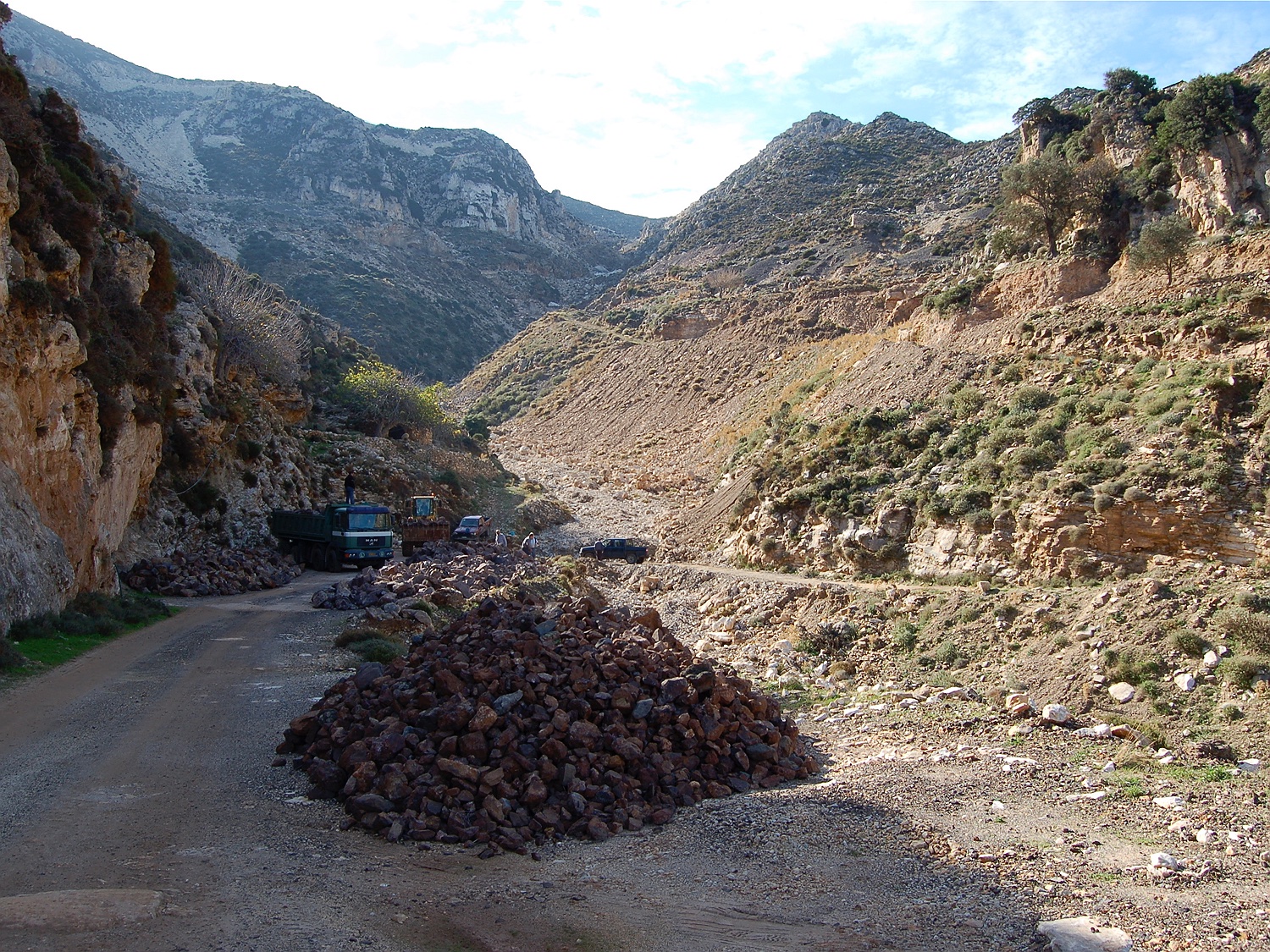
In the valley with the emery mines below Koronos; the mine where we found most cave crickets is located near the fig tree that can be seen in the background above the truck.
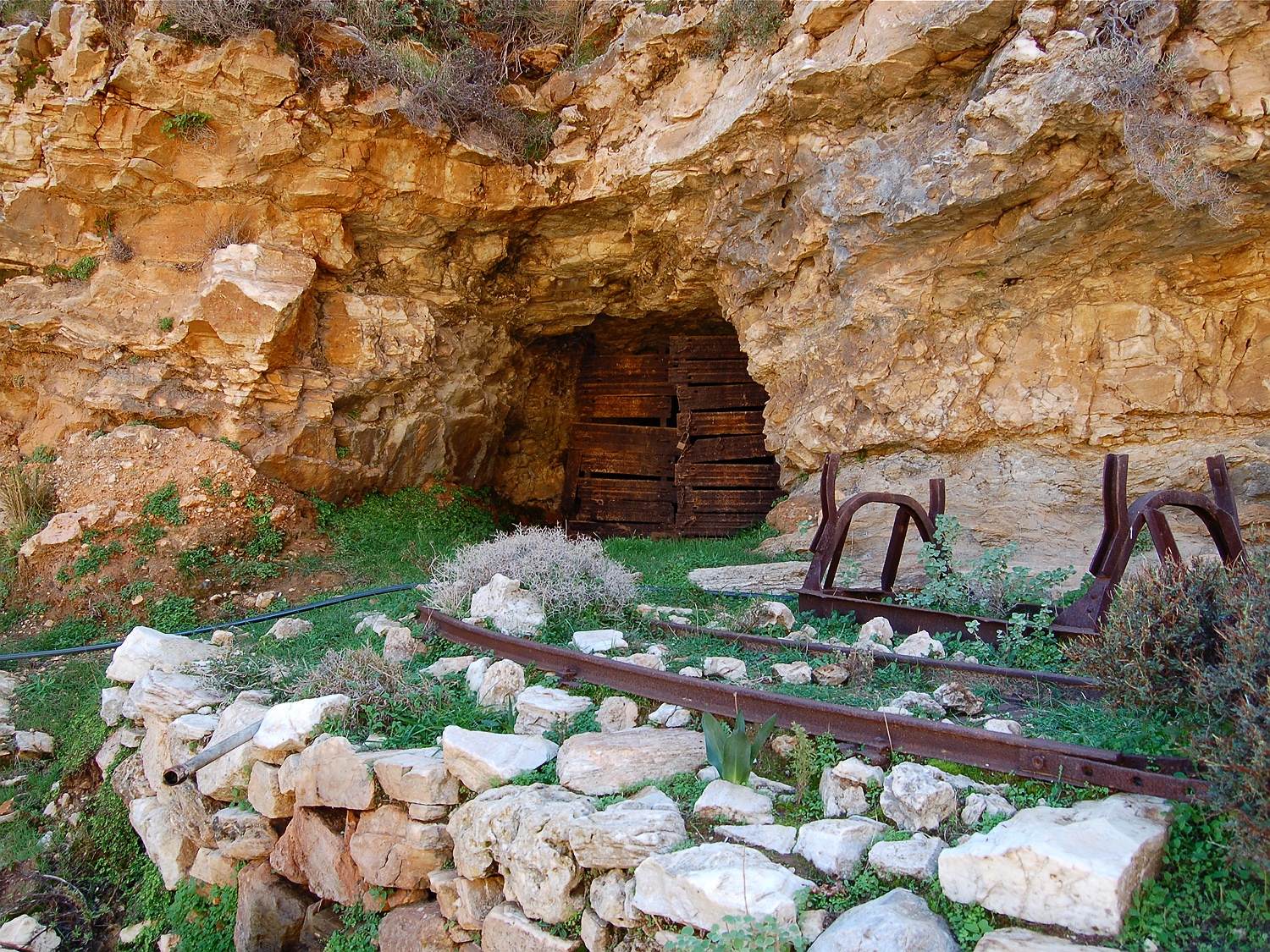
The entrance to the mine is very damp.
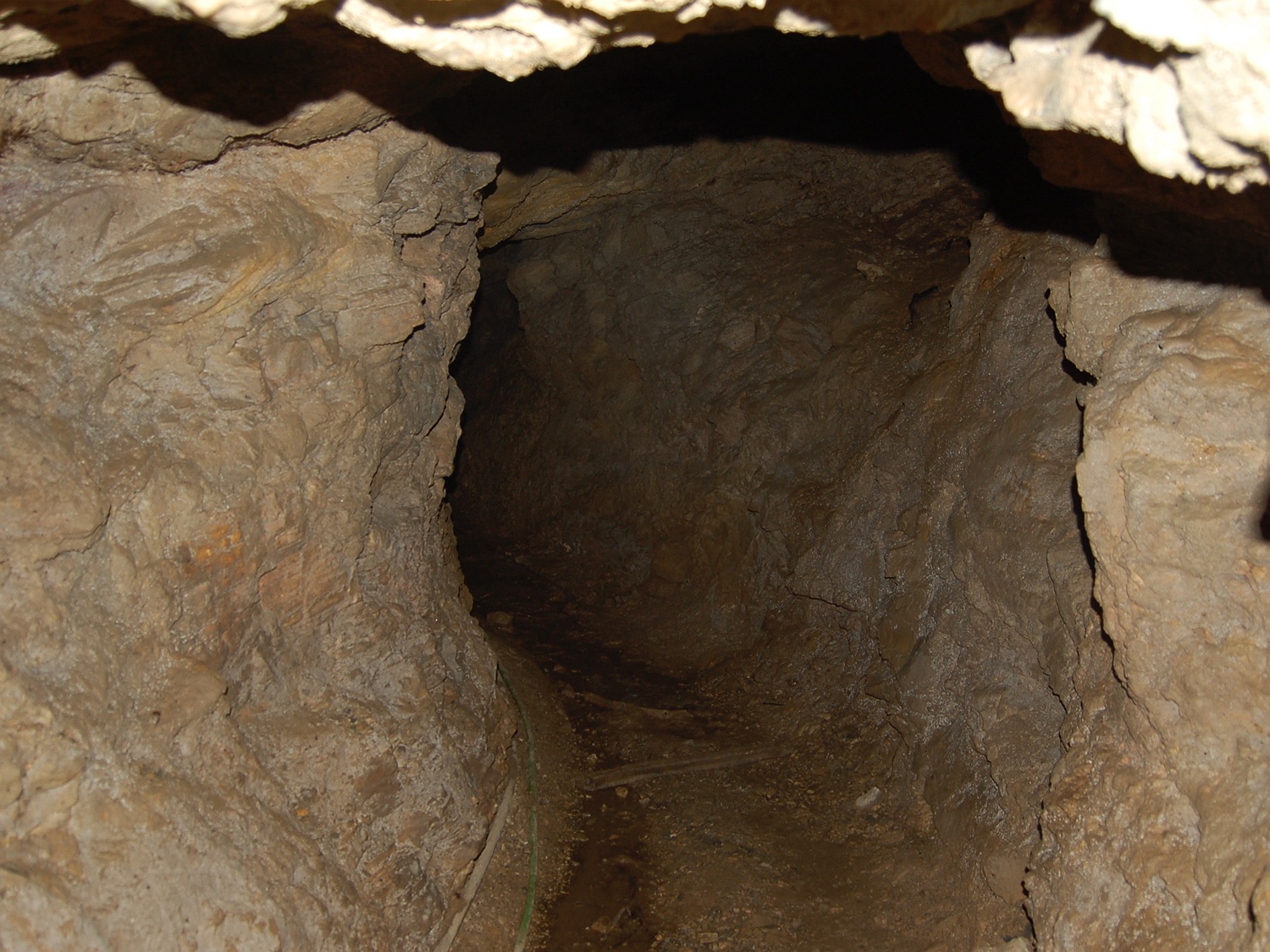
in the mine

Numerous cave crickets sit on the walls, especially under the ceiling.
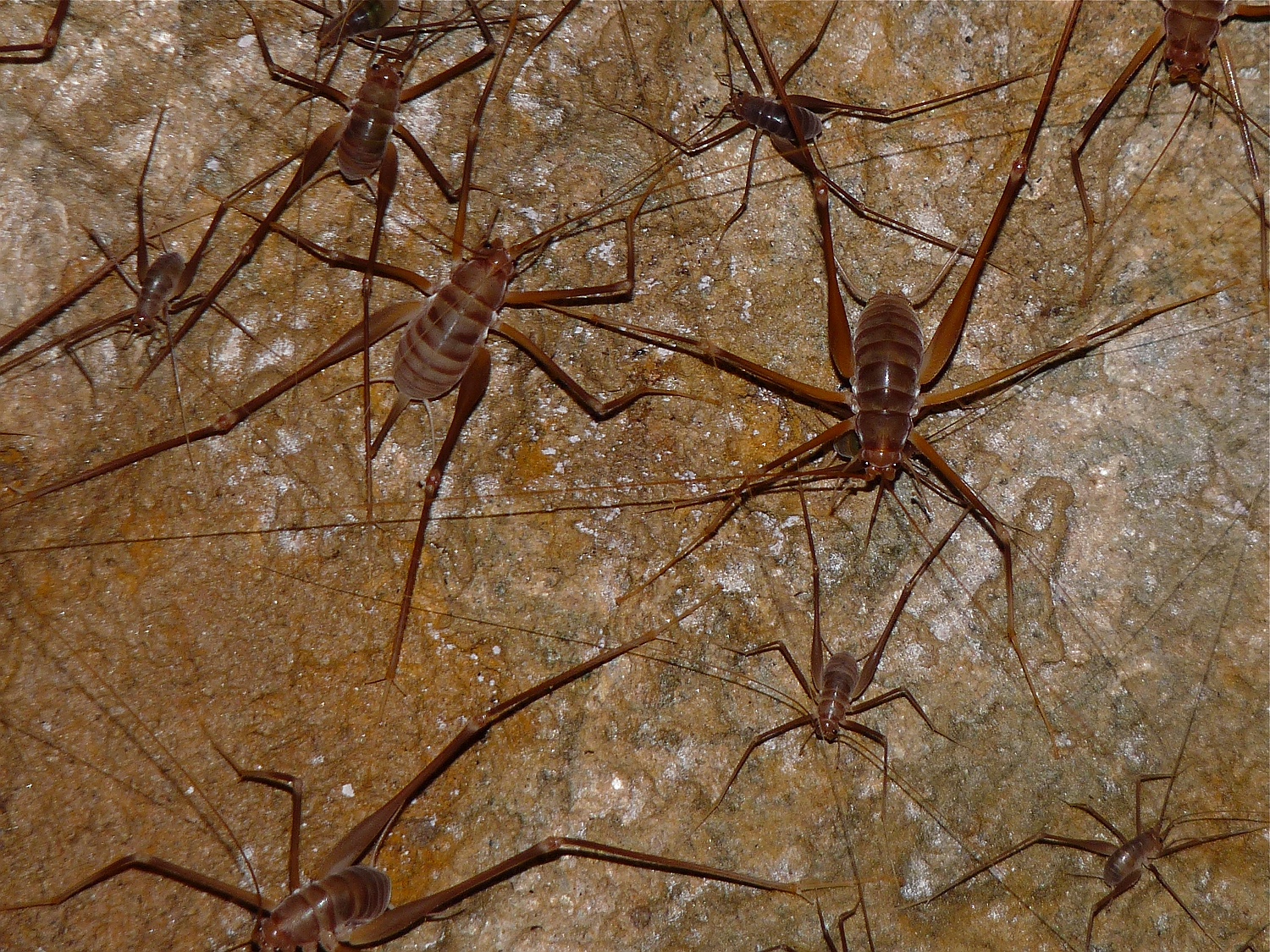
They have no wings, but extremely long legs and antennae.

a male

The females can be recognised by their long curved ovipositor.

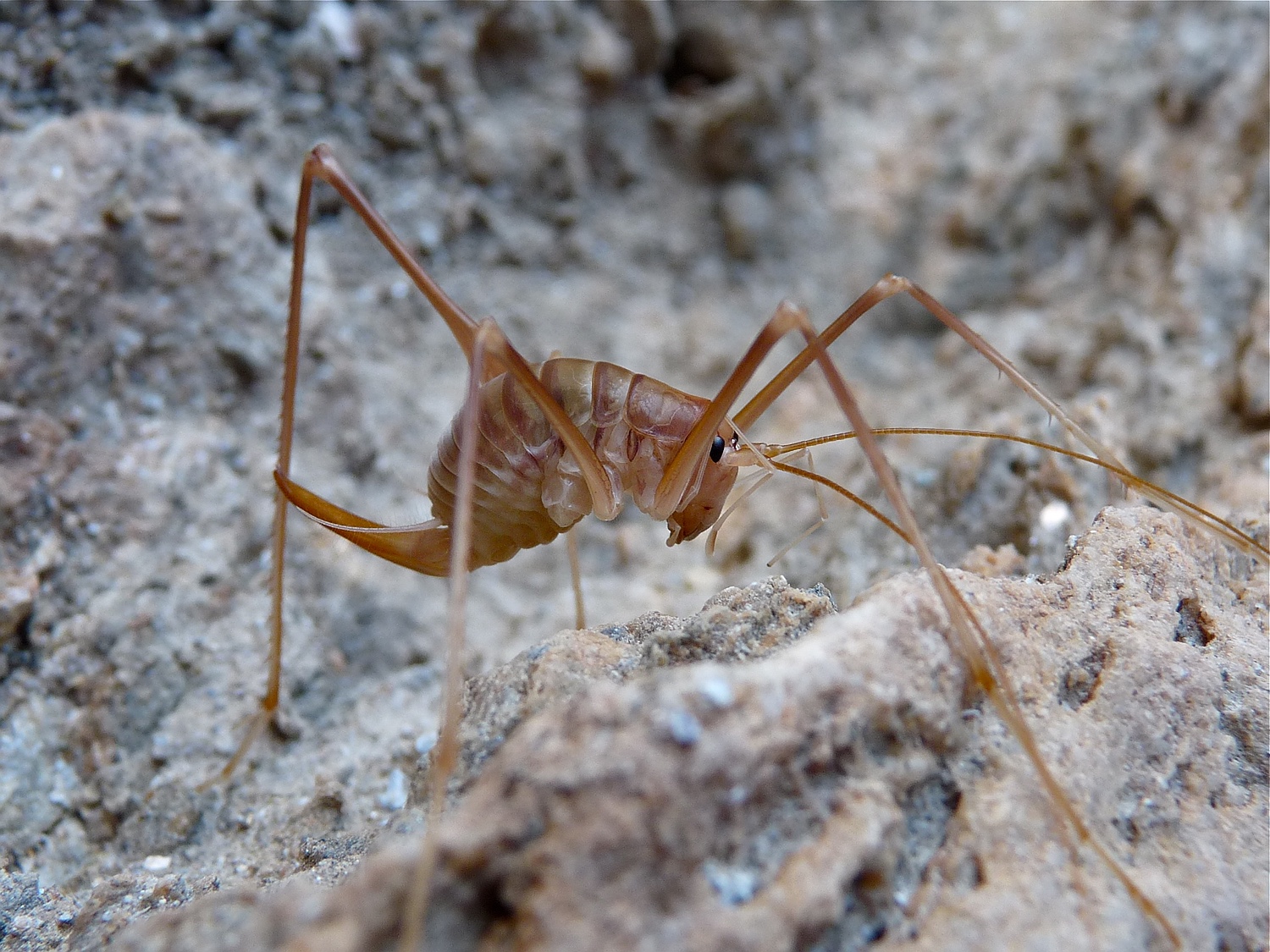

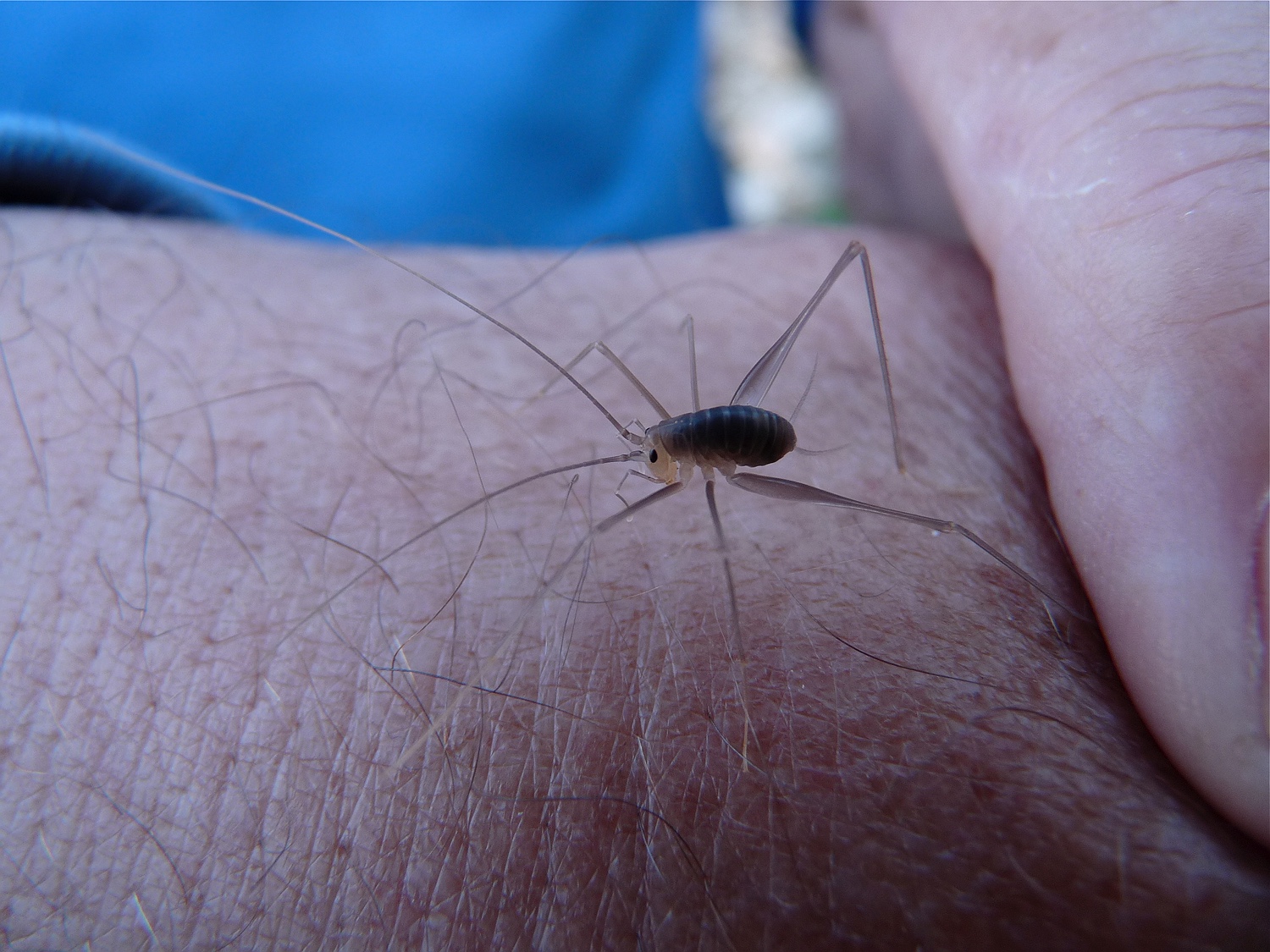
The nymphs already look very similar to the adults.
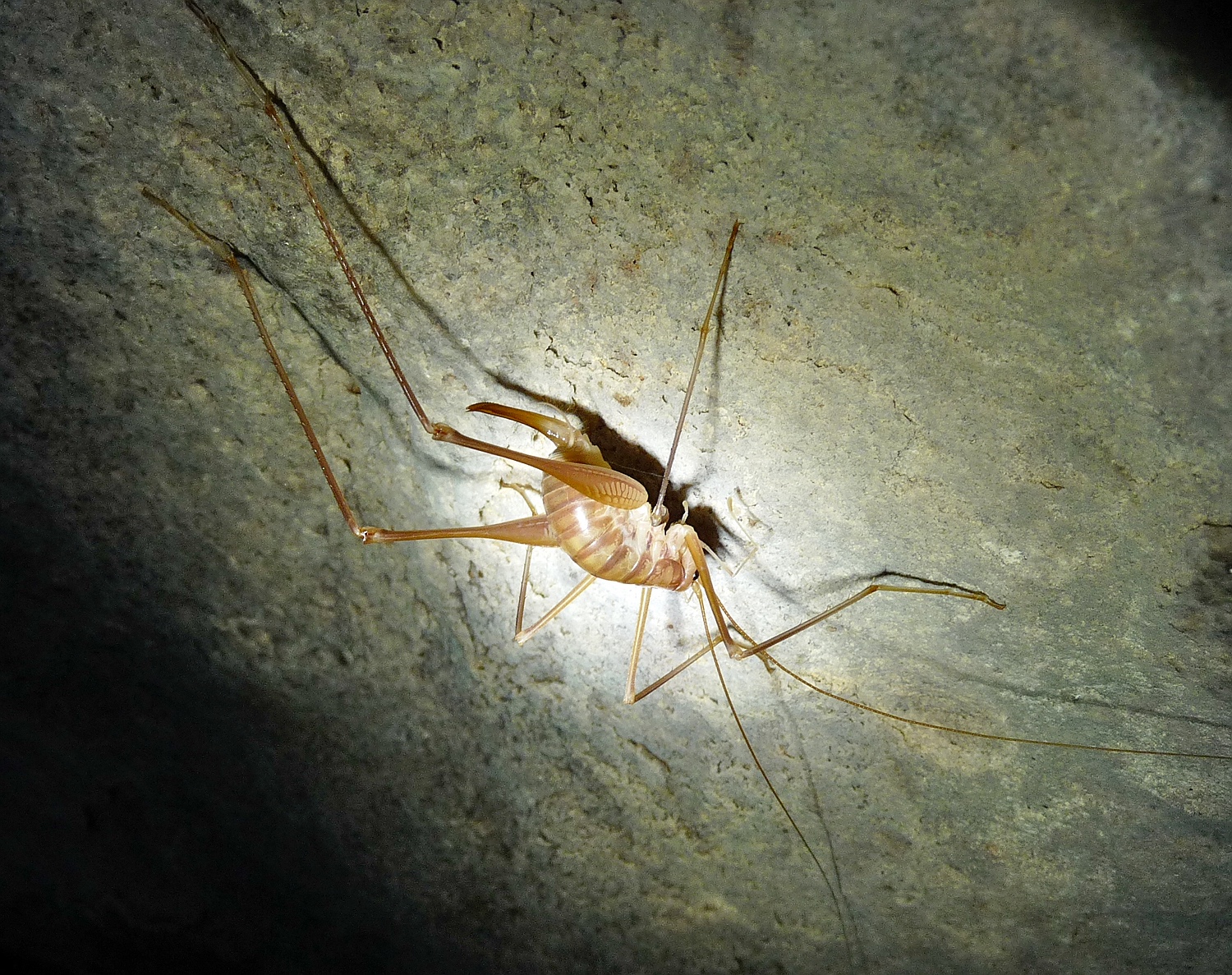
The Naxian cave cricket also occurs in the caves of the island ( as far as we have seen only in small numbers), here in Kakó Spílaio on Mount Kóronos.
continue: Walking stick
back:
See also:
- The emery mines of Naxos (in German)
- The dragon cave near Mesi (in German)
- The Cave Kako Spilaio on Mount Koronos (in German)
- Orthoptera
Source: Testing phylogenetic hypotheses for reconstructing the evolutionary history of Dolichopoda cave crickets in the eastern Mediterranean, by Giuliana Allegrucci, Mauro Rampini, Paolo Gratton, Valentina Todisco and Valerio Sbordoni, Journal of Biogeography (J. Biogeogr.) (2009) 36, page 1785–1797