The electrical oil mill in Kaloxylos
On Naxos, the olive oil was produced for centuries, right up until the 1960s or 1970s, in the old traditional oil mills powered by human labour, of which every village had at least one. The village of Kalóxylos in the Tragaía boasts a particularly interesting oil mill: a nearly 100 years old mill powered by electricity that can be visited in the village.
The oil mill is located in the center of the village in an old building, which is said to have originally been a Venetian tower owned by the Kókkos family. In 1880, the then owner built a traditional, hand-operated oil mill in the building.

The square, stone-built building that houses the old, electrically powered oil mill was probably originally a Venetian tower.
In 1928, Markos Vallindras and Joannis Sakelliadis renovated and modernised the oil mill by installing electric mechanisms, a diesel engine and a generator, thereby producing and using the first electricity in the area.

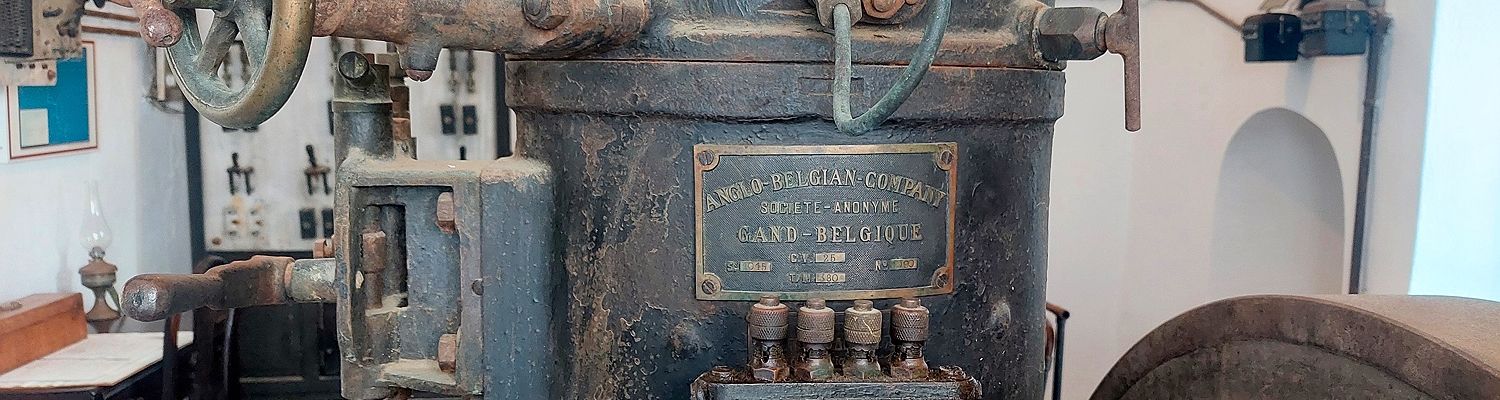
Here you can see the room whith the diesel engine and generator.

The motor is manufactured by an English and Belgian company.

This generator was used to produce the electric power.

the control panel with the ‘antique’ fuses

The olives were crushed in a very large tub made from steel plates. A flap in the bottom could be opened so that the finished olive paste dropped into the large, walled trough below. On the right of the picture you can see the pump that generated the water pressure used to operate the press; to the left of the large tub you see a similar machine used to drive the mill.

Above the tub, the motors that drive the mill and the water pump are installed on metal rails; you can see the power lines leading to them.

The olives in the large, riveted tub were ground by two stones. These could be lifted using a winch.

The two millstones were not mounted on a fixed axle, but on a device that first lifted them and then slowly let them sink under their own weight as the olives were mashed.

The press is located on the other side of the room.

It was powered by water pressure. The press consisted of a horizontal metal plate that was moved upwards with hydraulic power. Special ‘bags’ (tsourápes) were filled with olive pulp and stacked on the plate. Then the metal plate was moved upwards using water pressure. The thick ‘piston’ visible in the right-hand picture, to which the metal plate is attached at the top, was sunk into the opening visible below when the plate was lowered again. In the foreground of the left-hand picture, you can see the centrifuge used to separate the oil from the water, with its two outlets and the two troughs below.
Today, the oil mill has been converted into a museum; visitors can also taste and purchase oil and olives.

At the electric oil mill in Kalóxylos, visitors can take part in culinary oil tastings of local oils and olives and flavoured oils; specially selected oils and olives from the region are also sold.
The family business Vallindra-Sakkeliadi not only ran the oil mill until the Second World War, but also supplied the nearby villages with electricity to light their homes. Since 1896, the same family has also operated the Vallindra distillery in Chalkí, which still produces the unique Naxian Kitron.
continue: The Distillery of Kitron in Chalki
see also: