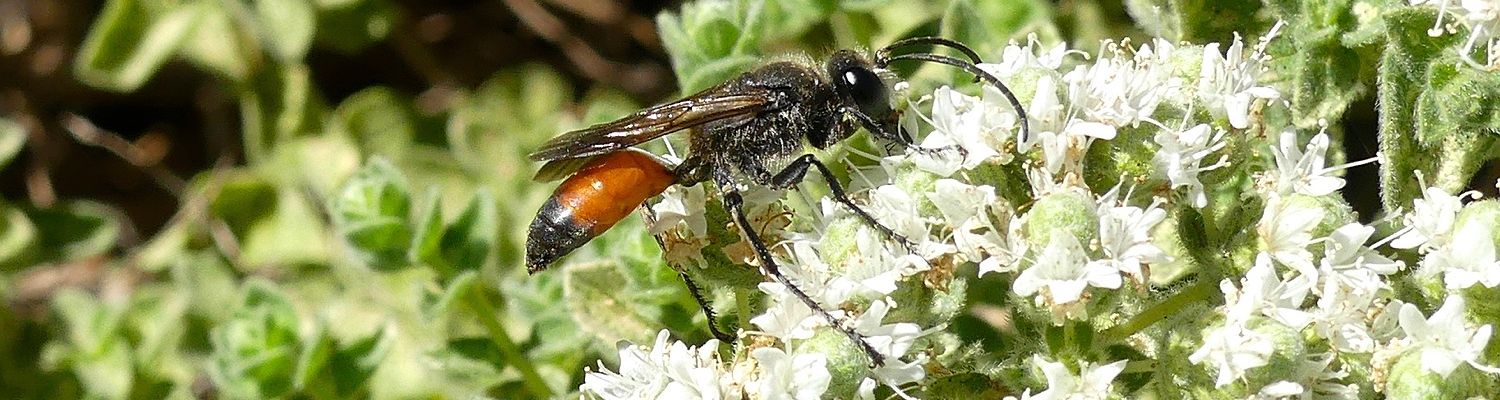
The Golden digger wasp
The Golden digger wasp is one of the largest hymenoptera (wasps, bees, ants, etc.) with a body length of up to 2.5 cm. It is found in southern Europe, North Africa and Asia as far as Mongolia.
The digger wasps are closely related to the bees. A wide variety of hymenoptera occurs on Naxos, including several digger wasp species. Digger wasps provide insects or spiders as food for their larvae. They catch and stun their prey and deposit it in underground nests. The Golden digger wasp, one of the largest species, catches mostly Great green bush-crickets as prey. Unlike most other species, it deposits several animals in the same nest, which contains several chambers branching off a main tunnel that is about 15 cm long. Each nest chamber is equipped with one paralysed bush-cricket and one egg. The larvae hatch after three or four days and take 18 days to pupate, feeding on the prey; after another 24 days, the adult (imago) emerges.
Golden digger wasp, Sphex funerarius, Gussakovskij

The Golden digger wasp can reach a size of 2.5 cm (body length). It is blackish in colour except for the orange-red front abdomen. Unlike many other Hymenoptera, digger wasps do not fold their wings.
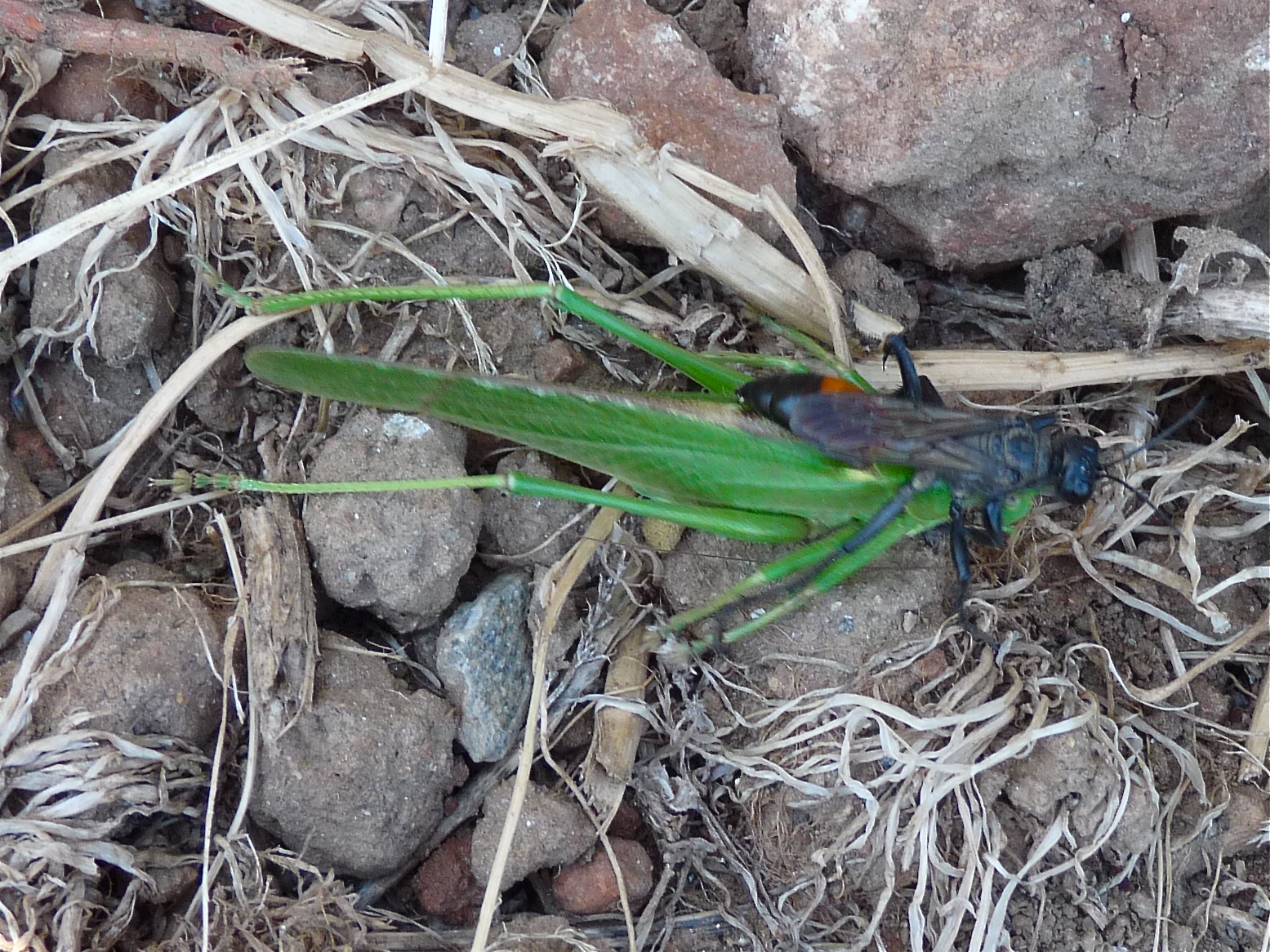
The Golden digger wasp catches large orthoptera as prey for its larvae, which it stuns with several stings. As you can see, the wasp can overpower prey that is much larger than itself. So far I have seen it only with Great green bush-crickets as prey, which are one of the largest species of orthoptera in our area.
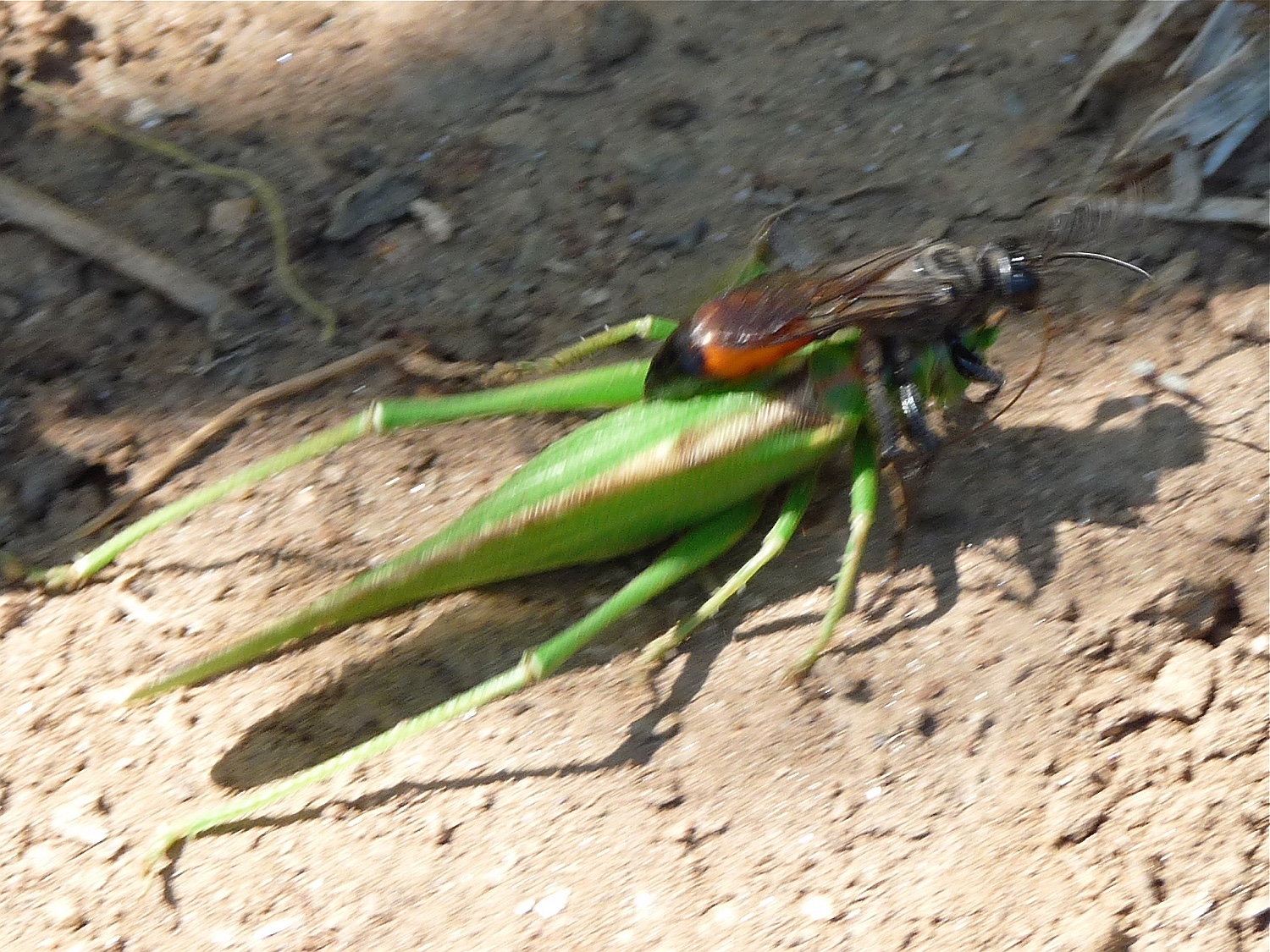
The prey is transported to the nest on foot (it is too heavy for the wasp to carry it flying), with the wasp holding the bush-cricket by the base of its antennae with its mandibles (jaws) and pulling it along under its belly in between its legs. It was not easy to photograph the process, as the wasp dragged the bush-cricket at an astonishing speed across our garden for more than 15 metres, even climbing small vertical walls where necessary, all with the bush-cricket in tow.
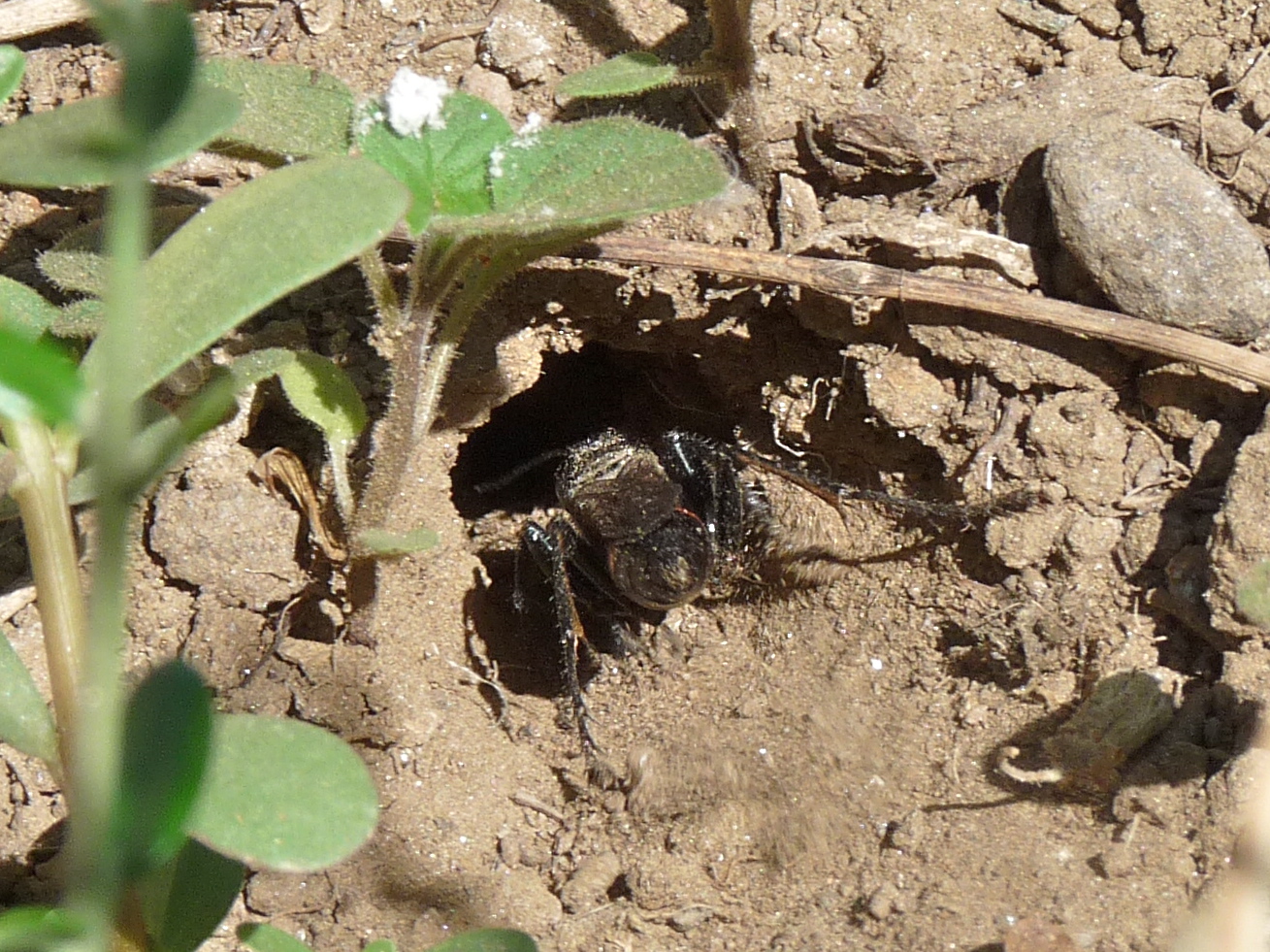
Once it reached the nest, the wasp left its prey a short distance from the entrance and entered the nest to inspect it, digging a little more.
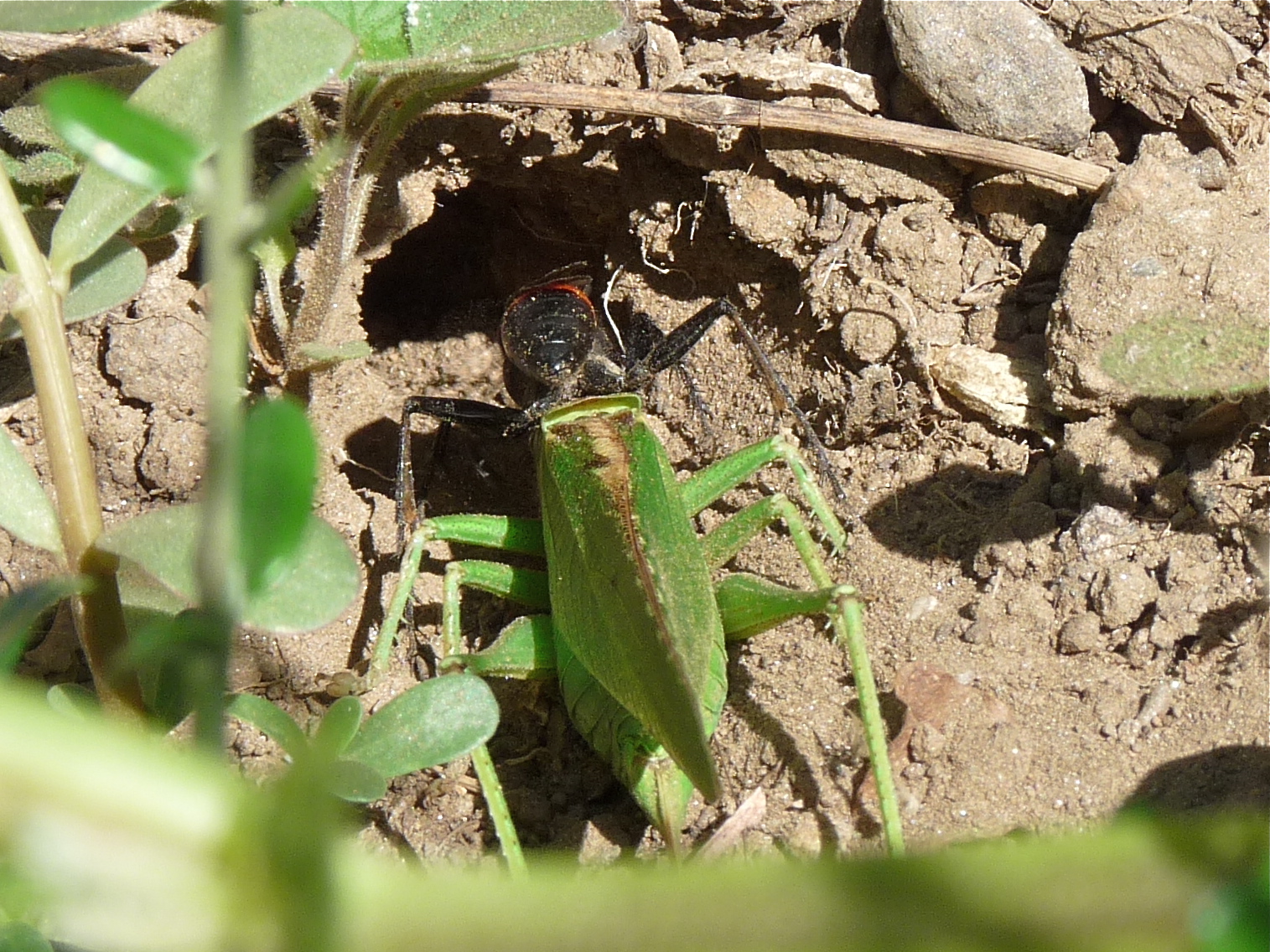
Here, the bush-cricket is being pulled into the nest.
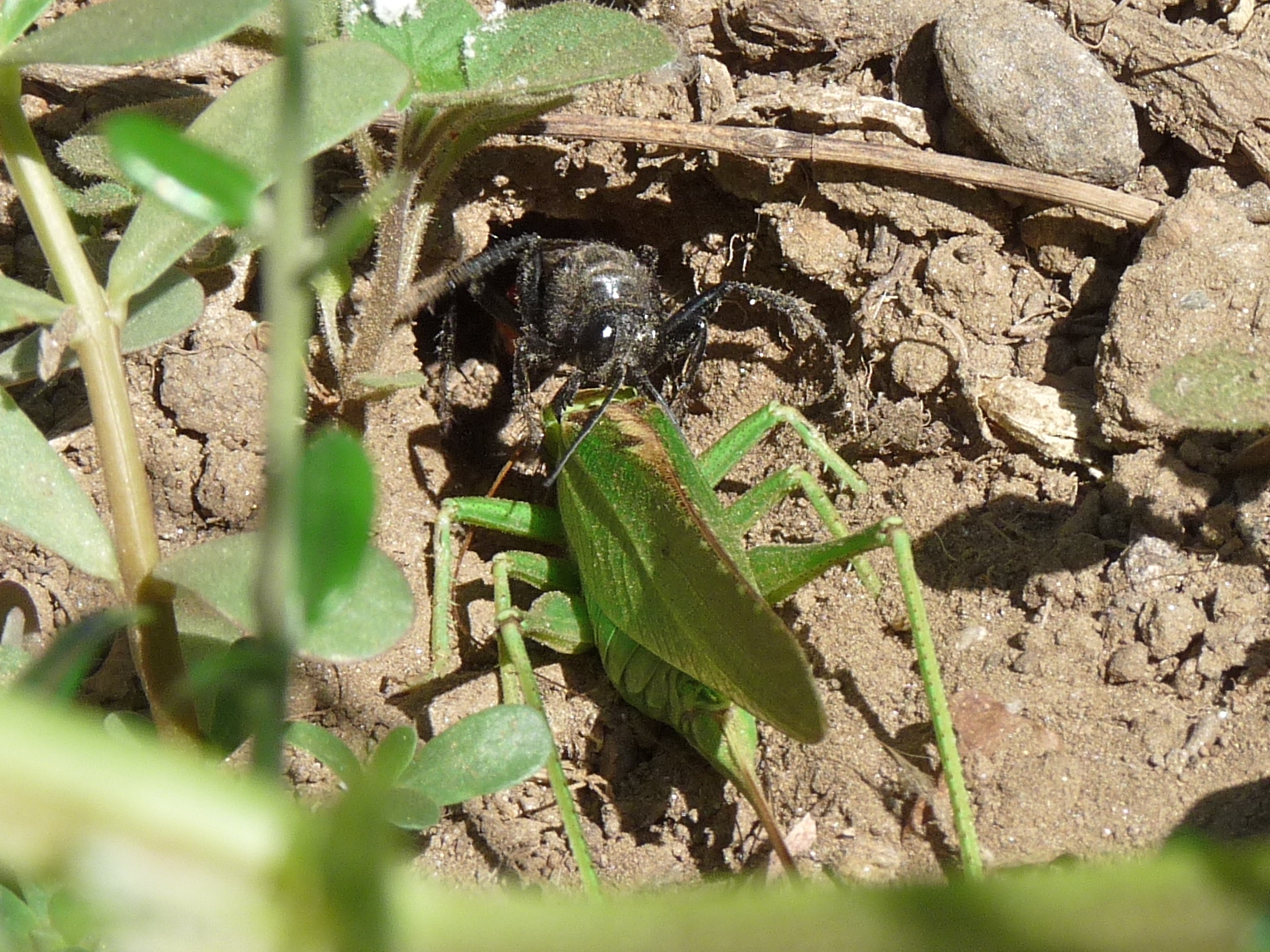
The wasp pulls the prey backwards into the nest.
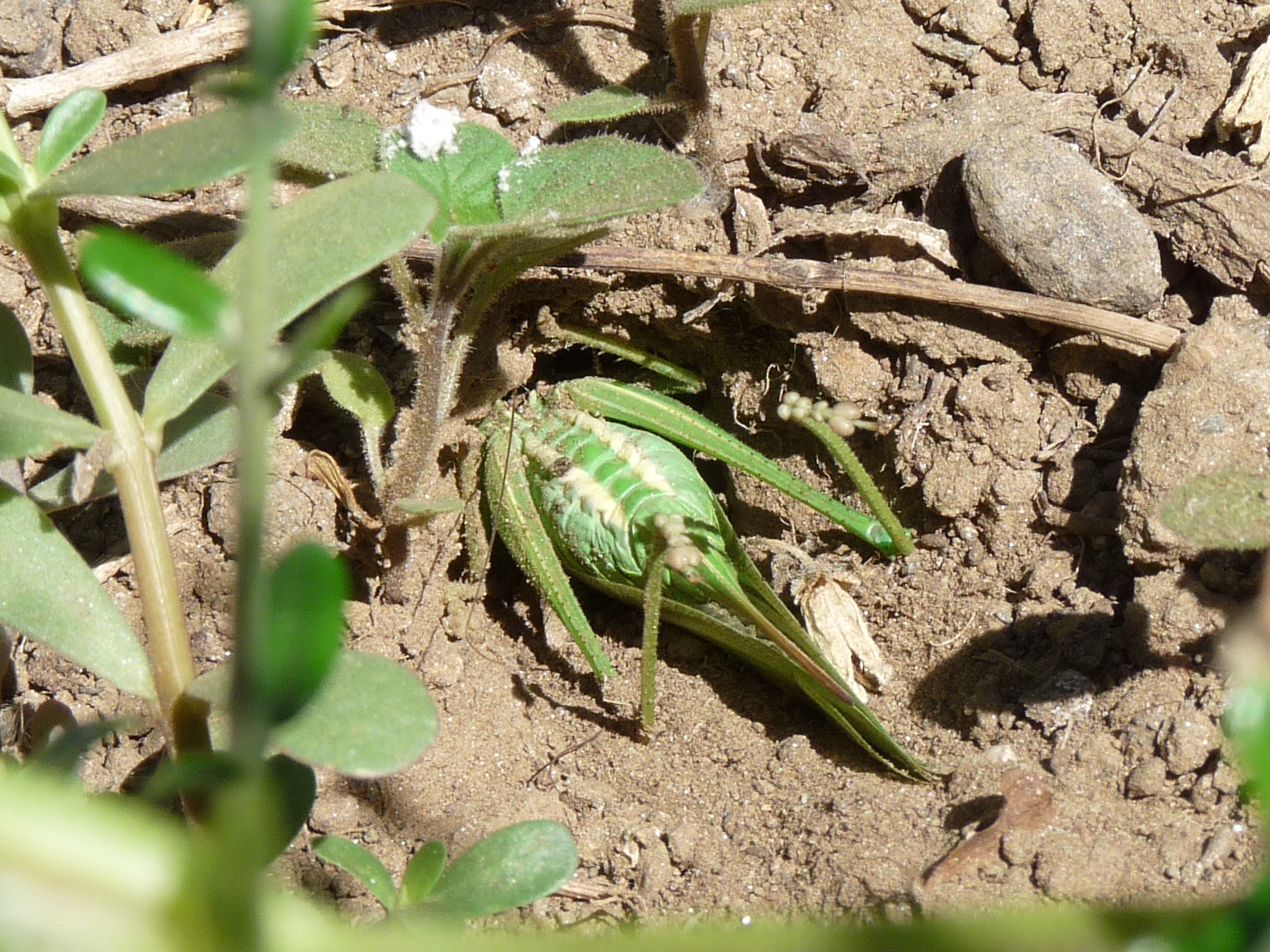
Inside the nest, the wasp deposits its prey in one of several nest chambers that branch off to the side and lays an egg on it. After a few days, the larva hatches and starts feeding on the living but paralysed prey.
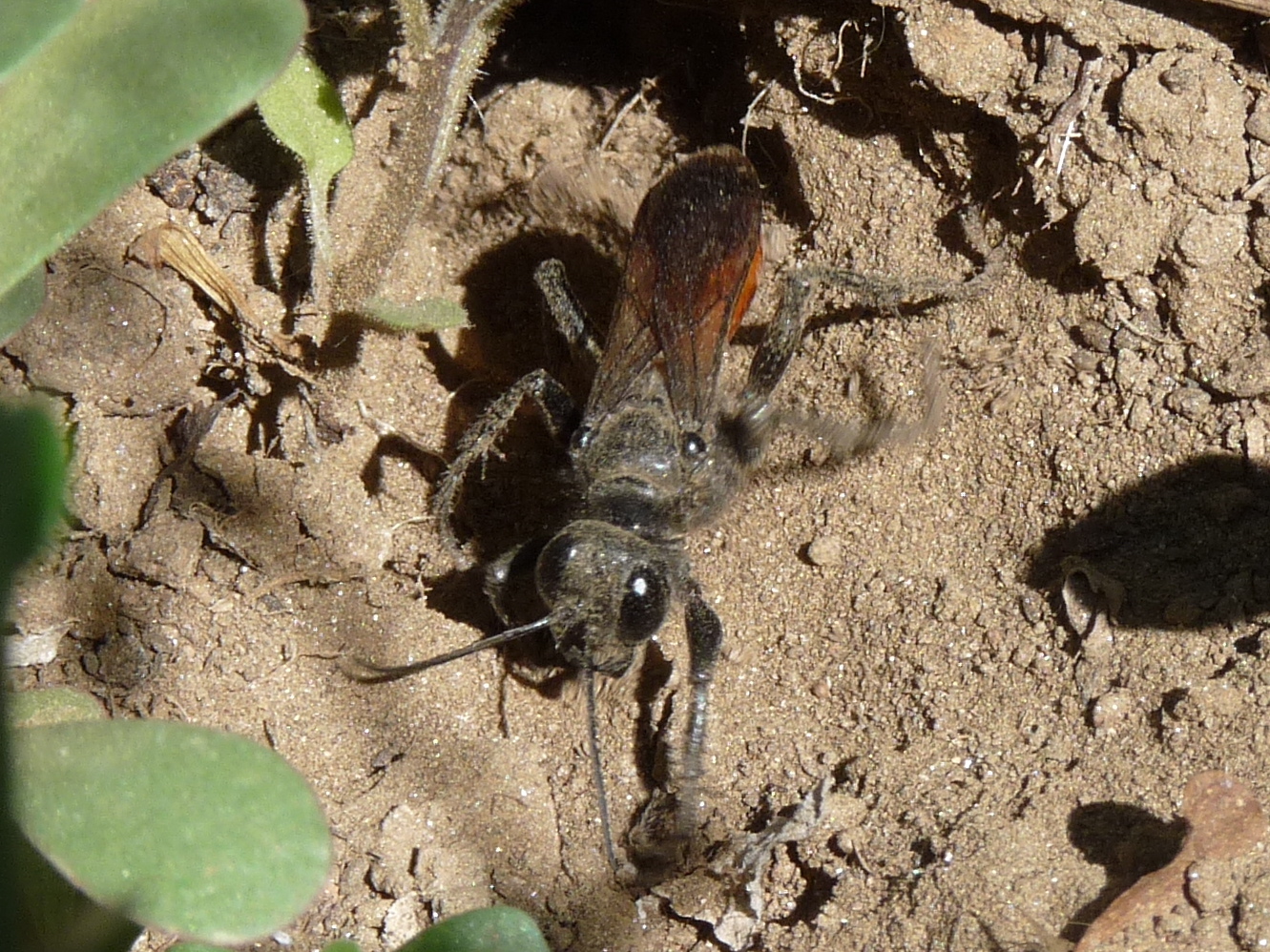
the Golden digger wasp in front of its nest
Back:
See also:
Comments are closed.