
Algae
Algae do not generally have a particularly good reputation. When it comes to algae, most people think of killer algae, toxic algal blooms or simply slippery, bone-breaking, ugly coatings on wet rocks. Yes, algae can be annoying or even dangerous, especially where the natural balance of an ecosystem is disturbed for example by excessive nutrient input.
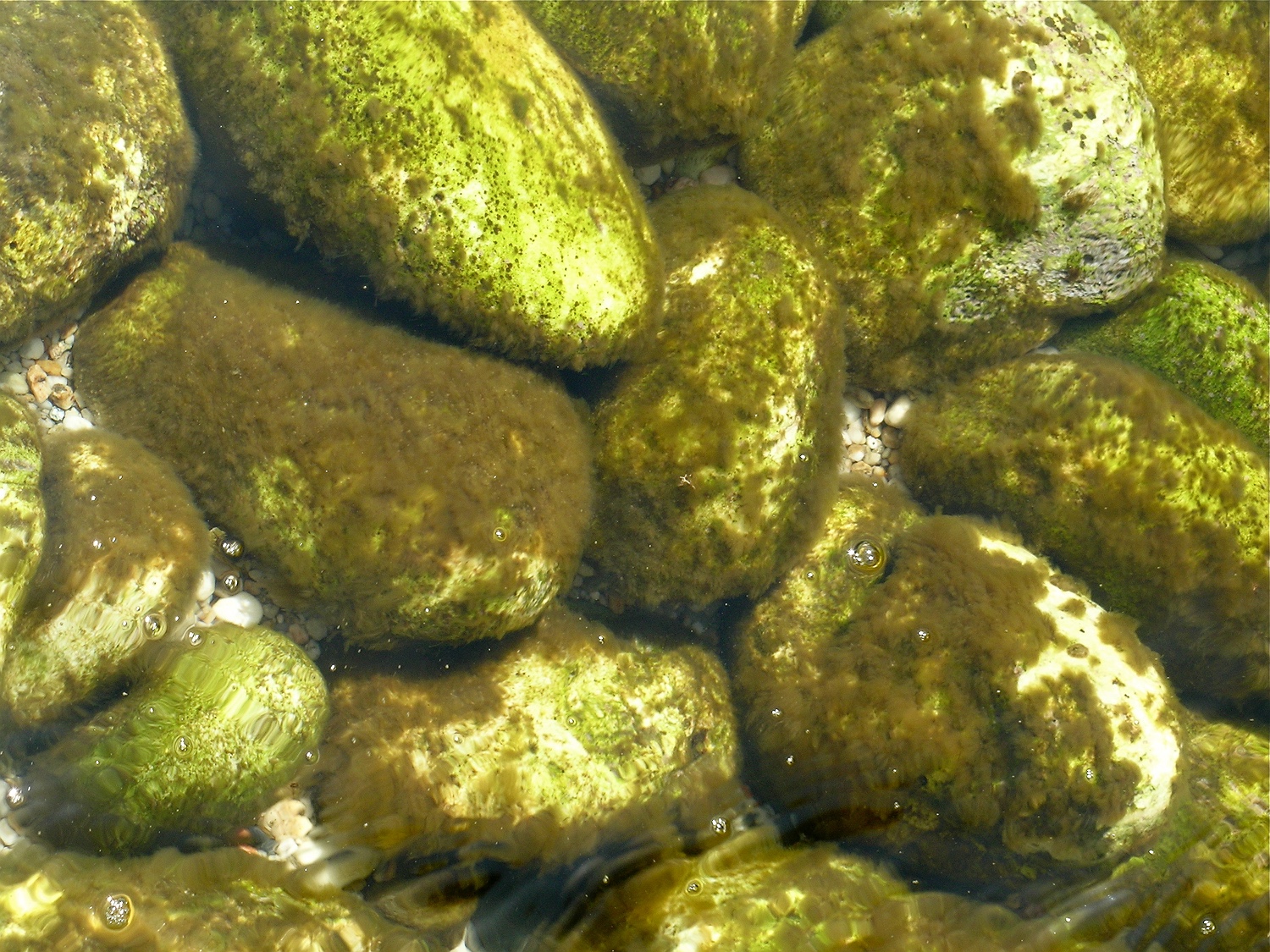
‘Ugly’, slippery algae coatings of this kind, which are completely natural, form on rocks in shallow water that are not regularly moved by the waves.
However, algae are much more than that. For example, they are extremely important oxygen producers: they produce about half of the oxygen in the Earth’s atmosphere. They also assimilate and store carbon dioxide, thus playing an important role for our climate. They were among the first eukaryotic organisms on Earth. Together with the cyanobacteria (blue-green algae) they were the first organisms to perform photosynthesis, making our planet habitable for animals by enriching the atmosphere with oxygen. They also form the basis of the entire food chain in the sea: countless planktonic and sessile animals feed on the planktonic algae (and bacteria), serving in turn as food for the larger predatory animals. Benthic algae, i.e. algae that are attached to the seabed, are eaten to a lesser extent, but they provide a habitat for a large number of animals.
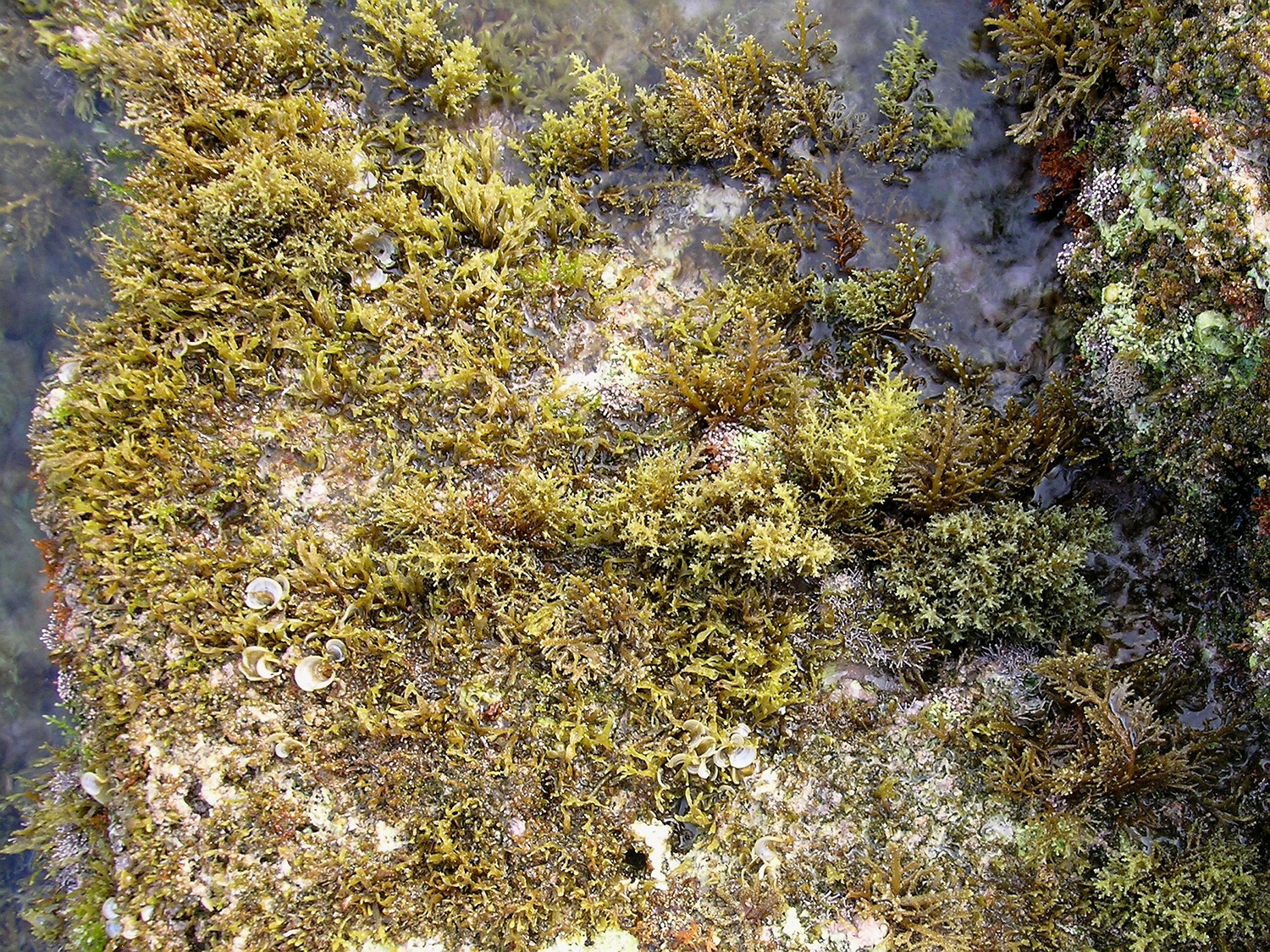
In the tidal zone the rocks are usually densely covered with algae.
The first plants on Earth were algae. All land plants evolved from algae. Algae are “lower” organisms that differ greatly from the higher plants in many respects. They are very diverse and show a wide range of variation in anatomy, metabolism and reproduction: during their evolution, nature ‘tried out’ various possibilities, while all the higher plants derive only from one group of algae, the green algae, and thus are much more homogeneous. This makes algae very interesting study objects. Almost all of our knowledge of cell structure and metabolism comes from studies on algae. Nevertheless, most species of algae found in the oceans have been rather neglected until now, and they are quite insufficiently known compared to their great diversity. It is estimated that the approximately 36,000 species described to date represent less than one fifth of all algae species, and entire classes are still being discovered.
more about the anatomy of algae
The anatomy of algae
Algae are not a uniform systematic group like the higher plants. Their division into subgroups is sometimes based more on superficial similarities than on actual genetic relatedness, as this has not yet been sufficiently researched. The range of variation in structure, but also in chemical constituents, is much greater than in higher plants. Different groups of algae look very differently. First of all, there are numerous single-celled forms, some of which move like amoebas. Among the single-celled species, some carry flagella, others form colonies, other are single-celled, but reach up to a centimeter in size and display many cell nuclei. Among the multicellular species some have a filamentous structure, others exhibit pseudotissue, and still others possess (simple) true tissue. Numerous microscopic species can only be found with a magnifying glass, other reach several meters in length and form veritable forests on the sea floor (which also have a productivity similar to that of tropical rainforests). Other species, often with calcium deposits in their cell walls, grow crust-like on rocky substrates and can form almost coral-like reefs.
more about the reproduction of algae
The reproduction of algae
Reproduction is also very unusual and often extremely complicated in many groups of algae. Apart from vegetative reproduction through division and budding, algae form various reproductive cells. One distinguishes asexual reproductive cells (spores), which serve only to reproduce and spread the algae, and sexual reproductive cells (gametes), which additionally mix the genomes of two parent plants, thus ensuring greater variation in characteristics and a more effective evolution. The algae growing from the asexual reproductive cells have the same genome as the mother plant. In sexual reproduction, male and female reproductive cells (gametes) formed by different plants fuse together. These cells can be either identical in shape, or formed as motile sperm and immotile egg cells. To enable the female and male gametes to find each other, they are often only released by the algae on certain days, which are usually determined by the phase of the moon (for example, after the spring tide, i.e. the highest tide occurring around the full moon or new moon). Sexual and asexual reproductive cells are formed by different generations that alternate with each other. These can look identical or different, so that in some cases they were originally thought to be different species. Sometimes one generation even lives in a degenerate and ‘parasitic’ state on the other. The matter is further complicated by the occurrence of generations (and asexual reproductive cells) with single and with double chromosome sets. In red and brown algae, for example, three generations alternate: the sexual generation, an asexual generation with a double set of chromosomes and an asexual generation with a single set of chromosomes.
more about the biochemistry of algae
The biochemistry of algae
The biochemistry of algae is also much more diverse than that of the higher plants. Land plants are descended from green algae and, like them, use chlorophyll a and b as photosynthetic pigments. The other groups of algae use a whole range of other pigments, such as chlorophyll c, xanthophylls and fucoxanthin, giving the plant a brown or red colour. These pigments enable the brown and red algae to absorb the green light, that is not used by the green algae. Long-wave red light, which is mainly absorbed by the chlorophyll b of green plants, does not penetrates very deeply into the water; accordingly, green algae live mainly in the upper layers of the sea. With their additional pigments, brown and red algae can absorb the green and blue light with shorter wavelengths and a higher energy that penetrates deeper into the water, enabling them to colonise much deeper water layers. Some red and brown algae can exist at depths of over 200 meters in areas that provide only negligible amounts of light.
The other constituents of algae also show a much greater range of variation than those of higher plants. For example, many algae use substances other than starch, which is used by higher plants, as storage substance, such as oils, laminarin or glycogen-like polysaccharides, and their cell walls contain not only cellulose but also numerous other substances: gelatinous substances such as alginate and galactan, various polysaccharides, mannan, xylan, murein, proteins, calcium carbonate or silicic acid.
Here in Azalas, where the coast is still relatively intact, one can see everywhere how diverse, unusual, interesting and simply beautiful the algae are. Hopefully, the pictures will give you a first impression. In addition, the alga communities on the coast are teeming with animal life, which you will discover when you set out on a stroll along the coast.
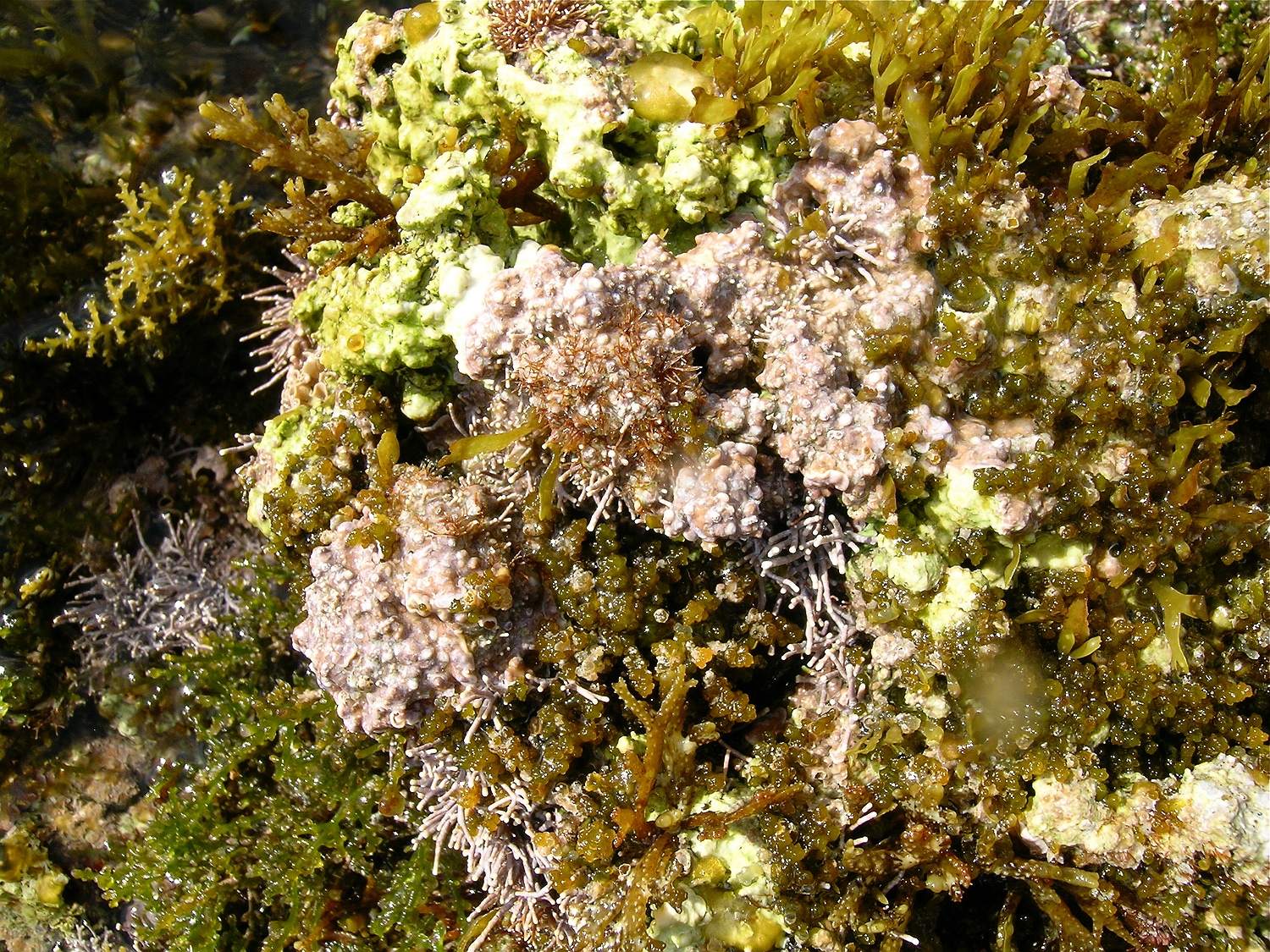
Usually many species of algae grow in lush profusion.
Finally, a word regarding the identification. I have made every effort to identify the species to the best of my ability with the help of several older and newer books and the internet. Of all the plant and animal groups I have studied so far, algae seem to me to be the least researched and therefore the most difficult to identify in our region (i.e. the Aegean Sea). Some of the species have quite distinct characteristics in the structure of their thallus and growth form, making them very easy to recognise. Nevertheless, I cannot find them in the books, and the most similar species often look significantly different in the photos in the books and on the internet. I cannot say whether this is because the species look different in our region or because they are different species. Often, it is not only the species is uncertain, but also the genus. I very much hope that someone will soon thoroughly examine, identify and map the algae of the Aegean Sea (and make the results available in a book or on the internet)!
The situation is made more difficult by the fact that an examination with a powerful magnifying glass or microscope is often necessary for an exact identification, as the structure of the tissue or even the cells (e.g. the number of cell nuclei) is important for distinguishing between genera and species. Because of all these difficulties, many of my ‘identifications’ must remain uncertain, and even those I am reasonably sure of may well turn out to be wrong. Nevertheless, it may be worthwhile to present the species here, if only to demonstrate their diversity and beauty!
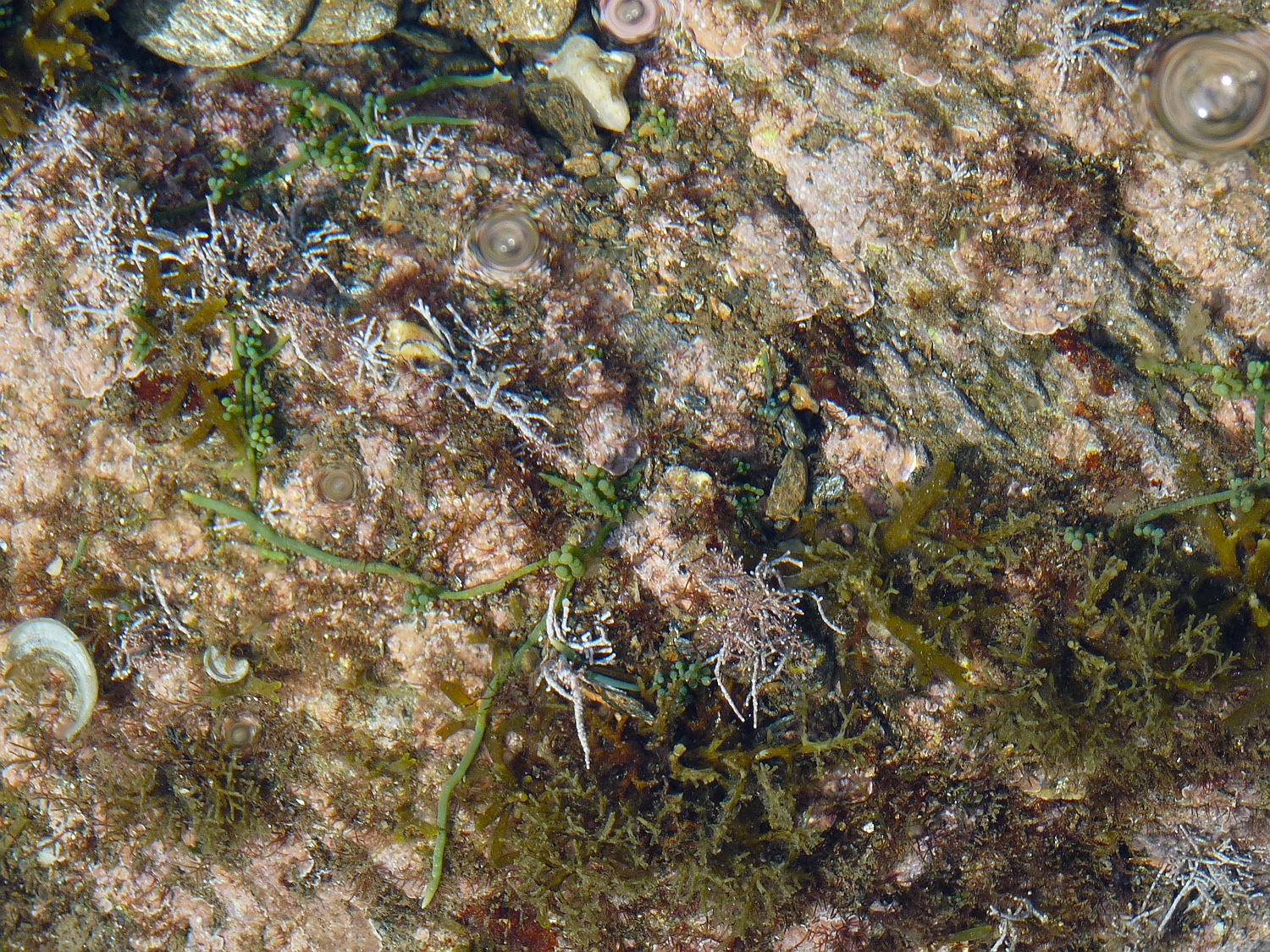
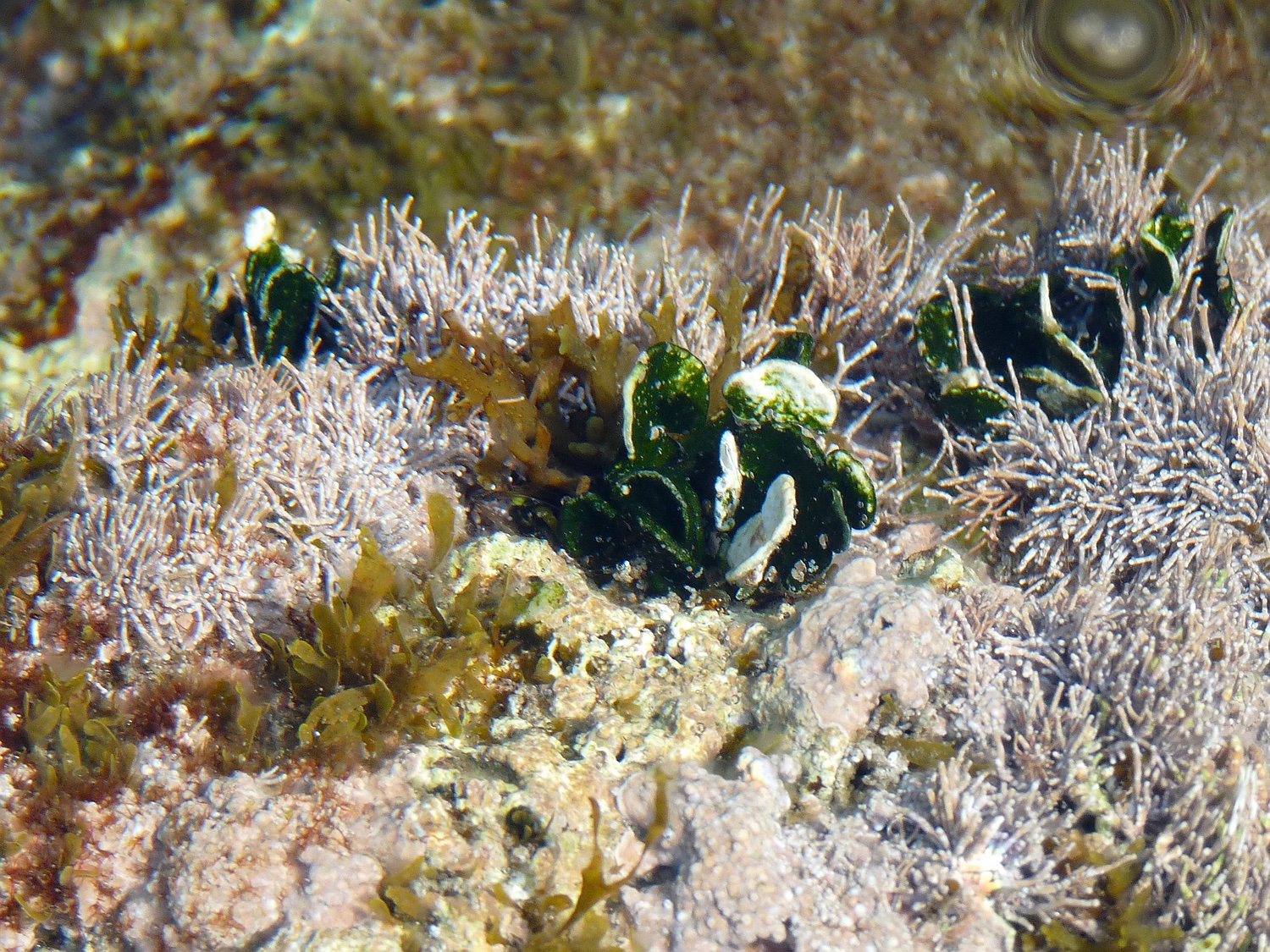
green, brown and red algae growing together
Continue here:
The Photo gallery of the marine plants gives an overview over the presented species.
see also: