
The Mediterranean monk seal
Seals or Pinnipeds comprise the Earless seals or Phocidae (seals and elephant seals), the Eared seals or Otariidae (sea lions and fur seals) and Walruses or Odobenidae. Only three species of monk seals (genus Monachus) exist: the Mediterranean monk seal, the Hawaiian monk seal and the Caribbean monk seal. The Caribbean monk seal is considered extinct; the other two species are critically endangered.
The Mediterranean monk seal (Monachus monachus) is one of the rarest mammals in Europe, with a population of only 350 to 450 animals. Remaining populations live in Turkey, Greece, Morocco, Tunisia and around Madeira. The Mediterranean monk seal is one of the largest seal species. It grows up to 2.80 m long and weighs over 300 kg. Monk seals live alone or in small colonies. They prefer coastal caves with underwater entrances for raising their young and as resting places.
The Mediterranean monk seal has been persecuted by fishermen as a competitor since ancient times. Today, they also suffer greatly from marine pollution, disturbance and general food shortage due to overfishing. In the Aegean Sea, the population has been able to recover somewhat thanks to a large-scale conservation program, public awareness campaigns and the establishment of a protected park in the Northern Sporades. Lately the species has even reappeared in some regions (such as the Saronic Gulf near Attica).
Mediterranean monk seals occur around Naxos, though rarely. Like dolphins, they can almost only be seen when the sea is completely calm, so that their heads appear from a distance. We have observed seals several times near the Mákares Islands and have also seen one swimming in our bay.
The monk seals are very secretive and generally keep away from humans. However, they do exist (thankfully – still!), and in recent years they have even raised young in our area. For the long-term survival of the species, it is essential that the seals are not disturbed, and one should not approach a seal if one sees one. Due to conflicts with local fishermen, it is also preferable to draw as little attention as possible to their presence. So: we are happy that they exist, but we want to leave them alone as much as possible – the survival of the species is more important than taking a photo, for example. That is why on this page I can present only photos from the NCC, which is involved in marine conservation programs.
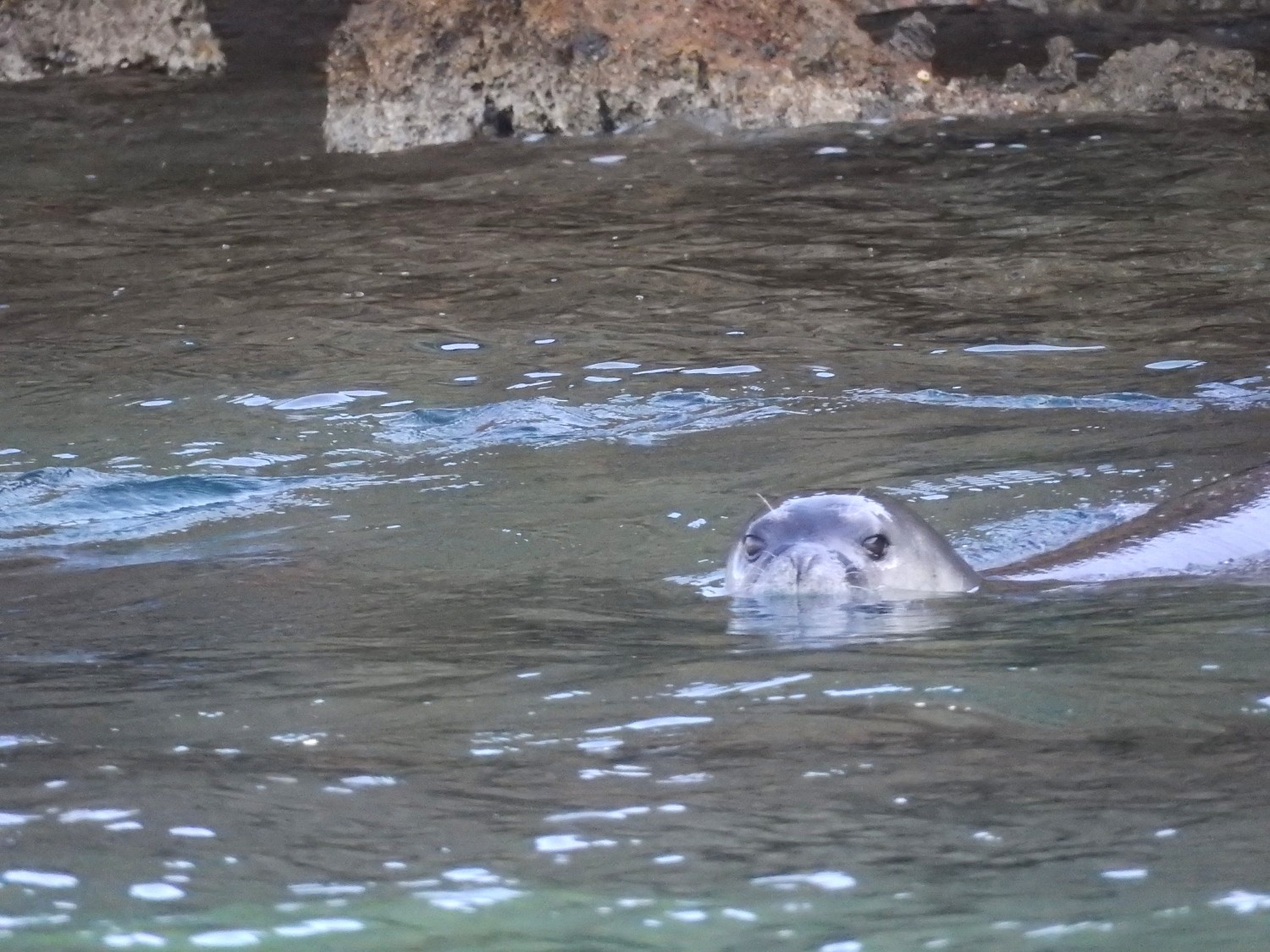
Usually, you only see the monk seal’s head sticking out of the water.
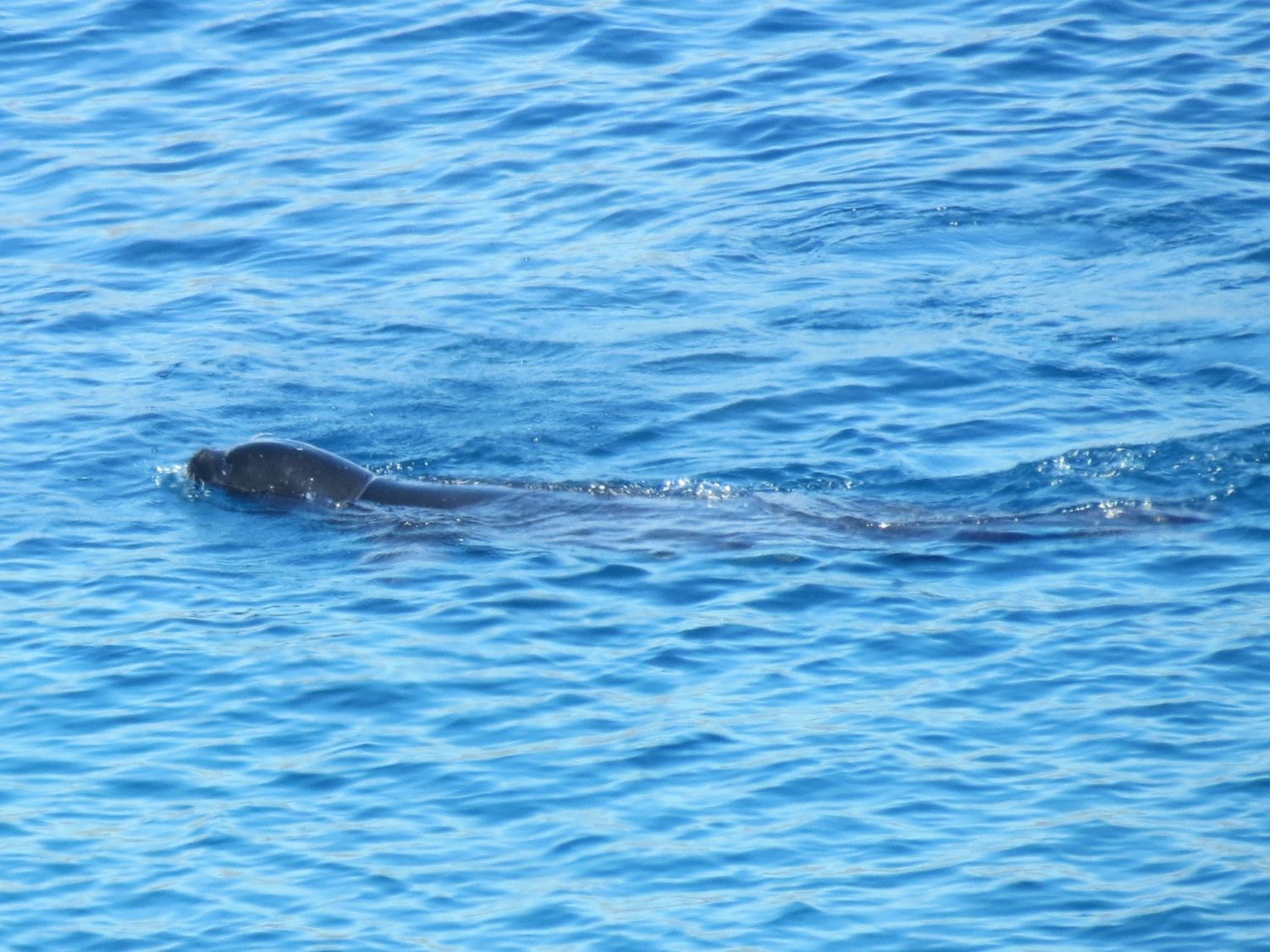
Swimming monk seal
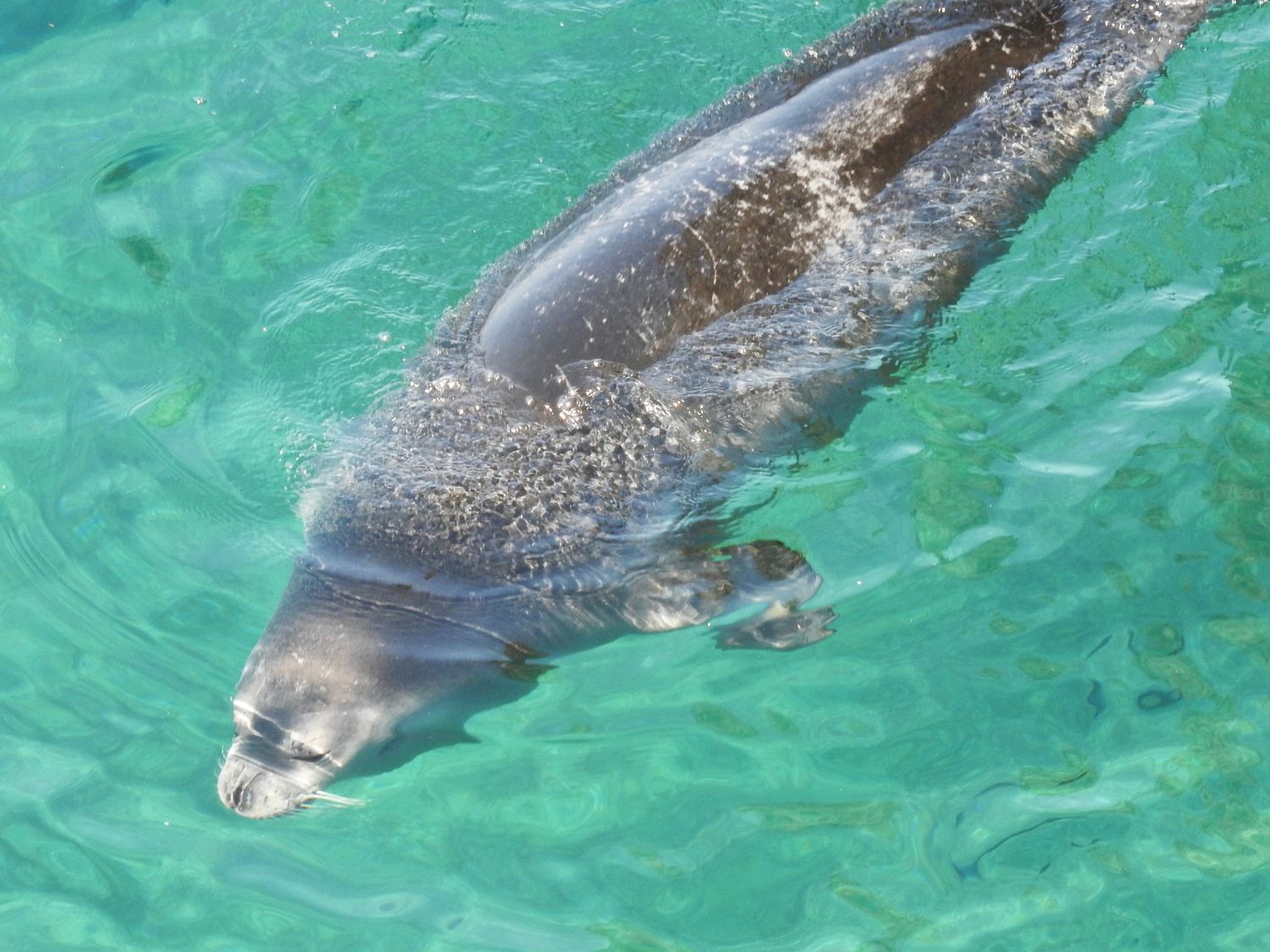
A rare sight! The Mediterranean monk seal is one of the rarest mammals. Thanks to diligent efforts, their populations are partially recovering.
back: Marine animals (Overview)
See also:
More information: