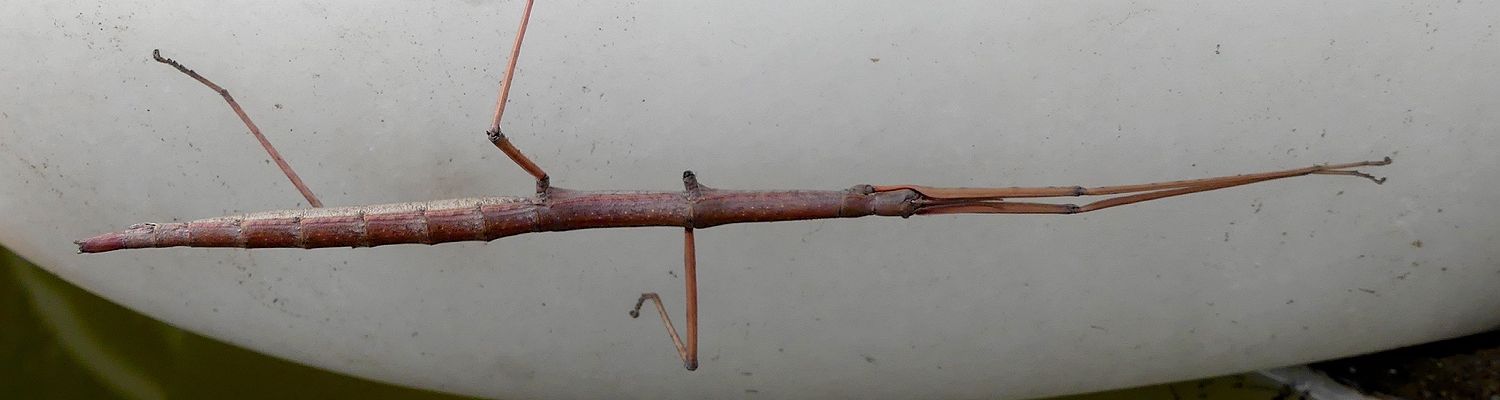
The Walking stick
The walking sticks belong to the Phasmatodea (“phasmids”), which more or less resemble orthoptera (grashoppers, crickets, locusts), but are not closely related to them. Most species of the Phasmatodea mimic leaves or twigs in their appearence, so that they are particularly well camouflaged and especially hard to spot. Over 3,000 species are known, but new species are constantly being described. They show their greatest diversity in tropical regions. All species live in dense vegetation and are phytophagous.
Phasmids are generally quite large; the largest species reaches a length of over half a meter (with the legs). Characteristic of the order is the very short first thoracic segment (prothorax). In many species the wings are reduced.
The Photo gallery of the orthoptera and relatives gives an overview over the species.
Bacillus atticus, Brunner von Wattenwyl
The walking stick (Bacillus atticus) mimics a twig: body and legs are very long and thin. Bacillus atticus reaches a total length of about 15 cm (body length up to 8 cm). The wings are almost completely reduced. When the walking stick sits in the vegetation, it often sways back and forth like a branch in the wind. It is probably not uncommon in our region, but one sees it only quite rarely: Apart from its excellent camouflage it is also nocturnal and usually stays well hidden in the vegetation during the day.
An interesting characteristic of the walking sticks is their ability to reproduce with parthenogenesis: Its eggs develop without fertilisation, so that the females mostly reproduce on their own.
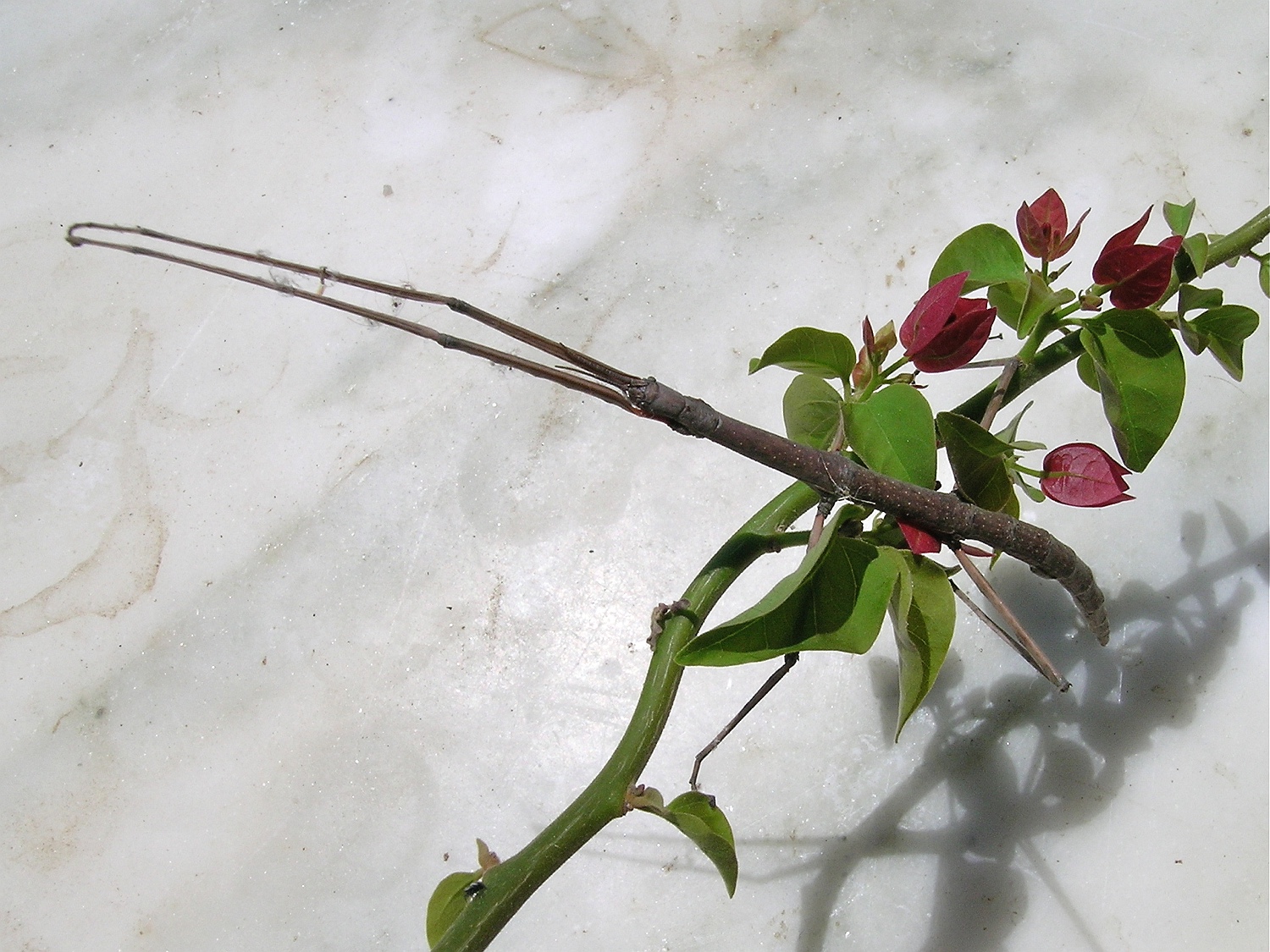
The walking sticks are excellently camouflaged.
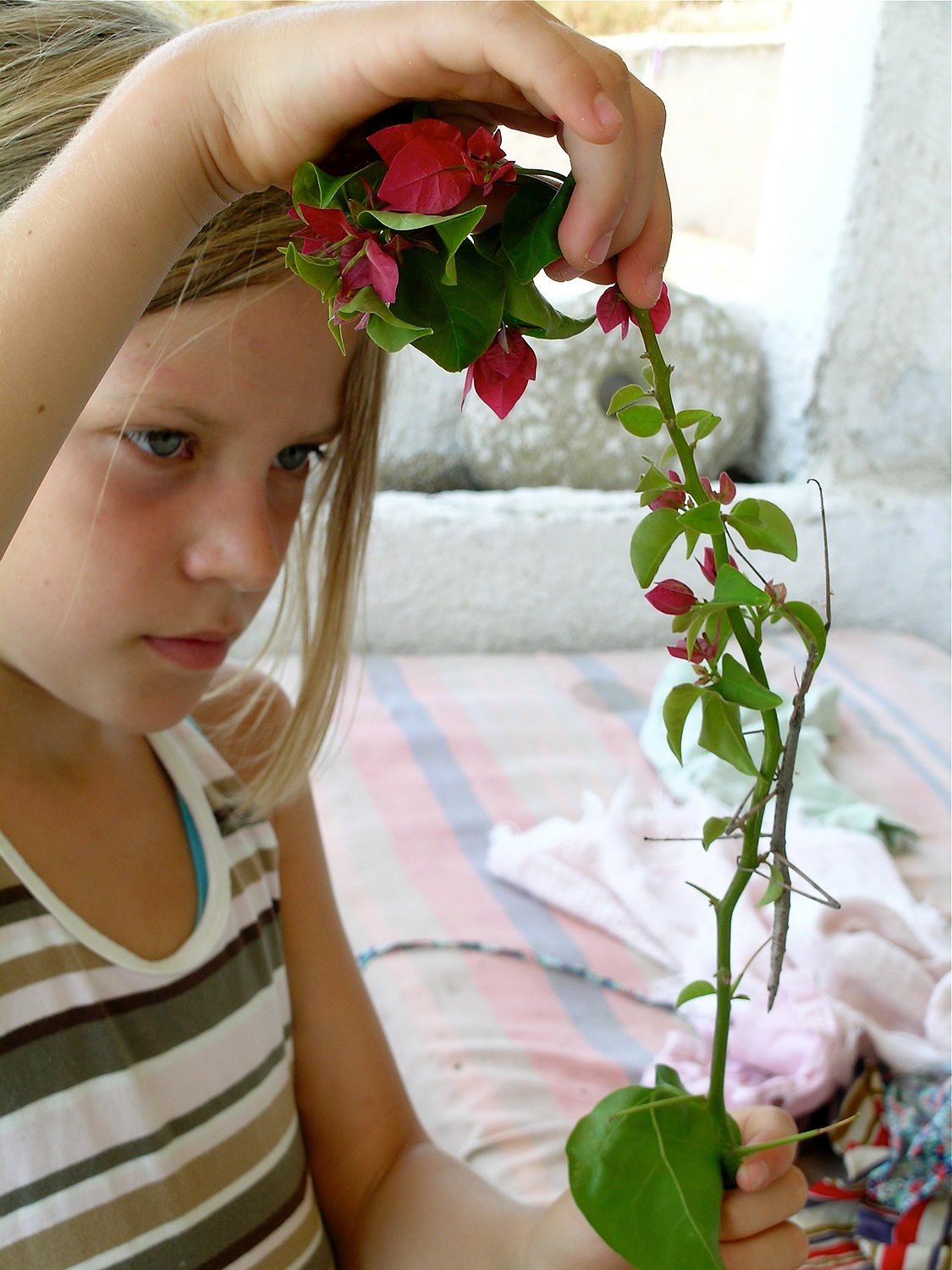
Here you can see how large the walking stick is!
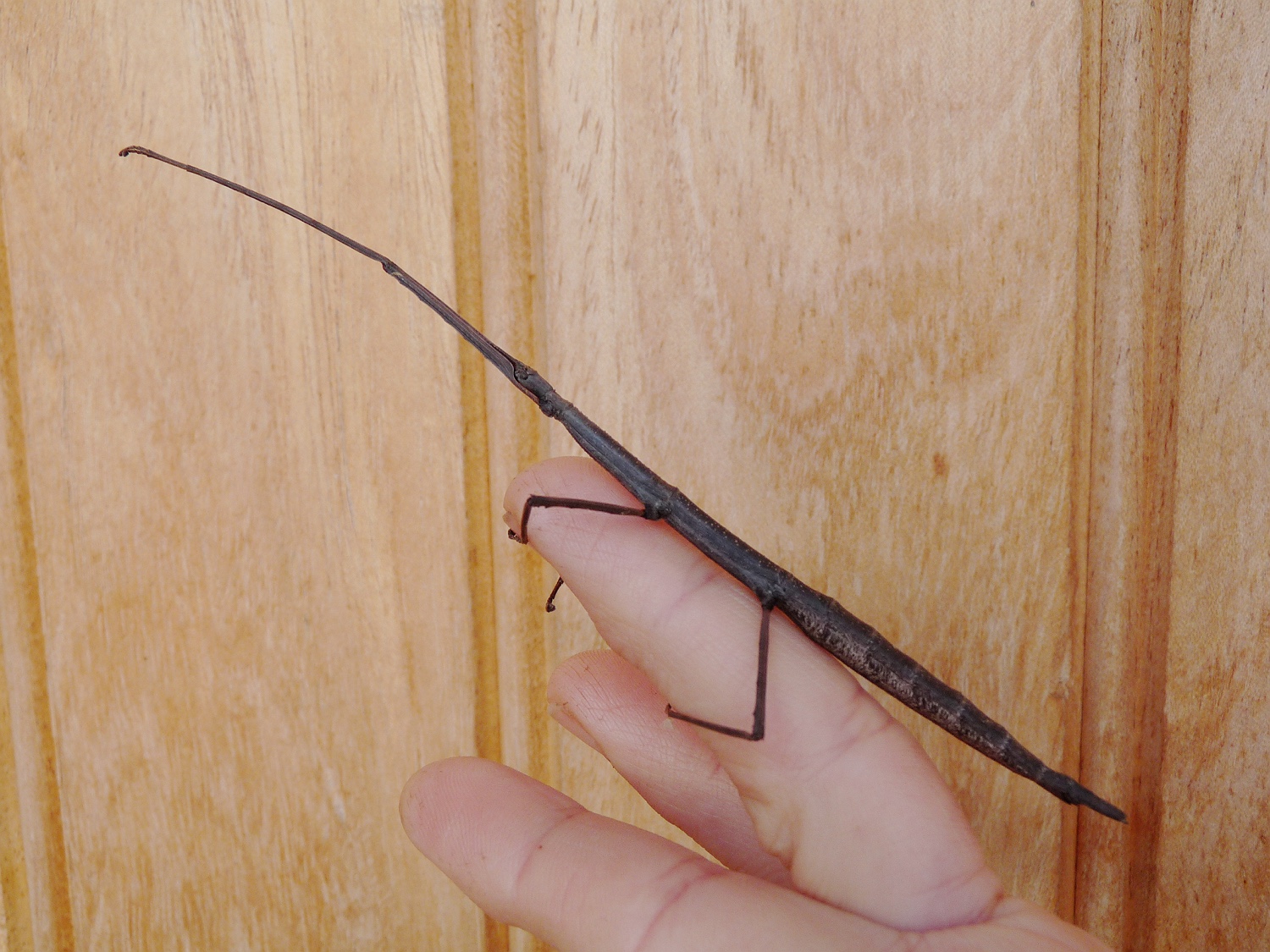
The walking stick really does look amazingly like a twig.
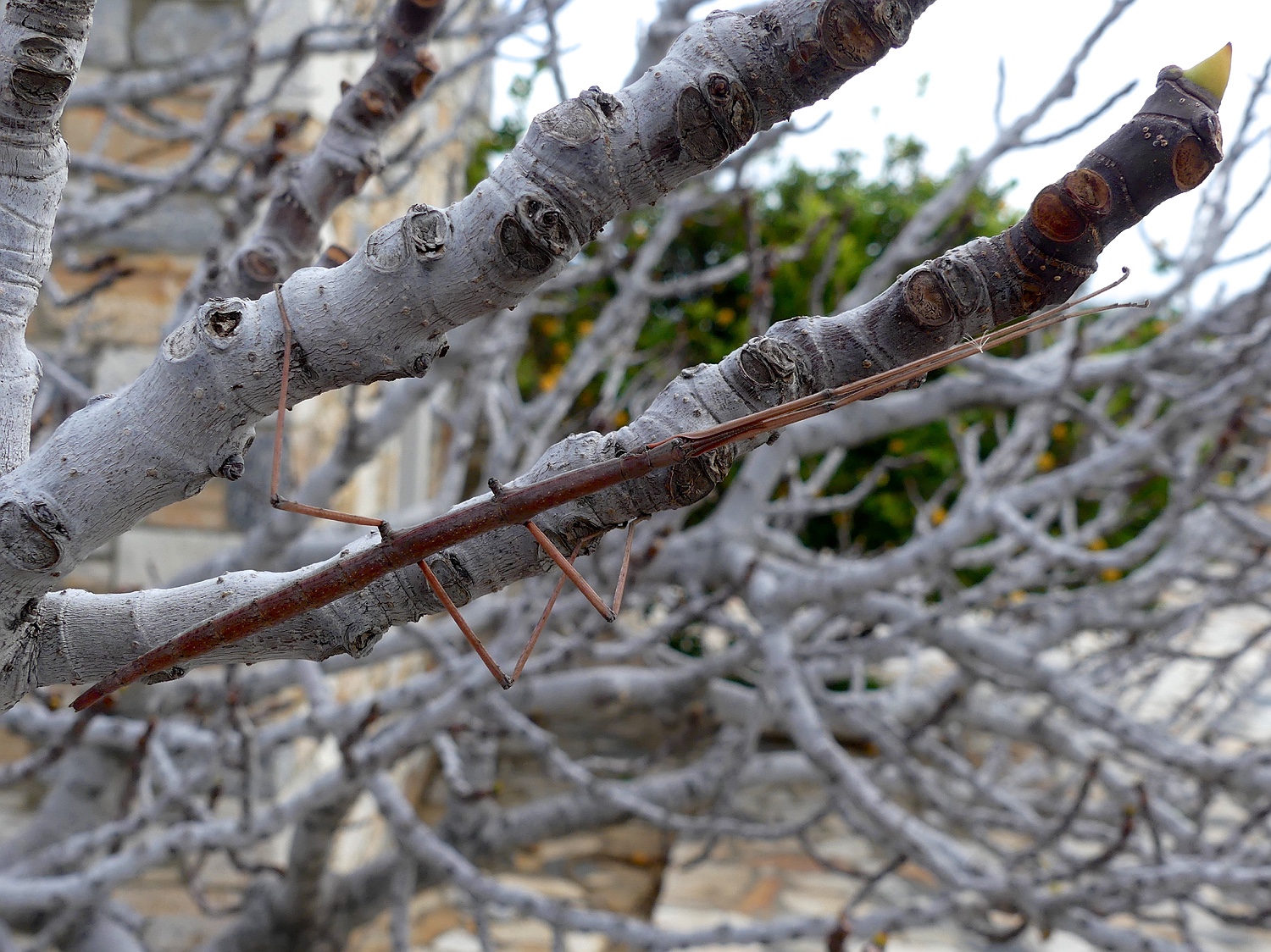
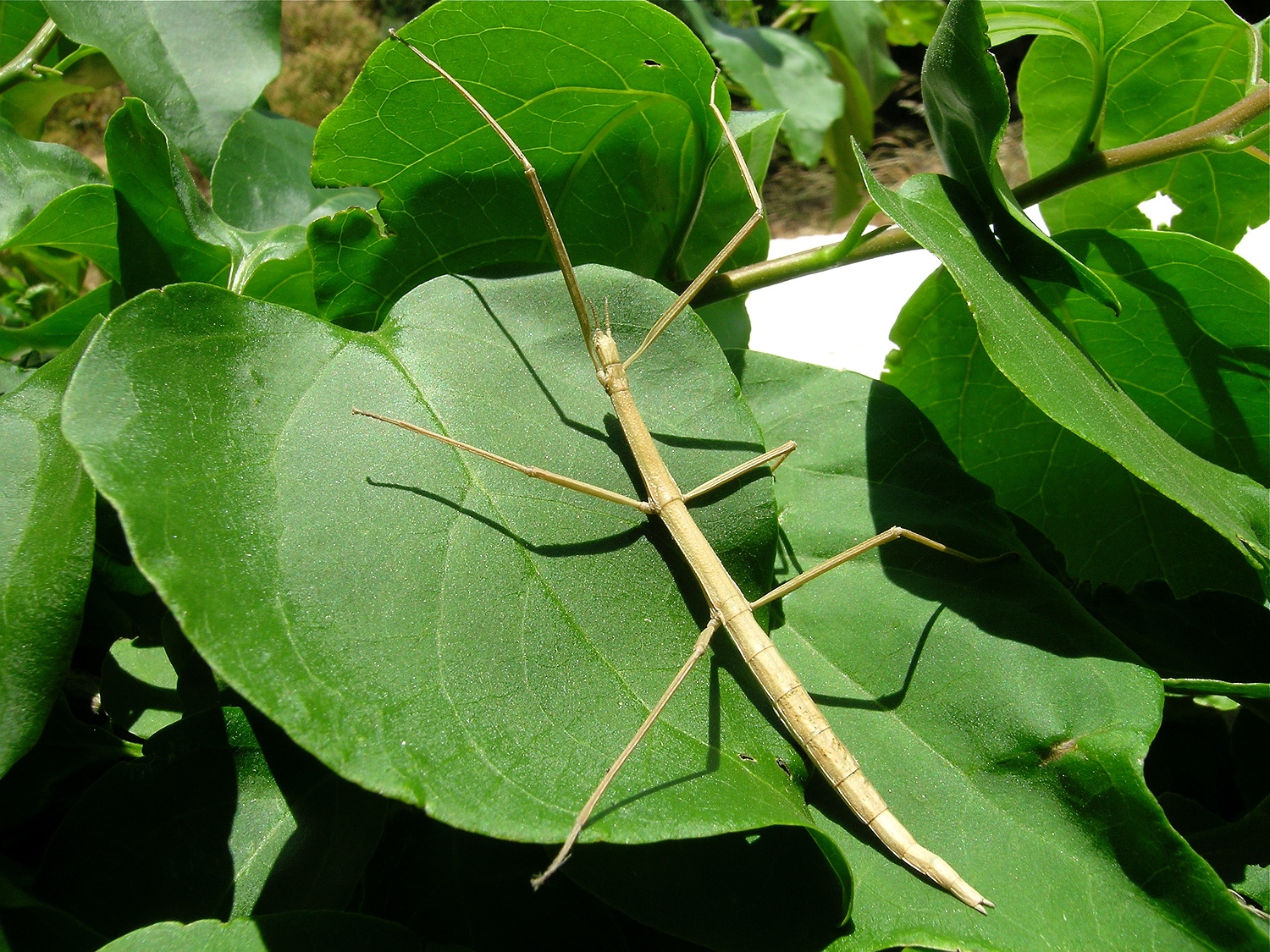
Bacillus atticus can be brown or yellowish in colour. Typical for the species are the fine grains on its thoracic segments.
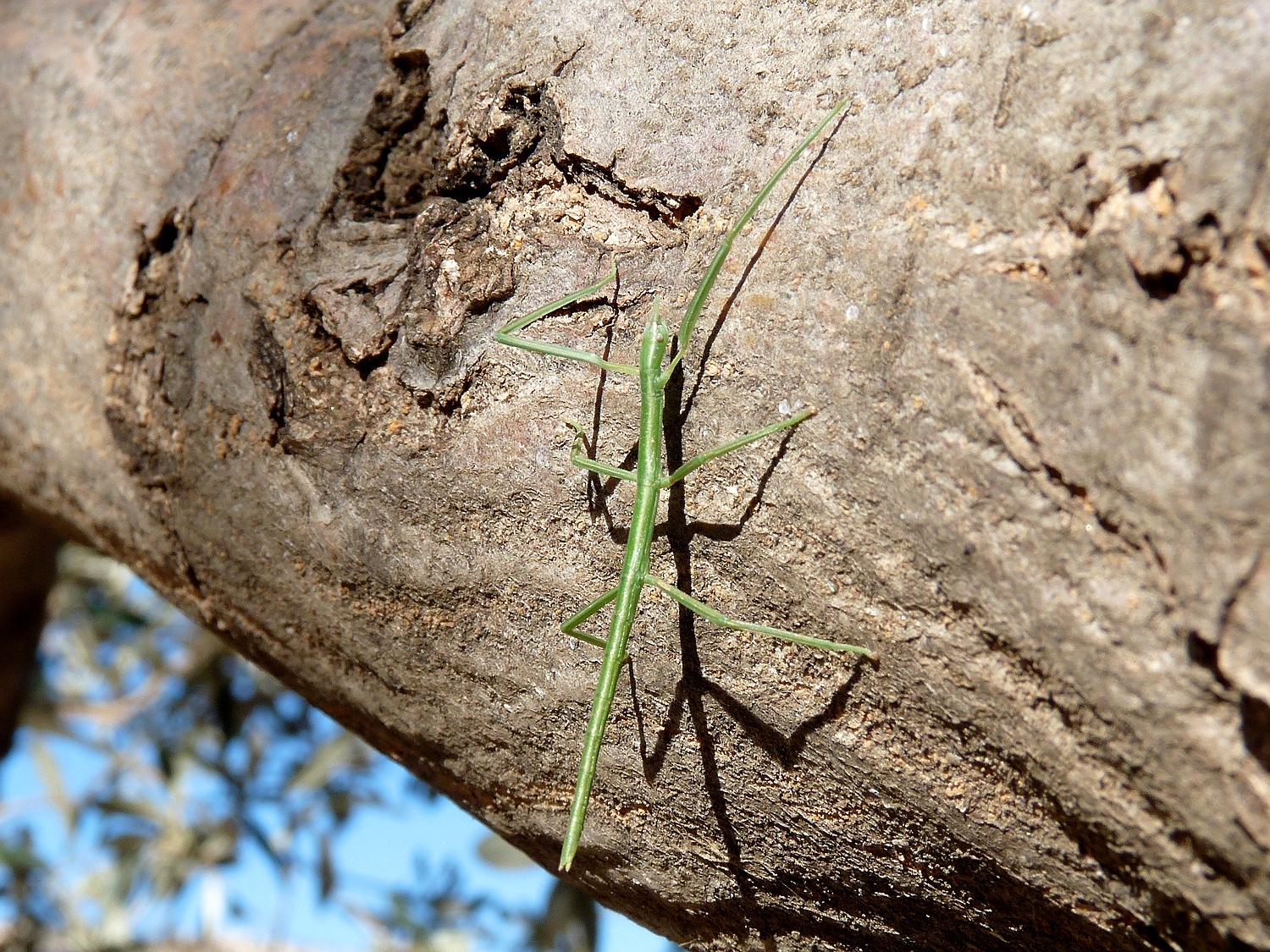
The nymphs of the walking sticks look very similar to the adults (apart from their size), but are green in colour.
continue: Praying mantisses
back:
See also: