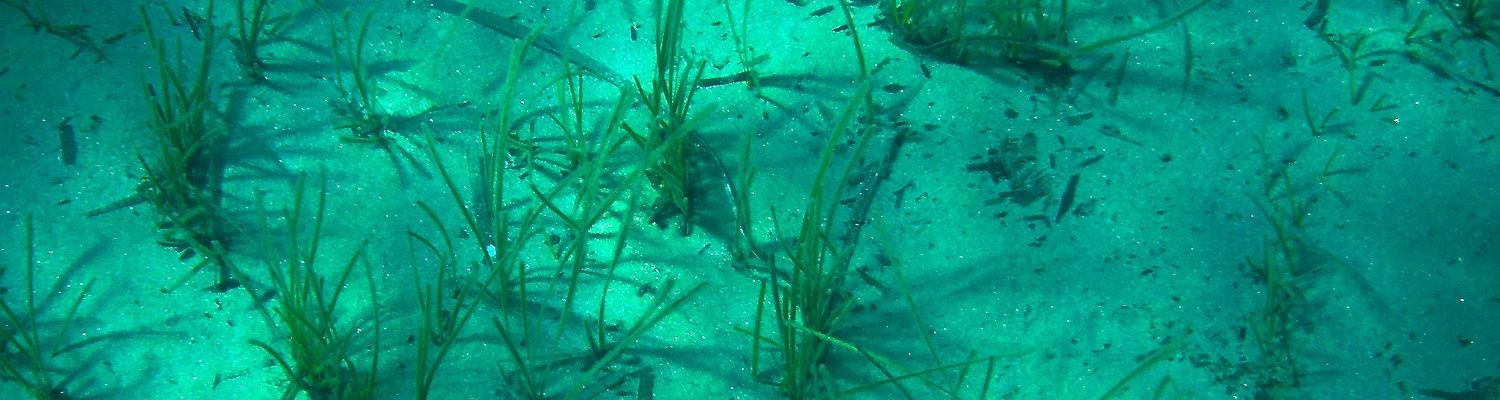
Seagrass, Posidonia and Cymodocea
Not all marine plants are algae. Some higher plants (flowering plants) also occur in the sea; these are land plants that have subsequently ‘migrated’ back into the sea. All truly marine plants, the seagrasses, belong to four families of the order Alismatales. Although only a few species of seagrass exist, they often cover large areas and play an important role in the ecosystem, particularly in the Mediterranean. Two species are common around Naxos: the Neptune grass (Posidonia oceanica) and Cymodocea nodosa. They grow particularly well on sandy and muddy soils, as – unlike algae – they have well-developed roots with which they can anchor themselves in the sand. The “meadows” of Neptune grass are particularly important as they produce much oxygen and provide a habitat for countless animal species.
In the Photo gallery of the marine plants you will find an overview of all the marine plants I have photographed to date. Please note that many of the identifications are uncertain.
Neptune grass, Posidonia oceanica, (L.) Delile
The Neptune grass is (still) common around Naxos forming in many places extensive seagrass meadows.
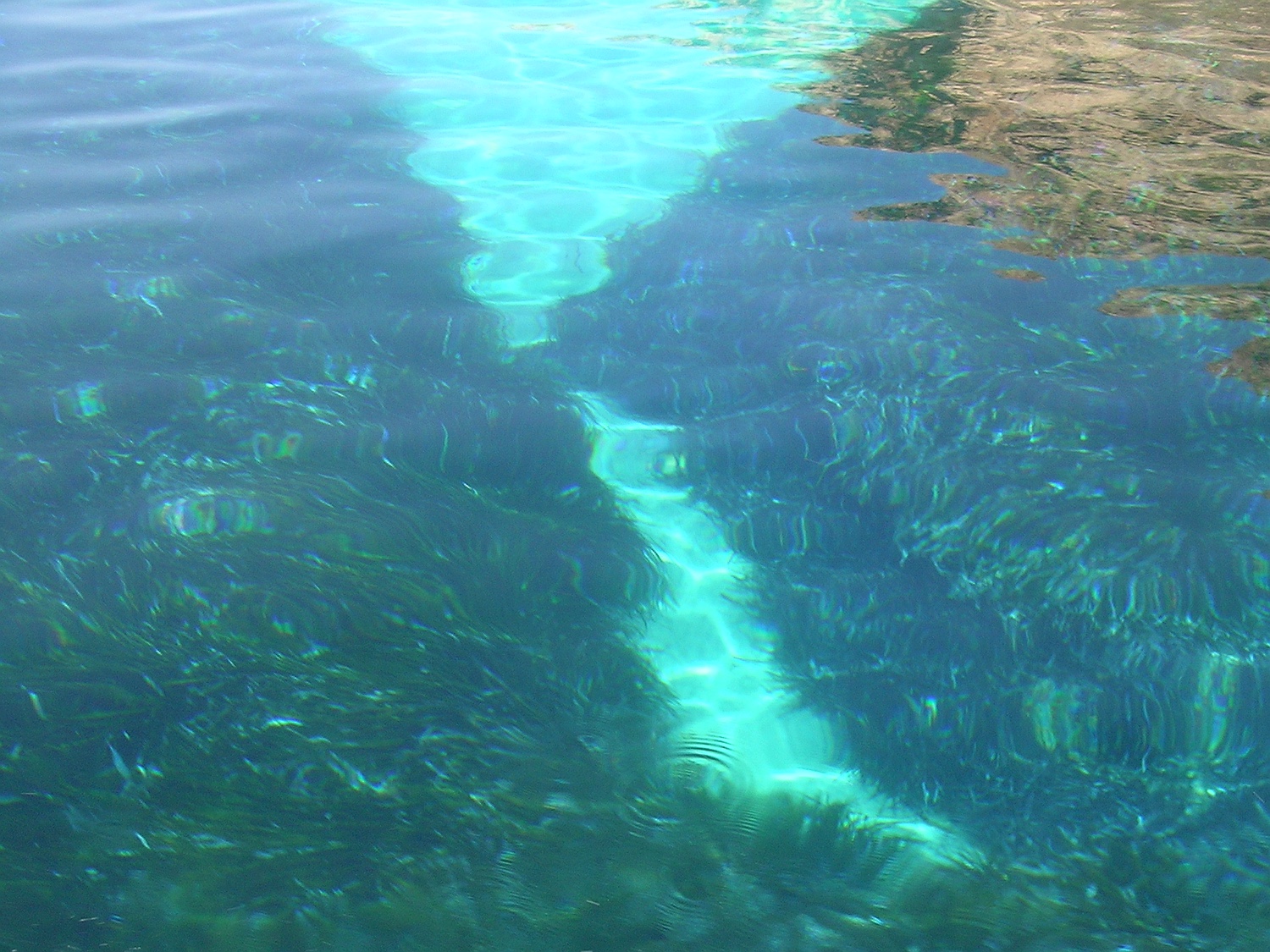
Seagrass meadows are difficult to photograph from the surface because they usually grow in greater depths; these pictures are taken off the Mákares Islands to the east of Azalás, where some meadows can be found in a depth of just a few meters.
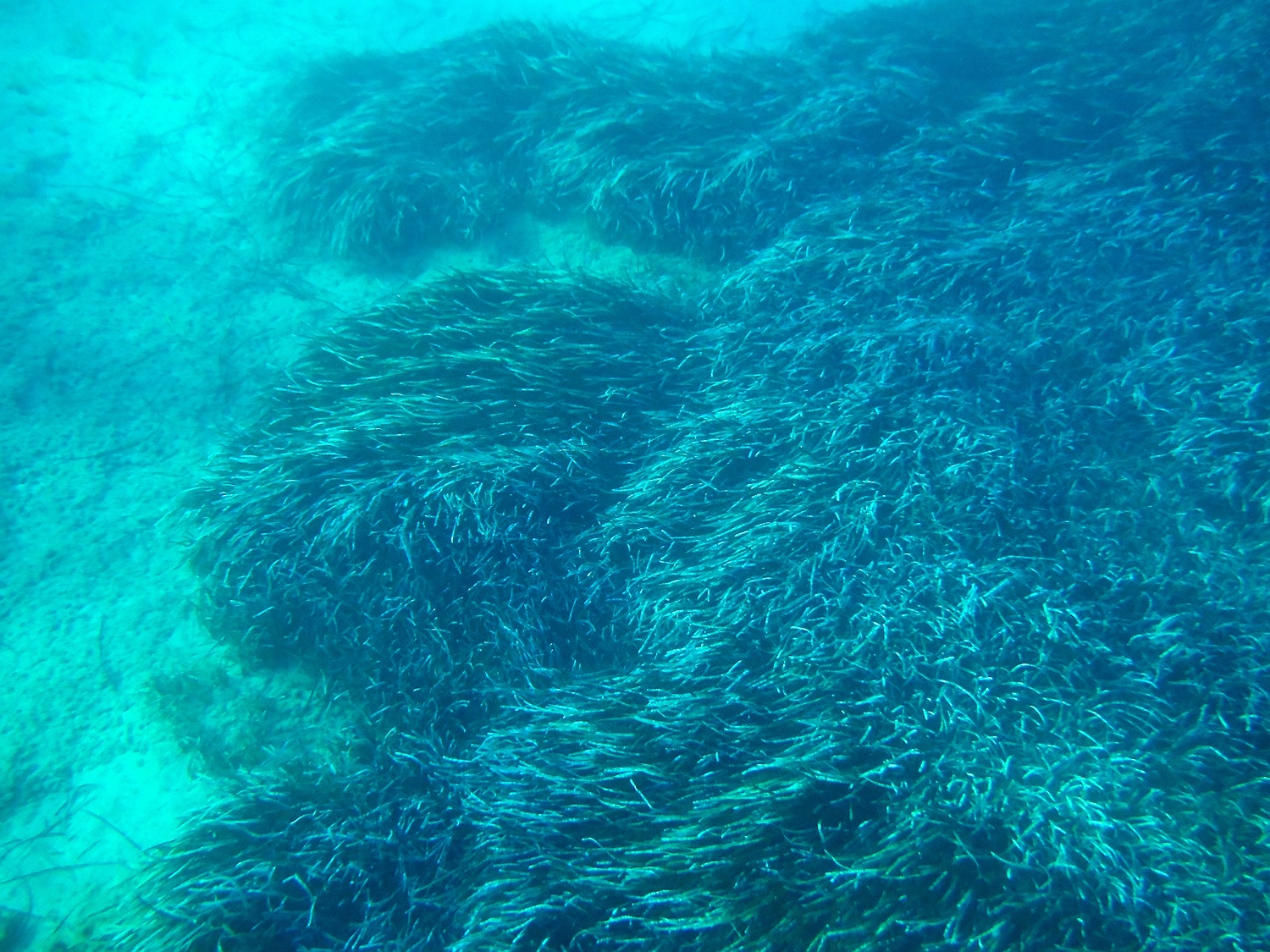
Seagrass meadows are among the most important habitats in the sea; they provide shelter and food for countless animals.
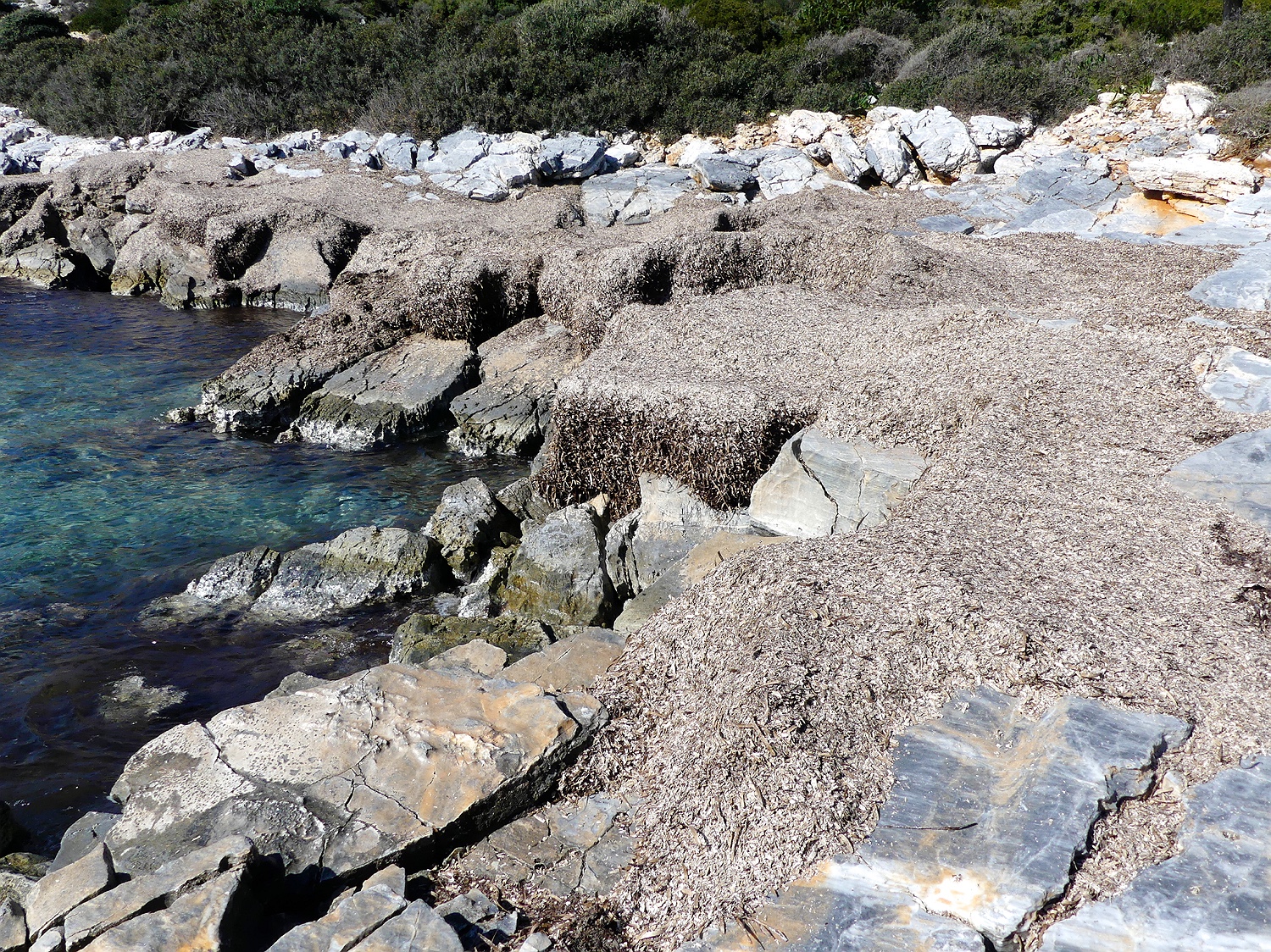
The Neptune grass loses its ‘leaves’ in winter; depending on the wind direction and wave action, these are washed up on some beaches in large quantities.
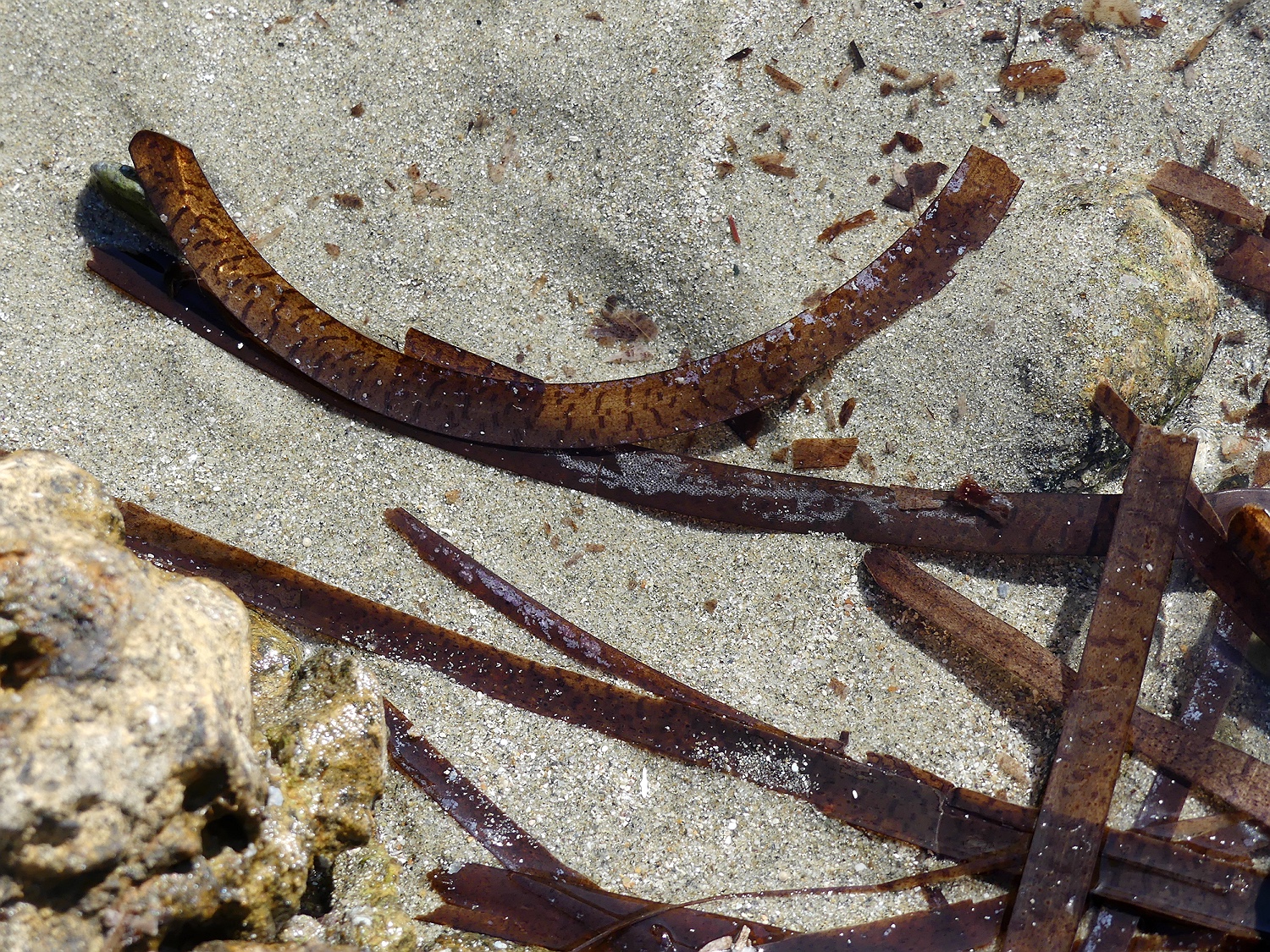
The leaves, which take on a brown colour when dead, are about 1 cm wide and have characteristic transverse stripes.
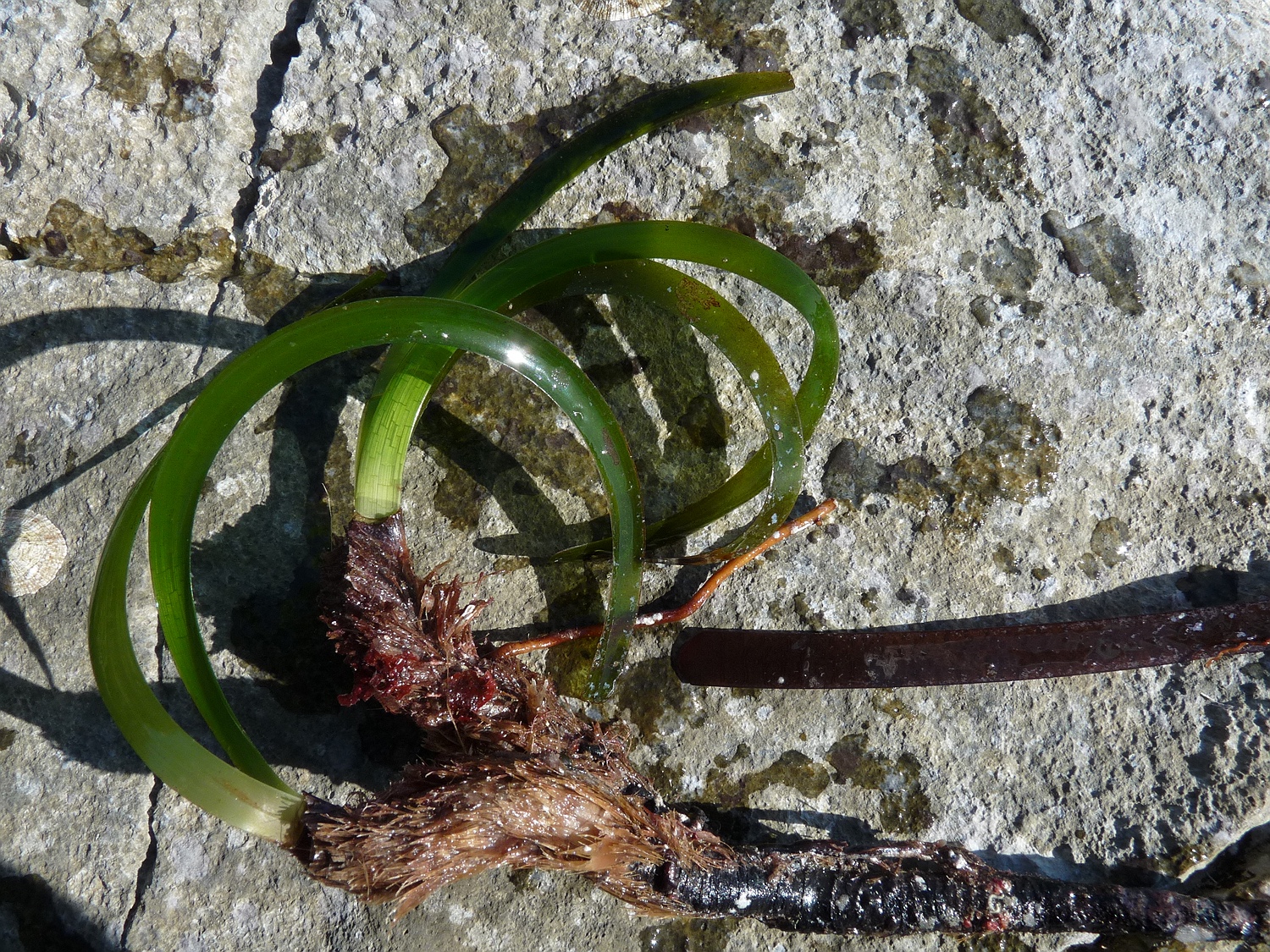
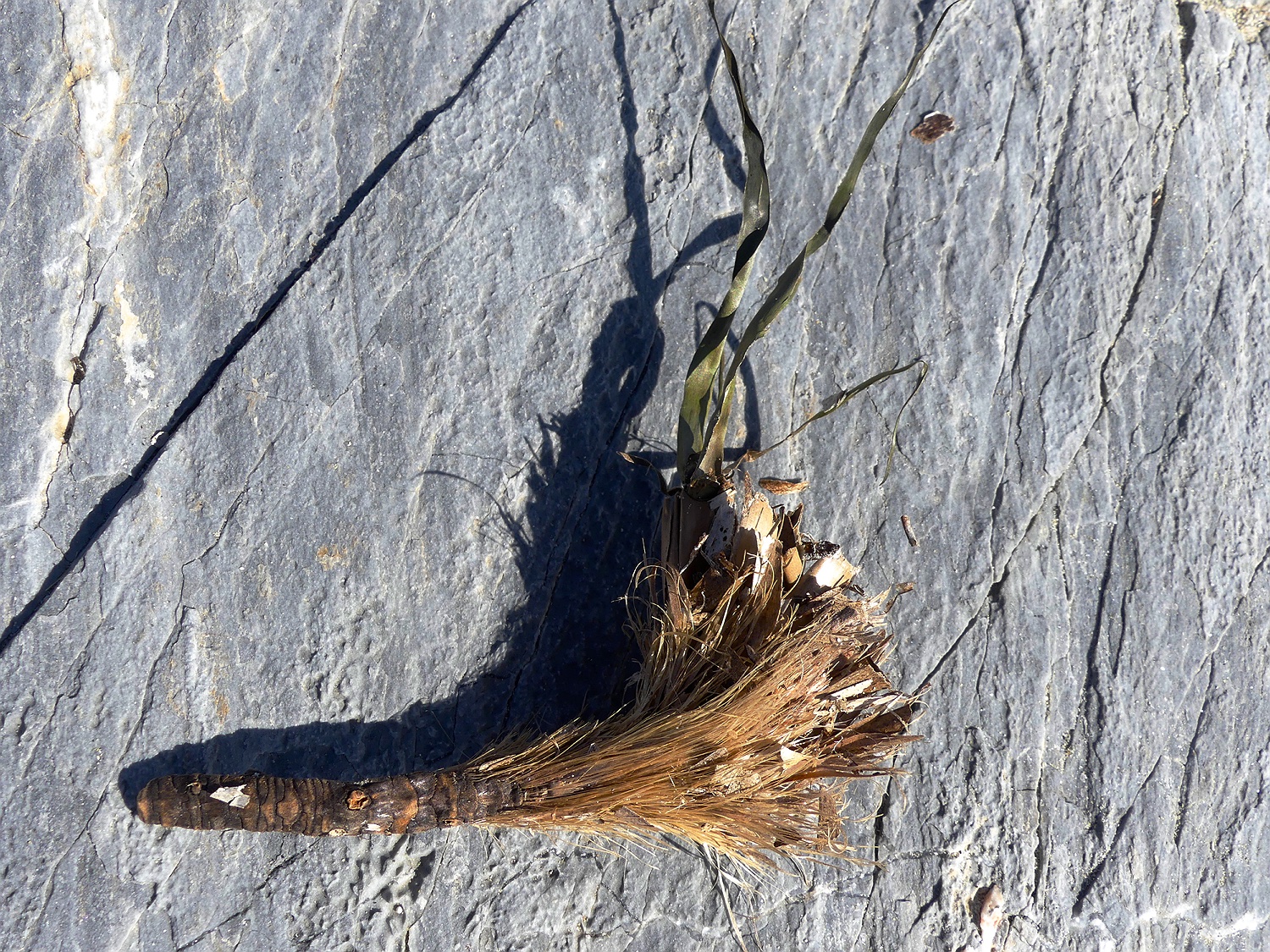
The plant forms strong rhizomes that run just below the surface in the sand. The leaves grow from these in small clusters; they can reach a length of 1 meter. Their green colour cannot be seen underwater.
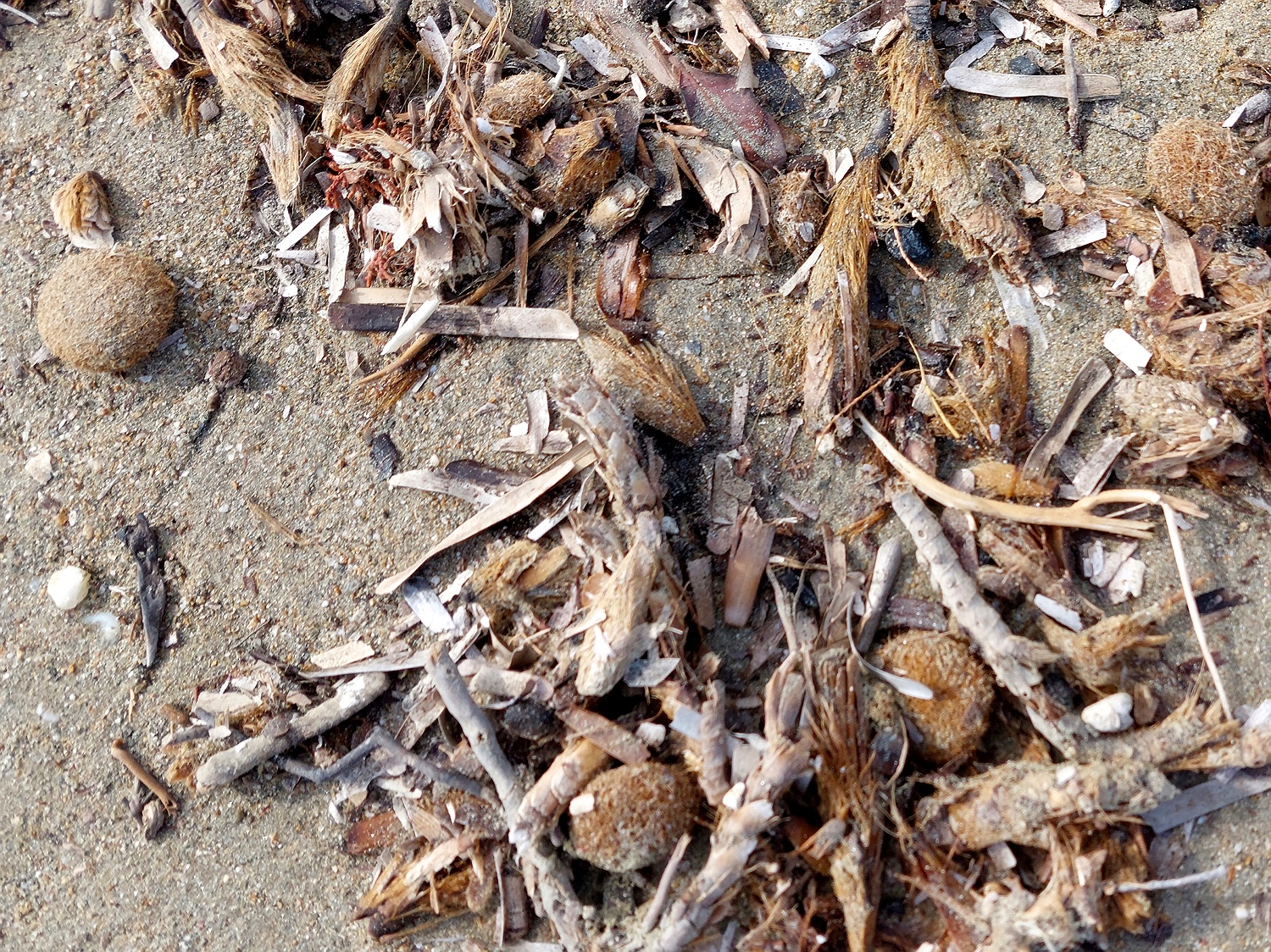
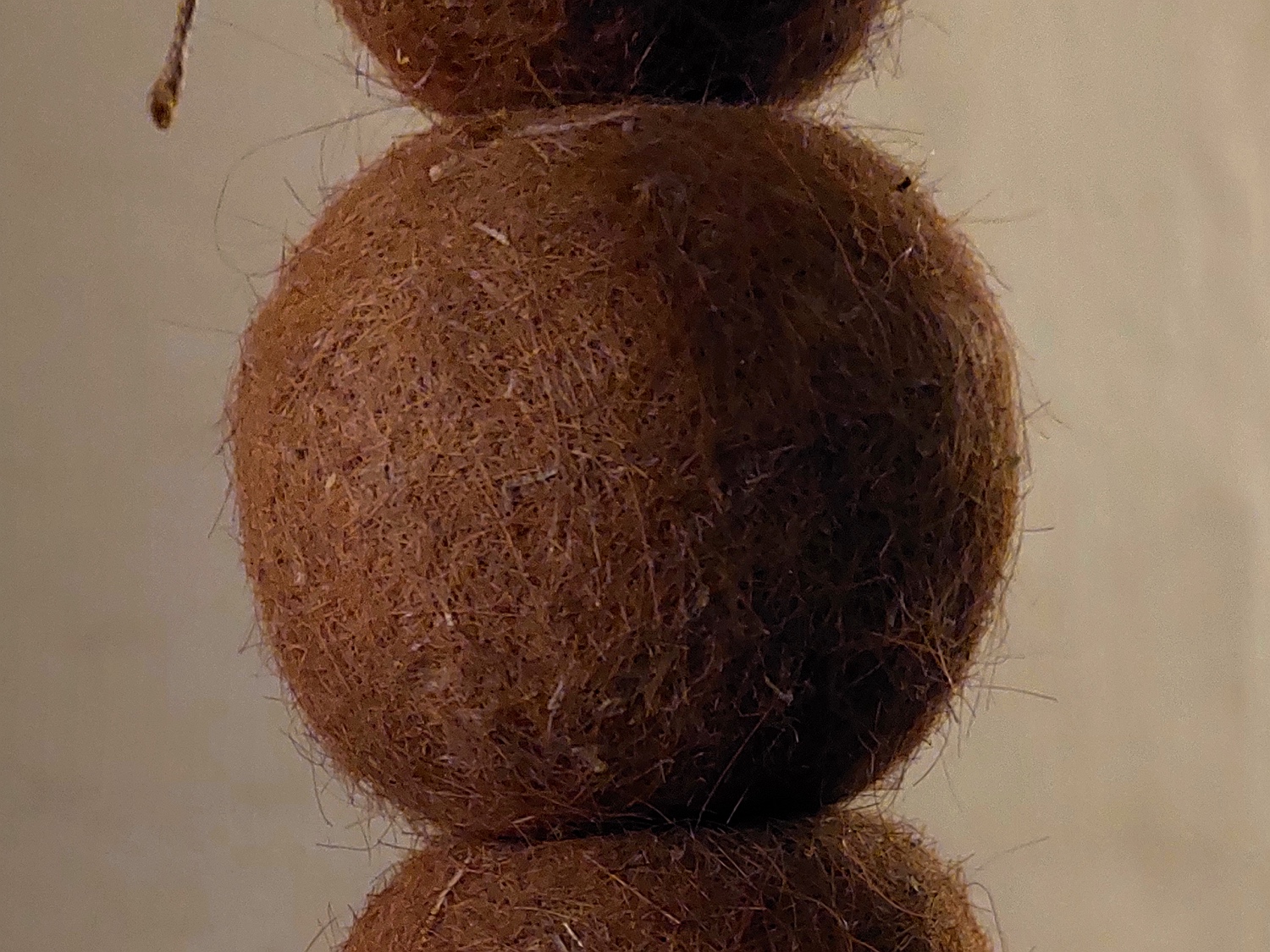
The waves often roll the dead leaves of Neptune grass into characteristic round balls, which can be found here and there on the beach.
Cymodocea nodosa, Asch.
The “Small neptune grass” Cymodocea nodosa is also common around the coast of Naxos.
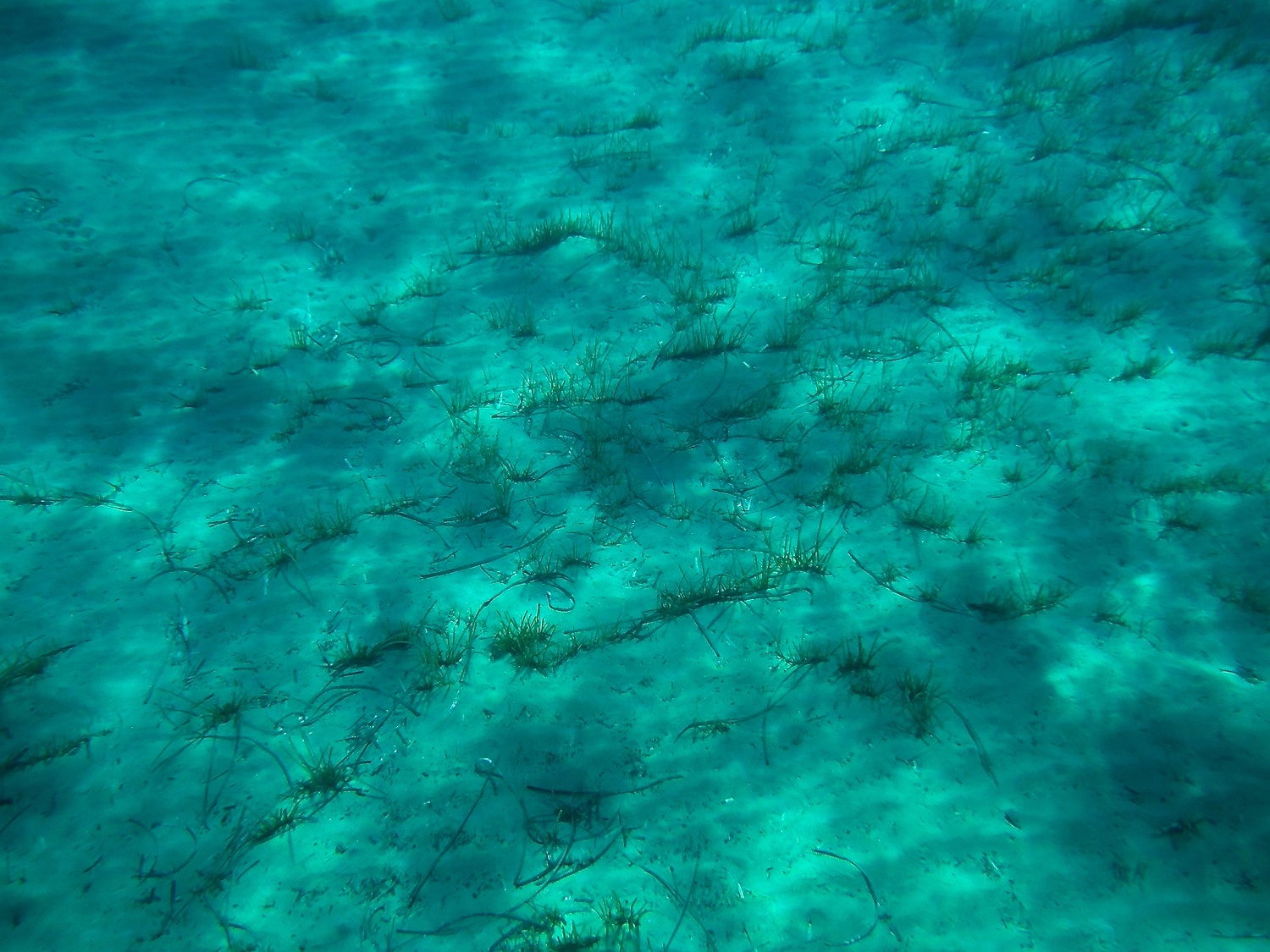
Cymodocea nodosa mostly grows in water of a few meters depth. It does not form dense meadows.
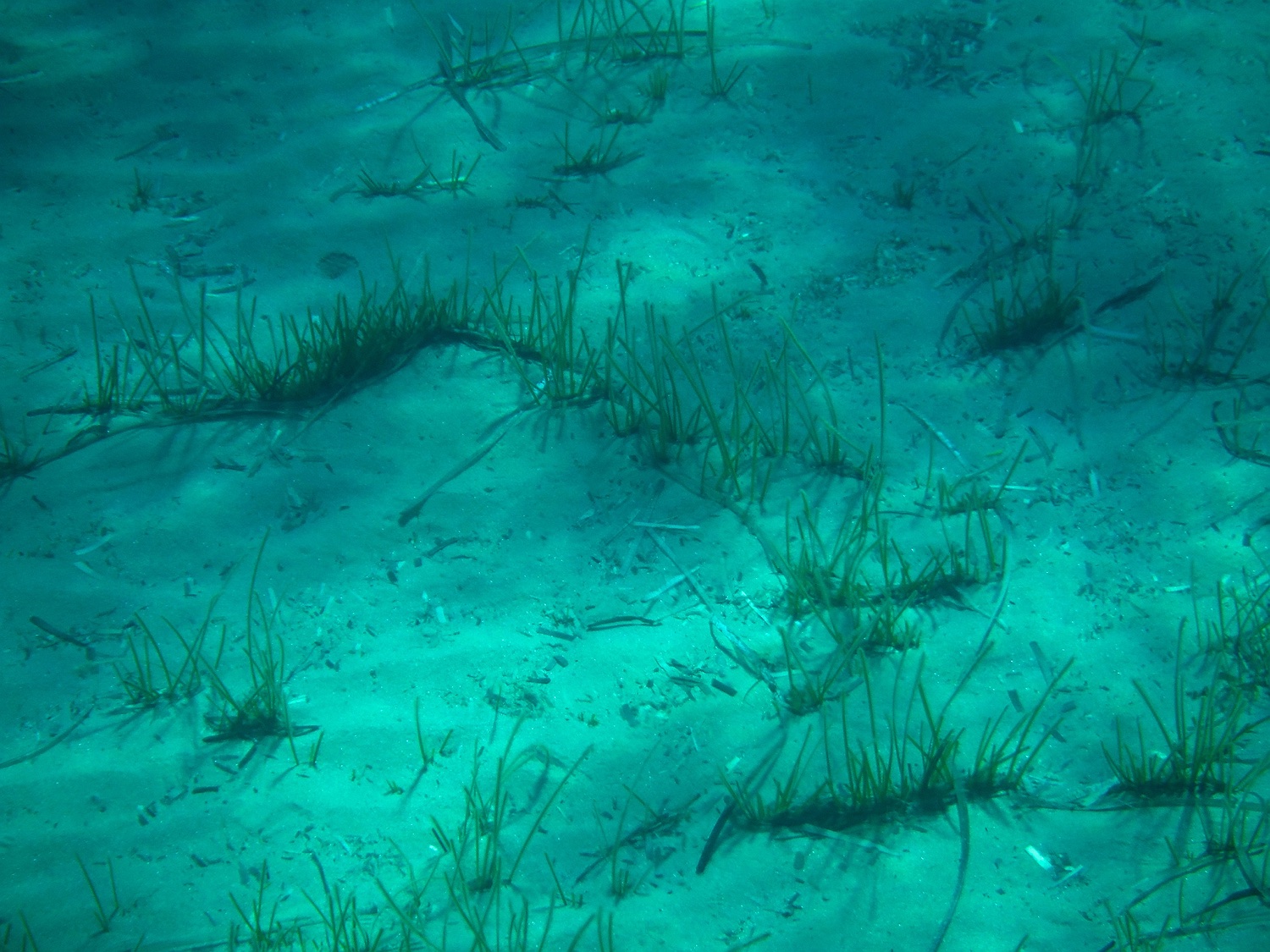
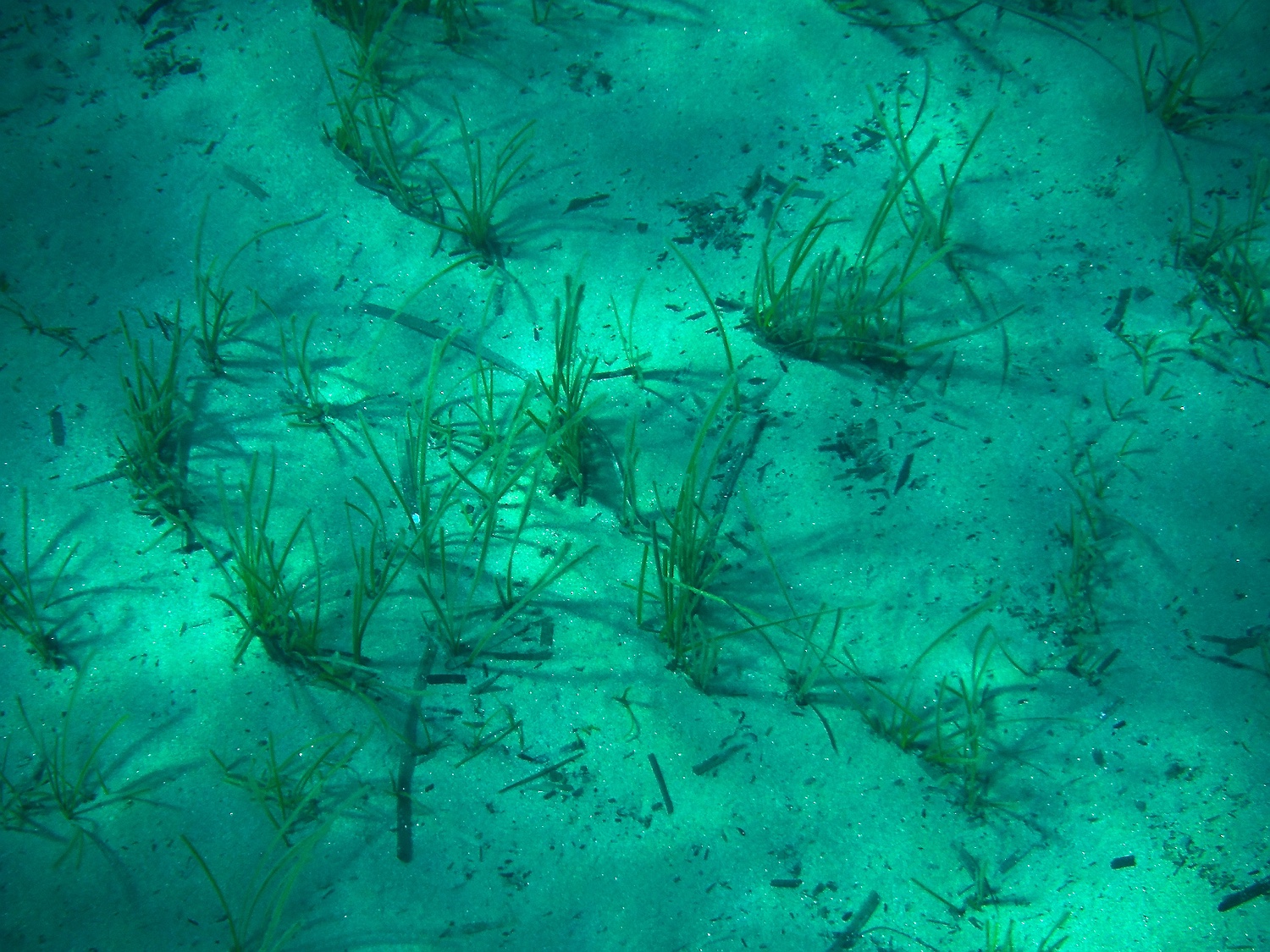
The Small Neptune grass proliferates by root runners, so that the individual plants often stand in rows.
back: Marine plants – Introduction
see also: