The environmental factors in the Mediterranean Sea
With 3.9 per cent by volume, the eastern Mediterranean Sea has a fairly high salt content. The water temperature ranges from 25°C in August and September to 14°C in December and January. In summer, the upper layers of water warm up to a depth of sometimes up to 30 meters, where the temperature suddenly drops (thermokline). In the depth, the water of the Mediterranean Sea has a temperature of no less than 13°C. When the upper layers of the water cool down in winter, this allows for a deep mixing of the water body, which means that in the shallower areas, the nutrients that have settled on the bottom are stirred up again.
Due to the relatively high temperatures, the Mediterranean Sea has a rather low oxygen content (at high temperatures, less oxygen can dissolve in the water). The mineral supply is also low compared to the colder oceans close to the poles. This makes the Mediterranean Sea an oligotrophic sea, i.e. one that is low in nutrients. Due to the lack of tidal currents, there is also very little suspended matter (and thus nutrients) in the shallower areas. Because of this poverty in nutrients, the Mediterranean Sea is low in plankton. This lack of suspended matter and plankton is also the reason for the exceptional clarity of the water, which causes its intense blue colour.
A crucial environmental factor in the marine ecosystem is the availability of light. Light cannot penetrate the water very deeply: Around a third of the light is already reflected at the surface, and the rest is absorbed by the water, so that the light intensity quickly decreases. At a depth of just over five meters, the light intensity drops to about half; at 40 to 50 meters, only about 1% remains. Different wavelengths are absorbed to varying degrees. The red light due to its greater wave length is filtered out in the upper layers of the water, while the blue light with shorter wave length and higher energy reaches into greater depths. That is why in a depths of only a few meters everything in the sea looks bluish, and divers can only admire the colourful marine organisms with the aid of a lamp. In the parts of the Mediterranean with the clearest water, light-dependent organisms such as the Neptune grass can be found at depths of up to 100 meters.

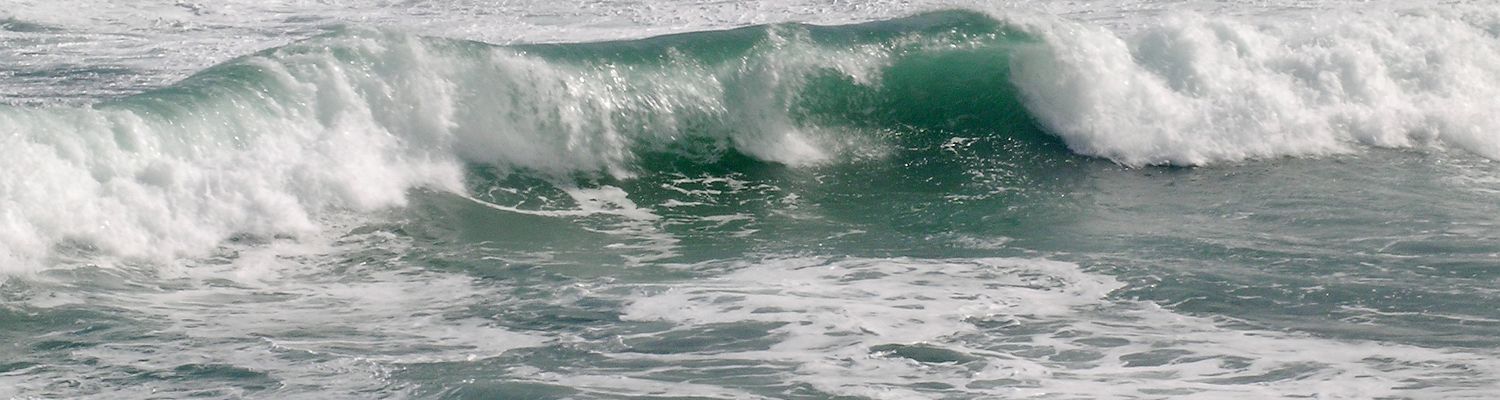
Near the coast, the movement of the water caused by the tides or by waves is of great importance for all marine organisms. The waves cause the mixing of the water to a considerable depth, thus redistributing the nutrients that settle on the bottom in calm weather. The enrichment of the water with oxygen is also very important. Because only in shallow seas the water body is turned over right to the bottom by the waves, these areas are generally much more eutrophic, i.e. richer in nutrients, and can sustain more plankton.

In the Mediterranean, only the shallow shelf areas in the Adriatic Sea, the northern Aegean Sea, off Tunisia and off the Nile Delta are eutrophic. Of course, this is also caused by the nutrients carried by the large rivers. In eutrophic regions live significantly more fish, molluscs, and other animals. Today, however, eutrophic habitats in shallow seas are often endangered by excessive nutrient influx from sewage, fertilisers, detergent residues, etc. Raised nutrient levels can lead to unnatural algae growth and such a proliferation of plankton that the oxygen in the water is depleted, causing all animal life to die. In the Aegean Sea, eutrophication is a problem only in a few bays and harbours near to densely populated areas that are largely cut off from major sea currents.
continue: The demands of the sea on its inhabitants
back: The Mediterranean Sea