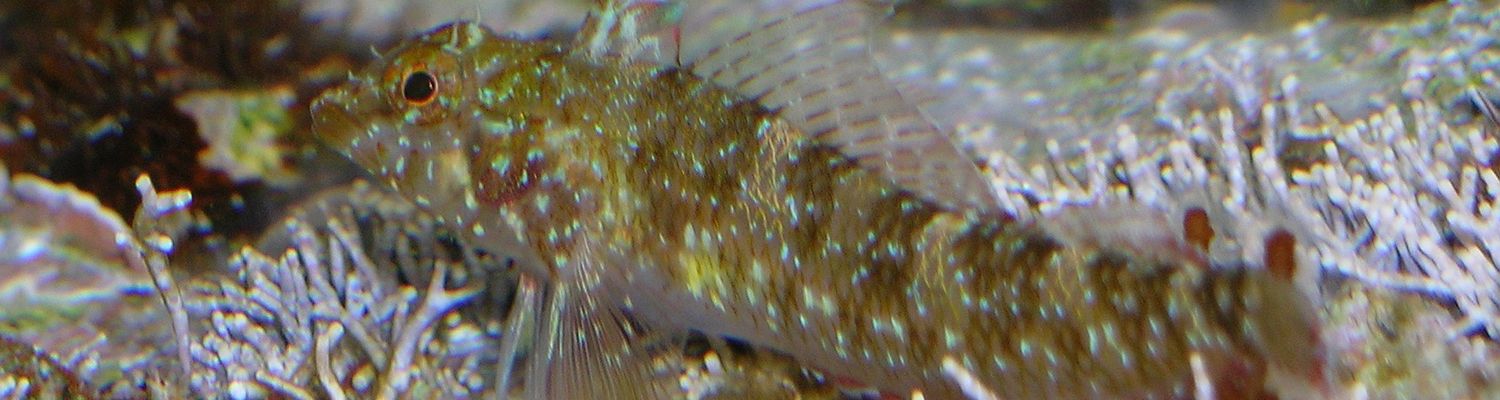
Blennies and gobies
Blennies
(Click here to go directly to the Gobies)
The small blennies inhabit mostly the shallow sea, usually occuring in rocky areas. They live among algae or in small crevices and holes in the rocks. They do not have a swim bladder and often sit on the substrate, supporting themselves with their strongly developed pectoral fins. They can be found close to the coast and often sit in places that are exposed in between the waves; a layer of mucus protects their skin from drying out (they have no scales). Blennies are very territorial and have a good memory of their environment.
Here you can skip the introduction and go directly to the species.
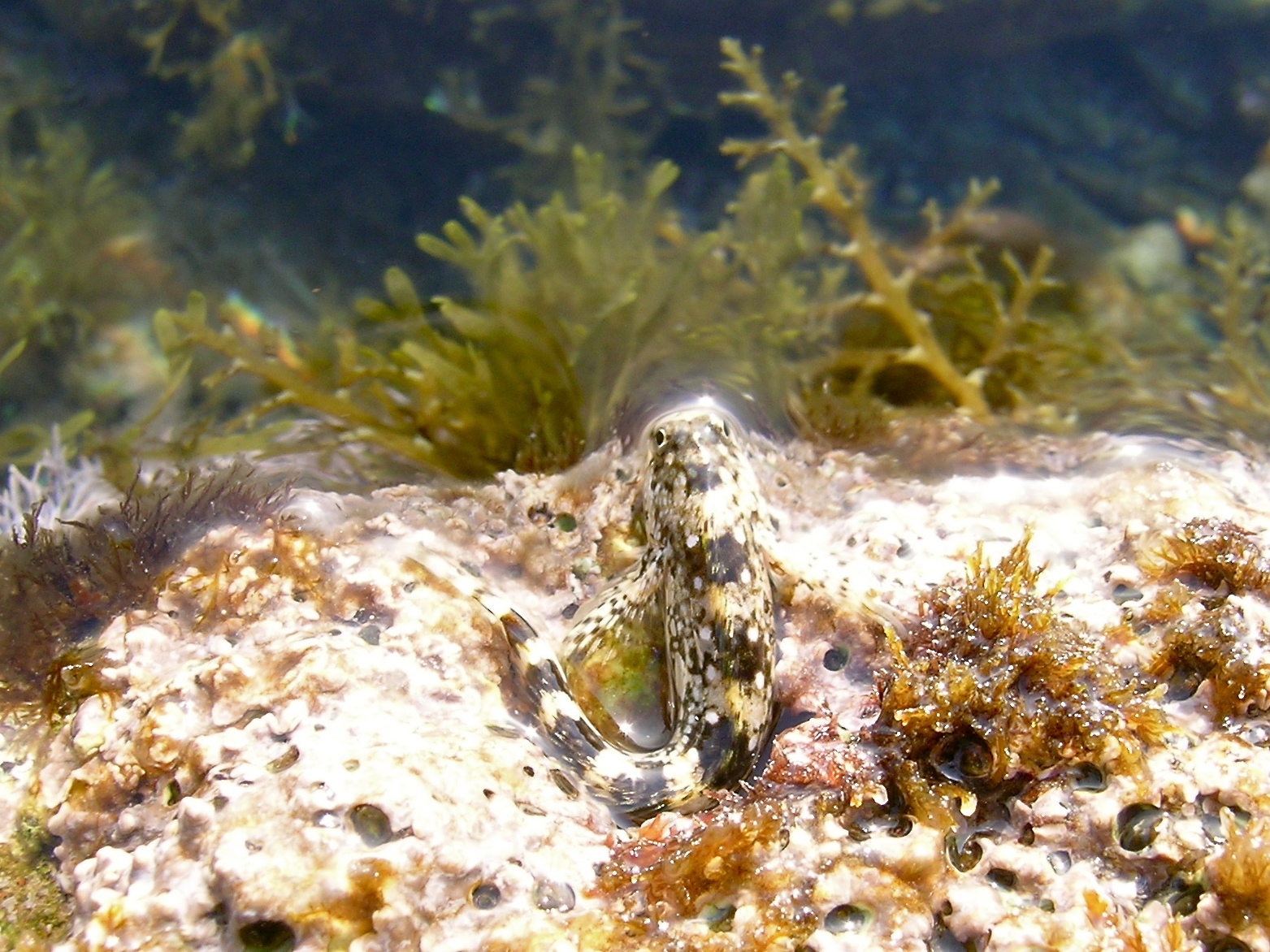
Often the blennies (here Montagu’s blenny) sit exactly at the waterline, in places that fall dry between the waves.
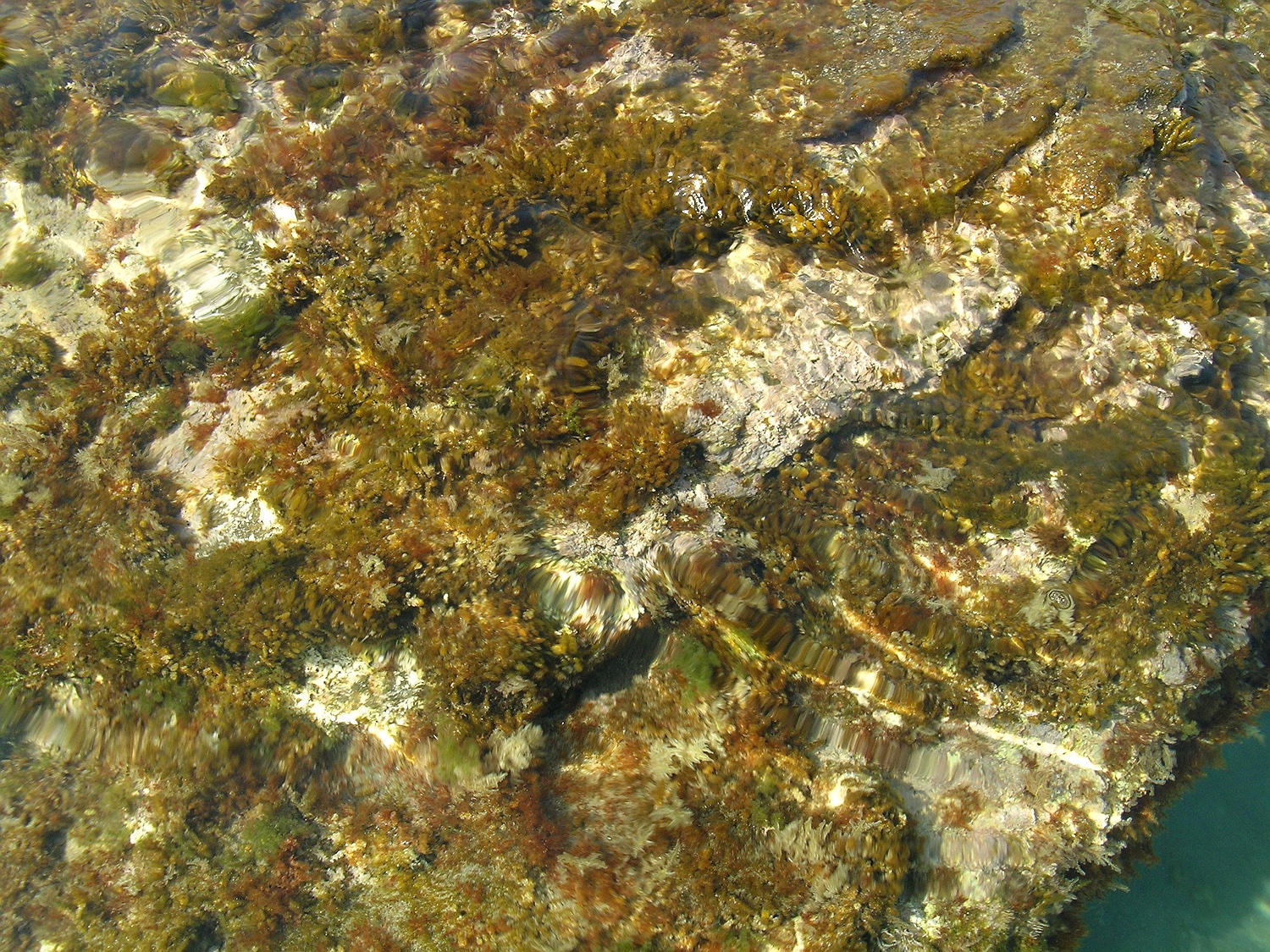
Typical habitat of blennies: They prefer a varied environment with crustose calcareous algae and other types of algae.
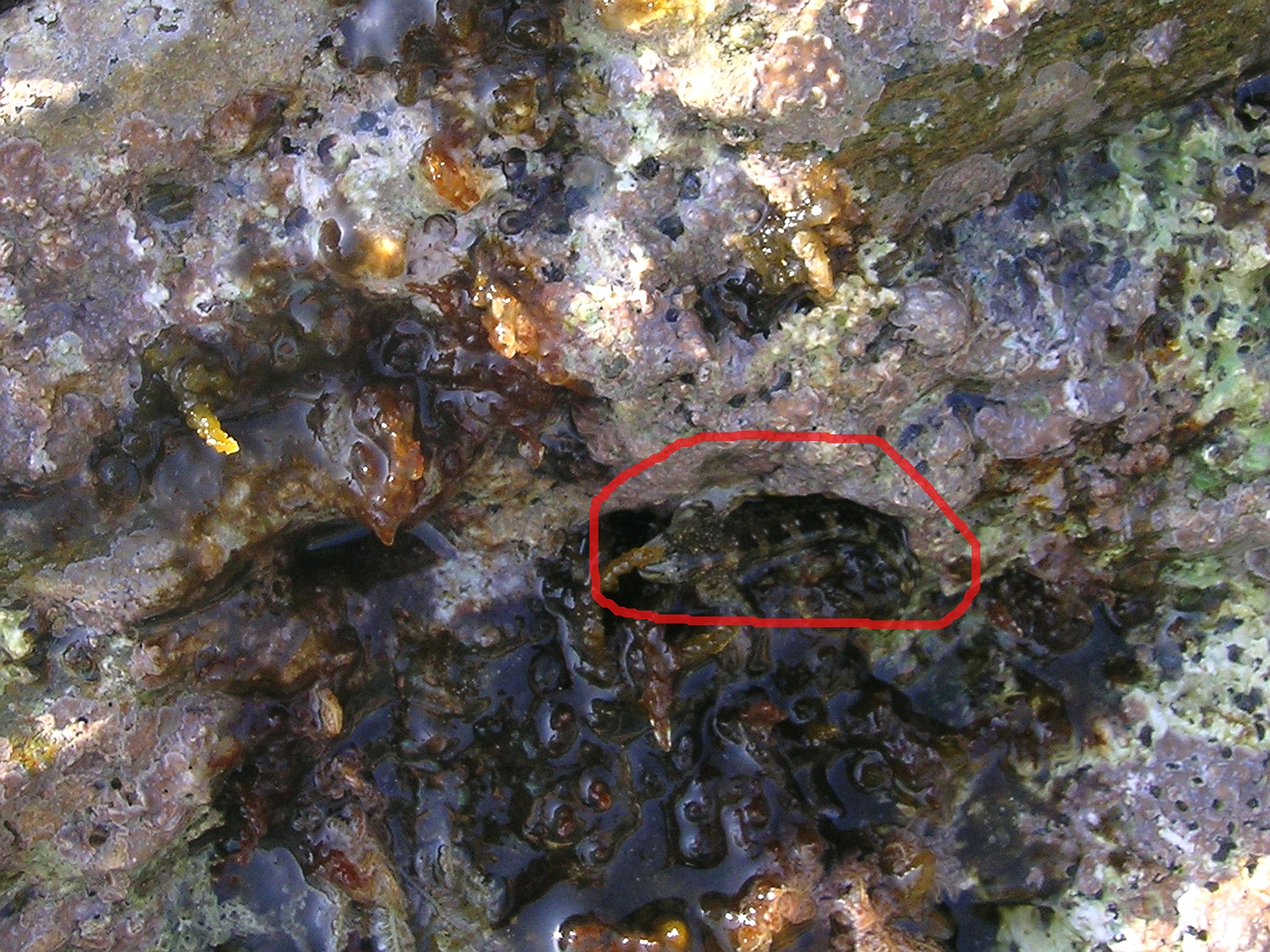
Blennies are well camouflaged
Blennies have an elongated body, usually only up to about 10 cm long, which they move snakelike when swimming, with a relatively large head with an almost vertical profile. The dorsal fin extends from the head to the base of the tail with a notch about halfway along. They have large pectoral fins, which they often spread out; the thread-like pelvic fins are located very far forward, in front of the base of the pectoral fins. Characteristically shaped tentacle- or antler-like protuberances are often found above the eyes or on the nose and forehead. The colouring of blennies can vary a bit depending on the underground and mood; most species are well camouflaged by their brownish colouring with stripes and spots. Blennies are omnivores that graze on algae and prey on small invertebrates that live among the algae.
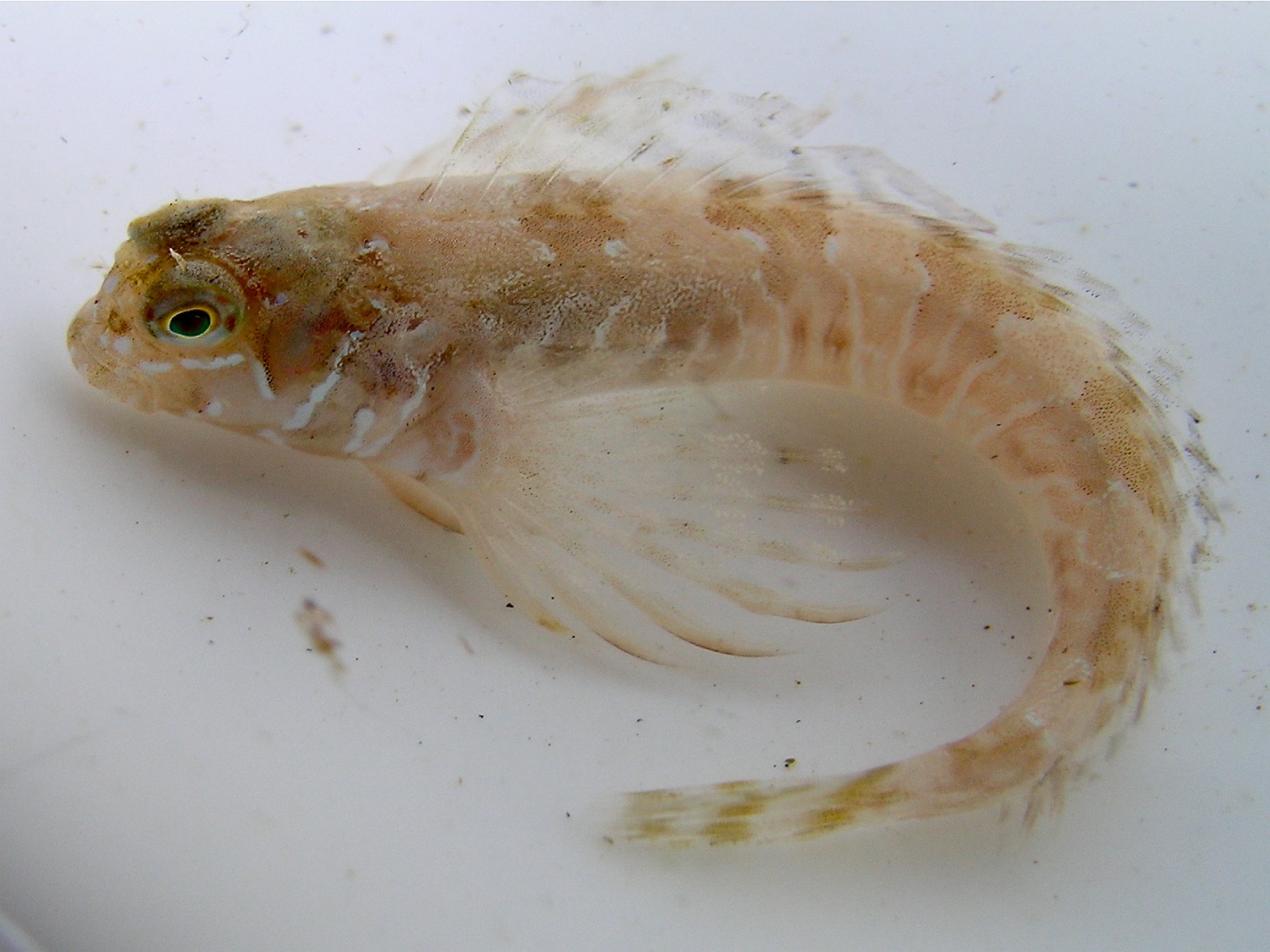
In calm weather, an attentive observer can spot small blennies everywhere along the rocky coast. When disturbed, the fish quickly retreat to their hiding places. Often only their heads can be seen peeking out of a hole. Blennies particularly like to inhabit holes made by date mussels. Several species of blennies occur right at the coast. With a little patience and skill one can catch them with a hand net.
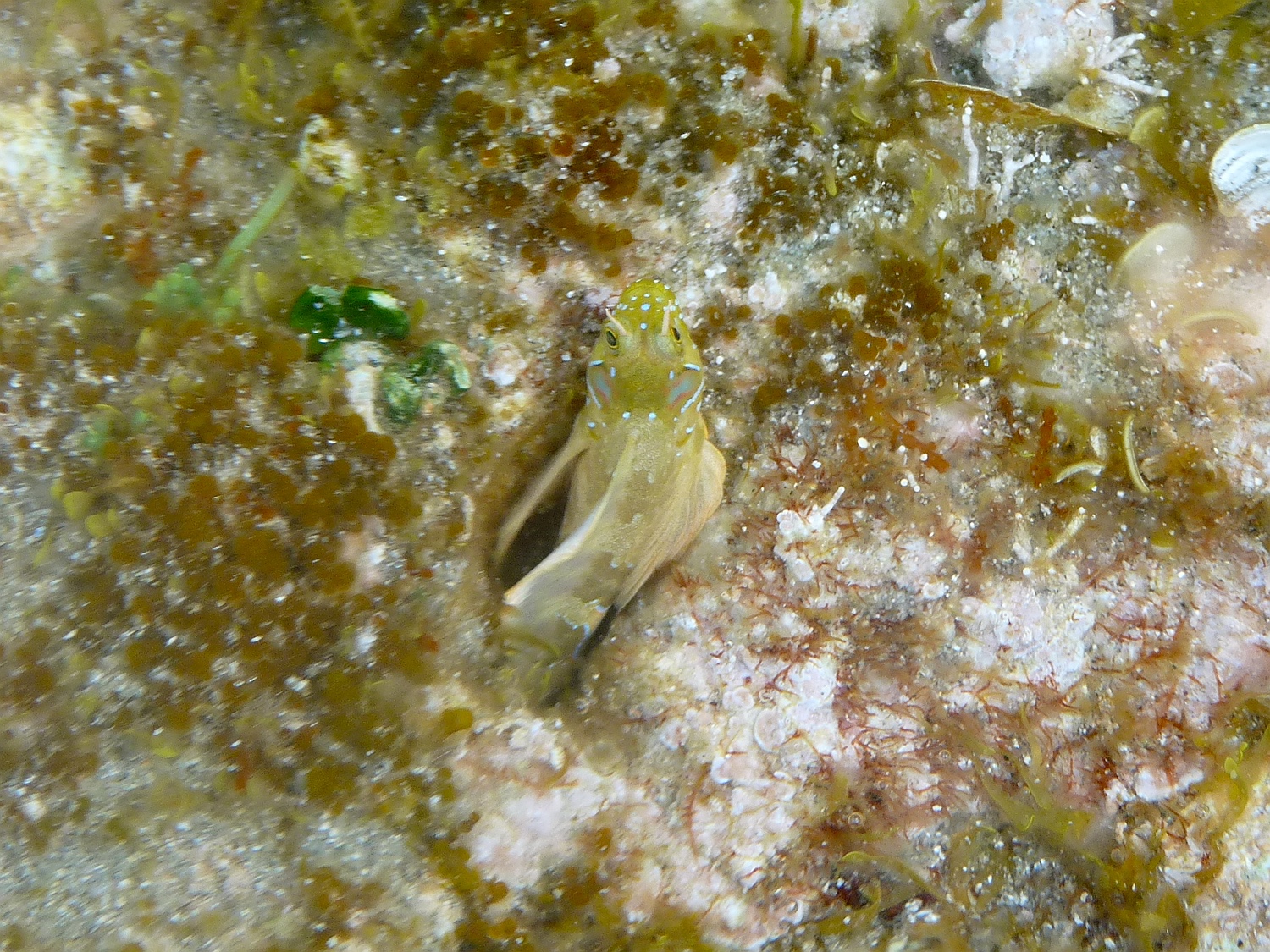
When disturbed, the blennies retreat into their holes, into which they thread themselves backwards with their tails first.

Often only the head looks out.
Identifying the species often is not easy, as some characteristics, such as the eye tentacles, are difficult to see due to their small size.
Species of Blennies on Naxos
Here you can jump directly to the species (return with the back arrow or by swiping back):
Sphinx blenny, Aidablennius sphynx – Mystery blenny, Parablennius incognitus – Zvonimiri’s blenny, Parablennius zvonimiri – Rusty blenny, Parablennius sanguinolentus – Tompot blenny, Parablennius gattorugine – Montagu’s blenny, Coryphoblennius galerita – Microlipophrys canevae – Cline, Clinitrachus argentatus – Red-black triplefin, Tripterygion tripteronotum – Tripterygion melanurus
Sphinx blenny, Aidablennius sphynx, Valenciennes
The sphinx blenny has simple protuberances above its eyes (“tentacles”) that are slightly longer than the diameter of the eyes. Behind the eyes lies a bluish spot with a red border. The fish is yellowish-brown in colour with darker horizontal bands wich are surrounded by fine white lines. The fish has bright white lines and dots on its face, cheeks and pectoral fin base.
The sphinx blenny grows to a size of up to 8 cm. It is the most common blenny in our region. The males in breeding season show an intense colouring and are quite beautiful. The females lay their eggs in empty holes of the date mussel, where they are guarded by the males.
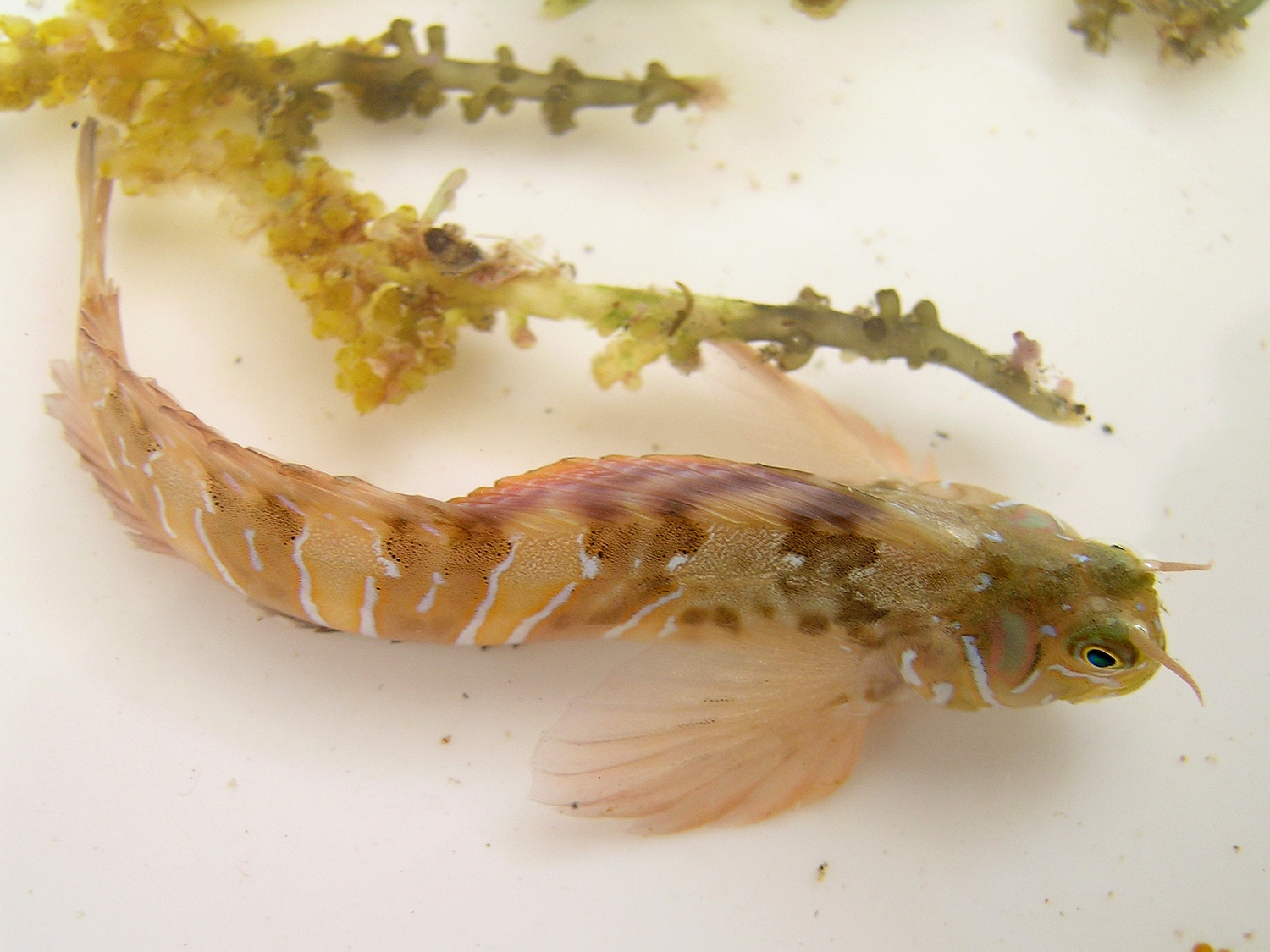
Sphinx blenny males are very elegant!
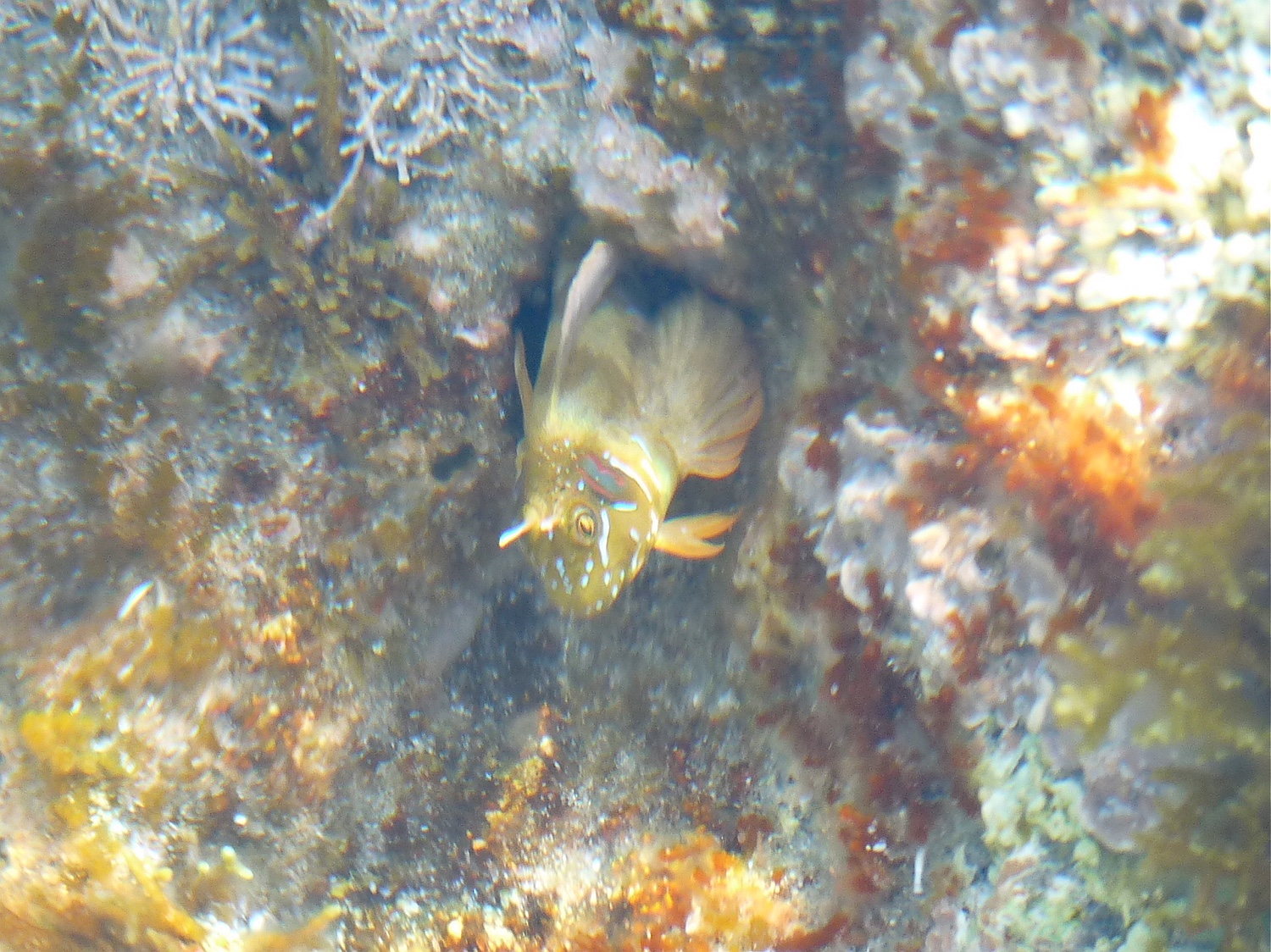
Sphinx blenny in its hiding place. The species is best recognised by the blue spot with a reddish border on its cheek.
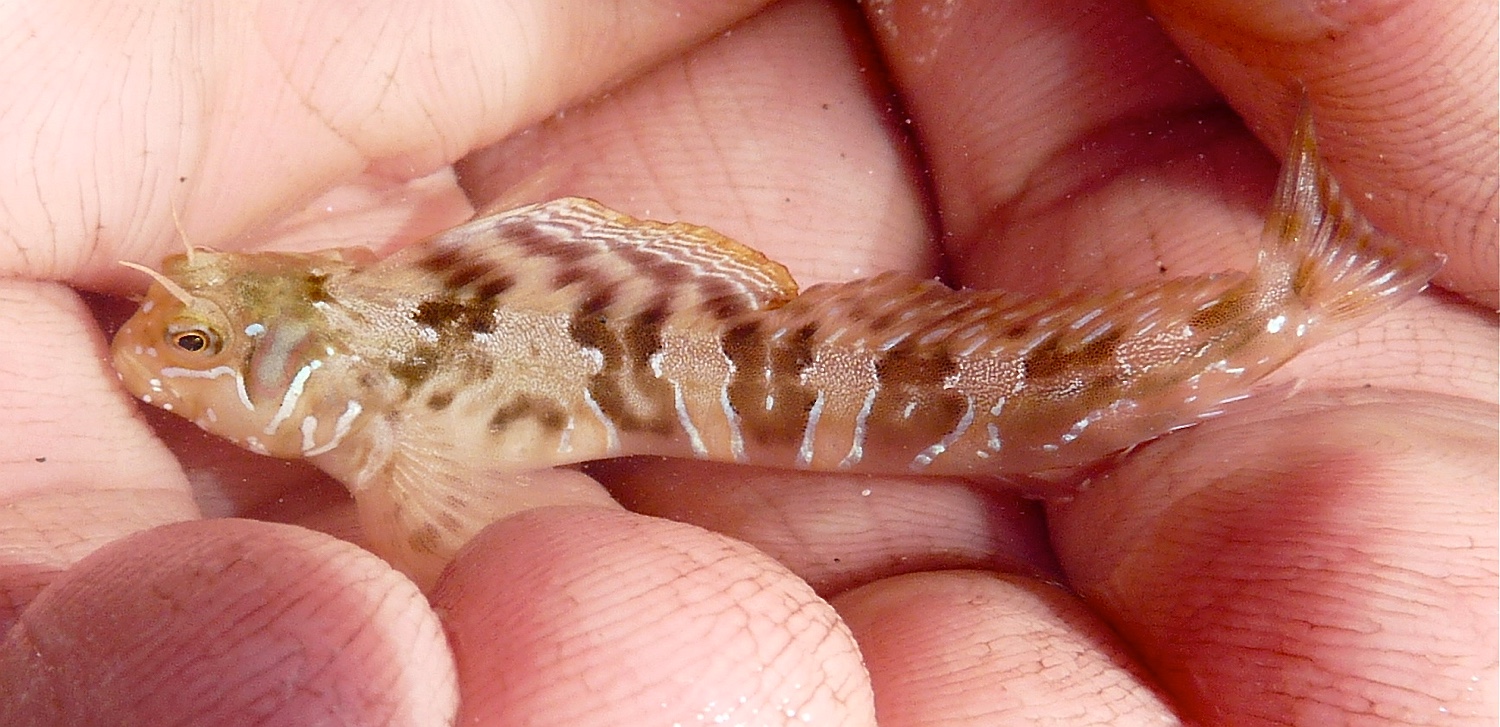
Male in full breeding colours; note the long, striped dorsal fin, which is notched in the middle.
Mystery blenny, Parablennius incognitus, Bath
The Mystery blenny has long tentacles above its eyes with backwards branches at the base and smaller tentacles on its nose. The colouring of this species is very variable. Our specimen has a conspicuous white spot on its eye; the head is quite dark with fine light blue lines in the lower area. The back has a not very distinct light-dark pattern with regular, roughly square-shaped spots. The underside has fine reddish lines. Mystery blennies are rather rare in our region.
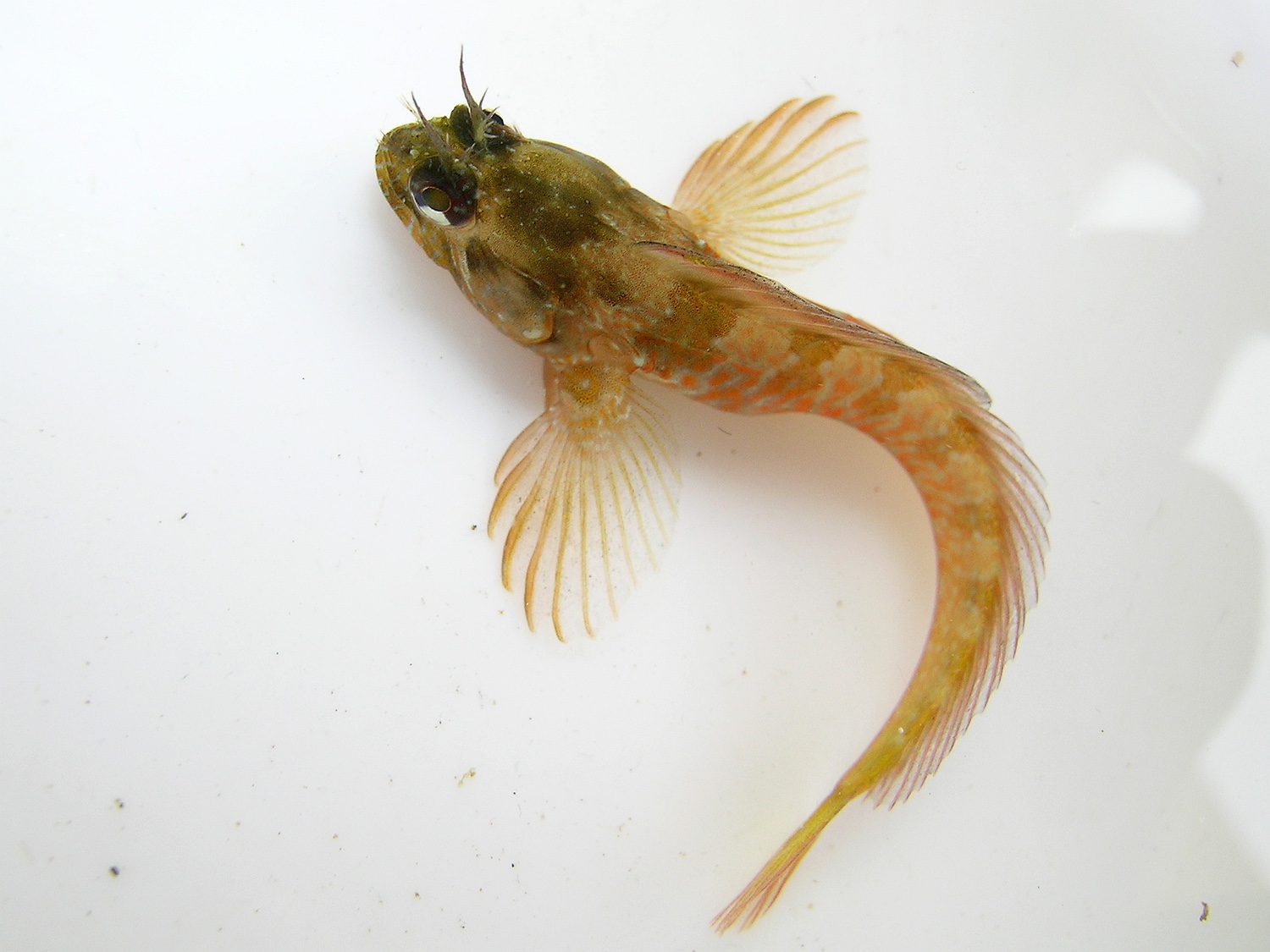
The body of the Mystery blenny has a yellowish-reddish colour, while the head is very dark.
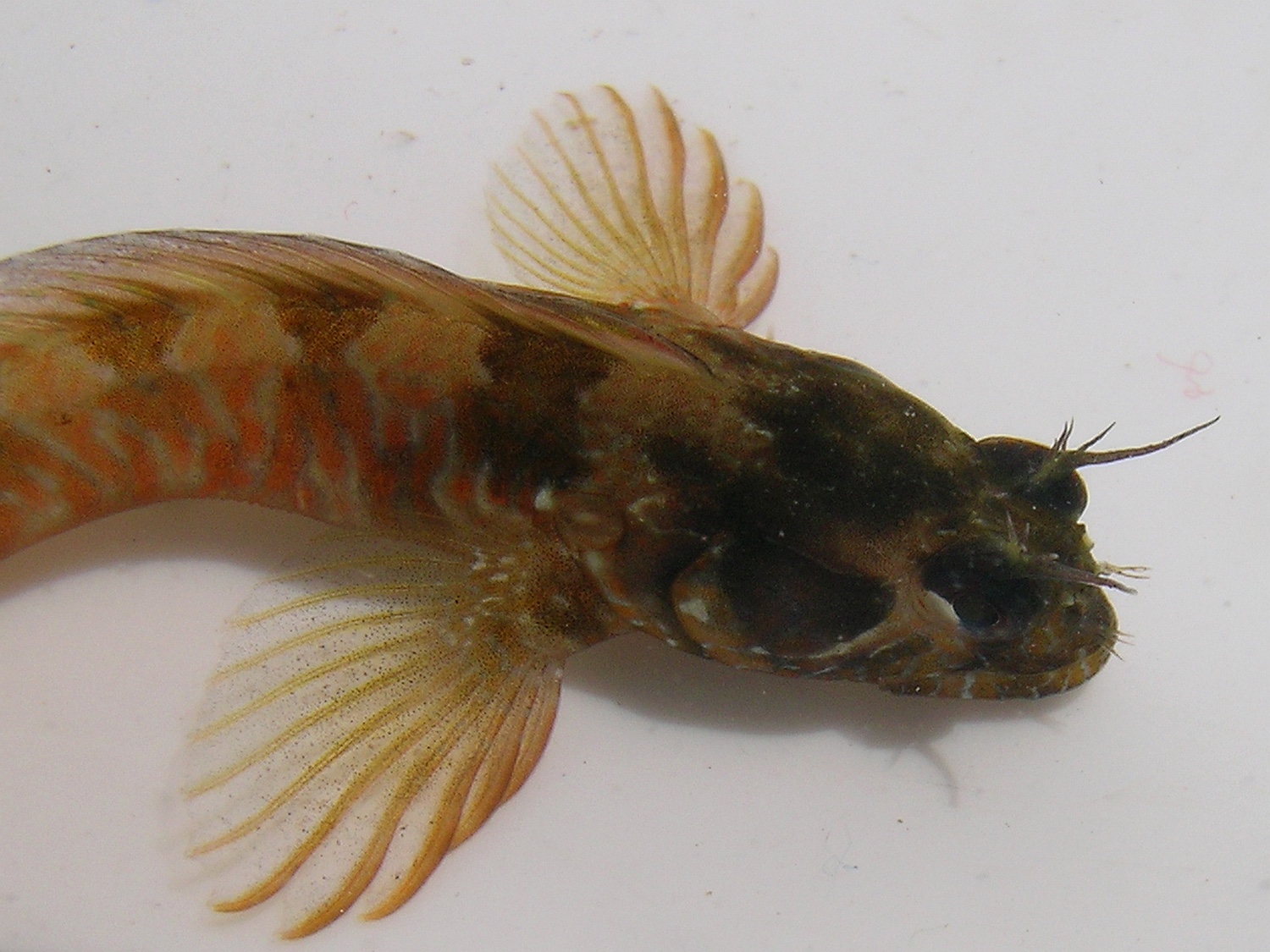
Its very long, branched eye tentacles are characteristic. The small nasal tentacles are also visible.
Zvonimiri’s blenny, Parablennius zvonimiri, Kolombatovic
Zvonimiri’s blenny is similar in shape to the Mystery blenny with eyes that are positioned high on the head. The eye tentacles are significantly shorter than those of the previous species, while the nasal tentacles are rather longer. The lower part of the head is finely striped with red. The fish is reddish in colour with delicate spots or stripes. The light yellow spots on its back are characteristic.
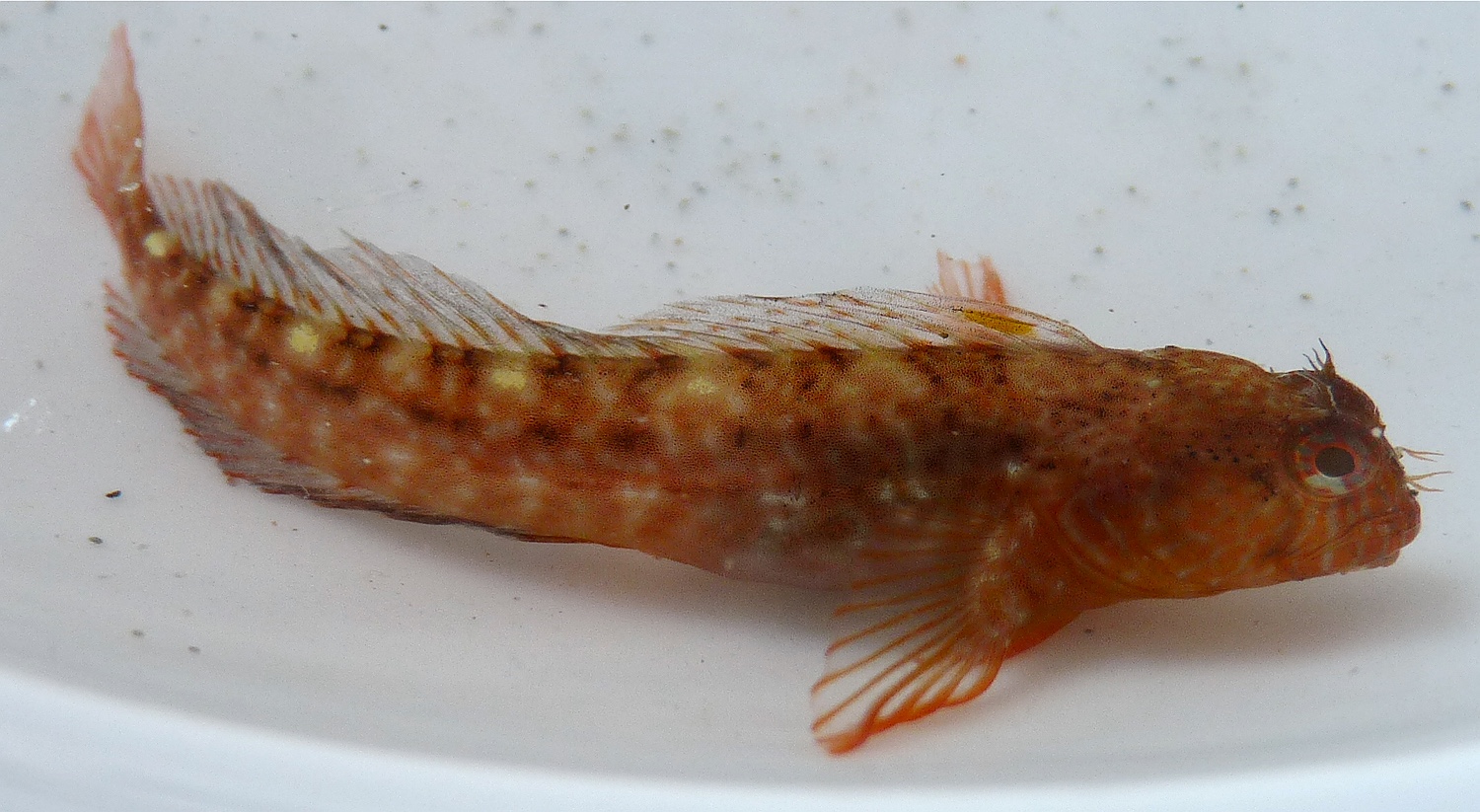
Zvonimiri’s blenny is reddish in colour with fine stripes and light yellow spots on its back.
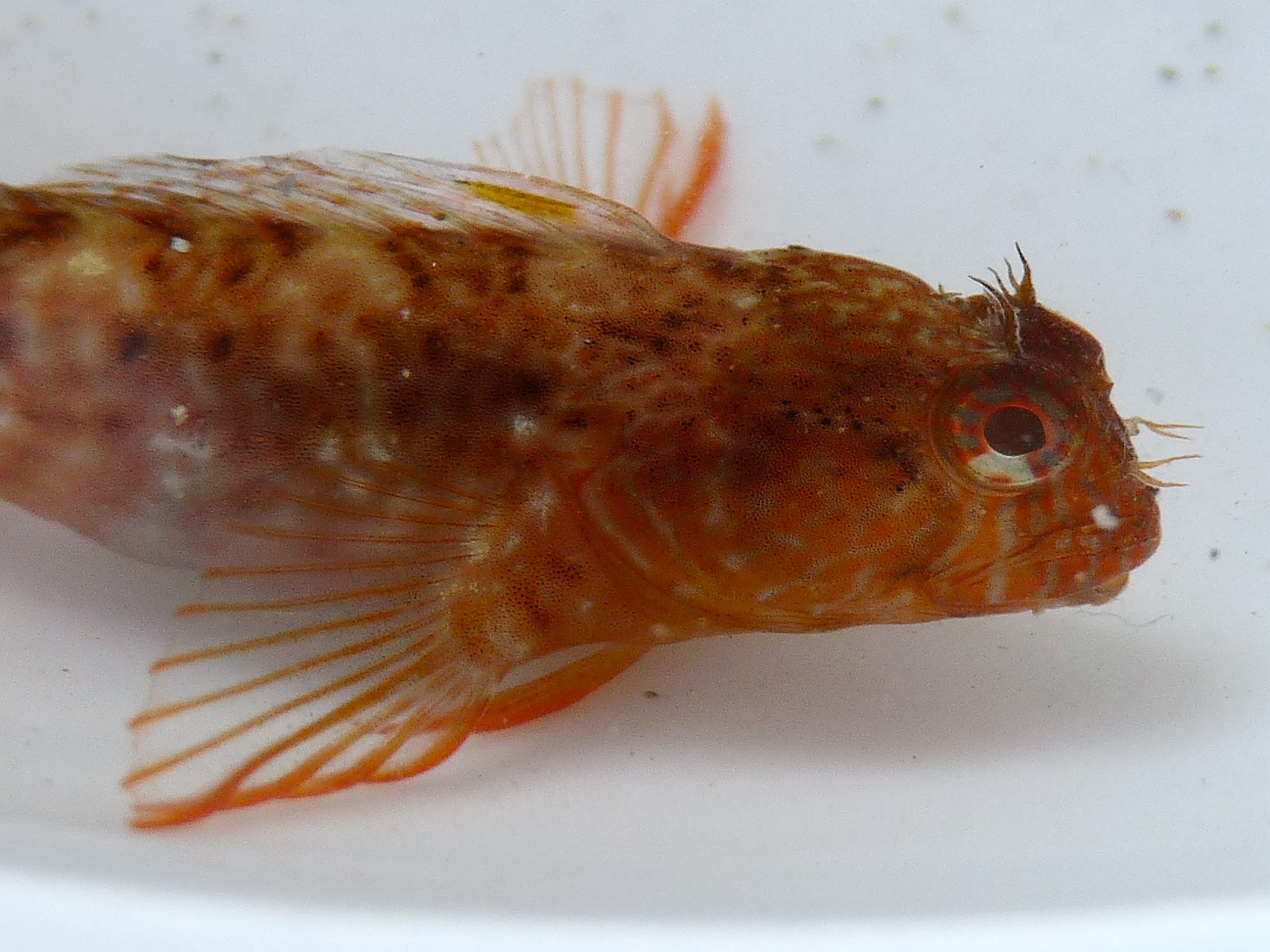
It has short, branched eye tentacles and quite long nasal tentacles. Its chin and cheeks are finely streaked with red.
Rusty blenny, Parablennius sanguinolentus, Pallas
At first glance, due to its size (up to 16 cm) and thick belly, this blenny looks more like a goby (but it does not have the fused pelvic fins characteristic of gobies). This species can be recognised by its very small, antler-like branched eye tentacles and its evenly sized, unnotched dorsal fin with a dark spot at the front end. The body is grey in colour with few contrasting small spots and stripes; the fins are reddish-striped. The face has vertical stripes on the sides and vertical dashes on the front.
The Rusty blenny does not hide in holes and crevices and is therefore particularly shy.
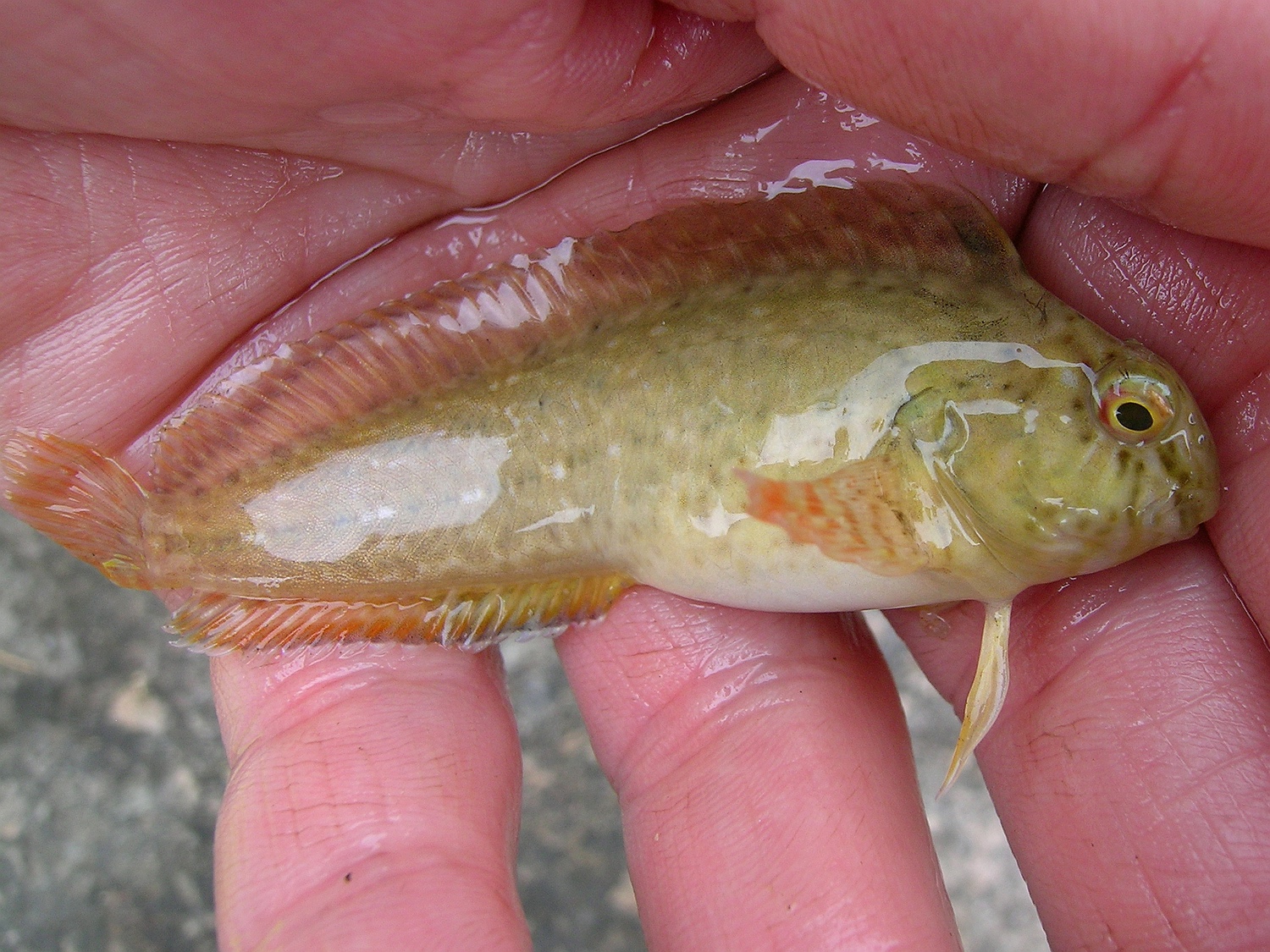
The Rusty blenny has a particularly thick belly.
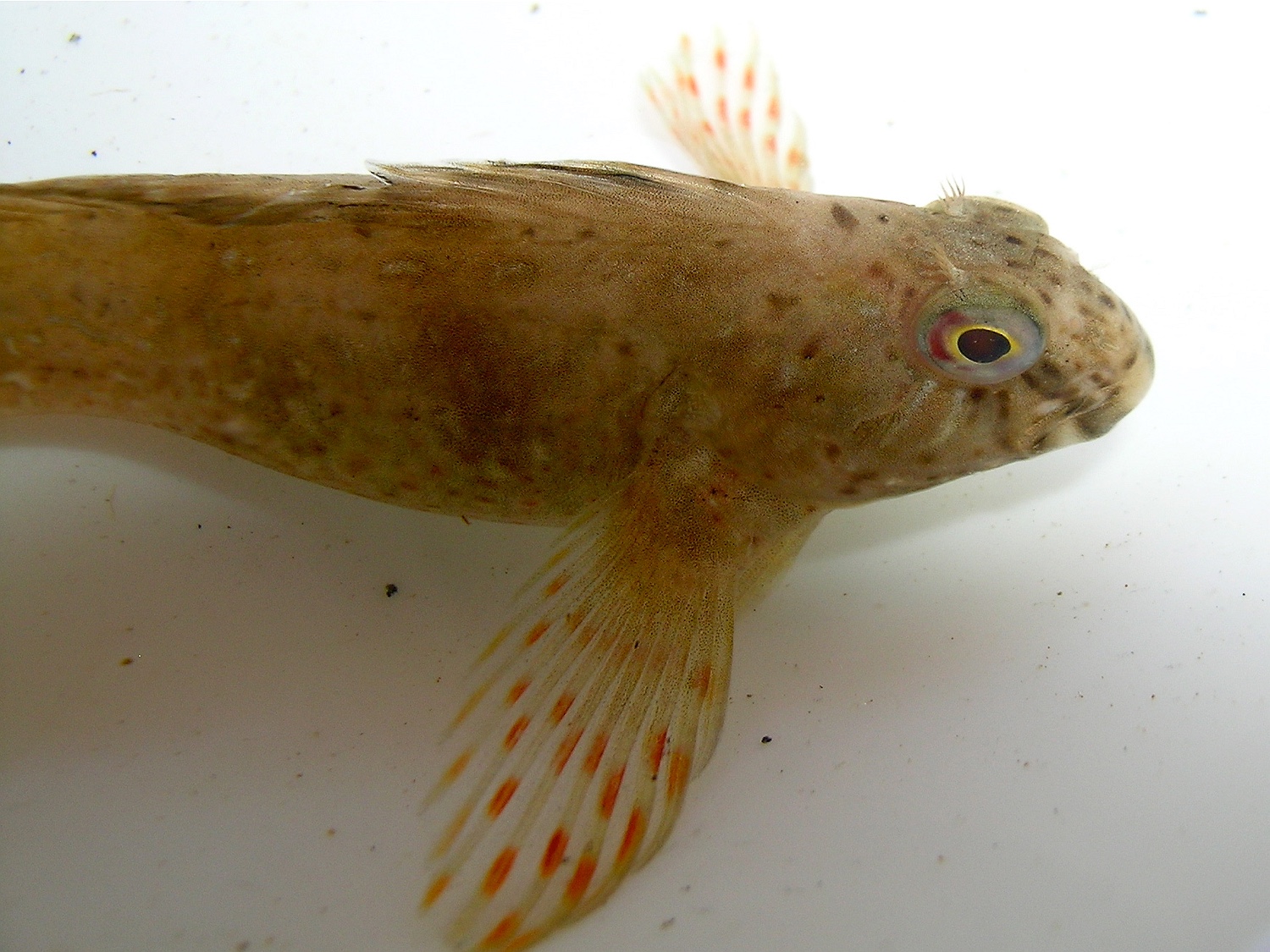
It can be recognised by the reddish stripes on its fins and the tiny, tuft-like branched eye tentacles.
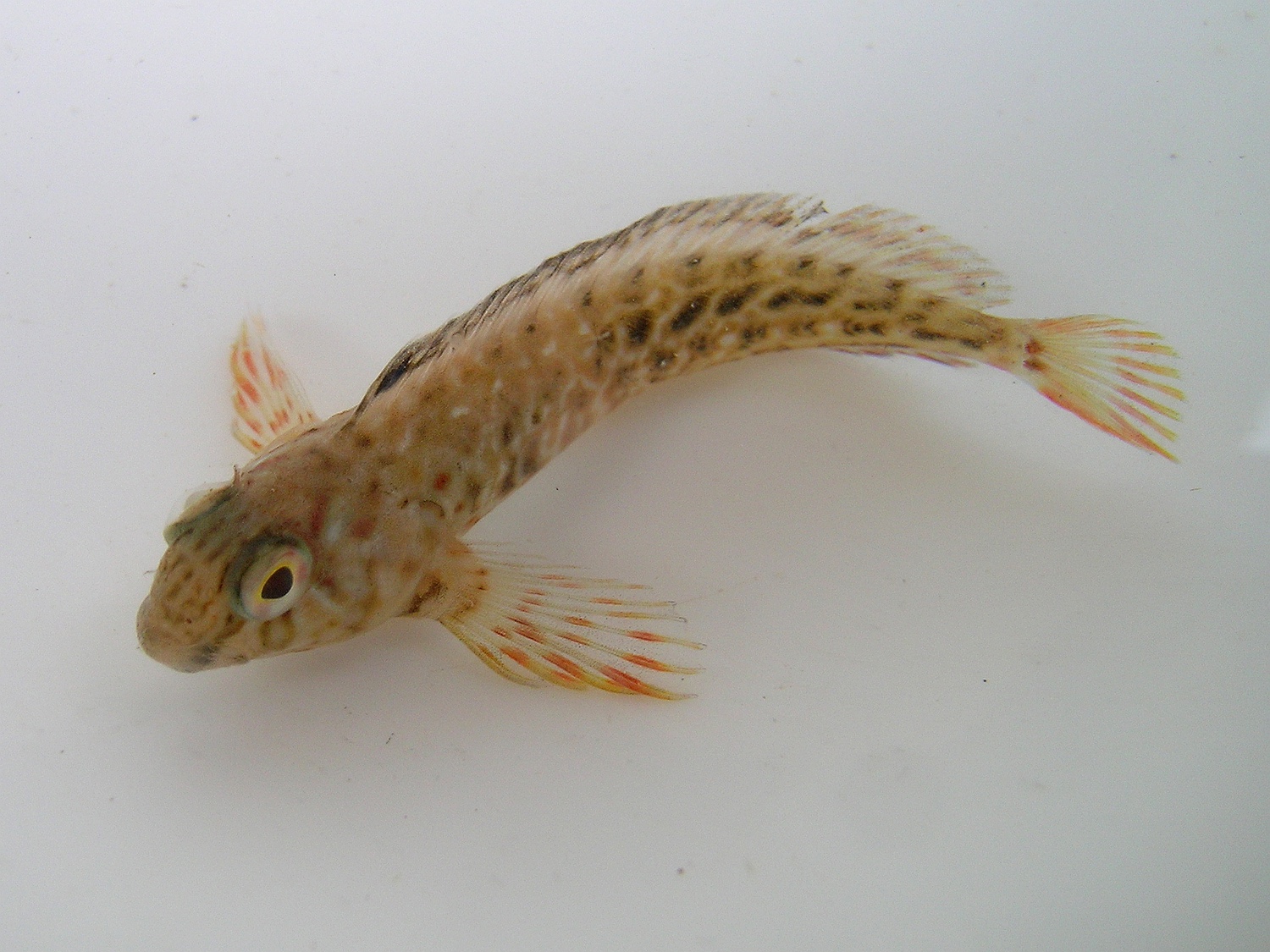
This species is so shy and restless that it is difficult to take a good picture.
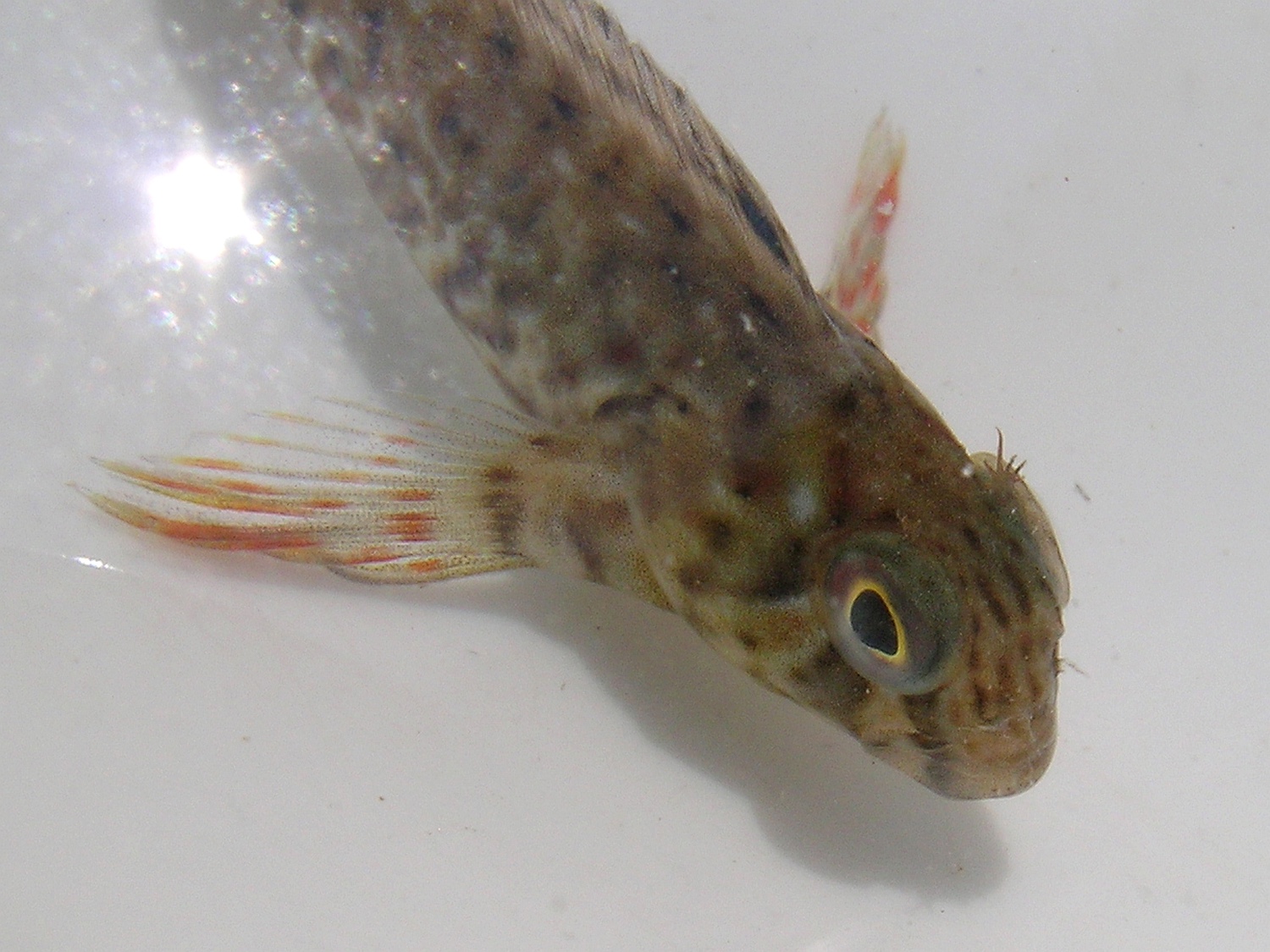
Here the branched eye tentacles are clearly visible.
Tompot blenny, Parablennius gattorugine, L.
The Tompot blenny is very dark in colour, sometimes almost black (at least when caught; in the natural environment its colouring is lighter). The finely marbled body and high dorsal fin are striped, sometimes with a longitudinal dark band running along the middle of the body. The very large, branched forehead tentacles are characteristic; the fish also has branched nasal tentacles, but these are much smaller.
We have rarely seen this species so far, which is probably due to the fact that it occurs mainly in somewhat deeper water; it is also said to be mostly active at dusk. It is the largest blenny fish found in our region; it can reach a length of 30 cm.
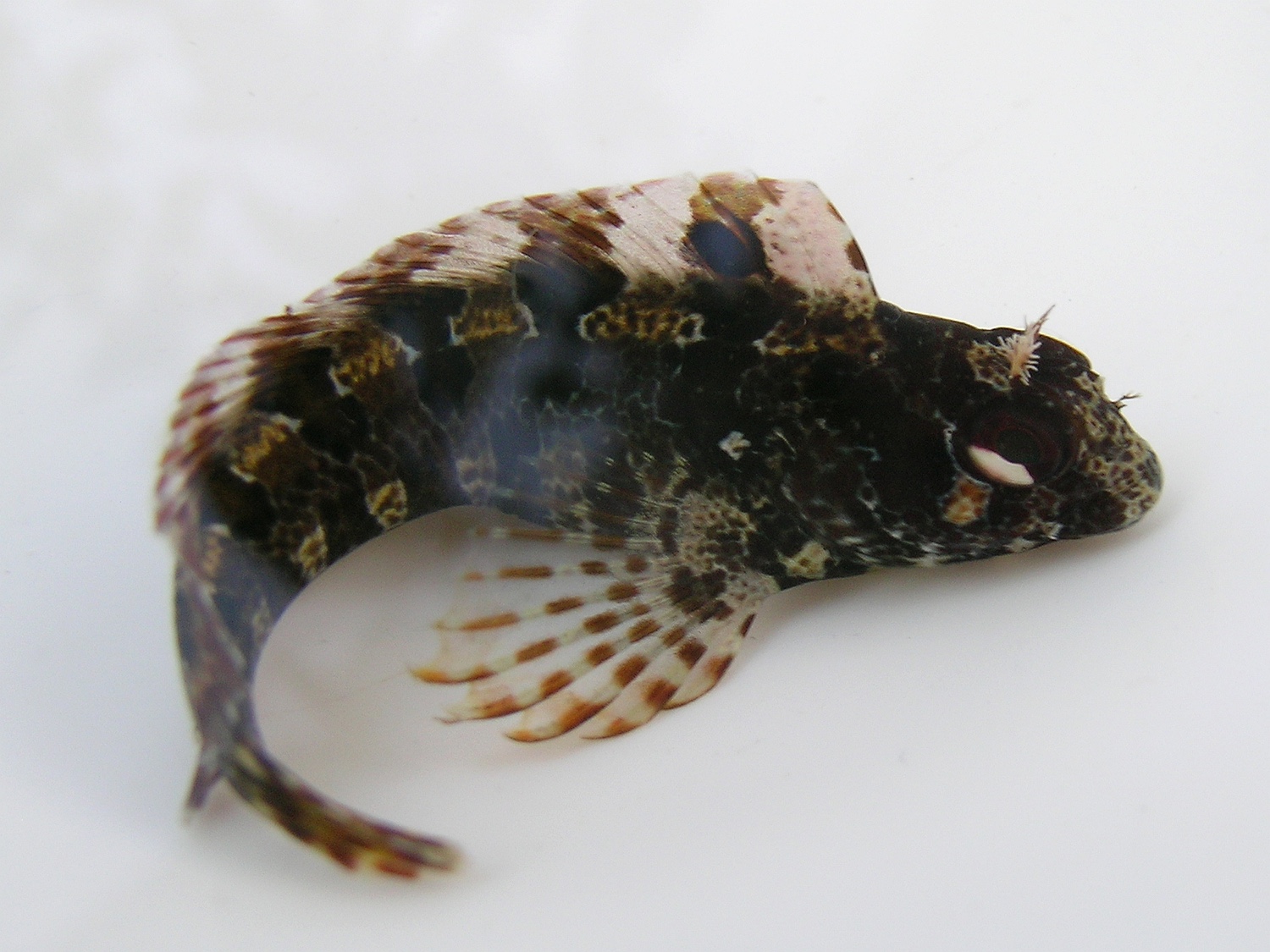
The Tompot blenny has conspicuous dark stripes on its body.
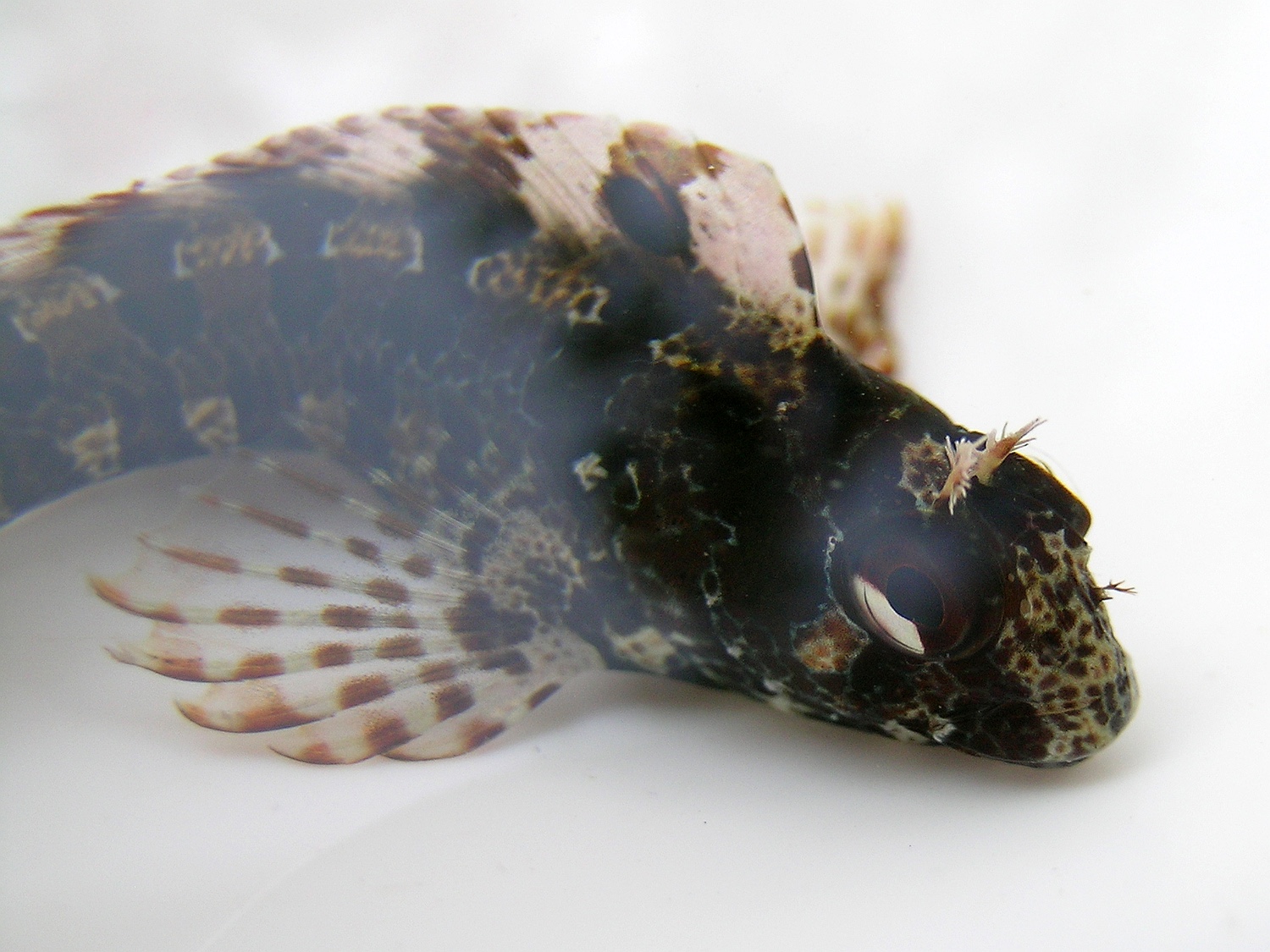
Here, the nasal tentacles are visible.
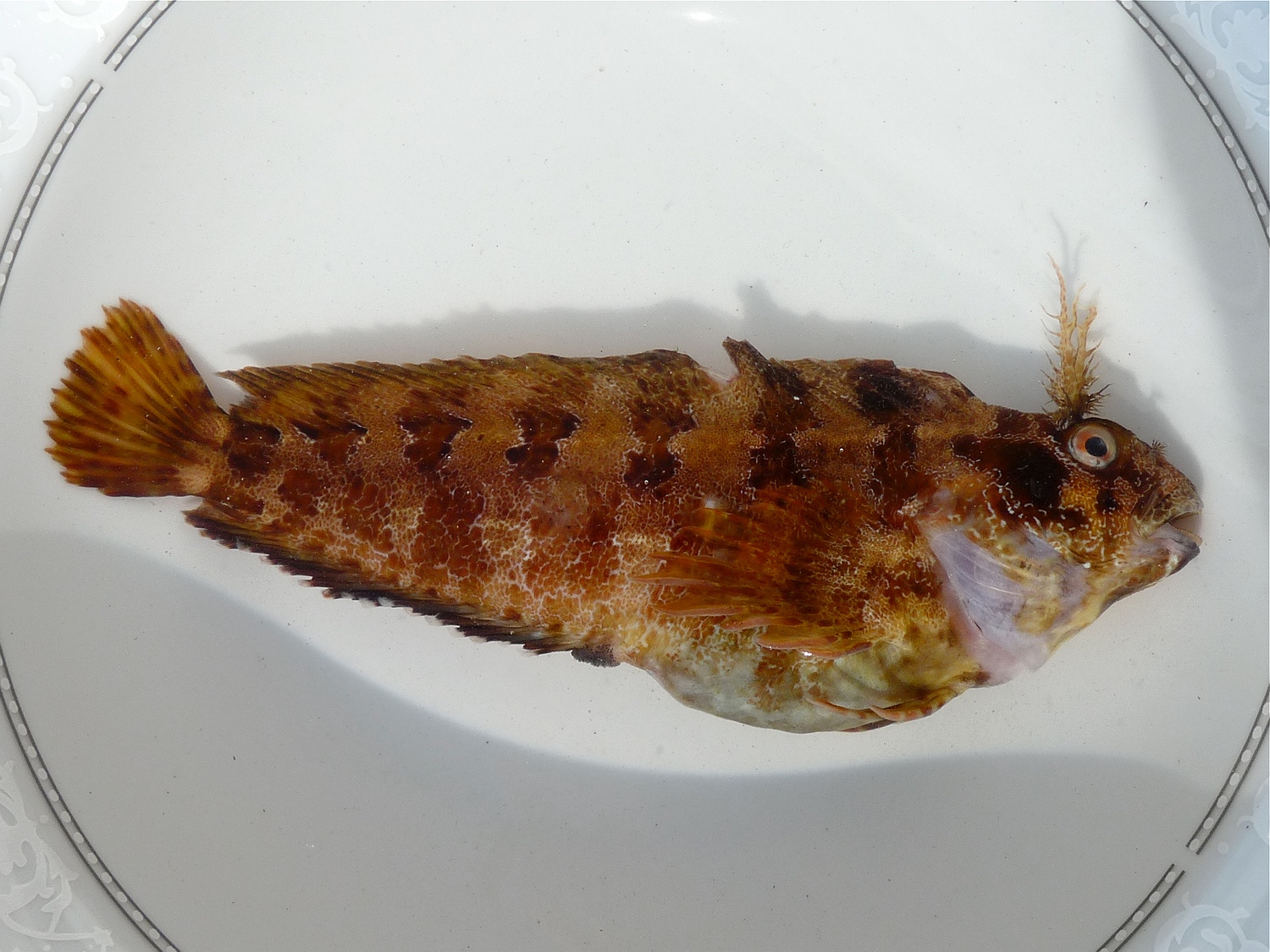
This specimen of 15 cm length was caught in a net.
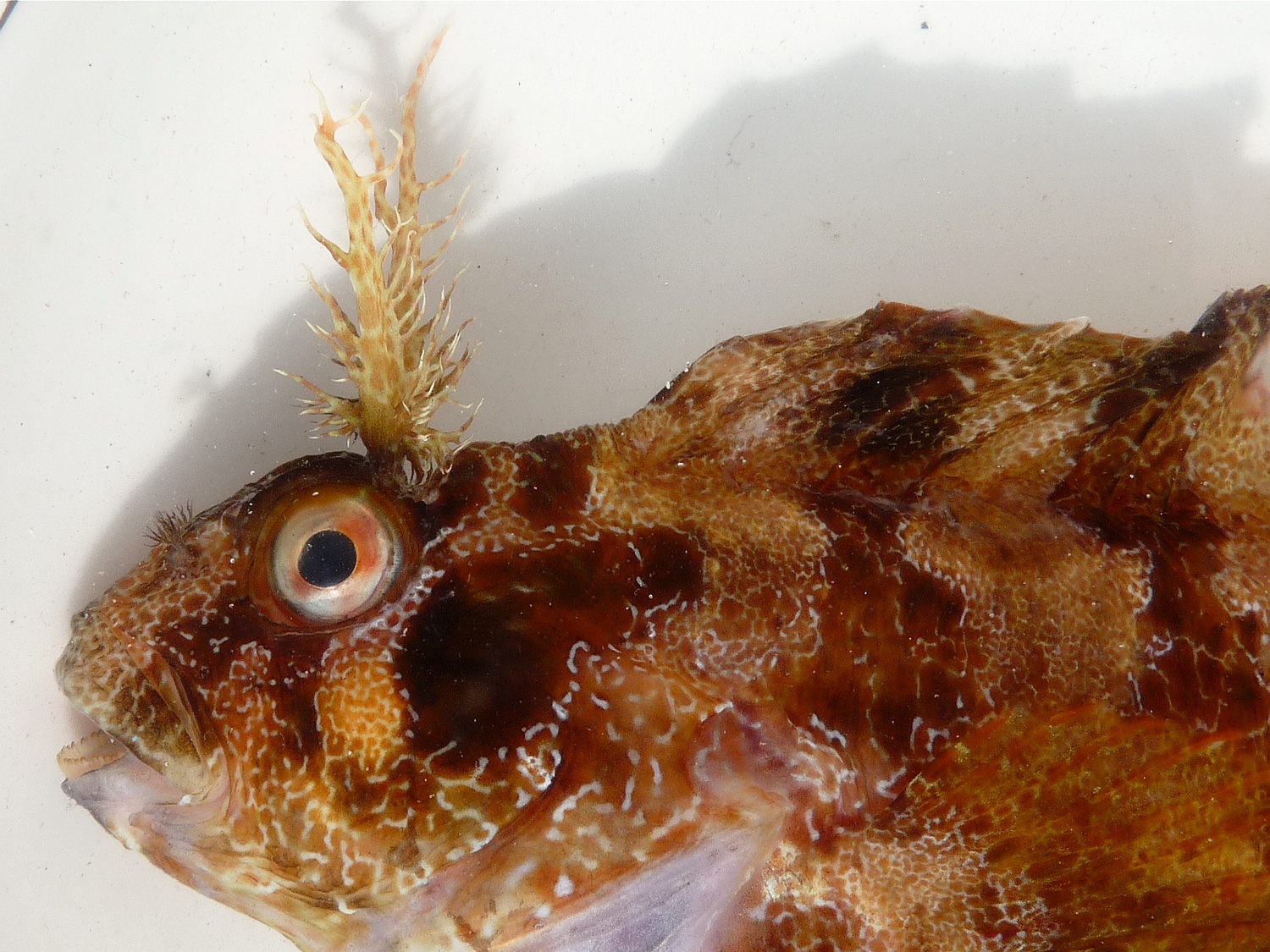
The Tompot blenny has especially long, branched eye tentacles.
Montagu’s blenny, Coryphoblennius galerita, L.
Montagu’s blenny particularly likes to sit directly at the waterline in places that fall dry between the waves. It has a rather compact shape. The tufted pink tentacles on its head are very small (they are difficult to see!), and the tentacles on its nose are even smaller. The species is easily recognisable by its conspicuous, fleshy pinkish upper lip. Its body shows dark and light brown stripes with small white spots arranged regularly on its back. The fins are almost transparent between the rays.
Montagu’s blenny feeds on algae and barnacles in the mesolittoral zone. As with many other blennies, during the breeding season the male inhabits holes, in which it guards the eggs. Montagu’s blenny is quite common in our region.
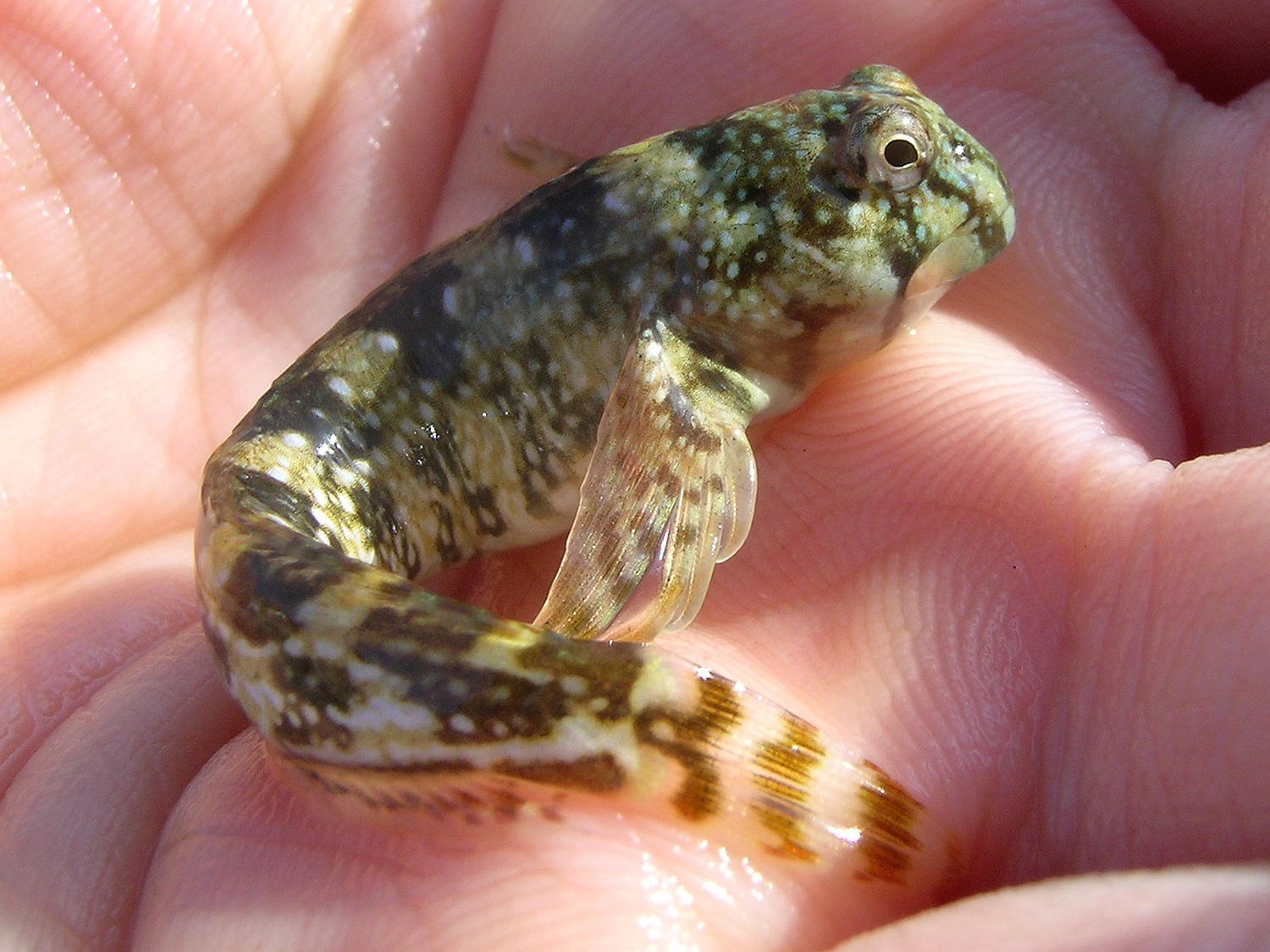
Montagu’s blenny unconcernedly remains sitting on your hand.
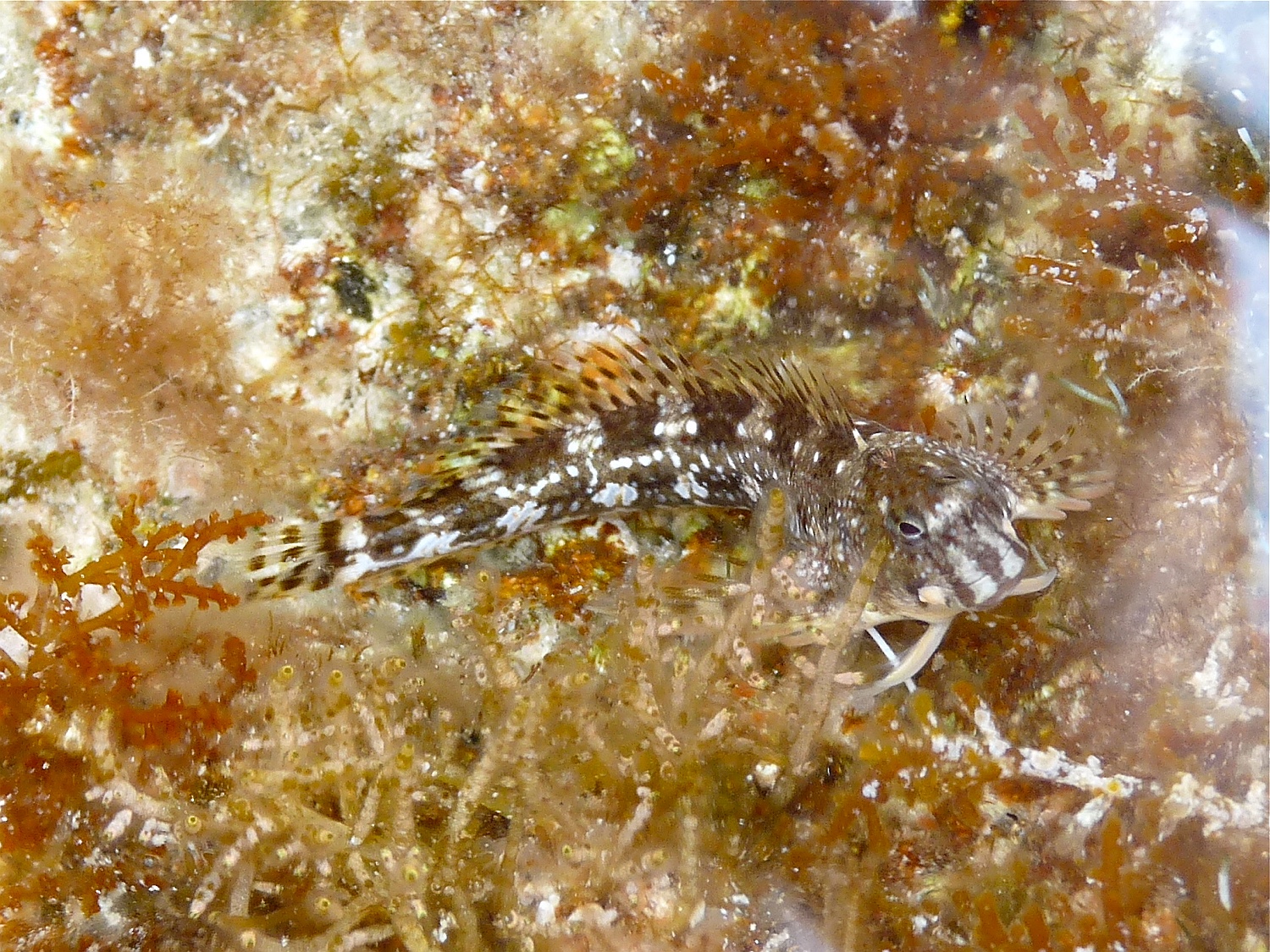
In the water, this species can be recognised by the black and white stripes on its body and face and the white spots on its back.
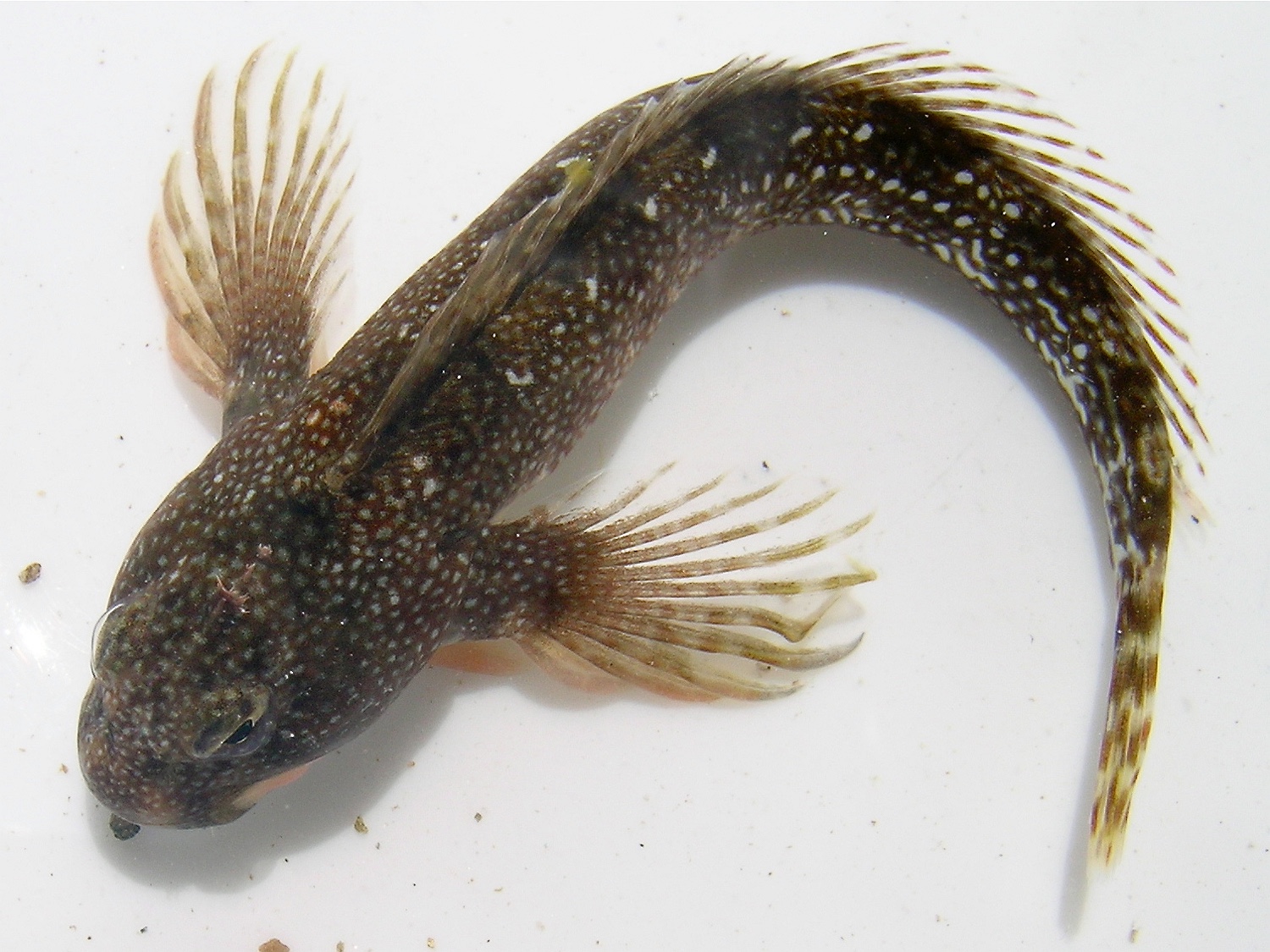
In sunlight, Montagu’s blenny takes on a much darker colour than in the shade.
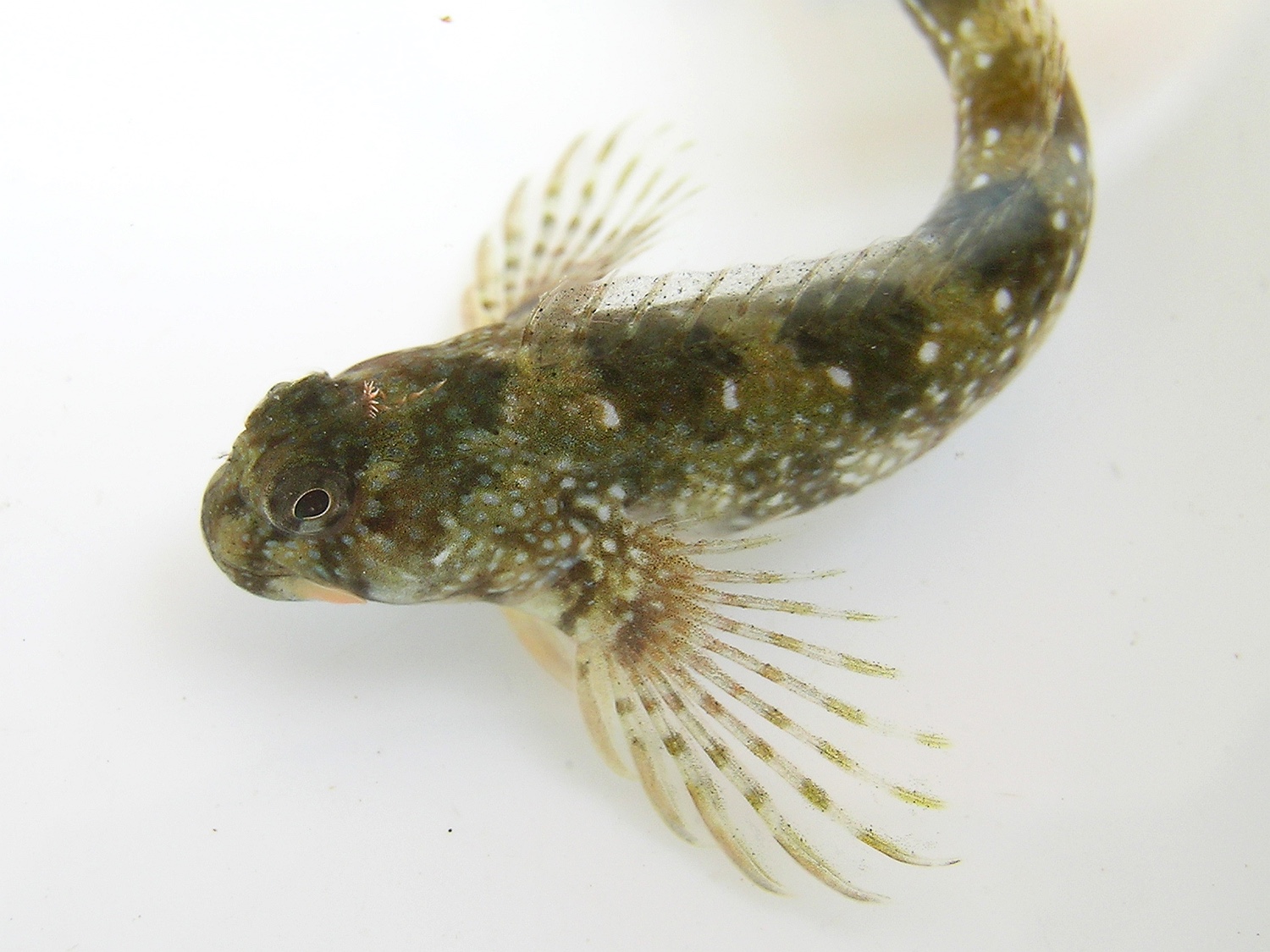
Here you can see the pinkish upper lip and the small pink tuft of tentacles on the head. Note the transparent fins.
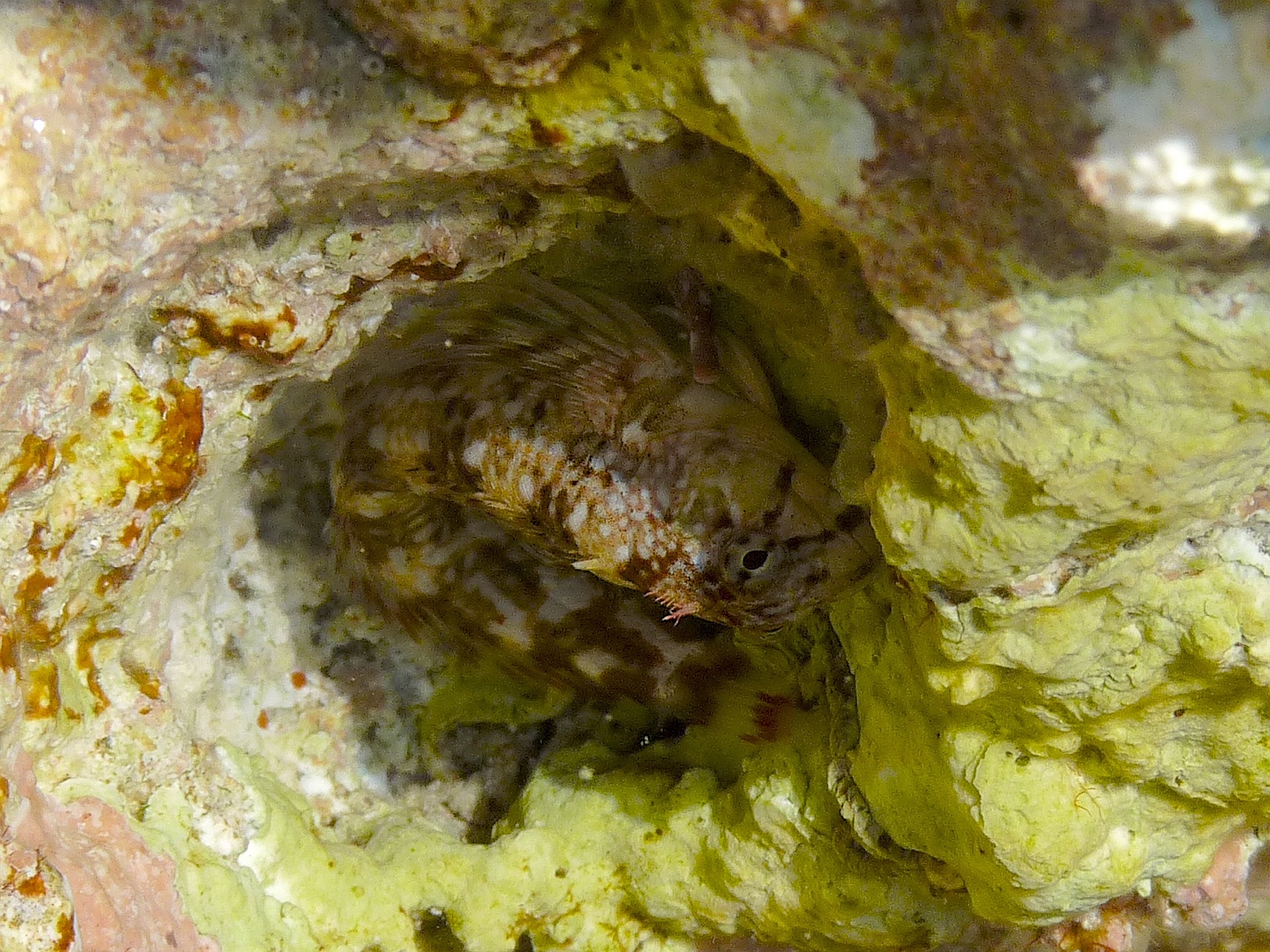
Montagu’s blenny likes to sit right at the waterline.
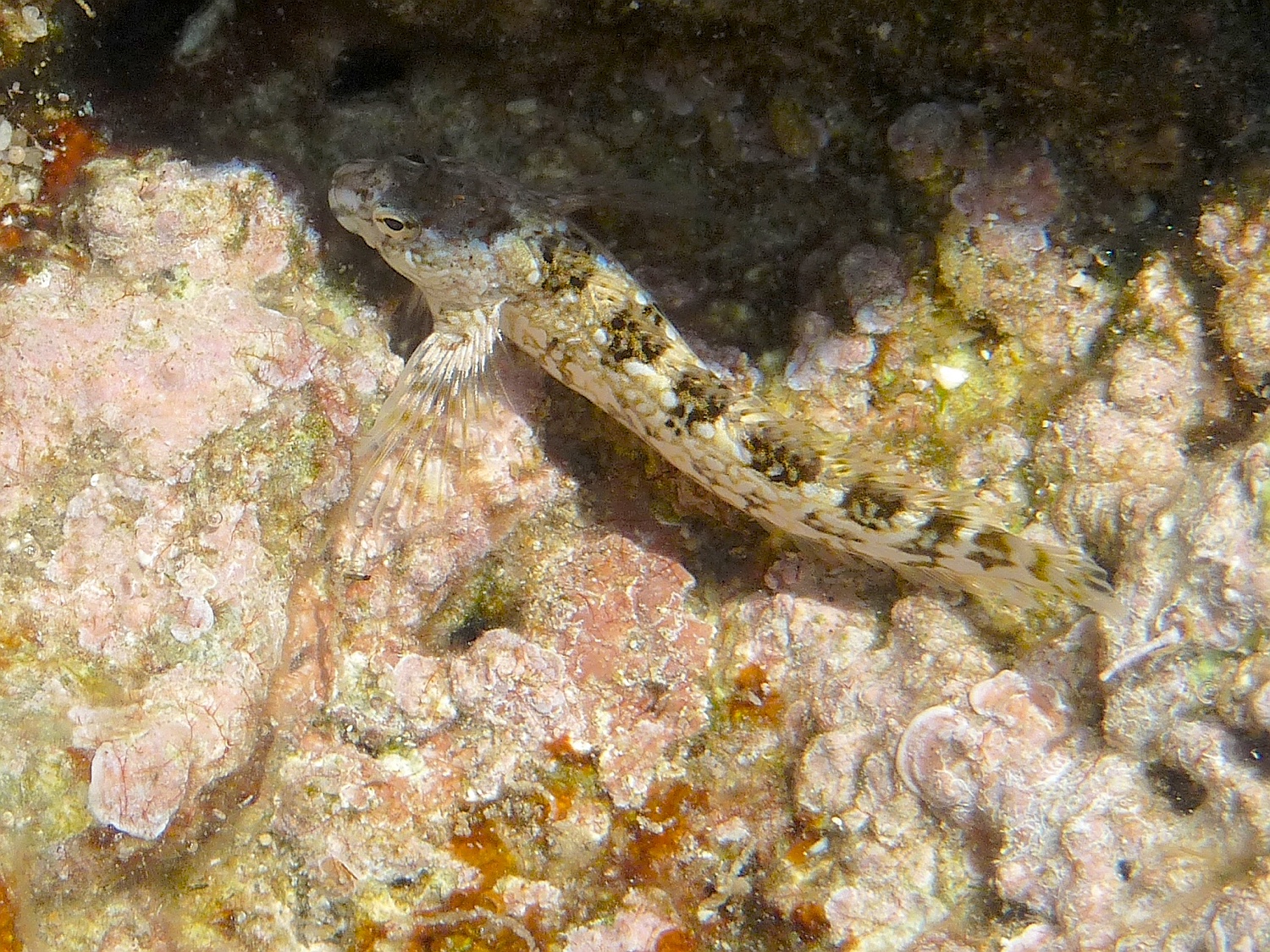
and yet another one…
Microlipophrys canevae, Vinciguerra
This species is easily recognisable by its rather dark, greenish-reddish colouring with a pattern of thick white cross stripes that widen towards the bottom on its back, and finer, horizontal, light-coloured dashes and lines on the sides of its body. The many red dots on its head are characteristic. Microlipophrys canevae has no eye tentacles, but tiny nasal tentacles. The cheeks of the courting males are intensely yellow.
The males inhabit a small hole, often that of a date mussel, in front of which they court the females by waving their heads. The female lays her eggs in the hole, where they are guarded by the male. Other males are warded off by the fish arching their backs and making sideways waving movements.
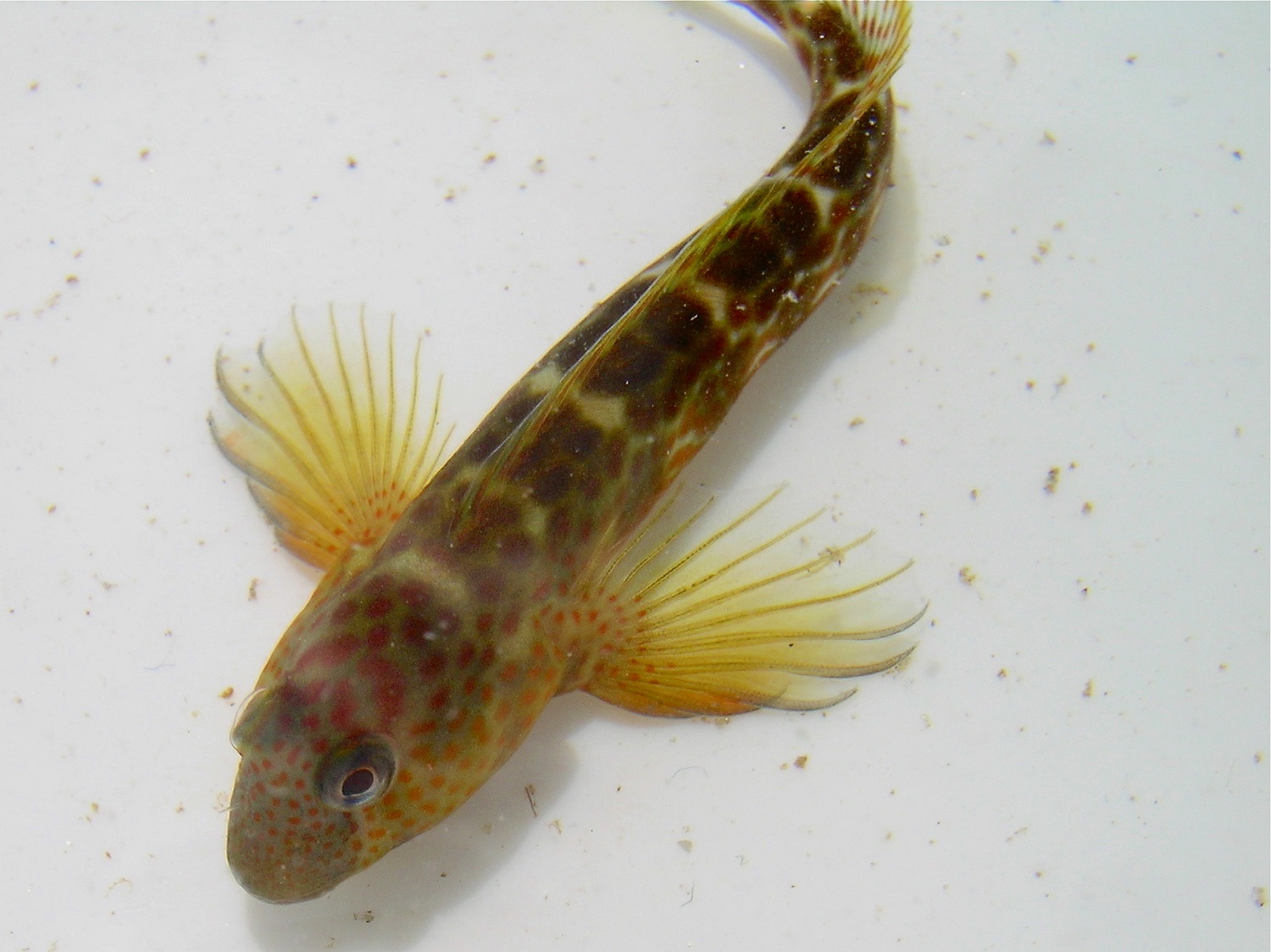
Microlipophrys canevae is rather rare in our region.
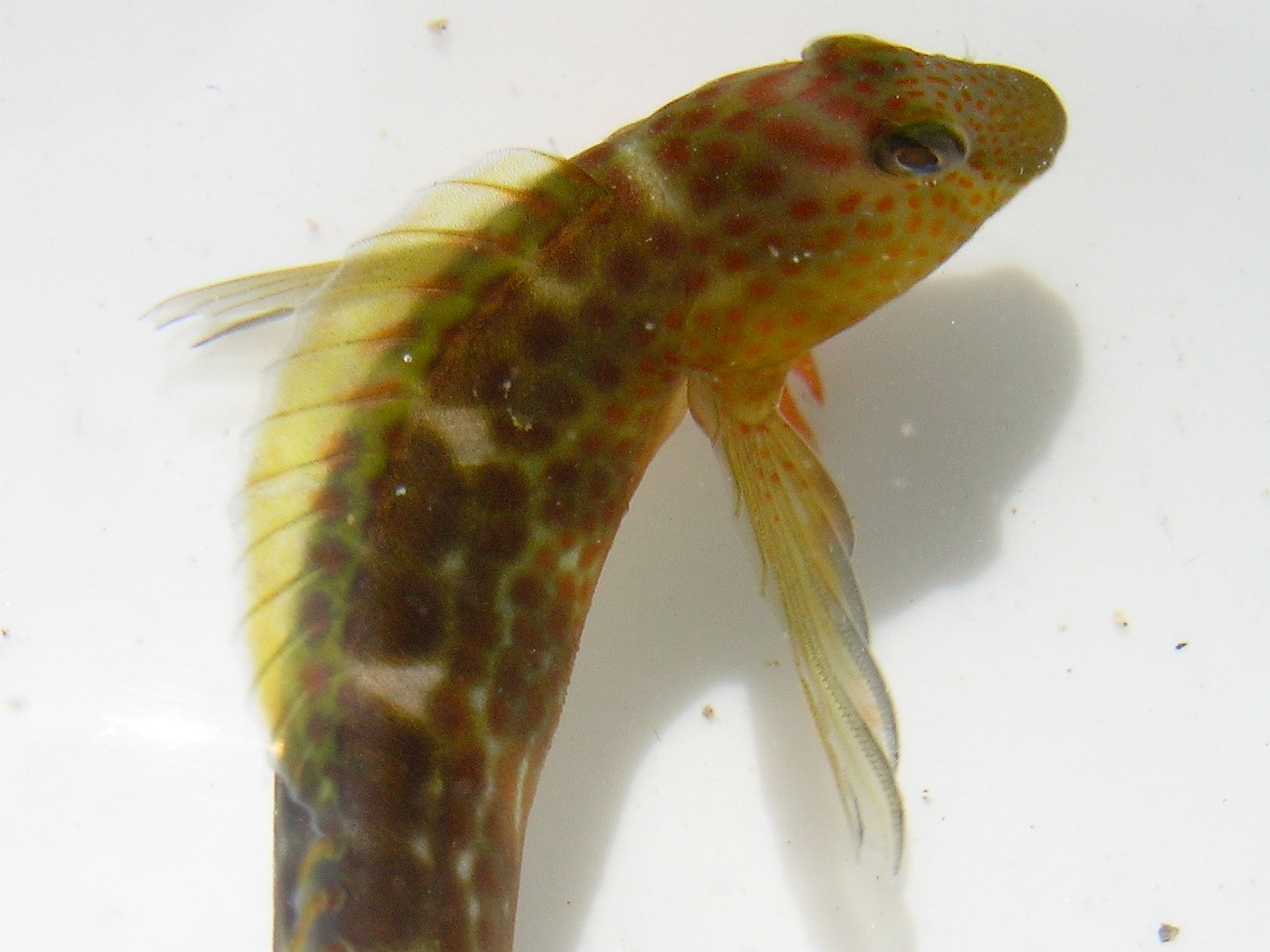
It is easily recognisable by the red dots on its head and the yellowish fins.
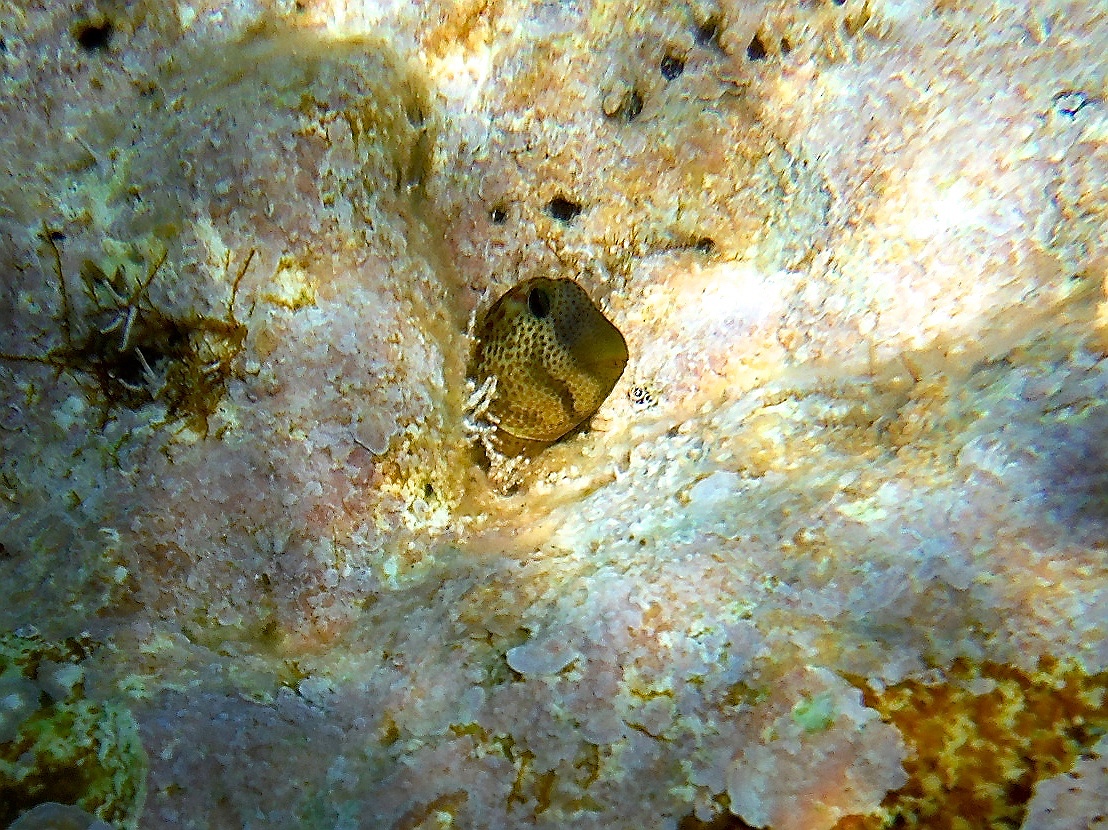
Microlipophrys canevae looking out of its hiding place.
Cline, Clinitrachus argentatus, Risso
The Cline belongs to the family Clinidae, which is related to the blennies. It resembles a triplefin (see below) in its slender shape, the pointed snout and the three-rayed anterior dorsal fin. However, the posterior dorsal fin is not divided, but extends as a narrow, even fringe to the caudal fin. The anal fin is also long and fringe-shaped. The pectoral and caudal fins are almost transparent in between the conspicuous rays. The Cline is dark in colour with strong light spots on the forehead and cheeks, as well as along the sides and on the dorsal and anal fins.
The species is not rare, but rarely seen as it lives hidden among the algae. During the breeding season, the males build tube-like nests out of algae (mainly of the genus Cystoseira). The Cline reaches a length of 7 cm.
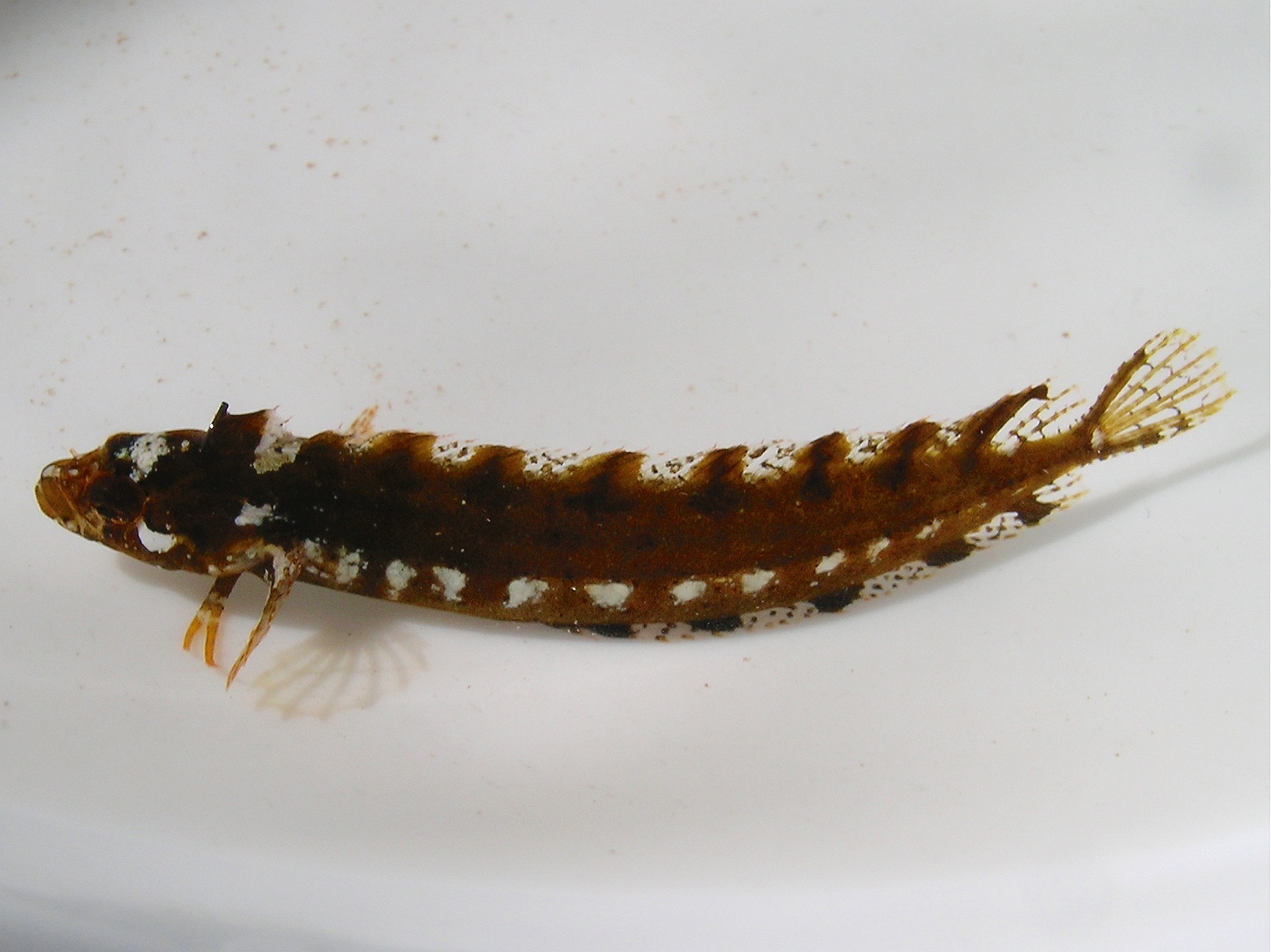
The Cline is slender and dark with regular light spots on the dorsal fin and the sides of the body.
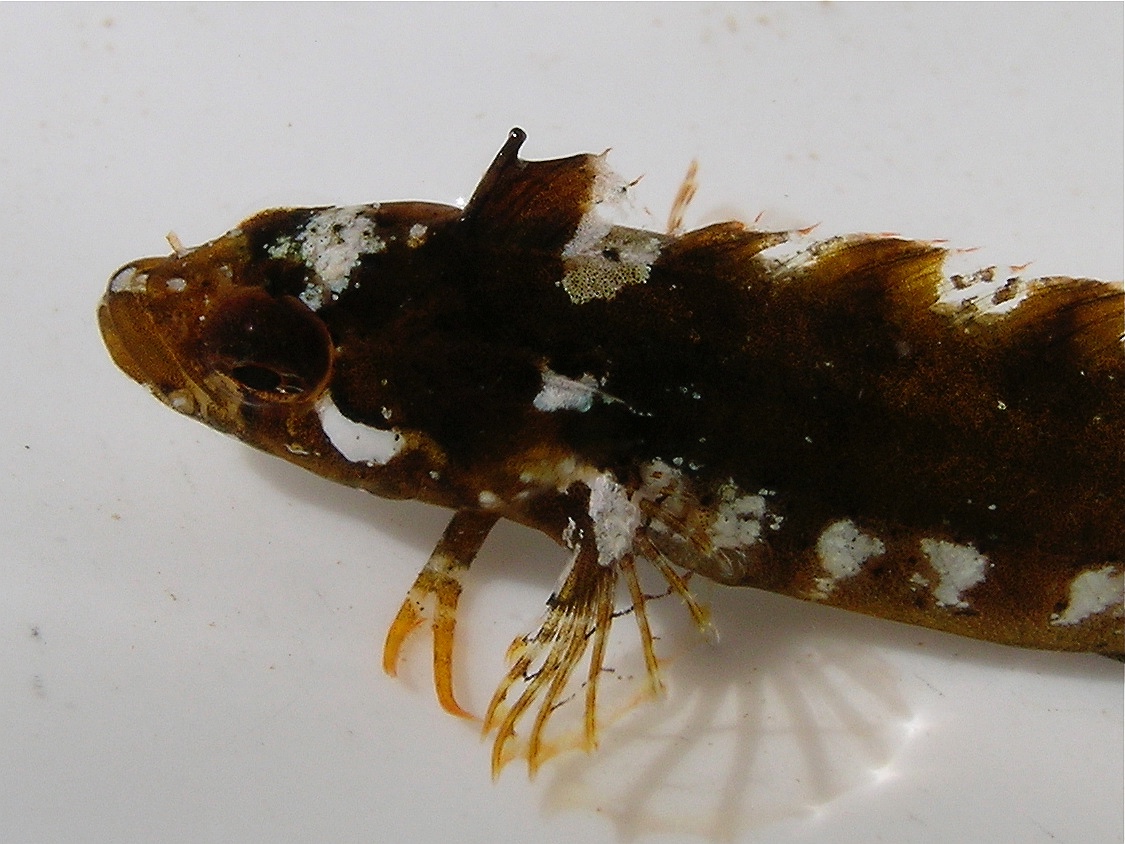
Note the protruding snout and transparent pectoral fin.
Red-black triplefin, Tripterygion tripteronotum, Risso
The triplefin (family Tripterygiidae) resemble the closely related blennies in looks and in behaviour. They can be distinguished by their three-parted dorsal fin and pointed head. The Red-black triplefin has an inconspicuous brownish body with irregular horizontal stripes. It grows to a size of up to 7 cm. During mating season (May-June), the males take on a striking red colouration with a black head and the middle dorsal fin grows long and flag-like. The Red-black triplefin is very common in our area. Like other blennies, it often sits on the substrate, but it does not hide in holes.
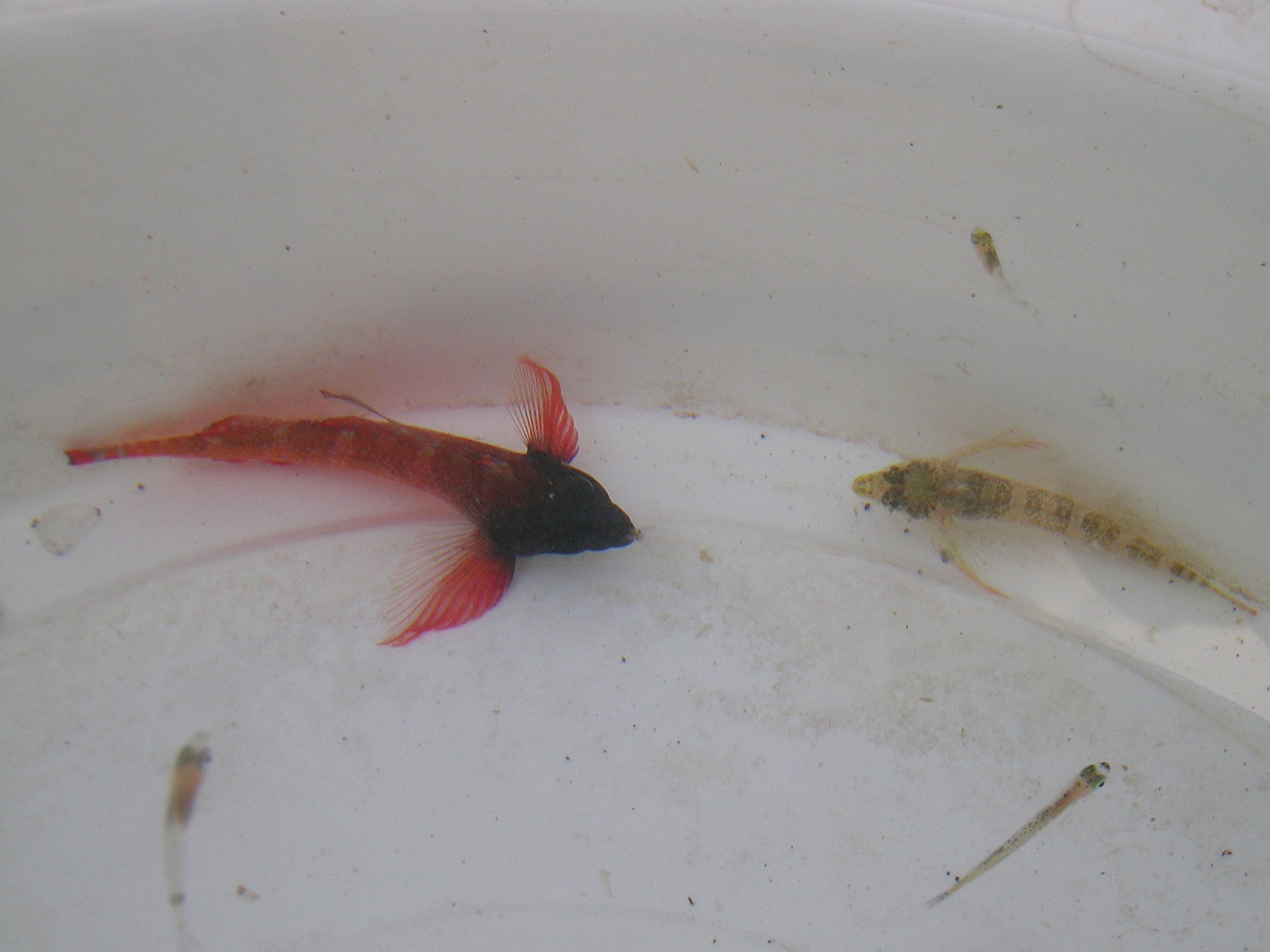
Red-black triplefin, male and female
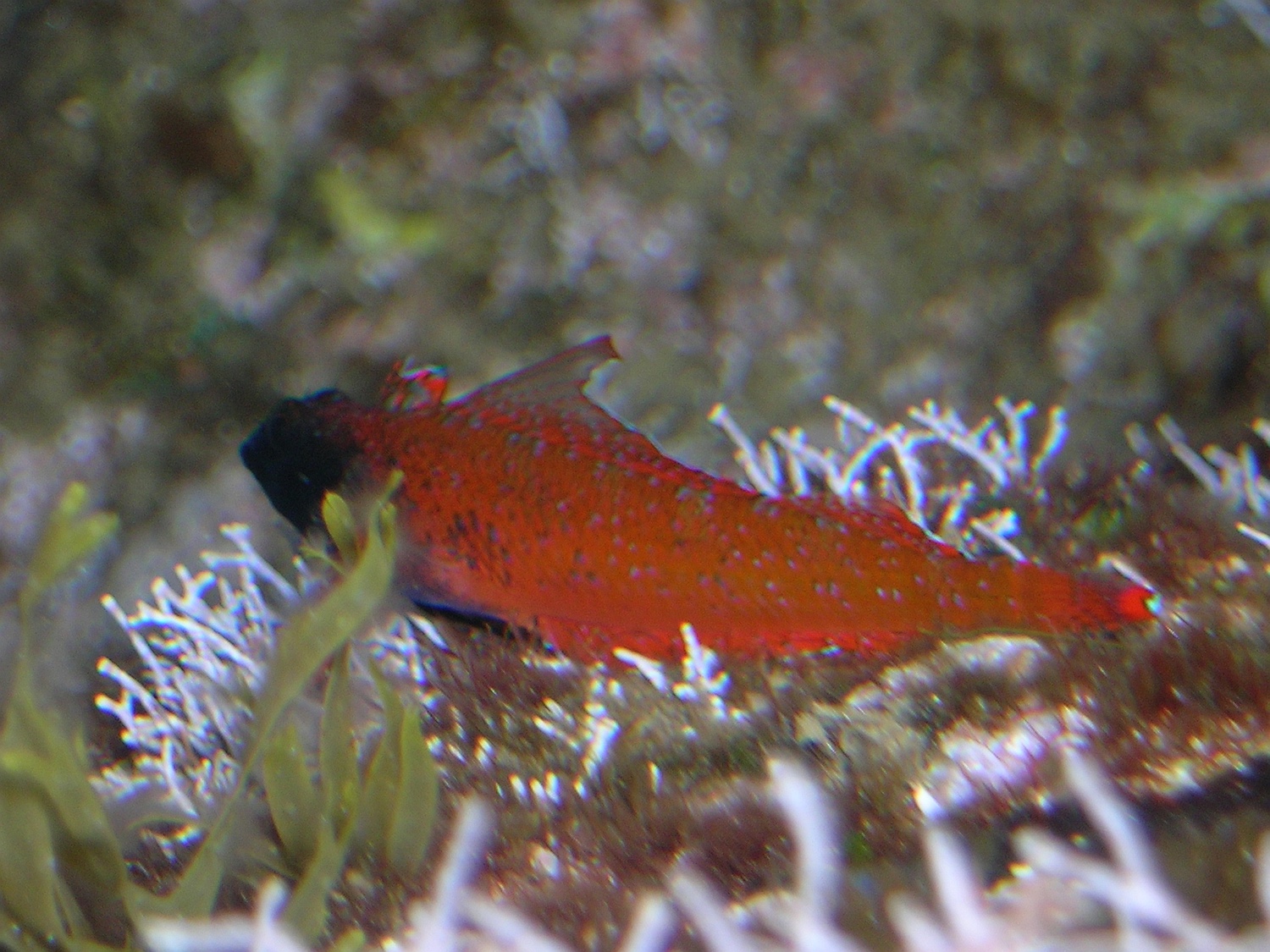
Male Red-black triplefin are red in colour with a black head.
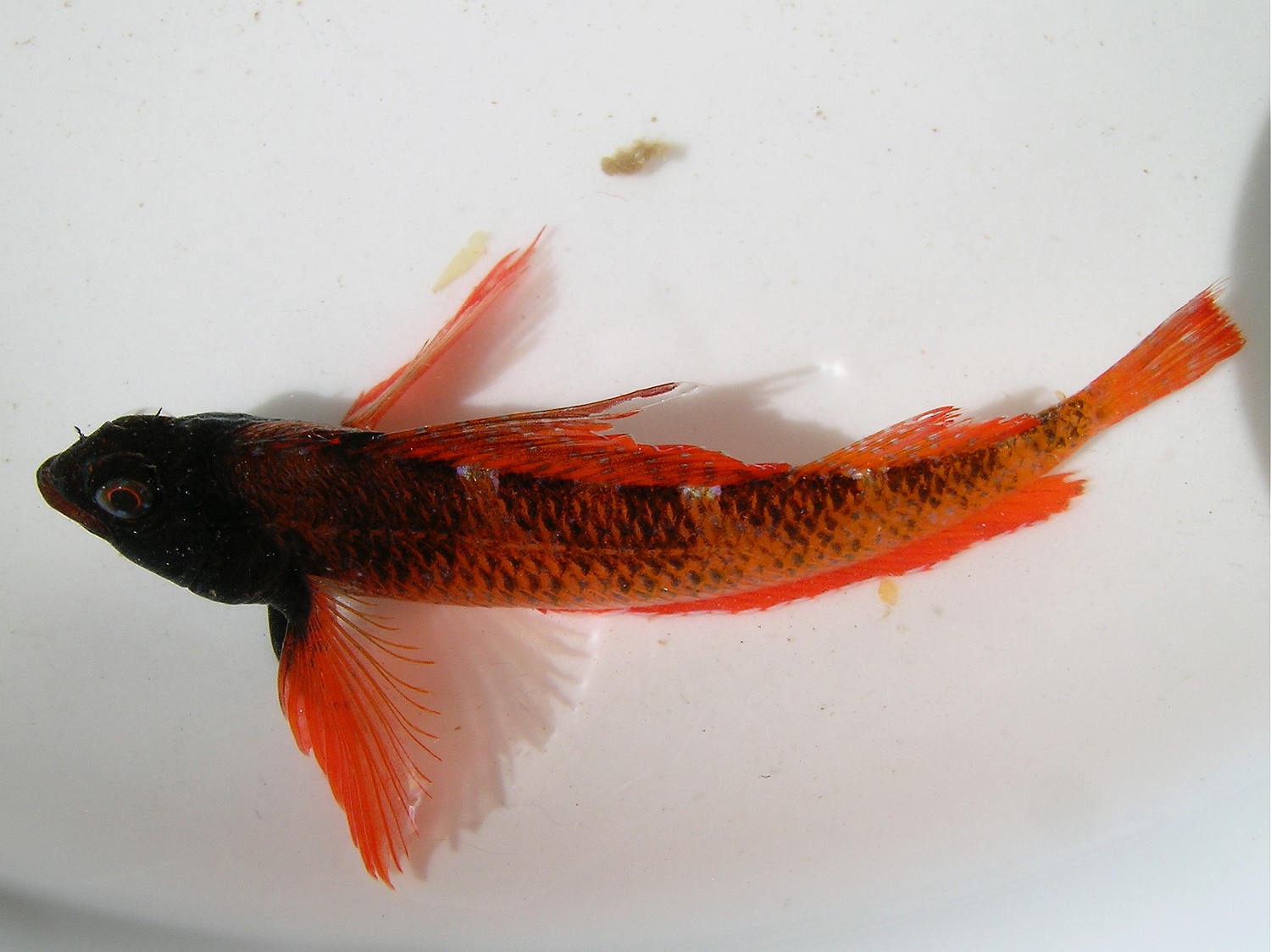
In the male’s breeding outfit, the middle dorsal fin grows long and flag-like in its front part.
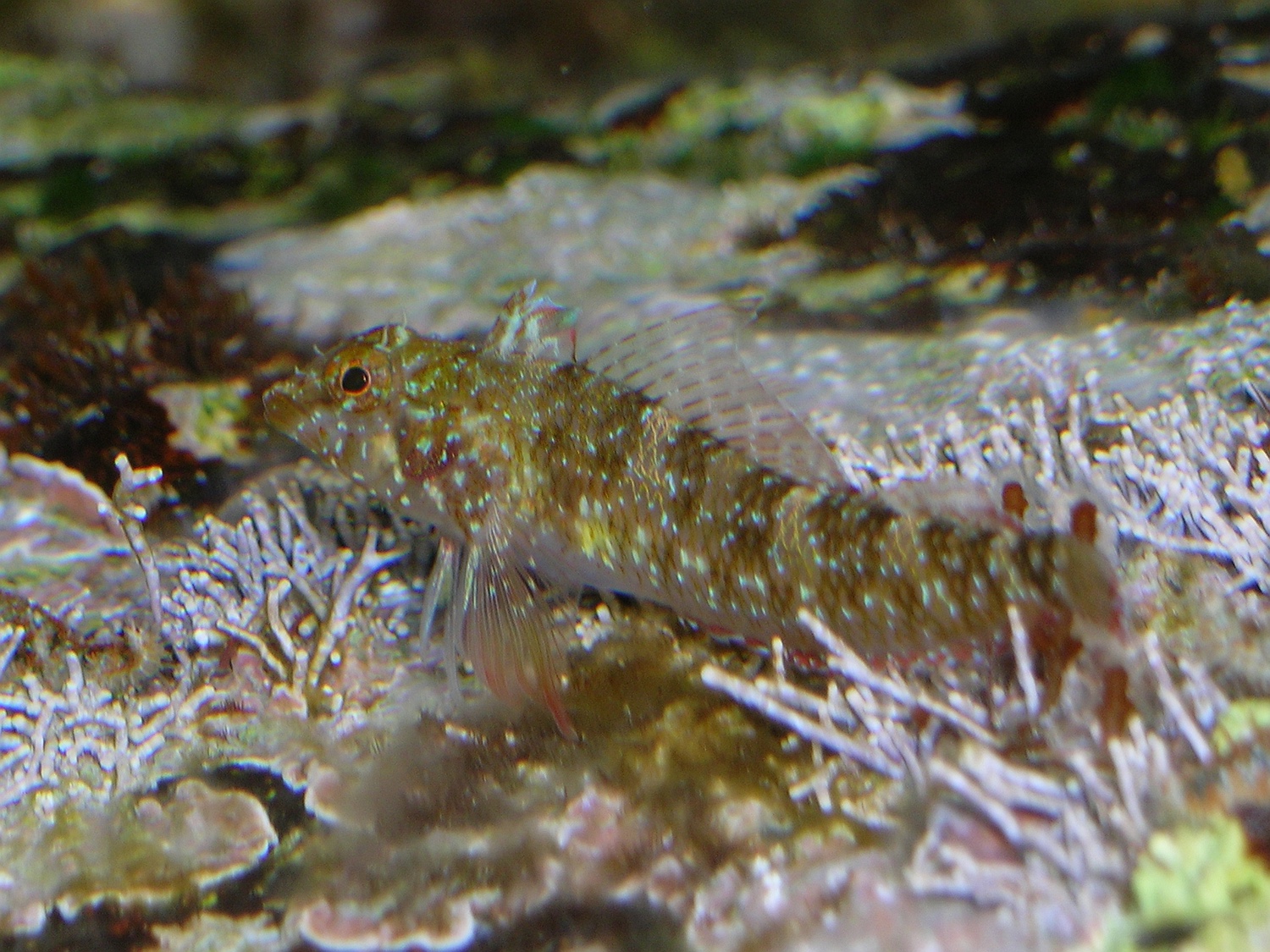
The female Red-black triplefin has an inconspicuous brownish colouring. A characteristic feature of the species is the small, triangular first dorsal fin.
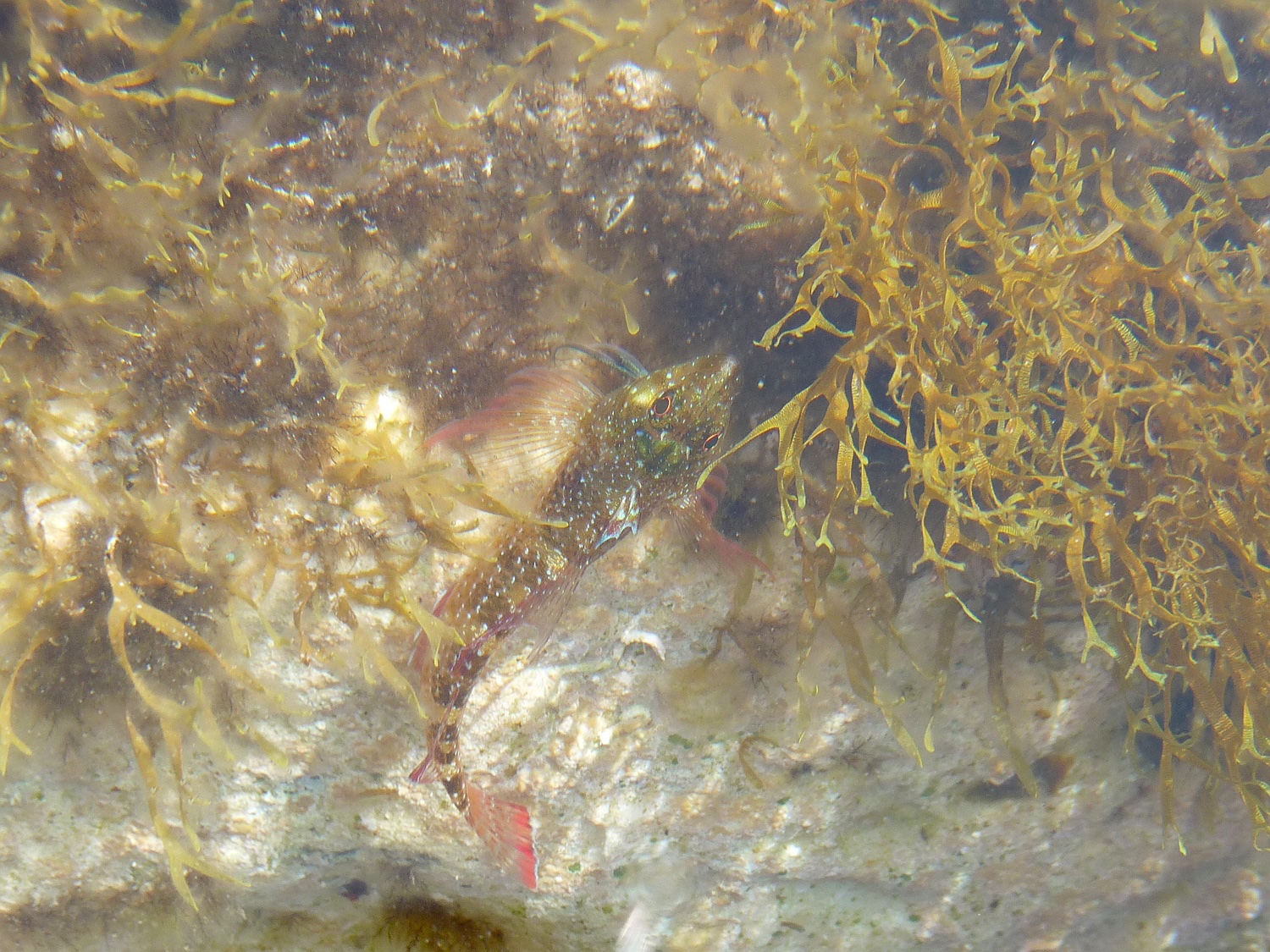
Here another female in shallow water.
Tripterygion melanurus, Guichenot
Tripterygion melanurus is very similar to the previous species, but only reaches a size of about 4 cm and has a (more or less strongly) marbled head. It has several whitish spots on its back. Like the Red-black triplefin, but unlike most other blenny species, it does not hide in holes or crevices. Tripterygion melanurus is much rarer in our area than the previous species.
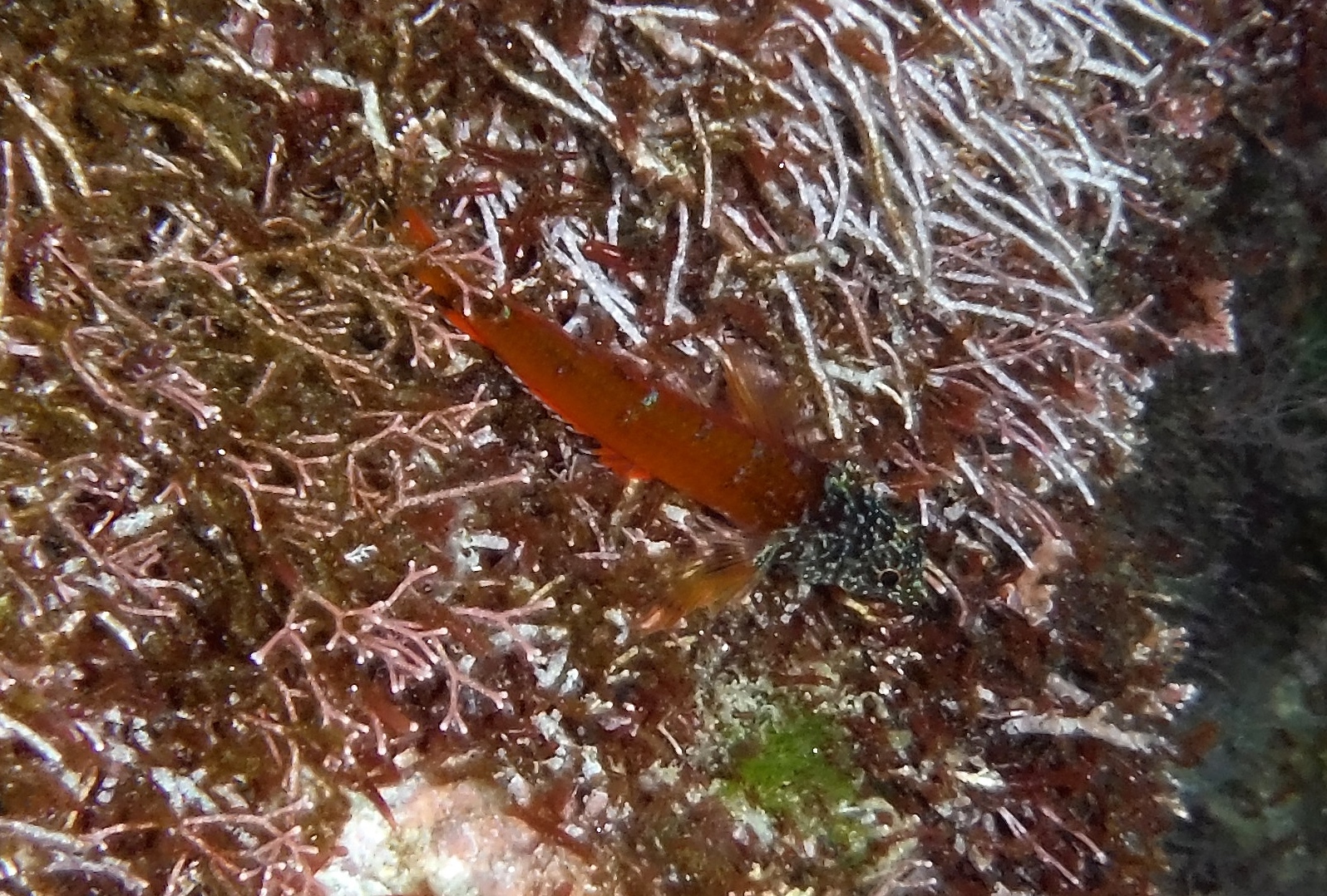
Tripterygion melanurus is smaller than the previous species and can be distinguished by its marbled head.
Gobies
Gobies look similar to blennies at first glance and, like them, live on the seafloor. However, their pelvic fins are fused into one round sucker-like fin. The dorsal fin is divided into two parts. The body and head are more compact and rounder than those of blennies; most species grow significantly larger.
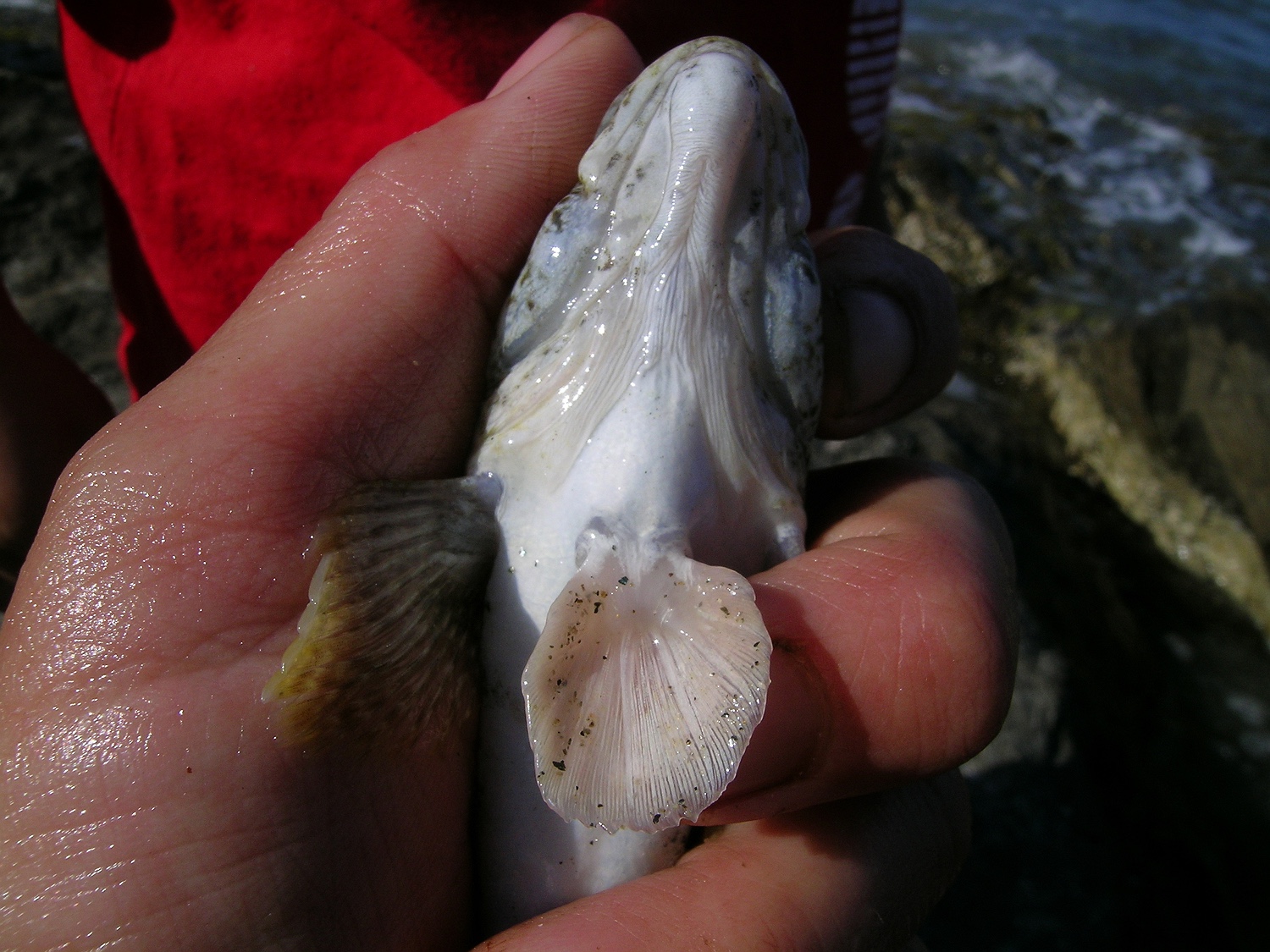
Gobies can be distiguished from the similar blennies by their fused, sucker-like pelvic fins.
Here you can jump directly to the species (return with the back arrow or by swiping back):
Rock goby, Gobius paganellus – Bucchich’s goby, Gobius bucchichi – Common goby, Pomatoschistus microps
Rock goby, Gobius paganellus, L.
The fairly common Rock goby can be recognised by the absence of a gap between the front and rear dorsal fins.
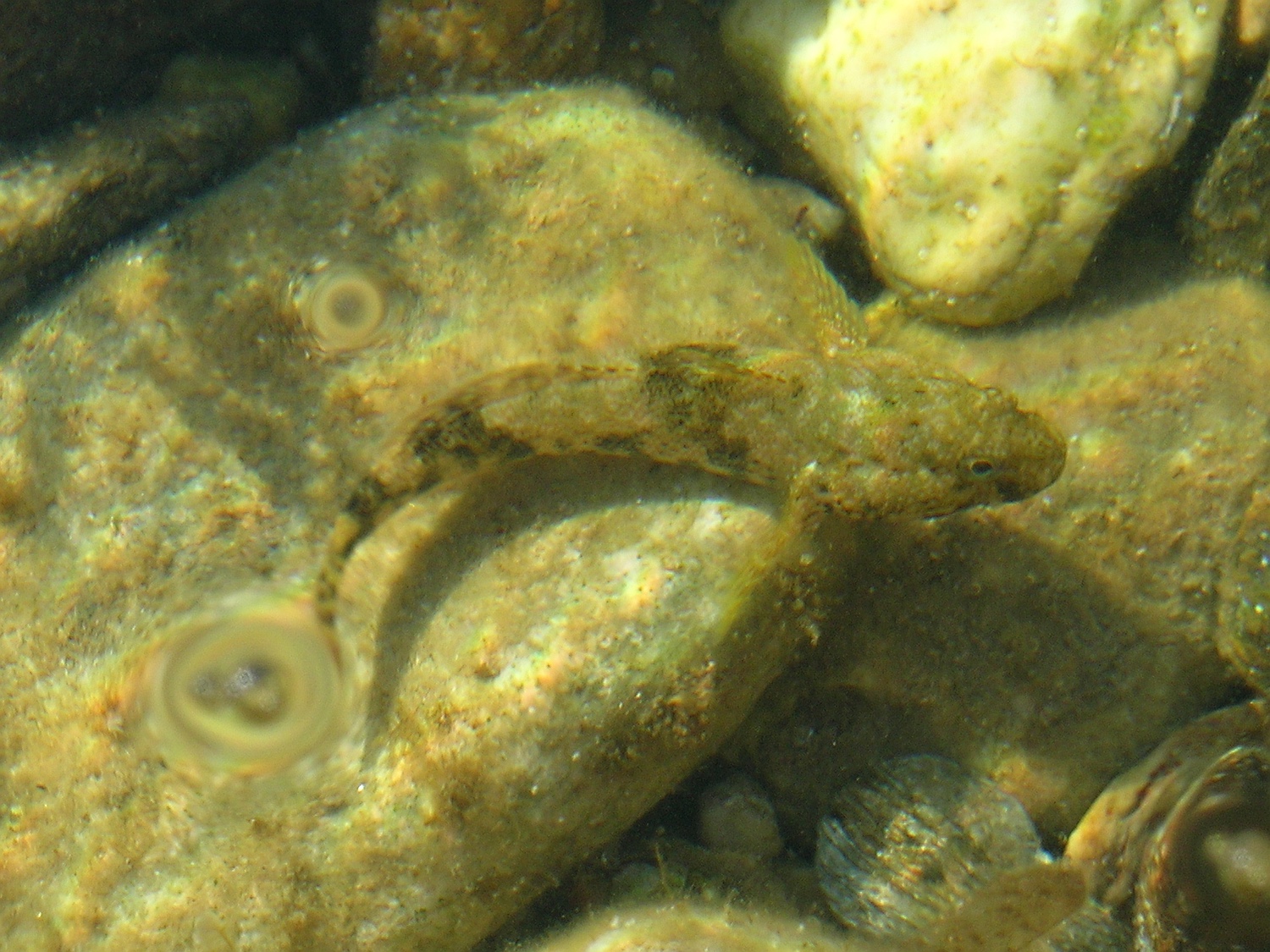
The Rock goby is well camouflaged with its brownish colouring.
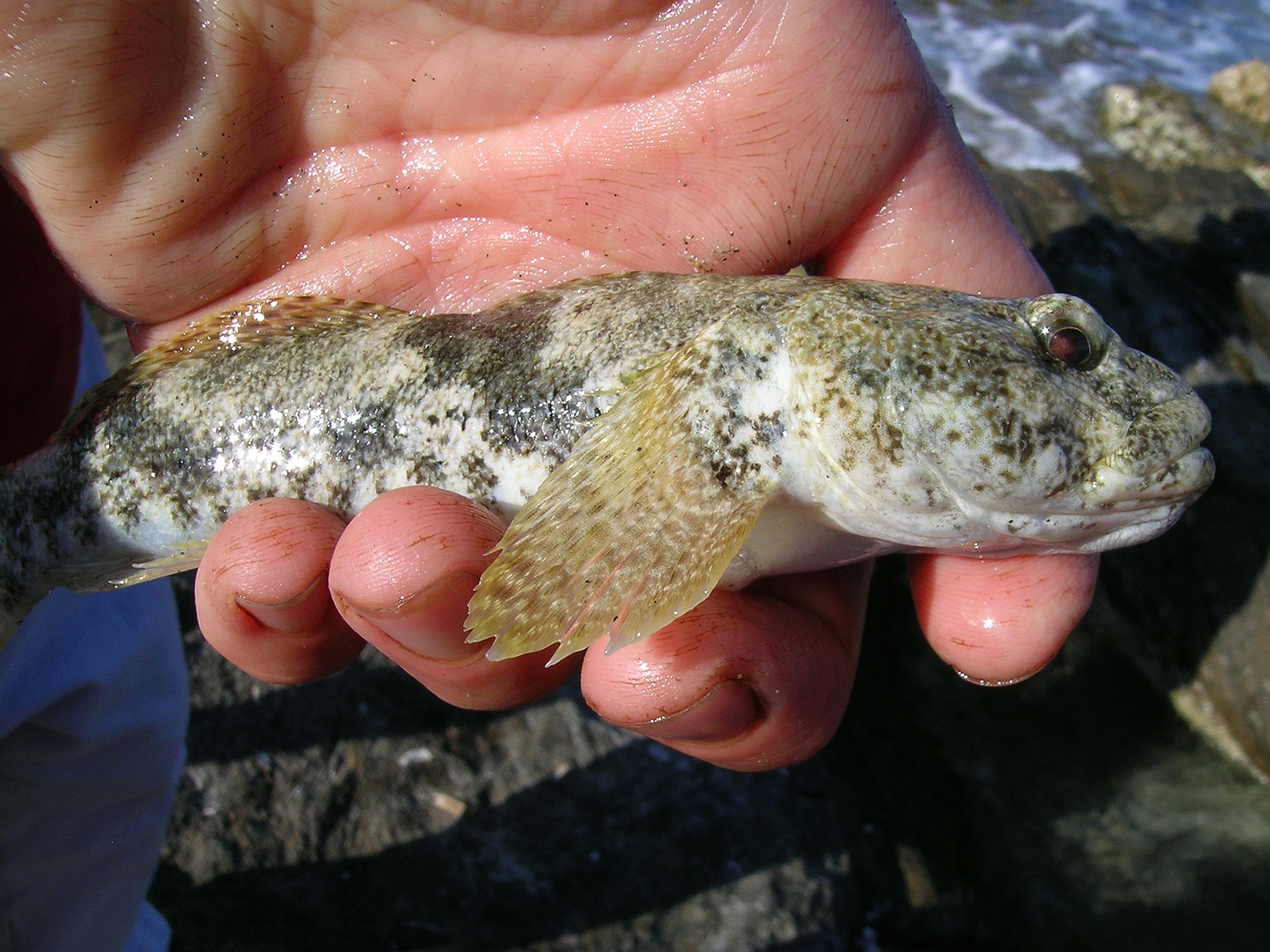
It has a compact shape with a thick, rounded head.
Bucchich’s goby, Gobius bucchichi ?, Steindachner
The goby pictured here, with its spotted colouring, most closely resembles Bucchich’s goby, which often lives among the tentacles of the sea anemone Anemone sulcata; however, its identification is uncertain. Gobies are not uncommon in our area, but they are not easy to spot and even more difficult to identify.
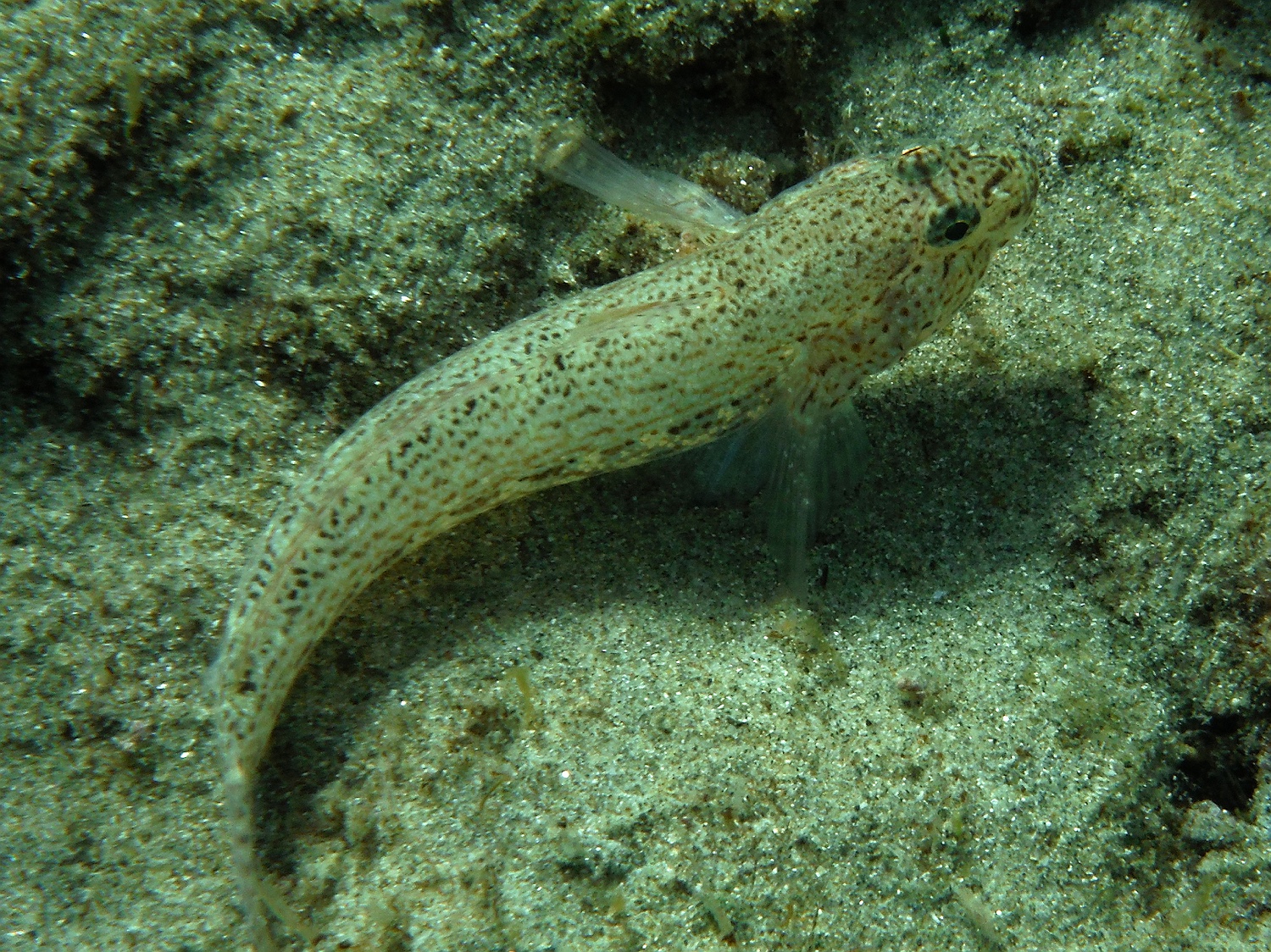
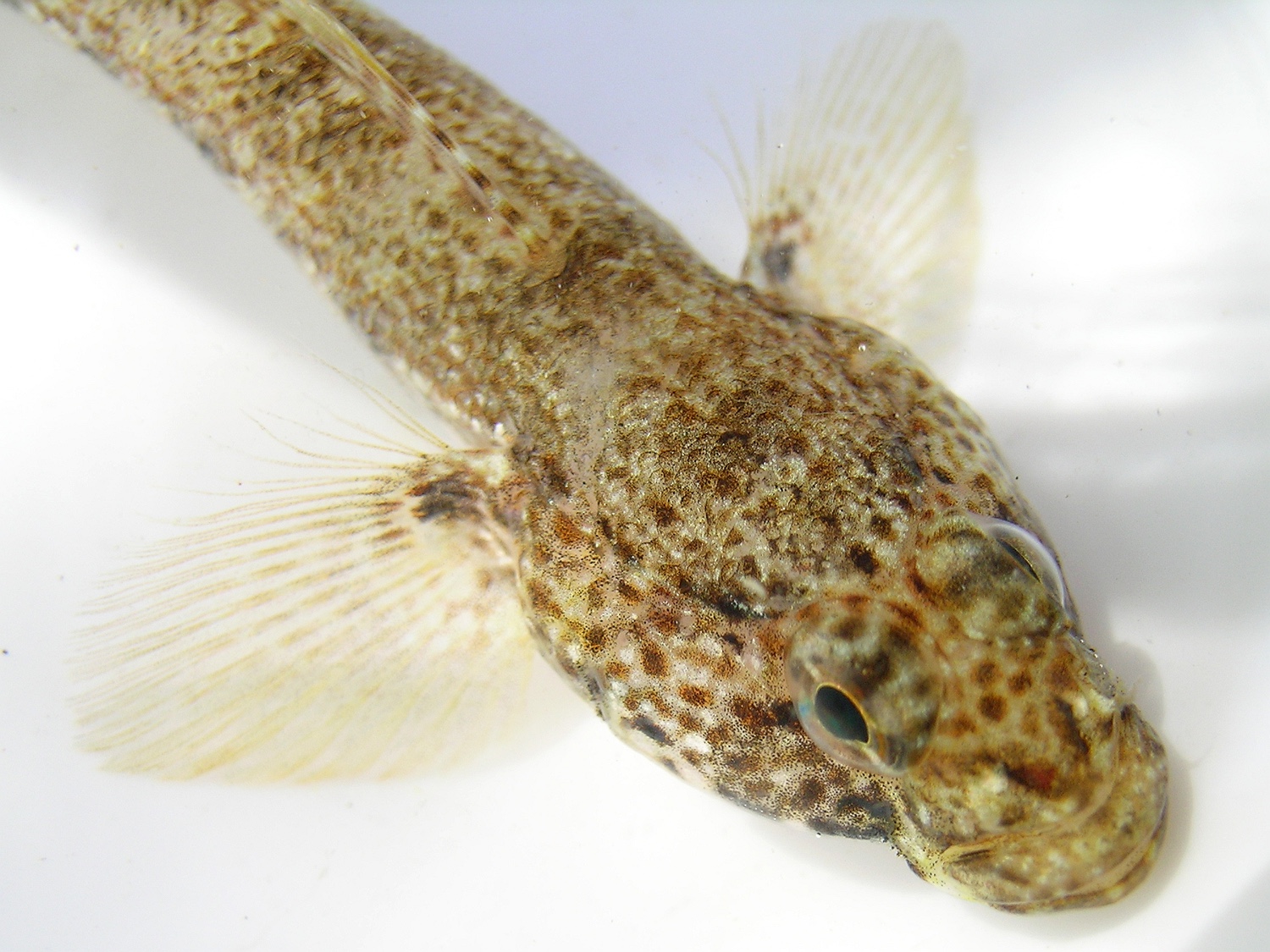
With its colouring, this goby is well adapted to the sandy sea bed.
Common goby, Pomatoschistus microps, Krøyer
The Common goby lives in shallow water on sandy bottoms. Its colouring is perfectly adapted to the sandy substrate. It often burrows into the sand. It is very common, but shy and inconspicuous.
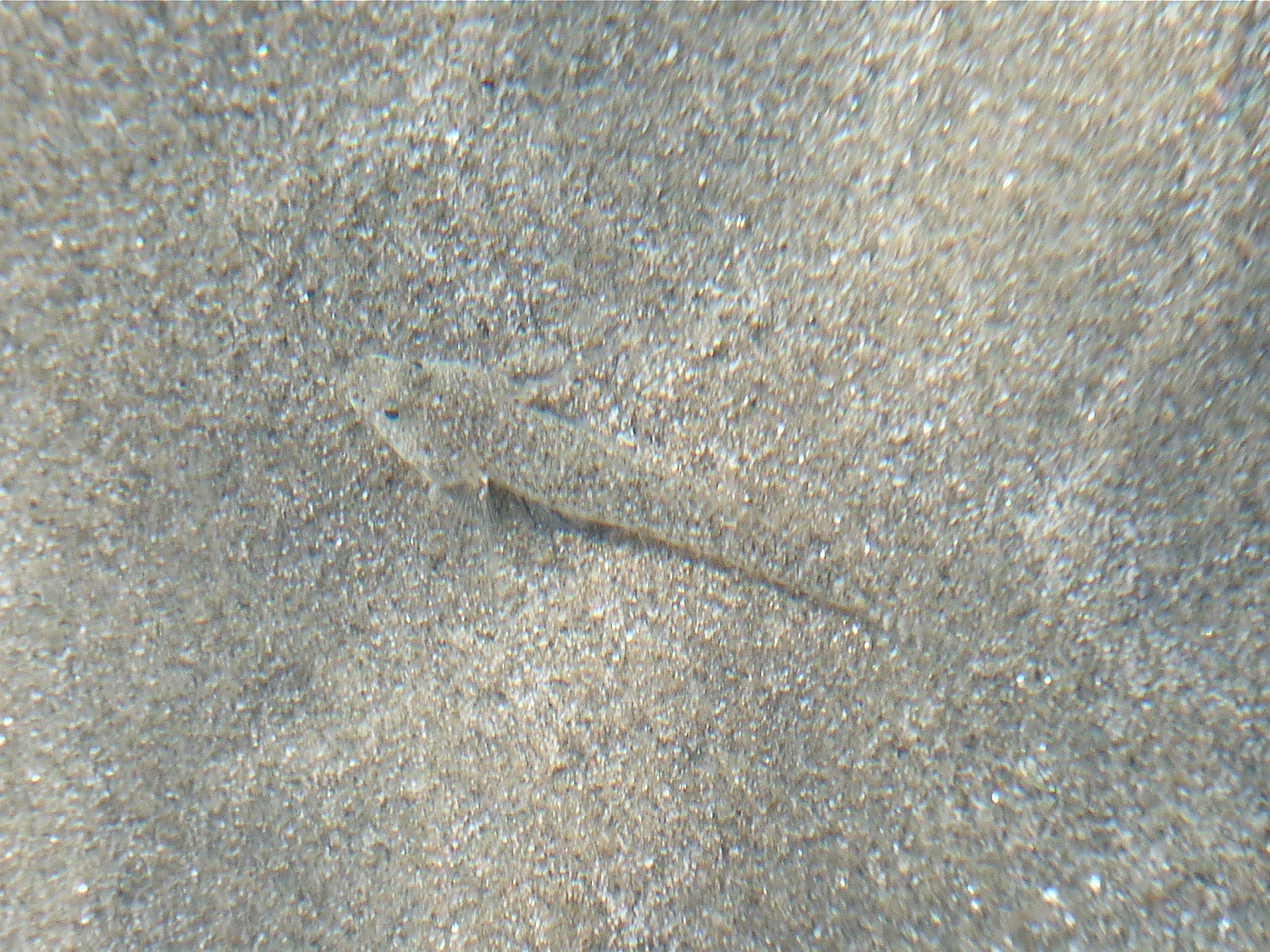
The Common goby is excellently camouflaged on the sandy bottom.

As with all fish that burrow into the sand, its eyes are located on the top of its head.
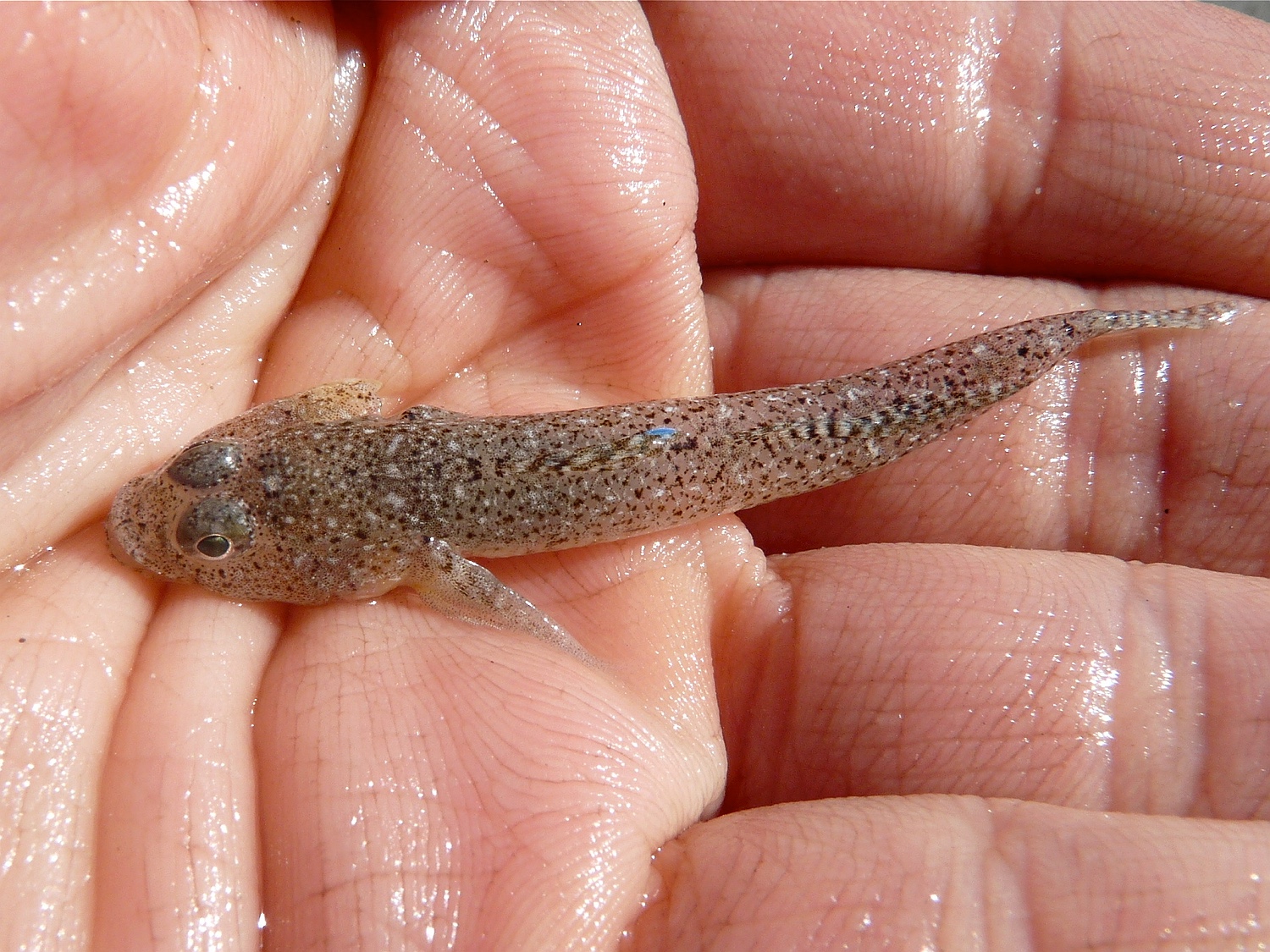
Here you can see the best identifying feature, a small bright blue spot on the dorsal fin.
continue: The Loggerhead sea turtle
Comments are closed.