
Krebse
Die Krebse gehören zum Stamm der Gliederfüßer, der die Kieferklauenträger (Chelicerata) mit den Pfeilschwanzkrebsen und den Spinnentieren (Spinnen, Skorpione und Milben) umfasst sowie die Tausendfüßer, die Krebstiere und die Sechsfüßer (Insekten, Springschwänze u.a.). Der Unterstamm der Krebstiere umfasst die Höheren Krebse, die Kiemenfüßer (z.B. Salinenkrebs), die muschelähnlichen Muschelkrebse und die “Maxillopoda”, zu denen die Entenmuscheln und die Seepocken gerechnet werden. Die Klasse der Höheren Krebse (Malacostraca) ist sehr vielgestaltig. Sie umfasst nicht nur die allgemein bekannten Arten wie Hummer, Taschenkrebse, Garnelen und Krabben, sondern auch Organismen, die ganz anders aussehen, so zum Beispiel die winzigen Wasserflöhe sowie zahlreiche weitere nur wenige Millimeter große Arten, die im Sandboden, auf den Meerespflanzen oder freischwimmend im Plankton leben. Einige Arten besitzen gar einen ganz einfachen gebauten, stark reduzierten Körper und leben parasitisch auf oder in Korallen, Seesternen, Fischen oder anderen Krebsen. Auch die Asseln gehören zu den Höheren Krebsen. Insgesamt sind etwa 28.000 Arten an Höheren Krebsen bekannt.
Auf Naxos können eine ganze Reihe von Krebsarten beobachtet werden, von denen einige in der Spritzwasser- oder der Gezeitenzone leben und andere auf dem Meeresboden. Manche Arten sind lebend schwer zu entdecken, weil sie sich beispielsweise tagsüber im Sand eingraben oder unter Steinen oder in Algenbeständen verstecken, man kann aber gelegentlich ihre Panzer am Strand finden.
Charakteristische Merkmale der Krebstiere sind der segmentierte Körper (mit mehr oder weniger gleichgestalteten Segmenten z.B. noch bei den Asseln, wärend bei den meisten Krebsen die Segmente deutlich unterschiedlich gestaltet sind), die gegliederten Gliedmaßen (Beine, Mundwerkzeuge, Antennen), das Außenskelett und die Larvenform (Nauplius-Larve). Ein Unterschied zu den Insekten sind die acht Beinpaare, die doppelten Antennen und die Kiemen.
Hier kann man für die wichtigeren Gruppen direkt zum entsprechenden Abschnitt springen (zurück kommt man durch Zurückblättern):
Großkrebse – Einsiedlerkrebse – Krabben (einschl. Taschenkrebs und Seespinnen) – Garnelen – Asseln – Flohkrebse – “Gespensterkrebs”
1. Großkrebse (Astacidae)
Die Großkrebse umfassen große Krebsarten, die einen langgestreckten Körper mit ausgestrecktem Abdomen besitzen. Auf Naxos kommen mehrere Großkrebs-Arten vor, die allerdings größtenteils in tieferem Wasser leben, so dass man sie nur selten im Meer zu Gesicht bekommt.
Großer Bärenkrebs, Scyllarides latus
Beim Schnorcheln auf Naxos kann man gelegentlich den Großen Bärenkrebs (Scyllarides latus) antreffen. Die Bärenkrebse haben einen kräftigen Körper und besitzen keine Scheren, sondern ihre Antennen sind zu kurzen, flachen, schaufelartigen Fortsätzen umgebildet, mit denen sie im Sand nach Beute graben. Sie ernähren sich vor allem von Muscheln. Der Große Bärenkrebs wird bis zu 45 cm lang.
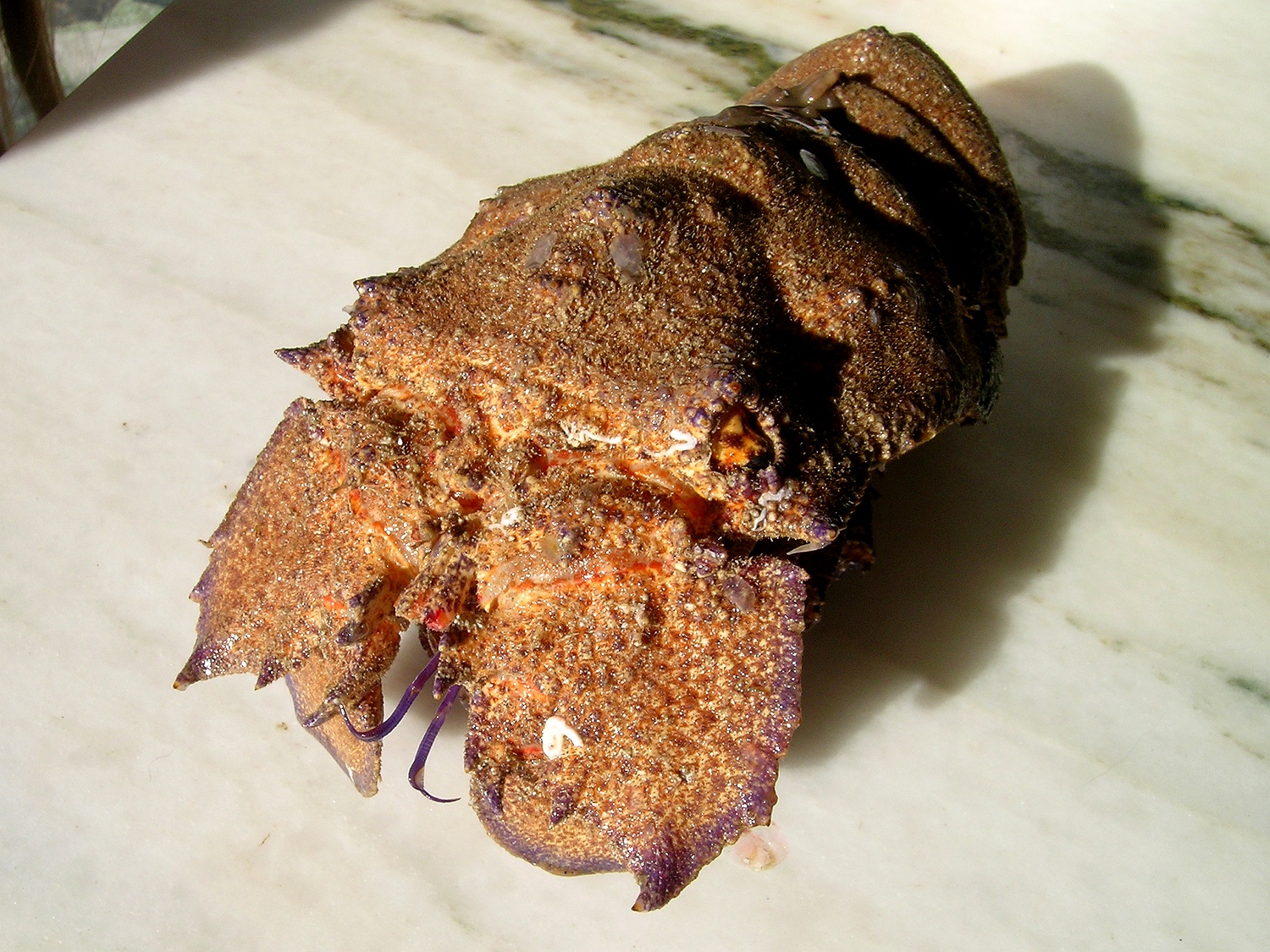
Der Große Bärenkrebs besitzt flache, schaufelartige Fortsätze am Kopf.
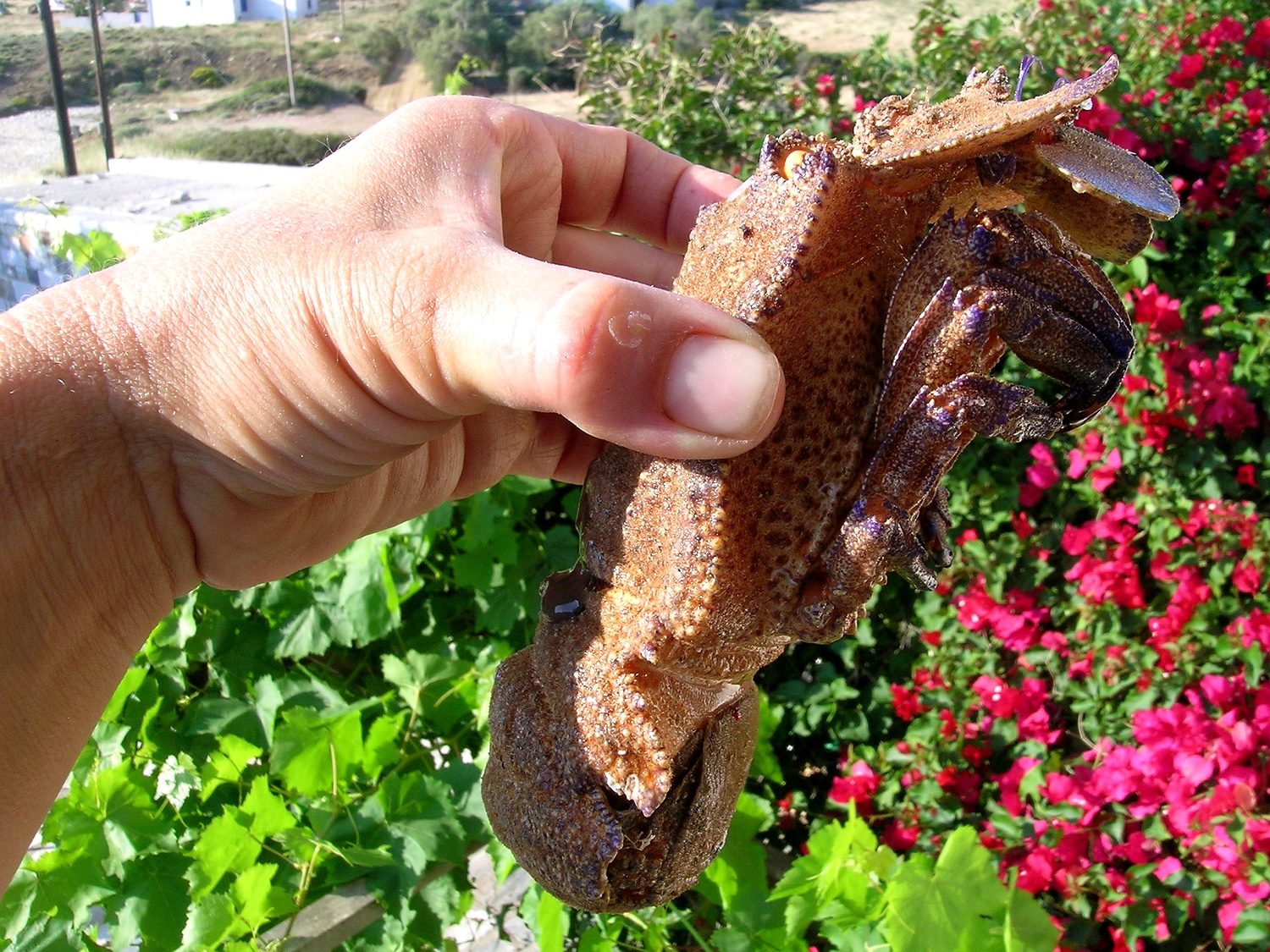
Er wird bis zu 45 cm groß; sein Fleisch wird sehr geschätzt.
Hummer, Homarus gammarus
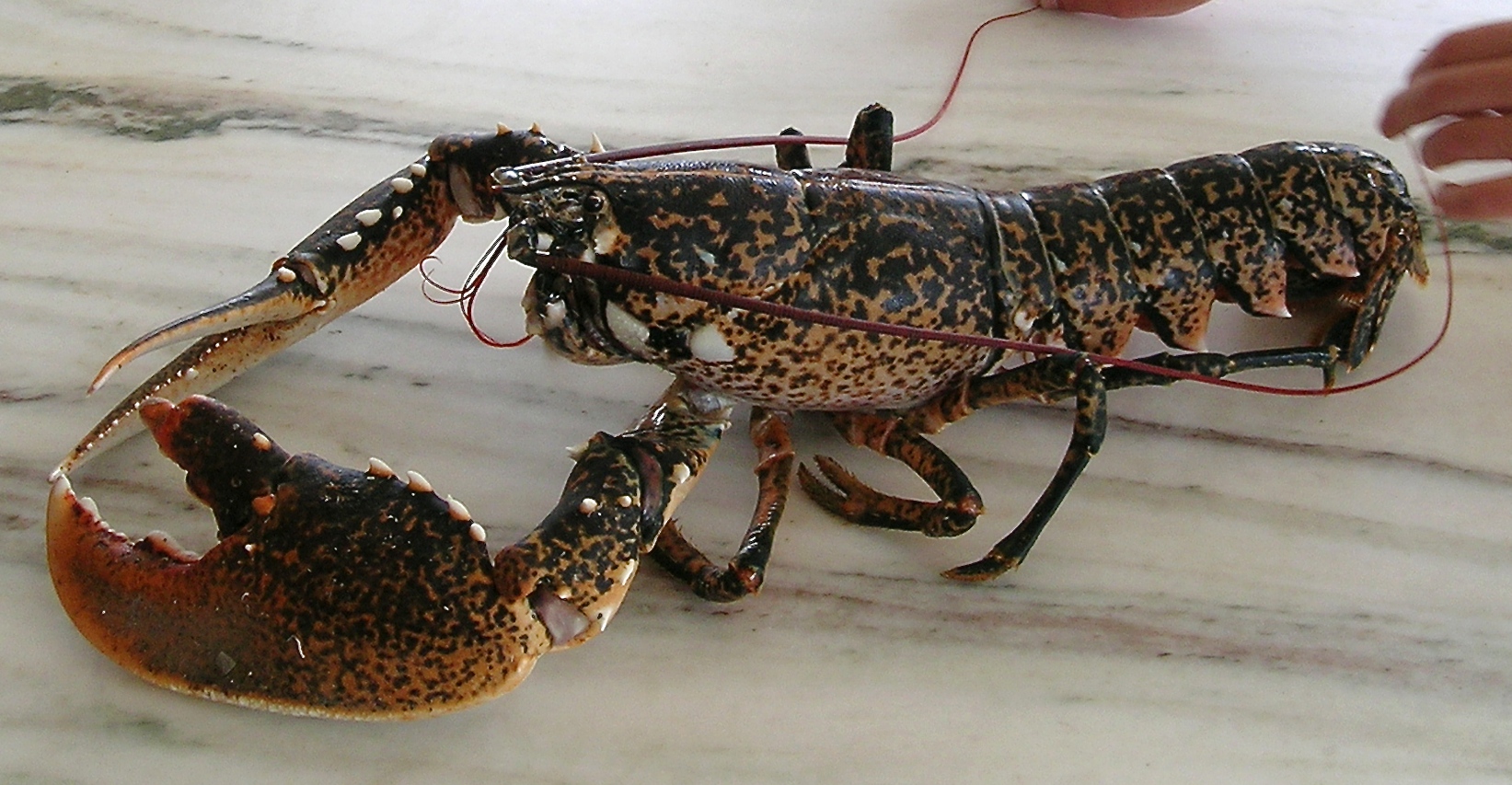
Der größte europäische Krebs ist der Hummer, den man beim Schnorcheln nur selten sehen kann, weil er in größeren Meerestiefen vorkommt, der aber in unserer Gegend häufig von den Fischerbooten mit Netzen gefischt wird. Der Hummer erreicht eine Länge von bis zu 60 cm und über 10 kg Gewicht. Er besitzt sehr große und dicke, ungleiche Scheren; die größere benutzt er zum Zertrümmern seiner Beute (vor allem Muscheln) und die schlankere zum Zerteilen. Man soll sich vor den Scheren hüten: Sie können durchaus einen Finger abschneiden! Hummer kommen auf Felsböden in bis zu 50 Metern Tiefe vor. Die Weibchen tragen die Eier fast ein Jahr lang mit sich herum.
Europäische Languste, Palinurus elephas
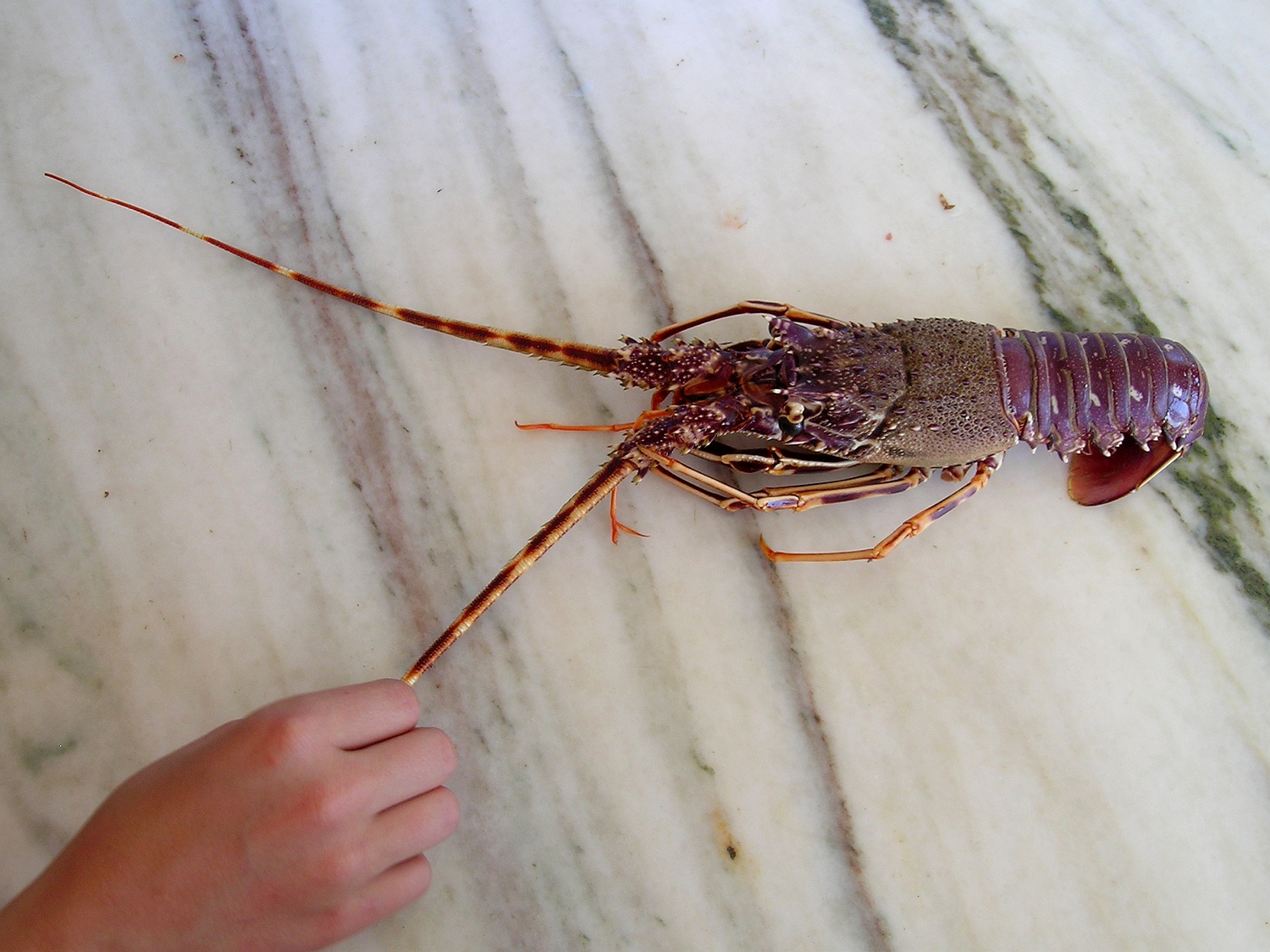
Die Europäische Languste ist dem Hummer ähnlich, besitzt jedoch keine Scheren. Auffällig sind die sehr langen, kräftigen Antennen. Die Languste wird bis zu 50 cm lang. Sie kommt vor allem ab etwa 50 Metern Tiefe vor und lebt wie der Hummer auf Felsböden, wo sie sich tagsüber meist in Höhlen versteckt. Sie ernährt sich wie die meisten Krebse sowohl von Algen als auch von diversen Invertebraten (Würmer, Mollusken, Stachelhäuter…). Bei Gefahr kann sie durch ein schnelles Schlagen des Hinterleibs davonschießen. Beim Schnorcheln begegnet man Langusten ebenfalls nur selten, auch sie werden aber gefischt.
2. Mittelkrebse (Anomura)
Zu den Mittelkrebsen gehören kleinere, langgstreckte Krebsarten, so vor allem die Einsiedlerkrebse. Auf Naxos sind Einsiedlerkrebse sehr häufig.
Felsküsteneinsiedler, Clibanarius erythropus
Sehr häufig sind auf Naxos auch die Einsiedlerkrebse, wie zum Beispiel der Felsküsteneinsiedler (Clibanarius erythropus). Die Einsiedlerkrebse leben ständig in Schneckenhäusern und haben dementsprechend einen weichen, ungeschützten Hinterkörper. Wenn sie wachsen, so dass ihr Haus ihnen zu eng wird, suchen sie sich eine neue leere Schnecke, in die sie umziehen. Der Felsküsteneinsiedler hat kleine, gleich große Scheren und rote Beine.
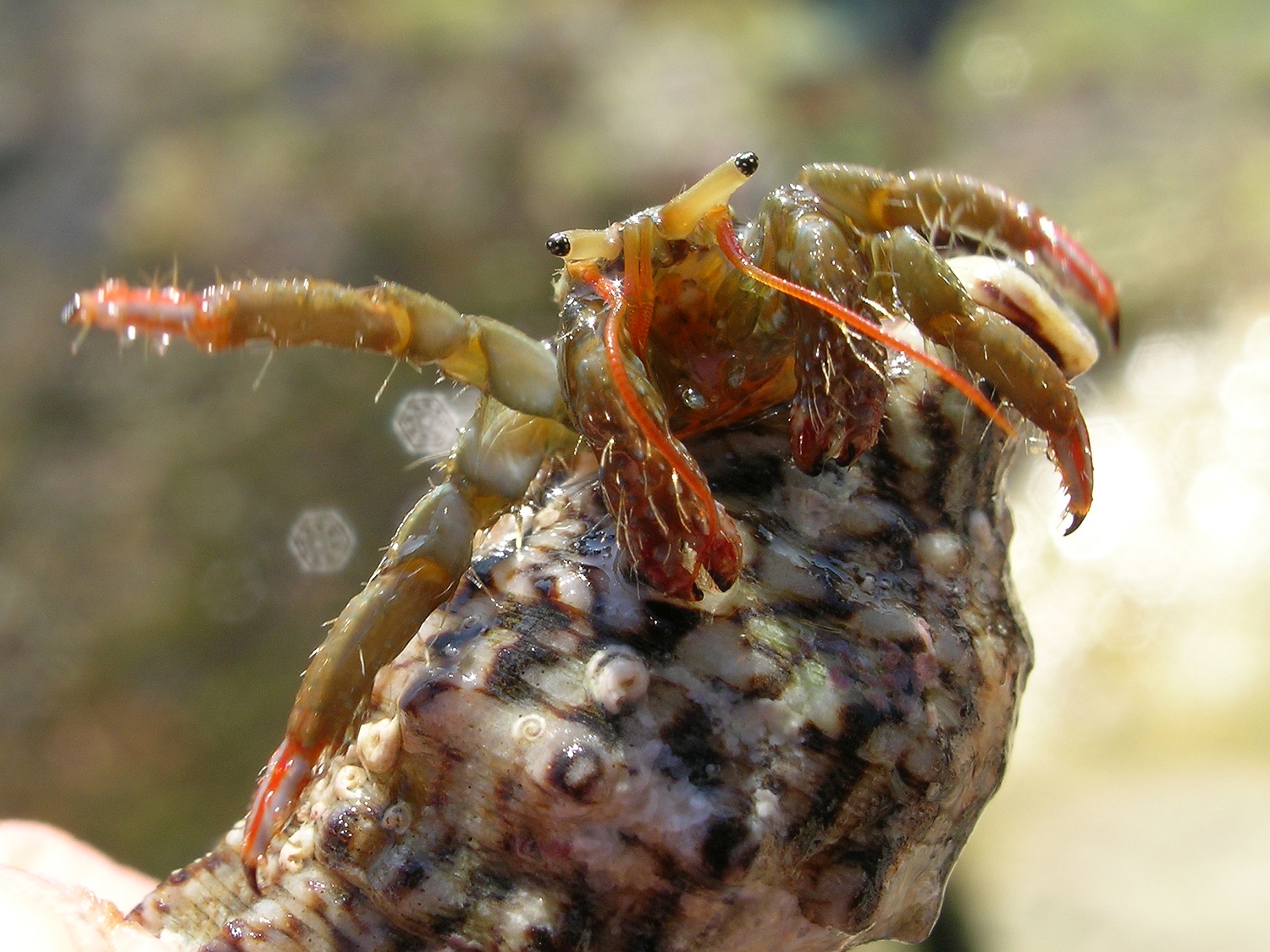
Der Felsküsteneinsiedler ist bei uns sehr häufig. Fast alle Schneckenhäuser, die man am Strand findet, sind von einem Einsiedler bewohnt.
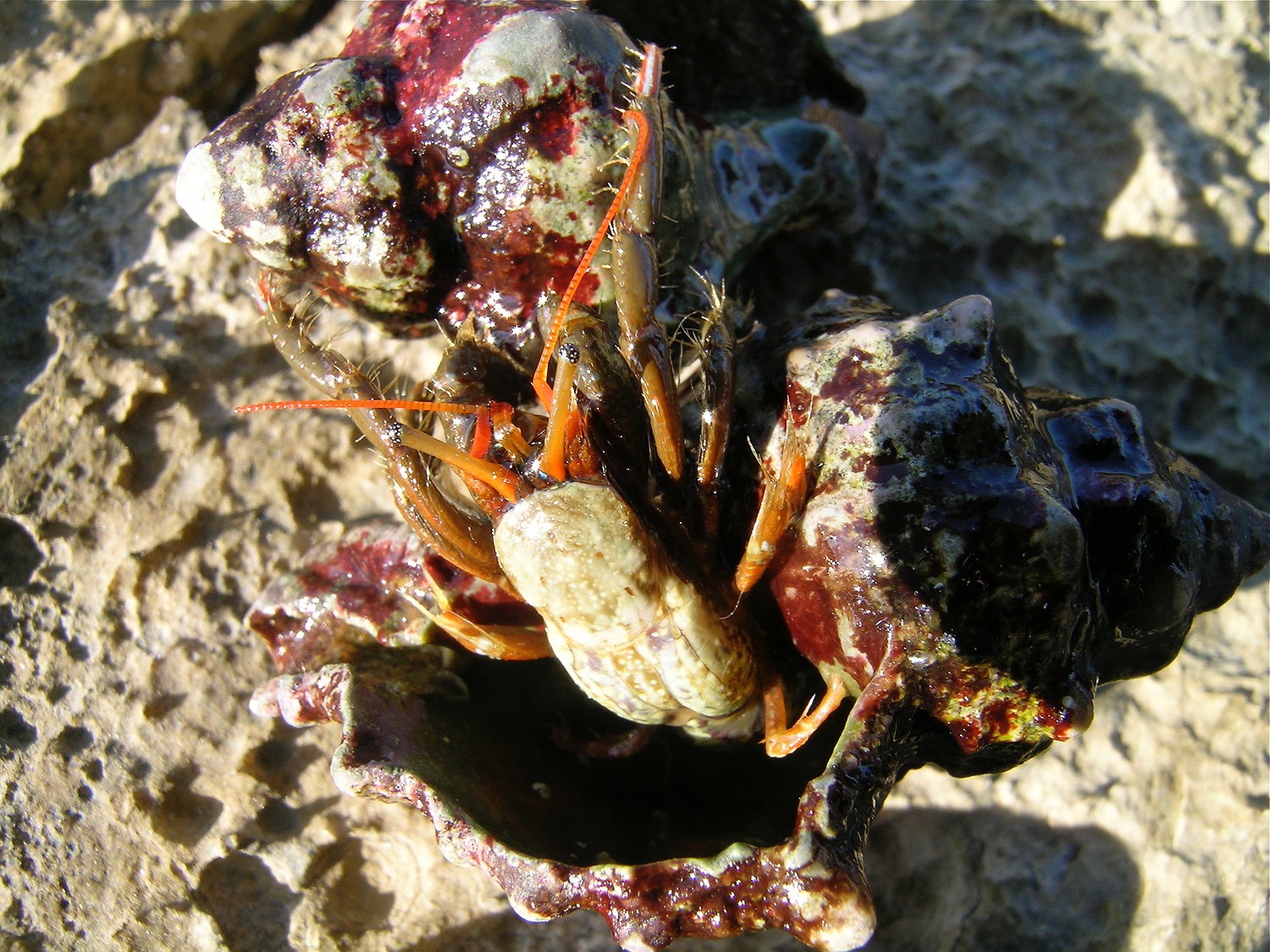
Typisch sind die rötlichen Beine.
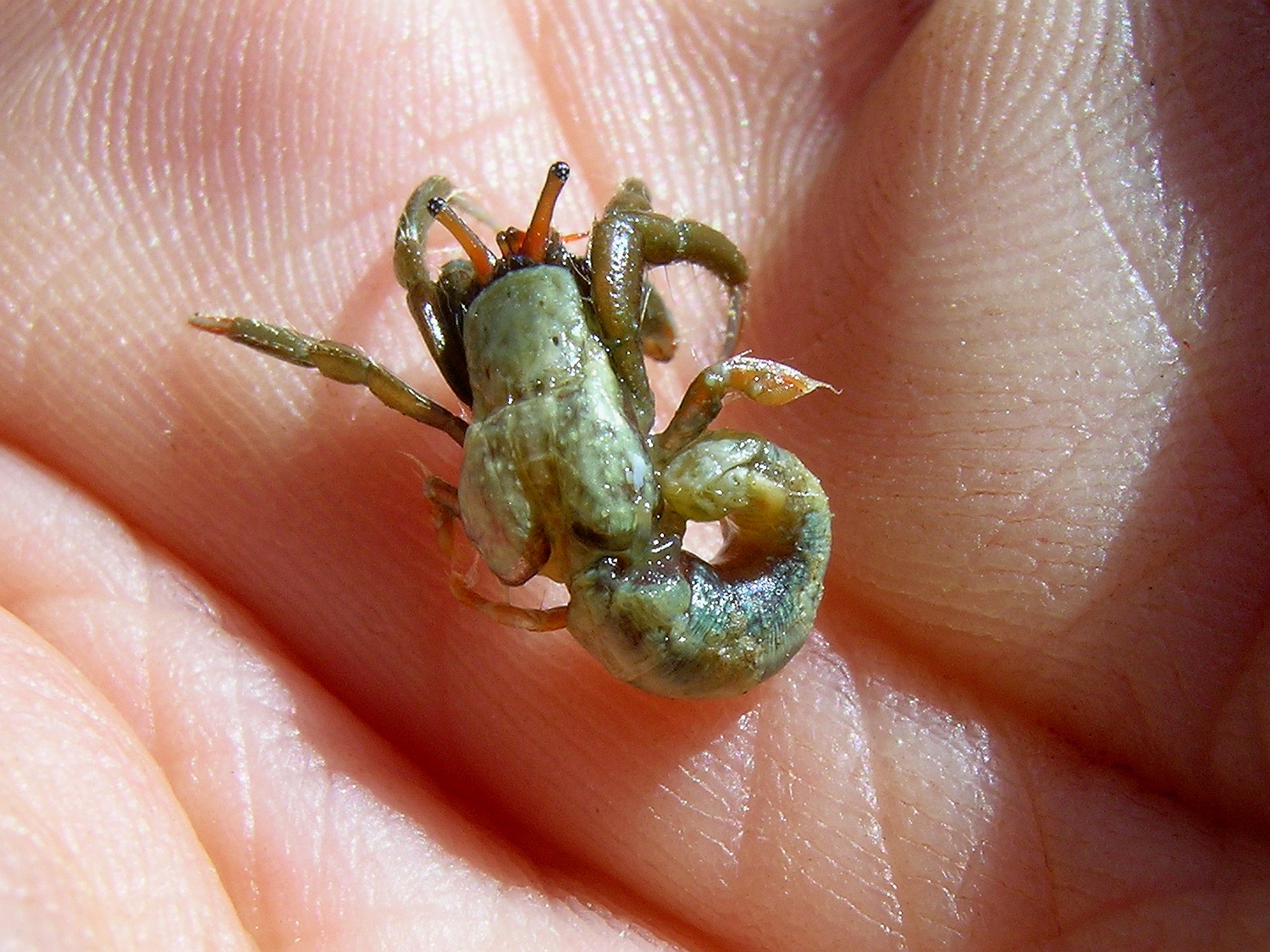
Dieser Felsküsteneinsiedler ist aus seinem Schneckenhaus herausgekrochen; man sieht den reduzierten und gewundenen Hinterkörper.
Diogenes pugilator
Der Einsiedlerkrebs Diogenes pugilator gehört zu den “Linkshändern”, d.h. die linke Schere ist größer. Er ist bei uns selten.
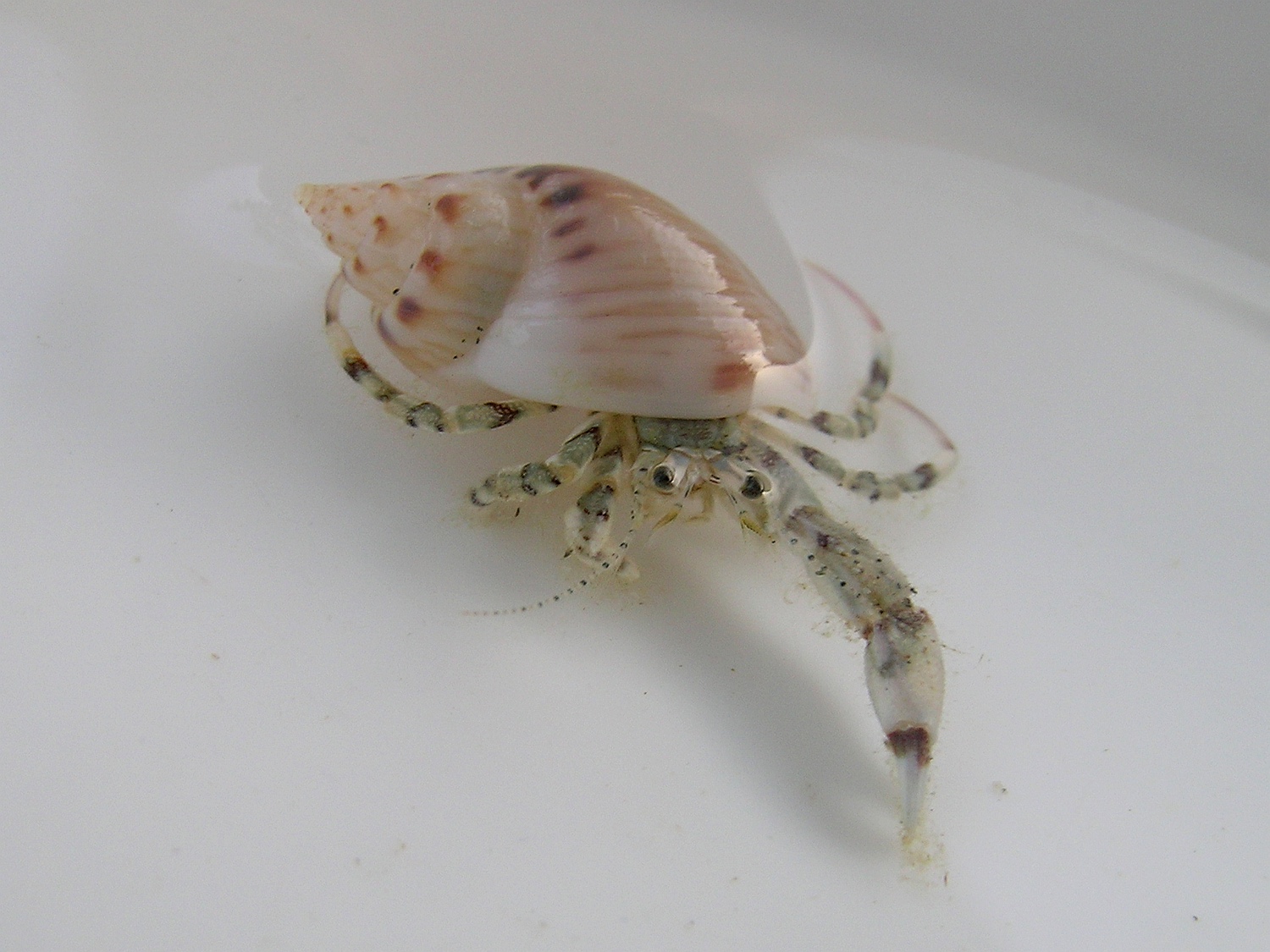
Diogenes pugilator ist eine weitere Art Einsiedlerkrebs mit schwarz-weißen Beinen und einer größeren linken Schere; wir haben ihn auf Sandboden in etwa 2 Meter tiefem Wasser gefunden.
3. Krabben (Brachyura)
Als Krabben bezeichnet man Krebsarten mit einem rundlichen Kopfbrustpanzer (Rückenschild), deren Abdomen unter diesen untergeschlagen ist. Auf Naxos kommen zahlreiche Krabben-Arten vor, von denen allerdings die meisten selten zu sehen sind, weil sie im Sand vergraben leben oder sich in den Algen verstecken.
Felsenkrabbe, Pachygrapsus marmoratus
Eine der häufigsten Krabbenarten auf Naxos ist die Felsenkrabbe mit einem bis 5 cm großen, fast viereckigen Rückenpanzer von dunkelgrauer, marmorierter Färbung. Sie lebt in Höhlen und Spalten um die Wasserlinie herum und kann mit ein bisschen Geduld leicht am Strand entdeckt werden. Sie ist ein Allesfresser und ernährt sich vor allem von kleinen Invertebraten und Detritus.
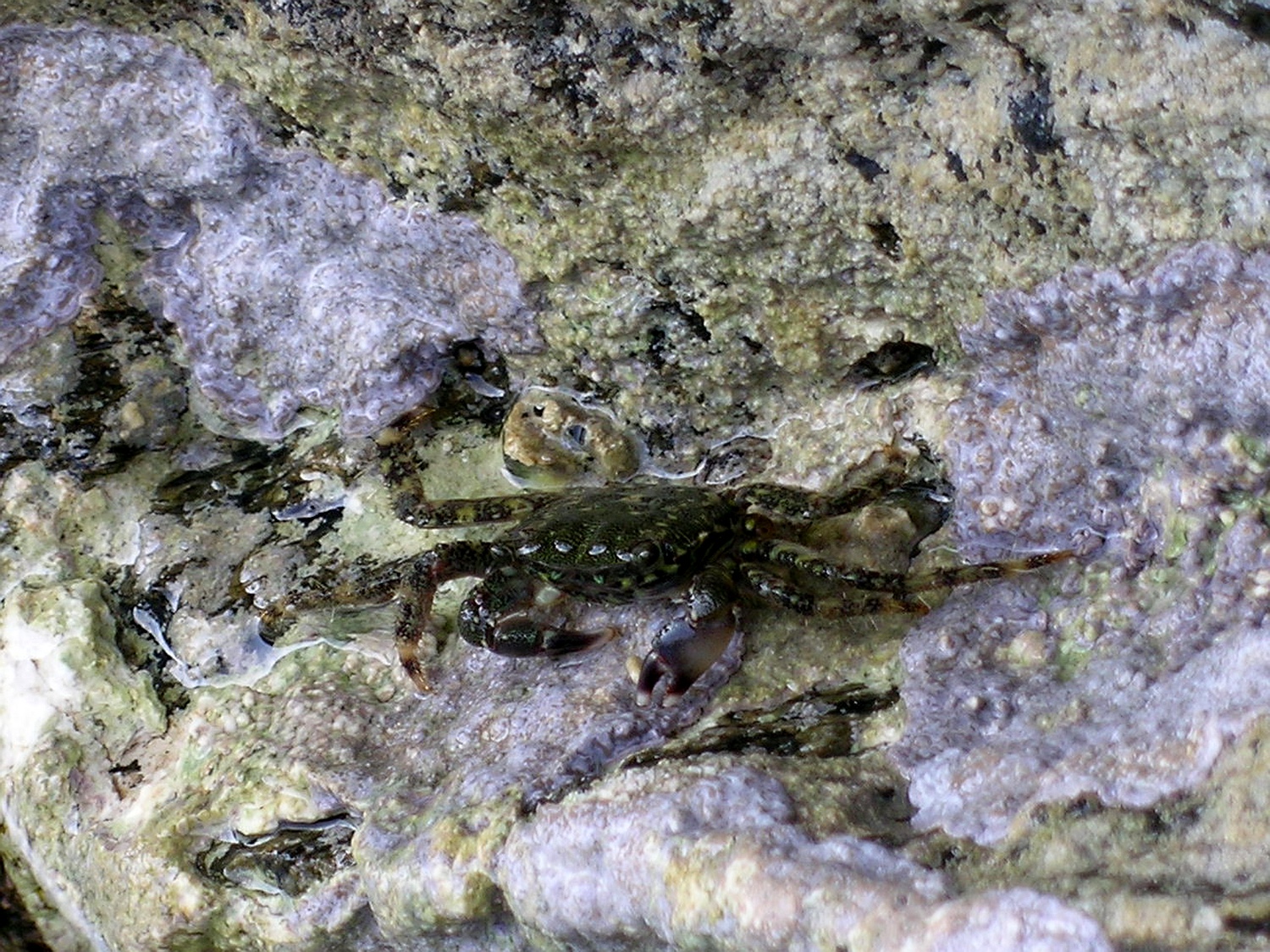
Die Felsenkrabbe ist an der Felsküste sehr häufig. Sie sitzt häufig genau an der Wasserlinie.
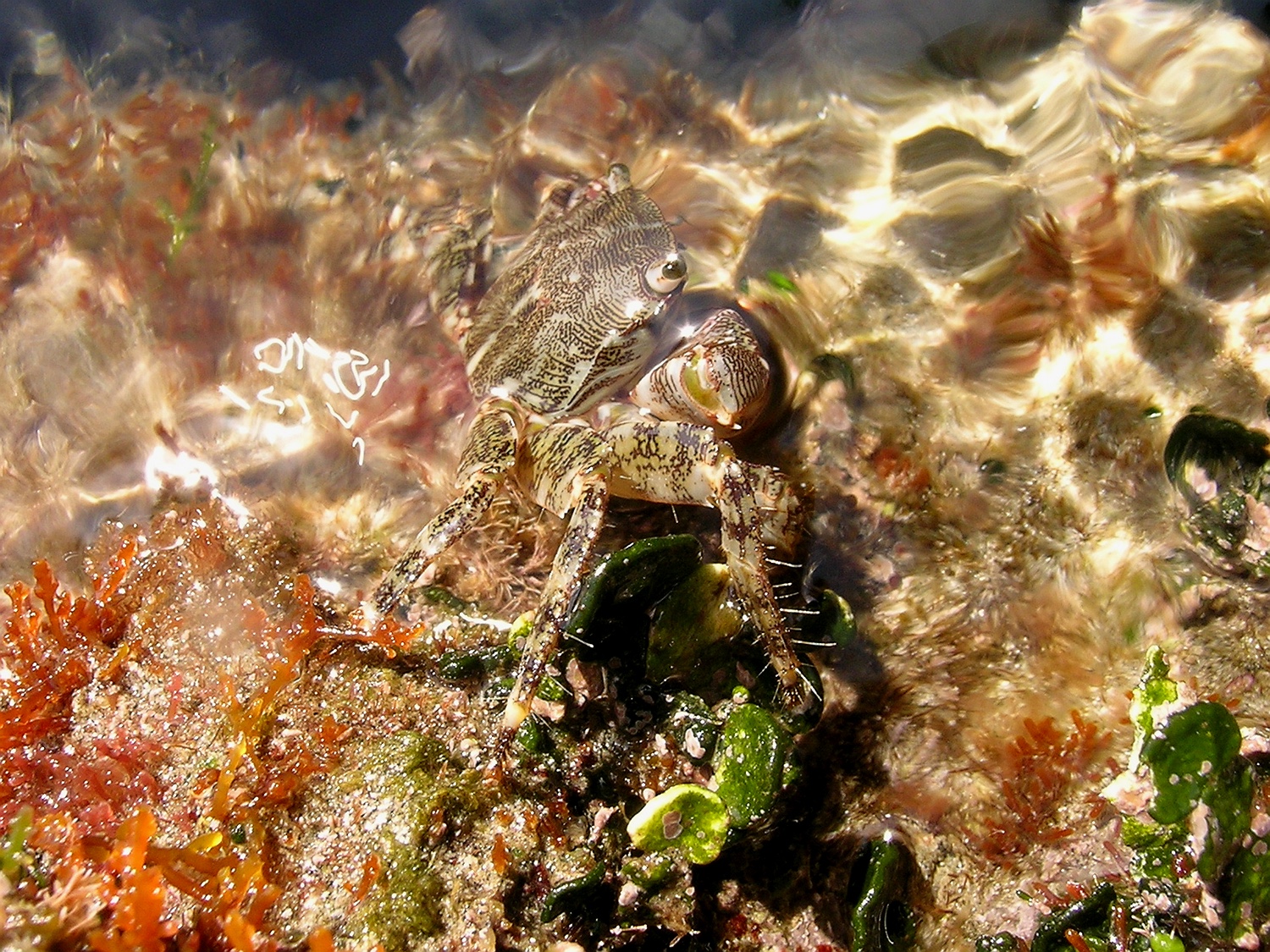
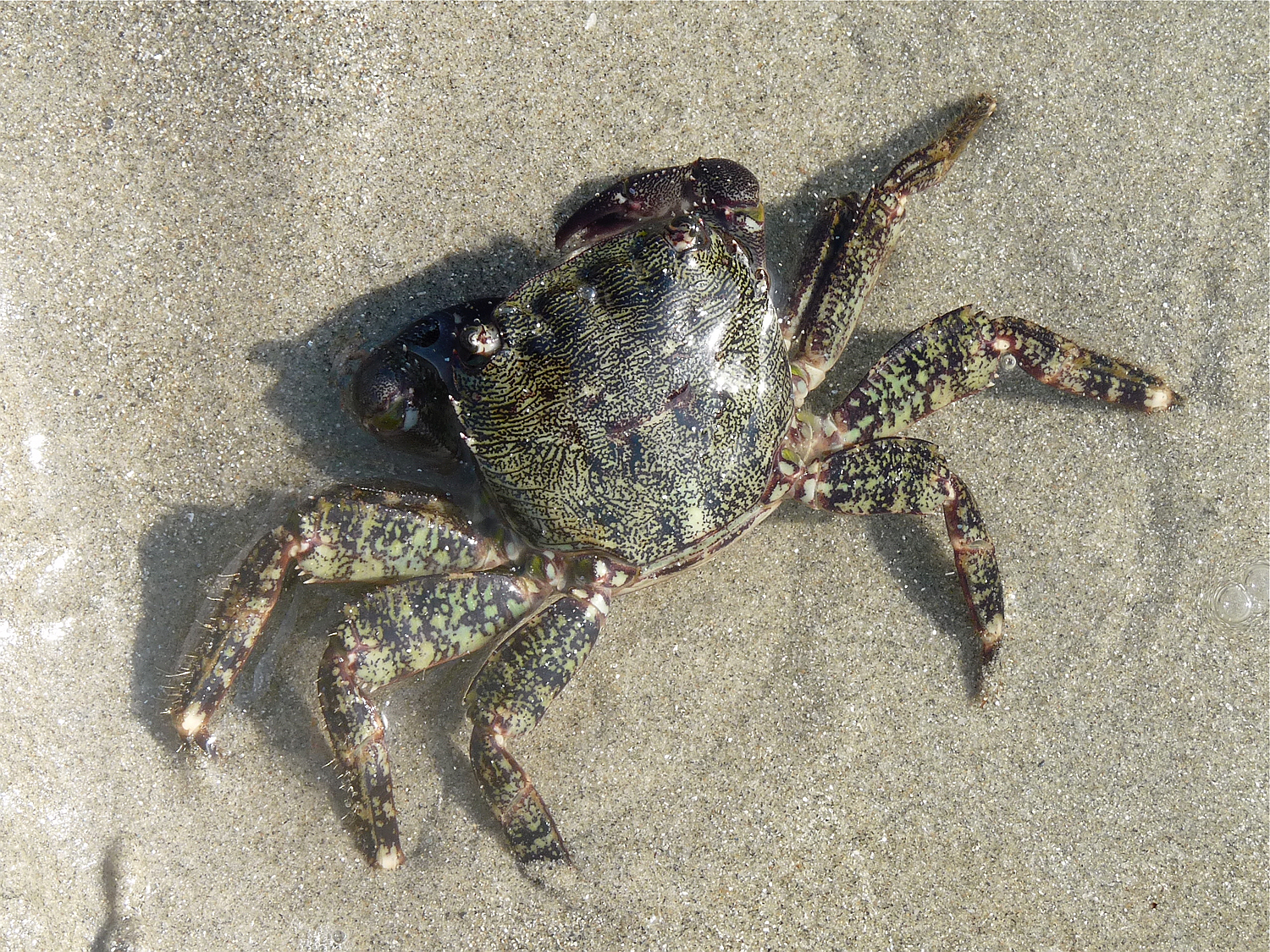
Sie besitzt einen unbehaarten, fast viereckigen, marmorierten Körper. Dieses Exemplar ist besonders groß.
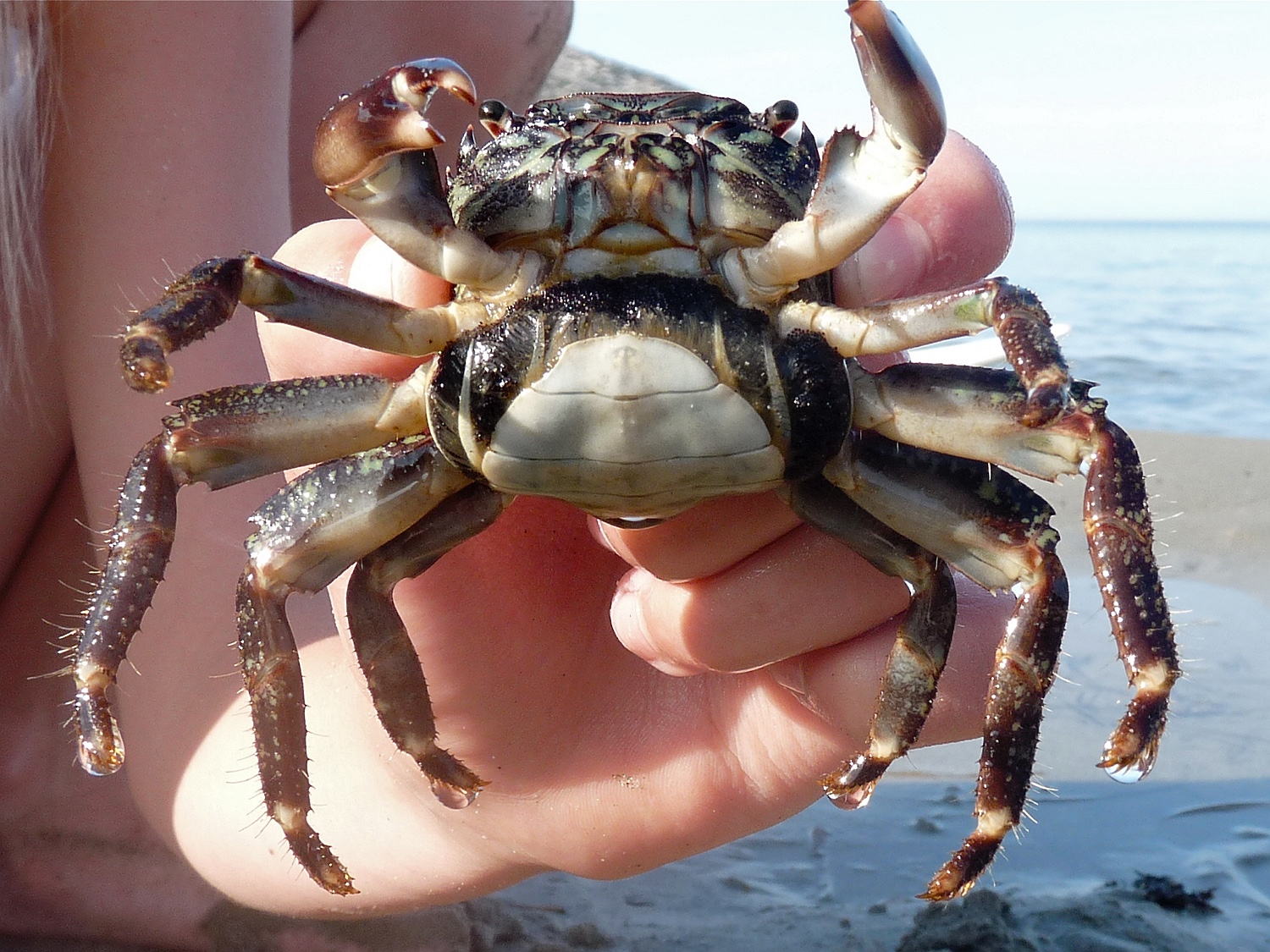
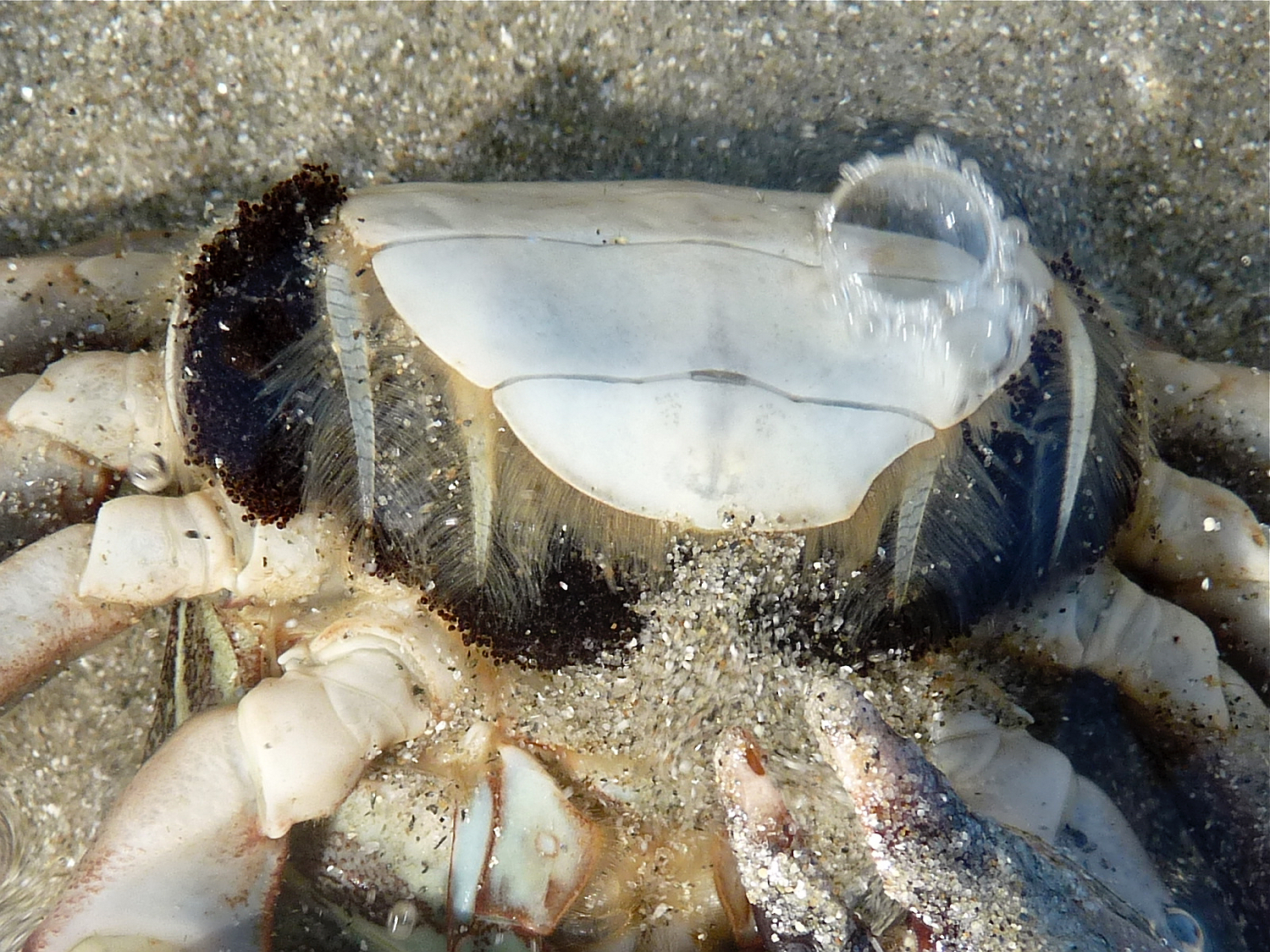
Das Hinterleibsende ist bei den Krabben unter den Körper geschlagen. Bei den Weibchen ist das Abdomen breiter als bei den Männchen. Unter ihm werden die zahlreichen Eier getragen.
Italienischer Taschenkrebs, Eriphia verrucosa
Seltener, aber ebenfalls regelmäßig kommt der bis 15 cm groß werdende Italienische Taschenkrebs vor. Diese Art hat einen rundlicheren, braunen Rückenpanzer mit Höckern, Haaren und Stacheln. Sie besitzt borstige Beine und kräftige Zangen. Der Italienische Taschenkrebs bewohnt das flache Wasser und die Gezeitenzone und ernährt sich von Aas, Mollusken, Würmern usw. Große Exemplare werden in den Mittelmeerländern oft gefangen und gekocht oder gegrillt.
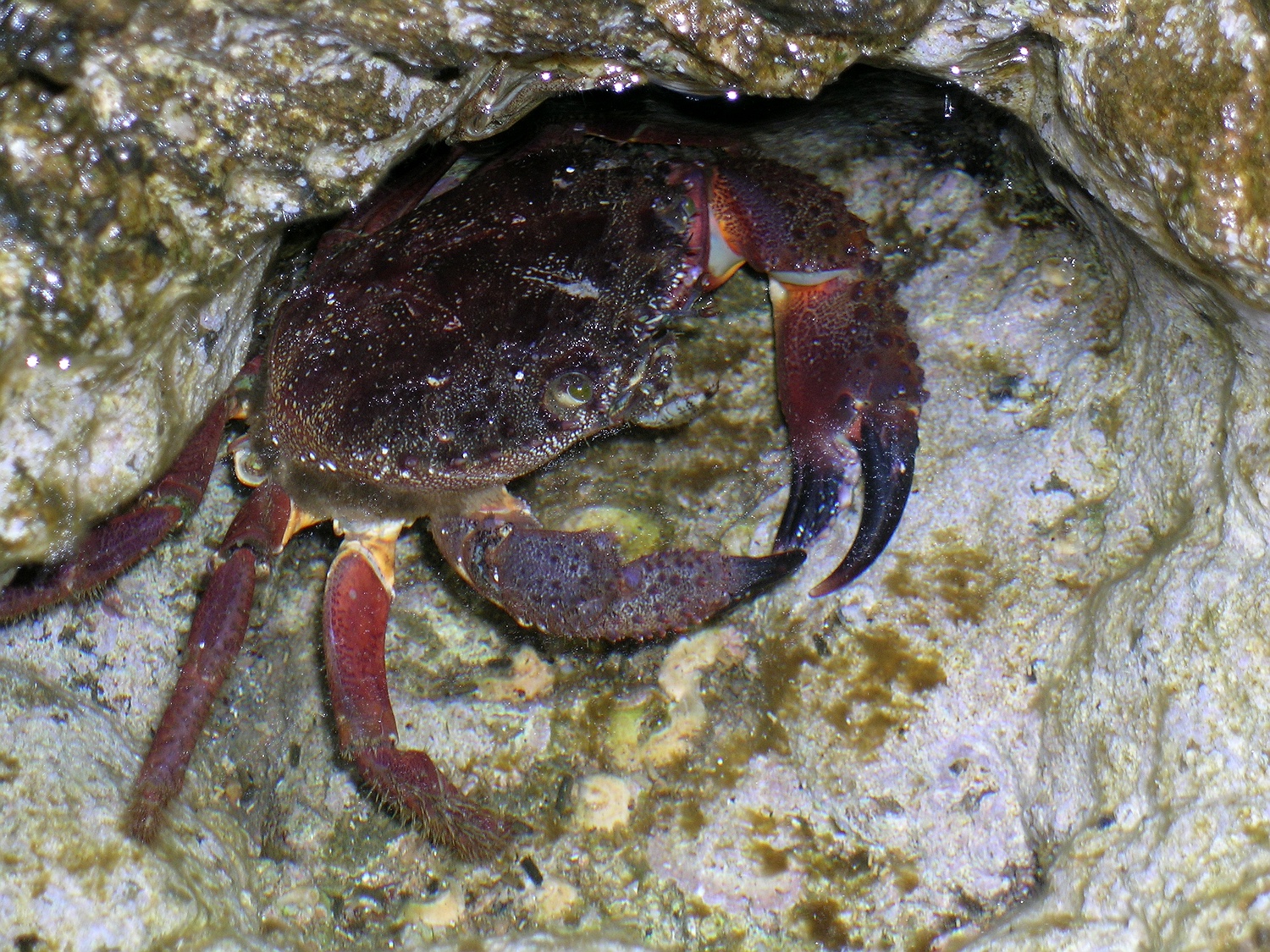
Der Italienische Taschenkrebs lebt im gleichen Biotop wie die Felsenkrabbe, wird aber deutlich größer und kräftiger.
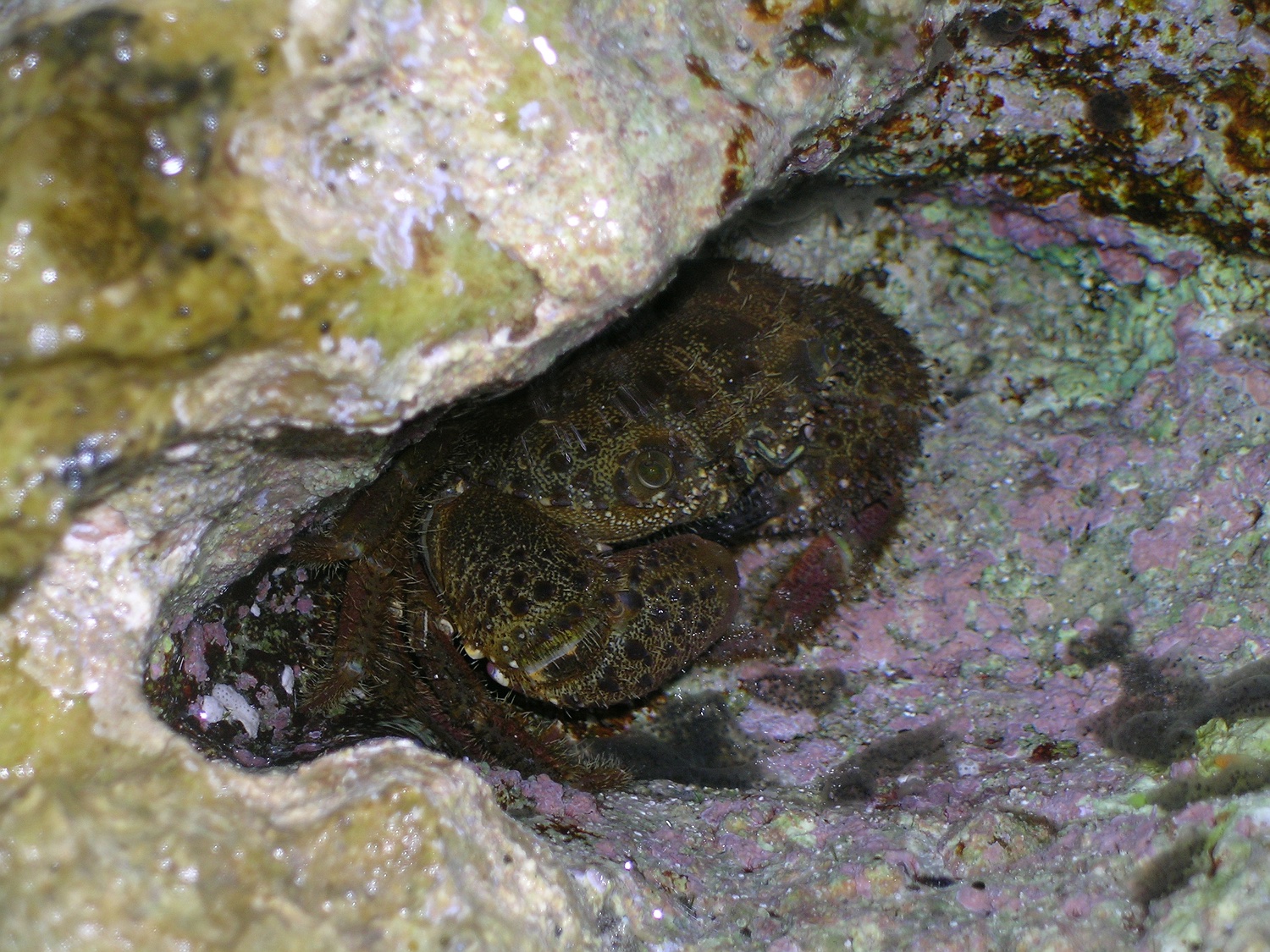
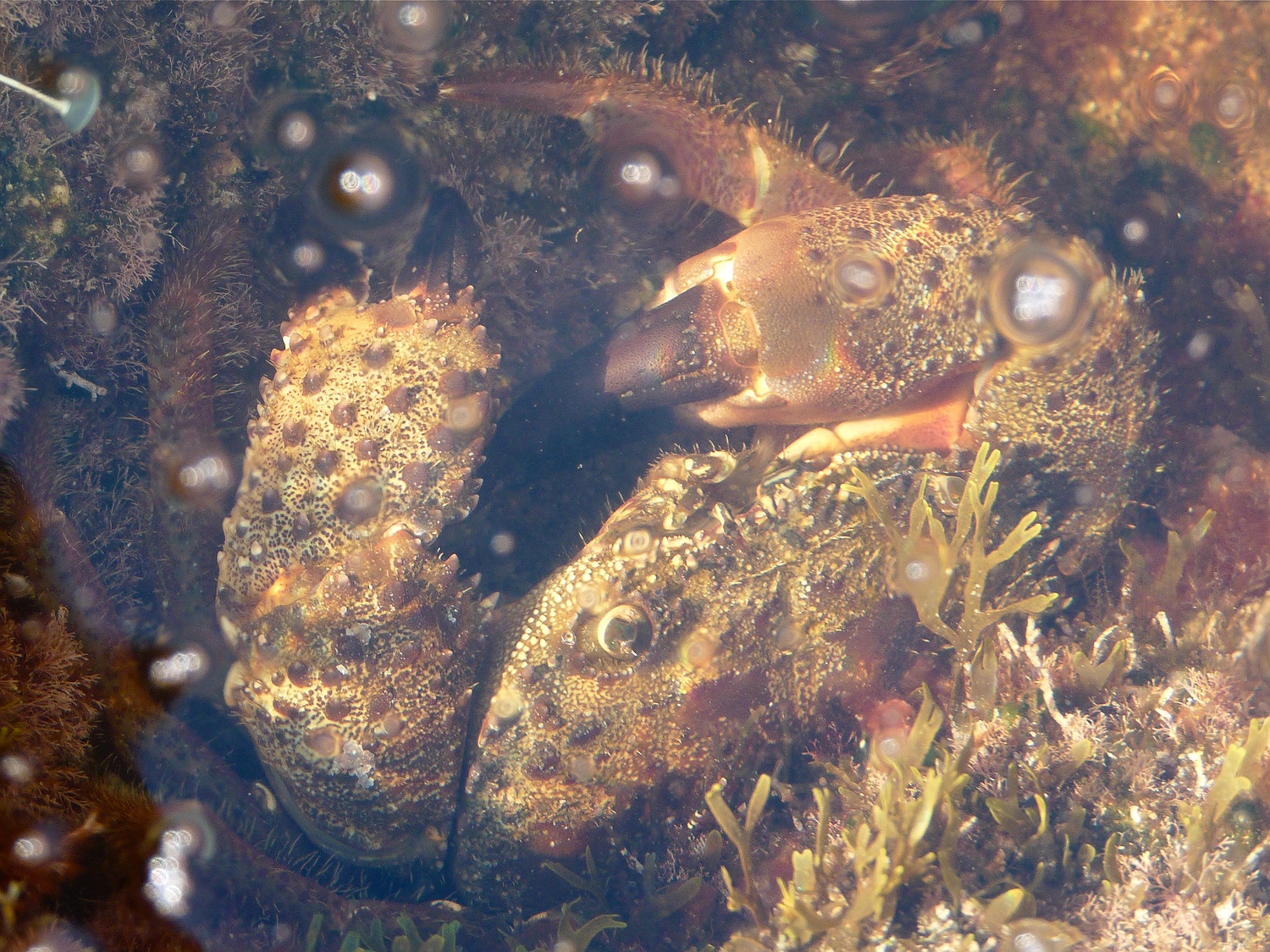
Meist sitzt er in Spalten und kleinen Höhlen.
Maskenkrabbe, Pisa tetraodon
Die Maskenkrabben (Gattung Pisa) sind lebendig schwer zu entdecken, man kann ihre Panzer aber gelegentlich am Strand finden. Die Maskenkrabben haben etwa dreickig geformte Rückenpanzer mit Dornen an den Rändern und lang vorstehendem Rostrum (Kopffortsatz). Sie setzen sich Algen und ähnliches auf den Rücken, wo diese Maskierung festwächst, so dass sie sie immer mit sich herumtragen. Wenn man eine Maskenkrabbe in eine Umgebung mit einem anderen Bewuchs setzt, entfernt sie ihren alten Bewuchs und maskiert sich mit passenden Pflanzen. Pisa tetraodon nagt in Schwämme Sitzlöcher, in denen sie sich tagsüber aufhält.
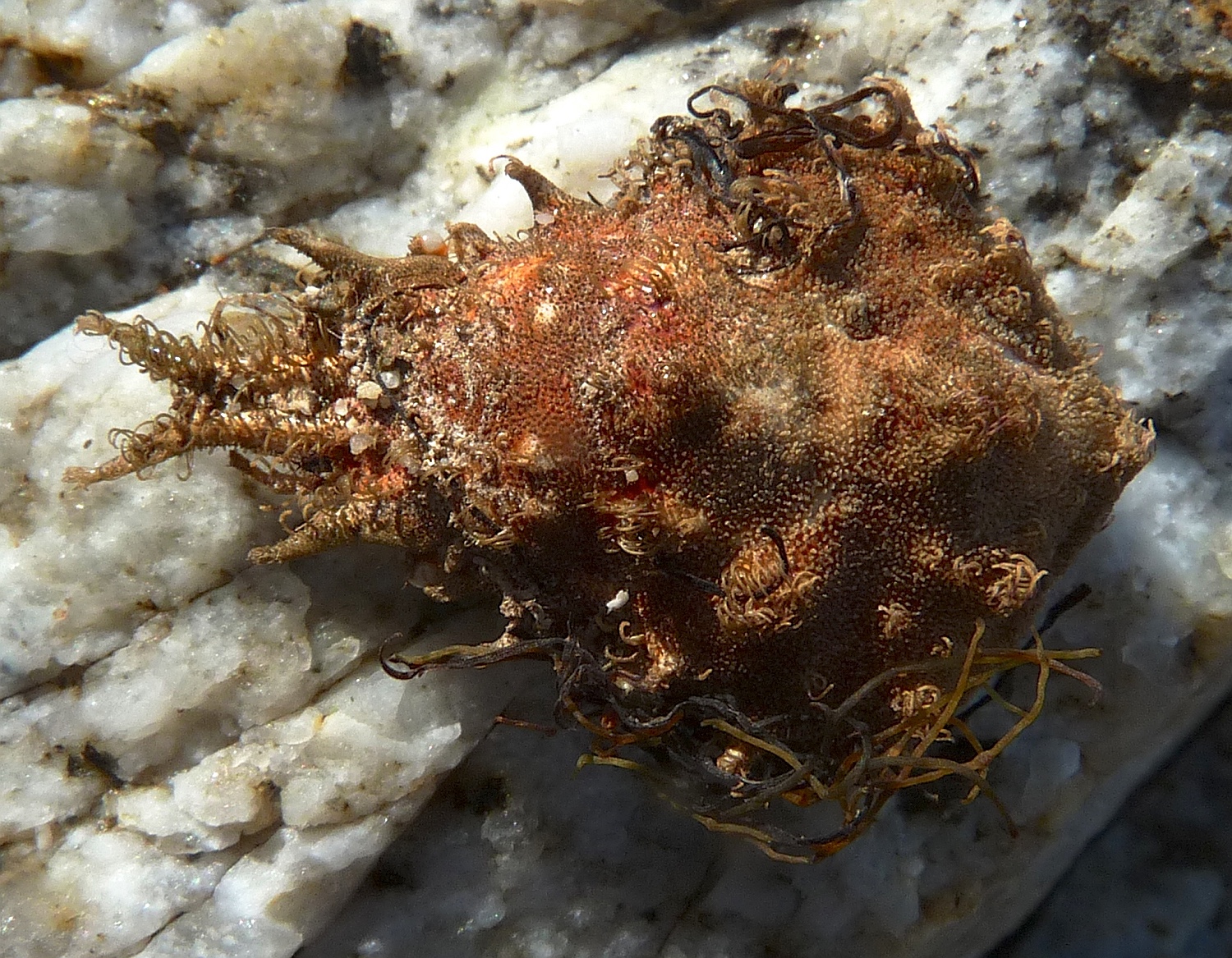
Die Arten der Gattung Pisa erkennt man am dreieckigen, langgestreckten Panzer mit weit vorstehendem Kopffortsatz und seitlichen Dornen vor den Augen.
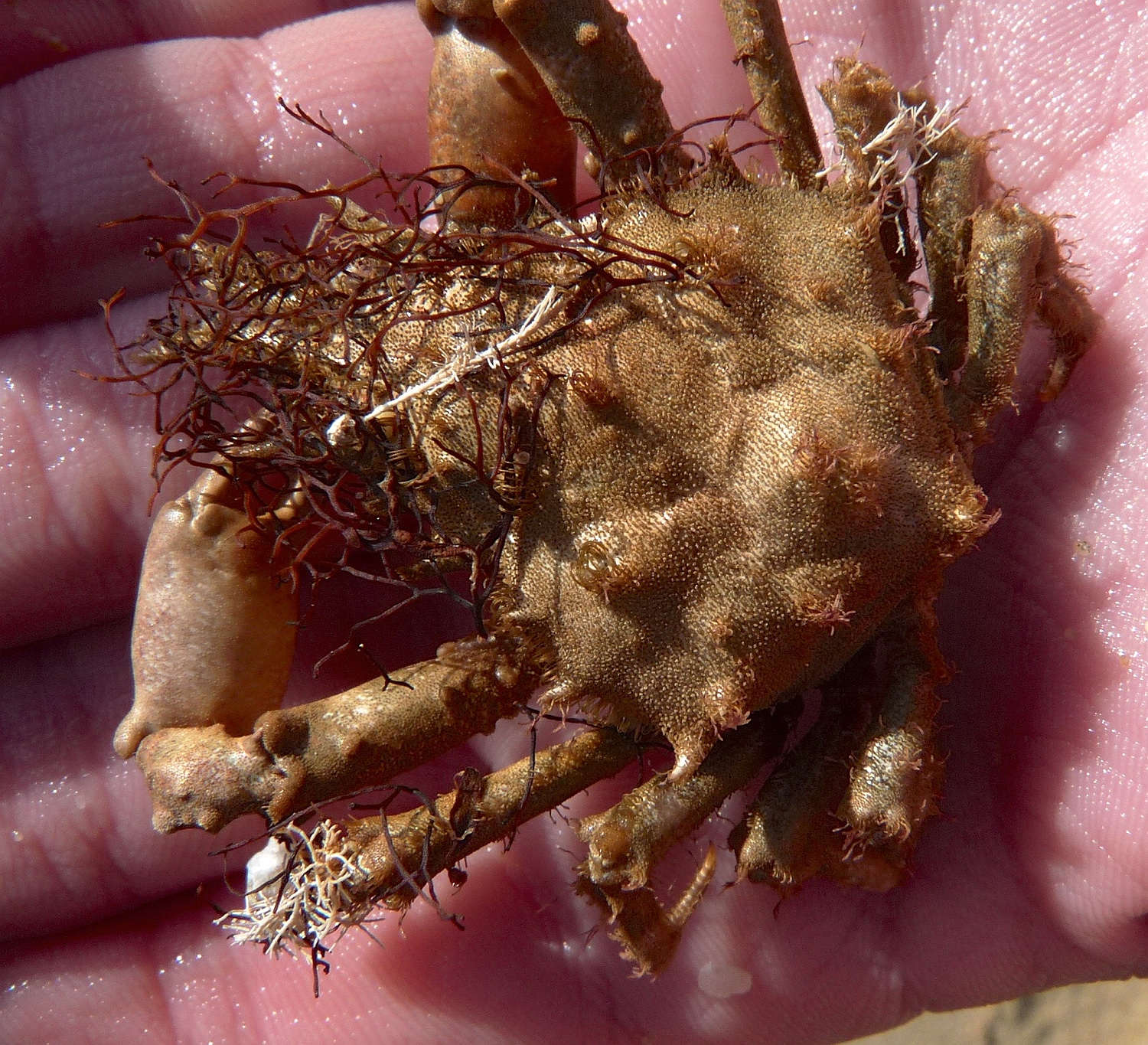
An diesem recht großen Exemplar sind die “körnige” Oberfläche und die seitlichen Dornen gut zu sehen. Meist sind die Panzer von Algen bewachsen, was die Bestimmung erheblich erschwert.
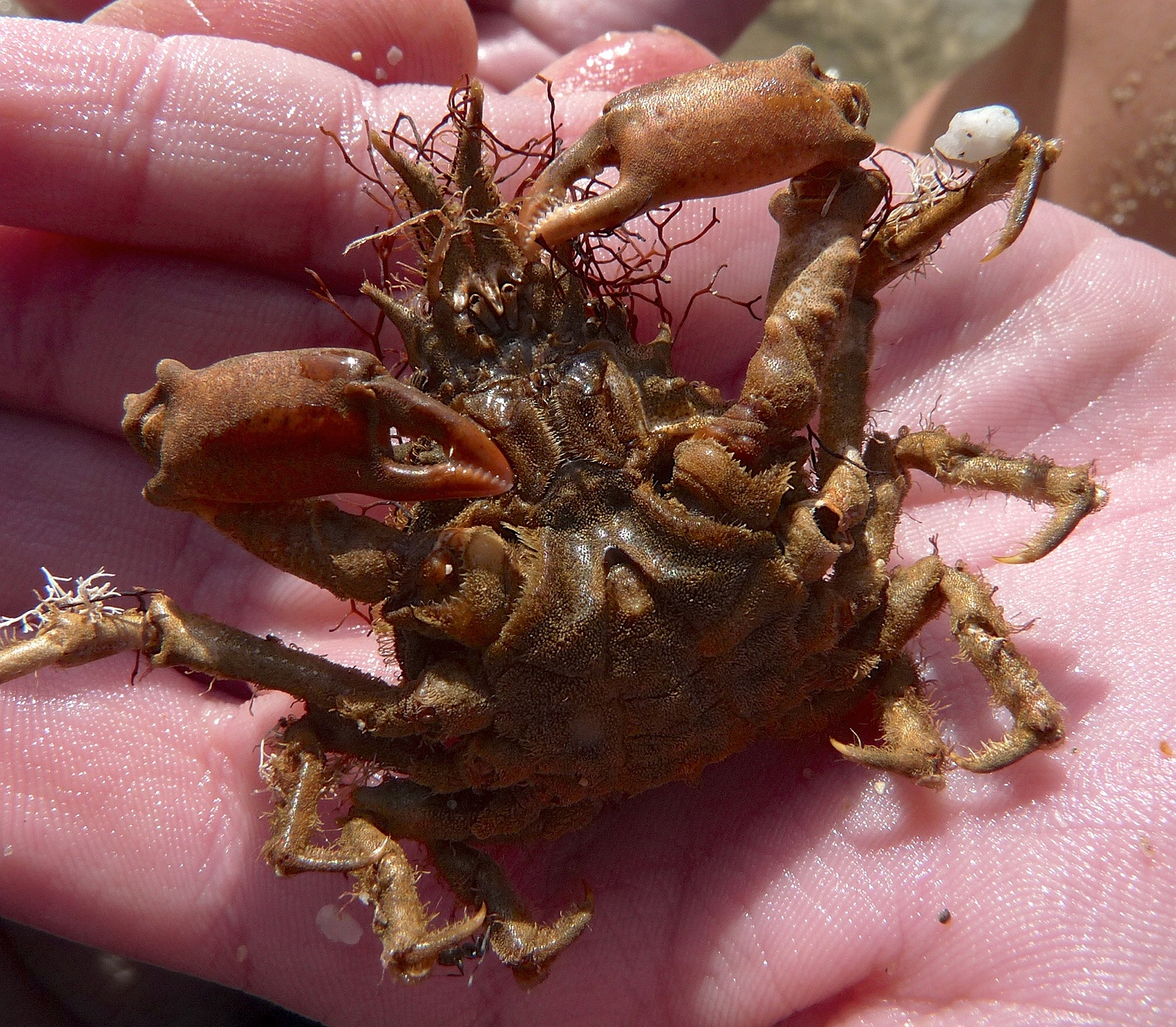
Von der Unterseite erkennt man die kleinen hinteren Beine und die dicken Scheren.
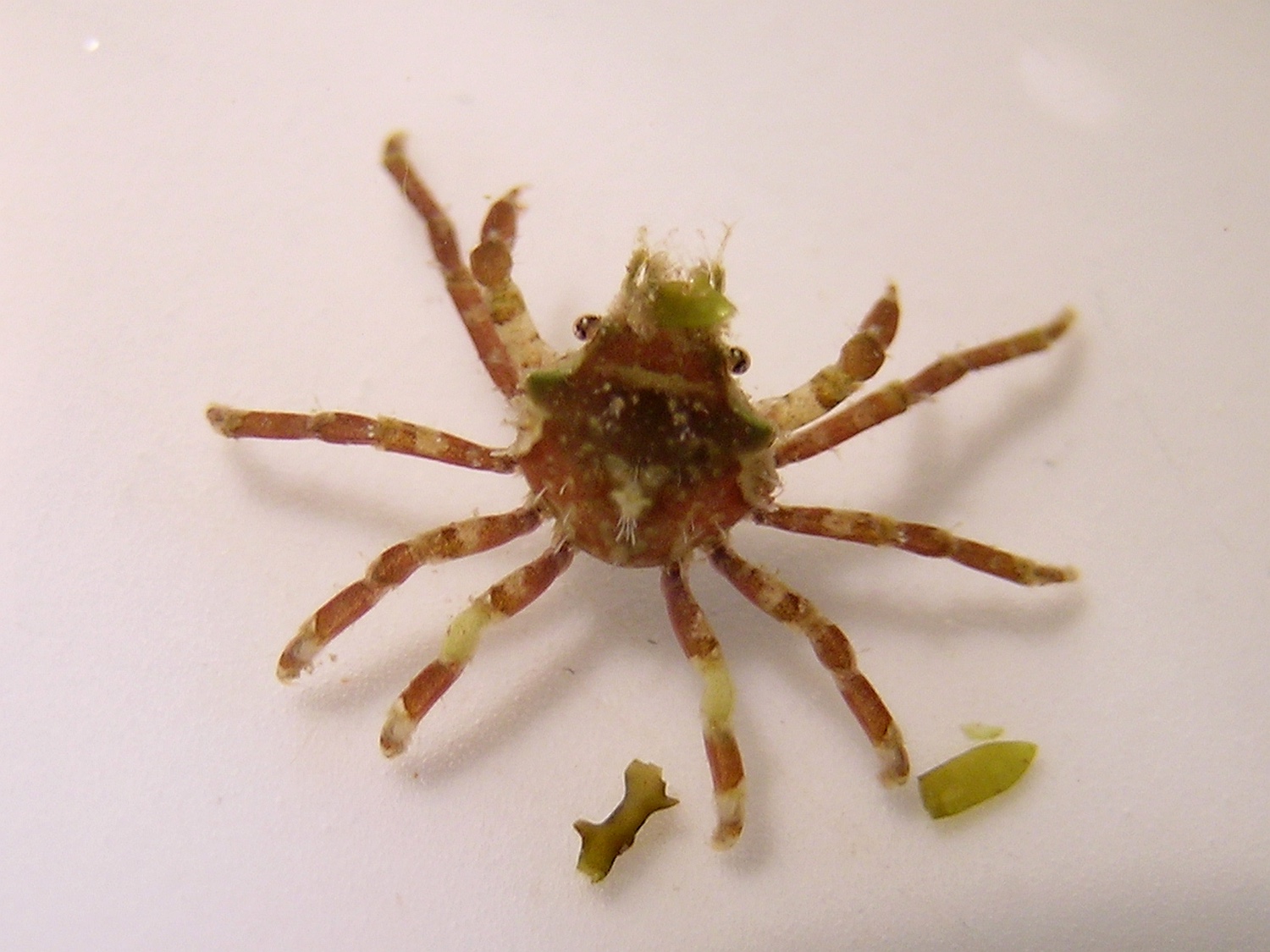
nicht sicher bestimmter kleiner Krebs aus Algenbestand, vermutlich ebenfalls aus der Gattung Pisa
Kleine Seespinne, Maja crispata (= M. verrucosa)
Die Kleine Seespinne wird bis etwa 6 cm lang. Typisch für diese Art ist, dass sie meist dicht mit Algen bewachsen ist, so dass sie lebend nur sehr schwer zu entdecken ist. Die Seespinnen oder Dreieckskrabben sind an ihrer dreieckigen Körperform mit zugespitztem Kopf zu erkennen. Sie besitzen lange Beine und lange, schmale Scheren. Seespinnen ernähren sich von Weichtieren, Stachelhäutern und auch Algen. Sie führen jedes Jahr weite Wanderungen über den Meeresboden durch. Zu den Seespinnen gehört die größte Krebsart, die Japanische Riesenkrabbe, die bis über 3 m Beinspanne erreicht.
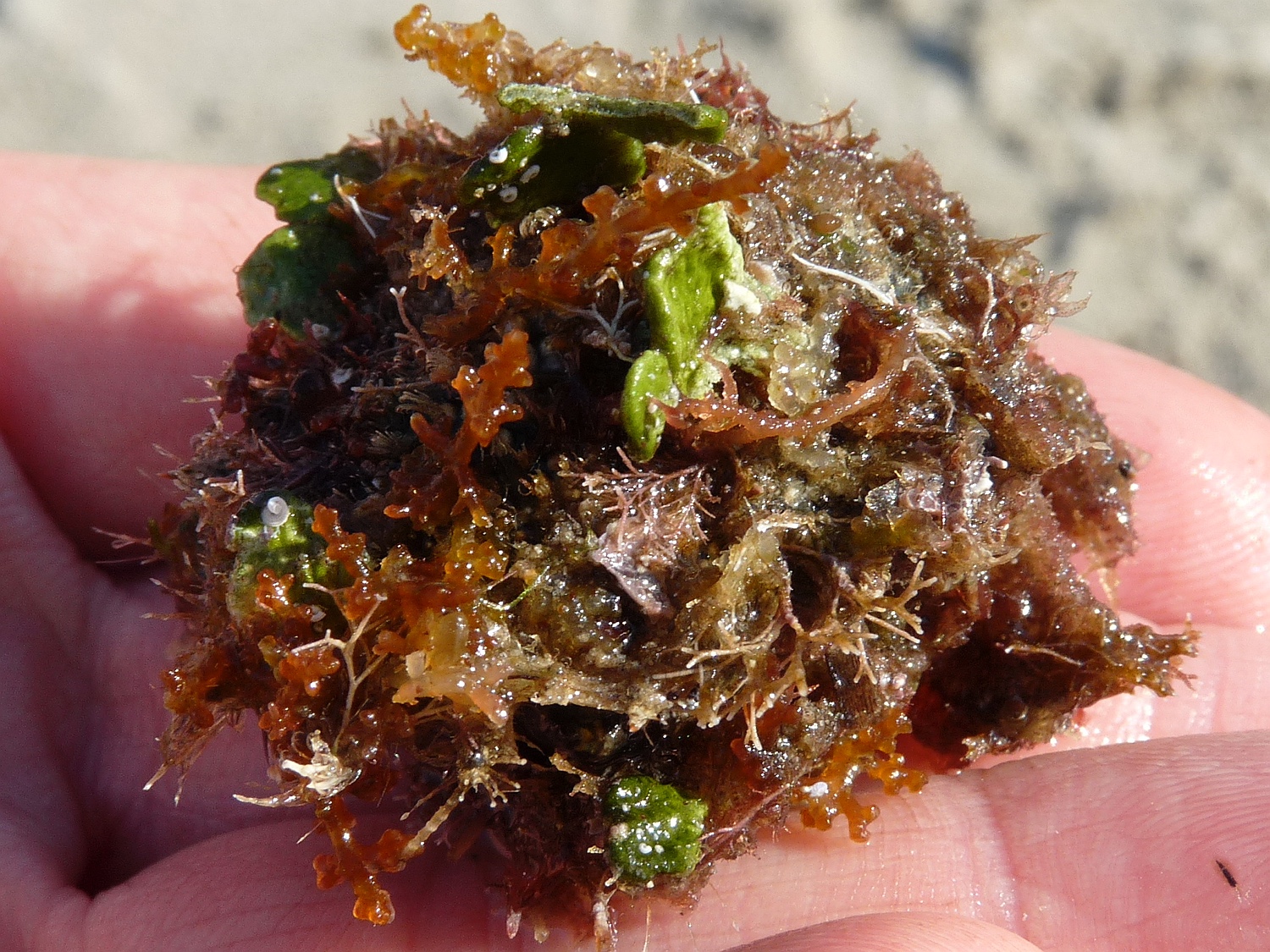
Das sieht eigentlich weniger nach einem Krebs aus…
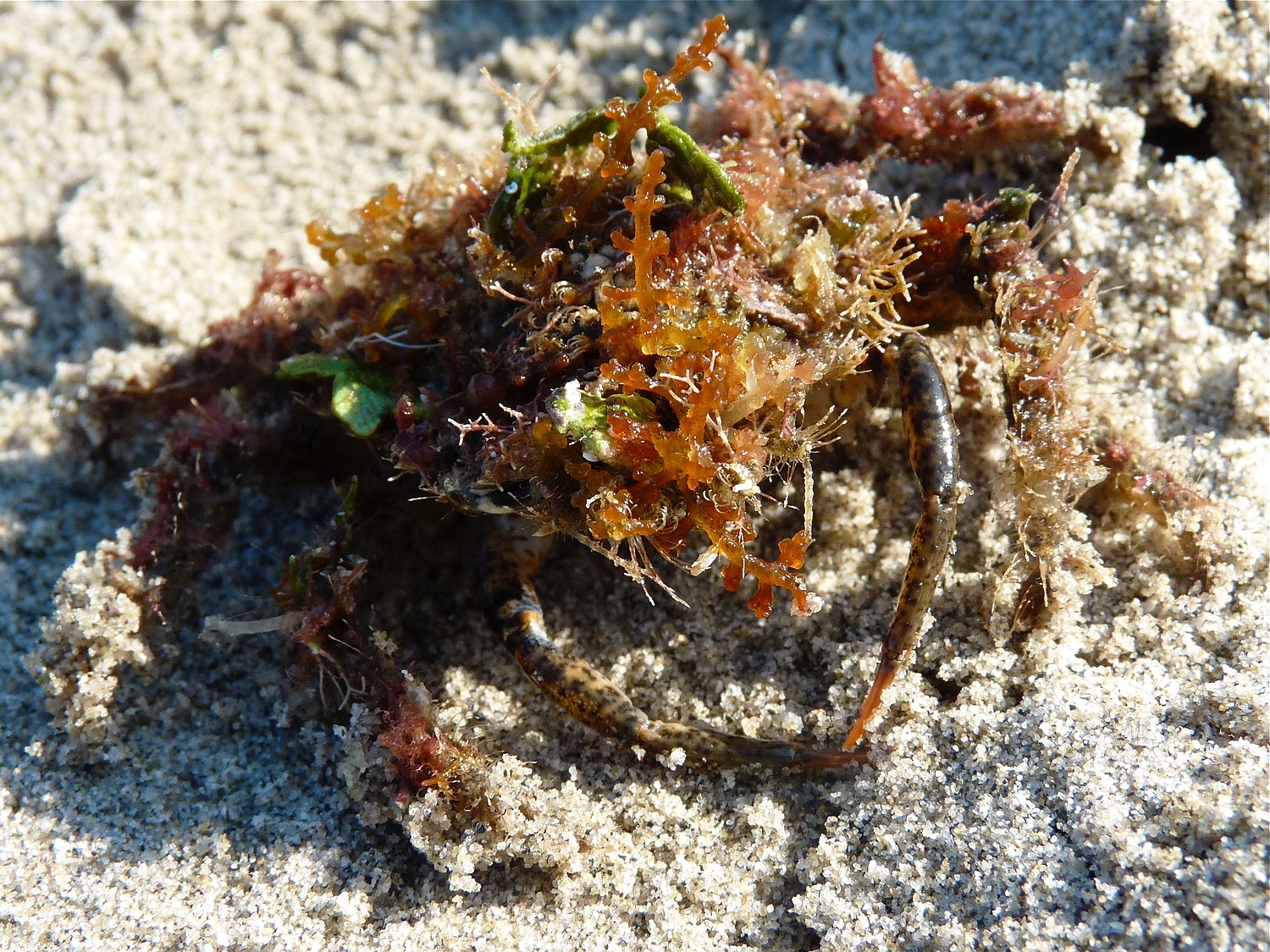
…ist aber doch einer! Die Artzugehörigkeit ist bei diesem dichten Algenbewuchs kaum zu erkennen; es wird sich aber vermutlich um eine Kleine Seespinne handeln.
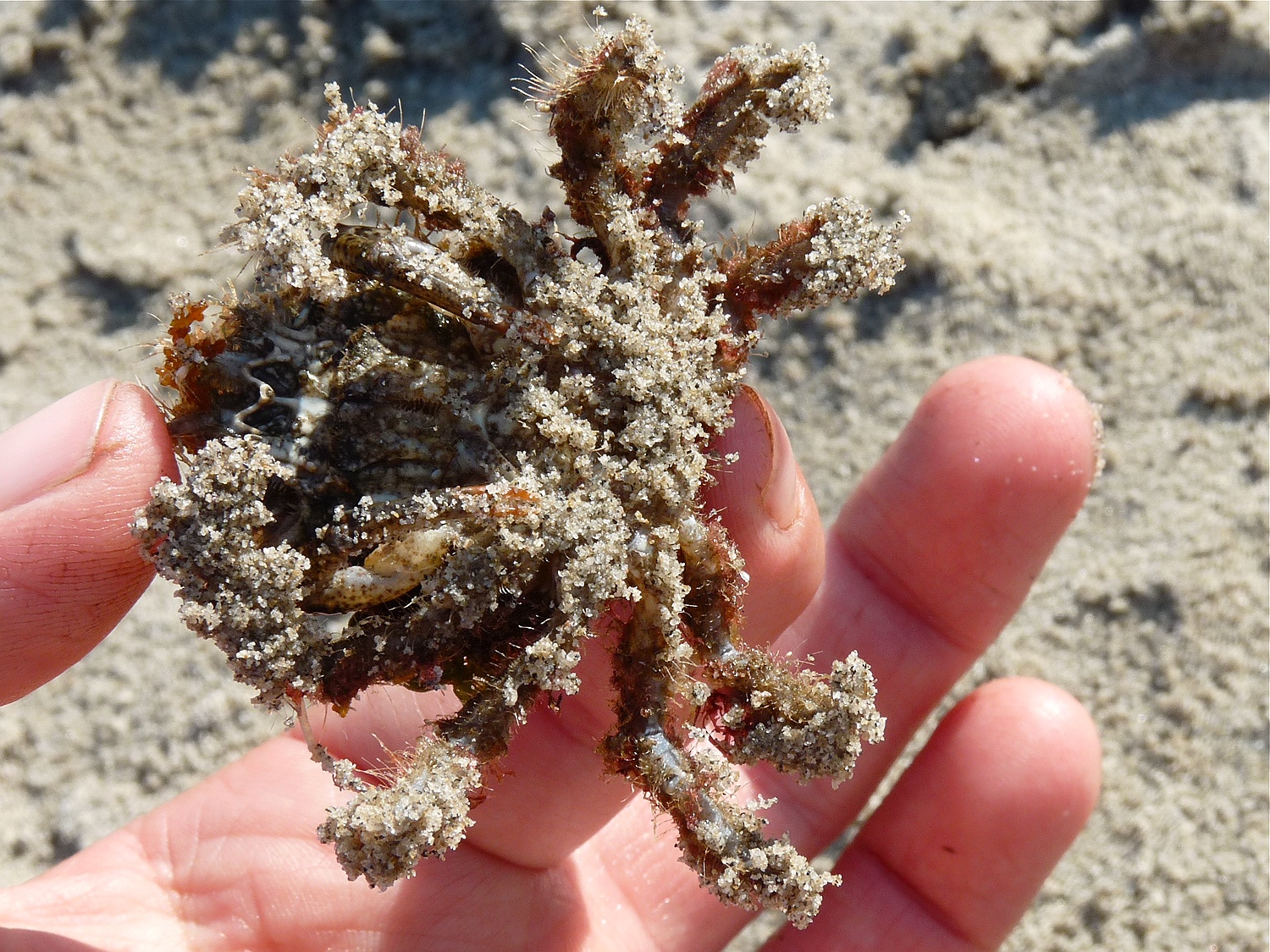
Hier noch einmal von unten.
Große Seespinne, Maja squinado
Die Große Seespinne erreicht bis 20 cm Größe. Sie wird gelegentlich in Netzen gefangen und ist wie die anderen großen Krebsarten als Leckerbissen geschätzt.
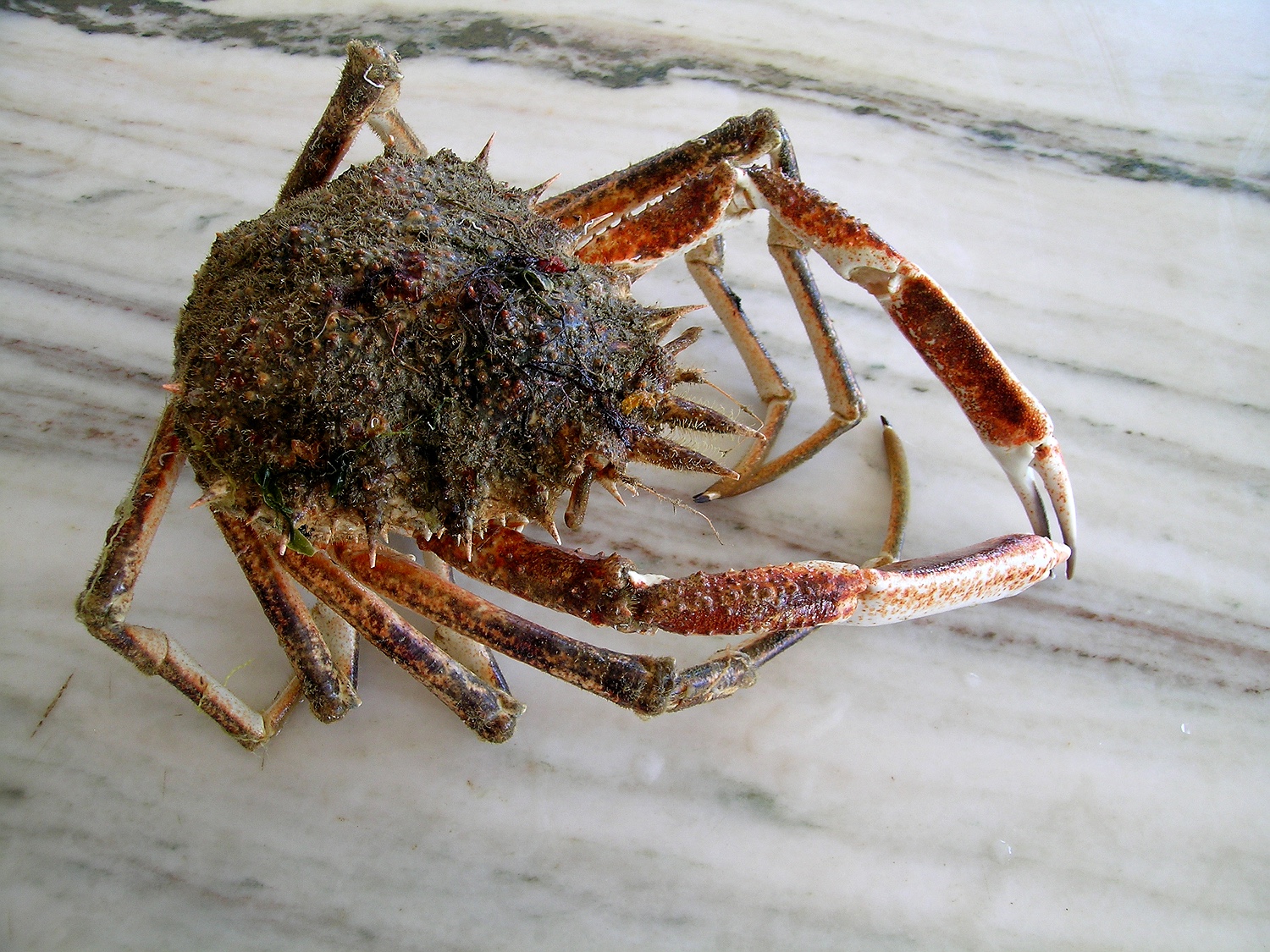
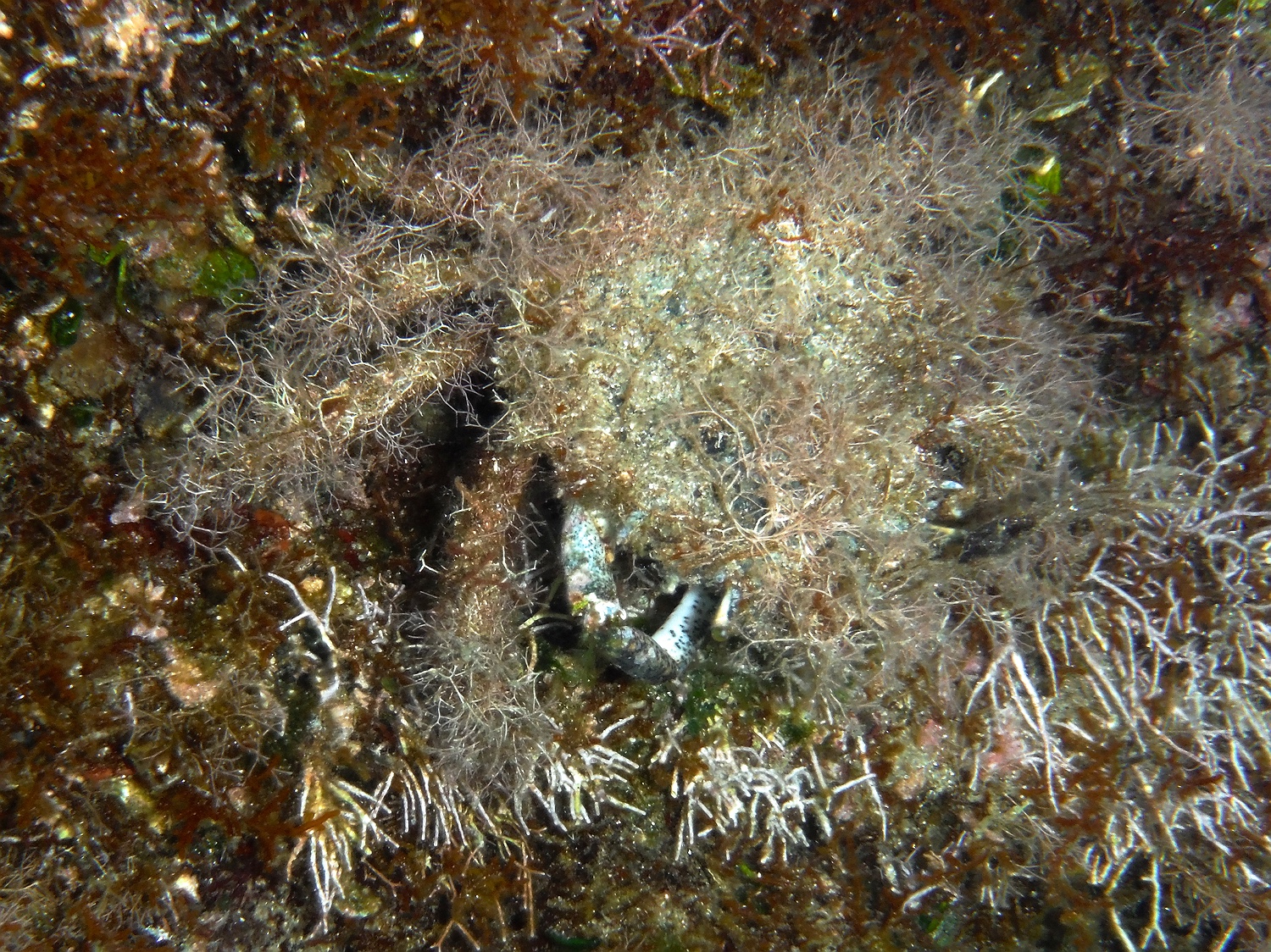
Wie ihre kleine Schwester ist auch die Große Seespinne so stark mit Algen bewachsen, dass man sie kaum entdecken kann, solange sie sich nicht bewegt.
Portumnus latipes
Bei einigen Krabben sind die hintersten Füße zu paddelartigen Schwimmfüßen umgebildet, mit denen sie sich im Wasser flink fortbewegen können. Diese Arten kommen vor allem an Sandstränden vor, wo sie ihre Zeit meist im Sand eingegraben verbringen, so dass man sie kaum entdecken kann.
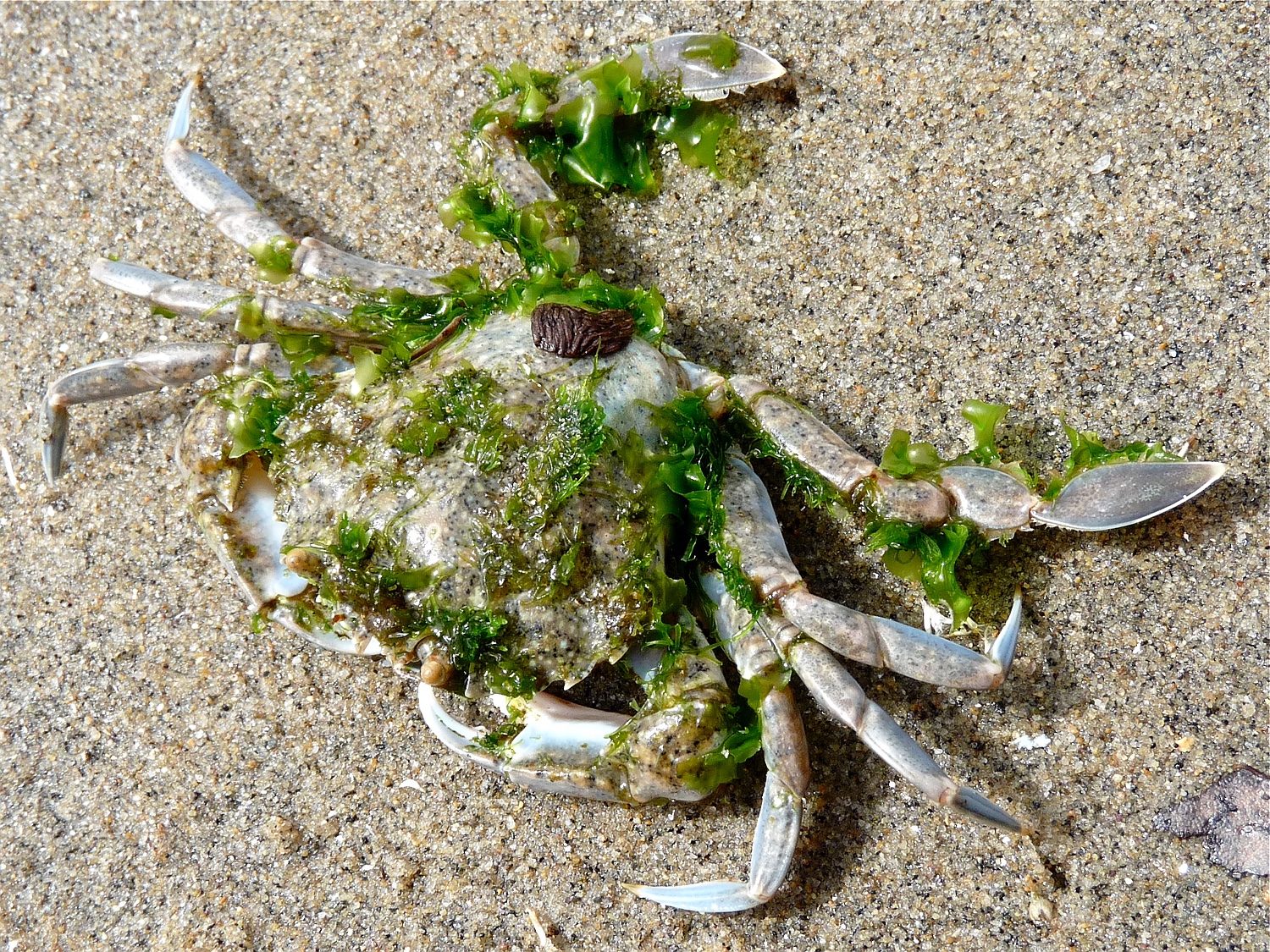
Diese von Meersalat bewachsene Schwimmkrabbe (vermutlich Portumnus latipes) haben wir in Apóllonas entdeckt.
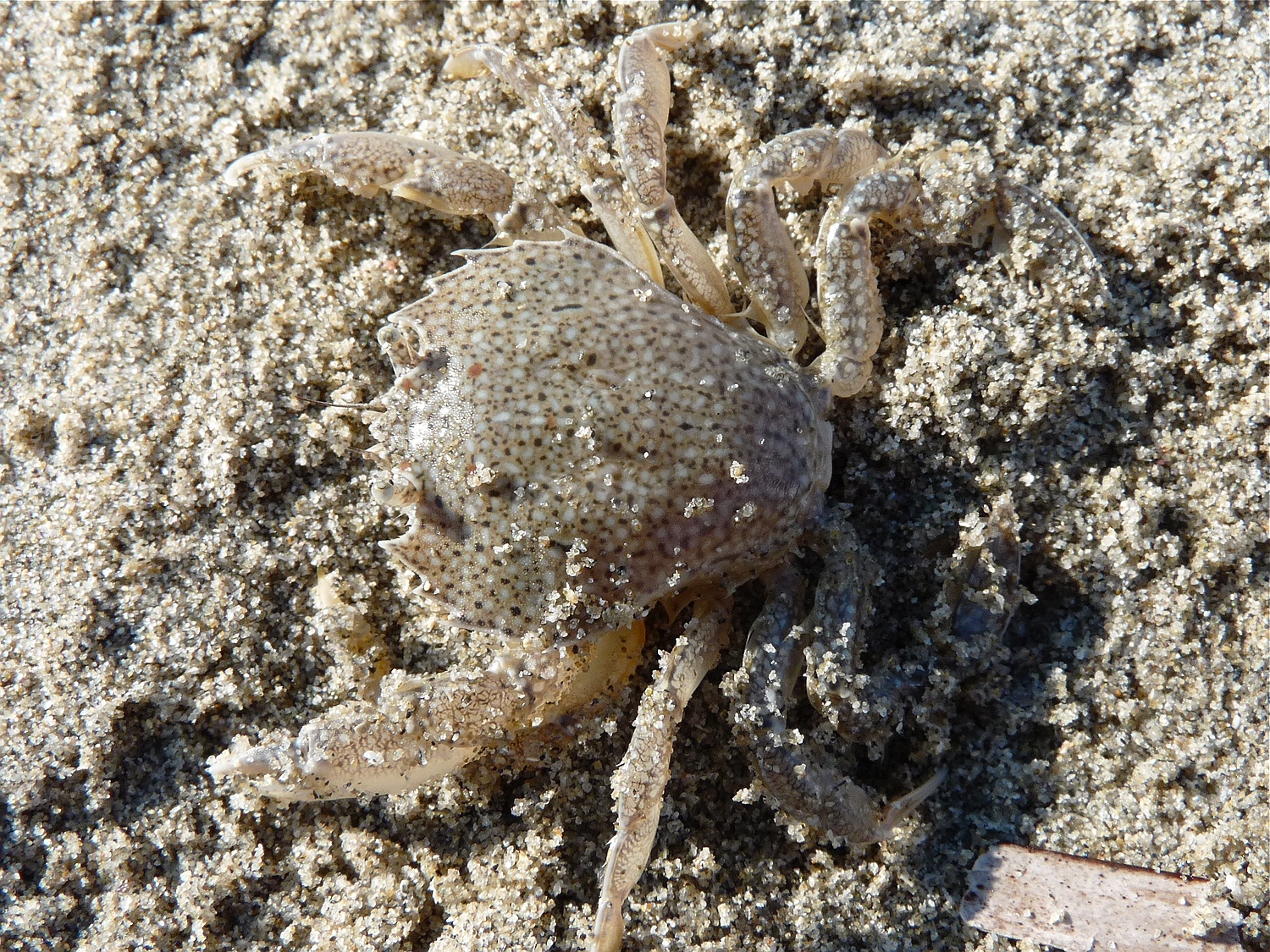
An diesem Exemplar kann man gut die sandfarbene, gepunktete Tarnfärbung erkennen.
Achelous hastatus
Diese hübsche Art mit den roten Flecken auf den Schwimmfüßen haben wir an einem Sandstrand an der Südwestküste von Naxos gefunden; sie lebt meist im Sand versteckt und ist deswegen nur selten zu sehen.
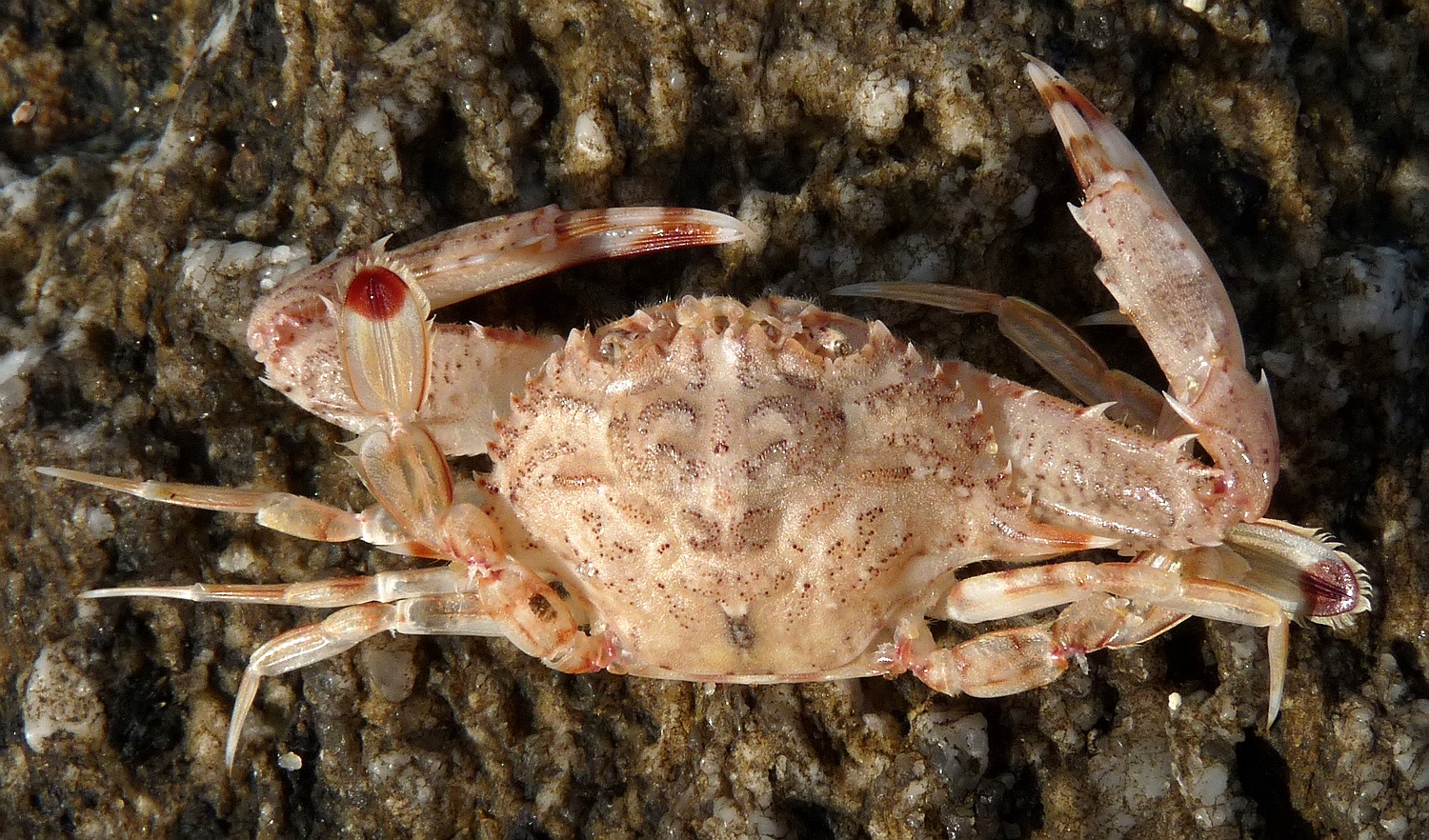
Diese Art ist an dem breiten Panzer mit dem seitlichen Dorn, der rötlichen Färbung und den langen Scheren zu erkennen. Die Schwimmfüße tragen einen roten Fleck auf dem untersten paddelförmigen Glied.
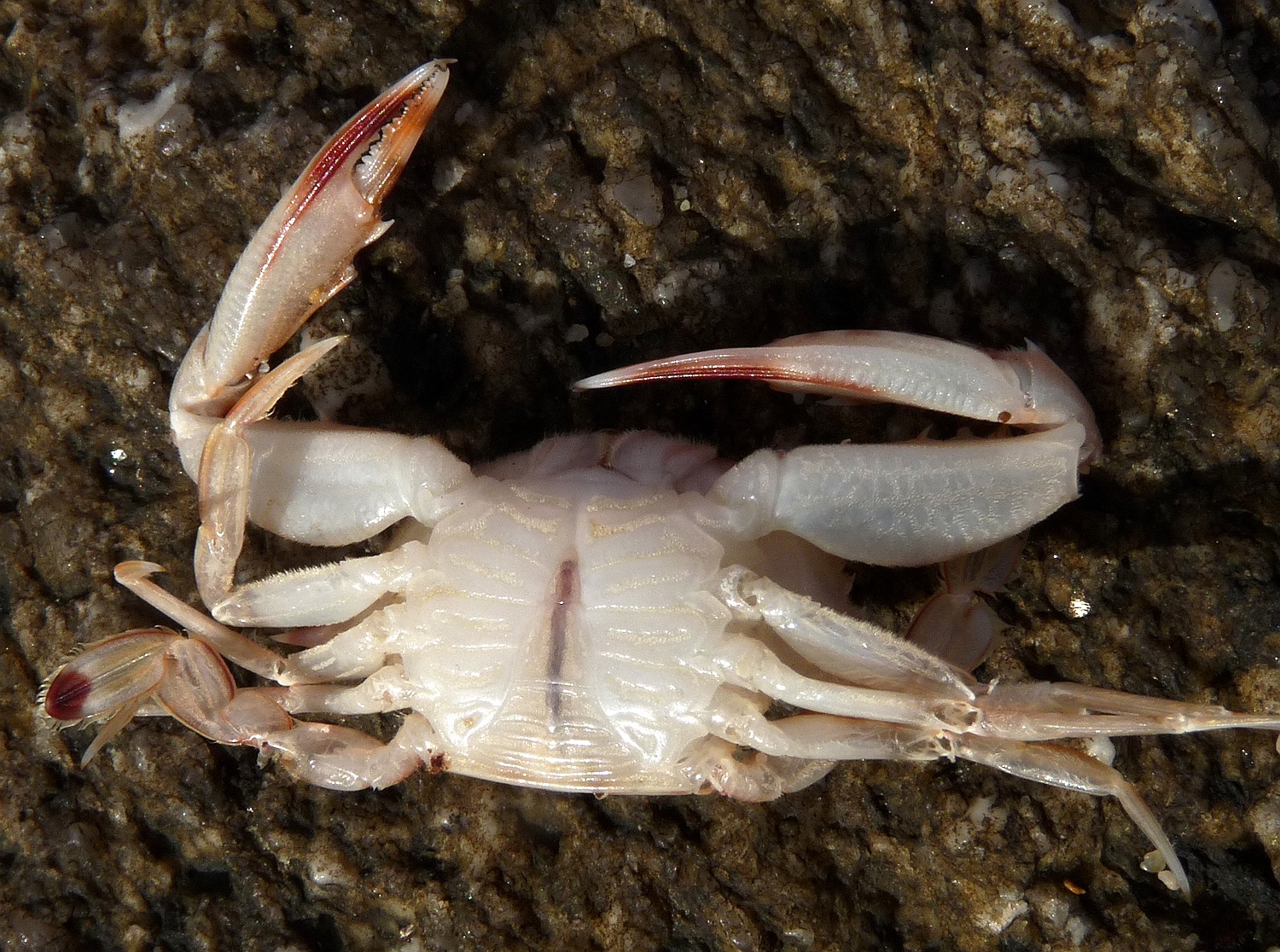
Hier dasselbe Tier von unten.
Xaiva biguttata ?
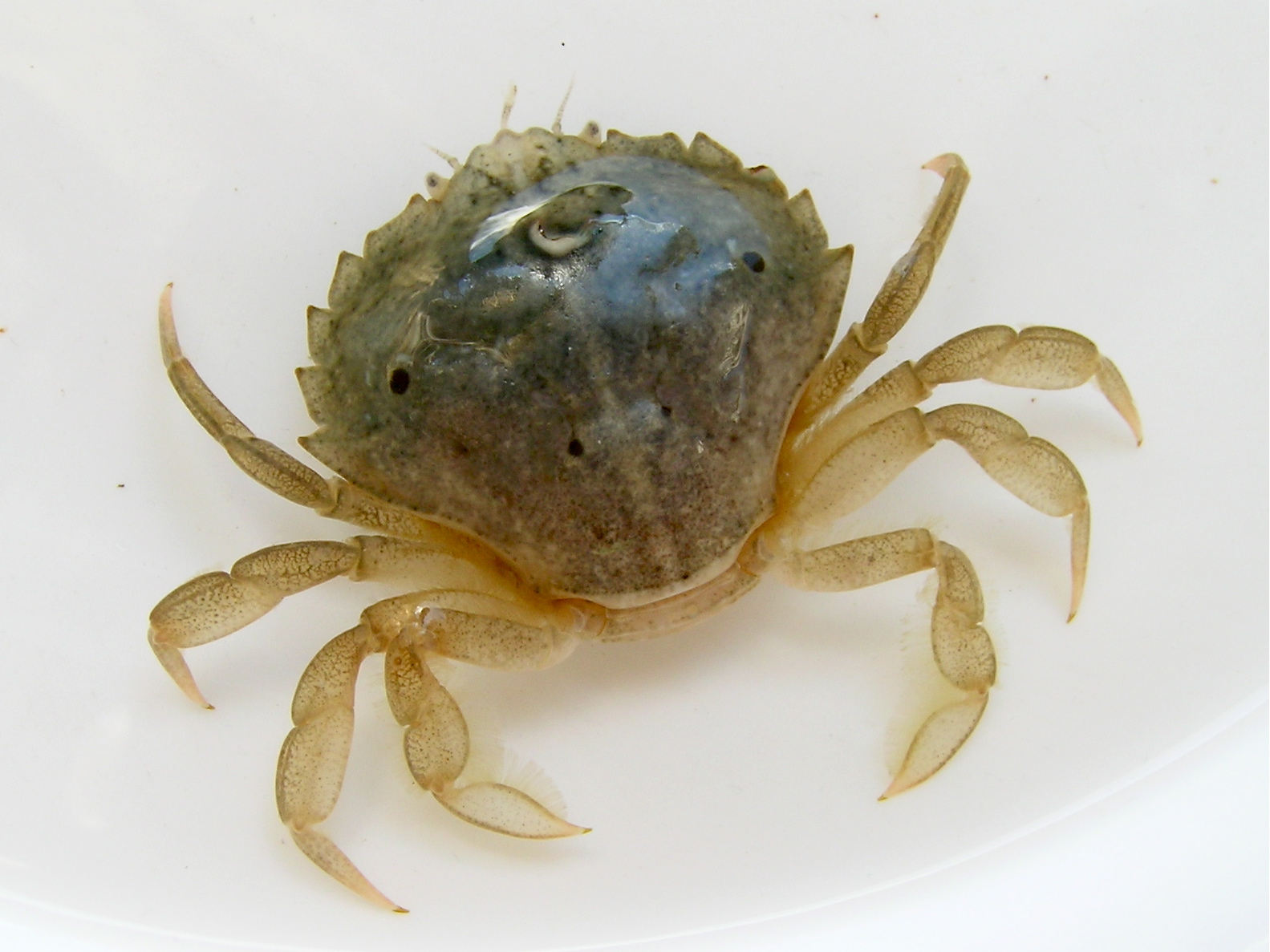
Auch diese Krabben-Art lebt meist im Sand versteckt; sie kommt bei uns gar nicht so selten vor, ist aber kaum einmal zu sehen.
Blaue Schwimmkrabbe, Callinectes sapidus
Die Blaue Schwimmkrabbe stammt ursprünglich aus Amerika, wo sie an der Atlantikküste verbreitet ist. Sie ist ab dem Beginn des 20. Jahrhunderts in Europa eingeschleppt worden und tritt nun auch in vielen Bereichen des Mittelmeergebietes auf. Auf Naxos kommt sie am Strand von Kalandós vor, wo sie vor allem am kleinen Flüsschen, das dort mündet, anzutreffen ist. Die Weibchen wandern nach der Paarung ins flache Meer, wo auch die Larven leben, während die Männchen sich stets am liebsten im Brackwasser aufhalten. Sie essbar und wird im Mittelmeerraum schon in großem Maßstab vermarktet.
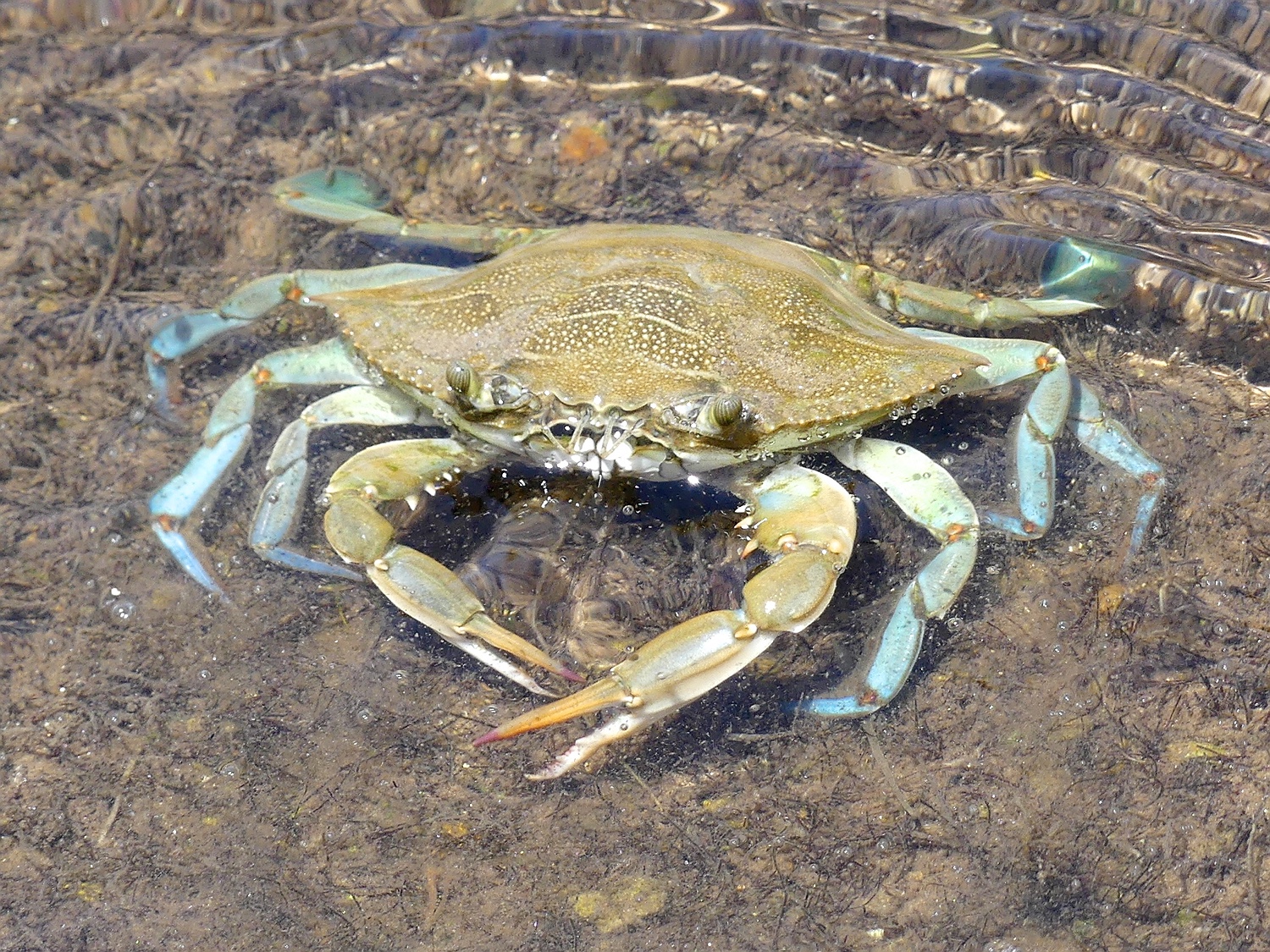
Die Blaue Schwimmkrabbe lebt an Flussmündungen, auch im Süßwasser, wie hier bei Kalandós. Sie ist an der leuchtend blauen Färbung der Beine zu erkennen. Das letzte Beinpaar ist als Schwimmpaddel ausgebildet.
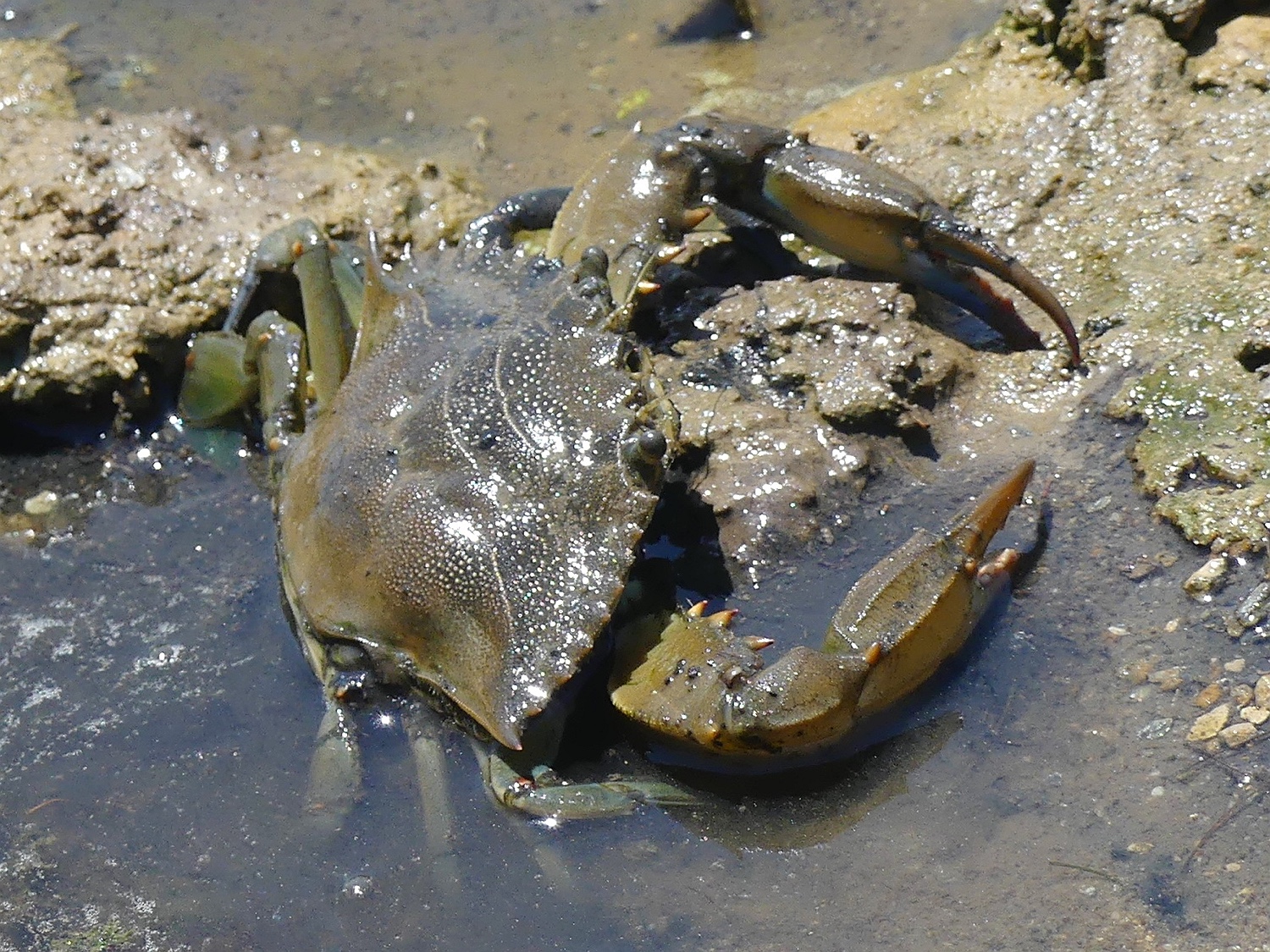
Der bis zu 20 cm breite Rückenpanzer weist auf jeder Seite neun Zähne an der Vorderkante auf, von denen der hinterste als langer Dorn ausgebildet ist. Die Scheren sind kräftig, aber eher schmal.
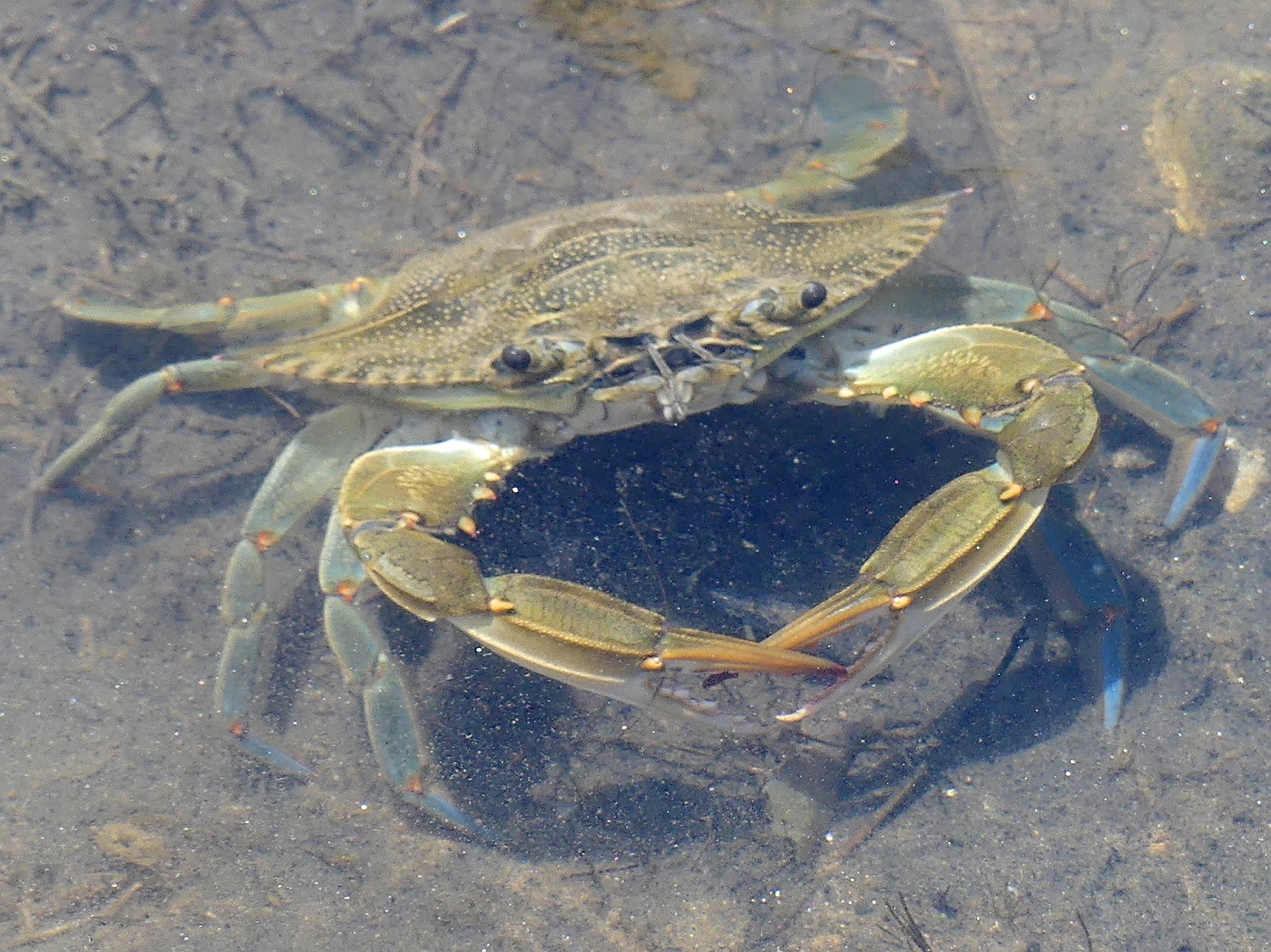
Die Blaue Schwimmkrabbe ist ganz schön aggressiv und immer bereit, kräftig mit ihren Scheren zu kneifen.
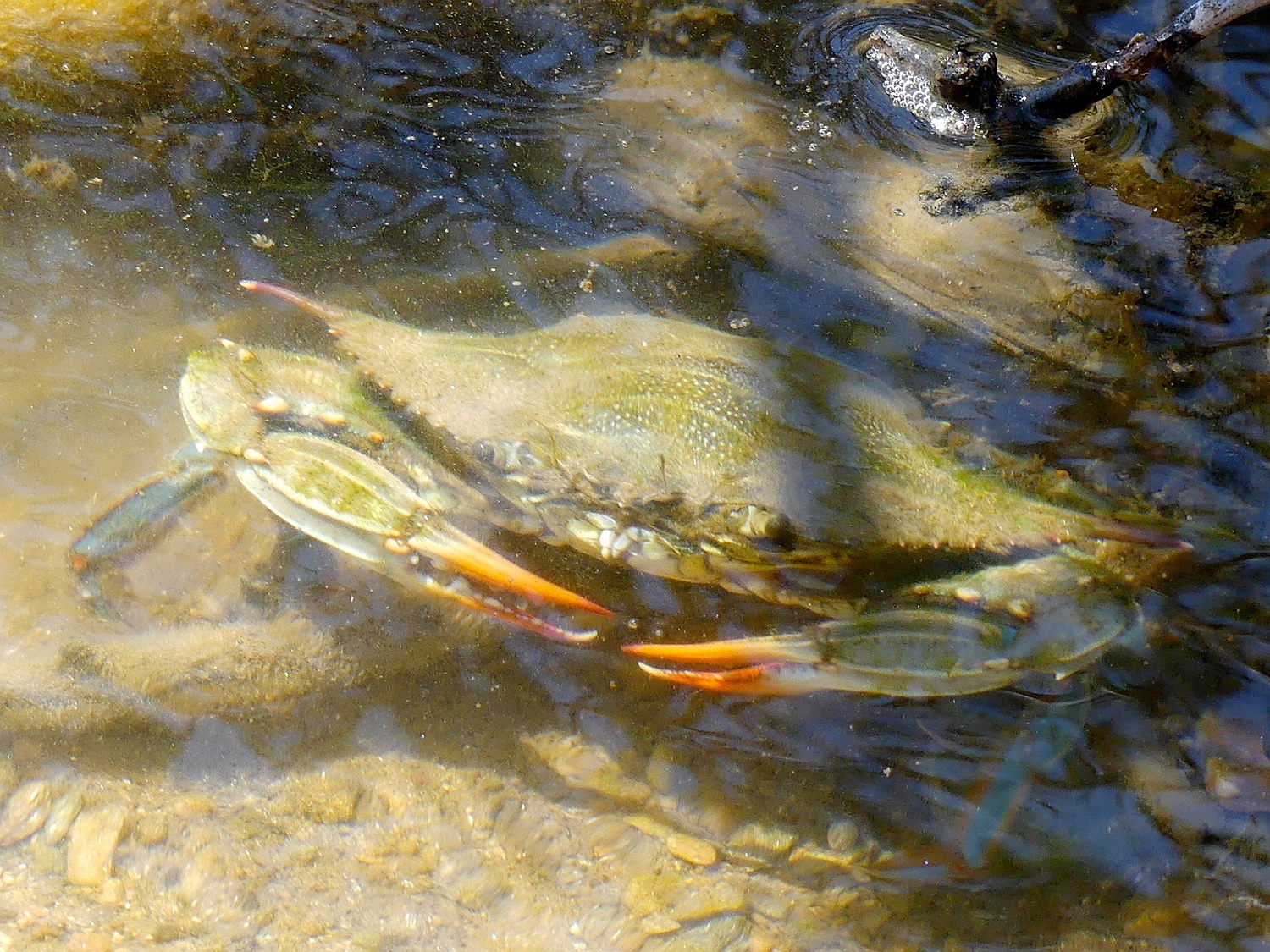
Die Weibchen besitzen orange gefärbte Scheren und längere Dornen an der Seite des Carapax.
Schamkrabbe, Calappa granulata
Die merkwürdige Schamkrabbe kommt auf Sandböden vor, wo sie im Untergrund vergraben lebt. Ich habe sie noch nie lebend gesehen, sondern nur als Beifang von Fischern; ich will sie wegen ihrer Merkwürdigkeit hier aber dennoch aufnehmen. Die Scherenbeine der Schamkrabbe sind sehr groß und so gestaltet, dass sie das “Gesicht” der Krabbe vollständig verbergen, wenn sie sie vor dem Kopf schließt. Auf diese Weise entsteht ein sandfreier Hohlraum vor dem Kopf der eingegrabenen Krabbe, der ihr das Atmen sauberen Wassers ermöglicht. Außerdem sind die großen Scherenbeine der Schamkrabbe beim Eingraben in den Sand nützlich.
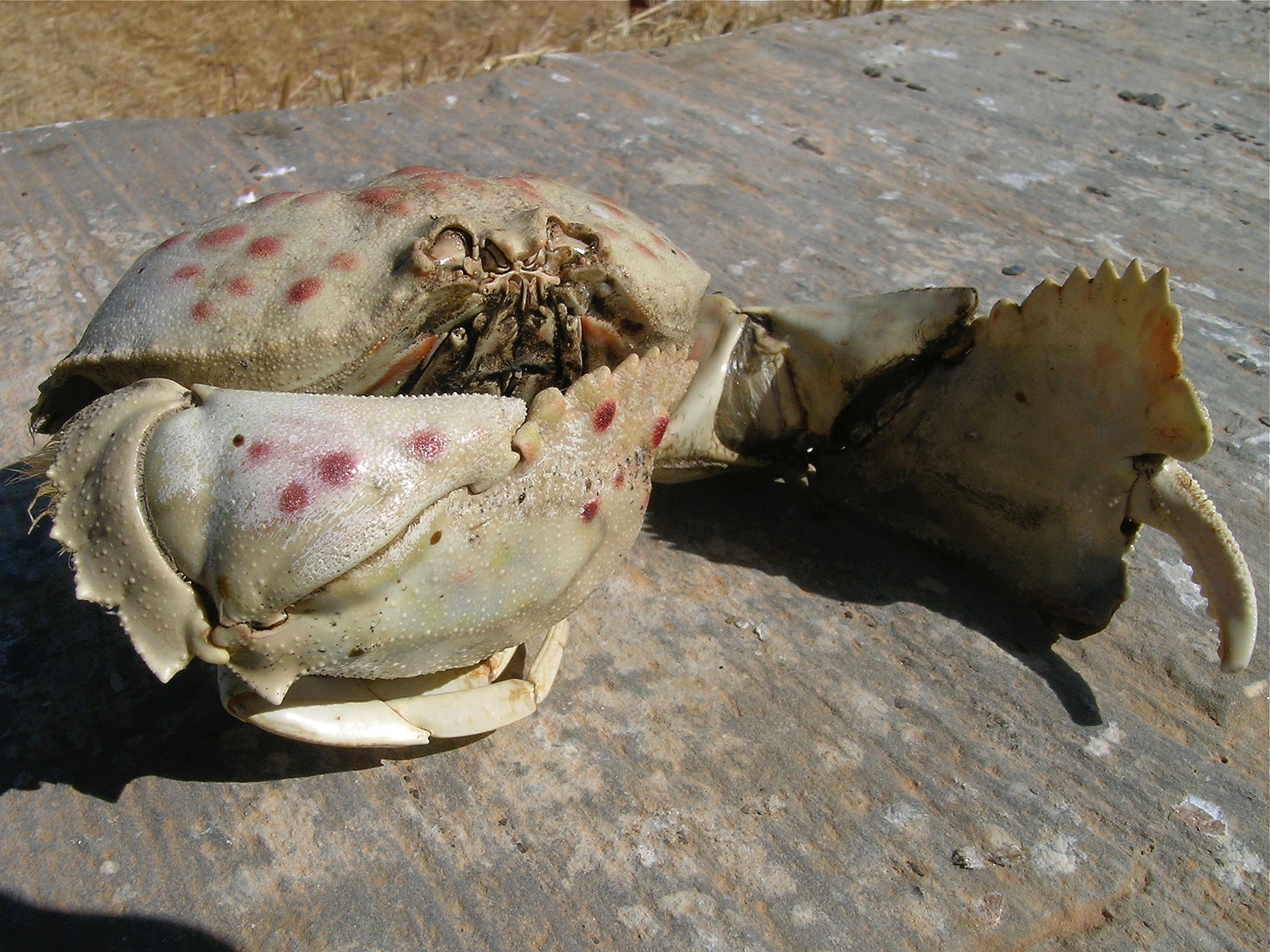
Die merkwürdige Schamkrabbe lebt in größeren Wassertiefen im Sand vergraben.
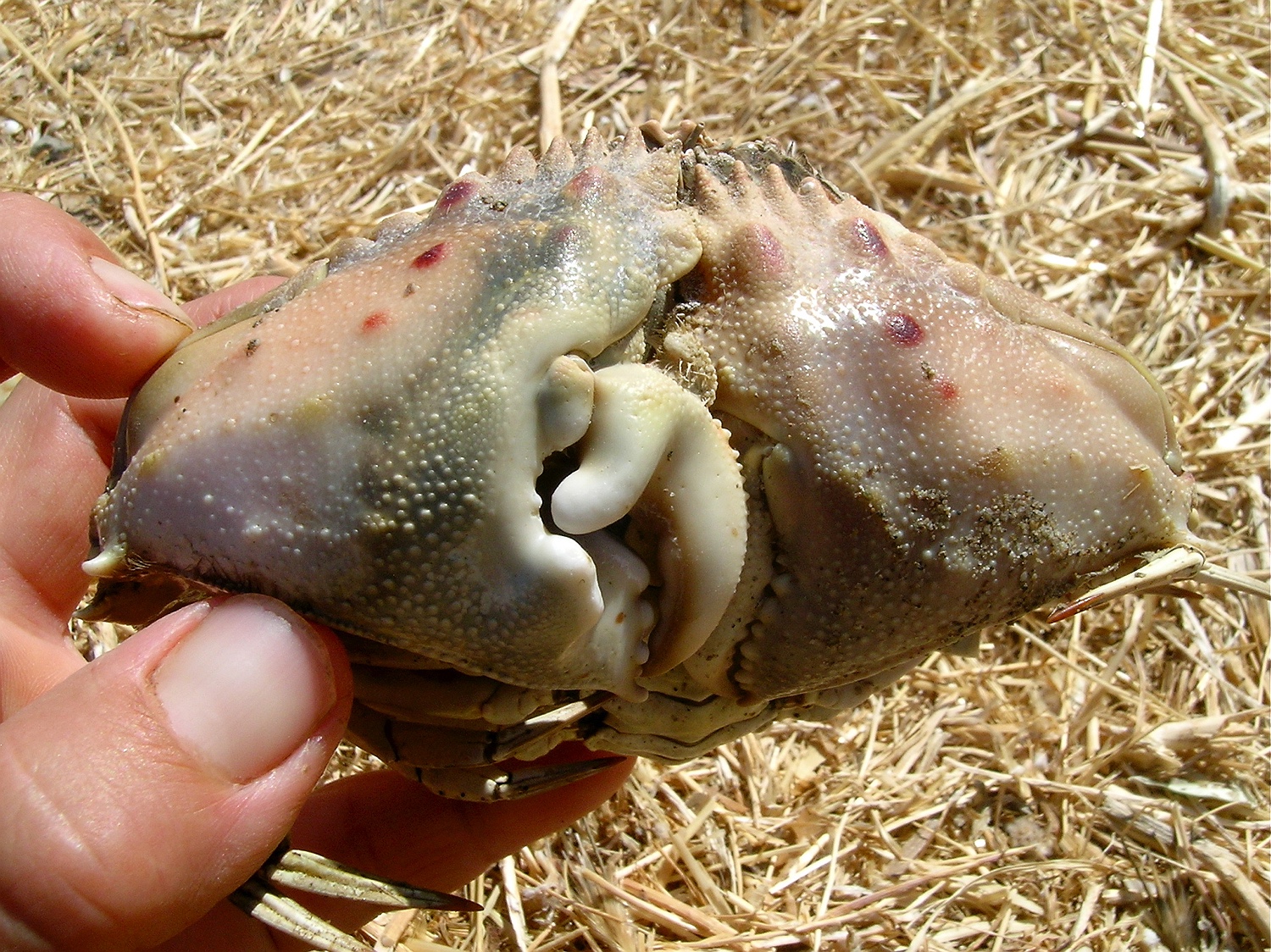
Die genau ineinander passenden riesigen Scherenarme halten den Sand vom Kopf der Krabbe fern, so dass sie auch im Sand vergraben sauberes Wasser atmen kann.
Zu den Krabben gehört auch die Süßwasserkrabbe Potamon potamios, die auf einer eigenen Seite abgehandelt wird.
4. Garnelen (Caridae)
Als Garnelen werden kleine, langgstreckte Krebstiere mit zylindrischem Carapax (Rückenschild) bezeichnet. Auf Naxos kommen mehrere Arten häufig vor; sie sind allerdings schwer zu entdecken, da sie versteckt leben und klein und gut getarnt sind.
Felsengarnele, Palaemon elegans und P. serratus
Unter den Garnelen kommen an der Küste die Felsengarnelen vor. Diese Tiere sind gar nicht so selten, verstecken sich aber unter Felsen, und sind außerdem schwer zu entdecken, da sie fast durchsichtig sind. Die hübsche Felsengarnele mit bläulichen Scherenbeinen wird bis zu 6 cm lang. Es gibt mehrere Arten, die sehr schwer zu bestimmen sind; man muss beispielsweise die Größenverhältnisse der Scheren messen, was praktisch nur am toten Tier geht. Meine Bestimmungen sind darum unsicher.
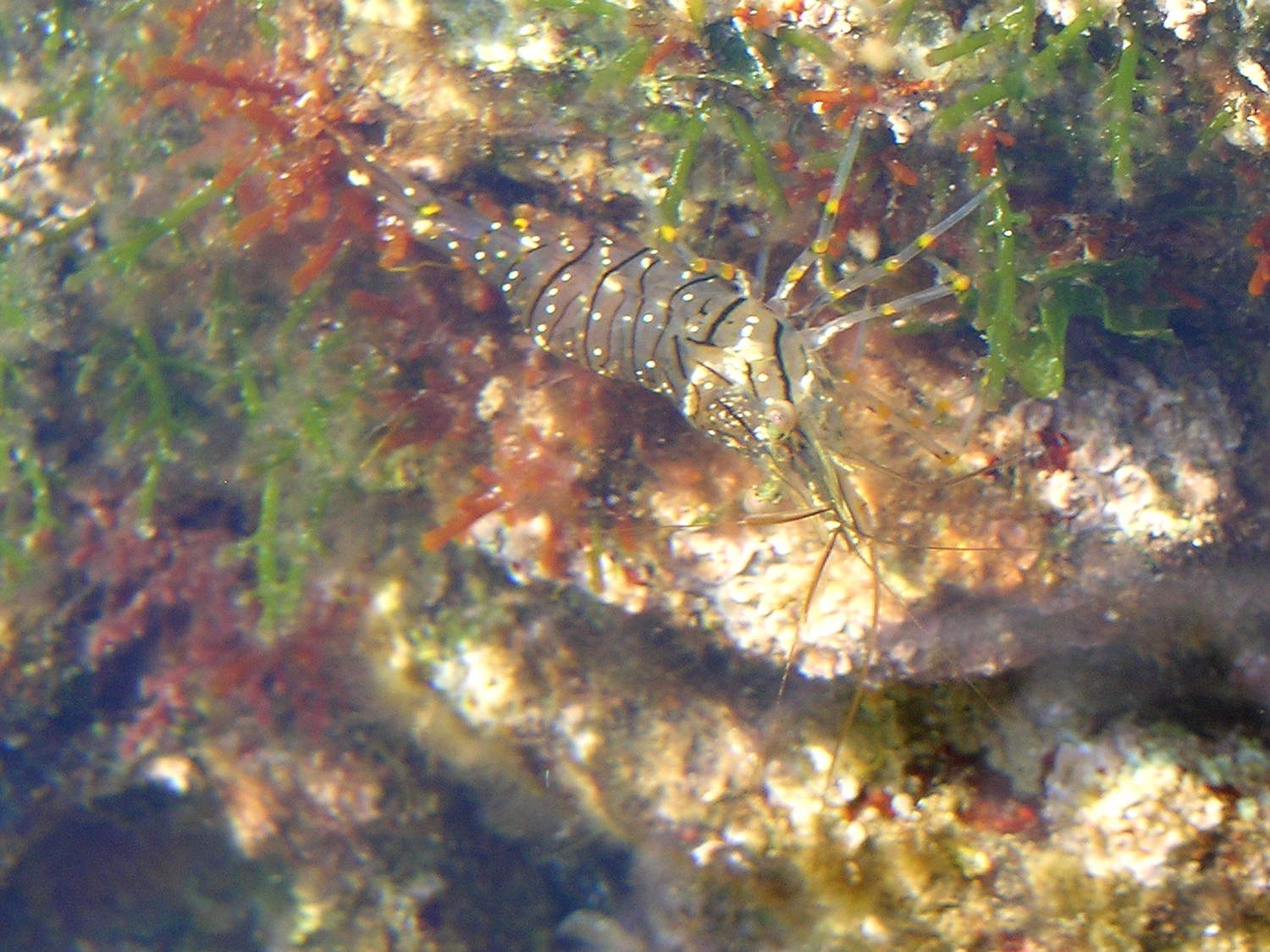
Die Felsengarnelen sind schwer zu entdecken, weil sie fast durchsichtig sind. Sie sitzen meist an der Unterseite von Felsen.
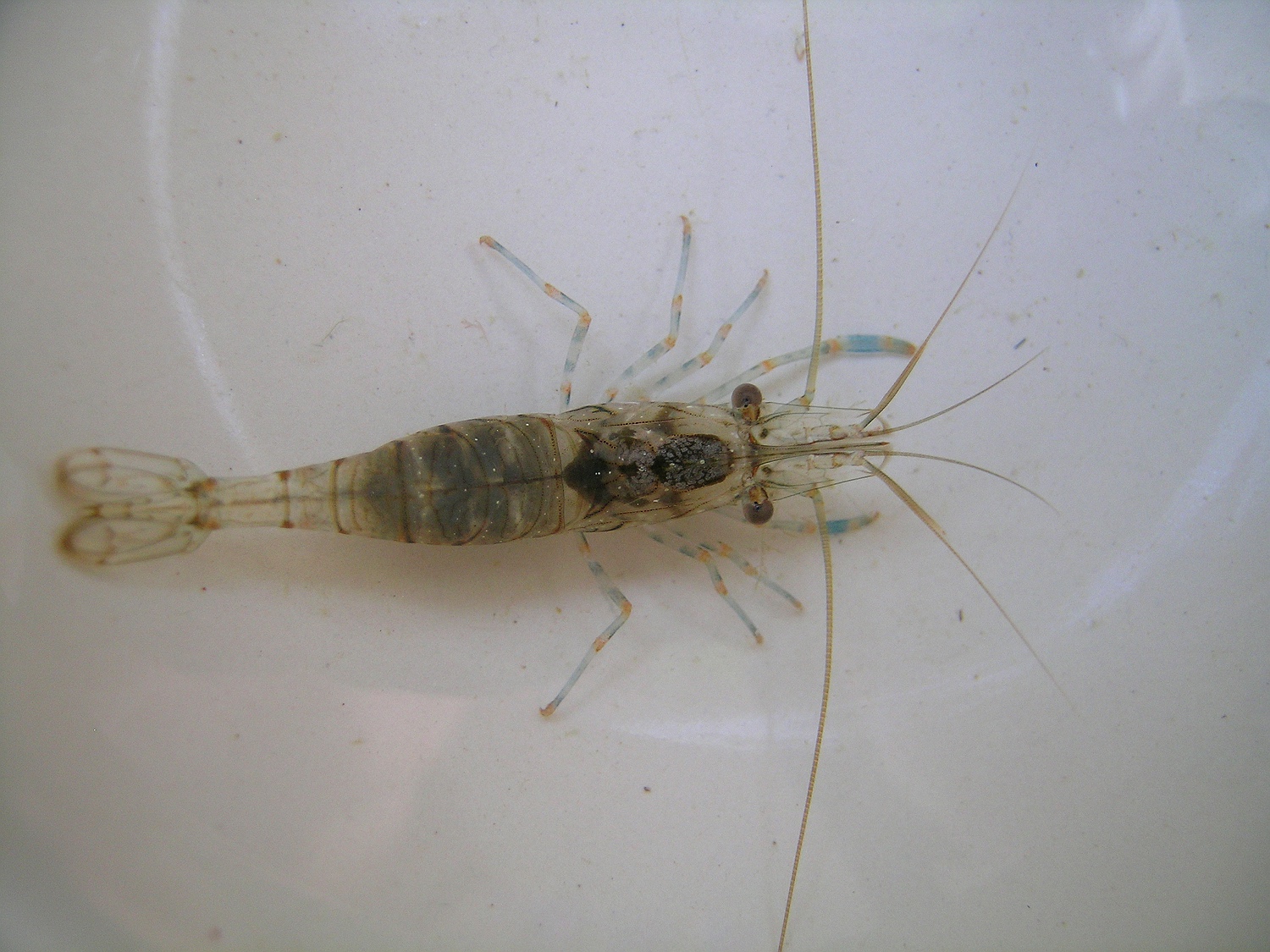
Palaemon elegans hat bläulich gefärbte Beine
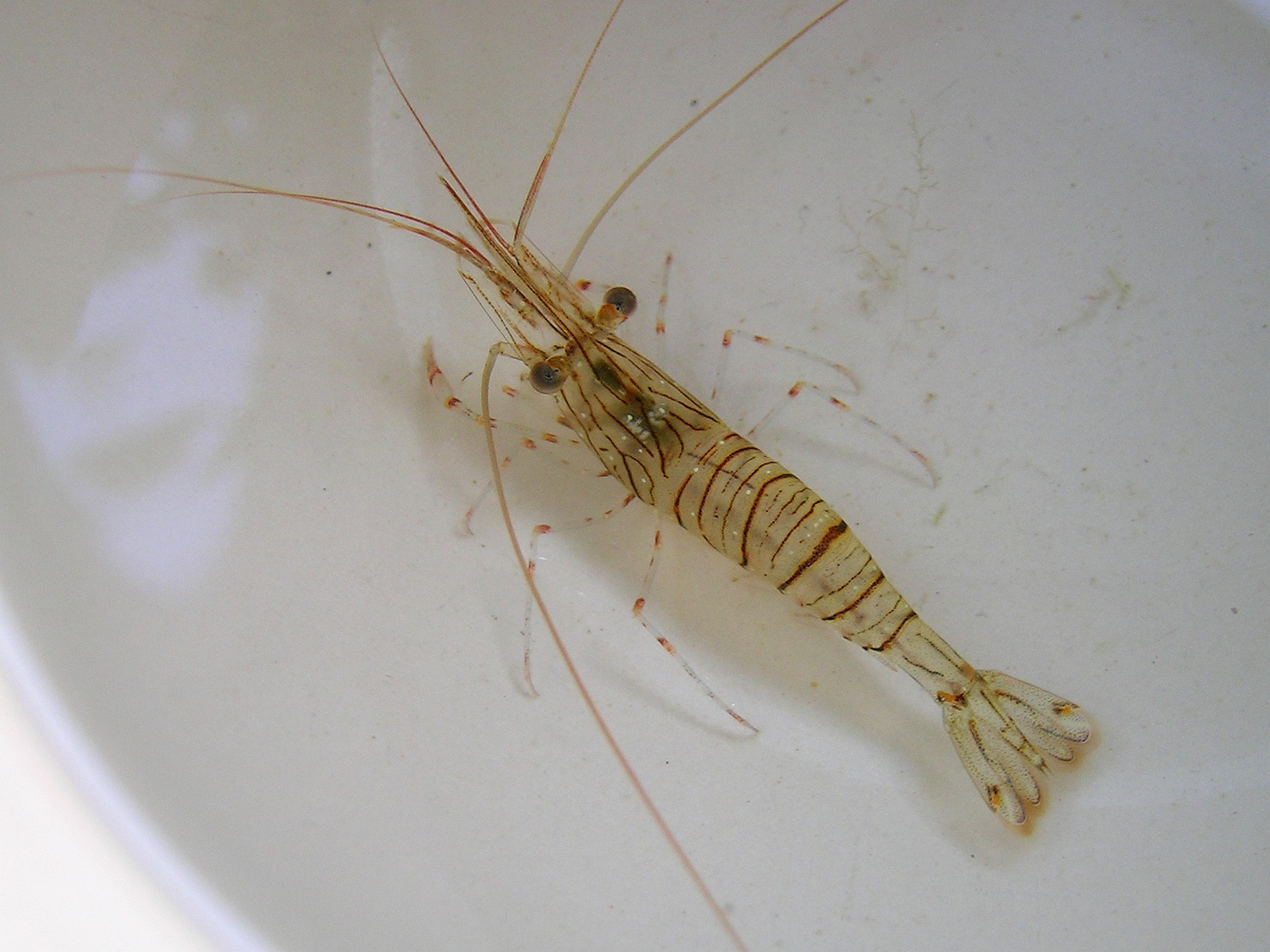
Hier handelt es sich eventuell um Palaemon serratus; die Bestimmung erfolgt u.a. anhand der Anzahl der Zähne auf dem Rostrum (vorderste Spitze des Rückenschildes) und ist nach einem Foto nicht möglich.
Sandgarnele, Philocheras spec
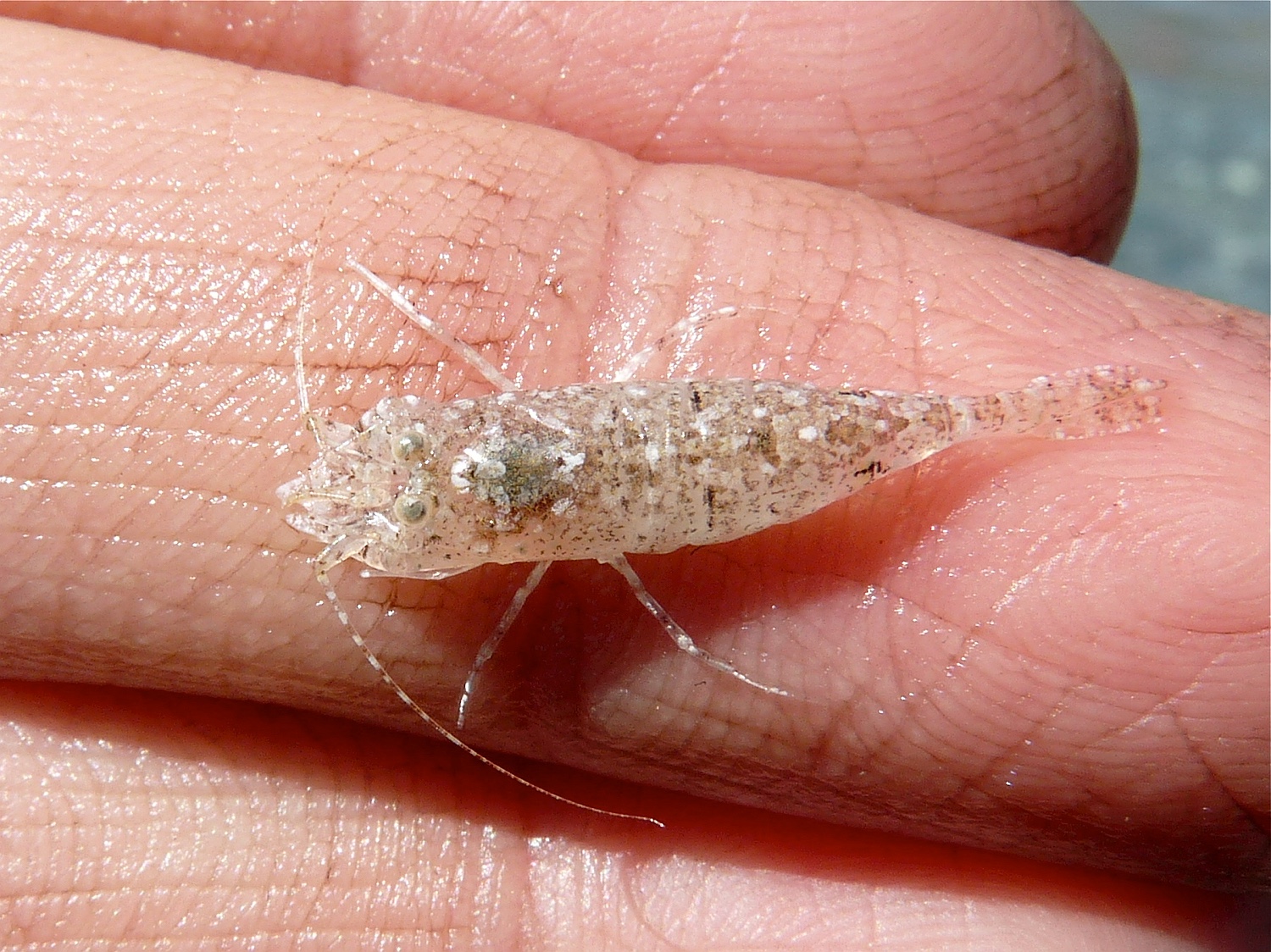
Bei uns kommt eine Sandgarnelen-Art vor, die nur selten zu entdecken ist, da sie tagsüber meist im Sandboden des Flachwassers vergraben ist und außerdem eine ausgezeichnete Tarnfärbung aufweist. Sie wird bis 2 cm lang. Sie besitzt lange Fühler und kleine, aber kräftige Scheren, die jedoch weitgehend unter dem Körper verborgen sind. Zwei längere Beinpaare sind seitlich des Körpers zu sehen, während die vorderen Beine unter dem Körper gehalten werden und die hinteren 5 Beinpaare sehr kurz sind. Oben auf dem Brustpanzer sitzen ein nach vorn weisender Dorn mit zwei Augen-artig wirkenden Höckern daneben.
5. Asseln (Isopoda)
Die Asseln besitzen einen einfacheren Körperbau als die meisten Krebse: Die Segmente sind alle recht ähnlich gestaltet. Es handelt sich um recht kleine, unauffällige Tiere. Zu den Asseln gehören die einzigen Krebstiere, die gänzlich auf dem Land leben; es gibt unter ihnen jedoch auch viele Meeresbewohner.
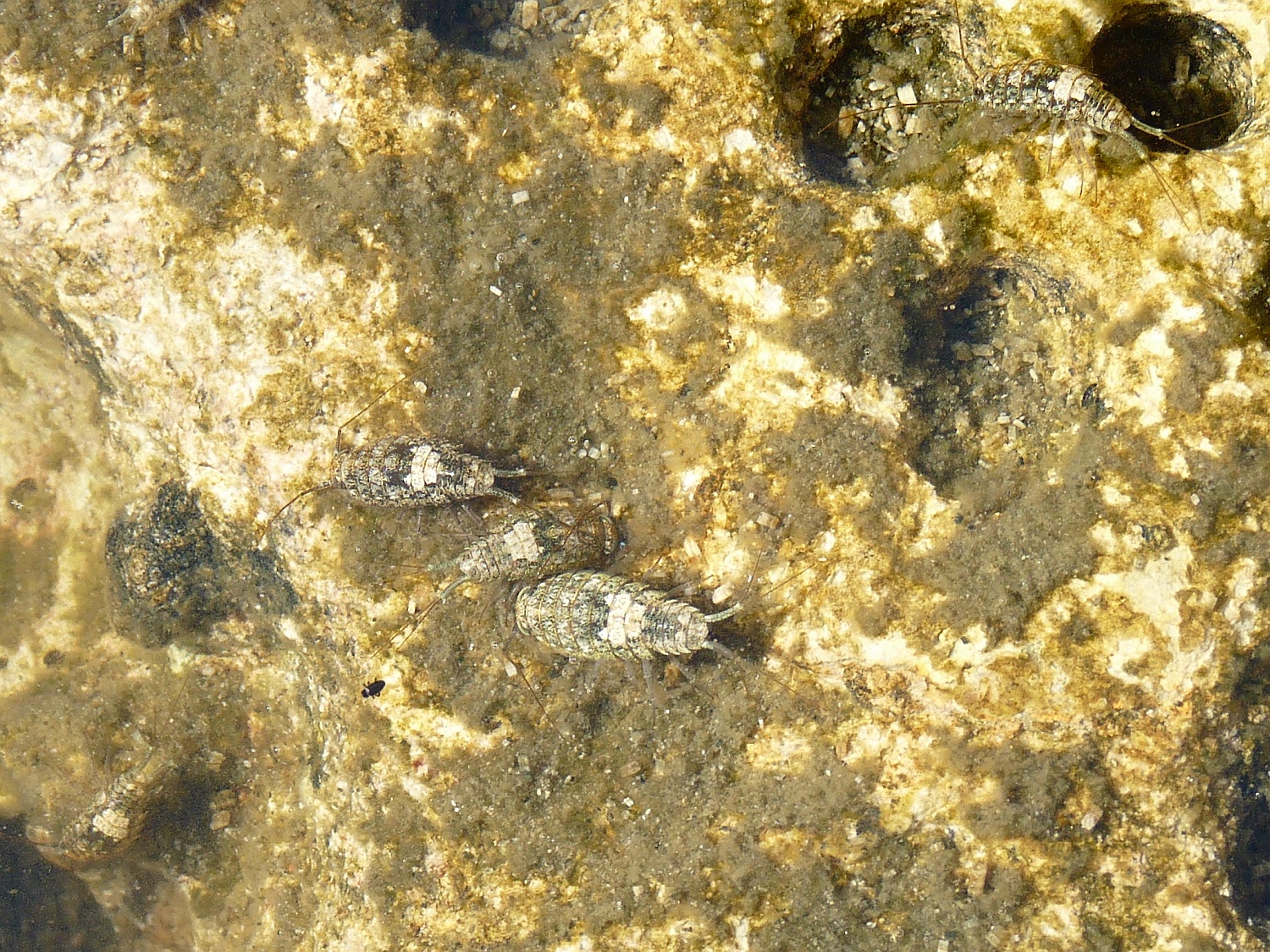
Klippenassel, Ligia oceanica
Die am einfachsten zu beobachtende Assel-Art bei uns ist die häufige Klippenassel. Diese kleinen, scheuen Tierchen leben in großer Zahl am Strand, wo sie sich aber tagsüber meist unter Seegras oder in Felsritzen verstecken.
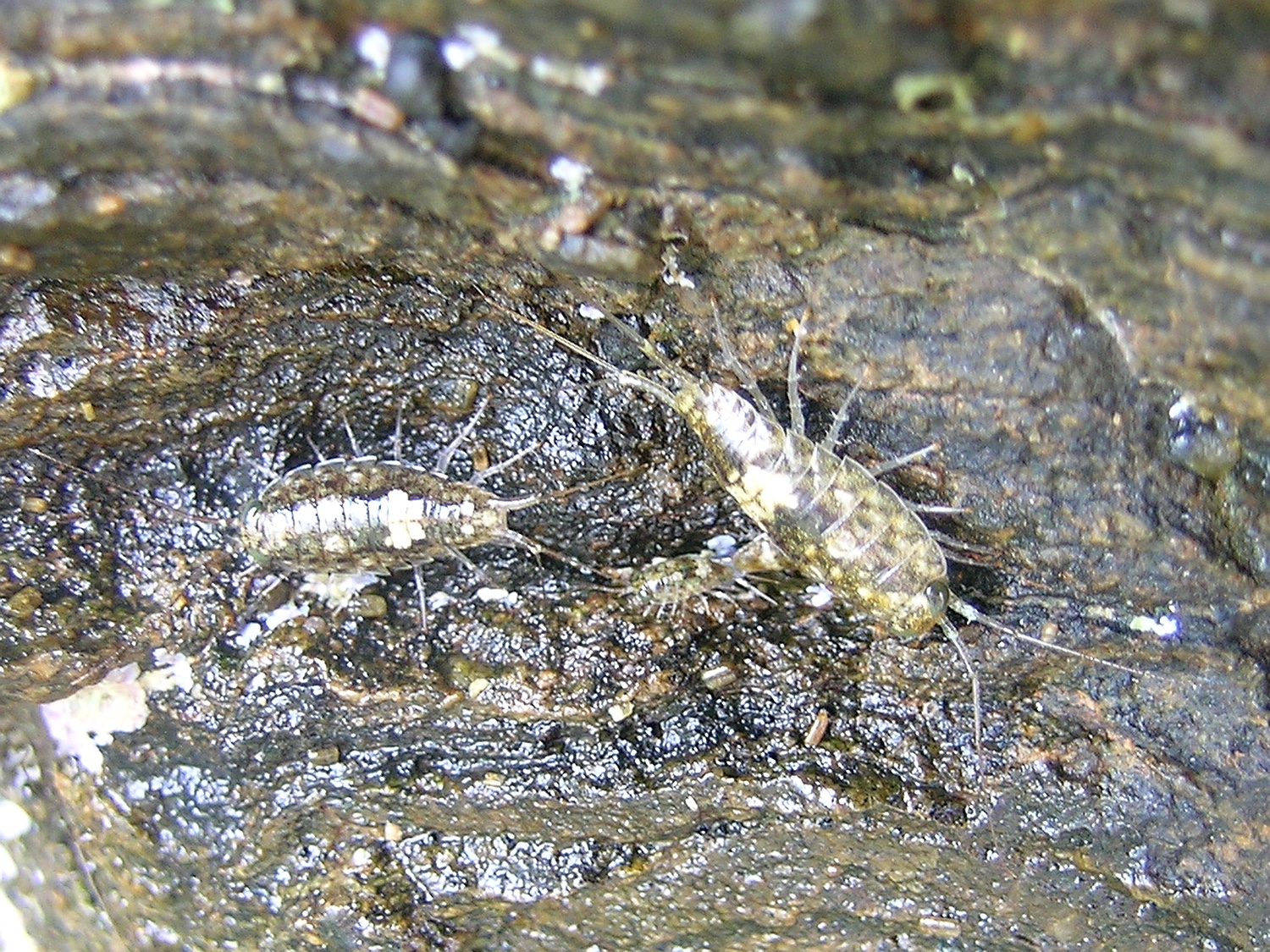
Die Klippenassel ist überall am Strand häufig, aber sehr scheu.
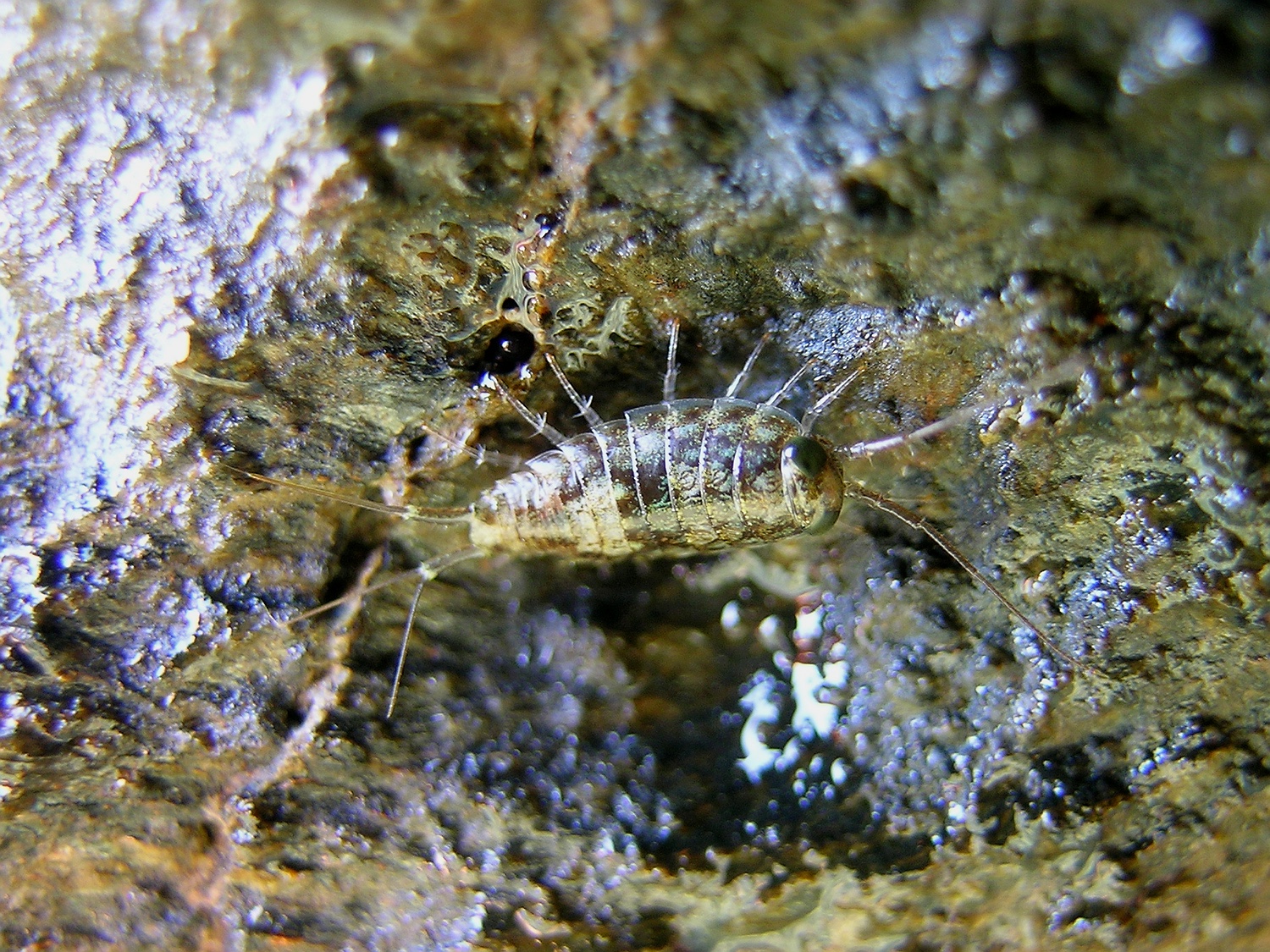
Sie hat auffällige große Augen.
Idotea metallica ?
Außer der am Strand lebenden Klippenassel gibt es im Mittelmeer zahlreiche marine Asselarten, darunter beispielsweise die Gattung Idotea, deren Angehörige vor allem am Seegras leben.
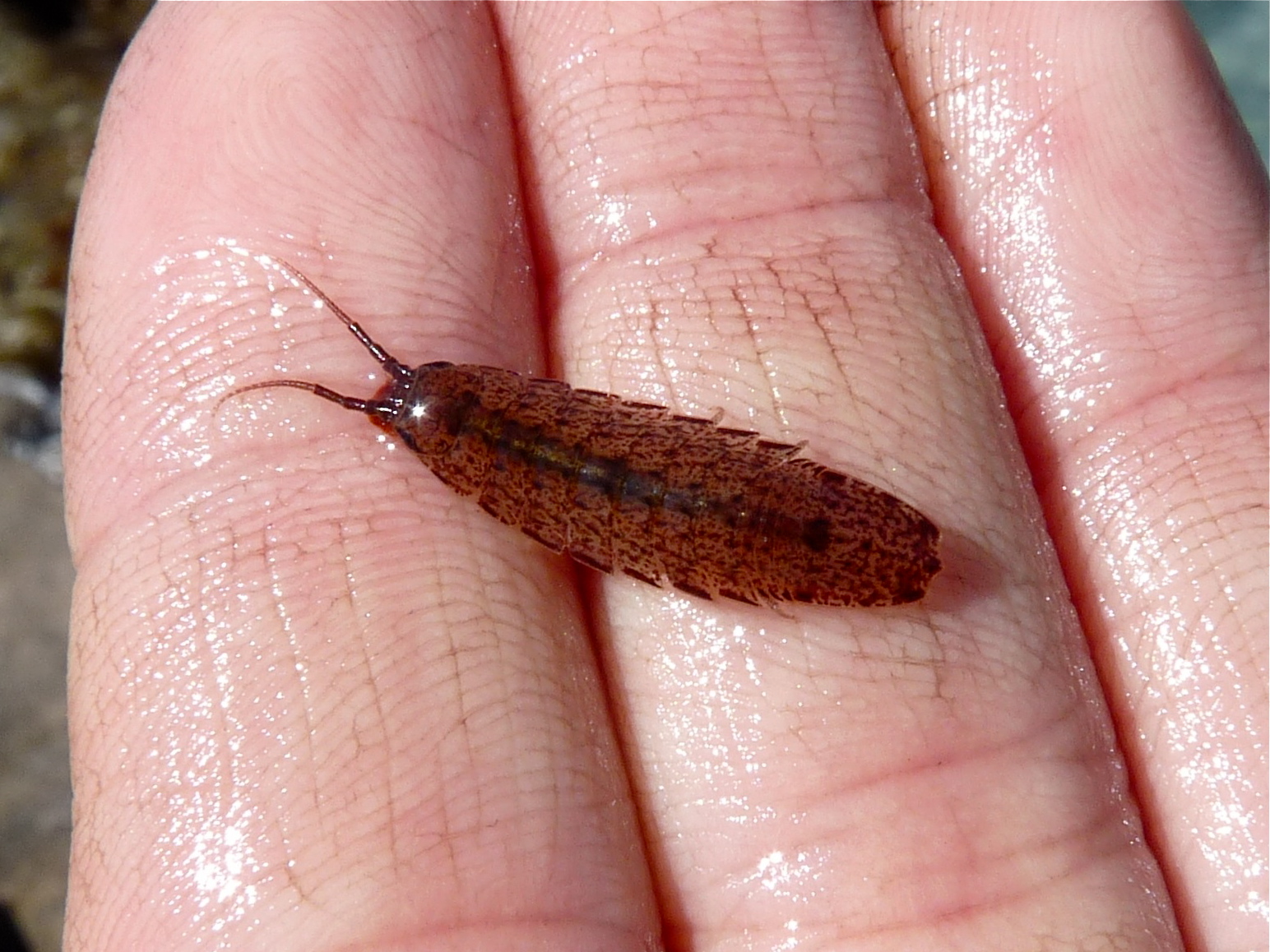
Diese Asselart (Idotea metallica?) lebt vor allem an Seegrasblättern, denen sie in der Färbung ähnelt.
Fischassel, Familie Cymothoida
Die Fischassel ist eine recht häufige parasitische Art, die kaum krebsähnlich aussieht und an Fischen oder in deren Mundhöhle lebt. Wie bei allen Asseln sind die Körperglieder bei dieser Art weitgehend gleichgestaltet. Die Beine tragen hakenförmige Krallen, mit denen sich der Parasit sicher an seinem Wirt festhalten kann. Bei der hier abgebildeten Art könnte es sich um ein Mitglied der Gattung Nerocila handeln.

Die Fischassel lebt parasitisch außen an Fischen oder in deren Mundhöhle.

Sie besitzt hakenförmige Krallen an den Beinen, mit denen sie sich am Wirt festklammert. Rechts im Bild sieht man den kleinen Mund, mit dem die Fischassel das Blut des Wirtes saugt.

Hier kann man die merkwürdigen Augen der Fischassel sehen.
6. Flohkrebse (Amphipoda)
Die sehr kleinen Flohkrebse sind mit den Asseln verwandt; im Gegensatz zu diesen sind sie jedoch seitlich abgeplattet.
In Algenbeständen findet man viele Flohkrebse, die meist so klein sind, dass man sie auch mit einer starken Lupe kaum bestimmen kann. Von besonderer Bedeutung für die Bestimmung ist die Form der Beinpaare. Flohkrebse haben keinen Rückenpanzer, alle Gliederstücke des Rückens sind etwa gleichförmig ausgebildet. Die abgebildete Art besitzt zwei schlanke Fühler, zwei Scherenbeine mit kleinen Scheren und fünf etwa gleich gestaltete Schwimmbeine, von denen zwei etwas nach vorn und drei etwas nach hinten gerichtet sind.
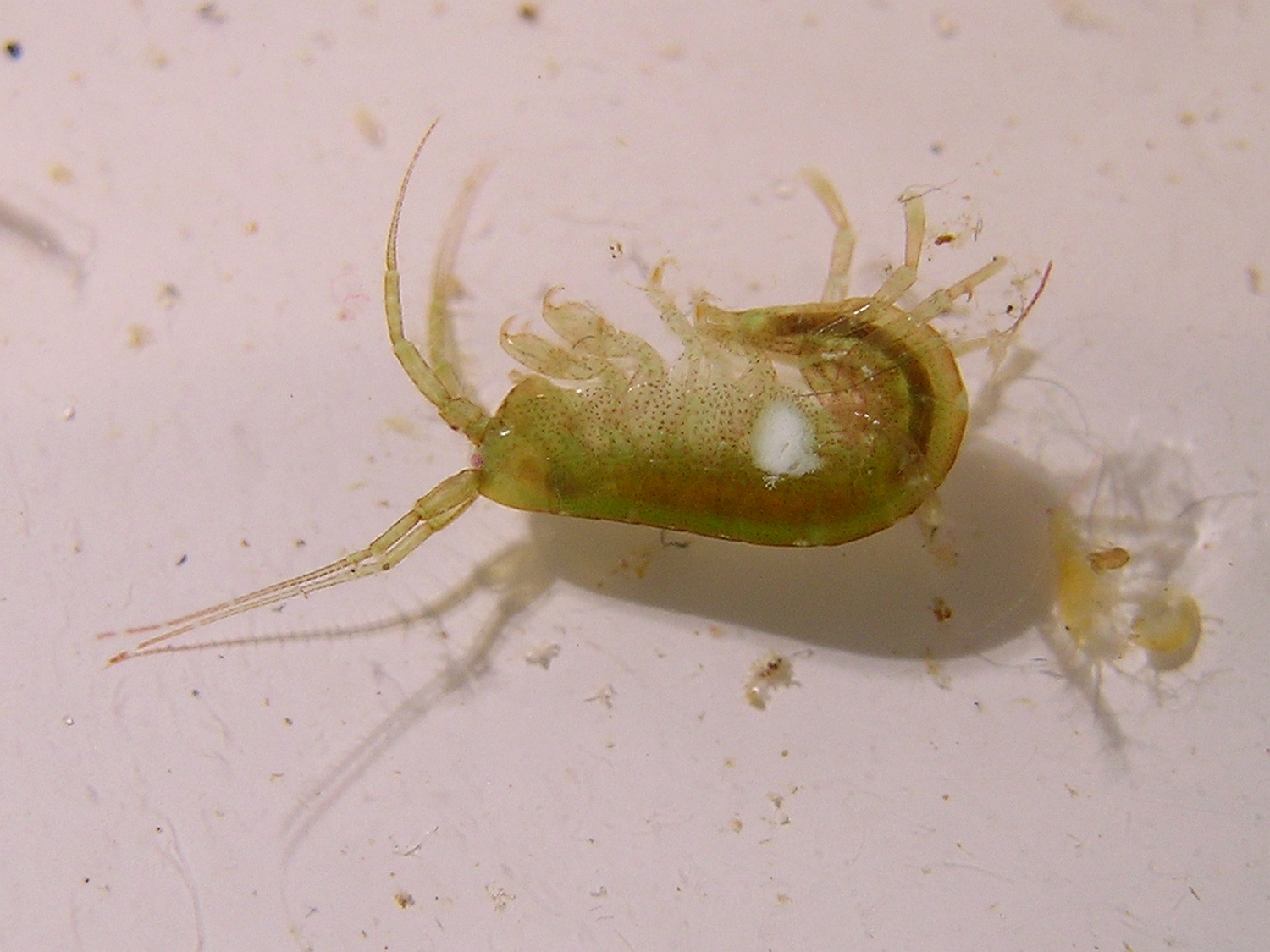
Flohkrebs-Art, möglicherweise Maera inaequipes
“Gespensterkrebs”, Familie Caprellidae
Wenn man mit der Lupe in Algenbeständen sucht, kann man noch weitere Arten entdecken, wie den abenteuerlich aussehenden, extrem gut getarnten “Gespensterkrebs”. Diese fast durchsichtige Art, die bis 1 cm groß wird, ist sehr langgestreckt mit kleinen, teilweise zurückgebildeten Beinen und rundlichen Klammerscheren. Der Thorax (Brustsegmente) ist bei dieser Familie besonders langgestreckt, während das Abdomen zurückgebildet ist und nur wenige Beine trägt. Der Gespensterkrebs ist besonders häufig auf Hydrozoen zu finden, die seine liebste Nahrung darstellen. Die Bestimmung der Art ist nicht möglich (man soll ja auch nicht übertreiben!).
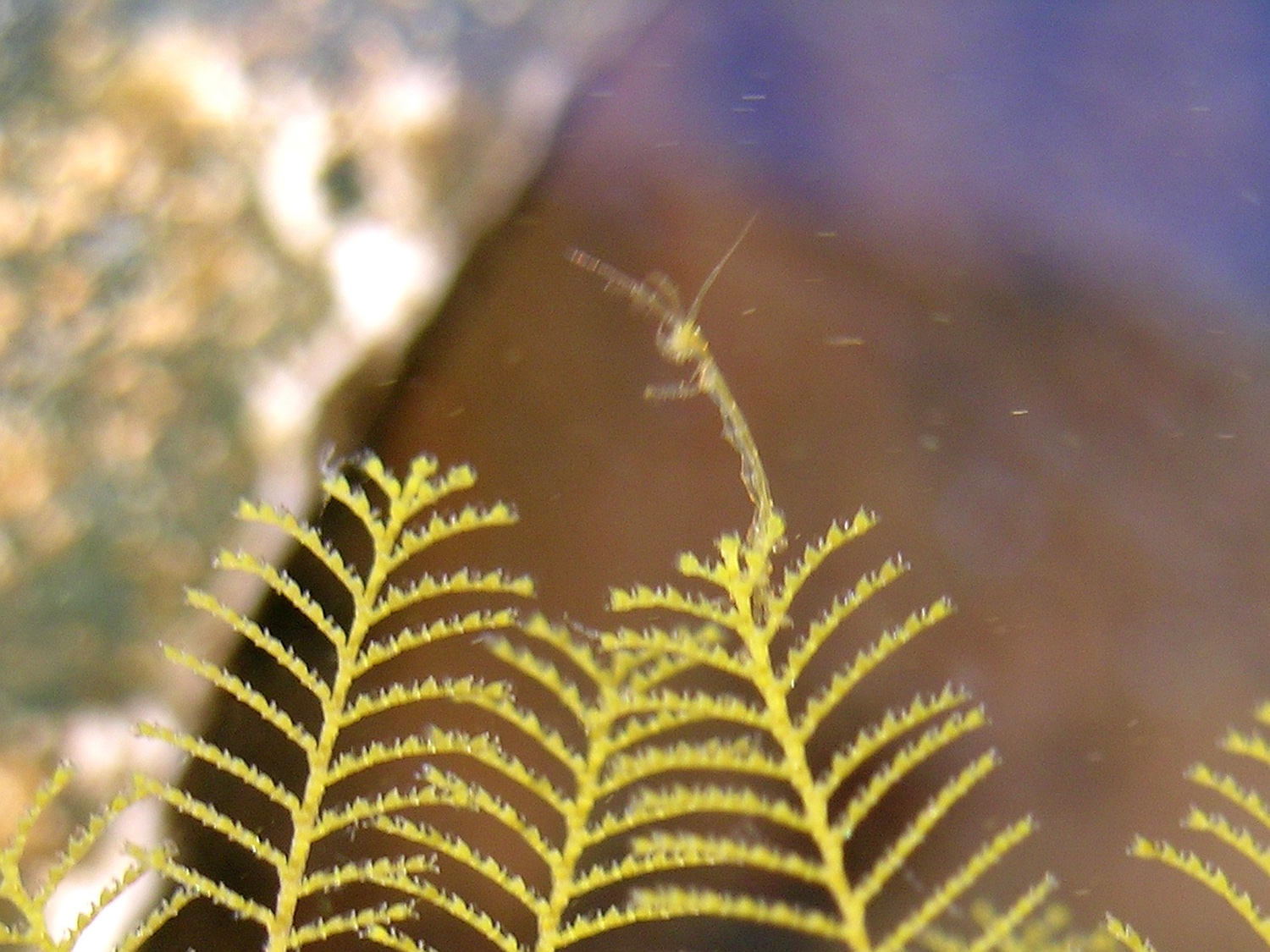
Auf Hydrozoen kann man gelegentlich den winzigen “Gespensterkrebs” finden. Das Bild ist nicht gut genug, dass eine Bestimmung möglich wäre (abgesehen davon dass mir die Bestimmungsliteratur fehlt), aber ich möchte dieses urige Tier trotzdem nicht auslassen!
zurück: Meerestiere Überblick
siehe auch: