
Eleonora's falcon
One of the most beautiful and interesting bird species one may see in our area is Eleonora’s falcon. It is a mediterranean species with 90 % of its breeding population (over 10,000 breeding pairs) living in the Aegean; the rest is scattered throughout other regions of the Mediterranean and the Canary Islands. Eleonora’s falcon breeds in colonies of usually a few dozen to a hundred pairs, mainly on small, uninhabited rocky islands. It is a migratory bird and spends the winter in Madagascar.
Eleonora’s falcon is a medium-sized, slender falcon species. It is a skilled flyer that preys almost exclusively on flying animals – for most of the year it catches mainly large insects, but during the breeding season it feeds mostly on birds. This is why Eleonora’s falcon, unlike all other bird species in Europe, does not breed in spring, but in early autumn at the time of the autumn migration.
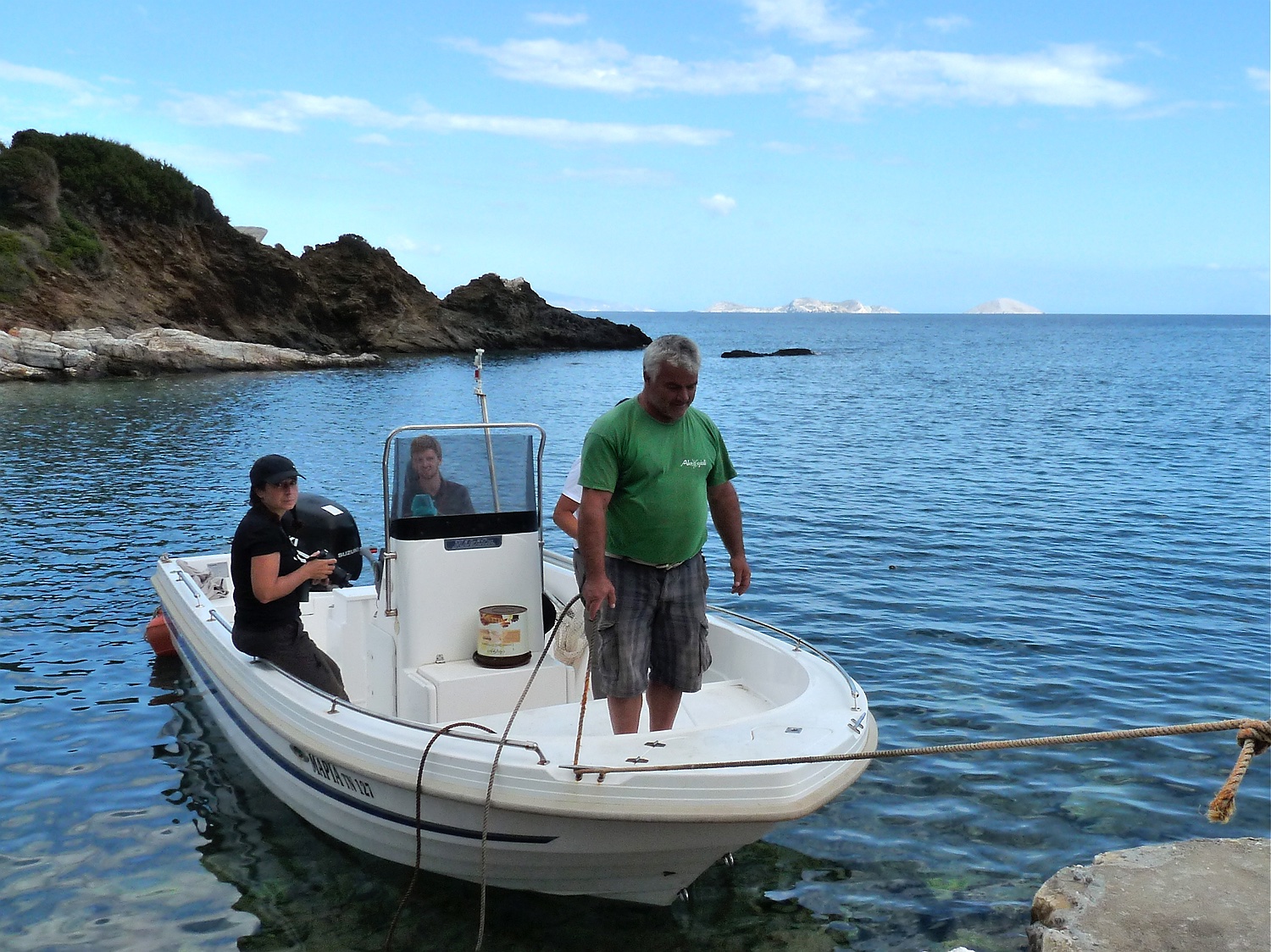
Eleonora’s falcons breed almost exclusively on uninhabited rocky islands that can only be reached by boat.
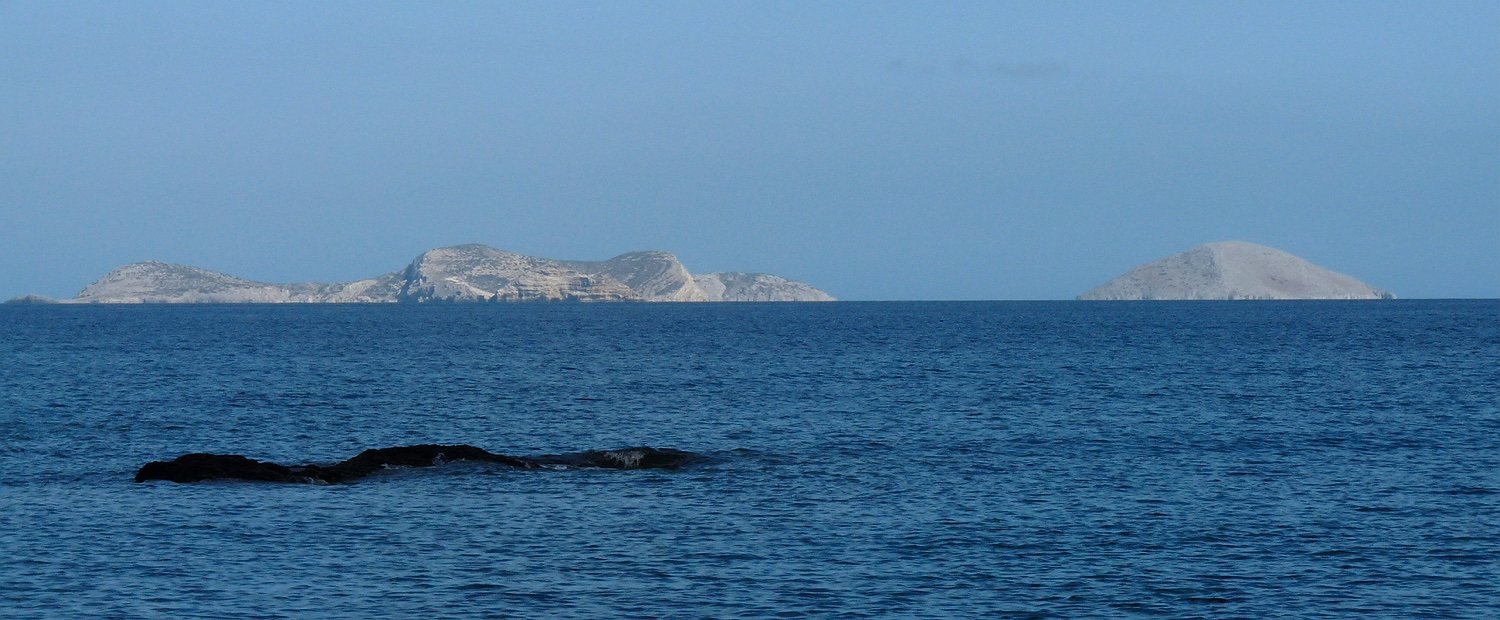
Here is our destination for today: the islands Strongýle (right) and Ágios Nikólaos (left) off the east coast of Naxos (Mákares islands), where we are going to survey the falcons together with members of the Hellenic Ornithological Society.
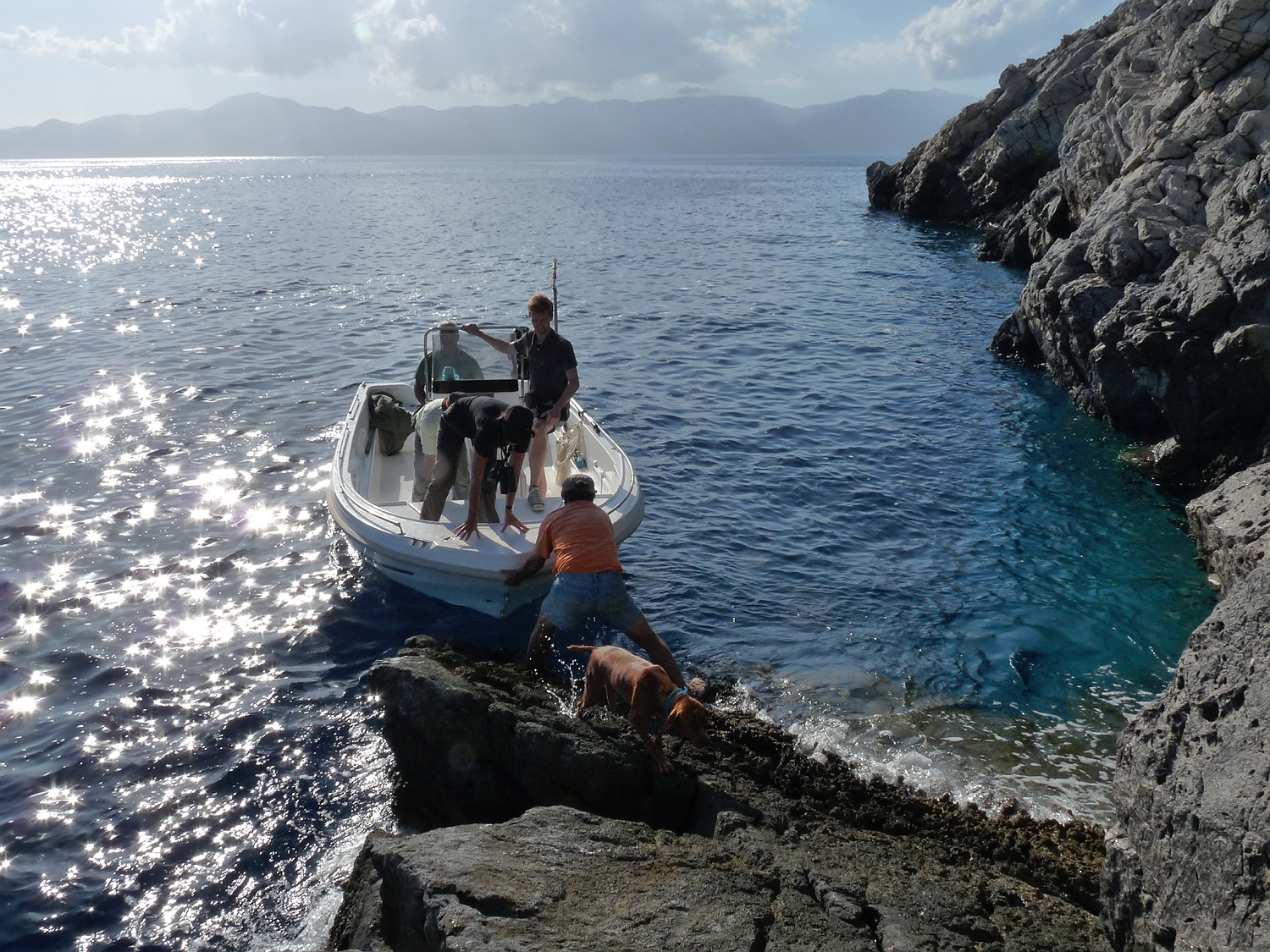
The boat cannot land on Strongýle, so we jump off the boat onto this rock.
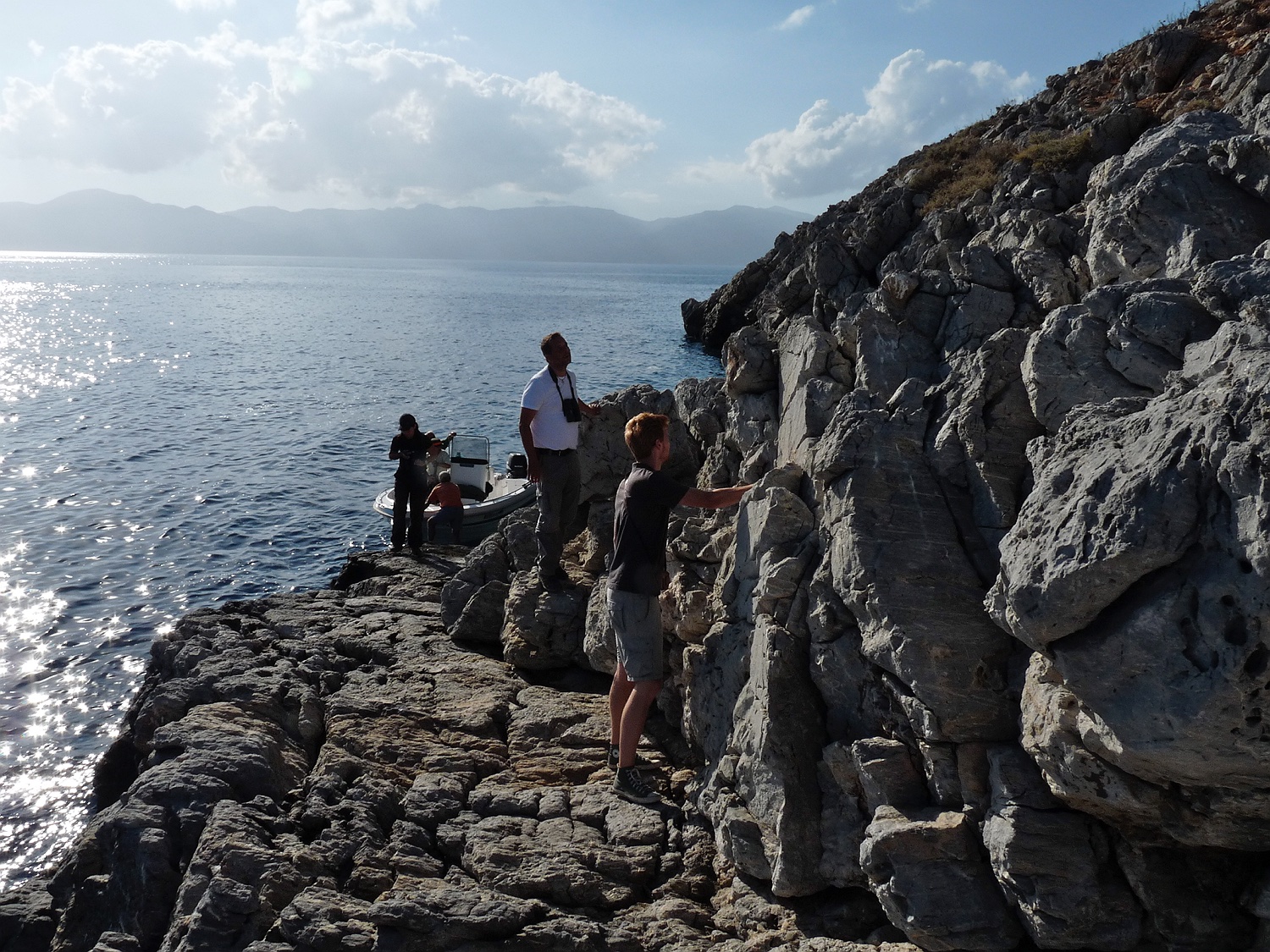
The entire island has only sparse vegetation and is quite steep and rocky.
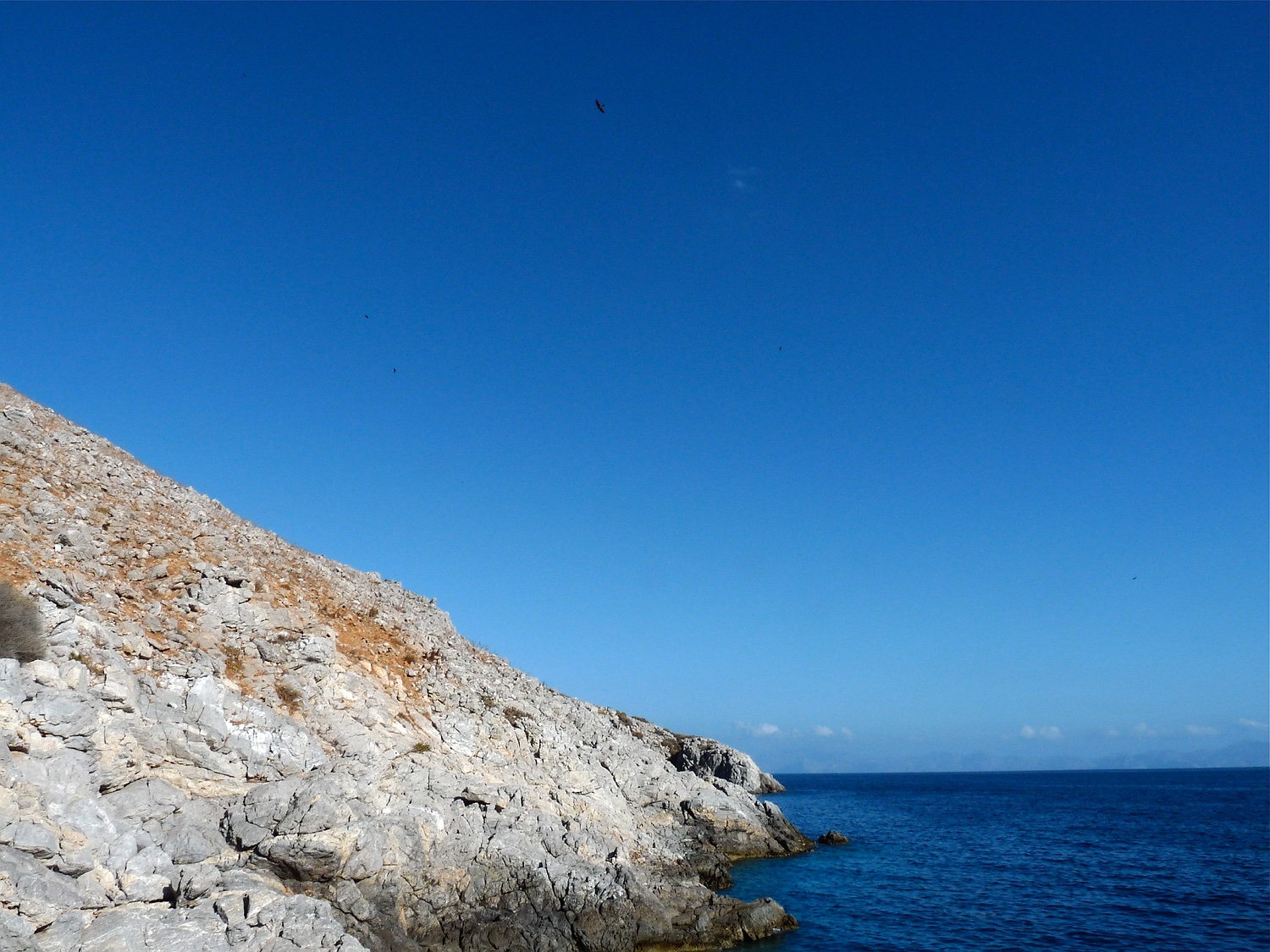
The black specks in the air are Eleonora’s falcons that we have startled or that are hunting over the island. We see also many migrating birds of prey, especially Marsh harriers.
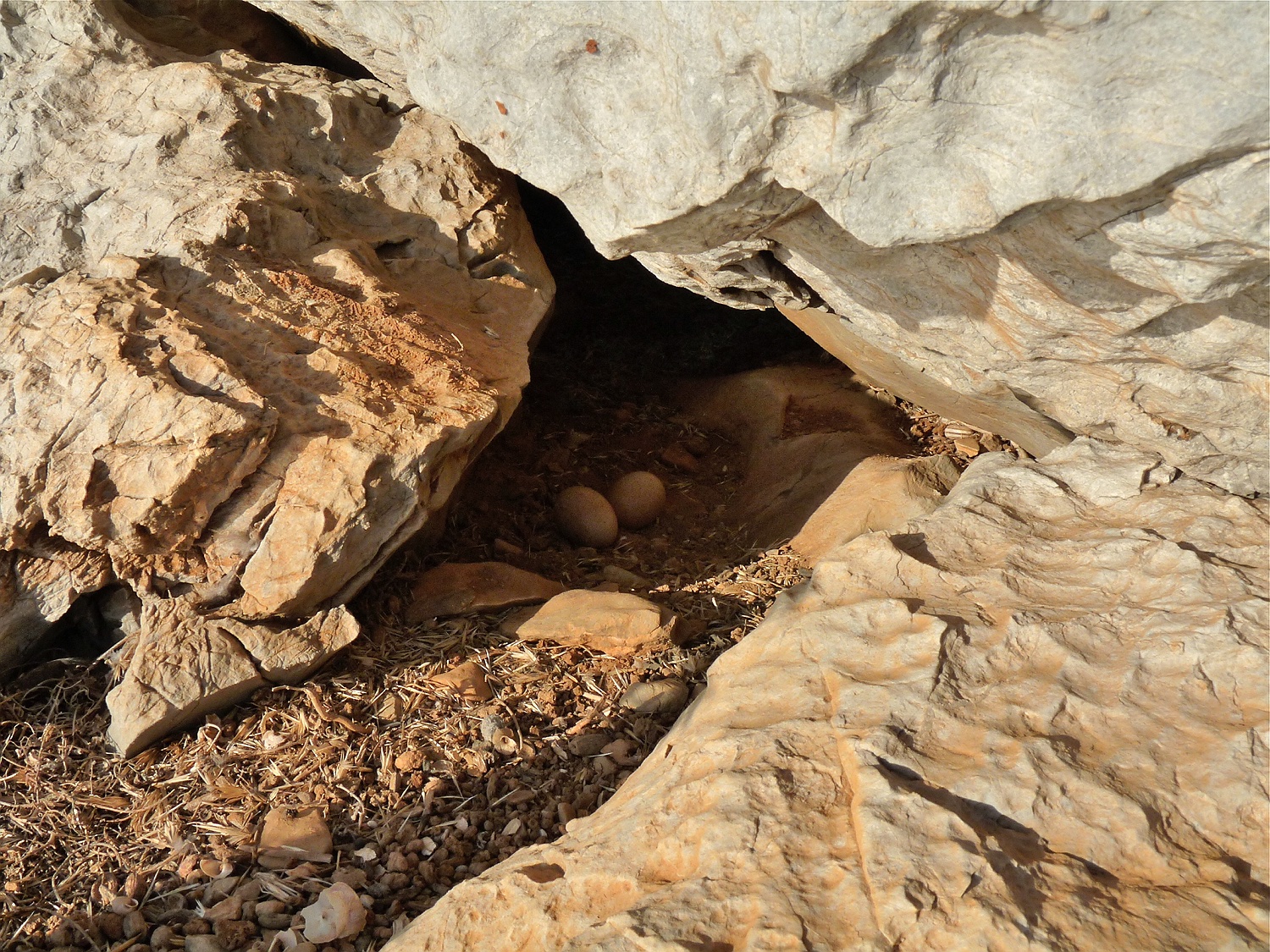
Eleonora’s falcons lay their eggs around the beginning of August in the shade of a rock without building a nest.
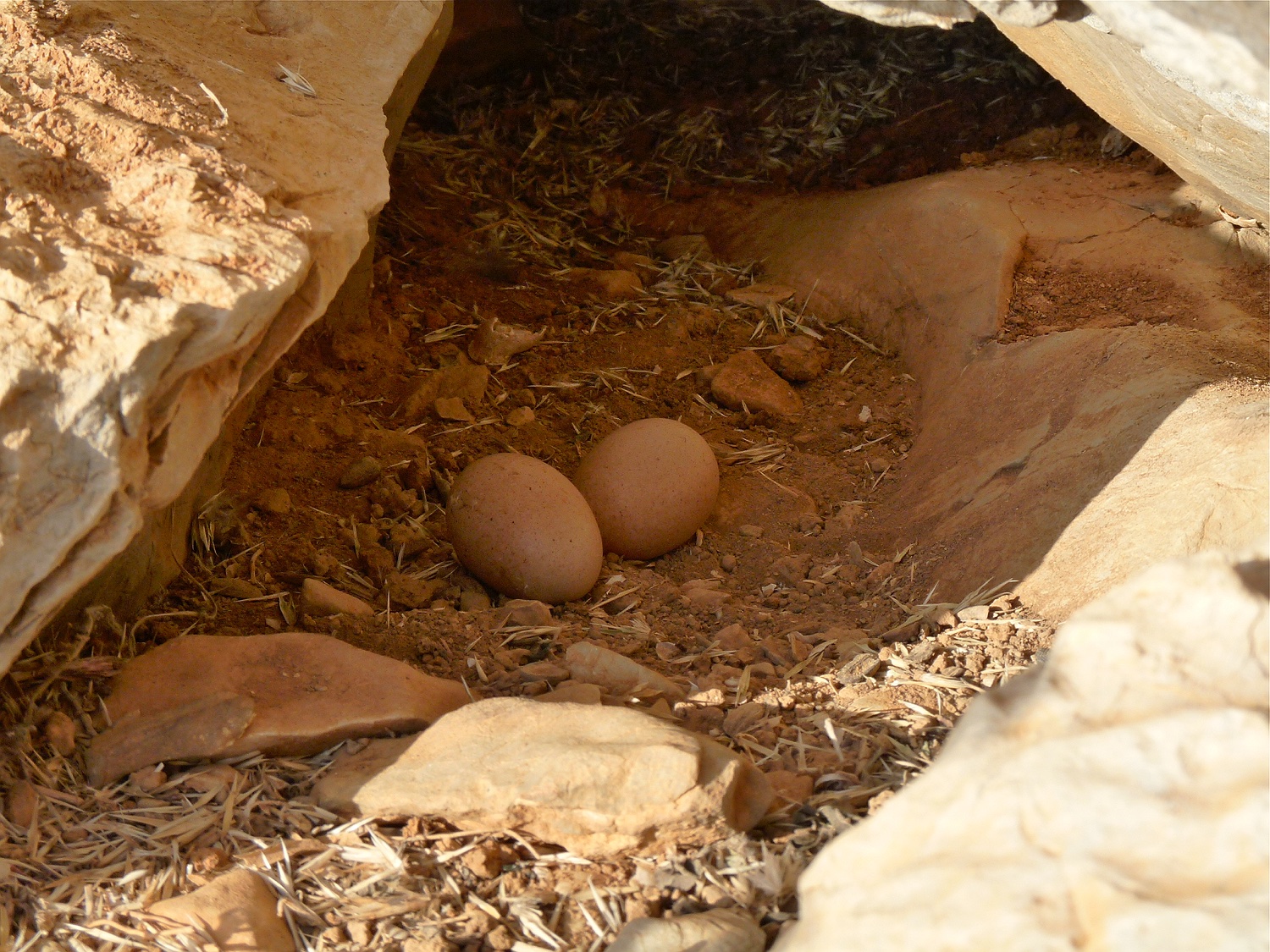
By mid-September, all the young birds have hatched; these eggs have probably been abandoned or have not hatched for another reason.
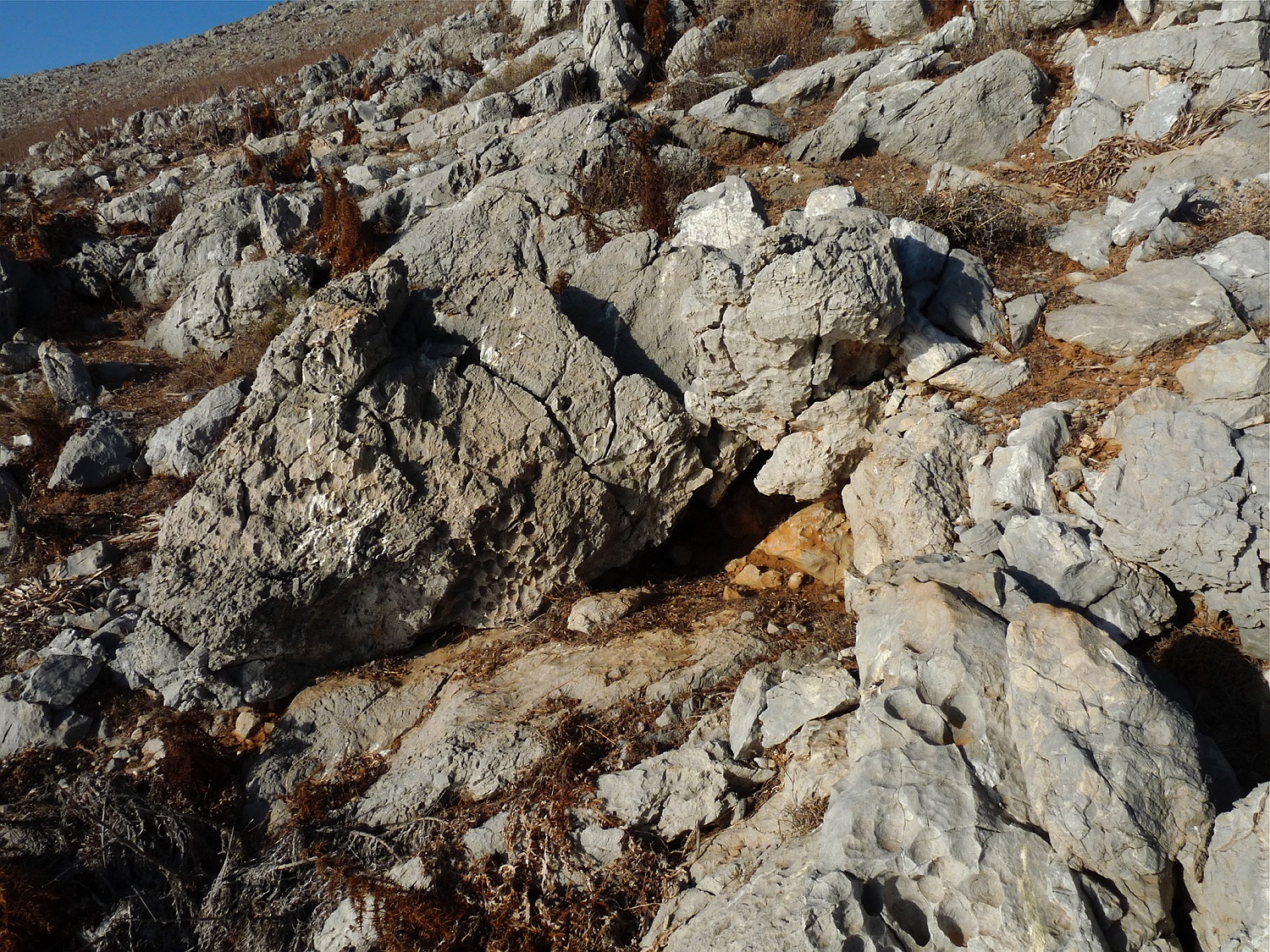
typical nesting site
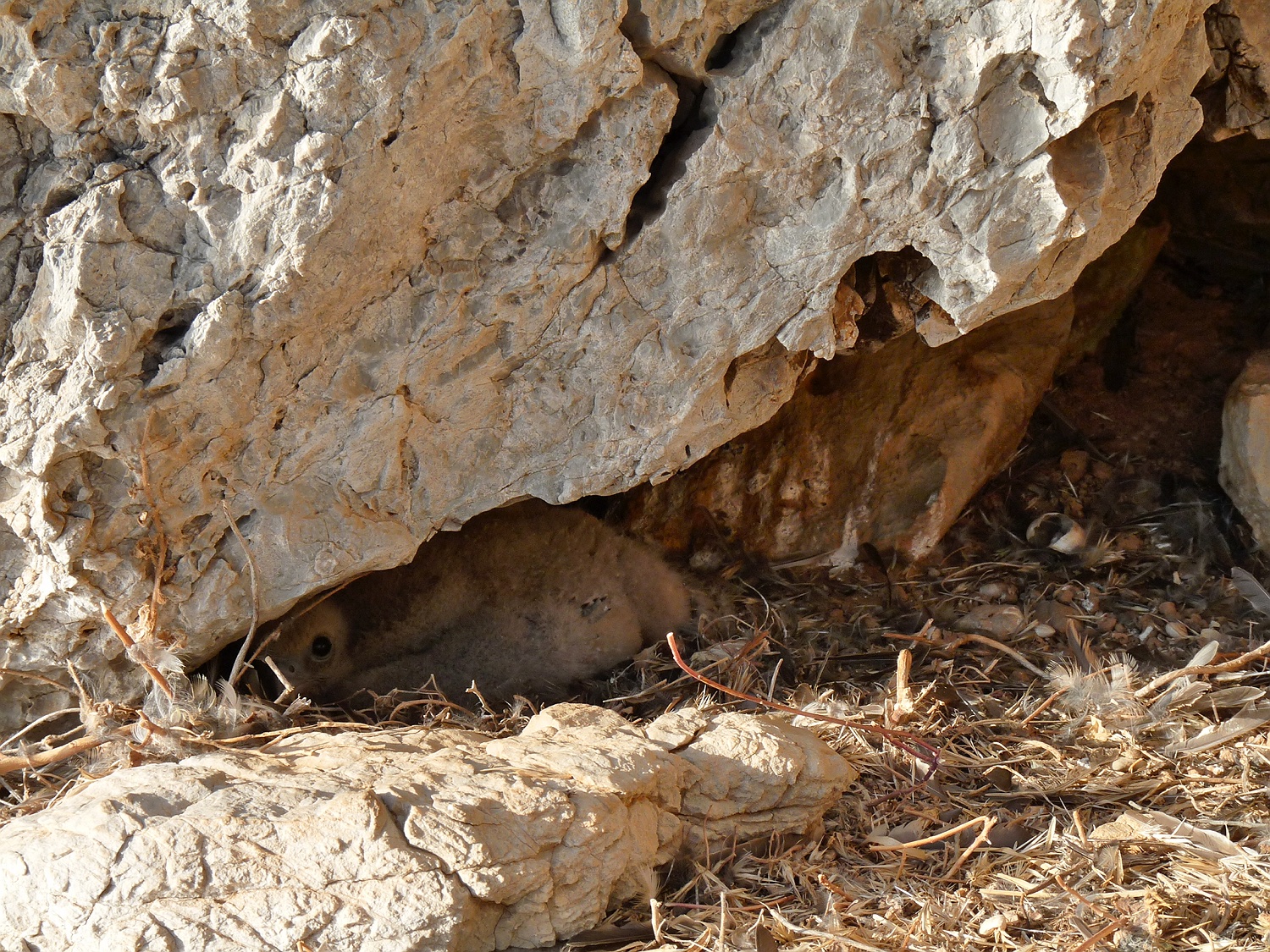
Here a still quite small chick: at this age, the young are covered with white, fluffy down.
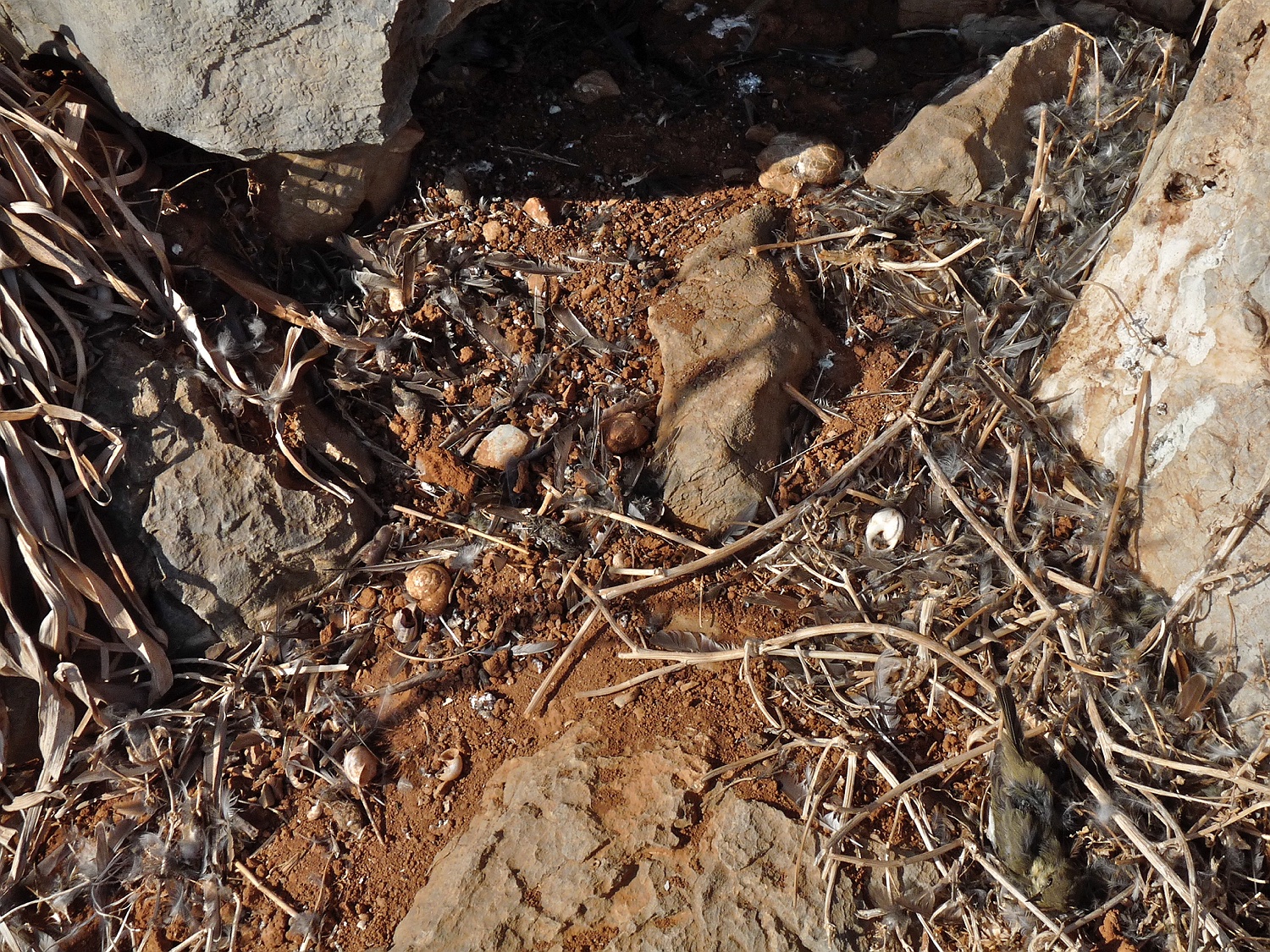
In front of the nest lie large amounts of the feathers of the prey. Eleonora’s falcons feed their young mainly on the species Willow warbler, Red-backed shrike, Spotted flycatcher and Whinchat; however, the feathers of numerous other species such as swallows, waders and even hoopoes have also been found.
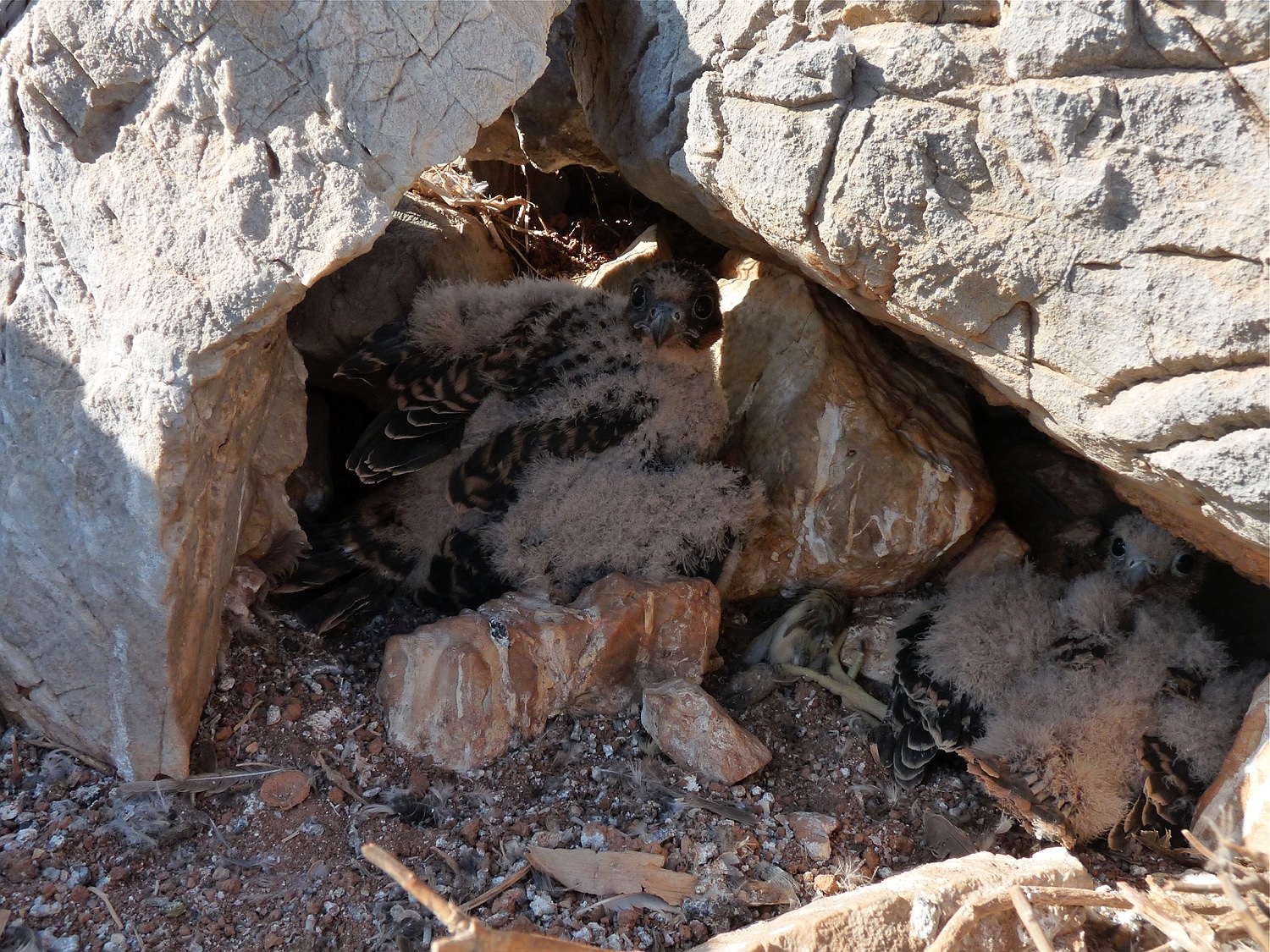
In most cases, Eleonora’s falcons have two young. Here two slightly older chicks, whose “real” feathers are already visible through the down.
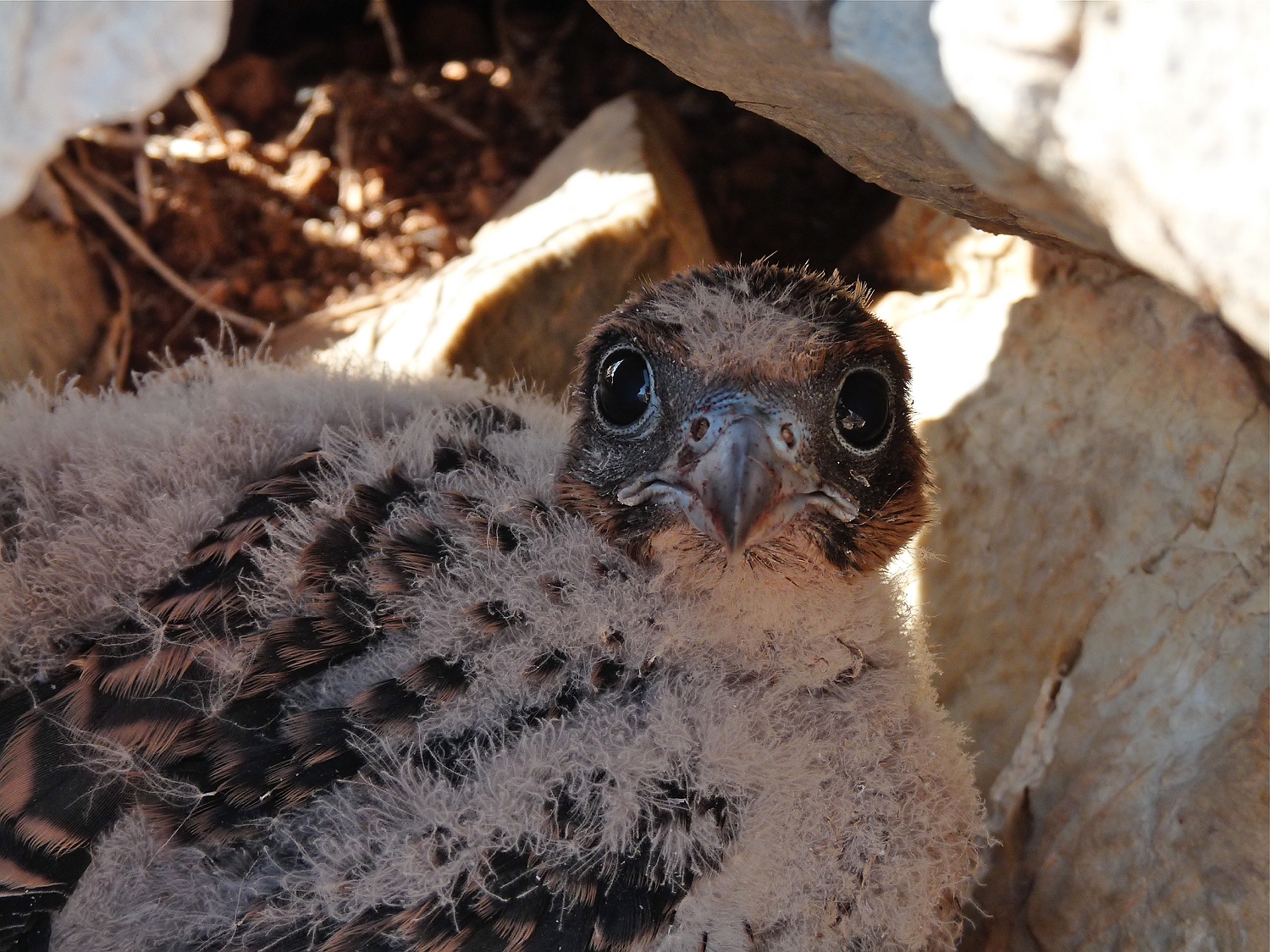
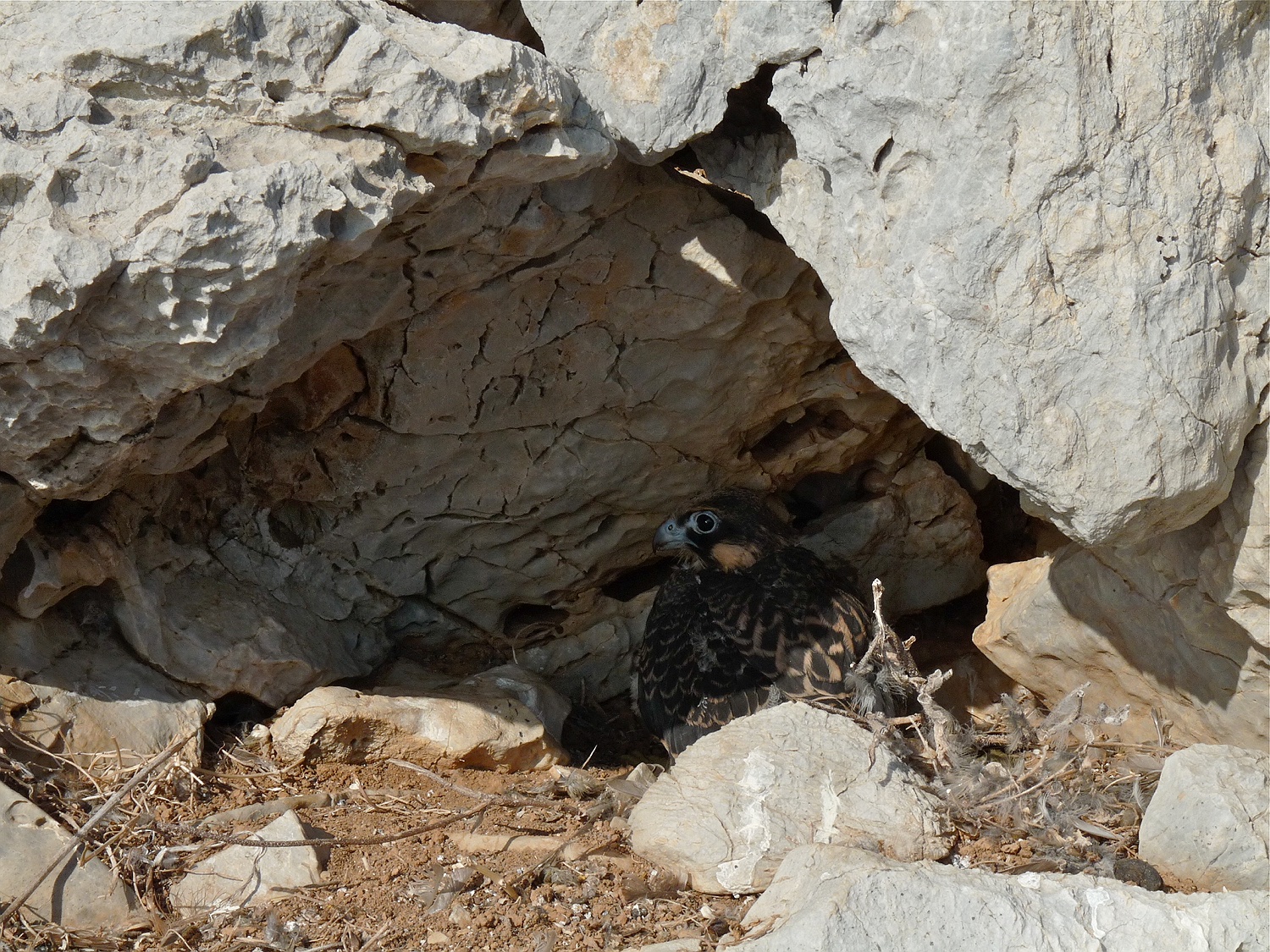
an even older animal…
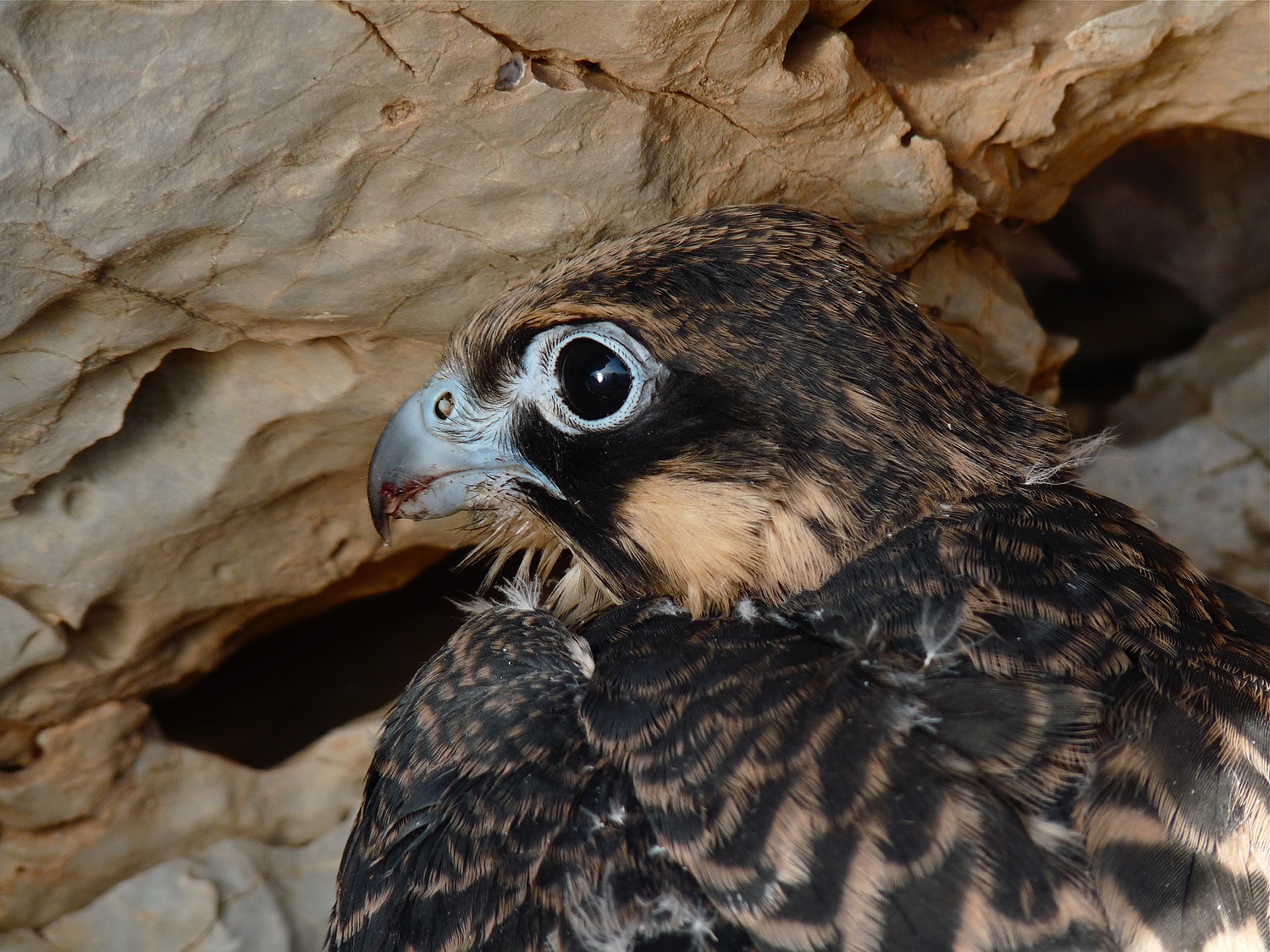
The wax skin around the eyes is blue-grey in young birds and females, but bright yellow in adult males: this is the most reliable distinguishing feature between the sexes.
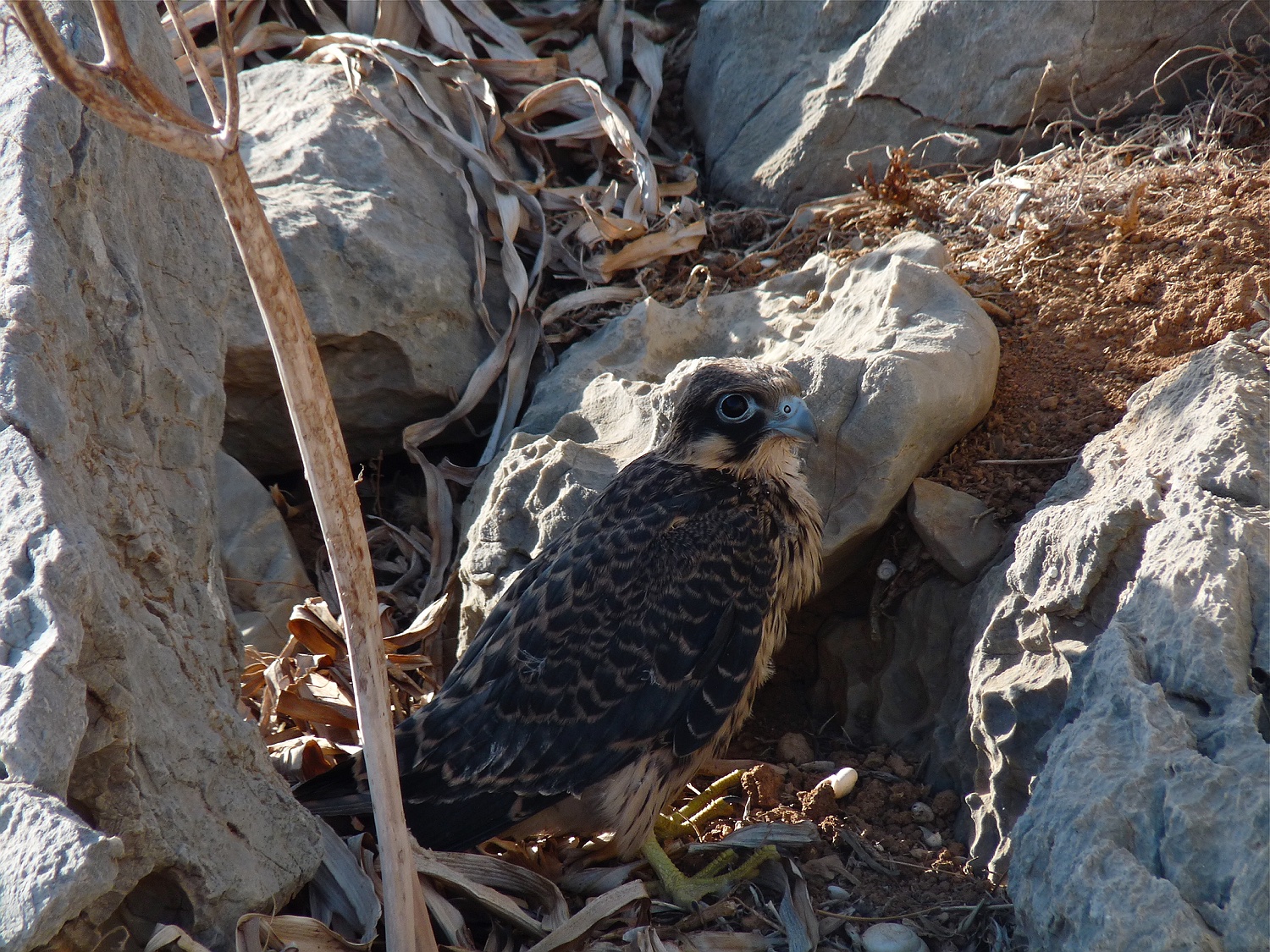
Some of the young are almost ready to fly and are leaving the nest.
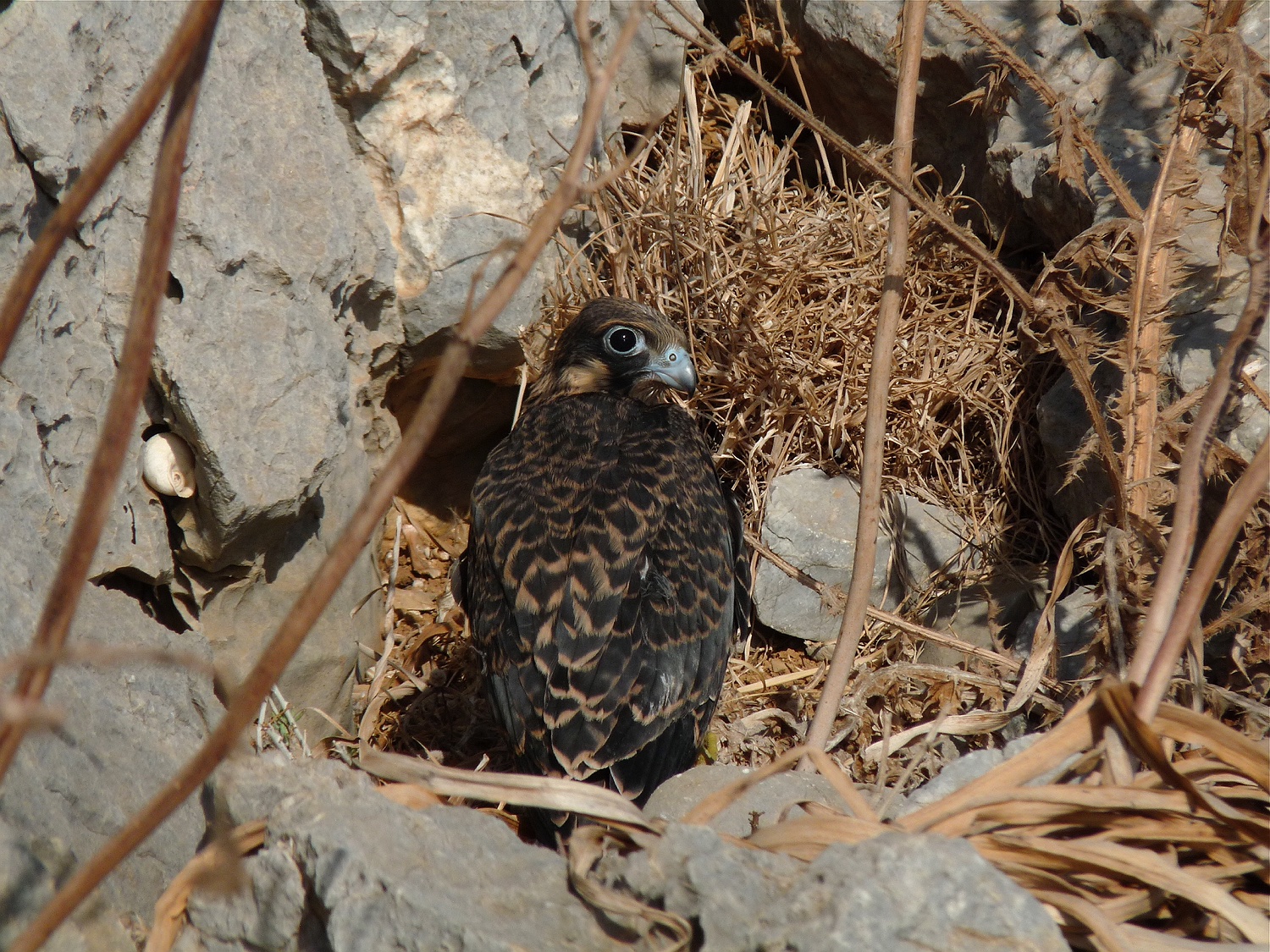
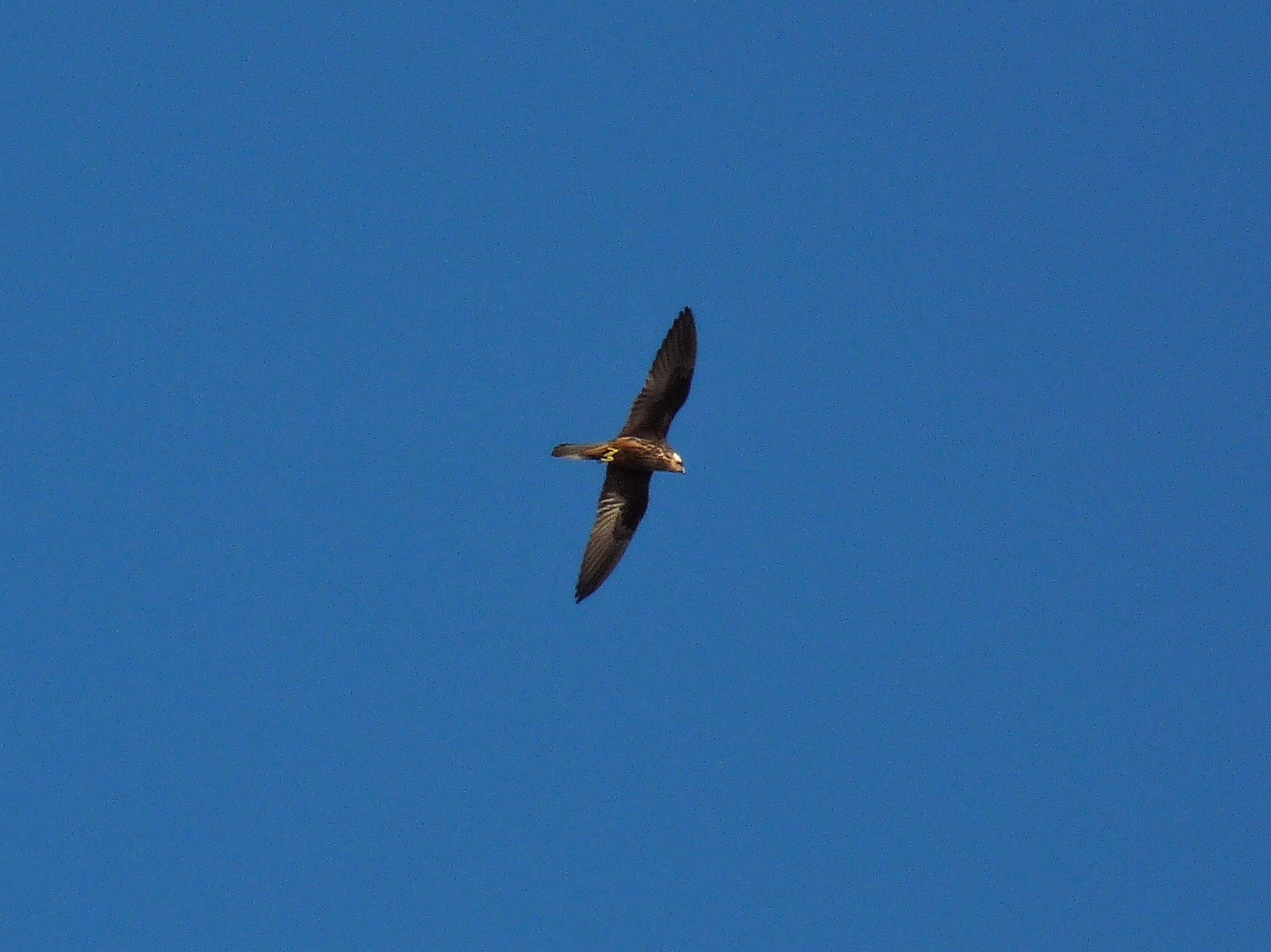
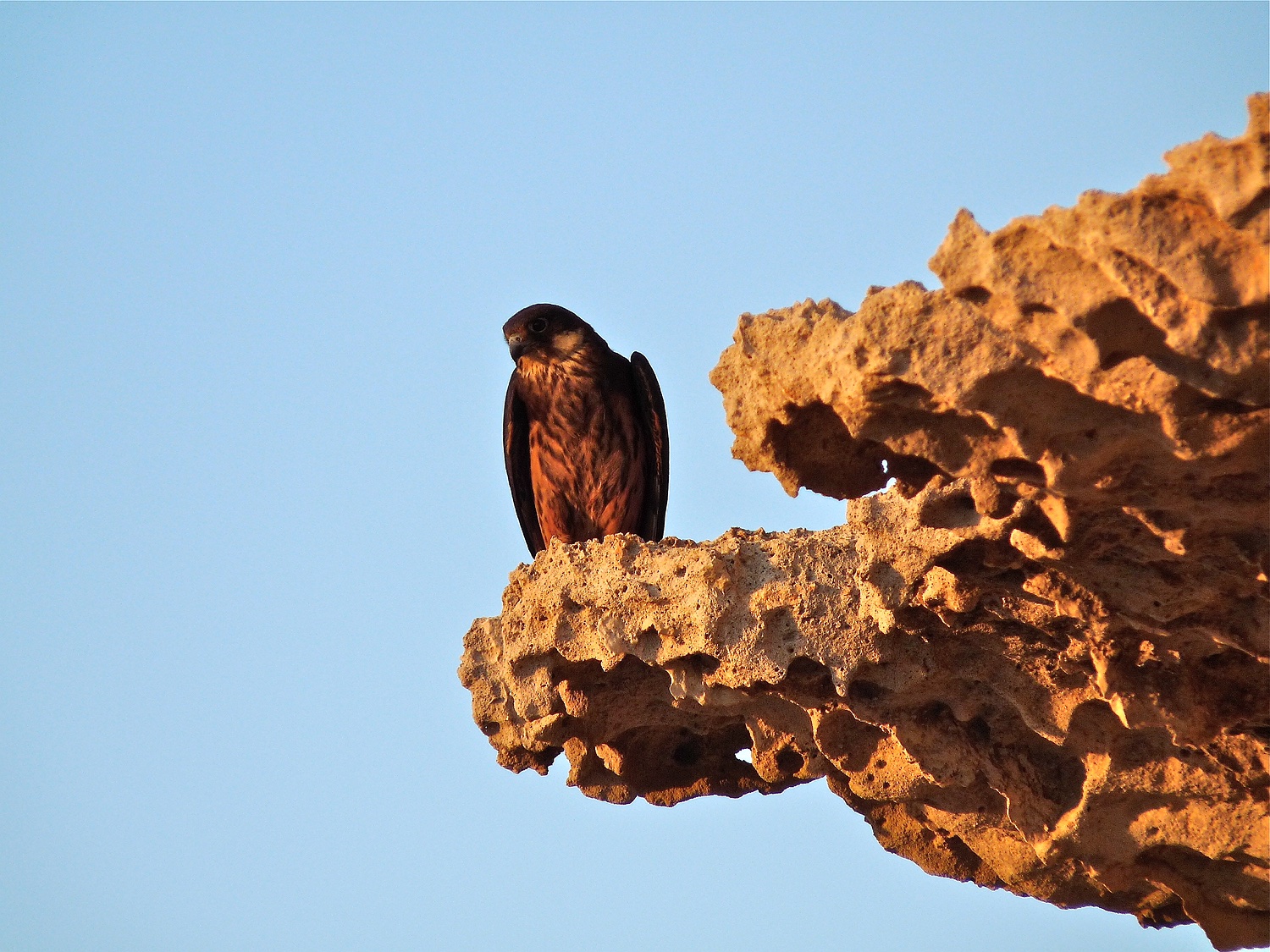
Eleonora’s falcon occurs in a light morph, whose underside is light brown with darker dashes, and an almost black dark morph (30 % of the birds).
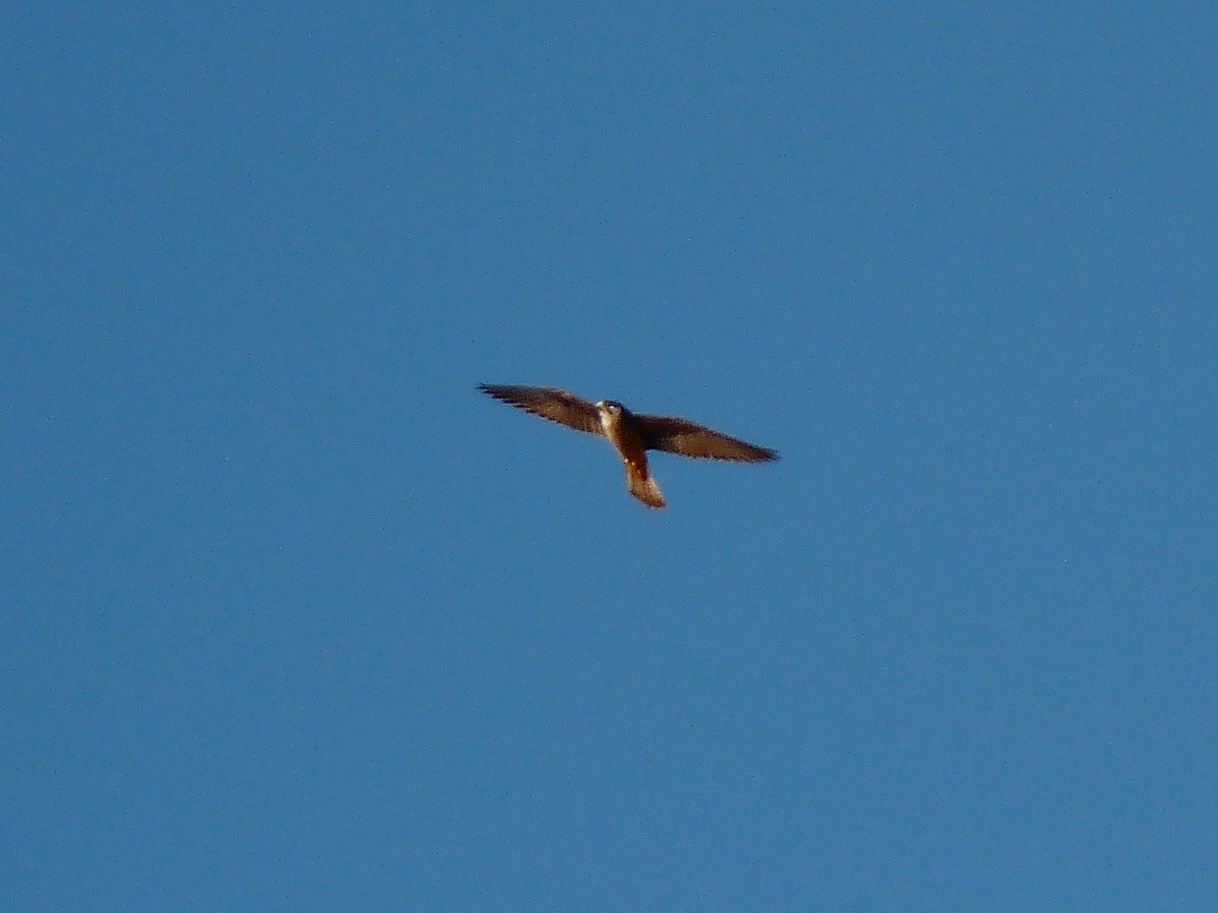
The falcons often fly high in the air to hunt. When they spot suitable prey, they swoop down on it; often several falcons attack the same bird in succession and chase each other when one is successful. Eleonora’s falcons hunt mainly in the early morning or evening, but also during the day and sometimes in near darkness. They are very skilled hunters, but by far not all attacks are successful. Migrating small birds often fly very low above the sea to avoid the falcons. Once a bird has made it to the safety of the island, it hides in the bushes or under the rocks, where it is often barely afraid of humans.
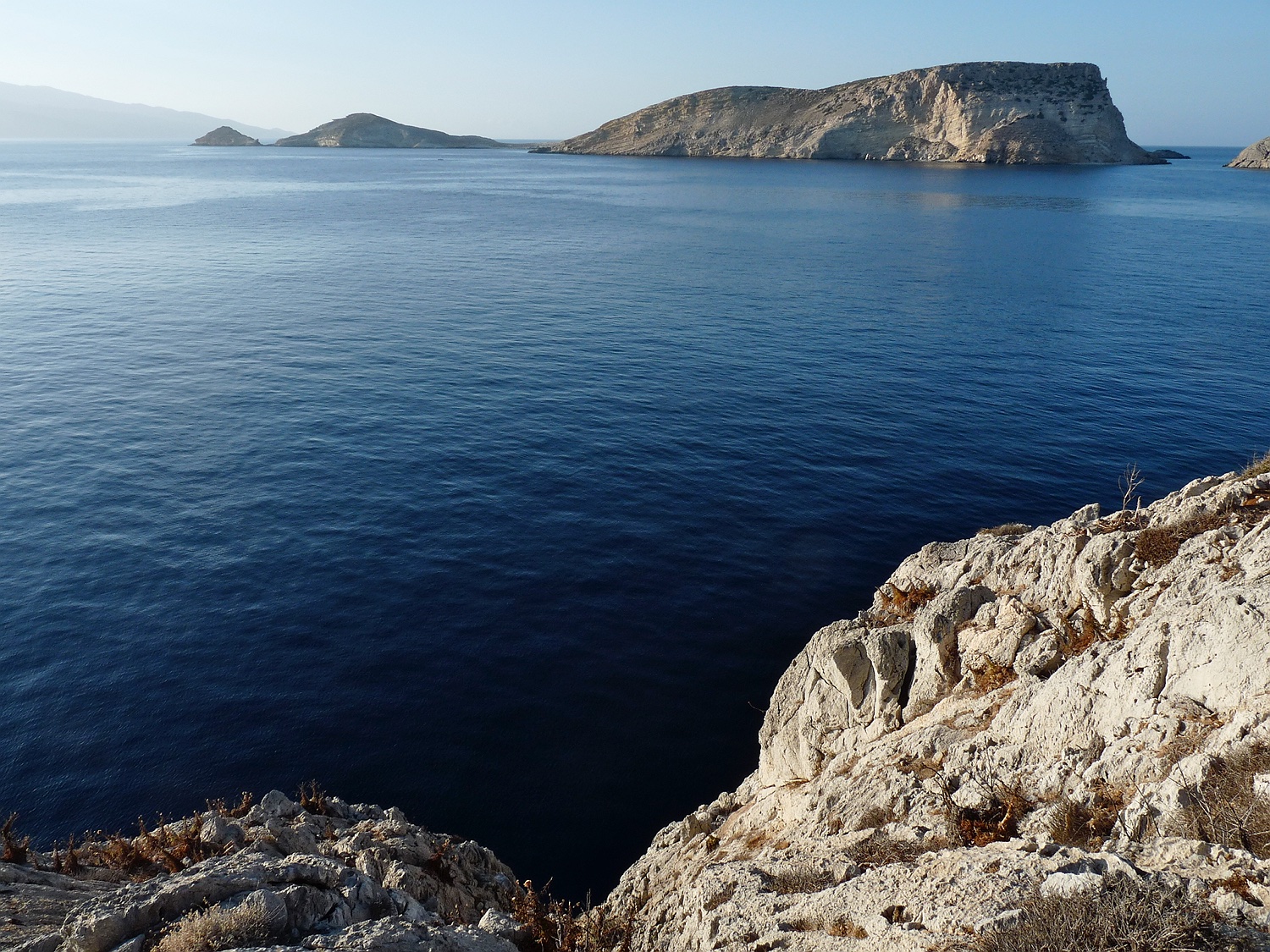
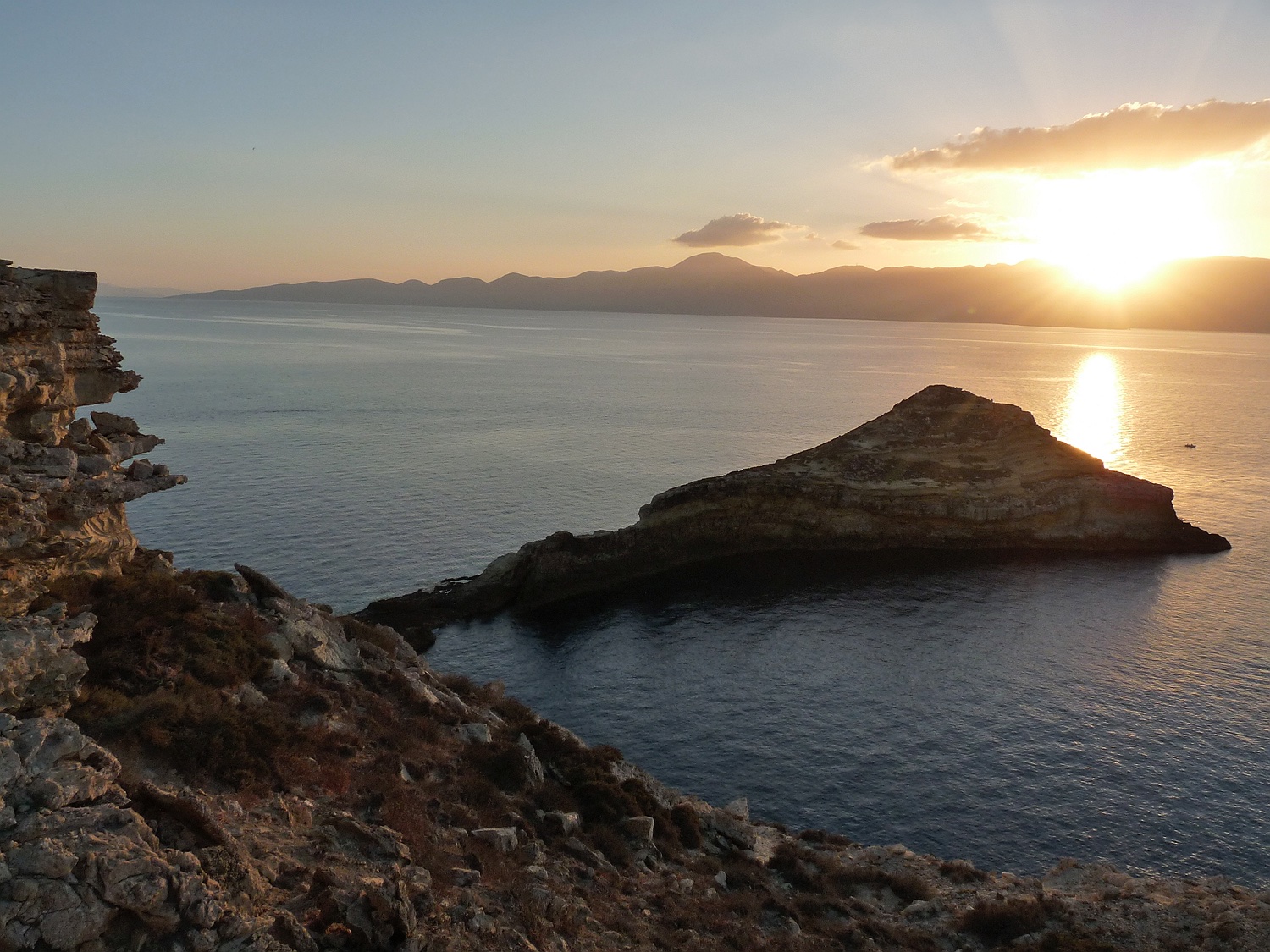
the view across to the main island Ágios Nikólaos
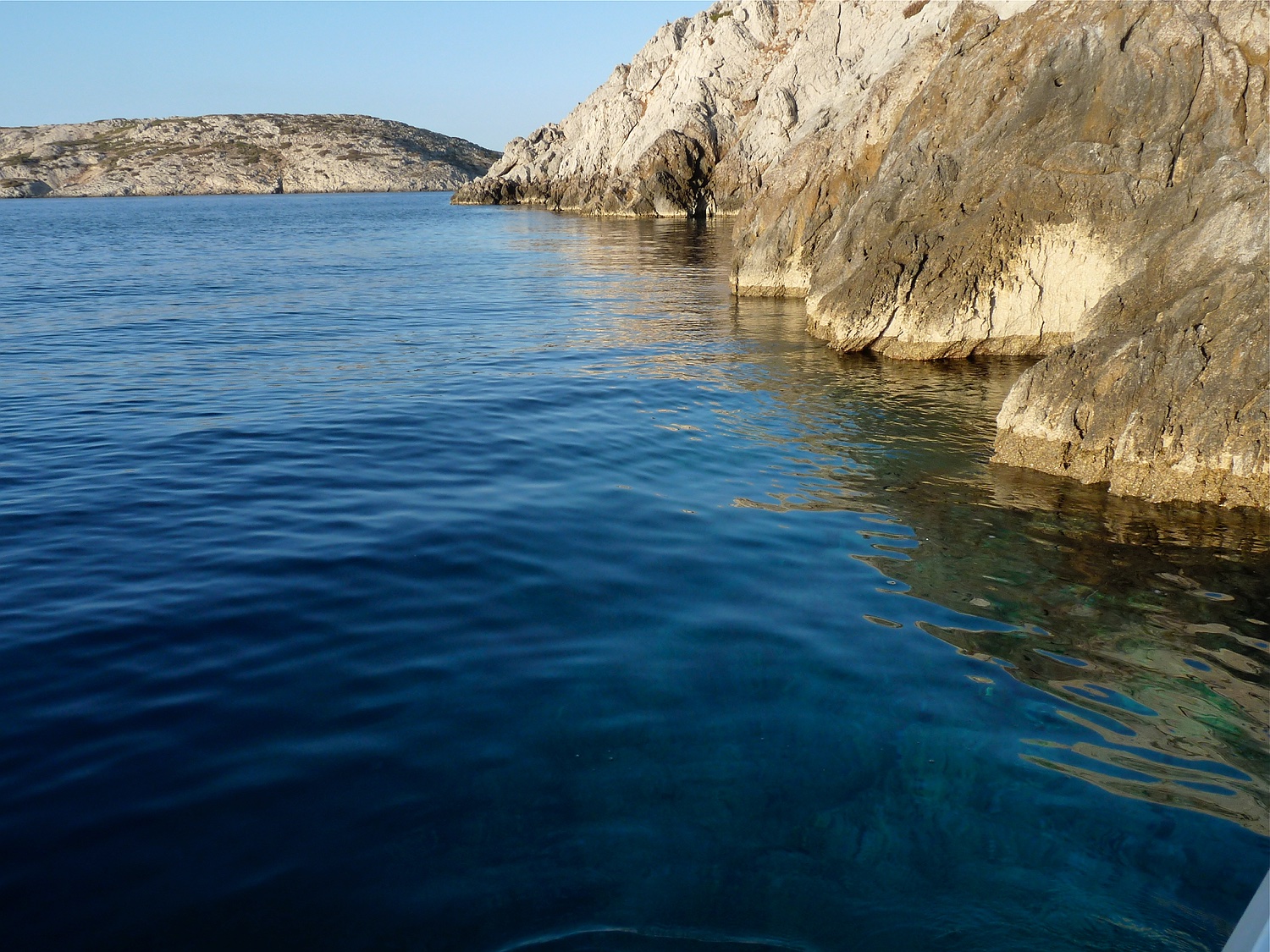
Here we get back into the boat – again the coast is rough and steep.
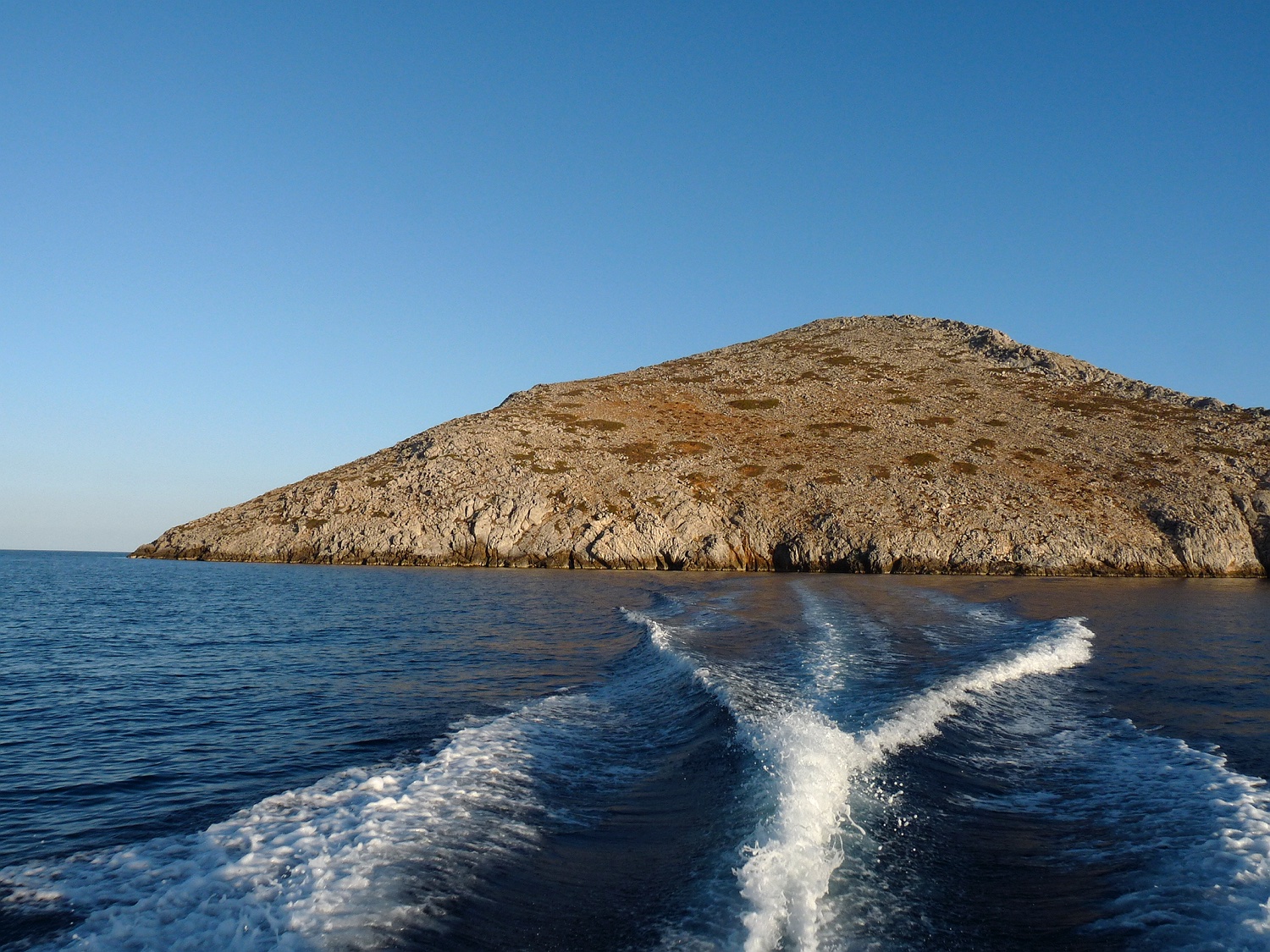
While crossing to the other island, we see a very large Mediterranean monk seal very close by – a rare species, of which there are probably only 350 to 450 individuals left.
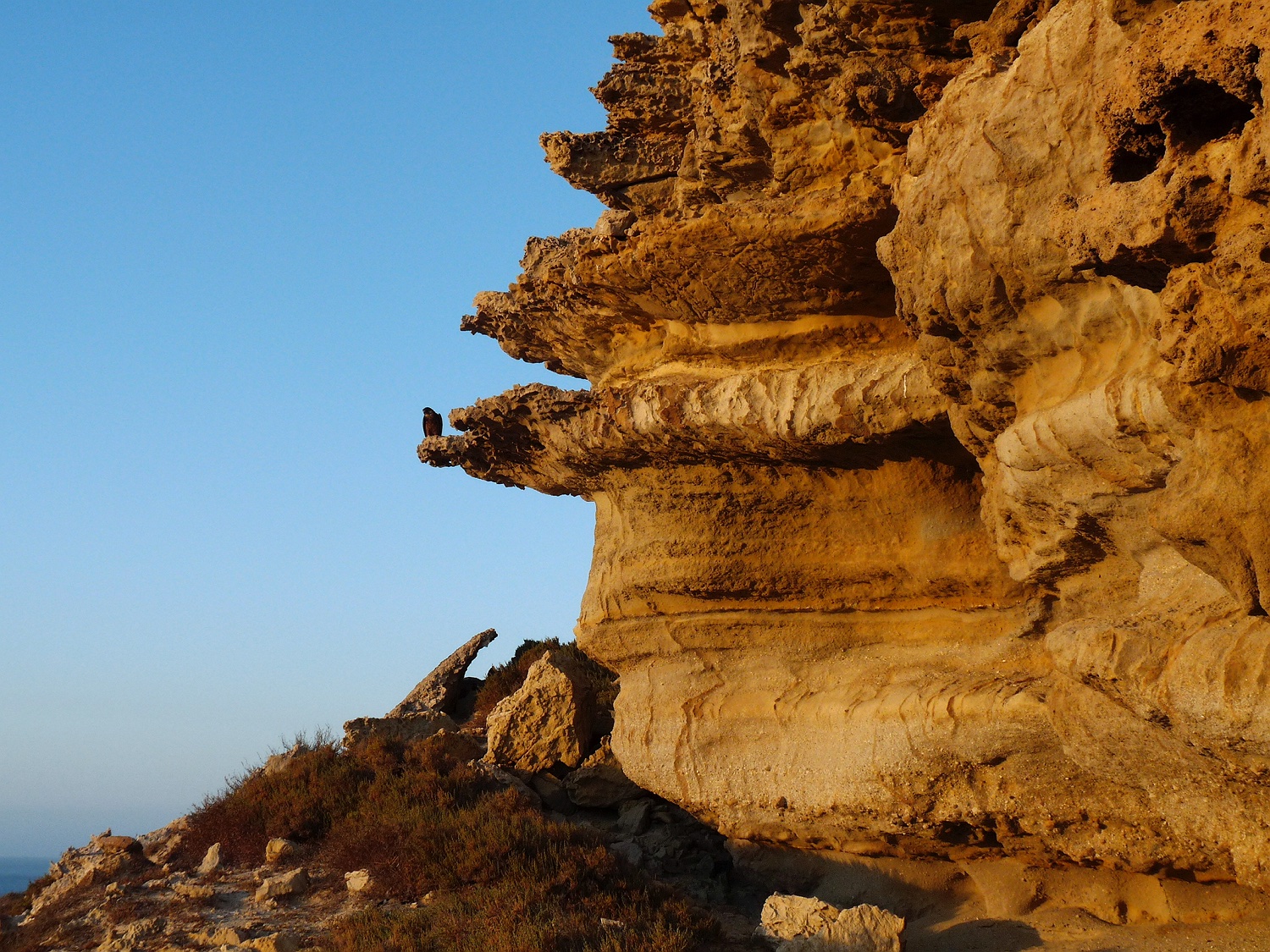
adult Eleonora’s falcon at sunset
continue: The Griffon vulture on Naxos
Back: The birds of Naxos
See also:
- Makares – uninhabited islands out of paradise
- A visit to the shearwaters on the Makares islands
- European storm petrels on the Makares islands
further reading: Hellenic Ornithological Society