Libellen sind wunderschöne Insekten! Sie sind relativ leicht zu beobachten und zu fotografieren, da sie sich gern immer wieder an dieselbe Stelle setzen. Hier ein paar Fotos vom letzten Spaziergang bei Potamiá.
Männchen der Gebänderten Prachtlibelle
Hier mit Beute: es hat eine kleine Motte gefangen. Libellen sind sehr geschickte und wendige Jäger.
Weibchen der Gebänderten Prachtlibelle
Männchen der Illyrischen Federlibelle
Weibchen der Illyrischen Federlibelle
Große...
Photo gallery Rosales
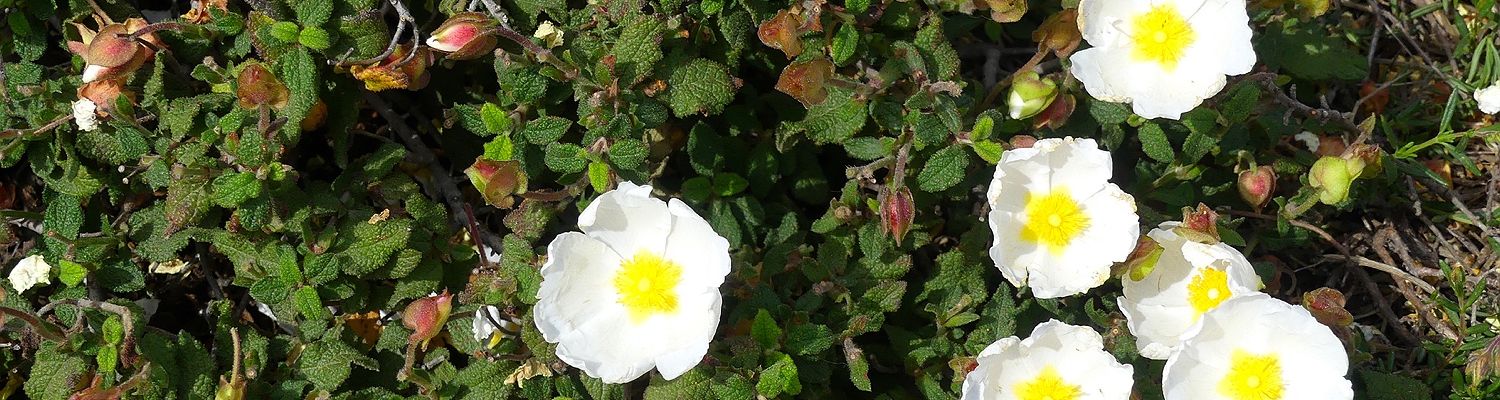
Fotoübersicht “Rosenartige, Storchschnabelgewächse, Malvenartige”
plus Seifenbaumartige und Myrtenartige – Sapindales and Myrtales
Hier geht es direkt zu den Links zu den ausführlichen Beiträgen (am Seitenende).
Zum Öffnen als Diashow auf die Fotos klicken!
Prunus webbii
Prunus webbii
Pyrus spinosa
Pyrus spinosa
Crataegus monogyna
Crataegus monogyna
Rubus sanctus
...
Photo gallery Caryophyllales
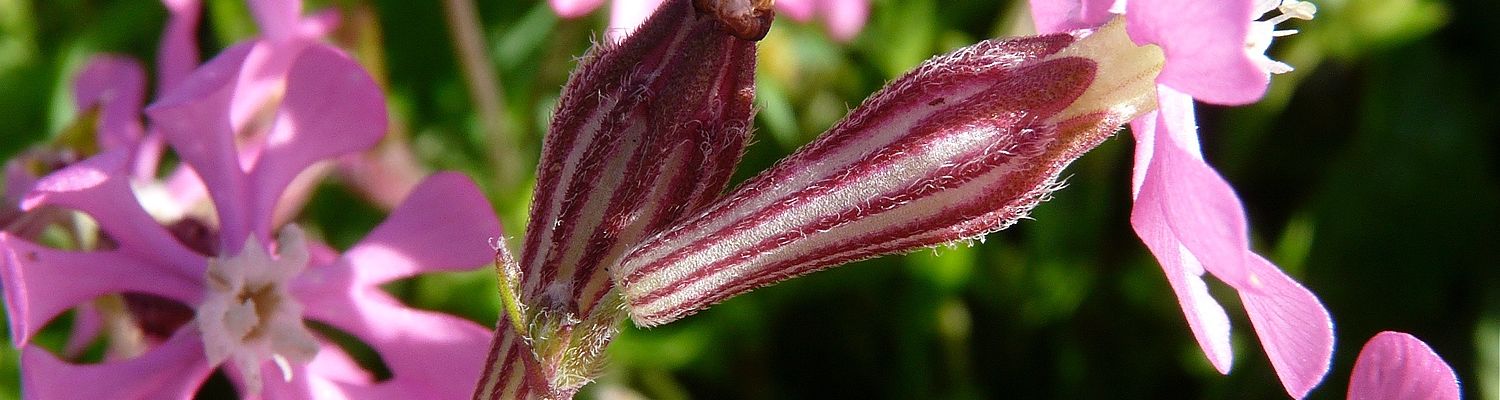
Fotoübersicht “Nelkenartige”
plus Steinbrechartige und Sandelholzartige
Hier geht es direkt zu den Links zu den ausführlichen Beiträgen (am Seitenende).
Zum Öffnen als Diashow auf die Fotos klicken!
Agrostemma githago
Petrorhagia dubia
Petrorhagia armerioides
Bolanthus graecus
Silene behen
Silene colorata
Silene cretica
Silene cythnia
Silene...
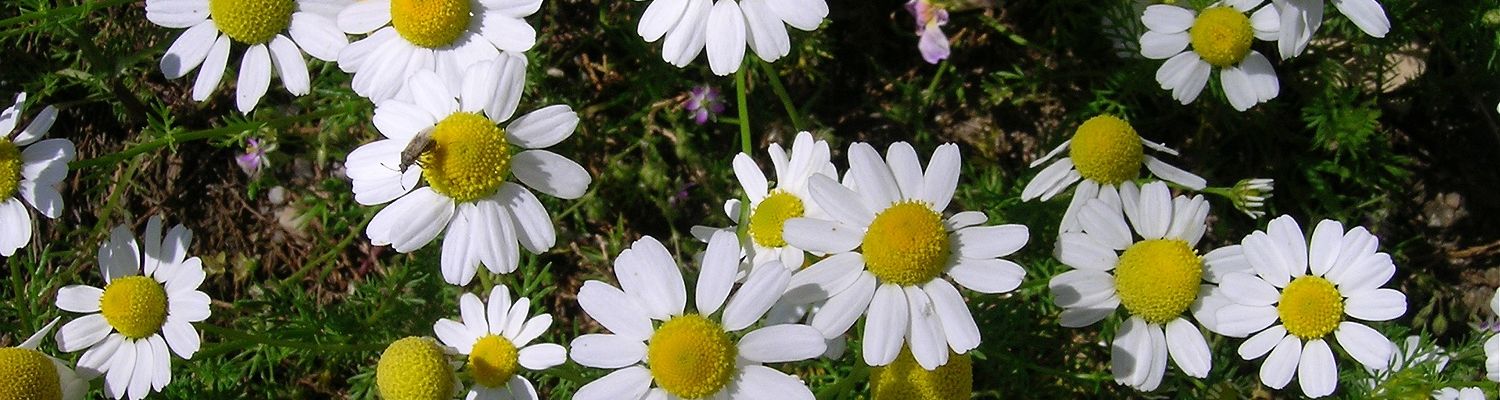
Photo gallery Asteraceae
Fotoübersicht “Korbblütlerartige und Kardenartige”
Hier geht es direkt zu den Links zu den ausführlichen Beiträgen (am Seitenende).
Zum Öffnen als Diashow auf die Fotos klicken!
Campanula erinus
Campanula calaminthifolia
Legousia speculum-veneris
Legousia hybrida
Legousia falcata
Trachelium caeruleum
Solenopsis laurentia
Lonicera etrusca
Lonicera...
Photo gallery Brassicaceae
Fotoübersicht “Kreuzblütlerartige”
Hier geht es direkt zu den Links zu den ausführlichen Beiträgen (am Seitenende).
Zum Öffnen als Diashow auf die Fotos klicken!
Reseda lutea
Reseda lutea
Reseda luteola
Reseda luteola
Capparis spinosa
Aethionema saxatile
Teesdalia coronopifolia
Capsella bursa-pastoris
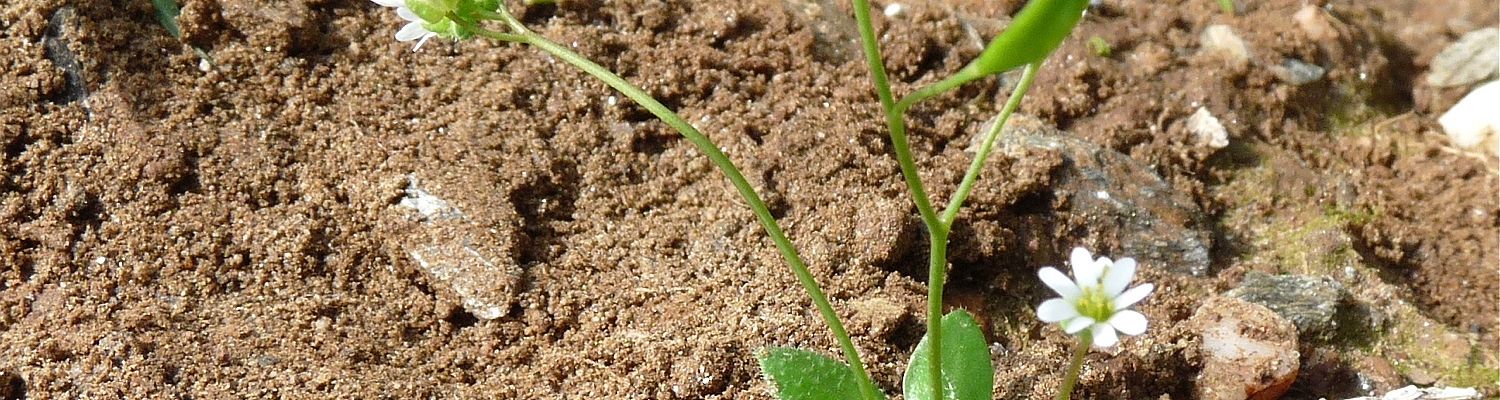
Erophila verna
Erophila boerhavii
...
Photo gallery Apiaceae
Fotoübersicht “Doldenblütler”
Hier geht es direkt zu den Links zu den ausführlichen Beiträgen (am Seitenende).
Zum Öffnen als Diashow auf die Fotos klicken!
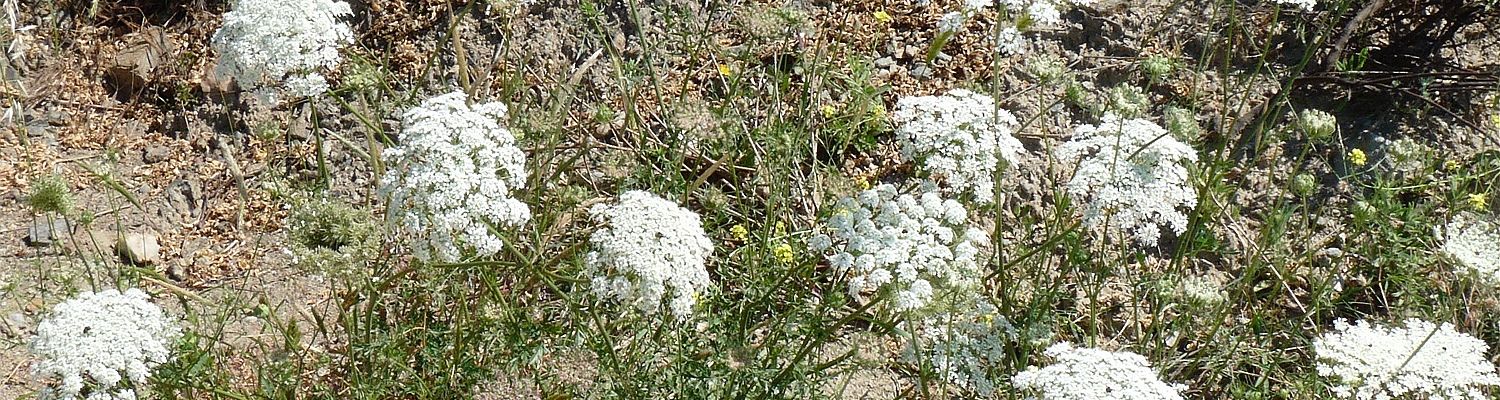
Daucus carota
Daucus guttatus
Daucus involucratus
Daucus glaber
Oenanthe pimpinelloides
Pimpinella peregrina
Orlaya daucoides
Pseudorlaya pumila
Scaligera napiformis
Geocaryum...
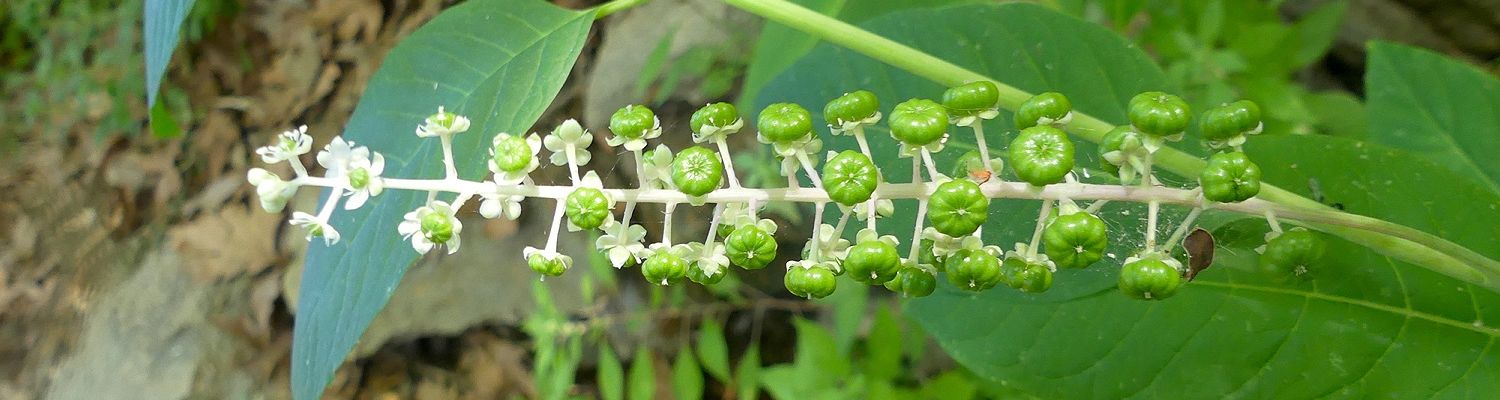
Amerikanische Kermesbeere, Phytolacca americana
Die Amerikanische Kermesbeere zählt zu den Kermesbeerengewächsen (Phytolaccaceae), einer gut 50 Arten umfassenden Familie innerhalb der Nelkenartigen mit Verbreitungsschwerpunkt in Amerika. Der wissenschaftliche Gattungsname bedeutet “Pflanzenlack” und bezieht sich auf die Verwendung der Kermesbeeren zur Herstellung von Farbstoffen. Die Kermesbeere ist stark giftig; die Blätter werden in manchen Gegenden trotzdem gekocht gegessen (mit mehrerem Wechseln des...
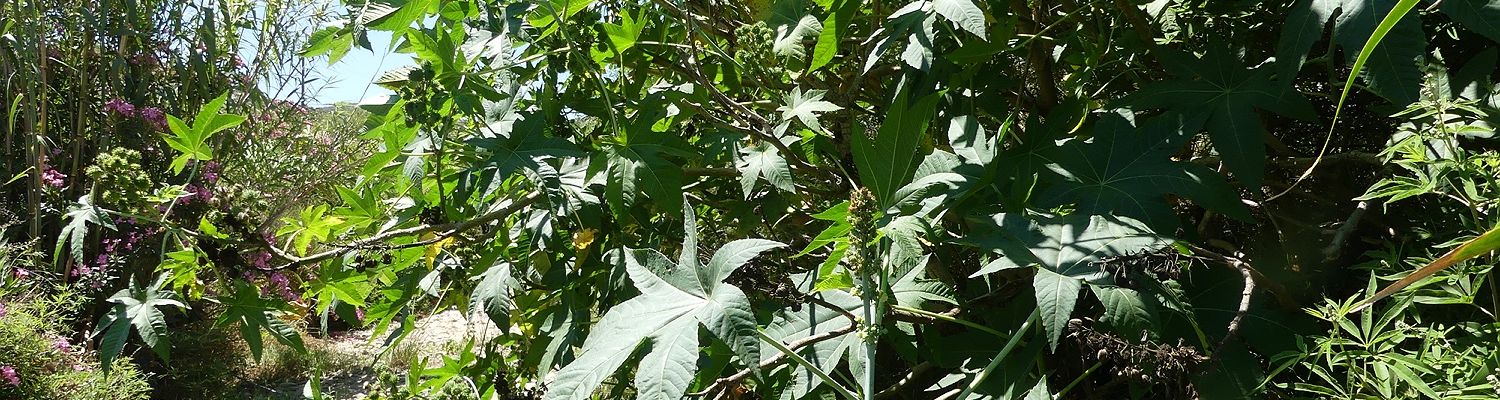
Wunderbaum, Ricinus communis
Der Wunderbaum, ursprünglich in Nordostafrika und dem Nahen Osten heimisch, wächst verwildert im Flusstal von Potamiá und in der Umgebung der Chóra. Er gehört zur Familie der Wolfsmilchgewächse (Euphorbiaceae) und ist die einzige Art seiner Gattung.
zur Foto-Übersicht
zur Foto-Übersicht der Baumarten
Wunderbaum, Ricinus communis, L.
Obwohl der Wunderbaum außerhalb der Tropen meist einjährig ist, wächst er zu einem mehrere Meter hohen Strauch heran. Aus den hochgiftigen...
Korbblütler - Cichorioideae III
Auf dieser Seite werden die Gattungen Aetheorhiza, Crepis und Hypochaeris vorgestellt.
Für die Gattungen Andryala, Hedypnois, Hymenonema, Hyoseris, Leontodon, Picris, Reichardia, Scorzonera und Taraxacum siehe Cichorioideae Teil II
Für die Gattungen Chondrilla, Cichorium, Geropogon, Lactuca, Rhagadiolus, Scolymus, Sonchus, Tolpis, Tragopogon und Urospermum siehe Cichorioideae Teil I
Hier kann man direkt zu den Gattungen springen (zurück kommt man durch Zurückblättern):...
Korbblütler - Carduoideae II: Flockenblumen u.a.
In die Unterfamilie der Carduoideae werden Arten der Korbblütler eingegliedert, die keine Zungenblüten, sondern nur Röhrenblüten aufweisen. Die meisten der zu dieser Gruppe gehörenden Arten sind mehr oder weniger dornig (“Disteln”); die häufigste Blütenfarbe ist rosa bis lila. Die Unterfamilie umfasst etwa 83 Gattungen mit 2800 Arten. Der Verbreitungsschwerpunkt liegt in Eurasien und Nordafrika. Diese Seite beschäftigt sich mit den weniger nach Disteln...
Korbblütler - Asteroideae II: Filzkräuter, Filago
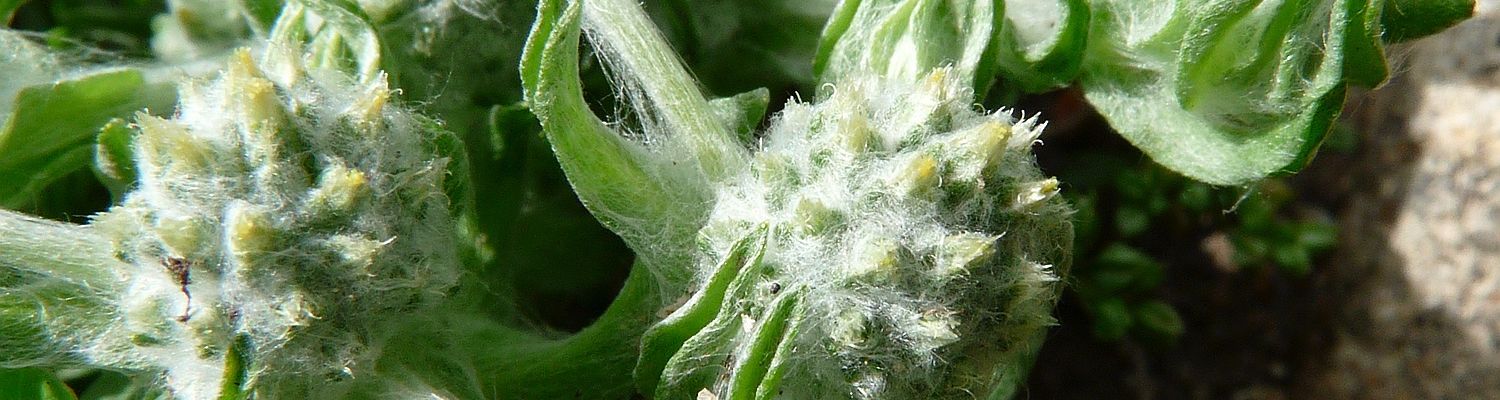
Die Filzkräuter gehören zu den Korbblütlern, auch wenn ihre kleinen Blütenstände auf den ersten Blick nicht nach Korbblüten aussehen. Sie kommen mit etwa 40 Arten vor allem im Mittelmeerraum und im westlichen Asien vor. Auf Naxos sind bislang acht Arten nachgewiesen worden. Die meisten Filzkräuter werden nur wenige Zentimeter groß und sind stark filzig behaart. Oft stehen mehrere Blütenköpfchen nah beieinander in zusammengesetzten Blütenständen.
zur Foto-Übersicht...
Village architecture and stone houses
The Cycladic villages
The Cycladic villages usually consist of small houses standing close to each other in narrow alleyways. The villages of Naxos except for the settlements directly at the coast (like Moutsoúna) are all very old and mostly existed already in the Middle Ages. They were built so as to use as little fertile land as possible. In recent decades, all the villages have expanded somewhat, as new houses are being built around the old settlement.
The villages on...
Mitati - the simple old stone houses
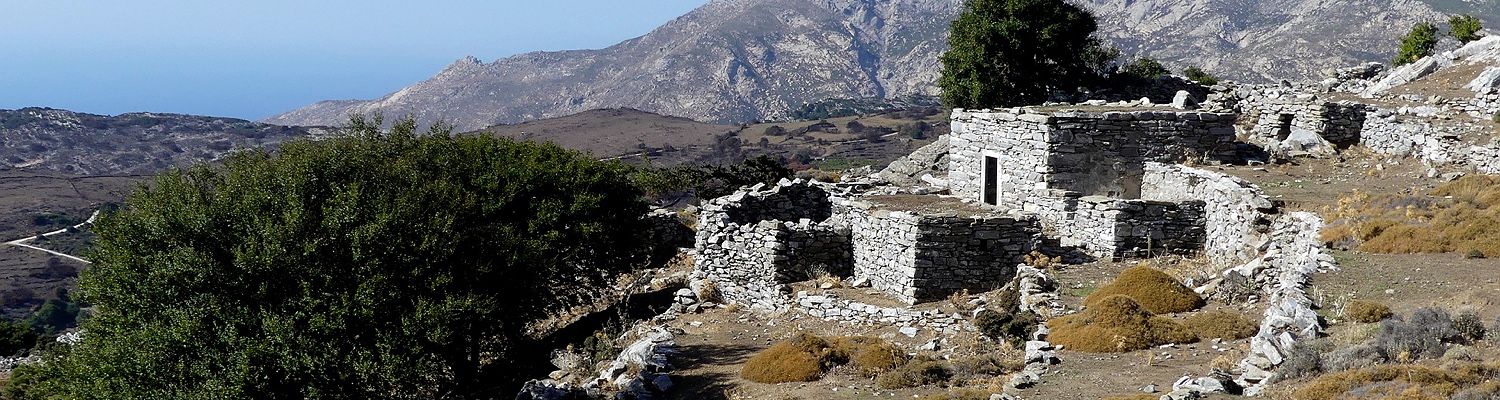
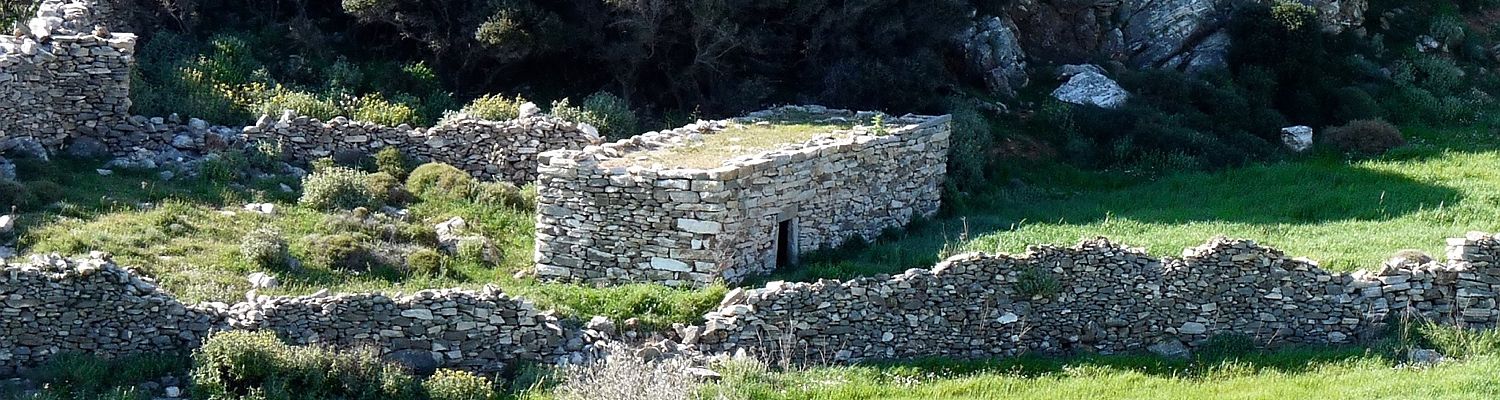
Everywhere in the cultivated regions and in the areas used for grazing sheep or goats, the wanderer on Naxos will come across old small stone houses, the mitáti (singular mitátos). Farmers lived in the mitati when they stayed e.g. for the harvest on their land away from the village, and sometimes a family spent there even the majority of the year or lived there permanently. The shepherds also had a mitátos at each mazomós, i.e. at the shepherds’ places where the...
The traditional oil mills
The olive oil
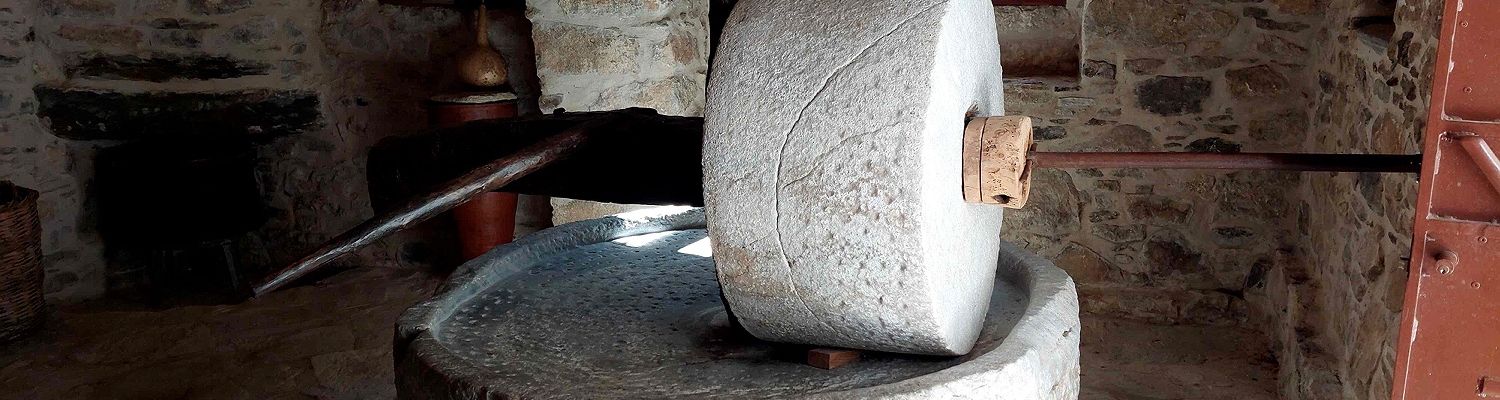
The use of olive oil on Naxos has been documented since the Cycladic period in the Early Bronze age; not only have vessels been found that are thought to be oil lamps, but also vessels with oil residues. Initially, the oil was used as lamp oil and for personal hygiene, but it was only later that its importance as a foodstuff was recognised. Today, olive oil is an integral part of Greek cuisine and there is no traditional dish that does not contain olive...
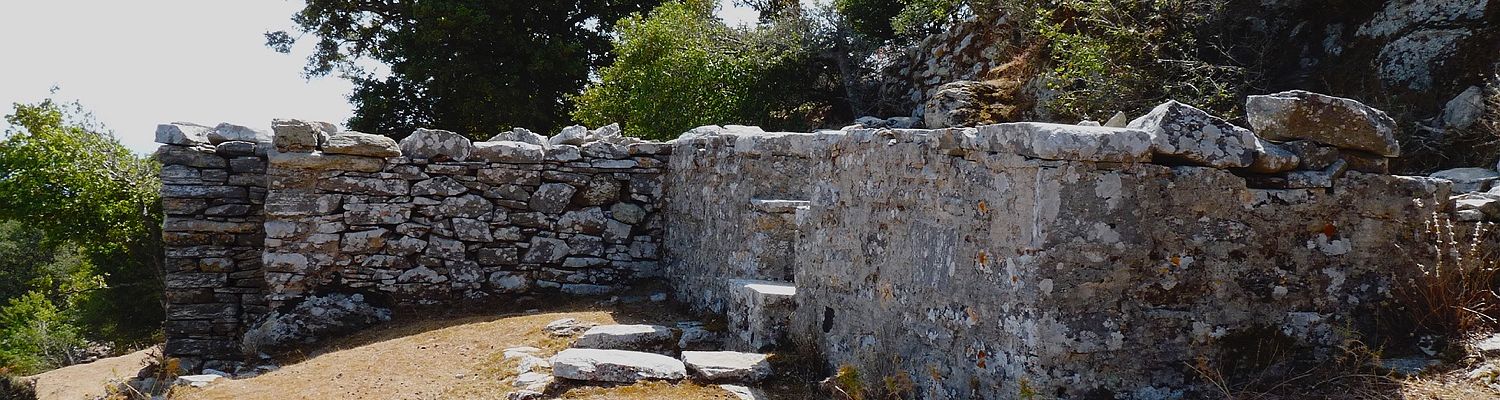
The old stone houses at Karkos
Walking from Apíranthos to the fortified monastery Fotodótis near Danakós, one passes a picturesque valley called Karkós, with a grove of magnificent old Vallonean oaks. Two old stone houses bear witness to the former use of this area. The valley was once cultivated with vinyards, though today it is only used for grazing sheep. Right next to the grove on the slope of Mount Korakiá lies the small church Panagía Chrysopigí, originally a Mycenaean tomb.
view over the valley...
Joannis Theologos in Danakos
The church at the cemetery of Danakós, dedicated to St John the Theologian, contains very rare wall paintings from the time of iconoclasm, which have recently been uncovered and restored.
The cemetery church of Danakós, Ágios Joánnis Theológos, consists of two simple naves, of which the southern one is narrower.
The church has no dome. The two naves are connected by two arches with columns.
The church dates from the time of iconoclasm and is decorated with aniconic and...
Panagia Archatou near Agiassos
In the south-west of Naxos, not far from Agiassós, lies the unusual Byzantine church of Panagía Archatoú, which is decorated with remarkable murals. The building was probably erected before the 12th century; however, it was significantly remodelled in the 13th century at the latest. It is a single-nave church with a dome (which is significantly smaller than the width of the nave) with a lateral chapel with a low dome to the south and a transverse chapel to the north, which...
Panagia Liouriotissa in Marathos
In the valley of Marathós south of Kastro Apalírou, in a side valley, lies among olive trees the small church of Panagía Liouriótissa (Our Lady of the Olive Grove), which is dedicated to the Presentation of the Lord (Candlemas, in Greek Ypapantí). This festival is celebrated 40 days after the birthday of Jesus. In addition to the offering of a sacrifice by the young mother for her “purification”, it is also celebrated as a festival of the presentation of the...
Agios Georgios in Marathos
In south-west Naxos, in the area south of Agiassós, lies several churches scattered in the empty landscape, that are decorated with important Byzantine wall paintings well worth seeing, even if they are not cleaned and restored. One of these churches is dedicated to St George: Ágios Geórgios Marathoú. It is named after the region it is situated in, the large valley south of Kastro Apalírou called Marathós (from the wild fennel, Greek máratho). Ágios Geórgios Marathoú lies...
Agios Andreas at Apano Kastro
On the hiking trail from Potamiá to Apáno Kástro, one passes by a very small but pretty church dedicated to St Andreas. It is a single-nave church without a dome with wall arcades (“blind” arches on the wall); several phases of alteration to the building can be recognised. Of interest to us are the wall paintings in the apse, some of which are quite well preserved; they date from the 14th century.
The small church of Agios Andreas is located just before the...